
Music business models and piracy
Full text
Figure

Related documents
The music industry has experienced revolutionary changes since 2001 as a result of digital technologies for storing, distributing and sharing music. Revenues for recorded music
“There is a tsunami of digital theft on the internet that extends across multiple content sectors, most notoriously affecting music but also spreading across TV, movies,
supported by music industry lobbies such as the Recording Industry Association of America, would require all new digital media devices to be encoded with security technology to
While the digital market, especially the music streaming market, has rapidly grown in recent years, however the physical music segment still remains relevant in the
To confirm the model of the quantitative research, 10 in-depth interviews with those involved as label executives, music copyright managers, digital music download business
Sources: 2006 Film Music Salary Rates (Film Music Network), American Federation of Musicians (AFM), American Guild of Organists (AGO), American Music Therapy Association
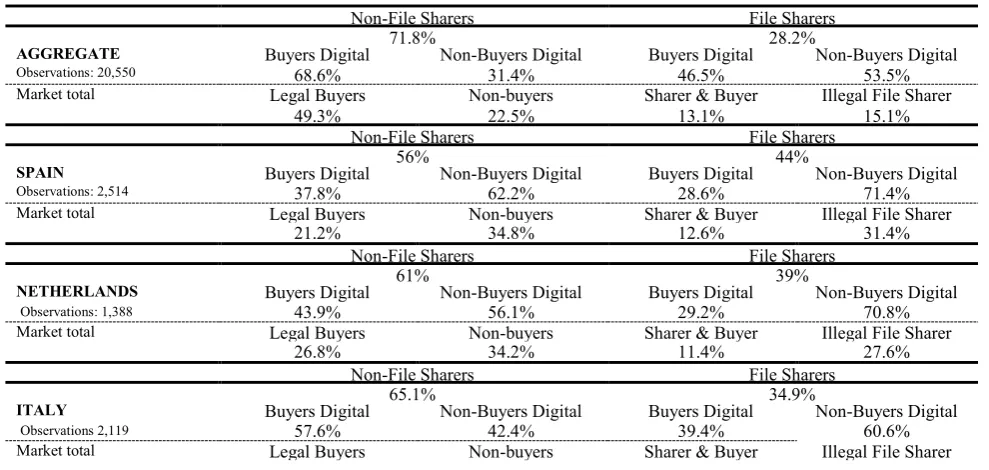
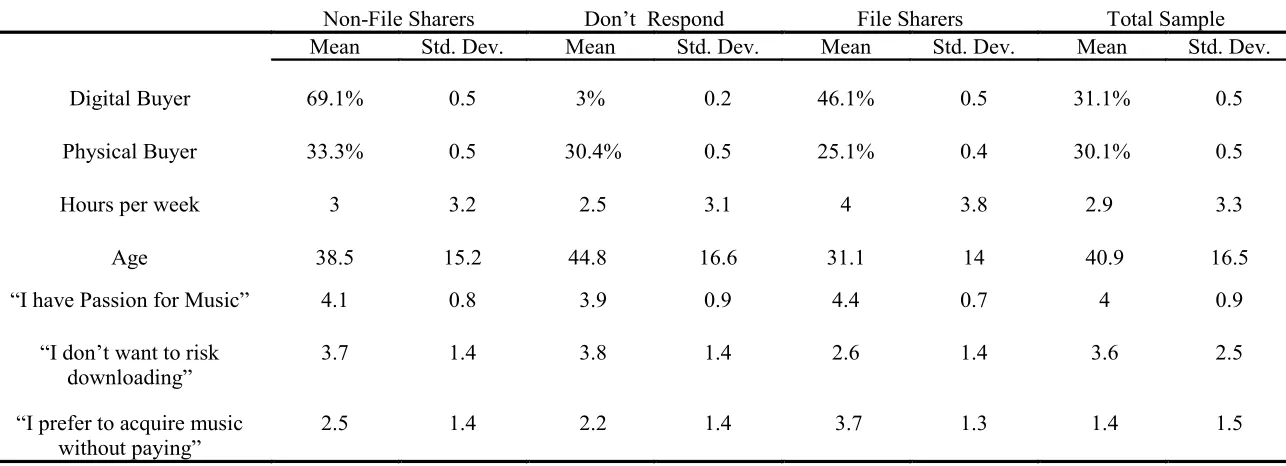
In order to achieve this goal this research will attempt to investigate respondents’ awareness of the availability of some of the legitimate sources of acquiring digital music,
The total value of the pirate music market in 1999, including sales of audio CDs, cassettes and CD-Rs, is estimated at $4.1 billion – less than the estimated value in 1998,
