warwick.ac.uk/lib-publications
Original citation:
Uthaya, S., Liu, X., Babalis, D., Dore, C. J., Warwick, Jane, Bell, J., Thomas, L., Ashby, D.,
Durighel, G., Ederies, A., Yanez-Lopez, M. and Modi, N.. (2016) Nutritional evaluation and
optimisation in neonates : a randomized, double-blind controlled trial of amino acid regimen
and intravenous lipid composition in preterm parenteral nutrition. American Journal of
Clinical Nutrition.
Permanent WRAP URL:
http://wrap.warwick.ac.uk/78745
Copyright and reuse:
The Warwick Research Archive Portal (WRAP) makes this work of researchers of the
University of Warwick available open access under the following conditions.
This article is made available under the Creative Commons Attribution 3.0 (CC BY 3.0) license
and may be reused according to the conditions of the license. For more details see:
http://creativecommons.org/licenses/by/3.0/
A note on versions:
The version presented in WRAP is the published version, or, version of record, and may be
cited as it appears here.
Nutritional Evaluation and Optimisation in Neonates: a randomized,
double-blind controlled trial of amino acid regimen and intravenous
lipid composition in preterm parenteral nutrition
1,2Sabita Uthaya,3,4* Xinxue Liu,5Daphne Babalis,5,7Caroline J Doré,8Jane Warwick,9Jimmy Bell,6,10Louise Thomas,6,10 Deborah Ashby,5Giuliana Durighel,6Ash Ederies,6Monica Yanez-Lopez,6and Neena Modi3,4
3
Chelsea and Westminster National Health Service Foundation Trust, London, United Kingdom;4Section of Neonatal Medicine, Department of Medicine,5Imperial
Clinical Trials Unit, School of Public Health, and6Institute of Clinical Sciences, Imperial College London and Medical Research Council Clinical Sciences Centre,
Hammersmith Hospital, London, United Kingdom;7Clinical Trials and Evaluation Unit, Royal Brompton and Harefield National Health Service Foundation Trust, London,
United Kingdom;8Comprehensive Clinical Trials Unit, University College London, London, United Kingdom;9Warwick Clinical Trials Unit, Division of Health Sciences,
Warwick Medical School, University of Warwick, Coventry, United Kingdom; and10Department of Life Sciences, University of Westminster, London, United Kingdom
ABSTRACT
Background: Parenteral nutrition is central to the care of very immature infants. Current international recommendations favor higher amino acid intakes and fish oil–containing lipid emulsions.
Objective:The aim of this trial was to compare 1) the effects of high [immediate recommended daily intake (Imm-RDI)] and low [incremental introduction of amino acids (Inc-AAs)] parenteral amino acid delivery within 24 h of birth on body composition and
2) the effect of a multicomponent lipid emulsion containing 30% soybean oil, 30% medium-chain triglycerides, 25% olive oil, and 15% fish oil (SMOF) with that of soybean oil (SO)-based lipid emulsion on intrahepatocellular lipid (IHCL) content.
Design:We conducted a 2-by-2 factorial, double-blind, multicenter randomized controlled trial.
Results:We randomly assigned 168 infants born at ,31 wk of gestation. We evaluated outcomes at term in 133 infants. There were no significant differences between Imm-RDI and Inc-AA groups for nonadipose mass [adjusted mean difference: 1.0 g (95% CI: 2108, 111 g; P = 0.98)] or between SMOF and SO groups for IHCL [adjusted mean SMOF:SO ratio: 1.1 (95% CI: 0.8, 1.6;P = 0.58]. SMOF does not affect IHCL content. There was a significant interaction (P= 0.05) between the 2 interventions for nonadipose mass. There were no significant interactions be-tween group differences for either primary outcome measure after adjusting for additional confounders. Imm-RDI infants were more likely than Inc-AA infants to have blood urea nitrogen concentra-tions.7 mmol/L or .10 mmol/L, respectively (75% compared with 49%,P,0.01; 49% compared with 18%,P,0.01). Head circumference at term was smaller in the Imm-RDI group [mean dif-ference:20.8 cm (95% CI:21.5,20.1 cm;P= 0.02)]. There were no significant differences in any prespecified secondary outcomes, includ-ing adiposity, liver function tests, incidence of conjugated hyperbilir-ubinemia, weight, length, mortality, and brain volumes.
Conclusion:Imm-RDI of parenteral amino acids does not benefit body composition or growth to term and may be harmful. This trial was registered at www.isrctn.com as ISRCTN29665319 and at eudract.ema.europa.eu as EudraCT 2009-016731-34. Am J Clin Nutrdoi: 10.3945/ajcn.115.125138.
Keywords: amino acid, lipid emulsion, parenteral nutrition, pre-term infant, randomized controlled trial body composition, intrahe-patocellular lipid
INTRODUCTION
Delivering nutrition to very immature infants is challenging. Parenteral nutrition (PN)11 requires reliable intravenous access, pharmacist support, and clinical expertise in minimizing and treating complications. Gastrointestinal immaturity precludes early administration of milk volumes sufficient to support growth. In practice, PN and milk feeds are commenced at variable intervals after birth, with nutrient delivery increased incrementally. As a consequence, cumulative nutrient deficits are common, and by term the majority of very preterm infants are lighter and shorter than healthy term-born counterparts (1). Although optimal post-natal growth velocity is uncertain (2), the association between slower growth and the greater likelihood of neurodevelopmental impairment and cerebral palsy (3) has justified early PN provision. High amino acid intakes have been advocated, with the
recom-1
This project is funded by the Efficacy and Mechanism Evaluation (EME) Programme, an MRC and NIHR partnership (project number 08/99/04). This is an open access article distributed under the CC-BY license (http://crea-tivecommons.org/licenses/by/3.0/).
2Supplemental Figures 1–3 and Supplemental Tables 1–11 are available
from the “Online Supporting Material” link in the online posting of the article and from the same link in the online table of contents at http://ajcn. nutrition.org.
*To whom correspondence should be addressed. E-mail: [email protected].
Received October 9, 2015. Accepted for publication March 24, 2016. doi: 10.3945/ajcn.115.125138.
11
Abbreviations used: IHCL, intrahepatocellular lipid; Imm-RDI, imme-diate recommended daily intake; Inc-AA, incremental delivery of amino acid; NEON, Nutritional Evaluation and Optimisation in Neonates; PN, parenteral nutrition; RDI, recommended daily intake; SMOF, soybean oil, medium-chain triglycerides, olive oil, and fish oil; SO, soybean-based lipid emulsion.
Am J Clin Nutrdoi: 10.3945/ajcn.115.125138. Printed in USA. 1 of 10
AJCN. First published ahead of print April 20, 2016 as doi: 10.3945/ajcn.115.125138.
mended daily intake (RDI) calculated on the basis of redressing cumulative deficits as well as matching intrauterine growth ve-locity (4, 5). Intravenous lipid preparations containing fish oils have been recommended on the basis of clinical observations, suggesting they may protect against hepatic dysfunction, a fre-quent concomitant of PN (6). Intralipid (Fresenius Kabi) is a widely used first-generation intravenous emulsion that contains soybean oil, egg yolk phospholipids, and glycerin. SMOFlipid (Fresenius Kabi), a third-generation emulsion that contains soy-bean oil, medium-chain triglycerides, olive oil, and fish oil (SMOF), has an altered ratio of n–6:n–3 fatty acids that is be-lieved to be beneficial in parenteral nutrition–associated liver impairment.
A diet with a low protein:energy ratio results in lower lean body mass and greater adiposity (7). Thus, in the short term, weight gain—although a widely used outcome measure—may not be as revealing as body composition. Monitoring lipid tol-erance is problematic because normative ranges for circulating lipids remain inadequately defined in very preterm infants, and relations to long-term outcomes are unclear. Whole-body MRI can be employed to assess body composition directly and in vivo MR spectroscopy to assess hepatic lipid noninvasively; the latter compares favorably with the gold standard, liver biopsy, for the quantitative assessment of hepatic steatosis (8).
We designed a clinical trial (ISRCTN29665319; EudraCT 2009-016731-34) to test the hypotheses that the immediate de-livery of RDI (Imm-RDI) of parenteral amino acids compared with incremental provision is more efficacious in increasing lean (nonadipose) body mass at term, and that a mechanism of action of 20% SMOF compared with 20% soybean-based lipid emulsion (SO) is to reduce intrahepatocellular lipid (IHCL).
METHODS
We conducted NEON (Nutritional Evaluation and Optimisa-tion in Neonates), a 2-by-2 factorial, double-blind, multicenter randomized controlled trial in 4 National Health Service neonatal units in London and southeast England. The trial was preregis-tered and approved by the National Research Ethics Service and Medicines and Healthcare Products Regulatory Agency. The trial sponsor was Imperial College London. Recruitment commenced in July 2010 and ended in July 2013, with a final follow-up in October 2013.
[image:3.585.143.445.345.693.2]Preterm infants born at,31 wk of gestation were eligible for inclusion. Infants with life-threatening abnormalities and those for whom we were unable to administer trial PN within 24 h of birth were ineligible. When possible, the trial was discussed with parents antenatally, and written informed consent was
sought within 24 h of birth. The interventions were 20% SMO-FLipid (Fresenius Kabi) and Imm-RDI of amino acids. The com-parators were 20% Intralipid (Fresenius Kabi) and incremental delivery of amino acids (Inc-AA). The amino acid source was Vaminolact (Fresenius Kabi). Trial formulations were investiga-tional medicinal products prepared by a licensed facility (Bath ASU). Other PN components were identical across randomized groups.
Trial procedures
We randomly assigned eligible infants with the use of an interactive voice recognition telephone system to 1 of 4 groups (Inc-AA/SO, Inc-AA/SMOF, Imm-RDI/SO, and Imm-RDI/ SMOF) and incorporated minimization with a random element and stratification by gestational age (23–26 or 27–31 completed weeks), birth weight (,500, 500–1000, or.1000 g), and center. Hospital pharmacy staff dispensed trial PN between 0900 and 1700; attending clinicians were blinded to trial allocation. For consistency of capturing data, we defined day 1 as the period from birth to 1700. Subsequent days of capturing data were
recorded from 1700 to 1700. The duration of day 1 was there-fore variable and dependent on time of birth.
PN and milk intake by a nasogastric tube commenced within 24 h of birth and was guided by prespecified protocols. The investigator manual provided instructions on managing elec-trolyte, glucose, and lipid disturbances. Inc-AA infants received 1.7 g/kg amino acids on day 1, 2.1 g/kg on day 2, and a maximum of 2.7 g$kg21$d21from day 3; Imm-RDI infants received 3.6 g$kg21$d21from day 1. PN was provided in an aqueous volume of 90 mL$kg21$d21on days 1 and 2 and 120 mL$kg21$d21 from day 3. Carbohydrate intake was 8.6 g$kg21$d21from day 1. An intravenous lipid was provided at 2 g$kg21$d21on day 1 and was increased to 3 g$kg21$d21from day 2. Weaning of trial PN was commenced once an infant received milk volumes.60 mL$kg21$d21.
[image:4.585.41.552.321.644.2]Trial PN ceased when an infant had received and tolerated 150 mL milk$kg21$d21for$24 h. Any subsequent PN requirement was in accordance with local practice. Nutritional intake was re-corded prospectively on a daily basis from birth until discharge or trial endpoint.
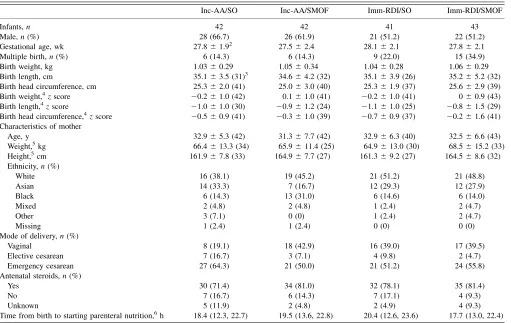
TABLE 1
Baseline characteristics of all randomly assigned infants1
Inc-AA/SO Inc-AA/SMOF Imm-RDI/SO Imm-RDI/SMOF
Infants,n 42 42 41 43
Male,n(%) 28 (66.7) 26 (61.9) 21 (51.2) 22 (51.2)
Gestational age, wk 27.861.92 27.562.4 28.162.1 27.862.1
Multiple birth,n(%) 6 (14.3) 6 (14.3) 9 (22.0) 15 (34.9)
Birth weight, kg 1.0360.29 1.0560.34 1.0460.28 1.0660.29
Birth length, cm 35.163.5 (31)3 34.664.2 (32) 35.163.9 (26) 35.265.2 (32)
Birth head circumference, cm 25.362.0 (41) 25.063.0 (40) 25.361.9 (37) 25.662.9 (39)
Birth weight,4zscore 20.261.0 (42) 0.161.0 (41) 20.261.0 (41) 060.9 (43)
Birth length,4zscore 21.061.0 (30) 20.961.2 (24) 21.161.0 (25) 20.861.5 (29)
Birth head circumference,4zscore 20.560.9 (41) 20.361.0 (39) 20.760.9 (37) 20.261.6 (41)
Characteristics of mother
Age, y 32.965.3 (42) 31.367.7 (42) 32.966.3 (40) 32.566.6 (43)
Weight,5kg 66.4613.3 (34) 65.9611.4 (25) 64.9613.0 (30) 68.5615.2 (33)
Height,5cm 161.967.8 (33) 164.967.7 (27) 161.369.2 (27) 164.568.6 (32)
Ethnicity,n(%)
White 16 (38.1) 19 (45.2) 21 (51.2) 21 (48.8)
Asian 14 (33.3) 7 (16.7) 12 (29.3) 12 (27.9)
Black 6 (14.3) 13 (31.0) 6 (14.6) 6 (14.0)
Mixed 2 (4.8) 2 (4.8) 1 (2.4) 2 (4.7)
Other 3 (7.1) 0 (0) 1 (2.4) 2 (4.7)
Missing 1 (2.4) 1 (2.4) 0 (0) 0 (0)
Mode of delivery,n(%)
Vaginal 8 (19.1) 18 (42.9) 16 (39.0) 17 (39.5)
Elective cesarean 7 (16.7) 3 (7.1) 4 (9.8) 2 (4.7)
Emergency cesarean 27 (64.3) 21 (50.0) 21 (51.2) 24 (55.8)
Antenatal steroids,n(%)
Yes 30 (71.4) 34 (81.0) 32 (78.1) 35 (81.4)
No 7 (16.7) 6 (14.3) 7 (17.1) 4 (9.3)
Unknown 5 (11.9) 2 (4.8) 2 (4.9) 4 (9.3)
Time from birth to starting parenteral nutrition,6h 18.4 (12.3, 22.7) 19.5 (13.6, 22.8) 20.4 (12.6, 23.6) 17.7 (13.0, 22.4)
1Imm-RDI, immediate recommended daily intake; Inc-AA, incremental introduction of amino acid; SMOF, soybean oil, medium-chain triglycerides,
olive oil, and fish oil; SO, soybean-based lipid emulsion.
2Mean6SD (all such values).
3Mean6SD;nin parentheses (all such values).
4
Data are from reference 15.
5
Measured at booking.
6
Values are medians; IQRs in parentheses; n = 42, 41, 40, and 43 for Inc-AA/SO, Inc-AA/SMOF, Imm-RDI/SO, and Imm-RDI/SMOF groups,
respectively.
Outcomes
Primary outcomes were nonadipose mass for the amino acid intervention and IHCL for the lipid intervention. Secondary outcomes were total adiposity, adipose tissue depots, insulin sensitivity (quantitative insulin sensitivity check index) (9), total and regional brain volumes, weight, head circumference, and length. We evaluated prespecified safety measures (serum lipids, cholesterol, creatinine, urea, bilirubin, liver function tests, blood glucose, and base deficit) from routine clinical tests. We recorded serious adverse events, including sepsis and death.
MRI and MR spectroscopy
We evaluated primary outcomes between 37 and 44 wk postmenstrual age. We carried out whole-body MRI and in vivo hepatic 1H MR spectroscopy at 1.5T during natural sleep without sedation. We obtained serial axial images (5-mm slice and interslice thickness) to quantify total adipose tissue volume as the sum of 6 discrete depots (Supplemental Figure 1) as previously described (10). We estimated nonadipose or lean mass as the difference between whole-body and adipose mass with the following formula: [body weight (g) - [adipose tissue volume (cm3)30.9]]. Image analysis with the use of Slice-O-Matic (version 4.2; Tomovision) was undertaken independently by the Vardis Group and was blinded to participant identity and group allocation. We acquired MR spectra from the right lobe of the liver with the use of a point-resolved sequence (repetition
time, 1500 ms; echo time, 135 ms) without water saturation and with 128 signal averages. Spectra were analyzed with the use of the advanced method for accurate, robust, and efficient spectral fitting algorithm in the jMRUI software package (version 1.3; MRUI consortium; www.jmrui.eu/) by a single investigator who was blinded to allocation (11, 12). IHCL was expressed as lipid: water peaks.
Trial oversight
We established a trial steering committee to oversee study conduct and an independent data monitoring and ethics com-mittee to review safety reports and interim analyses. The trial was managed by the Imperial College London Clinical Trials Unit. We used the InForm Integrated Trial Management system that included a web-based electronic case record form, built-in val-idation rules, calculation of nutrient intakes, serious and specific adverse event reporting, and a complete audit trail. Participating sites received initiation, routine monitoring, and closeout visits.
Sample size
[image:5.585.44.542.380.694.2]We based the sample size on our estimate that 64 infants in each pairwise group (Imm-RDI compared with Inc-AA) would provide 80% power (2-sided; 5% significance) to detect a 200-g difference in nonadipose mass assuming an SD of 400 g. This represents half the difference in the nonadipose mass we iden-tified between very preterm and term infants in a prior
experimental cohort (13). We have previously reported IHCL values for very preterm infants at term (mean6SD lipid:water ratio: 1.75 61.85; range: 0.14–7.72) (14). Because the distri-bution is positively skewed, we used a loge transformation to
provide a mean6SD IHCL of 0.121 6 1.052 and range be-tween 21.97 and 2.04. We calculated that 64 infants in each pairwise group would provide 80% power (5% significance) to detect a difference in a mean IHCL of 0.53 on the logarithmic scale. Back-transforming to the original scale of measurement, this is equivalent to a 40% decrease in IHCL in the intervention group. We assumed there would be no interaction between the interventions. Allowing for 10% mortality and #10% dropout (including infants still in the hospital at 44 wk postmenstrual age), we aimed to recruit 160 infants or until 64 infants in each pairwise group had undergone MRI and MRS, a total of 128 scans.
Statistical analysis
We used a modified intention-to-treat analysis because we anticipated we would be unable to obtain primary outcome measures in all infants. For the amino acid and lipid interventions, we used multiple regression with nonadipose mass (grams) or IHCL (natural logarithmic scale) as the dependent variables and the amino acid group (Inc-AA or Imm-RDI), lipid group (SO or SMOF), stratifying variables (gestational age, birth weight, and center), sex, and age at assessment as the independent variables. We added an interaction term to assess whether the effect of
amino acid regimen is influenced by lipid type. In a planned secondary analysis, we incorporated measures of illness severity and nutritional intake in the regression models to investigate their role as potential effect modifiers. We performed all analyses with the use of Stata version 13 (StataCorp LP).
RESULTS
Baseline characteristics
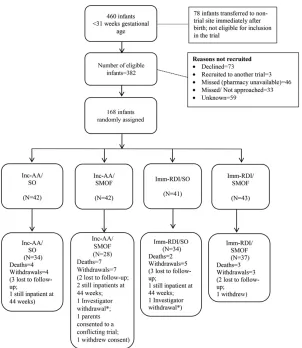
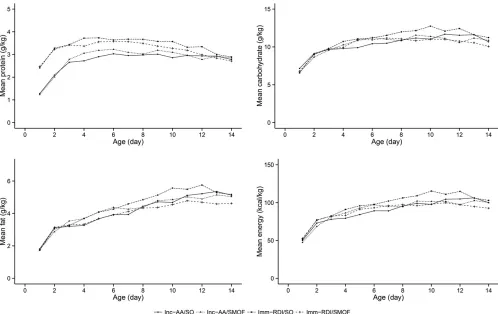
We randomly assigned 168 infants, of whom 133 received primary outcome assessments (Figure 1). Baseline characteris-tics were well balanced (Table 1,Supplemental Table 1). For ease of comparison between enteral and parenteral intakes, we expressed parenteral amino acid intake as protein (1 g amino acids = 0.89 g protein). Trial PN protein intake was higher in the Imm-RDI arms in the first 2 wk (Figure 2, Supplemental
Tables 2and3) , demonstrating that target intakes were reached;
carbohydrate, lipid, and energy intakes were similar across the 4 groups (Figure 2). Cumulative PN (trial and nontrial) and enteral protein intakes between birth and 34 wk postmenstrual age are provided inSupplemental Tables2 and 3 and4–6.
[image:6.585.42.544.379.692.2]The median (IQR) number of days to achieve a milk intake of 150 mL$ kg21$d21for 24 h was similar across the 4 groups (Imm-RDI/SO 11 d: IQR, 10–14 d; Imm-RDI/SMOF 13 d: IQR, 10–18 d; Inc-AA/SO 12 d: IQR: 9–18 d; and Inc-AA/SMOF 12 d: 9–16 d) (Supplemental Tables 7and8). Macronutrient and
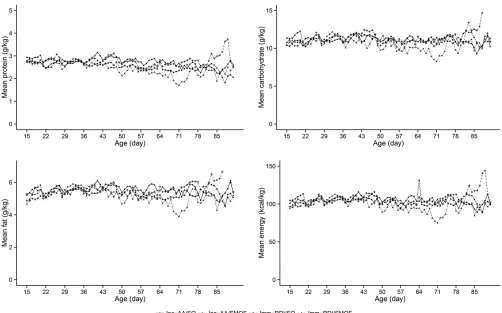
FIGURE 3 Mean daily protein, daily carbohydrate, daily fat, and daily energy intakes from all sources across the 4 groups after the first 2 postnatal weeks. Imm-RDI, immediate recommended daily intake; Inc-AA, incremental introduction of amino acid; SMOF, soybean oil, medium-chain triglycerides, olive oil, and fish oil; SO, soybean-based lipid emulsion.
T ABL E 2 ( Co ntinued ) Inc-A A/SO Inc-A A/SMOF Imm-R DI/S O Imm -RDI/ SMOF Adju sted mean dif ference 2 Inter action Imm -RDI 2 In c-AA SM OF 2 SO Super fi cial subcutaneous abdomi nal adipose tissue, g 87.0 (72.4, 101.6) 84.5 (72.8, 96.2) 85.2 (73.8, 96.5 ) 102. 6 (87.2, 118. 1) 5.2 ( 2 6.5, 17.0 ); P = 0.38 5.0 ( 2 6.7, 16.6 ); P = 0.40 16.3 ( 2 7.0, 39.6 ); P = 0.17 T otal adip ose tissue, g 610 (518, 702) 587 (509, 664) 589 (514, 663) 666 (589, 743) 16 ( 2 51, 82) ; P = 0.64 6( 2 60, 72); P = 0.85 77 ( 2 55, 208); P = 0.25 T otal adip ose tissue as % of body w eight 19.4 (17.9, 20.9) 19.7 (18.4, 21.0) 19.6 (17.8, 21.4 ) 20.8 (19.4, 22.3 ) 0 ( 2 0.01 , 0.02 ); P = 0.56 0.01 ( 2 0.01 , 0.02 ); P = 0.45 0.01 ( 2 0.02 , 0.03); P = 0.72 Safety outc omes, 7% T riglyc erides . 2.5 mmol/ L 29.4 (15.1, 47.5) 25.0 (10.7, 44.9) 32.4 (17.4, 50.5 ) 27.0 (13.8, 44.1 ) 1.15 (0.48, 2.74); P = 0.76 0.68 (0.28, 1.62 ); P = 0.38 0.71 (0.12, 4.06); P = 0.70 T otal ser um biliru bin . 150 m mo l/L 70.6 (52.5, 84.9) 75.0 (55.1, 89.3) 67.6 (49.5, 82.6 ) 75.7 (58.8, 88.2 ) 0.92 (0.41, 2.04); P = 0.83 1.32 (0.59, 2.94 ); P = 0.50 1.29 (0.26, 6.47); P = 0.75 Conju gated bilirubin . 40 m mol/L 11.8 (3.3, 27.5) 10.7 (2.3, 28.2 ) 5.9 (0.7, 19.7 ) 8.1 (1.7, 21.9 ) 0.47 (0.12, 1.85); P = 0.28 0.93 (0.24, 3.54 ); P = 0.92 1.65 (0.11, 25.34) ; P = 0.72 Alanine aminotr ansferase . 60 IU/L 8.8 (1.9, 23.7) 7.1 (0.9, 23.5 ) 8.8 (1.9, 23.7 ) 5.4 (0.7, 18.2 ) 0.99 (0.22, 4.41); P = 0.99 0.45 (0.09, 2.12 ); P = 0.31 0.59 (0.03, 12.69) ; P = 0.74 1V alues are mean s; 95% CIs in parenth eses unless oth erwise ind icated . Multipl e re gre ssion wa s used for modeli ng. IHCL , intrahepa tocellu lar lipid; Imm-RDI, imm ediate recommended daily intake; Inc -AA, increme ntal introdu ction of amino acid; QUICKI , quantita ti v e insulin sensi ti vity chec k inde x; SM OF , soyb ean oil, medium-c hain trig lyceri des , oli v e oil, and fi sh oil; SO, soyb ean-base d lipid emu lsion. 2Adju sted for age at scan, se x, gestational ag e, birth w eight, and center; body mass componen ts are deri v ed fro m body mass v olu mes. 3 Log transformat ion wa s used in the re gr ession mo del w ith the results transf ormed back from the log sc ale. 4 T otal of basal gangl ia, thal ami (de ep gray mat ter), cerebrospina l fluid, gr ay matter , white mat ter , and lat eral v en tricles v olu mes. 5 T otal of basal gangl ia, thal ami (de ep gray mat ter), gray mat ter , and w hite matter . 6 T otal of cerebellum and brains tem v olumes . 7 V alues are perc entages; 95% CIs in pare ntheses. Logi stic re gressi on was used for mo deling, and ORs are reported .
energy intake from milk and PN from the end of the second week onward did not differ between groups (Figure 3).
Primary outcomes
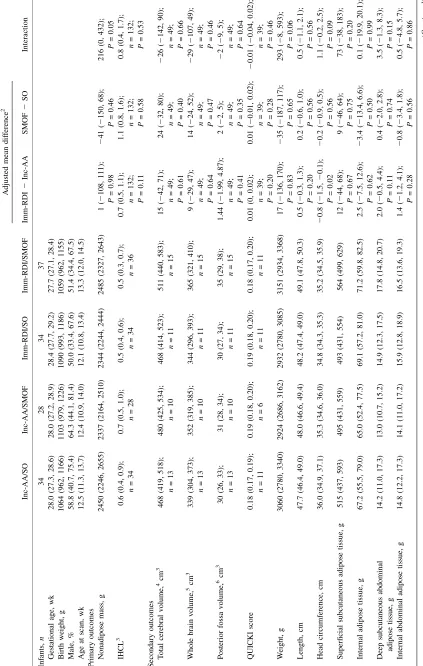
There was no significant difference between the Imm-RDI and Inc-AA groups in nonadipose mass at term [adjusted mean difference: 1.0 g (95% CI:2108, 111 g);P= 0.98] or between the SMOF and SO groups in IHCL [adjusted mean SMOF:SO ratio: 1.1 (95% CI: 0.8, 1.6); P= 0.58] (Table 2). There was a significant interaction (P= 0.05) between the 2 interventions for nonadipose mass (Supplemental Figure 2 and Table 2). There were no significant interactions between group differences for either primary outcome measure after adjustment for addi-tional confounders (Table 3).
Secondary outcomes
Head circumference at term was smaller in the Imm-RDI group than in the Inc-AA groups [adjusted mean difference: 20.8 cm (95% CI:21.5,20.1 cm);P= 0.02] (Table 2). There were no significant differences in any other prespecified sec-ondary outcomes (Table 2). Weight gain over the study period was similar across groups (Supplemental Figure 3). Additional nutritional information, sepsis incidence, and length of hospital stay are shown in Supplemental Tables 7 and 8.
Safety
There were significantly more infants in Imm-RDI groups with blood urea nitrogen concentrations.7 mmol/L (Imm-RDI/SO, 70.7%; Imm-RDI/SMOF, 79.1%; Inc-AA/SO, 50%; Inc-AA/ SMOF, 47.6%;P,0.01) and with concentrations.10 mmol/L (Imm-RDI/SO, 43.9%; Imm-RDI/SMOF, 53.5%; Inc-AA/SO, 14.3%; Inc-AA/SMOF, 21.4%;P,0.01) (Supplemental Table 9). There were no significant differences in the proportion of infants with any other abnormal biochemical indexes, including incidence of conjugated hyperbilirubinemia (Supplemental
Tables9 and10). Serious adverse events are summarized in
Supplemental Table 11.
DISCUSSION
We found that PN providing an Imm-RDI of amino acids did not benefit body composition or affect growth at term in very preterm infants born at,31 wk of gestation. We did not identify a significant difference in IHCL between infants receiving SO and SMOF. Calls for aggressive nutritional regimens involving earlier PN initiation and high protein intakes (4, 5) are reflected in international consensus guidelines that advocate amino acid intakes#4 g$kg21$d21(17). Observational reports have led to the hope that new fish oil–containing lipid formulations might reduce the high prevalence of PN-associated liver dysfunction (18). Our results do not support these recommendations.
Key strengths of NEON were excellent trial protocol adherence, including the introduction of milk within 24 h of birth and a prespecified approach to the management of electrolyte distur-bances despite clinician blinding to group allocation. The need for central venous access can limit early commencement; hence, the composition of trial PN permitted delivery by the peripheral vein. Both gestational age strata (23–26 and 27–31 wk) were broadly equal across groups, making the trial results applicable to the most immature infants. NEON was adequately powered because the CIs for the mean differences in nonadipose mass and the SMOF:SO IHCL ratio, respectively, excluded the prespecified difference of 200 g and decrease of 40%. Because we know of no biological reason for lipid type to influence the quantity of non-adipose tissue, we consider it likely that the between-intervention interaction we detected resulted from chance.
[image:9.585.37.554.76.176.2]We acknowledge limitations. Our study was carried out in 4 neonatal units, with primary outcome assessments at the lead university hospital. We considered it unethical to transfer an infant between hospitals for research purposes so we were unable to obtain primary outcome measures for infants recruited in nonlead centers who remained inpatients at term. However, primary outcome measurements were available for 133 infants because the trial design allowed for recruitment to continue until 128 (based on sample size calculation) measurements were available. Recruitment during the weekend was not feasible in all centers because of the lack of availability of pharmacy staff trained in clinical trial procedures; thus, a number of eligible infants were unable to participate. We were able to assess brain
TABLE 3
Primary outcome results after further adjustments for level of care and nutritional intake1
Adjusted mean difference (95% CI)2
Interaction
Adjusted mean difference (95% CI)3
Interaction
Imm-RDI/Inc-AA SMOF/SO Imm-RDI/Inc-AA SMOF/SO
Nonadipose mass, g 1 (2108, 111);
P= 0.98
241 (2150, 68);
P= 0.46
216 (0, 432);
P= 0.05
244 (2226, 139);
n= 130;
P= 0.64
214 (2114, 86);
n= 130;
P= 0.78
184 (222, 390);
P= 0.08
IHCL4 0.7 (0.5, 1.1);
n= 132;
P= 0.11
1.1 (0.8, 1.6);
n= 132;
P= 0.58
0.8 (0.4, 1.7);
n= 132;
P= 0.53
0.81 (0.37, 1.80);
n= 129;
P= 0.61
0.89 (0.61, 1.31);
n= 129;
P= 0.57
0.86 (0.39, 1.92);
n= 129;
P= 0.71
1
IHCL, intrahepatocellular lipid; Imm-RDI, immediate recommended daily intake; Inc-AA, incremental introduction of amino acid; SMOF, soybean oil, medium-chain triglycerides, olive oil, and fish oil; SO, soybean-based lipid emulsion.
2
Adjusted for age at scan, sex, gestational age, birth weight, and center.
3
Adjusted for age at scan, sex, gestational age, birth weightzscore (15), center, level of care [percentage of time spent receiving intensive and
high-dependency care between birth and assessment (16)], and nutritional intake.
4
volumes in only one-third of participants because we carried out MRI investigations without sedation (19), obtaining primary outcome measures first and proceeding to brain imaging only if the infant remained asleep.
PN is a high-cost, widely used neonatal intensive care inter-vention, yet to our knowledge there have been few previous randomized controlled trials and none that have evaluated the effects on body composition (20). We achieved a clear difference in amino acid intake between Imm-RDI and Inc-AA groups. The possible reasons why this did not translate into a difference in body composition or weight at term merit consideration. First, the Imm-RDI groups had a significantly higher incidence of elevated blood urea concentrations. This suggests that increased delivery above a threshold results in increased amino acid oxidation with no improvement in nitrogen retention or growth, as suggested previously (6, 21, 22). We consider it unlikely that the impaired utilization of amino acids was attributable to inadequate non-protein energy because nonnon-protein energy did not differ between the groups; however, it is plausible that the amino acid solutions in current use may not be optimal for preterm infants. Second, trial interventions may have resulted in a short-term difference in body composition that was attenuated when infants transitioned to self-regulated consumption. Embleton et al. (23) showed that infants that consumed a higher protein formula by a nasogastric tube achieved an increase in lean body mass that did not persist after a period of self-regulated consumption by bottle.
More than a decade ago, we found lean body mass at term to be almost 500 g lower in very preterm than in healthy term infants (13), which is in marked contrast to a recent study (24) and in NEON, in which the difference was only w200 g. The in-cremental regimen delivered a maximum PN amino acid intake of 2.7 g$kg21$d21(equivalent to 2.4 g protein$kg21$d21) because this was considered a standard of care in the United Kingdom at the time. However, total protein intakes were higher because milk feeds were commenced within 24 h of birth. Early commencement of milk feeds together with PN, as delivered in NEON, counter the assumption that very preterm infants in-evitably accrue substantial postnatal deficits and hence require protein intakes.4.5 g $ kg21 $ d21 (17). We used IHCL as a mechanistic marker because concentrations at term correlate with early lipid intake (25) and are higher in very preterm in-fants than in full-term inin-fants (14) and young adults (26). We also monitored liver function with the use of conventional bio-chemical markers and identified no between-group differences. Overall, our data support the conclusion of a systematic review and meta-analysis that fish oil–based lipid emulsions do not prevent PN-associated cholestasis (18), although we do not preclude the possibility that other formulations may be benefi-cial, including those with higher fish oil content.
We noted a smaller head circumference at term in infants receiving the higher amino acid intake. This observation is at odds with the Standardised, Concentrated Additional Macro-nutrients, Parenteral Nutrition in very preterm infants study. in which very preterm neonates randomly assigned to receive higher PN from birth had a larger head circumference at 28 d (27). Of note is that although the Standardised, Concentrated Additional Macronutrients, Parenteral Nutrition in very preterm infants study. aimed to deliver high amounts of PN, randomization occurred up to 120 h of age (compared with 24 h in NEON); hence, infants received a lower mean energy and amino acid
intake over the first 3 postnatal days than NEON infants. NEON was not powered to detect a difference in head circumference, but our observation is a concern because the possibility of adverse effects from higher PN intakes has been raised previously. A study that compared 3.5-g/kg amino acids and 2-g/kg lipids from the first postnatal day against an incremental regimen was ter-minated early because of increased sepsis in the former group (28). Choudri et al. (29) showed smaller brain growth and compromised neurodevelopment despite equivalent weight gain in preterm piglets receiving total parenteral compared with total enteral nutrition. Blanco et al. (30) found that infants receiving an immediate parenteral amino acid intake of 2–4 g$kg21$d21 compared with a group that was randomly assigned to receive a lower intake had a lower mean mental development index at 18 mo and lower mean z scores for weight, length, and head circumference. We reassuringly identified no between-group differences in brain volume in NEON.
We conclude that commencing an Inc-AA regimen that pro-vides a maximum of 2.7 g$kg21$d21together with introducing milk feeds within 24 h of birth does not seem to be detrimental to body composition and may also be safer compared with the immediate provision of an amino acid intake of 3.6 g$kg21$ d21. We also conclude that SMOF does not reduce intrahepatic lipid accumulation. We found that a standardized PN regimen was well accepted by clinicians and well tolerated by infants. We intend to evaluate growth and cognitive, developmental, and other functional outcomes in childhood. Optimal amino acid intakes and intravenous lipid formulations for extremely preterm infants remain to be established.
We thank Mary Rutherford for assistance with brain imaging, Chris Gale for medical supervision during MRI investigations, Juan Gonzalez-Maffe and Alexina Mason for statistical support, and Sealed Envelope Ltd. for providing the randomization and interactive voice response system. The Imperial College Clinical Trials Unit core staff and the InForm team are supported by the National Institute for Health Research (NIHR) Biomedical Research Centre. Participating centers and local principal investigators include teh following: Chelsea and Westminster Hospital: Sabita Uthaya, Izabela Andrzejewska, Sara Abdula, Laura Read, Elaine Smith, and Kathryn McCormick; Medway Maritime Hospital: Aung Soe, Helen McElroy, Abimbola Ojo, Helen Harizaj, and Parool Darbar; Northwick Park Hospital: Richard Nicholl, Rosemond Owoo, Cecilia Lam, Matilda Lang, and Theo Emmanuel; West Middlesex Hospital: Nour Elhadi, Dr Hashir Ariff, Siew Koay, Mylene Erese, Isabel Munoz.
The authors’ responsibilities were as follows—SU and NM: conceived and designed the study and analyzed and interpreted the data; XL, JW, LT, DA, and MY-L: analyzed the data; DB and CJD: designed the study and analyzed and in-terpreted the data; JB, GD, and AE: acquired and analyzed the data; and all authors: reviewed and approved the final manuscript. None of the authors reported a conflict of interest related to this study. This report presents in-dependent research commissioned by the National Institute for Health Re-search (NIHR) and will be published in full in the NIHR library journal. The views and opinions expressed herein are those of the authors and not nec-essarily those of the NHS, NIHR, Medical Research Council, NIHR Evalu-ation Trials and Studies Coordinating Centre, the Efficacy and Mechanism Evaluation Programme, or the Department of Health United Kingdom.
REFERENCES
1. Dusick AM, Poindexter BB, Ehrenkranz RA, Lemons JA. Growth failure in the preterm infant: can we catch up? Semin Perinatol 2003;27:302–10. 2. Cole TJ, Statnikov Y, Santhakumaran S, Pan H, Modi N. Birth weight and longitudinal growth in infants born below 32 weeks’ gestation: a UK population study. Arch Dis Child Fetal Neonatal Ed 2014;99: F34–40.
3. Ehrenkranz RA, Dusick AM, Vohr BR, Wright LL, Wrage LA, Poole WK. Growth in the neonatal intensive care unit influences neurodevelopmental and growth outcomes of extremely low birth weight infants. Pediatrics 2006;117:1253–61.
4. Simmer K. Aggressive nutrition for preterm infants—benefits and risks. Early Hum Dev 2007;83:631–4.
5. Hay WW Jr. Aggressive nutrition of the preterm infant. Curr Pediatr Rep 2013;1:doi: 10.1007/s40124-013-0026-4.
6. Vlaardingerbroek H, Vermeulen MJ, Rook D, van den Akker CH, Dorst K, Wattimena JL, Vermes A, Schierbeek H, van Goudoever JB. Safety and efficacy of early parenteral lipid and high-dose amino acid admin-istration to very low birth weight infants. J Pediatr 2013;163:638–44.e1–5. 7. Putet G, Senterre J, Rigo J, Salle B. Energy balance and composition of
body weight. Biol Neonate 1987;52(Suppl 1):17–24.
8. Georgoff P, Thomasson D, Louie A, Fleischman E, Dutchner L, Mani H, Kottill S, Morse C, Dodd L, Kleiner D, et al. Hydrogen-1 MR spectroscopy for measurement and diagnosis of hepatic steatosis. AJR Am J Roentgenol 2012;199:2–7.
9. Katz A, Nambi SS, Mather K, Baron AD, Follman DA, Sullivan G, Quon MJ. Quantitative insulin sensitivity check index: a simple, ac-curate method for assessing insulin sensitivity in humans. J Clin En-docrinol Metab 2000;85:2402–10.
10. Harrington TA, Thomas EL, Modi N, Frost G, Coutts GA, Bell JD. Fast and reproducible method for the direct quantitation of adipose tissue in newborn infants. Lipids 2002;37:95–100.
11. Naressi A, Couturier C, Castang I, de Beer R, Graveron-Demilly D. Java-based graphical user interface for MRUI, a software package for quantitation of in vivo/medical magnetic resonance spectroscopy sig-nals. Comput Biol Med 2001;31:269–86.
12. Vanhamme L, van den Boogaart A, Van Huffel S. Improved method for accurate and efficient quantification of MRS data with use of prior knowledge. J Magn Reson 1997;129:35–43.
13. Uthaya S, Thomas EL, Hamilton G, Doré CJ,Bell J, Modi N. Altered
adiposity after extremely preterm birth. Pediatr Res 2005;57:211–5. 14. Thomas EL, Uthaya S, Vasu V, McCarthy JP, McEwan P, Hamilton G,
Bell JD, Modi N. Neonatal intrahepatocellular lipid. Arch Dis Child Fetal Neonatal Ed 2008;93:F382–3.
15. Cole TJ, Freeman JV, Preece MA. British 1990 growth reference centiles for weight, height, body mass index and head circumference fitted by maximum penalized likelihood. Stat Med 1998;17:407–29. 16. British Association of Perinatal Medicine. Categories of care 2011
[Internet]. [cited 2015 July 5]. Available from: http://www.bapm.org/ publications/documents/guidelines/CatsofcarereportAug11.pdf. 17. Koletzko B, Goulet O, Hunt J, Krohn K, Shamir R. Guidelines on
paediatric parenteral nutrition of the European Society of Paediatric Gastroenterology, Hepatology and Nutrition (ESPGHAN) and the European Society for Clinical Nutrition and Metabolism (ESPEN). J Pediatr Gastroenterol Nutr 2005;41(Suppl 2):S1–87.
18. Park HW, Lee NM, Kim JH, Kim KS, Kim SN. Parenteral fish oil-containing lipid emulsions may reverse parenteral nutrition-associated cholestasis in neonates: a systematic review and meta-analysis. J Nutr 2015;145:277–83.
19. Gale C, Jeffries S, Logan KM, Chappell KE, Uthaya SN, Modi N. Avoiding sedation in research MRI and spectroscopy in infants: our approach, success rate and prevalence of incidental findings. Arch Dis Child Fetal Neonatal Ed 2013;98:F267–8.
20. Uthaya S, Modi N. Practical preterm parenteral nutrition: systematic literature review and recommendations for practice. Early Hum Dev 2014;90:747–53.
21. Clark RH, Chace DH, Spitzer AR. Effects of two different doses of amino acid supplementation on growth and blood amino acid levels in premature neonates admitted to the neonatal intensive care unit: a randomized, controlled trial. Pediatrics 2007;120:1286–96. 22. Burattini I, Bellagamba MP, Spagnoli C, D’Ascenzo R, Mazzoni N,
Peretti A, Cogo PE, Carnielli VP. Marche Neonatal, Network. Targeting 2.5 versus 4 g/kg/day of amino acids for extremely low birth weight infants: a randomized clinical trial. J Pediatr 2013;163:1278–82.e1. 23. Embleton ND, Cooke RJ. Protein requirements in preterm infants:
effect of different levels of protein intake on growth and body com-position. Pediatr Res 2005;58:855–60.
24. Vasu V, Durighel G, Thomas L, Malamateniou C, Bell JD, Ruth-erford MA, Modi N. Preterm nutritional intake and MRI phenotype at term age: a prospective observational study. BMJ Open 2014;4: e005390.
25. Vasu V, Thomas EL, Durighel G, Hyde MJ, Bell JD, Modi N. Early nutritional determinants of intrahepatocellular lipid deposition in pre-term infants at pre-term age. Int J Obes (Lond) 2013;37:500–4. 26. Thomas EL, Parkinson JR, Hyde MJ, Gale C, Santhakumaran S,
Modi N. Aberrant adiposity and ectopic lipid deposition character-ize the adult phenotype of the preterm infant. Pediatr Res 2011;70: 507–12.
27. Morgan C, McGowan P, Herwitker S, Hart AE, Turner MA. Postnatal head growth in preterm infants: a randomized controlled parenteral nutrition study. Pediatrics 2014;133:e120–8.
28. Moltu SJ, Strommen K, Blakstad EW, Almaas AN, Westerberg AC, Braekke K, Ronnestad A, Nakstad B, Berg JP, Veierod MB, et al. Enhanced feeding in very-low-birth-weight infants may cause elec-trolyte disturbances and septicemia—a randomized, controlled trial. Clin Nutr 2013;32:207–12.
29. Choudhri AF, Sable HJ, Chizhikov VV, Buddington KK, Buddington RK. Parenteral nutrition compromises neurodevelopment of preterm pigs. J Nutr 2014;144:1920–7.