• No results found

Care For Older People

N/A
N/A
Protected

Academic year: 2020

Share "Care For Older People"

Copied!
170
0
0

Loading.... (view fulltext now)

Full text

(1)
(2)

Preface iv

Executive Summary vii

Section I Introduction and Policy Context 1

Section II Rooting out Ageism 31

Section III Making Living at Home Possible 41

Section IV Legal Aspects of Community Care 57

Section V Co-ordinated Approaches 69

Section VI The Most Vulnerable 81

Section VII Enhancing Quality of Care and Quality of Life 91

Section VIII Delivering Change: Implementation 103

Annex 1 References 108

Annex 2 Terms of Reference for the Project Team 111

Annex 3 Summary of Written Submissions Received 112

Annex 4 Care for Older People:

International Developments 128

Annex 5 Care for Older People:

Plenary Session: Attendance List 142

Terms of Reference and Constitution of the NESF 145

Membership of the NESF 146

(3)
[image:3.595.171.494.104.746.2]

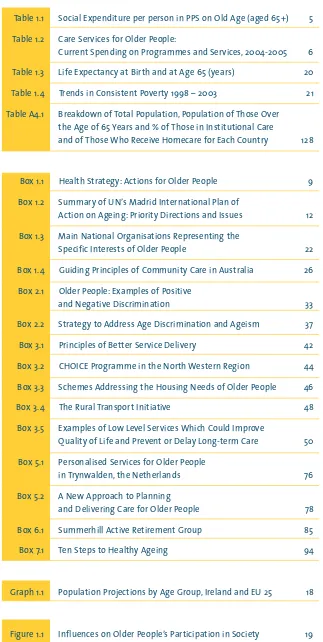
List of Tables, Boxes, Graphs and Figures

Table 1.1 Social Expenditure per person in PPS on Old Age (aged 65+) 5 Table 1.2 Care Services for Older People:

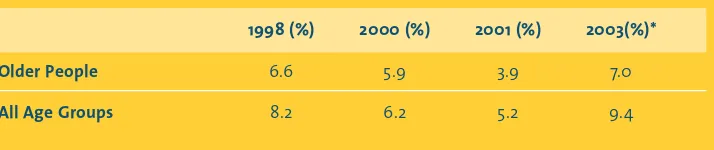
Current Spending on Programmes and Services, 2004-2005 6 Table 1.3 Life Expectancy at Birth and at Age 65 (years) 20 Table 1.4 Trends in Consistent Poverty 1998 – 2003 21 Table A4.1 Breakdown of Total Population, Population of Those Over

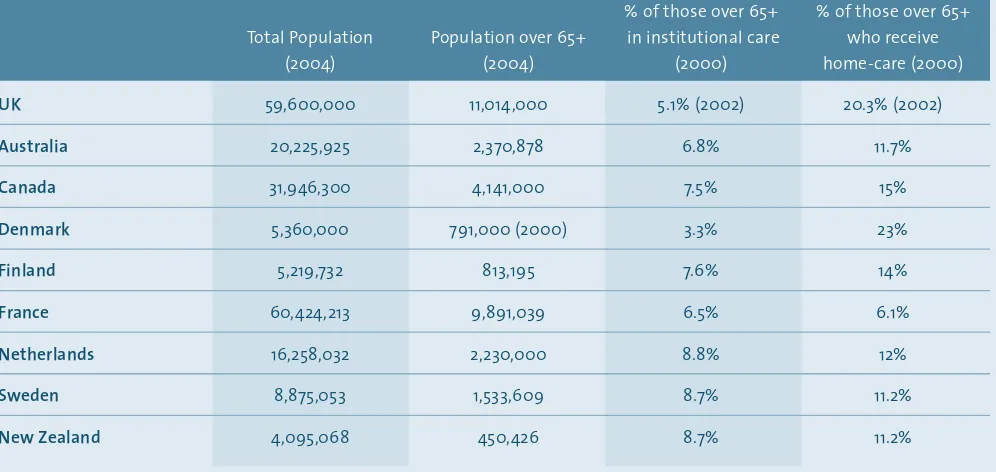
the Age of 65 Years and % of Those in Institutional Care

and of Those Who Receive Homecare for Each Country 128

Box 1.1 Health Strategy: Actions for Older People 9 Box 1.2 Summary of UN’s Madrid International Plan of

Action on Ageing: Priority Directions and Issues 12 Box 1.3 Main National Organisations Representing the

Specific Interests of Older People 22

Box 1.4 Guiding Principles of Community Care in Australia 26 Box 2.1 Older People: Examples of Positive

and Negative Discrimination 33

Box 2.2 Strategy to Address Age Discrimination and Ageism 37 Box 3.1 Principles of Better Service Delivery 42 Box 3.2 CHOICE Programme in the North Western Region 44 Box 3.3 Schemes Addressing the Housing Needs of Older People 46

Box 3.4 The Rural Transport Initiative 48

Box 3.5 Examples of Low Level Services Which Could Improve

Quality of Life and Prevent or Delay Long-term Care 50 Box 5.1 Personalised Services for Older People

in Trynwalden, the Netherlands 76

Box 5.2 A New Approach to Planning

and Delivering Care for Older People 78 Box 6.1 Summerhill Active Retirement Group 85

Box 7.1 Ten Steps to Healthy Ageing 94

Graph 1.1 Population Projections by Age Group, Ireland and EU 25 18

Figure 1.1 Influences on Older People’s Participation in Society 19

(4)

Preface

There is strong evidence that older people want to remain living in their own

homes and communities as independently as possible for as long as possible. This

preference has been accepted by successive Governments as a key policy

objective. Yet this objective is nowhere near achievement. This is reflected in our

under-developed community care system, which is crisis driven, lacks sufficient

co-ordination and resources and does not afford older people the choice,

independence and autonomy they seek and deserve.

The present report, which was prepared by an NESF Project Team, focuses on

examining the current set of choices available to older people in respect of health

and social care and identifies gaps in the continuum of care that currently exist.

There is broad acceptance that care is a central social concern. The NESF has

recently published its report on Early Childhood Care and Education(NESF Report

Number 31), which focused on the development and implementation of a policy

framework for children from birth to age six. This current report looks at care in

old age and is designed to complement other issues being addressed under the

National Agreement,Sustaining Progress,such as the work of the Working Group

on policy options for the financing of long-term care for older people and the

pilot Home Care Grant Scheme; and the care issues raised by the Oireachtas

Committee on Social and Family Affairs.

For this purpose, the report develops a vision of what is needed to be done so as

to make living at home in older age a reality for all, and one that moves towards

person-centred community care responses. It also identifies the priority actions

that are necessary to achieve this vision. This proposed shift in policy approach is

necessary because:

cour society is changing,in make-up as the number of older people

increase, but also our families and familial relationships and traditional

(5)

cour expectations are changing,service users are becoming more

empowered and services are expected to be more consumer-driven and

quality-based in the future.

In line with its mandate from Government, this report was discussed at an NESF

Plenary Session in late September in the Royal Hospital Kilmainham. This was

attended by Members and a wide variety of guests representing concerned

individuals and groups with practical experience on the ground, Government

Departments, State Agencies and those who made submissions to help us in our

work. The Team’s approach was well received at the Plenary and the many

valuable contributions helped to subsequently strengthen and clarify the Team’s

final recommendations.

The NESF would like to record its appreciation to all those who contributed to

this report, particularly those who made written submission or met with the

Project Team. The members of the Project Team are also to be thanked for their

hard work and commitment, and the Project Team Leader, Professor Eamon

O’Shea, NUI, Galway for his sterling work in facilitating the many contributions

made and for bringing the work to a successful conclusion as well as the

NESF Secretariat.

(6)
(7)

This Executive Summary is presented in three interconnecting parts.

The first part outlines the context in which the Project Team on Care for Older People undertook its work. The second gives a brief overview of the report, and the third part details the Team’s priority recommendations, which are

summarised below.

The Project complements work already underway by the Working Group

established under the National Agreement,Sustaining Progress, to identify the

policy options for a financially sustainable system of long-term care, which is due to report shortly.

Executive Summary

Summary of Key Recommendations

p Bring public spending on care services for older people up to at least the OECD average of 1 per cent of GDP over the next five years, at an additional cost of e500 million

p Develop a National Action Plan on Ageing

p Root out ageism and promote positive ageing

p Clarify entitlement to core community care services and introduce unified and holistic assessment of need

p Increase financial support for homecare

p Strengthen co-ordination, implement care and case management

p Develop standards of care across the system and emphasise quality of life outcomes

p Positive ageing training should be delivered to all relevant staff (policy-makers, managers and care staff)

p Maintain and develop housing stock

(8)

1. Care in the community is not the reality it should be

Care is a central policy concern. The NESF has recently published its report on

Early Childhood Care and Education(NESF Report Number 31) and in this report the focus is on care for older people. In setting out a vision of care services for older people, the Team was informed by the strong preference of older people that they should be able to remain living in their own homes as independently as possible for as long as possible. This has been official Government policy since

the publication of The Years Ahead: A Policy for the Elderlyin 1988, but the

evidence suggests that much more needs to be done to make this a reality. In this regard, the work of the National Council on Ageing and Older People has been instrumental in identifying barriers to affecting real change in the lives of older people.

A key barrier to achieving official policy has been the weakness in policy implementation. The Team’s views on this barrier are multi-faceted:

cbelow average spending on services for older people.Our levels of

social spending on social protection are low by EU and OECD standards considering our levels of wealth, and this is particularly so for services relating to old age. Estimated public expenditure here on care services for older people in 2004 was just under one billion euro, which equates to 0.67 per cent of GDP. OECD estimates for 2000 suggests that public expenditure on care services for older people in OECD countries averaged at just under 1 per cent of GDP (OECD, 2005, Table 1.2). Bringing Ireland up

to the OECD average would entail an additional expenditure of c500

million on care services for older people. Even allowing for age structure differences between Ireland and the rest of the OECD countries, an additional expenditure of this magnitude will be necessary in the medium-term to meet the Government’s own targets of increased

investment in community care and improved quality of care and quality of life for older people in long-stay care. The economic framework is one where our economy is performing well, and forecast to continue to grow at 5 per cent per year for the next five years to the end of the current decade, with close to full employment levels (Economic and Social Research Institute, 2005). This robust economic outlook provides the

Implementation barriers

p Relatively low social spending on services for older people

p Funding not consistent with policy objectives

p Equality issues not adequately addressed

p Lack of clarity on entitlement

(9)

opportunity and the resources for investment in developing community-based care responses as recommended in this report.

cPerverse investment incentives.It is also clear that the funding of

services for older people has not always been wholly consistent with the policy objective of encouraging community-based responses. Considerable resources have been invested in nursing home care responses, some of which was unnecessary, not wanted and inappropriate. For many older people, inappropriate or unnecessary admission to acute or long-stay residential care could have been avoided or delayed by greater development of community services and use of preventative and proactive approaches.

cEquality for older people.In its earlier report on Implementing Equality for Older People: Implementation Issues (Report Number 29), which built on the Equality Authority’s report on these issues (Equality Authority, 2002), the NESF outlined how an equality agenda for older people might best be implemented. This current report builds on the framework outlined there and the work of the National Council on Ageing and Older People and other groups representing the interests of older people. Progress on achieving a more age-friendly society and care system cannot be achieved unless ageism in all its forms is rooted out of our system and equitable services to meet older people’s needs are developed.

cService entitlement. The majority of older people remain active and

independent; however, it is increasingly clear that services also play an important role in helping others to remain independent for longer. Our services have developed in a patchy fashion; they lack unity in terms of coverage and access, grounding in needs-assessment and systematic data gathering and analysis. This was a strong issue to emerge from the written submissions received by the Team. The commitment in the Health

Strategy Quality and Fairness: A Health System for Youthat eligibility

arrangements will be simplified and clarified and the establishment of the Health Service Executive provide a unique opportunity to move services forward to achieve a more even response to need, but one which still allows for local-level flexibility.

cStrategic statement on ageing.The modern approach to public policy

(10)

2. Overview of the Report

The Team’s Report is divided into 8 Sections. A brief overview of each Section is now provided and then the Team’s recommendations are outlined.

Section 1details the purpose and working methods of the Team and the domestic and international policy developments in the context of ageing populations. It draws attention to the slow pace of implementation of domestic policy for older people and the shift internationally to more person-centred, home-based responses and more universal public provision, with a greater emphasis on making services more consumer-directed and standards-driven. The nature of informal care is also changing. The Section then examines three over-arching issues. The first relates to the different dimensions of quality: quality of life, quality of care and quality of outcome; the second focuses on valuing older people’s participation in society, to counteract negative stereotyping of ageing as increased dependency, but stressing instead the need for healthy ageing, greater social inclusion and representation of older people, comprehensive services and making our living environment more age-friendly. In the third and final over-arching theme, the Team concentrates on the barriers to better community care responses, which are addressed throughout the report.

Contents

1 Background and policy setting

2 Rooting out ageism

3 Making living at home possible

4 Legal aspects of community care

5 Co-ordinated approaches

6 The most vulnerable

7 Enhancing quality of care and quality of life

(11)

Section 2gives priority to rooting out ageism in our society, as it inhibits older people’s full and dignified social participation. The Team provides evidence of both positive and negative discrimination, arguing that positive discrimination can be supported if it counteracts negative discrimination or promotes equality of opportunity or caters for a person’s special needs. The research evidence leads to the conclusion that ageism and negative discrimination are serious blockages to progress and the Team recommends an action plan to tackle it.

In Section 3,the Team addresses a core aspect of its work: making living at home possible. In this Section, extending older people’s choices, supporting their independence and empowerment, developing flexible responses to need and supporting carers are discussed in turn. The Section focuses on how services should become more person-centred, and move away from the current ‘one-size-fits-all’ approach. Two specific areas are outlined in more detail, that of housing and transport. In looking at the issue of community-based provision more generally, it draws from UK research which found that low-level supports, if provided at the right time, can have better outcomes for older people, compared to interventions which only kick-start at crisis points. The Team calls for a rebalancing of care supports to support home living and strongly supports the concept of community-based subventions in this context, particularly for those on the margins between community and residential care. It also supports the view that carers are a core element of any community care strategy and that a national strategy for caring is now required.

Section 4deals with two related issues around the lack of a legal base to community care services for older people, which have been identified as an implementation barrier. First the potential positives and drawbacks of a rights-based approach are examined and then the practical barriers to community groups developing locally-based community care responses for older people are discussed. This approach was taken to mean that there should be legal clarity about services, that services should be consistent and fair and provided in a timely manner.

(12)

Section 5develops further the theme of integration and focuses on the issue of co-ordinated approaches to the planning and delivery of services. This has positive returns in terms of efficiency and effectiveness. As part of public service modernisation, greater emphasis is now placed on more integrated approaches to service delivery and the development of cross-Departmental problem-solving approaches. The inter-Departmental Group on the Needs of Older People, for example, is identified by the Team as an important initiative, but one which needs to be strengthened to become more effective. Planning structures at a local level also need to be inclusive of older people.

The concepts of care and case management, a more integrated approach to care planning and delivery, are then examined. Staff training is identified as a key to its successful implementation. A unified assessment of need to collect information on a person’s situation, which would also take account of their ability to pay for services, is also supported. Finally, in this Section, the Team looks at how community and residential care can be better integrated. This involves a remodelling of the role of institutional care to favour respite, rehabilitation and re-integration; the development of more intermediate care between primary and specialist services; and the better linking of community-based services to hospital and institutional settings, for example around the point of discharge from hospital.

The NESF has a particular mandate to consider the needs of those most vulnerable

or marginalised and Section 6considers the position of particular groups whose

(13)

The issue of quality is central to Section 7and it begins by outlining current developments in relation to accreditation and the promotion of quality care in residential settings. Emphasis is given to the need for consistency across different care settings and services, to base standards on consultation and to view

standards as the route to continuous improvement. The importance of quality care environments is stressed, but even more important is the need for high quality staff to deliver services. The Team then considers what makes for a good old age. Drawing from UK research, the importance of interdependence, of being able to give and to receive is given particular emphasis. In residential settings, the importance of independence, choice and autonomy are flagged, while accepting that this involves a certain amount of risk taking. The value of health promotion is also underlined in this Section and its on-going development encouraged.

Section 8focuses on what needs to be done to deliver change and to achieve implementation, particularly for those who are most vulnerable. The Team begins by outlining why change to the status quo is needed and what this will entail:

cemphasising older people’s independence and ensuring choice and access

to a core of high-quality services when needed;

cconsulting with older people regarding their needs and responding in a

timely and appropriate fashion;

ccollecting the necessary information to inform service planning, at an

individual to national level; and

(14)

The Team prioritises the next steps to achieve this change and reviews the financial implications and information requirements for progress. Given the complexity and diversity of our current systems of care, and the resistance and power of inertia, the changes recommended by the Team to modernise care for older people will require considerable leadership to move forward. But this is vital if we are to respond more effectively to the emerging social and economic context outlined in this report. Changing our approach to care for older people will have very significant benefits for older people themselves, by enhancing their quality of life, but it will also benefit society more generally by increasing and sustaining older people’s ability to participate and contribute to society, through family, community or workplace settings. Key actors are identified to drive the necessary institutional and structural changes required and mechanisms are recommended to monitor progress and measure outcomes.

The Team’s priority recommendations are now outlined.

Written Submissions

The Team called for written submissions and received over 140 replies. Here are some extracts:

p We would like to see a greater consensus emerging in public life about the fact that ageism and age discrimination exist and greater will is needed to tackle it.

p There is a required shift in mindset in terms of looking at the person and their contribution to society rather than they being perceived as a cost factor to the State.

p Government should adopt a strategy framework for housing and care for the elderly.

(15)

3. Delivering Change: Prioritised Recommendations

The Team’s recommendations are collated below for easy reference. Where possible, the lead implementation agents are identified and timeframes indicated. The recommendations relate to actions required in the short to medium-term. Many of them should be well underway if not completed within a 12 month timeframe. A key factor in driving implementation will be leadership to simultan-eously deliver the mindset change and additional resources to achieve a new approach to care services for older people, underpinned by the principles of independence, autonomy and choice (numbers refer to corresponding paragraph numbers in the report).

1.14 Increase public spending on care for older people to at least oecd average

The Team recommends that public spending on care services for older people should be increased over the next five years to at least the OECD average of 1 per cent of GDP. Reaching this target would entail an additional minimum

expenditure of c500 million per year on services for older people in this country.

This additional funding should be ring-fenced for these services and there should be an in-built emphasis on measuring outcomes.

1.28 Develop a National Strategy on Ageing

The Team recommends that a New National Strategy on Ageing should be developed by the Inter-Departmental Group on the Needs of Older People, to be chaired by the Department of the Taoiseach to provide the strategic underpinnings for change. The Strategy should cover all service areas of relevance to older people and include consideration of the following:

cthe status of older people and their contribution to society;

cbaseline data and information for planning;

ccurrent resource allocation;

can audit of current service provision;

ccross-cutting issues such as co-ordination, needs assessment, standards;

and

cimplementation, for example, the value in establishing a National Office

for Ageing (based on international experience and the lessons from the establishment of the National Children’s Office).

(16)

2.12 – 2.16 Root out Ageism and Promote Positive Ageing

The Team recommends that a National Strategy to Root out Ageism and Promote Positive Ageing should be developed at three inter-connecting levels.

AtGovernment level,a Statement that ageism and age discrimination should be eliminated should be published. The promotion of an age-friendly society should be mainstreamed in national strategies (e.g the National Development

Programme). These are immediate priorities.

At thePolicy levela Working Group on Positive Ageing should be established by

the Department of Health and Children on publication of the Team’s report. It should have a broad membership of Government Departments, Social Partners and experts to:

caudit existing Departmental policy and procedures and develop a strategic

response;

cconsult with older people and others;

cpromote positive ageing in both the public and private sectors;

cdevelop national anti-ageism guidelines and advise on age-proofing; and

cmonitor progress and produce an annual report.

This should be linked to the Delivery level,where relevant statutory service

providers, for example, the Health Service Executive and Local Authorities, should pay greater attention to the needs of older people through:

cbetter inter-agency liaison at a senior level on positive ageing issues;

cthe inclusion of age equality as a cross-cutting theme in strategic planning;

cage-proofing and auditing services from an age impact perspective and

using administrative data to check for age discrimination;

craising public awareness of ageism issues;

cincluding older people in customer groups;

cstaff training; and

csupporting local initiatives.

(17)

3.7 – 3.11 A more strategic role for housing

The Team recommends that the Department of the Environment, Heritage and Local Government should develop and strengthen its on-going evaluation and assessment of the housing schemes, focusing in particular on efficiency and equity issues and older people’s quality of life outcomes.

The Team recommends that the Department of the Environment, Heritage and Local Government should undertake research to assess older people’s housing preferences and identify and address potential barriers or disincentives to their moving to the accommodation which best fits their needs.

The Team recommends that the role of assisted and supported housing should be expanded as a housing option for older people, particularly where it supports independent living and a continuum of care. This will require the development of a strategic framework for housing and care, which should address funding issues (capital and current), services and supports, planning issues and co-ordination between health and housing sectors.

3.25 Support for homecare

The Team recommends that community-based financial or other supports for services should be made more widespread, focusing initially on high-dependent older people in the community and drawing on best practice from the pilot

programme of care for older people (under the National AgreementSustaining

Progress); and that consideration should be given on equity and efficiency grounds to re-balancing the financial supports to different people in different situations (e.g. community and residential settings).

3.30A National Strategy for Carers

The Team recommends that the Departments of Health and Children and Social and Family Affairs should jointly establish a broad-based group (including relevant Social Partners, Carers groups and experts) to develop a National Strategy for Carers. This should give particular attention to the specific needs of older carers and should be completed within 12 months.

4.41Clarify entitlements to community care and holistic assessment of need

(18)

5.11 Strengthen cross-Departmental Co-ordination and Planning

The Team recommends that the Inter-Departmental Group on the Needs of Older People should be widened and strengthened to take on a stronger cross-Departmental remit with representatives at Assistant Secretary level and supported by a permanent and senior level Secretariat. This Group should:

cdevelop a National Strategy on Ageing;

cconsider the structures, legislation and funding requirements and

allocation needed to underpin cross-Departmental co-ordination and integrated planning; and

csupport innovative approaches to local-level service co-ordination and

disseminate good practice.

5.13 Make issues affecting older people more central to local planning and delivery

The Team recommends that:

cOlder people should have an active role in planning and service delivery at

local level on an on-going basis, through consultation and participation.

cIssues of specific concern to older people should be addressed by local and

regional planning fora, for example, the HSE Advisory Panels, the Strategic Planning Committees, Vocational Education Committees and the County and City Development Boards and older people should be specifically represented on these fora.

cGreater emphasis should be given to the role of co-ordinating staff in

service planning and delivery and all service delivery staff should receive training on integrated service responses, standards should be set and best practice disseminated.

cData gathering systems should be developed which are person-centred

and have the capacity to be collated and analysed to plan appropriate responses for groups of older people (e.g. at community level or additional needs level).

cIT solutions should be developed to promote co-ordination and integration

and also to promote assistive technology for independent living.

cThe development of innovative approaches to service co-ordination (such

(19)

5.18 – 5.19 Embed care and case management principles in the care system

The Team recommends that the Department of Health and Children and the HSE should ensure that care and case management principles, philosophies and approaches are embedded across the community care system and at the point of admission to and discharge from residential and acute care services. The Team also recommends that a unified and holistic assessment process of establishing people’s needs for services should be introduced as a priority.

7.14 Inspect and enhance all standards of care

The Team recommends that:

cthe remit of the Social Services Inspectorate should be extended on a

statutory basis to include all care settings for older people (residential, community and home-based; private, State or community/voluntary provision), with the necessary staff and financial resources;

cInspectors should be adequately trained and inspection findings should be

published;

cthere should be sanctions for non-compliance with standards;

cthe principles of autonomy, empowerment and person-centredness should

inform the development and implementation of the standards;

cstandards should be clear, adequate and agreed, and developed in

consultation with users;

cthe Department of Health and Children should develop policy in relation

to standards of care for older people in acute hospital settings;

cproactive development of higher standards is required to further move

care towards quality of life measures; and

cstandards should be developed and applied across all service levels – from

(20)
(21)

Purpose of the Report

1.1 The focus of this report is on community care for older people. ‘Older’

here refers to those sixty-five years of age or over. In adopting this

traditional age cut-off point, however, the Project Team was conscious that chronological age is not an accurate determinant of people’s needs or preferences as there are dramatic differences in the health status,

participation and levels of independence among older people of the same age. A key point that the Team will be making in this report is that an over-reliance on age cut-off points in framing policy and practice is an

ineffective way to respond to needs, and one that can be discriminatory and counterproductive to positive ageing.

1.2 A second and related point the Team wishes to emphasise from the

outset is that many older people are very independent and active and may not require or want any formal ‘community care’ services in its broadest definition (see below). In keeping with the mandate given to the NESF by Government, the Team has focused particularly on those most marginal-ised and at risk of social exclusion. For this group, community care services undoubtedly play a central role in framing people’s choices and supporting their preferences and have the potential to positively impact on their quality of life.

1.3 This Section of the report introduces the work of the Project Team and

then examines four contextual areas:

cthe policy context;

cdimensions of quality: quality of life, quality of care and quality of outcome;

cvaluing older peoples participation in society; and

cbarriers to achieving better community care.

(22)

Project Team’s Methods of Work

1.4 The Team was representative of a broad range of interests and

organisations. Membership of the Team was as follows:

Project Team Leader Dr Eamon O’Shea,

National University of Ireland, Galway

Strand 1 Senator Geraldine Feeney, Fianna Fáil

Senator Kate Walsh,Progressive Democrats

Deputy Jerry Cowley,Independent

Strand 2 Ian Martin,

Irish Business and Employers Confederation

Michael O’Halloran,

Irish Congress of Trade Unions

Mary McGreal,Irish Farmers’ Association

Strand 3 Sheila Cronin,Conference of Religious of Ireland

Maria Fox,Disability Federation of Ireland

Robin Webster,Age Action Ireland

Strand 4 David Wolfe,Department of Health and Children*

Bob Carroll,

National Council on Ageing and Older People

Ger Barron,General Council of County Councils

Mo Flynn,Health Service Executive

Cáit Keane,Independent

Secretariat David Silke

*The Team would like to acknowledge the contribution of Mr David Wolfe, who died during the course of this project.

1.5 The Team adopted a positive holistic view of ageing and later life, which

stressed the importance of older people’s full participation in economic, social and cultural life (see Annex 2). It developed a vision of what is to be achieved to make living at home in old age a clearer reality for older people, based on a bias towards person-centred community care responses.

1.6 In keeping with this vision, throughout its work the Team emphasised:

cthe positive contribution of older people and the need for their greater

participation in defining policy;

cpromoting positive ageing, independence and equity for older people in

economic, social and cultural life, particularly the most vulnerable;

cseparating ‘dependency’ from ‘situations of dependency’ for older people;

cexamining current resource allocation for older people in community and

(23)

cpromoting the social integration of dependent older people through

the development of integrated primary and community care models, life-adaptable accommodation, public transport, lifelong learning, technology, etc;

cthe legal dimensions, both in terms of a ‘rights-based’ approach and

legislative barriers to greater community participation in care;

cthe importance of solidarity at family, neighbour, community, voluntary

and statutory level;

cexploring the meaning of quality of life for vulnerable older people in

community and long-stay care settings, including people with dementia;

cexamining the nature and process of policy formulation and policy

implementation for older people; and

cthe impact of age discrimination and how it should be tackled.

1.7 As part of its working methods the Team:

cmet on fourteen occasions;

ccalled for written submissions from interested parties and received over

140 replies (see Annex 3);

ccommissioned a Policy Paper on the Legal Aspects of Community Care;

cmet with a wide range of individuals and organisations; and

cvisited a number of care sites and spoke with residents and staff.

1.8 A central question throughout this report is:what changes are required

in policy and practice to ensure that older people can live as independently as possible in their own homes and communities for longer, if that is their wish?The focus of the Team’s work was on the current set of choices available to older people in respect of health and social care in Ireland and to identify any gaps in the continuum of care that currently exist. As a result, a second feature of this work has been to focus on policy implementation — the degree to which current policy is being implemented and what barriers exist to achieving policy objectives.

1.9 A third and overarching aspect of the Team’s work has been to consider

the impact of policies from an equality perspective. This follows on from

the earlier work of the Equality Authority on Implementing Equality for

Older People (2002)which contained a comprehensive strategy for change, built around the following key strategies or actions:

cage-proofing or assessing decisions made for their impact on older people;

cpositive action to address a past history of exclusion of older people;

cparticipation by older people and their organisations in decisions that

(24)

ctraining in age awareness and skills in combating ageism; and

cunderpinning access to key services through legislative entitlement

(Equality Authority, 2002).

The NESF established a Project Team to identify potential implementation barriers and challenges to fulfilling the main priority recommendations in the Equality Authority report and to comment and make recommenda-tions on how these could be addressed, which was published in 2003 —

Equality Policies for Older People: Implementation Issues(Report Number 30, July 2003). The NESF called for a systematic implementation of the Equality Authority’s recommendations and:

cthe introduction of on-going mechanisms to monitor progress;

cgreater investment to tackle ageism and social attitudes;

cbetter co-ordination of cross-cutting issues;

c‘older people within their community’ should be a core value tested before

any alternative policy responses are considered or adopted;

cresearch and administrative data should be age-proofed and upper age

limits removed; and

cDepartments should age-proof policies and programmes.

The NESF will return to assess progress in relation to the implementation of the recommendations in this report in its Fifth Periodic Report.

1.10 A final aspect of the Team’s work is the economic framework and

particularly the current levels of investment in care for older people. The United Nations recently ranked Ireland 8th in the world in relation to human development for 2003, up from 10th position in 2002 and from 17th position in 2000. This ranking is based on three dimensions, namely: life expectancy, adult literacy rates and GDP per capita. Ireland ranked second in the world, after Luxembourg, in terms of GDP or the wealth we produce

per capita (United Nations Development Programme, 2005).1

1.11 International comparisons of social spending are difficult. The data

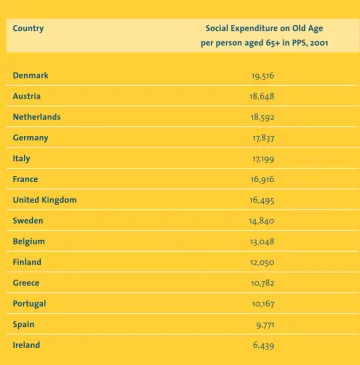
which is available indicates that in absolute terms we are low spenders on social protection (which covers cash transfers and services) compared to the EU 15 average, and particularly so in relation to our level of wealth. For example, our social spending per capita in 2001 was only 60.5 per cent of the EU 15 average, adjusting for differences in the cost of living (i.e. in a common purchasing power standard, PPS). Only Spain and Portugal spend proportionally less (Eurostat, 2004). If this figure is further broken down to examine spending on old age, as is shown in Table 1.1, we rank lowest of our EU 15 neighbours in terms of our social spending per person (National Economic and Social Council, 2005, p109).

(25)

1.12 Table 1.2 overleaf shows that estimated public expenditure on care services for older people in both community and residential settings in 2004 was just under one billion euro, more than half of which was spent on residential care in public and private long-stay settings (caring for about 5 per cent of older people). This level of overall spending equates to 0.67% of GDP. OECD estimates for 2000 suggest that public expenditure on care services in OECD countries on home care and in institutions (excluding acute services in hospitals) averaged at just under 1 per cent of GDP (OECD, 2005, Table 1.2). Bringing Ireland up to the OECD average would entail an

additional expenditure ofc500 million on services for older people here.

Even allowing for age structure differences between Ireland and the rest of the OECD countries, an additional expenditure of this magnitude will be necessary in the medium-term to meet the Government’s own targets of increased investment in community care and improved quality of care and quality of life for older people in long-stay care.

[image:25.595.169.530.136.502.2]

Source : various sources cited in National Economic and Social Council, 2005, p.109, Table 4.7 Note: PPS refers to common purchasing power standard.

Table 1.1

Social Expenditure per Person in PPS

on Old Age (aged 65+)

Country Social Expenditure on Old Age

per person aged 65+ in PPS, 2001

Denmark 19,516

Austria 18,648

Netherlands 18,592

Germany 17,837

Italy 17,199

France 16,916

United Kingdom 16,495

Sweden 14,840

Belgium 13,048

Finland 12,050

Greece 10,782

Portugal 10,167

Spain 9,771

(26)

1.13 The Team acknowledges that achieving the care vision outlined in this report has cost implications. The economic framework is one where our economy is performing well, with forecasts from the Economic and Social Research Institute predicting continued grow at 5 per cent per year for the next five years to the end of the current decade, with close to full

employment levels (McCoy,et al,2005; Bergin,et al,2003). This robust

economic outlook provides the opportunity and the resources for the investment in developing community-based care responses as recommended in this report.

1.14 The Team recommends that public spending on care services for older people should be increased over the next five years to at least the OECD average of 1 per cent of GDP. Reaching this target would entail an addi-tional minimum expenditure of The Team recommends e500 million per year on services for older people in this country. This additional funding should be ring-fenced for these services and there should be an in-built emphasis on measuring outcomes.

Policy Context

1.15 The Care of the Aged Report (1968)marked a shift away from institutional care (County Homes) as the default response to addressing older people’s care needs to one based more on enabling older people who

can do so to live in their own homes.Twenty years later, The Years Ahead:

a Policy for the Elderly (1988)reiterated the underlying philosophy of this

earlier report.The Years Aheadremains the most significant national

Source : Communication from the Department of Health and Children.

Table 1.2

Care Services for Older People:

Current Spending on Programmes and Services,

2004–2005

Provisional Estimated outturn 2004 Expenditure 2005

e000 e000

Long Stay Residential Hospitals 409,923 428,826

Community Residences and Day Care Centre 339,938 353,335

Nursing Home Subvention 113,984 140,040

Home Help Service 103,978 112,236

Other Services for Older People 31,994 34,196

(27)

policy document exclusively dedicated to older people. It recommended that the objectives of public policy in regard to older people should be:

cto maintain them in dignity and independence in their own home;

cto restore those older people who become ill or dependent to

independence at home;

cto encourage and support the care of older people in their own

community by family, neighbours and voluntary bodies in every way possible; and

cto provide a high quality of hospital and residential care for older people

when they can no longer be maintained in dignity and independence at home.

The report listed seven objectives for services for older people, which are discussed in more detail below (Para 1.54).

1.16 The Years Aheadis now almost twenty years old. This is testament to its significant influence on policy development in this area, but this in turn also raises questions about the degree to which policy objectives have

been achieved and whether The Years Aheadframework is still valid today.

A comprehensive evaluation of the implementation of the report was undertaken for the National Council on Ageing and Older People (NCAOP)

ten years after its publication. It concluded, in 1998, thatThe Years Ahead

remained a significant influence on the care of older people in this country, but that, by then, it was no longer an adequate blue print for the

development of older people’s health and social services. The NCAOP observed that:

cThe Years Aheaddid not adopt a person-centred approach, as we

understand it today, with an emphasis on tailored packages of care to meet the particular needs of the individual, but rather on norms of service provision to meet the projected needs of the older population.

cInterdepartmental co-ordination (between the Departments of Health, of

Social Welfare and of the Environment particularly) and coordination at the local level (between health boards and local authorities) as was recommended has not yet happened in any systematic way; this has impeded the achievement of policy objectives.

1.17 The NCAOP’s evaluation also identified obstacles to the implementation

of The Years Aheadrecommendations, which are worth listing here as potential barriers which future proposals may also have to overcome:

cThe Years Aheadhad no statutory basis, and the recommendations it

made for legal underpinning of core services such as home helps and meals on wheels and co-ordination services were not implemented;

cin the years immediately following the publication of the report, sufficient

(28)

in the early 1990s was channelled towards services for children, on foot of the enactment of the Child Care Act in 1991 and on subvention of nursing home care, on foot of the Nursing Home Act, 1990;

cthe core services required to achieve the objectives set out in The Years

Aheadwere not provided in a consistent and equitable basis across the country; and

cthere was a lack of information about the report and its

recommenda-tions, particularly among those outside the health services, such as local

authorities (Ruddle,et al,1998).

1.18 The Health Strategy,Quality and Fairness: A Health System for You

(29)

1.19 Actions taken to date towards implementation of the Health Strategy

include:

cadditional revenue funding was allocated to Services for Older People for

the development of services — c130m from 2002 to 2005;

cold age psychiatry services have been expanded;

cdedicated dementia units for older people are being established by the

Health Service Executive;

ca Working Group was established by the Department of Health and

Children to review the operation and administration of the Nursing Home Subvention Scheme on foot of a review of the Scheme commissioned by the Departments of Health and Children and Finance and carried out by Dr Eamon O’Shea, National University of Ireland, Galway;

Action 1 Better health for everyone

p Development of a co-ordinated action plan

p Funding for community groups

p Implementation of the Health Promotion Strategy for Older People

p Implementation of action plan on dementia

Action 2 Fair access

p Eligibility arrangements will be simplified and clarified

p Introduction of integrated care subvention scheme to maximise support for homecare

p Introduction of grant for respite care (two weeks per annum)

p Financing of long-term care proposals to be brought forward

Action 3 Responsiveness and appropriate care delivery

p Integrated approach to care planning for individuals

p Regional advisory panels to include older customers and carers

p Support for community and voluntary activity to support informal care giving and foster volunteerism

p Increased capacity in community, hospital and residential care

Action 4 High performance

p Remit of Social Services Inspectorate to include residential care

p National care standards will be prepared

Source : Department of Health and Children (2001) Quality and Fairness: A Health System for You. p.150-151.

Box 1.1

(30)

cpilot home subvention schemes have been established in a number of

Health Service Executive areas throughout the country and the National Nursing Home Team has been requested by the Department of Health and Children to develop a national scheme;

ca Working Group chaired by the Department of the Taoiseach and

comprising of senior officials from relevant Departments has been established to identify the policy options for a financially sustainable system of long-term care, taking account of the Mercer Report on the Future Financing of Long-Term Care in Ireland and the O’Shea report on Nursing Home subventions;

cthe Irish Health Services Accreditation Board has commenced work on

developing accreditation standards for residential care for older people, both public and private;

ccommunity care facilities, such as day centres for older people, have been

developed by the Health Service Executive in partnership with the voluntary sector;

can Inter-Departmental Group on the Needs of Older People was

established in July 2002 primarily to examine matters which impact on the lives of older people and to ensure that a co-ordinated approach is adopted in relation to them. Up to now, it has considered issues such as housing matters and the various home improvement schemes, the information gathering process in relation to older people and the demands placed on them by that process, the consolidation and simplifi-cation of applisimplifi-cation forms, security issues and equality matters; and

cc70 million has been made available to the HSE in 2005 for the Ten Point

Plan to relieve ongoing pressure on acute hospital beds and Accident and Emergency services. In relation to older people, this has meant an additional 500 patients are to receive intermediate care for up to six weeks in the private sector, 100 high dependency patients will be transferred to private nursing care and 500 additional homecare packages will be made available.

1.20 As part of the Health Strategy particular attention has been given to

the development of a Primary Care Strategy, Primary Care: A New

Direction (2001).This proposed the introduction of an inter-disciplinary team-based approach (including general practitioners, nurses, home helps, paramedics and social workers) as the first point of contact that people have with the health and personal social services. This Strategy is of particular relevance to older people as it aims, for example, to develop the primary care infrastructure, reduce fragmentation, increase user particip-ation in service planning, reduce pressure on secondary care and further develop out-of-hours services. Approval was given for the establishment of ten initial teams in October 2002, to inform the process of wider

(31)

1.21 The National AgreementSustaining Progress: Social Partnership Agreement 2003 – 2005(Department of the Taoiseach, 2003) identified Care as one of ten Special Initiatives, policy areas which were considered to require a problem-solving approach to finding practical solutions. In relation to care for older people, the following priorities were identified:

cFuture financing of long-term care– as already mentioned above,

a Working Group of senior officials from relevant Departments was established to identify the policy options for a financially sustainable system of long-term care. To avoid duplication, the Project Team did not undertake a detailed analysis of this issue.

cPilot programme of care of older people– Funding (c2 million in 2005)

has been allocated to the Home Care Grant Scheme (see Section 3).

The International Policy Context

1.22 The development of policy and practice in relation to care for older

people should also be considered in an international context. Current trends in this regard emphasise the importance of including older people in the policy-making process, mainstreaming ageing issues into national development frameworks and optimising older people’s opportunities for social participation. There has also been a general shift towards person-centred community or home-based care and making services more consumer-friendly and standards-driven.

1.23 The United Nations (UN) has played a key role in the development of

international policy understanding of ageing. The UN’s Second World

Assembly on Ageing agreed The Madrid International Plan on Action on

Ageingin 2002. This Plan promotes an intergenerational policy approach that pays attention to all age groups with the objective of creating a

society for all ages and a shift from developing policy forolder people

towards the inclusion ofolder people in the policy-making process. The UN

identified three priority directions, eighteen issues, thirty-five objectives and 239 recommendations. Summary details of priorities and issues are provided in Box 1.2 overleaf. It is important to highlight that the UN commented that, at a national level, the necessary first step in the

successful implementation of the Plan was to mainstream ageing and the concerns of older peoples into national development frameworks and poverty eradication strategies.

1.24 The World Health Organisation (2002) provides a second international

(32)

cHealth and Social Services– health systems need to take a life course

perspective that focuses on health promotion, disease prevention and equitable access to care.

cBehavioural– adaptation of health lifestyles and actively participating in

one’s own care.

cPersonal Factors– biology and genetics greatly influence how a

person ages.

cPhysical Environment– age-friendly environments are important for all

groups, but particularly for those growing older.

Box 1.2

Summary of the UN’s Madrid International Plan of Action on Ageing: Priority Directions and Issues

Development

p Active participation in society and development

p Work and the ageing labour force

p Rural development, migration and urbanisation

p Access to knowledge, education and training

p Intergenerational solidarity

p Eradication of poverty

p Income security, social protection/social security and poverty prevention

p Emergency situations

Health and well-being

p Health promotion and well-being throughout life

p Universal and equal access to health-care services

p Older persons and HIV/AIDS

p Training of care providers and health professionals

p Mental health needs of older persons

p Older people and disabilities

Supportive environments for older people

p Housing and the living environment

p Care and support for caregivers

p Neglect, abuse and violence

p Images of ageing

(33)

cSocial Environment– social support, opportunities for education and

lifelong learning, peace, and protection from violence and abuse are key factors in the social environment that enhance health, participation and security as people age.

cEconomic Determinants– this relates to three aspects in particular:

income, work and social protection.

1.25 The WHO developed a three-pillar policy framework, guided by the UN

principles of independence, participation, care, self-fulfilment and dignity. These three pillars are:

cHealth – keeping low the risk factors associated with chronic diseases

and functional decline while the protective factors are kept high, and access to care for those who need it.

cParticipation– in socio-economic, cultural and spiritual activities,

according to older people’s basic human rights, capacities, needs and preferences.

cSecurity – including social, financial and physical security needs and

rights for people as they age to ensure protection, dignity and care when needed.

1.26 A third international context for the Team’s work is the recently

published report by the Organisation for Economic Co-operation and

Development (OECD) on Long-term Care Policies for Older Peoplecovering

19 countries including Ireland. The OECD found that:

cthere are growing expectations for better quality long-term care services

at affordable costs and governments in many countries are now taking a more active role in relation to quality standards of care;

cthere is a trend towards more universal public provision of long-term

care services

cpolicies to improve the continuum of care have been achieved through

a range of measures, including national strategic frameworks to outline priorities and goals and in some cases set explicit targets;

cexplicit policies with the goal of shifting the balance of long-term care

towards more home-based care have enabled more older people, who depend on care, to remain in their own homes; and

ccash-benefit programmes have been developed to allow dependent

persons and their families more individual choice among care options. Studies have shown that greater choice and consumer direction can contribute to better quality of life at similar cost compared to traditional services. (OECD, 2005)

1.27 To further inform the work of the Project Team, a brief overview of the

direction of policy in relation to care of older people in selected developed countries was compiled by the NESF Secretariat (Annex 4). This has

(34)

cThere is general consensus that an ageing population requires planning

and strategic responses.

cThere is also considerable emphasis placed on the most appropriate way

to address older people’s needs, with a tendency to commit to providing services in the person’s own home as much as possible. Institutional care is increasingly planned to resemble more homely environments, to encourage independence and to incorporate rehabilitation objectives.

cThere is acknowledgement that the nature of informal care is changing

through social and demographic change, but where it does exist it needs support.

cCare responses to needs are becoming more person-centred in both

community and residential care settings.

cCo-ordinated and integrated responses to meeting the needs of older

people are favoured.

cThere is growing emphasis given to the need to make services more

consumer-directed and standards-driven.

1.28 The Team recommends that a New National Strategy on Ageing should be developed by the Inter-Departmental Group on the Needs of Older People, to be chaired by the Department of the Taoiseach (see 5.11 below), to provide the strategic underpinnings for change. The Strategy should cover all service areas of relevance to older people and include consideration of the following:

cthe status of older people and their contribution to society;

cbaseline data and information for planning;

ccurrent resource allocation;

can audit of current service provision;

ccross-cutting issues such as, co-ordination, needs assessment,

standards; and

cimplementation, for example the value in establishing a National Office

for Ageing (based on international experience and the lessons from the establishment of the National Children’s Office).

Moving ahead on the Team’s other recommendations does not need to be delayed until the completion of this Strategy; rather the focus should be on implementation. This Strategy should be completed by end 2006.

1.29 The Team now examines three over-arching issues. The first issue is the

(35)

Different Dimensions of Quality: Quality of Life, Quality of Care and Quality of Outcome

1.30 Quality was a key principle underlying the Health Strategy Quality and

Fairness: A Health System for You.It linked quality to two conditions:

cthe development of evidence-based standards – in partnership with

consumers and externally validated; and

ca situation in which continuous improvement is evaluated.

1.31 In relation to care for older people, three dimensions of quality can be

identified. These are:

cquality of life;

cquality of care; and

cquality of outcome.

1.32 Quality of liferelates to health, well-being and general life satisfaction and personal development. Good quality of life is determined by a number of factors including:

cgood health, including physical functioning;

can accessible home and community environment; and

cpsychological factors, such as personality factors, the absence of loneliness

and feelings of powerlessness.

The opposite (i.e. poor health, inaccessible home and communities and psychological distress) has a negative impact on quality of life, as do:

csocial isolation; and

ceconomic deprivation (O’Shea, 2002).

A recent survey carried out for the National Council on Ageing and Older People (NCAOP) found that the quality of life and morale among older people living in the community was generally high. Over three-quarters (78 per cent) of those interviewed reported that their quality of life was good or very good

(Garavan,et al,2001 p.112). More recent research published by the NCAOP is

consistent with this finding. It found that social networks remain strong and that the majority of older people in Ireland have a large network of family, friends and neighbours and that generally the prevalence of loneliness is low (Tracey, 2004), which indicates that older people have overall good life satisfaction.

1.33 Certain circumstance can reduce an individual’s quality of life. While

older people are not a homogeneous group, examples which may be more significant for them include:

cage – quality of life can be poorer for those over 70 years, and particularly

older women;

(36)

cill-health or poor quality housing;

cworries over the availability, accessibility and cost of social care and

health services;

csocial exclusion and social isolation, for example due to fear of crime; and

cpoverty – limiting the ability to participate in society.

(Tracey,et al,2004)

In Section 7 of our report, the Team examines how the quality of life of older people might be enhanced.

1.34 Quality of Carerefers to professional standards, if possible based on evidence, by which the best outcomes are achieved, balanced against client satisfaction and organisational efficiency. Williams (1996) defined

high quality care as care that is “desired by the informedpatient or client

(and family); is based on sound judgement of the professionals involved, from scientific study and/or experience; and is agreed upon and carried out in a relationship of mutual trust and respect.” In this context, Garavan’s (2001 p.212) finding that one in five (20 per cent) of older people did not feel that their views were significantly taken into account when they used health and social services is cause for concern. Concern regarding the quality of care in residential settings has also been raised, particularly inadequate levels of therapeutic services, insufficient focus on person-centred care, autonomy and dignity and lack of comprehensive staff training (O’Shea, 2003 pp68 – 69). We will return to the issue of quality standards in Section 7.

1.35 Quality of Outcomerefers to the impact which services have on older people and their families. There are potentially three levels to this: health and social outcomes, intermediate health outcomes and health promotion outcomes (Nutbeam, 1999). Health outcomes include the impact of care regimes and service provision on mortality, morbidity, disability and dysfunction. Social outcomes include measures such as quality of life, functional independence and equity. Intermediate health outcomes represent the determinants of these health and social outcomes, including behaviour, environment and health care services. Health promotion outcomes represent those personal, social and structural factors that can be modified in order to impact on the determinants of health. In practice, quality of outcome, therefore, has a number of defining features, including:

cstrategic – with a commitment to person-centred needs, facilitating

independence, empowerment and enablement;

cinformed by older people themselves;

cholistic between health, housing, transport, income, etc.;

cseamless between personal, family, state, voluntary and private responses;

cequity of access based on need;

(37)

cresponsive and reliable (quick response to emergencies, weekend cover, etc.);

cmeasured and evaluated; and

csustainable funding based on impact on quality of life.

Valuing Older People’s Participation in Society

1.36 A fundamental premise of the Team is that every individual has

something to contribute to society and this should be valued. Valuing older people’s participation in society should be a given, requiring no further argument or justification. There has been some concern, however, that the projected growth in the population of older people will lead to a

substantial ‘burden’ on finances and will be unaffordable. While it is necessary to plan for the financing of an increase in the numbers of older people, there has been a tendency for the debate to be somewhat skewed towards a negative view of ageing as increased dependency, costs and taxation for those in the active labour market.

1.37 To begin with, what is predicted? Projections rely on sets of

assumptions and are therefore open to differences of views, but they nonetheless provide important data on likely trends. The most recent demographic projections for the period up to 2021 predict for Ireland:

cA substantial increase in the population aged 65 years and over – an

increase of about 60 per cent from 436,000 in 2002 to 698,000 in 2021.

cThose 65 and over currently make up about 11 per cent of the total

population – by 2021 this is projected to increase to about 15 per cent.

cMost of this growth will be among the younger old – i.e those aged

65 – 74 years.

cThe trends indicate a faster growth in the population of older males

compared to females; however in absolute terms older women will continue to outnumber older men.

cApart from Dun Laoghaire-Rathdown and Waterford county, the counties

projected to have the highest percentage of older people in twenty years time are in the western half of the country – that said, a quarter of all older people are projected to live in Dublin city and county.

cThere will be a shift towards married and separated older people and, in

general, a shift away from single and widowed.

cThe numbers of those living alone will increase largely in line with the

general growth in the numbers of older people – but this will represent a substantial absolute increase from 114,00 in 2002 to 210,000 in 2021. The number of those aged 70 and over living alone is projected to almost double – from 88,400 in 2002 to 161,900 in 2021.

cWhile the projections above predict a substantial increase in the number

(38)

moderately over the next two decades and Ireland will continue to have a low dependency ratio by international standards.

(Connell and Pringle, 2004)

1.38 Beyond 2021, the population is projected to continue to rise; theUN

World Population Prospectspredicts that the population of Ireland will reach 5.762 million by the year 2050. As Graph 1.1 (below) shows, by the middle of this Century over a quarter (25.9 per cent) of the Irish population will be aged 65 and over, but this remains below the EU 25 average of almost 30 per cent aged 65 and over.

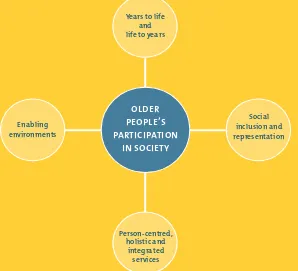
1.39 Valuing older people’s participation in society is a core theme of this

report. In Figure 1.1 opposite the different influences on older people’s

Graph 1.1

Population Projections by Age Group, Ireland and EU 25

Distribution of the population in Ireland by age group

(1950-2050)

Source: UN World Population Prospects (2004 Revision) and Connell, P & Pringle, D, 2004. Population Ageing in Ireland: Projections 2002-2021, Dublin: NCAOP.

0

1950

14-64 yrs 0-14 yrs 65+ yrs 20 40 60 80 100 graph 1.1

1975 2002 2021 2050

% 28.9 60.4 10.7 28.9 60.4 10.7 21.1 67.7 11.1 19.2 66 14.8 16 58.6 25.9 0 1950

14-64 yrs 0-14 yrs 65+ yrs 20 40 60 80 100

1975 2002 2021 2050

% 26.2 65.6 8.2 23.7 64.8 11.4 16.4 67.2 16.4 15 65.9 19.1 13.4 56.7 29.9

Age distribution of the population in EU 25 by age group

(1950-2050)

0

1950

14-64 yrs 0-14 yrs 65+ yrs 20 40 60 80 100 graph 1.1

1975 2002 2021 2050

% 28.9 60.4 10.7 28.9 60.4 10.7 21.1 67.7 11.1 19.2 66 14.8 16 58.6 25.9 0 1950

14-64 yrs 0-14 yrs 65+ yrs 20 40 60 80 100

1975 2002 2021 2050

(39)

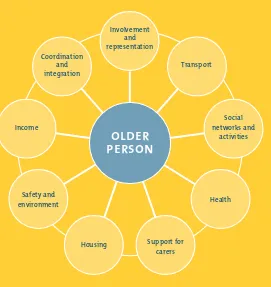
participation are clustered under four headings:

cadding years to life and life to years;

csocial inclusion and representation;

cperson-centred, holistic and integrated services; and

cenabling environments.

These will have differing meanings and impacts for each individual, which serves to emphasise the importance of consulting with older people collectively (and individually in the context of their personal care plans) regarding their needs and preferences. Valuing older people’s participation in society relies, however, on these four different but inter-dependent aspects being acknowledged at both strategic and service delivery levels, and by policy-makers, services providers and users and society generally.

[image:39.595.187.485.417.688.2]

Each of these four areas is now examined in turn.

Figure 1.1

Influences on Older People’s Participation in Society

older people’s participation

in society

Years to life and life to years

Person-centred, holistic and

integrated services Enabling

environments

(40)

Years to life and life to years

1.40 The most obvious determinant of participation in society for older

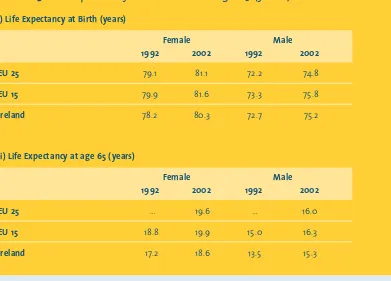
people is their life expectancy, and in this regard, older people here do not fare well compared to the European Union average. Table 1.3 below compares the life expectancy for males and females and shows that for both sexes Irish life expectancy is generally below the average, particularly for those aged 65 and over. Life expectancy at birth has increased by roughly 2 years ov

Figure

Table 1.1 Social Expenditure per person in PPS on Old Age (aged 65+)
Table 1.1 Social Expenditure per Person in PPS on Old Age (aged 65+)
Figure 1.1 Influences on Older People’s Participation in Society
Table 1.3 Life Expectancy at Birth and at Age 65 (years)
+4

References

Related documents