The
CAM
Software for Nonnegative Blind Source Separation in
R-Java
Niya Wang [email protected]
Fan Meng [email protected]
Department of Electrical and Computer Engineering Virginia Polytechnic Institute and State University Arlington, VA 22203, USA
Li Chen [email protected]
Pediatric Oncology Branch, National Cancer Institute National Institutes of Health
Gaithersburg, MD 20850, USA
Subha Madhavan [email protected]
Innovation Center for Biomedical Informatics Georgetown University
Washington DC 20007, USA
Robert Clarke [email protected]
Lombardi Comprehensive Cancer Center Georgetown University
Washington, DC 20057, USA
Eric P. Hoffman [email protected]
Research Center for Genetic Medicine Children’s National Medical Center Washington, DC 20010, USA
Jianhua Xuan [email protected]
Yue Wang [email protected]
Department of Electrical and Computer Engineering Virginia Polytechnic Institute and State University Arlington, VA 22203, USA
Editor:Antti Honkela
Abstract
We describe aR-Java CAM(convex analysis of mixtures) package that provides comprehensive an-alytic functions and a graphic user interface (GUI) for blindly separating mixed nonnegative sources. This open-source multiplatform software implements recent and classic algorithms in the literature including Chan et al. (2008), Wang et al. (2010), Chen et al. (2011a) and Chen et al. (2011b). The
CAMpackage offers several attractive features: (1) instead of using proprietaryMATLAB, its analytic functions are written inR, which makes the codes more portable and easier to modify; (2) besides producing and plotting results inR, it also provides aJava GUIfor automatic progress update and convenient visual monitoring; (3) multi-thread interactions between theRandJavamodules are driven and integrated by aJava GUI, assuring that the wholeCAMsoftware runs responsively; (4) the package offers a simple mechanism to allow others to plug-in additionalR-functions.
1. Overview
Blind source separation (BSS) has proven to be a powerful and widely-applicable tool for the anal-ysis and interpretation of composite patterns in engineering and science (Hillman and Moore, 2007; Lee and Seung, 1999). BSS is often described by a linear latent variable modelX = AS, whereXis the observation data matrix,Ais the unknown mixing matrix, andSis the unknown source data ma-trix. The fundamental objective of BSS is to estimate both the unknown but informative mixing pro-portions and the source signals based only on the observed mixtures (Child, 2006; Cruces-Alvarez et al., 2004; Hyvarinen et al., 2001; Keshava and Mustard, 2002).
While many existing BSS algorithms can usefully extract interesting patterns from mixture ob-servations, they often prove inaccurate or even incorrect in the face of real-world BSS problems in which the pre-imposed assumptions may be invalid. There is a family of approaches exploit-ing the source non-negativity, includexploit-ing the non-negative matrix factorization (NMF) (Gillis, 2012; Lee and Seung, 1999). This motivates the development of alternative BSS techniques involving ex-ploitation of source nonnegative nature (Chan et al., 2008; Chen et al., 2011a,b; Wang et al., 2010). The method works by performing convex analysis of mixtures (CAM) that automatically identifies pure-source signals that reside at the vertices of the multifaceted simplex most tightly enclosing the data scatter, enabling geometrically-principled delineation of distinct source patterns from mix-tures, with the number of underlying sources being suggested by the minimum description length criterion.
Consider a latent variable model x(i) = As(i), where the observation vector
x(i) = [x1(i), ...,xM(i)]
Tcan be expressed as a non-negative linear combination of the source vectors
s(i) = [s1(i), ...,sJ(i)]
T, andA= [a
1, ...,aJ]is the mixing matrix withajbeing the jth column vector.
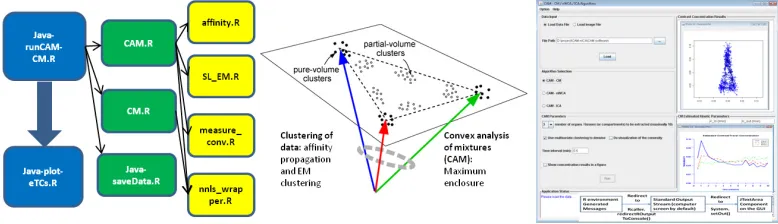
This falls neatly within the definition of a convex set (Fig. 1) (Chen et al., 2011a):
X=n
∑
Jj=1sj(i)aj|aj∈A,sj(i)≥0,∑
J
j=1sj(i) =1,i=1, ...,N
o
.
In this paper we describe a newly developedR-Java CAMpackage whose analytic functions are written in R, while a graphic user interface (GUI) is implemented inJava, taking full advantages of both programming languages. The core software suite implementsCAM functions and includes normalization, clustering, and data visualization. Multi-thread interactions between theRandJava
modules are driven and integrated by a Java GUI, which not only provides convenient data or parameter passing and visual progress monitoring but also assures the responsive execution of the entireCAMsoftware.
2. Software Design and Implementation
The CAMpackage mainly consists of RandJava modules. The R module is a collection ofmain andhelperfunctions, each represented by anRfunction object and achieving an independent and specific task (Fig. 1). TheRmodule mainly performs various analytic tasks required byCAM: figure plotting, update, or error message generation. The Java module is developed to provide a GUI
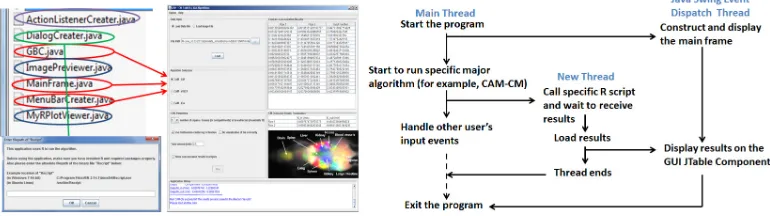
(Fig. 2). We adopt the model-view-controller (MVC) design strategy, and use differentJavaclasses to separately perform information visualization and human-computer interaction. TheJavamodule also serves as thesoftware driver and integrator that use a multi-thread strategy to facilitate the interactions between the R and Java modules, such as importing raw data, passing algorithmic parameters, callingRscripts, and transporting results and messages.
Figure 2: InteractiveJava GUIsupported by a multi-thread design strategy.
2.1 Analytic and Presentation Tasks Implemented inR
The R module performs the CAM algorithm and facilitates a suite of subsequent analyses includ-ing CM, nICA, and nWCA. These tasks are performed by the three main functions: CAM-CM.R,
CAM-nICA.R, andCAM-nWCA.R, which can be activated by the threeRscripts:Java-runCAM-CM.R,
Java-runCAM-ICA.R, andJava-runCAM-nWCA.R. TheRmodule also performs auxiliary tasks in-cluding automaticRlibrary installation, figure drawing, and result recording; and offers other stan-dard methods such as nonnegative matrix factorization (Lee and Seung, 1999), Fast ICA (Hyvari-nen et al., 2001), factor analysis (Child, 2006), principal compo(Hyvari-nent analysis, affinity propagation, k-means clustering, and expectation-maximization algorithm for learning standard finite normal mixture model.
2.2 Graphic User Interface Written inJava Swing
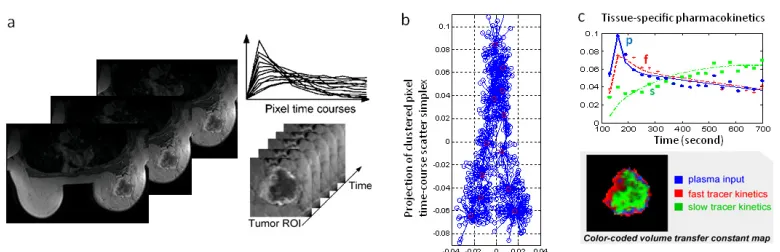
Figure 3: Application ofR-Java CAMto deconvolving dynamic medical image sequence.
dialogs for managing user inputs; guiModelcontains classes for representing result data sets and for interacting with theRscript caller. Packaged as one jar file, theGUImodule runs automatically.
2.3 Functional Interaction BetweenRandJava
We adopt the open-source programRCaller (http://code.google.com/p/rcaller)to imple-ment the interaction between R and Java modules (Fig. 2), supported by explicitly designed R
scripts such as Java-runCAM-CM.R. Specifically, five featured Java classes are introduced to in-teract with R for importing data or parameters, running algorithms, passing on or recording re-sults, displaying figures, and handing over error messages. The examples of these classes include guiModel.MyRCaller.java, guiModel.MyRCaller.readResults(), and guiView.MyRPlotViewer.
3. Case Studies and Experimental Results
The CAM package has been successfully applied to various data types. Using dynamic contrast-enhanced magnetic resonance imaging data set of an advanced breast cancer case (Chen, et al., 2011b),“double click” (or command lines under Ubuntu) activated execution ofCAM-Java.jar re-veals two biologically interpretable vascular compartments with distinct kinetic patterns: fast clear-ance in the peripheral “rim” and slow clearclear-ance in the inner “core”. These outcomes are consistent with previously reported intratumor heterogeneity (Fig. 3). Angiogenesis is essential to tumor de-velopment beyond 1-2mm3. It has been widely observed that active angiogenesis is often observed in advanced breast tumors occurring in the peripheral “rim” with co-occurrence of inner-core hy-poxia. This pattern is largely due to the defective endothelial barrier function and outgrowth blood supply. In another application to natural image mixtures,CAMalgorithm successfully recovered the source images in a large number of trials (see Users Manual).
4. Summary and Acknowledgements
We have developed aR-Java CAMpackage for blindly separating mixed nonnegative sources. The open-source cross-platform software is easy-to-use and effective, validated in several real-world applications leading to plausible scientific discoveries. The software is freely downloadable from
References
T.H. Chan, W.K. Ma, C.Y. Chi, and Y. Wang. A convex analysis framework for blind separation of non-negative sources. IEEE Transactions on Signal Processing, 56:5120–5143, 2008.
L. Chen, T.H. Chan, P.L. Choyke, and E.M. Hillman et al. Cam-cm: a signal deconvolution tool for in vivo dynamic contrast-enhanced imaging of complex tissues. Bioinformatics, 27:2607–2609, 2011a.
L. Chen, P.L. Choyke, T.H. Chan, and C.Y. Chi et al. Tissue-specific compartmental analysis for dynamic contrast-enhanced mr imaging of complex tumors.IEEE Transactions on Medical Imag-ing, 30:2044–2058, 2011b.
D. Child. The essentials of factor analysis. Continuum International, 2006.
S.A. Cruces-Alvarez, Andrzej Cichocki, and Shun ichi Amari. From blind signal extraction to blind instantaneous signal separation: criteria, algorithms, and stability. IEEE Transactions on Neural Networks, 15:859–873, 2004.
N. Gillis. Sparse and unique nonnegative matrix factorization through data preprocessing. Journal of Machine Learning Research, 13:3349–3386, 2012.
E.M.C. Hillman and A. Moore. All-optical anatomical co-registration for molecular imaging of small animals using dynamic contrast. Nature Photonics, 1:526–530, 2007.
A. Hyvarinen, J. Karhunen, and E. Oja. Independent Component Analysis. John Wiley, New York, 2001.
N. Keshava and J.F. Mustard. Spectral unmixing. IEEE Signal Processing Magazine, 19:44–57, 2002.
D.D. Lee and H.S. Seung. Learning the parts of objects by non-negative matrix factorization. Na-ture, 401:788–791, 1999.
E. Oja and M. Plumbley. Blind separation of positive sources by globally convergent gradient search. Neural Computation, 16:1811–1825, 2004.