International Journal of Current Research in
Biosciences and Plant Biology
Volume 4 ●Number 12 (December-2017)● ISSN: 2349-8080 (Online)
Journal homepage: www.ijcrbp.com
Review Article doi: https://doi.org/10.20546/ijcrbp.2017.412.002
Paradigm Shifts in Fungal Secondary Metabolite Research: Unusual Fatty
Acids Incorporated into Fungal Peptides
Valery M. Dembitsky
*National Scientific Center of Marine Biology, Vladivostok, 690041, Russia
*Corresponding author email id:
valer
[email protected]A b s t r a c t A r t i c l e I n f o
This review is a comprehensive survey of unique, unusual, and rare fatty acids incorporated into natural marine and terrestrial peptides obtained from fungi, fungal endophytes, lichenized ascomycetes, basidiomycetes, and actinomycetes. Lots of fungal peptides display important biological activities of interest, which includes antitumor, antibacterial, antimicrobial, antifungal, phototoxic, HIV inhibitory, immunosuppressive properties, and other pharmacological activities. There is no doubt that they are of great importance, especially in medicinal chemistry and/or pharmaceutical application. This review presents structures of more than 150 fatty acids, incorporated into marine and terrestrial fungal lipopeptides.
Accepted: 15 November 2017 Available Online: 06 December 2017
K e y w o r d s
Fatty acids Fungal endophytes Lipopeptides Depsipeptides Peptides
Introduction
It is known that unique, unusual and/or rare fatty acids are produced by various organisms. Their structures and properties have been described in the literature over the past 50 years, in a large number of books and reviews; although, complete citation of their entire work is not possible. The concept of rare and unusual acids suggests that these compounds were followed purely for academic, medical, and pharmaceutical interest (Dembitsky, 1992, 1993, 1996; Dembitsky and Srebnik, 2002; Dembitsky and Levitsky, 2004; Dembitsky and Maoka, 2007; Kuklev and Dembitsky, 2014). Fungal fatty acids, lipids and their derivatives have been well studied and results summarized in a number of reviews (Brennan et al., 1975; Chopra and Khuller, 1983; Dembitsky, 2004a, b, 2005a-e, 2006a-d).
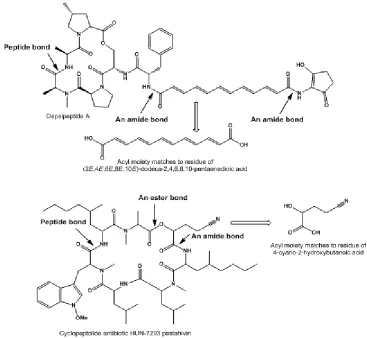
Cyclic and linear fungal lipopeptides are of great interest both in terms of academic research and from a purely practical point of view, as well as their use in pharmacology and medicine. Both types of peptides showed various bioactivities, which include antibacterial, antitumor, anti-inflammatory, etc. All fatty acids are linked by an amide bond in natural cyclic and/or linear lipopeptides. Samples of cyclic lipopeptides isolated from fungi are shown in Fig. 1. Fatty acids given in the text were formed by hydrolysis of the amide bond(s), and/or an ester bond.
15% iso-, anteiso-, and neo- branched-chain fatty acids (C6:0 - C24:0), about 4-5% unsaturated fatty acids. The
few exceptions of fatty acids not included in this review are amine fatty (carboxylic) acids and the above mentioned. Rare and unusual fatty acids constitute just about one percent.
In this comprehensive analysis, rare and unusual fatty acids been incorporated into natural fungal peptides would be specified. These lipopeptides showed impressive biological activities, with applications in the various fields such as: crop protection, human health, medicine, and lipid chemistry and biochemistry. This study on the structure and function of fatty acids (FA) incorporated into the natural peptides will be a new direction in the lipidome and peptidome networks.
Branched, saturated and unsaturated fatty acids
Lipopeptide antibiotic YM-170320 was produced by solid state fermentation, a mutant of Candida tropicalis
pK23 (strain YL-03706F) (Sugawara et al., 1998). Antibiotic YM-170320 belongs to a class of ergosterol-biosynthesis inhibitors. The structure of this antibiotic includes a fatty acid [1, structures see in Fig. 2]. An Australian marine-derived fungus, Acremonium sp., yielded a family of lipodepsipeptides, acremolides A-D. FA (2) was incorporated into acremolides A, C, and D; and FA (3) was found in structure of acremolide B (Ratnayake et al., 2008).
Two cyclic lipopeptides, fusaristatins A and B were isolated from rice cultures of endophytic fungi Fusarium
sp. YG-45. Fusaristatin A showed a moderate inhibitory effect on topoisomerases I (IC50 = 73 μM) and II (IC50 =
98 μM) without cleavable complexes. Furthermore, A and B showed the growth-inhibitory activity toward lung cancer cells, LU 65, with IC50 values of 23 and 7 μM,
respectively (Shiono et al., 2007). The fungal strain YL-03706F induced the morphological change of colonies, a mutant of Candida tropicalis pK233 strain) (Sugawara et al., 1998). Unusual FA[4] was found in the cyclic lipopeptides of fusaristatin A and B, and linear lipopeptide YM 170320.
The 15-membered cytotoxic depsipeptides, named rakicidins A-D, produced using two actinomycetes:
Micromonospora and Streptomyces. Rakicidins A and B have been isolated from Micromonospora sp. and rakicidin C from Streptomyces sp. (McBrien et al., 1995; Hu et al., 2000). Rakicidin D was isolated from the
culture broth of an actinomycete strain of the genus
Streptomyces sp. MWW064 (Igarashi et al., 2010). FA[5] was incorporated into rakicidin A, FA[6] – in rakicidin B, FA[7] - in rakicidin C, and FA[8] - in rakicidin D.
Two peptides, tumescenamides A and B, were isolated from the fermentation broth of a marine species of
Streptomyces tumescens YM23-260 (Motohashi et al.,
2010). Tumescenamide A induced reporter gene expression under the control of the insulin-degrading enzyme promoter. Tumescenamide C, a cyclic lipodepsipeptide, was isolated from a culture broth of an actinomycete Streptomyces sp. KUSC F05 (Kishimoto et al., 2012). Tumescenamide C exhibited antimicrobial activity with high selectivity against Streptomyces
species. FA[9] was incorporated into tumescenamide A and C, and FA[10] was isolated from tumescenamide B. The marine fungus Emericella sp. from green macroalgae Halimeda sp. (Madang Bay, Papua New Guinea) was co-cultured with the actinomycete
Salinispora arenicola (sediment, Bahamas). This co-culture induced the production of two cyclic depsipeptides, emericellamides A and B, by the fungus that was modestly active against methicillin-resistant S. aureus. Also, it had weak cytotoxicity against human colon cancer cells HCT-116 (Oh et al., 2007). FA[11], found in emericellamide A, and FA[12] – in emericellamides B. Cyclic hexadepsipeptides arenamides A and B,characterized by 19-membered macrocycle with six subunits – Phe, Ala, Val, Gly, Leu, were isolated from marine S. arenicola. These two compounds, having an aromatic amino acid phenyl alanine in the molecule, inhibited NO production in a dose dependent manner (2-10 μM); besides displaying weak activity against HCT116 cells (Asolkar et al.,
2009). The arenamide A and B blocked TNF induced activation in a dose and time dependent manner, with IC50 values of 3.7 and 1.7 μM respectively. Two
different FA[13], and FA[14] were isolated from arenamide A (A1) and arenamide B (A2), respectively.
Gram-positive bacteria, including methicillin-resistant
Staphylococcus aureus (Igarashi et al., 1999). FA (16) was found in vinylamycin.
A cyclic depsipeptide antibiotic NA30851A is manufactured by culturing Streptomyces sp. NA30851A, and is useful for insecticides or microbicides. This antibiotic has showed total control of Plutella xylostella
and Botrytis cinerea (Yoshida et al., 1999; Watanabe et al., 1999). Two FA[17] and FA[18] acids were present in cyclic depsipeptide antibiotic, NA 30851A. A cyclic dodecadepsipeptide called cereulide, which resembles valinomycin, is a toxin produced by actinomycete,
Bacillus cereus (Agata et al., 1994). Isocereulides have also been obtained from the same actinomycete (Marxen et al., 2015). All cyclic dodeca-depsipeptides contained (R)-2-hydroxy-3-methylbutanoic acid [18].
Metabolite of antimycin family, JBIR-06, was isolated from Streptomyces sp. ML55; and it inhibited the expression of GRP78 induced by 2-deoxyglucose at the IC50 value of 250 nM (Ueda et al., 2008). JBIR-52, same
compound, but with a different fatty acid, was produced by Streptomyces sp. ML55 (Kozone et al., 2009). FA[19] was found in JBIR-06, and FA[20] was present in JBIR-52. Six acyl depsipeptide antibiotics with unsaturated fatty acids were obtained from Streptomyces hawaiiensis (Mayer-Bartschmid et al., 2003). Thus, antibiotic A 54556A contain (2E,4E)-hexa-2,4-dienoic acid [21], antibitotic A 54556B contains FA[22], and four same acyl depsipeptides; subsequently followed by FA[23], FA[24], FA[25], and (2E,4E )-7-hydroxyocta-2,4-dienoic acids [26], respectively.
Enduracidins and ramoplanin are structurally and functionally closely related lipodepsipeptide antibiotics. They are active against multi-drug-resistant Gram-positive pathogens, including MRSA (Yin et al.,
2010). Produced by Streptomyces fungicidicus B5477, enduracidins A and B are active against Gram-positive bacteria. Avian myeloblastosis virus reversed transcriptase, hepatitis B virus, and prolyl endopeptidase. Ramoplanin exhibits broad-spectrum and potent in vitro and in vivo activity against Gram-positive bacteria (Nicolaou et al., 2009; Pallanza et al., 1984; Cavalleri et al., 1984). Ramoplanin was active against a wide variety of Gram-positive bacteria including enterococci, staphylococci, bacilli, streptococci, Listeria monocytogenes, and Gram-positive anaerobes such as
Clostridium difficile. Ramoplanin A2 is also related structurally to the peptide antibiotic janiemycin; a cell
wall biosynthesis inhibitor produced by S. macrosporeus. (2Z,4E)-10-methylundeca-2,4-dienoic acid [27] was detected in structures of enduracidin A,C,D,F; while FA[28] was found in enduracidin B, E, and G. S. fungicidicus has yielded three enduracidin analogues. Fatty acid [27] was found in enduracidin and monodeschloro-enduracidin A, and was also present in mono-deschloroenduracidin B.
Janiemycin is a basic peptide antibiotic produced by a strain of Streptomyces macrosporeus ATCC 21, 388. The compound was active against Gram-positive bacteria (Meyers et al., 1970). Janiemycin and ramoplanin A1 contains FA[23], ramoplanin A2 - FA[29], and ramoplanin A3 contains (2Z,4E )-8-methylnona-2,4-dienoic acid [30] [48]. A culture filtrate of S. graminofaciens was found to inhibit the growth of lettuce seedlings, as plant growth regulators. The active substances, rotihibin A and B, were revealed to be lipopeptides. Rotihibins inhibit growth of various plants below 1 μg/mL (Fukuchi et al., 1995). Both rotihibins contains (Z)-dec-2-enoic acid [31, structures see in Fig. 3]. Laspartomycin is a lipopeptide antibiotic related to amphomycin. The fatty acid side chain is 2,3-unsaturated, (E)-13-methyltetradec-2-enoic acid [32], compared to 3,4-unsaturated for amphomycin and other related antibiotics. The addition of calcium ion to stabilize a particular conformer was found to be important for an enzymatic deacylation of the antibiotic (Borders et al., 2007). Pristinamycin is a mixture of two components that have a synergistic antibacterial action (Cooper et al., 2014; Weber 2001). Pristinamycin IA is a macrolide; and it has effects on pristinamycin's with a similar spectrum of action to erythromycin. Pristinamycin IIA (streptogramin A) is a depsipeptide. PI and PII were co-produced by Streptomyces pristinaespiralis, in a ratio of 30:70. Each compound binds to the bacterial 50S ribosomal subunit and inhibits the elongation process of the protein synthesis, thereby exhibiting only a moderate bacteriostatic activity (Zhao et al., 2015; De Crecy-Lagard et al., 1997). (4R,5R,E )-5-hydroxy-4,6-dimethylhept-2-enoic acid [33] was incorporated into antibiotics pristinamycin IA and IIA. Depsispeptide virginiamycin is a streptogramin
antibiotic similar to pristinamycin and
B streptogramins, representing cyclic hexadepsipeptides (Mast and Wohlleben, 2014; Patel and Gallagher, 2015).
Vnicymainigri was obtained by fermentation of the
culture of Streptomyces G-89 (Nomura et al., 1987), and it contained fatty acid [33].
The arylomycin class of natural products inhibited a promising antimicrobial target, type I signal peptidase (SPase). However, it appeared to lack whole cell activity against most pathogens (Smith et al., 2010) upon initial characterization. Staphylococcus epidermidis was sensitive to the arylomycins, but evolves resistance via
mutations in SPase and that analogous mutations are responsible for the natural resistance of S. aureus, E. coli, and Pseudomonas aeruginosa. Two monoenoic fatty acids, [34] and [35], and were present in arylomycin D. Depsipeptides A and B were isolated from a fermentation broth of Streptomyces RK-1051. Depsipeptide A and B showed minimum inhibitory concentration of 3 and 100 μg/mL, respectively; against
Staphylococcus pyogenes (Isono et al., 1993). Both depsipeptides contain (2E,4E,6E,8E,10E )-dodeca-2,4,6,8,10-pentaenedioic acid [36]. This fatty acid was also found in enopeptin A. From Streptomyces griseus,
enopeptin A was isolated and it showed antimicrobial spectrum against several microorganisms. Enopeptin A also exhibited anti-bacteriophage activity (Osada et al.,
1991).
Colisporifungin, a cyclic depsilipopeptide structurally related to the aselacins, and cavinafungins A and B, which are two linear peptides, were isolated from liquid culture broths of the hitherto unstudied fungus Colispora cavincola. It displayed a strong potentiation of the growth inhibitory effect of caspofungin against
Aspergillus fumigatus and, to a lesser extent, against
Candida albicans. The linear peptides displayed broad-spectrum antifungal activities inhibiting the growth of
Candida species (MIC values 0.5-4 μg/mL), as well as
A. fumigatus with a prominent inhibition at 8 μg/mL (Ortíz-López et al., 2015). Oleic acid was found in both linear peptides cavinafungins A and B. A cyclodepsipeptide of mixed peptide-polyketide origin was also isolated from a fungal isolate of a Fusarium sp. (Feng et al., 2002). FA[37] was present in this cyclodepsipeptide.
Enamidonin with (2E,4E,9E )-13-hydroxytetradeca-2,4,9-trienoic acid [38], and cyclic lipopeptide antibiotic has been isolated from a culture broth of Streptomyces
sp. 91-75 (Koshino et al., 1995). Strain YL-03706F, a
mutant of Candida tropicalis pK233, produced a lipopeptide antibiotic designated YM-170320 (Lelais et al., 2004; Sugawara et al., 1998). FA[39] was incorporated into lipopeptide. Streptomyces sp. K97-0239, a soil isolate, was found to produce inhibitors of lipid droplet formation in mouse peritoneal macrophages. Two compounds, cyclic lipopeptides K97-0239A and B, were isolated from the culture broth of the producing strain. Cholesteryl ester synthesis from oleic acid by macrophages was inhibited by K97-0239s, with IC50 values of 1.5-1.7 pM (Namatame et al., 2002). Both
cyclic lipopeptides having (2E,4E )-13-hydroxy-tetradeca-2,4-dienoic acid [40]. Two cyclic depsipeptides, ulleungamides A and B, were isolated from cultures of terrestrial Streptomyces sp. Ulleungamide A displayed growth inhibitory activity against Staphylococcus aureus and Salmonella typhimurium, without cytotoxicity (Son et al., 2015). (S)-2-isopropylsuccinic acid [41] was present in both ulleungamides.Two compounds, peptide-polyketide glycoside totopotensamide A and its aglycone totopotensamide B were isolated from Streptomyces sp. cultivated from the gastropod mollusk, Lienardia totopotens, and was collected in the Philippines (Mactan Is., Cebu) (Lin et al., 2012). Comparably, glycolipid [42] and FA[43] acid were found in totopotensamide A and B, respectively.
Fatty acid, also called (E )-6-hydroxy-4-methylhex-2-enoic acid, [44] is widely distributed in both lipopeptides and cyclicpeptides. Thus, asperchrome A, B1, B2, B3, C, D1, D2, D3, and rerrirubin, is produced by Aspergillus ochraceous; fusarinine C,N,N’N’’-triacetylfusarinin C produced by Aspergillus fumigatus, A.nidulans and Fusarium cubense; coprogen, dimerumic acid produced by A. terreus; fusarinine C and asperchrome F1 produced by fungus Aureobasidium pullulans and Penicillium chrysogenum; and
basidiochrome produced by Ceratobasidium
cornigerum, basidiochrome, ferrirhodin, and
C.globisporum (Jalal et al., 1988).
An apoptosis inducer, a unique cyclic peptide thioviridamide, was isolated from an actinomycete
Streptomyces olivoviridis (Hayakawa et al., 2006). 2-hydroxy-2-methyl-4-oxopentanoic acid [45] was incorporated into the structure of thioviridamide.
parasiticum No. 16616, respectively. These compounds have the same cyclic peptide nuclear structure as FR901379, with different side chains. Also, they showed antifungal activity against Aspergillus fumigatus and
Candida albicans attributed to inhibition of 1,3-β-glucan synthesis (Kanasaki et al., 2006). Isolated peptides contain FAs[46] and [47], respectively. Several lipodepsipeptides with antifungal activity were produced by Hypoxylon oceanicum LL-15G256. The compound 15G256 contain FA[48], 15G256e - FA[49], and 15G256d- FA[50] (Abbanat et al., 1998; Schlingmann et al., 1998). Microtermolides A and B were isolated from a Streptomyces sp. strain associated with fungus-growing termites (Carr et al., 2012). Microtermolide A contains a FA acid [51].
Butanone extract of the marine-derived fungus
Beauveria feline with cytotoxic and anti-tuberculosis activity led to the isolation of two destruxins, destruxin E chlorohydrin and pseudodestruxin C. Both compounds contained (2S,4R)-5-chloro-2,4-dihydroxypentanoic acid (52) (Lira et al., 2006).
Two antimycin antibiotics, urauchimycins A and B, were isolated from a fermentation broth of a
Streptomyces sp. Ni-80. Both antibiotics exhibited inhibitory activity against morphological differentiation of Candida albicans, and contain different fatty acids, which are FA[53] and [54] respectively (Imamura et al.,
1993).
A depsipeptide SCH 58149 containing FA[55] was found in the organic extract of the fermentation broth of a fungus Acremonium sp. SCH 58149 exhibited weak activity against cholesterol ester transfer protein with an IC50 of 50 μM (Hegde et al., 1998). Four tachykinin
(NK2) receptor inhibitors, SCH 378161, SCH 217048, SCH 378199, and SCH 378167 with FA[56] were isolated from the fermentation broth of a taxonomically unidentified fungus (Hedge et al., 2001).
Peritoxins are low molecular weight, chlorinated peptides produced only by pathogenic strains of the sorghum root rot fungus, Periconia circinata. The peritoxins are low-molecular weight, hybrid molecules consisting of a peptide and chlorinated polyketide. Peritoxins A and B and the biologically inactive intermediates, N-3-(E-pentenyl)-glutaroyl-aspartate, circinatin with (E)-3-(pent-1-en-1-yl)-pentanedioic acid [57, structures see in Fig. 4], and FA[58], were detected only in culture fluids of the Tox (+) strains. Peritoxin B
contain fatty acid [59]; other toxins, such as peritoxin A, and periconin A and B, contain the same fatty acid [60] (Churchill et al., 2001; Macko et al., 1992).
Mycoparasitic fungus Acremonium domschii was obtained from a basidioma of Rigidoporus microsporus
found on a dead branch, in a Hawaiian forest. The crude EtOAc extract of solid-substrate fermentation cultures of
A. domschii contained four depsipeptides, called domschisins A-D, with all showing significant anti-insectan and antifungal activities.
Domschisin A exhibited significant antiinsectan activity against Spodoptera frugiperda. All compounds contained same FA[61] (Jiao, 2006). Depsipeptide β-D-glucosyl-hydroxydestruxin B was produced by a fungus,
Alternaria alternata f. sp. mali, belonging to phytotoxins contained fatty acid [62] (Pedras et al.,
2003).
Curmenins, linear lipopeptides with α-substituted β-methoxyacrylate, and fatty acids, [63], and [64] have been isolated by several shiitake and oyster mushrooms. Both compounds are inhibitors of the mitochondrial respiratory energy metabolism (Sasse et al., 2003).
Liposidomycines from cultures of terrestrial
Streptomyces sp., complex molecules, and two derivatives such as liposomycin A contain FA[65] and liposomycin K contain FA[66] (Vertesy et al.,
2000).The lipopeptide antibiotic friulimicin A-D, produced by Actinoplanes friuliensis, is an effective drug against Gram-positive bacteria, such as methicillin-resistant Staphylococcus epidermidis and S. aureus
contains FA[71], antibiotics G and H - (E )-12-methyltetradec-3-enoic acid [72] (Hammann et al.,
2001).
Four cyclolipopeptides, glycinocins A to D, were isolated from the fermentation broth of an unidentified terrestrial Actinomycete species. The glycinocin antibiotics are structurally related to amphomycin that was originally reported as a linear lipopeptide with C-terminal diketopiperazine moiety (Kong and Carter, 2003). Glycinocins A and D contained different fatty acids [35], glycinocin B contain (E )-14-methylpentadec-2-enoic acid (73), and glycinocin C contain (E )-12-methyltridec-2-enoic acid [74]. (R )-2-hydroxypent-4-enoic acid [75] was found in two toxic cyclodepsipeptides, roseotoxin B and destroxin A, which were isolated from fungus Trichothecium roseum
(Engstrom et al., 1975; Springer et al., 1984).
Calcaripeptides A, B, and C were identified from the marine-derived endophytic fungus, Calcarisporium sp. strain KF525, which was isolated from the German Wadden Sea (Silber et al., 1993). Calcaripeptides A and B contained (6R,9S,E )-9-hydroxy-4,6-dimethyl-3-oxodec-4-enoic acid [76], and calcaripeptide C contained FA[77]. Trichomide A with (2R,4R
)-2,5-dihydroxy-4-methylpentanoic acid [78], a
cyclodepsipeptide, were isolated from the fermentation products of fungus Trichothecium roseum. It effectively inhibited the proliferation of activated T cells and reduced the production of proinflammatory cytokines. Nonetheless, it had no significant toxic effect on naive T cells at 0.3-3 μM. In addition, trichomide A caused G0/G1 phase arrest, suppressed the activation of AKT and STAT3, and increased the level of phosphorylated SHP2 in activated T cells in dose and time-dependent manners (Wang et al., 2014).
Marine-derived fungus Penicillium purpurogenum G59 from unidentified sponge produced antitumor compounds named penicimutanin A, and penicimutanin B. Penicimutanin A and B inhibited several human cancer cell lines, with IC50 values lower than 20 μM.
Both compounds contain FA[79] (Fang et al., 2014). An inhibitor of topoisomerases designated as topostatin, with (8E,10E )-3-hydroxy-2,6,10,13-tetramethyl-7-oxoicosa-8,10-dienoic acid [80, structures see in Fig. 5] was isolated from the culture filtrate of
Thermomonospora alba strain No. 1520. Topostatin inhibited topoisomerases I and II in a competitive manner, with respect to DNA. The inhibitor also
inhibited some restriction endonucleases such as Sca I, Hind III and Pst I; but not Alu I, Bam HI, Eco RI, RNase A, DNase I, DNase II and DNA ligase (Suzuki et al., 1999).
Two acyclic lipopeptides, pneumocandin A and pneumocandin B, were produced by fungus Glarea lozoyensis (Li et al., 2015; Bills et al., 1999; Schwartz et al., 1992). The in vitro assays showed the enormous potential of pneumocandins, with pneumocandin A showing the best activity at very low concentrations against C. albicans (MIC = 0.06 μg/mL), in the assay with the enzyme 1,3-β-D-glucan (IC50 = 0.06 μg/mL);
and in vivo efficiency against Pneumocystis carinni. Both cyclic lipopeptides contained (10S,12R )-10,12-dimethyltetra-decanoic acid [81]. The liquid culture broth of Pseudomonas sp. MF381-IODS yielded two antimicrobial substances, named pseudotrienic acids A and B. These acids inhibited growth of S. aureus (MIC 70 μg/mL) and Pseudomonas syringae pv. syringae
(MIC 70 μg/mL), containing FAs[82] and [83] (Pohanka et al., 2005).
A cyclodepsipeptide derived from an N-(β- hydroxyacyl)-glycyl-L-valyl-L-leucyl-L-alanyl-L-alanine named emericellamides A and B produced by the marine-derived fungus Emericella sp. (strain CNL-878), was observed during co-culture with the marine actinomycete Salinispora arenicola. Emericellamides A and B showed modest antibacterial activities against methicillin-resistant Staphylococcus aureus with MIC values of 3.8 and 6.0 μM, respectively (Oh et al., 2007). Emericellamides A, C, D, E, and F were also found in
Aspergillus nidulans. Emericellamide A containFA[84], and emericellamide B contain FA[85].
Depsipeptides, named chondramides A-D, with FA [86], were produced by Actinomycetesof the genus Chondromyces. The compounds are structurally closely related to jaspamide/jasplakinolide from marine sponges of the genus Jaspis. Initially, the chondramides were detected in acetone extracts of the biomass of
Chondromyces crocatus, strain Cm c2. So far, four structural variants could be characterized, the chondramides A-D. They inhibited the growth of a few yeasts and showed high cytostatic activity against cultivated human and animal cells (Kunze et al., 1995).
compounds (Ray et al., 2016). Desmethylsalinamide C contained (2S,3R)-3-hydroxy-2,4-dimethylpentanoic [87] and (2Z,4E)-4-methylhexa-2,4-dienoic [88] acids.
Depsipeptides named miuraenamides A-D produced by slightly halophilic myxobacterial strain, SMH-27-4. Miuraenamide A, exhibited potent and selective inhibition against a phytopathogenic microorganism,
Phytophthora sp., as well as moderate inhibition against some fungi and yeasts; but was ineffective against bacteria. Both of the metabolites inhibited NADH oxidase at IC50 values of 50 μM, suggesting, like
β-methoxyacrylate-type antibiotics, the electron transfer system of the mitochondrial respiratory chain as the cellular target (Iizuka et al., 2006; Desriac et al., 2013). All miuraenamides A-D contained same (S,E )-9-hydroxy-6-methyldec-5-enoic acid [89].
Antifungal metabolites, cyrmenin A with (2E,4Z )-2,11-dimethyldodeca-2,4-dienoic acid [90] and cyrmenin B with FA[91] have been isolated from Cystobacter armeniaca and Archangium gephyra (Sasse et al., 2003). The compounds belong to the group of β-methoxyacrylate (MOA) inhibitors and are the first naturally occurring nitrogen-linked MOAs. The cyrmenins showed nearly the same antifungal activity as strobilurin A, but are less toxic in a growth inhibition assay with L929 mouse cells. Cyrmenins inhibit NADH oxidation by submitochondrial particles from the heart of beef.
Antitumor agents BU-2867T A, B, and C with (2E,4E )-dodeca-2,4-dienoic acid [92], [93], and [94] are produced by Polyangium brachysporum. Peptide antibiotics designated herein as BU-2867T F with (2E,4E)-deca-2,4-dienoic acid [95] and G with FA[92] were produced by fermentation of Polyangium brachysporum strain K481-B101 (Konishi et al., 1990).
Myxochromides are cyclic depsipeptides with an unsaturated polyketide side chain, which have been reported from different myxobacterial species, for example, Myxococcus xanthus and Stigmatella aurantiaca. Myxochromides are subdivided into groups A and S, according to their peptidic core structure and they contain different fatty acids (Ohlendorf et al., 2008; Perlova et al., 2009).
Thus, myxochromide S contain fatty acid [96], myxochromides A2 and S2 contain FA[97], A3 and S3 – [98], and A4 –[99].
Aromatic fatty acids
3,4-dihydroxy-2,2-dimethyl-5-phenyl-pentanoic acid [100, structures see in Fig. 6] was incorporated into cyclic depsipeptide antibiotic NA30851A, which was isolated from Streptomyces sp. NA30851A (Yoshida et al., 1999; Watanabe et al., 1999). Four congeners of the depsipeptides: WS9326A, WS9326C, WS9326D, and WS9326E were isolated from Streptomyces sp. 9078. WS9326D specifically inhibited the asparaginyl-tRNA synthetase and killed the adult Brugia malayi parasite (Yu et al., 2012). Interestingly, phenyl containing (E )-3-(2-((Z)-pent-1-en-1-yl) phenyl) acrylic acid [101] was found in all isolated depsipeptides. Mohangamides A and B were discovered from a marine Streptomyces sp., collected in an intertidal mud flat. Mohangamide A displayed strong inhibitory activity against Candida albicans isocitrate lyase (Bae et al., 2015). FA[101] was present in both dilactone-tethered pseudodimeric peptides.
Coprisamides A and B were isolated from an endophytic fungus in the gut of the dung beetle, Copris tripartitus. The coprisamides displayed significant activity for the induction of quinone reductase (Um et al., 2015). Both cyclic peptides contained (Z)-3-(2-((1Z,3E,5E )-hepta-1,3,5-trien-1-yl)phenyl)acrylic acid [102]. Xyloallenoide A, an N-cinnamoylcyclopeptide, was isolated from the marine mangrove endophytic fungus in the South China Sea. This compound showed marginal activities against KB (IC50=9.6 μM) and KBv200 cells (IC50=10.3 μM),
and contained (E )-3-(4-(buta-2,3-dien-1-yloxy)phenyl)acrylic acid [103] (Wang et al., 2012).
Hybrid biosynthetic cyclodepsipeptide, turnagainolide A, has been isolated from the Floridian marine sediment-derived fungus Microascus sp. EGM-556 (Vervoort et al., 2011). The same cyclic depsipeptide, named turnagainolide A, was isolated from laboratory cultures of a marine isolate of Bacillus sp. (Li et al.,
2011). Both cyclodepsipeptides EGM-556 and turnagainolide A contains (E )-3-hydroxy-5-phenylpent-4-enoic acid [104].
and skyllamycin C with acid [107] are a non-ribosomally synthesized cyclic depsipeptide from
Streptomyces sp. Acta 2897 that inhibits PDGF-signaling (Pohle et al., 2011; Navarro et al., 2014).
An extensive study of the secondary metabolites of stictamides A-C produced by Sticta sp. of lichens led to the isolation of three compounds containing 4-amino-3-hydroxy-5-phenylpentanoic acid [108 and 109] residues. Evaluation of stictamide A against a panel of disease-relevant proteases showed that it inhibited MMP12 at 2.3 μM and significantly reduced invasion in the human glioma cell line U87MG. Docking studies suggest that stictamide A inhibits MMP12, by means of a non-zinc-binding mechanism (Liang et al., 2011). The structure of farnesyl transferase inhibitor, pepticinnamin E, with (E )-3-(2-((E)-pent-2-en-1-yl)phenyl)-acrylic acid [110] and C-terminal glycylserine of the compounds is in the cyclized diketopiperazine form (Shiomi et al., 1993). Two siderophores, chlorocatechelins A and B, with 4-chloro-2,3-dihydroxybenzoic acid [111], were isolated from a culture broth of Streptomyces sp. Both contained chloro-substituted catecholate that has not been reported in natural products; this group was further conjugated with guanidine to form acylguanidine in chlorocatechelin A (Kishimoto et al., 2014). Ariakemicins A and B, unusual linear hybrid polyketide-nonribosomal peptide antibiotics, were discovered in the fermentation extract of marine Rapidithrix sp. The ariakemicins comprised threonine, two ω-amino-(ω-3)-methyl carboxylic acids with diene or triene units, and 5-(3-hydroxy-4-methoxyphenyl)-5-oxopentanoic acid [112]. The antibiotics selectively inhibited the growth of Gram-positive bacteria (Oku et al., 2008). Cytotoxic marine pseudoalteromonads represents a very promising source of biologically important natural product molecules. Alterochromide lipopeptides with respectively fatty acids [113-115] were produced by
Pseudoalteromonas piscicida. Antibacterial CB-183,315 lipopeptide antibiotic, structurally related to daptomycin and produced by Clostridium difficile-associated diarrhea, contained fatty acid [116] (Sobolevskaya et al.,
2005; Kalinovskaya et al., 2008; Mascio et al., 2012; Ross et al., 2015).
Aetheramides A and B are structurally distinctive cyclic peptides isolated from a myxobacterial genus proposed to be termed Aetherobacter. Aetheramides which contain a unique polyketide moiety and two amino acid residues potently inhibited HIV-1 infection with IC50
values of 0.015 μM. Furthermore, aetheramides, with
FAs [117 and 118] respectively, showed cytostatic activity against human colon carcinoma (HCT-116) cells with IC50 values of 0.11 μM (Plaza et al., 2012).
Nitrogen-containing fatty acids
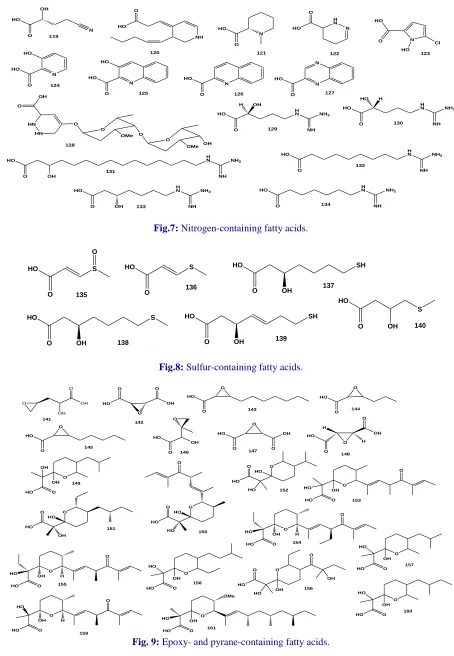
Cyclopeptolide antibiotic HUN-7293 pestahivin and anti-HIV agent pestahivin DM were purified from the extract of endophytic fungus Pestalotiopsis sp. RF5890. Antibiotic HUN-7293 pestahivin have been used for the treatment of chronic inflammatory disorders and inhibits VCAM-1 expression on activated endothelial cells (Hommel et al., 1996; Foster et al., 1994; Oberhauser et al., 1998). All antibiotics were shown to contain same unusual (R)-4-cyano-2-hydroxybutanoic acid [119, structures see in Fig. 7]. Mohangamides A and B, with unique (E)-3-(3-((Z )-pent-1-en-1-yl)-2,3-dihydropyridin-4(1H)-ylidene) propanoic acid [120], were discovered from a marine Streptomyces sp. collected in an intertidal mud flat. Mohangamide A displayed strong inhibitory activity against Candida albicans isocitrate lyase (Bae et al., 2015).
The tubulysins A-I are a family of nine secondary metabolites, a linear tetrapeptide core, produced by several strains of myxobacteria. They include
Angiococcus disciformis And48 and Archangium gephyra Ar315. They both have in common (S )-1-methylpiperidine-2-carboxylic acid [121], a highly cytotoxic peptide with antimitotic activity that induces depletion of cell microtubules and triggers apoptotic process. Thiomarinols D, E, F, and G exhibited antimicrobial activities against Gram-positive and Gram-negative bacteria. They were especially active against Gram-positive bacteria including methicillin-resistant Staphylococcus aureus (Ullrich et al., 2009; Khalil et al., 2006; Chai et al., 2010).
Lydiamycins A–D with unusual
2,3,4,5-tetrahydropyridazine-3-carboxylic acid [122], have been isolated from Streptomyces lydicus (strain HKI0343). All isolated cyclodepsipeptides were shown to selectively inhibit Mycobacterium smegmatis SG 987,
M. aurum SB66, and M. vaccae IMET 10670 in a panel of Gram-positive and Gram-negative bacteria, yeasts, and fungi (Huang et al., 2006).
exhibited significant inhibitory effects against various pathogenic Gram-positive and Gram-negative bacteria (Bae et al., 2015). Three antibiotics, grividomycins I, II, and III, belonging to streptogramin class (group B), have been isolated from a Streptomyces sp. HIL Y-8240155. The antibiotics were active against several resistant Gram Positive bacteria strains and have 3-hydroxypicolinic acid in common [124] (Mukhopadhyay et al., 1998).
Thiocoraline A with unusual 3-hydroxyquinoline-2-carboxylic acid [125] is an antitumor cyclic thiodepsipeptide isolated from the mycelium of a marine actinomycete, Micromonospora sp. L-13-ACM2-092,1-3, that has been shown to exhibit exceptionally potent activity in the L1210 mouse leukemia cytotoxic assay (IC50= 200 pM) and to inhibit the elongation activity of
DNA polymerase R in LoVo and SW620 human colon cancer cells (Negri et al., 2007; Wyche et al., 2011; Perez et al., 1997). A marine actinomycete
Verrucosispora sp. isolated from the sponge Chondrilla caribensis f. caribensis was found to produce thiocoraline with 3-hydroxyquinoline-2-carboxylic acid [125], a potent cytotoxic compound. Five new analogs of thiocoraline were isolated and they represented the first analogs of thiocoraline. 22'-Deoxythiocoraline with quinoline-2-carboxylic acid [126], and thiochondrilline A-C and12'-sulfoxythiocoraline with carboxylic acid [125], demonstrated significant cytotoxicity against the A549 human cancer cell line with EC50 values of 0.13,
2.86, and 1.26 µM, respectively.
Echinomycin (also known as antibiotic A654I or quinomycin A) is a quinoxaline antibiotic that was isolated from Streptomyces echinatus. It contains quinoxaline-2-carboxylic acid [127], and has shown antitumor activity against two i.p., implanted murine tumors, B16 melanoma and the P388 leukemia (Perez et al., 1997). Hypoxia-inducible factor-1 (HIF-1) is a transcription factor that controls genes involved in glycolysis, angiogenesis, migration, and invasion. Echinomycin is a cell-permeable inhibitor of HIF-1-mediated gene transcription (Kong and Carter 2003; Yonekura et al., 2013). A marine-derived Streptomyces
sp. (CMB-M0244) isolated from a sediment collected off South Molle Island (Queensland), produced mollemycin A with unusual fatty acid [128] as a new first in the class glyco-hexadepsipeptide-polyketide. Isolated compounds exhibit exceptionally potent and selective growth inhibitory activity against Gram-positive and Gram-negative bacteria (IC50 10–50 nM),
and drug-sensitive (IC50 7 nM) and multidrug-resistant
(IC50 9 nM) clones of the malaria parasite Plasmodium
falciparum (Raju et al., 2014).
Some actinomycete species produced unusual guanidine-containing fatty acids [129-134]. Monoamidocin, N-[(S)-5-guanidino-2-hydroxy pentanoyl]-l-phenylalanine, a dipeptide analogue, has been isolated from Streptomyces sp. NR 0637. Monoamidocin inhibitors are the binds fibrinogen to GP IIb/IIIa receptors (Kamiyama et al., 1995). This compound contains (S)-5-guanidino-2-hydroxypentanoic acid [129]. Monoamidocin analogue was shown to have a 10 fold increase in activity, and contains (R )-5-guanidino-2-hydroxypentanoic acid [130]. Fusaricidins A, B, C and D, depsipeptide antibiotics, have been isolated as minor components from the culture broth of
Bacillus polymyxa KT-8 which was obtained from the rhizosphere of garlic, suffering from the basal rot caused by Fusarium oxysporum. Fusaricidins B, C and D are active against fungi and Gram-positive bacteria almost as well as fusaricidin A (Kajimura et al., 1997). All Fusaricidins contains 15-guanidino-3-hydroxypenta decanoic acid [131].
Eulicin is a potent antibiotic against a broad range of Gram-positive and Gram-negative bacteria which was isolated from a Streptomyces sp. (Nakamura et al.,
1995). Most recently, eulicin and its related analogue, as a muscarinic receptor antagonist, have also been isolated from a Streptomyces strain SCC 2268 [Solotorovsky et al., 1958). Recently, it has been shown that eulicin inhibits human immunodeficiency virus infection and replication, in a dose dependent manner (Charney et al.,
1956). Both compounds contain 9-guanidinononanoic acid [132].
Spergualin with (S)-7-guanidino-3-hydroxyheptanoic acid [133] was isolated from the culture filtrate of
Bacillus laterosporus as antitumour substance. It had a unique structure and was shown to have chemotherapeutic effects on mouse transplantable leukaemias such as L-1210, P-388, P-815, C-1489, EL-4 and RL male. It was especially effective in L-1210 leukaemia; the leukaemia-bearing mice were even curable by the optimal dose of this drug.
Sulfur-containing fatty acids
A few sulfur-containing fatty acids have been found in structures of lipopeptides. Thus, six linear peptides, pterulamides I-VI, were isolated from the fruiting bodies of a Malaysian fungus Pterula sp. The pterulamides are mainly assembled from nonpolar N-methylated amino acids and, most interestingly, have non-amino-acid N-terminal groups. Among them is the unusual cinnamoyl, (E)-3-methylsulfinylpropenoyl, and (E )-3-methylthiopropenoyl groups. Furthermore, pterulamides I-V are the first natural peptides with a methylamide C-terminus. Pterulamides I and IV are cytotoxic against the P388 cell line with IC50 values of 0.55 and 0.95 μg/mL
(0.79 and 1.33 μM), respectively (Lang et al., 2006). Two sulfur-containing acids, (E )-3-(methylsulfinyl)-acrylic [135, structures see in Fig. 8] and (E )-3-(methylthio)-acrylic [136] acids, were present in pterulamides I-VI.
Antitumor antibiotic depsipeptide, FK228 is a histone deacetylase inhibitor, contained the disulfide bond; and two histone deacetylase inhibitors, derivatives of FK228, redFK and dimethyl FK228, contained unusual (R)-3-hydroxy-7-mercaptoheptanoic acid [137] and (R )-3-hydroxy-7-(methylthio) heptanoic acid [138], respectively (Furumai et al., 2003).
(S,E)-3-hydroxy-7-mercaptohept-4-enoic acid [139] was present in depsipeptide romidepsin, which was isolated it in a culture of Chromobacterium violaceum from a soil sample obtained in Yamagata Prefecture. It was found potently cytotoxic against several human cancer cell lines, but has no effect on normal cells in vivo (Ueda et al., 1994; Valdez et al., 2016). Ngercheumicin D with 3-hydroxy-4-(methylthio)-butanoic acid [140], a depsipeptide macrocycle, was isolated from
Photobacterium strains and was active against the non-pathogenic Pseudovibrio denitrificans (Kjaerulff et al.,
2013; Adachi et al., 2007).
Epoxy- and pyrane-containing fatty acids
Several destruxins A, B, and E (DA, DB and DE) were isolated from the fungal culture of OS-F68576, the hyphomycete Metarhizium anisopliae. One compound (destruxin-A4 chlorohydrin) contained 2-hydroxy-3-((S)-oxiran-2-yl) propanoic acid [141, structures see in Fig. 9]. All these compounds induced erythropoietin gene expressed 5-fold at a concentration of 0.2−2 μM (Cai et al., 1998; Odier et al., 1992). A cyclopeptide
destruxin Ed1 with FA[141] has been isolated from the entomopathogenic fungus, Metarhizium anisopliae
(Jegorov et al., 1998).
A thiol protease inhibitor, E-64, was isolated from the extract of a solid culture of Aspergillus japonicus TPR-64 freshly isolated from soil, and contained (2R,3R )-Oxirane-2,3-dicarboxylic acid [142] (Hanada et al.,
1978). E-64 and its analogues have showed inhibitory activity of cysteine proteinases including cathepsins B, H and L (Barrett et al., 1982).
Lipopeptide and cystargamide were isolated from the fermentation broth of the actinomycete Kitasatospora cystarginea. Cystargamide contains rare structural features including a 5-hydroxy tryptophan residue and a 3-heptyloxirane-2-carboxylic acid [143] (Gill et al.,
2014). The acidic lipopeptides, including the calcium-dependent antibiotics (CDA), daptomycin, and A54145, are important macrocyclic peptide natural products produced by Streptomyces species (Vilhena et al., 2012; Baltz et al., 2005). Calcium-dependent antibiotics, CDA1b, CDA2a, CDA2b, CDA3a, CDA3b, CDA4a and CDA4b contain 3-pentyloxirane-2-carboxylic acid [144], and CDA1 and CDA2 contain 3-propyloxirane-2-carboxylic acid [145] (Mahlert et al., 2007).
Antitumor antibiotic carzinophilinA was isolated from the Streptomyces sahachiroi. Carzinophilinforms interstrand DNA cross-links. Same compound, azinomycin B was isolated from Streptomyces griseofuscus S42227. Both peptides contain a 2-hydroxy-2-((S)-2-methyloxiran-2-yl)-acetic acid [146] (Hata et al., 1954). Oxirane-2,3-dicarboxylic acid [147]is a part of several antibiotics that produce different fungal species, and it is found in: rexostatine, cathestatin A,B,C, antibiotic AM 4299B, antibiotic 460B (Bycroft, 1988).
Marine fungus Microascus longirostris SF-73 from a marine sponge collected at Harrington Point, Otago Harbor (New Zealand) was found to produce dipeptides, strongly inhibited cysteine proteases, named cathestatins A-C, with common (2S,3S)-oxirane-2,3-dicarboxylic acid [148] (Yu et al., 1996). More recently, cysteine protease inhibitors, related to cathestatin A and B, have been discovered to be metabolites of Penicillium citrinum. Both cathestatins with FA[148] suppressed parathyroid hormone (PTH)-stimulated 45Ca release in organ cultures of chick embryonic calvaria (Woo et al.,
Fig.1: Graphical display of the chemical structure of cyclic fungal peptides, which shows the chemical bonds, and connected fatty acids in both molecules.
HO
OH OH
OH O
HO
O OH
OH O
2 3
HO
O OH 4 O
HO
O
HO
O
9
10
HO
OH
O 7
HO
OH
O 8
HO
OH
O 5
HO
OH O
6
HO
O OH 11
HO
O OH
12
HO
O OH
HO
O OH
13
14
HO
O H Me
H OH
15
HO
OH
O HO
16
O HO
OH
17 HO
O
OH
18
HO
O O
OH
19
HO
O O
OH
20
HO
O 21
HO
O 22
HO
O
23
HO
O
OH
24
HO
O OH
HO CHO
O
25
26
HO
O
27
HO
O 28
HO
O 29
HO
O 30
HO
O 31
HO
O 32
HO
O 33 OH
2 HO O OH 35 HO O 34 OH O HO O 36 HO
O OH OH 37 OH
HO
OH O
38
HO
O OH O 39
OH HO O 40 OH O HO O 41 HO
O O OH OH
OH
HO
O O OH OH
O 43 O OH OMe HO OH 42 HO O OH 44 OH
O HO Me
O 45 HO O 46 HO O 47 OH HO O 48 OH HO O 49 HO OH O OH 50 O HO OH OH Cl 52 HO O 51 HO H OH 53 HO O HO OH 54 HO O HO OH 55 HO O OH 56 HO O OH
Fig.3: Branched, saturated and unsaturated fatty acids.
O HO Cl HOOC OH H Cl H Cl O HO Cl HOOC H Cl H Cl HOOC O HO H HOOC O HO H Cl 57 58 59 60 HO
O OH H OH 61 OH
HO
O OH
O O OHOH
OH OH 62 HO O HO O 63 64 HO
O OH 65
HO
O OH 66
HO O HO O 67 68 HO O HO O 69 70 HO O 71 HO O 72 HO O HO
O 73 74
HO
O
H H CH2 HO 75 HO O O OH 76 HO O O OH 77 HO O OH 78 OH HO O 79
HO
O 80
HO
O OH O 81
HO
O
OH HO
O OH 82 83
86 HO
O OH 84
HO
O OH 85
HO
O OH
HO
O OH
HO
O
H
87
88
HO
O
OH
89
HO
O
90
HO
O 91
HO
O 92
HO
O 93
HO
O 94
HO
O 95
HO
O HO
O 96
97
HO
O HO
O 98
99
Fig.5: Branched, saturated and unsaturated fatty acids.
O HO
OH OH
HO
O
102 HO
O
100
101
HO
O OH 104
HO
O
O
C 103
HO
O 105
HO
O 106
HO
O 107
HO
O
OH HO
O
OMe
108 109 HO
O 110
Cl
OH
OH HO
O 111
HO O OH N 119 N HO HO O 125 NH HO O 120 O HO N Cl HO 123 N HO O 121 N HO HO O 124 N H N HO O N N HO O 127 122 N HO O 126 HN HN OH O O O OMe O O OMe OH 128 NH2 H N HO NH O OH H 129 NH2 H N HO NH O H HO 130 HO O H
N NH2
NH 132
HO HN
O OH
NH2
NH 131
HO HN NH2
NH 133
OH O
HO HN NH2
NH
O 134
Fig.7: Nitrogen-containing fatty acids.
HO S O O 135 HO S O 136 HO O SH OH HO O S OH 137 138 HO O SH OH 139 HO O S OH 140
Fig.8: Sulfur-containing fatty acids.
O O O HO OH HO H 154 O O O HO OH HO H 155 O O OH OH O HO HO 156 O OH HO
HO O 157
O OH HO O HO 158 O H O HO O OH HO 159 O OH HO
HO O 160
161 O OMe OH HO HO O O OH O OH 141 HO O OH O O 142 HO O O 143 HO O HO O O 144 O 145 OH HO O O 146 OH O HO O O 147 OH O H O 148 H O HO O HO O OH OH 149 O HO O HO HO O 150 O HO O OH HO 151 O HO HO HO O 152 HO O HO O O OH 153
Thiol protease inhibitors, estatins A and B, were isolated from the culture filtrate of Myceliophthora thermophila
M4323. Estatins were specific inhibitors against thiol proteases such as papain, ficin and bromelain, and both contain FA[148]. They suppressed IgE antibody production in mice, but not IgG (Yaginuma et al., 1989). Antibiotic WF14861, cathepsins B and L inhibitor, was obtained from the culture mycelium of a fungus strain
Colletotrichum sp. WF 14861 inhibited cathepsins B and L selectively, and contain FA[148] (Otsuka et al.,
1999).A cysteine protease inhibitor, kojistatin A, with FA[148] was found in the extract of a solid culture of
Aspergillus oryzae ATCC 20386. Kojistatin A is specifically inhibited cysteine proteases such as papain, ficin, and bromelain (Sato et al., 1996). Aspergillus oryzae separated from industrial koji as a result of brewing was found to produce five papain-inhibitory compounds in the culture supernatant. The five isolated inhibitors were named CPI-1 to CPI-5 and they contained FA[148]. All CPIs were cysteine protease-specific inhibitors with appreciable selectivity toward cathepsin B and L. The inhibition potency of CPIs against cysteine proteases was as high as or higher than that of E-64. In particular, CPI-2, -3, and -4 were ten times more effective than E-64, as regard cathepsin B and L; and CPI-1 and -5 were about 100 times more inhibitory than E-64 regarding cathepsin L (Gianotti et al., 2008). Cysteine proteinase inhibitors, TMC-52A, B, C, and D, were isolated from the fungal fermentation broth of Gliocladium sp. F-2665. TMC-52A -D strongly inhibited cysteine proteinases and in particular, cathepsin L with IC50 values of 13 nM, 10 nM, 10 nM,
and 6 nM, respectively. All compounds contained FA[148] (Isshiki et al., 1998). Pyrane-containing FAs[149-161] were found in structures of several lipopeptides. Thus, two hexadepsipeptides were isolated from fermentation broth of Streptomyces nobilis
JCM4274. Isolated hexadepsipeptides have showed IC50
of 30 nM activity against human lung cancer NCI-H358 cell (Sohda et al., 1998), and both compounds contained FA[149].
GE3 A, a cyclic hexadepsipeptide antibiotic from
Streptomyces sp. GE3 has shown weak activity against some Gram-positive and Gram-negative bacteria. It has also shown cytotoxic activity against human pancreatic carcinoma, PSN-1, in vivo. GE3 B, a linear peptide unlike cyclic GE3, was isolated from the same culture broth with GE3 (Sakai et al., 1997). Both antibiotics GE3 A and GE3 B have the same acid [150]. Potent apoptosis-inducing peptides, polyoxypeptins A and B,
were isolated from the culture broth of Streptomyces sp. Both peptides, at a concentration of about 0.1 μg/mL, induced early cell death, nuclear fragmentation, and internucleosomal DNA scission; all of which are characteristics of apoptosis in human pancreatic carcinoma AsPC-1 cells (Umezawa et al., 1999). Same FA (151) was found in both peptides.
Aurantimycins A, B, and C were isolated from the mycelium of Streptomyces aurantiacus JA 4570 as representatives of the azinothricin group of hexadepsipeptide antibiotics. The antibiotics displayed strong activity against Gram-positive bacteria and cytotoxic effects against L-929 mouse fibroblast cells (Graefe et al., 1995). All aurantimycins A, B, and C have the same fatty acid [152]. An actinomycete, S. flavidovirens, produced a cyclic hexadepsipeptide antibiotic, citropeptin. It has also shown antitumor activity against P388 murine leukemia (Hayakawa et al.,
1990), and contains pyrane-containing acid [153]. Azinothricin was isolated from the culture filtrate of
Streptomyces sp. X-14950 in crystalline form together with fatty acid [154]. It represents a type of hexadepsipeptide antibiotic as it contains a 19-membered cyclodepsipeptide ring, composed of six unusual amino acids and bearing a C21 side chain. Azinothricin was primarily active against Gram-positive bacteria (Maehr et al., 1986). A culture identified as
Streptomyces karnatakensis was found to produce a cyclic hexadepsipeptide antibiotic designated A83586C. A83586C had potent Gram-positive activity in vitro, but lacked in vivo efficacy in mice (Smitka et al., 1988), and also contained FA[155].
A marine-derived Streptomyces sp. (CMB-M0244) isolated from a sediment collected off South Molle Island (Queensland), produced mollemycin A as a class of glyco-hexadepsipeptide-polyketide, with FA [156]. Mollemycin A exhibits exceptionally potent and selective growth inhibitory activity against Gram-positive and Gram-negative bacteria (IC50 = 10-50 nM)
and drug-sensitive and multidrug-resistant clones of the malaria parasite, Plasmodium falciparum (Raju et al.,
2014). Several cyclic hexadepsipeptide antibiotics that showed antitumor activity which contained acid [157] were obtained by fermentation of the fungus,
-acylated 3-hydroxyleucine, and two moles of piperazic acid, in addition to rare fatty acid [158]. Pipalamycin induced apoptosis in apoptosis-resistant human pancreatic adenocarcinoma AsPC-1 cells. It also showed antibacterial activity on Gram-positive bacteria, such as
Staphylococcus aureus and Micrococcus luteus
(Uchihata et al., 2002).
Variapeptin and citropeptin were found as hexadepsipeptide antibiotics produced by Streptomyces variabilis and S. flavidovirens, respectively. Variapeptin and citropeptin were structurally related to azinothricin and A83586C, respectively. A culture similar to S. variabilis also produced variapeptin. The antibiotic was active against Gram-positive bacteria and showed cytotoxic activity against mammalian cells (Nakagawa et al., 1990a,b); FA [159] was present in variapeptin. Furthermore, oleamycins A and B, antibacterial cyclic hexadepsipeptides isolated from terrestrial Streptomyces
sp. (Raju et al., 2014), were identified as pyrane-containing acid [160].
An antitumor antibiotic verucopeptin was isolated from the culture broth of Actinomadura verrucosospora
Q886-2. It showed potent cytotoxicity and specific in vivo activity against B16 melanoma. This antibiotic contained fatty acid [161] (Nishiyama et al., 1993). Its metabolite was revealed to attenuate the HIF-1α and mTORC1 pathway; indicating that verucopeptin would be a potent lead compound for anticancer chemotherapy (Yoshimura et al., 2015).
Conclusion
Linear and cyclic lipopeptides are active surface biological metabolites produced by a wide variety of fungal species. However, they are not limited to mushrooms, lichenized fungi, fungal endophytes and actinomycetes. They are characterized by high structural diversity and the ability to decrease the surface and interfacial tension at the surface and interface, respectively. Additionally, their ability to form pores and destabilize biological membrane permits their use as antibacterial, antitumor, antiviral, hemolytic, and insecticide agents. Fatty acids as an active fragment of lipopeptides, is extremely of great interest to medicinal chemists and pharmaceutical industry. Without doubt, other important new lipopeptides and with their uniqueand/or unusual fatty acid moiety possessing important biological activities will be discovered in the future.
Conflict of interest statement
Author declares that there is no conflict of interest.
References
Abbanat, D., Leighton, M., Maiese, W., 1998. Cell wall active antifungal compounds produced by the marine fungus Hypoxylon oceanicum LL-15G256. I. Taxonomy and fermentation. J. Antibiot. 51, 296-302.
Adachi, K., Kawabata, Y., Kasai, H., Katsuta, M., Shizuri, Y., 2007. New Antibiotic. Jpn. Pat. JP 2007230911.
Agata, N., Mori, M., Ohta, M., Suwan, S., 1994. A novel dodecadepsipeptide, cereulide, isolated from
Bacillus cereus causes vacuole formation in HEp-2 cells. FEMS Microbiol.Lett. 121, 31-34.
Asolkar, R.N., Freel, K.C., Jensen, P.R., 2009. Arenamides A–C, cytotoxic NFκB inhibitors from the marine actinomycete Salinispora arenicola. J. Nat. Prod. 72, 396–402.
Bae, M., Chung, B., Oh, K.B., Shin, J., Oh, D.C., 2015. Hormaomycins B and C: New antibiotic cyclic depsipeptides from a marine mudflat-derived
Streptomyces sp. Mar. Drugs 13, 187-200.
Bae, M., Kim, H., Moon, K., 2015. Mohangamides A and B, new dilactone-tethered pseudo-dimeric peptides inhibiting Candida albicans isocitrate lyase. Org. Lett. 17, 712-715.
Baltz, R.H., Miao, V., Wrigley, S.K., 2005. Natural products to drugs: daptomycin and related lipopeptide antibiotics. Nat. Prod. Rep. 22, 717-741. Barrett, A., Kembhavi, A., Brown, M., 1982. L-trans-Epoxysuccinyl-leucylamido(4-guanidino)butane (E-64) and its analogues as inhibitors of cysteine proteinases including cathepsins B, H and L. J. Biochem. 201, 189-198.
Bills, G.F., Platas, G., Peláez, F., Masurekar, P., 1999. Reclassification of a pneumocandin-producing anamorph, Glarea lozoyensis gen. et sp. nov., previously identified as Zalerion arboricola.Mycol. Res. 103, 179-192.
Borders, D.B., Leese, R.A., Jarolmen, H., Francis, N.D., 2007.Laspartomycin, an acidic lipopeptide antibiotic with a unique peptide core. J. Nat. Prod. 70, 443– 446.
Brennan, P.J., Griffin, P.F.S., Lösel, D.M., Tyrrell, D., 1975. The lipids of fungi.Prog. Chem. Fats Lipids 14, 49-89.
chlorohydrin, a novel destruxin from fungus OS-F68576: Isolation, structure determination, and biological activity as an inducer of erythropoietin. J. Nat. Prod. 61, 290–293.
Carr, G., Poulsen, M., Klassen, J.L., 2012. Microtermolides A and B from termite-associated
Streptomyces sp. and structural revision of vinylamycin. Org. Lett. 14, 2822-2825.
Cavalleri, B., Pagani, H., Volpe, G., Selva, E., Parenti, F., 1984.A-16686, a new antibiotic from Actinoplanes. I. Fermentation, isolation and preliminary physico-chemical characteristics. J. Antibiot. 37, 309–317.
Chai, Y., Pistorius, D., Ullrich, A., 2010. Discovery of 23 natural tubulysins from Angiococcus disciformis
An d48 and Cystobacter SBCb004. Chem. Biol. 17, 296-309.
Charney, J., Fisher, W.P., Machlowitz, R.A., 1955-1956. Eulicin, a new antifungal agent. Antibiot. Annu. 3, 228-230.
Chopra, A., Khuller, G.K., 1983. Lipids of pathogenic fungi.Prog. Lipid Res. 22, 189-220.
Churchill, A.C., Dunkle, L.D., Silbert, W., 2001. Differential synthesis of peritoxins and precursors by pathogenic strains of the fungus Periconia circinata. Appl. Environ. Microbiol. 67,5721-5728. Cooper, E.C., Curtis, N., Cranswick, N., Gwee A., 2014.
Pristinamycin: old drug, new tricks? J. Antimicrob. Chemother. 69, 2319-2325.
De Crecy-Lagard, V., Blanc, V., Gil, P., 1997. Pristinamycin I Biosynthesis in Streptomyces pristinaespiralis: molecular characterization of the first two structural peptide synthetase genes. J. Bacteriol. 179, 705-713.
Dembitsky, V.M., 1992. Lipids of lichens.Prog. Lipid Res. 31, 373-397.
Dembitsky, V.M., 1993. Lipids of bryophytes. Prog. Lipid Res. 32, 281-356.
Dembitsky, V.M., 1996. Betaine ether-linked glycerolipids: Chemistry and biology. Prog. Lipid Res. 35,1-51.
Dembitsky, V.M., 2004a. Chemistry and biodiversity of the biologically active natural glycosides. Chem. Biodiver. 1, 673-781.
Dembitsky, V.M., 2004b. Astonishing diversity of natural surfactants: 1. Glycosides of fatty acids and alcohols. Lipids 39, 933-953.
Dembitsky, V.M., 2005a. Astonishing diversity of natural surfactants: 2. Polyether glycosidic ionophores and macrocyclic glycosides. Lipids 40, 219-248.
Dembitsky, V.M., 2005b. Astonishing diversity of natural surfactants: 3. Carotenoid glycosides and isoprenoid glycolipids. Lipids 40, 535-557.
Dembitsky, V.M., 2005c. Astonishing diversity of natural surfactants: 4. Fatty acid amide glycosides, their analogs and derivatives. Lipids 40, 641-660. Dembitsky, V.M., 2005d. Astonishing diversity of
natural surfactants: 5. Biologically active glycosides of aromatic metabolites. Lipids 40, 869-900.
Dembitsky, V.M., 2005e. Astonishing diversity of natural surfactants: 6. Biologically active marine and terrestrial alkaloid glycosides. Lipids 40, 1081-1105.
Dembitsky, V.M., 2006a. Astonishing diversity of natural surfactants: 7. Biologically active hemi- and monoterpenoid glycosides. Lipids 41, 1-27.
Dembitsky, V.M., 2006b. Natural neo acids and neo alkanes: their analogues and derivatives. Lipids 41, 309-340.
Dembitsky, V.M., 2006c. Anticancer activity of natural and synthetic acetylenic lipids. Lipids. 41, 883-924. Dembitsky, V.M., 2006d. Biogenic iodine and
iodine-containing metabolites. Nat. Prod. Commun. 1, 139-175.
Dembitsky, V.M., Levitsky, D.O., 2004.
Arsenolipids.Prog. Lipid Res. 43, 403-448.
Dembitsky, V.M., Maoka, T., 2007. Allenic and cumulenic lipids.Prog. Lipid Res. 46, 328-375. Dembitsky, V.M., Řezanka, T., Spížek, J., Hanuš, L.O.,
2005. Secondary metabolites of slime molds (myxomycetes). Phytochemistry. 66, 747-769. Dembitsky, V.M., Srebnik, M., 2002. Natural
halogenated fatty acids: their analogues and derivatives. Prog. Lipid Res. 41, 315-367.
Desriac, F., Jégou, C., Balnois, E., 2013.Antimicrobial peptides from marine proteobacteria. Mar. Drugs 11, 3632–3660.
Engstrom, G.W., De Lance, J.V., Richard, J.L., Baetz, A.L., 1975. Purification and characterization of roseotoxin b, a toxic cyclodepsipeptide from
Trichothecium roseum. J. Agric. Food Chem. 23, 244-253.
Fang, S.M., Wu, C.J., Li, C.W., Cui, C.B., 2014. A practical strategy to discover new antitumor compounds by activating silent metabolite production in fungi by diethyl sulphate mutagenesis. Mar. Drugs 12, 1788-1814.
Feng, Y., Blunt, J.W., Cole, A.L., Munro, M.H., 2002. A novel cyclodepsipeptide, HA23, from a Fusarium sp. Org. Lett. 4, 2095-2096.