
An Efficient Scheduling Strategy in Mobile Cloud: Model and Algorithm
13
0
0
Full text
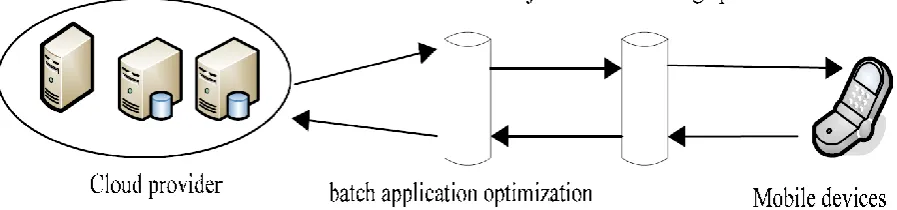
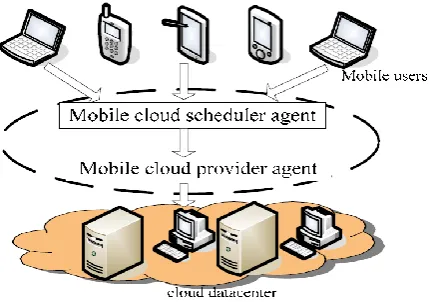
(2) C. Li, L. Li. computing system based on stochastic data. They define the expected “performance sum” as the objective function, which essentially captures a desirable tradeoff between performance and power consumption of the mobile device. Abolfazli et al. [6] propose a marketoriented architecture based on SOA (service-oriented architecture) to stimulate publishing, discovering, and hosting services on nearby mobiles. In [7], a framework from modeling to design, and to implementation is proposed to build a service selection system in mobile cloud. A Markov chain model is used for performance measures calculation. In [8], Park and Lee make groups of mobile devices by measuring the behavior of mobile devices and calculating the entropy in mobile cloud. In [9], Nishio et al. propose an architecture and mathematical framework for heterogeneous resource sharing in mobile cloud. They formulate optimization problems for maximizing the sum of the utility functions and solve them via convex optimization approaches. Shiraz et al. [10] study virtual machine deployment for application outsourcing in mobile cloud. This paper analyzes the impact of VM (Virtual Machine) deployment and management on the execution time of application. In [11], Balakrishnan and Tham attempt to apply DVFS (Dynamic voltage and frequency scaling) in mapping as well as scheduling stages by combining both the task-resource and resource-frequency assignments in mobile cloud. In [12], Mohammad et al. propose a cooperative game-theoretic solution for the benefit of the cloud providers in horizontal dynamic cloud federation. They study two utility maximizing cooperative resource allocation games. In [13], Hung et al. present a novel architecture, taking advantage of collaboration of thin and thick clients in cloud computing. The paper aims at optimizing data distribution and utilizing cloud resources so that QoS (Quality of Service) requirements can be met. They also propose an algorithm to select an optimal resource allocation strategy to satisfy various Service Level Agreements. In [14], Yang et al. study how to optimize the computation partitioning of a data stream application between mobile and cloud to achieve maximum speed/throughput in processing the streaming data in mobile cloud. Li et al. [15] propose Armada, an efficient range query processing scheme to support delay bounded single-attribute and multiple-attribute range queries. Sanaei et al. [16] propose a Servicebased arbitrated multi-tier infrastructure for mobile cloud computing. In [17], Sindia et al. explore how cloud computing techniques can be used on mobile devices. Two ways are proposed to deploy mobile cloud computing in an efficient manner: a customizable job scheduler; and a mobile friendly MapReduce framework. In [18], Niyato et al. model the resource allocation process of a mobile cloud computing system as an auction mechanism with premium and discount factors. In [19], Park et al. propose a resource allocation technique which offers reliable resource allocation considering the availability of mobile resources and movement. reliability of mobile resources in mobile cloud. Reference [20] proposed phased scheduling for resource-constrained mobile devices in mobile cloud computing. Reference [21] presents optimal resource provisioning for cloud computing environment. Andziulis et al. [22] study robust intelligent construction procedure for job-shop scheduling. From the above review of related literature on mobile cloud, most researches of the mobile cloud scheduling do not consider how to fulfill both mobile users’ expectations and mobile cloud providers’ optimization objectives. The methods and contributions of this paper are different from the above related works. Our contributions are as follows. 1) The formulation of mobile cloud multistage scheduling strategy for batch processing applications combines the perspectives of mobile cloud providers and mobile device users. 2) The maximization of the Lagrangian of mobile cloud multistage scheduling optimization in mobile cloud can be processed in parallel. In order to achieve a distributed solution, the multistage scheduling optimization is involved with mobile cloud provider’s optimization, mobile device application’s optimization and mobile device job’s optimization, respectively. 3) The paper adopts a distributed mobile cloud multistage scheduling algorithm among mobile device’s batch applications, mobile cloud providers and mobile device users in mobile cloud. In the paper, multimedia search as an example in mobile cloud environment is presented, and the proposed multistage scheduling method is applied to mobile cloud environment. The experiments aim at comparing our algorithm (MCMSA) with other two related works. The rest of the paper is structured as follows. Section 2 discusses system model of batch processing applications for mobile cloud computing. Section 3 presents mobile cloud multistage scheduling algorithm. In Section 4, the experiments are conducted and discussed. Section 5 gives an application example. Section 6 gives the conclusions to the paper.. 2. Efficient Scheduling Strategy for Batch Processing Applications in Mobile Cloud 2.1. System Model Description The mobile cloud system proposed in Fig. 1 includes mobile device users, cloud datacenter and mobile cloud proxy. For achieving efficient scheduling optimization for batch processing applications in mobile cloud, different multistage scheduling strategies are deployed at three levels: mobile cloud job scheduling, mobile cloud batch applications’ scheduling and mobile cloud system’s scheduling. At the top, the mobile cloud system scheduling controls the gross provisioning of VMs to the mobile cloud batch applications. At the next level down, the mobile cloud batch applications scheduling is responsible for the. 8.
(3) An Efficient Scheduling Strategy for Batch Processing Applications in Mobile Cloud: Model and Algorithm. Figure 1. Mobile cloud environment. deployments of all mobile device applications that exploit the mobile cloud resources. At the lowest level, the mobile device’s job scheduling adjusts the mobile cloud resource usages to optimize the utility of single mobile device application. Mobile device’s batch applications’ scheduling take more time to decide which of their control actions will maximize mobile device’s batch applications’ utility. Mobile cloud job scheduling aims at maximizing the utility of mobile cloud job. The multistage scheduling process in mobile cloud is shown in Fig. 2. The mobile cloud system scheduling performs a system wide allocation of mobile cloud resources. After initialization, the scheduling of mobile device’s batch applications and mobile device’s job scheduling in the system would be able to take finer control. The mobile cloud system scheduling chooses mobile cloud. resource allocation for the mobile device’s application that maximizes mobile cloud system utility. The operations of mobile device’s job level scheduling, mobile device’s batch applications’ scheduling and mobile cloud system’s scheduling are coordinated with each other. Efficient multistage scheduling optimization for batch processing applications uses composite utility functions to measure system performance at multistage. Mobile cloud scheduling is deployed at the different stages; the implementation of multistage scheduling optimization leads to the decomposition of the system. The mobile device’s batch applications’ scheduling works independently to acquire VMs from mobile cloud providers. The mobile device’s batch applications’ scheduling acquires VMs in order to maintain batch applications’ utility.. Figure 2. Multistage scheduling process in mobile cloud. 2.2. Problem Formulation. provider 𝑗 is denoted by 𝐶𝑗 . The time taken by the mobile device’s application 𝑖 to complete the nth job is denoted by 𝑡𝑖𝑛 . 𝑡𝑘𝑖 refers to the time taken by the 𝑖 application in the mobile device’s batch application 𝑘, 𝑗 𝑟𝑖 refers to the payments of the mobile device’s. 𝑗 𝜈𝑖. Let denote the VM for mobile device’s application 𝑖 from the mobile cloud provider 𝑗. The deadline given by the mobile device’s batch application 𝑘 is denoted by 𝑇𝑘 . The maximum capacity of mobile cloud. 9.
(4) C. Li, L. Li. mobile cloud applications is to complete a sequence of applications within specified deadline, 𝑇𝑘 , while the. application 𝑖 to mobile cloud provider 𝑗 , 𝐸𝑘 refers to the budget of mobile device’s batch application 𝑘 , 𝑇𝑖 refers to the deadline given by mobile device’s application 𝑖 . The energy dissipation used by the 𝑗th mobile cloud provider is denoted by 𝑒𝑛𝑗 . The limit of energy consumption of mobile cloud provider 𝑗 is denoted by 𝐷𝑗 . The budget of mobile device’s application 𝑖 is denoted by 𝐵𝑖 . The payment of the 𝑛th job of mobile device’s application 𝑖 is denoted by 𝑠𝑖𝑛 . The computation task of the 𝑖 th mobile device’s application’s nth job is denoted by 𝑞𝑖𝑛 . In multistage scheduling model of mobile cloud, the objective of mobile device’s batch applications optimization is to provision VMs for batch applications such that the mobile cloud utility 𝑈𝑀𝑜𝑏𝑖𝑙𝑒𝑐𝑙𝑜𝑢𝑑 is maximized subject to the resource constraints of mobile cloud datacentre and the requirements of mobile device’s batch applications, respectively. The problem of mobile cloud multistage scheduling optimization is formulated as follows:. 𝐼. total payment cannot exceed the budget 𝐸𝑘 , ∑. 𝑖=1. are the payments of the mobile device’s batch applications to the mobile cloud provider 𝑗 for provisioned VMs. Let us consider the Lagrangian form of mobile cloud multistage scheduling optimization problem: 𝑗. 𝐿 = 𝑈𝑀𝑜𝑏𝑖𝑙𝑒𝑐𝑙𝑜𝑢𝑑 + 𝜆 (𝐶𝑗 − ∑ 𝜈𝑖 ) + 𝛽 (𝑇𝑘 −. 𝐼. where 𝜆𝑖 , 𝛽 , 𝜇 , 𝜎 are the Lagrangian multipliers. Solving Formula (2.2) requires the cooperation of mobile cloud applications, but it is not applicable in mobile cloud environment. Since the Lagrangian function is separable, the maximization of the Lagrangian can be processed in parallel by mobile cloud applications and mobile cloud providers. The mobile cloud batch application optimization problem can be converted into two sub-optimization problems, which are respectively achieved by mobile cloud batch applications and mobile cloud providers as follows:. 𝑗. 𝑟𝑖 , (2.1). 𝑗. 𝑁 𝑖=1. 𝑇𝑘 ≥ ∑𝑖=1 𝑡𝑘𝑖 .. 𝑠. 𝑡𝐶𝑗 ≥ ∑. Mobile cloud system utility is the sum of the mobile device’s batch application’s utility and mobile cloud provider’ utility. It aims to jointly optimize the benefit of mobile device’s application and mobile cloud provider. 𝐼. 𝑈𝑀𝑜𝑏𝑖𝑙𝑒𝑐𝑙𝑜𝑢𝑑 = ∑ ((𝑇𝑘 − 𝑘=1. 𝑖=1. + (𝐸𝑘 −. 𝑗. (𝑟𝑖 log 𝜈𝑖 ) − 𝑒𝑛𝑗 .. 𝐼. ∑𝑖=1 𝑡𝑘𝑖 ). 𝑁. (2.4). ((𝑇𝑘 − 𝑘=1. 𝑗 ∑ 𝑟𝑖 )) 𝑖=1. 𝐼. ∑𝑖=1 𝑡𝑘𝑖 ). 𝐼. + (𝐸𝑘 − ∑. 𝑖=1. 𝑗 𝑟𝑖 )) 𝐼. 𝐼. 𝑠. 𝑡𝑇𝑘 ≥ ∑𝑖=1 𝑡𝑘𝑖 , 𝐸𝑘 ≥ ∑. 𝑖=1. + (𝐸𝑘 − ∑. 𝑖=1. 𝑗. , 𝑒𝑛𝑗 ≤ 𝐷𝑗 . 𝐾. (2.2). 𝐼. 𝑗 𝑟𝑖 ). 𝑗. (𝑟𝑖 log 𝜈𝑖 ) − 𝑒𝑛𝑗. 𝑀𝑎𝑥 𝑈𝑀𝑜𝑏𝑖𝑙𝑒𝑏𝑎𝑡𝑐ℎ𝑎𝑝𝑝 = ∑. means. (2.5) 𝑗. 𝑟𝑖 .. Formula (2.4) corresponds to the behavior of the mobile cloud provider. Different mobile cloud providers compete for provisioning the VMs for mobile cloud batch applications and maximizing the revenue. In Formula (2.4), 𝑁 denotes the total number of mobile 𝑁. cloud providers. ∑. the. 𝑗. 𝑗. (𝑟𝑖 log 𝜈𝑖 ) presents the revenue. 𝑖=1. obtained by mobile cloud provider 𝑗 from mobile device’s application 𝑖 . We chose the 𝑙𝑜𝑔 function because the benefit increases quickly from zero as the allocated virtual machines increase from zero and then increases slowly. To provision VMs for mobile cloud batch applications, the mobile cloud provider has to pay for the energy cost. The mobile cloud provider aims to maximize the utility function without exceeding maximal energy constraints. Formula (2.5) corresponds to the behavior of the mobile cloud batch applications. The mobile batch applications compute the optimal payment to mobile cloud providers under the. mobile device’s batch applications’ saving time and cost surplus, when completing the mobile device’s applications. It is the utility of mobile device’s batch application 𝑘. ∑. 𝑗 𝜈𝑖. 𝐼. ∑ 𝑡𝑘𝑖 ) 𝑖=1. 𝑗. 𝑖. In Formula (2.2), 𝑁 is the sum number of mobile device’s applications. 𝐾 denotes the sum number of the mobile application groups. 𝐼 denotes total number of mobile device’s applications. 𝑗 denotes certain mobile cloud provider. 𝑖 denotes certain mobile device’s application. (𝑇𝑘 −. 𝑗. 𝑀𝑎𝑥 𝑈𝐶𝑙𝑜𝑢𝑑𝑝𝑟𝑜𝑣𝑖𝑑𝑒𝑟 = ∑. 𝐾. (2.3). 𝑟𝑖 ) +. 𝜎(𝐷𝑗 − 𝑒𝑛𝑗 ). 𝑖 𝐼. 𝑁. 𝑗. 𝑖=1. 𝐶𝑗 ≥ ∑ 𝜈𝑖 ,. +∑. 𝐼. 𝐼. 𝑖=1. 𝑒𝑛𝑗 ≤ 𝐷𝑗 ,. 𝑖. ∑𝑖=1 𝑡𝑘𝑖 ) + 𝜇 (𝐸𝑘 ∑. 𝑀𝑎𝑥 𝑈𝑀𝑜𝑏𝑖𝑙𝑒𝑐𝑙𝑜𝑢𝑑 𝑠. 𝑡𝐸𝑘 ≥ ∑. 𝑗. 𝑟𝑖. 𝑗. 𝑟𝑖 log 𝜈𝑖 − 𝑒𝑛𝑗 presents the bene-. 𝑖=1. fit of mobile cloud provider. The constraint of Formula (2.2) implies that the aggregate VMs can not exceed the total number of VMs of mobile cloud provider 𝑗. Other constraints are related with mobile cloud applications. The objective of. 10.
(5) An Efficient Scheduling Strategy for Batch Processing Applications in Mobile Cloud: Model and Algorithm. constraints to maximize mobile device’s batch applications’ satisfaction. The ith mobile device’s 𝑗 application pays 𝑟𝑖 to the mobile cloud provider 𝑗 for 𝐼. obtaining virtual machines. 𝐸𝑘 − ∑. 𝑖=1. provisioning VMs. So the revenue of mobile cloud provider increases when the VMs leased to the mobile device’s batch applications increase and the payments received from mobile devices increase, also the payment for energy consumption decreases. The sum. 𝑗. 𝑟𝑖 represents. 𝑁. the surpluses of mobile device’s batch applications. 𝐼. 𝑖=1. (𝑇𝑘 − ∑𝑖=1 𝑡𝑘𝑖 ) represents the saving time, which is calculated by the deadline minus the actual execution time. In job-level optimization problem of mobile cloud multistage scheduling model, a mobile device’s application needs to complete a sequence of jobs within the deadline, 𝑇𝑖 , while minimizing the cost occurred and processing time. Each job of mobile device’s application 𝑖 submits 𝑠𝑖𝑛 for the VM. Mobile device’s jobs compete for the resources of mobile cloud application 𝑖. The resources allocated to mobile device’s jobs depend on the relative payments sent by all jobs. The 𝑛th mobile device’s jobs receive mobile cloud resources proportional to its payment. Given the deadline 𝑇𝑖 for mobile device’s application 𝑖 to complete all jobs, the job-level optimization scheduling in mobile cloud can be formulated as:. 𝑗. (𝑟𝑖 log 𝜈𝑖 ) presents the revenue obtained by. mobile cloud provider 𝑗 from mobile device’s batch applications. The objective of mobile cloud provider is to maximize the revenue and minimize energy consumption 𝑒𝑛𝑗 . Mobile device’s batch application adaptively submits the demand of VM based on the current conditions of mobile cloud provider, while the mobile cloud provider adaptively allocates VMs required by the mobile device’s batch applications. The interaction between mobile device’s batch applications and mobile cloud provider is controlled through the use of the variables 𝑝𝑗 , 𝑝𝑗 denotes VM prices provided by the mobile cloud providers, which is used in mobile cloud batch application optimization problem. The energy consumption rate of mobile cloud provider for hosting VMs is denoted as 𝑒𝑗 . The energy consumption of mobile cloud provider 𝑗 to provision virtual machine for mobile device’s application 𝑖 𝑗 denoted as 𝑒𝑐𝑖 can be written as follows:. 𝑀𝑎𝑥 𝑈𝑚𝑜𝑏𝑖𝑙𝑒𝑑𝑒𝑣𝑖𝑐𝑒𝑗𝑜𝑏 = {(𝐵𝑖 − ∑𝑛 𝑠𝑖𝑛 ) + 𝜎(𝑇𝑖 − ∑𝑛 𝑡𝑖𝑛 )} 𝑠. 𝑡𝑇𝑖 ≥ ∑𝑛 𝑡𝑖𝑛 .. 𝑗. ∑. 𝑗. (2.6). 𝑗. 𝑒𝑐𝑖 = 𝑒𝑗 ∗ 𝜈𝑖 .. (2.7). Let 𝑝𝑥𝑗 denote electricity price. The energy consumption cost of mobile cloud provider for hosting VMs is expressed as follows:. In Formula (2.6), 𝜎 is the relative importance of costs and times to complete mobile device jobs, mobile cloud application with larger value of 𝜎 would indicate a greater preference to reduce its completion time. When 𝜎 = 1, meaning that costs and times are equally important. In Formula (2.6), we use absolute value of money and time, and the weights of the factors are equal.. 𝑁. 𝑗. 𝑒𝑛𝑗 = 𝑝𝑥𝑗 ∗ ∑. 𝑖=1. 𝑒𝑐𝑖 .. (2.8). The mobile cloud provider's optimization problem is reformulated as 𝑗. 𝑁. 𝑗. 𝑗. 𝑀𝑎𝑥∑(𝑟𝑖 log 𝜈𝑖 ) − 𝑝𝑥𝑗 ∑. 2.3. Solutions for Scheduling Strategy for Batch Processing Applications in Mobile Cloud. 𝑖=1. 𝑒𝑗 ∗ 𝜈𝑖 .. (2.9) 𝑗. The Lagrangian function for 𝑈𝑐𝑙𝑜𝑢𝑑𝑝𝑟𝑜𝑣𝑖𝑑𝑒𝑟 (𝜈𝑖 ) in Formula (2.4) is. For multistage scheduling for batch processing applications in mobile cloud, the mobile cloud system scheduling controls the gross provisioning of VMs to the mobile device’s batch applications. Mobile cloud provider's optimization aims at computing the optimal 𝑗∗ VM 𝜈𝑖 for mobile device’s batch applications while maximizing the benefit function of mobile cloud provider without exceeding the total number of VMs and upper payment of energy consumption. The VMs allocated to mobile device’s batch applications are constrained by the total of capacity of mobile cloud providers. Total allocated VMs do not exceed the total capacity 𝐶𝑗 . For the mobile cloud provider's optimization problem, mobile cloud providers compute optimal VMs to maximize the benefit function and minimize the payment for providing VMs to mobile device’s batch applications. The profits of mobile cloud provider are affected by the payments of mobile device’s batch applications and energy payment of. 𝑗. 𝑗. 𝑗. 𝑁. 𝐿(𝜈𝑖 ) = ∑(𝑟𝑖 log 𝜈𝑖 ) − 𝑝𝑥𝑗 ∑ 𝑗. 𝜆 (𝐶𝑗 − ∑ 𝜈𝑖 ) + 𝜂 (𝐷𝑗 − 𝑝𝑥𝑗 ∑ 𝑖. 𝑗. 𝑒𝑗 ∗ 𝜈𝑖 +. 𝑖=1 𝑁. 𝑖=1. 𝑗. 𝑒𝑗 ∗ 𝜈𝑖 ) (2.10). where 𝜆 and 𝜂 are the Lagrangian constants. From Karush-Kuhn-Tucker Theorem, the optimal solution 𝑗 𝜕𝐿(𝜈𝑖 ) can be gotten, given ⁄ 𝑗 = 0 for 𝜆 > 0. We 𝜕𝜈𝑖 𝑗 take derivative with respect to 𝜈𝑖 and get (2.11) as follows: 𝑗. 𝑗 𝑟 𝜕𝐿(𝜈𝑖 ) ⁄ 𝑗 = 𝑖𝑗 − (1 + 𝜆 + 𝜂)𝑝𝑥𝑗 𝑒𝑗 𝜈𝑖 𝜕𝜈𝑖. 𝑗. Let. 11. (2.11). 𝜕𝐿(𝜈𝑖 ) 𝑗 ⁄ 𝑗 = 0, we can get 𝜈𝑖 as follows: 𝜕𝜈𝑖.
(6) C. Li, L. Li 𝑟. 𝑗. 𝐼. 𝑗 𝑗 𝑒𝑗. 𝑖=1. 𝑗∗ 𝜈𝑖. 1 𝜔. 𝑗. 𝑗. ∑ 𝑟𝑖 ,. 𝜔=. ∑ 𝑟𝑖 𝐷𝑗. From Karush-Kuhn-Tucker Theorem, we can get as follows: 𝑗. 𝑗∗. 𝜈𝑖 =. 𝑟𝑖 𝐷𝑗. (2.13). 𝑗. 𝑝𝑥𝑗 𝑒𝑗 ∑ 𝑟𝑖 𝑗∗. In (2.13), 𝜈𝑖 means that the mobile cloud provider 𝑗 computes optimal units of virtual machines for mobile device’s application 𝑖 while maximizing its benefit. The mobile device’s application 𝑖 is the consumer of mobile cloud provider, which provision VMs for mobile device’s application. The mobile device’s 𝑗 application 𝑖 submits payment 𝑟𝑖 to the mobile cloud 𝑗 provider 𝑗 for VM. Let 𝑟𝑖 be the payment of the ith mobile device’s application. 𝑁 mobile device’s applications compete for the VMs. Mobile cloud provider’s VMs are allocated using a market mechanism, where the divisions depend on the relative payments sent by the mobile device’s batch applications. Let’s consider the interactions of mobile device’s application 𝑖 and mobile cloud provider in mobile cloud. The benefit function for mobile device’s application 𝑖 depends on the units of VM denoted by 𝑗 𝜈𝑖 . For the mobile device’s batch application optimization problem, the mobile device’s application 𝑖 calculates the unique optimal payment to mobile cloud provider under the constraints to maximize the mobile device’s batch application’s benefit. The payment accrued to buy or lease VMs cannot exceed the budget of mobile device’s batch application 𝐸𝑘 . The mobile device’s batch applications give the unique optimal payment to mobile cloud providers under the constraints of the deadline and budget to maximize the set of mobile device’s batch applications’ benefits. The time taken by the mobile device’s batch application to complete the 𝑖th application is 𝑡𝑘𝑖. =. 𝑝𝑗 𝑗. 𝐶𝑗 𝑟𝑖. .. 𝑗. 𝑗. 𝑝𝑗 𝑖. 𝑗. 𝐼. 𝑖=1. 𝑗. 𝑟𝑖 .. ). )+. (2.16). 𝑗. 𝑝𝑗 𝜕𝐿(𝑟𝑖 ) −𝛽+ ⁄ 𝑗 = −1 + 𝐾 𝑗 2 𝜕𝑟𝑖 𝐶𝑗 (𝑟𝑖 ). 𝜂𝐾. 𝑝𝑗. (2.17). 𝑗 2. 𝐶𝑗 (𝑟𝑖 ). 𝑗 Let 𝜕𝐿⁄ 𝑗 = 0, we get 𝑟𝑖 denoted in (2.18) as 𝜕𝑟𝑖 follows: 𝑗. (𝑘𝜂+𝑘)𝑝𝑗 1/2. 𝑟𝑖 = ( (1+𝛽)𝐶 ) 𝑗. .. (2.18). Using this result in the constraint equation in (2.15), (𝑘𝜂+𝑘) let 𝜃 = (1+𝛽) , we can get (𝜃)−1/2 𝑇𝑘. (𝜃)−1/2 =. 𝐽. ∑. .. (2.19). 1/2 𝑝𝑗 ( ) 𝐶𝑗. 𝑗=1. We use the result of (2.19) and apply it to (2.18) to 𝑗∗ obtain 𝑟𝑖 as follows: 𝐽 𝑝𝑗. ∑. 𝑟𝑖. 𝑗∗. 𝑝𝑗. 1/2. =( ) 𝐶𝑗. 1/2. (𝐶 ) 𝑗. 𝑗=1. 𝑇𝑘. .. (2.20) 𝑗∗. The mobile cloud application 𝑖 pay 𝑟𝑖 to mobile cloud provider 𝑗 for virtual machines. In mobile cloud multistage scheduling model, mobile device’s job level scheduling optimization in mobile cloud is conducted by mobile device’s application; the mobile device’s application calculates the payment to mobile cloud provider under the deadline to satisfy the mobile cloud application’s. 𝑗. 𝑠. 𝑡𝑇𝑘 ≥ ∑𝑖=1 𝑡𝑘𝑖 , 𝐸𝑘 ≥ ∑. 𝑗. 𝑗. 𝐶𝑗 𝑟𝑖. 𝐶𝑗 𝑟𝑖. where 𝛽 and 𝜂 are the Lagrangian constants. From Karush-Kuhn-Tucker Theorem, the optimal solution can be gotten, if 𝜕𝐿⁄ 𝑗 = 0 for 𝛽 > 0. We take 𝜕𝑟𝑖 𝑗 derivative with respect to 𝑟𝑖 and get (2.17) as follows:. ) + (𝐸𝑘 − ∑ 𝑟𝑖 ) 𝐼. 𝑝𝑗. 𝑗. 𝑗. 𝑗. 𝑗. 𝑗. 𝛽 (𝐸𝑘 − ∑ 𝑟𝑖 ) + 𝜂 (𝑇𝑘 − 𝐾 ∑. The mobile cloud batch application optimization problem can be rewritten as follows: 𝐶𝑗 𝑟𝑖. 𝑝𝑗. 𝑗. 𝐿(𝑟𝑖 ) = (𝐸𝑘 − ∑ 𝑟𝑖 ) + (𝑇𝑘 − 𝐾 ∑. (2.14). 𝑀𝑎𝑥 (𝑇𝑘 − 𝐾 ∑. 𝑟𝑖 means the payments of the 𝑖th. mobile cloud application in the mobile device’s batch application 𝑘 to the mobile cloud provider 𝑗 can not exceed the budget 𝐸𝑘 . Let the pricing policy, 𝑝 = (𝑝1 , 𝑝2 , … , 𝑝𝑗 ), denote the set of VM prices of all mobile cloud providers. The mobile device’s application 𝑖 receives the VMs according to its payment relative to the sum of the mobile cloud provider’s revenue. The Lagrangian for the problem 𝑈𝑀𝑜𝑏𝑖𝑙𝑒𝑏𝑎𝑡𝑐ℎ𝑎𝑝𝑝 in 𝑗 Formula (2.5) is 𝐿(𝑟𝑖 ). Using this result in the constraint equation of Formula (2.4), let 𝜔 = 1 + 𝜂 + 𝜆, we can get the result as follows: 𝐷𝑗 =. 𝑗. provider. 𝐸𝑘 ≥ ∑. (2.12). 𝑖 𝜈𝑖 = (1+𝜆+𝜂)𝑝𝑥. (2.15). In (2.15), 𝑘 denotes the number of mobile cloud batch application, 𝑗 denotes certain mobile cloud. 12.
(7) An Efficient Scheduling Strategy for Batch Processing Applications in Mobile Cloud: Model and Algorithm. requirements. 𝐵𝑖 − ∑𝑛 𝑠𝑖𝑛 is the surplus of all jobs of mobile device’s application. ∑𝑛 𝑡𝑖𝑛 represents the execution time for processing all mobile device application’s jobs. The objective of job level scheduling optimization is to minimize the cost of mobile device’s applications and complete all jobs as soon as possible. Under the constraint of the deadline, mobile device application 𝑖 wants to complete all jobs. 𝑞𝑖𝑛 is the computation task of 𝑖 th mobile device application’s nth job. The execution time taken by the 𝑖th mobile device application to complete the 𝑛th job is: 𝑡𝑖𝑛. =. 𝑞𝑖𝑛 𝑗 𝑣𝑖 𝑠𝑖𝑛. .. where 𝜆 is the Lagrangian constant. Using this result in the constraint equation in (2.6), Let 𝜃 = 1 + 𝜆, 𝜃 can be obtained in (2.24). 𝑛=1. 𝑗 𝑣𝑖 𝑠𝑖𝑛. ∗. = (𝐵𝑖 −. ) + (𝑇𝑖 − ∑. 𝑗. 𝑛=1. 𝑁. 𝑞𝑖𝑛 𝑣𝑖 𝑠𝑖𝑛. 𝜆 (𝑇𝑖 − ∑𝑛=1 𝑡𝑖𝑛 ). 𝑞𝑖𝑛 𝑗 𝑣𝑖. (2.24). 𝑞𝑖 1/2 ∑𝑁 𝑛=1( 𝑗 ). 𝑠𝑖𝑛 = ( ). 𝑣. 𝑇𝑖. 𝑖. .. (2.25). In (2.25), the 𝑛th job of mobile device’s application ∗ 𝑖 pay 𝑠𝑖𝑛 to the mobile cloud provider 𝑗.. 3. Mobile Cloud Multistage Scheduling Algorithm. )}.(2.22). 𝑁. ∑𝑛 𝑠𝑖𝑛. .. 𝑛 1/2. The multistage scheduling algorithms in mobile cloud are involved with mobile cloud provider’s optimization, mobile device application’s optimization and mobile device job’s optimization, respectively. The proposed algorithm that achieves multistage scheduling for data-Intensive batch applications can be described as follows.. The Lagrangian for 𝑈𝑚𝑜𝑏𝑖𝑙𝑒𝑑𝑒𝑣𝑖𝑐𝑒𝑗𝑜𝑏 in (2.6) is 𝐿(𝑠𝑖𝑛 ). 𝐿(𝑠𝑖𝑛 ). 1/2 𝑞𝑛 ( 𝑖𝑗 ) 𝑣 𝑖. We use the result of (2.24) and apply it to (2.23) to ∗ obtain 𝑠𝑖𝑛. The mobile device’s job level scheduling optimization is reformulated as 𝑞𝑖𝑛. 𝑁. ∑. (2.21). 𝑀𝑎𝑥 {(𝐵𝑖 − ∑𝑛 𝑠𝑖𝑛 ) + (𝑇𝑖 − ∑𝑁 𝑛=1. 𝑇𝑖. (𝜃)−1/2 =. )+. (2.23). Algorithm 1. Mobile Cloud Multistage Scheduling Algorithm (MCMSA) Routine mobile device application_Optimization(𝑝𝑗 ) 𝐼. If. 𝑗. 𝐸𝑘 ≥ ∑ 𝑗∗. 𝑖=1. 𝑟𝑖. 𝑗. 𝑗. Then 𝑟𝑖 ← 𝑀𝑎𝑥 𝑈𝑚𝑜𝑏𝑖𝑙𝑒𝑑𝑒𝑣𝑖𝑐𝑒𝑗𝑜𝑏 (𝑟𝑖 ); //compute 𝑟𝑖 according to Formula (2.20) 𝑗∗. Return 𝑟𝑖 ; 𝑗. Routine mobile device job Optimization(𝑣𝑖 ) 𝑁. If 𝐵𝑖 ≥ ∑n=1 𝑠𝑖𝑛 𝑛∗. ∗. 𝑠𝑖 ← 𝑀𝑎𝑥 𝑈𝑀𝐷𝐽 (𝑠𝑖𝑛 ); // compute 𝑠𝑖𝑛 according to Formula (2.25) ∗. Return 𝑠𝑖𝑛 ; 𝑗 (𝑛). Routine mobile cloud provider_Optimization (𝑟𝑖 𝑗∗ 𝜈𝑖. ← 𝑀𝑎𝑥 {𝑈𝐶𝑙𝑜𝑢𝑑𝑝𝑟𝑜𝑣𝑖𝑑𝑒𝑟 }; //compute. If 𝐶𝑗 ≥ ∑ Then. 𝑗 𝜈𝑖. 𝑗∗ 𝜈𝑖. ). according to Formula (2.13). ;. 𝑖 (𝑛+1) 𝑝𝑗. (𝑛). ← max {𝜀, 𝑝𝑗. 𝑗. + 𝜂 (∑ 𝑣𝑖 − 𝐶𝑗 )} 𝑖. // where 𝜂 > 0 is a small step size parameter, 𝑛 is iteration step. Let 𝜀 > 0 be a sufficiently small constant preventing prices to approach zero. It is consistent with the law of supply and demand: if the demand for VM exceeds the mobile cloud provider’s (𝑛+1) supply 𝐶𝑗 , then the price 𝑝𝑗 is raised; otherwise, the VM’s price is reduced; (𝑛+1). Return 𝑝𝑗. ;. compare and analyze three algorithms. Mobile cloud proxy residing in WLANs acts as the interface point between the mobile devices. All Wi-Fi interfaces operate at a rate of 11Mb/s. All Ethernet interfaces operate at a rate of 10Gb/s. Jobs arrive at each cloud. 4. Experiments In this section, we compare the proposed mobile cloud multistage scheduling algorithm (MCMSA) with other related works. A mobile cloud environment with a 2-dimensional area of 500m*500m is used to. 13.
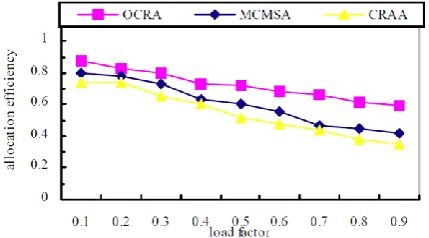
(8) C. Li, L. Li. resources available as a percentage. Execution success ratio is the percentage of jobs executed successfully before their deadline. We compare MCMSA algorithm with CRAA and OCRA by varying load factor, deadline and network latency to study how they affect the performance of these algorithms. Figures 3 to 5 are to study allocation efficiency, execution success ratio, and revenue under different load factor (𝑎), respectively. Fig. 3 shows that when load factor increases ( 𝑎 = 0.5), resource allocation efficiency of MCMSA is as much as 12% less than that with 𝑎 = 0.1. The resource allocation efficiency is larger when the load factor is higher. When the load factor is 0.5 (𝑎 = 0.5), resource allocation efficiency of CRAA is 22% more than MCMSA. Compared with OCRA, the resource allocation efficiency of MCMSA and CRAA sharply decreases than CRAA when the load factor increases. When the load factor is 0.7 ( 𝑎 = 0.7), the allocation efficiency of CRAA decreases to 55%, the energy allocation efficiency of MCMSA decreases to 75%. When the load factor increases, fewer mobile cloud users can be admitted into the mobile cloud system due to the increase of system burden, so, resource allocation efficiency decreases. Considering the execution success ratio, from the results in Fig. 4, when load factor is 0.7 (𝑎 = 0.7), the execution success ratio of CRAA is 22% less than that using MCMSA. When load factor increases, system load increases as well; some mobile device user’s requirements can’t be processed on time, this leads to low execution success ratio. When load factor increases, execution success ratio of CRAA deteriorates quickly. OCRA performs better than CRAA and MCMSA. CRAA resource allocation algorithm does not consider the optimization of both mobile cloud providers and mobile device users; it wants to optimize the revenue of the mobile cloud providers. Fig. 5 shows the effect of the load factor on the revenue. The revenue increases as the load factor increases. When load factor is 0.7 ( 𝑎 = 0.7), the execution success ratio of CRAA is 17% more than that using MCMSA. MCMSA jointly considers both mobile device users and mobile cloud resource providers; CRAA mainly optimizes the revenues of mobile cloud providers, it has better revenues than OCRA and MCMSA.. node 𝑠𝑖 , 𝑖 = 1, 2, … , 𝑛, according to a Poisson process with rate 𝛼. The energy cost can be expressed in the dollar that can be defined as unit energy processing cost. Mobile device users submit their jobs with varying deadlines. The deadlines of mobile device user are chosen from 100ms to 400ms. The budgets of mobile device users are set from 100 to 1500 dollars. Each experiment is repeated 6 times and 95% confidence intervals are obtained. Simulation parameters are listed in Table 2. Table 2. Simulation Parameters Simulation Parameter. Value. Total number of mobile device users. 40. Total number of cloud providers. 12. Mobility model Average speed of mobile device. Random-walking mobility 5m/s. Initial price of VM. [10, 500]. Deadline. [100, 400]. Expense budget. [100, 1500]. electrical energy. [0.1, 1.0]. Bandwidth. [100, 1000]. Computing power. [100, 1000]. RAM. [100, 2000]. Energy price. [1, 100]. Job arrival rate. [0.1, 0.6]. The simulations are conducted to compare our mobile cloud multistage scheduling Algorithm (MCMSA) with cooperative resource allocation algorithm in mobile cloud computing [2], which is named as CRAA and optimal collaboration of thin–thick clients and resource allocation algorithm in mobile cloud computing [13], which is named as OCRA. In [2], Kaewpuang et al. propose a framework for resource allocation to the mobile applications, and revenue management and cooperation formation among service providers in mobile cloud. They formulate and solve optimization models to obtain the optimal number of application instances that can be supported to maximize the revenue of the service providers while meeting the resource requirements of the mobile applications. In [13], Hung et al. present a novel architecture that enhances mobile client’s capabilities with computing resources from mobile clouds. Hung et al. [13] focus on optimizing the data distribution from cloud networks to mobile client and utilizing computing resources so that QoS requirements can be fulfilled. They proposed an algorithm that can select the best resource allocation strategy in order to satisfy Service Level Agreements. The following simulation metrics are adopted: resource allocation efficiency, execution success ratio and revenue. Resource allocation efficiency is the ratio of the consumed cloud resources to the total cloud. Figure 3. Allocation efficiency under different load factor. 14.
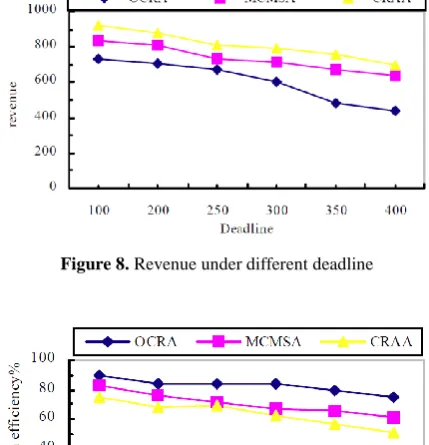
(9) An Efficient Scheduling Strategy for Batch Processing Applications in Mobile Cloud: Model and Algorithm. to complete jobs, the revenue of the mobile cloud provider becomes high. When the deadline is 300 (T=300), the revenue of CRAA is 17% higher than OCRA and 10% higher than MCMSA.. Figure 4. Execution success ratio under different load factor. Figure 6. Allocation efficiency under different deadline. Figure 5. Revenue under different load factor. The deadline effects on allocation efficiency, execution success ratio and revenue are illustrated in Fig. 6-8. Fig. 6 shows the resource allocation efficiency with different deadlines. We can see that the resource allocation efficiency increases when the deadline increases. When the deadline is low, the job with low budget can not buy expensive cloud resource; this leads to low allocation efficiency. When the deadline is 350 (T=350), the resource allocation efficiency of MCMSA is 29% higher than T=100. Compared with MCMSA, the allocation efficiency of OCRA decreases more slowly than MCMSA when the deadline decreases. When deadline is 100 (T=100), allocation efficiency of CRAA decreases to 32%, allocation efficiency of MCMSA decreases to 61%. Fig. 7 is to show the effect of the deadline on execution success ratio. When the deadline is low, execution success ratios of MCMSA, CRAA and OCRA are low. When increasing deadline, execution success ratio of MCMSA outperforms CRAA and OCRA. Because under low deadline, more jobs can’t be completed on time. When deadline is 100 (T=100), execution success ratio of MCMSA falls to 64% and execution success ratio of OCRA falls to 51%. From the results in Fig. 8, the revenue increases when the deadline decreases. When the deadline is low, the jobs need to be completed in short time, so mobile device user chooses more expensive cloud resources to process the jobs. However, when the deadline becomes higher, it is likely that the jobs can be completed before the deadline, so mobile device user considers using the cheaper cloud resources. Figure 7. Execution success ratio under different deadline. Figure 8. Revenue under different deadline. Figure 9. Effect of network latency on allocation efficiency. 15.
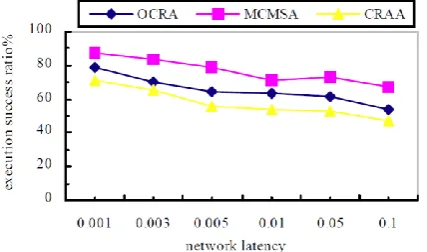
(10) C. Li, L. Li. success ratio and allocation efficiency, respectively. Firstly, considering the execution success ratio, Fig. 12 shows that when the number of mobile clouds nodes increases up to 80, execution success ratio of MCMSA is as much as 17% less than that with N=10. The execution success ratio is larger when the number of mobile cloud nodes is smaller. The execution success ratio of MCMSA is higher than OCRA and CRAA when mobile cloud node increases. When the number of mobile cloud users is 100, the execution success ratio of CRAA decreases to 49%, the execution success ratio of MCMSA decreases to 64%, the execution success ratio of OCRA decreases to 56%.Considering allocation efficiency, as shown in Fig. 13, when the number of mobile cloud nodes increases, allocation efficiency deteriorates. When the number of mobile cloud nodes is 80, the allocation efficiency of MCMSA is as 34% less than the number of mobile cloud nodes is 10. Compared with CRAA and MCMSA, the allocation efficiency of OCRA slowly decreases than CRAA and MCMSA when the number of mobile cloud nodes increases. When the number of mobile cloud nodes is 100, allocation efficiency of OCRA decreases to 73%, resource allocation efficiency of CRAA decreases to 51%, allocation efficiency of MCMSA decreases to 59%. When the numbers of mobile cloud nodes are same, OCRA can get better allocation efficiency than both MCMSA and CRAA.. Figure 10. Effect of network latency on execution success ratio. Figure 11. Effect of network latency on revenue. Figures 9 to 11 are to measure the effect of network latency on allocation efficiency, execution success ratio and revenue, respectively. Network latency refers to the time elapsed between the sending of a message to a router and the return of that message. Considering the resource allocation efficiency, from the results in Fig. 9, the X-axis shows a change in network, the resource allocation efficiency of MCMSA is as much as 18% less than OCRA. The resource allocation efficiency of MCMSA is as much as 17% higher than CRAA. When network latency reaches 0.05, the resource allocation efficiency of MCMSA is 19% more than OCRA. From the results in Fig. 10, lower network latency leads to higher execution success ratio. After network latency reaches 0.005, the execution success ratio of OCRA can be as much as 8% more than MCMSA. The execution success ratio of CRAA is as much as 17% less than MCMSA. The reason is that increasing network latency leads to longer times to complete tasks; so the execution success ratio becomes less. Fig. 11 shows the effect of varying network latency on the revenue. The revenue of MCMSA decreases when the network latency increases. Larger network latency enables mobile cloud user to expense more time for transfer and computation. When the network latency is large, the revenue is low. When the network latency is 0.05, the revenue of MCMSA is 19% less than the revenue when the network latency is 0.003. With the same network latency, CRAA can get more revenues than both MCMSA and OCRA. The following experiments are to measure effect of different mobile cloud node numbers on the execution. Figure 12. Execution success ratio versus the number of mobile cloud nodes. Figure 13. Allocation efficiency versus the number of mobile cloud nodes. From above simulation results, the objective of MCMSA is to satisfy mobile device users’ needs, as. 16.
(11) An Efficient Scheduling Strategy for Batch Processing Applications in Mobile Cloud: Model and Algorithm. well as optimize the profit of mobile cloud provider. CRAA aims to maximize the revenue of the mobile cloud service providers, OCRA aims to select the best resource allocation strategy in order to satisfy SLA in mobile cloud. The execution success ratio of MCMSA is better than OCRA and CRAA; CRAA behaves best in term of revenue; OCRA outperforms better than MCMSA and CRAA.. based multimedia search model in mobile cloud is shown in Fig. 14. In our method, several agents are used, namely, mobile cloud provider agents, mobile device user agents, intelligent service agent and mobile cloud scheduler agent which implements scheduling of batch applications for mobile cloud computing environment. Intelligent service agent is to provide multimedia search support for mobile device user agents. Mobile cloud provider agents and mobile device user agents act on behalf of mobile cloud provider and mobile cloud users. Mobile device user agents send the requests to intelligent service agents to find the needed videos or other multimedia resource in the mobile cloud and then mobile device user agent can get the multimedia data for mobile cloud users. The mobile cloud scheduler agent receives the request from mobile device users and schedules the request to suitable cloud resource nodes. The mobile cloud scheduler agent monitors the task requests from mobile device user agent. It receives the task requirements and puts them into the task queue. While the task queue is not empty, the mobile cloud scheduler agent starts the multistage scheduling algorithm (MCMSA).. 5. An Application Example In this section, we take multimedia search as an example in mobile cloud environment, and apply the proposed multistage scheduling method to mobile cloud environment. Multimedia data consist of files recorded on mobile devices, including videos, photos, and sound clips. They also encompass files stored on mobile devices for entertainment, such as music and movies. Multimedia search application would find photos, videos, or music files whose contents are similar to that of an input sample. The multimedia search application allows the cloud users to browse through videos and images stored on cloud datacenter and search by time, location, and quality. The agent. Figure 14. Agent based multimedia search model in mobile cloud. When the mobile cloud provider agent updates its price, it forwards the price to mobile device user agents; the mobile cloud resource price is put in a packet. Whenever the new price passes to mobile device user agent, it computes the benefit utility. According to the multistage scheduling algorithm, if the price is higher than the budget limit, mobile device user agent can’t offer the payment for mobile cloud providers. The mobile device user agent can be informed the price for the next iteration. Searching some sort of multimedia resources in the mobile cloud requires cooperation between intelligent service agent and the mobile cloud provider agents. There are two kinds of cooperation strategies: agent based search strategy and message based search strategy. In agent based search strategy, intelligent service agent provides mobile cloud user agents with a list of choices of multimedia data located in different places, the mobile cloud user agent then checks these locations in turn (See Fig. 15).. In the message based search strategy (see Fig. 16), intelligent service agent conducts a search through the use of messages in order to select a suitable location to the mobile device user agent. Then the mobile device user agent can go to the destination location and avoid the high overhead of moving the mobile device user agent to all possible locations. The message based search strategy is essentially a search via direct communication between mobile device user agents and intelligent service agents.. 6. Conclusions Mobile cloud can facilitate the use of mobile devices to collect data, manipulate them and interact with scientific workflows running in the Cloud. The paper studies efficient multistage scheduling strategy for batch processing applications in mobile cloud. In. 17.
(12) C. Li, L. Li. Figure 15. Agent based multimedia search strategy in mobile cloud (MDU=Mobile Device User Agent, ISA=Intelligent Service Agent). Figure 16. Message based multimedia search strategy in mobile cloud (MDU=Mobile Device User Agent, ISA=Intelligent Service Agent). multistage scheduling model of mobile cloud, the objective of mobile device’s batch applications optimization is to provision VMs for batch applications such that the mobile cloud utility is maximized subject to the resource constraints of mobile cloud datacenter and the requirements of mobile device’s batch applications, respectively. In order to achieve a distributed solution, the mobile cloud multistage scheduling optimization is decomposed into divisible subproblems, which are processed in parallel by mobile device’s batch applications and mobile cloud providers, respectively. We take multimedia search as an example in mobile cloud environment, and apply the proposed multistage scheduling method to mobile cloud environment. The experiments aimed at comparing our mobile cloud multistage scheduling algorithm. (MCMSA) with CRAA [2], which maximizes the revenue of the mobile cloud service providers and OCRA [13], which selects the best resource allocation strategy in order to satisfy SLA in mobile cloud. The objective of MCMSA is to satisfy mobile device users’ needs, as well as optimize the profit of mobile cloud provider. So from the simulation results, execution success ratio of MCMSA is better than OCRA and CRAA; CRAA behaves best in term of revenue; allocation efficiency of OCRA is better than MCMSA and CRAA. In the future, we will move our mobile cloud multistage scheduling to real mobile cloud environment to test the feasibility and correctness. We also want to build mobile cloud platform for our campus.. 18.
(13) An Efficient Scheduling Strategy for Batch Processing Applications in Mobile Cloud: Model and Algorithm. Acknowledgements The authors thank the editors and the anonymous reviewers for their helpful comments and suggestions. The work was supported by the National Natural Science Foundation (NSF) under grants (No.61472294, No.61171075), Key Natural Science Foundation of Hubei Province (No.2014CFA050), National Key Basic Research Program of China (973 Program) under Grant No.2011CB302601, Program for the High-end Talents of Hubei Province, and Open Fund of the State Key Laboratory of Software Development Environment (SKLSDE). Any opinions, findings, and conclusions are those of the authors and do not necessarily reflect the views of the above agencies.. [10]. [11]. [12]. [13]. References [1]. [2]. [3]. [4]. [5]. [6]. [7]. [8]. [9]. P. Bahl, Y. Han R, E. Li L, S. Mahadev. Advancing the state of mobile cloud computing. In: Proceedings of the third ACM workshop on Mobile cloud computing and services. ACM, 2012, pp. 21-28. R. Kaewpuang, D. Niyato, P. Wang, E. Hossain. A Framework for Cooperative Resource Management in Mobile Cloud Computing. IEEE Journal on Selected Areas in Communications, 2013, Vol. 31, No. 12, 2685-2700. H. Wu, Q. Wang, K. Wolter. Tradeoff between performance improvement and energy saving in mobile cloud offloading systems. In: IEEE International Conference on Communications Workshops (ICC), IEEE, 2013, pp. 728-732. H. Yamauchi, K. Kurihara, T. Otomo, Y. Teranishi, T. Suzuki, K. Yamashita. Effective distributed parallel scheduling methodology for mobile cloud computting. In: Proceedings of the 17th Workshop on Synthesis and System Integration of Mixed Information Technologies (SASIMI’12), 2012, pp. 516-521. X. Lin, Y. Wang, M. Pedram. An optimal control policy in a mobile cloud computing system based on stochastic data. In: 2nd International Conference on Cloud Networking (CloudNet), IEEE, 2013, pp. 117-122. S. Abolfazli, Z. Sanaei, A. Gani, M. Shiraz. MOMCC: Market-Oriented Architecture for Mobile Cloud Computing Based on Service Oriented Architecture. In: IEEE International Conference on.Communications, China Workshops (ICCC), 2012, pp. 8-13. Z. Shi, R. Gu. A framework for mobile cloud computing selective service system. Wireless Telecommunications Symposium (WTS), 2013, pp. 1-5. J. S. Park, E. Y. Lee. Entropy-based grouping techniques for resource management in mobile cloud computing. In: Ubiquitous Information Technologies and Applications, Springer Netherlands, 2013, 773-780. T. Nishio, R. Shinkuma, T. Takahashi, B. N. Mandayam. Service-oriented heterogeneous resource sharing for optimizing service latency in mobile cloud. In:. [14]. [15]. [16]. [17]. [18]. [19]. [20]. [21]. [22]. Proceedings of the First International Workshop on Mobile Cloud Computing & Networking, ACM, 2013, pp. 19-26. M. Shiraz, S. Abolfazli, Z .Sanaei, A. Gani. A study on virtual machine deployment for application outsourcing in mobile cloud computing. The Journal of Supercomputing, 2013, Vol. 63, No. 3, 946-964. P. Balakrishnan, C. K. Tham. Energy-Efficient Mapping and Scheduling of Task Interaction Graphs for Code Offloading in Mobile Cloud Computing. In: Proceedings of the 2013 IEEE/ACM 6th International Conference on Utility and Cloud Computing, 2013, pp. 34-41. M. H. Mohammad, H. M. Shamim, J. Sarkar. Cooperative game-based distributed resource allocation in horizontal dynamic cloud federation platform. Information Systems Frontiers, published online. P. P. Hung, T. Bui, M. A. G. Morales, M. V. Nguyen, E. Huh. Optimal collaboration of thin–thick clients and resource allocation in cloud computing. Personal and Ubiquitous Computing, 2014, Vol. 18, No. 3, 563-572. L. Yang, J. Cao, S. Tang, Y. Yuan. A framework for partitioning and execution of data stream applications in mobile cloud computing. ACM Sigmetrics Performance Evaluation Review, 2013, Vol. 40, Nr. 4, 23-32. D. Li, J. Cao, X. Lu. Efficient Range Query Processing in Peer-to-Peer Systems. IEEE Transactions on Knowledge and Data Engineering. 2009, Vol. 21, No. 1, 78-91. Z. Sanaei, S. Abolfazli, A. Gani, M. Shiraz. SAMI: Service-based arbitrated multi-tier infrastructure for Mobile Cloud Computing. 1st IEEE International Conference on Communications in China Workshops (ICCC), 2012, pp. 14-19. S. Sindia, A. S. Lim, S. Gao, V. Agrawal, B. Black, P. Agrawal. MobSched: Customizable scheduler for mobile cloud computing. In: IEEE 45th Southeastern Symposium on System Theory (SSST), 2013, pp. 129-134. Y. Zhang, D. Niyato, P. Wang. An auction mechanism for resource allocation in mobile cloud computing systems. In: Wireless Algorithms, Systems, and Applications. Springer, 2013, 76-87. J. Park, H. Yu, E. Y. Lee. Resource allocation techniques based on availability and movement reliability for mobile cloud computing. In: Distributed Computing and Internet Technology. Springer, 2012, 263-264. C. L. Li, L. Y. Li. Phased Scheduling for ResourceConstrained Mobile Devices in Mobile Cloud Computing, Wireless Personal Communications, 2014, Vol. 77, No. 4, 2817-2837. C. L. Li, L. Y. Li. Optimal Resource Provisioning For Cloud Computing Environment. Journal of Supercomputing, 2012, Vol. 62, No. 2, 989-1022. A. Andziulis, D. Dzemydienė, R. Steponavičius, S. Jakovlev. A Robust Intelligent Construction Procedure for Job-Shop Scheduling. Information Technology and Control, 2014, Vol. 43, No. 3, 217-229.. Received June 2013.. 19.
(14)
Figure
+3

Related documents
The purpose of this study is to explore human capital productivity strategies used by THL business leaders in southern Nigeria that have improved employee productivity. This
Regarding the environmental policy variables, most are positive and significant, suggesting, as expected, that more stringent policies improve environmental performance..
A weak sense-of-place influences interrelated notions of family and belonging which further sways constructs of identity, community, and pedagogy (see Wiles, 2008). Place
This present study proposes to investigate the relationships between maternal factors such as, brooding and reflective rumination and maternal attributions, and infant factors such
Vandenberg, PP, AICP, is the newly appointed Executive Director of PlanSmart NJ and has a broad background in land use planning, community development, housing, and
To protect the digital data a way, we proposed a new robust digital watermarking technique using Haar Transform and Orthogonal Transform where a transparent
Foreign Policy Orientation of Turkey’s Pro-Islamist Parties 415 attitude towards the EU, the United States, and Israel are debated issues in terms of Islamist motives in
In order to continue having positive impacts on student learning through a growth mindset approach, teachers must continue implementing research- based strategies to create a
