
R ES EAR CH
Open Access
Integrated gene network analysis and text mining
revealing
PIK3R1
regulated by miR-127 in human
bladder cancer
Yahong Xu
1*, Shunwen Luo
1, Yang Liu
1, Jian Li
1, Yi Lu
1, Zhigang Jia
1, Qihua Zhao
1, Xiaoping Ma
1, Minghui Yang
1,
Yue Zhao
2, Ping Chen
3and Yu Guo
1Abstract
Background:Cancer is the result of a complex multistep process that involves the accumulation of sequential alterations of several genes, including those encoding microRNAs (miRNAs) that have critical roles in the regulation of gene expression.
In this study, we aimed to predict potential mechanisms of bladder cancer related miRNAs and target genes by bioinformatics analyses.
Methods:Here we used the method of text mining to identify nine miRNAs in bladder cancer and adopted protein-protein interaction analysis to identify interaction sites between these miRNAs and related-target genes. Results:There are two relationship types between bladder cancer and its related miRNAs: causal and unspecified. The Kyoto Encyclopedia of Genes and Genomes (KEGG) enrichment test showed that there were three pathways related to four miRNA targeted genes. The remaining five miRNAs annotated to disease are not enriched in the KEGG pathways. Of these,PIK3R1is the overlapping gene among 38 genes in the cancer and bladder cancer pathways.
Conclusions:These findings provide new insights into the role of miRNAs in the pathway of cancer and give us a hypothesis that miR-127 might play a similar role in regulation and control ofPIK3R1.
Keywords:Bladder cancer, miRNA, phosphoinositide 3-kinase
Background
Bladder cancer is the 10th most common cancer world-wide, with the highest rates reported in Europe, North America and Australia compared to Eastern countries [1,2]; there are an estimated 261,000 new cases diagnosed and 115,000 deaths reported each year. The incidence of bladder cancer is highly correlated with increasing age. It rarely occurs before the age of 40 to 50 years of age, aris-ing most commonly in the seventh decade of life [3,4]. The median ages at diagnosis are 69 years for men and 71 for women [5].
MicroRNAs (miRNAs) are a class of 17 to 27 nucleo-tide single-stranded RNA molecules that regulate gene
expression post-transcriptionally. A large body of evi-dence implicates aberrant miRNA expression patterns in most, if not all, human malignancies. Indeed, cancer is the result of a complex multistep process that involves the accumulation of sequential alterations of several genes and deregulation of those encoding miRNAs [6]. An increasing number of studies have demonstrated that microRNAs can function as potential oncogenes or on-cosuppressor genes, depending on the cellular context and the target genes they regulate [7]. The first evidence of al-terations of microRNA genes in human cancer came from studies of chronic lymphocytic leukemia (CLL). In a large study of indolent versus aggressive CLL, Calin et al. covered a signature of 13 microRNAs capable of dis-tinguishing between indolent and aggressive CLL [8]. For bladder cancer, Takahiro et al. demonstrated that KRT7 mRNA was significantly down-regulated by transfection of * Correspondence:[email protected]
1Department of Urology, the 452nd Hospital of People’s Liberation Army, Chengdu 610021, China
Full list of author information is available at the end of the article
© 2013 Xu et al.; licensee BioMed Central Ltd. This is an Open Access article distributed under the terms of the Creative Commons Attribution License (http://creativecommons.org/licenses/by/2.0), which permits unrestricted use, distribution, and reproduction in any medium, provided the original work is properly cited.
ing most commonly in the seventh decade of life [3,4]. The median ages at diagnosis are 69 years for men and 71 for women [5].
MicroRNAs (miRNAs) are a class of 17 to 27 nucleo-tide single-stranded RNA molecules that regulate gene and 115,000 deaths reported each year. The incidence of bladder cancer is highly correlated with increasing age. It rarely occurs before the age of 40 to 50 years of age, aris-ing most commonly in the seventh decade of life [3,4]. The median ages at diagnosis are 69 years for men and 71 wide, with the highest rates reported in Europe, North America and Australia compared to Eastern countries [1,2]; there are an estimated 261,000 new cases diagnosed and 115,000 deaths reported each year. The incidence of bladder cancer is highly correlated with increasing age. It Bladder cancer is the 10th most common cancer world-wide, with the highest rates reported in Europe, North America and Australia compared to Eastern countries [1,2]; there are an estimated 261,000 new cases diagnosed Bladder cancer is the 10th most common cancer world-wide, with the highest rates reported in Europe, North
These findings provide new insights into the role of miRNAs in the pathway of cancer and give us a hypothesis that miR-127 might play a similar role in regulation and control of
Bladder cancer, miRNA, phosphoinositide 3-kinase
is the overlapping gene among 38 genes in the cancer and bladder cancer
These findings provide new insights into the role of miRNAs in the pathway of cancer and give us a hypothesis that miR-127 might play a similar role in regulation and control of
The Kyoto Encyclopedia of Genes and Genomes (KEGG) enrichment test showed that there were three pathways related to four miRNA targeted genes. The remaining five miRNAs annotated to disease are not enriched in the related to four miRNA targeted genes. The remaining five miRNAs annotated to disease are not enriched in the
is the overlapping gene among 38 genes in the cancer and bladder cancer
These findings provide new insights into the role of miRNAs in the pathway of cancer and give us a protein-protein interaction analysis to identify interaction sites between these miRNAs and related-target genes.
There are two relationship types between bladder cancer and its related miRNAs: causal and unspecified. The Kyoto Encyclopedia of Genes and Genomes (KEGG) enrichment test showed that there were three pathways related to four miRNA targeted genes. The remaining five miRNAs annotated to disease are not enriched in the
is the overlapping gene among 38 genes in the cancer and bladder cancer In this study, we aimed to predict potential mechanisms of bladder cancer related miRNAs and target genes by
Here we used the method of text mining to identify nine miRNAs in bladder cancer and adopted protein-protein interaction analysis to identify interaction sites between these miRNAs and related-target genes.
Cancer is the result of a complex multistep process that involves the accumulation of sequential alterations of several genes, including those encoding microRNAs (miRNAs) that have critical roles in the regulation
In this study, we aimed to predict potential mechanisms of bladder cancer related miRNAs and target genes by Cancer is the result of a complex multistep process that involves the accumulation of sequential alterations of several genes, including those encoding microRNAs (miRNAs) that have critical roles in the regulation
miR-30-3p, miR-133a and miR-199a in the bladder cancer cell line (KK47), suggesting that these three miRNAs may have a tumor suppressive role via the mechanism under-lying transcriptional repression of KRT7 [9].
miRNAs and their target genes are usually validated by quantitative real time polymer transcriptase chain reac-tion (q-RT-PCR) and Western blot in a wet lab. How-ever, wet lab works consumes a large amount of time and may not be able to obtain the desired results. Hence, we used text mining to identify nine miRNAs in bladder cancer and adopted protein-protein interaction analysis to identify interaction sites between these miRNAs and target genes. We obtained a long list of statistically signifi-cant genes without any unifying biological theme. Func-tional annotation of differentially expressed genes is a necessary and critical step in the analysis of microarray data [10]. A more judicious approach offers query-based access to an integrated database that disseminates biologic-ally rich information across large datasets and displays graphic summaries of functional information. Therefore, we hope to find the important genes that are highly associ-ated with the biological progression of bladder cancer through the use of bioinformatics tools.
Methods
miRNAs in bladder cancer
Bladder cancer related miRNAs were drawn from miR2Disease (http://www.mir2disease.org), which is a manually curated database providing a comprehensive resource of microRNA deregulation in various human diseases [11]. The current version of miR2Disease docu-ments 1,939 curated relationships between 299 human microRNAs and 94 human diseases by reviewing more than 600 published papers.
Known targets of miRNA
TarBase database houses a manually curated collection of experimentally tested miRNA targets in human/ mouse, fruit fly, worm, and zebra fish, distinguishing between those that tested positive and those that tested negative [12]. A search for experimentally proven tar-gets of nine bladder cancer-related miRNAs was performed using the TarBase database (http://diana. cslab.ece.ntua.gr/tarbase) (approved by the 452nd Hospital of People’s Liberation Army).
KEGG pathway analysis
The Kyoto Encyclopedia of Genes and Genomes (KEGG) pathway enrichment was determined by the Fisher exact test with a P-value less than 0.05. The KEGG pathway reveals that most target genes of miRNAs are located in the bladder cancer pathway including the Wnt pathway and cancer pathway. Based on this data, microRNA-regulated gene networks associated with bladder cancer
were visualized by Cytoscape [13]. Cytoscape is an open source bioinformatics software platform for visualizing mo-lecular interaction networks and integrating them with gene expression profiles and other state data. Only four miRNAs, including oncomiR 21, 101-3p, miR-221-3p and miR-133 were found in the miRNA-target genes network in this study. Among the remaining five miRNAs, miR-127 is usually differentially expressed as part of a miRNA cluster between normal cells and cancer cells [14]. Hence, we tried to study the functional mechanism of miR-127 in bladder cancer.
Target genes prediction
TargetScan is a well-known software for predicting mic-roRNA targets from conserved UTR sequences [15], in-cluding software (miRanda) and database (microRNA.org). Additionally, starBase is a public platform for exploring miRNA-target interactions from CLIP-Seq (HITS-CLIP, PAR-CLIP) and degradome sequencing (PARE) data [16]. It also provides intersections of multiple target predictions, such as TargetScan, PicTar, miRanda, PITA, RNA22 and miRSVR. In this study, miRNA target genes were obtained from TargetScan (www.targetscan.org), miRanda (www. microrna.org), starBase (www.starbase.sysu.edu.cn) and miRDB (www.mirdb.org), respectively (Table 1). The pos-ition of the target site was set in the 3'UTR, with the con-text score−0.3.
Table 1 Methods and resources for microRNA (miRNA) target prediction
Method Type of method References Resource
TargetScan seed
complementarity
[15] www.targetscan.org
miRanda complementarity [17] www.microrna.org StarBase CLIP-Seq [16] www.starbase.sysu.edu.cn miRDB thermodynamicsa [18] www.mirdb.org
Table 2 Bladder cancer related microRNAs (miRNAs) in miR2Disease
miRNA Reference Year
hsa-miR-199a [9] 2009
hsa-miR-143 [21] 2009
hsa-miR-127 [14] 2006
hsa-miR-30-3p [9] 2009
hsa-miR-221 [22] 2009
hsa-miR-21 [23] 2009
hsa-miR-101 [24] 2009
hsa-miR-129 [25] 2009
hsa-miR-133a [9] 2009
Xuet al. European Journal of Medical Research2013,18:29 Page 2 of 7
http://www.eurjmedres.com/content/18/1/29
gets of nine bladder cancer-related miRNAs was performed using the TarBase database (http://diana. cslab.ece.ntua.gr/tarbase) (approved by the 452nd Hospital of People
mouse, fruit fly, worm, and zebra fish, distinguishing between those that tested positive and those that tested negative [12]. A search for experimentally proven tar-gets of nine bladder cancer-related miRNAs was performed using the TarBase database (http://diana. cslab.ece.ntua.gr/tarbase) (approved by the 452nd TarBase database houses a manually curated collection of experimentally tested miRNA targets in human/ mouse, fruit fly, worm, and zebra fish, distinguishing between those that tested positive and those that tested negative [12]. A search for experimentally proven tar-Known targets of miRNA
TarBase database houses a manually curated collection of experimentally tested miRNA targets in human/ mouse, fruit fly, worm, and zebra fish, distinguishing microRNAs and 94 human diseases by reviewing more
TarBase database houses a manually curated collection resource of microRNA deregulation in various human diseases [11]. The current version of miR2Disease docu-ments 1,939 curated relationships between 299 human microRNAs and 94 human diseases by reviewing more Bladder cancer related miRNAs were drawn from miR2Disease (http://www.mir2disease.org), which is a manually curated database providing a comprehensive resource of microRNA deregulation in various human diseases [11]. The current version of miR2Disease docu-Bladder cancer related miRNAs were drawn from miR2Disease (http://www.mir2disease.org), which is a manually curated database providing a comprehensive
cluding software (miRanda) and database (microRNA.org). Additionally, starBase is a public platform for exploring Target genes prediction
TargetScan is a well-known s roRNA targets from conser
cluding software (miRanda) and database (microRNA.org). [14]. Hence, we tried to study the functional mechanism of miR-127 in bladder cancer.
Target genes prediction
genes network in this study. Among the remaining five miRNAs, miR-127 is usually differentially expressed as part of a miRNA cluster between normal cells and cancer cells [14]. Hence, we tried to study the functional mechanism of miR-127 in bladder cancer.
gene expression profiles and other state data. Only four miRNAs, including oncomiR
221-3p and miR-133 were found in the miRNA-target genes network in this study. Among the remaining five miRNAs, miR-127 is usually differentially expressed as part lecular interaction networks and integrating them with gene expression profiles and other state data. Only four 21, 101-3p, miR-221-3p and miR-133 were found in the miRNA-target were visualized by Cytoscape [13]. Cytoscape is an open source bioinformatics software platform for visualizing mo-lecular interaction networks and integrating them with gene expression profiles and other state data. Only four 21, 101-3p, miR-were visualized by Cytoscape [13]. Cytoscape is an open source bioinformatics software platform for visualizing mo-lecular interaction networks and integrating them with
Figure 1MicroRNA (miRNA) to mRNA network visualized by Cytoscape.Pink dot represents target genes and red dot represents hub genes; yellow rectangle is miRNA; blue edge indicates target gene located in the pathway of human cancer; green edge means that target gene is located in the Wnt signaling pathway and orange edge that target gene is located in the bladder cancer pathway.
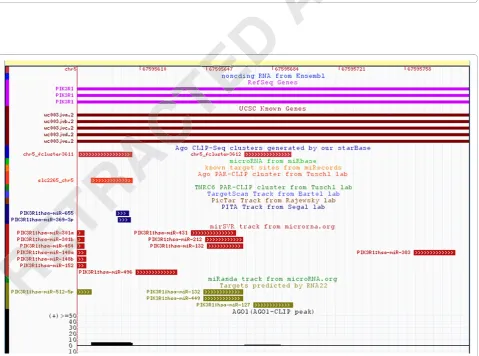
Figure 2Illustrative screen shots from the deepView browser.The deepView browser provides an integrated view of CLIP-Seq data, known and predicted microRNA (miRNA) target sites, protein-coding genes, non-coding (ncRNA) genes, miRNAs, strand-specific peak clusters, genome-wide target-peaks and target-plots.
Pink dot represents target genes and red dot represents hub genes; yellow rectangle is miRNA; blue edge indicates target gene located in the pathway of human cancer; green edge means that target gene is located in the Wnt signaling pathway and orange edge that target gene is located in the bladder cancer pathway.
Secondary structures of miRNA binding sites
We analyzed miRNA targets based on the common cri-teria, including seed-pairing, free energy of miRNA: target duplex, and proper dynamic programing score. To avoid the incongruency brought about by different standards or
outcomes of RNA secondary structure and free energy pre-dicted by distinct algorithms, we recalculated the secondary structures of miRNA. Of note, microRNA-response ele-ments (MREs) involved in duplexes and their free energy for all predicted miRNAs were obtained from the online database by RNAcofold, which is a program for the predic-tion of hybrid structures of two RNA sequences (www.tbi. univie.ac.at/ivo/RNA) [19,20]. Thus, we provided a rela-tively equal platform or prerequisite to compare the struc-ture of all these microRNA targets.
Results
Bladder cancer related miRNAs
There are two relationship types between bladder can-cer and its related miRNAs: causal and unspecified. In this study, data were filtered by selecting causal relationships between bladder cancer and microRNA. Of note, nine miRNAs such as miR-199a*, hsa-miR-143, hsa-miR-127, hsa-miR-30-3p, hsa-miR-221, hsa-miR-21, hsa-miR-101, hsa-miR-129 and hsa-miR-133a were listed (Table 2).
Target genes of nine miRNAs and their roles in the KEGG pathway
Target genes of nine selected miRNAs were obtained from TargetScan and starBase databases. Then, KEGG pathway analysis was applied to demonstrate the potential bio-logical function of these target genes. Figure 1 shows that target genes of four miRNAs such as miR-221, hsa-Figure 3Venn diagram of 38 target genes of miR-127.There are
42 genes in the bladder cancer pathway and 325 genes in the cancer pathway.
Figure 4Pathway in bladder cancer, withoutPIK3R1.
Xuet al. European Journal of Medical Research2013,18:29 Page 4 of 7
http://www.eurjmedres.com/content/18/1/29
teria, including seed-pairing, free energy of miRNA: target duplex, and proper dynamic programing score. To avoid the incongruency brought about by different standards or We analyzed miRNA targets based on the common cri-teria, including seed-pairing, free energy of miRNA: target duplex, and proper dynamic programing score. To avoid the incongruency brought about by different standards or
analysis was applied to demonstrate the potential bio-logical function of these target genes. Figure 1 shows that Target genes of nine miRNAs and their roles in the KEGG pathway
Target genes of nine selected miRNAs were obtained from TargetScan and starBase databases. Then, KEGG pathway analysis was applied to demonstrate the potential bio-hsa-miR-21, hsa-miR-101, hsa-miR-129 and hsa-miR-133a were listed (Table 2).
Target genes of nine miRNAs and their roles in the KEGG pathway
relationships between bladder cancer and microRNA. Of note, nine miRNAs such as miR-199a*, hsa-miR-143, hsa-miR-127, hsa-miR-30-3p, hsa-miR-221, hsa-miR-21, hsa-miR-101, hsa-miR-129 and hsa-miR-133a were listed (Table 2).
There are two relationship types between bladder can-cer and its related miRNAs: causal and unspecified. In this study, data were filtered by selecting causal relationships between bladder cancer and microRNA. Of note, nine miRNAs such as miR-199a*, hsa-Bladder cancer related miRNAs
struc-miR-30-3p, hsa-miR-133a and hsa-miR-21 were enriched in three pathways. The remaining five miRNAs annotated to the disease were not enriched in the KEGG pathways.
Target prediction of miR-127
Given that miR-127 is highly embedded in a CpG island and numerous recent studies have revealed the role of miR-127 in human cancers [14,26], we tried to focus on the study of target prediction of miR-127. Thirty eight tar-get genes regulated by miR-127 were identified via five pre-dicted software instruments including TargetScan, PicTar, PITA, miRanda and RNA22. We also identify the binding site of miR-127 and PIK3R1 in chromosome 5:67595672-67595693[+] (GRCh37/hg19) via CLIP-Seq datasets in the deepView genome browser (Figure 2).
In Figure 3, we compared the 38 predicted genes with cancer/bladder cancer related genes and then found that
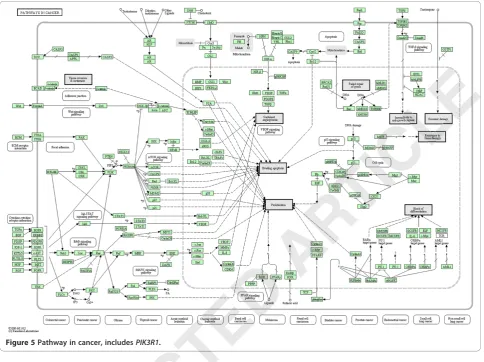
PIK3R1 is the only one gene which overlapped among 38 genes in the bladder cancer pathway (Figure 4) and pathway of cancer (Figure 5). Therefore, we tried to de-scribe miR-127 and its target gene PIK3R1 and their mechanism of action in bladder cancer.
The analysis of miRNA targets was based on the com-mon criteria, including seed-pairing, free energy of miRNA, target duplex, and proper dynamic programing score. To avoid the incongruency brought about by dif-ferent standards or outcomes of RNA secondary struc-ture and free energy predicted by distinct algorithms, we recalculated the secondary structures of miRNA. MicroRNA-response element (MRE) duplexes and their free energy for all the predicted miRNAs were ob-tained from the online database by RNAcofold. The four most probably binding sites included SNP-56, −2236,
−2611 and−3496. Additional file 1: Table S3.
Discussion
We selected known targets of the nine miRNAs and demonstrated their roles in biological process via KEGG pathway analysis. The KEGG enrichment test showed three pathways to be related to the target genes of the four miRNAs. Only four miRNAs, including miR-21, miR-101-3p, miR-221-3p and miR-133 were in the miRNA-target genes network. MiR-127, one of the remaining five miRNAs, is usually differentially expressed as part of a miRNA cluster between normal cells and Figure 5Pathway in cancer, includesPIK3R1.
get genes regulated by miR-127 were identified via five pre-dicted software instruments including TargetScan, PicTar, PITA, miRanda and RNA22. We also identify the binding site of miR-127 and PIK3R1 in chromosome 5:67595672-67595693[+] (GRCh37/hg19) via CLIP-Seq datasets in the miR-127 in human cancers [14,26], we tried to focus on the study of target prediction of miR-127. Thirty eight tar-get genes regulated by miR-127 were identified via five pre-dicted software instruments including TargetScan, PicTar, PITA, miRanda and RNA22. We also identify the binding
Target prediction of miR-127
Given that miR-127 is highly embedded in a CpG island and numerous recent studies have revealed the role of miR-127 in human cancers [14,26], we tried to focus on the study of target prediction of miR-127. Thirty eight
tar-Target prediction of miR-127
cancer cells [14]. Moreover, a predicted target of miR-127, proto-oncogene BCL6, was down-regulated after treatment with chromatin-modifying drugs [14]. In the current study, we focused on the study of the gene PIK3R1 which was the only overlapping gene among 38 genes in the pathway of cancer.
PIK3R1, also known as GRB1, p85α, p85-ALPHA, is one of the core members involving the phosphoinositide 3-kinase (PI3K) pathway [27]. PI3K plays a pivotal role in cell growth, proliferation and survival and inter-signaling sys-tems via this pathway are up-regulated in many types of cancer [28,29]. It is strongly hypothesized that alterations of several pathway components can affect the normal func-tion of the PI3K pathway. Knowles et al. has identified that alterations in pathway components PIK3CA, PTEN, AKT1 and TSC1 in bladder cancer are significantly related to tumor phenotype and clinical behavior [30]. PIK3R1 con-stitutively binds and inhibits the release of catalytic subunit p110 of PI3K. Mutation of PIK3R1 has been observed in ovarian and colon cancer [31], and higher kinase activity was detected in breast cancer [32]. Our findings confirm that the role of PIK3R1 can also be extrapolated in the bio-logical process of bladder cancer.
However, no studies have investigated the role of gen-etic variations in this pathway in bladder cancer. In this project, we used a large case control study to evaluate the associations of a comprehensive catalog of single nu-cleotide polymorphisms (SNPs) in the PI3K pathway. Four binding sites of hsa-miR-127-3p including SNP-56, −2236,−2611 and−3496 were identified in the 3′ untrans-lated region of PIK3R1 mRNA, suggesting that single SNPs located at miRNA-binding sites are likely to affect the expression of their targets and might contribute to the pathogenesis of bladder cancer.
Conclusions
Our data demonstrate a significant association between miR-127 and its target gene of PIK3R1 via analysis of the CLIP-Seq data, RNA secondary structure and free energy. The results indicate that miR-127 plays an important role in regulating PIK3R1 that is involved in both the cancer and bladder cancer pathways.
Additional file
Additional file 1: Table S3.Binding sits of hsa-miR-127-3p.
Abbreviations
(miRNAs):microRNAs; (KEGG): Kyoto encyclopedia of genes and genomes; (CLL): Chronic lymphocytic leukemia; (MREs): microRNA-response elements; (MRE): MicroRNA-response elements; (SNPs): Single nucleotide polymorphisms.
Competing interests
The authors declare that they have no competing interests.
Authors’contributions
SL, YL and JL collected the nine miRNAs related to bladder cancer in TarBase and participated in KEGG pathway analysis. YL, ZhJ and PC carried out target genes prediction. YG, QZ, XM participated in analysis of miRNA targets based on the common criteria. YX and MY participated in the design of the study and helped to draft the manuscript. All authors read and approved the final manuscript.
Author details
1Department of Urology, the 452nd Hospital of People’s Liberation Army,
Chengdu 610021, China.2Cadre aircrew division, the 452nd Hospital of
People’s Liberation Army, Chengdu 610021, China.3Nursing Department, the
452nd Hospital of People’s Liberation Army, Chengdu 610021, China.
Received: 22 January 2013 Accepted: 9 July 2013 Published: 1 September 2013
References
1. Larsson SC, Andersson SO, Johansson JE, Wolk A:Diabetes mellitus, body size and bladder cancer risk in a prospective study of Swedish men.
Eur J Cancer2008,44:2655–2660.
2. Meliker J, Nriagu J:Arsenic in drinking water and bladder cancer: review of epidemiological evidence.Trace Metals other Contaminants Environment
2007,9:551–584.
3. Zeegers MPA, Kellen E, Buntinx F, Brandt PA:The association between smoking, beverage consumption, diet and bladder cancer: a systematic literature review.World J Urol2004,21:392–401.
4. Shariat SF, Milowsky M, Droller MJ:Bladder cancer in the elderly.Elsevier; 2009:653–667.
5. Volanis D, Kadiyska T, Galanis A, Delakas D, Logotheti S, Zoumpourlis V: Environmental factors and genetic susceptibility promote urinary bladder cancer.Toxicology letters2010,193:131–137.
6. Visone R, Croce CM:MiRNAs and cancer.Am J Pathol2009,174:1131. 7. Iorio MV, Croce CM:MicroRNAs in cancer: small molecules with a huge
impact.J Clin Oncol2009,27:5848–5856.
8. Calin GA, Ferracin M, Cimmino A, Di Leva G, Shimizu M, Wojcik SE, Iorio MV, Visone R, Sever NI, Fabbri M:A microRNA signature associated with prognosis and progression in chronic lymphocytic leukemia.New Engl J Med2005,353:1793–1801.
9. Ichimi T, Enokida H, Okuno Y, Kunimoto R, Chiyomaru T, Kawamoto K, Kawahara K, Toki K, Kawakami K, Nishiyama K:Identification of novel microRNA targets based on microRNA signatures in bladder cancer.Int J Cancer2009,125:345–352.
10. Dennis G Jr, Sherman BT, Hosack DA, Yang J, Gao W, Lane HC, Lempicki RA: DAVID: database for annotation, visualization, and integrated discovery.
Genome Biol2003,4:P3.
11. Jiang Q, Wang Y, Hao Y, Juan L, Teng M, Zhang X, Li M, Wang G, Liu Y: miR2Disease: a manually curated database for microRNA deregulation in human disease.Nucleic acids res2009,37:D98–D104.
12. Sethupathy P, Corda B, Hatzigeorgiou AG:TarBase: a comprehensive database of experimentally supported animal microRNA targets.
Rna2006,12:192–197.
13. Shannon P, Markiel A, Ozier O, Baliga NS, Wang JT, Ramage D, Amin N, Schwikowski B, Ideker T:Cytoscape: a software environment for integrated models of biomolecular interaction networks.Genome res
2003,13:2498–2504.
14. Saito Y, Liang G, Egger G, Friedman JM, Chuang JC, Coetzee GA, Jones PA: Specific activation of microRNA-127 with downregulation of the proto-oncogene BCL6by chromatin-modifying drugs in human cancer cells.
Cancer Cell2006,9:435–443.
15. Lewis BP, Burge CB, Bartel DP:Conserved seed pairing, often flanked by adenosines, indicates that thousands of human genes are microRNA targets.Cell2005,120:15–20.
16. Yang JH, Li JH, Shao P, Zhou H, Chen YQ, Qu LH:starBase: a database for exploring microRNA-mRNA interaction maps from Argonaute CLIP-Seq and Degradome-Seq data.Nucleic acids res2011,39:D202–D209. 17. Betel D, Koppal A, Agius P, Sander C, Leslie C:Comprehensive modeling of
microRNA targets predicts functional non-conserved and non-canonical sites.Genome biology2010,11:R90.
18. Wang X, El Naqa IM:Prediction of both conserved and nonconserved microRNA targets in animals.Bioinformatics2008,24:325–332.
Xuet al. European Journal of Medical Research2013,18:29 Page 6 of 7
http://www.eurjmedres.com/content/18/1/29
and bladder cancer pathways.
Additional file
Additional file 1: Table S3.
CLIP-Seq data, RNA secondary structure and free energy. The results indicate that miR-127 plays an important role in regulating PIK3R1 that is involved in both the cancer and bladder cancer pathways.
Our data demonstrate a significant association between miR-127 and its target gene of PIK3R1 via analysis of the CLIP-Seq data, RNA secondary structure and free energy. The results indicate that miR-127 plays an important role in regulating PIK3R1 that is involved in both the cancer Our data demonstrate a significant association between miR-127 and its target gene of PIK3R1 via analysis of the CLIP-Seq data, RNA secondary structure and free energy. the expression of their targets and might contribute to the
Our data demonstrate a significant association between 3496 were identified in the 3
lated region of PIK3R1 mRNA, suggesting that single SNPs located at miRNA-binding sites are likely to affect the expression of their targets and might contribute to the the associations of a comprehensive catalog of single nu-cleotide polymorphisms (SNPs) in the PI3K pathway. Four binding sites of hsa-miR-127-3p including SNP-56, 3496 were identified in the 3 untrans-lated region of PIK3R1 mRNA, suggesting that single etic variations in this pathway in bladder cancer. In this project, we used a large case control study to evaluate the associations of a comprehensive catalog of single nu-cleotide polymorphisms (SNPs) in the PI3K pathway. Four binding sites of hsa-miR-127-3p including SNP-56,
8. Calin GA, Ferracin M, Cimmino A, Di Leva G, Shimizu M, Wojcik SE, Iorio MV, However, no studies have investigated the role of
gen-etic variations in this pathway in bladder cancer. In this
5. Volanis D, Kadiyska T, Galanis A, Delakas D, Logotheti S, Zoumpourlis V: Environmental factors and genetic susceptibility promote urinary bladder cancer.
6. Visone R, Croce CM: 7. Iorio MV, Croce CM:
impact.
3. Zeegers MPA, Kellen E, Buntinx F, Brandt PA:
smoking, beverage consumption, diet and bladder cancer: a systematic literature review.World J Urol
4. Shariat SF, Milowsky M, Droller MJ: 667.
5. Volanis D, Kadiyska T, Galanis A, Delakas D, Logotheti S, Zoumpourlis V: 2. Meliker J, Nriagu J:Arsenic in drinking water and bladder cancer: review
of epidemiological evidence. 584.
3. Zeegers MPA, Kellen E, Buntinx F, Brandt PA:
smoking, beverage consumption, diet and bladder cancer: a systematic
World J Urol
1. Larsson SC, Andersson SO, Johansson JE, Wolk A:
size and bladder cancer risk in a prospective study of Swedish men. 2655 2660.
Arsenic in drinking water and bladder cancer: review
Trace Metals other Contaminants Environment
1. Larsson SC, Andersson SO, Johansson JE, Wolk A:
size and bladder cancer risk in a prospective study of Swedish men. Received: 22 January 2013 Accepted: 9 July 2013
1. Larsson SC, Andersson SO, Johansson JE, Wolk A:
s Liberation Army, Chengdu 610021, China. s Liberation Army, Cadre aircrew division, the 452nd Hospital of
19. Hofacker IL:Vienna RNA secondary structure server.Nucleic acids res2003,
31:3429–3431.
20. Bernhart SH, Tafer H, Mückstein U, Flamm C, Stadler PF, Hofacker IL:
Partition function and base pairing probabilities of RNA heterodimers. Algorithms for Molecular Biology2006,1:3.
21. Lin T, Dong W, Huang J, Pan Q, Fan X, Zhang C, Huang L:MicroRNA-143 as a tumor suppressor for bladder cancer.The J urology2009,181:1372–1380. 22. Lu Q, Lu C, Zhou GP, Zhang W, Xiao H, Wang XR:MicroRNA-221 silencing predisposed human bladder cancer cells to undergo apoptosis induced by TRAIL.Elsevier; 2010:635–641.
23. Catto JWF, Miah S, Owen HC, Bryant H, Myers K, Dudziec E, Larré S, Milo M, Rehman I, Rosario DJ:Distinct microRNA alterations characterize high-and low-grade bladder cancer.Cancer res2009,69:8472.
24. Friedman JM, Liang G, Liu CC, Wolff EM, Tsai YC, Ye W, Zhou X, Jones PA:
The putative tumor suppressor microRNA-101 modulates the cancer epigenome by repressing the polycomb group protein EZH2.Cancer res
2009,69:2623.
25. Dyrskjøt L, Ostenfeld MS, Bramsen JB, Silahtaroglu AN, Lamy P, Ramanathan R, Fristrup N, Jensen JL, Andersen CL, Zieger K:Genomic profiling of microRNAs in bladder cancer: miR-129 is associated with poor outcome and promotes cell death in vitro.Cancer res2009,69:4851.
26. Lu J, Getz G, Miska EA, Alvarez-Saavedra E, Lamb J, Peck D, Sweet-Cordero A, Ebert BL, Mak RH, Ferrando AA:MicroRNA expression profiles classify human cancers.Nature2005,435:834–838.
27. Fruman DA, Cantley LC, Carpenter CL:Structural organization and alternative splicing of the murine phosphoinositide 3-kinase p85 (alpha) gene.Genomics1996,37:113–121.
28. Cantley LC:The phosphoinositide 3-kinase pathway.Science Signaling
2002,296:1655.
29. Luo J, Manning BD, Cantley LC:Targeting the PI3K-Akt pathway in human cancer: rationale and promise.Cancer Cell2003,4:257.
30. Knowles MA, Platt FM, Ross RL, Hurst CD:Phosphatidylinositol 3-kinase (PI3K) pathway activation in bladder cancer.Cancer and Metastasis Reviews2009,28:305–316.
31. Terauchi Y, Tsuji Y, Satoh S, Minoura H, Murakami K, Okuno A, Inukai K, Asano T, Kaburagi Y, Ueki K:Increased insulin sensitivity and hypoglycaemia in mice lacking the p85αsubunit of phosphoinositide 3-kinase.Nature Genetics1999,21:230–235.
32. Sun M, Paciga JE, Feldman RI, Yuan Z-q, Coppola D, Lu YY, Shelley SA, Nicosia SV, Cheng JQ:Phosphatidylinositol-3-OH kinase (PI3K)/AKT2, activated in breast cancer, regulates and is induced by estrogen receptorα(ERα) via interaction between ERαand PI3K.Cancer res2001,
61:5985–5991.
doi:10.1186/2047-783X-18-29
Cite this article as:Xuet al.:Integrated gene network analysis and text mining revealingPIK3R1regulated by miR-127 in human bladder cancer.European Journal of Medical Research201318:29.
Submit your next manuscript to BioMed Central and take full advantage of:
• Convenient online submission
• Thorough peer review
• No space constraints or color figure charges
• Immediate publication on acceptance
• Inclusion in PubMed, CAS, Scopus and Google Scholar
• Research which is freely available for redistribution
Submit your manuscript at www.biomedcentral.com/submit
Integrated gene network analysis and text regulated by miR-127 in human bladder
European Journal of Medical Research
Integrated gene network analysis and text regulated by miR-127 in human bladder
2013
Phosphatidylinositol-3-OH kinase (PI3K)/AKT2, activated in breast cancer, regulates and is induced by estrogen
and PI3K.Cancer res subunit of phosphoinositide
32. Sun M, Paciga JE, Feldman RI, Yuan Z-q, Coppola D, Lu YY, Shelley SA,
Phosphatidylinositol-3-OH kinase (PI3K)/AKT2,
31. Terauchi Y, Tsuji Y, Satoh S, Minoura H, Murakami K, Okuno A, Inukai K,


![The Way of Inject code to Process [kaspyxx] pdf](data:image/gif;base64,R0lGODlhAQABAIAAAP///wAAACH5BAEAAAAALAAAAAABAAEAAAICRAEAOw==)