IMPROVING ENTERPRISE
EFFICIENCY USING IT
COLLABORATION SYSTEMS
Goran Markovski1, Natasa Koceska2, Saso Koceski2
1Government of the Republic of Macedonia, Sector for Information technology 2Faculty of Computer Science, University “Goce Delcev” - Stip, Stip, Macedonia
Abstract
Technology and globalization have created an environment in which teams communicate and collaborate, across time, geography, and organizations. Team members possess knowledge and must communicate and collaborate to accomplish tasks. Communication and collaboration lead to better results, reducing organizational costs, and preventing and solving conflict between participants.
Enterprise collaboration systems (ECS) are basically an information systems that enhance communication, coordination and collaboration among the members of teams and workgroups. They help people in an organization to work together more effectively to achieve organizational goals.
This paper analyze the effects of implemented collaborative system, based on Microsoft SharePoint, in context of increasing productivity in organization, reducing organizational costs, and improving coordination and collaboration among team members.
Keywords
Collaboration systems, information systems, communication, virtual team.
INTRODUCTION
96 JOURNAL OF APPLIED ECONOMICS AND BUSINESS, VOL.1, ISSUE 4–DECEMBER,2013, PP.95-103
determined goals. Different authors define virtual teams differently. Lipnack and Stamps (2000) defines virtual teams by stating that “A virtual team is a group of people who work interdependently with a shared purpose across space, time, and organization boundaries using technology”. From the perspective of Leenders et al. (2003) virtual teams are groups of individuals collaborating in the execution of a specific project while geographically and often temporally distributed, possibly anywhere within (and beyond) their parent organization. Ebrahim et al. (2009) define virtual teams as “small temporary groups of geographically, organizationally and/or time dispersed knowledge workers who coordinate their work, mainly with electronic information and communication technologies to carry out one or more organization tasks”. One of the most widely accepted definition is from Powell et al. (2004) who define virtual teams as “groups of geographically, organizationally and/or time dispersed workers brought together by information technologies to accomplish one or more organization tasks”.
No matter which definition is used, remains the fact that virtual teams rely on sophisticated technologies to communicate. Team members can use synchronous communication tools such as electronic chat sessions, teleconferencing and video conferencing or asynchronous communication such as e-mail, fax and message boards (Gibson, C.B., & Cohen, S.G. (2003). These tools and products sometimes are incompatible, using different technology and platforms, each with its own database, directory and administration console. This strategy creates an IT environment that is chaotic, costly and counterproductive: data is difficult to locate; miscommunication between people happen frequently, and user productivity suffers. IT staffs also have problems concerning monitoring and controlling the collaboration tools.
New collaboration technologies can help organizations to solve these problems, and share information and expertise in ways that previously have not been possible. Enterprise collaboration systems (ECS) are cross-functional informational systems that enhance communication, coordination and collaboration among the members of teams and workgroups to achieve common objective. ECS provide tools that help every individual in an organization to manage the documents, to share information and knowledge with each other, and to work together cooperatively on joint projects and assignments. These information systems helps people to work more efficiently (] Joseph Katie, 2013).
The objective of this paper is to analyze the effects of implemented system in context of increasing productivity in organization, reducing organizational costs, and improving coordination and collaboration among the individuals, which is the base of successful fulfilment of tasks.
Enterprise collaboration systems
Today’s collaborative environments are burdened by an excess of independent moving parts. A typical organization could easily have several platforms for collaboration applications, including file sharing applications, email, instant messaging, videoconferencing and wikis—making it that much harder for IT staff to manage information and to monitor and control the collaboration tools.
In contrast, a collaborative solution such as Microsoft SharePoint provides a comprehensive set of collaborative and communication services on a single platform, with centralized management infrastructure, thus facilitate the work of IT staff.
Microsoft SharePoint is a collaboration platform that makes the communication process of an organization more effective. It enables collaboration on managing documents, sharing information, setting up websites and publishing reports. The following set of tools is included to support collaboration (SharePoint, Web page, December 2013):
Sites provides a single infrastructure for all the business websites that
allows sharing documents or managing projects.
Composites offers tools and components for creating no-code business
solutions.
Insights helps team members’ access information in databases, reports, and
business applications.
Communities delivers collaboration tools to easily sharing ideas and work.
Content represents SharePoint’s content management system with features
such as document types, retention polices, and automatic content sorting.
Search helps people find information and contacts.
98 JOURNAL OF APPLIED ECONOMICS AND BUSINESS, VOL.1, ISSUE 4–DECEMBER,2013, PP.95-103
management system, system for electronic notification, event scheduling and other required functionalities. The aim of this solution is to encourage cooperation in obtaining better productivity of team, while increasing the productivity of each individuals in the team.
SYSTEM ARCHITECTURE
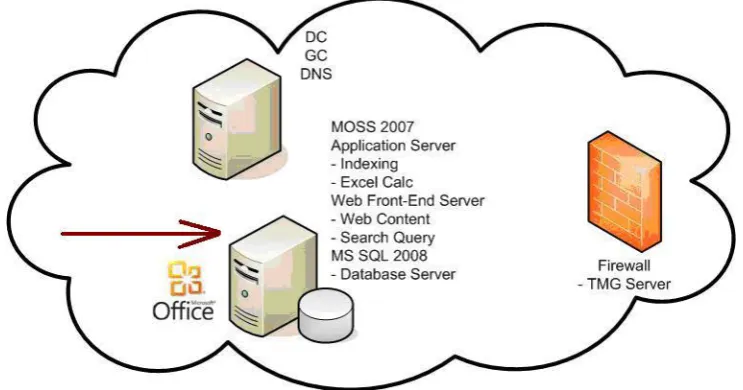
The architecture of the system is based on Office SharePoint Server 2007. It supports two types of configurations: single-server and server farm. Both of them support creation of multiple web sites for various purposes. In order to satisfy the basic enterprise requirement, to optimize the resources and to speed up the development time, initially single server configuration was chosen. Therefore, the whole system was deployed on a single physical server. The architecture of the developed system is presented in Figure 1.
FIG. 1 SYSTEM ARCHITECTURE BASED ON A SINGLE SERVER CONFIGURATION
The server had the following hardware characteristics: 3.0 GHz processor and 8 GB RAM (because the same platform was also used as a development environment). The following software components were also installed: Windows Server 2003 platform, Microsoft SQL Server 2008 R2 Standard Edition, Microsoft.NET Framework 3.5 SP1, Internet Information Services 6.0, Windows Workflow Foundation Runtime Components.
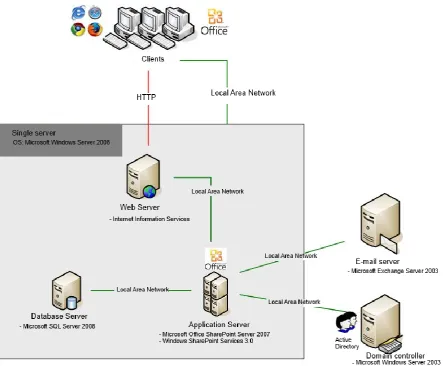
FIG. 2 LOGICAL INFRASTRUTURE OF THE SYSTEM
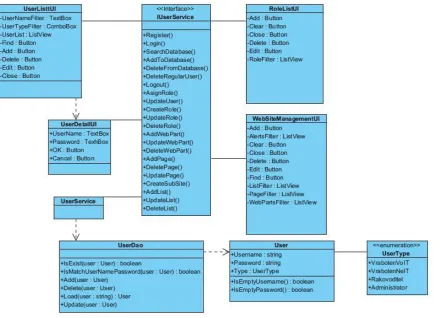
100 JOURNAL OF APPLIED ECONOMICS AND BUSINESS, VOL.1, ISSUE 4–DECEMBER,2013, PP.95-103 FIG. 3 CLASS DIAGRAM PRESENTING SYSTEM USERS
The infrastructure is set up in such a way that allows to be easily extended and providing fast and secure communication between users. It also enables easily information sharing and interaction among team members.
Evaluation of implemented system
After the system implementation and the training period for the employees, the evaluation phase started. Conducted evaluation was based on two methodological approaches, including: web-survey of employees and classical survey (interview) with employees.
FIG. 4 INFLUENCE OF USING IMPLEMENTED ECS TO DAILY WORKING ACTIVITIES
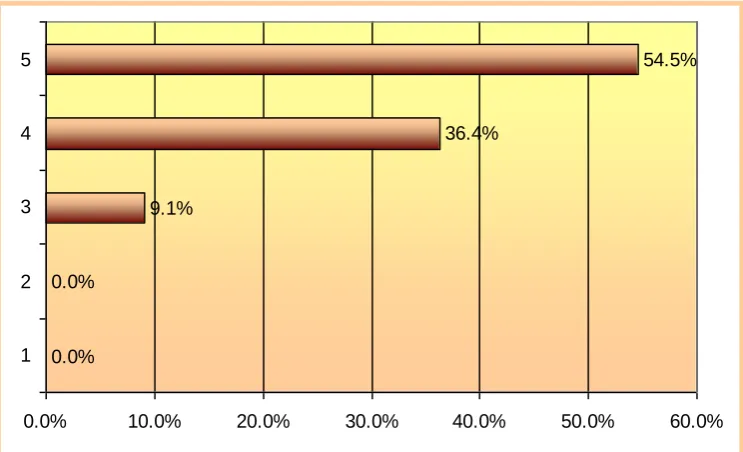
FIG. 5. QUALITY OF IMPLEMENTED FUNCTIONALITIES ON A SCALE FROM 1 TO 5
The implemented system and its functionalities have influence on working time of IT staff in organization, reducing the time for managing documents and monitor and
0.0% 0.0%
9.1%
36.4%
54.5%
0.0% 10.0% 20.0% 30.0% 40.0% 50.0% 60.0%
102 JOURNAL OF APPLIED ECONOMICS AND BUSINESS, VOL.1, ISSUE 4–DECEMBER,2013, PP.95-103 FIG. 6. INFLUENCE OF THE ECS TO TIME DURATION OF THE MEETINGS
Conclusion
Information and communication technology has brought significant changes in organizations and produced important benefits, for the organization and for the people working in it. The oral and written system of communication that has been followed by organizations for ages is fast being replaced by computers.
Enterprise collaboration systems are information systems that enables people in an organization to work together more effectively to achieve organizational goals. In our study Microsoft Sharepoint as a collaboration system was used. It has many features and capabilities that make the communication process of an organization more effective.
REFERENCES
Lipnack, J., & Stamps, J. (2000) Virtual Team: People Working Across Boundaries with Technology. 2nd ed. Canada: John Wiley & Sons.
Leenders, R.T.A.J., van Engelen, J.M.L., & Kratzer, J. (2003), Virtuality, communication, and new product team creativity: a social network perspective. Journal of Engineering and Technology Management, 20: p. 69–92.
Ale Ebrahim N., Ahmed S. & Taha Z. (2009), “Virtual Teams: a Literature Review”, Australian Journal of Bas ic and Applied Sciences, 3(3): 2653-2669.
Powell, A., G. Pic c oli and B. Ives (2004), “Virtual teams: a review of current literature and directions for future research”, The Data base for Advances in Information Sys tems , 35: 6-36.
Gibson, C.B., & Cohen, S.G. (2003), “Virtual Teams That Work, Creating Conditions for Virtual Team Effectiveness”, San Francisco, CA: Jossey-Bass.
Joseph Katie (2013), “Value of information systems in Organizations-Case Study”, GRIN Verlag.