KNOWLEDGE DISSEMINATION ABOUT CULTURAL HERITAGE IN
POST-1989 ROMANIA. SEVERAL EXAMPLES
Ana-Maria STAN
Babeş-Bolyai University, University History Museum, Cluj-Napoca, ROMANIA [email protected]
DOI: http://doi.org/10.23740/TID220175
ABSTRACT
The article investigates several examples of instruments used in Romania, since the fall of Communism, for heritage education and/or studies, in an attempt to highlight how local and national cultural heritage has been made known to the general public and what achievements and challenges occurred during this process. With the help of four different case-studies, we look at how the methods of presenting cultural heritage have evolved over the years. Today there is a variety of available printed or digital resources for heritage education and their number, as well as their quality, is constantly increasing. The importance of heritage preservation equally gains weight in the Romanians’ mind. However, a lot of work still remains to be done, one of the biggest challenges being to put together the expertise of different specialists (architects, historians, geographers, ethnographers, etc.) for a proper valorisation of the local, regional, and national heritage.
Keywords: cultural heritage, heritage education, post-Communist Romania, printed and digital resources
PRELIMINARIES
Last May, the ruling bodies of the European Union decided that 2018 will be dedicated to and officially labelled as the European Year of Cultural Heritage, attempting to “encourage people, especially young people, to explore Europe’s rich cultural diversity and to reflect on the place that cultural heritage occupies in all our lives. [Cultural heritage] allows us to understand the past and to build our future” (Navracsics, 2017). While analysing and taking action in order to further promote, preserve and use the European heritage, in all its forms, this year can also present a good opportunity of looking back to the long and sometimes complicated journey to consecration of this domain, mainly in post-Communist countries. Consequently, in the present article, we look at several examples of instruments used in Romania, for heritage education and/or studies, since the fall of Communism. We focused on how local and national cultural heritage has been made known to the general public, underlining what achievements and challenges occurred during this process.
charge with heritage protection). Therefore, it becomes obvious that there is a strong need to bring together, to associate and to encourage a real, constant and productive dialogue between various specialists involved in this field, to make a most efficient use of all the available resources in order to appreciate and use the Romanian local, regional and national cultural heritage for many years.
Addressing the issue of heritage, its original meaning and significance should always be borne in mind, namely that heritage encompasses several key concepts – Identity (of a person, of a group, of a nation or of a territory/country), Memory and Continuity. One cannot speak of heritage without taking into account its historical value, its role as a witness to the world’s culture and civilization over the centuries. In a larger, more modern definition, heritage means every aspect of life considered by individuals or various social groups as crucial elements for defining their own self (Basilico, 2005). In this context, it becomes even more important to analyze what has been done so far and how we can improve our existence by incorporating heritage into our daily interactions.
The present article discusses several case studies of how different actors involved in Romanian heritage protection had acted over the last three decades, highlighting both theoretical and practical initiatives with their subsequent successes or failures. By looking at how specialists of different fields of research, predominantly non-geographical ones, approached the issue of heritage, we aim to open the floor for an interdisciplinary dialogue and discover the gaps that still exist in this wide field of study. The selection of the materials analysed in this study started from a practical need – that of assembling a relevant bibliography dedicated to local and national cultural heritage, that could be equally used as documentation for those interested in becoming cultural guides and organising individual or group tours focused mainly on the Romanian cultural heritage. As a historian, I was particularly interested in finding works that explain and contextualize heritage in a framework defined by time, space and socio-cultural relevance. The main question that motivated this research is what are the best, most efficient ways of actively relating to the issue of heritage and in particular to cultural heritage. Hence, the four case studies presented below illustrate various possibilities of discovering and understanding heritage, some being more proactive than others. Another issue that we had in mind when we chose to present and analyse the following case studies was to show effective or less successful ways of how people of various ages could be motivated to appreciate and become advocates for cultural heritage. Far from exhausting the topic, our article offers a sample of good practices, waiting to be completed by other similar ones and to inspire better, more interesting ways of incorporating heritage in our regular cultural consumption.
CASE STUDIES IN HERITAGE EDUCATION. DIFFERENT APPROACHES, DIFFERENT
AUDIENCES
A future for the past – the CIMEC project
Published in 2002 by CIMEC (the Institute for Cultural Memory), the book A Future for the Past
simple, functional terms, aiming to explain and educate various authorities and decision factors regarding the wide-ranging types of mobile and immobile heritage. It also tried to offer accessible and efficient tools for heritage valorization.
Figure 1: Front cover of the book A Future for the Past
(Oberländer-Târnoveanu, 2002)
Its text was conceived in a technical, yet rather accessible language, and attempted to have an interdisciplinary approach, as it discussed notions from different fields of expertise, such as Chemistry, Biology, Architecture, all of them closely involved in heritage management and safeguarding. The author, one of Romania’s top professionals in the field of museum and heritage studies, an expert archaeologist and historian, chose to focus on the practical aspects specific to daily protection and exploitation of tangible heritage, such as archaeological sites, historical civil and religious monuments or of heritage objects (coins, paintings, furniture, documents, etc.). Advice and detailed explanations are provided for both public and private heritage owners, sometimes accompanied by warnings regarding various procedures, as for example the meaningful distinction between the certificates awarded to appraised heritage objects and the documents of legal ownership for such items: “The classifying certificate does not replace the ownership document for the cultural goods!” (Oberländer-Târnoveanu, 2002, p. 33).
For our previously mentioned purposes, the most interesting and valuable part of this guide is its last and fourth chapter. It features a series of questionnaires addressed to different categories of citizens who interact with heritage on a regular basis or are potential producers of such items (school teachers, ethnographers, architects, city managers, custom officers, policemen, etc). These surveys offer valuable starting points for building up a dynamic and relevant bond with the cultural environment that surrounds us. In fact, the Present for the Past
guide proposes here many ideas that can be applied either individually or in a group setting in relationship with heritage.
The suggested actions include practical and hands-on activities, such as adopting a local monument, organizing public meetings with the elders of the city/village, writing and publishing works of local history, setting-up web pages for presenting the local cultural heritage. Families are also strongly encouraged to research their own genealogy and to collect and preserve family letters, photos and objects because these stand for testimonies of past lifestyles, customs, and habits.
authorities did not succeed in preserving heritage and in implementing the need of well looking after what we still own in terms of public or private monuments and historical artefacts.
The ECHOE – An international project about nature and cultural heritage
The 2000s was a crucial period for the revival of interest for heritage protection as well as for heritage studies and education in Romania. Not only a series of handbooks and guides have been developed, but new legislation also started to be drafted and adopted in order to regulate this complex field. Furthermore, European know-how has proved extremely useful for identifying practical solutions dedicated to the use of heritage.
The ECHOE project stands as a successful example of improving the way people can and should deal with their surroundings by the direct help of EU funding and expertise. As its title suggests – Education for heritage, open air education (hence ECHOE) – this project concentrated on looking at heritage within its natural environment. The main objectives of ECHOE (Figure 2) were to establish a direct link between culture and nature and to emphasize the possibility of sustainable development through interactive programs. Taking place between 2010 and 2012, the ECHOE project involved several European countries (Italy, Austria, Turkey, Belgium, and Norway), with Romania as team leader. More precisely, the coordination of all the activities was undertaken by the team of the Center of Professional Training in Culture in Bucharest. Indirectly, this recognized the competence of the Romanian cultural specialists, as well as their ongoing preoccupation to keep up-to-date with the latest trends and developments in the heritage field and to find interesting ways to exploit it.
Figure 2: Front cover of the ECHOE (Ministry of Culture, Romania, 2013)
ECHOE addressed itself to people that could benefit the most from flexible and unconventional, but at the same time respectful approaches to cultural heritage. Therefore, those targeted were especially “adult educators and trainers working in private and public structures, in associations and NGOs providing educational, cultural and social services or as providers of outdoor and leisure activities” and “providers and promoters of tourist services” (Ministry of Culture, Romania, 2013, p. 1). Museum professionals and other categories of people working in cultural institutions were equally shortlisted as potential beneficiaries of the project.
educational programs. All the participants mastered methods of involving the public in a mutually profitable relationship with heritage.
In the end, the ECHOE project outlined the idea that heritage education should always combine natural and human created elements. ECHOE demonstrated and exemplified quite convincingly that there were always three factors involved in the process of heritage discovery: firstly, there was the natural aspect (geology, flora, fauna, climate, etc.), then there was the cultural and social aspect (land use, settlement, historical landscape) and last but not least, the perceptual and aesthetic aspect, in which all or most of the human senses (sight, smell, hearing, touch, memories) are taking part (Ministry of Culture, Romania, 2013, p. 59). All these elements help to create lasting impressions and powerful emotional experiences for every person that gets in touch with the heritage. Although the ECHOE project illustrated the way cooperation between the public authorities and several private entities or NGOs should and could improve knowledge and general awareness of local and national cultural heritage, it still was an isolated initiative that did not generate too many subsequent actions or practical echoes, at least in Romania.
Yet, offering educational programs at heritage sites represents an extremely profitable idea for tourism, as it enhances the attractiveness of the visits, especially for large groups of people. However, there is a slight risk to this approach because the programs can be perceived exclusively as tourist or entertainment services, thus decreasing their cultural and formative focus. Finding the right balance between heritage preservation, its exploitation and its educational value remains therefore a challenge and an ongoing interest for experts and specialists from various cultural fields.
Discovering the ecclesiastical heritage of Transylvania – Tools for an interdisciplinary journey
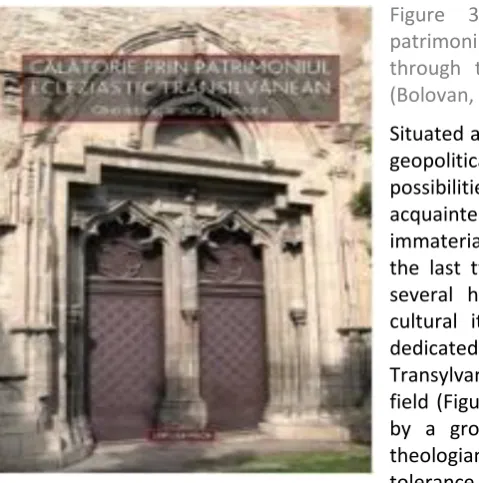
Figure 3: Front cover of Călătorie prin patrimoniul ecleziastic transilvănean [Journey through the Transylvanian Religious Heritage] (Bolovan, 2011)
The authors emphasized the idea that “a church represents more than mere architecture. It is at the same time history and religion. The readers/the beneficiaries [of this guide] are invited to look at and to read a church in its entirety” (Bolovan, 2011, p. 59). Besides being places of worship, the religious monuments are sites of great touristic interest, therefore it is crucial to educate the public for understanding their complexity. And what easier way to do it than by explaining rituals to the visitors or by focusing on the liturgical, aesthetic or historical symbols that people usually find in such places?
The first few chapters of the ecclesiastical heritage guide are theoretical. They concentrate on defining and describing a lot of historical and artistic notions. Although rather technical in content and academic in their form, these chapters represent an efficient way of familiarizing the public with fundamental information, required for appreciating heritage sites and/or monuments.
The last part of the guide is much more practical, as it offers many good suggestions for cultural itineraries, based on different types of religious or even civil architecture. Here are a few examples of attractive and accessible tourist circuits in Transylvania: the cathedrals itinerary (featuring Orthodox, Catholic or Greek-catholic cathedrals from the most important Transylvanian towns), the fortified churches itinerary (highlighting the Saxon presence in this region, but also testifying a specific society and time – that of the Middle Ages) or the monasteries itinerary. Many other similar routes can be created at their own leisure by the readers of this guide either for a professional or a personal use. Therefore, this book is a useful instrument not only for its intended audience, namely the teachers of Religion, History and/or Art History, but also for people that wish to practice cultural tourism in individual or small groups. It equally highlights a different, yet stimulating way of looking at and interpreting heritage, as it is much more focused on socio-cultural values and less on economic, business related ones, which are usually predominant in nowadays (mass) tourism. While practical tips for conservation and preservation are missing, the accent falls on the relevance of well knowing your past and your traditions. This manual can be considered a plea for the relevance of humanities, and in particular for artistic and historical information, in a predominantly secular world.
Heritage for children – Stimulating the taste for cultural interactions at a young age
In December 2014, the Romanian Ministry of Education and the Romanian Ministry of Culture signed an official partnership and decided to offer heritage education as optional courses in secondary schools and even in high schools. At their request, and depending on the school’s decision, the pupils could attend a 1 hour/week class dedicated to cultural heritage, throughout the entire school year, namely 2 semesters (Programa …, 2014). Nevertheless, this was not the first attempt to familiarize pupils of various ages with the richness of heritage, as a few students’ books with this subject had already been printed in 2012 and 2013, with the seal of approval of several local Schools’ Inspectorates.
The collaboration between the Ministry of Culture and National Identity and the Ministry of Education was renewed in the 2016-2017 school year. Consequently, specialists developed new curricula for heritage education, amongst which we can mention one curriculum aimed at pupils from the last two years of secondary school: 7th and 8th grades (Programa …, 2017). As
classes of heritage education, but only for high school pupils, not for the secondary school (Ora…, 2017). This is partially because of a lack of teachers’ training in the field, partially because of a lack of teaching resources.
For those genuinely interested to develop children’s interest in Romanian local and national heritage, a few attractive alternatives can be found. One of the most notable programs started as a private initiative as early as 2006, when a couple of artists from Bucharest, sculptor Virgil Scripcariu and his wife, art historian Adriana Scripcariu, moved to the country side, more precisely in Piscu village, Ilfov County, in an attempt to reconnect with tradition and raise their children in an eco-friendly way. As a first project, the Scripcariu family managed to revive interest for pottery as a local craft. Later, they invested themselves in educating their own children and many other youngsters in a primary school that can be best described as being classic, yet a bit “out of the box” (Școala Agatonia – Agatonia School). From here to creating heritage education programs was only a short step. Consequently, in 2012, Adriana Scripcariu worked upon and published a handbook of cultural heritage dedicated to Ilfov County. It was a text centred on making 7-12 years old children (and equally their parents) involved into finding out what characterizes their native region. In the author’s own words, this book wanted to be “a mirror of Ilfov County, with its most precious data: historical monuments, customs, crafts, feasts” (Scripcariu, http://edupatrimoniu.piscu.ro/carti-patrimoniu/).
Figure 4: Front cover of Cultural Heritage (Scripcariu, 2012)
The success of this first handbook led to the release of a second one, this time dedicated to a different Romanian county – that of Brașov, a multicultural area, populated by Romanians, Saxons and Swabians (Scripcariu, 2015). Both books, but in particular the one dedicated to the county of Brașov, have a very interdisciplinary and user-friendly approach. But the biggest novelty brought forward by these handbooks authored by Adriana Scripcariu is the fact that they analyze the heritage of a whole specific Romanian geographical and administrative region (providing historical and ethnographical information, details about local artistic traditions, gastronomy, architecture, religion, crafts, songs, etc.) (Figures 4 and 5).
Figure 5: Left page: Descriptions of traditional craftsmanship – pottery and icon painting; Right page: Transylvanian Saxons’ traditional song (in the original German
version and a Romanian
translation) – an example of cultural intangible heritage found in the heritage guides edited by
Adriana Scripcariu (Scripcariu,
2015)
that she proposes in her handbooks involve a lot of age appropriate, practical activities (from puzzle solving to storytelling), making them appealing for pupils and even for adults that come for the first time in contact with what heritage means. Unfortunately, her initiative did not continue, in terms of creating similar cultural heritage textbooks for all the other Romanian counties. However, in some counties of Transylvania (Arad, Sălaj), other institutions followed in the steps of the Piscu project set up by the Scripcariu family and created comparable kits aimed at teaching heritage for secondary schools or for high-schools (Stiger, 2012; Zalău County Museum…, 2017). In our opinion, the theoretical methods and practical activities created by the Scripcariu family establish a standard that can be used as a source of inspiration by NGOs, as well as by the public authorities dealing with heritage conservation and exploitation.
CONCLUSIONS
To conclude our short study dedicated to the way cultural heritage has been presented to the Romanian public since 1989, we should first emphasize the achievements made in this complex field. Under its various forms, heritage is gradually becoming more and more familiar to different generations of Romanians. Today there are many available printed or digital resources for heritage education and their number, as well as their quality, is constantly increasing. The importance of heritage preservation equally gains weight in the people’s minds. More and more people now acknowledge that discovering and understanding the value of heritage at early ages has a significant positive impact for sustainable living. Heritage education also encourages multicultural dialogue and lifelong learning, as Romanian citizens begin to (re)discover the diversity of monuments, cultural and natural sites, customs and traditions that coexist in every region or historical province of the country. We especially chose to focus on positive examples, which are not only easily accessible to both the specialists and the large public, but also offer contrasting points of view to heritage education. Furthermore, many of the ideas presented in these guides are applicable with minimal costs, thus encouraging larger audiences to become involved in the discovery, protection and perpetuation of the cultural diversity through monuments and other types of objects, customs, or traditions. In our opinion, each of the case studies contain or represent tools that enable amateurs, as well as more professionally educated audiences, to enjoy heritage, awakening and training their interest and their understanding of this complex field.
Learning to preserve, but at the same time to appreciate the existing Romanian heritage, and in particular cultural heritage, remains a constant, ongoing process, and everybody should strive to create a balance between these two approaches, avoiding to favour either a “passive” (namely “a do not touch”) attitude, or one of intensive and abusive exploitation.
REFERENCES
Basilico, S. (2005). ‘Redéfinir le Patrimoine culturel à l'heure de la globalisation. Des cultures et des
hommes. Clefs anthropologiques pour la mondialisation’. Paris: L'Harmattan, Collection Logiques sociales, <sic 00490004>. Retrieved 15 December 2017, from https://halshs.archives-ouvertes.fr/sic_00490004/document
Bolovan, S.P. (coord.) (2011). Călătorie prin patrimoniul ecleziastic transilvănean [Journey through the
Transylvanian Religious Heritage]. Ghid istoric, artistic și pastoral. Cluj-Napoca: Editura Mega. Declarația de la Cluj, Simpozionul S.O.S. Patrimoniu, al Uniunii Arhitecților (May 2017). Retrieved 6
December 2017, from https://www.uniuneaarhitectilor.ro/declaratia-de-la-cluj-simpozionul-sos-patrimoniu
http://scoalaagatonia.piscu.ro/, Retrieved 6 December 2017
Ministry of Culture, Romania(2013). ECHOE - Education for Heritage, Open Air Education. Retrieved 6
December 2017, from http://www.echoe-eu.eu/documente/resurse/echoe-en.pdf
Navracsics, T. (2017). Declaration of Mr. Tibor Navracsics, EU Commissioner for Education, Culture,
Youth, and Sport, at the launch of the European Year of Cultural Heritage on December 7, 2017. Retrieved 15 December 2017, from europa.eu/rapid/press-release_IP-17-5067_en.pdf
Oberländer-Târnoveanu, I. (2002). Un viitor pentru trecut [A Future for the Past]. Ghid de bună practică pentru păstrarea patrimoniului cultural. București: CIMEC (Institutul de Memorie Culturală). Retrieved 6 December 2017, from http://www.cimec.ro/Arheologie/Oberlander-un-viitor-pentru-trecut/Un-Viitor-pentru-Trecut_Irina-Oberlander-Tarnoveanu.pdf
Ora pentru “Educație pentru Patrimoniul cultural din Țara Vrancei”. Retrieved 6 December 2017, from http://tara-vrancei.ro/ora-pentru-educatie-pentru-patrimoniul-cultural-din-tara-vrancei.html Programa școlară pentru disciplina Educație pentru patrimoniu, clasa a VI-a/a VII-a (2017). București.
Retrieved 6 December 2017, from
http://edupatrimoniu.piscu.ro/wp-content/uploads/2018/01/Programa_educatie_patrimoniu_2017.pdf
Programă școlară pentru disciplina opțională Educație pentru patrimoniul cultural (curriculum la decizia școlii pentru gimnaziu/liceu), drawn up based on the partnership no. 6224/04.12.2014, signed by the Ministry of Education and the Ministry of Culture.
Scripcariu, A. (2012). Patrimoniu Cultural. Județul Ilfov. Manual școlar pentru disciplina opțională, 1st
edition, Şcoala Agatonia.
Scripcariu, A. (2015). Patrimoniu Cultural. Județul Brașov. Manual școlar pentru disciplina opțională.
Şcoala Agatonia. Retrieved 6 December 2017, from http://edupatrimoniu.piscu.ro/wp-content/uploads/2016/12/manual_patrimoniu_brasov.pdf
Scripcariu, A., Retrieved 6 December 2017, from http://edupatrimoniu.piscu.ro/carti-patrimoniu/ Stiger, S. (coord.) (2012). Patrimoniul cultural construit al municipiului Arad, manual pentru clasele a X-a
și a XI-a. Arad: Editura Școala Vremii.
Urso, G., Police, F., Centro Universitario Europeo per I Beni Culturali (eds.) (2013). Resource Book on
Heritage and Outdoor Education, Retrieved 6 December 2017, from http://www.echoe-eu.eu/documente/resurse/echoe-en.pdf
Zalău County Museum of History and Art (2017). Noi despre noi. Elemente reprezentative ale