Bituminous Paving Layers
Mahabir Panda
1*, Jyoti Prakash Giri
2, Bidyut Bikash Sutradhar
3Received: 09.06.2014 Accepted: 06.12.2014
Abstract:
Poor adhesion between two successive bituminous layers causes adverse effects on the structural strength of the pavement and develops a numbers of premature failure. To improve the adhesion, it is a general practice to apply a tack coat over an existing or newly constructed bituminous surface before laying another bituminous layer. The
PDLQREMHFWLYHRIWKLVVWXG\LVWRH[SORUHWKHLQÀXHQFHRIVHWWLQJWLPHRIWDFNFRDWPDWHULDORQWKHERQGVWUHQJWKRID ELWXPLQRXVOD\HUFRPELQDWLRQ7KHLQÀXHQFHRIWDFNFRDWW\SHDSSOLFDWLRQUDWHDQGWHVWWHPSHUDWXUHRQWKHLQWHUOD\HU
bond strength (ILBS) have also been studied. Two types of bituminous emulsions (CRS 1 and CMS 2) and two types of bituminous binders (VG 10 and VG 30) have been selected as tack coat for a typical bituminous layer combination.
:KHQQRWDFNFRDWLVXVHGWKHLQÀXHQFHRIWLPHLQWHUYDOEHWZHHQOD\LQJRIWKHWZRVXFFHVVLYHELWXPLQRXVOD\HUVKDV
also been studied. A specially fabricated attachment (named interlayer bond strength testing device) has been used by
¿WWLQJLWWRWKHORDGLQJIUDPHRID0DUVKDOOWHVWLQJDSSDUDWXV,WLVREVHUYHGWKDWWKH,/%6GHSHQGVRQVHWWLQJWLPHWHVW
temperature, tack coat type and application rate of a tack coat. Out of the four tack coat materials, CMS 2 offers the maximum ILBS with minimum quantity requirements in the bituminous layer combination considered. The highest ILBS is observed when no tack coat is used, however the upper layer is to be laid and compacted immediately after the lower layer.
Keywords: Interlayer bond strength, emulsion, interlayer bond strength testing device, Marshall testing apparatus.
ѨѨѨѨѨѨѨѨ
Corresponding author Email:[email protected]
1- Professor, Department of Civil Engineering, National Institute of Technology, Rourkela, India 2- Ph.D. Candidate, National Institute of Technology, Rourkela, India
International Journal of Transportation Engineering,
1. Introduction
)RU KLJK YROXPH URDGV ÀH[LEOH SDYHPHQWV DUH QRU -mally made of multi-layer bituminous courses. Also in rehabilitation situations, a new bituminous layer is often laid over an existing bituminous layer. Normally a low viscous bituminous material mostly in form of emulsion is used to bind the two bituminous layers. The success of such bituminous composite layers mostly re-lies on adequate bond between the two layers; leaving aside many other associated problems. The adequate adhesion allowing lateral movements can produce un-expected and early failure of the bituminous pavement, affecting performance of composite structure in differ-ent ways [Partl et al. 2012]. The vehicle load creates dynamic normal and tangential stresses in the pavement interfaces from the horizontal and vertical loads being transferred to each underlying bituminous layer, and as such the interface between the layers is vital to the pave-ments integrity [Wheat, 2007]. It has been observed that poor bonding between pavement layers contributes to numbers of major pavement overlay distresses. One of the most common type of premature distress is
slip-SDJHIDLOXUH¿JXUHZKLFKRFFXUZKHQWKHSDYHPHQW
layers begin to slide on one another usually with the top layer separating from the lower layer [Patel, 2010].
Figure 1. Slippage failure [Patel, 2010]
It is reported that a lack of bond and enough horizontal force cause the two layers to begin to separate and this failure is mostly seen in vulnerable locations such as
ZKHUH WUDI¿F LV DFFHOHUDWLQJ RU GHFHOHUDWLQJ DW WUDI¿F
signals and on the horizontal curves [West et al., 2005]. To ensure adequate bonding between two bituminous layers, normally tack coats are applied on the existing bituminous surface prior to application of another bitu-minous layer. A tack coat is a light application of low viscosity bituminous binder (mostly bitumen emulsion) aimed to create a strong adhesive bond between two successive bituminous layers without separation. The
interface bonding is affected by several factors; includ-ing tack coat (type, application rate, curinclud-ing time, ap-plication temperature and bitumen residue content), pavement surface characteristics (bitumen content, ag-gregate type and gradation, and surface texture), and environmental conditions [Mohammad et al., 2009, Miro et al., 2006 and Al-Qadi et al., 2012]. If the quan-tity of tack coat applied is either too much or too little, there can be unfavorable effects on the interface bond strength [Patel, 2010]. In India, as per MORTH (2013), cationic rapid setting emulsion (CRS 1) and low viscos-ity bitumen VG 10 grade have been recommended to
EHDSSOLHGDWVSHFL¿HGUDWHV:KHQDWDFNFRDWLVXVHG
besides other factors, its setting time i.e. the time inter-val between application of tack coat material and new layer, is of paramount importance in achievement of the bond strength. Hence an attempt has been made in this
VWXG\WRH[SORUHWKHLQÀXHQFHRIVHWWLQJWLPHVRIWDFN
coat materials on bond strength at the interlayer of two commonly used bituminous layer combinations duly taking into consideration the tack coat type, application rate and test temperatures. For this, a special type of a fabricated attachment has been used in the loading frame of the Marshall testing apparatus. In this study, the bituminous mixes commonly used in India namely, dense bituminous macadam (DBM) and bituminous concrete (BC) and considered at lower and upper layers respectively, have been used. Similarly commonly used tack coat materials such as cationic rapid setting emul-sion (CRS 1) and VG 10 bitumen have been tried. Fur-ther, commonly available bituminous materials such as cationic medium setting emulsion (CMS 2) and VG 30 grade bitumen have also been used in this study to ex-plore the possibility of their uses as tack coat material.
2. Experimental Methodology and Materials
2.1 Fabrication of Special Attachment to DetermineInterlayer Bond Strength
A number of methods have been suggested to evalu-ate the bond strength between two bituminous paving
OD\HUVLQWKHODERUDWRU\DSSOLFDEOHPRVWO\IRUWKH¿HOG
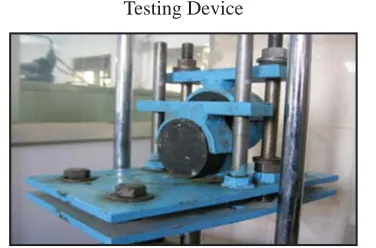
¿WWLQJ WKLV IDEULFDWHG DWWDFKPHQW WR WKH 0DUVKDOO WHVW -ing apparatus in the laboratory. This attachment spe-cially designed for 101.5 mm (4 in) diameter samples
EDVLFDOO\FRPSRVHVRIWZRSDUWV¿JXUHDQG7KH
rear part comprises of two split semi-circular plates of same diameter (60 mm in length) which can clamp the lower part of the specimen rigidly (101.5 mm dia and 100 mm height). The specimen is therefore, appropri-ately aligned and supported rigidly into the two verti-cal rods at the backside. Similarly, the other part is in the form of one semi-circular part of same diameter (40 mm in length) which properly encloses the upper part of the sample and load is applied through this part at its middle through a horizontal square bar welded to the front circular plate. This upper part (40 mm) is so arranged as to move freely on loading with minimum
IULFWLRQDORQJWZRYHUWLFDOJXLGLQJURGV¿[HGRQWRWKH
base plate. For example, the specimen is composite in nature, with lower part and upper part, both of same dia, but of heights of 60 mm and 40 mm respectively with a layer of tack coat material bonding to the two parts. The vertical load is transferred to the upper part of the speci-men, which remains at the front side, for the shearing of the specimens at the bonding layer at a constant rate of 50.8 mm/min (2 in/min).
Figure 2. General photographic view of testing ar-rangement, with fabricated Inter-layer Bond Strength
Testing Device
2.2 Evaluation of Interlayer Bond Strength (ILBS)
7KHIDEULFDWHGDUUDQJHPHQW¿JXUHDQGKDVEHHQ
so made that the load applied on the top of the upper part of the specimen causes smooth shearing of the upper part from the lower part, the latter being rigidly
¿[HGE\WKHVHPLFLUFXODUFODPSVDQGWKHYHUWLFDOURGV
at the back side. It has been assumed that the shearing
WDNHV SODFH LQ WKH YHUWLFDO SODQH DORQJ WKH SUHGH¿QHG
interlayer, in which the tack coat is applied. The interlayer bond strength (ILBS in kPa) between two successive bituminous paving layers has been estimated by conducting such experiments on cylindrical composite specimens prepared in the laboratory using the following expression [West et al., 2005].
(1)
Where F
max: Maximum load required to cause shearing of the
XSSHUSDUWRIWKHVSHFLPHQIURPWKH¿[HGORZHUSDUWN1
A: Cross sectional area of specimen (m2)
2.3 Materials Used
,Q,QGLDWKHVXUIDFHFRXUVHLQDÀH[LEOHSDYHPHQWQRU -mally comprises of various types of bituminous layers. The most common type of surface course used in im-portant highways in India, comprises mostly of a bitu-minous concrete (BC) layer over a dense bitubitu-minous macadam (DBM) layer (DBM-BC combination). Keep-ing this mind, in the present laboratory study the cylin-drical composite specimens used for determination of interlayer bond strength comprise of bituminous layers with a total height of about 100 mm, with lower layer made of DBM mix compacted to a thickness of 60 mm and upper one made of BC mix of 40 mm thickness. For preparation of the specimens for testing, aggregates collected from a local quarry have been used as per
JUDGDWLRQVVSHFL¿HGE\WKH0LQLVWU\RI5RDG7UDQVSRUW
and Highways (MORTH, 2013) respectively, for the 26.5 mm nominal maximum aggregate size (NMAS) for DBM layer and 13.2 mm NMAS for BC layer. The
VSHFL¿F JUDYLW\ RI WKH DJJUHJDWHV XVHG ZDV 7KH
physical properties of aggregates as tested in the labora-tory (Table 1). Portland slag cement also procured from the local market, which passes 0.075 mm IS sieve, was
XVHGDV¿OOHULQWKHELWXPLQRXVPL[HV,WVVSHFL¿FJUDYL -Figure 3. Close up photographic view of
International Journal of Transportation Engineering, ty was found to be 3.0. In this study, for binding the two different bituminous layers, low viscosity binders rec-ommended by MORTH (2013) namely; cationic rapid setting emulsion (CRS 1) and bitumen VG 10 have been used as tack coat. Further, two other materials, namely cationic medium setting emulsion (CMS 2) and VG 30 bitumen have also been tried to explore their use as a bonding material between two bituminous layers. An attempt has also been made to observe the interlayer bond strength when there is no tack coat is used. As the effectiveness of bond depends on the setting time of the emulsion used and also of time elapsed after applica-tion of VG 10 and VG 30 grade of bitumen, these four types of tack coat materials have been applied at differ-ent rates and differdiffer-ent setting times. For without tack coat applied case, the time interval between completion of compaction of lower layer and spreading of materi-als for upper layer has been considered. The physical properties of the two types of emulsions and two types of viscosity grade bitumens procured from a local gov-ernment depot and used in this study as tack coat are given (Table 2 and 3). It is to be noted that the same VG 30 bitumen, has also been used for preparation of each type of bituminous mix considered in the preparation of composite specimens.
Table.1 Physical properties of aggregates
Property Test Method Test Results
(%) Aggregate Impact Value (IS: 2386 (Part-IV 14
Aggregate Crushing Value
(%) (IS: 2386 (Part-IV 13
Los Angeles Abrasion Value
(%) (IS: 2386 (Part-IV 18
(%) Flakiness Index
(IS: 2386 (Part-I 19
(%) Elongation Index 21
(%) Water Absorption (IS: 2386 (Part-III 0.13
Table.2 Physical properties of emulsions used as Tack Coat
Property Test Method
Emulsion Type
Test Results
Saybolt (Furol) Viscosity at (500C (seconds
ASTM D 7496
CRS-1 37
CMS-2 114
(Residue (by evaporation (%)
ASTM D 6934
CRS-1 61
CMS-2 68
Residue penetration of (emulsion at 250C (0.1 mm
IS:
1203-1978
CRS-1 87
CMS-2 107
Table.3 Physical properties of VG 10 and VG 30 bitu-men used as a Tack Coat and in layer mix properties
Property Test Method Test Results VG 10 VG 30
Penetration at
(25°C (0.1 mm IS: 1203-1978 95 67
Softening Point
((R&B) (°C IS: 1205-1978 42 48
Absolute viscosi-(ty at 60°C (poise
IS: 73-1992
840 2505
Kinematic
viscos-(ity at 135°C (cSt 280 405
2.4 Preparation of Specimens and Testing
The Marshall test procedure is a very simple and rea-sonable procedure and hence is widely adopted for the design of bituminous mixtures. In this study, the
load-LQJIUDPHRIWKH0DUVKDOOWHVWDSSDUDWXVLVXVHGWR¿[
a simple fabricated attachment for the determination of interlayer bond strength between two bituminous paving layers of a composite specimen. Therefore, Marshall procedure has been followed to prepare the composite specimen containing two different mixes. However to suit the present requirement of the study minor exceptions have been made with respect to the normal Marshall procedure. The overall layer dimen-sions of the laboratory composite specimen are usual 101.5 mm internal diameter but about 100 mm height.
+HQFHPRGL¿HG0DUVKDOOPRXOGVHDFKRIPPLQ -ternal diameter and total height of 105 mm are specially
IDEULFDWHG,QWKH¿UVWVWDJHWKHVDPSOHIRUWKHORZHU
part made of DBM layer is prepared in this fabricated mould for a height of about 60 mm in the laboratory
DFFRUGLQJ WR WKH QRUPDO 0DUVKDOO SURFHGXUH VSHFL¿HG
in ASTM D1559.
The specimen, however, is kept in the same mould for
D PLQLPXP SHULRG RI KRXUV D VSHFL¿HG WDFN FRDW
material is applied at a given application rate with the
KHOSRID¿QHVRIWEUXVKRQWKHWRSRIWKH'%0OD\HU
many factors such as type of surface, temperature and amount of emulsion. After a given time of application of tack coat material the required respective quantity of hot BC mix is placed over the already prepared DBM layer inside the mould and compacted as per normal procedure only on one side.
For some specimens prepared without any tack coat, the top BC layer placed immediately or at a given time after the preparation of the lower DBM layer was com-pacted. For observing the variation in bond strength of the composite specimen when no tack coat materi-als have been used, the compaction time between two layers has been varied. As the upper layer is made of a compacted height of about 40 mm and as the whole specimen cannot be compacted from both ends, Mar-shall blows were given only on the top. It has been ob-served that their densities are almost same as that of normal Marshall mixes with similar compositions. As the composite specimen attains normal room tempera-ture, the specimen is extracted and is ready for testing
and evaluation of interlayer bond strength.
The specimens thus prepared were tested at four differ-ent temperatures namely 250, 300, 350 and 400C which
are mostly prevalent in India for the most part of the year. For this the composite specimens are conditioned
IRU WZR KRXUV DW D VSHFL¿HG WHPSHUDWXUH LQ WKH RYHQ
before testing. The lower portion of the specimen is carefully placed inside the two semicircular clamping
SODWHVULJLGO\EROWHGDQG¿[HGVXFKWKDWWKHXSSHUSRU -tion overhangs towards the operator. The top BC part of the specimen is loaded through another simple
ar-UDQJHPHQW¿JXUH,QWKLVDUUDQJHPHQWDKRUL]RQWDO
beam with a semicircular plate just covers the half of the specimen, with the beam smoothly guided vertically through two vertical roads. The load is applied to this front part, so that there is a shearing through the
pre-GH¿QHGERQGOD\HU7KHORDGDWWKHWLPHRIGHWDFKPHQW
of the upper part from the lower part is noted from the proving ring and is used for calculation of the interlayer bond strength.
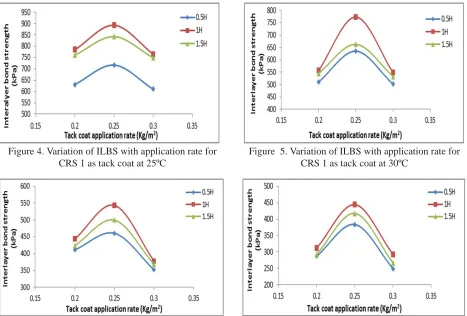
Figure 4. Variation of ILBS with application rate for CRS 1 as tack coat at 25ºC
Figure 5. Variation of ILBS with application rate for CRS 1 as tack coat at 30ºC
Figure 6. Variation of ILBS with application rate for CRS 1 as tack coat at 35ºC
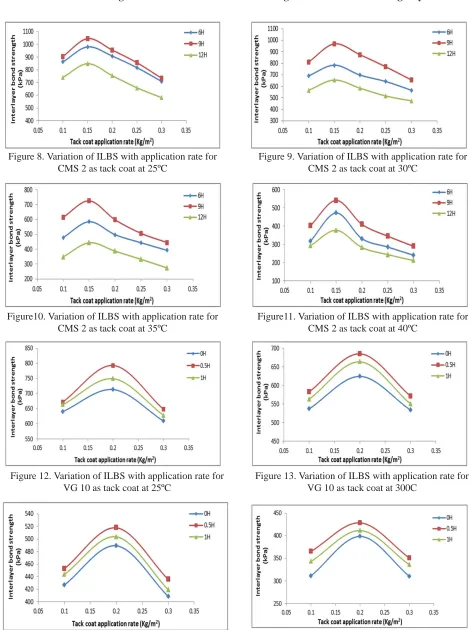
International Journal of Transportation Engineering, Figure 8. Variation of ILBS with application rate for
CMS 2 as tack coat at 25ºC
Figure 9. Variation of ILBS with application rate for CMS 2 as tack coat at 30ºC
Figure10. Variation of ILBS with application rate for CMS 2 as tack coat at 35ºC
Figure11. Variation of ILBS with application rate for CMS 2 as tack coat at 40ºC
Figure 12. Variation of ILBS with application rate for VG 10 as tack coat at 25ºC
Figure 13. Variation of ILBS with application rate for VG 10 as tack coat at 300C
Figure 14 Variation of ILBS with application rate for VG 10 as tack coat at 35ºC
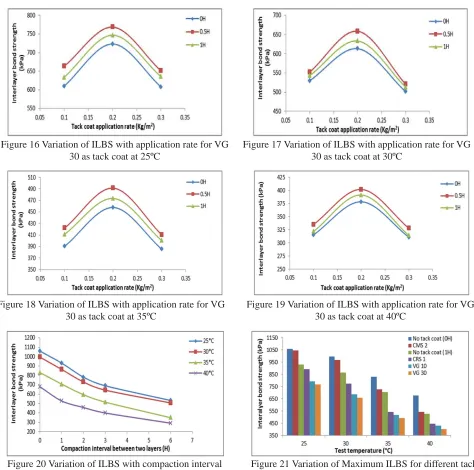
Figure 16 Variation of ILBS with application rate for VG 30 as tack coat at 25ºC
Figure 17 Variation of ILBS with application rate for VG 30 as tack coat at 30ºC
Figure 18 Variation of ILBS with application rate for VG 30 as tack coat at 35ºC
Figure 19 Variation of ILBS with application rate for VG 30 as tack coat at 40ºC
Figure 20 Variation of ILBS with compaction interval between two layers without any tack coat
Figure 21 Variation of Maximum ILBS for different tack coat materials
3. Results and Discussions
The results of interlayer bond strength observed for DBM-BC combinations of composite bituminous spec-imens under varying conditions such are types of a tack coat material, setting time of tack coat materials, ap-plication rate and test temperatures have been presented
¿JXUHVWR7KHVHODERUDWRU\SUHSDUHGVSHFLPHQV
have also been tested at four different test temperatures. For each type of tack coat materials, three varying set-ting times have also been considered. The variations of
ILBS at different test temperatures for different tack coat materials at their optimum dosages in the form of a
EDUFKDUW¿JXUH
International Journal of Transportation Engineering, materials CRS 1 emulsion, CMS 2 emulsion and both VG 10 and VG 30 bitumens. Considering this, CMS 2 emulsion is observed to offer advantages of maximum bond and minimum quantity requirement as compared to other taken as tack coat materials. It is also seen that maximum ILBS results when CMS 2 is used followed by CRS 1, VG 10 and VG 30 bitumen at any test tem-peratures. This might be due to the fact that the low viscosity of the material provides the required thickness of the binding layer causing better bonding. However the top BC layer is to be laid after 9 hrs of applying tack coat. The maximum interlayer bond strength observed for above all contemplation at 250C for DBM-BC
com-ELQDWLRQRIWKHELWXPLQRXVOD\HU7KHLQÀXHQFHRIZKHUH
no tack coat is used between successive DBM and BC layers, maximum bond strength can be achieved if the BC layer is immediately spread and compacted over the
'%0OD\HUFRPSDFWLRQ¿JXUH7KHERQGVWUHQJWK
is observed to decrease as time interval of compaction between two layers increased. There may be same
dif-¿FXOWLHVGXULQJFRQVWUXFWLRQDQGDIWHUFRQVWUXFWLRQ)RU
bond strength point of view, non-use of tack coat and immediately laying of top layer gives best results of bond strength.
A summary of observations of bond strength for differ-ent tack coat materials shows that when no tack coat is applied and upper layer is laid immediately after the lower layer, maximum bond between the two layers is
DFKLHYHG¿JXUH7KLVLVEHFDXVHLQKRWP[FRQGL
-WLRQVWKHXSSHUOD\HU¿WVDSSURSULDWHO\ZLWKWKHORZHU
layer providing good interface in aggregate structure at the interlayer. Successive laying is however discour-aged, as normally the top layer is laid after leaving the
ERWWRPOD\HUWRWUDI¿FWRDOORZDQ\SDVVLYHXQHYHQQHVV
on the pavement surface. If tack coat is used, as per the observations CMS 2 emulsion at a low ratio of 0.15 Kg/m2 SURYLGHGQRWRQO\WKHHFRQRPLFEHQH¿WEXWDOVR
given the maximum interlayer bond strength.
4. Conclusions
An attempt has been made in this experimental study to determine the interlayer bond strength in the laboratory for commonly used emulsions such as CRS 1 emulsion and VG 10 bitumen normally used as a tack coat mate-rial in India between two successive bituminous
pav-ing layers. Two other similar materials such as CMS 2 emulsion and VG 30 bitumen have also been tried. An attempt has also been made to explore the bond strength when no tack coat is applied and the top layer is laid and compacted directly on the bottom bituminous layer at varying time intervals after the completion of bottom layer. For this, laboratory prepared composite samples for DBM-BC layer combinations have been used. A
VSHFLDODWWDFKPHQWKDVEHHQIDEULFDWHGZKLFKFDQEH¿W
to the loading frame of the Marshall test apparatus. The specimens have been tested at four different prevailing test temperatures, namely 250, 300, 350 and 400C, which
are very much prevalent in India. Variations in setting time for different tack coat material type, application rate, setting time and test temperature for the DBM-BC composite specimens have been made to study the ef-fect of setting time on the interlayer bond strength for different tack coat conditions. The following conclu-sions are drawn from the results of the tests conducted. * It is observed that for CRS 1and CMS-2, maximum interlayer bond strength results at 0.25 Kg/m2 and 0.15
Kg/m2 respectively application rate in all test
tempera-ture conditions used. These optimum application rates are also found for all setting times considered for both types of emulsions.
* In the cationic medium setting type of emulsion used as tack coat, the maximum ILBS is observed when set-ting time is at 9 hours and the same for cationic rapid setting type of emulsion, is observed for setting of at 1 hour.
* When VG 10 and conventional VG 30 bitumens are used as tack coat, the maximum interlayer bond strength is observed at 0.2 Kg/m2 application rate with setting
time of 0.5 hour in all test temperatures.
* When no tack coat is used, maximum bond strength is achieved when the upper layer is laid and compacted immediately after the completion of the compaction of the lower layer. As this duration increases, the interlay-er bond strength decreases.
* For all types of tack coat materials considered for the bond strength in generally decreases with increase in temperature.
5. References
SODVWLFÀRZRIELWXPLQRXVPL[WXUHVXVLQJ0DUVKDOODS -paratus”, American Society for Testing and Materials, Philadelphia, USA.
-ASTM D 6934 (2008) “Standard test method for
resi-GXH E\ HYDSRUDWLRQ RI HPXOVL¿HG DVSKDOW´$PHULFDQ
Society for Testing and Materials, Philadelphia, USA.
-ASTM D 7496 (2011) “Standard test method for
vis-FRVLW\RIHPXOVL¿HGDVSKDOWE\6D\EROW)XURO9LVFRP -eter”, American Society for Testing and Materials, Philadelphia, USA.
-Al-Qadi, I. L., Hasiba, K. I., Cortina, A. S., Ozer, H., Leng, Z., Parish, D. C. and Worsfold, S. J. (2012) “Best practices for implementation of tack coat: PART I-Laboratory study”, Research Report ICT-12-004, De-partment of Civil and Environmental Engineering, Il-linois Center for Transportation, University of IlIl-linois at Urbana-Champaign.
,6³3DYLQJELWXPHQVSHFL¿FDWLRQ6HFRQG
Revision)”, Bureau of Indian Standards, New Delhi, India.
-IS: 1203. (1978) “Methods for testing tar and bitumi-nous materials: determination of penetration”, Bureau of Indian Standards, New Delhi, India.
-IS: 1205. (1978) “Methods for testing tar and bitumi-nous materials: determination of softening point”, Bu-reau of Indian Standards, New Delhi, India.
-IS: 2386 (Part I, III, and IV) (1963) “Methods of test for aggregates for concrete”, Bureau of Indian Stan-dards, New Delhi, India.
-Kucharek, T., Esenwa, M. and Davidson, J. K. (2011) “Determination of factors affecting shear testing perfor-mance of bituminous emulsion tack coats”, 7e congrès annuel de Bitume Québec, Saint-Hyacinthe, Canada.
-Miro, R., Martínez, A., and Perez, F. (2006) “Evalua-tion of effect of heat-adhesive emulsions for Tack coats with shear test: From the Road Research Laboratory of Barcelona”, Annual Meeting of the Transportation
Re-search Board: Journal of the Transportation ReRe-search Board, Vol.1, pp. 64-70, DOI: 2117/2878.
-Ministry of Road Transport and Highways (MORTH
³6SHFL¿FDWLRQVIRU5RDGDQG%ULGJH:RUNV6HF -tion 500, Fifth Revision”, Indian Roads Congress, New Delhi, India.
-Ministry of Road Transport and Highways (MORTH
³6SHFL¿FDWLRQVIRU5RDGDQG%ULGJH:RUNV6HF -tion 500, Fourth Revision”, Indian Roads Congress, New Delhi, India.
0RKDPPDG / 1 %DH$ (OVHL¿ 0$ %XWWRQ
-and Scherocman, J. A. (2009) “Interface shear strength
FKDUDFWHULVWLFVRIHPXOVL¿HGWDFNFRDWV´-RXUQDORIWKH
Association of Asphalt Paving Technologists, Vol. 78, pp. 249-278.
-Patel, N. B. (2010) “Factors affecting the interface shear strength of pavement layers”, Unpublished Thesis of in Civil Engineering, Louisiana State University and Agricultural and Mechanical College, Baton Rouge, Louisiana, United States.
-Partl, M. N., Bahia, H.U., Canestrari, F., de la Roche, C., Di Benedetto, H., Piber, H., Sybilski, D. (Eds.). (2012) “Advances in Inter laboratory Testing and Eval-uation of Bituminous Materials”, Springer publication, pp.335-395.
-West R., Moore, J. and Zhang, J. (2005) “Evaluation of bond strength between pavement layers”, NCAT Re-port 05-08, National Center for Asphalt Technology, Auburn, Alabama, USA.
![Figure 1. Slippage failure [Patel, 2010]](https://thumb-us.123doks.com/thumbv2/123dok_us/13344.2001244/2.612.79.303.437.535/figure-slippage-failure-patel.webp)