P
age
1
Mobile Learning: Its Impact on Teaching and Learning at
Koforidua Polytechnic
Dr. Osei Joseph*, Nicholas A. Tetteh**, Osei-Sarfo Frank***, &
Christopher Oppong****
*Lecturer, Department of Fashion Design &Textile, Koforidua Technical University, Ghana. **Senior Lecturer, Department of Industrial Art, Wa Polytechnic, Ghana.
***Lecturer, Departmentof Industrial Art, Bolgatanga Polytechnic, Ghana ****Lecturer, Departmentof Industrial Art, Bolgatanga Polytechnic, Ghana
ABSTRACT
Students use ICT mobile devices during teaching and learning process. Some lecturers complain about the use of ICT mobile devices by the students in the lecture halls. This research seeks to find out the impact of ICT mobile device usage in teaching and learning. The objectives of the research was to examine the level of mobile usage learning in the Koforidua Polytechnic, find out if the use of ICT mobile devices have any effect on teaching and learning at Koforidua Polytechnic. The researchers prepared the questionnaire for the study based on the following research questions;how effective does students and lecturers use ICT mobile devices in teaching and learning? what effect does ICT mobile devices have on teaching and learning? Convenience random sampling technique was adopted for the study. The study revealed that ICT mobile-devices have helped lecturers in changing teaching and learning from teacher centred to student centred and this promotes better understanding on the part of students. Mobile device has also helped students in their research work, invariably improving the contributions made by students during teaching and learning. ICT mobile devices have had profound effect on teaching and learning as it has made it easier for information dissemination and monitoring of students research work.
INTRODUCTION
Globally the use of ICT mobile devices is eventually becoming part of the culture of the people. It has been observed that learners in schools especially the youth as well as teachers and lecturers use the ICT mobile devices. To what extent they use the ICT devices in teaching and learning in the classroom has become a concern to stakeholders in education of late.
P
age
2
Mobile learning provides good learning environment than other educational learning environment (Cobcroft et al., 2006; Hwang et al., 2008; Liang et al., 2005; Liu, 2007; Peng, Chou, & Chang, 2008; as cited in Tzu- Chien et al., 2009). They noted that mobile learning reduce constrains teachers and students face in teaching and learning in terms of time and location. Mobile learning support the use of text message and for that matter students can text questions and make suggestions in real time for teachers to respond to their questions and suggestions (Minjuan, Ruimin, Novak and Xiaoyan, 2008).
The use of mobile devices such as tablet PCs, smart phones, cell phones, notebooks and pocket size computers at any time period and anywhere may be classified as mobile learning (Evgeniya, Smrikarov, and Tsvetozar, 2005). Mobile learning is considered as learning taking place with the use of mobile devices (Brown, 2005; Peters, 2007; as cited in Hedrik et al., n.d). Evgeniya et al. (2005) opine that the use mobile devices for mobile learning must have wireless (internet) access in order to support learning asynchronous and synchronous during teaching and learning and between teachers and students. The researchers realized the need to look at the properties of the mobile devices used for educational purpose. It was found according to Klopfer and Squire (2008) as cited in Hedrik et al., (n.d) that the device for mobile should be portable, should be sensitive to context, use for social interaction and finally for connectivity and individuality. The use of mobile devices have its own merits and Ferriman (2014) is of the view that the use of mobile learning has the advantage of reducing or getting rid of training cost of instructors and other physical materials. He mentioned further that not much time is spent on training employees as well as reducing cost of workshop. Amarnath (2014) noted that the efficient use of mobile learning as means for easy access of learning at the convenience of the learner at all times. Amarnath (2014) assert that through mobile learning, students or learners can contact other colleagues from other parts of the world for discussion online concerning their studies and also opt for collaborative learning from different locations. Amaranth stated that mobile learning can be used as a tool for training individuals outside workplace.
Notwithstanding the merits of mobile learning, it also has its own disadvantages. Instability of network of mobile service providers can hinder the effective use of the devices for mobile learning thereby discouraging learners from its usage. The size of screen for some mobile devices are too small that students have to strain their eyes before they can see what is on the screen (Amarnath, 2014). Not all mobile devices can effectively be used for mobile learning and the ones which can support a lot of applications are also expensive and most learners cannot afford, and therefore making mobile learning unattractive for learners (Amarnath, 2014).
KYEWORDS: M-device, m-learning, teaching, screen, stakeholders, education
METHODOLOGY
P
age
3
FINDINGS AND DISCUSSIONS
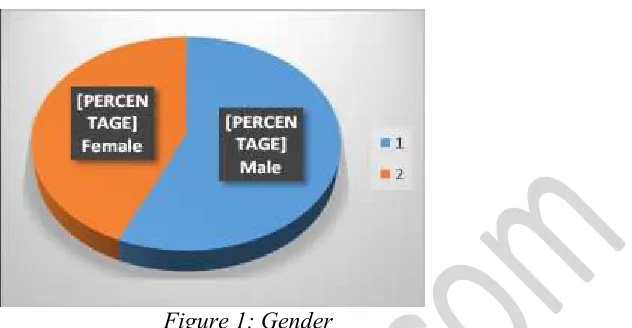
Figure 1: Gender
Figure 1 represents the gender for the study. Out of244 respondents 138 of them were male representing 57% of the respondents and 106 female representing 43% of the total respondents. Clearly the male dominated the study.
Figure 2: Age Group
The age group of total respondents who use mobile devices is shown in figure 2. The highest age group which use mobile devices for learning is between 20-25 years representing 51% of the total respondents and the least age group been 2% for the age range between 46-55. This indicates that students within the early youthful age are interested in using mobile devices for learning.
P
age
4
From figure 3 above, only 9% of the the total respondents made up of lecturers use mobile device for teaching and learning and 91% of students use mobile device for learning in general.
Figure 4: Types of mobile devices used
The following figures in figure 4 above represents different types of mobile devices used by students and lecturers. From the chart 87% of the respondents use cell phones for learning, 6% use laptop, 5% use tablet and 2% of the respondent use Ipad for learning.
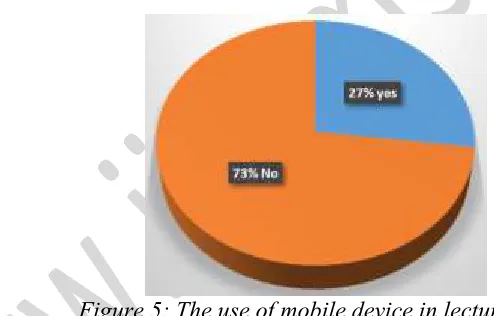
Figure 5: The use of mobile device in lecture hall
P
age
5
Figure 6: Ideas on mobile learning
The figure 6 above represents the number of respondents who have idea about mobile learning. Out of 244 respondents 64% said they have ideas on mobile learning and 36% of respondents representing 36 % said they do not have idea about mobile learning. The respondents who have ideas on m-learning found that m-learning is another type of e-learning which enable learning to be quite easier and in a smart way.
Some respondents were also of the view that students can access lectures on their m-devices. Other respondents explained m-learning as; using computers or electronic devices to search for information online, the process of learning with the aid of laptop, cell phone, Ipad and tablet, m-learning involves the use of m-device in promoting m-learning anytime anywhere and relaying information to students for teaching purposes. The respondents share similar view with Tzu- Chien et al. (2009) that m-learning can reduce problems lecturers and students face in terms of time and place.
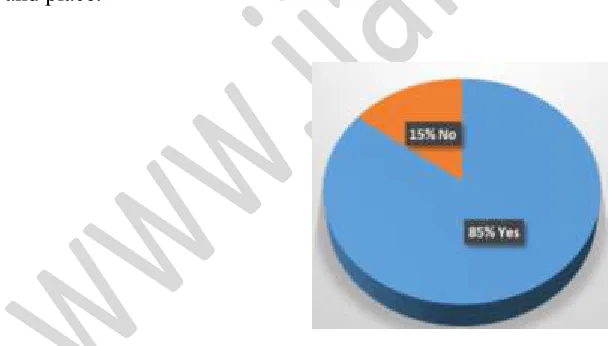
Figure 7: The use of mobile device during and after lectures
From the study 85% of the respondents said they use mobile device during and after lectures and 15% of the total respondents said they do not use any mobile device during and after lecture hours. The respondents who use the m-device use them when the need arises. Other respondents use m-devices anytime assignment is given.
P
age
6
students work. Again mobile device has help students in their research, invariably improving the contributions made by students during teaching and learning. Other benefits for using m-device were mentioned as follows that: A.) Assignment and recorded teaching can be handled through mobile learning. B.) It enhances teaching and learning and makes information readily available for use. C.) ICT m-devices help lecturers in changing teaching and learning from teacher centred to student centred and this promotes better understanding on the part of students. D.) Mobile learning make steaching and learning convenient for both lecturers and students because students canaccess lectures at any time through virtual learning. E.) It helps in distance learnings in ceinteraction between lecturers and students can be assured.
CONCLUSIONS
The study has revealed that more students are interested in using m-devices for learning. The use of mobile-devices helps students to add new knowledge to what they have through searching for information on the worldwide web (www). If students are to be allowed to use m-devices in the teaching and learning process, then there should be uninterrupted network service on the campus so that students can access information anywhere and anytime as noted by respondents during the study. The efficient use of devices in the teaching and learning process demand smart m-devices which can support applications which will help students to access information online.
RECOMMENDATIONS
The use of ICT mobile devices in the lecture halls should be encouraged by the school authorities and lecturers as well but students should be given proper education on how to use them during lecture hours. The ICT Department should first educate the authorities on how students can benefit from m-learning using mobile devices. Again the ICT Department should add to their curriculum some mobile learning modules such as Hyflex model, backchannel communication, and flip classroom. Understanding of proper usage of m-learning will help the authorities to understand the need for mobile device usage by students. The school authorities should provide projectors and laptops for the various departments for lecturers’ use during lectures. There should be uninterrupted internet network in all lecture halls.
REFERENCES
i. Amarnath, M. (2014).Benefits and Limitations of Mobile Learning. Retrieved from
blog.commlabindia.com/mlearning/benefits-limitations.
ii. Baker, A. Dede, C. and Julie, E. (n.d).The 8 Essentials for Mobile Learning Success in
Education. Qualcomm Wireless Reach.
iii. Creswell, J. W. (2012). Educational Research: Planning, Conducting and Evaluating
Quantitative and Qualitative Research. Fourth Edition. Pearson. University of Nebraska – Lincoln. p. 576
iv. Evgeniya, G. Smrikarov, A. and Tsvetozar, G. (2005). A General Classification of
P
age
7
v. Ferriman, J. (2014). Benefits from Mobile Learning. Learn Dash. Retrieved from
www.larndash.com/benefit-from-mobile-learning.
vi. Hendrik, T. Mohamed, A. C. Esra, Y. Pallasch, C. and Bogdan, K. (n.d). Mobile
Learning in Context.Informatik9 (Learning Technologies), RWTH Aachen University, Germany. Elsevier Ltd.
vii. Luvai, F. M. (2007).Mobile learning: Aframework and Evaluation.Computers &
Education.
viii. Minjuan, W. Ruimin, S. Novak, D. and Xiaoyan, P. (2008).The impact of mobile learning
on students’ learning behaviours and performance: Report from a large blended Classroom.British Journal of Technology.Vol 40 issue 4.
ix. Tzu-Chien, L. Peng, H. Wen-Hsuan, W. and Ming-Sheng, L. (2009). The effect of mobile