P R O T O C O L
Open Access
A protocol for a systematic review of the
effectiveness of interventions to reduce
exposure to lead through consumer
products and drinking water
Lisa Maria Pfadenhauer
*, Jacob Burns, Anke Rohwer and Eva Annette Rehfuess
Abstract
Background:The toxic heavy metal lead continues to be a leading environmental risk factor, with the number of attributable deaths having doubled between 1990 and 2010. Although major sources of lead exposure, in particular lead in petrol, have been significantly reduced in recent decades, lead is still used in a wide range of processes and objects, with developing countries disproportionally affected. The objective of this systematic review is to assess the effectiveness of regulatory, environmental and educational interventions for reducing blood lead levels and
associated health outcomes in children, pregnant women and the general population.
Methods/design:The databases MEDLINE, Embase and the Global Health Library (GHL) will be searched using a sensitive search strategy. Studies in English, German, French, Spanish, Italian or Afrikaans will be screened according to predefined inclusion and exclusion criteria. We will consider randomized and non-randomized studies accepted by the Cochrane Effective Practice and Organization of Care (EPOC) Group, as well as additional non-randomized studies. Screening of titles and abstracts will be performed by one author. Full texts of potentially relevant studies will be independently assessed for eligibility by two authors. A single author will extract data, with a second reviewer checking the extraction form. Risk of bias will be assessed by two researchers using the Graphical Appraisal Tool for Epidemiological studies, as modified by the Centre for Public Health at the UK National Institute for Health and Care Excellence. Any inconsistencies in the assessment of eligibility, data extraction or quality appraisal will be resolved through discussion. Where two or more studies report the primary outcome blood lead levels within the same population group, intervention category and source of lead exposure, data will be pooled using random effects meta-analysis. In parallel, harvest plots as a graphical method of evidence synthesis will be used to present findings for blood lead levels and secondary outcomes.
Discussion:This systematic review will fill an important evidence gap with respect to the effectiveness of interventions to reduce lead in consumer products and drinking water in the context of new WHO guidelines for the prevention and management of lead poisoning. It will also contribute to setting a future research agenda.
Background
Description of the health problem
Lead is a toxic heavy metal that causes extensive environ-mental contamination due to its environenviron-mental persistence and transportability [1]. It has become widely distributed in the environment - especially due to industrialization and mining activities - whereby human exposure has steadily
increased [2]. Lead is one of the leading environmental risk factors, with the number of attributable deaths having dou-bled between 1990 and 2010 [3].
In most developed countries, a clear reduction in blood lead levels (BLL) occurred over the past decades, mainly due to phasing out of leaded petrol. In the US, the prevalence of elevated BLL (≥10 g/dL ) in children aged one to five years decreased from 8.6% in 1988 to 1991 to 1.4% in 1999 to 2004, constituting a 84% de-cline, with geometric mean BLLs being lowest in
non-* Correspondence:[email protected]
Institute for Medical Informatics, Biometry and Epidemiology, University of Munich, Marchioninistrasse 15, 81377 Munich, Germany
Hispanic white children (3.1 g/dL to 1.7 g/dL) [4]. Be-tween 1978 and 1988, marked decreases in the average blood lead levels of adults were noted in many countries, including Belgium, the Federal Republic of Germany, New Zealand, Sweden, and the United Kingdom [5]. While cases of acute lead poisoning have become rare in devel-oped countries, continuous exposure to low levels of lead is still a public health issue, especially among ethnic mi-norities and socio-economically disadvantaged groups [6].
Although awareness is increasing, lead exposure remains a significant public health problem in developing coun-tries, particularly due to the fact that regulations and pol-icies are missing [7]. Differences between major sources of exposure are observed: paint is a major source of lead ex-posure in the US, while lead-glazed ceramics impose a sig-nificant health risk in Latin America [8]. Children living in Africa are still exposed to the highest levels of lead in petrol as well as to lead released by burning of paper prod-ucts, discarded rubber, battery casings, and painted wood for cooking and heating [9]. In various countries in Africa and South East Asia, as well as in China, lead-based paint is readily available for sale, with 78% of the sample of 80 paints bought in China (100%), India (72%), Malaysia (56%) and Singapore (9%) containing more than 600 ppm of lead [10]. In 2009, an additional sample of 300 lead-based paints was collected, including eight additional countries from Africa, Asia and South America. In all countries, high lead content in paint was observed [11].
Occurrence of lead
Lead can be found in a variety of natural as well as anthropo-genic sources. It has a natural occurrence in the Earth’s crust, and is released by volcanic activities, geochemical weathering and sea spray emissions, as well as by the remobilization of historic sources (soil, sediment, water from mining areas) [12]. Considerable amounts of lead were discharged during industrialization. The blood lead concentration in pre-industrial humans is estimated to have been 0.016 μg/dL, a level which is 50- to 200-fold lower than the lowest reported level in people living in remote regions of the Southern and Northern hemisphere today [13]. In all countries that have banned leaded gasoline, average population blood lead levels have declined rapidly [5]. With respect to anthropogenic sources of lead today, 40% of lead is being used as pure metal, 25% in alloys (for example tin, antimony, bismuth, brass, bronze, steel) and 35% in chemical compounds [14].
Unlike in acute lead intoxication, where the respective source of lead exposure can usually be identified, longer-term, persistent exposure to lead is more complex, due to the large variety of sources and pathways.
Lead in consumer products
The use of lead in consumer products constitutes a major source of exposure. Lead is added intentionally to
certain consumer products for its perceived therapeutic effect, for the coloration it imparts to the products as well as for adding weight to spices sold by weight [15]. The US Centers for Disease Control and Prevention (CDC) identified candy, folk and traditional medicines, ceramic dinnerware, children’s jewellery, clothing orna-ments, children’s toys, key chains and other metallic or painted objects as well as products including vinyl, plas-tic and rubber as potential sources of lead [16].
Paint is a common source of exposure to lead [17]. Es-pecially when renovating, dust and chips from chipping or chalking of lead-based paints present a source of lead exposure. Lead paint is contained in window frames, walls, the outside of homes, or other surfaces. Some 80% of the global annual primary (mining) and secondary (re-cycling) lead consumption occurs in the production of lead batteries or accumulators [18]. Batteries provide a major source of lead poisoning in developing countries, where they are often recycled in small shops or back-yards or are illegally disposed of. Toys and cheap jewel-lery may be painted with lead-based paint or be made of lead-contaminated materials [19,20]. Various cases of contaminated toys, as well as Halloween and Easter products, were reported recently, leading to a large-scale recall of toys imported from China to the US [21]. The CDC, moreover, issued a warning on imported candies. Lead is either added through ingredients such as chili or tamarind, the production process (drying, storing, grind-ing) or in the wrapping [22]. Chocolate and candy sold in India also tested positive for heavy metals, including lead [23], as was the wrapping in Korea, [24], Taiwan [25] and Mexico [26]. Illicitly distilled beverages (moon-shine), which constitute a major source of alcohol intake worldwide (about 30%, [27]) are oftentimes produced in makeshift distilling units containing harmful toxins, such as lead [28]. Lead-glazed earthenware, glasses and other dishes were also reported to be responsible for lead ex-posure [29], which is of particular relevance in Latin American countries [8]. Moreover, lead is often used in a variety of cosmetics, such as lipsticks and eye cos-metics, including the traditional Indian eye cosmetic ‘surma’[30,31] or‘sindoor’, which is both used as a food additive and as a cosmetic [32]. A European survey of lead content in lipsticks and lip gloss revealed that 49 out of 223 lip articles (22%) sold in 15 EU member states contained more than 1 mg/kg lead [33]. Lead and other heavy metals were detected in traditional Indian Ayur-vedic medicines, which are also sold in the US [34-36]. Several cases of lead poisoning caused by unbranded Ayurvedic medicines have been reported [36].
Lead in water
lead exposure for children and bottle-fed infants [37]. According to the US Environmental Protection Agency (USEPA), 20% of the lead exposure of children can be at-tributed to lead-contaminated water [38], and the con-centration of lead in water is correlated with BLL in children [39].
Large concentrations of lead are rarely present in nat-urally occurring water bodies or treated water [40]. Lead particles, which accumulate in soil, can be flushed out by rain, contaminating rivers, lakes and streams. How-ever, concentrations are relatively low, as is the
likeli-hood of lead contaminating groundwater – except for
rainwater being acidic or ‘soft’ (containing few or no minerals) [41].
Yet, elevated lead concentrations in water are often ob-served as the result of corrosive water effects on materials used in distributing water: plumbing, coating, solder, pipes and pipe joints and fittings [40]. Lead concentrations are de-termined by various factors, such as pH, temperature, water hardness and standing time of the water, with soft, acidic water being the most plumbosolvent [40,42]. When water distribution systems are irregularly used, the interior of the lead service pipes is exposed to air. Scale that has built up over the years becomes brittle and flakes away. When water flows through the pipes again or when lead service pipes are damaged or undergo maintenance [43], lead is dissolved, causing contamination of drinking water [44].
Human health response
In contrast to elements such as iron or zinc, which are essential for human nutrition, lead is both non-essential and toxic for the human body [45]. The main routes of exposure are ingestion and inhalation.
Lead is available as organic lead (that is containing carbon) and inorganic lead (that is not containing car-bon). While inorganic lead crosses the less-developed blood-brain barrier in children, organic lead penetrates the blood-brain barrier even in adults, leading to en-cephalopathy, one symptom of severe acute lead poison-ing [46]. Inorganic lead enterpoison-ing the human body is not metabolized, but absorbed, distributed and excreted dir-ectly. The absorption rate depends on the chemical and physical form, as well as on the condition of the exposed person. Inhaled lead is completely absorbed, while the rate ranges between 10 and 15% for ingested lead. This rate is higher for pregnant women and children where up to 50% is absorbed. Infants and young children ab-sorb about 40 to 50% of ingested water-soluble lead (adults 3 to 10%). Evidence suggests that this amount may increase to 50 to 60% during fasting where lead is ingested on an empty stomach [47].
While the CDC formerly defined levels above 10μg/dl
as elevated concentrations of lead in blood [48], they now use a reference level for children of 5μg/dL, which
is based on the 97.5th percentile of children’s blood lead concentrations in the US [49]. However, no evidence of a threshold exists [50,51].
The human organism can be exposed to high concen-trations of lead on an acute basis (that is acute lead poi-soning), or to lower concentrations of lead over a period of months or years (that is chronic lead poisoning). Table 1 illustrates the signs and symptoms associated with acute lead poisoning. Chronic lead poisoning, on the other hand, is hard to diagnose, since symptoms are non-specific and similar to those of many other disor-ders. Evidence on low and moderate exposure to lead points to subtle or subclinical effects, especially affecting the neuropsychological development of children [52].
The cumulative toxicant affects neurological, haemato-logical, gastrointestinal, musculoskeletal, cardiovascular, renal and reproductive systems [12,53]. No matter whether lead enters the body through ingestion or inhal-ation, the subsequent physiological effects are similar.
Neurological response
The nervous system is particularly sensitive to lead, with damage seeming to be irreversible [54]. Acute, high-level lead exposure (that is blood lead concentrations in excess
of 100 μg/dL) presents as acute severe encephalopathy.
The effects on the central nervous system (CNS) may in-clude dullness, irritability, poor attention span, headache, muscular tremor, seizures, coma and death in children [55]. Childhood exposure to lead is inversely linked to in-tellectual abilities, academic achievement, and psycho-motor development [56-59]. Exposure to low or moderate lead levels is associated with deficits in attention, language,
Table 1 Signs and symptoms associated with lead toxicity [14]
Mild toxicity Moderate toxicity Severe toxicity
Myalgia and paraesthesia
Arthralgia Paresis and paralysis
Mild fatigue General fatigue Colic
Irritability Difficulty concentrating Lead line (blue-black) on gingival tissue
Lethargy Muscular exhaustibility Encephalopathy, sometimes leading to seizures, changes in consciousness, coma and death
Occasional abdominal discomfort
Tremor
Headache
Diffuse abdominal pain
Vomiting
Weight loss
memory, cognitive flexibility, academic achievement and visual-motor integration, as well as aggression [58-62].
Renal response
Lead is associated with acute and chronic nephropathy, de-pending on the exposure period and the level of lead [63]. Chronic nephropathy can lead to chronic renal dysfunction (for example, kidney failure, chronic kidney disease, hyper-uricemia and gout) and dysfunction of the immune system [64-67]. Besides, studies have shown an association between blood lead levels and blood pressure (see below), with hypertension being a cardinal feature of lead nephropathy [65]. Recent evidence also points to low-level environmen-tal lead exposure–levels common also in developed coun-tries–being associated with reduced kidney function, even in the absence of other co-morbidities [68].
Reproductive response
Lead is a reproductive toxicant. In men, lead is associated with impaired spermatogenesis, chromosomal damage, in-fertility, abnormal prostatic function and changes in serum testosterone. In women, it is associated with miscarriage, premature membrane rupture, pre-eclampsia, pregnancy hypertension and premature delivery. It can also lead to in-fertility in women [69]. At low-lead exposure, elevations in maternal blood pressure during labour and delivery have been observed [70].
Cardiovascular response
Even low-level exposure to lead is associated with car-diovascular effects [71,72]. High concentrations of lead, as they occur during occupational exposure, are toxic to both the heart and vascular smooth muscles [73]. Occu-pational as well as environmental exposures to lead are associated with arterial hypertension [74-77]. Lead poi-soning during childhood is likely to cause clinically sig-nificant hypertension, which is considered a cause of arterial hypertension [78]. Evidence suggests there is a link with clinical cardiovascular outcomes, such as car-diovascular and coronary heart disease, stroke mortality and peripheral arterial disease [79].
Burden of disease attributable to lead
The effects of low lead exposures on mortality have been widely studied, especially in large cohort studies [71]. For example, the US National Health and Nutrition Examination Survey (NHANES) showed that adults aged 30 to 74 years with baseline blood lead levels of 20 to 29μg/dL had 46% increased all-cause mortality (39% in-creased circulatory mortality, 68% inin-creased cancer mor-tality) [80]. A 2009 cohort study conducted in the US showed increased mortality, especially from coronary heart disease, in women with BLLs >8μg/dL [81]. A fur-ther 2009 cohort study in an environmentally exposed
population with low blood lead levels suggests that bone lead is associated with all-cause and cardiovascular mor-tality. In this study, bone lead was not associated with cancer, and blood lead was not associated with any mor-tality category [82].
Globally, around 1% of the total disability-adjusted life years (DALYs) are attributable to lead exposure, with devel-oping countries being disproportionally affected (1.14% compared to 0.72% in developed countries) [83]. Around 1% of global deaths are attributable to lead (651,632 deaths) [84]. Table 2 shows the risk factor attribution of lead to the share of non-communicable diseases; lead appears to be a significant cause of hypertensive heart disease.
Vulnerable groups
Lead exposure is ubiquitous. Thus the whole population is potentially exposed, especially people living in lower socio-economic neighbourhoods, namely in old houses, post-industrial areas or in close proximity to mining and smelting areas or highways.
Children up to six years of age are particularly suscep-tible to adverse health effects of lead through a combin-ation of greater exposure, greater absorption and retention and greater developmental vulnerability [85]. Increased risk of lead exposure is determined by expos-ure during pregnancy (lead crosses the placenta) [86,87], increased intake of food, water and air relative to body weight, risk behaviour (for example, hand-to-mouth be-haviour), and more time spent in polluted environments (for example, home) [1,37,88,89]. The absorption of lead is four to five times higher in children than in adults (ex-cluding pregnant women), and only 30% of the absorbed lead is excreted, while 70% is accumulated in bone, blood, brain, kidneys, liver and lungs [45]. Finally, expos-ure may occur during windows of developmental vulner-ability, and children have more time to develop late consequences of lead intake.
A similar vulnerability applies to pregnant and nursing women due to the mobilization of lead stored in bones, which applies to women who are chronically exposed to
Table 2 Global disability-adjusted life years (DALYs) attributable to lead (both sexes, all ages, 2010) [83]
DALYs attributable to disease as % of total DALYs
% DALYs attributable to lead
Non-communicable diseases 53.88% 1.04%
Ischemic heart disease 5.23% 4.01%
Haemorrhagic and other non-ischaemic stroke
2.53% 5.90%
Ischaemic stroke 1.59% 4.64%
Other cardiovascular and circulatory diseases
0.69% 2.75%
lead or have retained lead from previous lead exposures [90,91]. The bone resorption also presents an endogen-ous source of lead during lactation where the maternal body responds to the calcium needs of the infant [91]. BLLs change during pregnancy and the postpartum period, with levels being significantly higher postpartum [91]. Lead affects a wide range of processes critical to the development of the CNS, including myelination [92], differentiation [93] and synaptogenesis [94].
Description of the intervention
Different interventions are available to reduce exposure to lead in consumer products and drinking water. For the purposes of this review, these are categorized as regulatory interventions, environmental interventions and educational interventions.
Regulatory interventions
Regulatory interventions are legislation and regulations used by governments around the world to protect their citizens against health and safety risks derived from lead-contaminated consumer products and drinking water. Standards for lead have been introduced since the late-1970s, starting off with phasing lead out of petrol. Regulations, product bans and testing requirements intended to prevent acute or chronic exposure to lead in paint, ambient air, drinking water, workplace environ-ments and consumer products followed. These are intended to limit the amount of lead allowed in drinking water, ban the use of lead in solder and plumbing com-ponents, and require the replacement of lead pipes in water systems if they fail to meet a specified testing standard. Regulations phasing out or banning uses of lead in consumer products have led to reductions in BLLs [95].
Lead in drinking water has been recognized as an im-portant source of lead intake for decades. The current provisional World Health Organization (WHO) guide-line is 10μg/L [40].
Environmental interventions
Environmental interventions include but are not re-stricted to engineering, filtering and treating measures, which aim to eliminate lead exposure by repairing or re-moving water distribution systems or elements thereof by reducing corrosion and lead-leaching corrosivity in water systems [44]. To our knowledge, there are no en-vironmental interventions aimed at reducing lead in consumer products.
The repairing or removal of leaded pipes is cost-intensive [44], with full lead service line replacement be-ing preferable to partial replacement since the latter might disturb the pipes and knock off lead-bearing pipe scale [96]. Lead can moreover be removed chemically or
technically at the water system level, at the point of entry to the residence or at the point of use. Means to remove lead include filters (for example, reverse osmosis filters, distilla-tion), absorbers (for example, zeolites, resins, or activated carbon) [97] and chemicals (for example, phosphoric acid, ortho-phosphoric acid polyphosphate, silicates). Also, che-mical additives that increase pH and alkalinity (optimal pH range 7.5 to 9.5; optimal alkalinity range 30 to 75 mg/l) can reduce corrosion and lead solubility and thereby reduce lead concentrations in drinking water [98].
Educational interventions
Educational interventions can include information on sources of lead in consumer products and drinking water, health sequelae of lead, and lead exposure reduc-tion strategies, including household cleaning, safe use of water, hygiene, and nutrition. These may be directed at protecting both adults and children.
Interventions may include information campaigns that inform parents or the general public about consumer products possibly contaminated with lead, about how to exercise informed product choice and about how to use products correctly.
Interventions aiming at behaviour changes may pro-mote actions, such as letting the water run before use, especially in old buildings, whose plumbing has not been restored in the past 50 years, or avoiding drinking water from the hot tap, since this water may contain higher concentrations of lead than cold water. In order to en-sure the safety of baby formula, it should not be pre-pared with contaminated tap water [99].
How the intervention might work
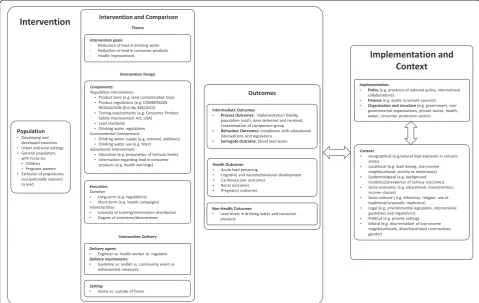
Interventions to reduce exposure to lead through con-sumer products and drinking water must often be car-ried out over an extended period of time and may involve multiple governmental sectors including envir-onment, transport, water, housing and health. Also, such interventions may not lead to immediate changes in hu-man exposure or health outcomes. This, as well as the complexity of the environmental and biological pathways leading to a health response, complicates the assessment of the effects of such interventions. In order to help understand the relationship between lead interventions and elevated BLLS and to structure and guide the review process, we developed the system-based logic model in Figure 1, based on methodological work undertaken as part of the EU-funded INTEGRATE-HTA project (Anke Rohwer, personal communication).
Why it is important to do this review
overt lead poisoning occur in developing countries [100]. The health outcomes associated with lead also show stark inequalities in exposure and health effects for disadvantaged groups within industrialized and develop-ing countries. Despite sharp reductions in the general population’s exposure to lead since the 1970s, substantial numbers of ethnic minority and low-income children continue to exhibit unacceptably high BLLs [101,102]. To our knowledge, no systematic review has been under-taken to assess the effectiveness of interventions to re-duce lead in consumer products and drinking water, although a systematic review has been conducted for household interventions for preventing domestic lead exposure in children [89]. This review is undertaken in the course of the development of WHO guidelines for the prevention and management of lead poisoning.
Objectives
The objective of this systematic review is to assess the effectiveness of regulatory, environmental and educa-tional interventions for reducing blood lead levels and associated health outcomes in children, pregnant women and the general population.
Methods/design
This systematic review is not registered with PROSPERO.
Criteria for considering studies for this review
Types of studies
Due to the range of lead interventions, we will consider both randomized and certain non-randomized studies for this review. In doing so, we will distinguish between those non-randomized studies accepted by the Cochrane Effective Practice and Organization of Care (EPOC) Group [103] and additional non-randomized studies. The following study designs will therefore be eligible for inclusion:
Individually randomized trials
Cluster randomized trials
Controlled before-and-after studies adhering to
EPOC standards (CBA-EPOC)–with at least two
intervention sites and two control sites
Interrupted time series studies adhering to EPOC
standards (ITS-EPOC)–with at least three data
points before and after a clear intervention point
Controlled before-and-after studies not adhering to
EPOC standards (CBA)–with less than two
inter-vention and/or control sites
Uncontrolled before-and-after studies (UBA)
Interrupted time series studies not adhering to
EPOC standards (ITS)–with less than three data
Repeated cross-sectional studies (CSS)–with a clear intervention point and effect data taken both before and after the intervention
As we expect inconsistencies in naming among studies, we will be very careful not to exclude studies solely based on study design labels. A cohort study, for example, in which a clear intervention point exists and an assessment is undertaken both pre- and post-intervention, is essen-tially an uncontrolled before-and-after study according to our definitions.
Types of participants
We will consider studies where children, pregnant women and/or adults are included. We restrict our par-ticipants to people who are not occupationally exposed to lead.
Types of interventions
Interventions aiming to reduce exposure to lead through consumer products (including cans, ceramic ware, jewel-lery, toys, cosmetics, traditional medicines, paint) and drinking water are categorized according to their re-spective programmatic approach. Interventions specific-ally aiming to reduce exposure to leaded paint will be excluded, as their effectiveness was assessed in a recent Cochrane review [89].
Regulatory interventions (for example, standards for
lead, product bans, product testing requirements)
Environmental interventions (for example, removal
of leaded pipes, additives to reduce lead solubility, water filters)
Educational interventions (for example, restricted
use in children, product choice, letting water run before drinking)
Types of outcomes
Primary outcomes
The primary outcome of this review is blood lead level.
Blood lead levels, measured in μ/dl, can be assessed in
venous blood samples or capillary blood samples. Effect estimates may be reported as continuous measures (for example, mean or median blood levels for a given lation) or categorically (for example, percentage of popu-lation with blood lead levels above a defined threshold).
Secondary outcomes
Among children, two secondary outcomes will be assessed: the critical short-term outcome will be acute lead poison-ing. Symptoms of acute lead poisoning include gastrointes-tinal (anorexia, nausea, vomiting, abdominal pain, consti-pation, metallic taste) and nervous system symptoms (poor concentration, headache, fatigue, malaise, language and
speech delay, behavioural problems, encephalopathy, ataxia, seizure, coma). Physical examination can reveal signs of raised intracranial pressure, lead lines in teeth, gout and hypertension. The diagnosis of lead poisoning is confirmed through laboratory tests showing elevated blood lead levels, hypochromic anaemia, red blood cells with basophilic stip-pling, elevated protoporphyrin levels, elevated transaminase levels, and proteinuria, glucosuria and aminoaciduria in urine [15]. An important long-term outcome is cognitive and neurobehavioural development, as measured by stan-dardized measures of intelligence quotient, behaviour and development. These include the Stanford Binet Intelligence Scale, Wechsler Intelligence Scale for Children, Wechsler Preschool and Primary Scale of Intelligence, Kaufman Test of Educational Achievement (K-TEA) for the assessment of intelligence, the Griffiths Mental Development Scales and the Child Behaviour Checklist.
In relation to pregnant women, pregnancy outcomes (miscarriage, stillbirth, premature birth, low birth weight, minor malformations of the embryo [104]) will be assessed.
Among adolescents and adults, outcomes to be docu-mented are hypertension and renal problems, as assessed mainly by the glomerular filtration rate.
Adverse events
We will also carefully examine included studies for any adverse events reported. An adverse event is defined as any unfavourable outcome that occurs during or after the delivery of the intervention but is not necessarily caused by it [105]. For example, an adverse outcome would be contamination of drinking water with other chemicals as a consequence of water treatment changes aimed at reducing lead concentrations [97].
Search methods for identification of studies
Sources to search
Searches will be performed within the following elec-tronic databases:
MEDLINE
EMBASE
Global Health Library
Designing the search strategy
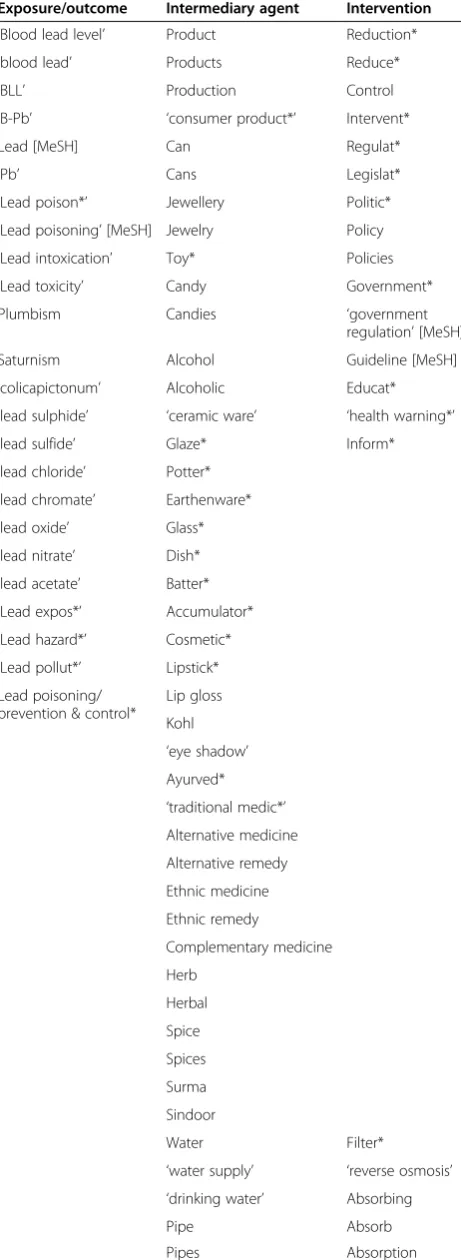
published in other languages, we will endeavour to iden-tify assistance with their assessment for eligibility. Table 3 describes general search terms, while the explicit search strategy can be found in Additional file 1.
Data collection and analysis
Selection of studies
Screening of titles and abstracts will be performed by one author, that is one of Lisa Pfadenhauer (LP), Anke Rohwer (AR) and Jake Burns (JB). At this stage, only studies that are clearly not appropriate for inclusion will be excluded. Certain details regarding study design and features are often not as well reported in non-randomized studies when compared with randomized controlled trials. If cer-tain key criteria for inclusion cannot be ascercer-tained from title or abstract, the study will be kept for full-text screening.
Full texts of seemingly relevant studies will be assessed for eligibility by two authors (that is two of LP, AR, JB and Eva Rehfuess (ER)). Disagreements between the two reviewers will be resolved through discussion, and a third reviewer will be consulted where necessary. Re-viewers will document reasons for exclusion.
Data extraction and management
LP, JB or AR will extract data using a tabular extraction form. The data extraction form will be checked by a sec-ond reviewer. Inconsistencies or disagreements between reviewers will be resolved through discussion, and ER will be consulted where necessary. We will record infor-mation and effect estimates for all primary and second-ary outcomes reported by the study.
As significant differences between interventions are ex-pected, we will focus on extracting all relevant data to thoroughly describe the intervention. For each interven-tion, we will extract the intervention components (related Table 3 Search strategy
Exposure/outcome Intermediary agent Intervention ‘Blood lead level’ Product Reduction*
‘blood lead’ Products Reduce*
‘BLL’ Production Control
‘B-Pb’ ‘consumer product*’ Intervent*
Lead [MeSH] Can Regulat*
‘Pb’ Cans Legislat*
‘Lead poison*’ Jewellery Politic* ‘Lead poisoning’[MeSH] Jewelry Policy ‘Lead intoxication’ Toy* Policies ‘Lead toxicity’ Candy Government*
Plumbism Candies ‘government
regulation’[MeSH]
Saturnism Alcohol Guideline [MeSH]
‘colicapictonum’ Alcoholic Educat* ‘lead sulphide’ ‘ceramic ware’ ‘health warning*’
‘lead sulfide’ Glaze* Inform*
‘lead chloride’ Potter* ‘lead chromate’ Earthenware* ‘lead oxide’ Glass* ‘lead nitrate’ Dish* ‘lead acetate’ Batter* ‘Lead expos*’ Accumulator* ‘Lead hazard*’ Cosmetic* ‘Lead pollut*’ Lipstick* Lead poisoning/
prevention & control*
Lip gloss
Kohl ‘eye shadow’ Ayurved* ‘traditional medic*’ Alternative medicine
Alternative remedy
Ethnic medicine
Ethnic remedy
Complementary medicine
Herb
Herbal
Spice
Spices
Surma
Sindoor
Water Filter*
‘water supply’ ‘reverse osmosis’ ‘drinking water’ Absorbing
Pipe Absorb
Pipes Absorption
Table 3 Search strategy(Continued)
Tap
Taps
Remov*
Engineer*
Additive*
Solubility
Corrosive
corrosivity
Acid
Acidic ‘pH’
OR OR OR
to technology and infrastructure, education, regulations and policies as specified in the logic model in Figure 1) as well as intervention execution (dose, duration, intensity and timing) and delivery aspects (level of implementation, delivery agent, organization and structure).
Relevant contextual and implementation data, based on a context and implementation framework developed as part of the EU-funded INTEGRATE-HTA project (Lisa Pfadenhauer, personal communication), will be extracted, where available. This framework places important context-ual domains within the setting, community, national and international level. These eight domains are:
locational
geographical
epidemiological
socio-economic
socio-cultural
political
legal
ethical
Also, data that could highlight possible health inequality issues arising during implementation or any time thereafter will be extracted. This will be based upon the PROGRESS framework [106], which includes place, race, occupation, gender, religion, education and socio-economics.
Quality appraisal of included studies
The quality of included studies will be independently assessed by two researchers (two of LP, JB, AR), using the modified Graphical Appraisal Tool for Epidemio-logical studies (GATE) tool [107], as tailored to public health questions and applied by the Centre for Public Health at the UK National Institute for Health and Care Excellence (NICE) [108]. The two versions of this tool– one for quantitative intervention studies, one for quanti-tative studies reporting correlations and associations – can be applied across all experimental and observational study designs.
For intervention studies, the appraisal checklist com-prises key aspects exerting influence on internal and ex-ternal validity:
characteristics of study participants
definition of, and allocation to, intervention and
control conditions
outcomes assessed over different time periods
methods of analyses.
The checklist embraces five sections. Section 1 aims to describe key population criteria in order to assess the ex-ternal validity of the study, while Sections 2 to 5 deter-mine the internal validity of the study. The wording of
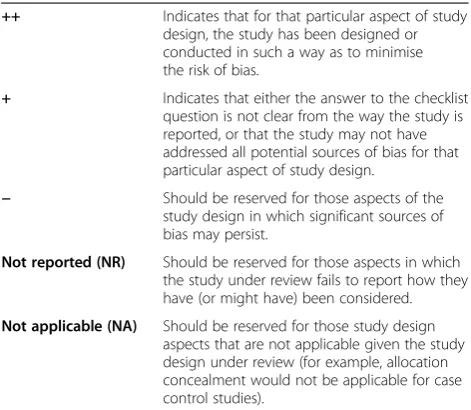
the checklist items allows five responses, as shown in Table 4.
Interrupted time series, uncontrolled before-and-after studies and repeated cross-sectional studies will be treated as quantitative studies reporting correlations and associations. The modified GATE for these studies re-sembles the modified GATE for intervention studies, but emphasizes selection of the exposure group and statis-tical control for confounding rather than intervention al-location and blinding [108].
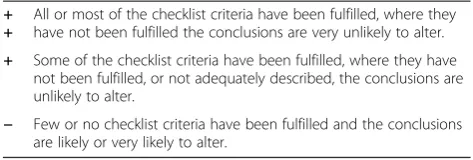
Each intervention and correlational study is then awarded an overall rating of likely internal and external validity, based on the criteria depicted in Table 5.
Measures of treatment effect
We will present dichotomous data using risk ratios. For continuous data using arithmetic means, geometric means or medians, we will present mean or median dif-ferences. All results will be presented with their associ-ated 95% confidence intervals.
Unit of analysis issues
If the included cluster randomized controlled trials have sufficiently accounted for the cluster design, we will in-clude the effect estimates in the meta-analysis,
combin-ing them with individually randomized trials. If
clustering has not been addressed, we will attempt to ad-just the data for clustering by inflating the standard er-rors by multiplying them by the square root of the design effect [105]. We will then include the adjusted ef-fect estimates in the meta-analysis.
Table 4 Possible responses to individual items in modified Graphical Appraisal Tool for Epidemiological studies (GATE)
++ Indicates that for that particular aspect of study design, the study has been designed or conducted in such a way as to minimise the risk of bias.
+ Indicates that either the answer to the checklist question is not clear from the way the study is reported, or that the study may not have addressed all potential sources of bias for that particular aspect of study design.
− Should be reserved for those aspects of the study design in which significant sources of bias may persist.
Not reported (NR) Should be reserved for those aspects in which the study under review fails to report how they have (or might have) been considered.
Not applicable (NA) Should be reserved for those study design aspects that are not applicable given the study design under review (for example, allocation concealment would not be applicable for case control studies).
Dealing with missing data
In the case that missing information on study features, intervention characteristics or outcome data prevent fur-ther use of a study, investigators will be contacted.
Assessment of heterogeneity
Issues of clinical and methodological heterogeneity will be assessed in tabular form for studies in each of the three intervention categories, with the documentation of the following study-specific characteristics:
Methods: study design, group assignment, exposure
assessment, outcome assessment, result of critical appraisal
Participants: setting (industrialized vs. developing;
urban vs. rural), age
Context and implementation: based on the above
mentioned context and implementation for complex interventions framework (Lisa Pfadenhauer, personal communication).
Statistical heterogeneity will be assessed with an I2
cal-culation in Revman 5.2 [109]. An I2value greater than
50% will be considered substantial, and will be consid-ered statistically significant if thePvalue for the chi2test is <0.1.
Assessment of reporting biases
We will assess likely reporting biases through the use of funnel plots for outcomes that are reported in more than 10 studies.
Data synthesis
Where at least two studies report the same primary out-come within the same population group (that is children, pregnant women, adults), intervention category and source of lead exposure, we will pool data using meta-analysis. For studies with multiple comparison groups, only those comparisons assessing an intervention/inter-vention component compared with no interintervention/inter-vention/ intervention component will be analysed. In the main analysis, we will pool across all study designs.
Due to expected differences in intervention compo-nents and complexity, setting and study population, random-effects models will be implemented for all meta-analyses independent of substantial or limited stat-istical heterogeneity. Inverse-variance random-effects meta-analyses will be carried out using Revman 5.2 [109]. Effects will be considered statistically significant where aPvalue of less than 0.05 is found.
As we expect much of the evidence to be too heteroge-neous for statistical pooling, harvest plots will be devel-oped in parallel to meta-analysis. Harvest plots are a novel form of synthesizing evidence–especially in sys-tematic reviews of complex interventions [110,111] and have been shown to be effective, clear and transparent [112]. Harvest plots will be used to graphically synthesize evidence based on all study designs for the effects of regulatory, environmental and educational intervention categories across all primary and secondary outcomes, where the direction of effect is illustrated by columns (left-hand column: favours control, middle column: no differences, right-hand column: favours intervention).
Two sets of harvest plots will be created. The first set will portray the primary outcome BLL with the interven-tion category and source of lead exposure shown in rows (that is environmental interventions to reduce lead in consumer products, environmental interventions to re-duce lead in drinking water, and so on). Each study is represented by a bar, and identified by the first three let-ters of the author’s last name. The colours indicate the study population (black for children, grey for pregnant women, and white for the general population). Also il-lustrated, by height of bar, will be appropriateness of study design with randomized and cluster randomized trial being assigned the greatest height, followed by EPOC-recognized designs (intermediate height) and other non-randomized designs (lowest height). The
sym-bols employed with the modified GATE (++, +, −) will
indicate the degree of internal validity for each study. The second set will develop separate harvest plots for each intervention category in relation to exposure, pre-senting findings for all primary and secondary outcomes. Here separate rows will present the primary outcome BLL and the five secondary outcomes (that is acute lead poisoning, cognitive and neurobehavioural outcomes, pregnancy outcomes, hypertension and renal outcomes). Harvest plots will be created in Microsoft PowerPoint.
Subgroup analysis
In order to assess possible sources of heterogeneity, sub-group analyses for the primary outcome BLL may be performed for drinking water interventions (intervention through water authority or at household level) and in re-lation to context characteristics, although we expect that lack of data will prevent these from being conducted. Table 5 Overall rating of internal and external validity in
modified Graphical Appraisal Tool for Epidemiological studies (GATE)
+ +
All or most of the checklist criteria have been fulfilled, where they have not been fulfilled the conclusions are very unlikely to alter.
+ Some of the checklist criteria have been fulfilled, where they have not been fulfilled, or not adequately described, the conclusions are unlikely to alter.
− Few or no checklist criteria have been fulfilled and the conclusions are likely or very likely to alter.
Sensitivity analysis
Where possible, we will conduct the following sensitivity analyses for the primary outcome BLL in relation to study design:
Meta-analysis based on lower risk of bias study
designs only, that is individually and cluster randomized trials as well as CBA-EPOC and ITS-EPOC studies.
Harvest plots based on lower risk of bias study
designs only, that is individually and cluster randomized trials as well as CBA-EPOC and ITS-EPOC studies.
Data permitting, we will also dichotomize continuous
measures of BLL using 5 μg/dl (or the threshold most
widely used across included studies) as the threshold value, and pool all data for this new dichotomous outcome.
The insights derived from these sensitivity analyses will be compared to those gained through the main synthesis.
Discussion
This systematic review will fill an important evidence gap with respect to the effectiveness of interventions to reduce lead in consumer products and drinking water in the context of new WHO guidelines for the manage-ment and prevention of lead poisoning. It will also con-tribute to setting a future research agenda.
Additional file
Additional file 1:Search Strategies.Description of data: the additional file provides the explicit search strategy employed for the systematic search in EMBASE, MEDLINE and the Global Health Library.
Abbreviations
BLL:blood lead level; CBA: controlled before-and-after study; CDC: Center for Disease Control and Prevention; CNS: central nervous system; CSS: cross-sectional studies; DALY: disability-adjusted life years; GATE: Graphical Appraisal Tool for Epidemiological Studies; GFR: glomerular filtration rate; EPOC: Cochrane Effective Practice and Organization of Care; ITS: interrupted time series study; K-TEA: Kaufman Test of Educational Achievement; NHANES: National Health and Nutrition Examination Survey; NICE: National Institute for Health and Care Excellence; UBA: uncontrolled before-and-after study; USEPA: US Environmental Protection Agency; WHO: World Health Organization.
Competing interests
The authors declare that they have no competing interests.
Authors’contributions
LP drafted this protocol in constant exchange with ER. JB, AR and LP jointly developed the method section under revision of ER. AR and LP jointly developed the logic model. All authors read and approved the final protocol.
Acknowledgements
We are grateful to the World Health Organization for its financial
contribution to conducting this review. We thank Joanna Tempowskij (WHO), Bruce Lanphear (Simon Fraser University) and Phil Landrigan (Mount Sinai
School of Medicine) for providing valuable feedback on a previous version of this protocol.
Received: 30 January 2014 Accepted: 27 March 2014 Published: 15 April 2014
References
1. Fewtrell L, Kaufman R, Prüss-Üstün A:Lead: assessing the environmental burden of diseases at national and local levels.Geneva: World Health Organization; 2003.
2. Smith MA:Lead in history.InThe lead debate: the environmental toxicology and child health.Edited by Lansdown R, Yule W. London: Croom Helm; 1984:7–24.
3. Institute for Health Metrics and Evaluation (IHME): GBD Arrow Diagram.Seattle, WA: IHME, University of Washington, 2013. Available from http://vizhub. healthdata.org/irank/arrow.php. (Accessed [06/03/2014]).
4. Jones RL, Homa DM, Meyer PA, Brody DJ, Caldwell KL, Pirkle JL, Brown MJ: Trends in blood lead levels and blood lead testing among US children aged 1 to 5 years, 1988-2004.Pediatrics2009,123:e376–e385. 5. Meyer PA, Brown MJ, Falk H:Global approach to reducing lead exposure
and poisoning.Mutation research/reviews in mutation research2008, 659:166–175.
6. Tong S, von Schirnding YE, Prapamontol T:Environmental lead exposure: a public health problem of global dimensions.B World Health Organ2000, 78:1068–1077.
7. Tong S, McMichael AJ:The magnitude, persistence and public health significance of cognitive effects of environmental lead exposure in childhood.J Environ Med1999,1:103–110.
8. Rojas-Lopez M, Santos-Burgoa C, Rios C, Hernandez-Avila M, Romieu I:Use of lead-glazed ceramics is the main factor associated to high lead in blood levels in two Mexican rural communities.J Toxicol Environ Health 1994,42:45–52.
9. Nriagu JO, Blankson ML, Ocran K:Childhood lead poisoning in Africa: a growing public health problem.Sci Total Environ1996,181:93–100. 10. Clark CS, Rampal KG, Thuppil V, Chen CK, Clark R, Roda S:The lead content
of currently available new residential paint in several Asian countries. Environ Res2006,102:9–12.
11. Clark CS, Rampal KG, Thuppil V, Roda SM, Succop P, Menrath W, Chen CK, Adebamowo EO, Agbede OA, Sridhar MK, Adebamowo CA, Zakaria Y, El-Safty A, Shinde RM, Yu J:Lead levels in new enamel household paints from Asia, Africa and South America.Environ Res2009,109:930–936. 12. World Health Organization:Exposure to lead: A major public health concern.
Geneva: World Health Organization; 2010.
13. Flegal AR, Smith DR:Lead levels in preindustrial humans.N Engl J Med 1992,326:1293–1294.
14. Stellman JM, International Labour Office:Encyclopaedia of occupational health and safety: industries and occupations.Geneva: International Labour Office; 1998.
15. World Health Organization:Childhood lead poisoning.Geneva: World Health Organization; 2010.
16. Lead in Consumer Products Work Group Charge.Centers for Disease Control and Prevention (CDC), 2009. http://www.cdc.gov/nceh/lead/ ACCLPP/productsWG.htm
17. Jones A:Emerging aspects of assessing lead poisoning in childhood. Emerg Health Threats J2009,2:e3.
18. End uses of lead - chart 1: end uses of lead.International Lead and Zinc Study Group (ILZSG), 2014. http://www.ilzsg.org/static/enduses.aspx?from=1 19. Guney M, Zagury GJ:Heavy metals in toys and low-cost jewelry: critical
review of U.S. and Canadian legislations and recommendations for testing.Environ Sci Technol2012,46:4265–4274.
20. Guney M, Zagury GJ:Contamination by ten harmful elements in toys and children’s jewelry bought on the North American market.Environ Sci Technol2013,47:5921–5930.
21. Weidenhamer JD:Lead contamination of inexpensive seasonal and holiday products.Sci Total Environ2009,407:2447–2450.
22. Sources of lead: candy.Centers for Disease Control and Prevention (CDC), 2013. [http://www.cdc.gov/nceh/lead/tips/candy.htm]
24. Kim KC, Park Y-B, Lee MJ, Kim J-B, Huh J-W, Kim D-H, Lee J-B, Kim J-C:Levels of heavy metals in candy packages and candies likely to be consumed by small children.Food Res Int2008,41:411–418.
25. Wu TN, Yang GY, Shen CY, Liou SH:Lead contamination of candy: an example of crisis management in public health.Lancet1995,346:1437–1438. 26. Fuortes L, Bauer E:Lead contamination of imported candy wrappers.Vet
Hum Toxicol2000,42:41–42.
27. World Health Organization:Global status report on alcohol and health. Geneva: World Health Organization; 2011.
28. Dalvi SR, Pillinger MH:Saturnine gout, redux: a review.Am J Med2013, 126:450. e451-450.e458.
29. Hellstrom-Lindberg E, Bjorklund A, Karlson-Stiber C, Harper P, Selden AI: Lead poisoning from souvenir earthenware.Int Arch Occup Environ Health 2006,79:165–168.
30. Sprinkle RV:Leaded eye cosmetics: a cultural cause of elevated lead levels in children.J Fam Practice1995,40:358–362.
31. Awasthi S, Awasthi R, Pande VK, Srivastav RC, Frumkin H:Blood lead in pregnant women in the urban slums of Lucknow, India.Occup Env Med 1996,53:836–840.
32. Vassilev ZP, Marcus SM, Ayyanathan K, Ciuffo V, Bogden JD, Kemp FW, Ruck B, Jennis T, Jani N, Halperin W:Case of elevated blood lead in a South Asian family that has used Sindoor for food coloring.Clin Toxicol2005, 43:301–303.
33. Piccinini P, Piecha M, Torrent SF:European survey on the content of lead in lip products.J Pharm Biomed Anal2013,76:225–233.
34. Saper RB, Kales SN, Paquin J, Burns MJ, Eisenberg DM, Davis RB, Phillips RS: Heavy metal content of Ayurvedic herbal medicine products.JAMA2004, 292:2868–2873.
35. Saper RB, Phillips RS, Sehgal A, Khouri N, Davis RB, Paquin J, Thuppil V, Kales SN:Lead, mercury, and arsenic in US- and Indian-manufactured Ayurvedic medicines sold via the Internet.JAMA2008,300:915–923. 36. Geraldine M, Herman DS, Venkatesh T:Lead poisoning as a result of
infertility treatment using herbal remedies.Arch Gynecol Obstet2007, 275:279–281.
37. World Health Organization:Lead in drinking-water - background document for development of WHO Guidelines for Drinking-water Quality.Geneva: World Health Organization; 2011.
38. Hilgenkamp K:Environmental Health: Ecological Perspectives.Sudbury, MA: Jones and Bartlett Publishers; 2005.
39. Lanphear BP, Byrd RS, Auinger P, Schaffer SJ:Community characteristics associated with elevated blood lead levels in children.Pediatrics1998, 101:264–271.
40. World Health Organization:Guidelines for drinking-water quality.4th edition. Geneva: World Health Organization; 2011.
41. United Nations Environment Programme:Final review of scientific information on lead.Geneva: United Nations Environment Programme; 2010. 42. Korshin GV, Ferguson JF, Lancaster AN:Influence of natural organic matter on
the corrosion of leaded brass in potable water.Corrosion Sci2000,42:53–66. 43. Del Toral MA, Porter A, Schock MR:Detection and evaluation of elevated
lead release from service lines: a field study.Environ Sci Technol2013, 47:9300–9307.
44. Hayes C:Best Practice Guide on the Control of Lead in Drinking Water. London: IWA Publishing; 2010.
45. McQueen CA:Comprehensive Toxicology.New York: Elsevier Science; 2010. 46. Järup L:Hazards of heavy metal contamination.Br Med Bull2003,68:167–182. 47. Renner R:Exposure on tap: drinking water as an overlooked source of
lead.Environ Health Perspect2010,118:A68–A72.
48. Prüss-Üstün A, Fewtrell L, Landrigan PJ, Ayuso-Mateos J:Comparative quantification of health risks: global and regional burden of disease attributable to selected major risk factors.Edited by Ezzati M, Lopez AD, Rodgers AA, Murray CJL. Geneva: World Health Organization; 2004. 49. What Do Parents Need to Know to Protect Their Children?Centers for
Disease Control and Prevention (CDC), 2012. Available from: http://www. cdc.gov/nceh/lead/ACCLPP/blood_lead_levels.htm.
50. Schwartz J:Low-level lead exposure and children’s IQ: a meta-analysis and search for a threshold.Environ Res1994,65:42–55.
51. Joint Food and Agriculture Organization of the United Nations (FAO)/WHO Expert Committee on Food Additives (JECFA):Summary and conclusions of the seventy-third meeting of the Joint FAO/WHO expert committee on food additives.Geneva: Joint Food and Agriculture Organization of the United Nations (FAO)/WHO Expert Committee on Food Additives (JECFA); 2010.
52. Grandjean P, Landrigan PJ:Developmental neurotoxicity of industrial chemicals.Lancet2006,368:2167–2178.
53. Tong S, Von Schirnding YE, Prapamontol T:[Environmental lead exposure: a public health problem with global dimensions]Servir2000,49:35–43. 54. Bellinger DC:Lead.Pediatrics2004,113:1016–1022.
55. Flora G, Gupta D, Tiwari A:Toxicity of lead: a review with recent updates. Interdiscip Toxicol2012,5:47–58.
56. Lanphear BP, Hornung R, Khoury J, Yolton K, Baghurst P, Bellinger DC, Canfield RL, Dietrich KN, Bornschein R, Greene T, Rothenberg SJ, Needleman HL, Schnaas L, Wasserman G, Graziano J, Roberts R:Low-level
environmental lead exposure and children’s intellectual function: an international pooled analysis.Environ Health Perspect2005,113:894–899. 57. Dietrich KN, Berger OG, Succop PA, Hammond PB, Bornschein RL:The
developmental consequences of low to moderate prenatal and postnatal lead exposure: intellectual attainment in the Cincinnati Lead Study Cohort following school entry.Neurotoxicol Teratol1993,15:37–44. 58. Bellinger DC:Very low lead exposures and children’s neurodevelopment.
Curr Opin Pediatr2008,20:172–177.
59. Needleman HL, Schell A, Bellinger D, Leviton A, Allred EN:The long-term effects of exposure to low doses of lead in childhood. An 11-year follow-up report.N Engl J Med1990,322:83–88.
60. Tuthill RW:Hair lead levels related to children’s classroom attention-deficit behavior.Arch Environ Health1996,51:214–220.
61. Hanninen H, Aitio A, Kovala T, Luukkonen R, Matikainen E, Mannelin T, Erkkila J, Riihimaki V:Occupational exposure to lead and
neuropsychological dysfunction.Occup Env Med1998,55:202–209. 62. Ris MD, Dietrich KN, Succop PA, Berger OG, Bornschein RL:Early exposure to
lead and neuropsychological outcome in adolescence.JINS2004,10:261–270. 63. Guidotti TL, McNamara J, Moses MS:The interpretation of trace element
analysis in body fluids.Indian J Med Res2008,128:524–532. 64. Rastogi SK:Renal effects of environmental and occupational lead
exposure.Indian J Occup Environ Med2008,12:103–106.
65. Loghman-Adham M:Renal effects of environmental and occupational lead exposure.Environ Health Perspect1997,105:928–939.
66. Lim SS, Vos T, Flaxman AD, Danaei G, Shibuya K, Adair-Rohani H, Amann M, Anderson HR, Andrews KG, Aryee M, Atkinson C, Bacchus LJ, Bahalim AN, Balakrishnan K, Balmes J, Barker-Collo S, Baxter A, Bell ML, Blore JD, Blyth F, Bonner C, Borges G, Bourne R, Boussinesq M, Brauer M, Brooks P, Bruce NG, Brunekreef B, Bryan-Hancock C, Bucello C,et al:A comparative risk assessment of burden of disease and injury attributable to 67 risk factors and risk factor clusters in 21 regions, 1990-2010: a systematic analysis for the Global Burden of Disease Study 2010.Lancet2012,380:2224–2260.
67. Dietert RR, Piepenbrink MS:Lead and immune function.Crit Rev Toxicol 2006,36:359–385.
68. Fadrowski JJ, Navas-Acien A, Tellez-Plaza M, Guallar E, Weaver VM, Furth SL: Blood lead level and kidney function in US adolescents: The Third National Health and Nutrition Examination Survey.Arch Intern Med2010, 170:75–82.
69. Flora S, Pachauri V, Saxena G:Arsenic, cadmium and lead. InReproductive and Developmental Toxicology.Edited by Gupta RC. Burlington, MA: Academic Press; 2011:415–438.
70. Wells EM, Navas-Acien A, Herbstman JB, Apelberg BJ, Silbergeld EK, Caldwell KL, Jones RL, Halden RU, Witter FR, Goldman LR:Low-level lead exposure and elevations in blood pressure during pregnancy.Environ Health Perspect2011,119:664–669.
71. Menke A, Muntner P, Batuman V, Silbergeld EK, Guallar E:Blood lead below 0.48 micromol/L (10 microg/dL) and mortality among US adults. Circulation2006,114:1388–1394.
72. National Toxicology Program:NTP monograph on health effects of low-level lead.NTP monograph2012,xii:xv–148.
73. Prozialeck WC, Edwards JR, Nebert DW, Woods JM, Barchowsky A, Atchison WD:The vascular system as a target of metal toxicity.Toxicol Sci2008, 102:207–218.
74. Vupputuri S, He J, Muntner P, Bazzano LA, Whelton PK, Batuman V:Blood lead level is associated with elevated blood pressure in blacks. Hypertension2003,41:463–468.
75. Harlan WR:The relationship of blood lead levels to blood pressure in the U.S. population.Environ Health Perspect1988,78:9–13.
77. Cheng Y, Schwartz J, Sparrow D, Aro A, Weiss ST, Hu H:Bone lead and blood lead levels in relation to baseline blood pressure and the prospective development of hypertension: the Normative Aging Study. Am J Epidemiol2001,153:164–171.
78. Hu H:A 50-year follow-up of childhood plumbism. Hypertension, renal function, and hemoglobin levels among survivors.Am J Dis Child1991, 145:681–687.
79. Navas-Acien A, Guallar E, Silbergeld EK, Rothenberg SJ:Lead exposure and cardiovascular disease–a systematic review.Environ Health Perspect2007, 115:472–482.
80. Lustberg M, Silbergeld E:Blood lead levels and mortality.Arch Intern Med 2002,162:2443–2449.
81. Khalil N, Wilson JW, Talbott EO, Morrow LA, Hochberg MC, Hillier TA, Muldoon SB, Cummings SR, Cauley JA:Association of blood lead concentrations with mortality in older women: a prospective cohort study.Environ Health2009,8:15.
82. Weisskopf MG, Jain N, Nie H, Sparrow D, Vokonas P, Schwartz J, Hu H:A prospective study of bone lead concentration and death from all causes, cardiovascular diseases, and cancer in the Department of Veterans Affairs Normative Aging Study.Circulation2009,120:1056–1064. 83. Visualization: GBD treemap diagram (Global DALYs, risk factors, 2010).
[http://viz.healthmetricsandevaluation.org/gbd-compare/] 84. Visualization: stack bar chart (Global deaths 2010).[http://viz.
healthmetricsandevaluation.org/gbd-compare/]
85. World Health Organization:Water sanitation and health team. InGuidelines for drinking-water quality.3rd edition. Geneva: World Health Organization; 2004. 86. Chien LC, Yeh CY, Lee HC, Jasmine Chao H, Shieh MJ, Han BC:Effect of the
mother’s consumption of traditional Chinese herbs on estimated infant daily intake of lead from breast milk.Sci Total Environ2006,354:120–126. 87. Ettinger AS, Tellez-Rojo MM, Amarasiriwardena C, Peterson KE, Schwartz J,
Aro A, Hu H, Hernandez-Avila M:Influence of maternal bone lead burden and calcium intake on levels of lead in breast milk over the course of lactation.Am J Epidemio2006,163:48–56.
88. Toxicological profile for lead.[http://www.atsdr.cdc.gov/toxprofiles/tp.asp? id=96&tid=22]
89. Yeoh B, Woolfenden S, Lanphear B, Ridley GF, Livingstone N:Household interventions for preventing domestic lead exposure in children. Cochrane Database Syst Rev2012,4, CD006047.
90. Hu H, Hernandez-Avila M:Invited commentary: lead, bones, women, and pregnancy–the poison within?Am J Epidemiol2002,156:1088–1091. 91. Gulson BL, Mizon KJ, Korsch MJ, Palmer JM, Donnelly JB:Mobilization of
lead from human bone tissue during pregnancy and lactation–a summary of long-term research.Sci Total Environ2003,303:79–104. 92. Mendola P, Selevan SG, Gutter S, Rice D:Environmental factors associated
with a spectrum of neurodevelopmental deficits.Ment Retard Dev Disabil Res Rev2002,8:188–197.
93. Alfano DP, Petit TL:Neonatal lead exposure alters the dendritic development of hippocampal dentate granule cells.Exp Neurol1982, 75:275–288.
94. Johnston MV, Goldstein GW:Selective vulnerability of the developing brain to lead.Curr Opin Neurol1998,11:689–693.
95. Falk H:International environmental health for the pediatrician: case study of lead poisoning.Pediatrics2003,112:259–264.
96. Renner R:Reaction to the solution: lead exposure following partial service line replacement.Environ Health Perspect2010,118:A202–A208. 97. Renner R:Out of plumb: when water treatment causes lead
contamination.Environ Health Perspect2009,117:A542–A547. 98. Tang Z, Hong S, Xiao W, Taylor J:Impacts of blending ground, surface,
and saline waters on lead release in drinking water distribution systems. Water Res2006,40:943–950.
99. Actions you can take to reduce lead in drinking water.[http://water.epa. gov/drink/info/lead/lead1.cfm]
100. Venkatesh T:Editorial role of a clinical biochemist in evaluating the impact of lead poisoning.Ind J Clin Biochem2013,28:1–2.
101. Kraft ME, Scheberle D:Environmental justice and the allocation of risk: the case of lead and public health.Policy Stud J2005,23:113–122. 102. Bernard SM, McGeehin MA:Prevalence of blood lead levels > or = 5 micro
g/dL among US children 1 to 5 years of age and socioeconomic and demographic factors associated with blood of lead levels 5 to 10 micro g/dL, Third National Health and Nutrition Examination Survey, 1988-1994.Pediatrics2003,112:1308–1313.
103. Effective Practice and Organisation of Care (EPOC):EPOC Resources for review authors.Oslo: Norwegian Knowledge Centre for the Health Services; 2013. Available at: http://epocoslo.cochrane.org/epoc-specific-resources-review-authors [epoc.cochrane.org/…/epoc…/EPOC%20Study%20Designs% 20About.pdf]
104. IARC monographs on the evaluation of carcinogenic risks to humans. Volume 87: Inorganic and organic lead compounds.[http://www.inchem. org/documents/iarc/vol87/volume87.pdf]
105. Higgins JPT, Green S:Cochrane Handbook for Systematic Reviews of Interventions.Version 5.1.0 [updated March 2011] The Cochrane Collaboration; 2011. Available from www.cochrane-handbook.org. 106. Evans T, Brown H:Road traffic crashes: operationalizing equity in the
context of health sector reform.Inj Contr Saf Promot2003,10:11–12. 107. Jackson R, Ameratunga S, Broad J, Connor J, Lethaby A, Robb G, Wells S,
Glasziou P, Heneghan C:The GATE frame: critical appraisal with pictures. Evid Based Med2006,11:35–38.
108. National Institute for Health and Clinical Excellence (NICE):Methods for the development of NICE public health guidance.InBook Methods for the development of NICE public health guidance.3rd edition. London: National Institute for Health and Clinical Excellence (NICE); 2012.
109. The Nordic Cochrane Centre:Review Manager (Revman).InBook Review Manager (Revman).52nd edition. Copenhagen: The Cochrane Collaboration; 2012. 110. Petticrew M, Rehfuess E, Noyes J, Higgins JP, Mayhew A, Pantoja T, Shemilt
I, Sowden A:Synthesizing evidence on complex interventions: how meta-analytical, qualitative, and mixed-method approaches can contribute.J Clin Epidemiol2013,66:1230–1243.
111. Turley R, Saith R, Bhan N, Rehfuess E, Carter B:Slum upgrading strategies involving physical environment and infrastructure interventions and their effects on health and socio-economic outcomes.Cochrane Database Syst Rev2013,1, CD010067.
112. Ogilvie D, Fayter D, Petticrew M, Snowden A, Thomas S, Whitehead M, Worthy G:The harvest plot: a method for synthesizing evidence about the differential effects of interventions.BMC Med Res Methodol2008,8:8.
doi:10.1186/2046-4053-3-36
Cite this article as:Pfadenhaueret al.:A protocol for a systematic review of the effectiveness of interventions to reduce exposure to lead through consumer products and drinking water.Systematic Reviews
20143:36.
Submit your next manuscript to BioMed Central and take full advantage of:
• Convenient online submission
• Thorough peer review
• No space constraints or color figure charges
• Immediate publication on acceptance
• Inclusion in PubMed, CAS, Scopus and Google Scholar
• Research which is freely available for redistribution
![Table 1 Signs and symptoms associated with lead toxicity[14]](https://thumb-us.123doks.com/thumbv2/123dok_us/9536904.1936641/3.595.305.539.524.734/table-signs-symptoms-associated-lead-toxicity.webp)
![Table 2 Global disability-adjusted life years (DALYs)attributable to lead (both sexes, all ages, 2010) [83]](https://thumb-us.123doks.com/thumbv2/123dok_us/9536904.1936641/4.595.304.539.600.732/table-global-disability-adjusted-years-dalys-attributable-sexes.webp)