P R O T O C O L
Open Access
Implementation of self-management
support in cancer care and normalization
into routine practice: a systematic scoping
literature review protocol
Doris Howell
1*, Alison Richardson
2, Carl May
3, Lynn Calman
4, Rouhi Fazelzad
1, Saeed Moradian
1and
Claire Foster
3Abstract
Background:Cancer survivors face a myriad of biopsychosocial consequences due to cancer and treatment that may be potentially mitigated through enabling their self-management skills and behaviors for managing illness. Unfortunately, the cancer system lags in its systematic provision of self-management support (SMS) in routine care, and it is unclear what implementation approaches or strategies work to embed SMS in the cancer context to inform health policy and administrator decision-making.
Methods/design:A comprehensive scoping review study of the literature will be conducted based on methods and steps identified by Arksey and O’Malley and experts in the field. Electronic searches will be conducted in multiple databases including CINAHL, CENTRAL, EMBASE, PsycINFO, MEDLINE, AMED, Cochrane Database of Systematic Reviews, Database of Abstracts of Reviews of Effects (DARE) (up to Issue 2, 2015), ISI Proceedings (Web of Science), PsychAbstracts, and Sociological Abstracts from January 1997 to November 5, 2018. Following the PRISMA-Extension for Scoping Reviews (PRISMA-ScR), two authors will independently screen all titles/abstracts to determine eligibility, data will be abstracted by one author and checked by a second author, and findings will be narratively summarized based on constructs of implementation in the Normalization Process Theory.
Discussion:This will be the first scoping review study to synthesize knowledge of implementation of SMS in the cancer care context and the implementation approaches and strategies on embedding in care. This information will be critical to inform health policy and knowledge end users about the necessary changes in care to embed SMS in practices and to stimulate future research.
Keywords:Scoping review protocol, Cancer, Self-management, Implementation, Self-management support
Background
Globally, the burden of cancer continues to grow with 21.4 million new cancer cases, 13.2 million cancer deaths, and 28.7 million cancer survivors estimated for 2030 worldwide [1]. Cancer patients experience significant physical, psychosocial, and spiritual health consequences due to the disease and treatment that are undertreated in clinical care resulting in greater morbidity that is
burdensome to patients and the healthcare system [2–11]. Ultimately, it is patients (and families) that shoulder re-sponsibility for self-management of illness to reduce the impact of these consequences on functioning in daily life and for adopting specific behaviors that can facilitate health recovery during and after treatment and to minimize late effect risks [12,13].
A large body of empirical evidence has shown that en-abling effective self-management of illness in non-malignant chronic diseases (i.e., diabetes) results in bet-ter disease control, reduced symptom severity, and a better quality of life (QOL), as well as lower health care * Correspondence:[email protected]
1University Health Network (Princess Margaret Cancer Centre), 610 University Ave, Room 15-617, Toronto, Ontario M5G2M9, Canada
Full list of author information is available at the end of the article
utilization and costs [14–16]. Similarly, evidence is emerging in cancer that self-management interventions (SMI) and/or self-management support (SMS) programs have similar beneficial effects on reducing severity of physical and emotional distress and improving quality of life outcomes [17–20]. Thus, greater emphasis is now fo-cused on the provision of SMS in healthcare systems to enable and empower cancer survivors with the know-ledge and skills to assume a central role in the manage-ment of their cancer and recovery of health [19,21].
Unfortunately, cancer healthcare systems lag other chronic diseases in the provision of SMS in routine care, which may leave cancer patients vulnerable to becoming sicker and at risk of worse survival [12]. This is not surpris-ing given that implementation of SMS requires “whole-sys-tem” change inclusive of (1) training and guidance of patients in self-management, (2) development of clinicians’ skills so they can support patients to do this, and (3) change in care processes to enable these approaches to become a core element of care [22–24]. While there are systematic reviews of implementation of SMS in typical chronic condi-tions, i.e., diabetes, asthma, chronic obstructive pulmonary disease, and arthritis, cancer is noticeably absent from these reviews [14, 16, 25, 26]. It cannot be assumed, given the complex, multifaceted and dynamic (fluctuating disease course) nature of cancer as a chronic illness [27], that im-plementation of SMS programs mirroring approaches used in typical chronic conditions are applicable in the cancer care context. Implementation is also a complex endeavor in the context of the rapid, episodic nature of cancer care, and simply adding greater expectations to existing practice sys-tems is unlikely to be successful [28].
To promote self-management on a wider scale, we need to understand implementation of SMS in the context of cancer care and the approaches and strategies that con-tribute to integrating and embedding SMS in cancer care. Despite existing reviews of effectiveness [17–20], none of these reviews have focused on implementation of SMS in the context of cancer care. Thus, the overall goal of this systematic scoping literature review is to identify what is known about the implementation of SMS interventions and/or programs (extent, range, and nature of research evidence). The specific aims of the review are twofold: (1) to characterize the nature of SMS interventions and/or programs being implemented (self-management interven-tion/program components) and emphasis placed on core skills and behavior change and (2) to identify the core im-plementation approaches and strategies (imim-plementation intervention) that have been used and the factors that en-able or hinder the work of embedding SMS in care (what works for whom and in what circumstances).
This review will help to inform health care decision-makers, providers, and researchers about the state of knowledge regarding implementation of SMS in
the context of cancer care and the research gaps that need to be addressed. Scoping reviews are considered es-sential to organize evidence for decision-support [29].
Methods/design
The study protocol is summarized in the PRISMA-Extension for Scoping Reviews (PRISMA-ScR) Checklist [30] (Additional file 1). Scoping literature reviews are intended to be comprehensive and systematically identify the breadth and depth of a body of literature [31], rather than focus on a narrow and specific research question that is typical of a systematic review for meta-analysis [32]. To ensure methodological rigor, we draw upon the scoping review framework and five-stage approach spe-cified by Arksey and O’Malley [33] and additional steps specified by Levac [34], recommendations for consistency in approach [35]. The additional recommen-dations include clarifying and linking the purpose and research question in stage 1, balancing feasibility with breadth and comprehensiveness of the scoping process in stage 2, using an iterative team approach to selecting studies in stage 3 and extracting data in stage 4, incorp-orating a numerical summary and qualitative thematic analysis for reporting results, and considering the impli-cations of study findings to policy, practice, or research in stage 5[35]. A sixth stage of consultation, meeting with stakeholders for translating knowledge, is also rec-ommended [34] but will not be incorporated in this phase of the work. We plan to conduct a mixed-review, which is defined as reviews that include quantitative, qualitative, and mixed-method data sources and a paral-lel narrative synthesis approach with separate analysis of quantitative and qualitative data to interpret study re-sults and map patterns in the data [36]. Qualitative stud-ies will only be included if they are linked to a primary quantitative or mixed-method study of implementation of SMS and further elaborate on the implementation ap-proach or strategies used. The five stages of this scoping literature review to be followed are described below:
Stage 1: Identification of the research questions
care (H—healthcare context: community-based pro-grams, hospitals, primary care practices, ambulatory or outpatient care). The specific review questions to be ad-dressed are:
1. What core implementation components, implementation theories or frameworks, and specific implementation strategies have been used to facilitate uptake and embedding of SMS interventions and/or programs in routine cancer care (implementation intervention)?
2. What populations (cancer patients and/or family members, community or peer support services, family physician practices, health care
organizations, health care professionals) have been targeted for implementation of SMS?
3. What are the core components, skills, or behaviors that have been emphasized in the SMS
interventions and/or programs being implemented (SMS intervention)?
4. What are the enabling or inhibiting factors that influence uptake and embedding of SMS in routine care?
5. What implementation outcomes, such as care processes, and/or patient or provider intermediary (self-efficacy, behaviors) outcomes or survivor health outcomes (symptoms, quality of life, psychological distress, functioning) or system level outcomes were measured (health care use, costs)?
Stage 2: Identification of studies
Implementation interventions are complex interventions [38] that are not always well defined in the literature and various definitions have been proposed. Implementation has been defined as “deliberate initiation of a specified set of activities or strategies designed to put into practice an activity or program aimed to produce a change in pa-tient or provider behaviors or the environments (change in care process or organizational structures) in which they operate” [39]. According to this definition, imple-mentation processes are purposeful and should be de-scribed in sufficient detail such that independent observers can detect the presence and strength of a
“specific set of activities” related to implementation [40].
Desired outcomes are achieved only when effective pro-grams are implemented well using a systematic and staged approach to implementation [39]. There is a need to identify both the implementation approach including its core components and implementation strategies (i.e., educational outreach, audit and feedback) used to facili-tate implementation (implementation intervention) and the core components and skills or behaviors emphasized in the SMS intervention or program or practice being implemented (SMS intervention).
Implementation interventions
Implementation interventions may target change at one or more levels (e.g., patients, health care providers, teams, organizations, care processes, or delivery system) [39]. Multifaceted implementation strategies (e.g., facili-tation, audit, and feedback) that are tailored to address local contextual barriers to change are more likely to im-prove professional practice [41, 42]. Based on the com-monalities among successful implementation programs, core implementation components have been identified and include (1) staff selection, (2) preservice and in-service training, (3) ongoing coaching and consult-ation, (4) staff evaluconsult-ation, (5) decision support data sys-tems, (6) facilitative administrative support, and (7) systems interventions [39] as outlined in Table1.
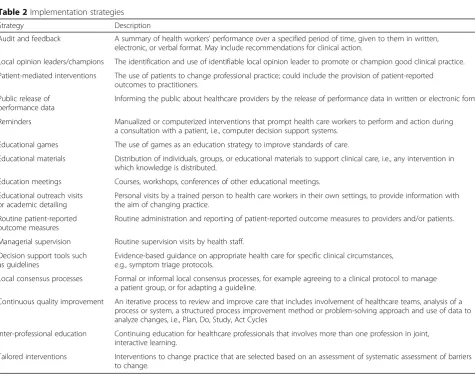
The implementation strategies that can be used to fa-cilitate uptake of a program or innovation have also been defined and are identified in a taxonomy developed by the Cochrane Effective Practice and Organization of Care Group (EPOC) [43] such as audit and feedback, local opinion leaders or champions, educational meet-ings, or patient-mediated approaches tailored to the local context (Table2).
SMS intervention and/or program
Table 2Implementation strategies
Strategy Description
Audit and feedback A summary of health workers’performance over a specified period of time, given to them in written, electronic, or verbal format. May include recommendations for clinical action.
Local opinion leaders/champions The identification and use of identifiable local opinion leader to promote or champion good clinical practice.
Patient-mediated interventions The use of patients to change professional practice; could include the provision of patient-reported outcomes to practitioners.
Public release of performance data
Informing the public about healthcare providers by the release of performance data in written or electronic form.
Reminders Manualized or computerized interventions that prompt health care workers to perform and action during a consultation with a patient, i.e., computer decision support systems.
Educational games The use of games as an education strategy to improve standards of care.
Educational materials Distribution of individuals, groups, or educational materials to support clinical care, i.e., any intervention in which knowledge is distributed.
Education meetings Courses, workshops, conferences of other educational meetings.
Educational outreach visits or academic detailing
Personal visits by a trained person to health care workers in their own settings, to provide information with the aim of changing practice.
Routine patient-reported outcome measures
Routine administration and reporting of patient-reported outcome measures to providers and/or patients.
Managerial supervision Routine supervision visits by health staff.
Decision support tools such as guidelines
Evidence-based guidance on appropriate health care for specific clinical circumstances, e.g., symptom triage protocols.
Local consensus processes Formal or informal local consensus processes, for example agreeing to a clinical protocol to manage a patient group, or for adapting a guideline.
Continuous quality improvement An iterative process to review and improve care that includes involvement of healthcare teams, analysis of a process or system, a structured process improvement method or problem-solving approach and use of data to analyze changes, i.e., Plan, Do, Study, Act Cycles
Inter-professional education Continuing education for healthcare professionals that involves more than one profession in joint, interactive learning.
Tailored interventions Interventions to change practice that are selected based on an assessment of systematic assessment of barriers to change.
Table 1Components of implementation interventions
Component Definition
Staff selection Includes academic qualifications or level of experience of staff or peers selected to carry out the program, methods for recruiting and selecting practitioners to carry out the program.
Pre-service and in-service training
Strategies used to enhance understanding background information and rationale for key practices (may include communication channels), training on the program components and opportunities to practice new skills and receive feedback.
Ongoing coaching and consultation
A coach provides information, advice, encouragement, and opportunities to practice and use skills specific to the program or innovation; coaching for behavior change may target the practitioner, supervisory, or administrative support levels.
Staff performance assessment
Evaluation to assess the use and outcomes of skills taught in the training, and reinforced and expanded in coaching processes. Includes performance feedback for skill development and other measures for gauging implementation fidelity, or other assessments to ensure competent delivery of core intervention components.
Decision-support data systems
Process and outcome data, organizational fidelity measures, or collection of any data to support decision-making and progress in the implementation of the core intervention components over time.
Facilitative administration Provision of leadership to support the overall processes of implementation and keep staff focused on achieving intervention outcomes. May include new policies and procedures, change in care structures (model of care or care processes), and promoting the climate and cultural shift required to support the change
including regular assessment of progress and problems, goal setting, and problem-solving support” [47] and to support daily decision-making to improve health-related behaviors and clinical outcomes [48]. SMS can be viewed in two ways: as a portfolio of techniques and tools to help patients adopt behaviors [48] and as a fun-damental transformation of the patient-caregiver rela-tionship into a collaborative partnership [49]. SMS is complementary to patient education to improve know-ledge of disease, but it also differs as it focuses on the patients’ own agenda, improving problem-solving skills, and building the patient’s confidence (self-efficacy) in using those skills in coping with the broad range of biopsychosocial consequences inherent in living with a chronic illness [50], and encourages patients to become active participants in their own care through goal setting and action planning [51]. Improvements in self-management and behavior change have been shown for SMS programs that include disease-specific information and education and collaboration between patient and cli-nicians, alongside behavior change strategies such as goal setting, action planning, and the provision of regu-lar follow-up [50, 52]. A taxonomy of SMS program components has been identified that has been shown to have clinical utility in cancer survivorship SMS pro-grams [53]. For this review, we have further adapted this taxonomy based on reviews of SMS program in cancer [20, 54, 55] and expertise of the scoping review team (Additional file 2). SMS interventions in cancer can be further classified based on (a) type, depending on whether the intervention is focused onadjustment(i.e., facilitating transition from an acute phase to survivorship or psychological problems) or onproblems (e.g., side effects of treatment); (b) delivery, including technology-assisted interventions; and (c) techniques used, which may involve information provision, self-monitoring, goal setting, action plans, and positive feedback [54,55].
Stage 3: Study selection Search criteria
Scoping studies are iterative; thus, proposed search terms may need to be refined as the extent of literature in the field becomes evident [33]. The literature search strategy will be initially developed for MEDLINE in con-sultation with an information specialist who has expert-ise in cancer reviews (RH). The MEDLINE strategy can be found in Additional file3: Figure S1. An initial test of the search terms will be conducted in MEDLINE to re-fine the terms, and the search strategy will be modified for all other databases. A second information specialist at the University Health Network (Toronto, ON) has conducted a peer review of the search strategy using the Peer Review of Electronic Search Strategies (PRESS) checklist, which is common practice for scoping reviews
[56, 57]. Specific Medical Subject Headings (MeSH) and free text terms for self-management, self-efficacy, self--management supportand related terms, i.e.,“self-care”or
“educat” or “activate,” will be combined with terms for
“cancer”. These terms will be combined with implementa-tion study terms, for example“real world,” “routine clin-ical care,” primary care, “Phase IV,” “knowledge translation,” “adoption,” “integration,” “dissemination”and
“implementation”using Boolean logic operators (and, or).
Databases
Standard bibliographic databases will be used as follows: MEDLINE, EMBASE, CINAHL PsycINFO, AMED, Cochrane Database of Systematic Reviews, Database of Abstracts of Reviews of Effects (DARE) (up to Issue 2, 2015), ISI Proceedings (Web of Science), PsychoAb-stracts, and Sociological Abstracts from January 1997 to November 5, 2018, or from inception and/or closure of the database if occurring within this timeframe. This lit-erature review start date was chosen as the first publica-tion of a refined Chronic Care Model developed through consensus of experts was published, which stimulated self-management research in chronic diseases [58–60]. We will not include dissertations/theses or conference abstracts. Implementation intervention studies or evalu-ation of implementevalu-ation in health care systems is not al-ways published in the extant literature; thus, we will search specific web sites of organizations that are leading work on the implementation of SMS including the American and Canadian Cancer Society, Macmillan Cancer Support, Stanford Chronic Disease Management, Australian Cancer Society and Flinders University, and the Health Foundation in the United Kingdom and the National Cancer Survivorship Initiative in England and by asking experts in the field who are members of the Canadian Cancer Survivorship Research Consortium (CCSRC) for other key studies they are aware through an email broadcast to members (www.ccsrc.ca).
Study screening and selection
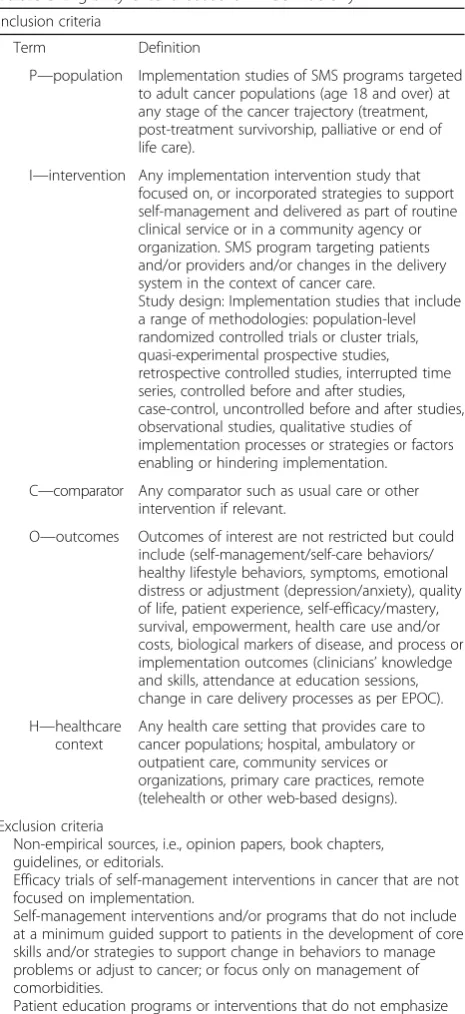
and (5) make final decisions for study inclusion. Forward reference searching will be conducted through manual searches of reference lists until saturation (no new refer-ences are identified). Referrefer-ences and literature sources will be included in the literature review if they meet eli-gibility criteria for inclusion of studies (inclusion/exclu-sion) identified in Table3.
Stage 4: Data extraction and charting the data
Charting describes a technique for synthesizing and inter-preting data by sifting, charting, and sorting material based on the key issues, themes, and types of studies [33]. Reference manager software (End-Note) will be used to track citations and record each database searched, the years it covered, and search date. The research coordin-ator as the primary reviewer will extract data on all studies using a standard form and checked by a second reviewer. Data will be abstracted for each study using a data abstrac-tion form to include (1) author(s), (2) year of publicaabstrac-tion, (3) source origin/country of origin, (4) aims/purpose, (5) study population (age, type of cancer, stage of disease/se-verity, phase in the cancer continuum, comorbidities, problem targeted, i.e., breathlessness or adjustment) and sample size (if applicable), (6) methodology or study type (qualitative studies will be further classified based on methodology and theoretical orientation if possible, i.e., grounded theory, ethnography, phenomenology), (7) inter-vention type (including mode) and comparator if applic-able, (8) concept, (9) duration of the intervention (if applicable), (10) outcomes and measures used and any data on psychometric properties, and (11) key findings that relate to the review question. We will also extract specific detail about the SMS intervention and/or program on core components including (1) intervention target (HCPs, patients, carers, combinations, care process, or model of care delivery); (2) setting; (3) mode of delivery (group, individual, professional, lay led, joint led, face to face, telehealth) and group allocation (if applicable); (4) components (education, action plans, other techniques to support behavior change (tele)monitoring, support mate-rials (written/electronic information) as per the EPOC tax-onomy (Table3) and the SMS taxonomy (Additional file 2). (5) duration and intensity of components; (6) follow-up (frequency and mode); (7) service arrangements (usual, primary/additional care, dedicated service); and (8) any cost-effectiveness data. The level of agreement between the two primary reviewers will be conducted on a training set of three studies and a level of agreement (K-statistic) calculated and modifications made if necessary prior to further abstraction. Differences will be resolved by con-sensus and engagement of a third reviewer. Data will be abstracted from eligible studies and entered in an AC-CESS database. Qualitative studies will be uploaded into an NVIVO qualitative database [62].
Stage 5. Collating, summarizing, and reporting the results
We will follow the PRISMA-Extension for Scoping Re-views (PRISMA-ScR) guidelines for the review and use a chart for recording the flow of data through the stages of the study selection process based on these guidelines [63]. Scoping studies seek to present an overview of all material reviewed to provide a narrative or descriptive Table 3Eligibility criteria based on PICOH acronym
Inclusion criteria
Term Definition
P—population Implementation studies of SMS programs targeted to adult cancer populations (age 18 and over) at any stage of the cancer trajectory (treatment, post-treatment survivorship, palliative or end of life care).
I—intervention Any implementation intervention study that focused on, or incorporated strategies to support self-management and delivered as part of routine clinical service or in a community agency or organization. SMS program targeting patients and/or providers and/or changes in the delivery system in the context of cancer care.
Study design: Implementation studies that include a range of methodologies: population-level randomized controlled trials or cluster trials, quasi-experimental prospective studies, retrospective controlled studies, interrupted time series, controlled before and after studies, case-control, uncontrolled before and after studies, observational studies, qualitative studies of implementation processes or strategies or factors enabling or hindering implementation.
C—comparator Any comparator such as usual care or other intervention if relevant.
O—outcomes Outcomes of interest are not restricted but could include (self-management/self-care behaviors/ healthy lifestyle behaviors, symptoms, emotional distress or adjustment (depression/anxiety), quality of life, patient experience, self-efficacy/mastery, survival, empowerment, health care use and/or costs, biological markers of disease, and process or implementation outcomes (clinicians’knowledge and skills, attendance at education sessions, change in care delivery processes as per EPOC).
H—healthcare context
Any health care setting that provides care to cancer populations; hospital, ambulatory or outpatient care, community services or organizations, primary care practices, remote (telehealth or other web-based designs).
Exclusion criteria
Non-empirical sources, i.e., opinion papers, book chapters, guidelines, or editorials.
Efficacy trials of self-management interventions in cancer that are not focused on implementation.
Self-management interventions and/or programs that do not include at a minimum guided support to patients in the development of core skills and/or strategies to support change in behaviors to manage problems or adjust to cancer; or focus only on management of comorbidities.
Patient education programs or interventions that do not emphasize patient acquisition of skills for self-management.
account of findings [33]. However, controversy still exists as to whether the quality assessment of studies in scop-ing reviews is required [34]. Given the complexity of im-plementation studies and anticipated heterogeneity in implementation components and study designs, we will not appraise the quality of studies included.
Data analysis and narrative synthesis approach
There is a lack of consensus regarding the best approach for synthesizing qualitative study findings [64] and in scoping literature reviews [65]. While many potential strategies are identified, narrative synthesis is common and remains a recommended approach [66]. Narrative synthesis is defined as an approach to the synthesis of evidence relevant to a wide range of questions that relies primarily on the use of words and text to summarize and explain—to “tell the story”—of the findings of mul-tiple studies [67]. We will use strategies recommended in a narrative synthesis guidance document for summar-izing and identifying patterns across studies including textual descriptions, tabulation, group and clustering, thematic analysis, and conceptual triangulation using concept mapping [66]. A textual summary of data from each study will be tabulated with separate tables for qualitative studies, mixed-method studies, and quantita-tive study types (observational versus interventions). Study types will be tabulated using descriptive statistics (i.e., frequencies and percentages) and intervention stud-ies grouped by implementation target (i.e., patient or provider or change in care delivery system). First, we will abstract data from studies on implementation approach and components, implementation or knowledge transla-tion theory or framework, implementatransla-tion strategies used, population(s) targeted for implementation (imple-mentation intervention), and components of the SMS intervention (SMS intervention) using taxonomic criteria
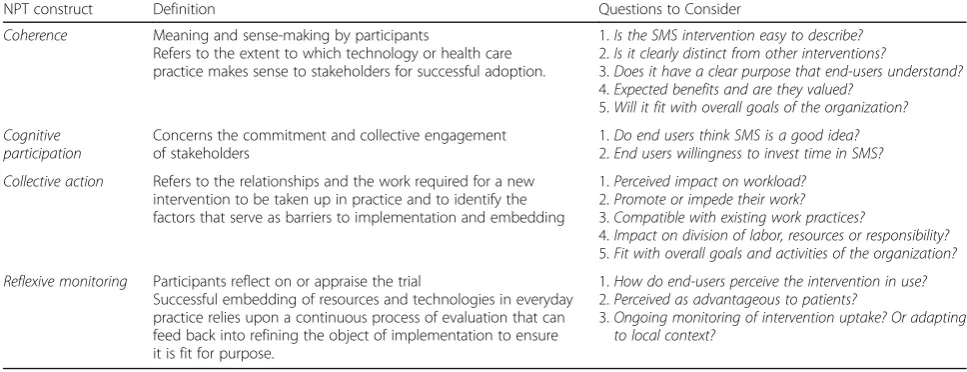
(Table 1, Additional file 2). Second, we will treat ab-stracted data from quantitative studies as qualitative data and combine this with qualitative study for narrative synthesis. The abstracted data will be analyzed using di-rected content analysis methods to identify themes or patterns in the data and to characterize the enabling or inhibiting factors that influence the uptake or embed-ding of SMS in routine care. A directed content analysis approach is distinct from traditional inductive content analysis and is guided by a more structured process that uses existing theory (concepts or constructs) or variables from prior research, also called a framework or variable oriented analysis, i.e., key concepts/constructs and vari-ables, as initial coding categories [67,68]. This approach avoids reinterpretation of qualitative data, which has been criticized, and ensures the development of patterns or themes grounded in the data. Thirdly, we will code data abstracted from these studies using a coding tax-onomy inclusive of coding definitions agreed among all members of the research team. The coding taxonomy will be derived from variables in the implementation ap-proach (Table 1), implementation strategies (Table 2), and the self-management taxonomy (Additional file 2), and Normalization Process Theory (NPT) [69] (Table 4). Given that our goal is to identify patterns in the imple-mentation of SMS support, we will do initial coding based on the concepts in our taxonomies. This will be followed by a second level of coding to characterize the enabling or inhibiting factors that influence the embed-ding of SMS in routine care based on constructs in NPT [70]. NPT supports the characterization of the“work”of implementation and provides an orienting framework to identify the social processes influencing the embedding or normalization of innovations such as SMS in routine practice, and has been shown to be useful for conceptu-alizing the enabling or hindering factors for embedding
Table 4NPT analysis for evaluation of implementation of SMS in the cancer context
NPT construct Definition Questions to Consider
Coherence Meaning and sense-making by participants
Refers to the extent to which technology or health care practice makes sense to stakeholders for successful adoption.
1.Is the SMS intervention easy to describe?
2.Is it clearly distinct from other interventions?
3.Does it have a clear purpose that end-users understand?
4.Expected benefits and are they valued?
5.Will it fit with overall goals of the organization? Cognitive
participation
Concerns the commitment and collective engagement of stakeholders
1.Do end users think SMS is a good idea?
2.End users willingness to invest time in SMS? Collective action Refers to the relationships and the work required for a new
intervention to be taken up in practice and to identify the factors that serve as barriers to implementation and embedding
1.Perceived impact on workload?
2.Promote or impede their work?
3.Compatible with existing work practices?
4.Impact on division of labor, resources or responsibility?
5.Fit with overall goals and activities of the organization? Reflexive monitoring Participants reflect on or appraise the trial
Successful embedding of resources and technologies in everyday practice relies upon a continuous process of evaluation that can feed back into refining the object of implementation to ensure it is fit for purpose.
1.How do end-users perceive the intervention in use?
2.Perceived as advantageous to patients?
of innovations in routine clinical care [71]. NPT sensi-tizes analytical thinking to four determinants of embed-ding innovations, i.e., normalizing, in clinical practice as defined in Table 4. NPT has been used to examine em-bedding of innovations in practice, and we will build on a previously developed coding taxonomy adapted to ad-dress the aims for this study [72].
Anticipated problems and mitigation strategies
Scoping reviews by their very nature seek to present an overview of a large and diverse body of evidence, and our yield of studies may be larger than expected. We will add specific filters to limit the yield if necessary without compromising the intent of the review, i.e., limiting search terms for SMS and implementation (e.g., remove terms such as policy, quality control, innovation), and restrict the review to quantitative studies, SMS interven-tions for symptom management, and/or ambulatory can-cer sectors only. Interchangeable use of terms, i.e., self-management or self-care, may be challenging, and subsequently, both terms will be included in the search strategy to ensure we capture studies that have used both terms. However, we will only select studies where the focus is on the implementation of SMS and the SMS intervention includes an emphasis on building patient skills and training of patients to use specific behaviors for managing the effects of cancer. Finally, identification of qualitative studies can be problematic, and we use recommended terms for identification of those specific to implementation of SMS.
Discussion
While there are reviews of the implementation of SMS in routine care and significant efforts underway in the UK to integrate SMS in routine care, the emphasis has been on non-malignant chronic conditions [24] and we were unable to identify any scoping reviews of imple-mentation studies of SMS in the context of cancer care. This scoping review will enable examination of the breadth of literature specific to cancer populations. We anticipate the results will be valuable for informing health care policy and knowledge end-users’ decisions regarding implementation strategies that could be ap-plied in the cancer system to facilitate uptake of SMS and will identify the research gaps that need to be ad-dressed. We will disseminate the findings of the review to academic audiences using traditional methods of pub-lications in journals and presentations at international conferences targeting health service and implementation science researchers and oncology clinicians. Additionally, we will capitalize on the dual roles of many of our inves-tigators to disseminate the study results with key cancer or health care organizations such as Macmillan Cancer Support and Cancer Care Ontario, through networks
such as the CCSRC and Canadian Cancer Survivor (pa-tient) networks, and professional organizations such as the International Psychosocial Oncology Society (IPOS) and the International Society of Nurses in Cancer Care (ISNCC). Data for the study will be held for up to 10 years at the University Health Network.
Additional files
Additional file 1:PRISMA Extension for Scoping Reviews (PRISMA-ScR) (PDF 616 kb)
Additional file 2:SMS Taxonomy (PDF 45 kb)
Additional file 3:Figure S1.Medline Search Strategy (PDF 265 kb)
Abbreviations
NPT:Normalization Process Theory; PICOH: Population, intervention, comparison, outcomes, health care context; QOL: Quality of life; SMS: Self-management support
Acknowledgements
Not applicable.
Funding
Funding for the review is partially supported by funds from the Macmillan Cancer Survivorship Research Unit, University of Southampton, Surrey, UK in support of the Diamond Jubilee Fellowship (DH). The funder had no role in oversight of the review.
Availability of data and materials
All required data for this review is available.
Authors’contributions
DH wrote the scoping review protocol, and all authors were involved in the conception and design and final review of the protocol paper. DH and LC will do independent screening of all titles and abstracts; AR, CF and DH will be responsible for the review of the final paper for eligibility; A research
coordinator and SM will be responsible for the abstract data into tables; CM will guide the NPT framework analysis. All authors read and approved the final manuscript.
Ethics approval and consent to participate
Not applicable.
Consent for publication
Not applicable.
Competing interests
The authors declare that they have no competing interests.
Publisher’s Note
Springer Nature remains neutral with regard to jurisdictional claims in published maps and institutional affiliations.
Author details
Received: 5 July 2018 Accepted: 14 January 2019
References
1. Miller CA, Kimberly D, Miller MPH, Siegel RL, Rebecca L, et al. Cancer treatment and survivorship statistics. CA J Clin. 2016;66:271–89.
2. Weaver KE, Forsythe LP, Reeve BB, et al. Mental and physical health-related quality of life among US cancer survivors: population estimates from the 2010 National Health Interview Survey. Cancer Epidemiol Biomark Prev. 2012;21:2108–17.
3. Brown ML. Burden of illness in cancer survivors: findings from a population-based national sample. JNCI. 2004;96:1322–30.
4. Arndt V, Koch-Gallenkamp L, Jansen L, et al. Quality of life in long-term and very long-term cancer survivors versus population controls in Germany. Acta Oncol. 2017;56:190–7.
5. Jones JM, Olson K, Catton P, Catton CN, Fleshner NE, Krzyzanowska MK, McCready DR, Wong RK, Jiang H, Howell D. Cancer-related fatigue and associated disability in post-treatment cancer survivors. J Cancer Survivorship. 2016;10(1):51–61.
6. Hewitt M, Greenfield S, Stovall E, editors. From cancer patient to cancer survivor: lost in transition. Washington, DC: National Academies Press; 2006. 7. Elliott J, Fallows A, Staetsky L, Smith PWF, Foster CL, Maher EJ, et al. The
health and well-being of cancer survivors in the UK: findings from a population-based survey. Br J Cancer. 2011;105:S11–20.
8. Drury A, Payne S, Brady A-M. The cost of survival: an exploration of colorectal cancer survivors' experiences of pain. Acta Oncol. 2017;56:205–11. 9. Lu D, Anderson TM, Fall K, Hultman CM, Czene K, Valdimarsdottir U, Fang F. Clinical diagnosis of mental disorders immediately before and after cancer diagnosis: a nationwide matched cohort study in Sweden. JAMA Oncology. 2016;2(9):1188.
10. Dunn J, Ng S, Holland J, Aitken J, Youl P, Baade PD, Chambers SK. Trajectories of psychological distress after colorectal cancer. Psycho-Oncology. 2013;22(8):1759–65.
11. Mitchell AJ, Ferguson DW, Gill J, Paul J, Symonds P. Depression and anxiety in long-term cancer survivors compared with spouses and healthy controls: a systematic review and meta-analysis. Lancet Oncol. 2013;14:721–32. 12. Foster C, Fenlon D. Recovery and self-management support following
primary cancer treatment. Br J Cancer. 2011;105(Suppl.1):S21–8. 13. Schmid D, Leitzmann MF. Association between physical activity and
mortality among breast cancer and colorectal cancer survivors: a systematic review and meta-analysis. Ann Oncol. 2014;25(7):1293–311.
14. Franek J. Self-management support interventions for persons with chronic disease: an evidence-based analysis. Ont Health Technol Assess Ser. 2013; 13(9):1–60.
15. Brady TJ, Murphy L, O'Colmain BJ, Beauchesne D, Daniels B, Greenberg M, House M, Chervin D. A meta-analysis of health status, health behaviors, and healthcare utilization outcomes of the Chronic Disease Self-Management Program. Prev Chronic Dis. 2013;10:120112.
16. Taylor SJC, Pinnock H, Epiphaniou E, et al. A rapid synthesis of the evidence on interventions supporting self-management for people with long-term conditions: PRISMS Practical Systematic Review of Self-Management Support for long-term conditions. Health Serv Deliv Res. 2014;2:54. 17. Hammer MJ, Ercolano EA, Wright F, Dickson VV, et al. Self-management for adult
patients with cancer: an integrative review. Cancer Nurs. 2015;38(2):E10–26. 18. Smith-Turchyn J, Morgan A, Richardson J. The effectiveness of group-based
self-management programs to improve physical and psychological outcomes in patients with cancer: a systematic review and meta-analysis of randomized controlled trials. Clin Oncol. 2016;28(5):292–305.
19. McCorkle R, Ercolano E, Lazenby M, Schulman-Green D, Schilling LS, et al. Self-management: enabling and empowering patients living with cancer as a chronic illness. CA Cancer J Clin. 2011;61(1):50–62.
20. Howell D, Harth T, Brown JA, Bennet C, Boyco S. Self-management education interventions for patients with cancer: a systematic review. Supp Care Canc. 2017;25(4):1323–55.
21. IOM quality cancer care IOM (Institute of Medicine). Delivering high-quality cancer care: charting a new course for a system in crisis. Washington, DC: The National Academies Press; 2013.
22. Bodenheimer T, Lorig K, Holman H, Grumbach K. Patient self-management of chronic disease in primary care. JAMA. 2002;288(19):2469–75. 23. Nasmith L, Ballem P, Baxter R, Bergman H, Colin-Thome D, et al.
Transforming care for Canadians with chronic health conditions. Put people
first, expect the best, manage for results. Ottawa, ON, Canada: Canadian Academy of Health Sciences, 2010.
24. Richards T, Snow R, Schroter S. Co-creating health: more than a dream. BMJ. 2016;354:i4550.
25. Panagioti M, Richardson G, Murray E, Rogers A, Kennedy A, Newman S, et al. Reducing Care Utilisation through self-management Interventions (RECURSIVE): a systematic review and meta-analysis. Health Serv Deliv Res. 2014:2(54).
26. Shepperd S, Perera R. Personalised care planning for adults with chronic or long-term health conditions. Cochrane Database of Systematic Reviews. 2015;(3):CD010523.https://doi.org/10.1002/14651858.CD010523.pub2. 27. Tritter JQ, Calnan M. Cancer as a chronic illness? Reconsidering categorization
and exploring experience. Euro Journal of Cancer Care. 2002;11(3):161–5. 28. Curry SJ, Corrigan J, Institute of Medicine. Priority areas for national
action: transforming health care quality. Washington, DC: National Academies Press; 2003.
29. Black N, Mays N. Synthesizing evidence for management and policy-making. J Health Serv Res Policy. 2005;10(Supplement 1):S1:1–S1:56.
30. Tricca AC, Lillie A, Zarin W, O’Brien KK, Colquhoun H, et al. PRISMA extension for scoping reviews (PRISMA-ScR): checklist and explanation. Ann Intern Med. 2018;169(7):467–73.
31. Colquhoun HL, Levac D, O’Brien KK, Straus S, Tricco AC, Perrier L, Kastner M, Moher D. Scoping reviews: time for clarity in definition, methods, and reporting. J Clin Epidemiol. 2014;67(12):1291–4.
32. Petticrew M, Roberts H. Systematic reviews in the social sciences: a practical guide. Hoboken: Wiley Blackwell; 2005.
33. Arksey H, O'Malley L. Scoping studies: towards a methodological framework. Int J Soc Res Methodol. 2005;8(1):19–32.
34. Levac D, Colquhoun H, O’Brien KK. Scoping studies: advancing the methodology. Implement Sci. 2010;5(1):55–69.
35. Pham MT, Rajic A, Grieg JD, Sargeant JM, Papadopopoulos A, McEwen SA. A scoping review of the scoping reviews: advancing the approach and enhancing the consistency. Res Synth Methods. 2014;5:371–85. 36. Pluye P, Hong QN. Combining the power of stories and the power of
numbers: mixed methods research and mixed studies reviews. Annu Rev Public Health. 2014;35:29–45.
37. Schardt C, Adams MB, Owens T, Keitz S, Fontelo P. Utilization of the PICO framework to improve searching PubMed for clinical questions. BMC Med Inform Decis Making. 2007;7:16.
38. Pinnock H, Epiphaniou E, Taylor SJC. Phase IV implementation studies: the forgotten finale to the complex intervention methodology framework. Annals Am Thoracic Soc. 2014;11:S118–22.
39. Fixsen D, Naoom S, Blase K, Friedman RM, Wallace F. Implementation research: a synthesis of the literature (FMHI Publication #231) Tampa. FL: University of South Florida, Louis de la Parte Florida Mental Health Institute, The National Implementation Research Network; 2005. [2016-08-26] 40. Proctor EK, Powell BJ, McMillen JC. Implementation strategies:
recommendations for specifying and reporting. Implement Sci. 2013;8:139. 41. Powell BJ, Beidas RS, Lewis CC, Aarons GA, McMillen JC, Proctor EK, Mandell DS. Methods to improve the selection and tailoring of implementation strategies. J Behav Health Serv Res. 2015.https://doi.org/10.1007/s11414-015-9475-6. 42. Squires JE, Sullivan K, Eccles MP, Worswick J, Grimshaw JM. Are multifaceted
interventions more effective than single-component interventions in changing health-care professionals’behaviours? An overview of systematic reviews. Implement Sci. 2014;9(1):152.
43. Effective Practice and Organisation of Care (EPOC). EPOC Taxonomy; 2015. Available at:https://epoc.cochrane.org/epoc-taxonomy
44. Priority areas for national action: transforming health care quality. Washington, DC: National Academies Press; 2003.
45. Foster C, Brown J, Killen M, et al. The NCRI cancer experiences collaborative: defining self-management. Eur J Oncol Nurs. 2007;11:295–7.
46. Barlow J, Wright C, Sheasby J, Turner A, Hainsworth J. Self-management approaches for people with chronic conditions: a review. Patient Educ Couns. 2002;48(2):177–87.
47. Adams K, Greiner AC, Corrigan JM. The 1st Annual Crossing the Quality Chasm Summit—a focus on communities, vol. 57. Washington, DC: The National Academic Press; 2004.
48. Lorig KR, Holman HR. Self-management education: history, definition, outcomes, and mechanisms. Annals of Behavioral Med. 2003;26(1):1–7. 49. Von Korff M, Gruman J, Schaefer J, Curry SJ, Wagner EH. Collaborative
50. Newman S, Steed L, Mulligan K. Self-management interventions for chronic illness. Lancet. 2004;364(9444):1523–37.
51. Hibbard JH, Greene J. What the evidence shows about patient activation: better health outcomes and care experiences; fewer data on costs. Health Aff. 2003;32:207–14.
52. Schofield P, Chambers S. Effective, clinically feasible and sustainable: key design features of psycho-educational and supportive care interventions to promote individualized self-management in cancer care. Acta Oncol. 2015;54:805–12. 53. Pearce G, Parke HL, Pinnock H, Epiphaniou E, Bourne CLA, Sheikh A, Taylor SJC.
The PRISMS taxonomy of self-management support: derivation of a novel taxonomy and initial testing of its utility. J Health Serv Res Policy. 2016;21(2):73–82. 54. Fenlon D, Foster C. Self-management support: a review of the evidence.
Macmillan Research Unit: University of Southampton; 2009. 55. Davies NJ, Batehup L. Self-management support for cancer survivors:
guidance for developing interventions. An update of the evidence: Macmillan Research Unit, University of Southampton; 2009.
56. McGowan J, Sampson M, Salzwedel DM, Cogo E, Foerster V, Lefebvre C. PRESS peer review of electronic search strategies: 2015 guideline statement. J Clin Epidemiol. 2016;75:40.
57. McGowan J, Sampson M, Lefebvre C. An evidence based checklist for the Peer Review of Electronic Search Strategies (PRESS EBC). Evid Based Libr Inf Pract. 2010;5(1):149–54.
58. Wagner EH. Managed care and chronic illness: health services research needs. Health Serv Res. 1997;32:702–14.
59. Wagner EH. Chronic disease management: what will it take to improve care for chronic illness? Eff Clin Pract. 1998;1:2–4.
60. Lorig KR, Sobel DS, Stewart AL, et al. Evidence suggesting that a chronic disease self-management program can improve health status while reducing hospitalization: a randomized trial. Med Care. 1999;37(1):5–14. 61. Higgins J, Deeks JJ. Selecting studies and collecting data in J. P. Higgins,
Deeks, JJ (Ed.), Cochrane Handbook for Systematic Reviews of Interventions (pp. 151–186). Wiley-Blackwell: Chichester; 2008.
62. NVivo qualitative data analysis Software; QSR International Pty Ltd. Version 10, 2012.
63. Moher D, Liberati A, Tetzlaff J, Altman DG. The PRISMA Group. Preferred reporting items for systematic reviews and meta-analyses: the PRISMA statement. Ann Intern Med 2009;151(4):264–269.
64. Sandelowski M, Docherty S, Emden C. Qualitative metasynthesis: issues and techniques. Res Nurs Health. 1997;20(4):365–71.
65. Dixon-Woods M, Agarwal S, Jones D, Young B, Sutton A. Synthesizing qualitative and quantitative evidence: a review of possible methods. J Health Serv Res Policy. 2005;10(1):45–53.
66. Popay J, Rodgers M, Britten N, Roen K. Guidance on the conduct of narrative synthesis in systematic reviews: a product from the ESRC Methods Programme.
67. Krippendorff K. (2004) Content analysis: an introduction to its methodology. 2nd ed. Thousand oaks, CA: sage; 2005. p. 413.
68. Hsieh H-F, Shannon SE. Three approaches to qualitative content analysis. Qual Health Res. 2005;15(9):1277–88.
69. May C, Finch T. Implementing, embedding, and integrating practices: an outline of normalization process theory. Sociology. 2009;43(3):535–54. 70. May CR, Johnson M, Finch T. Implementation, context and complexity.
Implement Sci. 2016;1(141):1–12.
71. Kennedy A. Implementation of a self-management support approach (WISE) across a health system: what did and did not work for organisations, clinicians and patients. Implement Sci. 2014;9:129.