World Maritime University
The Maritime Commons: Digital Repository of the World
Maritime University
World Maritime University Dissertations
Dissertations
2000
Uruguay Naval Academy : an investigation into an
expanded education role to satisfy the future
demands of the maritime industry
Carlos Eduardo Abilliera Aris
World Maritime University
Follow this and additional works at:
http://commons.wmu.se/all_dissertations
Part of the
Higher Education Commons
This Dissertation is brought to you courtesy of Maritime Commons. Open Access items may be downloaded for non-commercial, fair use academic
Recommended Citation
Abilliera Aris, Carlos Eduardo, "Uruguay Naval Academy : an investigation into an expanded education role to satisfy the future demands of the maritime industry" (2000).World Maritime University Dissertations. 442.
WORLD MARITIME UNIVERSITY
Malmö, Sweden
MET (N)
Dissertation (first draft)
Supervisor: Professor Peter Muirhead
by
Carlos Abilleira
Uruguay
S00001
Maritime Education and Training
DECLARATION
I certify that all the material in this dissertation that is not my own
work has been identified, and that no material is included for which
a degree has previously been conferred on me.
The contents of this dissertation reflect my own personal views,
and are not necessarily endorsed by the University.
...
(Signature)
...
(Date)
Supervised by:
Professor Peter M. Muirhead
Professor of Maritime Education and Training
World Maritime University
External Assessor:
Captain Danny Waters
Former Rector WMU
Tasmania, Australia
ACKNOWLEDGEMENT
First and foremost, the author wishes to extend the deepest thanks to his wife, Rosana, for her undying support, encouragement and love, which serves as inspiration during the period of studies in Sweden and also to his children Lucía and Cecilia for their patience and comprehension during the course.
He also would like to express his acknowledgement to the General Command of the Navy, the Chief Staff Commander of the Navy Rear Admiral Tabaré Daners, the ex-General Directorate of the National Prefecture Rear Admiral Carlos Giani, and the ex-Directorate of the Merchant Marine Captain Martin Thomasset, for extending its support and assistance for the realisation of his studies at the World Maritime University (WMU).
The author wishes to thank his supervisor and mentor, Professor Peter Muirhead who gave unselfish guidance, encouraging ideas and support not only in the preparation of this document, but also during the whole period of study at WMU.
Also he would like to express his deepest gratitude to The International Maritime Organisation (IMO), for the scholarship they provided for the wonderful opportunity to study at the WMU.
He is very grateful to the WMU staff for their kind assistance and support during the course of his research work and learning period, particularly to Professor Fernando Pardo, Ms. Inger Baptista, Mr. Clive Cole, Ms. Susan Wangeci-Eklow and Ms. Cecilia Denne.
ABSTRACT
This dissertation describes the situation of the Maritime Education and Training system in Uruguay and in other important maritime countries with a long tradition of shipping and seamen culture. Intentionally, the author has selected this topic because Maritime Education in the Naval Academy is passing through a period of difficulty and lack of motivation as evidenced by a reduced number of applicants.
The aim of this dissertation is to propose measures that will create a maritime career as a more attractive option for the young people in the country. At the same time, it aims to fortify the role and presence of the Navy in maritime and maritime related activities.
The research explores the different education systems such as polyvalent, monovalent certification, full-integrated and semi-integrated programmes, under specific single Institutes and University structures. The employment possibilities on board and on land are also investigated to provide a realistic base for the solution proposed.
The study discusses the different alternatives in terms of acceptability, adequacy and feasibility whilst underscoring the conditions of the National Education System and in particulary the maritime ambit, with the objective of arriving at a practical and appropriate solution for the country.
The dissertation concludes that polyvalent semi-integrated education is the most suitable for a system, which also includes skipper certification for fishing, interior waterways and domestic trade activities. Future steps to follow for improving the image of seafarers at the management level as in other professional careers in the country are also proposed.
TABLE OF CONTENTS
Declaration ii
Acknowledgement iii
Abstract iv
Table of Contents v
List of Tables viii
List of Figures x
List of Abbreviations xi
CHAPTERS
1. INTRODUCTION 1
1.1 Objectives of the research 1
1.2 Research methodology 2
2. THE CURRENT SITUATION OF MARITIME EDUCATION IN
URUGUAY 4
2.1 The National Education System in Uruguay 4
2.1.1 Introduction
2.1.2 The general structure of the education in Uruguay 5 2.2 The development process of maritime education and its situation 8
2.2.1 Official Institutes 8
2.3 The Naval Academy System, its strength and weakness 10
2.3.1 General 10
2.3.2 Course structure 10
2.3.3 General learning objectives 10
2.3.3.1 Deck officer 10
2.3.3.2 Engineer officer 11
2.3.4 Definition of training areas 11
2.3.6 Conclusions about strengths and weakness of the naval academy 16
2.3.6.1 Strengths 16
2.3.6.2 Weakness 20
2.4 Establishment of a new strategic vision of maritime education
in the naval academy 21
2.4.1 In the international scope 22
2.4.2 In the national ambit 22
3. THE FUTURE VISION OF THE MARITIME INDUSTRY IN
URUGUAY AND IN THE REGION 24
3.1 Shipping companies 24
3.1.1 RO-RO passenger activity 24
3.1.2 Fishing activity 25
3.1.3 Deep sea and domestic trade activities 27
3.2 Port development 29
3.2.1 River ports 30
3.2.2 Montevideo port 31
3.2.3 Eastern ports 31
3.3 National Administrations 33
3.3.1 The National Administration of Combustibles, Alcohol and Cement 33
3.3.2 Maritime Administration 34
3.4 Relevant national projects with incidence in the maritime field 38
3.4.1 Colonia-Buenos Aires bridge 38
3.4.2 Waterway Paraná-Paraguay (Cáceres-Nueva Palmira ports) 40 3.5 Integration of maritime education within the National Education
System 41
4 THE MARITIME EDUCATION IN DEVELOPED COUNTRIES 45
4.1 The United States Merchant Marine Academy (USMMA) 45
4.1.1 Admission requirements 46
4.1.2 Competence certificates 46
4.1.3 Courses duration and characteristics 47
4.1.5 Links with the National Education System 49
4.2 Australian Maritime College (AMC) 49
4.2.1 Facilities available 53
4.2.2 Link with the National Education System 54
4.3 Maritime education in Spain 55
4.3.1 The courses 55
4.3.2 Certificates and course characteristics 56
4.3.3 Facilities 57
4.4 Maritime education in the Netherlands 58
4.4.1 The development process of maritime education in the Netherlands 59
4.4.2 Entrance requirements 61
4.4.3 Main characteristics of the education systems
(Semi-integrated and Fully-integrated) 62
4.4.4 Facilities 63
4.5 Maritime Education in the European Union 64
4.5.1 MET systems in the EU 64
4.5.2 Admission requirements 65
4.5.3 Courses duration and characteristics 65
4.5.4 Links with the National Education System 67
4.5.5 Facilities 67
4.5.6 Main conclusions about MET in developed countries 68
5 DESIGN PROPOSALS FOR FUTURE MARITIME EDUCATION
IN THE NAVAL ACADEMY OF URUGUAY 70
5.1 Overview 70
5.2 A new strategic vision 73
5.3 The Grade formation 73
5.4 The Post-grade formation 83
6 CONCLUSIONS and RECOMMENDATIONS 95
6.1 Conclusions 95
6.2 Recommendations 100
REFERENCES 102
APPENDIXES
Appendix A Professional training in the Uruguayan Naval Academy 108 Appendix B Graphical comparison between learning areas in the 109
Uruguayan Naval Academy
Appendix C Characteristics of the Uruguayan ports 110 Appendix D Waterway Paraguay-Paraná certification proposed 112 Appendix E Australian Maritime College, awards and course duration 115
Appendix F Education in The Netherlands 116
Appendix G MET in the European Union, courses duration 119 Appendix H School time of MET in the European Union 120 Appendix I Shore based employment for seafarers in Europe 123 Appendix J Cross-check STCW/95 with the proposed curriculum 124
syllabus for the Uruguayan Naval Academy
Appendix K The Uruguayan ports operations 128
Appendix L National projects with maritime incidence 132
Appendix M Syllabus contents of MET in Spain 134
Appendix N Teaching aids in the European Union 136
LIST OF TABLES
Table 2.1 Uruguayan Naval Academy, calendar schedule 13 Table 2.2 Uruguayan Naval Academy, distribution of lecture hours
per training area 14
Table 2.3 Uruguayan naval Academy, schedule of the professional
and academic areas with its learning activities 15 Table 4.1 Current status of the MET systems applied in the EU 64 Table 4.2 Maritime education criteria in the EU (by institutes) 69
Table 5.1 Proposed curriculum syllabus, year 1 79
Table 5.2 Proposed curriculum syllabus, year 2 79
Table 5.3 Proposed curriculum syllabus, year 3 80
Table 5.4 Proposed curriculum syllabus, year 4 (nautical) 80 Table 5.5 Proposed curriculum syllabus, year 4 (engineer) 81 Table D 1 Waterway Paraguay-Paraná, maximum employment
Certification (deck department) 112
Table D 2 Waterway Paraguay-Paraná, maximum employment
Certification (engine department) 113
Table D 3 Future waterway certification (deck department) 113 Table D 4 Future waterway certification (engine department) 114 Table E 1 Australian Maritime College, awards and course duration 115 Table F 1 The Netherlands dual semi-integrated system, list of
contents during the commons first and second years 117 Table F 2 The Netherlands dual semi-integrated system, list of
contents during the fourth year 118
Table J 2 Crosscheck STCW/95 (table A-III/1) with the curriculum
syllabus proposed for the Naval Academy 125
Table K 1 Uruguayan Colonia port operations 129
Table K 2 Uruguayan Nueva Palmira port operations 129
Table K 3 Uruguayan Fray Bentos port operations 130
LIST OF FIGURES
Figure 2.1 Uruguayan education system 7
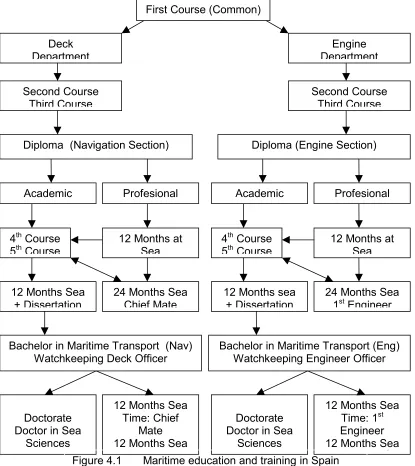
Figure 4.1 Maritime education and training in Spain 56
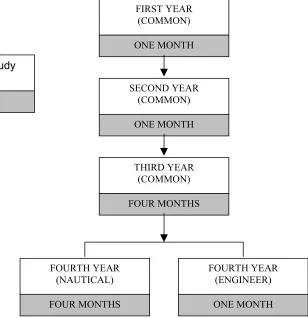
Figure 4.2 The process of the maritime education in The Netherlands 60 Figure 5.1 Proposed semi-integrated system for the Naval Academy 76 Figure 5.2 Proposed annual schedule for first and second year 77 Figure 5.3 Proposed annual schedule for third year 78 Figure 5.4 Proposed annual schedule for fourth year (nautical) 78 Figure 5.5 Proposed annual schedule for fourth year (engineers) 78
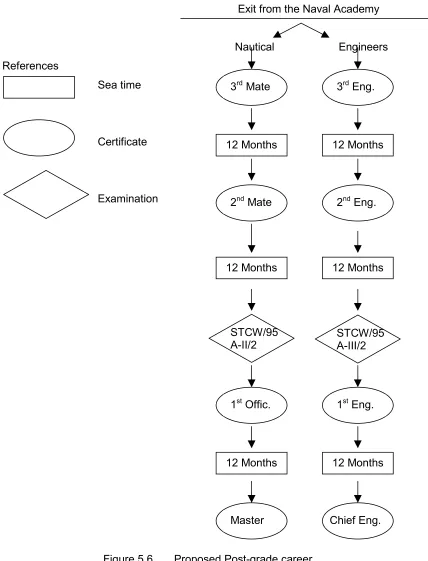
Figure 5.6 Proposed Post-grade career 85
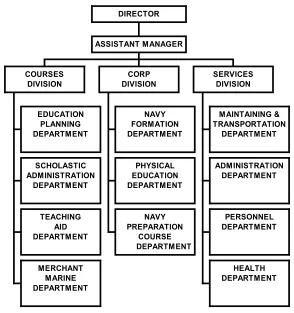
Figure 5.7 The current Naval Academy chart organisation 91 Figure 5.8 Merchant Marine organisation proposed in the Naval Academy 94 Figure B 1 Graphical comparison between learning areas in the
Naval Academy 109
Figure C 1 Clonia port view 110
Figure C 2 Nueva Palmira port view 110
Figure C 3 Fray Bentos port view 111
Figure C 4 Montevideo port view 111
Figure F 1 The education system in The Netherlands 116
Figure K 1 Uruguayan ports view 128
Figure L 1 Waterway Paraguay-Paraná 132
LIST OF ABBREVIATIONS
ABET Accreditation Board for Engineering and technology of Australia AFA Adequate, Feasible, Acceptable (analysis criteria for decision
making process)
AMC Australian Maritime College
AMSA Australian Maritime Safety Authority ANCAP National Administration
ANEP Public National Education Council ANP National Port Administration ARPA Automatic Radar Plotting Aids BP Basic Professional (academic area)
BS Basic Science (academic area)
CAL Computer Assisted Learning
CBT Computer Based Training
CBU Basic Unique Cycle
CLC/92 International Oil Pollution Compensation Fund 1992
DBU Diversity Bachelor
DIRME Merchant Marine Directorate of Uruguay
EAC Engineering Accreditation Commission of Australia
EEZ Economic Exclusive Zone
EU European Union
EU Countries BE (Belgium), DK (Denmark), FI (Finland), FR (France), DE (Germany), GR (Greece), IS (Iceland), IE (Ireland), IT (Italy), NL (The Netherlands), NO (Norway), PT (Portugal), SP (Spain), SE (Sweden), UK (United Kingdom)
GDP Gross Domestic Product
GH General Humanities (academic area)
GMDSS Global Maritime Distress and Safety System GOC General Operator Certificate (GMDSS certification)
HAVO High Technical School (The Netherlands education system) ICS International Classification Societies
IMO International Maritime Organisation
ISM IMO, International Safety Management Code ISO International Standards Organisation
MAROFF Maritime Officer (education system in The Netherlands) MERCOSUR Common Market of the South (Regional trade agreement
between Argentina, Brazil, Paraguay and Uruguay)
MSc Master of Science
MST Marittem Simulator Trainingscentrum (simulation center in Terschelling, The Netherlands)
MET Maritime Education and Training
NGO Non-Governmental Organisation
OOW Officer on Watch
PC Personal Computer
PhD Philosophy Doctorate
PS Professional Specific (academic area)
STCW Standards of Training Certification and Watchkeeping
STCW/78 International Convention on Standards of Training Certification and Watchkeeping for Seafarers, 1978
STCW/95 International Convention on Standards of Training Certification and Watchkeeping for Seafarers, 1978 as amended in 1995. STCW-F International Convention on Standards of Training Certification
and Watchkeeping for Seafarers of fishing vessels. TASA Trainmar Association to South America
UN United Nations
UNCLOS United Nations Convention on the Law of the Sea 1982. URUMEPA Uruguayan Marine Environmental Protection Association US and USA United States of North America
CHAPTER 1 INTRODUCTION
The Naval Academy in Uruguay is the unique national institute in charge of the education for both Merchant Marine and Navy cadets. Not only did economic aspects and government historical decisions make this possible, but also homogenous duties related to safety at sea and marine pollution prevention from ships. The art of navigation, ship stability, ship handling, propulsion and auxiliary engines and safety on board between others, are some of the teaching aims in common. However, advanced technology introduced on board merchant ships and the scope of application were separating both orientations more and more, from almost totally common courses into two separate faculties within the same institute.
The Uruguayan solution to satisfy both the needs of the country's maritime sovereignty and its maritime trade in a single institution is still good today and appropriate, in a situation where there is no private initiative to deal with these educational aspects. It is not only a matter of tradition or consequence of a parliamentary act, but also that was a provoked by the relatively deficient outcome in maritime education. This was so in 1916, it is so nowadays, and it is not foreseen that there will be any change in the immediate future.
1.1 Objectives of the research
Besides, effective and realistic implementation of a new draft project was always kept in mind subject to the feasibility of economic, institutional and political factors.
1.2 Research Methodology
The author has based the investigation methodology on four steps. Firstly, to establish the current situation, secondly to determine the direction to proceed (the objectives), thirdly the different ways to achieve the objectives (the alternatives) and finally, producing a concrete solution for the problem (the assessment and the proposal). In other words:
First an analysis was made of the current state of maritime education with the purpose to discovery its strengths and weaknesses (presented in Chapter 2). It provides a description of the Naval Academy study plan and a view of the National Education System, with the purpose of identifying the starting point and establishing further raw aims.
Second, to connect possible solutions with real requirements, a series of interviews with the relevant players' on the whole maritime sphere was conducted and commented upon in Chapter 3. All principals responsible for activities in shipping, port operations, and government administrations were consulted in order to determine the needs of maritime training for their people. Conclusions about course demands and training improvements (refreshing and update) were determined in this way.
Fourth, in Chapter 5 the author makes proposals regarding the future of maritime education in the Naval Academy. The strategic vision is expounded, the mission and objectives derived, and the core curriculum and organisational modifications to satisfy the findings detected is indicated.
CHAPTER 2
THE CURRENT SITUATION OF MARITIME EDUCATION IN URUGUAY.
2.1 The National Education System in Uruguay.
2.1.1 Introduction
Maritime education in Uruguay could be divided into levels and activities for analysis purposes. With regards to the levels it is possible to identify three planes, the lower one after primary school for ratings, the medium level after basic secondary cycle for crew of fishing vessels and the upper level after completion of all secondary education for merchant officers. With relation to the activities, the education is separated into ocean going, coastal, fishing, rivers and recreational sport.
The qualification for each level and activity is carried out by different institutes with separate control and dependence. There are two formal official organisations that give maritime education, the Naval Academy; which depends on the Navy (Defence Ministry) and the Superior Maritime School, which depends on the National Administration of Public Education (Education and Culture Ministry). Both institutes prepare people for different levels.
There are no private maritime education centres, apart from short courses, which are issued through yacht clubs or associations of seaman centres. These courses are not officially recognised or have any endorsement from the maritime authority. These centres are encouraged to develop courses for recreation sport or land activities in ports.
"According to the United Nations (UN) the human development index of
Uruguay is in the vanguard of Latin America in terms of literacy, life
expectancy and schooling. At the dawn of a century of intensive knowledge,
as no doubt the coming one will be, the main capital of Uruguay must above
all things lie in the education of its inhabitants. In this regard, the democratic
values and social achievements that the country enjoys have to be updated
and broadened in order to intensify even further. Thus, we will also endow
future generations with indispensable instruments that will enable them to
find their place in the new era of technological revolution. These objectives
are the target of recent educational reforms currently under way in Uruguay."
Maritime education is no exception to the above. The Naval Academy in Uruguay has a long tradition educating Merchant Marine officers since 1916. These teaching-learning activities, together with the Naval officers in the General and Electric-Engine corps, were appropriate in the beginning and during the following seven decades. However, both fields, naval and merchant marine, since the early 80's have been separate and even more specialised.
The introduction of new technology on board, the IMO STCW 78 Convention and its amendment of 1995, as well as the globalisation phenomenon affecting world trade, economies and the process in general, including education and standards of quality, have created an even more competitive maritime environment.
2.1.2 The general structure of the education in Uruguay.
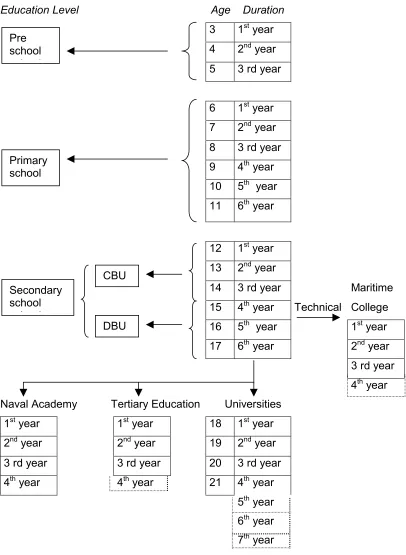
The official formal education system is organised in the following levels:
• Pre-school or initial education. For children between three and five years old. The recent educational reform states that the mandatory education starts from four years old.
• Middle education. Also named secondary has two cycles. The first one is called Basic Unique Cycle (CBU) and is of three years duration. With this cycle is completed the eleven years of mandatory education. The CBU is given by high schools and technical schools, the former depending on the Secondary Education Council, and the latter on the Technical-Professional Education Council. The second cycle in the middle education, named Diversity Bachelor (DBU), has three years too, and is divided into three basic orientations: biology, humanities and science. Each orientation has two options that must be chosen in the last year according to the future university career requirement (i.e. engineer faculty, economic sciences faculty, medicine faculty, etc.).
The students, who select after the CBU to attend the technical school, have different options of graduating as superior technicians, middle technicians or qualified workers. The courses have a duration of between one and seven years depending on the profile and level chosen. This Technical-Professional Education prepares people (technical) for industry, agriculture, craftsmanship, art and services (i.e. mechanics, electricians, skipper for fishing vessels, etc.).
• Superior education. It is made up of tertiary education and university education. Tertiary education provides courses between three or four years and they are characterised by integration of fundamental curricular aspects, theory and practical skill. University education is the responsibility of the Republic University, and there are different study centres such as Faculties, Institutes and Schools to offer the courses at that level.
Education Level Age Duration
3 1st year
4 2nd year
5 3 rd year
6 1st year
7 2nd year
8 3 rd year 9 4th year
10 5th year
11 6th year
12 1st year
13 2nd year
14 3 rd year Maritime
15 4th year Technical College
16 5th year 1st year
17 6th year 2nd year
3 rd year 4th year
Naval Academy Tertiary Education Universities
1st year 1st year 18 1st year
2nd year 2nd year 19 2nd year
3 rd year 3 rd year 20 3 rd year
4th year 4th year 21 4th year
5th year
6th year
7th year
Figure 2.1 Uruguayan Education System Pre
school h l
Primary school
CBU
DBU Secondary
2.2 The development process of maritime education and its situation.
As it was said, the existing maritime institutes in Uruguay are:
Within the public education system, the Naval Academy, the Specialisation School and the Superior Maritime School. The two first depend on the Navy and the last one from the Official Technical-Professional Education.
In the private ambit are the Navigation Center, the San Fernando of Maldonado School and some small organisations in sailing sports clubs, but they do not have the recognition of the government system in order to obtain professional certification.
2.2.1 Official Institutes
The Naval Academy educates and trains Navy officers and Merchant Marine officers. It also offers training and competency courses in a modular way as IMO Model courses do. For the management level within the merchant marine scope, the academy provides examinations for candidates to Master and Chief Engineer Certificates. By national law this institute has the unique national recognition and responsibility to issue Certificates for Merchant Marine officers.
Some close requirements between the courses of the General Corp in the Navy and deck officers in the merchant marine have made possible the deliver of common courses for both orientations. The same thing occurs between the careers of Engineer and Electricity Corp of the Navy with the engineer department in the merchant marine. In this way the institute saves money and also takes advantage of maintaining in both fields a group of people with the best knowledge in maritime affairs, becoming an important assessor and reference place for maritime education.
interest for people to study for these careers. The annual enrolment in the Naval Academy dropped off from 20 students on average to one digit number, between four and eight students per year. Opposite was the fishing fleet which, grew and the owners of these vessels had at their availability a merchant marine officers' mass without employment. Also the salary level between the two fields was different in favour of fishing activity. Thus, owners of fishing vessels started to employ people graduated from the Naval Academy because of their high standards, mainly in leadership, management, safety and control of the vessel in an economic exploitation. Another important aspect is starting to wake up the interest of the seafarers, that is the domestic trade through the waterway Paraná-Paraguay. This river transportation in a short period will become an important source of employment for the countries involved (mainly Argentina, Paraguay, Brazil and Uruguay). Presently the knowledge and skills required for the certification to develop this activity is being discussed
The Superior Maritime Institute prepares seafarers for the fishing activity in both departments deck and engine. In these two departments the training is given at the support and operational levels. This means, on the deck department:
• After the 1st year, certification as an able seaman (AB).
• After the 2nd year, certification as a fishing skipper with limitation in vessel size
and a specific distance far from port to navigate.
• After the 3rd year, certification as a fishing skipper without limitations.
This also means that in the engine department:
• After the 1st year, certification as an engine greaser seaman.
• After the 2nd year, certification as an engine driver with limitation to the size of
the plant engine.
• After the 3rd year, certification as an engine driver without limitation.
Education for these seamen starts at the middle of secondary education (with the 4th
learning effectiveness is left up to the personal interest of the individual. According to the board of examination of the Maritime Authority this kind of seafarer has a limited knowledge at the time when he/she try to increase their certificate.
2.3 The Naval Academy System, its strength and weakness.
2.3.1 General
The naval academy is a tertiary level institute, by which it requires candidates to enter after the third year of the Diversity Bachelor, or in other words, the sixth year of Secondary Education. The recent change to the study plan, permits entry with any of the secondary orientations (science, humanities and biology). Before, only the scientific orientation was required. The requirements for entry also include limitations of age (less than 25 years old), single status, pass the examinations for physical and medical conditions and academic assesment of mathematics and history. The naval academy has the exclusive right by power of national law 14106, to issue the certificates for officers (nautical and engineers) of the merchant marine and also the certificates for master (merchant captain) and chief engineer.
2.3.2 Course structure
The merchant marine career is provided through four years in the two traditional departments, deck and engineer. The first year is a common year to both orientations and has the same introductory basic maritime objectives and also this year is used to harmonise the students' level in the basic sciences (mathematics, physics and chemistry). It is because the different options of the Secondary Education have treated these scientific tools at a different depth. The following three years are focused on academic and professional knowledge programs for both orientations (deck and engine) separately.
2.3.3 General learning objectives
- an officer in charge of the navigation watch on ships of 500 gross-tonnage or more (STCW/95 Regulation II/1)
- as a skipper on fishing vessel of 24m in length and over operating in unlimited waters (STCW-F 95 Chapter II Regulation 1).
The education is oriented to provide ability on command, leadership, organisation and administration of the crew members:
• To provide an early basic knowledge on the management aspects on board as a tool to the future requirements for chief mates (STCW/95 regulation II/2).
• To provide knowledge and training to comply with the requirements as Ensign of the Navy in the Navy Reserve (National Decree 631/969).
2.3.3.2 Engineer officer
• Same objectives for deck officers mentioned above regards its specialisation (STCW/95 Regulation III/1, STCW-F 95 Chapter II Regulation 5 and Decree 631/969).
2.3.4 Definition of training areas
In accordance with the general learning objectives stated above, there are two training areas established named Professional and Academic. Each one is also divided in other activities in relation with the objective pursued. To understand this inter-relationship the table 2.3 in this Chapter shows an overview of the syllabus courses in correlation with the training areas.
2.3.4.1 Professional Area
It is composed of:
• Physical Education
• Professional Training
• Command and Leadership
The professional training is given in order to complement the academic knowledge. These activities are addressed to achieve basic practical skill to complement the theoretical subjects. A list of them is included in the Appendix A.
Command and leadership is developed through humanistic subjects to endow cadets with the responsibility and character for the job on board developing their leadership capacity and command action over the people on board.
2.3.4.2 Academic Area
This is made up of the following aspects: - Basic science (BS)
- General humanities (GH) - Basic professional (BP) - Professional specific (PS)
The basic scientific matters are given to provide a common base for the students in the basic sciences to carry on with the technical and professional requirements of the future years in the academy.
General humanities topic comprises the comprehension of the current people's behaviour, on the basis of the study of history and the human relationship to understand the consequences of its acts and decisions within a social system.
The basic professional matters correspond to the common knowledge of life at sea as a Merchant Marine officer. This matter is independent of the student orientation (deck or engineer).
2.3.5 Schedule of the study plan
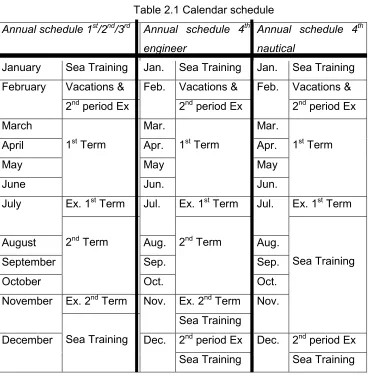
Table 2.1 Calendar schedule Annual schedule 1st/2nd/3rd Annual schedule 4th
engineer
Annual schedule 4th nautical
January Sea Training Jan. Sea Training Jan. Sea Training Vacations & Vacations & Vacations & February
2nd period Ex
Feb.
2nd period Ex
Feb.
2nd period Ex
March Mar. Mar.
April Apr. Apr.
May May May
June
1st Term
Jun.
1st Term
Jun.
1st Term
Ex. 1st Term Ex. 1st Term Ex. 1st Term
July Jul. Jul.
August Aug. Aug.
September Sep. Sep.
October
2nd Term
Oct.
2nd Term
Oct. Ex. 2nd Term Ex. 2nd Term
November Nov.
Sea Training
Nov.
Sea Training
2nd period Ex 2nd period Ex
December Sea Training Dec.
Sea Training
Dec.
Sea Training
Each year was programmed with 32 weeks of classroom teaching.
Table 2.2 Distribution of lecture hours per training area
NAUTICAL COURSE ENGINE COURSE
Academic Area Year Total Hrs. x Year Subjects x Area (Hrs.) % x area Total Hrs. X Year Subjects x Area (Hrs.) % x area
B.S. 1008 400 40 1008 400 40
G.H. 1072 160 15 1072 720 68
B.P. 1024 192 18 992 0 0
P.S.
1ST
528 * 0 0 1040 64 6
B.S. 1008 352 35 1008 352 35
G.H. 1072 128 12 1072 128 11
B.P. 1024 224 22 992 224 23
P.S.
2ND
528 * 224 42 1040 64 6
B.S. 1008 256 25 1008 256 25
G.H. 1072 288 27 1072 160 15
B.P. 1024 304 30 992 128 13
P.S.
3RD
528 * 0 0 1040 128 13
B.S. 1008 0 0 1008 0 0
G.H. 1072 496 46 1072 64 6
B.P. 1024 304 30 992 640 64
P.S.
4TH
528 * 304 58 1040 784 75
* This period does not include the 4 months sea training period. B.S. = Subjects in the Basis Sciences area.
G.H. = Subjects in the General Humanities area. B.P. = Subjects in the Basic Professional area. P.S. = Subjects in the Professional Specific area.
During the first three years, in the non-class period between November 15th and
January 31st, at least 30 days of training on board are co-ordinated, to comply with
(STCW/95) of the training on board. At the end of the fourth year, the naval academy issues the corresponding certificates for the students who successfully complete both requirements, academic examinations and practical skill on board. In the case of students who have not completed the time specified on the STCW/95 (one year for nautical cadets and six months for engineer cadets), the Maritime Administration through the Merchant Marine Direction does not give the endorsement of their certificates. In other words, the graduated students have a certificate but not the endorsement and the certification of the Maritime Administration also called "Patent" until the fulfilment of whole requirement.
The certification of the Naval Academy is also called "Title" and has the name of "Officer in charge of the navigation watch" (nautical students) or "Officer in charge of engine room watch" (engineer students). The Patents as "Third Officer" (for nautical) or "Third Engineer" (for engineers) are issued by the Maritime Administration. Complementary, the Naval Academy issues for cadets the certificate as Ensign of the Navy Reserve.
Table 2.3 Schedule of the Professional and Academic areas with its learning activities SPECIFIC PROFFESIONAL BASIC SCIENTIFIC GENERAL HUMANISTIC BASIC
PROFFESIONAL NAUTICALS ENGEENERS Mathematics Physics Chemistry Computer Sy. Laws History Leadership English Seamanship Communications Naval weapons Rules & Regulat. Stability Maritime Law Maritime Operat. Navigation Cargo Hand. Interm. Trans. Fishing Electronic Naval Engines Aut. Controls Management
2.3.6 Conclusions about strengths and weakness of the naval academy
2.3.6.1 Strengths
• After the recent last change of the study plan, access and entrance to the naval academy is free for all students who have finalised their secondary
education, in whatever orientation. Before, the specific requirement for
entrance at the academy was only the science orientation. Statistics indicate that only 10 % of the whole mass of students select this orientation, in most cases because they do not like the scientific subjects associated with this orientation such as, mathematics, physics and chemistry.
In the opinion of the author, this change was positive in both senses, increasing the number of candidates entering the academy and contributing towards reaching learning objectives in the humanistic area. The future Merchant Marine officer needs this kind of background where support learning objectives relate to the administration, leadership and command of the human resources.
In other words, the officer must meet a balanced mixture of qualifications as a technician as well as a manager. To tech technical maritime subjects such as navigation, naval architecture, stability, cargo handling, thermodynamics etc., science tools are necessaries. Additionally, humanistic maritime components are developed in a better way with the basis of subjects such as history, philosophy, laws, administration and human relationships. In this field, the scientific students shall improve their minor background base.
• The character of tertiary level of the maritime education. Since 1991 it is
secondary education, may be considered as a national grade of the education like a bachelor degree. In this way the graduated officers could follow further post-grade courses in the University ambit. Secondly, there is a saving to the national education system because the Naval Academy (within the national public education) does not spend time (translated into money) giving basic knowledge that the national system, through the high schools, is providing.
Another aspect to highlight is the particular character of this activity. Uruguayan seafarers working on overseas flagships do not have mandatory social regulations about pay taxes (employee and owners), regarding health and unemployment insurance as well as a retirement pension. Thus, Uruguayan seafarers need to work on third flag vessels in order to save money for their future retirement. Also statistics covering people on board, indicate that officers sailing for relative few years on average generate an age gap of the people on board and of course fluctuation manpower demand. Many 30 years old seafarers in the operational level on board leave the activity after 10 years of working. Some of them are returning in their 50´s and the others are not coming back.
Coming back to the centre of this point, the re-cycling option of employees on land, in order to perform and achieve their integration into the land activity is very important
• The naval academy has processed changes in regards to the equity rights
and opportunity of employment for women. Following the national legislation
and international agreements adopted by the government, the Naval Academy offers application forms without sex limitations.
for woman just the men shall be to find work on the third flag vessels. Secondly, a natural resistance to change exists in an environment dominated since a long time ago by man, which makes it difficult to find shipowners that like to run the risks of new experiences. As well seafarers provided by Asian countries at a relatively cheaper cost, has left the region of South America in a bad way, and even worse for woman with little chance to enter the international maritime market place. Lastly it is also necessary to mention the cultural aspect that women pay in the different societies. Although there are not any limitations for women to develop this activity, inherent situations need to be taken into account particular for women such as the maternity condition and the international status and rights in these cases. This is also taken into account by owners at the moment of evaluating the costs of the crew.
Despite the difficulties mentioned above to integrate women into the maritime industry, it is a fact that there are not impediments to do it, which means a strong factor for the Naval Academy in order to expand the maritime knowledge and interest of the woman in the Uruguayan society.
• The early implementation of the 1995 amendments to STCW/78 was an
important action of the naval academy. The Navy top level commitment to
the effective measures applied by the people in the academy management gave the necessary direction and impulse to produce a good result. A consequence is that the IMO evaluation should lead to qualification on the "white list" of the institutions that give full accomplishment of the SCTW/78 Convention as amended.
• The Naval Academy has the whole support of the Navy. Infrastructure, logistic, financial and sponsorship for all needs are given by the Navy. The Navy within its own budget carried on with these activities because the need had to be filled by the unique organisation with the capacity to do it, and then as a tradition and responsibility in front of the society. There is no other institution in the country with the maritime know-how of the Navy, and also able to continue this task despite the losses or high cost that results from educating people for overseas jobs. This structure is followed in general by all countries in the region in order to maintain the government structure in the smallest size.
• The national law recognising the unique institute in the country authorised
to issue certificates in the merchant marine ambit is a strong position
within the national education system. This monopoly situation is given by the
power of facts rather than by law, because it is impossible for a private initiative to exist in an activity that does not give profit. Furthermore, it is a heavy responsibility and obligation in front of the society, that even if only one woman or man wants to undertake this career, the Naval Academy will maintain the courses open.
• An expanded vision of the merchant marine officer was included in the
study plan modified in 1997. The naval academy introduced the subjects of
the STCW-F in order to give for its graduates major possibilities of employment. The academy, besides issuing certificates as deck or engineer officer, gives also the certification as skipper of fishing vessels more than 24 m of length and without any limitations.
• A good balance in the distribution of time. In the opinion of the author, the
annual distribution during the first three years (52 weeks per year), with a period of 32 weeks of classroom, 10 weeks of examination and holiday, and a period of 10 weeks of sea training, maintains a good proportion between the theorical learning objectives, the practical skills and the times required by the students for their studies. In the 4th year this good balance is represented through a major
2.3.6.2 Weaknesses
• Although the naval academy is a tertiary level institute, it does not have the full
recognition of the University. At the moment a number of subjects or credits
hours ratified by the University authorities does not exist in order to permit further studies. The University requires its entry standards to be met at the beginning of the each career and also does not give the possibility to do post-graduate courses because it only admits post-graduated University people. Thus the Merchant Marine officer does not have the alternative to apply for any qualified job on land. Exception must be made for engineers because they have recognition as a very good employee with experience in engines as well as in the administration of human and material resources. This means they are well qualified for jobs in the land labour market.
• The actual competency given by the Naval Academy only permits the
option of employment on board. Although curriculum was expanded for the
certification as fishing officers, the students graduating do not have the options for land employment. There are maritime activities on land carried out in ports, by shipbrokers, shipping agencies and freight forwarders where the graduated students could be employees. Of course that shall be contemplated in the study curricula of the academy.
• The Naval Academy has not implemented a quality standard system
according with the regulation I/8 of STCW/95. The academy has a quality
system relating to Navy regulations and it means that the system has not all the elements required by the corresponding directions of the Section A-I/8 of the Code. The gap between the Naval system in place and the IMO Convention refers mainly to the independent evaluation or audit. It must be taken into account that there is not a national authority or organisation to do it.
• Even though STCW/95 was implemented, the author's opinion is that the skills
expressed in a personal interview with the principal of the Merchant Marine Captains and Officers Union. This union manages the employment of the Uruguayan seamen on board giving them the feedback and comments of the owners' administrations. The owners´ international opinion about Uruguayan officers is very good, but now one problem has appeared. It is the strong English requirement in an environment of international crew members. Taking this into account that no changes in the English language media and teaching process was made, this can be inferred.
• The Naval Academy has no post-graduate courses. In the opinion of the
author, there is a need to have these kinds of courses with two purposes. First, to assure the refreshing of knowledge and new abilities generated by the technology innovation on board. Second, because it is a necessary way to qualify people from the operational level to the management level.
• There does not exist a distance teaching system. The particular work
conditions of the Uruguayan officers on third flag ships, gives few possibilities to do courses inside the institutes. Many times the desire to improve or need to do a course generates the risk of losing his/her job, if it requires prolonged period on land. The maritime academy must not to be insensitive to this situation.
2.4 Establishment of a new strategic vision of maritime education in the Naval Academy.
The reasons to propose a new strategic vision of maritime education in the Naval Academy go in direction to solve the actual weaknesses mention above, and in regard to the present condition of the maritime activity guided mainly by:
2.4.1 In the International scope:
• The international globalisation of the economics and markets including the man power source.
In regard to this point it could be well worth mentioning some words by WMU Professor Mottram (1999), that the author of this paper agreed with, "we have entered the age of the contingence of temporary worker, of the consultant and subcontractor, of the just-in time-work force-fluid, flexible, disposable. This is the future".
2.4.2. In the National Ambit
• Less interest of the young people as well as the poor public perception of life at sea, (specially caused by the flag of convenience phenomenon and political changes after the end of the cold war, given the manpower market of Asian and Easter Europe an cheap labour.
• The character of the Uruguayan Maritime Education, which prepares people for overseas, jobs, because of the lack of a deep sea fleet.
• The recent modification of the port operation system from the public to private initiative is giving a boost to the demand for new job openings at both levels, junior management and support operation.
• The recent biggest maritime pollution accident involving the grounding of the San Jorge vessel, causing an oil spill, near a sensitive area, (The most important tourist place and the natural reserve of sea dogs of the country), generated a better conscious in the government as well as the NGO dealing with environmental aspects. In this matter about marine pollution, there is no official center of education.
Uruguay) is now more important because of the increase in trees sown and investment on the timber product market in the west region of the country.
• The sustained Ro-Ro passenger and fishing vessel activities have a high seasonally exploitation in the summer station, and this gives a fluctuating variation of jobs opportunities for unemployed people in the maritime field.
• A steady increment in recreation and sport activities in the sea generates a demand of courses. Some of these craft are involved in sport fishing or international pleasure sailing, requiring training in navigation, communication and safety at sea for the skippers.
In conclusion an education center such as a Naval Academy needs to provide a wider maritime education. First, because there are no other centres that can do it; second, because it is necessary for people that are involved in these tasks; third, because it gives the institute a strong position within the society and government administration; Fourth, the homogenous learning objectives to make it possible to do it with the same facilities, material and human resources.
CHAPTER 3
THE FUTURE VISION OF THE MARITIME INDUSTRY IN URUGUAY AND IN THE REGION
To foresee the requirements of the maritime industry it is necessary to know the current situation of different players in this field. For this reason the opinion of key people in charge of the main companies, ports, and other organisations in that matter is very useful. The following interviews were done by the author in order to try to define and state the problems about the quantity and qualification of the human resource that are involved in this activity.
3.1 Shipping companies
The shipping industry in Uruguay has been reduced in the last three decades to RO-RO passenger traffic on the River Rio de la Plata, the fishing industry in the EEZ shared with its neighbour (Argentina), and the domestic trade activity. The deep-sea companies almost disappeared as a result of the lack of competition.
3.1.1 RO-RO passenger activity
The company employs around 200 people with some fluctuations during the summer season because the activity is increased substantially by tourism, mainly from Argentina to Uruguay (for Montevideo and Punta del Este). Generally speaking there are no difficulties with the availability and reliability of the human resource required. Probably it is caused by the difficulty to find jobs in the deep-sea field for open sea seafarers, and the comparative advantage of the salaries actually paid by the company and the fact of working near their families.
In this way the selection of the personnel to the management and operational levels allows the employer a good range of choice of applicants. Those job places are covered by captains with ten years of experience on board and a very good competence registered in their seaman´s record book. All the officers come from recognised institutions such as the Nautical Academy Manuel Belgrano (in Buenos Aires) or the Naval Academy of Montevideo. Also the company has a good experience contracting ex-Navy officers of the Uruguayan Navy particulary handling the safety and management matters on board.
Additionally the company provides the appropriate familiarisation course through a certain amount of trips depending on the position that he or she will occupy on board. In relation to the qualification of the personnel on land, the interviewees said that they do not require maritime training. The functions on land are related with the public relations and the sales of tickets, which can be drawn upon from the common market place in a right way.
Finally, concerning the author's question whether or not the company requires some proof of the requirements laid down in Chapter V of the STCW-95, the response was that there are no other requirements asked by the Maritime Administration. It was noted regarding English language knowledge for handling non Spanish speaking passengers, this was not required.
3.1.2 Fishing activity
country (FRIPUR). For this reason the person who was in charge of the human resource during the last twelve years (1987-1999) in that company, the Accountant Enrique Mallada opinion is considered to be very valid in this field. About this matter Mallada provided the following information.
The problem was divided in two levels, first the skippers and second the crews, although for both there are enough people in possession of the mandatory certificates. The reason for distinguishing the two is the different level of responsibility, not only by the operation of the ship but also by the sensitive power of decisions and their impact on the company productivity in charge of the skippers.
In general the interviewee referred to the level of the skippers as a poorly prepared manager. Nowadays the skipper requires better knowledge and comprehension of the management aspects of a fishing vessel. The company depends in great measure on the skipper's skill and this implies not only knowing how to fill the vessel in the shorter period, but also knowing what fish type and size, how to preserve and store the fish, the costs involving in going to the spot place and the risks of losses when handling the nets and the associated equipment. Also good leadership in supervising the crew is a key point in the efficiency of the ship. Therefore, the skippers become part of the administration of the company, and they need to know the operational costs of their ships to obtain the best efficiency for the so-called production unit.
In fact it is possible to distinguish two areas of lack of knowledge in the majority of skippers today, the work with the new technology in the equipment on board and the aspects related with the stability of the ship during heavy sea or when the cargo is lifted. However, the safety aspects in relation with the prevention of fire and fire fighting on board, and the personnel survival techniques are skills well known. That is demonstrated through the statistical number of accidents where it can be verified that there are not many accidents registered. The rest of the crew members in general have good training for the job, when problems with the crew appear these are consequences of poor leadership of the skipper, and the problem for the company is not ten crew members for instance, but it is only one man, the skipper again.
Another important aspect mentioned by the interviewed was the high level of politics involved in handling people in the whole sector. During the 1990's many times the company suffered fishing manpower strikes in sensitive periods such as the high catch seasons (spring and summer) or when a big contract needed to be completed. Today the level of conflict is lower than before, but regulations were not changed, therefore the situation continues in a latent form. The unions reject any change regarding the increase in requirements for the skipper certification, so it is difficult to talk about improving the competence in the subjects mentioned. The policy applied by the company to solve this problem was to contract seafarers in the open sea activity and train for the fishing operations, but again regulations and unions were barriers to implement any changes.
3.1.3 Deep sea and domestic trade activities.
Regarding this aspect the author interviewed a retired Navy Captain Ricardo Custodio who is actually the General Manager of TRAMACO Company and who also has important experience as a surveyor of the Maritime Administration and possesses the Master degree of Science degree in Maritime Safety Administration subject (1984) from the WMU.
About the quantity and quality of the human resource available in the country for this activity, Custodio stated at the beginning that, "the main problem is the lack of a National Maritime Education Policy". The original and current regulations that deal with the competence and certificates of the seafarers have suffered many individual changes to solve circumstantial problems, therefore the rules and regulations as a whole are not harmonised. In fact there are different requirements for different certificates, but they allow getting the same certification with a different mechanism that does not have the same examination process. Then, there are merchant officers with the same certification, but very different levels of competence. This especially occurs with engineering officers.
The situation is unfair for both the officers' graduates from the Naval Academy with tertiary level of education and the officers of the Maritime Superior School with a secondary level education. On the one hand Naval graduates feel that the employer does not recognise the difference between these two certificates and that this is transferred into a depreciation of the salaries offered. On the other hand, Maritime School graduates criticised any discrimination regarding their certification and they would like to compete for the same jobs with the Naval graduates, supported by the current regulations.
Custodio also mentioned the importance to have people prepared for handling emergency situations in relation with pollution of the sea. Although, the recently Uruguayan experience in dealing with the San Jorge Tanker spillage was well handled, it is necessary to maintain the team of professionals and organisations to a well trained level. As a logical reaction to the spillage mentioned near Punta del Este (bathing resort), and Lobos island (ecological reserve of sea dog), the sensitive area and the public impact gave the opportunity to improve the means and establish the basis of a national organisation to deal with these matters. Now the effort is to prepare more people and to train together with all relevant forces and resources available in the country, on the emergency procedures within contingency plans.
The interviewee also commented on the future use of the Paraná-Paraguay waterway. This waterway, in which Uruguay also participates through its Nueva Palmira port, was historically sailed mainly by Argentine and Paraguayan skippers, but today the country has an other role and it requires the active participation of the country at the negotiation table. The Uruguayan certifications to sail these waters need to be defended in the same conditions and rights of the other countries that are also involved.
3.2 Ports development
The administration and operation of the ports in Uruguay changed since the ratification of the named Law of Ports number 16343 on May 4, 1992. Before, this all-port activities were carried out through the National Port Administration (ANP) below the scope of the state power as a "service port". After that, the ports become as tool ports (a variant of landlord ports).
easter ports on the Atlantic Coast (Ocean ports). A view of the main ports is showed in Figure K 1 of the Appendix K and in the Appendix C.
3.2.1 River Ports
On the west and southwest part of the country are situated the ports of Colonia, Nueva Palmira, Fray Bentos and Sauce.
The Colonia port in the city of the same name is involved mainly in the passenger traffic between this Uruguayan city and the capital city of Argentina (Buenos Aires). According to the statistics of the last year of the port operations (Table K.1 in the Appendix K), and the infrastructure plans of development, this port is becoming a passenger port (which may be noted in bold on the mentioned table). An important project of development is the building of the Colonia-Buenos Aires Bridge, which will have a strong impact on these port activities. Therefore, the future of this port will depend on the efficiency and the competition capability of it against the bridge.
Nueva Palmira port, has a different situation because it is dedicated to general cargo activity. The main production of the west and southwest part of the country has its exit from this port; wheat, corn, sunflower, citrus, and other grains are the general commodities handled. In table K.2 of the Appendix K it is possible to see the cargo movement of the last year and the importance of this port because its strategic position to deliver goods from the innerland of the continent. This port also has the advantage of a duty-free zone, which provides excellent conditions for its expansion.
port will become a timber terminal displacing the other products delivered to the Nueva Palmira port.
Sauce Port, the smallest in size and level of operations of all the commercial ports in the country, has now found a spot market delivering refining combustibles to the west and central part of the country. The port improvements allowed this activity in competition with the truck transportation.
3.2.2 Montevideo Port
It is the principal port terminal for the entry and departure commodities for the whole country. It is a natural river (on the Rio de la Plata), and non-tidal port. Although it is a river port, also it is considered as a sea port because it has direct access to open sea (Atlantic Ocean) and its depth allows the operation of the main feeders in the region (Panamax) directly on its piers.
All kind of activities relating to the bigger scale of production in the country are handled; general cargo, containers, passage liners, grain, reefers, RO-RO passenger, war and fishing vessels are performed using different docks. Concerning the future of the port, there is a tendency to transform the port of Montevideo to conatainer terminals. The logistics operators showed that the transit of each container leaving the country cost around U$S 1400 because of handling and services for goods (package division, distribution, etc.). The expansion of the port depends on its efficiency in competition against the other ports in the MERCOSUR region (Buenos Aires and Rio Grande); therefore the advantages offered by the conditions of duty-free zone port in Montevideo may make it possible. The highlighted figures in tables K.4 and K.5 (Appendix K) shows the evident increase of the number of containers handled in the Montevideo port.
3.2.3 Eastern ports
The last one is nowadays dedicated to the fishing industry (having vessels and processing factories), but a national project under study proposes that this port becomes deep water port. The natural conditions of the place, with depths of 45 feet very close to the land make possible the expansion. In two stages, first to 54 feet and then to 66 feet in depth. The works is justified due to its strategic geographical position in the MERCOSUR region, and the intention is to provide the entry and exit of goods to the biggest centres of consumption (Buenos Aires and Sao Paulo) as well as production (the wet Pampa and the Pantanal), in Argentina and Brazil respectively.
The development plan for La Paloma port also is based on the multimodal basis of the trade. The very good roadway system of Uruguay with Brazil (near La Paloma) and with Argentina through the Colonia Buenos-Aires bridge give an efficient connection for the La Paloma port with these powerful centres. The development plan has as a main goal that La Paloma port becomes a modern terminal of containers.
Finally, Verri commented on the qualifications of human resource to face the challenge of the ports operations as follows. The human element involved with port operations is under of private operators. These service providers are operating with more efficiency because of the toush competition between them, but there are some areas that still need to improve. Also the government sector dealing with the judicial framework and the controls of these activities requires better knowledge, particularly at Management and Operative levels.
At the management level it is required that people know more about: • Strategic port management
• Port administration • Maritime law
• Casualty investigations, claims, arbitration, conciliation, demands, etc.
• Dangerous goods • Containers
• Multimodal operations • Pollution control operations
3.3 National Administrations
The Maritime Administration, the National Port Administration (ANP), and the National Administration of Combustibles, Alcohol and Cement (ANCAP) are the three main government organisations that deal with the prevention of marine pollution from ships. The first one provides the regulatory and technical support, the second mentioned attends this matter in the scope of the ports operations (discussed above in 3.2), whereas the last one provides facilities to combat spillages. The action is co-ordinated for all organisations through the National Committee of Contingencies (created by national law 16688).
3.3.1 The National Administration of Combustibles, Alcohol and Cement (ANCAP).
This National Administration is in charge of the distribution for all kind of combustibles. The industry of the country is highly dependent on the crude oil derivatives provided for the ANCAP refinery plant. Private companies distribute the products to the final consumers. The Administration's policy on the safety and prevention of pollution at sea was sought by the author from the Industry Environmental Manager, Engineer Miguel Nodar and the Chief of the Maritime Department, Captain Pedro Regis.
They gave the follows comments:
The first one includes mainly the corporate arrangements for the conservation and preservation of the environment as a high priority objective, including the aims, objectives, scope, legislation framework, organisation and responsibilities. The second publication make reference to the equipment and material available, preventive and immediate response actions, risk definitions, determination and evaluation, procedures to be followed in each case.
Concerning the training of the people involved, the engineer interviewed said that there are no formal capacitating courses in the country for covering such aspects, however the situation was solved through seminars and conferences given by technicians in the region as well as specializated officers of the Maritime Administration. Most important is to maintain the periodical practical training of the people involved. The exercises with the other organisation components provide an excellent means to improve knowledge, the co-ordination and use efficiently of the resources available. Today a planned schedule is made once per year to assure the participation of all relevant personnel.
The success of the training exercises has been possible thanks to the important know-how of the experienced people in each participating organisation. This advantage is gained by joining different skills such as biologics, chemical engineers, experienced seafarers in tankers ships, divers and other technicians sharing the knowledge and learning altogether. But there is a conscious need to improve even more through the acquisition of better equipment, the introduction of new means for such purposes, the regional co-operation in human and material resources, and the course implementation to expand the ability of the whole multidisciplinary organisation.
3.3.2 Maritime Administration
The Navy, through the Merchant Marine Directorate (DIRME) which carries out the functions of the Flag State and Port State Control, is the Maritime Authority.
topics, the competence of the people in the different scenarios and the quality education of the maritime institutes in the country.
Speaking generally, the Captain referred to the competence of people as good. Starting with the fishing ambit that settlement is verified by the very low average of accidents.
In the RO-RO passenger activity the situation is still better, but also the damage is bigger in case of an accident happening. The transport of people is a very sensitive matter that cannot afford the luxury to make a safety error, which could have avoided. Therefore, the ship conditions and the training of the crew have a priority consideration. Although this activity is carried out in the territorial waters of Argentina and Uruguay (River Rio de la Plata), the Administration has required the implementation of the ISM Code by the companies involved. Experienced officers with certification as captain are working on the route Buenos Aires - Montevideo.
On the deep sea and domestic trade segment the discussion was centred in the national activity, because there are no Uruguayan shipowners dedicated exclusively to the International shipping. The maritime national trade is mostly composed of the services provided for ships that arrive to Montevideo port. Towing, refuelling, fresh water provision and residue discharges are some of the services given. Different kinds of ships, adequate for the tasks, are handled by a mixture of seafarers who come from the open sea profession or who have have gained the profession through the years of service on board (from able seamen to skippers).
About the relationship with the Maritime Education Centres, the Director said that the Maritime Administration in general has no problems with the endorsement of certificates issued by the Colleges. The implementation of the STCW-95 in the maritime education system (Naval Academy) was started early in 1996, and now the whole system (Administration and Education) works closely together.
The problem appears to be with the engineers because the old system still continues to accept competence through the time required in the job on board plus examination conducted by the Administration. Therefore, in this department there are three ways to achieve the certification and they need to be standardised. One is the mentioned old system to up-grade the position from able seaman (support level) to chief engineer (management level). A second way is by graduating from the Superior Maritime School (most of them to the fishing sector), and the third system is by graduating from the Naval Academy.
The two maritime institutes have different study plans for the engineering career, but the graduated officers may achieve the same certification. Therefore, it is necessary to harmonise the study plan or establish separate certification according to the plan. In any case modification of the current legislation is required.
Ressia was of the view that it was not necessary to carry out audits by the Administration to the maritime institutes in order to verify the graduates' competence. The Maritime Administration does not carry out auditors, because the education system has its own organisation to do that. The Administration verifies that the curriculum course plan complies with the STCW-95 requirements for the certificate proposed.