An Efficient Addiction Avoiding Technique Using NI LabVIEW
Mr.V.Parthipan1, Ms.K.Sridevi2, G.Logeshwaran3, S.Karuppusamy4 and M.Ramesh5
1,2Assistant Professor, Department of Electronics and Communication Engineering, Sri Eshwar College of Engineering, Coimbatore, Tamilnadu, India. 3,4,5UG Scholar, Department of Electronics and Communication Engineering, Sri Eshwar College of Engineering, Coimbatore, Tamilnadu, India.
Article Received: 27 January 2018 Article Accepted: 23 February 2018 Article Published: 10 April 2018
1. INTRODUCTION
It is well known that brain is an ele1ctrochemical organ. The Brain waves are produced by the temporal lobe of the
brain. The Electrical activity emanating from the brain is displayed in the form of brainwaves. There are four
categories of these brainwaves ranging from most activity to least activity. These are delta waves, theta waves,
alpha waves and beta waves. Delta waves are waves with high amplitude. It has a frequency of 0.5 - 4 Hertz. They
never go down to zero because that would mean that you were brain dead. But, deep dreamless sleep would take
you down to the lowest frequency typically from 2 to 3 Hertz. Theta waves are waves with amplitude lesser than
that of delta waves and have a greater frequency of 5 – 8 Hertz.
2.DIFFERENT BRAINWAVES AND ITS FREQUENCIES
DELTA WAVES (.5 TO 3 Hz)
Fig 2.1: DELTA WAVE
Delta brainwaves are slow, loud brainwaves (low frequency and deeply penetrating, like a drum beat). They are
generated in deepest meditation and dreamless sleep. Delta waves suspend external awareness and are the source of
empathy. Healing and regeneration are stimulated in this state, and that is why deep restorative sleep is so essential
to the healing process.
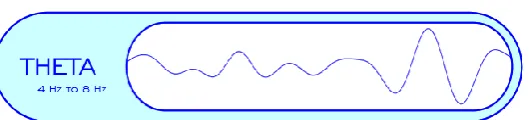
THETA WAVES (4 TO 8 Hz)
Fig 2.2: THETA WAVE A B S T R A C T
Theta brainwaves occur most often in sleep but are also dominant in deep meditation. Theta is our gateway to
learning, memory, and intuition. In theta, our senses are withdrawn from the external world and focused on signals
originating from within. It is that twilight state which we normally only experience fleetingly as wake or drift off to
sleep. In theta we are in a dream; vivid imagery, intuition and information beyond our normal conscious awareness.
It’s where we hold our ‘stuff’, our fears, troubled history, and nightmares.
ALPHA WAVES (8 TO 12 Hz)
Fig 2.3: ALPHA WAVE
Alpha brainwaves are dominant during quietly flowing thoughts, and in some meditative states. Alpha is ‘the power of now’, being here, in the present. Alpha is the resting state for the brain. Alpha waves aid overall mental
coordination, calmness, alertness, mind/body integration and learning.
BETA WAVES (14 TO 38 Hz)
Fig 2.4: BETA WAVE
Beta brainwaves dominate our normal waking state of consciousness, when attention is directed towards cognitive
tasks and the outside world. Beta is a ‘fast’ activity, present when we are alert, attentive, engaged in problem
solving, judgment, decision making, or focused mental activity. Beta brainwaves are further divided into three
bands; Low-Beta (Beta1, 12-15Hz) can be thought of as a 'fast idle', or musing. Beta (Beta2, 15-22Hz) is high
engagement or actively figuring something out. Hi-Beta (Beta3, 22-38Hz) is highly complex thought, integrating
new experiences, high anxiety, or excitement. Continual high frequency processing is not a very efficient way to
run the brain, as it takes a tremendous amount of energy.
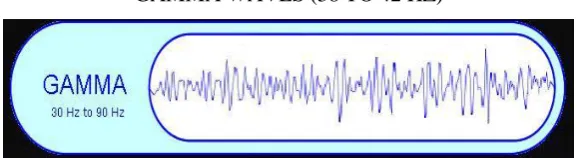
GAMMA WAVES (38 TO 42 HZ)
Gamma brainwaves are the fastest of brain waves (high frequency, like a flute), and relate to simultaneous
processing of information from different brain areas. Gamma brainwaves pass information rapidly and quietly. The
most subtle of the brainwave frequencies, the mind has to be quiet to access gamma. Gamma was dismissed as
'spare brain noise' until researchers discovered it was highly active when in states of universal love, altruism, and
the ‘higher virtues’. Gamma is also above the frequency of neuronal firing, so how it is generated remains a
mystery. It is speculated that gamma rhythms modulate perception and consciousness, and that a greater presence
of gamma relates to expanded consciousness and spiritual emergence.
3. LABVIEW
Laboratory Virtual Instrument Engineering Workbench (LabVIEW) is a system-design platform and development
environment for a visual programming language from National Instruments. The graphical language is named "G";
not to be confused with G-code.
1) Dataflow programming
The programming paradigm used in LabVIEW, sometimes called G, is based on data availability. If there is enough
data available to a subVI or function that subVI or function will execute. Execution flow is determined by the
structure of a graphical block diagram (the LabVIEW-source code) on which the programmer connects different
function-nodes by drawing wires. These wires propagate variables and any node can execute as soon as all its input
data become available. Since this might be the case for multiple nodes simultaneously, LabVIEW can execute
inherently in parallel. 1–2 Multi-processing and multi-threading hardware is exploited automatically by the built-in
scheduler, which multiplexes multiple OS threads over the nodes ready for execution.
2) Graphical programming
The graphical approach also allows nonprogrammers to build programs by dragging and dropping virtual
representations of lab equipment with which they are already familiar. The LabVIEW programming environment,
with the included examples and documentation, makes it simple to create small applications. This is a benefit on
one side, but there is also a certain danger of underestimating the expertise needed for high-quality G programming.
For complex algorithms or large-scale code, it is important that a programmer possess an extensive knowledge of
the special LabVIEW syntax and the topology of its memory management. The most advanced LabVIEW
development systems offer the ability to build stand-alone applications. Furthermore, it is possible to create
distributed applications, which communicate by a client–server model, and are thus easier to implement due to the
inherently parallel nature of G.
4. NI myDAQ
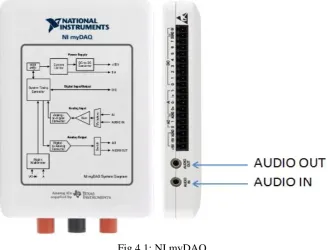
NI (National Instruments) myDAQ is a low-cost data acquisition (DAQ) device that gives students the ability to
measure and analyze live signals anywhere, anytime. NI myDAQ is compact and portable so students can extend
Fig 4.1: NI myDAQ
The myDAQ provides analog input (AI), analog output (AO), digital input and output (DIO), audio input and
output, DC power supplies, and digital multimeter (DMM) functions in a compact USB device. Integrated circuits
supplied by Texas Instruments form the power and analog I/O subsystems of a myDAQ. Figure 2 depicts the
arrangement and function of the NI myDAQ subsystems. Details of the hardware configuration could be found in
myDAQ User Guide and Specifications.
The myDAQ provides a soft front panel (from LabVIEW) to control the functionality of the device, which can
launch several instruments including a digital multi-meter (DMM), Oscilloscope, function generator, Bode
analyzer, Dynamic Signal Analyzer (DSA), Arbitrary Waveform Generater (ARB) and Digital Reader/Writer. The
myDAQ also provides the express VI of such instruments which can be included in the user written LabVIEW
program to perform the supposed functionality.
5. IOT
The Internet of Things may be a hot topic in the industry but it’s not a new concept. In the early 2000’s, Kevin
Ashton was laying the groundwork for what would become the Internet of Things (IoT) at MIT’s AutoID lab.
Ashton was one of the pioneers who conceived this notion as he searched for ways that Proctor & Gamble could
improve its business by linking RFID information to the Internet. The concept was simple but powerful. If all
objects in daily life were equipped with identifiers and wireless connectivity, these objects could be communicate
with each other and be managed by computers.
IoT describes a system where items in the physical world, and sensors within or attached to these items, are
area connections such as RFID, NFC, Wi-Fi, Bluetooth, and Zigbee. Sensors can also have wide area connectivity
such as GSM, GPRS, 3G, and LTE. The Internet of Things will:
• Connect both inanimate and living things • Use sensors for data collection
• Change what types of item communicate over an IP Network
6. THINKSPEAK
Thing Speak is an IoT analytics platform service that lets you collect and store sensor data in the cloud and develop
Internet of Things applications. The Thing Speak service also lets you perform online analysis and act on your data.
Sensor data can be sent to Thing Speak from any hardware that can communicate using a REST API Thing Speak
is a Web Service (REST API) that lets collect and store sensor data in the cloud and develop Internet of Things
application. At the heart of Thing Speak is a Thing Speak Channel. A channel is where you send your data to be
stored. Each channel includes 8 fields for any type of data, 3 location fields, and 1 status field. Once you have a
Thing Speak Channel you can publish data to the channel, have Thing Speak process the data, and then have your
application retrieve the data.
7. PROPOSED BLOCK DIAGRAM
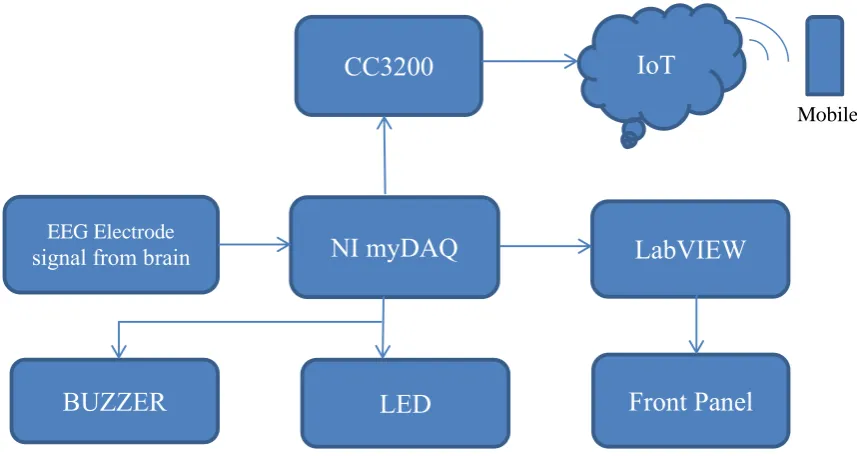
Fig 7.1: Block Diagram of Addiction Avoider using NI MyDAQ
PROPOSED ADDICTION AVOIDER WORKING
The EEG electrode is used to get the brainwaves of the human and it is send to myDAQ which check for the
betawave. If betawave is deducted, the frequency of beta is reduced to alpha and so the person can come to normal
Mobile
EEG Electrode
signal from brain
NI myDAQ
abVIEW
Front Panel
BU ER
ED
stage and also myDAQ is connected to IoT to send the message to parents if their children go to addiction stage so
parents can take care their children
8. RESULTS & DISCUSSIONS
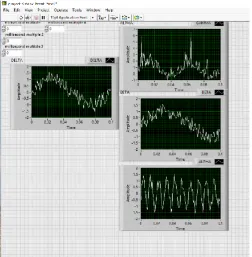
Fig 8.1: Brain Waves acquired displayed in Front Panel Fig 8.2: Message output from IoT
9. CONCLUSION
Addiction avoider can be used to cure stress or tension on any individual. The concept of binaural waves can be
further researched and used to find a device for communication with deaf and dumb individuals. It can be further
used to study the resonance of brain during brain diseases.Addiction Avoider is the safest and simplest device to
use in prevention of Addiction. It is used for any type of addiction like addiction caused by taking narcotic drugs or
alcohol and simple addictions like overeating, sexual intercourse and mannerisms.
10. FUTURE WORK
The device can be designed as a compact, portable and wearable product with an ultralow power consumption
using CMOS Architecture.
REFERENCES
[1] iviu Toma, Sisteme de achiziţie de date, Editura de Vest Timişoara, 1998.
[2] Francis Cottet, Octavian Ciobanu, Bazele programării în abVIEW, Editura Matrix ROM Bucureşti, 1998.
[3] http://www.ctanm.pub.ro/academic/labview/Tutorial.htm .
[4] Detection of seizures in epileptic and non-epileptic patients using GPS and Embedded Systems’ by Abhiram
[5] http://www.bio-medical.com
[6] www.ercim.org/publication/ Ercim_News/enw51/bielikova.html
[7] en.wikipedia.org/wiki/ Binaural beats