© 2015 IJSRST | Volume 1 | Issue 3 | Print ISSN: 2395-6011 | Online ISSN: 2395-602X Themed Section: Science
Case Study on Project Performance of Cast in-Situ Bridge
Chin-Chiuan Lin
*1, Chang-Jiang Lee
2, Chun-Yen Tseng
3*1
Department of Business Administration, Kun Shan University, Tainan, Taiwan, R.O.C 2
Capital Machinery Limited Co., Tainan City, Taiwan, R.O.C 3
Jiang Fong Construction Limited Co., Taichung City, Taiwan, R.O.C
ABSTRACT
The present study proposed an improving procedure of the bridge’s upper structure, which focuses on the feature of cast in-situ bridge construction management. After applied the improving procedure, the progress days reached in advance was about 23.8%. The costs of redesign construction procedure was only about half of the original design. There is no serious occupational injuries occur during the project period. The quality and customer’s satisfaction were all reached relatively high levels. These results showed that the improving procedure which proposed by present study is validity.
Keywords: Construction Management, Project Performance, Cast in-situ Bridge.
I. INTRODUCTION
Bridge is one of the most important elements of transportation system. The selection of bridge construction methods need to consider many criteria simultaneously, such as construction time (schedule), cost, safety, quality, in-situ conditions, structure of bridge, and legal regulations. Determining an appropriate alternative encompasses is a complex trade-off process which requires all the decision criteria to be considered. Today, there are many bridge construction methods have been developed by engineers (Trayner, 2007). Furthermore, the engineers still effort to develop new bridge construction methods for specific field conditions.
Generally, there are two main kinds of bridge construction methods in Taiwan: cast in-situ and pre-cast. Further, there are five cast in-situ construction methods were wildly used in Taiwan: full-span launching (FSL), advancing shoring bridge construction (ASBC), balanced field cast cantilevered (BFCC), incremental launching method (IL), and field cast cantilever construction (FCCC).
FSL used heavy-duty carrier and launching equipment to launch the pre-cast box-girder onto the piers (Fig.1). The
girders with different length are allocated carefully to avoid the conflicts of the pier locations against existing roads and immovable obstacles. Also, the settlement of reinforcement cage prefabrication yards and pre-cast production plants can facilitate better control of quality and schedule easily.
Figure 1: The illustration of FSL
necessary strength to finish the construction of one span. Then the propelling device on the supporting rack will be applied to push the main supporting steel girder and advance the moldboard to the next span.
Figure 2: The illustration of ASBC
BFCC is chosen where a bridge has few spans which range from 50 to 250m (Fig.3). Construction begins at each bridge pier. Special formwork is positioned and cast-in-situ pier segment is begun. The complete pier segment is then used as an erection platform and launching base for all subsequent travelling formwork and concrete segment construction. Segment construction is continued until a joining midpoint is reached where a balanced pair is closed. Stability of the end cantilever is maintained by using temporary pier supports as the end span is begun.
Figure 3: The illustration of BFCC
By using IL, the bridge superstructure is assembled on one side of the obstacle to be crossed and then pushed longitudinally (launched) into its final position (Fig.4). The launching is typically performed in a series of
increments so that additional sections can be added to the rear of the superstructure unit prior to subsequent launches. The launching method has also been applied to tied-arch or truss spans, although these are fully assembled prior to launching.
Figure 4: The illustration of IL
FCCC used cantilever work car to coordinate the suspension template and anchorage system in high-tensile steel bars to fix the pre-cast concrete block section. Employed elevate and floating way to advance the pre-cast upper structure section by section. Therefore, it must first set up the stigma facilities for the base of the cantilever work car.
Figure 5: The illustration of FCCC
II. BRIDGE CONSTRUCTION MANAGEMENT
Generally, the scope of bridge construction management includes: technical, cost, time, safety, and quality management. Furthermore, the customer’s satisfaction is one of the most important criteria of the project performance.
A.Technical Management
Technical management is an effective identification, selection, acquisition, development, development and protection of product-related technologies to maintain or strengthen their market position and operating performance (Ramazani and Jergeas, 2015; Walker, 2015). The technical management usually includes task, content, and management System.
B. Cost Management
Cost management is to reduce engineering costs and increase profits of the project. It is promoting the successful completion of construction enterprises play an important role in the construction tasks (Budayan, et al., 2015; Walker, 2015).
C.Time Management
Time (schedule) management is to ensure that the construction contractor to achieve the duration of the guarantee commitment. Therefore, bridge construction project in demand forecast should be prepared to work throughout the project, good progress plan by drawing construction network diagram, rod-shaped diagram and other methods. The construction schedule by week, month, or year to quantify, rational use of project construction the schedule, based on the actual duration of the project and construction of resource supply and other factors (Doloi, 2015).
D.Safety Management
Because of the particularity and complexity of bridge construction, the losses of the accidents are more serious than other construction tasks. Therefore, safety management plays a decisive role in the bridge project management. There are several ways to prevent accidents: enhance staff in-situ safety and health education and training, to strengthen the management of construction machinery equipment (Shen, et al., 2015), to develop effective preventive measures, and enhance construction safety management.
E. Quality Management
The quality management of the bridge project includes the early stage and the construction process of the project. The quality management in the early stage usually includes: check the blueprint, in-situ control, organization control of the construction units, and measurement data control. The quality management during the project generally includes: critical paths and special schedule quality control, defects construction, used new materials, employed new technology, and used new equipment. Especially focus on the hidden works. These construction quality problems occur easily, should pay more attention to develop appropriate quality assurance measures.
III.
BRIDGE PROJECT PERFORMANCE
Earned value analysis (EVA) is an approach which integrated three reference categories, scope, time (schedule), cost, etc., in order to measure the overall performance of the project. Simultaneously, EVA used the cost performance index (CPI) and the schedule performance index (SPI) to predict the progress of the project execution costs, early warning, avoid until near the end of the stage the project only to find risk.
IV. IMPROVING PROCEDURE
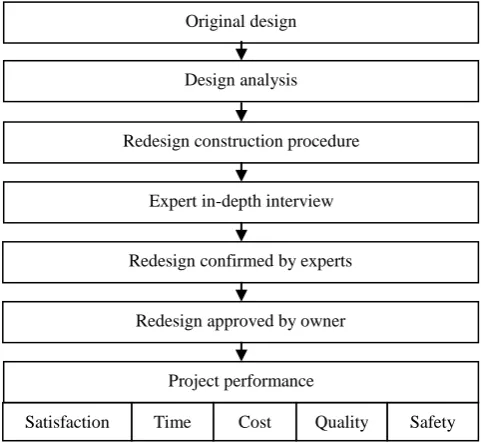
Figure 6 shows the improving procedure of the present study.
Figure 6: Improving procedure of the present study Project performance
Time Cost Quality Safety Original design
Design analysis
Redesign construction procedure
Expert in-depth interview
Redesign confirmed by experts
Redesign approved by owner
V. IN-DEPTH INTERVIEWED
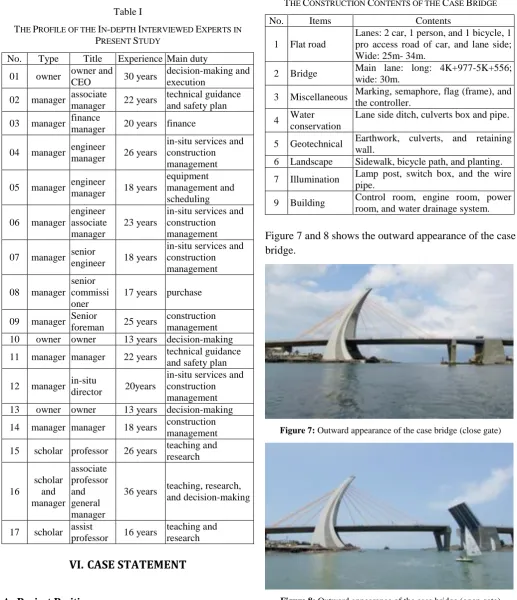
Table I showed the profile of the in-depth interviewed experts in present study.
Table I
THE PROFILE OF THE IN-DEPTH INTERVIEWED EXPERTS IN
PRESENT STUDY
No. Type Title Experience Main duty
01 owner owner and
CEO 30 years
decision-making and execution
02 manager associate
manager 22 years
technical guidance and safety plan
03 manager finance
manager 20 years finance
04 manager engineer
manager 26 years
in-situ services and construction management
05 manager engineer
manager 18 years
equipment management and scheduling
06 manager
engineer associate manager
23 years
in-situ services and construction management
07 manager senior
engineer 18 years
in-situ services and construction management
08 manager senior commissi oner
17 years purchase
09 manager Senior
foreman 25 years
construction management 10 owner owner 13 years decision-making
11 manager manager 22 years technical guidance and safety plan
12 manager in-situ
director 20years
in-situ services and construction management 13 owner owner 13 years decision-making
14 manager manager 18 years construction management
15 scholar professor 26 years teaching and research 16 scholar and manager associate professor and general manager
36 years teaching, research, and decision-making
17 scholar assist
professor 16 years
teaching and research
VI.
CASE STATEMENT
A.Project Position
The project located is at green island marina recreation area in Mirs bay park, Pingtung County, Taiwan.
B. Project Scope
Table II shows the scopes (construction contents) of the case bridge.
Table II
THE CONSTRUCTION CONTENTS OF THE CASE BRIDGE
No. Items Contents
1 Flat road
Lanes: 2 car, 1 person, and 1 bicycle, 1 pro access road of car, and lane side; Wide: 25m- 34m.
2 Bridge Main lane: long: 4K+977-5K+556;
wide: 30m.
3 Miscellaneous Marking, semaphore, flag (frame), and the controller.
4 Water conservation
Lane side ditch, culverts box and pipe.
5 Geotechnical Earthwork, culverts, and retaining wall.
6 Landscape Sidewalk, bicycle path, and planting.
7 Illumination Lamp post, switch box, and the wire pipe.
9 Building Control room, engine room, power room, and water drainage system.
Figure 7 and 8 shows the outward appearance of the case bridge.
Figure 7: Outward appearance of the case bridge (close gate)
Figure 8: Outward appearance of the case bridge (open gate)
Figure 9(a): Stage 1: construction the bridge pier and tower
Figure 9(b): Stage 2: construction the main upper structure
Figure 9(c): Stage 3: construction the box beamof upper structure
Figure 9(d): Stage 4: finished the bridge tower
Figure 9(e): Stage 5: finished the steel cable installation
Figure 9(f): Stage 6: removed temporary support
VII. REVIEW AND REDESIGN THE UPPER
STRUCTURE
After design analysis the original design the upper structure of the case bridge. The engineers found many waste design due to the designer might lack of ascertain of the exact field situation. Therefore, the engineering managers redesigned the construction procedure and contents. The redesign was confirmed by the experts and approved the owner. Table III shows the engineering content compared of the original design and redesign of the case bridge.
Table III
COMPARED OF ORIGINAL DESIGN AND REDESIGN
No. Original design No. Redesign
1 setup and remove of
9m steel plate 1
setup and remove of 9m steel plate
2 setup and remove of
temporary bridge 2
setup and remove of worker cover board
3
set up and remove of
temporary bridge 3
setup and remove of type H 800 * 300 * 14/26 steel plate
4 pile foundation of∮ 150cm * 20m full pipe 4
setup and remove of type H 400 *400 * 13/21 steel bar
5
remove full pipe pile foundation∮150cm * 6m
5
shipment of worker cover board, steel plate, and type H steel bar
6
production and remove of 25m * 3m * 2.5m pile cap
6 earthwork
7 earthwork
VIII. RESULTS
A.Time
The case data is the pre-cast engineering, which is the upper structure of the cast in-situ bridge project. The total schedule days of the pre-cast engineering are 662 calendar days. However, the actual finished are 504 days, the project schedule reached in advance about 23.8%.
B. Cost
The costs data of the original design and redesign were shown in Table IV and V.
Table IV
THE BUDGET OF THE ORIGINAL DESIGN
No. Items unit Q. Price Total
1 setup and remove of
9m steel plate m 140 5,600 784,000
2 setup and remove of
temporary bridge m
2 1,350 6,000 8,100,000
3 setup and remove of
temporary bridge st 6 1,250,000 7,500,000
4
pile foundation of∮
150cm * 20m full pipe
st 36 294,640 10,607,040
5
remove full pipe pile foundation∮150cm * 6m
st 36 36,000 1,296,000
6
production and remove of 25m * 3m * 2.5m pile cap
st 6 1,059,088 6,354,528
7 earthwork m3 7,226 262 1,893,212
Total 36,534,780
Table V
THE ACTUAL COST OF THE REDESIGN
No. Items unit Q. Price Total
1 setup and remove
of 9m steel plate m 320 5,600 1,792,000
2
setup and remove of worker cover board
m2 1,500 900 1,350,000
3
setup and remove of type H 800 * 300 * 14/26 steel plate
m 750 2,226 1,669,500
4
setup and remove of type H 400 *400 * 13/21 steel bar
m 4,480 2,025 9,072,000
5
shipment of worker cover board, steel plate, and type H steel bar
st 1 1,170,000 1,170,000
6 earthwork m3 12,432 262 3,257,184
Total 18,310,680
The differences of the two design were the setup and remove of steel plate, H steel bar, amount of concrete, setup and remove of temporary bridge, and full pipe pile foundation. The costs of redesign was about half of the original design.
The major difference of the redesign was the correct demand forecasting through technology management tools, good progress plan, reasonable arrangement project construction schedule, for the actual duration of the construction project supply of resources and other factors, arrangements for project construction progress convergence and effective cost control.
C. Safety
There is no serious occupational injuries occur during the project period. The frequency and the loss of the minor occupational injuries were lower than the average of the industrials.
D. Quality
The case bridge is still unshakable after the Sudi Le typhoon (the strongest typhoon in 2015) at Aug 8, 2015. Though typhoon resulted in more than 400 millions houses were power out, more than 10 bridges were damaged, 6 people were dead, 4 people were missing, and 379 people were injured.
E. Customer’s Satisfaction
The owner is very satisfied with the project performance.
IX.
CONCLUSION
The total schedule days of the case were 662 calendar days and the actual finished days after redesign were 504, the project schedule reached in advance about 23.8%. The costs of redesign was only about half of the original design. There is no serious occupational injuries occur during the project period. The quality and customer’s satisfaction were all reached relatively high levels. These results showed that the improving procedure which proposed by present study is validity.
Furthermore, coordination is a critical technique to perform the construction preparation, to clearly explain the requirements of the project time, quality, and safety to workers, and teaching the construction method to workers. Therefore, coordination technique is the most important task for engineering managers to complete the construction tasks to achieve the project goals.
In addition, correct forecast of workload demand, good plan of schedule ad reasonable arrangement schedule, simultaneous operation of facilities, design safety construction procedure, and efficiency used owned heavy machinery are the must have abilities of the engineering managers.
X.
REFERENCES
[1] Budayan, C., Dikmen, I. and Birgonul, M. T. 2015. Alignment of project management with business strategy in construction: evidence from the Turkish contractors. Journal of Civil Engineering and Management, 21(1), 94-106.
[2] Doloi, H. 2015. Key Factors of Relational Partnerships in Project Management. In Handbook on Project Management and Scheduling, Springer International Publishing, 2, 1047-1061. [3] Ramazani, J. and Jergeas, G. 2015. Project managers and the
journey from good to great: The benefits of investment in project management training and education. International Journal of Project Management, 33(1), 41-52.
[4] Shen, Y., Tuuli, M. M., Xia, B., Koh, T. Y. and Rowlinson, S. 2015. Toward a model for forming psychological safety climate in construction project management. International Journal of Project Management, 33(1), 223-235.
[5] Trayner, D. 2007. Bridge Construction Methods. PTIA (Post Tensioning Institute of Australia Limited) and Concrete Institute of Australia.