R E S E A R C H A R T I C L E
Open Access
An anticholinergic burden score for
German prescribers: score development
Esther Katharina Kiesel
1*, Yvonne Marina Hopf
1and Michael Drey
2Abstract
Background:Anticholinergic drugs put elderly patients at a higher risk for falls, cognitive decline, and delirium as well as peripheral adverse reactions like dry mouth or constipation. Prescribers are often unaware of the drug-based anticholinergic burden (ACB) of their patients. This study aimed to develop an anticholinergic burden score for drugs licensed in Germany to be used by clinicians at prescribing level.
Methods:A systematic literature search in pubmed assessed previously published ACB tools. Quantitative grading
scores were extracted, reduced to drugs available in Germany, and reevaluated by expert discussion. Drugs were scored as having no, weak, moderate, or strong anticholinergic effects. Further drugs were identified in clinical routine and included as well.
Results:The literature search identified 692 different drugs, with 548 drugs available in Germany. After exclusion of drugs due to no systemic effect or scoring of drug combinations (n= 67) and evaluation of 26 additional identified drugs in clinical routine, 504 drugs were scored. Of those, 356 drugs were categorised as having no, 104 drugs were scored as weak, 18 as moderate and 29 as having strong anticholinergic effects.
Conclusions:The newly created ACB score for drugs authorized in Germany can be used in daily clinical practice to reduce potentially inappropriate medications for elderly patients. Further clinical studies investigating its effect on reducing anticholinergic side effects are necessary for validation.
Keywords:Anticholinergic, Geriatrics, Anticholinergic scales, Anticholinergic burden, Germany, Expert opinion, Potentially inappropriate medicine
Background
Studies show that over 50% of elderly patients take five or more drugs, both prescription and over-the-counter [1]. A cross-sectional study in Germany revealed further that 62% of people aged 65 or older suffer from multi-morbidity [2]. This combination of multimulti-morbidity and polypharmacy leads to a higher risk for drug-drug inter-actions and adverse drug reinter-actions (ADRs) [3,4]. Hence, the use of drugs should be considered carefully in geriat-ric patients. Part of this consideration should be to avoid potentially inappropriate medications.
Drugs with anticholinergic properties are part of in-appropriate medications for geriatric patients [5,6]. Anti-cholinergic activity of multiple drugs add up to the so-called anticholinergic burden (ACB). Older patients are
more prone to anticholinergic side effects than younger patients [5,6]. Due to reduced metabolic capacity and slo-wed elimination in older patients, drugs are eliminated slower, in addition to age-related reductions in cholinergic transmissions [5,6]. The permeability of the blood-brain-barrier increases which leads to a higher drug concentra-tion in the central nervous system [7]. Central nervous ADRs may especially increase the risk of falls, e.g. blurred vision, confusion, or tremors [6]. More severe anticholin-ergic side effects are tachyarrhythmia, hallucinations, de-lirium, and cognitive impairment [6]. Other ADRs like dry mouth, constipation, and urinary retention might reduce the quality of life [6]. Several reviews indicate a higher risk for falls, cognitive decline and delirium with an increased ACB of older patients [8–12].
Despite these apparent risks it is estimated that ap-proximately 50% of elderly people take anticholinergic medications [13, 14]. Qualitative studies demonstrated
* Correspondence:[email protected]
1Department of Pharmacy, University Hospital, LMU Munich, Munich,
Germany
Full list of author information is available at the end of the article
that very few prescribers are aware of the anticholinergic properties of drugs and of the nature of anticholinergic side effects [15]. Even if they know about the negative impact of anticholinergic medications, they hesitate to deprescribe or change those drugs as they do not feel re-sponsible or lack time, knowledge, and resources [16]. In clinical practice there is rarely a registration, documenta-tion and/or conscious reducdocumenta-tion of the ACB [15,17].
Worldwide studies identified over 100 different drugs as having anticholinergic properties [9, 10, 18–33]. De-pending on study population, method, and setting, there are different drug lists and different scales to calculate the ACB [18,19]. The variety of scales and systems com-plicates the implementation in practice.
Therefore, the current study aimed to develop an anti-cholinergic burden score specifically for the German healthcare system. This, in turn, can help German pre-scribers identify and reduce drugs with anticholinergic properties in geriatric patients in order to facilitate easy application in the daily clinical setting. To our knowledge a specific ACB score for Germany is not yet available.
Methods
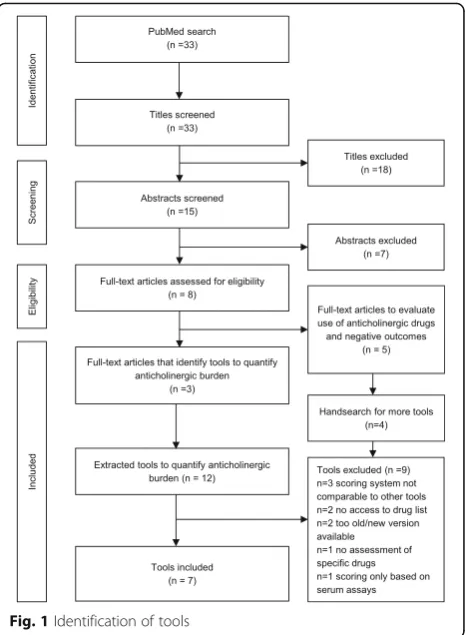
To identify appropriate tools, PubMed was searched for systematic reviews on tools to quantify anticholinergic drug burden. The search terms were“review AND anti-cholinergic burden AND (scale OR list OR tool)” with-out a date limitation. The search was conducted on December 1, 2016. The search and identification process is presented in Fig.1. Articles were excluded if they were not systematic reviews on tools to quantify anticholiner-gic drug burden or the language was not English. Three systematic reviews [11, 18, 34] were included identifying 12 tools to quantify anticholinergic burden [10, 20–26, 32,33,35,36]. Tools were excluded because the scoring system was not comparable to the other tools [33, 36], the tool was outdated, [35] there was an updated version published [32], or the scoring was solely based on serum assays [25]. Literature reviews and meta-analysis failed to show an association of serum anticholinergic activity and anticholinergic effects [37], whereas there is an asso-ciation shown for anticholinergic drug scores mainly based on expert opinion [8–12, 27]. To avoid missing relevant tools, the excluded articles were reviewed re-garding more tools as they all evaluated the association of anticholinergic drugs and negative outcomes in pa-tients [9, 19, 27, 38, 39]. These reviews identified four further tools, all ineligible for inclusion because (1) it was impossible to access the drug list despite contacting the authors [28, 31], (2) the scoring system was not comparable to other drug lists [29], and (3) the study assessed the overall medication of patients not specific drugs [30]. The included anticholinergic drug lists were summarized and reduced to drugs available in Germany
[10, 20–24, 26]. For Boustani et al. an updated version was included [10,40].
The approach to merge the identified scales was simi-lar to the approach of Duran et al. [18]. For all scales, quantitative grading scores proposed by the authors were extracted. Most lists used scores ranging from 0 to 3, one was modified according to Duran et al. so that its 0–4 scale was comparable to 0–3 scales [18, 24]. Top-ical, ophthalmic, otic and nasal drugs were excluded, while oral, parenteral, inhalative and transdermal drugs were included as these are more likely to show systemic effects [41]. As these lists have only low to moderate concordance, the algorithm depicted in Fig. 2 was used to get a consistent scoring.
Where further evaluation was needed as existing lists scored them differently or only one of the scores evalu-ated that specific drug., one researcher (EK) looked at the mechanism of action and the ADRs as reported in the German Summary of Product Characteristics and DRUGDEX® (expert-reviewed database for detailed drug information) to assess the anticholinergic properties of the respective drug. This assessment, the existing scores and the scoring by Duran et al. [18] were discussed in a multidisciplinary team of one geriatrician and two clin-ical pharmacists. This discussion led to a final score. Each drug was coded according to the Anatomical,
Therapeutic and Chemical (ATC) Classification from the World Health Organization. If there were discrepancies in rating within the same drug class, we reconsidered some ratings as well.
In order to tailor the ACB list to the clinical setting a retrospective evaluation of admission and discharge medication on an acute geriatric ward identified a range of further drugs. Consecutive patients for two 6-week-periods were included, which meant the admission and discharge medication of 34 patients was evaluated. The patients were prescribed a total of 235 drugs at admis-sion and 276 drugs at discharge. All drugs thus identified that were not mentioned in the reviewed scales were eval-uated for their anticholinergic properties as described above. Based on our final anticholinergic drug list, we de-signed a pocket-sized guideline for prescribers with infor-mation on anticholinergic drugs, anticholinergic side effects and recommendations how to assess and handle the ACB of patients on ward. The recommendation was based on the approach of Boustani et al. and is presented in Fig.3[10].
The anticholinergic scores of all drugs used by a pa-tient were calculated in total. If one drug scored 3 or the patient had a summated score of 3 or higher, it was rec-ommended to switch to alternative drugs with a lesser ACB score in order to reduce the summated score to < 3 [10]. If discontinuation or switching was not possible, a dose reduction and/or monitoring for ADRs were ad-vised. Through the upper limit of score 3, the suggested ceiling effect of the ACB is included [19]. This means that at a high ACB, drug effects are assumed to reach a plateau even when the number of anticholinergic drugs further increases [19].
Results
The summary of existing anticholinergic drug lists [20– 24, 26, 40] resulted in a list of 692 different drugs with 548 available in Germany (for excluded, international drugs see Additional file1: Table S1). In total, 67 drugs were excluded because they were rated for topical, nasal,
ophthalmic, or otic application only, or were drug com-binations (Additional file1: Table S2).
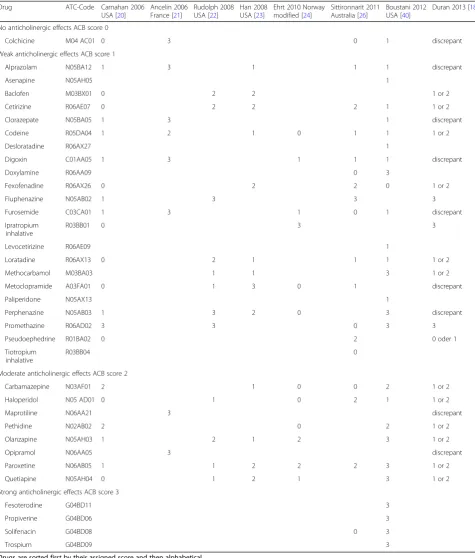
In terms of effect, 334 of the drugs were categorised as having no anticholinergic effects (ACB score = 0), 77 of the drugs were scored as displaying weak anti-cholinergic effects (ACB score = 1), 10 as moderate anticholinergic effects (ACB score = 2) and 27 as strong anticholinergic effects (ACB score = 3). These anticholinergic drugs are displayed in Table 1. Drugs rated as having no anticholinergic effects are available in the supplementary material.
Further evaluation was required for 35 drugs. After consideration of adverse drug reactions and mechanism of action, we scored one drug with no anticholinergic effects (ACB score = 0), 22 drugs with weak anticholin-ergic effects (ACB score = 1), eight as moderate anti-cholinergic effects (ACB score = 2), and four as having strong anticholinergic effects (ACB score = 3). See Table2for specific drugs.
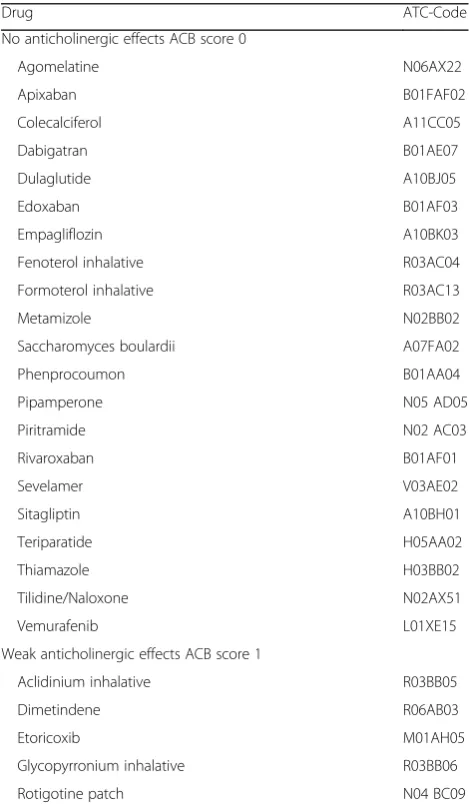
During the retrospective evaluation, 26 drugs were identified that were not yet scored by these already exist-ing scores. Parallel to drugs with inconsistent scores, the adverse drug reactions and the mechanism of action were reviewed and the drugs discussed by three re-searchers to score the drugs. Five drugs were scored as weak anticholinergic effects (ACB score = 1) and 21
Fig. 2Algorithm for consistent scoring
Table 1Anticholinergic drugs with concordant ratings of sores
Drug ATC-Code Carnahan 2006 USA [20]
Ancelin 2006 France [21]
Rudolph 2008 USA [22]
Han 2008 USA [23]
Ehrt 2010 Norway modified [24]
Sittironnarit 2011 Australia [26]
Boustani 2012 USA [40]
Duran 2013 [18]
Weak anticholinergic effects ACB score 1
Ampicillin J01CA01 1 0 or 1
Aripiprazole N05AX12 0 1
Atenolol C07AB03 0 1 0 0 1 0
Azathioprine L04AX01 1 0 or 1
Benazepril C09AA07 0 1 0 or 1
Betaxolol C07AB05 1 0 0 or 1
Bisacodyl A06AB02 0 1 0 or 1
Bromocriptine N04 BC01 1 0 weak(1–2)
Bupropion N06AX12 0 1 1 0 or 1
Captopril C09AA01 1 0 0 1 0 or 1
Celecoxib M01AH01 0 1 0 or 1
Chlordiazepoxide N05BA02 1 1 weak(1–2)
Chlorthalidone C03BA04 1 0 1 0 or 1
Ciclosporin L04 AD01 1 0 or 1
Citalopram N06AB04 0 1 1 weak(1–2)
Clindamycin J01FF01 1 0 or 1
Clonazepam N03AE01 1 1 weak(1–2)
Dexamethasone H02AB02 1 0 0 or 1
Dextromethorphan R05DA09 0 1 0 or 1
Diazepam N05BA01 1 1 1 1 1 weak(1–2)
Digitoxin C01AA04 1 1 weak(1–2)
Diltiazem C08DB01 1 0 0 or 1
Dipyridamole B01AC07 1 0 1 0 or 1
Domperidone A03FA03 1 weak(1–2)
Entacapone N04BX02 0 1 weak(1–2)
Escitalopram N06AB10 0 1 0 or 1
Famotidine A02BA03 1 0 0 or 1
Fentanyl N02AB03 1 1 weak(1–2)
Flunitrazepam N05CD03 1 0 or 1
Fluoxetine N06AB03 1 1 1 1 weak(1–2)
Flurazepam N05CD01 1 0 or 1
Fluvoxamine N06AB08 1 1 1 1 weak(1–2)
Gentamicin J01GB03 1 0 or 1
Guaifenesin R05CA03 0 1 0 or 1
Hydralazine C02DB02 1 0 1 0 or 1
Hydrocortisone H02AB09 1 1 0 or 1
Isosorbide dinitrate C01DA08 1 0 0 0 or 1
Isosorbide mononitrate
C01DA14 1 0 0 or 1
Ketorolac M01AB15 1 weak(1–2)
Lansoprazole A02BC03 0 1 0 0 or 1
Levodopa N04BA01 0 1 1 0 0 or 1 0 or 1
Lithium N05AN01 0 1 weak(1–2)
Table 1Anticholinergic drugs with concordant ratings of sores(Continued)
Drug ATC-Code Carnahan 2006 USA [20]
Ancelin 2006 France [21]
Rudolph 2008 USA [22]
Han 2008 USA [23]
Ehrt 2010 Norway modified [24]
Sittironnarit 2011 Australia [26]
Boustani 2012 USA [40]
Duran 2013 [18]
Metformin A10BA02 0 1 0 or 1
Methotrexate L04AX03 0 1 0 or 1
Methylprednisolone H02AB04 1 0 0 or 1
Metoprolol C07AB02 0 1 0 0 1 0
Midazolam N05CD08 1 0 or 1
Mirtazapine N06AX11 0 1 weak(1–2)
Morphine N02AA01 1 1 1 weak(1–2)
Naratriptan N02CC02 1 0 or 1
Nifedipine C08CA05 1 0 0 1 0
Oxazepam N05BA04 1 0 1 0 or 1
Oxycodone N02AA05 1 1 1 weak(1–2)
Pancuronium M03 AC01 1 0 or 1
Phenobarbital N03AA02 0 1 1 0 or 1
Piperacillin J01CA12 1 0 or 1
Pramipexole N04 BC05 0 1 0 0 or 1
Prednisolone A07EA01 1 0 0 0 or 1
Prednisone A07EA03 1 1
Quinidine C01BA01 0 1
Risperidone N05AX08 0 1 1 1 1 weak(1–2)
Selegiline N04BD01 0 1 0 0 or 1
Sertraline N06AB06 1 1 0 0 0
Sumatriptan N02CC01 1 0 or 1
Temazepam N05CD07 1 1 weak(1–2)
Trandolapril C09AA10 0 1 0 0 or 1
Trazodone N06AX05 0 1 1 1 weak(1–2)
Triamcinolone H02AB08 1 0 0 or 1
Triamterene C03DB02 1 0 1 0 or 1
Triazolam N05CD05 1 1 weak(1–2)
Valproic acid N03AG01 1 0 0 or 1
Vancomycin J01XA01 1 0 or 1
Venlafaxine N06AX16 0 1 0 1 1 0
Warfarin B01AA03 1 0 0 1 0
Ziprasidone N05AE04 1 0 or 1
Zolmitriptan N02CC03 1 0 or 1
Moderate anticholinergic effects ACB score 2
Amantadine N04BB01 1 2 2 weak(1–2)
Cimetidine A02BA01 2 2 1 weak(1–2)
Loperamide A07DA03 1 2 1 1 1 weak(1–2)
Loxapine N05AH01 2 2 weak(1–2)
Methadone N07 BC02 2 weak(1–2)
Oxcarbazepine N03AF02 2 2 weak(1–2)
Pimozide N05AG02 2 2 weak(1–2)
Ranitidine A02BA02 2 1 2 1 1 1 weak(1–2)
Theophylline R03DA04 1 2 1 2 1 weak(1–2)
drugs were categorised as having no anticholinergic ef-fects (ACB score = 0). See Table3for specific drugs.
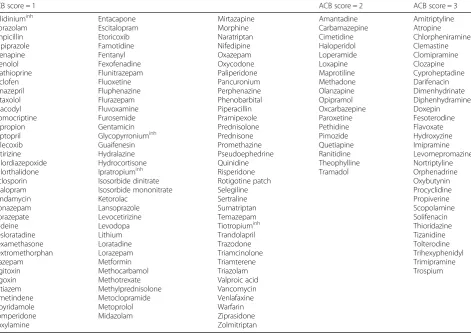
Table 4 shows all drugs scored sorted by their score. Additional file1: Table S3 shows all drugs scored 0.
Discussion
To our knowledge, this is the first ACB score developed especially for prescribers in Germany. There have been similar international publications [18, 27]. The drugs most commonly used in Germany differ from other countries especially England, USA, and Australia, where many published studies on anticholinergic drugs were conducted. Our ACB score did not only summarize existing scores but re-evaluated the drugs, especially those with discrepancies, and reduced the list to those authorized in Germany. This saves valuable time and ef-fort for clinicians trying to evaluate anticholinergic bur-den in patients.
The scores used were identified via a systematic lit-erature search in pubmed. This systematic approach should ensure a replicable and complete choice of peer-reviewed and published ACB scores, although it was not a systematic literature review conducted in dif-ferent databases. All included scores were previously validated. Drug evaluation was based on expert opinion which was previously preferred to measuring serum as-says [18, 27]. This expert review of the drugs by three different people (one geriatrician and two clinical phar-macists) based on clinical experience and literature data on method of action and ADRs strengthens the devel-opment of this score. Scoring was confirmed by the ex-pert committee not only for drugs with discrepancies, but also for drugs that were only scored by one of the existing scores. Being rated by only one score is not ne-cessarily a limitation as the individual selection of drugs is always depending on the country, the setting, and other specifics of the score development.
Table 1Anticholinergic drugs with concordant ratings of sores(Continued)
Drug ATC-Code Carnahan 2006 USA [20]
Ancelin 2006 France [21]
Rudolph 2008 USA [22]
Han 2008 USA [23]
Ehrt 2010 Norway modified [24]
Sittironnarit 2011 Australia [26]
Boustani 2012 USA [40]
Duran 2013 [18]
Strong anticholinergic effects ACB score 3
Amitriptyline N06AA09 3 3 3 3 3 3 3 Strong(3)
Atropine A03BA01 3 3 3 3 3 Strong(3)
Chlorpheniramine R06AB04 3 3 3 3 3 3 Strong(3)
Clemastine R06AA04 3 3 Strong(3)
Clomipramine N06AA04 3 3 3 Strong(3)
Clozapine N05AH02 3 2 3 3 Strong(3)
Cyproheptadine R06AX02 2 3 3 2 Strong(3)
Darifenacin G04BD10 3 3 Strong(3)
Dimenhydrinate A04AB02 3 3 Strong(3)
Diphenhydramine A04AB05 3 3 3 3 Strong(3)
Doxepin N06AA12 3 3 3 3 3 Strong(3)
Flavoxate G04BD02 3 3 Strong(3)
Hydroxyzine N05BB01 3 3 3 3 Strong(3)
Imipramine N06AA02 3 3 3 3 3 3 Strong(3)
Levomepromazine N05AA02 2 3 2 Strong(3)
Nortriptyline N06AA10 3 2 3 2 3 Strong(3)
Orphenadrine N04AB02 3 3 3 3 Strong(3)
Oxybutynin G04BD04 3 3 3 3 2 3 Strong(3)
Procyclidine N04AA04 3 Strong(3)
Scopolamine A04AD01 3 3 3 Strong(3)
Thioridazine N05 AC02 3 3 3 3 3 Strong(3)
Tizanidine M03BX02 3 Strong(3)
Tolterodine G04BD07 3 2 3 3 3 Strong(3)
Trihexyphenidyl N04AA01 3 3 3 3 3 Strong(3)
Trimipramine N06AA06 3 3 3 3 Strong(3)
As our score is based on previously published ACB scores and drugs within our hospital during a retrospect-ive evaluation, we do not claim this list to be comprehen-sive. There are over 2000 drugs approved in Germany, so
there are potentially more anticholinergic drugs not yet considered in this list. There were few drugs found in our retrospective evaluation that had not been rated by previ-ously published ACB scores. Potential reasons for those
Table 2Scoring of drugs with discrepant ratings (=ratings differed more than 1 score) or only one previous scoring
Drug ATC-Code Carnahan 2006 USA [20]
Ancelin 2006 France [21]
Rudolph 2008 USA [22]
Han 2008 USA [23]
Ehrt 2010 Norway modified [24]
Sittironnarit 2011 Australia [26]
Boustani 2012 USA [40]
Duran 2013 [18]
No anticholinergic effects ACB score 0
Colchicine M04 AC01 0 3 0 1 discrepant
Weak anticholinergic effects ACB score 1
Alprazolam N05BA12 1 3 1 1 1 discrepant
Asenapine N05AH05 1
Baclofen M03BX01 0 2 2 1 or 2
Cetirizine R06AE07 0 2 2 2 1 1 or 2
Clorazepate N05BA05 1 3 1 discrepant
Codeine R05DA04 1 2 1 0 1 1 1 or 2
Desloratadine R06AX27 1
Digoxin C01AA05 1 3 1 1 1 discrepant
Doxylamine R06AA09 0 3
Fexofenadine R06AX26 0 2 2 0 1 or 2
Fluphenazine N05AB02 1 3 3 3
Furosemide C03CA01 1 3 1 0 1 discrepant
Ipratropium inhalative
R03BB01 0 3 3
Levocetirizine R06AE09 1
Loratadine R06AX13 0 2 1 1 1 1 or 2
Methocarbamol M03BA03 1 1 3 1 or 2
Metoclopramide A03FA01 0 1 3 0 1 discrepant
Paliperidone N05AX13 1
Perphenazine N05AB03 1 3 2 0 3 discrepant
Promethazine R06AD02 3 3 0 3 3
Pseudoephedrine R01BA02 0 2 0 oder 1
Tiotropium inhalative
R03BB04 0
Moderate anticholinergic effects ACB score 2
Carbamazepine N03AF01 2 1 0 0 2 1 or 2
Haloperidol N05 AD01 0 1 0 2 1 1 or 2
Maprotiline N06AA21 3 discrepant
Pethidine N02AB02 2 0 2 1 or 2
Olanzapine N05AH03 1 2 1 2 3 1 or 2
Opipramol N06AA05 3 discrepant
Paroxetine N06AB05 1 1 2 2 2 3 1 or 2
Quetiapine N05AH04 0 1 2 1 3 1 or 2
Strong anticholinergic effects ACB score 3
Fesoterodine G04BD11 3
Propiverine G04BD06 3
Solifenacin G04BD08 0 3
Trospium G04BD09 3
drugs missing could be that the drugs were mainly used in Germany and not internationally, e.g. Metamizol sodium, or that the drugs were new on the market and not previ-ously analysed, e.g. Apixaban. To address missing and po-tentially new anticholinergic drugs, updates are planned in follow-up projects.
The validity of selection of drugs with anticholinergic activity and the grading can be questioned. Among the selected scores there is a great variety in study design and setting. Different methods to assess and rate anti-cholinergic activity were used: product information, spe-cialised literature on ADRs, review of literature, expert opinion as well as serum radio receptor assay, dissoci-ation constant for cholinergic receptor and other labora-tory data [10, 18–24, 26, 40]. We worked with that variety by comparing different scores. As final decision on inclusion and rating of anticholinergic drugs was
mainly a subjective decision of experts and not based on clinical outcomes, the ratings may be discussed further. Nevertheless, there is no approved methodology to measure the ACB and expert rating is preferred to meas-uring serum assays [27]. The list did not include topical, ophthalmic, otic or nasal drugs. It cannot be excluded that there might be systemic or local anticholinergic ef-fects with these application routes.
The distinction of anticholinergic potency from 0 to 3 might not be the best method to quantify anticholinergic burden, but as most existing scores used this or a similar rating it was the only way to work with the existing lists [18, 19]. Through the upper limit of score 3, the sug-gested ceiling effect of the ACB was included [19]. This means that at a high ACB, drug effects are assumed to reach a plateau even when the number of anticholinergic drugs further increases [19]. For a more accurate evalu-ation of anticholinergic burden a finer distinction in some drug classes would be useful. Drug classes like tri-cyclic antidepressants or anticholinergics for urinary in-continence were all scored with a strong ACB (ACB = 3). Although those drugs all have a strong anticholinergic burden, some are more problematic than others. For ex-ample, Trospium should have less central reactions than other anticholinergics for urinary incontinence because of its quaternary chemical structure, but it still shows anticholinergic adverse effects and was rated having strong anticholinergic properties by Boustani et al. [40]. Another method to further refine the evaluation of ACB would be to consider the dosages of anticholinergic drugs via the Drug Burden Index [33]. A recently pub-lished cohort study of German older outpatients found a significant association of the drug Burden Index with Mini-Mental State Examination Score, Barthel index, Falls and use of laxatives [42]. We did not use this ap-proach as it is more complicated and time-consuming to use in daily routine and it is not compatible with the scores used [11]. Our decision to apply the higher score (Fig.2 step 3) might be questioned due to the automatic application of a higher anticholinergic rating. We de-cided to take this approach in order to avoid missing any drugs with anticholinergic properties.
Although a high anticholinergic burden should be avoided if possible, the deprescribing of anticholinergic drugs is not always possible. Some indications like for example urinary incontinence or some psychiatric indi-cations require anticholinergic mediindi-cations that cannot be easily subsidised by other non-anticholinergic drugs due to clinical reasons. While urinary incontinence can be handled well with non-pharmacological options, if pharmacological treatment is required anticholinergic drugs are the best options. Thus, this list should be considered as decision support for the prescriber rather than as a strict deprescribing directive.
Table 3Drugs added during retrospective evaluation
Drug ATC-Code
No anticholinergic effects ACB score 0
Agomelatine N06AX22
Apixaban B01FAF02
Colecalciferol A11CC05
Dabigatran B01AE07
Dulaglutide A10BJ05
Edoxaban B01AF03
Empagliflozin A10BK03
Fenoterol inhalative R03AC04
Formoterol inhalative R03AC13
Metamizole N02BB02
Saccharomyces boulardii A07FA02
Phenprocoumon B01AA04
Pipamperone N05 AD05
Piritramide N02 AC03
Rivaroxaban B01AF01
Sevelamer V03AE02
Sitagliptin A10BH01
Teriparatide H05AA02
Thiamazole H03BB02
Tilidine/Naloxone N02AX51
Vemurafenib L01XE15
Weak anticholinergic effects ACB score 1
Aclidinium inhalative R03BB05
Dimetindene R06AB03
Etoricoxib M01AH05
Glycopyrronium inhalative R03BB06
Rotigotine patch N04 BC09
Conclusion
Although anticholinergic burden is only one factor of many to consider in multimorbid geriatric patients, it is important to discuss anticholinergic burden and its ef-fects. This list can be used in Germany and countries with similar drugs approved to assess the anticholinergic burden of geriatric patients. It is valuable for prescribers to use in the daily clinical setting as only drugs available in Germany are listed and data from different studies is merged into one table so that a quick overview is pos-sible. Further cluster-randomised studies investigating whether the implementation of the list reduces anti-cholinergic side effects, falls or delirium are necessary for its validation.
Additional file
Additional file 1:Table S1.Drugs extracted from published tools and excluded because they are not available in Germany. NB: This table extends to four pages.Table S2.Drugs extracted from published tools and excluded because they are topical, nasal, ophthalmic, or otic drugs or drug combinations. NB: This table extends to two pages.
Table S3.All drugs scored 0. NB: This table extends to eight pages. (DOCX 157 kb)
Abbreviations
ACB:Anticholinergic burden; ADR: Adverse drug reaction; ATC: Anatomical, Therapeutic and Chemical
Acknowledgements
We thank Carla Widman for language editing of the manuscript and all original authors for providing us with their drug lists. This research was supported within the interprofessional PhD-program Clinical Pharmacy, LMU Munich.
Funding
This research was co-funded by the Friedrich-Baur-Stiftung and the Stiftung Patient und Klinische Pharmazie, Munich, Germany.
Availability of data and materials
All data generated or analysed during this study are included in this published article.
Authors’contributions
All authors (EKK, YMH, MD) conceived the idea for conducting the study. EKK conducted the database searches, extracted and summarized existing scores. All authors (EKK, YMH, MD) were involved in the evaluation process as outlined in the methods section. The final manuscript was written, checked, and approved by all authors (EKK, YMH, MD).
Table 4Overview of all drugs scored. Caution: This list does not contain necessarily all drugs with anticholinergic properties
ACB score = 1 ACB score = 2 ACB score = 3
Ethics approval and consent to participate
The study was conducted according to ethical standards at university hospital of Munich. Formal ethical approval was obtained form the research ethics committee of the university hospital of Munich (534-16).
Consent to participate is not applicable.
Consent for publication
Not applicable.
Competing interests
EKK and MD declare that they have no competing interests. YMH received a research grant from the Friedrich-Baur-Stiftung.
Publisher’s Note
Springer Nature remains neutral with regard to jurisdictional claims in published maps and institutional affiliations.
Author details
1Department of Pharmacy, University Hospital, LMU Munich, Munich,
Germany.2Department of Medicine IV, University Hospital, LMU Munich, Munich, Germany.
Received: 13 December 2017 Accepted: 26 September 2018
References
1. Kaufman D, Kelly J, Rosenberg L, Anderson T, Mitchell A. Recent patterns of medication use in the amulatory adult population of the United States. JAMA. 2002;287:337–44.
2. van den Bussche H, Schaefer I, Koller D, Hansen H, von Leitner E-C, Scherer M, Wegscheider K, Glaeske G, Schoen G. Multimorbidity in the German elderly population - part 1: prevalence in ambulatory medical care. ZFA (Stuttgart). 2012;88(9):365–71.
3. Field TS, Gurwitz JH, Harrold LR, Rothschild J, DeBellis KR, Seger AC, Auger JC, Garber LA, Cadoret C, Fish LS, et al. Risk factors for adverse drug events among older adults in the ambulatory setting. J Am Geriatr Soc. 2004;52(8): 1349–54.
4. Maher RL, Hanlon J, Hajjar ER. Clinical consequences of polypharmacy in elderly. Expert Opin Drug Saf. 2014;13(1):57–65.
5. Feinberg M. The problems of anticholinergic adverse effects in older patients. Drugs Aging. 1993;3(4):335–48.
6. Mintzer J, Burns A. Anticholinergic side-effects of drugs in elderly people. J R Soc Med. 2000;93:457–62.
7. Schliebs R, Arendt T. The cholinergic system in aging and neuronal degeneration. Behav Brain Res. 2011;221(2):555–63.
8. Fox C, Smith T, Maidment I, Chan WY, Bua N, Myint PK, Boustani M, Kwok CS, Glover M, Koopmans I, et al. Effect of medications with anti-cholinergic properties on cognitive function, delirium, physical function and mortality: a systematic review. Age Ageing. 2014;43(5):604–15.
9. Ruxton K, Woodman RJ, Mangoni AA. Drugs with anticholinergic effects and cognitive impairment, falls and all-cause mortality in older adults: a systematic review and meta-analysis. Br J Clin Pharmacol. 2015;80(2):209–20. 10. Boustani M, Campbell N, Munger S, Maidment I, Fox C. Impact of
anticholinergics on the aging brain: a review and practical application. Aging Health. 2008;4(3):311–20.
11. Cardwell K, Hughes CM, Ryan C. The association between anticholinergic medication burden and health related outcomes in the‘oldest old’: a systematic review of the literature. Drugs Aging. 2015;32(10):835–48. 12. Marcum ZA, Wirtz HS, Pettinger M, LaCroix AZ, Carnahan R, Cauley JA, Bea
JW, Gray SL. Anticholinergic medication use and falls in postmenopausal women: findings from the women's health initiative cohort study. BMC Geriatr. 2016;16:76.
13. Best O, Gnjidic D, Hilmer SN, Naganathan V, McLachlan AJ. Investigating polypharmacy and drug burden index in hospitalised older people. Intern Med J. 2013;43(8):912–8.
14. Fox C, Richardson K, Maidment ID, Savva GM, Matthews FE, Smithard D, Coulton S, Katona C, Boustani MA, Brayne C. Anticholinergic medication use and cognitive impairment in the older population: the medical research council cognitive function and ageing study. J Am Geriatr Soc. 2011;59(8): 1477–83.
15. Mayer T, Haefeli WE, Seidling HM. Vorgehen bei der Erkennung, Bewertung und Vermeidung anticholinerger Nebenwirkungen - eine
Querschnittsbefragung unter Ärzten. Krankenhauspharmazie. 2017;38(2):111. 16. Kouladjian L, Gnjidic D, Reeve E, Chen TF, Hilmer SN. Health care
Practitioners’perspectives on Deprescribing anticholinergic and sedative medications in older adults. Ann Pharmacother. 2016;50(8):625–36. 17. Navila C. Using a“MAP”to steer patients away from medicines-related falls.
Clin Pharm. 2013;5:119–21.
18. Duran CE, Azermai M, Vander Stichele RH. Systematic review of anticholinergic risk scales in older adults. Eur J Clin Pharmacol. 2013;69(7): 1485–96.
19. Mayer T, Haefeli WE, Seidling HM. Different methods, different results--how do available methods link a patient's anticholinergic load with adverse outcomes? Eur J Clin Pharmacol. 2015;71(11):1299–314.
20. Carnahan RM, Lund BC, Perry PJ, Pollock BG, Culp KR. The anticholinergic drug scale as a measure of drug-related anticholinergic burden: associations with serum anticholinergic activity. J Clin Pharmacol. 2006;46(12):1481–6. 21. Ancelin ML, Artero S, Portet F, Dupuy AM, Touchon J, Ritchie K.
Non-degenerative mild cognitive impairment in elderly people and use of anticholinergic drugs: longitudinal cohort study. BMJ. 2006;332(7539):455–9. 22. Rudolph JL, Salow MJ, Angelini MC, McGlinchey RE. The anticholinergic risk scale and anticholinergic adverse effects in older persons. Arch Intern Med. 2008;168(5):508–13.
23. Han L, Agostini JV, Allore HG. Cumulative anticholinergic exposure is associated with poor memory and executive function in older men. J Am Geriatr Soc. 2008;56(12):2203–10.
24. Ehrt U, Broich K, Larsen JP, Ballard C, Aarsland D. Use of drugs with anticholinergic effect and impact on cognition in Parkinson's disease: a cohort study. J Neurol Neurosurg Psychiatry. 2010;81(2):160–5.
25. Chew ML, Mulsant BH, Pollock BG, Lehman ME, Greenspan A, Mahmoud RA, Kirshner MA, Sorisio DA, Bies RR, Gharabawi G. Anticholinergic activity of 107 medications commonly used by older adults. J Am Geriatr Soc. 2008; 56(7):1333–41.
26. Sittironnarit G, Ames D, Bush AI, Faux N, Flicker L, Foster J, Hilmer S, Lautenschlager NT, Maruff P, Masters CL, et al. Effects of anticholinergic drugs on cognitive function in older Australians: results from the AIBL study. Dement Geriatr Cogn Disord. 2011;31(3):173–8.
27. Salahudeen MS, Duffull SB, Nishtala PS. Anticholinergic burden quantified by anticholinergic risk scales and adverse outcomes in older people: a systematic review. BMC Geriatr. 2015;15:31.
28. Aizenberg D, Sigler M, Weizman A, Barak Y. Anticholinergic burden and the risk of falls among elderly psychiatric inpatients: a 4-year case-control study. Int Psychogeriatr. 2002;14(3):307–10.
29. Minzenberg MJ, Poole JH, Benton C, Vinogradov S. Association of anticholinergic load with impairment of complex attention and memory in schizophrenia. Am J Psychiatry. 2004;161(1):116–24.
30. Whalley LJ, Sharma S, Fox HC, Murray AD, Staff RT, Duthie AC, Deary IJ, Starr JM. Anticholinergic drugs in late life: adverse effects on cognition but not on progress to dementia. J Alzheimers Dis. 2012;30(2):253–61.
31. Cancelli I, Valentinis L, Merlino G, Valente M, Gigli GL. Drugs with anticholinergic properties as a risk factor for psychosis in patients affected by Alzheimer's disease. Clin Pharmacol Ther. 2008;84(1):63–8.
32. Han L, McCusker J, Cole M, Abrahamowicz M, Primeau F, Élie M. Use of medications with anticholinergic effect predicts clinical severity of delirium symptoms in older medical inpatients. Arch Intern Med. 2001;161(8):1099. 33. Hilmer SN, Mager DE, Simonsick EM, Cao Y, Ling SM, Windham BG, Harris TB, Hanlon JT, Rubin SM, Shorr RI, et al. A drug burden index to define the functional burden of medications in older people. Arch Intern Med. 2007; 167(8):781–7.
34. Villalba-Moreno AM, Alfaro-Lara ER, Perez-Guerrero MC, Nieto-Martin MD, Santos-Ramos B. Systematic review on the use of anticholinergic scales in poly pathological patients. Arch Gerontol Geriatr. 2016;62:1–8.
35. Summers WK. A clinical method of estimating risk of drug induced delirium. Life Sci. 1978;22(17):1511–6.
36. Dauphinot V, Faure R, Omrani S, Goutelle S, Bourguignon L, Krolak-Salmon P, Mouchoux C. Exposure to anticholinergic and sedative drugs, risk of falls, and mortality: an elderly inpatient, multicenter cohort. J Clin
Psychopharmacol. 2014;34(5):565–70.
38. Collamati A, Martone AM, Poscia A, Brandi V, Celi M, Marzetti E, Cherubini A, Landi F. Anticholinergic drugs and negative outcomes in the older population: from biological plausibility to clinical evidence. Aging Clin Exp Res. 2016;28(1):25–35.
39. Kersten H, Wyller TB. Anticholinergic drug burden in older people's brain -how well is it measured? Basic Clin Pharmacol Toxicol. 2014;114(2):151–9. 40. Aging Brain Program: Anticholinergic Cognitive Burden Scale 2012 Update.
https://www.uea.ac.uk/documents/3306616/10940915/Anticholinergics/ 088bb9e6-3ee2-4b75-b8ce-b2d59dc538c2. Last accessed 3 Oct 2018. 41. Singh S, Loke YK, Enright P, Furberg CD. Pro-arrhythmic and pro-ischaemic
effects of inhaled anticholinergic medications. Thorax. 2013;68(1):114–6. 42. Mayer T, Meid AD, Saum KU, Brenner H, Schottker B, Seidling HM, Haefeli
![Fig. 3 Recommendation for prescribers on pocket-card based onBoustani et al. [10]](https://thumb-us.123doks.com/thumbv2/123dok_us/479361.1542523/3.595.305.538.85.382/fig-recommendation-prescribers-pocket-card-based-onboustani-et.webp)