2014
Shared Leadership:
Individual Reflections
1 Abstract
2 Table of Contents
Introduction ... 6
1.1 Research Focus ... 6
1.2 Research Context ... 7
1.3 Outline of Study ... 8
1.4 Limitations of Study ... 8
Literature Review ... 9
2.1 Concept of Leadership ... 9
2.2 Leadership Theories ... 10
2.3 Distributed or Shared Leadership ... 11
2.4 Shared Leadership in Higher Education ... 12
2.5 Key Findings and Development of Framework ... 13
Methodology ... 15
3.1 Methods ... 15
3.2 Research Context ... 15
3.3 Sampling ... 16
3.4 Data Collection ... 17
3.5 Data Analysis ... 17
3.6 Assessment of Research ... 17
3.7 Ethical Considerations ... 18
3.8 Limitations of Study ... 18
Findings and Discussion ... 19
4.1 Introduction ... 19
4.2 Participant A ... 19
4.3 Participant B ... 21
4.4 Participant C ... 23
4.5 Participant D ... 24
3
References ... 29
Appendices ... 35
Appendix A: Interview Questions ... 36
Appendix B: Transcript of Interview 4 with Alex ... 37
Appendix C: Certificate of completion of DPA course Reading ... 44
Appendix D: Consent form to undertake research by Head of School ... 47
Appendix E: Consent forms of all participants ... 50
Appendix F: Example of coded transcripts ... 56
Appendix G: Example of Calculated analysis ... 61
Appendix H: Ethics approval form ... 62
Appendix I: A Reflection by the Researcher ... 63
Figures ... Figure 1: Key factors to enable shared leadership adapted from Ameijde (2009) ... 13
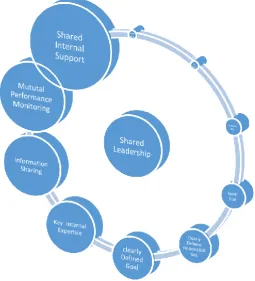
Figure 2: Lisa’s reflections on critical internal factors related to shared leadership ... 20
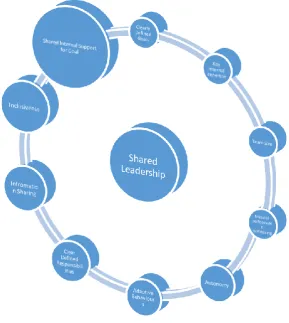
Figure 3: Claire’s reflections on critical internal factors related to shared leadership ... 22
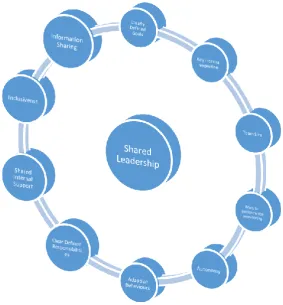
Figure 4: Lara’s reflections on critical internal factors related to shared leadership ... 23
4 Introduction
A President. The Captain of Ship. A Headmaster. Traditionally, leadership theories and leadership in practice view one person at the top. One person who has the ultimate responsibility.
Recent government changes have resulted in some higher education institutions moving to more target driven business strategies, similar to those of private businesses. Acquiring government funding through student recruitment and other grants is set to become even more competitive and pressure is increasing from industry to provide “matching our needs” – graduates (Deem et.al, 2001)
Universities are introducing business-like terminology in their management structures moving from “Head of School” to “Director”, creating line-manager positions and referring to students as customers (Spiller, 2009). Implementing the changes of performance management targets and additional tools to measure effectiveness and quality often result in more layers of leadership (Armstrong, 2012). Traditional hierarchical leadership models are being emphasised even more as part of institutional reforms with management practices aiming to control subordinates’ efficiency and productivity. Feeling micro managed; academics are reported as feeling disengaged with the organisation. The “top-down” style of leadership ignores the potential of those in more junior positions (Dearlove 2002; Kanuga 2013).
1.1Research Focus.
5 The aim of this study is to add to the scholarly literature and understanding of shared leadership by considering individual reflections of this concept in a higher education setting.
1.2 Research Context
This study will adapt a case study approach, focusing on one of eight schools in a London based university. This school has three undergraduate courses which traditionally see an intake of over 100 students each, every September. The courses include a placement year and as such each course has a cohort of around 400 students. Until recently these course had one course leader each.
In the past two years however we have seen several important changes in the environment we lead in:
1) Because of government changes, in student fees, accessibility to course content, reviews and statistics there is larger organisational pressure to meet and exceed student expectations.
2) Internal University changes in performance strategies have let to lecturers being pressured into course leadership if wanting to apply for promotion.
3) The courses in question are still growing each year and student numbers are expected to increase for academic year 15/16 when the cap on student numbers is lifted.
In respond to these changes; the field leader within this school has created multiple course leader positions for each course; resulting in each course having 3 or 4 shared course leaders.
Although academic studies have found evidence of the principal of shared leadership being effective in other industries and to an extent in higher education; most research considers shared research from a project or change management perspective (Avolio et. al., 1996; Pearce and Sims, 2002; Bennet et. al., 2003; Harris, 2003; Spillane et. al., 2004; Kocolowski, 2010; Abuodha, 2013). Limited research focusses on a junior management level and particular in the field of higher education. It is necessary to further study this concept within the higher education context. This study therefore seeks to answer:
1) What are the key elements needed to enable successful shared leadership to occur? 2) To what extend does shared leadership at junior academic level contribute to an
organisation meeting its goal?
3) Does shared course leadership contribute to meeting students’ needs?
6 1.3Outline of the study.
This paper will first consider existing literature, offering an overview of alternative leadership models compared to traditional leadership models. It will then explore the challenges of shared leadership in both industry and higher education with the aim of identifying critical factors needed for successful shared leadership to occur. Within the methodology chapter the underlying approach of the research will be presented as well as the data collection and analysis methods. The findings and discussion of the study will present the academics reflections of shared leadership in practice and answer research question 2 and 3. In the last concluding chapter, the paper will discuss if a mix of top-down and shared leadership strategy is a possible competitive solution within a higher education setting.
1.4Limitations of the study.
7 2. Literature Review
2.1 Concept of leadership
The Higher education environment is continually presented with new realities and challenges (Barry et.al. 2002). The local and, arguable, global context, places pressure on organisations ability to adjust and react to changes. The adjustment often involves reviewing current practices of accountability and productivity and puts pressure on the leadership foundation of the organisation (Bolden et.al, 2008).
Responding to these changes, while staying profitable, is also key in the eyes of stakeholders like investors and students (Berger, 2002). By reviewing leadership styles we can better understand on how these could benefit a Higher education organisation whilst considering the complexity they operate in (Bryman, 2007). When trying to understand an organisations ability to adapt to a changing and more competitive environment, it becomes imperative to review the role of leadership and to understand to which extend this is adaptive to the organisational culture (Locke, 2003). Some research in this area argues that leaders’ influence on organisational performance is overestimated (Manz, 2001). However others acknowledge that leadership and the culture of an organisation are intertwined and directly linked to its output. The concept of leadership within this debate therefore needs be explored further (Carmichael et.al, 2011).
8 or more members of a team engage in leadership; sharing power and influence rather than centralising it with one dominant superior (Pearce and Sims, 2002; Bergman et al, 2012)
2.2 Leadership theories
When considering leadership requirements; some theories emphasise capabilities and skills, while others place priority on personality (Andersen, 2006; Charmichael, 2011). Traditional theories tent to look at the leaders’ action and style of management whilst more recent approaches consider the contextual factors influencing the leader (Pearce and Simms, 2002; Gill, 2007). Regardless of portraying diverse sites of the discussion, these theories are supportive of each other and provide an understanding of the notion of leadership.
It is intriguing to see how leadership theory has grown and developed. The pioneer of leadership theory, the Trait Theory, claims that all leaders possess unmistakable characteristics which enable them to manage subordinates (Andersen, 2006). In itself this theory does not consider the behaviour of leaders. Scholars then identified three main fields of behaviour: authoritarian, democratic and laissez-faire; and the theory of behavioural leadership were born (Beerel, 2009; Allio, 2013). However when considering the contextual environment; a combination of different elements is needed and as such the behaviours cannot be noticed on their own (Kort, 2008). The way in which they are combined has an influence on how the leader is perceived and responded to (Hazy, 2007). This perhaps is the reason for a further step being taken in the development of leadership theory with the introduction of situational and contingent frameworks (Kakabadse et. al., 2010). These argue that leaders will base their action and decisions depending on the current situation they are facing.
Considering this evolution in leadership research, it could be argued that what has been agreed to be essential to leadership strategy in the past, then evolved and is not of relevance in the present. This progressive development sees that it is the situation or context of the organisation which calls for a suitable model of leadership and that not one fixed theory is applicable.
9 2.3 Distributed or Shared Leadership
Thus, in itself a new view on leadership, shared leadership follows on from the trend of leadership theory development. However what seems to have underpinned those traditional, arguably reductionist leadership paradigms, is that these consider leadership as a vertical process; separating leaders from subordinates. Distributed leadership questions this view of a solely vertical process and considers the influence of shared action, focussing on diverse individuals leading together to achieve a common goal (Bennett, 2003). The actual scholarship around shared leadership is still in its infancy and as such the term is used interchangeably with the term distributed leadership (Abuodha et. al., 2012). As well as the term, conceptualisations seem to vary from the context of an entire organisation to small individual teams (Kelloway and Barling, 2000). The literature does seem to agree that the principle of shared leadership is a leadership process to which several individuals contribute (Houghton et. al., 2003; Kocolowski, 2010; Evaggelia, 2012).
Feyerherm (2009) conducted a longitudinal study which considered individuals working in different departments working towards the same project outcome. This involved sharing knowledge and expertise and for several of those members sharing the leadership “hat”. He concluded that such projects can only succeed when horizontal leadership frameworks are in place. Several other studies looked at the sharing of leadership and concluded that it is beneficial to an organisations performance as well as staff morale and motivation (Benett et. al., 2003; Dixon 2006; Ensley et.al, 2006). There also seems to be an agreement that shared leadership can only be more effective than the traditional vertical leadership style if individuals recognise each other as leaders (Seers, 1996; Harris 2003; Spillane et. al, 2004). It should be pointed out however that most of these studies are based on research that involves project management or change management.
10 individual and draws from the collective knowledge (Patel, 2012). Decisions benefit from diversity of thought (Jain, 2014). When reflecting on their shared leadership position, hospitality leaders often highlight the benefit of second opinions and the occurrence of natural mentoring amongst the team (Mullins, 2011; Armstrong, 2012; . When progressing within the hotel business into more singular or vertical leadership roles; those that have experienced shared leadership in the past, report to have greater energy and ability when dealing with change and reorientation then those who have come through more traditional routes (Ispas, 2012). In general these studies argue that shared leadership at junior and middle management level compliment an organisational structure where top-down leadership is the prime foundation. Shared leadership in these environments enables collaboration within teams, higher levels of engagement towards the organisational goals and reduction of stress levels (Manz and Sims, 2001). In addition it is thought to have a positive influence on various stakeholders, including the subordinate employees; other departments and the customers (Jain and Jepppesen, 2014). Thus when shared leadership has been practiced in hospitality environments; it has an overall positive influence on the organisation and when practiced at a more junior level it can complement a hierarchical structure.
2.4 Shared Leadership in Higher education
11 (Pearce and Sims, 2002; Bennett et. al., 2003; Spillane et.al., 2004; Kocolowski, 2010) and can therefore be considered critical.
As well as looking at shared leadership from a project management perspective; some studies have considered shared leadership at senior level or cross functional levels, including administrative and support roles. From these it can be concluded that leadership and management precepts at universities and similar establishments should consider the traditional culture of collegial leadership, complementing the characteristics of such an environment. Alternative, horizontal, models of leadership consider the quality of interpersonal relationship and encourage members of a group to contribute instead of to follow.
2.5 Key findings and the development of a framework.
The process of reviewing key literature on leadership theories, followed by the scrutiny of literature on shared leadership both in higher education and other industries was needed to fully comprehend and identify enabling factors which are critical to the internal conditions that need to be in place in order for successful shared leadership to occur. Figure 1 shows a framework derived from this review, containing key terms associated with these factors.
13 3. Methodology
3.1 Method
The aim of this study was to add to the scholarly literature and understanding of shared leadership by considering individual reflections of this concept in a higher education setting. To develop a new hypothesis; a qualitative research approach was adopted (Gergen and Gergen, 2007), capturing the specific context and providing rich data. In addition this method allowed for the underlying structures and the “how” of shared leadership to be further explored (Seers, 1996) rather than measure the different perceptions of junior leaders. The underlying paradigms of qualitative research, interpretivism and constructivism, allow participants the opportunity to discuss their experiences and views in their own words (Wertz et. al, 2011). In addition a qualitative approach allowed for more naturally occurring responses which are more likely to be significant than those answers gathered through fixed quantitative methods (Atkison et. al., 2004). At this stage, the main aim of the research was to test the extend of which the critical internal conditions that need to be in place for successful shared leadership to occur, happen in the context of the case study. Additionally the research aimed to expose any possible advantages to the student experience and the leader’s point of view on the future of the concept of shared leadership in higher education settings. Four semi-structured interviews were conducted with participants coming with different backgrounds and experiences to shared leadership. The method of semi-structured interviews allowed for an open dialog between the participant and the researcher, allowing for rich data to emerge (Wertze, et. al., 2011). The findings should enable a greater comprehension of shared leadership in higher education and extend the literature on this phenomenon.
3.2 Research Context.
14 meant that each academics’ scholarly performance was reviewed and, depending on their academic “outputs” in the form of publications, were slotted into a certain performance stream. Depending on the stream they are allocated in; academics have different performance targets which include different percentages of teaching hours and time allocated to scholarly research. Academics have the opportunity to move stream or get promoted to more senior positions by increasing their scholarly outputs or taking on leadership roles. This study will look at one of the eight schools of the University. This particular school has made significant profits for the University both before and after the recent changes. However a small scale study, carried out in 2013, pointed out that as a result of the changes; academics feel disengaged and demotivated to continue to perform in their roles and they related this to the micro-management culture (Kanuga, 2013). Lecturers clearly battle between the new increases of managerial top down practices in comparison to their traditional academic freedom. At the same time student numbers for this school are increasing each year, with an intake of 350 undergraduate students for the academic year 2014/2015. This current situation of an increasingly complicated environment and the increase of student numbers on each course offered an ideal opportunity to further explore the dynamics of shared leadership, a concept which was recently introduced by the field leader within the school.
3.3 Sampling
15 3.4 Data Collection
A narrative inquiry interview, following a semi-structured outline, was carried out with each of the four participants. This format allowed for participants to reflect on their experiences in a unique way (Gergen and Gergen, 2007). In addition the researcher was able to rephrase questions when required. The questions were developed based on the identified key terms in the literature; constituting enabling factors which are deemed critical internal conditions that need to be in place in order for successful shared leadership to occur. Further insight was sought by asking leaders if they felt shared leadership was the “way of the future” both in relation to the school and the university achieving its targets and the student’s needs. A pilot interview resulted in some of the questions being adapted to allow for a more interactive dialogue to occur, as can be seen in appendix A.
Participants where approached in person to take part in the research and suitable times and locations were diarised. Each participant was assigned a pseudonym to allow confidentiality and anonymity (Cohen et, al, 2011). During the interviews, written notes were taken as well as digital recordings.
3.5 Data Analysis.
The recorded interviews were transcribed. The transcripts were then coded using a thematic approach, using Microsoft Word comment and table features (appendix B). The themes followed the key elements identified in the literature which are believed to influence shared leadership and are shown in model 1. To identify further recurrent themes, content analysis was applied classifying them into further factors associated with the research questions (Sarantakos, 2012).
3.6 Assessment of the Research.
16 3.7 Ethical Considerations.
Floyd and Arthur (2012) point out that institutional anonymity is problematic for insider researchers and meaningless when published as with a little investigation online institutions can be identified. This study is not intended for publication, yet may still be reviewed by external examiners or students. These reviewers will not have access to the authors name, it was therefore decided to hide the institutions name and to use pseudonyms for the participants, in an effort to preserve anonymity, at least in the main body of the report. Throughout the research undertaken; thorough attention has been given to ethical procedures. The researcher completed the University of Reading online course in data protection act, as can be seen in appendix C. The head of school gave his consent for conducting the research within the school and University (appendix D). The participants were each given consent forms, outlining the reasons for conducting the research and it was clarified with them both within these papers and in person that they had the right to take part or withdrawn from the study at any point (appendix E). To preserve their identity; pseudonyms were used for participants in the findings of the report. Each participant was offered the opportunity to check their transcripts (Baum and Clarke, 2013).
3.8 Limitation of Study.
Although all four participants were keen to take part in the research, one participant indicated at the time of scheduling the interview that they would not like to discuss how the changes the school and university have gone through have affected them. Care was taken to not include this subject in any of the interviews however it raises the question to what extend each participant gave their full reflections on the shared leadership experienced. This perhaps may be avoided when the researcher is not also a colleague or subordinate of the participant.
17 4. Findings and Discussion
4.1 Introduction.
A thematic interpretative approach was used throughout the analysis process. The literature identified key factors, or terms, which need to be present for successful shared leadership to occur. These terms were introduced in the interview questions and then analysed on how participants reflected on them. Further focus of the interview was on the extent that shared leadership benefits the student needs and supports the organisations goals.
To avoid losing the fuller picture, or the context of the coded data; vignettes have been written for each participant (Braun and Clark, 2013). The data, per participant, is then represented in diagram format and compared to the critical internal factors needed for shared leadership to occur as identified in the literature. A final reflection is given on each data set on the extent to which the concept of shared leadership at junior level; may be positive in relation to meeting student needs and organisational goals. An example of a coded transcript is given in appendix F and an example of the calculations, forming the basis of the diagram, is given in appendix G.
4.2 Participant A.
18
instead of proactive”. She felt positive when it came to her identity mentioning that the role
has given her recognition both from her peers and students. Finally although she believes the role can have an advantage towards staff development; she does not think the universities senior management recognises the importance of the role.
Lisa’s interview was thematically coded against the critical factors needed for successful shared leadership to occur, as identified in the literature. Each time the factors were reflected on positively within the conversation, they were awarded a point. When reflected on in a negative light, a point was deducted; bringing some factors in the minus. At times her wording indicated that the terms were “somewhat in place” however if she did not elaborate or was neither positive nor negative, zero points were awarded. The diagram below represents the presence she gives of each of these key terms when reflecting on her own role. The larger the circle, the more the term has manifested in her team. We see that “adaptive behaviours” and “inclusiveness” were actually reflected negatively on. She has mixed view on autonomy, clearly defined responsibilities and team size. She clearly felt that “Shared internal goals” and “mutual performance monitoring” occurred on a regular basis.
19 As mentioned in her vignette; Lisa clearly feels frustrated with the lack of time herself and the team have in carrying out this role. She refers to it in most of her answers: “What you would like to do is not possible” and “There is room for improvement if you have sufficient
time”. She does not believe shared course leadership is in line with the universities goals, even though it has such clear positive impacts on student needs. Perhaps her answer to how to “meet student needs” would be to have single course leadership, with clear defined responsibilities and the ability to implement change or as she puts it: “.that would create a greater sense of driving forward change because you know it is more rewarding I guess” .
What she would need for all of this to happen, in one picture, is time.
4.3 Participant B.
Participant B (PB) who’s pseudonym is Claire has been with the school and University for almost five years. She is currently shared course leader for programme B. Claire shares her leadership with three other leaders and she is mostly responsible for the management of level 5. Her interview lasted 21 minutes. She came across confident and at ease when introducing herself and talking about her history with the university. She has worked for another university in the past and feels her current employer, in particular the school, is more “vocational and less academic”. For the first fifteen minutes of the
conversation she seems sceptical of the concept of shared leadership. Her reflections included a few disagreements within the team and she clearly felt there was a lack of autonomy within the role. Yet, she also views herself as someone who is there to “train the others”. She argues that her manager has put her in this position to train the other leaders. She makes a total of 9 referrals which were coded as “I lead, others follow”. At several points in her interview she discusses the “time wasting” involved when trying to make decisions as a team of four.
20
Figure 3: Claire’s reflections on critical internal factors related to shared leadership.
Where Claire and Lisa are similar is that both make consistent references throughout their interview on how the shared course leadership is benefiting students: “I only deal with level 5, so the time I can dedicate to those students is much more” and “Compared to last year, where students only had one leader, they are now getting much quicker and individual
help”. Just like Lisa; Claire also believes that time and workload are an issue when it comes
to managing the course effectively: “We tried desperately to get a meeting, once a month, between the four of us but our workloads are just too heavy and we all have different
classroom schedules”.
Claire doesn’t feel shared course leadership matches the current strategy of the University (“Quite the opposite!”); she does feel it is the way of the future, especially when it comes to ever increasing student numbers: “They must explore and invest in shared
21 4.4 Participant C.
Participant C (PC) who’s pseudonym is Lara has been with the university and school for just over 5 years with the last 4 years in higher education. She is currently shared course leader of programme C and she mostly looks after level 4. Lara was comfortable and open during the interview, which lasted 23 minutes. Lara seemed very much in favour of the concept of shared leadership when she opened the conversation herself saying: “I am glad we
get to discuss this. It’s something we have known works well for years in industry and it’s
about time the university lived in the present of leadership strategy”.
As can be seen from her diagram, Lara feels the key elements identified by the literature which need to be in place for shared leadership to occur, are very much present.
22 Like Lisa, Lara refers to effective team work many times in her conversation. She feels that the clear defined responsibilities the team have set for each leader, contribute to their common goal which is “to help students to perform academically and get ready for careers”. When Lara reflects on her experiences she doesn’t mention the lack of time.
Once, she almost claims the opposite: “….Also there is usually one course leader available at
all times”. And: “I feel well supported by my colleagues and also more confident in dealing with my year group rather than stretching myself beyond what I can be reasonably expected
to handle in the time allocated”. Lara is positive shared course leadership is the way of the future, both for students and for academics well-being: “…a very wide and complex role that when shared is less stressful and this also benefits students”.
The different reflections between the three leaders, all representing a different course, seemed to be underlined by their conception on time available. In addition Lara feel she has autonomy on leading her level and is satisfied with the structure. Lisa and Claire each question if autonomy is part of their role; something they perhaps desire.
4.5 Participant D.
Participant D (PD), who’s pseudonym is Alex, has been with the University for 7 years. Initially as a guest lecturer and for the past 5 years field leader, overseeing the 3 programmes involved in shared leadership. Within the last two years; Alex gradually introduced shared leadership to each of the courses. By interviewing her; the researcher hoped to gain a fuller insight into the reasoning why shared leadership was introduced, which key elements the field leader thought were critical to the process and how she felt about shared leadership in relation to meeting organisational goals and student needs. The interview lasted 32 minutes.
During the conversation it was clear that Alex is putting student needs in front of everything. She discussed how when she first started in her role; course leaders who were managing up to 350 students were “…quite stressed and could react quite harshly to students”. It became her goal to “reduce stress levels and make students feel seen as persons”. She described how at the time academics were working autonomously on their
own individual modules and that “There was no practice of information sharing, they would not show their modules to anyone else”. Her goal became to create teams to share internal
support: “Working in a team, rather than each sit in their corner and panic and overloading”
23 had to adapt some of her own leadership style and expectations. She realised that “…
managing a group of academics is like herding a group of cats. They smile nicely and then
walk off and do their own thing.” She had to “use some more informal approach of involving and gently herd them back in”.
Next she started responding to what subject areas academics were passionate about and gave them the opportunity to develop this, either through further studies or time off for research. She would time table lecturers together on large modules which naturally started to enable sharing and team work whilst at the same time giving them time to develop their expertise. This new approach seemed to work from both the academic perspective and the student view: “They now naturally ask each other for guidance” and “students are feeding back that academics are experts”. Creating shared course leadership came as a natural next
step: “Shared leadership brings the academic team and the students closer together. They
become persons rather than numbers”. Reflecting on the first course she changed (course C, with Lara); she believes it is achieving what she set out to do and that is a win-win situation for everyone: “Academics are able to gain leadership experience and at the same time develop their research and expertise. We have a high increase in student retention and a 60%
increase in their degree classifications. Our students also get better jobs upon graduation
with better career prospects”.
However it is not an easy “ride” to implement these changes: “Quality and admin still want us to give 1 course leader name, which is unfair to the joint team effort” and “it’s not suited to those who want to be authoritarian leaders”. When asked if she feels shared
leadership will help the universities goals; she replies: “They only need to look at our increase in degree classifications and scholarly outputs, to see that it works”.
24
25 Conclusion
The findings identified three very different experiences when reflecting on the key elements needed to enable successful shared leadership to occur. We saw Lisa, who reflected positive on her experiences sharing the workload and contributions of the team, but who felt they were limited in their productivity because of time constraints. Parts of her discussion hinted to her wanting more autonomy and feeling that, time permitting, the job might be better performed by one than three leaders. Claire’s reflections showed her feeling as the “leader” or “trainer” of her three co-leaders as well as positively reflecting on the team work, although to a lesser degree than Lisa. Lara, who has been a shared course leader longer than Lisa and Claire was mostly positive and her reflections seemed to present a much more balanced measure of the key elements identified in literature that enable successful leadership to occur.
What we did see, very clearly, was an answer to our second and third research question. All course leaders felt it was to a great advantage to the large cohorts of students and mentioned this throughout their interviews. There was an agreement that it does contribute to organisations goals in terms of meeting student needs and remaining competitive within this view, however the extend to how much it was meeting other strategic goals, like developing leaders and creating more time for scholarship and research was given mixed reviews mostly because it was felt that senior management did not recognise the value of a course leader and still request one name for official documentation. Certainly the field leader’s reason for creating the shared positions was very much to meet these three targets.
26 stakeholders” perhaps it is time that higher education environments look at shared leadership as a way of meeting their consumers’ needs.
27 References
Abuodha, B.P., Brown, E., Davison, A., McGregor, S., Terkes, D., Warr, H. (2013)
Distributed leadership. International Journal of Sustainability in Higher Education, 15m (1) p. 98 - 110 Dawsonera [Online]. Available at: http://dawsonera.com [Accessed: 05 June 2014].
Allio, R. J. (2013) Leaders and leadership – many theories, but what advice is reliable?
Strategy & Leadership. 41 (1), p. 4 – 14. Dawsonera [Online]. Available at: http://dawsonera.com [Accessed: 30 July 2014].
Amijde van, J.D.J., Billsberry, J., Meurs van, N. and Nelson, P.C. (2009) Improving leadership in Higher Education institutions: a distributed perspective. Higher Education Academy (58). P. 763-779 Higher Education Academy [Online]. Available at:
www.heacademy.co.uk [Accessed: 05 June 2014].
Andersen, J.A. (2006) Leadership, personality and effectiveness. The Journal of Socio-Economics. 35 (6), p. 1078-1091. Dawsonera [Online]. Available at: http://dawsonera.com [Accessed: 28th April 2014].
Anderson, R., Charmaz, K., Joselson, R., McMullen, L., MsSpadden, E. and Wertz J.B (2011) Five Ways of Doing Qualitative Analysis. New York: The Guildford Press. Dawsonera [Online]. Available at: http://dawsonera.com [Accessed: 02 September 2014].
Armstrong, M. (2012) Handbook of Management and Leadership. London: Kogan Page Ltd. Atkinson, P., Delamont, S., Coffey, A. (2004) Key Themes in Qualitative Research:
Continuities and Changes. Walnut Creek: Altamira Press. Dawsonera [Online]. Available at: http://dawsonera.com [Accessed: 4th March 2014].
Avolio, B. J., Jung, D., Murry, W., and Sivasubramaniam, N. (1996). Building highly
developed teams: Focusing on shared leadership process, efficacy, trust, and performance. In. Beyerlein, M.M., and Johnson, DJ. Advances in interdisciplinary studies of work teams (p. 173–209). Greenwich, CT: JAI Press. Dawsonera [Online]. Available at:
http://dawsonera.com [Accessed: 07 July 2014].
Barling, J and Kelloway J.K. (2000) What we have learned about developing
28 355-362. Dawsonera [Online]. Available at: http://dawsonera.com [Accessed: 28th April 2014].
Barry, J., Chandler, J. and Clark, H. (2002). Stressing academe: The wear and tear of the new public management. Human Relations (55) p. 1051–1069. Dawsonera [Online]. Available at: http://dawsonera.com [Accessed: 05 June 2014].
Beerel, A. (2009) Leadership and Change Management. 2nd ed. London: Sage. Bennett, N., Harvey, J. A., Wise, C., and Woods, P. A. (2003). Desk study review of distributed leadership. Nottingham: National College for School Leadership. University of Nottingham [Online]. Available at: www.nottingham.ac.uk .com [Accessed: 29th July 2014]. Berger, J.B. (2002). Understanding the Organizational Nature of Student Persistence:
Empirically-Based Recommendations for Practice. Journal of College Student Retention (3) p. 3-21. Dawsonera [Online]. Available at: http://dawsonera.com [Accessed: 05 June 2014]. Berney, L., Bloor, M., Fischer, J., Jenkins, N. and Neale, J. (2010). Putting it in context: The use of vignettes in qualitative interviewing. Qualitative Research 10 (2) p.175-198.
Dawsonera [Online]. Available at: http://dawsonera.com [Accessed: 20 October 2014]. Braun and Clarke (2013) An introduction to the Vignette Method. In: Successful Qualitative Research: A Practical Guide for Beginners: London: Sage UK. [Online]. Available at: www.sage.uk .com [Accessed: 30th October 2014].
Bryman, A (2007) Effective leadership in higher education: a literature review Studies in Higer Education, (32), 6 p 693- 710 Dawsonera [Online]. Available at: http://dawsonera.com [Accessed: 28th April 2014].
Bolden,R., Gosling, J. and Petrov, G. (2009) Distributed leadership in higher education: rhetoric and reality. Educational Management, Administration and Leadership. 257-277. Dawsonera [Online]. Available at: http://dawsonera.com [Accessed: 2nd September 2014].
Bolden,R., Gosling, J. and Petrov, G. (2008) Developing collective leadership in higher education. Research and Development Series. P 1-78. London: Leadership Foundation for Higher Education.
29 Cohen, L., Manion, L. and Morrison, K. (2011) Reserach Methods in Education. 7th ed. London: Routledge.
Cooper, C.L., Tytherleigh, M.Y., Ricketts, C. and Webb, C. (2005). Occupational Stress in UK Higher Education Institutions: A Comparative Study of all Staff Categories. Higher Education Research & Development 24. p 41-61. Dawsonera [Online]. Available at: http://dawsonera.com [Accessed: 28th April 2014].
Dhansukh, P. (2002) The Faces of Leadership. Hotel and Motel Management. (15) p. 32-39 . Dawsonera [Online]. Available at: http://dawsonera.com [Accessed: 03 March 2014].
Dearlove, J. (2002). A Continuing Role for Academics: The Governance of UK Universities in the Post-Dearing Era. Higher Education Quarterly (56) p. 257-275. Dawsonera [Online]. Available at: http://dawsonera.com [Accessed: 28th April 2014].
Deem, R., Fulton, O., Reed, M. and Watson, M. (2001) Managing contemporary UK Universities - manager-academics and new manageralism, Academic Leadership [Online]. Available at: www.academicleadership.org .com [Accessed: 28th April 2014].
Denscombe, M, (2007) The Good Research Guide: For Small Scale Research Projects
[Kindle version]. Available at: http://www.amazon.co.uk [Accessed: 13 February 2012] Diamond, J. B., Halverson, R. and Spillane, J. P (2004). Towards a theory of leadership practice: A distributed perspective. Journal of Curriculum Studies, 36 p.3–34. Dawsonera [Online]. Available at: http://dawsonera.com [Accessed: 30th July 2014].
Dixon, A.L., Mehra, A., Robertson, B. and Smith, B.R. (2006). Distributed leadership in teams: The network of leadership perceptions and team performance. The Leadership Quarterly, (17) p. 232–245. . Dawsonera [Online]. Available at: http://dawsonera.com [Accessed: 07 July 2014].
Ensley, M. D., Hmieleski, K. M., and Pearce, C. L. (2006). The importance of vertical and shared leadership within new venture top management teams: Implications for the
performance of startups. The Leadership Quarterly (17) p. 217–231. Dawsonera [Online]. Available at: http://dawsonera.com [Accessed: 07 July 2014].
30 Flloyd, A. and Arthur, L. (2012) Researching from within: external and internal ethical engagement. International Journal of Research & Method in Education p. 1-10
Fragouli, E and Vitta, A (2012) Is Shared Leadership the New Way of Management? Comparison between Vertical and Shared Leadership. Science Journal of Business Management, (12), 2 p. 196- 202. Dawsonera [Online]. Available at: http://dawsonera.com [Accessed: 30 July 2014].
Gergen, K., and Gergen. M. (2007). Social Construction and Psychological Inquiry.
Handbook of Constructionist Research: Thousand Oaks, CA: Sage. Dawsonera [Online]. Available at: http://dawsonera.com [Accessed: 2nd September 2014].
Gill,R (2007) Theory and Practice of Leadership: London: Sage.
Harris, A. (2003) Teacher leadership as distributed leadership: heresy, fantasy or possibility?
School Leadership and Management, 23 (3) p. 313-324. Dawsonera [Online]. Available at: http://dawsonera.com [Accessed: 30 July 2014].
Houghton, J.D., Manz, C.C. and Neck, C.P. (2003). Self-Leadership and Superleadership: The Heart and Art of Creating Shared Leadership in Teams in Pearce. In: Conger, J.A. (eds.)
Shared Leadership: Reframing the Hows and Whys of Leadership: Thousand Oaks, CA, Sage. Dawsonera [Online]. Available at: http://dawsonera.com [Accessed: 6th August 2014]. Ipas, A (2012) The perceived leadership style and employee performance in the hotel
industry – a dual approach Revista de Management Comparat International Dawsonera [Online]. Available at: http://dawsonera.com [Accessed: 03 March 2014].
Jain, A.J, and Jeppesen H.J. (2014) Conceptualizing and implementing the distributed leadership practices in Indian organizations: Preliminary findings. Journal of Management Development, 33 (3) p. 258 – 278 Dawsonera [Online]. Available at: http://dawsonera.com [Accessed: 03 March 2014].
31 Kanuga, I. (2013) Perceptions on Change, Learning and Teaching Conference held at University of West London. London: University of West London.
Knight, P, and Yorke, M (2006) The Professional Learning of Teachers in Higher Education.
Studies in Higher Education, 31 (3), p 319-339. Dawsonera [Online]. Available at: http://dawsonera.com [Accessed: 28th April 2014].
Kort, E.D. (2008) What,after all, is leadership? Leadership and plural action. The Leadership Quarterly. 9 (4) p. 409-425 Dawsonera [Online]. Available at: http://dawsonera.com [Accessed: 28th April 2014].
Kocolowski, M. ( 2010 ) Shared leadership : Is it time for a change? Emerging Leadership Journeys. 3 (1) p. 22-33. Dawsonera [Online]. Available at: http://dawsonera.com [Accessed: 6th August 2014].
Locke, E.A. (2003). Leadership: Starting at the Top in Conger, J.A. (eds.) Shared Leadership: Reframing the Hows and Whys of Leadership: Thousand Oaks, CA, Sage. Dawsonera [Online]. Available at: http://dawsonera.com [Accessed: 6th August 2014].
Manz, C. C., and Sims, H. P. (2001). The new superleadership: San Francisco: Berrett Koehler. Dawsonera [Online]. Available at: http://dawsonera.com [Accessed: 28th April 2014].
McGrath, J. (2005). Leading in a Management Paradigm: A Survey of Perceptions within a Faculty of Education. Management in Education. 18 p. 17-22. Dawsonera [Online]. Available at: http://dawsonera.com [Accessed: 28th April 2014].
McKelvey, B and Lichtenstein, B. (2007) Leadership in the four stages of emergence. In . Hazy, J. Goldstein, J and Lichtenstein B. (Eds.), Complex systems leadership theory: ISCE Publishing, Boston, MA pp. 93–108 Dawsonera [Online]. Available at: http://dawsonera.com [Accessed: 03 March 2014].
Mullins, L, J. The essentials of Organisational Behaviour. [Kindle version]. Available at: http://www.amazon.co.uk [Accessed: 28th December 2011]
32 Pearce, C.L. and Conger, J.A. (2003). All Those Years Ago: The Historical Underpinnings of Shared Leadership. In: Conger, J.A. (eds.) Shared Leadership: Reframing the Hows and Whys of Leadership: Thousand Oaks, CA, Sage. Dawsonera [Online]. Available at: http://dawsonera.com [Accessed: 6th August 2014].
Sarantakos, S. (2012) Social Research. 4rd ed. Basingstoke: Palgrave MacMillan.
Seers, A. (1996). Better leadership through chemistry: Toward a model of emergent shared team leadership. In Beyerlein, M.M., Johnson, A.D. (Eds.), Advances in interdisciplinary studies of work teams. p. 145–172. Greenwich, CT: JAI Press. Dawsonera [Online]. Available at: http://dawsonera.com [Accessed: 21st August 2014].
33 Appendices
Appendix A: Interview Questions
Appendix B: Transcript of Interview 4 with Alex
Appendix C: Certificate of completion of DPA course Reading Appendix D: Consent form to undertake research by Head of School Appendix E: Consent forms of all participants
Appendix F: Example of coded transcript Appendix G: Example of calculated analysis Appendix H: Ethics approval form
34 Appendix A: Interview Questions
1. Thank you again for your time. Before we start with the discussion on shared leadership, may I ask you to introduce yourself, your current title and, if you don’t mind, your history with the University to date.
2. (Field leader only) Many thanks. I would now like to move the conversation to shared leadership, which is something you originated.
May I ask you what were your motivations and thinking in creating shared leadership positions?
3. Literature has identified key terms constituting enabling factors arguing that these are critical internal conditions which need to be in place in order for successful shared leadership to occur.
I would like to you to describe what these key terms, or words, mean to you when considering shared leadership.
1. Autonomy
2. A clear defined goal. 3. Shared internal support 4. Clearly defined responsibilities 5. Key internal expertise
6. Team size
7. Information Sharing
8. Mutual performance monitoring 9. Coordinating activities
10. Adaptive behaviours 11. Inclusiveness.
Thank you. Just a few more questions..
4. In your point of view: how does shared leadership bring advantages to the student experience?
5. In your opinion: is shared course leadership the way of the future?
35 Transcript of Interview 4 – Alex.
R: Thank you again for your time. Before we start with the discussion on shared leadership, may I ask you to introduce yourself, your current title and, if you don’t mind, your history with the University to date.
A: I am xxx xxx and I am the field leader of xxxxx programmes at the University and I joined the University in 2003 or 2002 initially as a guest lecturer part time lecturer and then as head of centre of vocation and excellence and then in this roles since five years.
R: Thank you. Uhm I would now like to move the conversation to shared leadership which is
something you originated. May I ask you what is your motivation and thinking in creating
the shared leadership positions?
A: Because our number of students are quite large and I wanted to get a closer relationship between the students and the academics so with the course leaders being the principle contacts for the students they should know the names of the students which was not the case initially. Uhm that also course leader who had large courses were really stressed and could therefore react quite harshly occasionally with the students so trying to reduce stress levels creating an environment with closer working relationship closer that the students felt seen that they weren’t anonymous because that has an impact on retention so uhm yeah those were the main reasons also because when putting it in most of the staff were not used to leadership and therefor it was a very good development route to involve people in course leadership and to learn and to put them in a smaller course and then larger courses and you created development routes and progression routes for the staff who therefore became more confident academics.
R: Thank you I just switch off this one because its not doing anything. Now literature has
identified key terms constituting enabling factors arguing that these are critical internal
factors that need to be in place to enable effective shared leadership. So key terms. I would
like you to describe what these key terms or words mean to you when considering shared
leadership.
36 A: Autonomy. Ok. Yes so it’s so occasionally you can get people who sort of come in the module and go out and are not part of anything and that’s a very great degree of autonomy in a way but it’s not necessary beneficial to the program nor to the students nor to the inner colleagues working so getting people to take on an additional responsibility more than just their module they still retain autonomy in a way that they have decision making ability but the the well my sort of key authors are Knight and York and they wrote very much about the difficulties paused to students where the programme they were following seemed disjointed and modules where taught here and modules were taught there and therefore it made it more difficult for them to learn difficult for them to progress because they couldn’t see the whole picture so getting more people involved in seeing the whole picture from an academic point of view they are there for more able to explain it and make the students feel what the whole picture is is uhm what’s important. Autonomy on the other hand for myself has been that I have been able to do what I wanted to do because well a great level of confidence from my head of school although with limited action and perhaps a slightly disjointed overall organisation where this was not really looked at. And bla bla.
A: Hmm Hihi. A clear defined goal. Yeah a clear defined goal, I will come back to the student centred approach the student should have a clearly defined goal and what they should do at the end of the three years and what they are doing during those years three or four years that are leading up to that and people in the team around them and are therefore knowledgeable what’s going on when they are not in their own classroom will help the academics to make this come clearer to the students and therefore it enhances prospects of grade average degree classifications and my clearly defined goal was to get the academics involved programmes and courses and modules that were not only their own and that they work as a team rather than each sit and panic in their corner overloaded because sharing that reduces stress and creates a better classroom environment. Also historically there were at the beginning some of the staff members who had traditionally been used to doing things in a certain way and so I was looking for ways in circumventing them. To ensure that changes weren’t blocked.
R: So enabling change?
A: Yes and finding other ambassadors of change and change agents like in industry you go to the middle managers if part of the higher management is blocking and I did the same here.
37 A: Well its I supposed the goal was creating a climate in creating shared internal support which wasn’t there initially uhm and what made it very stressful for staff and therefor for the students. The students felt less seen because the staff were doing their module and not relating to anything else and I believe that that has had a huge impact both on staff morale and whatever way we can influence it within the school because there are other influences as well and uhm on the learning experience and support for the students.
R: Uhm Clearly defined responsibilities?
A: Yes well that’s always a challenge. Uhm because when in academia you often work with less clearly defined responsibilities then you would do in other business and organisations uhm and that could be a bit of hurdle of occasionally not being able to clearly define responsibilities because they haven’t been clearly defined elsewhere so its creating an environment where perhaps I take a lot of the unknown uhm and then try to um give people that are working within my team as clearly defined responsibilities in discussion with them rather than telling what to do so that they are self-driven and taking away some of the stress of the changes of undefined directions that are coming from outside of the school but woolly answer but …. R: NO MAKES SENSE… A: but it is woolly
R: Hihi. Ok. Uhm Key internal expertise.
A: Yes initially the staff had been used to being told what to teach and one of the first things I did was go around and discuss with everyone what they would like to teach. And where were there special interest and where would they like to become more knowledgeable in and perhaps do research on and I timetabled accordingly because the person is passionate about what they are teaching creates a totally different learning environment to the students then when they are just being told to do this. So and then encouraging that each one should take every opportunity to further that expertise whether it was by going through by doing an MA or another qualification and trying to organise the logistics to free them up and that they felt supported in doing that and that is actually one of the key things that students are coming within their feedback that our lecturers are experts in their field. OK.
R: Uhm Team Size?
38 of the staff or at least half are part time lecturers and requires a fair amount of interaction and that is also where course teams or having academics work in teams helps because they create support groups amongst themselves and they are less on their own. Dream team size yeah 5 or 6 hahaha but I am used to having a lot of people around me.
R: Uhm information sharing?
A: Mmm I think that comes back to being involved and more in the beginning several sessions OK what we need to look at in terms of assessment for the modules well that didn’t really work very well limited commitment now however when you are walking into an office and you see people informally sitting down and having also created the open plan not this one necessarily but the one in my previous office for part time lecturers where there it created an environment where naturally they could just ask each other what do you do about this one or for guidance about this one and and that creates an environment on information sharing which I think is now more extensive than it used to be we still have pockets but if you think back five six years ago there was a absolutely no information sharing at all and they owned their modules and wouldn’t show it to anyone else haha.
A: Mmmm I suppose peer reviews is one formal to that I don’t know how formal that is occasionally there have been well when Sarah Cullen did it there were groups where they saw different subjects and that was also sort of reinforcing that more informal exchange but I don’t know if it ever led to anything. Uhm academics are not the best for mutual performance monitoring it doesn’t come natural to them. But mentoring having mentors in some cases works very well in some cases the mentor can be a little bit overbearing um natural mentorship you find someone that you can work with their openness to sitting in your class. We have a new initiative next week where we have one of the lecturers doing SPSS and quantitative research I have asked the majority of the lecturers if they can sit in and she is very open to that I think 6 years ago they wouldn’t have been open to that but uhm yes still it’s a bit like teachers in schools it’s not necessarily about protecting it’s also a bit about confidence: is it good enough what I have will they critique what I have so it’s that worry but I think the more their workloads are together the more they feel less threatened you know there is a lot of trust that has to be build.
39 A: Mmm? Some people would say that I do an offhand approach uhm I suppose the way I do its sort of through curriculum development and timetabling, putting workloads together that will teach them the same module that could work together and therefore that they coordinate activities. I am not a great fan of sending lots of emails because I think one doesn’t read them after a while I try to walk around and talk to people which some time is a bit time consuming but uhm yes I should do more meetings but academics don’t like meetings and so haha I am becoming one of them. OK. Also sending around open day/ recruitment activities asking people to volunteer instead of telling and that has worked very well. I would say that managing a group of academics is like herding a group of cats. They smile nicely and then walk off and do their own thing. SO you can’t use a very autocratic decisive approach unless you also have the formal power of you know sack or whatever so you use some more informal approach of involving and gently herding them back in
R: Uhm adaptive behaviours?
A: Yeah I suppose that is what one hopes to develop by putting in course team where you have people with different strengths learning from each other leadership programmes I suppose I have adapted in becoming less forceful in taking it as it goes but the whole time aim trying to keep peoples focus and I think it is there: what is the student experience how can we get more of them achieve a little bit more then they initially thought they could how can we build their confidence I think that’s the focus that’s and you know working around the ones that didn’t want change and didn’t want to adapt and adjusting a little bit to them and finding space for them that they feel less threatened.
R: Thank you. Uhm. One more term: inclusiveness.
40
R: You have mentioned, it, within the key terms, you have mentioned the advantage to
students um but as a formal question: In your point of view how does shared leadership
bring advantage to the student?
A: Go back to Knight and York. A student or anyone who sees clearer the direction of work or where they want to go or sees how each part of the jigsaw puzzle fits into that has a role in achieving it. Or how each module why we are learning this and what will it lead to and someone who is reminding them and that there is a degree classification at the end why are you are doing this and I have seen that you weren’t here today why weren’t you here and I think that shared leadership brings the academic team and the students closer together. They become persons rather than numbers and so it’s easier for them to help the students to see how each part of their programme help them slot in and helps the student develop and I think it makes a big different to the students and in the feedback that we are getting from them as well and we have a you know substantial first and 2.1 increase in the last year which is when we seem them coming through now after the changes and we have high confidence rates they are going out in sometimes better jobs and at least in jobs where they feel they can progress and they have higher aims.
R: In your opinion is shared course leadership the way of the future?
A: Yes.
A: No because yes I can see the argument that you want to have one name and one person responsible so you have someone to contact but that one person cannot um and not and like in industry there are not that many opportunities to gain to gain super visionary or course leadership experience like for example the event team started with you know proper shared course leadership this year and they just produced their first joint report which make them then sit down and have a couple of meetings together and then had email correspondence on improvement on the report it was an external examiners responds and yesterday they were in a meeting congratulated on the quality of their response so that was fed back to them so they are walking on little clouds today but you know so everyone has different skills and they all work together makes for a better outcome.
41 A: Yes I don’t know about the organisational goals but strategic goals yes. It will increase it will improve the students degree classification and it will increase for example this year we have had hardly had a drop in applications because we have a really good reputation so the word of mouth like everywhere else is essential and even though we had a crisis internationally we have the numbers coming in, in our school as supposed to other schools but I suppose I better not say that because the reputation is there and if we can then rectify a few other things like having more permanent lecturers that are part time and these changes do affect our ranking. The increase of degree classifications goes into to the ranking. Uhm yes.
R: OK
A: And the lecturers therefore find space and support to increase their own research and development which goes straight into the university strategy. Keeping in mind that it is a strategy not an objective.
R: Yes. In a way you are practicing shared leadership in your function how has that affected
your identity as a leader?
A: How has at it affected my identity?
R: Yes, I am still debating if I am going to use it as part of my literature so I thought I better
ask in case.
A; Uhmmmm I think you need to be prepared to listen and not feel threatened if people go off and do their own thing and be happy about that and that works well. If you want to be the sort of authoritarian or decider, I think it depends on your personality and personality make up as well so and maybe because I have been working in the past a lot with stakeholder management and companies with management contracts and where you had to influence rather than make the decision for them so I am used to that work environment so it doesn’t throw me. The problem was that previously I was more insistened but I think I have given up on that. Haha but that’s to do with herding the cats: O well if we are not going to do it this year then we will do it next year haha I have had to extend my deadlines a little bit haha.
R: Ok thank you very much
43 Appendix D: Consent form to undertake research by Head of School
Consent Form – Head of School.
Research Project: Shared Leadership in Higher Education: Individual Reflections.
Project Team Members: Principal Research: Ingrid Kanuga
Supervisor: Dr. Alan Floyd
Dear Professor Foskett,
I would like to invite you to take undertake a research study exploring the impact shared
leadership in Higher Education from a course leader’s perspective. I am writing for your
permission to undertake this study in our school.
What is the study?
The study is being conducted by a research student studying for the Doctorate in Education
at the University of Reading. It aims to understand the leader’s perspective on sharing
leadership and to analyse if this could benefit a University in achieving its strategic goals.
The study will involve interviewing three course leaders and one field leader within a
University. The recordings of the interview will be transcribed and anonymised before being
analysed.
What will happen to the data?
Any data collected will remain confidential and your identities will remain. This research
project is for the purpose of the student leading the research and is not intended to be used
for publication. The records of this study will be kept private. Participants will be assigned a
number and will be referred to by that number in all records. Research records will be stored
securely on a password-protected computer and only the research team will have access to
the records. The data will be destroyed securely once the full doctoral study is completed
within five years.
Principal Researcher: Ingrid Kanuga
Phone: 07826063563
Email: [email protected]
44 Where can I get more information?
If you would like more information, please contact Ingrid Kanuga or Dr Alan Floyd
Tel 07826063563, email: [email protected]
Dr Alan Floyd : [email protected]
I do hope that you will agree for me to undertake this study. If you do, please complete the
attached consent form and return it, sealed, in the pre-paid envelope provided, to us.
Thank you for your time.
Kind Regards
Ingrid Kanuga
Research Project: Shared Leadership in Higher Education: Individual
Reflections.
I have read the Information Sheet about the project and received a copy of it.
Name of Head of School: Professor David Foskett.
Name of University: University of West London