Towards Engineering Principles for
Human-Computer Interaction
(Domestic Energy Planning and Control)
Jeremy Adam Joseph Stork University College London
Submitted for the Degree of Doctor of Philosophy at the University of London
ProQuest Number: 10042799
All rights reserved
INFORMATION TO ALL USERS
The quality of this reproduction is dependent upon the quality of the copy submitted.
In the unlikely event that the author did not send a complete manuscript and there are missing pages, these will be noted. Also, if material had to be removed,
a note will indicate the deletion.
uest.
ProQuest 10042799
Published by ProQuest LLC(2016). Copyright of the Dissertation is held by the Author.
All rights reserved.
This work is protected against unauthorized copying under Title 17, United States Code. Microform Edition © ProQuest LLC.
ProQuest LLC
789 East Eisenhower Parkway P.O. Box 1346
Abstract
This research identifies a specific and general operational problem of an inability to design human-computer systems effectively. The technical problem is considered a lack of suitable Human-Computer Interaction (HCI) knowledge. The long-term technical solution is considered to be the development of ‘engineering principles’, as proposed by Dowell and Long (1989). The technical aim of this research is to make progress towards these engineering principles.
‘Engineering principles’ for HCI are considered the knowledge required by an engineering conception of the discipline of HCI; it is knowledge that offers a guarantee of application. The thesis conceptualises engineering principles and describes a strategy for their development. The strategy involves cycles of development of human-computer systems using current HCI best-practice, which, in this case, includes the application of a structured Method for Usability Engineering (MUSE; Lim and Long, 1994).
To assess the strategy, two domestic energy management systems are developed and examples of initial engineering principles, for domestic energy planning and control, acquired. The engineering principles are considered ‘initial’, since they have not been validated by application. Further, the status of these examples of initial engineering principles is considered ‘early’, requiring generalisation by further development cycles. The strategy is considered successful, given the early status of the initial engineering principles acquired. This research is concluded to have made significant progress towards engineering principles.
ascend to the concrete
Luria, The Mind o f a Mnemonist
Tion is surely a labyrinth, but it is a labyrinth devised by men, a labyrinth destined to be deciphered by men.
Contents
Abstract... 2
Contents... 4
List of Figures... 9
List of Figures in Pocket on Back Cover...13
Acknowledgements...15
1. Introduction... 16
Specific Problem with an EMS Design...16
General Problem with HCI Design... 17
Overview of the Thesis... 20
2. Engineering Principles; Technical Solution... 25
Dowell and Long’s Characterisation of the Discipline of HCI 25 Acquiring Engineering Principles...28
3. Conception of (Substantive) Engineering Principles...29
Dowell and Long’s Conception of the General Design Problem of the Discipline of HCI...29
Conception of (Substantive) Engineering Principles...30
Conceptions of the General Design Problem and Solution... 33
Conceptions of the Specific Design Problem and Solution... 35
Conception of (Substantive) Engineering Principles Revisited 36 Informal Assessment of Dowell & Long... 36
4. Strategy for Developing Engineering Principles... 37
Strategy for Developing Engineering Principles... 37
Comparison with Alternative Strategies... 40
Contents
Cycle 1 Selection...46
Cycle 2 Selection...48
5. Conception of Human-Computer Systems...51
Interactive Worksystem C osts... 51
Potential Human Cognitive Structures...51
Potential Human Physical Structures...53
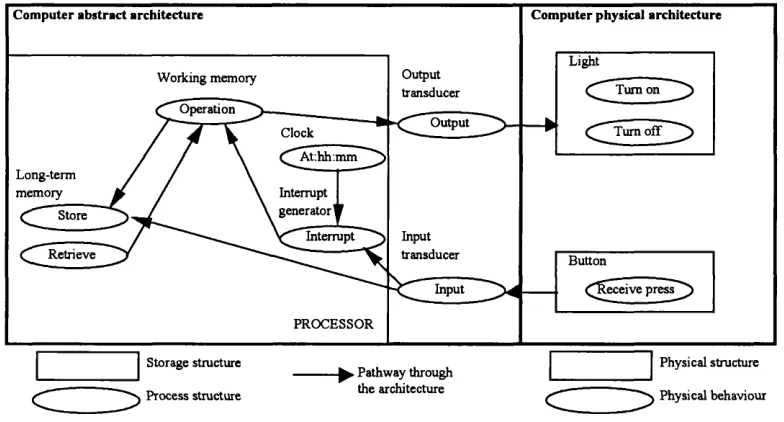
Potential Computer Abstract Structures... 53
Potential Computer Physical Structures... 54
6. Operationalising Specific Design Problems and Solutions...55
Framework for Task Quality... 55
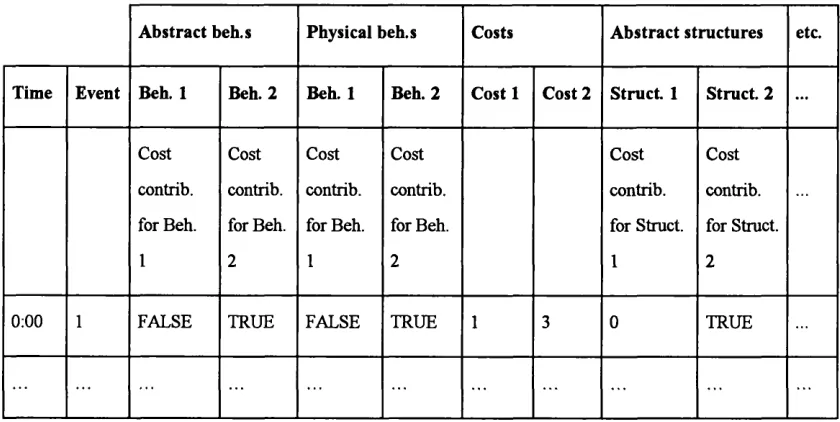
Framework for Interactive Worksystem Costs... 56
Formulae...58
Composite Structures...58
7. Conception of Planning and Control...60
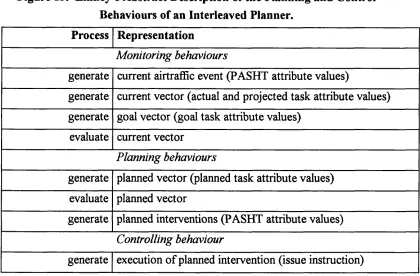
Conceptions of Planning and Control with Claims for Design Guidance... 60
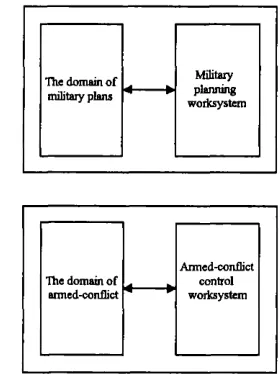
Conceptions of Planning and Control with no Claims for Design Guidance...66
Initial Conception of Planning and Control... 68
Operationalisation... 74
8. Cycle 1 Best-Practice Development... 76
User Requirements... 76
Artefact Specification...77
Best Practice Development... 77
Evaluation...80
9. Cycle 1 Operationalisation...84
Current Solution Operationalisation...84
Specific Design Problem Operationalisation... 87
Specific Design Solution Operationalisation... 88
10. Cycle 2 Best-Practice Development...91
User Requirements... 91
Artefact Specification...92
Contents
Evaluation... 95
11. Cycle 2 Operationalisation...98
Generality Concern... 98
Current Solution Operationalisation... 99
Specific Design Problem Operationalisation... 101
Specific Design Solution Operationalisation... 102
12. Initial Engineering Principles... 105
Detailed Strategy... 105
Initial Engineering Principles Identified during Operationalisation(s)...110
Initial Assumption Assessment from Operationalisation(s)...116
Inspirational Initial Engineering Principle from Operationalisation(s)...117
Initial Engineering Principles from General Guidelines... 121
Initial Engineering Principles from MUSE Guidelines...123
Initial Engineering Principles from MUSE Tasks... 124
13. Strategy Assessment and Discussion... 126
Strategy and Conception Changes... 126
Status of Initial Engineering Principles... 127
Strategy Assessment... 128
Further Research... 128
Strategy Discussion... 130
14. MUSE for Research (MUSE/R)... 133
Scope and Notation... 133
Process...134
Support for Design... 135
Further Research... 136
15. Conclusions...137
Early Initial Engineering Principles... 137
Contents
Appendix A. The OpEnMan Heating Control Interface... 148
The OpEnMan Controller...148
Relevant Electricity Tariff in France... 148
Existing Electricity Controllers for the Tempo Tariff... 149
Overview of the OpEnMan Controller... 149
Controlling the Heating using the OpEnMan Controller... 152
Configuration of the OpEnMan Controller...154
Potential User Requirements for the Sponsor’s Energy Management System...154
Appendix B. Questionnaire for User Requirement Selection... 157
Questionnaire...157
Supplemental Questions for Cycle 2... 157
Appendix C Background Information for Cycle 1...158
Appendix D. Background Information for Cycle 2 ...160
Appendix E. Composite Structures...162
Goals... 162
Human Physical Execution...162
Computer Input and Output...163
Cooking...163
Planning Composite Structures... 164
Appendix F. Complete MUSE Application for Cycle 1 ... 168
Initial SUR(y)...168
MUSE Elements of SUR(y)...168
Extant systems analysis stage...169
Extant System System’s Analysis of the Current System...171
Generalised Task Model Stage... 180
Statement of User Needs Stage... 181
Composite Task Model Stage...182
System and User Task Model Stage... 184
Interaction Task Model Stage...186
Interface Model Stage... 187
Display Design Stage... 188
JSD Entity Structure Step...190
JSD Initial Model Step...191
JSD Function Step... 193
JSD Timing Step... 194
JSD Implementation Step...194
Appendix G. Full Cycle 1 Operationalisation...195
Current Solution Operationalisation... 195
Specific Design Problem Operationalisation...196
Specific Design Solution Operationalisation... 197
Appendix H. Operationalisation Formulae... 199
Appendix I. Complete MUSE Application for Cycle 2 ...200
Initial SUR(y)... 200
R Construct... 200
Client Questions dxvé Answers... 200
MUSE Elements of SUR(y)... 206
Extant Systems Analysis Stage...207
Extant System System’s Analysis of the Current System... 209
Generalised Task Model Stage... 213
Statement of User Needs Stage...214
Composite Task Model Stage... 215
System and User Task Model Stage...218
Interaction Task Model Stage... 220
Interface Model Stage... 223
Display Design Stage... 224
Appendix J. Full Cycle 2 Operationalisation...226
Appendix Introduction... 226
Current Solution Operationalisation...226
Specific Design Problem Operationalisation... 227
List of Figures
Figure 1. Operational and Technical Problem. 20
Figure 2. HCI Practice. 28
Figure 3. Behavioural System and World of Work Distinction. 30
Figure 4. HCI Engineering Practice. 31
Figure 5. HCI Engineering Knowledge. 31
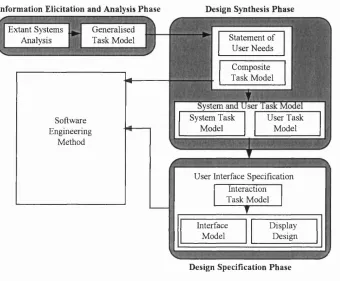
Figure 6. MUSE Overview. 45
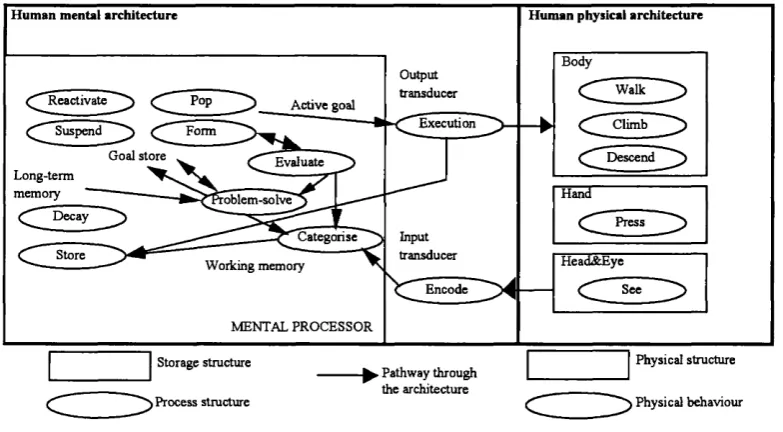
Figure 7. Human Architecture. 53
Figure 8. Computer Architecture. 54
Figure 9. Domain Diagram Key. 55
Figure 10. Domain State Stream Table Key. 56
Figure 11. Structure and Behaviour Streams and Costs Table Key. 57
Figure 12. Composite Structures. 59
Figure 13. Linney’s Abstract Description of the Planning and
Control Behaviours of an Interleaved Planner. 62 Figure 14. Description of Dowell’s Planning and Control
Processes of an Air Traffic Management Worksystem. 62 Figure 15. Colbert’s Representation of the Domains and
Interactive Worksystems of Planning and Control. 69 Figure 16 a, b, and c. Alternative Representations of Colbert’s
Planning and Control. 70
Figure 17. Composite Representation of Colbert’s Planning and
Control. 70
Figure 18. Desired States and Structures Planning and Control
(DSSP&C). 71
Figure 19. Hill et al. Planning and Control. 71
Figure 20. Dowell Planning and Control. 71
Figure 21. Composite Planning and Control for Hill et al. and
Dowell. 72
Figure 22. Hill et al. and Dowell Planning and Control
Represented in terms of DSSP&C. 72
Figure 23. General Planning Behaviours. 74
Figure 24. Front Door Controller Prototype. 83
Figure 25. Planning Behavioural and Structural Costs for Cycle 1
List of Figures Figure 26. Control Behavioural and Structural Costs for Cycle 1
Current Solution Operationalisation. 87
Figure 27. Planning Behavioural and Structural Costs for Cycle 1
Specific Design Solution Operationalisation. 89
Figure 28. Control Behavioural and Structural Costs for Cycle 1
Specific Design Solution Operationalisation. 90
Figure 29. Planning Aid Prototype. 97
Figure 30. Planning Behavioural and Structural Costs for Cycle 2
Current Solution Operationalisation. 101
Figure 31. Control Behavioural and Structural Costs for Cycle 2
Current Solution Operationalisation. 101
Figure 32. Planning Behavioural and Structural Costs for Cycle 2
Specific Design Solution Operationalisation. 104
Figure 33. Control Behavioural and Structural Costs for Cycle 2
Specific Design Solution Operationalisation. 104
Figure 34. Cycle 1 CTM(xy) Product. 125
Figure 35. MUSE/R Overview. 135
Figure 36. OpEnMan Installation Schematic. 150
Figure 37. OpEnMan Displays and Buttons. 151
Figure 38. OpEnMan Installation Scenarios. 155
Figure 39 ; List of Potential User Requirements for an Installation
of the OpEnMan system. 156
Figure 40. Composite Structures Relating to Goals. 162 Figure 41. Composite Structures Relating to Human Physical
Execution. 163
Figure 42. Composite Structures Relating to Computer Input and
Output. 163
List of Figures
Figure 52. DoDD(Current) Table. 176
Figure 53. STM(Current) Structured Diagram. 176
Figure 54. STM(Current) Table. 177
Figure 55. ITM(Current) Structured Diagram. 177
Figure 56. ITM(Current) Table. 178
Figure 57. IM(Current) Structured Diagram. 178
Figure 58. PSL(Current) Structured Diagram. 179
Figure 59. PSL(Current) Structured Diagram. 179
Figure 60. GTM(y) Structured Diagram. 180
Figure 61. GTM(y) Table. 181
Figure 62. CTM(y) Table. 183
Figure 63. Event List. 183
Figure 64. Functions List. 184
Figure 65. STM(y) Structured Diagram. 184
Figure 66. STM(y) Table. 185
Figure 67. UTM(y) Structured Diagram. 185
Figure 68. ITM(y) Structured Diagram. 186
Figure 69. ITM(y) Table. 186
Figure 70. IM(y) Structured Diagram. 187
Figure 71. IM(y) Table. 187
Figure 72. PSL(y) Diagram. 188
Figure 73. DSO(y) Screen 1 Table. 189
Figure 74. DSO(y) Screen 2 Table. 189
Figure 75. Entity Structure Diagram. 191
Figure 76. Initial Model Diagram. 192
Figure 77. Function Step Diagram. 193
Figure 78. Figures for the Current Solution Operationalisation
(‘Current’). 196
Figure 79. Figures for the Specific Design Solution
Operationalisation (‘Actual’). 198
Figure 80. TDl (Current) Table. 210
Figure 81. TD2(Current) Table. 211
Figure 83. GTM(y) Structured Diagram. 213
Figure 84. GTM(y) Table. 214
Figure 85. CTM(y) Table. 217
Figure 86. Event List. 217
Figure 87. Functions List. 217
Figure 88. STM(y) Table. 220
Figure 89. ITM(y) Table. 222
Figure 90. IM(y) Table. 223
Figure 91. DSO(y) Screen 1 Table. 224
Figure 92. DSO(y) Screen 2 Table. 224
Figure 93. DSO(y) Screen 3 Table. 224
Figure 94. DSO(y) Screen 4 Table. 225
Figure 95. Figures for the Current Solution Operationalisation
(‘Current’). 227
Figure 96. Figures for the Specific Design Solution
List of Figures in Pocket on Back Cover
Figure PI. Cycle 1 MUSE TDl (Current) Structured Diagram. Figure P2. Cycle 1 MUSE TD2.1 (Current) Structured Diagram. Figure P3. Cycle 1 MUSE TD2.3(Current) Structured Diagram. Figure P4. Cycle 1 MUSE TD2(Current) Structured Diagram. Figure PS. Cycle 1 MUSE GTM(Current) Structured Diagram. Figure P6. Cycle 1 MUSE CTM(y) Structured Diagram.
Figure P7. Cycle 1 Operationalisation Current Planning Diagram. Figure P8. Cycle 1 Operationalisation Current Control Diagram.
Figure P9. Cycle 1 Operationalisation Current Planning and Control Table. Figure PIO. Cycle 1 Operationalisation Current Planning and Control Formulae. Figure PI 1. Cycle 1 Operationalisation Actual Planning Diagram.
Figure P I2. Cycle 1 Operationalisation Actual Control Diagram.
Figure P13. Cycle 1 Operationalisation Actual Planning and Control Table. Figure P14. Cycle 1 Operationalisation Actual Planning and Control Formulae. Figure PIS. Cycle 2 MUSE TD1.1 (Current) Structured Diagram.
Figure P I6. Cycle 2 MUSE TD1.2(Current) Structured Diagram. Figure P17. Cycle 2 MUSE TD l.3(Current) Structured Diagram. Figure PI 8. Cycle 2 MUSE TDl (Current) Structured Diagram. Figure P I9. Cycle 2 MUSE TD2(Current) Structured Diagram. Figure P20. Cycle 2 MUSE DoDD(Current) Diagram.
Figure P21. Cycle 2 MUSE GTM(Current) Structured Diagram. Figure P22. Cycle 2 MUSE CTM(y) Diagram.
Figure P23. Cycle 2 MUSE STM(y) Structured Diagram. Figure P24. Cycle 2 MUSE UTM(y) Structured Diagram. Figure P2S. Cycle 2 MUSE ITM(y) Structured Diagram. Figure P26. Cycle 2 MUSE IM(y) Structured Diagram. Figure P27. Cycle 2 MUSE PSLl(y) Diagram.
List of Figures in Pocket on Back Cover Figure P31. Cycle 2 Operationalisation Current Planning Diagram.
Figure P32. Cycle 2 Operationalisation Current Control Diagram.
Figure P33. Cycle 2 Operationalisation Current Planning and Control Table. Figure P34. Cycle 2 Operationalisation Current Planning and Control Formulae. Figure P35. Cycle 2 Operationalisation Actual Planning Diagram.
Figure P36. Cycle 2 Operationalisation Actual Control Diagram.
Acknowledgements
I acknowledge the support of the Engineering and Physical Sciences Research Council (EPSRC); of Schlumberger Industries, Paris; and of the Ergonomics & HCI Unit, University College London. The research was supported by an EPSRC CASE studentship.
1. Introduction
This research is primarily concerned with improving Human-Computer Interaction (HCI) design through the development of HCI design knowledge. The requirement to develop design knowledge arose from a specific operational problem with design, raised by the industrial sponsor of the research. The following sections outline this specific problem with HCI design, and show that the problem is more widespread. Essentially, the general operational problem is an inability to design human-computer systems effectively.
The chapter ends with an overview of the thesis by chapter.
Specific Problem with an EMS Design
France has recently changed its electricity tariffs to try to reduce the number of power stations. To take advantage of cheap electricity, you must now accept to have your supply changed dramatically at short notice. For example, the electricity supplier can inform you that, for the next day, electricity will be very expensive. The sponsor of this research, a French company, designed a prototype energy management system (EMS) for the home. Their prototype EMS aimed to reduce the inconvenience of supply changes at short notice, in order to enable homeowners to take advantage of the cheaper electricity (Appendix A). The prototype EMS was a triumph of hardware and software development. For example, it could control appliances, kettles, heaters, etc. remotely, simply by having them on a special plug with the control signals carried over the standard electricity wires. Further, strong software engineering techniques (object-oriented analysis, design, and implementation) were used in its development.
1. Introduction deliver design recommendations. The evaluation was commissioned late in the design process, after the developers considered the hardware and software nearly complete. None of the design recommendations were incorporated into the prototype. Therefore, to be effective, the HCI input needed to be early in the design process.
Existing HCI input, such as Hierarchical Task Analysis, structured methods, guidelines, etc., was available to be applied early in the design process. However, this existing early HCI input was not effective enough, for the following reasons: • Early in the design process, the developers had placed an emphasis on hardware
and software development, rather than HCI, because they could be more certain
of solving the hardware and software ‘engineering’ problems.
• Available early HCI input, while better than no HCI input, might still have resulted in an unacceptably ineffective EMS.
• Available early HCI input can be criticised for involving too much iteration during design, its application being ‘trial-and-error’ (Draper ,1991).
If the existing HCI input was not effective enough for the prototype EMS, then it will not be effective enough for the future. Even more effective EMS designs will be required in the future. The sponsor is interested in improving the design of its future EMS products as well as their current EMS product.
The specific problem, with an EMS design, is an inability to design a prototype EMS effectively, using existing available HCI input to the design process.
General Problem with HCI Design
1. Introduction
London Ambulance Service
‘Few will not recall the computer system failure/collapse at the London Ambulance Service in 1992 which received world-wide media attention.’ (Tighe, 1996)
In particular, Newman (1994) claims that an important part of this failure was that ‘a more radical user interface design was used than might have been appropriate (LAS, 1993)’. Tighe, the project leader after the failure, claimed that user involvement and prototyping were ‘to prove critical to future success’. Again, HCI was not involved until proven necessary, and then only in a prototyping rôle.
The challenge for HCI is to demonstrate considerable benefits when included in the design process, and demonstrate them convincingly.
Energy Management Systems in the Future
Brinkworth (1993) argues that there is a world energy crisis, with a massive predicted increase in primary energy consumption, C02 emissions, and car usage. Energy utilities are seeking to introduce rate changes for industry and the home to address this crisis (Capehart, 1986). Sophisticated software and hardware is proposed for the home following industrial use (Rahman and Bhatnagar, 1986; Benator, 1987). In France, where two-thirds of the domestic energy bill is for heating (Energy, 1990), trials of advanced EMSs are starting (Phillips, 1994). Complex, remote-controlled, meters will be available for homes that,
‘could reduce the load by turning on heating systems at staggered intervals. “The system could be extended to non-heating appliances,” says Nunn [an industry spokesperson]. “Non-essential high energy appliances like washing machines, dish washers, and tumble dryers could run within a time band rather than a specific time.” They would be turned on and off by a signal from the electricity supplier.’ (Goodwin, 1995)
1. Introduction
Corporate Productivity
Attewell (Constant, 1993) conducted three types of studies to gather the evidence for and against claims that Information Technology has improved corporate productivity. He analysed inter-firm differences within an industry, inter-industry differences, and entire economic sectors. He claimed that ‘overall the evidence is that improvements [in productivity] have been insignificant or absent’; a claim supported by a panel discussion at a CSCW conference (Constant, 1993). Although, Attewell’s definition of ‘productivity’ could be criticised as being narrow, the result remains of concern.
These concerns are expressed by others, including Newman et al. (1996), who analysed document authoring by economists. This analysis ‘shows that benefits gained fi’om word processing appear to be offset by authors’ tendency to tinker with documents up to the last minute’. Newman et al. cite further examples:
‘Recent studies have questioned the widely-held view that interactive computer systems offer productivity gains to service industries such as banking, insurance and health care. For example, a 1992 study of the impact of 15 years of information technology investments at the World Bank could find no evidence of gains in productivity (Katzenstein, 1993). Landauer (1995) has quoted a number of similar cases in his general study of productivity trends in the service industries since the 1970s.’
A survey by Bellotti (1988) showed that corporations had ‘no confidence in HCI as a discipline and no perceived need for it’. The situation has changed, but there is still a need to improve the confidence in HCI in order to justify HCI during development (Johnson, 1995).
The challenge for HCI is both to improve the confidence in HCI and to improve corporate productivity.
General Problem
That the challenges are for HCI has been succinctly expressed by Draper (1991): ‘The fundamental fact about HCI today is that neither computer
1. Introduction The general problem with HCI is an inability to design human-computer systems effectively, using available HCI input to the design process. The primary aim in this research is to address these challenges for HCI, and enable HCI to deliver considerable benefits for human-computer systems.
Overview of the Thesis
This first chapter has identified the specific and general problems with HCI design that the research will address. This ‘operational’ general problem, outlined above, is given a technical expression, the ‘technical problem’, in terms of the development of HCI design knowledge. The ‘technical solution’ aims to solve, at least to a declared extent, this operational problem (see Figure 1). The desired operational solution is more effective HCI design practice, for EMSs in particular and human-computer systems in general.
Operational Solutions
Technical Solutions
Operational Problems
Technical Problems
■ Process direction
Figure 1. Operational and Technical Problem.
The terms ‘conception’, ‘conceptualise’, and ‘operationalisation’ are used extensively in the thesis. A conception is understood to be a set of concepts, which are abstractions over a class of objects, based on their common aspects, and their relations. Conceptualisation is the process of generating a conception. Operationalisation is the process of instancing a conception to produce an operationalisation. An operationalisation of a conception is a set of less abstract concepts (related to the concepts in the conception) that ultimately reference observables in the ‘real’ world.
1. Introduction
Chapter 2—Engineering Principles: Technical Solution
The technical problem is identified as the requirement to make HCI knowledge more effective, and specifically to acquire HCI knowledge with a guarantee of application. Dowell and Long’s assessment of the discipline of HCI (Long and Dowell, 1989; and Dowell and Long, 1989) is first described and then applied to identify the technical problem. Dowell and Long propose the development in the longer term of HCI as an engineering discipline, with knowledge that has a guarantee. They term this knowledge ‘engineering principles’.
The development of engineering principles for HCI is the long-term technical solution addressed by this research. The technical aim of this research is to make progress towards these engineering principles, through the development of a conception of engineering principles, a strategy for their acquisition, and an implementation and assessment of that strategy.
Chapter 3—Conception o f (Substantive) Engineering Principles
Dowell and Long’s conception of the general design problem of an engineering discipline of HCI (Long and Dowell, 1989; and Dowell and Long, 1989) is presented. A conception of (substantive) engineering principles is developed for this research from the Dowell and Long conception. Substantive engineering principles ‘prescribe the features and properties of artefacts’ (Dowell and Long). Components of (substantive) engineering principles are conceptualised for this research: general design problems; general design solutions; specific design problems; specific design solutions; partial design problems; and partial design solutions.
A secondary aim of this research is an informal assessment of the Dowell and Long requirement for an engineering discipline of HCI and their conception of an engineering discipline of HCI.
Chapter 4—Strategy fo r Developing Engineering Principles
A strategy for developing (substantive) engineering principles is developed for this research.
1. Introduction principles. The aim of this research is to assess the proposed strategy by implementing it to develop examples of initial engineering principles.
The strategy involves cycles of current HCI best-practice development and operationalisation of that development as specific design problems and solutions, followed by the identification of general relationships, as initial engineering principles, between these operationalisations. Two cycles of development and operationalisation, followed by identification, are proposed for this research to assess the strategy. Current HCI best practice includes MUSE—a Method for Usability Engineering (Lim and Long, 1994).
The rationale for scoping this research to ‘planning and control’ engineering principles is presented. Additional shorter-term benefits of the strategy are identified.
Chapter 5—Conception o f Human-Computer Systems
An initial conception of human-computer systems and their costs is developed for this research. The human components of the conception are based on a human mental architecture developed by Timmer and Long (1996 and 1997).
Chapter 6—Operationalising Specific Design Problems and Solutions
Frameworks to support operationalising the effectiveness of human-computer systems have been developed during this research. These frameworks include the layout and scope of diagrams and tables to operationalise and metricate specific design problems and their solutions.
Chapter 7—Conception o f Planning and Control
An initial conception of planning and control is developed for this research. The conception is based on previous research into planning and control in HCI, Psychology, and Artificial Intelligence.
Chapter 8—Cycle 1 Best-Practice Development
1. Introduction The user requirements, application of HCI best-practice, resulting artefact, and the evaluation of the artefact are summarised.
Chapter 9—Cycle 1 Operationalisation
The operationalisation of the specific design problem and solution for Cycle 1 is summarised.
Chapter 10—Cycle 2 Best-Practice Development
The Cycle 2 user requirements involve a problem with a domestic heating system that results in the user becoming overheated during vigorous cooking, to the detriment of the food produced. As for Cycle 1, an artefact was designed by HCI best-practice to solve this problem. The artefact is a new planning aid for cooking, and was prototyped to support evaluation. The evaluation was positive.
The user requirements, application of HCI best-practice, resulting artefact, and the evaluation of the artefact are summarised.
Chapter I I —Cycle 2 Operationalisation
As for Cycle 1, the operationalisation of the specific design problem and solution for Cycle 2 is summarised.
Chapter 12—Initial Engineering Principles
A detailed strategy for identifying initial engineering principles from the two cycles is developed. The detailed strategy includes six means of targeting initial engineering principles. Examples of initial engineering principles are developed for each of these six forms of targeting.
Chapter 13—Strategy Assessment and Discussion
1. Introduction
Chapter 14—MUSE fo r Research (MUSE/R)
Methodological support is developed for future research that will apply design knowledge to acquire engineering principles. This research proposes and outlines a version of the MUSE method to support such research, termed MUSE/R—MUSE for Research.
Potential tool support for the methodological support is identified. Tool support is essential for serious progress in the acquisition and application of engineering principles.
Chapter 15—Conclusions
This research is considered to have made significant progress towards Dowell and Long’s engineering principles, and, therefore, progress towards solving the operational problem for this research of the inability to design human-computer systems effectively. The progress towards engineering principles made by this research is: a conception of engineering principles, a strategy for the acquisition of engineering principles, examples of early initial engineering principles, a positive assessment of the strategy at this juncture, and an outline of further research for the acquisition of engineering principles.
2. Engineering Principles: Technical Solution
The previous chapter identified the general operational problem of this research, that of an inability to design human-computer systems effectively, using available HCI input to the design process. This chapter identifies the technical problem of this research and its technical solution.
Dowell and Long’s (D&L) assessment of the discipline of HCI (Long and Dowell, 1989; and Dowell and Long, 1989) is described and then applied to identify the technical problem. The technical problem is identified as the requirement to make HCI knowledge more effective, and specifically to acquire HCI knowledge with a guarantee of application.
Dowell and Long propose the development in the longer term of an engineering discipline, with knowledge that has a guarantee. They term this knowledge ‘engineering principles’.
The development of engineering principles for HCI is the long-term technical solution addressed by this research. The technical aim of this research is to make progress towards these engineering principles, through the development of a conception of engineering principles, a strategy for their acquisition, and an implementation and assessment of that strategy.
Dowell and Long’s Characterisation of the Discipline of HCI
Dowell and Long (Dowell and Long, 1989; and Long and Dowell, 1989) characterise the discipline of HCI as a design discipline rather than as a scientific discipline: HCI design knowledge supports HCI design practice, which is to provide solutions to general HCI design problems. They identify from this characterisation a means of assessing the effectiveness of HCI knowledge: to be effective, HCI knowledge must be conceptualised; operationalisable; generalisable; and testable. These features are used by them to assess the current HCI discipline and propose a more effective discipline.
Current State o f the HCI Discipline
2. Engineering Principles: Technical Solution and stated that ‘their [product] effectiveness is weakened by errors and difficulties experienced by designers in their use [of heuristics]’. Heuristics are poorly, if at all, conceptualised—often only through example practice—, which leads to them being difficult to operationalise, therefore unlikely to be generalisable or testable.
D&L’s characterisation of the current state of the HCI discipline supports the general operational problem identified by this research. Currently available HCI knowledge is not effective, and has no guarantee of success of application in practice.
Future Development o f the HCI Discipline
D&L compare the current HCI discipline with existing engineering disciplines, and propose that, to be more effective in the future, the HCI discipline should develop as an ‘engineering’ discipline. D&L propose that the knowledge of the engineering HCI discipline would be more effective, with a guarantee of application similar to that currently enjoyed by the existing ‘hard’ disciplines such as electrical or mechanical engineering.
D&L propose that engineering HCI knowledge would need to be conceptualised, with explicit, complete, consistent, and formal definitions, to be operationahsable, testable, and generalisable. D&L term this knowledge ‘engineering general design principles’, which will be referred to in this research as ‘engineering principles’. HCI practice would become that of ‘specify then implement’. D&L describe engineering principles as ‘prescriptions ... which, when implemented, demonstrate a prescribed and assured performance’.
The acquisition of more effective HCI knowledge, particularly with a guarantee of application, would solve the specific and general operational problems, since:
• A guarantee of application would enable developers to place an appropriate emphasis on HCI input to the design process and hardware and software development. They could be convincingly certain of solving HCI problems. • A ‘prescribed and assured performance’ would result in effective human-
computer systems and improved productivity.
2. Engineering Principles: Technical Solution research. The technical solution is ‘long term’ because it is anticipated that acquiring engineering principles is difficult. Therefore, the technical aim of this research is to make progress towards the development of these engineering principles.
D&L have developed a conception of the general design problem of the engineering HCI discipline. This conception is relatively well operationalised (for example: Dowell, 1993; Stork and Long, 1994; Hill et al., 1995; Timmer and Long, 1996). However, D&L have not developed a conception of engineering principles nor a strategy for their acquisition. This research builds on D&L’s research, to develop a conception of engineering principles, a strategy for their acquisition, and an assessment of that strategy. The assessment of the strategy involves acquiring examples of engineering principles.
Requirement fo r Guarantee
There are alternative characterisations of HCI. However, these characterisations do not recognise the need for more effective HCI knowledge, with a guarantee of application. The following paragraphs outline the main alternatives to D&L’s characterisation.
Carroll (1989, 1997) sees HCI as a ‘design science’. He aims for iterative and historically-based improvement of HCI knowledge, as embodied in ‘artefacts’ and ‘second-order artefacts (prescriptive design models, architectures and genres, tools and environments, interface styles)’ (Carroll et al., 1991; Carroll et al., 1992). He does not address the requirement for guarantee or its delivery.
Gaines and Shaw (1986a and b) support D&L in terms of hardware and software engineering:
‘It is time that we provided foundations of engineering human- computer interaction (HCI) as explicit and well-founded as those for hardware and software engineering.’
‘We believe that the cutting edge of HCI research studies must now move to the provision of deep theories. ’
2. Engineering Principles: Technical Solution knowledge. However, D&L’s conception of the general design problem is broad enough to cover their conceptions.
Engineering and Craft
Stork (1992) considered that engineering and craft would co-exist in HCI practice, as in other hard engineering disciplines (Figure 2). ‘User requirements’ and ‘artefact specification’ are used as the input and output to HCI practice, when that practice includes craft HCI practice. The secondary direction of knowledge application in Figure 2 shows potential iterations during design.
User Requirements
Artefact Specifications
Craft Knowledge Engineering Knowledge
Primary direction o f knowledge application Secondary direction o f knowledge application
Figure 2. HCI Practice.
Acquiring Engineering Principles
Given the anticipated difficulty of acquiring engineering principles, their scope will be limited for this research to enable strategy implementation and assessment within the timeframe of this research. Their scope will be limited to:
1. Concentration on ‘substantive’ engineering principles, rather than ‘methodological’ engineering principles (see Chapter 3).
2. Acquisition of ‘initial’ engineering principles, which have not been validated by application (see Chapter 4).
3. Conception of (Substantive) Engineering Principles
The previous chapter identified that the technical aim of this research was to make progress towards engineering principles, through the development of a conception of engineering principles, a strategy for their acquisition, and an assessment of that strategy.
Part of D&L’s proposal is a conception of the general design problem of an engineering discipline of HCI. This research requires a conception of engineering principles. This chapter presents D&L’s conception. A conception of (substantive) engineering principles (meta-knowledge^) is developed for this research from the Dowell and Long conception. Substantive engineering principles ‘prescribe the features and properties of artefacts’ (D&L). Components of engineering principles are conceptualised; general design problems; general design solutions; specific design problems; specific design solutions; partial design problems; and partial design solutions.
Dowell and Long’s Conception of the General Design Problem of the Discipline of HCI
D&L’s conception ‘attempts to establish the set of related concepts which can express the general design problem of HF more formally. Such concepts would be those embodied in HF engineering general design principles. ’ This conception is presented here, however reference to the original papers by D&L is recommended. D&L state the general HCI design problem informally as ‘the design of interactive worksystems for performance’. They propose a more precise description as follows (slightly amended for typographical considerations):
‘The design of behaviours constituting a worksystem {S} whose actual performance (Pa) conforms with some desired performance (Pd). And to design {S} would require the design of human behaviours {U} interacting with computer behaviours {C}. Hence conception of the general design problem of an engineering discipline of HCI is expressed as:
3. Conception of (Substantive) Engineering Principles Specify then implement {U} and {C}, such that
{U} interacting with {C} = {S} Pa=Pd where Pd = fii (Qd, Kd)
Qd expresses the desired quality of the products of work within the given domain of apphcation;
Kd expresses acceptable (i.e., desired) costs incurred by the worksystem, i.e. by both human and computer.’
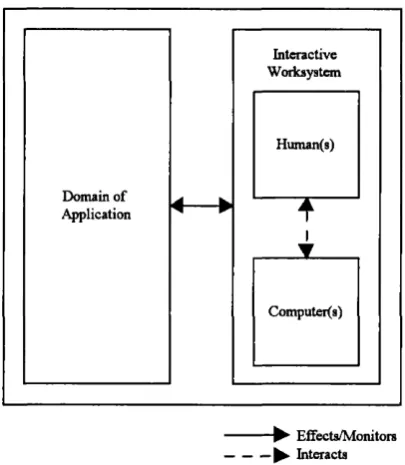
This statement expresses D&L’s distinction between the behavioural system that is the interactive worksystem, hereafter ‘worksystem’, that performs work, and the world of work, the domain of application, within which the work is performed (Figure 3). It follows from their conception that Pa is a function of the actual quality of the products of work within a particular domain of application (Qa) and the actual costs incurred by a particular worksystem (Ka).
Human(s) Interactive W orksystem
EfTects/Monitors — ^ Interacts
Figure 3. Behavioural System and World of Work Distinction.
3. Conception of (Substantive) Engineering Principles
Enginecnng Knowledge
Kso Partial Design Problem (POP) 1
Partial Design Solution (PDS) 1 Kde' User Requirements Specific Design Problem Specific Design Solution Artefact Specifications
P D P 2 PDS 2
P D P n P D S n
Craft Knowledge:
Primary direction o f knowledge application Secondary direction o f knowledge application I Series continues
Figure 4. HCI Engineering Practice.
The engineering knowledge applied during practice is conceptualised as producing: a
specific design problem operationalisation; partial design problem
operationalisations; partial design solution operationalisations; and a specific design
solution operationalisation (Figure 4). The partial design problem and solution
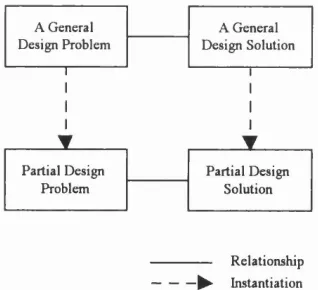
operationalisations are the instantiations of general design problem and its general
design solution (Figure 5). The specific design problem and solution
operationalisations represent the scoping of the engineering HCI discipline by
comparison with craft HCI. The partial design problem and solution
operationalisations represent the application of HCI engineering knowledge. They
are ‘partial’ because they solve only part of the specific design problem.
A General Design Problem
A General Design Solution 1 1 1 1 ▼ 1 1 1 1 ▼ Partial Design Problem Partial Design Solution
--- Relationship --- ► Instantiation
Figure 5. HCI Engineering Knowledge.
3. Conception of (Substantive) Engineering Principles This research restricts itself to substantive rather than methodological engineering principles. D&L distinguish between substantive and methodological engineering principles (following Checkland, 1981; and Pirsig, 1974):
‘Methodological principles prescribe the methods for solving a general design problem optimally. ... Substantive principles prescribe the features and properties of artefacts, or systems that will constitute an optimal solution to a general design problem.’
Three types of engineering principles can be identified:
• Decomposition knowledge (Kde) is conceptualised as the means of instantiating a partial design problem from a specific design problem. Kde requires substantive knowledge of the general design problem of which the partial design problem is the instance {a general design problem; Figure 5).
• Solution knowledge (Kso) is conceptualised as the means of instantiating a partial design solution from a partial design problem. Kso requires substantive knowledge of the general design solution to the general design problem identified in Kd {a general design solution; Figure 5).
• Recomposition knowledge (Kre) is conceptualised as the means of instantiating a specific design solution from partial design solutions. The assured prescription of the substantive Kso implies that recomposition would be prescribed, and so no substantive knowledge is required for Kre.
The specific design problem and solution may not be required for engineering design practice. It may be possible to instantiate a partial design problem from the user requirements using Kde and it may be possible to instantiate part of the artefact specification using Kre. However, it is expected that they are required at least for further research work, as part of research design practice.
3. Conception of (Substantive) Engineering Principles Conceptions of the General Design Problem and Solution
The general HCI design problem requires a statement of the desired performance for the desired worksystem, whereas a statement of the general HCI design solution requires a statement of the actual performance for the actual worksystem.
Desired performance and actual performance are conceptualised following D&L’s conception of performance. Important occurrences of the concepts are highlighted in bold to aid their identification. The concepts taken from D&L are in italics and the quotations are fi-om D&L (1989).
Conception o f Desired Performance
The desired performance, Pd, is conceptualised as a function of the desired quality of the products of work, Qd, within the domain of application and the acceptable or desired costs,Kd, incurred by the worksystem.
The worksystemboundary criteria allow statement of the behavioural system which constitutes the worksystem, that system ‘whose purpose is to achieve and satisfy ... common goal[s]’. The domain boundary criteria allow assertion of the world of work that constitutes the domain of application, that world of work which is determined by the requirement to express these common goals.
Conception o f Actual Performance
Actual performance. Pa, is conceptualised as a function of the actual qualityof the products of work, Qa, within the given domain of application and the current or actual costs, Ka, incurred by the worksystem.
The worksystem boundary criteria and domain boundary criteria are the same as for the conception of desired performance.
Conception o f Desired Quality
3. Conception of (Substantive) Engineering Principles and relatedor unrelated. The transformations described by a product goal can be identified for each attribute, and these transformations are termed task goals.
D&L describe the difference between abstract and physical attributes of objects as ‘abstract attributes of objects are attributes of information and knowledge’ and ‘physical attributes of objects are attributes of energy and matter’. They also propose that ‘different attributes of an object emerge at different levels within an hierarchy of levels of complexity’ and, in general, abstract attributes emerge at a higher level than physical attributes. Similarly, ‘objects are described at different levels of specification commensurate with their levels of complexity’. Furthermore, attributes of objects are related to attributes of other objects both between and within levels of complexity.
Conception o f Actual Quality
The actual quality of the products of work achieved by the worksystem are conceptualised as similar to desired quality, with transformations of states of attributes of objects that are achieved, called product achieved goals, and transformations for each attribute, called taskachieved goals.
Conception o f Desired Costs
D&L conceptualise the worksystem (the behavioural system) as ‘human and computer behaviourstogether performing work’. They make a distinction between human behaviour as purposeful and computer behaviour as purposive. They claim that human behaviours correspond with the transformation of objects in a domain and that an expression of them must ‘at least be expressed at a level commensurate with the level of description of the transformation of objects in the domain’. These statements would appear to hold for computer and worksystem behaviours.
3. Conception of (Substantive) Engineering Principles etc.; the conative aspects are those of acting, trying and persevering, etc.; and the affective aspects are those of being patient, caring, and assuring, etc.’
D&L conceptualise humans and computers as ‘having (separable) structures that support their (separable) behaviours’. Furthermore, ‘Human structures may be physical (neural, biomechanical, and physiological) or mental (representational schemes and processes)’. Similarly, computer structures may be physical or abstract.
D&L claim that ‘work performed by worksystems always incurs resource costs’. They identify resource costs as behavioural or structural and associated with the human or the computer (separable). These costs can be further associated with abstract (mental) and physical behaviours or structures. Examples of resource costs related to the human are: physical workload for human physical behavioural costs', mental workload for human abstract (mental) behavioural costs', physical development and deterioration for human physical structural costs', and mental development and deterioration for human abstract (mental) structural costs. Examples of resource costs related to the computer are: energy emission and consumption for computer physical behavioural costs', software and functional resource (transaction and access resources) usage for computer abstract behavioural costs, system (hardware) development and degradation for computer physical structural costs', and software and functional development (and
degradation) for computer abstract structural costs.
The desired costs are conceptualised as the necessary resource costs of the worksystem to achieve the desired task quality.
Conception o f Actual Costs
The actual costs are conceptualised as the actual resource costs of the worksystem to achieve the actual quality.
Conceptions of the Specific Design Problem and Solution
3. Conception of (Substantive) Engineering Principles The specific desired performance is conceptualised as a function of the desired quality of the products of work within a particular domain of application and the desired costs incurred by a particular worksystem.
The specific actual performance is conceptualised as a function of the actual quality of the products of work within a particular domain of application and the actual costs incurred by a particular worksystem.
Conception of (Substantive) Engineering Principles Revisited
Engineering principles achieve, or exceed, prescribed performance on application (as in D&L’s ‘Pa = Pd’). The conceptions of a general design problem and its general design solution can be combined to produce a single conception of a substantive engineering principle. Any expression of the domain, actual task quality, and actual costs are not required for a general design solution (or for its partial design solution), since they will be the same as those for its general design problem (or for its partial design problem). Therefore, the only component of the actual performance of a general design solution that is not expressed by the desired performance in its general design problem are those structures and behaviours of the worksystem required to achieve that desired performance. A substantive engineering principle is conceptualised, therefore, as the desired performance of a general design problem and the structures and behaviours of its general design solution.
Informal Assessment of Dowell & Long
The possibility, difficulty, or impossibility of acquiring engineering principles in this research will have implications for D&L’s characterisation and conception of the engineering discipline of HCI. For example, the development of HCI engineering principles by this research would support D&L’s characterisation and conception.
4. Strategy for Developing Engineering Principles
The previous chapter presents a conception for substantive engineering principles. This chapter proposes a strategy for developing such engineering principles and compares it with alternative strategies. The proposed strategy is selected and developed in further detail.
This research aims to assess the proposed strategy by developing examples of ‘initial’ engineering principles, which have not been validated by application. The rationale for scoping this research to ‘planning and control’ engineering principles is presented.
Additional shorter-term benefits of the strategy are identified.
Strategy for Developing Engineering Principles
One possible means of developing substantive engineering principles is:
• To identify general relationships between specific design problems and their solutions. These general relationships would be considered putative, i.e. requiring validation, and termed ‘initial’ engineering principles. The identification of general relationships between specific design problems and their solutions requires the operationalisation of specific HCI design problems and their solutions from the conceptions of specific HCI design problems and specific HCI design solutions.
• To validate initial engineering principles by testing.
This research aims to acquire examples of initial engineering principles by implementing this strategy to support its assessment. The research will operationalise two specific design problems and their solutions (Cycle 1 and Cycle 2), as the minimum necessary for generality. Assessment of this strategy consists of: • Acquisition or not of initial engineering principles.
• Assessment of the status of acquired initial engineering principles.
4. Strategy for Developing Engineering Principles D&L claim that for the knowledge to support engineering principles, the operationalisation of the specific design problems and solutions, needs to be explicit and formal. Formal, here, is understood as a representation that has defined rules of syntax and semantics (following Bowers, 1992), and is therefore understandable by some people for some purpose. Formality requires the metrication of the operationalisation of the conceptions of the specific HCI design problem and solution. Metrication was defined in Chapter 1 as “Metrication is the process of instancing an operationalisation to its limit, to produce metrics. Metrics quantify the less abstract concepts of the operationalisation in an observable relation with the ‘real’ world”.
To operationalise specific design solutions to specific design problems, the following methodology is proposed:
• That appropriate ‘user requirements’ are selected for each Cycle (this chapter). • That an artefact specification is developed to solve the user requirements for each
Cycle using best current HCI practice (Chapter 8 for Cycle 1 and Chapter 10 for Cycle 2).
• That the specific design problem and its solution are operationalised from a design situation based on the user requirements and its artefact specification (Chapter 9 for Cycle 1 and Chapter 11 for Cycle 2).
Engineering principles were conceptualised as the desired performance of a general design problem and the structures and behaviours of its general design solution. The strategy, however, is not to limit the operationalisations to these concepts, in order to provide:
• A check that the specific design solution is a solution to the specific design problem (i.e. by explicit representation of the actual performance to compare with the desired).
• Establishment of the relationships between the specific design solution structures and performance (a check for the solution).
4. Strategy for Developing Engineering Principles
Additional Concepts
For the research to operationalise specific design problems and solutions, a conception of human-computer systems costs is required. Human-computer costs are poorly conceptualised in the conception of specific design problems and solutions relative to the conception of task quality. Chapter 5 presents a conception of human- computer costs developed for this research.
Current Solutions
It is considered easier to operationalise existing, installed, specific design solutions, referred to here as ‘current solutions’^, than to operationalise specific design problems. The operationalisation of the current solution can provide a basis for the operationalisation of the specific design problem, because the desired performance of the specific design problem is likely to be similar to the actual performance of the current solution. Each cycle operationalises the current solution before the operationalisation of the specific design problem and its solution (Chapters 9 and 11). The selection of re-design user requirements supports the operationalisation of a current solution.
Tractable user requirements are susceptible to current design knowledge. The selection of tractable user requirements ensures that the differences between the operationalisation of the current solution and the specific design problem be minimal, and that a specific design solution exists.
SuperCraft Design
Best current HCI practice, which could be characterised as ‘SuperCraft’, for developing design solutions is considered the application of structured methods, current design guidelines, and evaluation. This research is, therefore, using a Human Factors (HF) structured method called MUSE, a Method for Usability Engineering^ (Lim and Long, 1994), applied by an HF designer. The researcher is a qualified and experienced HF designer with expertise in MUSE.
^ Current solutions are not to be confused with the specific design solutions that solve the specific
design problem, and that might be installed after the specific design problem.
^ MUSE was developed to solve the ‘too-little, too-late, and unimplementable’ contribution o f HF to
4. Strategy for Developing Engineering Principles MUSE is usually complemented by a Software Engineering (SE) method. Cycle 1 used the SE structured method called JSD, which was the first method configured for use with MUSE. However, it was found that the JSD products (Appendix F) were not required for the artefact specification to support the operationalisation of the specific design solution. This finding is probably because the Cycle 1 user requirements are relatively simple and because the researcher is a qualified and experienced Software Engineer. The Cycle 2 user requirements are also relatively simple, so JSD was not used for Cycle 2.
Comparison with Alternative Strategies
The strategy proposed above for developing HCI engineering principles can be characterised as 'bottom-up' and cautious, or sceptical (Stork and Long, 1998). This cautious approach means that steady progress is made towards engineering principles, or the abandonment of the research direction. However, this cautious approach means that engineering principles may not be found during an initial period. An alternative 'top-down' strategy would be to postulate operationalisable and testable engineering principles from a conception of engineering principles, which are then operationalised and tested. This strategy could be considered bold given our current understanding of the nature of engineering principles. The likelihood of locating an engineering principle would be low, although the effort for each attempt would appear less than with the 'bottom-up' strategy. This strategy is not recommended, because the low likelihood of locating an engineering principle does not sufficiently merit the effort for each attempt.
A further alternative 'middle-out' strategy would be to develop a conception of the general design problem and solution for a simple design ‘world’, i.e., the design of simple shapes, depending on a small set of requirements. These conceptions could be used to develop ‘engineering principles’ for this simple.world, through either of the above strategies. This route might provide insight into the nature of HCI engineering principles, but scaling up would require the adoption of one of the other two strategies.
4. Strategy for Developing Engineering Principles rejected for two reasons: current best practice craft HCI knowledge is better at developing artefacts to user requirements than at diagnosis; and it is considered easier to describe design problems when the problem still exists. Interestingly, the example that Dowell uses appears to be similar to the ‘bottom-up’ strategy adopted in this research, rather than the ‘diagnostic’ strategy he describes.
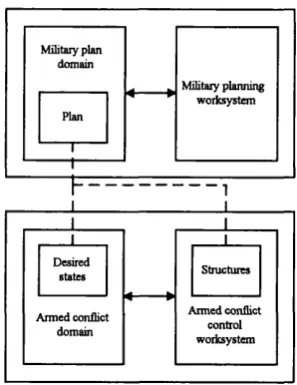
Colbert (1994a) has attempted to deliver informal ‘immature HCI Engineering’. His strategy can be understood as a form of the ‘top-down’ strategy combined with the ‘bottom-up’ strategy. For ‘top-down’, he develops a general description of the ‘domain’ of military planning. For ‘bottom-up’, he postulates, using craft practice, a general menu design for the computer support of military planning. The approach appears positive, with the acquisition of a possible informal general principle, which was tested by specifying two particular menu designs for the computer support of two specific military planning situations. Guarantee is poorly addressed due to the informality, but the strategy could be developed with a view to greater formality. However, the generality of the domain was assumed and that assumption was poorly tested, so it is difficult to assess the ‘top-down’ part of the strategy.
In addition to the above, several researchers have attempted domain and worksystem descriptions without the aim of engineering discipline or principle development. For example. Hill et al. (1995) describe the domain and worksystem of medical reception and Jenkins et al. (1993) describe the domain of domestic work. These researchers claim that these descriptions support current design practice.
Scoping the Research using the Potential for Planning and Control Engineering Principles
4. Strategy for Developing Engineering Principles Computer support for military planning and control has been investigated by Colbert (1994b). He reported that it was possible to develop a generic menu structure for military planning tasks. He claimed that this generic menu structure could be integrated with other generic user interface objects (see Rosenberg and Moran 1982), and then instantiated for two hypothetical specific military planning systems. He claimed that this generic menu structure was problem-dependent, supporting the military planning problem; in contrast to normal generic interface objects, which are claimed to be problem-independent. His claim suggests that general principles may be developed for computer support for military planning.
Analysis of the domain of aircraft flight planning and control by Dowell (1993) allowed him to reason informally about a possible software replacement for the physical flight strips, used in a specific aircraft flight planning and control example. The reasoning included references to aspects of the software replacement that were related to the controller’s planning and control. These relationships suggest that general principles may be developed for computer support for aircraft flight planning and control.
Analysis of the planning and control of multiple task work at the reception of a medical practice led Hill et al. (1995) to propose guidelines that they claimed should reduce the cost of behaviours related to planning. These proposals suggest that general principles may be developed for computer support in such multiple task planning and control situations.
Analysis of planning in project management by Pietras and Coury (1994) prompted them to remark that ‘one can conclude that theoretical models of planning are relevant to project management and useful in the design of planning systems’. Although the discussion in their paper does not adequately support this conclusion, it does suggest that general principles may be developed for computer support for planning in project management.
4. Strategy for Developing Engineering Principles Elstein, 1988)— suggests that general principles may be developed for computer support in this area.
Analysis of text editing by Robertson and Black (1986) shows that the operation of a text editor requires planning. Experienced users generated better plans, and took less time to edit a document, than novices. This finding suggests that general principles may be developed for computer-supported text editing that requires planning.
Although it is possible that the above all relate to different general principles, it is more likely that, together, they provide sufficient support towards the generation of general engineering principles for planning and control. Therefore, this research is scoped by concentrating on the potential for planning and control engineering principles. This scoping is delivered by operationalising planning and control concepts for the specific design problems and their solutions. These planning and control concepts have been developed for this research and are presented in Chapter 7.
Acquiring Potential Guarantee
Ultimately, the guarantee of engineering principles rests on the effectiveness of their support for practice, i.e. their validation through testing. However, initial engineering principles need to acquire potential guarantee to support validation. Following D&L’s properties of effective HCI knowledge—conceptualised, operationalisable, generalisable, and testable—the pre-requisites for acquiring potential guarantee are that initial engineering principles:
• Are conceptualised according to a conception of the discipline of HCI. The conceptions developed for this research are all based on D&L’s conception of the general design problem of the discipline of HCI.
• Are operationalisations of those conceptions. The cycle operationalisations will identify the concepts operationalised to support an informal checking.
• Are generalised. The generalisation for this research will be over the two cycles. • Are tested. The testing for this research will be informal evaluations of the two