Available on line at : www.eijppr.com
International Journal of Pharmaceutical and Phytopharmacological Research
(ICV-5.09)277
ISSN (Online) 2249 – 6084
ISSN (Print) 2250 – 1029
Int.J.Pharm.Phytopharmacol.Res.
2013, 2(4): 277-282
(Research Article)
Development of Multicomponent Herbal Formulation and its Evaluation for Antifertility Activity
Mahendra Yadav*1, Devendra P. Singh2, Chhavi Verma†2, Sandeep Singh3, Ankit Saini4, Anshu Dubey1 1
J.L. Chaturvedi College of Pharmacy, Nagpur, India 2
Bhagwant Institute of Pharmacy, Muzaffarnagar, India 3
Ashoka Institute of Pharmacy, Varanasi, India 4
Krishna College of Pharmacy, Bijnor, India
Received on: 02/02/2013 Accepted on: 22/02/2013
ABSTRACT
From time immemorial, man has been depending on plants as medicine. Medicinal plants have curative properties due to the presence of various complex chemical substance of different composition, which are found as secondary plant metabolites in one or more parts of the plants. Medicinal plants in India have been screened for contraceptive potential and anti-fertility effects, since the country has always been concerned about population explosion. The probable male/female antifertility effects arising from short or long term exposure of certain common and valuable Indian medicinal plants are published in scientific literature. In the research paper, the antifertility activity effect of alcoholic extract of Ailanthus excelsa, Piper longum, petroleum ether extract of Azadirachta indica, Curcuma longa, hexane extract of Carica papaya, aqueous extract of Plumbgo indica was investigated. All the extracts were mixed together to prepare an oil in water emulsion. The emulsion was administered orally to female Wister rat at the dosage regimen of 25, 50, 100 mg/kg body weight for 1-7 days. Control animal received the same volume of distilled water. Whereas all control animals become pregnant and delivered the litters. The rat treated with prepared emulsion show less no. of implants at 50mg/kg body weight. The formulation showed the significant anti-fertility activity at 50mg/kg body weight.
Key Words: Ailanthus excelsa, Piper longum, Azadirachta indica, Curcuma longa, Carica papaya, Plumbgo indica, Antifertility Activity.
INTRODUCTION
Since the beginning of the life, plants have been used for the treatment of various ailments/diseases.1,2 India is perhaps the largest producer of medicinal herbs and is rightly called “Botanical Garden of The World”. Medicinal herbs have been in use of thousands of years, in one form or another, under the indigenous system of medicine like Ayurveda, Siddha and Unani, since independence in 1947.3 About 400 useful plants have already been identified and further screening is on to identify other plants.4
Herbal medicines are preparations derived from naturally occurring plants with medicinal or preventive properties. The World Health Organization estimates that 4 billion people of the world’s population use herbal medicines for some aspect of primary health care.5 Herbal medicine is a major component in all indigenous peoples’ traditional medicine and a common element in Ayurvedic, homeopathic, naturopathic, traditional oriental and Native American medicine.6,7
In recent years herbal medicine has attracted a lot of interest. Even the multinational pharmaceutical houses have been developing and introducing a number of herbal formulations in the drug market. Standardized and stabilized extracts
from the medicinal plants are used in such formulations or further processed to isolate the active principles of the plants for use as drug.8,9 The chemical and structural characters of the active principles have given a lead in developing new synthetic analogues of the plant constituents with less toxicity and better therapeutic activity and in some case the synthesis of same plant constituents by creative organic synthetic methods. Systematic research on the medicinal plants has given rise to new drugs and even new uses of the old drugs.10
A number of drugs from indigenous plant sources have been used as an antifertility agent.11 Systematic screening of these plants for developing new antifertility herbal products is essential. The objective of present study was to develop multicomponent formulation from the extracts of six different antifertility herbal plants, which possesses maximum efficacy, reversibility of action, free from side effect and easy to use.
MATERIALS AND METHODS Collection of Crude drug
Mahendra Yadav et al...Int.J.Pharm.Phytopharmacol.Res. 2013, 2(4): 277-282
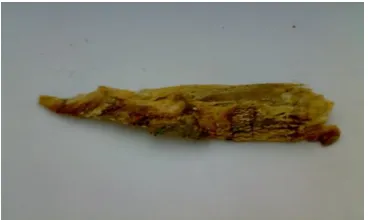
278 longa,fruit of Piper longum, root of Plumbgo indica plants has been purchased from market.
Fig. 1: Stem bark of Ailanthus excelsa
Fig. 2: Leaves of Azadirachta indica
Fig. 3: Rhizome of Curcuma longa
Fig. 4: Seeds of Carica papaya
Fig. 5: Fruit of Piper longum
Fig. 6: Root of Plumbgo indica
Extraction of Plant Material
Alcoholic extract of stem bark of Ailanthus excelsa
The shade dried coarsely powdered stem bark of Ailanthus excelsa (120g) was extracted with petroleum ether by Soxhlet apparatus. The marc left after petroleum ether extraction of Ailanthus excelsa was dried and extracted with alcohol until the extraction was completed. After completion of extraction, the solvent was removed by distillation. Brown colored residue was obtained. The residue was then stored in desiccator.
Petroleum ether extract of leaves of Azadirachta indica The shade dried coarsely powdered plants leaves of Azadirachta indica (120g) was extracted with petroleum ether by Soxhlet apparatus, until the extraction was completed. After completion of extraction, the solvent was removed by distillation. Greenish colored residue was obtained. The residue was then stored in dessicator.
Hexane extract of seeds of Carica papaya
The shade dried coarsely powdered seeds of Carica papaya (120g) was extracted with petroleum ether by Soxhlet apparatus. The marc left after petroleum ether extraction of Cariaca papaya was dried and extracted with hexane, until the extraction was completed. After completion of extraction, the solvent was removed by distillation. Yellowish brown colored residue was obtained. The residue was then stored in desiccator.
Mahendra Yadav et al...Int.J.Pharm.Phytopharmacol.Res. 2013, 2(4): 277-282
279 distillation. Yellowish brown colored residue was obtained. The residue was then stored in dessicator.
Alcoholic extract of fruit of Piper longum
The shade dried coarsely powdered fruit of Piper longum (120g) was extracted with petroleum ether by Soxhlet apparatus. The marc left after petroleum ether extraction of Piper longum was dried and extracted with alcohol until the extraction was completed. After completion of extraction, the solvent was removed by distillation. Brown colored residue was obtained. The residue was then stored in desicators.
Aqueous extract of root of Plumbgo indica
The marc left after petroleum ether extraction of root of Plumbgo indica was dried and extracted with distilled water by cold maceration process in a narrow mouth bottle for 3 days. After completion of the extraction, it was filtered and the solvent was removed by evaporation to dryness on a water bath. Yellowish brown colored residue was obtained and it was stored in desiccators.
Development of Multicomponent Herbal Formulation
The extract of stem bark of Ailanthus excelsa, leaves of Azadirachta indica , seeds of Carica papaya, rhizome of Curcuma longa, fruit of Piper longum and root of Plumbgo indica was thoroughly mixed with the help of mortar pestle. Then Tween 80 (Emulsifying agent) was added in it. The aqueous phase was added to the oil phase with suitable agitation. The preparation was transferred to the measuring cylinder and volume was adjusted with water (dispersion medium). Finally the emulsion was packed in a narrow-mouthed container.
Evaluation of Multicomponent Formulation for Anti-fertility Activity
Experimental Animals
Female Wister rats 25days weighing between 150-200g was used to assess the antifertility activity. The animals were acclimatized to standard laboratory conditions (Temperature: 25±2 ◦C) and maintained on 12-h light: 12-h dark cycle. They were provided with regular rat chow and drinking water ad libitum. The animal care and experimental protocols were in accordance with Institutional Animal Ethical Committee (IAEC).
Pre Antifertility studies
Female rats used for the experiment were first checked for their estrous cycle by taking a series of their vaginal smears as described by Marcondes et al. 2002 daily for 4 days and examined for the different phases as adopted which were follows: The cycle is divided into four stages
Proestrus
This is the beginning of a new cycle. The follicles of the ovary start to mature under the influence of gonadotrophic hormones, and estrogen secretion start increasing. The vaginal smear is characterized by nucleated epithelial cells; the stage lasts for about 12 hr.
Estrus
In this stage the uterus is enlarged and extended due to fluid accumulation; estrogen secretion is at its peak. In the estrus stage, the smear shows presence of squamous cornified cells (hexagonal or pentagonal cells). The estrus stage is usually the period of heat and is characterized as a period of sexual receptivity, when the female allows copulation. During this stage there is increased running activity. It lasts for 12 hr.
Metestrus
The ovary contains corpus lutea which secrete progesterone. This stage is indicated by the presence of a mixture of cornified epithelial cells and leucocytes indicating the post-ovulatory stage and desquamation of the epithelial cells. The metestrus stage lasts for about 21 hr.
Diestrus
The corpus lutea regress and the declining secretion of estrogen and progesterone cause regression of the uterus. The vaginal smear shows only leucocytes. This stage is the longest phase of the estrus cycle and has duration of about 57 hr.
Procedure for the preparation of Vaginal Smears13
Holding the animal on the ventral side up, a drop of normal saline was inserted into the vagina with a Pasteur pipette. Care was taken to avoid damage or injury to the vagina so as to prevent pseudo-pregnancy. The drop of normal saline was aspirated and replaced several times. It was then transferred to a microscope slide and allowed to dry. The smears was fixed by placing the slide in absolute alcohol for 5sec. allowing it to dry and staining it with a 5% aqueous methylene blue solution for 10min. The excess stain was washed off with tap water and the slide dried and observed using a low power microscope.
Screening method for anti-implantation activity14
Female albino rats of established fertility in the proestrous or estrous stage were mated with mature male rat of established fertility (In the female male ratio of 3:1). Each female was examined for the presence of spermatozoa in the early morning vaginal smear. The day on which this sign of mating seen was taken as day 1 of pregnancy. The female was then separated and caged singly. The test drug is administered orally to the animals once daily on specific days of pregnancy at different concentrations. On day 10th of
pregnancy, the animals were laparotomised and the number of implants present in both the uterine horns as well as the number of corpora lutea (CL) on each ovary were counted. The animals were allowed to complete the gestation period (usually 21-23 days) and the number of litters delivered, if any are counted. Pre-implantation loss and post-implantation loss was calculated using the following formula.
Pre-implantation loss = No. of CL on 10th day – No. of implants on 10th day
Post-implantation loss = No. of implants on 10th day – No. of litters delivered
Mahendra Yadav et al...Int.J.Pharm.Phytopharmacol.Res. 2013, 2(4): 277-282
280 % post-implantation loss =
No. of implant – No. of litters ×100 No. of implants
Procedure for Laparotomy15
The animal was anaesthetized with ether and the limbs tied to a rat board (waxed) with the ventral side up. The hairs on the area around the midline abdominal region were clipped with a curved scissor and the region cleaned with 70% alcohol. An incision of 2cm length was made along the midline to expose the viscera. The superficially lying coils of ileum were lifted to expose the two uterine horns. The horns examined for implantation sites. Implants were visible as clear swellings on the uterine horns giving the uterine tube a beaded appearance. Embryos with a bright red dish aspect and a clear margin were considered to be healthy. Those of a dull blue color with no clear margin and orientation with some exudates were considered resorbing. The number of implants and resorption sites per horn were counted. The ovaries, which lie on the upper end of the uterine horns, showed copora lutea as yellow spots over the surface. The number of corpora lutea present on each ovary was also noted.
After counting, the organs were replaced back. A small quantity of Neosporin powder was sprinkled over the organs to prevent any infection. The incision through the muscular layer was closed with a continuous suture using absorbable catguts. The skin layer was closed with continuous suture using silk thread. An antiseptic, povidone iodine solution, was applied on the sutured area after wiping with 70% alcohol. The animal was maintained on light ether anesthesia throughout the experiment. After laparotomy, the rats were transferred to a warm place till they recover from the anaesthesia.
Antifertility Studies
The acute toxicity studies were for establishing the therapeutic index of a particular drug and to ensure the safety in-vivo. The acute oral toxicity test was carried out as per the guidelines set by Organization for Economic Co-operation and Development (OECD).16 Acute toxicity of the preparation was determined in albino rat maintained in standard condition. The animals were fasted over night prior to experiment. The drug at dose level 50, 300, 1000, 2000 mg/kg body weight was given to rat. At dose level 2000 mg/kg body weight mortality of animals recorded and there was no mortality recorded at dose level 1000 mg/kg body weight. It implies that 1000 mg/kg body weight dose is safe. So the dose selection was 1/20 of the selected drug i.e. 50 mg/kg body weight.
Female Wister rats, weighing between 150 and 200g were selected and left over night with male to proven fertile in the ratio of 3:1. It was studied in 4 groups of pregnant rats containing 6 rats in each group. The extract was administered orally to separated group rats at level of 25, 50, 100 mg/kg from day 1 to day 7 of pregnancy. Control animal received the vehicle (distilled water). The animals were laparotomised on day 10 of the pregnancy under excess dose of diethyl ether and uteri were examined to determine the number of implantation sites.
STATISTICAL ANALYSIS
The results were expressed as mean + SE and analyzed statistically to find out significance difference between control groups vs. each test groups separately using one way
annova. The value p<0.01 were considered at statistically significant.
RESULTS
Oral administration of combined extracts of stem bark of Ailanthus excelsa, leaves of Azadirachta indica, seeds of Carica papaya, rhizome of Curcuma longa, fruit of Piper longum, root of Plumbgo indica at different doses from day1 to day 7 of pregnancy (antiimplantation activity), corresponds to the period, which begins after fertilization and involves the stages before and after the implantation. The uterus is in a receptive stage during the day 3 to day 4 of pregnancy. Normally, the implantation occurs on the gestation day 4 to day 5 in rodents.
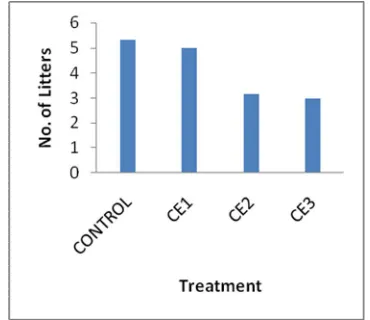
The results obtained in table 1 indicated clearly that the oral administration combined extracts of stem bark of Ailanthus excelsa, leaves of Azadirachta indica, seeds of Carica papaya, Rhizome of Curcuma longa, fruit of Piper longum, and root of Plumbgo indica showed a dose dependent antiimplantation response.
In antiimplantation method, the oral administration of stem bark of Ailanthus excelsa, leaves of Azadirachta indica, seeds of Carica papaya, rhizome of Curcuma longa, fruit of Piper longum and root of Plumbgo indica at a dose of 50 mg/kg proved to be more significant (p<0.01) antiimplantation effect as evidenced by increase in the % antiimplantation when compared with control group rat’s. The effect of Combined extract(CE) of stem bark of Ailanthus excelsa, leaves of Azadirachta indica, seeds of Carica papaya, rhizome of Curcuma longa, fruit of Piper longum and root of Plumbgo indica in Pregnant Female Wister rats using anti implantation method is represented in table-1 (Fig.1,2 and 3) .
Table-1: Effect of Combined extract in Pregnant Female Wister rats using anti implantation method
Sr. No. Groups Dose
mg/kg body wt.
Post coital antifertility method
No. of animal used No. of implants No. of litters % anti-implantation
1. Control - 6 5.833±0.307 5.333±0.333 0
2. CE-1 25 6 5.500±0.223 5.000±0.258 5.708
3. CE-2 50 6 3.830±0.307 3.166±0.307 34.330
Mahendra Yadav et al...Int.J.Pharm.Phytopharmacol.Res. 2013, 2(4): 277-282
281
Fig. 1: Effect of Combined Extract on no. of Implants
Fig. 2: Effect of Combined Extract on no. of Litters
Fig. 3: Percentage Antiimplantation of Combined Extract
DISCUSSION
In the present study oral administration of stem bark of Ailanthus excelsa, leaves of Azadirachta indica, seeds of Carica papaya, rhizome of Curcuma longa, fruit of Piper longum and root of Plumbgo indica produced a dose dependent adverse effect on fertility index (quantal pregnancy) and number of implantations in uterine horns of the female rats by virtue of an increase in the percentage of the pre-implantation embryonic loss. The present findings
indicate that at a dose of 50 mg/kg proved to be more significant (p<0.01) antiimplantation effect as evidenced by increase in the % antiimplantation when compared with control group rat’s. The extracts also possess significant antifertility activity as it interfered with steroidal conditioning of the uterus and renders it hostile to ovum implantation.17The treated animals showed anti-implantation and abortificent activity in antifertility study. The number of litters born due to this treatment was significantly less than that of controls. This indicates the anti-implantation and abortifacient nature of extract. This study clearly reveals that the extract is effective before and after the implantations occurred.
Pre-implantation losses can arise due to disruption of events which are prerequisite for fertilization or impairment in the production of cytokines, growth factor and various types of adhesion molecules either by the developing blastocyst or by the uterine epithelium around the site of implantation. Therefore, one possible explanation of anti-implantation effect of the extract can be explained by pre-implantation embryonic loss due to accelerated embryonic transport which is an estrogen mediated process.
Anti-implantation activity was carried out by method Choudhury NSK et al. Implantation is calculated in terms of litters in control groups. It is well known that for implantation exact equilibrium of estrogen and progesterone is essential, any disturbance in level of these hormones causes infertility. In conclusion, the present study suggests that the antifertility activity of the extracts is probably due to its antioestrogenic property. Estrous cycle sift in different stages are mainly governed by the synthesis of ovarian estrogen, which in turn is controlled by the secretion of pituitary gonadotropins and hypothalamic releasing factor.18 It has been reported that the presence of steroids.19,20 alkaloids21, isoflavonoids22, steroidal saponin23, saponin glycosides and flavonoids24 in the plant extracts responsible
for antifertility activity. Although, it is very difficult to pinpoint the exact mechanism of action of antifertility effect of extracts of multi-component at this time, yet it may be concluded that their effects might probably be due to multiple attributes which are certainly dose dependent.
CONCLUSION
The present study has demonstrated that a combined extract of stem bark of Ailanthus excelsa, leaves of Azadirachta indica, seeds of Carica papaya, rhizome of Curcuma longa, fruit of Piper longum, root of Plumbgo indica plants has capable of promoting antifertility activity and inhibit implantation in rats at a dose of 50 mg/kg compared with the controls and all parameters of a solid dosage form (Tablet) are under the standard value. Further studies are recommended for isolation of active constituents and understanding the exact mechanism(s) of the test drug.
ACKNOWLEDGMENT
The authors are thankful to the Director, Bhagwant Institute of Pharmacy, Muzaffarnagar (U.P.) and Director, IFTM Moradabad (U.P.) for providing necessary facilities to carry out the research work.
REFERENCES
Mahendra Yadav et al...Int.J.Pharm.Phytopharmacol.Res. 2013, 2(4): 277-282
282 Medicinal Plants of Nanda Devi National Park (NDNP) Uttarakhand, India Nature and Science, 2010, 8(11): 9-14.
2) Coopoosamy RM and Naidoo KK. An ethnobotanical study of medicinal plants used by traditional healers in Durban, South Africa, African Journal of Pharmacy and Pharmacology, 2011, 6(11): 818-823, 22.
3) Ravishankar B and Shukla, VJ. Indian systems of medicine: A brief profile, Afr. J. Trad. CAM 2007, 4 (3): 319 – 337
4) List of plants used in herbalism. [online]. [Cited 2012
Dec 08]; Available from URL:
http://en.wikipedia.org/wiki/List_of_plants_used_in_h erbalism.
5) Regulatory Situation of Herbal Medicines A worldwide Review [Cited 2013 Jan 08]; Available
from URL:
http://apps.who.int/medicinedocs/pdf/whozip57e/who zip57e.pdf.
6) Goyal P, Midha T, Sharma RP, Martolia DS, Gupta A. Utilization of indian systems of medicine and homeopathy: A cross-sectional study among school students of Kanpur city, Indian J. Prev. Soc. Med, 2011, 42: 326-28.
7) Indigenous Systems of Medicines: Ayurveda, Siddha, Unani, Yoga, Homeopathy and Naturopathy [online]. [Cited 2012 Dec 08]; Available from URL: http://www.arthapedia.in/index.php?title=Indigenous_ Systems_of_Medicines:_Ayurveda,
Siddha,_Unani,_Yoga,_Homeopathy_and_Naturopath y.
8) The Ayurvedic Pharmacopoeia of India. Part-I, Volume-III, Ministry of Health and Family Welfare, Govt. of India, New Delhi, 2001.
9) The Ayurvedic Pharmacopoeia of India Part - II (Formulations) Volume – I First Edition Government of India Ministry of Health and Family Welfare, New Delhi, 2007.
10) Barnes J. Quality, efficacy and safety of complementary medicines: Fashions, facts and the future. Part II: Efficacy and safety, Br J Clin Pharmacol, 2003, 55:331-40.
11) Satyavati GV, Indian Plants and Plant Products with Antifertility Effect, Ancient Science of Life, 1984, 3(4): 193 – 202.
12) Marcondes FK, Bianchi FJ, Tannon AP. Determination of estrous cycle phases of rat: some helpful consideration, Brazilian journal of Biology, 2002, 62: 609-614.
13) Edwin S, Joshi SB, Jain DC. Antifertility effect of stem of Plumbago zeylanica Linn. in female albino rats, Iranian journal of Pharmacology and therapeutics, 2008, 7: 169-174.
14) Choudhury NSK, Das BC, Panda PK, Dash GK. Antifertility activity of Accasia nilotica (L.) Delile, Adv. Pharmacol. ToxicoL, 2007, 8(1): 51-56. 15) Parhizkar S, Ibrahim R, Latiff LA. Incision Choice in
Laparatomy: a Comparison of Two Incision Techniques in Ovariectomy of Rats, World Applied Sciences Journal, 2008, 4 (4): 537-540.
16) OECD/OCDC, “OECD Guidelines for testing of chemicals” Revised draft guidelines 423; acute oral toxicity- acute toxic class method, Dec 2001: 1-14. 17) Wakuda K, Takakura K, Nakanishi K, Kita N, Hirose
M and Noda Y. Embryo-dependent induction of embryo receptivity in the mouse endometrium, J. Reprod Fertil, 1999, 115: 315-324
18) Circosta C, Sanogo R, Occhiuto F. effect of Calotropis procera on estrous cycle and on estrogenic functionality in rats, Farmaco 2001,73:111-5
19) Benie T, Tahiri C, Duval J, Thieulant ML. Combretodendron africanum bark extract as an antifertility agent: estrogen effect in vivo and LH release by cultured gonadotrope cells. J Ethnopharmacol, 1990, 29: 13-23.
20) Adams NR. Detection of the phytoestrogens on the sheep and cattle, J animal Sci 1995, 109:1515. 21) Benie T, Thieulant ML. Interaction of some
traditional plant extracts with uterine oestrogen or progestin receptors, Phytother Res, 2003, 17: 756-760.
22) Keshri G, Oberoi RM, Lakshmi V, Pandey K, Singh MM. Contraceptive and hormonal properties of the stem bark of Dysoxylum binectariferum in rat and doking analysis of rohitukine, the alkaloid isolated from active chloroform soluble fraction. Contraception, 2007, 76: 400-407
23) Tafesse G, Makonnen Y, Makonnen E. Anti-fertility activity of aqueous and ethanol extracts of the leaves and roots of Asparagus Africans in rats, African Health Sci, 2006, 6: 81-85.
24) Vaidya VP, Padmashali B, Vagdevi HM, Satyanarayana ND. Antifertility efficacy of the plant Balanites roxburghii (Balanitaceae) in female rats, Ind J Pharmaceutical Sci, 2006, 68: 347-351.
*Corresponding Author:
Mahendra Yadav,
Plot No. 92A, Lokmanya Nagar, MIDC, Hngana Road, Nagpur, M.S., India-440016
Email: [email protected] Contact: +91-8657009940