GSJ: Volume 7, Issue 11, November 2019, Online: ISSN 2320-9186 www.globalscientificjournal.com
Using ETAP Load Flow Analysis of 132/11kv
Kohat Substation: A Case Study
Muhammad Bilal,
Prof.Dr.M.Naeem Arbab, Muhammad Zubair
Author Details (optional)
Muhammad Bilal is currently pursuing master’s degree program in electric power engineering from Department Of Electrical Engineering, University of Engineering & Technology Peshawar, Pakistan. [email protected] Co-Author (1st)
Prof.Dr.M.Naeem Arbab is currently working as a Dean and professor at Department Of Electrical Engineering, University of Engineering & Technology Peshawar, Pakistan. [email protected] Co-Author (2nd)
Muhammad Zubair is currently pursuing master’s degree program in electric power engineering in Department Of Electrical Engineering, Abasyn University
Peshawar, [email protected]
KeyWords
ETAP, Power flow analysis, under voltages etc.
Using ETAP Load Flow Analysis of 132/11kv
Kohat Substation: A Case Study
Muhammad Bilal
Department Of Electrical Engineering University of Engineering & Technology
Peshawar, Pakistan. [email protected]
Prof.Dr.M.Naeem Arbab Department Of Electrical Engineering University of Engineering & Technology
Peshawar, Pakistan [email protected]
Muhammad Zubair
Department Of Electrical Engineering Abasyn University
Peshawar, Pakistan. [email protected]
Abstract – Using ETAP software load flow analysis is accurate and gives high reliable result. This research makes effective use of ETAP (Electrical Transient Analyzer Program) to carry out load flow analysis of 132 kV substation. The actual rating of transformer, circuit breakers, current transformer, potential transformer and isolating switch are taken and modelled in ETAP in the form of single line diagram. This 132 kV grid station located in KPK Kohat Pakistan which is come under NTDCL (National Transmission and Dispatch Company limited).
In the operation and design planning for the power system, the most significant and beneficial approach for the investigation of problems relating to power systems can be done by means of load flow analysis or design power flow. In light of a predefined structured power system and transmission system, the load flow analysis provides steady state characteristic data for voltage phase angles and its magnitude, the flow of reactive power in the transmission lines, losses in the system, generation and consumption of reactive power in the bus bar load. In this, an effort has been made to explore power flow in the 132/11kV grid by utilizing ETAP [1]. The data will be collect from Kohat 132/11KV substation over a period of one year, specifically in summer and winter peak loads.
I. INTRODUCTION
ETAP is Electrical Transient Analyzer Program. This software provides Engineers, operators, and manager platform for continuous functionality from modeling to operation. ETAP’s model driven architecture enable “Faster than Real-Time” operations - where Data and analytics meet to provide predictive behaviour, pre-emptive action, and situational intelligence to the
owner-operator. ETAP offers a suite of fully integrated Electrical Engineering software solutions including arc flash, load flow, short circuit, transient stability, relay coordination, cable capacity, optimal power flow, and more. Its modular functionality can be customized to fit the needs of any company, from small to large power systems [2].
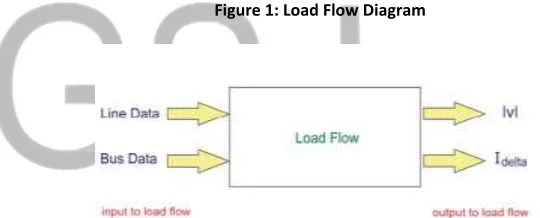
Figure 1: Load Flow Diagram
As the electric power demand increasing day by day so for that demand more generating station buit but also to redesign the current power grid. For this reason, load flow analysis can play vital role. Load flow or power flow analysis can be performed by using Electrical Transient Analyzer Program (ETAP)
which gives accurate, precise and reliable outcomes[3][4].ETAP provides a package of complete set of Electrical Design programming tools which consists of transient steadiness, transfer coordination, burden stream, transfer coordination, link capacity, and numerous more ETAP [5].
of the deficiency of electric power, the main reason for the energy deficit is the deficiency in the field of analysis [7].Due to under voltage problem in power system causes disturbance in power system so in case of heavy load the reactive power cannot be send to long separation so reactive power can be generated near the load. This is because the difference in voltage causes reactive power (VARs) to flow and voltages on a power system are only ±5 percent of nominal and this small voltage difference does not cause considerable reactive power (VARs) to flow over long distances. So if that reactive power (VARs) is not available at the load centre, the voltage level goes down. Lasting under voltages can cause excess wear and tear on certain devices like motor as they will tend to run overly hot if the voltage is low [8]. Power system studies are done by electrical engineers from many years for utilizing distinctive programming tools. The recently powerful Computer-based software is emerged as a cause of important research in the field of electrical engineering. For the analysis and examination of mighty electrical power systems, which comprises of power distribution flowing from the 132kV grid, this project features the viable utilization of Electrical Transient Analyzer Program (ETAP).[9][10][11].For modelling and simulation in ETAP, the single line diagram and real ratings of power transformers, current transformers(CT), circuit breakers, potential transformers(PT) and isolators are taken from 132kV kohat grid situated in kohat Pakistan.
II. PROBLEM STATEMENT
FDR ANA (False Discovery Rate) cannot provide wide ranging analysis. The under voltage is main cause of disturbance in power system.
III. OBJECTIVES
The main objective are to monitor and analyse the power system accurately, overcome the under voltage problem, expand the substation in future demand .improve the power factor of power system and minimize the losses of power system.
IV. DETAILS OF COMPONENTS
The data is taken from kohat grid station. The grid having current transformer, potential transformer, power transformer, isolators and circuit breakers. The data is taken real time of various feeder of kohat grid station.
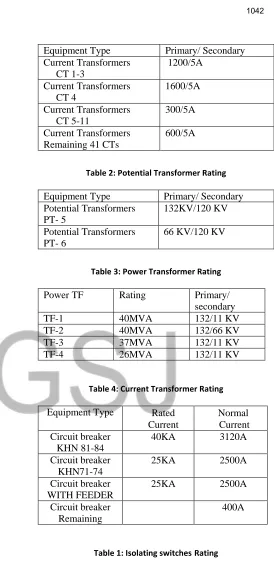
Table 1: Current Transformer Rating
Equipment Type Primary/ Secondary
Current Transformers CT 1-3
1200/5A
Current Transformers CT 4
1600/5A
Current Transformers CT 5-11
300/5A
Current Transformers Remaining 41 CTs
600/5A
Table 2: Potential Transformer Rating
Equipment Type Primary/ Secondary Potential Transformers
PT- 5
132KV/120 KV
Potential Transformers PT- 6
66 KV/120 KV
Table 3: Power Transformer Rating
Power TF Rating Primary/
secondary
TF-1 40MVA 132/11 KV
TF-2 40MVA 132/66 KV
TF-3 37MVA 132/11 KV
TF-4 26MVA 132/11 KV
Table 4: Current Transformer Rating
Equipment Type Rated
Current
Normal Current Circuit breaker
KHN 81-84
40KA 3120A
Circuit breaker KHN71-74
25KA 2500A
Circuit breaker WITH FEEDER
25KA 2500A
Circuit breaker Remaining
400A
Table 1: Isolating switchesRating
Equipment Type Rating
Isolating switches SW 1-16
132KV/1250A
Table 5: 11KV Feeder Summer & Winter Load
11kv Feeder (Places)
Winter Load (A)
Summer load (A)
Old City 1 200 160
New City 2 250 190
New City 3 260 290
Lachi Express 370 380
Jarma 450 250
K.T.M 5 7
B.C.M 50 90
Gumbat 370 400
Kohat Express 410 390
Barh 290 250
Alizai-1 220 150
OTS 140 370
Kharmaton 420 390
College town 160 230
Cadet college 120 120
Kohat tunnel 22 25
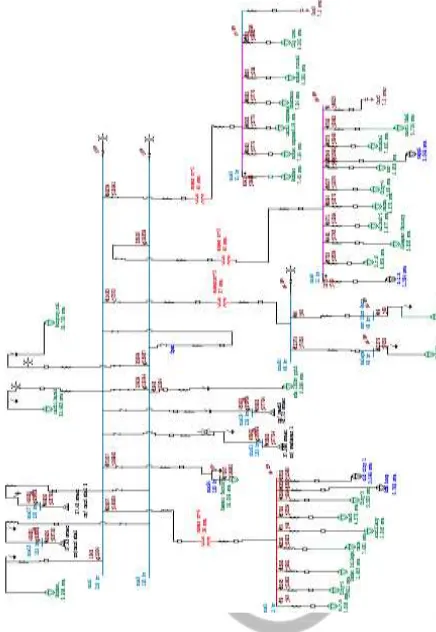
Figure 2: 132KV grid single Line Diagram in ETAP
132KV single line diagram are modelled in ETAP which are given above. The two bus bar of 132 KV rated having four incoming supplies. These 132KV bus bars are further connected to feeders through power transformers which stepped down to 11KV. Already to capacitor bank are installed of rating of 7.2 MVAR each.
Figure 3: Simulation of 132KV grid in ETAP Before adding capacitor
Figure 3: Simulation of 132KV grid in ETAP before after adding capacitor
Table 6: Incoming supplies to 132KV Grid station
Grid Type
MV KV MW MVA
R Am p % P.F Daud Khel 1
27.43 132 40.96 23.04 206 87.2
Daud Khel 2
27.43 132 40.96 23.04 206 87.2
Pesha war 1
37.27 132 45.90 27.70 235 85.6
Pesha war 2
45.72 132 45.90 27.70 235 85.6
V. LOAD FLOW ANALYSIS
Swing capacity, demand and losses summary report without capacitor bank are in below table.
Table 7: summary Report of swing, total demand and losses before adding capacitor bank.
Type MW MVAR MVA %P.F
Swing 173.9 93.45 205.5 87.9
Total Demand
173.9 93.45 205.5 87.9
Appearent Losses
0.31 8.21 --- ---
LOAD FLOW ALERT BY ETAP:
Load flow analysis of 132KV grid station has been performed in ETAP with the help of different numerical method in which Newton Raphson method [12] [13] is used and it is observed the critical and marginal situation of various part of the system. The buses which are under voltages and operation condition is below than 95% are consider as a critical alert while those buses which are under voltages and operational condition is greater than 95% are in marginal alert. From load flow analysis it show that 3 & 8 buses are in critical alert while bus 9 are in marginal alert.
LOAD FLOW ALERT BY ETAP WHEN PUTTING OCT 2019 LOAD:
Below table show that there is two buses 3 & 8 are in under voltage which are critical alert situation.
Table 8: Bus no 3&8 are in under voltage critical situation.
Bus No.
Condition Rating KV
Operating %
Operating Bus
3
Under voltage
11.0 10.38 94.3
Bus 8
Under voltage
11.0 10.40 94.6
While the bus 9 is in under voltage and two power transformer TF-2 & TF-4 are overloaded which are marginal alert condition which is shown in below table.
Table 8:Marginal alert of bus 9 which is in under voltage &power transformer tf-2&tf-4 are overloaded.
Equipment Type Conditio n Ratin g Operatin g %Operati ng
Bus 9 Under
Voltage 11 KV
10.62 96.5
TF-2 Transform er Overloa d 40 MVA
38.9 97.1
TF-4 Transform er Overloa d 26 MVA
LOAD FLOW ALERT BY ETAP WHEN PUTTING JUNE 2019 LOAD:
ETAP show critical alert before capacitor bank was added.
Table 8:Bus 3 is under voltage and TF-4 is overloaded
Equipment Type
Condition Rating Operating %Operating
Bus 3 Under
voltage
11 KV 10.35 94.1
TF-4 Transformer
Overload 26MVA 26.8 102.1
ETAP also show marginal alert before capacitor bank was added.
Table 8:Marginal alerts before adding capacitor bank.
Equipment Type
Condition Rating KV
Operating KV
%Operating
Bus 8 Under
voltage
11.0 10.55 96
Bus 9 Under
voltage
11.0 10.68 97.1
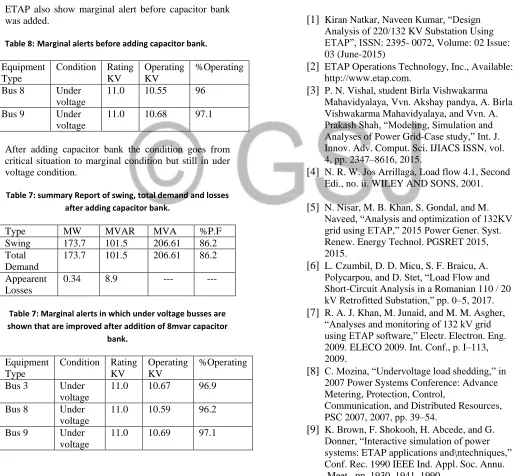
After adding capacitor bank the condition goes from critical situation to marginal condition but still in uder voltage condition.
Table 7: summary Report of swing, total demand and losses after adding capacitor bank.
Type MW MVAR MVA %P.F
Swing 173.7 101.5 206.61 86.2
Total Demand
173.7 101.5 206.61 86.2
Appearent Losses
0.34 8.9 --- ---
Table 7: Marginal alerts in which under voltage busses are shown that are improved after addition of 8mvar capacitor
bank.
Equipment Type
Condition Rating KV
Operating KV
%Operating
Bus 3 Under
voltage
11.0 10.67 96.9
Bus 8 Under
voltage
11.0 10.59 96.2
Bus 9 Under
voltage
11.0 10.69 97.1
VI. Conclusion:
The study of load flow analysis using ETAP to overcome the problem of under voltage. ETAP software is an excellent tool for system planning. The outcome from power flow analysis are phase angle, nodal voltage transmission losses, real and reactive power in each line. ETAP is used for to monitor the system more accurately, help of expansion of substation in future demand also help to improve power factor and minimize losses.
VII. REFERENCES
[1] Kiran Natkar, Naveen Kumar, “Design Analysis of 220/132 KV Substation Using ETAP”, ISSN: 2395- 0072, Volume: 02 Issue: 03 (June-2015)
[2] ETAP Operations Technology, Inc., Available: http://www.etap.com.
[3] P. N. Vishal, student Birla Vishwakarma Mahavidyalaya, Vvn. Akshay pandya, A. Birla Vishwakarma Mahavidyalaya, and Vvn. A. Prakash Shah, “Modeling, Simulation and Analyses of Power Grid-Case study,” Int. J. Innov. Adv. Comput. Sci. IJIACS ISSN, vol. 4, pp. 2347–8616, 2015.
[4] N. R. W. Jos Arrillaga, Load flow 4.1, Second Edi., no. ii. WILEY AND SONS, 2001.
[5] N. Nisar, M. B. Khan, S. Gondal, and M. Naveed, “Analysis and optimization of 132KV grid using ETAP,” 2015 Power Gener. Syst. Renew. Energy Technol. PGSRET 2015, 2015.
[6] L. Czumbil, D. D. Micu, S. F. Braicu, A. Polycarpou, and D. Stet, “Load Flow and Short-Circuit Analysis in a Romanian 110 / 20 kV Retrofitted Substation,” pp. 0–5, 2017. [7] R. A. J. Khan, M. Junaid, and M. M. Asgher,
“Analyses and monitoring of 132 kV grid using ETAP software,” Electr. Electron. Eng. 2009. ELECO 2009. Int. Conf., p. I–113, 2009.
[8] C. Mozina, “Undervoltage load shedding,” in 2007 Power Systems Conference: Advance Metering, Protection, Control,
Communication, and Distributed Resources, PSC 2007, 2007, pp. 39–54.
[10] W. Zhongxi and Z. Xiaoxin, “Power System Analysis Software Package (PSASP)-an integrated power system analysis tool,” POWERCON ’98. 1998 Int. Conf. Power Syst. Technol. Proc. (Cat. No.98EX151), vol. 1, no. 3, pp. 7–11, 1998.
[11] G. W. Stagg and A. H. El-Abiad, “Computer Methods In Power System Analysis.” p. 427,1968.
[12] Glenn W. Stagg and Ahmed H. El - Abiad, “ Computer Methods in Power System Analysis”, McGraw -H ill [1968].