http://www.ijcmph.com pISSN 2394-6032 | eISSN 2394-6040
Original Research Article
Feeding practice of infant and young children and their nutritional
status among tea worker community of West Tripura district, India:
an observational study
Arjun Saha, Himadri Bhattacharjya*
INTRODUCTION
Adequate nutrition during infancy and young childhood is crucial for proper physical growth, acquisition of gross and finer motor skills and cognitive functions.1 Proper infant and young child feeding (IYCF) practices are needed to sustain this development and provide protection from the risk of morbidity and mortality in low source environments.2 WHO and UNICEF recommend
exclusive breastfeeding for six months with early initiation within one hour of birth and nutritionally adequate, age-appropriate and safe complementary feeding after six months along with continued breast feeding up to two years or beyond.3
Studies have revealed the protective effect of breast milk against conditions like sudden infant death syndrome, insulin-dependent diabetes mellitus, Crohn’s disease,
ABSTRACT
Background: People working in tea gardens of Tripura differ from other people in terms of ethnicity, culture, food habit, literacy etc. and limited information is available regarding infant feeding practices and its association if any, with nutritional status of under-five children of this community.
Methods: This community based cross-sectional study was conducted during 1st July to 31st August 2016, using a validated interview schedule, among 170 women working in different tea estates of West Tripura district, having children aged 6 months to 2 yr, chosen by multistage sampling. Descriptive statistics and χ2test were used to present
data. P value ≤0.05 was considered statistically significant.
Results: Breastfeeding initiation rate within one hr of birth was 50.59%, colostrums was fed to 82.35%, prelacteal feeding was given to 30.59%, 65.88% were exclusively breast fed and overall feeding practice was proper in 51.76% of the study children. Khichdi (34.1%) was the commonest complimentary feed and katori and spoon (64.7%) were the commonest feeding utensils. Prevalence of underweight, stunting and wasting was 9.0%, 12.9% and 7.3% respectively and these were found to be more frequent among children who received prelacteal feeding, late initiation of breastfeeding and early complimentary feeding, though statistically these were not significant.
Conclusions: Overall infant feeding practice was better among educated mothers and institutional births; hence improvement in literacy and promoting institutional deliveries will further improve feeding practice in this community. Though underweight, stunting and wasting was prevalent but these had no significant association with feeding practices. Hence further studies are required to investigate the causes of malnutrition among children of this community.
Keywords: Tea-workers, Feeding practice, Exclusive breastfeeding, Infant and young children Department ofCommunity Medicine, Agartala Government Medical College, Agartala, Tripura, India
Received: 22 November 2017
Accepted: 09 December 2017
*Correspondence:
Dr. Himadri Bhattacharjya,
E-mail: [email protected]
Copyright: © the author(s), publisher and licensee Medip Academy. This is an open-access article distributed under the terms of the Creative Commons Attribution Non-Commercial License, which permits unrestricted non-commercial use, distribution, and reproduction in any medium, provided the original work is properly cited.
ulcerative colitis, lymphoma, allergic diseases, digestive diseases etc.4 Prelacteal feeding is prevalent in many Indian societies. But they could be potentially harmful to the newborn as they could introduce infection, sensitize the gut to foreign proteins or delay the onset of lactation.5 Very often weaning is started prematurely in a crying infant thinking that the baby is not getting enough breast milk.
Tea workers in Tripura are generally known as ‘Coolie’. They are not indigenous people of Tripura. Most of them are the descendants of the workforces recruited by the colonial planters from Orissa, Bihar, Madras and Central Province of India in the middle of 18th century. They belong to different tribal groups including Saotal, Munda, Orao, Lohar etc. They are inhabited in clusters in different tea estates and marriage and other social connections are also limited to their own communities. Almost all of them are Hindu by religion and literacy rate among them is very low as they are employed in garden works in their childhood which is more profitable to them.6
Food habits of tea workers are very simple. In the state of Assam prevalence of underweight among children of tea workers was found to be 59.9% and thinness among adults was 69.9%.7 They eat rice, bread, vegetables, tea, dried fish etc. A special food is made of smashed green leaves of tea. Meat is usually taken during religious or marriage ceremonies and drinking wine (rice bear) is a common practice.8
As the ethnicity, culture, food habit, literacy, profession etc. of these tea workers are different from the indigenous people of Tripura, it is expected that their infant and young child feeding practice may also differ from the rest. But limited information is available regarding infant feeding and child rearing practices of this community. Hence the present study was designed with the objectives to find out the proportion of tea working mothers practicing exclusive breast feeding, to study the determinants of infant feeding practices and its association with nutritional status of under five children of this community.
METHODS
This community based cross-sectional study was conducted during 1st July to 31st August 2016 among 170 women currently working in different tea estates of West Tripura district and having children aged 6 months to 2 yr. Minimum sample size requirement for this study was determined using the formula for calculating sample size in prevalence studies using proportion considering the rate of exclusive breastfeeding in Tripura as 70.7% at 95% confidence with 10% relative error.9,10 A ‘validated structured interview schedule’, a ‘Salter baby & toddler weighing scale’ of model 914 having a precision of 100 gm, ‘Pedia Medica Infantometer’ having a precision of 0.5 cm and a non stretchable measuring tape having a
precision of 0.1 cm were used for collecting data. The weighing scale was calibrated daily before taking measurement and other instruments were also checked daily for the accuracy of measurement. The interview schedule contained questions regarding socio-demographic information, birth history of the child, feeding history like, time of initiating breast feeding, feeding of colostrums, prelacteal feeding, frequency and type of breast feeding, time of weaning, weaning food etc. Answers to the questions related to feeding practices were categorized as proper and improper feeding practices. Each answer describing proper feeding practice was allotted score 1 and improper practice as score 0. In the entire schedule total possible score in respect to feeding practice for a child was 10 and secured score of 8 and above was considered proper feeding practice. For assessing nutritional status of the study children WHO weight for age Z score (WAZ), height for age Z score (HAZ) and weight for height (WHZ) were measured.11 Face and content validity of the interview schedule was evaluated by piloting upon 25 women of this community having young infants and three epidemiologists also evaluated the clarity and representativeness of the questions related to the feeding practice of infants. The study participants were recruited by multi stage sampling technique. In West Tripura district there were 13 tea estates and there were 17 awanganwadi centres (AWC) in total. Registers maintained in these AWCs were used for constructing 17 different sampling frames. From each of these sampling frames 10 units of eligible mothers and children were chosen by simple random sampling without replacement. Thus total 170 units of mothers and children were recruited in this study.
Women who did not go to school for formal education were considered as ‘illiterate’, ‘primary educated’ were those who studied any level up to standard VIII and ‘secondary and above’ educated were those who studied up to any level above standard VIII. Modified B G Prasad’s socioeconomic classification May, 2016 was used to classify the socioeconomic status of the study women.12 Feeding anything to the newborn apart from breast milk excluding medications prescribed by doctor was considered as Prelacteal feeding. Exclusive breast feeding was defined as feeding of only breast milk to children till 6 months of age including colostrum and no pre-lacteal feeding.13 For home delivered babies, mother’s statement regarding ‘perceived size of the baby at birth’ was used to classify them as either of average birth weight or low birth weight.
were examined and data were recorded in the pretested interview schedule on the spot. Later on data entry and analysis were performed in computer using SPSS 15.14 Data were presented by means of tables and text. Descriptive statistics like frequency, proportion etc. were used to summarize the data. Chi-square test was used to examine the significance of difference between various proportions. Any p-value of less than 0.05 was considered statistically significant. Prior permission for conducting this study was obtained from the competent authority. On ethical ground after data collection was over children found as malnourished were given medical advice including referral services and mothers were counseled where faulty feeding practices were detected.
RESULTS
Thisstudy enrolled 170 units of mother and child and the response rate was 100%. Among the study population 34.12% belonged to scheduled tribe, 31.76% to scheduled caste, 24.71% to other backward community (OBC) and the rest to the general community. Regarding literacy, 42.35% of the mothers and 49.41% of the fathers of the study children were primary educated. In these tea gardens 89.41% of the fathers and 43.53% of the mothers
were engaged in tea plucking. Regarding socioeconomic status, 61.18% of the families belonged to lower middle class as per modified B G Prasad’s socioeconomic classification.
Among the study children 45.88% were aged between 6-12 months, 20% between 6-12 – 18 months and 34.6-12% between 18 – 24 months, 49.41% were male, 65.88% were of first order birth, 61.18% were born in institutions, 96.4% were born at full term, 62.35% had normal birth weight, all were born by vaginal delivery and 94.71% of the children did not suffer from any significant illness during perinatal period.
It was found that 50.59% of the study children were put on breast within one hour of birth, 82.35% received colostrum, 30.59% were given prelacteal feeding, 65.88% were exclusively breast fed and overall feeding practice was proper in 51.76% of the study children. Khichdi (34.1%) was the commonest complimentary feed and katori and spoon (64.7%) were the commonest utensils used for feeding.
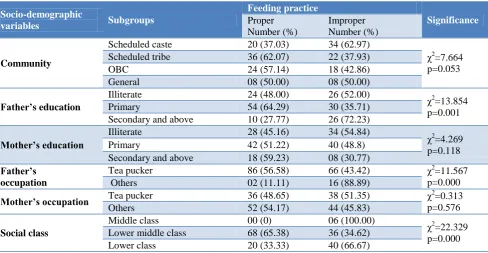
Table 1: Overall feeding practice by the socio-demographic variables.
Socio-demographic
variables Subgroups
Feeding practice
Significance
Proper Number (%)
Improper Number (%)
Community
Scheduled caste 20 (37.03) 34 (62.97)
χ2=7.664
p=0.053 Scheduled tribe 36 (62.07) 22 (37.93)
OBC 24 (57.14) 18 (42.86)
General 08 (50.00) 08 (50.00)
Father’s education
Illiterate 24 (48.00) 26 (52.00)
χ2
=13.854 p=0.001 Primary 54 (64.29) 30 (35.71)
Secondary and above 10 (27.77) 26 (72.23)
Mother’s education
Illiterate 28 (45.16) 34 (54.84)
χ2
=4.269 p=0.118 Primary 42 (51.22) 40 (48.8)
Secondary and above 18 (59.23) 08 (30.77)
Father’s occupation
Tea pucker 86 (56.58) 66 (43.42) χ2=11.567 p=0.000 Others 02 (11.11) 16 (88.89)
Mother’s occupation Tea pucker 36 (48.65) 38 (51.35) χp=0.576 2=0.313
Others 52 (54.17) 44 (45.83)
Social class
Middle class 00 (0) 06 (100.00)
χ2
=22.329 p=0.000 Lower middle class 68 (65.38) 36 (34.62)
Lower class 20 (33.33) 40 (66.67)
Table 1 shows that higher proportions of the women belonging to scheduled tribe community (62.07%), educated up to secondary level or above (59.23%), engaged in jobs other than plucking tea leaves (54.17%) and belonging to lower middle class (65.38%) were found to be practicing proper infant feeding than the rest though it was found to be statistically significant for social class only.
Table 2 shows that significantly higher proportions of the children born as 2nd order or higher (70.69%), institutional births (58.65%) and of normal birth weight (62.26%) received proper feeding. Higher proportions of the female children (53.48%), children with uneventful perinatal period (52.80%) and relatively older ones (58.62%) received proper feeding though these were not significant.
Table 2: Practice of breast feeding by birth history of the children.
Birth history Subgroups
Feeding practice Significance
Proper Number (%)
Improper Number (%)
Order of birth 1
st order 47 (41.96) 65 (58.03) χ2
=11.504 p=0.000 2nd and more 41 (70.69) 17 (29.31)
Place of birth Institutional delivery 61 (58.65) 43 (41.35) χ
2=4.406
p=0.035 Home delivery 27 (40.91) 39 (59.09)
Mode of delivery Vaginal delivery 88 (51.76) 82 (48.24) ---
Caesarian delivery 00 00
Maturity at birth Full term 88 (53.66) 76 (46.34) ---
Pre-term 00 06 (100.00)
Birth weight Normal weight 66 (62.26) 40 (37.74) χ
2
=11.339 p=0.000 Low birth weight 22 (34.38) 42 (65.62)
Perinatal period Suffered sickness 03 (33.33) 06 (66.67) χ
2=0.631
p=0.427 Uneventful 85 (52.80) 76 (47.20)
Gender Male 42 (50.00) 42 (50.00) χ
2
=0.096 p=0.763 Female 46 (53.48) 40 (46.52)
Age
6 to 12 Months 40 (51.28) 38 (48.72)
χ2
=2.626 p=0.269 >12 to 18 Months 14 (41.18) 20 (58.82)
>18 - 24 Months 34 (58.62) 24 (41.38)
Table 3: Nutritional status of the study children.
Parameters Subgroups Percentage 95% CI
Weight for age
% Bellow - 2 SD 7.5 5.3% - 10.7%
% Bellow - 3 SD 1.5 0.3% - 3.6%
Mean Z score -0.98
Height for age
% Bellow - 2 SD 10.6 8.9% - 13.4%
% Bellow - 3 SD 2.3 1.3% - 4.4%
Mean Z score -1.09
Weight for height
% Bellow - 2 SD 5.6 3.9% - 8.4%
% Bellow - 3 SD 1.7 0.5% - 4.3%
Mean Z score -0.75
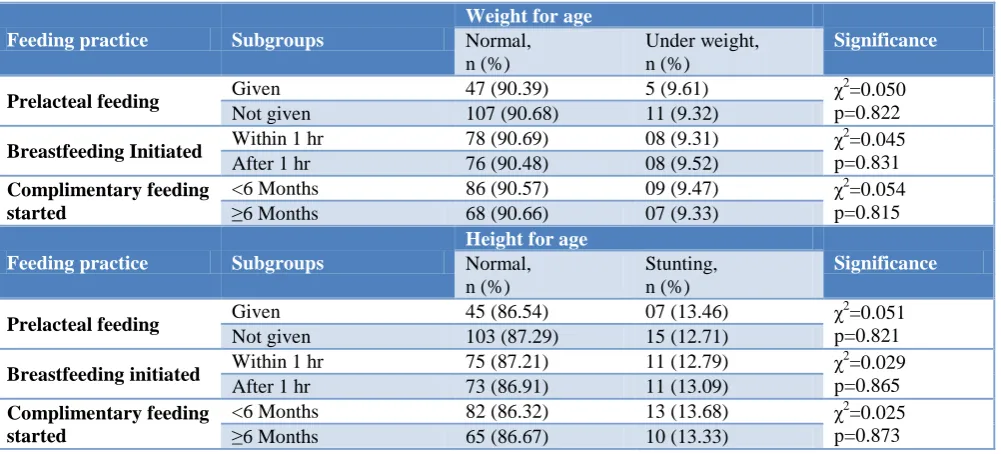
Table 4: Nutritional status of the study children by feeding practice.
Feeding practice Subgroups
Weight for age
Significance
Normal, n (%)
Under weight, n (%)
Prelacteal feeding Given 47 (90.39) 5 (9.61) χ
2=0.050
p=0.822 Not given 107 (90.68) 11 (9.32)
Breastfeeding Initiated Within 1 hr 78 (90.69) 08 (9.31) χ
2
=0.045 p=0.831 After 1 hr 76 (90.48) 08 (9.52)
Complimentary feeding started
<6 Months 86 (90.57) 09 (9.47) χ2=0.054
p=0.815 ≥6 Months 68 (90.66) 07 (9.33)
Feeding practice Subgroups
Height for age
Significance
Normal, n (%)
Stunting, n (%)
Prelacteal feeding Given 45 (86.54) 07 (13.46) χ
2=0.051
p=0.821 Not given 103 (87.29) 15 (12.71)
Breastfeeding initiated Within 1 hr 75 (87.21) 11 (12.79) χ
2=0.029
p=0.865 After 1 hr 73 (86.91) 11 (13.09)
Complimentary feeding started
Feeding practice Subgroups
Weight for height
Significance
Normal, n (%)
Wasting, n (%)
Prelacteal feeding Given 48 (92.31) 04 (7.69) χ
2=0.008
p=0.927 Not given 111 (94.07) 07 (5.93)
Breastfeeding Initiated Within 1 hr 80 (93.02) 06 (6.98) χ
2=0.066
p=0.797 After 1 hr 78 (92.86) 06 (7.14)
Complimentary feeding started
<6 Months 88 (92.63) 07 (7.37) χ2=0.015 p=0.901 ≥6 Months 70 (93.34) 05 (6.66)
Table 3 shows that as per WHO growth standards 9.0% of the study children were underweight (Bellow -2 and -3 SD), 12.9% had stunting (Bellow -2 and -3 SD) and 7.3% had wasting (Bellow -2 and -3 SD).
Table 4 shows that underweight, stunting and wasting were more frequent among the children who were given prelacteal feeding, to whom breastfeeding was initiated late and to whom complimentary feeding was started prematurely, but statistically these were not significant.
DISCUSSION
Female literacy is considered as an important determinant of both maternal and child health. Present study has detected that 36.47% of the mothers were illiterate, 42.35% as primary and only 21.18% as secondary or higher educated. This poor literacy rate was reflected in their feeding practice and consequent child nutrition. But Bhattacharjya et al have found it to be 12.9%, 35.3% and 51.7% respectively in the general rural population of Tripura state.13 This difference is probably due to the fact that the present study was limited to female workers of tea garden who had limited access to education due to socio economic reasons. Kumar et al have found that 53% of the mothers in Allahabad, Uttarpradesh were either illiterate or primary educated, Huq et al have found the literacy rate as 49.8%, 36.6% and 6.9% respectively among the rural residents of Bangladesh.15 This may be due to lower female literacy rate prevailing in Bangladesh.16 Mananga et al have found it to be 9.02%, 43.44% and 47.54% respectively in Cameroon.17 It reflects the female literacy rate in general population of Cameroon. Present study has found that 30.59% of the study children were given prelacteal feeding whereas Mukhopadhyay et al have found it to be 27.1% and 25.4% in two different groups of slum dwelling children in West Bengal.18 Khan et al have found it to be 38% in Delhi.19 But Saha et al have found that only 8% of the children were given prelacteal feed.20
Present study has detected that in 50.59% of the children breastfeeding was initiated within one hour after birth, similarly Gandhi et al have found that half of the mothers had initiated breast-feeding within 1 hour of birth.21 Lawan et al have found that more than half (65.0%) were put on the breast within an hour of delivery.22
National Family Health Survey–3 (NFHS-3) data at the national level and also at Delhi showed it as 23.4% and 21.7% respectively, for children aged under 3 years.23,24 Khan et al have found that only 37.2% babies were put on breastfeeding within one hour of birth.19 Study from West Bengal had shown it much lower as 13.6%.25 On the contrary, Huq et al have found that 73.8% mothers in urban and 83.6% in rural areas of Bangladesh have initiated breastfeeding within 12 hour of birth respectively.16 Of course this study does not clarify what proportion of the mothers initiated breastfeeding within 1 hour of child birth.
This study has found that 82.35% of the mothers have fed colostrums to their newborns. Gandhi et al have also found that about 90.9% mothers fed colostrum to their children.21 Similarly John et al have also found that 92% of the infants were given colostrums after birth.26 Huq AK et al have found it to be 75.4% and 47.6% in urban and rural areas of Bangladesh respectively.16 Saha et al have found that 92% of mothers gave colostrum to their infants.20
In the present study 65.88% of the children were found to be exclusively breastfed up to 6 months. Mukhopadhyay et al have found it to be 52.1%.18 Khan et al have found it to be 57% in Delhi.19 This was better than the figures reported by NFHS-3, both at national level and also from Tripura.23,24 Mananga et al have found it to be 60.08% in Cameroon.17 But Huq et al have found that 14.75% urban and 19.71% rural mothers of Bangladesh have continued exclusive breast feeding until 5 to 6 months.16 Gandhi et al have found that around one third of the mothers have given exclusive breast-feeding to their baby for 6 months.21 Ramji et al have found it to be little under 50 per cent.27 But Mushaphi et al have found that only 7.6% of the mothers were exclusively breastfeeding their infants at the time of their study.28 Saha et al have found the median duration of exclusive breastfeeding to be 121 days.20 But Bwalya et al have found it to be 31.1% and 29.9% at 6 months of age in Mazabuka and Kafue districts of Zambia.29
severely wasted.18 This higher prevalence of malnutrition may be attributable to poor economic condition and faulty feeding practices in the slum area. Gandhi et al in their study conducted in rural areas of Navsari district, Gujarat have found 11.5% children as underweight, 15.6% as stunted and 8.6% as wasted.21 This finding was little higher than the present study. Mushaphi et al in their study in South Africa have found that 7.0% children had low WAZ (underweight), 18.9% had low LAZ (Stunting) and 7.0% had low WLZ (Wasting) and Kumar et al have found that in an urban area of Allahabad 36.4% children were underweight, 51.6% were stunted and 10.6% were wasted.15,28 These figures showed exceptionally higher prevalence of malnutrition among children and it was attributed to poverty and faulty feeding practice.
CONCLUSION
Overall infant feeding practice was better among educated mothers and institutional births so improvement in literacy and promoting institutional deliveries may further improve feeding practice in this community. As no significant association between nutritional status of the study children and feeding practices was observed, further studies are required to investigate the causes of malnutrition among children of this community.
ACKNOWLEDGEMENTS
Authors are thankful to the mothers of infants and young children working in tea gardens of Tripura for participating in this study.
Funding: No funding sources Conflict of interest: None declared
Ethical approval: The study was approved by the Institutional Ethics Committee of Agartala Government Medical College
REFERENCES
1. Kuczmarski RJ, Ogden CL, Grummer-Strawn LM, Flegal KM, Guo SS, Wei R, et al. CDC growth charts: United States. Adv Data. 2000;314:1-27. 2. Mondal TK, Sarkar AP, Shivam S, Thakur RP.
Assessment of infant and young child feeding practice among tribal women in Bhatar block of Burdwan district in West Bengal, India. Int J Med Sci Public Health. 2014;3:324-6.
3. Marquis GS, Juteau S, Creed-Kanashiro HM, Roche ML. Infant and young child complementary feeding among Indigenous Peoples. In: Kuhnlein HV, Erasmus B, Spigelski D, Burlingame B, editors. Indigenous peoples' food systems and well-being: interventions and policies for healthy communities. New York: FAO; 2009: 39-50.
4. Gartner LM, Morton J, Lawrence RA. Breastfeeding and the use of human milk. Pediatrics. 2005;115(2):496–506.
5. Prasad B, Costello AMdL. Impact and sustainability of a "baby friendly" health education intervention at a district hospital in Bihar, India. BMJ. 1995;310:621–3.
6. Kajol I. Surma Upottokar Cha Sramik Andolon: Oteet O Bortoman. 1st ed. Dhaka: Probash Prokashoney; 2006.
7. Medhi GK, Hazarika NC, Shah B, Mahanta J. Study of health problems and nutritional status of tea garden population of Assam. Indian J Med Sci. 2006;60(12):496-505.
8. Bishwas R. Uttorbanger Jati O Upojati. 1st ed. Dhaka: Punoscho Prokashoney; 1998.
9. Daniel WW, Editor. Biostatistics: a foundation for analysis in the health sciences. 7th ed. New York: John Wiley & Sons; 1999.
10. National Family health Survey – 4, 2015 – 16. Fact Sheet Tripura. Available at: http://rchiips.org/NFHS/pdf/NFHS4/TR_FactSheet. pdf Accessed on 7th May 2016.
11. WHO. Physical status: the use and interpretation of anthropometry. Report of a WHO Expert Committee. World Health Organ Tech Rep Ser. Geneva; 1995.
12. Vasudevan J, Mishra AK, Singh Z. An update on B. G. Prasad’s socioeconomic scale: May 2016. Int J Res Med Sci. 2016;4:4183-6
13. Bhattacharjya H, Das S, Mog C, Bhowmik S. Breast feeding: Practices and determinants in rural area of west Tripura district of India. National J Community Med. 2013;4(4):628 -31.
14. Statistical Package for Social Sciences. Inc. Released 2006. SPSS for Windows, version 15.0. Chicago, SPSS Inc.
15. Kumar D, Goel NK, Mittal PC. Misra P. Influence of Infant-feeding Practices on Nutritional Status of Under-five Children. Indian J Pediatrics. 2006;73(3):417–21.
16. Huq AK, Haque N, Akther F, Zebsyn S, Farhana JA, Moktadir SM. Comparison of the nutritional status and infant feeding practices between selected rural and urban areas in Bangladesh. Journal of Food Nutrition Sci. 2017;5(5):167-17.
17. Mananga MJ, Kana MM, Nolla NP, Tetanye E, Gouado I. Feeding Practices, Food and Nutrition Insecurity of infants and their Mothers in Bangang Rural Community, Cameroon. J Nutr Food Sci. 2014;4(2):264 -6.
18. Mukhopadhyay DK, Sinhababu A, Saren AB, Biswas AB. Association of child feeding practices with nutritional status of under-two slum dwelling children: A community-based study from West Bengal, India. Indian J Public Health. 2013;57:169-72.
20. Saha KK, Frongillo EA, Alam DS, Arifeen SE, Persson LA, Rasmussen KM. Appropriate infant feeding practices result in better growth of infants and young children in rural Bangladesh. Am J Clin Nutr. 2008;87:1852–9.
21. Gandhi SJ, Godara N, Modi A, Kantharia SL. Impact of feeding practices on nutritional status of children in rural area of Navsari district. Int J Med Sci Public Health. 2014;3:1338-42.
22. Lawan UM, Amole GT, Jahum MG, Sani A. Age-appropriate feeding practices and nutritional status of infants attending child welfare clinic at a Teaching Hospital in Nigeria. J Fam Community Med. 2014;21:6-12.
23. Fact Sheets for key indicators based on final data. National Family Health Survey (NFHS 3); International Institute for Population Sciences (IIPS) and Macro International. Mumbai. Available at: http://www.nfhsindia.org/pdf/India.pdf. Accessed on 29 June 2016.
24. National Family Health Survey (NFHS-3) Report, India, 2005-06: Delhi. International Institute for Population Sciences (IIPS) and Macro International. Mumbai; 2009.
25. Sinhababu A, Mukhopadhyay DK, Panja TK, Saren AB, Mandal NK, Biswas AB. Infant- and young
child-feeding practices in Bankura district, West Bengal, India. J Health Popul Nutr. 2010;28:294-9. 26. John GS, Stella CK, James EL. Feeding practices
and nutritional status of infants in Morogoro Municipality, Tanzania. Tanzania J Health Res. 2013;15(3):1–10.
27. Ramji S. Impact of infant & young child feeding & caring practices on nutritional status & health. Indian J Med Res. 2009;13(4):624-6.
28. Mushaphi LF, Mbhenyane XG, Khoza LB, Amey AK. Infant-feeding practices of mothers and the nutritional status of infants in the Vhembe District of Limpopo Province, S Afr J Clin Nutr. 2008;21(2):36-41.
29. Bwalya MK, Mukonka V, Kankasa C, Masaninga F, Babaniyi O, Siziya S. Infants and young children feeding practices and nutritional status in two districts of Zambia. Int Breastfeeding J. 2015;8(6)1-8.