A Novel Approach to Detect Chronic Leukemia using
Shape based Feature Extraction and Identification with
Digital Image Processing
Himali Vaghela
M.tech(CommunicationSystem Engineering) Charusat University, Changa, Anand 388421
Hardik Modi
Faculty of ECdepartment Charusat University,
Changa, Anand. 388421
Manoj Pandya
Project Manager (PhD)BISAG, Gandhinagar, 382007
M. B. Potdar
Project Director (PhD) BISAG, Gandhinagar,382007
ABSTRACT
In this paper, some shape based features like area, perimeter, roundness, standard deviation etc. are used to recognize different types of white blood cells like monocyte, lymphocytes, eosinophil, basophil, neutrophils etc. Using image processing techniques, result can be obtained within 3-4 minute. To perform shape base features operation, contrast of RGB image has to be increased for better detection of white cells. After recognition of each and every cell, classification is performed to detect either it is CML (Chronic Myelogenous Leukemia) or CLL (chronic Lymphocytic leukemia). This algorithm is performed on 30 images. Out of 30, it is successful on 28 images. So it gives accuracy of 93.33%.
Keywords
Chronic leukemia detection, shape based features extraction and identification, image classification, Medical Image Processing
1.
INTRODUCTION
As per the medical definition, leukemia is the blood cancer or increment of number of immature white cell. Stem cells are generated by bone marrow. Due to blast of stem cell; white cells, red cells and platelets are generated. If these blast is not done successfully then cells remains immature. If the number of immature cells increases in our blood then probability of blood cancer increases. Due to two types of blast, cancer can be categorized in two types: either Lymphocytic or Myelogenous. Another classification is done based on the rate of cells increasing in our body, i.e. it’s either acute or chronic. So to detect these both type of Leukemia, digital image processing is best option to recognize immature white cell and based on white cells, it can be predicted either as Acute lymphocytic/myelogenous or Chronic Lymphocytic/ Myelogenous. Lots of work has been done by the community to detect the acute leukemia so far compared to Chronic. Hence, more emphasis is given to detect the Chronic Myelogenous or Chronic Lymphocytic.
In chronic myelogenous leukemia, myelocytes, Metamyelocytes, promyelocytes are increased. In chronic lymphocytic leukemia, lymphoid cells are slightly larger than normal lymphocytes. In our body, Lymphocytes should not increase greater than 4000 counts/µl. If this count is higher than that count, then it succumbs to suffer from lymphocytic leukemia. Many image processing techniques like morphology, segmentation, classification, etc. are widely used.
2.
BACKGROUND
Jun tang suggests the method for color image segmentation with the help of the watershed algorithm and region growing. Here segmentation method is used to target foreground object [1, 2, 3, 4]. Lin Yanyu et al. suggest the method for edge detection. When image is not filtered, it contains noise and it should be removed from image. With noisy image, prewitt or canny cannot work properly that’s why order morphology is new technique to detect the edge and it totally depends on statistics [5, 6, 7]. Yusai You and Huimin Yu suggest the method to separate overlapping cells using morphological granulometry. In this method, radius has to be defined and then image dilation is done with disk type structural element. Different types of methods are used to separate overlapping cells like, distance transform, watershed algorithm, erosion technique etc. Authors calculated the radius of cells and their geometric area using granulometry method. Limitation of this technique is, it is used only for same size or same radius of cell [8]. Hong Yan et al. suggest the method for detection a rough boundary of cell using Hough transform. For an accurate result fuzzy curve tracing approach is used. Advantage of using this method is that, image is not affected by noise [9].Huang, Jiandeng suggest the method for separating overlapped cells. They developed expansion and corrosion techniques with watershed algorithm having 4 or 8 connectivity. There is no any specific algorithm for image segmentation. Concave curve or dots can be used to separate overlapping cells [10, 11]. Tulsani, Hemant, Rajesh Gupta, and Ravikant Kapoor suggest method for counting red cells, white cells and platelet using watershed transform and regional maxima [12, 13]
.
Opening closing operation with median filter can be used to reduce the salt & paper noise. After that Euclidean distance is applied to know pixel distance and then performance can be measured with MSE (mean square error) and PSNR (peak signal to noise ratio) [16, 17, 18]. Yong, and Dagan Feng suggest EMBIS (Energy Minimization Based Image Segmentation) model. Here it is difficult to decide that which segmentation algorithm is best and which is more suitable and applicable for every image. Still segmentation is open problem. This method is used to reduce noise and complexity. The output will fluctuate when noise is heavy so to improve robustness Otsu’s method is used [19]. Sulaiman et al. suggest pseudo color techniques with color space extraction. Pseudo color techniques are used to separate nucleus and seed based region growing technique is used to detect the cell boundary. To perform entire operation, first of all image is converted in to gray level and then pseudo color technique is applied. Here, main objective is to separate overlapping cells, to reduce labor work of pathologist and to reduce complexity [20, 21].
Gonzalez-Hidalgo et al. suggest the method to detect overlapping cells. Some morphological techniques like ellipse adjustment; ellipse fitting or concave point detection is used to detect sickle cell in blood. After detection concave point in contour, overlapping area should be detected [22]. Wenzhong and Yan suggest that to enhance contrast of image top-hat and bottom-hat transform is used. After applying thresholding, closing and opening operations are performed. After that AND operation is performed between two result and to detect the edge, canny edge detection algorithm is used [23]. To separate overlapping cells, some image processing method like Hough transform, Gabor annulus and Otsu’s discriminant are used. To detect circle Gabor wavelet filter is used [24]. To locate the center of cell, mean shift algorithm is used and seed detection algorithm is utilized to detect overlapped area of cell [25].Using distance transform, center point of cell can be found and then cell size is estimated. After image decomposition process, some morphological operation is performed and center of the cells are detected. After center detection, sizes of cells are estimated and then cell splitting operation is performed [26]. Dipti Patra et al. suggest a method based on fuzzy color image segmentation to classify the white cell nucleus hausdorff dimension and contour signature. Low pass filter can be used to remove noise from image. After this operation Dipti et al. are suggested GK (Gustafson Kessel) method for clustering [27, 28, 29, 30, 31].
Lim Huey Nee et al. proposed methods for segmentation of white cells using morphological, gradient magnitude and watershed transform. Here, HSV color model is used and then saturation component is extracted from image. After detection of white cells, edge detection operator like sobel, canny or prewitt can be used [32, 33]. Mashiat Fatma and Jaya Sharma proposed the method for identifying the type of leukemia usingartificial neural network. Here, HSI color model is used and K-means algorithm is applied for clustering [34, 35]. Farah and Rosalina suggest K means unsupervised clustering technique for image segmentation. It is difficult to define order of cluster sequence. Here mean shift algorithm is applied to remove background noise rather than using any filtering techniques [36]. N.H.Abd Halim*et al. suggest Global Contrast Stretching (GCS) techniques and HSI (Hue Saturation and Intensity) model for segmentation of leukemia.
segmentation is more useful to extract lymphocytes. That’s why HSI color model is used for better performance. To classify Leukemia either ALL or AML, some morphological techniques are used based on shape and size of lymphocyte [37, 38].
Dale Taylor et al. suggests the method for separating overlapped cell and measure the alignment with CC (concavity-concavity) and CL (concavity Line). After performing all these operations finally counting of each cell is carried out [39].To apply KB (Kleihauer – Betke) Test, image is captured with camera and then it converts into grey level. For detection of overlapping cell distance transform is applied and also have to find regional maxima. After that number of clusters are calculated. Using spectral clustering techniques, shapes and color based features are extracted and overlapping cell are detected via ellipse fitting. For better classification KNN algorithm is used [40]. Supardi, N. Z., M. Y. Mashor et al. suggest KNN (K Nearest Neighborhood) method to classify blast cell in acute Leukemia red cells. To define shape of object, second order moment is required to detect and for different value of k distance metric is required to be detected [41].
Jyoti Rawat et al. suggested that image segmentation approaches is based on discontinuity and similarity. In discontinuity based segmentation, line and edge detection is performed and in similarity base segmentation, thresholding, region growing and splitting techniques is used. For detection of point, line, and edge, different masks are defined [42].Krishna Kumar Jha et al. suggest new approach to identify leukemia, anemia and other blood related diseases. In this approach, to detect the edge of blood cell, first order derivative is used and it is called gradient of two dimensional (2 D) function. Second order derivative acts as laplacian filter. Canny and sobel operators are used for detecting the edges of the blood cell [43].
Acute leukemia can be categorized into three types L1, L2, L3. FFNN (feed forward neural network) gives good classification results. As mentioned in previous paper, some shape based and texture based methods are applied. For classification KNN method with Euclidean distance is used and that gives good accuracy [44]. Putzu, Lorenzo et al. suggest method to detect different white cell like basophil, eosinophils, neutrophils etc. So, first image is converted into CMYK color model. For thresholding, Zack algorithm or triangle method is used. To remove background morphology techniques like area opening is more suitable.Now, to separate these grouped cells, first distance transform is applied and then image cleaning operation is required to remove unwanted objects in image [45]. Himali et al. suggests shape based feature to count and recognize different cell. Area, standard deviation, major axis, minor axis, roundness, perimeter etc. are very useful to detect various kind of cells [46].
3.
METHODOLOGY
After performing histogram equalization, add these two images (H+G) and then subtract (G-H). After getting this two images H+G and G-H, add this both images to get only nucleus of white cell. This result is shown in figure (3).Here, figure 1(a) is an image of chronic myelogenous leukemia and figure 1(b) is chronic lymphocytic leukemia. Now, these both type of leukemia have to be detected using image processing methods.Now using Otsu’s thresholding method, convert this nucleus detected image into black and white image that image is shown in figure (4).
After that, area opening operation is required to remove small parts or to remove unnecessary dots from an image. After that, hole filling and some morphological operation like dilation, erosion have to be performed and then image is complemented that is shown in figure (5). After performing all segmentation and morphological operation, centroid and roundness of cells have to be detected that can be seen in figure 6(a) and in figure 6(b) [46]. After finding, the roundness value of each and every cell, detect that which type of cell is there. Ex. Basophil, neutrophils, lymphocytes, monocytes, eosinophil, Meta myelocytes, myelocytes, band etc. After detection of all these cells type of chronic leukemia
can be diagnosed. If number of lymphocytic cells are more than other cells in an image then it recognizes as chronic lymphocytic leukemia otherwise it is chronic myelogenous leukemia. This results shown in figure 7(a) and in figure 7(b).
Thresholding is done according to this concept. Where x is limit of intensity.
If b (i, j)>x
Then C (i, j) = 0;
Else
C (i, j) = 1
Roundness=
……… (i)
According to roundness value, different type of white cells can be recognized. Table 1 contains roundness value corresponding to different type of immature white cell. According to the number of various immature white cells, classification of chronic leukemia can be carried out
4.
EXPERIMENT RESULTS
Figure 1 (a). Original image (Chronic Myelogenous Leukemia)
Figure 1(b) original Image (Chronic lymphocytic leukemia)
Figure 2 Contrast Enhancement
Figure 3 RGb2GRAY (G) Figure 4 Histogram Equalization (H) Figure 5 Summation of figure 3 &4
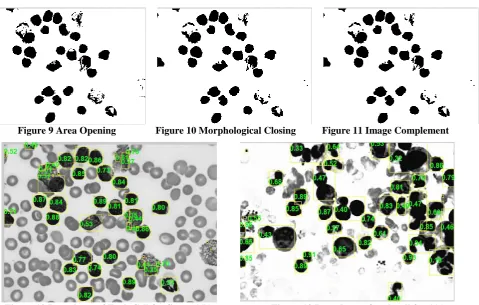
Figure 9 Area Opening Figure 10 Morphological Closing Figure 11 Image Complement
Figure 12 Roundness of Each Cell for figure 1(b) Figure 13 Roundness of each cell for 1(a)
Here output images for Leukemia detection are shown. Original image 1(a) is taken from civil hospital Ahmedabad with 100x magnification oil emersion microscope. And figure 1(b) is taken from web sources. After that contrast is enhanced for further process that can be shown in figure 2. RGB to grey image (G), histogram equalization (H), summation (H+G) and subtraction (H-G) of two images, then again summation of two results and Otsu’s thresholding All
these experiment result can be shown in figure 3, 4, 5, 6, 7, 8 respectively. After performing Otsu’s thresholding method, area opening, morphological closing, image complement can be shown in figure 9, figure 10, figure 11, respectively. After that roundness of cells can be found to detect type of leukemia. Roundness of each cells for figure 1(a) and 1(b) can be shown in figure 13 and figure 12 respectively.
Table (1). Range of roundness for different white cells
Different types of white cells
Roundness value (R)
Myelocytes/ Band (p) 0.22 < R < 0.33
Meta myelocytes (q) 0.34 < R < 0.39
Eosinophil (r) 0.40 < R < 0.49
Promyelocytes (s) 0.50 < R < 0.56
Basophils (t) 0.57 < R < 0.60
Monocytes (u) 0.60 < R < 0.68
Neutrophils (v) 0.69 < R < 0.75
5.
ALGORITHM AND CELL COUNT TO DETECT TYPE OF LEUKEMIA
Algorithm for detection
leukemia type
Different cell count and Result analysis of figure 1(a)
Different cell counts and Result analysis of figure 1(b)
Original image
Color image contrast enhance
RGB to gray color model (G)
Histogram equalization (H)
Addition and substraction of G and H
Nucleus of white cells detection
Convert in to black and white image
Area opening
Hole filling opearion
Find roundness of nucleus
White cell recognize based on roundness value
Detect either Chronic lymphocytic or myelogenous
Here in figure 13, cells due to myeloblast are more than cells of lymphoblast and in figure 12, cells due to lymphoblast are more than myeloblast. Here (p+q+r+s+t+u+v) > w then it is chronic myelogenous leukemia and if (p+q+r+s+t+u+v) < w
then it is chronic lymphocytic leukemia. So figure 1(a) recognize as chronic myelogenous leukemia and figure 1(b) recognize as a chronic lymphocytic leukemia.
Table (2). Observation Table
Image Category Number of images Correctly detected images
CML 15 14
CLL 15 14
6.
CONCLUSION
Using these various techniques, white cells will be detected and then classification is performed. Image processing is used in biomedical field to help to improve image quality, also reduced the cost of medical facilities and give effective results in short duration. Here out of 30 images, 2 images cannot be recognized correctly. Hence, this algorithm gives 93.33% accuracy.
7.
FUTURE SCOPE
The model is efficient and highly accurate to detect leukemic cells. However, there are several shortcomings in this model. Hence, certain type of complex images could not be detected correctly due to intensity variation. This can be resolved using various advance techniques like SVM, ANN, fuzzy logic etc.
8.
ACKNOWLEDGEMENT
I am thankful to staff of civil hospital, Ahmedabad and also thankful to my CHARUSAT University, faculty of EC department, Hardik Modi. I am also thankful to T.P. Singh; Director, Dr. M. B. Potdar; Project Director, Dr. Manoj Pandya; Project Manager, BISAG for their valuable support.
9.
REFERENCES
[1] Tang, J. (2010, April). A color image segmentation algorithm based on region growing. In Computer
engineering and technology (iccet), 2010 2nd
international conference on (Vol. 6, pp. V6-634). IEEE.
[2] Shi, Z., Jinlong, Q., & Guangjie, Q. (2008, October). Urinary Sediment Overlapping Cells Image Segmentation Based on Combination Strategy. In
Computational Intelligence and Design, 2008. ISCID'08.
International Symposium on (Vol. 2, pp. 3-7). IEEE.
[3] Preetha, M. M. S. J., Suresh, L. P., & Bosco, M. J. (2012, March). Image segmentation using seeded region growing. In Computing, Electronics and Electrical Technologies (ICCEET), 2012 International Conference on (pp. 576-583). IEEE.
[4] Shu, J., Fu, H., Qiu, G., Kaye, P., & Ilyas, M. (2013, July). Segmenting overlapping cell nuclei in digital histopathology images. In Engineering in Medicine and Biology Society (EMBC), 2013 35th Annual International
Conference of the IEEE (pp. 5445-5448). IEEE.
[5] Yanyu, L., & Deliang, L. (2009, December). A novel algorithm of image edge detection based on the order morphology. In Computer Science-Technology and Applications, 2009. IFCSTA'09. International Forum on
(Vol. 1, pp. 458-461). IEEE.
2011 Third International Conference on (Vol. 1, pp.
62-65). IEEE.
[7] Haixia, Y., Xiaohui, Z., & Yanjun, L. (2009, May). Algorithm of image enhancement based on order morphology transformation. In Information Technology and Applications, 2009. IFITA'09. International Forum on (Vol. 2, pp. 251-253). IEEE
[8] You, Y., & Yu, H. (2004, August). A separating algorithm based on granulometry for overlapping circular cell images. In Intelligent Mechatronics and Automation, 2004. Proceedings. 2004 International Conference on
(pp. 244-248). IEEE.
[9] Guan, P. P., & Yan, H. (2011, July). Blood cell image segmentation based on the Hough transform and fuzzy curve tracing. In Machine Learning and Cybernetics
(ICMLC), 2011 International Conference on (Vol. 4, pp.
1696-1701). IEEE.
[10]Huang, J. (2010, October). An improved algorithm of overlapping cell division. In Intelligent Computing and
Integrated Systems (ICISS), 2010 International
Conference on (pp. 687-691). IEEE.
[11]Li, S., Wu, L., & Sun, Y. (2011, November). Design and Implementation of an Improved Overlapped Cell Image Segmentation Method. In Robot, Vision and Signal Processing (RVSP), 2011 First International Conference on (pp. 204-207). IEEE.
[12]Tulsani, H., Gupta, R., & Kapoor, R. (2013, November). An improved methodology for blood cell counting. In
Multimedia, Signal Processing and Communication Technologies (IMPACT), 2013 International Conference on (pp. 88-92). IEEE.
[13]Na, S., & Heru, X. (2009, November). The segmentation of overlapping milk somatic cells based on improved watershed algorithm. In Artificial Intelligence and Computational Intelligence, 2009. AICI'09. International
Conference on (Vol. 3, pp. 563-566). IEEE.
[14]Chan, H., Jiang, B., & Jiang, B. (2009, May). Wavelet transform and morphology image segmentation algorism for blood cell. In Industrial Electronics and Applications,
2009. ICIEA 2009. 4th IEEE Conference on (pp.
542-545). IEEE
[15]Gongwen, X., Zhijun, Z., Weihua, Y., & Li'Na, X. (2014, June). On medical image segmentation based on wavelet transform. In 2014 Fifth International Conference on Intelligent Systems Design and Engineering Applications
(CISP), 2011 4th International Congress on (Vol. 4, pp. 2026-2029). IEEE.
[17]Chen, W. B., & Zhang, X. (2010, April). A New Watershed Algorithm for Cellular Image Segmentation Based on Mathematical Morphology. In Machine Vision
and Human-Machine Interface (MVHI), 2010
International Conference on (pp. 653-656). IEEE.
[18]Shu, J., Fu, H., Qiu, G., Kaye, P., & Ilyas, M. (2013, July). Segmenting overlapping cell nuclei in digital histopathology images. In Engineering in Medicine and Biology Society (EMBC), 2013 35th Annual International
Conference of the IEEE (pp. 5445-5448). IEEE.
[19]Xia, Y., & Feng, D. (2009, September). A General Image Segmentation Model and its Application. In Image and Graphics, 2009. ICIG'09. Fifth International Conference on (pp. 227-231). IEEE.
[20]Sulaiman, S. N., Isa, N. A. M., Yusoff, I. A., & Othman, N. H. (2010, November). Overlapping cells separation method for cervical cell images. In Intelligent Systems Design and Applications (ISDA), 2010 10th International
Conference on (pp. 1218-1222). IEEE.
[21]Preetha, M. M. S. J., Suresh, L. P., & Bosco, M. J. (2012, March). Image segmentation using seeded region growing. In Computing, Electronics and Electrical Technologies (ICCEET), 2012 International Conference on (pp. 576-583). IEEE.
[22]Gonzalez-Hidalgo, M., Guerrero-Pena, F. A., Herold-Garcia, S., Jaume-i-Capo, A., & Marrero-Fernandez, P. D. (2015). Red Blood Cell Cluster Separation from Digital Images for use in Sickle Cell Disease. Biomedical
and Health Informatics, IEEE Journal of, 19(4),
1514-1525.
[23]Wenzhong, Y. (2009, June). Mathematical Morphology Based Enhancement for Chromosome Images. In
Bioinformatics and Biomedical Engineering, 2009.
ICBBE 2009. 3rd International Conference on (pp. 1-3).
IEEE.
[24]Pathak, V., Dhyani, P., Dhyani, M., & Sharma, P. (2014, May). Circular morphological feature extraction for nuclear medicine facilitation. In Recent Advances and
Innovations in Engineering (ICRAIE), 2014 (pp. 1-6).
IEEE.
[25]Qi, X., Xing, F., Foran, D. J., & Yang, L. (2012). Robust segmentation of overlapping cells in histopathology specimens using parallel seed detection and repulsive level set. Biomedical Engineering, IEEE Transactions on, 59(3), 754-765.
[26]Nguyen, N. T., Duong, A. D., & Vu, H. Q. (2011). Cell splitting with high degree of overlapping in peripheral blood smear. International Journal of Computer Theory
and Engineering, 3(3), 473.
[27]Mohapatra, S., Samanta, S. S., Patra, D., & Satpathi, S. (2011, February). Fuzzy based blood image segmentation for automated leukemia detection. In Devices and
Communications (ICDeCom), 2011 International
Conference on (pp. 1-5). IEEE.
[28]Mohapatra, S., & Patra, D. (2010, December). Automated leukemia detection using hausdorff
dimension in blood microscopic images. In Emerging Trends in Robotics and Communication Technologies
(INTERACT), 2010 International Conference on (pp.
64-68). IEEE.
[29]Mohapatra, S., Patra, D., & Satpathi, S. (2010, December). Image analysis of blood microscopic images for acute leukemia detection. In Industrial Electronics, Control & Robotics (IECR), 2010 International
Conference on (pp. 215-219). IEEE.
[30]Mohapatra, S., Patra, D., Kumar, S., & Satpathi, S. (2012, December). Kernel induced rough c-means clustering for lymphocyte image segmentation. In
Intelligent Human Computer Interaction (IHCI), 2012
4th International Conference on (pp. 1-6). IEEE.
[31]Mohapatra, S., & Patra, D. (2010, December). Automated cell nucleus segmentation and acute leukemia detection in blood microscopic images. In Systems in Medicine and Biology (ICSMB), 2010 International
Conference on (pp. 49-54). IEEE.
[32]Mohammed, E. A., Mohamed, M. M., Naugler, C., & Far, B. H. (2013, May). Chronic lymphocytic leukemia cell segmentation from microscopic blood images using watershed algorithm and optimal thresholding. In
Electrical and Computer Engineering (CCECE), 2013
26th Annual IEEE Canadian Conference on (pp. 1-5).
IEEE.
[33]Lim, H. N., Mashor, M. Y., & Hassan, R. (2012, February). White blood cell segmentation for acute leukemia bone marrow images. In Biomedical Engineering (ICoBE), 2012 International Conference on
(pp. 357-361). IEEE.
[34]Fatma, M., & Sharma, J. (2014, November). Identification and classification of acute leukemia using neural network. In Medical Imaging, m-Health and Emerging Communication Systems (MedCom), 2014
International Conference on (pp. 142-145). IEEE.
[35]Akrimi, J. A., Suliman, A., George, L. E., & Ahmad, A. R. (2014, November). Classification red blood cells using support vector machine. In Information Technology and Multimedia (ICIMU), 2014 International Conference on (pp. 265-269). IEEE.
[36]Jabar, F. H., Ismail, W., Salam, R. A., & Hassan, R. (2013, December). Image Segmentation Using an Adaptive Clustering Technique for the Detection of Acute Leukemia Blood Cells Images. In Advanced Computer Science Applications and Technologies
(ACSAT), 2013 International Conference on (pp.
373-378). IEEE.
[37]Abdul Nasir, A. S., Mashor, M. Y., & Rosline, H. (2011, May). Unsupervised colour segmentation of white blood cell for acute leukaemia images. In Imaging Systems and Techniques (IST), 2011 IEEE International Conference on (pp. 142-145). IEEE.
[38]Berge, H., Taylor, D., Krishnan, S., & Douglas, T. S. (2011, March). Improved red blood cell counting in thin blood smears. In Biomedical Imaging: From Nano to
Macro, 2011 IEEE International Symposium on (pp.
[39]Ge, J., Gong, Z., Chen, J. J., Liu, J., Nguyen, J., Yang, Z. Y., ... & Sun, Y. (2014, May). A system for automated counting of fetal and maternal red blood cells in clinical KB test. In Robotics and Automation (ICRA), 2014 IEEE
International Conference on (pp. 1706-1711). IEEE.
[40]Supardi, N. Z., Mashor, M. Y., Harun, N. H., Bakri, F. A., & Hassan, R. (2012, March). Classification of blasts in acute leukemia blood samples using k-nearest neighbour. In Signal Processing and its Applications
(CSPA), 2012 IEEE 8th International Colloquium on (pp.
461-465). IEEE.
[41]Rawat, J., Singh, A., Bhadauria, H. S., & Kumar, I. (2014, December). Comparative analysis of segmentation algorithms for leukocyte extraction in the acute Lymphoblastic Leukemia images. In Parallel, Distributed and Grid Computing (PDGC), 2014
International Conference on (pp. 245-250). IEEE.
[42]Das, B. K., Jha, K. K., & Dutta, H. S. (2014, March). A New Approach for Segmentation and Identification of Disease Affected Blood Cells. In Intelligent Computing Applications (ICICA), 2014 International Conference on
(pp. 208-212). IEEE.
[43]Madhloom, H. T., Kareem, S. A., & Ariffin, H. (2012, November). A Robust Feature Extraction and Selection Method for the Recognition of Lymphocytes versus Acute Lymphoblastic Leukemia. In Advanced Computer Science Applications and Technologies (ACSAT), 2012
International Conference on (pp. 330-335). IEEE.
[44]Putzu, L., & Di Ruberto, C. (2013, January). White blood cells identification and counting from microscopic blood image. In Proceedings of World Academy of Science,
Engineering and Technology (No. 73, p. 363). World
Academy of Science, Engineering and Technology (WASET).
[45]Himali P Vaghela, Hardik Modi, Manoj Pandya and M B Potdar. Article: Leukemia Detection using Digital Image Processing Techniques. International Journal of Applied
Information Systems 10(1):43-51, November 2015.
Published by Foundation of Computer Science (FCS), NY, USA