Original Research Article
A study on the pattern of skin diseases among migrant labourers
visiting a teaching hospital
Pradeep Senapathi
1, Hemant Kumar
1*, Shama Kamath
1, Nischitha S.
2,
Mahesh V.
3, Pradyumna Bhandary
4INTRODUCTION
Human migration is a universal social phenomenon. It is not only a physical movement of people from one place to another, but also a social process that brings about socio-economic, changes in a society. The UN Convention on the Rights of Migrants defines a migrant worker as a "person who is to be engaged, is engaged or has been engaged in a remunerated activity in a State or a region of which he or she is not a domicile”.1 Although international migrants have retained roughly the same share of the global population for the last several decades, their absolute number has reached an all-time high in
2017–an estimated 258 million.2 While India has been the top source of international migrants, with one-in-twenty migrants worldwide born in India, the Europe has been the top destination with 33% of all migrants settling here.3
The Economic Survey of India - 2017 estimates that the magnitude of inter-state migration in India was close to 9 million annually between 2011 and 2016, while Census 2011 pegs the total number of internal migrants in the country (accounting for inter- and intra-state movement) at a staggering 139 million.4 However, new evidence based on, "India Human Development Survey", reveals
ABSTRACT
Background: Skin diseases are quite common among migrant workers, yet little research has been done to determine their prevalence and risk factors. Poor living conditions, over-crowding, low standards of personal hygiene and environmental sanitation make them even more vulnerable. The objective of the study was to assess the prevalence and pattern of skin infections among migrant labourers and their relationship with selected socio-demographic factors.
Methods: A hospital based cross sectional study was carried out among 300 temporary migrants visiting dermatology OPD of A.J. Institute of Medical Sciences teaching hospital. The duration of study was two months. All patients were diagnosed clinically by qualified dermatologists and supported by relevant investigations.
Results: Most of the migrants were males (62%) while remaining (38%) were females. Majority of the migrants (42.3%) belonged to 20-40 years age group. Infectious skin diseases were found among 64.3% of the study subjects while 34.7% of them had non-infectious skin diseases. The lesions were mainly over head and neck (23.3%) followed by abdomen (23%), upper limbs (21.3%) and lower limbs (21.3%).
Conclusions: The study revealed a high prevalence of infectious skin diseases among the migrant workers.
Keywords: Migrant workers, Skin diseases, Dermatology, Hygiene
Department ofCommunity Medicine, 1AJIMS &RC, Mangalore, 3CIMS, Chamarajanagar, Karnataka, India 2
A.J. Institute of Dental Sciences, Mangalore, Karnataka, India 4
Department of Dermatology, AJIMS & RC, Mangalore, Karnataka, India
Received: 28 May 2018
Revised: 06 July 2018
Accepted: 09 July 2018
*Correspondence:
Dr. Hemant Kumar,
E-mail: [email protected]
Copyright: © the author(s), publisher and licensee Medip Academy. This is an open-access article distributed under the terms of the Creative Commons Attribution Non-Commercial License, which permits unrestricted non-commercial use, distribution, and reproduction in any medium, provided the original work is properly cited.
that internal labour mobility in India is much higher than previously estimated and in absolute terms the circular migration could be more than 200 million in 2011-12, i.e. much higher than previously documented, with migrants accounting for 37.8 per cent of India‟s 133 crore population. Uttar Pradesh and Bihar are the biggest source states, followed closely by Madhya Pradesh, Punjab, Rajasthan, Uttarakhand, Jammu and Kashmir and West Bengal; the major destination states are Delhi, Maharashtra, Tamil Nadu, Gujarat, Andhra Pradesh and Kerala. Most of the female migrants cite „Marriage‟ as the reason for migration, while for males, the major reasons for migration has been „work and employment‟. 5-6
In India, migrants constitute a very diverse group with different ethnic and socioeconomic backgrounds and are the most vulnerable community. They are often poorly paid and made to do hazardous and informal market jobs and often face conflicts and disputes i.e. non-payment of wages, physical and sexual abuse, accidents and injuries and at times even death. The local administration, trade unions as well as political leaders often ignore them as they are not domicile of the place and do not count towards their vote bank. They quietly work and walk back to their make shift shelters at night, which again are often temporary and lack even basic amenities like potable water, drainage, electricity supply and sanitation.7 Further, the lack of awareness regarding common health problems and their preventive measures makes them vulnerable to endemic diseases like malaria, hepatitis, typhoid fever, respiratory tract infections, diarrhoea, worm infestations etc. Studies also indicate a high prevalence of skin diseases and fungal infections among these migrant workers.
In the backdrop of the above, a cross-sectional study was conceived and conducted among the migrant workers visiting a teaching hospital in Mangaluru, Karnataka with an aim to study the pattern of skin diseases among them.
Objective
To assess the prevalence and pattern of skin infections among migrant labourers and their relationship with selected socio-demographic factors.
METHODS
Present study is a hospital based, cross sectional study. The duration of study was two months i.e. from 01 June 2017 to 31 July 2017. A preliminary pilot study was conducted among 50 migrant labourers which brought out that the most common skin disease among the migrant labourers was fungal infection. Considering 10% allowable error with 95% confidence interval and 10% non response rate, sample size of 292 was calculated and the study was conducted finally among 300 subjects.
The study was conducted after taking necessary permission from the Institutional Ethics Committee. The migrants and their accompanying contractors were explained the purpose of the study and informed consent was taken from the study subjects. A semi-structured, pre-validated questionnaire was administered, which comprised of standard questions related to their socio-demographic profile. Each migrant labourer considered for the study was later examined in a well lit room. The type of skin disease was recorded based on the diagnosis as given by the treating dermatologist. This was followed by health education sessions, giving importance on occupational hazards and personal hygiene. The occurrence of skin diseases was compared with their socio-demographic factors to find out if there was any association between them.
Inclusion and exclusion criteria
Migrants labourers visiting dermatology OPD of A.J. Institute of Medical Sciences & Research Centre teaching hospital, residing in Mangalore for less than five years and willing to take part in the research were included in the study. However, migrants who had spent more than five years in Mangalore or those who were unwilling to co-operate were not included in the study.
Statistical analysis
Data was entered into Microsoft excel data sheet and was analyzed using SPSS 22 version software. Categorical data was represented in the form of frequencies and proportions. Chi- square test was used as test of significance for qualitative data. P-value of <0.05 was considered significant.
RESULTS
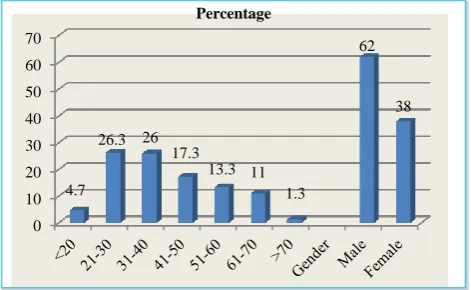
A total of 300 temporary migrant workers were included in the study. Majority of subjects were found to be in the economically productive age group of 21-30 years (26.3%), followed by 31-40 years (26.0%). Majority of the migrants i.e. 62% were males while remaining 38% were females (Figure 1).
Figure 1: Distribution of study population according to age and gender.
0 10 20 30 40 50 60 70
4.7
26.3 26 17.3
13.3 11 1.3
62
Table 1: Distribution of the study subjects based on their demographic characteristics (n=300).
Demographic variables Frequency (%)
Religion
Hindu 225 (75.0)
Muslim 54 (18.0)
Christian 20 (6.7)
Jain 1 (0.3)
Total 300 (100)
Mother tongue
Hindi 131 (43.7)
Bengali 30 (10.0)
Punjabi 24 (8.0)
Marathi 19 (6.3)
Gujarathi 19 (6.3)
Marwari 18 (6.0)
Tamil 11 (3.7)
Others 48 (16.0)
Total 300 (100)
Marital status
Married 236 (78.7)
Unmarried 43 (14.3)
Separated 11 (3.7)
Divorced 6 (2.0)
Widowed 4 (1.3)
Total 300 (100)
Literacy status Literate 195 (65.0)
Illiterate 105 (35.0)
Total 300 (100)
Type of family
Nuclear 51 (17.0)
Joint 249 (83.0)
Total 300 (100)
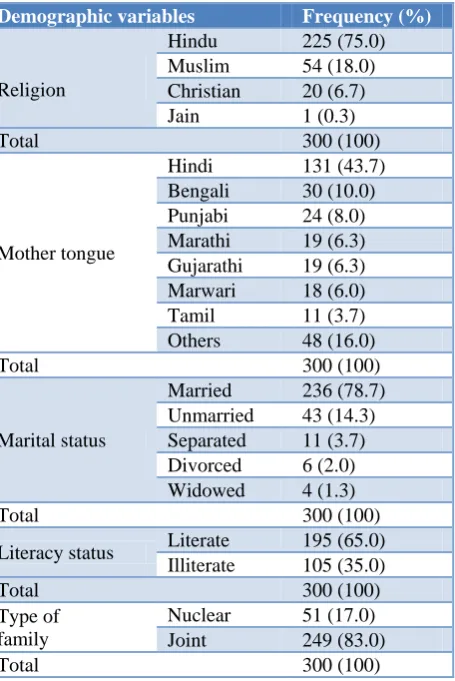
Majority of the respondents (75.0%) were Hindus, followed by Muslims (18.0%), Christians (6.7%) while remaining (0.3%) were Jains. Majority of the migrants (78.7%) were married while remaining (14.3%) were unmarried. Further, 35% of subjects were illiterate while 65% were literate. Majority of subjects (43.7%) spoke Hindi followed by Bengali (10.0%), Punjabi (8.0%), Marathi (6.3%), Gujarati (6.3%) and Marwari (6.0%), while remaining subjects spoke other regional languages. It was also observed that most of the migrants (80.3%) sent money to their family members on weekly basis while (19.7%) of them sent it regularly on monthly basis. Majority (83%) of the respondents were from joint families while the remaining (17%) subjects belonged to nuclear families (Table 1).
Present study brought out that duration of stay of majority (42.3%) of the study subjects at current location was 49-60 months, while their average duration of stay was 42.27 months. Most common reason (53.3%) for choosing present place for migration was contractor‟s advice while the most common reason for leaving previous place was un-employment (Table 2).
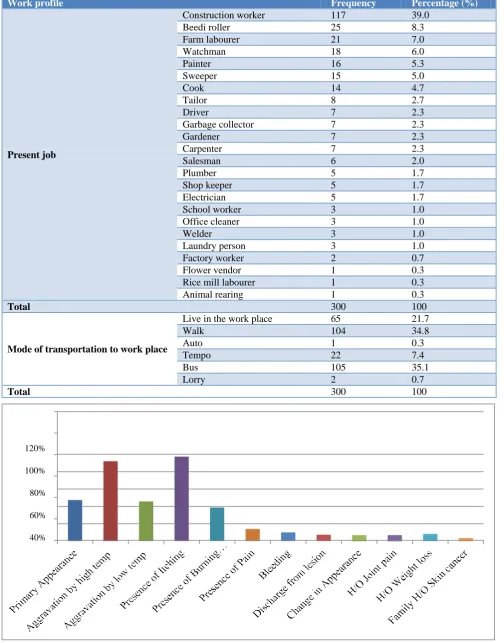
The occupational profile of these migrant workers revealed that majority of them were involved in construction work (39%), followed by beedi rolling (8.3%), farm labour (7%) and security (6.0%) etc. Further, 21.7% of the migrants were found to be living in close vicinity of place of work, 34.8% stayed at a walking distance while remaining 35.1% stayed far and used bus or auto as mode of transport for commuting (Table 3).
Table 2: Distribution of study subjects according to migration pattern (n=300).
Migration pattern Frequency Percentage (%)
Duration of present stay after migration (in months)
1–12 35 11.7
13–24 14 4.7
25–36 48 16.0
37–48 76 25.3
49–60 127 42.3
Total 300 100
Reason for choosing present place
People from same native 86 28.7
Non availability of land 9 3.0
To be with spouse 12 4.0
Contractor‟s advice 160 53.3
Better income 29 9.7
Children abandoned 4 1.3
Total 300 100
Reasons for leaving previous place
Un-employment 224 74.7
Low wages 28 9.3
Work completed 30 10.0
Change in work site 13 4.3
Rains 2 0.7
Heat 1 0.3
Landlord sold the site 1 0.3
Forcefully evacuated 1 0.3
Table 3: Distribution of study population according to their work profile (n=300).
Work profile Frequency Percentage (%)
Present job
Construction worker 117 39.0
Beedi roller 25 8.3
Farm labourer 21 7.0
Watchman 18 6.0
Painter 16 5.3
Sweeper 15 5.0
Cook 14 4.7
Tailor 8 2.7
Driver 7 2.3
Garbage collector 7 2.3
Gardener 7 2.3
Carpenter 7 2.3
Salesman 6 2.0
Plumber 5 1.7
Shop keeper 5 1.7
Electrician 5 1.7
School worker 3 1.0
Office cleaner 3 1.0
Welder 3 1.0
Laundry person 3 1.0
Factory worker 2 0.7
Flower vendor 1 0.3
Rice mill labourer 1 0.3
Animal rearing 1 0.3
Total 300 100
Mode of transportation to work place
Live in the work place 65 21.7
Walk 104 34.8
Auto 1 0.3
Tempo 22 7.4
Bus 105 35.1
Lorry 2 0.7
Total 300 100
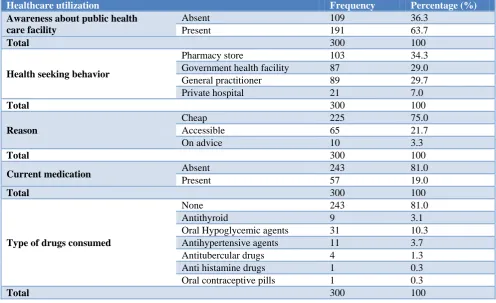
Figure 2: Profile of skin lesions among the study population (n=300).
Table 4: Prevalence of substance use among study population (n=300).
Personal Habits Frequency Percentage (%)
Tobacco consumption Absent 160 53.3
Present 140 46.7
Total 300 100
Type of tobacco consumption
Absent 160 53.3
Smoking 97 32.4
Smokeless 43 14.3
Total 300 100
Alcohol consumption Absent 166 55.3
Present 134 44.7
Total 300 100
Quantity of alcohol consumption
Absent 166 55.3
90 ml 102 34.0
180 ml 20 6.7
360 ml 9 3.0
720 ml 3 1.0
Total 300 100
Frequency of alcohol consumption
Absent 166 55.3
Weekly basis 111 37.0
Two to three times a week 13 4.3
Daily basis 10 3.3
Total 300 100
Table 5: Distribution of study population according to their health care utilization (n=300).
Healthcare utilization Frequency Percentage (%)
Awareness about public health care facility
Absent 109 36.3
Present 191 63.7
Total 300 100
Health seeking behavior
Pharmacy store 103 34.3
Government health facility 87 29.0
General practitioner 89 29.7
Private hospital 21 7.0
Total 300 100
Reason
Cheap 225 75.0
Accessible 65 21.7
On advice 10 3.3
Total 300 100
Current medication Absent 243 81.0
Present 57 19.0
Total 300 100
Type of drugs consumed
None 243 81.0
Antithyroid 9 3.1
Oral Hypoglycemic agents 31 10.3
Antihypertensive agents 11 3.7
Antitubercular drugs 4 1.3
Anti histamine drugs 1 0.3
Oral contraceptive pills 1 0.3
Total 300 100
This study revealed that a high percentage of migrants (46.7%) were consuming tobacco while smoking beedi/ cigarettes was the most common form (69.2%) of tobacco consumption. The study also brought out high (44.7%)
Table 6: Distribution skin lesions according to site among study population (n=300).
Site of skin lesion Frequency (%)
Head and neck 70 (23.3)
Upper limb 64 (21.3)
Thorax 17 (5.6)
Abdomen 69 (23.0)
Pelvic region 16 (5.3)
Lower limb 64 (21.3)
Total 300 (100)
The study brought out that most of the migrants (63.7%) were aware of location of the nearest government health care facility. However, a large percentage of them (34.3%) preferred to visit pharmacy stores directly for taking treatment as majority of them (75%) felt that it was convenient and also worked out to be much cheaper (Table 5).
The study brought out that the most common site of skin lesions was head and neck (23.33%), followed by Abdomen (23%), Lower Limbs (21.3%) and Upper Limbs (21.3%) while remaining lesions were on other body parts (Table 6).
The study further brought out that 47.3% of the migrants had primary skin lesions whereas 52.7% of them had old skin lesions. Further, 92% of lesions were aggravated by heat while 45.7% by cold. In addition, 87.3% of the subjects also had previous history of medication. The lesions in majority of the cases (97.3%) had itching, while 38.7% of them had burning sensation, 14% had pain, 10% had bleeding, 7.3% had discharge, 6.7% had joint pain and 8.3% had history of weight loss. A small percentage of them (3.3%) also had family history of skin cancer (Figure 2).
Table 7: Distribution of skin conditions among study subjects according to diagnosis (n=300).
Diagnosis Frequency Percentage (%)
Dermatophytos (48.3%)
Tinea capitis 3 1.0
Tinea cruris 23 7.7
Tinea corporis 86 28.7
Tinea pedis 4 1.3
Tinea incognito 5 1.7
Tinea versicolor 10 3.3
Subsiding tinea 6 2.0
Candidiasis 5 1.7
Pytriasis versicolor 3 1.0
Eczema (25.3%)
Photo dermatitis 2 0.7
Palmar dermatitis 16 5.3
Foot dermatitis 3 1.0
Contact dermatitis 42 14.0
Sweat dermatitis 5 1.7
Seborrhea dermatitis 4 1.3
Plantar dermatitis 4 1.3
Viral infections (2.0%)
Molluscum contagiousm 4 1.3
Varicella 1 0.3
Herpes stomatitis 1 0.3
Bacterial infections (1.0%) Folliculitis 1 0.3
Impetigo 2 0.7
Scabies (10.7%) Scabies 32 10.7
STD (0.3%) Secondary syphilis 1 0.3
Miscellaneous (12.3%)
Prurigo 6 2.0
Xerosis 3 1.0
Fissure foot 2 0.7
Psoriasis 9 3.0
Urticaria 4 1.3
Furuncle 2 0.7
Rosacea 2 0.7
P. alba 3 1.0
Acne 2 0.7
Icthyosis 1 0.3
Pruritis 1 0.3
Vitiligo 1 0.3
Keratolysis exfolitiva 1 0.3
Table 8: Association between socio demographic profile and skin disease among study subjects (n=300).
Socio demographic factor
Diagnosis
P value
Infectious skin disease (n=183)
Non-infectious skin disease (n=117)
Frequency (%) Frequency (%)
Age group
<20 years 10 (5.2) 4 (3.7)
0.438
21 to 30 years 44 (22.8) 35 (32.7)
31 to 40 years 56 (29.0) 22 (20.6)
41 to 50 years 32 (16.6) 20 (18.7)
51 to 60 years 28 (14.5) 12 (11.2)
61 to 70 years 21 (10.9) 12 (11.2)
>70 years 2 (1.0) 2 (1.9)
Gender Male 128 (66.3) 58 (54.2) 0.038*
Female 65 (33.7) 49 (45.8)
Religion
Hindu 155 (80.3) 70 (65.4)
0.027*
Muslim 27(14.0) 27 (25.2)
Christian 10 (5.2) 10 (9.3)
Jain 1 (0.5) 0 (0.0)
Marital status
Unmarried 20 (10.4) 23 (21.5)
0.026*
Married 159 (82.4) 77 (72.0)
Separated 6 (3.1) 5 (4.7)
Divorced 6 (3.1) 0 (0.0)
Widowed 2 (1.0) 2 (1.9)
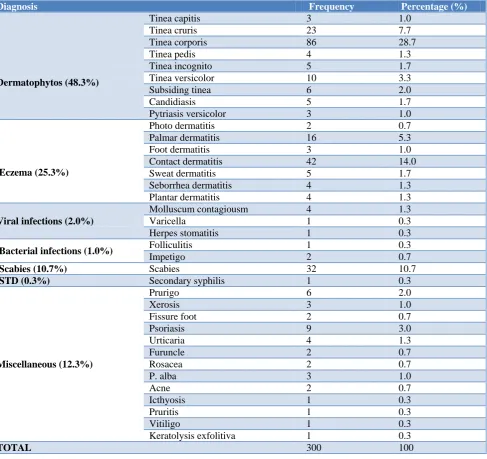
The study brought out Dermatophytosis as the most common (48.34%) skin problem among the respondents, followed by Eczema (25.34%), Scabies (10.7%), viral infections (2.0%), bacterial infections (1.0%) and STDs (0.3%) (Table 7).
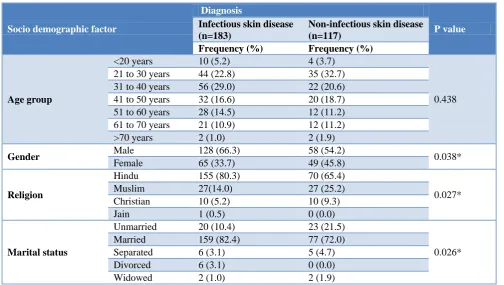
The study revealed a higher (66.3%) prevalence of Infectious skin disease among males as compared to females i.e. 33.7%. Further, prevalence of non infectious skin diseases was also seen to be marginally higher (54.2%) among males than females (45.8%). This difference in gender distribution of skin diseases was also found to be statistically significant (p<0.038). The study also brought out a much higher prevalence of Infectious skin disease among Hindus i.e. 80.3% as compared to Muslims (14%), Christians 5.2% and Jains 0.5%. Further, the prevalence of non - infectious skin disease was also found to be higher among Hindus i.e. 65.4% as compared to Muslims (25.2%) and Christians (9.3%). This difference in prevalence of skin diseases among Hindus and other religions was also found to be statistically significant (p<0.027). Further, the prevalence of infectious skin disease was much lower (10.4%) among unmarried subjects as compared to married subjects (82.4%). Similar trend was also observed for non-infectious skin disease where prevalence was found to be 21.5% among unmarried subjects as compared to 72.0% among married subjects. This difference in prevalence of skin diseases among married and unmarried migrants under study was also found to be statistically significant (p<0.026) (Table 8).
DISCUSSION
Migration is as old as our civilization where men had a nomadic life, shifting from one place to another in search of food, safety and for a better quality of life. However, migrants are potentially a vulnerable population in relation to their health needs, which are determined by various factors like poor housing conditions, occupational hazards, environmental sanitation, poor nutrition, isolation, poor personal hygiene, substance use, access to health care, lack of awareness on endemic diseases and their poor educational status. Paradoxically, they are the ones who need proper health care services the most, instead they usually rely on unqualified medical practitioners and pharmacy shops, and make huge out of pocket (OOP) expenditure of health, though it is entirely preventable. Present study was undertaken to assess skin problems among subject migrants.8-10
Demographic characters
In present study, 62.0% of migrants were males, while remaining 38.0% were females. Shah et al, in their study also reported that 60.9% of the migrant workers having skin diseases were males and rest were females while Kiran et al, in their study in Mangalore, reported 75.33% of the workers were males and remaining were females.13,14
Majority of subjects in our study were Hindus (75%), followed by Muslims (18.0%) while remaining (6.7%) were Christians. Kiran et al, also reported similar findings in their study among migrants i.e. 53.33% Hindus and 34.67% Muslims. Surabhi et al, in their study at Kochi also reported majority of the workers to be Hindus (94%).14,15
In present study most of the migrants (78.7%) were married while unmarried subjects were only 14.3%. Interestingly, 3.7% of the subjects were separated, 2.0% were legally divorced while 1.3% were widowed. Benner A, in his study also found similar results and reported 12.31% of the workers as unmarried while 87.69% were married.16
The literacy status of migrant workers is expected to be much lower as compared to the national literacy rate which is 74.04%. However, in present study a large number of migrants (65.0%) were found to be literate. Lingaraju, in a study in Bangalore found 58% of the migrants to be illiterate while 16% were illiterate. Those who had just primary or middle school level education accounted for remaining 16%. These findings indicates relatively low levels of literacy among migrants, almost everywhere.17
Migration pattern
The length of stay of migrants is generally influenced by the contractor they work under; as contractors invariably hail from the same region as the migrant labourers. In our study most of the migrant labourers (42.3%) had been staying in the current location for a period between 4–5 years while 25.3% remaining were in current location between 3–4 years. According to Lingaraju, impermanent migration has become a way of life for many of the migrants. He observed in his study that 13% of the migrants had been moving back and forth between city and village for more than 10 years while another 35 per cent of them had been shuttling like this for the last 5-9 years. Only 13 per cent of the migrants in his study were new to the city having arrived there for the first time in the last one year. Trivedi, et al, in their study at Vadodara also reported similar findings. According to a study by Saggurti in Karnataka, the reasons for staying in the same location over long periods for the migrants were - contractor‟s advice, attraction to the place, known place of destination and long-term work contracts. The same study also reveals that the reasons for moving out of the previous place were low wages (39.0%), family pressure
(20.3%), floods (2.2%) and boredom with old work (34.4%).17-19
Work profile
Skilled jobs generally observed among migrant workers are those of mason, painter, driver, plumber, teacher, electrician, carpenter and tailor etc. In our study, majority of the migrant labourers were working in construction industry followed by bidi rolling, agriculture farms and security agencies. In a study by Saggurti, construction (of roads and buildings) was the main work (40.0%) undertaken by the migrant labourers, followed by loading (30.6%) and fishing 29.4%.19
Ration cards and bank accounts
Ration cards and bank account serve as proof of identity and entitle an individual for benefits being provided by the state and local bodies. The migrant labourers in our study were able to appreciate the importance of a BPL Card as 93.0% of them had possessed one from their native place. This indicates the penetration levels of the BPL Card in the marginalized sections of the society. Voter ID of the native place they belonged to was also available with 80.7% of the migrant labourers. It was positively observed that 84.7% of the migrant labourers also possessed a bank account at their native place. However, in a study in North East part of India titled “Exploring realities of food security: Oral accounts of migrant workers in urban India” by Rai, et al, observed that none the workers had ration cards.20
Remittance
Remittance is the central theme behind migration. In our study most of the migrant labourers (83%) hailed from traditional joint families and worked with the aim to feed the families back home. About three fourths (80.3%) of the migrant labourers ensured that they regularly sent home their earnings back home almost on weekly basis. Similar findings were also reported by Chandrima B. Chatterjee, in her study who found that migrants sent remittances home regularly through several means such as money order, contractor, coworkers or relatives. He also observed that seasonal and contractual labourers made greater remittances than short-term migrant workers.21
Substance use
once a week. Saggurti, in his study in Karnataka on migrants, found widespread use of alcohol among male migrants i.e. a little more than two-thirds of respondents reported alcohol consumption while a significantly higher proportion of migrant men who consumed alcohol also engaged in pre- and extramarital sex with sex workers as well as with casual partners. In our study, we also observed a fairly large percentage (46.7%) of study subjects consumed tobacco. Further, majority (32.4%) of them were smokers while 14.3% of the subjects used tobacco quid. Similar results were also observed by Surabhi et al, as they reported 36% of the migrants in their study smoked, (70% males and only 2% of the females) while 31% of them chewed tobacco (14% males and 48% females).15,19
Health care utilization
It was observed in our study that majority of the migrants (63.7%) were aware of the nearest public health facility. This could perhaps be attributed to their contractor who may have briefed them about location of these facilities. However, though not surprisingly, the pharmacy stores were the more preferred destination to seek remedy for most (34.3%) of the workers, while a moderate number (29.0%) of them also visited a public health facility when they fell ill. Our study subjects perhaps opted to visit this teaching hospital due to lack of availability of dermatology specialists near their workplace. In our study, on an average, a migrant labourer took 3.5 days to get back to work after an episode of illness. This had a direct bearing on his income as well as remittance. In a study by Bontha et al, in eastern part of the country it was observed that the service provisions in public health care centers were very poor, hence for curative services, the migrants had to depend on private practitioners, including unqualified practitioners, by spending large proportions of their earnings.22
Skin diseases
In present study, among the 300 migrant labourers who visited the dermatology OPD, majority of them (64.3%) had infectious skin diseases while remaining (35.7%) had non-infectious skin conditions. Banerjee, et al, in their study among migrants in Udupi, Karnataka also reported a high prevalence (65%) of infectious skin diseases among migrants. Grover, et al, in their study on Skin diseases in rural Allahabad too, found a very high prevalence (59.1%) of infective skin conditions and found head and neck as the commonest site (23.3%) for lesions, followed by abdomen 23.0%, upper limbs (21.3%), lower limbs (21.3%), thorax (5.6%) while pelvis was involved only in (5.3%) of the cases.12,23
Similar findings were also reported by Banerjee, et al, who found that, most of the workers had skin lesions on body parts such as neck, chest, abdomen, and pelvic region. Trivedi et al, in their study in Vadodara examined 312 construction workers in 10 different construction
sites and found that 64% of workers had skin problems in arms/ hands/ palm and 53% in legs, while only 8% and 1% workers had skin problems in abdomen and face respectively.12,18
Diagnosis
Dermatophytosis was found to be the most common (48.34%) group of skin diseases in our study. Out of these, Tinea Corporis, was found to be the commonest disease (28.7%) followed by Tinea Cruris, (7.7%) while Tinea Versicolar, Tinea Capitis, Tinea Pedis, Tinea Incognito, Pytriasis Versicolar and Candidiasis accounted for remaining cases. The second commonest group of skin disorders was found to be eczematous dermatitis and it was diagnosed in 25.34% of the subjects. Further, contact dermatitis was also found to be quite common and was seen in 14.0% of the subjects while palmer dermatitis was seen in 5.3% of the cases. Photo dermatitis, foot dermatitis, sweat dermatitis, seborrhic dermatitis and plantar dermatitis accounted for remaining cases. Scabies was also found to be an important health problem and was diagnosed in 10.7% of the subjects. Sexually transmitted disease (Syphilis) was diagnosed only in 1 (0.3%) case. Viral infections were noted in 2.0% subjects while bacterial infections were seen only in 1.0% of the subjects. Other miscellaneous conditions found were Psoriasis, Prurigo, Urticaria, Xerosis, Pytriasis Alba, Acne, Rosacea, Furruncle, Fissure Foot, Icthyosis, Pruritis, Vitilligo and Keratolysis Exfolitiva.
Similar findings were also reported by Kuruvila, et al, who in their study among one thousand construction workers in Mangalore, found a very high prevalence (89.72%) of infective dermatoses with fungal infection being most common (46.25%) infection, followed by bacterial infections (24.83%), scabies (8.56%) and viral infections (6.42%). Contact dermatitis to cement was seen in 12.48% of the workers.11 Similar results were also reported by Shah et al and Adsul in their studies.11,13,24
Association between socio-demographic profile and skin disease
Majority of Infectious skin diseases were seen in the age group 31 to 40 years, whereas majority of non-infectious skin diseases were seen in the age group 21 to 30 years. However no significant association was observed between any specific age group and infectious or non-infectious skin diseases.
Infectious skin diseases were seen in 66.3% of males and 33.7% of females and non-infectious skin diseases were seen in 54.2% of males and 45.8% of females. Further, this difference in gender distribution with respect to infectious and non-infectious skin disease was also found to be statistically significant (p<0.038).
Hindus, 14% were Muslims while 5.2% of them were Christians. Non infectious skin diseases were seen in 65.4% of Hindus, 25.2% of Muslims and 9.3% of Christians. Further, the difference in religion distribution with respect to infectious and non infectious skin diseases was also found to be statistically significant (p<0.027).
Our study also revealed that among migrants suffering from infectious skin diseases, 10.4% were unmarried, 82.4% were married, 3.1% were separated, 3.1% were divorced and 1% were widowed while among those suffering from non - infectious skin diseases, 21.5% were unmarried, 72% were married, 4.7% were separated, none were divorced and 1.9% were widowed. Further, the association between marital status and prevalence of infectious as well as non infectious diseases among study subjects was also found to be statistically significant (p<0.026).
CONCLUSION
Present study brings out the pattern of dermatoses among the study population which is expressive of their poverty, illiteracy, ignorance, low standards of housing and sanitation and exposure to various irritants especially in construction industry. The possibility of a „Migrant Health Care Kit‟ can be explored which could be carried by the local health workers consisting of the primary care treatment; based on the general pattern of diseases common among the migrants including skin diseases
Limitations
Since present study was a hospital based study, data obtained cannot be considered to be representative of the prevalence of skin diseases among general migrant population. Therefore, large scale studies at the community level are needed to review the actual picture of dermatoses among migrant workers in Mangaluru.
Funding: No funding sources Conflict of interest: None declared
Ethical approval: The study was approved by the Institutional Ethics Committee
REFERENCES
1. UNESCO. Learning to Live Together.
Migrant/Migration. 2017. Available at:
http://www.unesco.org/new/en/social-and-human-sciences/themes/international-migration/glossary/ migrant/. Accessed on 12 May 2018.
2. United Nations, Department of Economic and
Social Affairs, Population Division (2017). Trends in International Migrant Stock: The 2017 revision (United Nations database, POP/DB/MIG/Stock/ Rev. 2017).
3. Pew Research Centre. India is a top source and destination for world‟s migrants. http:/ /www. pew research. org
/fact-tank/2017/03/03/india-is-a-top-source-and-destination-for-worlds-migrants/. Accessed on 12 May 2018.
4. OECD. Economic Survey of India 2017.
http://www.oecd.org/eco/ surveys/economic-survey- india.htm. Accessed on 12 May 2018.
5. Nayyar, Gaurav, Kim, Yang K, India's Internal Labor Migration Paradox: The Statistical and the Real (February 26, 2018). World Bank Policy Research Working Paper No. 8356.
6. World Economic Forum. India has 139 million internal migrants. They must not be forgotten.
Available at: https://www.weforum.org/agenda/
2017/10/india-has-139-million-internal-migrants-we-must-not-forget-them/. Accessed on 12 May 2018.
7. THE WIRE, 2018. Housing for All' Means Nothing
for India's Migrant Workers. Available at: https://the wire.in/economy/housing-for-all-migrant-workers. Accessed on 12 April 2018.
8. Santha SD, Jaswal S, Sasidevan D, Khan A, Datta K, Kuruvilla A. Climate variability, livelihoods and social inequities: The vulnerability of migrant workers in Indian cities. Int Area Studies Rev. 2016;19(1):76-89.
9. History of Human Migration. Wikipedia. Available at: https://en.wikipedia.org/wiki/History_ of_ huma n _ migration. Accessed on 15 May 2018.
10. Chatterjee S. Migrant Labourers and their Health & Hygiene. IJETST. 2016;03(8):4518-23.
11. Kuruvila M, S Dubey and Pratik Gahalaut. Pattern of skin diseases among migrant construction workers in Mangalore Indian J Dermatol Venerol Leprol. 2006;72(2):129-32.
12. Banerjee M, Kamath R, Tiwari RR, Nair NPS. Dermatological and respiratory problems in migrant construction workers of Udupi, Karnataka. Indian J Occup Environ Med. 2015;19:125-8.
13. Shah KR, Tiwari RR. Occupational skin problems in construction workers. Indian J Dermatol. 2010;55:348-51.
14. Kiran KG, Nanjesh KS, Kiran NU, Badiger S, Swathi HN. Study of morbidity pattern among migrant workers in a coastal city of Karnataka. Int J Current Res. 2016;8(6):32738-40.
15. Surabhi KS, Kumar NA. Labour migration to
Kerala: a study of Tamil migrant labourers in Kochi. 2007. Available at: http://csesindia.org /admin /modules/cms/docs/publication/16.pdf. Accessed on 18 May 2018.
16. Bener A. Health Status and Working Condition of Migrant Workers: Major Public Health Problems. Int J Prevent Med. 2017;8:68.
17. Lingaraju M. Impermanent migration to the city: a survival strategy of the poor. University of Mysore; 2003.
18. Trivedi A, Patel Y, Pandit N, Bhavsar B. Prevalence of skin morbidity among construction site workers working at Vadodara. Healthline. 2011;2:31-3. 19. Saggurti N. Migration/mobility and vulnerability to
https://pdfs.semanticscholar.org/72f0/d880276afa71 1975366456 ef1b051 de79f5a.pdf. Accessed on 25 May 2018.
20. Rai RK. Exploring realities of food security: Oral accounts of migrant workers in urban India. Indian Institute of Management, Ahmedabad, India Patturaja Selvaraj Indian Institute of Management, Indore, India. Economic Industrial Democracy. 2015;36(1):147–71.
21. Chandrima BC. Identities in motion; migration and
health in India. Available at:
http://www.cehat.org/go/uploads/Hhr/migrants.pdf. Accessed on 25 May 2018.
22. Bontha V, Babu, Basanta K, Swain, Mishra S, Shantanu K, et al. Primary healthcare services among a migrant indigenous population living in an
eastern Indian city. J Immigr Minor Health. 2008;12(1):53-9.
23. Grover S, Ranyal RK, Bedi MK. A cross section of skin diseases in rural Allahabad. Indian J Dermatol. 2008,53:179-81.
24. Adsul BB, Laad PS, Howal PV, Chaturvedi RM. Health problems among migrant construction workers: A unique public-private partnership project. Indian J Occup Environ Med. 2011;15:29-32.