http://www.ijcmph.com pISSN 2394-6032 | eISSN 2394-6040
Original Research Article
Knowledge, attitude and practices of childhood diarrhoea among
mothers of children under five years of age: a cross sectional study
Nitish Garg
1*, Sulanthung Kikon
2, Rohan Michael Ramesh
3,
Sugandha Chaudhary Garg
4INTRODUCTION
Diarrhoea is the fourth leading cause of death of children
under 5 years of age. Its burden has reduced from 11%of
all childhood deaths to 9% from the year 2008 to 2015.1,2 Out of 525977 under-5 deaths from diarrhoea worldwide in 2015, 22.29% i.e., 117285 occurred in India.3,4
Diarrhoea by definition is the passage of unusually loose or watery stools, at least three times in a period of 24 hours. However, the consistency is a more reliable indicator of diarrhoea rather than the frequency of stools.5 Diarrhoea is due to infections caused by a wide range of
organisms which include bacteria, viruses and
protozoans, such as rotavirus and Escherichia coli. 58% of deaths due to diarrhoea have been attributed to unsafe
ABSTRACT
Background: Diarrhoea is an important communicable disease which can be prevented by proper hygiene and other simple practical measures. We assessed the knowledge, attitude and practices among mothers regarding childhood diarrhoea in a secondary care hospital in Dimapur, Nagaland.
Methods: Cross-sectional observational study conducted over a period of one year including 449 mothers in the age group <45 years with atleast one child under 5 years of age using an interviewer administered, pilot tested, semi-structured questionnaire under the following as categories demography, knowledge, attitude and practices.
Results: 97.8% had good knowledge regarding causes and prevention of diarrhoea, 65% had good knowledge regarding the management of diarrhoea while 31% mothers had moderate knowledge. 98% mothers had good attitude but only 17.8% had good practice scores. Multivariate regression analysis showed education > class 10 and residence in urban area were significantly associated with good knowledge and education >class 10, age of mothers ≥29 years, employed mothers, family income Rs. ≥28000 were significantly associated with good practice.
Conclusions: Good knowledge and attitude regarding diarrhoea prevention and management among our study population did not translate to good practice. These could also be due to the lower knowledge about management of diarrhoea. Widespread prevalence of wrong practices in the community like irrational use of antibiotics could also have resulted in low practice scores. The gaps between knowledge and attitude and practices among the mothers need to be addressed.
Keywords: Childhood diarrhoea, Oral rehydration salt, Knowledge, attitude and practices study, Mothers
1
Department of Family Medicine, 2Department of Paediatrics, 3Department of Community Medicine, Christian Institute of Health Sciences and Research, Dimapur, Nagaland, India
4
Department of Pathology, Sri Ram Murti Smarak Institute of Medical Sciences, Bareilly, Uttar Pradesh, India
Received: 28 July 2019
Revised: 11 September 2019
Accepted: 12 September 2019
*Correspondence:
Dr. Nitish Garg,
E-mail: [email protected]
Copyright: © the author(s), publisher and licensee Medip Academy. This is an open-access article distributed under the terms of the Creative Commons Attribution Non-Commercial License, which permits unrestricted non-commercial use, distribution, and reproduction in any medium, provided the original work is properly cited.
water supply, and lack of sanitation and hygiene (inadequate wash).6
Most of the diarrhoeal deaths are due to dehydration. The fluid lost can be restored in over 90% of cases by oral rehydration salt (ORS) which is dissolved in water to form ORS solution. Malnutrition is one of the major risk factors for developing diarrhoea and thus children with poor overall health, exposed to poor environmental conditions and those with poor nutritional status are more prone for severe disease than healthy children. Age also plays a role with the maximum incidence during the first two years of life and declines with growing age because younger children use more water for their metabolic needs as compared to older children and adults.7
The key components of preventing childhood diarrhoea are improving access to safe drinking water, adequate sanitation and promoting good hygiene.7 World health organization has prepared an action plan for ending preventable child deaths from pneumonia and diarrhoea by the year 2025. In India, the prevention and treatment
of childhood diarrhoea comes under Integrated
Management of Neonatal and Childhood Illness (IMNCI) and National Health Mission (NHM). In 2014, under the National Health mission (NHM), Integrated Action Plan for Prevention and Control of Pneumonia and Diarrhoea (IAPPD) was launched by the Government of India.
The current infant mortality rate in India is 39.1/1000 live births and India ranks on 47 out of 225 countries worldwide.8 Diarrhoea is the second leading cause of under-five mortality in India, with an estimated 321
children dying every day in 2015and approximately 282
children under 5 years of age every day in 2016 and to reduce this number, there is a need to prevent these
deaths by different preventive and therapeutic
measures.9,10 Some of these measures are taken at household level and some are taken at community level. The preventive measures at the level of community includes water purification by filtration and using ultraviolet light, however these techniques are expensive and not feasible.11 At household level, use of oral rehydration salt (ORS), continuous breast feeding and zinc supplementation helps in reducing the incidence and mortality due to diarrhoea.12
Antimicrobials have been recommended in diarrhoea only if gross blood is present in stools or if Shigella
culture is positive. It is also recommended for associated systemic infections, cholera or in case of severe malnutrition. But the unnecessary drugs are frequently prescribed in the community according to NFHS-3, where 16% children were treated with antibiotics and
30% children were treated with “unknown” drugs.13
Lack of toilets is still a leading cause of illness and death among children. According to United Nations Children's Fund (UNICEF) report in 2013, there are 626 million people in India who still practice open defecation.
Around 88% of childhood diarrhoea in India occurs due to inadequate personal hygiene, lack of access to clean water, and poor sanitation.14 Hand washing using soap can reduce the risk of diarrhoea by 42-47%.15
With this study we aimed to find out the the knowledge, attitudes and practices of mothers regarding the causes, prevention and appropriate management of diarrhoea among mothers having children under five years of age. We also aim to determine the gap existing between knowledge and practice in managing diarrhoea by mothers and to study the determinants of knowledge, attitude and practice regarding diarrhoea among mothers of children under five years of age.
METHODS
Study design
This was an observational cross-sectional study conducted from March 2017 to March 2018 in a secondary hospital in Dimapur, Nagaland. The study sample comprised of mothers belonging to any of the Naga Tribes, in the age group <45 years and having at least one child less than 5 years of age.
Data collection
An interviewer administered, pilot tested, semi-structured questionnaire which was translated and back translated into Nagamese was used in the study. It consisted of 4 different sections as demographic profile, knowledge section, attitude sections and practice section. Since Nagaland has many tribes with unique customs, cultures and beliefs, a separate question for the tribe was kept in the demographic profile.
Sample size
According to the study done by Chaudhary et al, the parameter with lowest observed value in the study i.e., sanitation in the form of safe disposal of stools, was selected which stood at 19%.16 The sample size was calculated using single population formula which came out to be 409 (at 5% precision with 95% confidence interval). After adding a 10% none response rate, the final sample size was taken as 449.
Data analysis
multivariate analysis. Statistical testing was conducted with the statistical package for the social science system version SPSS 22.0. For all statistical tests, a p value less than 0.05 was taken to indicate a significant difference.
RESULTS
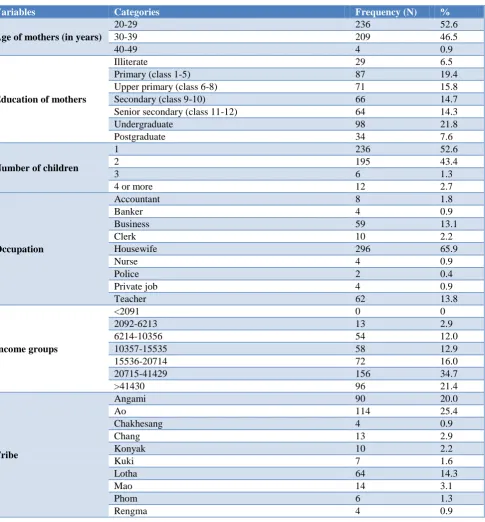
Majority i.e., 52.6% mothers belonged to the age group 20-29 years, while 46.5% mothers were in the age group 30-39 years. About 93% mothers had received some formal education with 43.7% mothers having education >class 10. About 52% mothers had a single child and 48% had more than 1 child. Nearly 66% of the mothers
were housewives while the rest were employed. About 35% mothers had a family income of 20,715-41,429 and there were only around 3% mothers who had a family income <6213. Majority of the mothers i.e., 25.4% belonged to „Ao‟ tribe while about 21% belonged to „Sumi‟ tribe. Nearly 75% of the mothers belonged to urban area while the rest 25% stayed in rural areas. Around 52% mothers stayed at a distance of 15-30 minutes from a nearby hospital and about 47% mothers stayed at a distance of less than 15 minutes (Table 1).
Table 1: Demographic details of the participants (n=449).
Variables Categories Frequency (N) %
Age of mothers (in years)
20-29 236 52.6
30-39 209 46.5
40-49 4 0.9
Education of mothers
Illiterate 29 6.5
Primary (class 1-5) 87 19.4
Upper primary (class 6-8) 71 15.8
Secondary (class 9-10) 66 14.7
Senior secondary (class 11-12) 64 14.3
Undergraduate 98 21.8
Postgraduate 34 7.6
Number of children
1 236 52.6
2 195 43.4
3 6 1.3
4 or more 12 2.7
Occupation
Accountant 8 1.8
Banker 4 0.9
Business 59 13.1
Clerk 10 2.2
Housewife 296 65.9
Nurse 4 0.9
Police 2 0.4
Private job 4 0.9
Teacher 62 13.8
Income groups
<2091 0 0
2092-6213 13 2.9
6214-10356 54 12.0
10357-15535 58 12.9
15536-20714 72 16.0
20715-41429 156 34.7
>41430 96 21.4
Tribe
Angami 90 20.0
Ao 114 25.4
Chakhesang 4 0.9
Chang 13 2.9
Konyak 10 2.2
Kuki 7 1.6
Lotha 64 14.3
Mao 14 3.1
Phom 6 1.3
Rengma 4 0.9
Variables Categories Frequency (N) %
Sangtam 7 1.6
Sema 97 21.6
Zeliang 19 4.2
Place of stay Urban 337 75.1
Rural 112 24.9
Distance from nearest hospital (in minutes)
<15 213 47.4
15-30 233 51.9
30-60 3 0.7
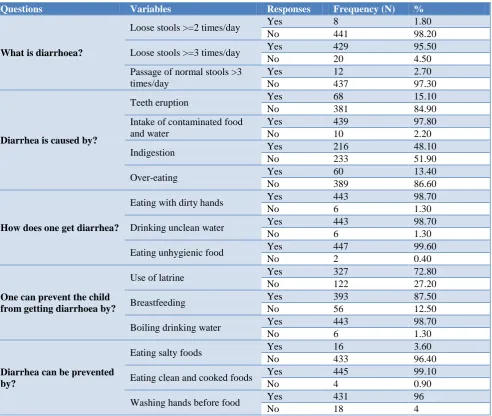
Table 2: Knowledge of mothers regarding causes and prevention of diarrhoea in children (n=449).
Questions Variables Responses Frequency (N) %
What is diarrhoea?
Loose stools >=2 times/day Yes 8 1.80
No 441 98.20
Loose stools >=3 times/day Yes 429 95.50
No 20 4.50
Passage of normal stools >3 times/day
Yes 12 2.70
No 437 97.30
Diarrhea is caused by?
Teeth eruption Yes 68 15.10
No 381 84.90
Intake of contaminated food and water
Yes 439 97.80
No 10 2.20
Indigestion Yes 216 48.10
No 233 51.90
Over-eating Yes 60 13.40
No 389 86.60
How does one get diarrhea?
Eating with dirty hands Yes 443 98.70
No 6 1.30
Drinking unclean water Yes 443 98.70
No 6 1.30
Eating unhygienic food Yes 447 99.60
No 2 0.40
One can prevent the child from getting diarrhoea by?
Use of latrine Yes 327 72.80
No 122 27.20
Breastfeeding Yes 393 87.50
No 56 12.50
Boiling drinking water Yes 443 98.70
No 6 1.30
Diarrhea can be prevented by?
Eating salty foods Yes 16 3.60
No 433 96.40
Eating clean and cooked foods Yes 445 99.10
No 4 0.90
Washing hands before food Yes 431 96
No 18 4
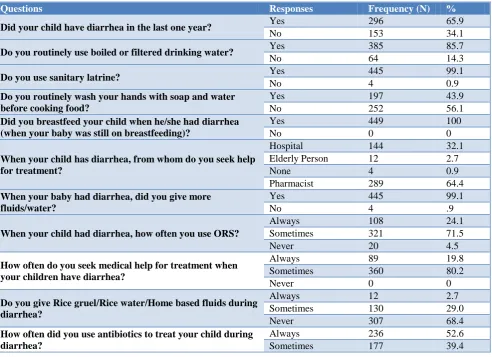
Most mothers in the study population i.e., 97.8% have good knowledge regarding causes and prevention of diarrhoea (Table 2). Only around 65% mothers have a good knowledge regarding the management of diarrhoea while about 31% mothers have a moderate knowledge (Table 3). The attitudes of mothers towards prevention and management of diarrhoea were mostly positive with about 98% mothers having good scores (Table 4). Good knowledge and attitude of mothers about diarrhoea did not translate to desired practice, with only 17.8% having
good practice scores, while 47.7% had moderate scores. There were nearly 35% mothers who received poor practice scores (Table 5).
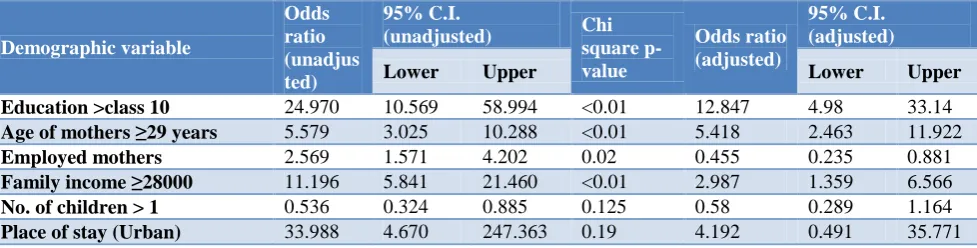
attitude. Education of mothers more than 10th standard (adjusted OR 12.847, 95% CI=4.98 to 33.14), age of mothers more than or equal to 29 years (adjusted OR 5.418, 95% CI=2.463 to 11.922), employed mothers
(adjusted OR 0.455, 95% CI=0.235 to 0.881) and family income more than 28000 INR (adjusted OR 2.987, 95% CI=1.359 to 6.566) were associated with good practice (Table 7).
Table 3: Knowledge of mothers regarding management of diarrhoea in children (n=449).
Questions Responses Frequency (N) %
How do you treat a child with diarrhoea?
Give more water and ORS 409 91.1
Decrease water/food 32 7.1
Don't know 8 1.8
How to prepare ORS (oral rehydration salt)?
Mix ORS powder in water 395 88.0
Mix ORS powder in milk/fruit juice 4 0.9
Don't know 50 11.1
How much of water do you add to each packet of ORS?
1000 ml 166 37.0
100ml/500ml 32 7.1
Don't know 251 55.9
How much ORS do you give?
After each loose stool 92 20.5
Once or twice/thrice a day 253 56.3
Don't know 104 23.2
During episodes of diarrhoea, how much fluids/water a child needs?
More than usual 441 98.2
Same or less than usual 8 1.8
Don't know 0 0
Do you think you should continue breastfeeding during diarrhoea?
Yes 423 94.2
No/depends on child's hunger 22 4.9
Don't know 4 0.9
When should you think that the baby`s condition is becoming serious?
Baby is lethargic and sleepy 391 87.1
Baby drinks eagerly or passing urine
frequently 40 8.9
Don't know 18 4.0
If a child is becoming dehydrated he/she will become?
Irritable 359 80.0
Lethargic/Stop drinking water 36 8.0
Don't know 54 12.0
What type of food should a child having diarrhoea be given?
Normal diet along with ORS 441 98.2
Only ORS 4 0.9
Don't know 4 0.9
If a child has vomiting along with diarrhoea, then?
Continue giving by mouth if child can feed 347 77.3
Give only water/Stop giving food by
mouth 82 18.3
Don't know 20 4.5
If a child is having diarrhoea, do you think giving more water/fluids will increase the loose motion?
No 431 96.0
Yes 8 1.8
Don't know 10 2.2
What do you think is the most important treatment for diarrhoea?
ORS 134 29.8
Antibiotics/glucose infusion 242 53.9
Don't know 73 16.3
Table 4: Attitude of mothers regarding prevention and management of diarrhoea in children (n=449).
Questions Responses Frequency (N) %
Washing hands is important before eating food
Agree 449 100
Neutral 0 0
Disagree 0 0
Use of sanitary latrine is necessary
Agree 441 98.2
Neutral 4 0.9
Disagree 4 0.9
Vaccines should be given to prevent diarrhoea Agree 220 49.0
Questions Responses Frequency (N) %
Neutral 161 35.9
Disagree 68 15.1
Eating clean food is not important
Disagree 449 100
Neutral 0 0
Agree 0 0
Giving ORS during diarrhoea
Agree 441 98.2
Neutral 4 0.9
Disagree 4 0.9
Antibiotics are needed for all children with diarrhoea
Disagree 16 3.6
Neutral 80 17.8
Agree 353 78.6
Breastfeeding should be continued during diarrhoea
Agree 449 100
Neutral 0 0
Disagree 0 0
Water intake should be reduced if a child is having diarrhoea
Disagree 445 99.1
Neutral 0 0
Agree 4 0.9
Using only boiled water for drinking is time consuming and impractical
Disagree 445 99.1
Neutral 4 0.9
Agree 0 0
Give regular home-made foods along with ORS
Agree 449 100
Neutral 0 0
Disagree 0 0
Table 5: Practices of mothers regarding diarrhoea in children (n=449).
Questions Responses Frequency (N) %
Did your child have diarrhea in the last one year? Yes 296 65.9
No 153 34.1
Do you routinely use boiled or filtered drinking water? Yes 385 85.7
No 64 14.3
Do you use sanitary latrine? Yes 445 99.1
No 4 0.9
Do you routinely wash your hands with soap and water before cooking food?
Yes 197 43.9
No 252 56.1
Did you breastfeed your child when he/she had diarrhea (when your baby was still on breastfeeding)?
Yes 449 100
No 0 0
When your child has diarrhea, from whom do you seek help for treatment?
Hospital 144 32.1
Elderly Person 12 2.7
None 4 0.9
Pharmacist 289 64.4
When your baby had diarrhea, did you give more fluids/water?
Yes 445 99.1
No 4 .9
When your child had diarrhea, how often you use ORS?
Always 108 24.1
Sometimes 321 71.5
Never 20 4.5
How often do you seek medical help for treatment when your children have diarrhea?
Always 89 19.8
Sometimes 360 80.2
Never 0 0
Do you give Rice gruel/Rice water/Home based fluids during diarrhea?
Always 12 2.7
Sometimes 130 29.0
Never 307 68.4
How often did you use antibiotics to treat your child during diarrhea?
Always 236 52.6
Sometimes 177 39.4
Questions Responses Frequency (N) %
Never 36 8.0
Who prescribes antibiotics to you?
Doctor 124 27.6
Medical store 325 72.4
Others 0 0
What treatment did your child received most of the time?
Only ORS 4 0.9
ORS made with
home based fluids 12 2.7
ORS plus home
based fluids 129 28.7
ORS plus home based fluids plus antibiotic
304 67.7
Table 6: Multivariate analysis for factors affecting good knowledge.
Demographic variable Odds ratio (unadjusted)
95% C.I.
(unadjusted) Chi square p-value
Odds ratio (adjusted)
95% C.I. (adjusted)
Lower Upper Lower Upper
Education >class 10 24.97 10.569 58.994 0.024 2.436 1.126 5.269
Employed mothers 2.569 1.571 4.202 0.155 0.601 0.298 1.212
Family income >=28000 11.196 5.841 21.46 0.803 1.106 0.502 2.435
No. of children >1 0.536 0.324 0.885 0.243 0.721 0.416 1.249
Place of stay (urban) 33.988 4.67 247.363 <0.01 4.541 2.379 8.668
Table 7: Multivariate analysis for factors affecting good practice.
Demographic variable
Odds ratio (unadjus ted)
95% C.I.
(unadjusted) Chi square p-value
Odds ratio (adjusted)
95% C.I. (adjusted)
Lower Upper Lower Upper
Education >class 10 24.970 10.569 58.994 <0.01 12.847 4.98 33.14
Age of mothers ≥29 years 5.579 3.025 10.288 <0.01 5.418 2.463 11.922
Employed mothers 2.569 1.571 4.202 0.02 0.455 0.235 0.881
Family income ≥28000 11.196 5.841 21.460 <0.01 2.987 1.359 6.566
No. of children > 1 0.536 0.324 0.885 0.125 0.58 0.289 1.164
Place of stay (Urban) 33.988 4.670 247.363 0.19 4.192 0.491 35.771
The overall knowledge scores were high but on dividing the scores into two categories, it was found that the knowledge score regarding causes and prevention was
good, however the knowledge score regarding
management of diarrhoea was lower. The mean knowledge score was 83% (21.6/26), attitude score was 86.5% (43.26/50), and practice score was 58.2% (7.57/13). This data reflects a gap between knowledge and practices, and attitude and practices of mothers regarding diarrhoea in children less than 5 years of age. The good knowledge and attitude of mothers did not translate into practice in regards to the management of diarrhoea. This could be due to a number of factors i.e., poor knowledge regarding management of diarrhoea despite adequate knowledge regarding causes and prevention of diarrhoea, inappropriate health seeking behaviour and widespread prevalence of practices like indiscriminate use of antibiotics.
Most mothers did not know how to prepare and administer ORS correctly, and only about 30% mothers thought ORS was the most important component of treatment of diarrhoea. Irrational use of antibiotics during diarrhoeal episodes was another significant finding, with more than half of mothers in the study population using antibiotics regularly. Most mothers preferred visiting a nearby pharmacist for seeking treatment of diarrhoea instead of going to a qualified doctor. Hence this resulted in wrong guidance and ultimately inappropriate management of diarrhoea.
DISCUSSION
Knowledge of mothers regarding causes and prevention of diarrhoea
mothers in this study. According to Chaudhary et al, about 80% mothers had knowledge about contaminated food and water.16 The above said findings in this study could be due to the fact that most of the mothers were educated and knew about personal hygiene.
Majority of mothers understood the importance of hand-washing and eating hygienic food. About 98.7% (n=443) mothers think that eating with dirty hands causes diarrhoea. Similar study done by Chaudhary et al also reveals that 90% mothers had sufficient knowledge about hand-washing.16 Another study done in South India reveals that 83.4% mothers understand the importance of hand-washing.18 The findings regarding hand-washing in this study are almost similar to the other studies done in rest of India.
Breastfeeding was identified by 87.5% (n=393) mothers as a preventive measure for diarrhoea. Breastfeeding is a widely accepted practice in this culture, which might be the reason that mothers think that it is preventive.
About 15.1% (n=68) attributed teeth eruption as a cause of diarrhoea. A study done by Kaur et alalso showed that 14.5% mothers think that teething causes diarrhoea.19 Similar study done in Karachiand Haryana showed that about 10% and 33% mothers respectively believe that diarrhoea is due to teeth eruption.20,21 Perception of teeth eruption as a cause of diarrhoea could be because at the time of eruption of teeth, the children will try to chew on anything they can grasp which leads to the pathogens present on the surface to cause diarrhoea in children.
Indigestion was another wrong belief which was attributed by 48.1% (n=216) as a cause of diarrhoea. In a
study done in Bengaluru and Assam, indigestion was
identified as a cause of diarrhoea by 11.4% and 19.5% mothers respectively. About 13.4% (n=60) mothers think that diarrhoea is caused by over-eating in this study.22,23
Knowledge of mothers regarding management of diarrhoea
About 88% (n=395) mothers had partial knowledge regarding preparation of ORS and only 37% (n=166) knew exactly how to prepare ORS. Similar studies in Kalaburagi, Delhi and Karachirevealed that more than 50%, 58%, and 80% mothers respectively knew how to prepare ORS.16,20,24 These findings reflect the need to teach the mothers regarding use and preparation of ORS.
98.2% (n=441) knew that a child needs more water than usual during episodes of diarrhoea. Similar study by
Chaudhary et alshowed that 79% mothers had knowledge
about increased fluid requirement during diarrhoea.16 This is in contrast to the study done by Kaur et alwhich showed that about half of the mothers gave less fluids during the episodes of diarrhoea.19 These findings can be attributed to the high level of education among the participants.
About 87.1% (n=391) mothers in this study identified lethargy as a danger sign of diarrhoea. In Sudan, about 40% mothers could identify the danger signs of dehydration.25 This could be due to the level of education of mothers as the study done in Sudan had about 64% illiterate mothers as compared to 7% illiterate mothers in our study population.
Figure 1: Total knowledge scores of mothers regarding diarrhoea in children (n=449).
Figure 2: Attitude scores of mothers regarding prevention and management of diarrhoea in children
(n=449).
18.3% (n=82) mothers restricted food intake during diarrhoea. Another study done by Kaur et al, showed that 98.1% mothers were of the view that food should be restricted during the episodes of diarrhoea.19 Similar study in Haryana, revealed that 83.33% mothers restricted food during diarrhoea.21 Another study done in Assam showed that 37.9% mothers decreased feeding during episodes of diarrhoea.23
In this study, after univariate analysis, there was a
statistically significant association between good
whose children did not have diarrhoea in the last one year also had good knowledge scores.
However, after multivariate analysis, it was found that good knowledge had a statistically significant association only with education status of mothers above class 10 and residence in urban area.
Attitude of mothers regarding diarrhoea
The attitude scores of most mothers in the study population regarding prevention and management of diarrhoea were very positive. Most mothers agreed on the importance of hand washing before food, use of sanitary latrine, use of vaccines and eating clean food as necessary steps for prevention of diarrhoea. There were also positive attitudes towards management of diarrhoea including the use of ORS and continuation of breastfeeding and oral feeding during diarrhoeal episodes as well as use of home-made foods along with ORS.
However, most mothers favoured the use of antibiotics for every episode of diarrhoea. A majority of the mothers in the study population, i.e., 78.6% (n=353) felt antibiotics were needed for management of diarrhoea.
Figure 3: Practice scores of mothers regarding prevention and management diarrhoea in children
(n=449).
Nearly half of our study population i.e., 49% (n=220) mothers agreed that vaccination is important and it should be given to prevent diarrhoea. Similar study done in Iran showed that about 80% mothers considered vaccination to be important.17 The reason for this could be that rest of the study population might not be aware of rotavirus vaccine as it is not administered universally in national immunisation program of India.
Out of total 449 mothers in the study, 98.2% (n=441) had a good attitude score i.e., >=75%. About 13.4% (n=60) mothers attained the maximum score of 50, while 15.1% (n=68) had an attitude score of 41 out of 50.
After univariate analysis, there was a statistically significant association between good attitude and age of
mother >=29 years, and, attitude and urban area of stay. The presence of more than one number of children in the family was found to be a negatively associated with good attitude i.e., the mothers who had more children had poorer attitude as compared to the ones who had single child. This could be because after having more children, the mothers might not be giving the required amount of care to each child. However, this was not found to be statistically significant after multivariate analysis.
Practices of mothers regarding diarrhoea
Majority of the mothers routinely used either boiled or filtered water i.e., 85.7% (n=385) and also used sanitary latrines i.e., 99.1% (n=445). In this study, almost 99% (n=445) of the mothers gave extra fluids during episodes of diarrhoea. Another study done in Delhi by Chaudhary et al, revealed that around 70% of mothers gave extra fluids during diarrhoeal episode.16 Most mothers also continued breastfeeding during a diarrhoeal episode in this study. In a similar study done in Sudan, nearly 70%
literate mothers continued breastfeeding during
diarrhoea.25Another study done in Rewa, showed that nearly 88% mothers continued breastfeeding during diarrhoea.26 Hence these result findings are consistent with the studies done elsewhere.
However, only about 44% (n=197) of the mothers said that they routinely wash hands before cooking food. Another important finding was the use of ORS during diarrhoea where only 24 % (n=108) routinely used ORS during diarrhoeal episodes and 71% (n=321) used ORS only sometimes. Perhaps this is a reflection of the poor knowledge of mothers regarding the importance of ORS for treatment of diarrhoea. Only 29.8% (n=134) mothers felt that ORS is the most important component of the treatment of diarrhoea. Hence despite most mothers having good attitude about the use of ORS, 98.2% (n=441), only about one-fourth of the mothers in the study population actually used ORS regularly.
Analysis of the health seeking behaviour of mothers during diarrhoeal episodes also showed some interesting findings. In the study population, only 19.8% (n=89) had sought for medical help during diarrhoeal episodes regularly. Even those who sought medical help, majority of them visited nearby pharmacist for treatment i.e., 64% (n=289), instead of visiting health care settings. This might be a reflection of the health seeking behaviour of the local community. It has been noted that many of the local population in Nagaland seek help from pharmacist instead of going to hospitals or other qualified heath care givers. Similar study done in Karachi in 2011 revealed that about one third mothers relied on self-medication while 52.5% mothers took the child to hospital.20
(n=129) received „ORS plus home-based fluids‟. Similar study done in Haryana also revealed that majority of the mothers think that ORS alone is not sufficient.21
Another practice was the irrational use of antibiotics during diarrhoeal episodes. About 52% (n=236) regularly used antibiotics for every diarrhoeal episode, while another 39% (n=177) also used antibiotics although not regularly. This could be attributed to the fact that only 27.6% (n=124) visited a doctor during diarrhoea and an overwhelming 72.4% (n=325) visited the pharmacy store for treatment. Thus, we can say that the practices of mothers were also influenced by the health seeking pattern of the mothers in the population.
After univariate analysis, the practice scores showed statistically significant association with education status of mothers (>class 10), age of mother >=29 years, employed mothers, good family income >=28000 INR and urban area of stay. It was also noted that the mothers who were aged >=29 years or were employed had a higher practice score. The presence of more than one number of children in the family was found to be a negatively associated with good practice i.e., the mothers who had more children had poorer practices as compared to the ones who had single child. This could be because after having more children, the mothers might not be giving the required amount of care to each child.
However, after multivariate analysis, good practice scores were found to be statistically significant associated only with education status of mothers >class 10, Age of mothers more than or equal to 29 years, employed mothers and the mothers with family income >=28000 INR.
ACKNOWLEDGEMENTS
We would like to show our gratitude to the Director of Christian Institution of Health Sciences and Research, Dr. Sedevi Angami for sharing his pearls of wisdom with us during the course of this research.
Funding: No funding sources Conflict of interest: None declared
Ethical approval: The study was approved by the Institutional Ethics Committee
REFERENCES
1. WHO Global Health Observatory. Available at:
http://www.who.int/gho/child_health/en/index.html. Lancet, 2008, 371:243-260.
2. WHO-MCEE methods and data sources for child
causes of death 2000-2015. Global Health Estimates Technical Paper WHO/HIS/IER/GHE/2016.1.
3. GHO. By category. WORLD- Diarrhoeal diseases.
WHO. Available at: http://apps.who.int/gho/data/ view.main.CM1002015WORLD-CH3?lang=en. Accessed on 29 July 2019.
4. GHO. By category, By country- India. WHO.
Available at: http://apps.who.int/gho/data/view.
main.ghe1002015-IND?lang=en. Accessed on 29 July 2019.
5. WHO. The treatment of diarrhoea. WHO. Available
at: http://apps.who.int/iris/bitstream/10665/43209/ 1/9241593180.pdf. Accessed on 29 July 2019. 6. Preventing diarrhoea through better water, sanitation
and hygiene: Exposures and impacts in low- and middle income countries. Geneva: World Health Organization; 2014. Available at: http://apps .who.int/iris/bitstream/10665/150112/1/9789241564 823_eng.pdf. Accessed on 29 July 2019.
7. WHO. Diarrhoea: why children are still dying and
what can be done. WHO. Available at:
http://apps.who.int/iris/bitstream/10665/44174/1/97 89241598415_eng.pdf. Accessed on 29 July 2019.
8. The World Fact book- Central Intelligence Agency.
Available at: https://www.cia.gov/library/publicat ions/the-world-factbook/rankorder/2091rank.html. Accessed on 7 May 2018.
9. Diarrhoeal disease. World Health Organization.
Available at: http://www.who.int/news-room/fact-sheets/detail/diarrhoeal-disease. Accessed on 7 May 2018.
10. Diarrhoeal disease. UNICEF data. Available at: http://data.unicef.org/topic/child-health/diarrhoeal-disease/. Accessed on 7 May 2018.
11. Farthing M, Salam MA, Lindberg G, Dite P, Khalif
I, Salazar-Lindo E, et al. Acute diarrhea in adults and children: a global perspective. J Clin Gastroenterol. 2013;47(1):12-20.
12. Habib MA, Soofi S, Sadiq K, Samejo T, Hussain M,
Mirani M, et al. A study to evaluate the acceptability, feasibility and impact of packaged interventions (“diarrhea pack”) for prevention and treatment of childhood diarrhea in rural Pakistan. BMC Public Health. 2013;13(1):1.
13. International Institute for Population Sciences (IIPS) and Macro International. National Family Health Survey (NFHS-3), 2005-06: India. Mumbai: IIPS; 2007.
14. The situation of children in India- a profile. Available at: http://www.unicef.org/india/health.ht ml. Accessed on 7 May 2018.
15. Curtis V, Cairncross S. Effect of washing hands with soap on diarrhoea risk in the community: a systematic review. Lancet Infect Dis. 2003;3:275-81.
16. Chaudhary P, Basu S, Dzeyie AK, Gulla S, Khade S, Patel A, et al. Knowledge, attitude and practice of mothers regarding diarrhoeal illness in children under five years of age: a cross sectional study in an urban slum of Delhi, India. J Communicable Dis. 2015;46(3):13-21.
18. Datta SS, Singh Z, Boratne AV, Senthilvel V, Bazroy J, Dimri D. Knowledge and practice of handwashing among mothers of under five children in rural coastal South India. Int J Med Public Health. 2011;1(1):33-8.
19. Kaur A, Chowdhury S, Kumar R. Mothers‟ beliefs and practices regarding prevention and management of diarrheal diseases. Indian Pediatr. 1994;31(1):55-7.
20. Mumtaz Y, Zafar M, Mumtaz Z. Knowledge
attitude and practices of mothers about diarrhea in children under 5 years. J Dow Uni Health Sci. 2014;8(1):3-6.
21. Sood AK, Kapil U. Knowledge and practices among
rural mothers in Haryana about childhood diarrhea. Indian J Pediatr. 1990;57(4):563-6.
22. Rao A, Jadhav J, Ranganath TS, Dsouza L.
Awareness regarding diarrhea, its prevention, and oral rehydration therapy among mothers of under-five children in urban slums of Bengaluru. Int J Med Sci Public Health. 2015;4:1086-9.
23. Gogoi R, Saikia P. Knowledge, attitude and
practices regarding diarrhoea and its management at home among mothers of under-five children
residing within a subcentre area in Dibrugarh district, Assam. Sch J App Med Sci. 2017; 5(11C):4495-9.
24. Rokkappanavar KK, Nigudgi SR, Ghooli S. A study
on knowledge and practice of mothers of under-five children regarding management of diarrhoea in urban field practice area of MRMC, Kalaburagi, Karnataka, India. Int J Community Med Public Health. 2016;3:705-10.
25. Ahmed IS, Eltom AR, Karrar ZA, Gibril AR.
Knowledge, attitudes and practices of mothers regarding diarrhoea among children in a Sudanese rural community. East Afr Med J. 1994;71(11):716-9.
26. Kapoor P, Rajput VJ. Maternal knowledge, attitudes
and practice in diarrhea. Indian Pediatr.
1993;30(1):85-8.
Cite this article as: Garg N, Kikon S, Ramesh RM, Garg SC.Knowledge, attitude and practices of