Original Research Article
Awareness and attitude regarding health insurance among insured and
non-insured: a cross sectional study
Nagaraj Shet
1, Ghulam Jeelani Qadiri
1, Sunita Saldanha
1,
Gayathri Kanalli
2, Prajna Sharma
3*
INTRODUCTION
Socio-economic development and health of community cannot be achieved in isolation as they are related with each other.1 Despite large improvements in recent years, life expectancy in India still remains below than other countries following a similar pattern of development.2
Only 1% of the gross domestic product (GDP) is being spent for financing health care by the government.3 Curative services have always favored the non-poor. It is seen that for every Rs. 1 spent on the poorest 20% population, Rs. 3 is spent on the richest quintile. Hospitalization have forced people to borrow heavily or sell assets to cover expenses in 40% of them and have pushed almost 25% of them to below poverty line in because of its expenses.4 However, unfortunately, the
ABSTRACT
Background: Health insurance is an important mechanism in the modern world to save the individuals from the huge health shock, even then very high percentage of people even from educated higher income groups are not covered under any health insurance policy. This study was undertaken to know the knowledge, attitude and practice regarding health insurance.
Methods: A community based cross sectional study was conducted among 550 household of Uttar Kannada and Udupi districts. Multistage sampling technique was used.
Results: Of the 550 study participants, 384 (69.8%) were BPL card holders. 348 (63.27%) were aware and also subscribed for any type of the health insurance, 115 (20.91%) were aware but did not subscribe while 87 (15.82%) were not aware about it. The main source of information were health workers 185 (39.74%), friends and family 178 (38.44%) and media 99 (21.38%). Of the 348 who had health insurance, only 89 (25.57%) utilized them. Reasons for not availing health insurances other than being unaware were complicated process 85 (42.08%) and provides only partial coverage 49 (24.26%). The main reasons for not using the health insurance were non availability of empanelled hospital 84 (74.34%), disease not being under the scope of scheme 60 (23.17%) and 32 (12.36%) were unaware about the process of availing.
Conclusions: Health insurances are the best way to help people reduce their financial burden. Hence it is very important to educate the community regarding the best health insurance available so that they can take the maximum benefits from it.
Keywords: Awareness, Health insurance, Attitude, Udupi, Uttar Kannada
1
Department of Hospital Administration, Yenepoya Medical College Hospital, 2MBBS, 3Department of Community Medicine, Kanachur College of Medical Sciences, Deralakatte, Mangalore, India
Received: 11 June 2019
Revised: 01 August 2019
Accepted: 02 August 2019
*Correspondence:
Dr. Prajna Sharma,
E-mail: [email protected]
Copyright: © the author(s), publisher and licensee Medip Academy. This is an open-access article distributed under the terms of the Creative Commons Attribution Non-Commercial License, which permits unrestricted non-commercial use, distribution, and reproduction in any medium, provided the original work is properly cited.
option of financial protection mechanism to mitigate such burden is very limited.5
Human life is unpredictable and in case of emergency health situations, health insurance can make it safe and secure from bearing huge financial loss and decreasing economic burden on the family members.6 Health insurance is a widely recognized and preferable mechanism to finance the health care expenditure of the individuals.1
Health insurance policy is a contract between an insurance company and an individual and comes in handy in case of severe emergencies.6 It is an instrument wherein an individual or group purchase health care coverage in advance by paying a fee called premium. It's an instrument which helps an incurred individual and households to defer, delay, reduce or altogether avoid payment for health care. These insurance system works on the basic principle of pooling of risks of unexpected costs of persons falling ill and needing hospitalization by charging premium from a wider population base of the same community.7
Although it is needless to say health insurance is an important mechanism in the modern world to save the individuals from the huge health shock, a very high percentage of people even from educated higher income groups are not covered under any health insurance policy.8
There exists large difference in health insurance coverage between states within India, ranging from 2% in Madhya Pradesh to 87% in Andhra Pradesh (then undivided). Karnataka has insurance coverage of 17% in 2010, which is less than the countries average.9 Also till date the awareness level regarding health insurance is very poor in general masses.8 A study which was done in rural Pune in 2013 revealed that only 15.71% families had heard about health insurance, while 84.29% had never even heard about it.4
Hence this study was undertaken to know the knowledge attitude and practice regarding health insurance in people residing in Uttar Kannada and Udupi districts.
METHODS
Study type
A community based cross sectional study was conducted for a period of two year (June 2016-August 2018).
Sample size
Formula for calculating sample size for single proportion is
n= Z (1- α/z) P (1-P) / d2,
After substituting: P=14% is the prevalence of health insurance utilisation in rural population in India, d=3, Z (1- α/z) = 1.96.10
Required sample size was approximated to 550
households.
Sampling technique
Multistage sampling technique used to collect the sample for the study (Figure 1).
Study population
Selected households in the two districts of Karnataka (Uttar Kannada and Udupi) were interviewed.
Inclusion criteria
Adults who are present in their resident during the house visit.
Those who give informed consent.
Exclusion criteria
Those not willing to participate in the study.
Data collection tools
The pre-designed and pre-tested proforma was used to collect information on socio-demographic profile of the study participants and also about their knowledge, attitude and practice towards health insurance. Ethical clearance was obtained from the Institutional Ethical Committee.
Statistical analysis
Descriptive statistics were applied and data was analyzed using proportions and percentages. Chi-square test was used to find the association between different attributes. Statistical significance was set at 0.05% level of significance (p<0.05). Data entry was done using Microsoft Excel and analysis was carried out with the help of Statistical Package for Social Sciences-20.0.1 (SPSS Statistics-20.0.1).
RESULTS
Table 1: Socio-demographic features of study participants.
Frequency %
Type of family
Nuclear 291 52.9
Joint 259 47.1
Total 550 100.0
Card type
No card 13 2.4
APL 153 27.8
BPL 384 69.8
Total 550 100.0
When the study participants were asked about the health insurance, 348 (63.27%) were aware and also subscribed for any type of the health insurance, 115 (20.91%) were aware but did not subscribe for health insurance while 87 (15.82%) were not aware about it. The main source of information were health workers 185 (39.74%), friends
and family 178 (38.44%) and media 99 (21.38%) (Table 2).
Table 2: Awareness about health insurance schemes among the study participants.
Frequency % Awareness
Aware and subscribed 348 63.27
Aware but not subscribed 115 20.91
Not aware 87 15.82
Total 550 100.0
Source of information (n=463)*
Through print media 99 21.38
Through AV media 76 16.41
Health worker 185 39.74
Friends and family 178 38.44
Religious and community
leaders 55 11.88
School teacher 44 9.5
Compulsory enrolment 26 5.62
*Multiple answers were given.
Table 3: Distribution of study participants based on the availability and usage of health insurance.
Health insurance Available Used
Frequency % Frequency %
No 202 36.7 259 74.43
RBSY 190 34.5 18 5.17
Yashasvini 42 7.6 24 6.9
ESI 6 1.1 11 3.16
Sampoorna suraksha 12 2.2 12 3.45
RBSY, Yashaswini 39 7.1 3 0.86
RBSY, ESI 7 1.3 - -
Yashaswini, ESI 8 1.5 4 1.15
RBSY, Yashaswini, Sampoorna
suraksha 10 1.8 - -
Yashaswini, Sampoorna suraksha 3 .5 2 0.57
RBSY, Sampoorna suraksha 13 2.4 4 1.15
Private insurances 15 2.7 9 2.59
Yashaswiniprivate insurances 3 .5 2 0.57
Total 550 100.0 348 100.0
Of the 348 study participants who subscribed for health insurance, 190 (34.5%) availed Rashtriya Swasthya Bima Yojana (RBSY) which only covers the inpatient medical care of BPL card holders of which only 18 (5.17%) used the insurance. Only 42 (7.6%) had Yashasvini which covered both surgical and medical emergencies and 24 (6.9%) of them used it. Only 3 (0.86%) out of 39 (7.1%) who had both RBSY and Yashasvini used it. 10 (1.8%) had RBSY, Yeshasvini and Sampoorna Suraksha, 6 (1.1%) had ESI and 15 (2.7%) had health insurance from private companies (Table 3).
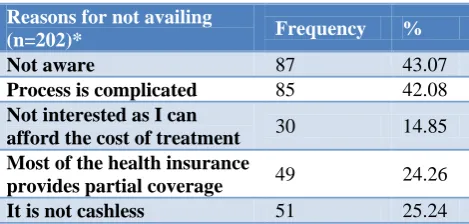
Table 4: Distribution of study participants based on reasons for not availing health insurance.
Reasons for not availing
(n=202)* Frequency %
Not aware 87 43.07
Process is complicated 85 42.08
Not interested as I can
afford the cost of treatment 30 14.85 Most of the health insurance
provides partial coverage 49 24.26
It is not cashless 51 25.24
Table 5: Distribution of study participants based on reasons for not using health insurance.
Reasons for not using HI
(n=259)* Frequency %
Unaware about the process
of availing 32 12.36
Lack of required
documents 6 2.32
Maintained good health 23 8.89
Non availability of
empanelled hospital 84 32.43
Episode was covered under
health assurance schemes 25 9.65 Disease was not under the
scope of scheme 60 23.17
Financial coverage limit of
card was drained 2 0.77
*Multiple answers were given.
Reasons for not availing health insurances were complicated process 85 (42.08%), can afford the cost of treatment 30 (14.85%), provides only partial coverage 49 (24.26%) and almost half of them, that is 87 (43.07%), because they were not aware about the health insurances (Table 4).
Table 6: Type and source of information expected.
Frequency % Type of information
Uses of HI 6 24
Contribution of HI 6 24
Coverage, uses, subscription
process, contribution 13 52
Total 25 100
Expected source of information
Insurance agency 1 4
Health worker 2 8
School teacher 9 36
ASHA worker 13 52
Total 25 100
The main reasons for not using the health insurance were non availability of empanelled hospital 84 (74.34%), disease not being under the scope of scheme 60 (23.17%) and 32 (12.36%) were unaware about the process of availing (Table 5).
Of the 202 who did not avail any type of health insurance, 177 (87.62%) were willing to subscribe for health insurance of which 139 (78.53%) wanted to subscribe immediately and 38 (21.47%) after sometime. Out of 177, 171 (96.61%) wanted to subscribe for health insurances which covered the whole family.
Of the 87 who were unaware about the health insurances, 25 (28.74%) of them were interested to know more about
its uses, coverage, subscription process and contribution. ASHA workers, school teachers, health workers and insurance agencies were expected to provide information about health insurance (Table 6).
Among those who were willing to subscribe for health
insurance, 170 (96.05%) preferred government
companies, 62 (35.03%) expected the HI to cover more than two lakh, 58 (32.77%) expected to cover 1-2 lakh of the hospital expenses and 18 (10.17%) expected to cover more than 5 lakh. Of the 177, 33 (18.64%) expected the premium to be less than Rs. 500, 94 (53.11%) expected the premium to be within Rs 1000 and only 15 (8.47%) did not mind paying a premium more than Rs 2000 (Table 7).
Table 7: Service expected among those willing to subscribe for health insurance.
Frequency %
Preferred service provider (n=177)*
Government company 170 96.05
Private company 60 33.9
NOGs 42 23.73
Community organizations 66 37.29
Expected coverage by those who are willing to avail HI
25-50 k 15 8.47
50k-1 Lakh 24 13.56
1-2 lakh 58 32.77
>2 lakh 62 35.03
>5 lakh 18 10.17
Total 177 100.0
Premium expected by those who are willing to avail HI
<Rs 500 33 18.64
Rs 501-1000 94 53.11
Rs 1001-1500 22 12.43
Rs 1501 -2000 13 7.34
>Rs 2001 15 8.47
Total 177 100
*Multiple answers were given.
Table 8: Premium and coverage of those who have health insurance.
Frequency % Premium paid
<500 304 87.36
500-999 26 7.47
>2000 18 5.17
Total 348 100.0
Coverage
Rs.25, 001/- to 50, 000/- 223 64.08
Above 1,00,000/- 125 35.92
Table 9: Premium and coverage expected by those who have health insurance.
Frequency %
Premium expected
<Rs 500 144 41.38
Rs 500-1000 101 29.02
Rs 1001-1500 67 19.25
Rs 1501 -2000 11 3.16
>Rs 2001 25 7.19
Total 348 100.0
Expected coverage
25-50k 3 0.86
50k- 1 lakh 61 17.53
1-2 lakh 65 18.68
>2 lakh 92 26.44
>5 lakh 127 36.49
Total 348 100
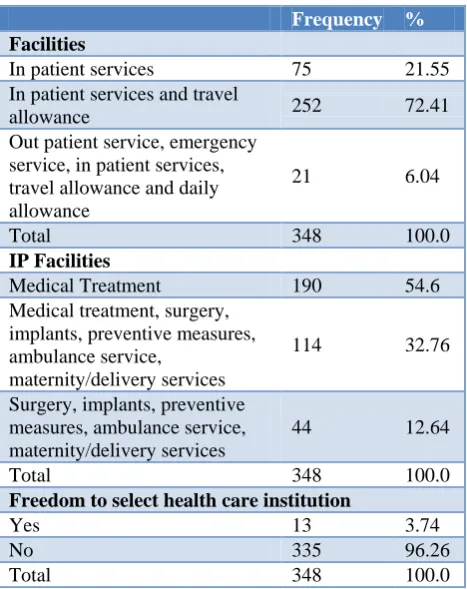
Table 10: Service available to those who have availed health insurance.
Frequency % Facilities
In patient services 75 21.55
In patient services and travel
allowance 252 72.41
Out patient service, emergency service, in patient services, travel allowance and daily allowance
21 6.04
Total 348 100.0
IP Facilities
Medical Treatment 190 54.6
Medical treatment, surgery, implants, preventive measures, ambulance service,
maternity/delivery services
114 32.76
Surgery, implants, preventive measures, ambulance service, maternity/delivery services
44 12.64
Total 348 100.0
Freedom to select health care institution
Yes 13 3.74
No 335 96.26
Total 348 100.0
Two of the card holders had health insurance which was not valid and the reason for non-renewal was high premium. Premium of <Rs. 500 was paid by 304 (87.36) card holders and 18 (5.17%) paid a premium of >Rs. 2000. 223 (64.08%) were eligible for a coverage of Rs.25, 001/- to 50, 000/- and 125 (35.92%) had a coverage of >one lakh (Table 8). Frequency of premium payment in all the card holders was annually and covered the whole family.
Of those who had health insurance, many did not mind paying premium up to Rs. 2000 but also expected a high coverage of >2 lakh by 92 (26.44%) and >5 lakh by 127 (36.49%) (Table 9).
Of all the health insurance holders, 75 (21.55%) were eligible for only in patient services and only 21 (6.04%) were eligible for out-patient service, emergency service, in patient services, travel allowance and daily allowance. IP facilities that were available were only medical treatment in 190 (54.6%), medical, surgical maternity and ambulance in 114 (32.76%) and surgical with maternity and ambulance in 44 (12.64%). Only 13 (3.74%) had the freedom to select the health care institution of their will (Table 10).
DISCUSSION
This study was conducted to know the knowledge, attitude and practice of 550 households in Uttar Kannada and Udupi districts. In the present study it was seen that 15.82% were not aware of health insurances, 20.91% were aware but did not subscribe for any health insurance and 63.27% were aware and also subscribed for health insurance. The main sources of information were health workers (39.74%), family and friends (38.44%), print media (21.38%) and AV media (16.41%). In a similar study conducted by Kaur et al in Punjab showed that 8.7% were not aware, 71.9% were aware but did not subscribe and only 19.4% were aware and subscribed and their main source of information were TV (26.5%), newspaper (21.2%), family and friends (17.4%) and agents (17.8%).1 Number of people who subscribed for health insurance was more in our study compared to the study done in Punjab and this might be due to the difference in the specific health insurance that are available in different states. In another study done by Choudary et al in Jamnagar showed that 57.25% were aware and 42.75% were not aware of health insurances.7 The main source of information were TV (57.25%) family and friend (38%) and agents (27.5%). In a study done by Pandve et al only 15.71% families had heard about health insurance of which only 18.18% had information about government health insurance schemes and their main source of information was an insurance agent (63.63%).
Pandve et al 85.71% felt the importance of health insurance for the individuals as well as families and majority gave preference to family health insurance 81.42%.4 These findings were similar to the findings in our study.
CONCLUSION
It was seen that many were not aware about health insurances. This shows the gap in communication between the health personals and the general population. There are few more who even if they were aware did not avail for any health insurance. This shows the lack or drawbacks in health insurances that are available. Health insurances are the best way to help people reduce their financial burden and reduce the gap of health care utilization between rich and the poor. Hence it is very important to educate the community regarding the best health insurance available so that they can take the maximum benefits from it.
Funding: No funding sources Conflict of interest: None declared
Ethical approval: The study was approved by the Institutional Ethics Committee
REFERENCES
1. Bawa SK, Ruchita. Awareness and willingness to pay for health insurance: an empirical study with reference to Punjab India. Int J Human Social Sci. 2011:1;100-8.
2. Gowda S, Chaitra M, Deepa K. Determinants of health insurance in rural population of South India.
Indian J Forensic and Community Med.
2015;2(3):172-5.
3. Garg C, Karan A. (2005a): Health and Millennium Development Goal 1: Reducing OOP Expenditures to Reduce Income Poverty-Evidence from India,
EQUITAP ProjectWorking Paper No. 15,
eSocialSciences.
4. Harshalt P, Chandrakant VP. Health Insurance: Is Indian Rural Population Aware?. Int J App Basic Med Res. 2013;3(2):132.
5. Garg C, Karan A. (2004) ‘Catastrophic and Poverty Impact of out of Pocket Payment for Health Care in India: A State Level Analysis,’ WP 23, Institute for Human Development, New Delhi.
6. Kumar SA, Ramamoorthy R. Health insurance
market in India-the way forward. Language in India. 2013;13(4):178-93.
7. Choudhary ML, Goswami KI, Khambhati SB, Shah
VR, Makwana NR, Yadav SB. Awareness of health insurance and its related issues in rural areas of Jamnagar district. Nat J Commun Med. 2013;4:267-71.
8. Ghosh M. Awareness and Willingness to Pay for Health Insurance: A Study of Darjeeling district, IOSR. J Human Social Sci. 2013;12(1):41-7.
9. Reddy KS, Selvaraj S, Rao RD, Chokshi M, Kumar
P, Arora V, et al. A critical assessment of the existing health insurance models in India. Available at http://www.planningcommission.nic.in/reports/
sereport/ser/ser_heal1305.pdf. Accessed 19
September 2016.
10. Health in India. NSS 71st Round, 2014. Government of India, Ministry of Statistics and Programme Implementation. Report No. 574. (71/25.0).
Cite this article as: Shet N, Qadiri GJ, Saldanha S, Kanalli G, Sharma P.Awareness and attitude