Independent Evaluation of ESA’s
Programme for Life and Physical
Sciences in Space (ELIPS)
European Science Foundation (ESF) The European Science Foundation (ESF) is an independent, non-governmental organisation, the members of which are 72 national funding agencies, research performing agencies and academies from 30 countries.
The strength of ESF lies in its influential membership and in its ability to bring together the different domains of European science in order to meet the challenges of the future.
Since its establishment in 1974, ESF, which has its headquarters in Strasbourg with offices in Brussels and Ostend, has assembled a host of organisations that span all disciplines of science, to create a common platform for cross-border cooperation in Europe.
ESF is dedicated to promoting collaboration in scientific research and in funding of research and science policy across Europe. Through its activities and instruments, ESF has made major contributions to science in a global context. ESF covers the following scientific domains: Humanities, Life, Earth and Environmental Sciences, Medical Sciences, Physical and Engineering Sciences, Social Sciences, Marine Sciences, Materials Science and Engineering, Nuclear Physics, Polar Sciences, Radio Astronomy, Space Sciences.
www.esf.org
European Space Sciences Committee (ESSC) The European Space Sciences Committee (ESSC), established in 1975, grew from the need to give European space scientists a voice in the space arena at a time when successive US space science missions and NASA’s Apollo missions dominated space research. More than 35 years later, the ESSC actively collaborates with the European Space Agency (ESA), the European Commission, national space agencies and the ESF Member Organisations. This has made ESSC a reference name in space sciences within Europe.
The mission of the ESSC today is to provide an independent forum for scientists to debate space sciences issues. The ESSC is represented ex officio in all ESA’s scientific advisory bodies, in ESA’s High-level Science Policy Advisory Committee advising its Director General, it has members in the EC’s FP7 space advisory group, and it has observer status in ESA’s Ministerial Council. At the international level, ESSC maintains strong relationships with the National Research Council’s (NRC) Space Studies Board in the US.
The ESSC is the European Science Foundation’s (ESF) Expert Committee on space sciences and the ESF’s interface with the European space community. www.esf.org/essc
Contact Nicolas Walter Senior Science Officer
Physical, Engineering and Space Sciences Unit Tel: +33 (0)3 88 76 71 66
Email: [email protected] The European Science Foundation hosts six Expert
Boards and Committees:
• The European Space Sciences Committee (ESSC) • The Nuclear Physics European Collaboration
Committee (NuPECC)
• The Marine Board-ESF (MB-ESF) • The European Polar Board (EPB)
• The Committee on Radio Astronomy Frequencies (CRAF)
• The Materials Science and Engineering Expert Committee (MatSEEC)
In the statutory review of the Expert Boards and Committees conducted in 2011, the Review Panel concluded unanimously that all Boards and Committees provide multidisciplinary scientific services in the European and in some cases global framework that are indispensable for Europe’s
scientific landscape, and therefore confirmed the need for their continuation.
The largely autonomous Expert Boards and
Committees are vitally important to provide in-depth and focused scientific expertise, targeted scientific and policy advice, and to initiate strategic developments in areas of research, infrastructure, environment and society in Europe.
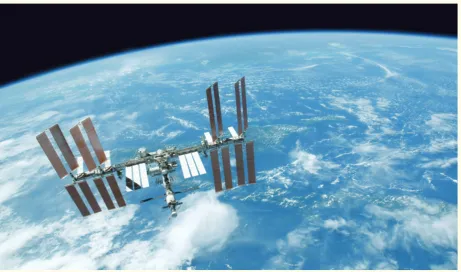
Cover picture:
STS-135 final flyaround of ISS 19 July 2011
© NASA
Contents
1. Introduction and Framework of the Evaluation 3
2. Overarching Programmatic and Structural Issues and Recommendations 6
2.1 ELIPS in the Broader Scientific Landscape 6
2.2 ELIPS Programme Implementation 9
3. Life Sciences 15
3.1 Overarching Issues and Recommendations for the Life Sciences Programme 15
3.2 Human Factors and Physiology 16
3.2.1 Behaviour and performance 16
3.2.2 Exercise, muscle/bone 18
3.2.3 Cardiovascular and pulmonary systems 20
3.2.4 Neuro-vestibular 22
3.2.5 Immunology 23
3.2.6 Nutrition and metabolism 26
3.3 Biology and Radiation 27
3.3.1 Cell and molecular biology 27
3.3.2 Gravitactic and phototactic responses in microbes 30
3.3.3 Microbiology 32
3.3.4 Astrobiology 33
3.3.5 Plant biology 36
3.3.6 Developmental biology 38
3.3.7 Biological effects of radiation 39
3.3.8 Radiation dosimetry 41
4. Physical Sciences 43
4.1 Overarching Recommendations for the Physical Sciences Programme 43
4.2 Fundamental Physics and Atmospheric Physics 44
4.2.1 Cold atom sensors and related fundamental physics missions 44
4.2.2 Atmosphere observations 45
4.2.3 Soft matter 47
4.3 Fluid Physics 48
4.3.1 Fluid dynamics 48
4.3.2 Phase change and heat transfer 49
4.3.3 Complex fluids 50
4.4 Metallurgy and Crystallisation 51
6. Summary of Findings and Recommendations 57
6.1 Overarching Programmatic and Structural Issues and Recommendations 57
6.1.1 ELIPS in the broader scientific landscape 57
6.1.2 ELIPS programme implementation 58
6.2 Life Sciences 60
6.2.1 Overarching life sciences issues 60
6.2.2 Life sciences sub-disciplines 60
6.3 Physical Sciences 66
6.3.1 Overarching physical sciences issues 66
6.3.2 Physical sciences sub-disciplines 67
Annexes 71
Annex 1: Expert Committee Composition 73
Annex 2: List of some publications produced through the ELIPS programme over the past ten years 80
In
de
pe
n
de
n
t E
va
lu
at
io
n o
f E
SA
’s P
ro
gr
a
m
m
e f
or L
if
e a
n
d Ph
ys
ic
a
l S
ci
en
ce
s i
n S
pa
ce (
EL
IP
S)
3 In 2011, the European Space Agency (ESA)
com-missioned the European Science Foundation (ESF) to carry out an independent scientific evaluation of ESA’s programme for life and physical sciences in space (ELIPS) and its future priorities. ELIPS is ESA’s main programme for research on the International Space Station (ISS) and other micro-gravity platforms in various disciplines including physiology, material sciences, biology and funda-mental physics. The aim of this exercise was to assess the ELIPS programme in terms of its overall struc-ture, programmatic aspects and scientific value, and then provide recommendations for the next phase of ELIPS.
This is the fourth time ESF has evaluated the ELIPS programme; previous evaluations were per-formed in 2000, 2004, and 2008. This iteration, however, utilised a significantly different approach to ensure optimal results, favouring the use of a ded-icated independent committee of experts rather than a broad user community consultation. This docu-ment presents the final outcome of the evaluation of the ELIPS programme over the period 2008 to 2011 and offers recommendations for its next phase.
Committee Membership
The expert committee tasked with evaluating the ELIPS programme was composed of 20 interna-tional experts in various life and physical sciences (membership list and biographies in Annex 1).
Members of the expert committee were iden-tified by several ESF science officers holding the relevant expertise in the various fields covered by the programme, identification of experts was an independent process based on scientific merit,
credentials and past experience in international committees. Careful consideration was also given to ensure that none of the committee members are currently or have been involved in ELIPS funded research projects within the past five years to pre-vent a potential conflict of interest in the evaluation.
Additionally, about one-third of the experts had sound experience in space research. This was an important feature of the committee composition as it allowed for external experts to analyse the ELIPS programme with a fresh, open mind, and compare it to their experiences with other non-space-related scientific research programmes.
Each of the 20 committee members represented a specific discipline that is also researched under the ELIPS programme. This allowed for the com-mittee to give a thorough review of the quality of science being performed on various microgravity platforms in comparison to ground-based research in their field.
Framework of the Evaluation
The core of the ELIPS evaluation took place during three meetings.
Introductory meetings, 6-12 December 2011, Amsterdam, The Netherlands
During the first (one-day) meetings, representatives from ESA introduced the committee to the ELIPS programme and its main features. Presentations were given on the programme structure and imple-mentation as well as on the four main research themes under ELIPS: physical sciences, materi-als science, human physiology and biology. Also, extensive question and answer sessions with the
1.
Introduction and Framework
of the Evaluation
In
de
pe
n
de
n
t E
va
lu
at
io
n o
f E
SA
’s P
ro
gr
a
m
m
e f
or L
if
e a
n
d Ph
ys
ic
a
l S
ci
en
ce
s i
n S
pa
ce (
EL
IP
S)
4
programme executives allowed the committee to gain background knowledge on the programme.
This meeting also offered the opportunity for committee members to get to know each other and to discuss and define a set of questions they wanted representatives of the programme user community to address during the 2nd meeting (10-12 January 2012).
Meeting with the user community, 10-12 January 2012,
Noordwijk, The Netherlands
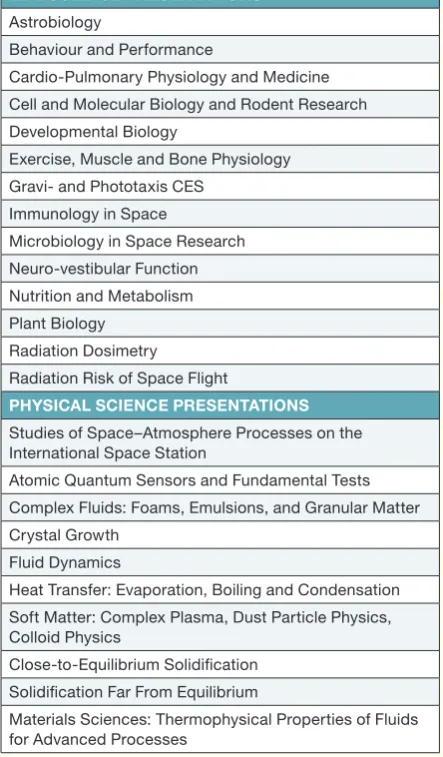
During the second meeting, the committee met and interacted with 24 representatives from the ELIPS user community (identified by ESA). Each repre-sented a sub-discipline considered in the programme (see Table 1) and made a presentation following the guidelines approved in the first committee meet-ing (achievements, major projects, challenges of the research in their domain and list of publications). In addition to the presentation sessions (1.5 days), com-mittee members had the opportunity to interview the users in small sub-groups for a half-day session.
LIFE SCIEnCE PRESEntAtIOnS
Astrobiology
Behaviour and Performance
Cardio-Pulmonary Physiology and Medicine Cell and Molecular Biology and Rodent Research Developmental Biology
Exercise, Muscle and Bone Physiology Gravi- and Phototaxis CES
Immunology in Space
Microbiology in Space Research Neuro-vestibular Function Nutrition and Metabolism Plant Biology
Radiation Dosimetry
Radiation Risk of Space Flight
PHySICAL SCIEnCE PRESEntAtIOnS
Studies of Space–Atmosphere Processes on the International Space Station
Atomic Quantum Sensors and Fundamental Tests Complex Fluids: Foams, Emulsions, and Granular Matter Crystal Growth
Fluid Dynamics
Heat Transfer: Evaporation, Boiling and Condensation Soft Matter: Complex Plasma, Dust Particle Physics, Colloid Physics
Close-to-Equilibrium Solidification Solidification Far From Equilibrium
Materials Sciences: Thermophysical Properties of Fluids for Advanced Processes
table 1: Presentations given to the expert committee on various domains under the ELIPS programme
Draft report review and writing meeting, 1-2 February 2012, Rome, Italy
The committee met a third time in Rome for two days. This working meeting was dedicated to review-ing and updatreview-ing early contributions produced by the committee members as well as discussing, iden-tifying and agreeing on overarching programmatic recommendations to be put forward in the report.
Documentation
Besides the presentations and discussion with ESA representatives and user community members, the committee based its evaluation on a set of docu-ments made available to them. These docudocu-ments included:
• Background documents (e.g. reports from past ELIPS evaluations; US National Academies – Space Studies Board Decadal Survey on Life and Physical science in Space, 2011)
• The list of experiments being implemented or waiting for implementation (on all platforms) • Progress reports of ISS experiments that were
flown over the past years with, in most cases, the list of publications produced and in some cases the publications themselves (also covering pre-paratory phases)
• The post-flight reports of ISS experiments com-pleted over the past years
• The full proposals of the projects selected but not yet implemented
In addition, and following the second meeting, the expert committee requested that user commu-nity representatives provide short (about two pages) summaries on their domain before the last meeting. These were received, compiled and made available to the committee.
In order to appropriately deal with the hetero-geneity of the projects presented in the physical sciences area, the committee decided to regroup some of the sub-disciplines and make some joint assessments and recommendations where applica-ble. As a consequence, the physical sciences section of the report has a slightly different structure than the life sciences section. However, care was taken to make sure recommendations for the future stand out clearly in both sections.
Commenting process
In
de
pe
n
de
n
t E
va
lu
at
io
n o
f E
SA
’s P
ro
gr
a
m
m
e f
or L
if
e a
n
d Ph
ys
ic
a
l S
ci
en
ce
s i
n S
pa
ce (
EL
IP
S)
5 joint meeting on 10 April 2012. A set of comments
was addressed to the ESF office and then forwarded to the expert committee for its consideration.
It was felt to be very important that the (24) rep-resentatives from the ELIPS user community who presented the research activities performed in the programme also had the opportunity to comment on the draft report, especially on issues that could have resulted from a potential misunderstanding on the sub-disciplines presented or on statements that were considered to require clarification. Comments received from the user community were addressed to the expert committee for its consideration. When it was considered appropriate, the expert commit-tee updated the report following the comments received. In some cases, and for various reasons, it was not considered appropriate to update the report following comments received. For transparency, the user community’s comments that have been expressed to the committee but not integrated in the report are listed in Annex 3.
Committee Statement
The 2012 ELIPS Independent Scientific Assessment differed from previous reviews of the programme in that the panel of experts was composed of as many “external experts” as possible (i.e. persons not involved in any ELIPS research). The committee found the decision to broaden the review committee composition to be appropriate. The current model using an independent committee was deemed ap-propriate, and this format should be kept for future evaluations and continuously improved.
The review, however, was challenged by a tight schedule and the approach concerning documenta-tion on the programme progress and achievements should have been better considered in the planning phases of the exercise. The presentations by ELIPS user representatives were not always optimal: in general, the committee relied on the quality of clus-tered project presentations from 24 selected user community representatives rather than more es-tablished and objective key performance indicators that were not available at the time of the evalua-tion. It has to be emphasised here that having such a wide interdisciplinary programme represented by a limited number of investigators (24) created a bottleneck in presenting the full coverage of all its disciplines and sub-disciplines. The challenges of presenting a programme of such wide, interdisci-plinary character should not be underestimated, as a delicate balance must be found between over-loading an external review panel with too much detail and not providing enough information. There-fore, the approach taken in subsequent reviews should evolve with the lessons learned. Likewise, evaluating such a programme is not an easy task, and the size of the committee (20) also contributed to the bottleneck. It is recommended that the expert
committee composition be widened for future evaluations, to two or three external experts per discipline (similar to the ESA AO peer review pro-cess).
The metrics for evaluating research quality of the programme were not always simple to establish, in part because the acknowledgement of ESA (ELIPS) support is not always explicit. Overall, research performed in ELIPS has delivered good science, as evidenced by publication of research articles and literature surveys in high quality peer reviewed journals. However the committee noted that some user community presentations to the committee covered the full range of sub-discipline activities funded under ELIPS, whereas others ignored their brief and focused entirely on their own work. This biased tendency was also seen in the list of refer-ences supplied by each presenter.
Overall, an extended schedule, improved docu-mentation and further interactions with the user community may enhance a future committee’s ability to make as comprehensive a review of the contents, structure and impact of the ELIPS programme as desired. However, it has to be em-phasised that the points addressed above only list potential improvements in the evaluation process and that the committee managed to reach a strong consensus on all the points included in this report.
The committee also observed that in most cases there is no clearly defined practice for dem-onstrating actions based on the previous review processes, and suggests that a formal response system be put into practice.
RECOMMEndAtIOnS On tHE PROCESS:
• The evaluation process would benefit from es-tablishing a reasonable degree of continuity of “external expert” panel membership from review to review and a clearly defined follow-up process to the previous committee’s work (i.e. encom-passing systematic written feedback from ESA on the committee’s recommendations and the way in which they are implemented or not). In addition, a checkpoint half-way through the programme could be implemented by means of a meeting of the committee to monitor developments and flag potential problems. Such a process should link with and complement existing ESA advi-sory structures’ work and be overseen by the European Space Sciences Committee and its secretariat.
In
de
pe
n
de
n
t E
va
lu
at
io
n o
f E
SA
’s P
ro
gr
a
m
m
e f
or L
if
e a
n
d Ph
ys
ic
a
l S
ci
en
ce
s i
n S
pa
ce (
EL
IP
S)
6
2.1
ELIPS in the Broader Scientific
Landscape
The ELIPS programme is a wide ranging, compre-hensive research programme providing research opportunities to scientists across Europe and beyond. It covers many scientific disciplines, span-ning human physiology to fundamental physics, and utilises a variety of facilities and platforms, from rather simple equipment such as ground-based clinostats to complex ISS equipment designed and developed for specific experiments. The programme
also has a variety of research opportunities, rang-ing from continuous calls to large-scale dedicated international research announcements. While pro-viding many benefits, these features also make the programme difficult to approach and understand.
The expert committee wholeheartedly agrees that ELIPS hosts a number of exceptional experi-ments which are of top-level scientific quality and of great importance to the scientific community as well to society, and therefore should be continued.
Overall, while it is acknowledged that all imple-mented experiments have undergone an evaluation
2.
Overarching Programmatic
and Structural Issues
and Recommendations
l l l
In
de
pe
n
de
n
t E
va
lu
at
io
n o
f E
SA
’s P
ro
gr
a
m
m
e f
or L
if
e a
n
d Ph
ys
ic
a
l S
ci
en
ce
s i
n S
pa
ce (
EL
IP
S)
7 process placing scientific quality as the main
crite-rion, the quality of science under ELIPS is felt to be rather inhomogeneous. Some experiments have produced results of outstanding quality, while oth-ers failed to produce scientific results of the highest international standard.
Positioning the ELIPS programme in the broader scientific landscape is a multifaceted issue that needs to be approached from a variety of angles, as presented below.
OvERARCHIng RECOMMEndAtIOn 1:
the ELIPS programme hosts a number of exceptional experiments which are of top-level scientific quality and of great importance to the scientific community as well to society, and therefore should be continued.
Linking space research
to general scientific challenges
The ELIPS programme is exploiting and providing unique conditions for investigations and research activities covering a wide range of disciplines. While some investigations performed through ELIPS are targeted towards the well-being of humans in space and enabling space exploration, the pro-gramme can also be considered as a unique and powerful vehicle to help address current scientific and societal challenges that go much beyond the programme’s traditional remits. Even if sometimes representing a marginal component, the unique environmental conditions offered by the ELIPS programme can bring significant added value to scientific investigations of wider interest. This is, for example, the case in the field of metallurgy, in which microgravity conditions allow, in principle, investigation of thermo-physical properties of new alloys. Complementing other aspects of metallurgy, microgravity conditions support the optimisation of their use in industrial settings.
While it is clear that most research activities performed in the programme produce knowledge that is relevant to scientific areas going far beyond the space arena, it is felt that the ELIPS programme needs to address more of the current key scientific challenges, as recognised by the wider scientific community. In this context, some of the recommen-dations put forward in Part B of this report provide a first set of priority areas to be considered by ESA, but it is clear that a mechanism aimed at identifying i) key scientific challenges and ii) if and how ELIPS can support research on these should be defined and implemented.
PROgRAMMAtIC RECOMMEndAtIOn 1:
It is important to survey which current scientific challenges (going beyond the traditional
coverage of ELIPS) could potentially benefit, even marginally, from the conditions and platforms offered by the programme, and to open the programme to such promising areas of research.
Reaching out
to a broader scientific community
It is understood that the ELIPS programme has its own specificities that may discourage or be too complicated to assimilate for researchers new to the space arena and that medium- to long-term continuity is required to conduct complex scien-tific investigations. Despite the numerous specific challenges posed by space experimentation, the programme has managed to set up and maintain a stable European user community and provide opportunities to develop collaborations with scien-tific teams beyond Europe.
However, when considering investigators involved in ELIPS experiments and Topical Teams, the programme appears to be unable to sufficiently recruit and involve new scientists and investigators. Over the years, its user community has had a ten-dency to involve the same individuals and teams. Additionally (or consequently), the scientific scope of proposed and selected experiments does not appear to evolve at the same pace as Earth-based investigations. As a result, some research topics are under-represented while others are over-represented. There is no doubt that the programme would benefit from involving new scientists in its user community. It is important to advertise the unique-ness of the programme to motivate renowned scientists to compete to perform the best possi-ble experiments. However, even though several recommendations have been made by past ESF evaluation panels addressing the need to find ways to open the ELIPS programme to the wider scien-tific community, efforts undertaken thus far have not demonstrated significant improvement.
PROgRAMMAtIC RECOMMEndAtIOn 2:
In
de
pe
n
de
n
t E
va
lu
at
io
n o
f E
SA
’s P
ro
gr
a
m
m
e f
or L
if
e a
n
d Ph
ys
ic
a
l S
ci
en
ce
s i
n S
pa
ce (
EL
IP
S)
8
Cross-fertilisation
Cross-fertilisation among scientific topics and between teams can identify new interdiscipli-nary topics that should be investigated; a relevant example of such a topic relevant to life and physi-cal sciences is the study of dynamics and rheology of blood from the scale of a single cell in the flow to hydrodynamic interactions between cells and between cells and vessel walls (e.g. the BIOMICS project).
While producing high-value, new scientific knowledge, interdisciplinary activities cannot be imposed on scientists, and targeted actions towards the development of such activities have proved to be challenging in the past. It appears that one of the best ways to catalyse the development of wide interdisciplinary investigations is to enhance the programme-wide (across life and physical sciences) interactions between science teams and the flow of information about research performed, its progress and results within the ELIPS user community itself.
PROgRAMMAtIC RECOMMEndAtIOn 3:
It is recommended that ESA organises regular networking events and/or user workshops involving representatives from ELIPS investigator teams from the whole spectrum of the programme. Such initiatives would provide a platform for scientists to network and discover
cross-disciplinary aspects of their work, and potentially collaborate. Systematic diffusion of information about scientific publications made possible through ELIPS to the whole user community could also catalyse cross-fertilisation.
Infrastructure and facilities
The ELIPS programme offers a coherent wide vari-ety of well-balanced platforms and equipment. Notably, ground-based facilities (GBFs) are essen-tial with respect to preparation, optimisation and support of investigations performed in space. They allow data from one single experiment in real micro-gravity to be analysed in a larger context. Therefore, support of GBFs should be continued and even increased, and new mechanisms such as the devel-opment of small-scale multi-user instruments to be used in the various GBFs should be implemented.
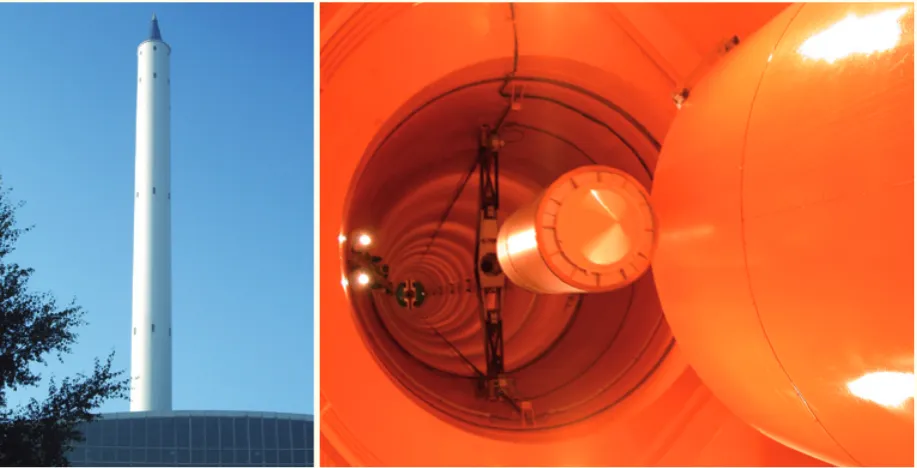
In addition to the ISS, real microgravity condi-tions are currently provided by the ZARM drop tower, parabolic flights and sounding rockets through ELIPS. Given the constraints imposed by the ISS (e.g. cost, mass, power, reproducibility of experiments), the diversity of available micro-gravity platforms should be kept. Besides existing platforms, commercial spaceflight providers may bring new opportunities in the coming years, and the potential added-value offered by these new sys-tems should be considered and assessed.
Current negotiations between international partners secure the utilisation of the ISS only until 2020, and thus far, no firm assumptions can be made on the fate of the central component of the ELIPS programme beyond this date. This lack of visibility beyond 2020 is viewed as a major hurdle in making the programme reach its full potential. In the current context, with less than nine secured years ahead and considering the slow pace that has been a characteristic of the programme (mostly due to resource limitations and the inherent complexity
In
de
pe
n
de
n
t E
va
lu
at
io
n o
f E
SA
’s P
ro
gr
a
m
m
e f
or L
if
e a
n
d Ph
ys
ic
a
l S
ci
en
ce
s i
n S
pa
ce (
EL
IP
S)
9
of space experimentation), ambitions to perform new investigations on the ISS in the medium to long term can be hampered.
Continuous availability of long-term, man-tended in-orbit research facilities is crucial to reap the full benefits offered by spaceflight conditions for both life and physical sciences; this continuity should be ensured even after 2020. It is therefore crucial that ESA, the scientific community and the other relevant stakeholders start considering and planning the capacity and infrastructure to be made available beyond 2020 (including potential exten-sion of the ISS utilisation). Defining the future plans as soon as possible would also allow momentum and motivation to be maintained among the scientific community and to attract new investigators.
As long as no plan is made for the post-2020 period, streamlining and shortening upcoming ISS experiments implementation phases as much as pos-sible should be considered to optimise the use of ISS. It is also crucial to start preparing for the post-ISS period.
PROgRAMMAtIC RECOMMEndAtIOn 4:
Support of gBFs should be continued and even increased, and new mechanisms such as the development of small-scale multi-user instruments to be used in the various gBFs should be implemented.
PROgRAMMAtIC RECOMMEndAtIOn 5:
Continuous availability of long-term, man-tended in-orbit research facilities is crucial; it is therefore of utmost importance to start preparing for the post-2020 period as soon as possible.
2.2
ELIPS Programme Implementation
Coordination with national organisations
ELIPS provides a common platform for research at the European level (and beyond) and an anchor for international cooperation. One of the characteristics of the programme is that experiments are supported by several sources: ESA provides the platforms and infrastructure while all other means to conduct investigations (including sample and data analysis) have to be provided by national research organisa-tions and this implies a double application process. Considering the number of nationalities represented in project teams, this can be (and is) a major chal-lenge as national agencies often do not have aligned priorities or appropriate funding systems in place. In all cases, this complicates the application and reporting processes while also increasing the time that has to be devoted to paperwork.
Better integration of all the components of the research performed in the programme is required. To achieve this, coordination between ESA and
In
de
pe
n
de
n
t E
va
lu
at
io
n o
f E
SA
’s P
ro
gr
a
m
m
e f
or L
if
e a
n
d Ph
ys
ic
a
l S
ci
en
ce
s i
n S
pa
ce (
EL
IP
S)
10
national organisations must be significantly improved, and should address in particular:
1. coordinated and complementary funding of preparatory work on the ground, which is a pre-requisite for successful experiments in space and 2. support for post-flight analyses of samples and data, in order to get the most out of the invest-ments made through the experiinvest-ments performed in the programme.
An appropriate mechanism to secure funding upstream in the process and limit paperwork should be set up and agreed upon between the international partners before an AO is issued. In this context, multilateral collaborative research programmes involving the setting up of (virtual) common pots of funding (e.g. the European Commission ERA-NETs+, joint programming Initiatives) could be considered as potential benchmarks.
Considering the variety of actors and partners contributing to the ELIPS programme, it seems also important that, taking into consideration national specificities (e.g. priorities, research communities), national strategies for life and physical sciences in space are developed to complement in a coher-ent way ESA’s ELIPS programme. This would not only ease the completion of preparatory activities and exploitation of data and results but could also increase the flight options and opportunities for the community (e.g. through additional coopera-tive agreements).
PROgRAMMAtIC RECOMMEndAtIOn 6:
Coordination between ESA and national organisations has to be significantly improved, in particular for coordinated and complementary funding of preparatory work on the ground and post-flight analyses of samples and data. It is also crucial that research grants are secured as soon as possible in the process. Reaching a stronger integration of all the experimentations’ components and setting up (virtual) common pots of funds dedicated to specific AOs could offer a way to streamline programme management while limiting the overall administrative load for the research teams (i.e. applications and paperwork).
Topical Teams
ESA Topical Teams (TT) are very valuable tools that represent the main bottom-up vector between the ELIPS programme and the scientific community. This flexible scheme allows for the coordination of experts pertaining to specific scientific issues rel-evant to the programme. There is no pre-detailed mandate for a TT: some are targeted towards the development of experiments to be submitted in
subsequent AOs, whereas others focus on reviewing the latest developments of a field or on networking activities.
TTs play a key role in the structure of ELIPS: they are instrumental in identifying scientific issues and suitable approaches for implementa-tion through combined ground- and space-based research platforms, they allow coordination of investigators around development and roadmapping of experimental concepts that include technology requirements and development plans and they ease the coordination of scientists who had an experi-ment selected in an AO. Additionally, TTs have the potential to serve as a think-tank of inspiration, giving specific knowledge and practical advice to ESA-based scientific investigations.
Currently, there are no calls for TTs nor are there priority domains advertised for TT support; one could consider introducing some degree of targeted solicitation. Rather, they can be submitted at any time and are considered for approval by the ESA’s Life Sciences Working Group (LSWG) and Physical Sciences Working Group (PSWG).
As for the programme in general, TTs often involve representatives from the historic ELIPS community. As there can only be one TT per sci-entific topic (and some TTs have been active for more than 15 years), it may be rather challenging for individuals or groups of newcomers to join a TT and suggest and implement new approaches or concepts. In this context, team composition is considered a crucial issue, as a TT should be the primary inter-face between the scientific community at large and the programme. As such, they should be responsi-ble for attracting new scientists and diversifying the user community (this is already the case for some TTs who had their membership significantly increased – in number, scope and international coverage – over their lifetime). Rotation in their membership could be a way to address this issue. TTs should also provide a direct link to non-space research allowing the programme to be up to date with the main scientific challenges and identify important future trends and research issues. This would limit the risk that relevant areas of research possibly not covered or underrepresented in the pro-gramme are omitted.
In
de
pe
n
de
n
t E
va
lu
at
io
n o
f E
SA
’s P
ro
gr
a
m
m
e f
or L
if
e a
n
d Ph
ys
ic
a
l S
ci
en
ce
s i
n S
pa
ce (
EL
IP
S)
11 In order to justify continuity in the funding,
progress and outcomes of TT should also be moni-tored and independently reviewed on a regular basis. While some TTs are aimed towards and result in an experiment proposal submitted to an ESA competi-tive AO (and then subject to the regular selection process), others provide reviews or foresight. The outcome of the latter should largely instruct ESA’s AO process. Here again, in order to achieve this goal, the outcomes, findings and recommendations expressed by TTs should be carefully reviewed by independent, ad hoc experts.
PROgRAMMAtIC RECOMMEndAtIOn 7:
Because of its strategic importance and the improved quality it has brought to the programme, the tt scheme should be continued. However, the rather loose selection and implementation procedures do not seem to reflect the importance the tt concept has for the programme. therefore, the whole tt scheme should be reviewed in detail and restructured. Specifically, issues such as the following should be considered:
• Advertisement of TT opportunities • Selection process
• Team composition and how to involve newcomers and early career scientists • Rotation of the coordinator
• Regular review and rotation of TT membership
Mixing directed research with curiosity-driven activities
In its implementation, ELIPS encourages scien-tific curiosity and blue sky research. As previously mentioned, it is also important that the research performed in ELIPS contributes to addressing major scientific challenges and the most com-pelling questions of wide interest and potential impact. Furthermore, the programme would also benefit from addressing space-specific issues (e.g. in the field of space exploration) of high relevance. While the current open-ended research solicita-tion process does not prevent such activities from being proposed and performed, it is clear that it does not motivate pre-defined key issues to be put forward and/or be investigated within ELIPS. It is felt that some targeted calls addressing specific pri-ority research topics could complement the current curiosity-driven process.
This could be implemented by reconsidering how AOs are structured and implemented, and defin-ing and designdefin-ing rather detailed research plans complementing open-ended solicitations. In this regard, and through an analogy to calls of the EU Framework Programme (FP) and the European Research Council (ERC), one could envisage more topic-oriented AOs reflecting some of the principles of the EU FP “collaborative projects”. These could then be mixed or alternated with open-topic calls,
In
de
pe
n
de
n
t E
va
lu
at
io
n o
f E
SA
’s P
ro
gr
a
m
m
e f
or L
if
e a
n
d Ph
ys
ic
a
l S
ci
en
ce
s i
n S
pa
ce (
EL
IP
S)
12
similar to those supported by the ERC. As a conse-quence, some of the research performed by ELIPS could be targeted towards topics of high strategic relevance as defined suggested by ESA and agreed by the programme board.
PROgRAMMAtIC RECOMMEndAtIOn 8:
Overall, the programme should be more able to address targeted scientific priority topics. Some degree of targeted research should be introduced to mobilise some of the investigations performed towards topics of strategic relevance. this should be based on the inputs and recommendations originating from various sources (e.g. ESF, topical teams or ESA’s Working groups). ESA should investigate ways to mix targeted activities with curiosity-driven research.
Announcement
and selection of experiments
The ELIPS programme involves various research solicitation approaches: experiments involving simple ground-based facilities (e.g. drop tower or bed-rest) can be submitted at any time through Continuous Research Announcements (CORA), experiments involving more complex ground-based facilities (e.g. Concordia Antarctic station or the GSI Accelerator Facility) can be submit-ted via dedicasubmit-ted AOs approximately every two years. Experiments involving space-borne facilities (including sounding rockets) are subject to calls that may involve international partners with a common peer review process. Over the past 12 years, these major calls are typically issued up to once every four years, depending on the discipline.
For each type of call, experiment proposals are first evaluated on scientific merit by external peers (from a mail-refereeing process for CORA to the setting up of review panels with physical meetings in the case of dedicated AOs). All experiments recom-mended for implementation following the scientific review phase then undergo a technical feasibility evaluation that may disqualify some experiments from implementation (due to issues like upload capacity, availability and reliability of technologies or in-orbit resource requirements). Experiments that pass the selection process successfully are then integrated with the ELIPS pool of experiments until actual implementation – for technical or program-matic reasons – is made possible. Some experiments can be, and have been, waiting in the pool for sev-eral years. ESA advisory committees re-assess the relevance of the projects sitting in the pool for more than three years, calling external peers if considered necessary.
Considering the long time between major AOs (in the range of four years), the review proc-ess should allow the proposing teams to comment on the early review reports made by peers before review panels actually meet and finalise the evalu-ations. This would allow clarification of potential misunderstanding from some peers and possibly resolve some issues without waiting an additional four years.
The fact that experiments selected to fly some-times await implementation for several years is seen as a major issue not only for the ELIPS user community, but also for the committee (see below: turnaround time). In addition to proper evalua-tion and selecevalua-tion processes to ensure the quality of the programme, ESA should also manage the pool of experiments waiting to be implemented in an appropriate manner. In this context, it is cru-cial that experiments that have been waiting for a long period of time to be implemented should be re-evaluated, especially with regard to relevance, through a review process of the same standards as in the selection process. Such an approach could be systematically adopted just before entering phase B (definition phase, when the baseline technical solu-tion and technical requirements are defined) of any research project that has been waiting implementa-tion for more than three years.
PROgRAMMAtIC RECOMMEndAtIOn 9:
there is a need to further ameliorate the review process implemented in ELIPS. Implementing a rebuttal step in dedicated AOs would definitely improve the selection process.
PROgRAMMAtIC RECOMMEndAtIOn 10:
Experiments awaiting implementation for more than three years should be systematically re-evaluated before entering phase B. the same standards and process implemented for the original evaluation and selection of experiments should be used for this re-validation step.
Increasing the scientific outcome of the programme
In
de
pe
n
de
n
t E
va
lu
at
io
n o
f E
SA
’s P
ro
gr
a
m
m
e f
or L
if
e a
n
d Ph
ys
ic
a
l S
ci
en
ce
s i
n S
pa
ce (
EL
IP
S)
13 publishing in high impact peer-reviewed journals.
While increasing the opportunities to complement flight experiments with ground-based experi-ment provides an opportunity to partly overcome this problem, an optimal balance must be found between quantity and quality of the science that is performed. Sufficient resources should be allocated to allow the comprehensive study of high priority questions or experiments of outstanding quality. Therefore, ESA should consider selecting fewer experiments and allocating more resources to each of those selected.
In addition to being more selective on experi-mental proposals, improving the automation of equipment and instruments and, where appropriate, the ability to operate them remotely would decrease the need for crew time, a valuable resource.
PROgRAMMAtIC RECOMMEndAtIOn 11:
the success of the programme should be quantified by its ability to efficiently answer specific questions in a comprehensive manner. the number of experiments implemented is not considered to be a valuable quality control indicator. therefore, and when relevant, ESA should consider increasing the level of resources allocated to experiments to strengthen their case and the validity of their results even if this implies implementing fewer experiments.
Turnaround time
In most cases, the time from the AO to actual imple-mentation of an experiment on the ISS exceeds between three and five years – even for simple exper-iments – and can exceed ten years. This excessive delay is seen as a major issue (by the committee but also the user community) that has to be improved in the programme. The long implementation time has several consequences:
• at this rate, only a small fraction of experiment-ers would feel motivated to propose and develop an experiment, thus reducing the community of potential users,
• considering changes of staff in research teams (including retirement) and organisation in research institutes, the loss or discontinuity in knowledge and competencies can be very significant from the moment an experiment is submitted to the time it is actually implemented, • more important is the crucial issue of ensuring
that an experiment is still scientifically relevant at the moment it is finally implemented.
It is acknowledged that this very long turna-round time is partly due to events that have had major impacts on the programme implementation:
some experiments were lost during the Foton M1 failure (15 October 2002) and the STS 107 catas-trophe (1 February 2003) and had to be re-flown. Furthermore, following the Columbia accident only one shuttle mission was flown over three-and-a-half years, making obsolete all previous plans concern-ing ISS assembly and crew size, as well as upload and download capacity.
Time between selection and actual experimen-tation depends on programme implemenexperimen-tation aspects (e.g. flight sequence, upload mass capacity) but also on the hardware development process (if required). This greatly depends on the complexity of the equipment to be developed and the relation with the industrial teams.
By nature, some experiments are more com-plex and require a long implementation period, but others use existing hardware (e.g. KUBIK) and therefore can be implemented much more rapidly. ESA should consider issuing AOs that are specifi-cally targeted to existing equipment or processes that would allow a fast track implementation. For other longer term AOs, the long implementation time has to be made clear as soon as possible in order to avoid frustration.
Efficient practices have been developed by some countries or research teams, including some nationally supported Soyuz taxi flights that allowed experiments to be implemented rather quickly, or having the research team build (as a sub-contractor) the science part of an experimental set-up, reducing hardware development time. These are only exam-ples of potential opportunities among others that need to be identified. To this end, audits should be conducted by external auditors able to cast a discerning eye on the processes and procedures of programme management and hardware develop-ment, and to identify the best practices and suggest recommendations for improvements.
PROgRAMMAtIC RECOMMEndAtIOn 12:
ESA should consider implementing fast-track AOs, e.g. dedicated to existing hardware (for example, Kubik) and allowing rapid implementation. Such AOs could be issued every two years.
PROgRAMMAtIC RECOMMEndAtIOn 13:
In
de
pe
n
de
n
t E
va
lu
at
io
n o
f E
SA
’s P
ro
gr
a
m
m
e f
or L
if
e a
n
d Ph
ys
ic
a
l S
ci
en
ce
s i
n S
pa
ce (
EL
IP
S)
14
Reporting and data archiving
Through the ELIPS programme, ESA provides in-kind support to research projects: facilities, equip-ment and logistical support required to perform a given experiment. While this represents a signifi-cant investment from the agency (285M€/4years), ESA does not actually grant funding to the selected teams. Ground-based preparatory activities, exploi-tation of data and workforce must be funded by other means, usually through participating Member State research organisations. ESA has some clear reporting guidelines for scientists but does not have efficient compulsory means to enforce them, and investiga-tors tend to report solely to their national sponsors. As a result, it appears as though the programme does not systematically have feedback on the outcomes of performed experiments. Furthermore, it appears that publications produced through an experiment imple-mented within ELIPS often do not acknowledge the programme or even ESA. As a result, reporting on the programme value and success is a challenging task for the programme executives.
Scientific reports should be provided in a one-to-one correspondence that includes projects’ aims and milestones. Publication records should be con-stantly updated and limited to the work directly supported – and for which proper acknowledgement is mentioned – by ESA and the national research organisations. The issue here is not that report-ing information is not available at all, but rather that it is submitted on a regular basis sometimes exclusively to national research institutions. Even though it has proved challenging to impose a
sys-tematic reporting process to investigators directly, ESA should explore ways to improve the flow of information with national research organisations.
Proper reporting would not only allow the value of the programme to be assessed and dem-onstrated, but it should also allow improvement of the level of information made available to the community at large. The online EEA (Erasmus Experiment Archive) is a very valuable tool, but it is obvious that research teams do not provide the same level of detail when compiling their informa-tion. EEA needs to become a reliable, updated and user-friendly database of research products. This is of paramount importance not only for the proper exploitation of such products and to avoid duplica-tion, but also for the evaluation process.
PROgRAMMAtIC RECOMMEndAtIOn 14:
ESA should investigate and implement new strategies to improve the flow of information back to ESA after the experiment has been implemented. this includes acknowledgement of the ELIPS programme, results from experiments, and publications and could involve specific agreements with national research organisations.
PROgRAMMAtIC RECOMMEndAtIOn 15:
ESA needs to investigate ways to make the Erasmus Experiment Archive a more reliable, updated and user-friendly database of research findings made possible by the ELIPS programme, for the proper exploitation of such knowledge by the scientific community at large.
In
de
pe
n
de
n
t E
va
lu
at
io
n o
f E
SA
’s P
ro
gr
a
m
m
e f
or L
if
e a
n
d Ph
ys
ic
a
l S
ci
en
ce
s i
n S
pa
ce (
EL
IP
S)
15
3.1
Overarching Issues
and Recommendations for the Life
Sciences Programme
Space provides a unique opportunity to advance the fundamental understanding of living systems by performing experiments in microgravity. These exper-iments not only benefit astronauts, but are vital for future human exploration of space, and also have the potential to bring wider benefits to human health and society, for example through improved healthcare.
A detailed review of life science research under the ELIPS programme was performed, and specific evaluations/recommendations were provided for each sub-discipline. From these analyses, several overarching issues and recommendations emerged during the review process. Those that cut across the whole life science area fall under two main topics: promoting cutting edge science and cross-discipli-nary interactions and integrated physiology.
Promoting cutting edge science and cross-disciplinary interactions in life sciences
The revolution over the last 20 years in understand-ing life sciences at the molecular level has resulted in a host of new techniques and instrumentation for characterising biological systems that are capable of producing large amounts of data systematically. The ELIPS programme has lagged behind the cutting edge of this revolution, partly due to the time lag in developing and uploading needed instrumentation to the ISS. In the light of this, the following recom-mendations can be made:
OvERARCHIng LIFE SCIEnCES RECOMMEndAtIOn 1:
Identify and implement mechanisms to ensure faster deployment and use of new investigation techniques and technologies in the programme.
OvERARCHIng LIFE SCIEnCES RECOMMEndAtIOn 2:
Implement mechanisms to promote interdisci-plinary interactions within the Life Science pro-gramme to i) learn from common experiences, ii) enhance the use of existing facilities and iii) develop more shared instrumentation.
OvERARCHIng LIFE SCIEnCES RECOMMEndAtIOn 3:
Promote interaction between sub-disciplines such as immunology, radiation biology, microbiology, cell and molecular biology and nutrition, and encourage trans-disciplinary projects, such as integrative physiology, that couple quantitative modelling with experimental work.
OvERARCHIng LIFE SCIEnCES RECOMMEndAtIOn 4:
Encourage projects that examine the interactions between the living organisms’ genome and environmental factors including microgravity, radiation, desiccation, etc.
OvERARCHIng LIFE SCIEnCES RECOMMEndAtIOn 5:
Refine AOs so that in addition to the provision of projects to test a hypothesis by collecting specific data (hypothesis-driven research), it is possible to propose projects where the emphasis is on collecting large datasets for subsequent analysis and data mining (data-driven research).
OvERARCHIng LIFE SCIEnCES RECOMMEndAtIOn 6:
Implement a strategy for data sharing, so that communities beyond the current reach of the ELIPS programme can benefit from experiments that have already been carried out.
3.
Life Sciences
In
de
pe
n
de
n
t E
va
lu
at
io
n o
f E
SA
’s P
ro
gr
a
m
m
e f
or L
if
e a
n
d Ph
ys
ic
a
l S
ci
en
ce
s i
n S
pa
ce (
EL
IP
S)
16
Integrated physiology
Ground-based research (GBR) focused on the understanding of the mechanisms of ageing and the impact of sedentary life style, diet, ionising radia-tions and gene expression is critical for developing new strategies to promote health and for discovering new treatments of diseases.
Microgravity-related research offers unique opportunities to test and verify results obtained by GBR within a reduced time frame (e.g. impact on bone health) in order to evaluate the efficiency of new countermeasures for ground medicine (e.g. prevention of sarcopenia), as well as to acquire the needed knowledge to allow for space exploration by humans.
Understanding how the human body responds to microgravity has been a long standing pillar of space science research because of the practical importance for the health and well-being of astronauts. Within this specific part of the life sciences remit, crew time is a significant constraint on research activities that can be performed on the ISS. One way to over-come this would be to manage/steer the research programme so that the use of animal models is max-imised and that a smaller number of projects are selected so that crew time can be optimised.
Specific recommendations for the aspects of the ELIPS Life Sciences programme related to human physiology include the following.
OvERARCHIng LIFE SCIEnCES RECOMMEndAtIOn 7:
Promote and facilitate the integration of (human) physiology sub-disciplines.
OvERARCHIng LIFE SCIEnCES RECOMMEndAtIOn 8:
Further address the links between physiology, psychological performance, and human-computer interactions, which have been overlooked up to now.
OvERARCHIng LIFE SCIEnCES RECOMMEndAtIOn 9:
Increase the capacity to perform research on animal (rodents).
OvERARCHIng LIFE SCIEnCES RECOMMEndAtIOn 10:
design and refine cell and animal models
specifically suited to address mechanistic issues related to environmental stressors typical of space-flown missions.
3.2
Human Factors and Physiology
3.2.1 Behaviour and performance
Introduction
Astronauts in long-duration space missions will encounter some major challenges; they will need to acquire and maintain operational skills and com-petencies under microgravity, perform in teams during prolonged confinement, and work under continuous stress caused by danger and the threat of unexpected and unknown encounters. The rel-evance of such concerns for space missions has long been recognised, and research on psychology-related problems will continue to have a major significance as long as human crews are part of future plans for space exploration. Part of the rationale for this is the belief that humans have often been perceived as the ‘weak link’ in the system, though this is an over-simplification; as with all complex human– machine systems, the origin of the weak link is better regarded as the interaction of humans with the design of their working and operational envi-ronments. It is necessary to recognise two broad objectives of studying astronauts’ behaviour in space. One is the need to assure successful and safe fulfilment of mission goals; the other is to under-stand how existing (Earth-acquired) competencies and skills can be adapted for effective operation under microgravity. Since it is unlikely that fully automated missions can deliver the necessary flex-ibility and problem-solving capability required by extended missions, research will need to focus on problems related to the vulnerability of crews to the demands of the space environment, and how systems can be designed to support their activities. Issues such as the limits of human skill mainte-nance, the reliability of performance under stress, health and well-being, and crew interaction proc-esses remain central to the ELIPS programme.
Space relevance and value
of ELIPS programme to behaviour and performance research
In
de
pe
n
de
n
t E
va
lu
at
io
n o
f E
SA
’s P
ro
gr
a
m
m
e f
or L
if
e a
n
d Ph
ys
ic
a
l S
ci
en
ce
s i
n S
pa
ce (
EL
IP
S)
17 these criteria. Instead, as with most psychology
research on space issues, its rationale depends on established ground-based ICE simulations, such as Concordia (Figure 6) or Mars 500.
Due to the long duration of ISS missions and the space environment, it is a highly appropriate research platform for the investigation of some top-ics (for example, the consequences of microgravity for existing skills and acquisition of new ones, and effects of extreme stress on skill and performance), while others (group processes, social interaction) may often be investigated equally well in ground simulations. Most of the funded work falls into this second category; although it is appropriately couched in terms of space problems, it addresses issues that are standard features of Earth-based research in similar areas. Some aspects of work on group processes could justify inclusion as part of an ISS programme, for example by making use of the increased stress and threat of that environment, though it would be necessary for social interaction measures to be combined with performance assess-ment. It should also be said that research on group processes are particularly susceptible to the persist-ing methodological problem of limited sample size characteristic of ICE simulations, making it neces-sary to collect data from multiple replications in order to build up large enough group sizes for reli-able analysis. However, this is not normally possible within the constraints of the programme, making the value of such studies with ELIPS questionable. Some social interaction studies clearly have a value in terms of their application to Earth-based issues, though they may be better conducted as part of Earth-based research.
Assessment of past period
Assessing the research performed on behaviour and performance under the ELIPS programme was dif-ficult due to the lack of relevant information. In
particular, the committee did not have access to a list of relevant publications from ELIPS-supported projects, so was unable to establish exactly what work had been done. Some references were provided by a presentation on the topic and in a summary document, but most of these were only from two researchers. As a result, much of this evaluation had to be based on approved proposals to be imple-mented rather than research outputs. Another constraint is that many current projects were car-ried out under the Mars 500 and Concordia 2010 programmes, and are not yet completed or available in any accessible form.
Given the sparse and indirect nature of avail-able information, a detailed assessment has not been possible. However, some clear issues emerged. First, the scope of the work supported by ELIPS appears to be quite narrow, mainly concerning traditional issues relating to the social psychology of groups and psychological health and well-being. Despite the name of the sub-theme, little research effort has been devoted to the more technical areas of skilled performance, training and cognitive behaviour. Second, the goals of the research, with some excep-tions, are quite modest. While most of the work is competent and well conducted, significant achieve-ments are not apparent. This criticism applies especially to projects that are wholly psychological in nature, with little evidence of advances in funda-mental understanding. For example, the summary document reports that crew functioning was effec-tive under increased autonomy, but this conclusion comes from questionnaire data only, whereas per-formance data are essential (and more fundamental) for demonstrating such a finding. This applies also to the statement in the summary that the crew got lonely during the long period away from family and friends during Mars 500. Loneliness is certainly expected to be a problem during long missions, and may affect the performance of individual crew members. However, the observation of loneliness by itself is not that useful; what is needed is evidence for the ways in which such effects may occur. Some other projects are more promising, mainly involv-ing links of psychology with issues such as exercise physiology and cardiovascular functioning, though these were not covered by the summary document or presentation.
The general inference is that there may be a level of conservatism in the methods used for project selection, whereby the programme attracts appli-cations from the same small pool of researchers. The absence of any clear priority-driven direction has allowed the area to become dominated by familiar themes and research groups. Much of the current
In
de
pe
n
de
n
t E
va
lu
at
io
n o
f E
SA
’s P
ro
gr
a
m
m
e f
or L
if
e a
n
d Ph
ys
ic
a
l S
ci
en
ce
s i
n S
pa
ce (
EL
IP
S)
18
research activity looks very similar to the exten-sive body of work carried out during the 1990s. It is no longer at the cutting edge of the discipline, let alone representative of the broader range of major research questions.
FutuRE PRIORItIES And RECOMMEndAtIOnS
BEHAvIOuR And PERFORMAnCE RECOMMEndAtIOn 1:
A marked shift of focus should be implemented, particularly where access to the ISS platform is envisaged as a realistic goal for projects in behaviour and performance. In particular, some top-down guidance is required, promoting the need to address important topics that have been neglected: skill and performance maintenance; monitoring and support for crewmembers under stress; problems of interaction of crew with complex equipment and automation.
BEHAvIOuR And PERFORMAnCE RECOMMEndAtIOn 2:
there is a need to study crews as teams of operators who carry out mission-related tasks, including a concern with the dynamics of crew cognition and skill flexibility, rather than only in terms of group interaction processes. An important core requirement is the need to develop and implement an integrated monitoring capability for individual crew members, including not only behavioural and interpersonal measures, but on-going physiological state. In this context it is important to create a strong link between psychological questions and those addressed by neuroscience and by cardiovascular and exercise physiology, in the search for underlying compensatory mechanisms and common patterns of adaptation to microgravity.
BEHAvIOuR And PERFORMAnCE RECOMMEndAtIOn 3:
As to methodology, all the suggested new directions depend on being able to study effects of the space environment on ‘steady state’ behaviour on the ISS or in ground simulation conditions (i.e. well-learned tasks with no further improvement occurring during the testing phase, making changes impossible to interpret). this has been a major problem in most previous research on performance, and undermines even the best research plans. It can only be overcome by ensuring that adequate provision of time and opportunity for training, prior to starting testing, is formally built in to the human testing schedules.
3.2.2 Exercise, muscle/bone
Introduction
Adaptation of the human musculoskeletal system to spaceflight includes 1) increased renal excretion of calcium, as well as a potential reduction in enteral calcium absorption, 2) enhanced bone turnover and bone loss at locations experiencing greatest reduc-tions in strain, 3) reduced bone formation and oestrogenic differentiation of mesenchymal pre-cursors, and 4) a regional change in lean body mass with significant losses of muscle mass and strength at the lower extremities, mirroring those of bone and enhanced by the confined-environment-related hypokinesia during flights. All of these changes may produce harmful effects during long-duration spaceflight by exposing crew members to skeletal fractures and risk of renal stones. The changes to bone turnover are largely reversible; however, there is a possibility of irreversible effects of altered bone cell functions, which may lead to a risk of premature osteoporosis, especially for those undergoing mul-tiple missions with hypokinesia and microgravity. The interrelated dysfunction of bone and muscle tis-sue homeostasis in microgravity might also carry additional health risks, since both muscle and bone are capable of expressing and secreting factors that impact on pancreatic insulin secretion, fat cell accu-mulation and maturation, phosphate metabolism and vessel wall cell differentiation.
Space relevance
and value of ELIPS programme