R E S E A R C H
Open Access
Splits in students
’
beliefs about learning
classical and quantum physics
Benjamin W. Dreyfus
1*†, Jessica R. Hoehn
2†, Andrew Elby
3, Noah D. Finkelstein
2and Ayush Gupta
4Abstract
Background:While there has been increasing recognition of the importance of attending to students’views about what counts as knowing and learning a STEM field, surveys that measure these“epistemological”beliefs are often used in ways that implicitly assume the fields, e.g.,“physics,”to be a single domain about which students might have sophisticated or naïve beliefs. We demonstrate this is not necessarily the case and argue for attending to possible differences in students’epistemological beliefs across different sub-domains of physics. In modern physics and quantum mechanics courses for engineering and physics students, we administered a set of modified Colorado Learning Attitudes about Science Survey (CLASS) items. Each selected item was turned into two items, with the word“physics”changed to“classical physics”in one and“quantum physics”in the other.
Results:We found significant splits between students’survey responses about classical vs. quantum physics on some items, both pre- and post-instruction. In classical physics, as compared to quantum physics, students were more likely to report the salience of real-world connections and the possibility of combining mathematical and conceptual reasoning during problem solving.
Conclusions:These findings suggest that attending to sub-domain specificity of students’beliefs about physics can be fruitful and ought to influence our instructional choices.
Keywords:Physics education research, Epistemology, Attitudes, Quantum physics
Introduction
Over the last decade or more, the physics education com-munity has grown to acknowledge the importance of attend-ing to students’views about what counts as knowing and learning physics (Elby, 2011; Madsen, McKagan, & Sayre, 2015)—in the same way that students’views about knowing and learning are significant in other domains (Edmondson & Novak,1993; Rodríguez & Cano,2006). These views cor-relate with measures of conceptual learning (Adams et al., 2006; Brewe, Kramer, & O’Brien, 2009), student perform-ance in courses (Perkins, Adams, Pollock, Finkelstein, & Wieman, 2005), and persistence in the major (Perkins, 2006). Not only dostudents’views about knowing and learn-ing matter, butteachers’views are reflected in their teaching, both implicitly and explicitly; the environments that we help
construct as teachers impact students’ learning (Linder, 1992; Marshall & Linder,2005; Tolhurst,2007).
Much of this research around attitudes and beliefs toward physics has considered“physics”to be a single domain. This paper challenges this assumption and demonstrates that students can think differently about the nature of learning and knowing physics across different sub-domains of phys-ics. In this study, students answered modified versions of selected items from the Colorado Learning Attitudes about Science Survey (CLASS) (Adams et al.,2006), distinguishing between“classical physics”and“quantum physics.”We ob-served splits—differences between views about learning classical and quantum physics—in individual students’ re-sponses. Our study is exploratory in nature and demon-strates the existence of this phenomenon rather than pinpointing the breadth or mechanisms of the outcomes. These split CLASS results challenge various assumptions that we, as discipline-based education researchers and in-structors, might make when attending to students’ views about knowing and learning physics. We provide initial im-plications for research and for instruction and discuss
© The Author(s). 2019Open AccessThis article is distributed under the terms of the Creative Commons Attribution 4.0 International License (http://creativecommons.org/licenses/by/4.0/), which permits unrestricted use, distribution, and reproduction in any medium, provided you give appropriate credit to the original author(s) and the source, provide a link to the Creative Commons license, and indicate if changes were made.
* Correspondence:[email protected]
†Benjamin W. Dreyfus and Jessica R. Hoehn contributed equally to this work.
1Department of Physics and Astronomy/STEM Accelerator Program, George Mason University, Fairfax, VA 22030, USA
further research directions that could address some of the questions raised here. These findings and questions are likely applicable across STEM disciplines more broadly, as other domains also have sub-field variation in content, ap-proach, and application; here, we present one example in physics as a proof of concept of attending to sub-domain specificity of student views about learning.
Debates about the coherence of epistemologies and what constitutes expertise
We begin with a note about terminology. In this paper, we use the terms attitudes, epistemologies, and
expecta-tions. Attitudes broadly encompass opinions or
emo-tional reactions to something (in this context, classical or quantum physics). This includes both epistemologies (views about the nature of knowledge and knowing) and expectations (views about what counts as knowledge or knowing for the purposes of doing well in school or a particular course). We situate our study within the phys-ics education community that attends to all three of these constructs. For the present study, however, we focus primarily on theepistemology aspect. By“ epistem-ology,” we do not mean a branch of philosophy or our own methodological assumptions about how to generate valid knowledge as researchers. Rather, we use the term in the sense of “personal epistemology” (Hofer & Pin-trich, 1997), referring to individual students’ beliefs about what counts as knowing and learning. The physics education literature commonly uses “epistemologies” in the plural, reflecting the diversity of epistemological views between students and within a single student.
This study contributes to two ongoing debates among re-searchers studying students’epistemologies and expectations (Elby,2011). One debate addresses the extent to which stu-dents display general, domain-independent epistemological views about the nature of knowledge and knowing, or dis-play different beliefs about different domains. Empirical work directly comparing students’views about, say, chemis-try vs. psychology knowledge (see (Hofer,2006) for review) has led to a growing consensus that at least some aspects of students’ epistemological views are domain-specific, where “domain” in most of this research means an academic dis-cipline (Greene, Sandoval, & Bråten,2016; Muis, Bendixen, & Haerle,2006). But researchers have left open the possibil-ity that a“domain”need not correspond to a discipline. Our work adds to this line of research by demonstrating that stu-dents can exhibit different epistemological views about the classical physics encountered in first-year courses and the quantum physics encountered in third-semester and later courses. In other words, the “domains” of domain-specific epistemological views may be finer-grained than most previ-ous literature has suggested.
A second debate to which we contribute concerns the nature of epistemological expertise/sophistication. In the
broader survey- and interview-based literature on stu-dents’epistemologies of physics and science, researchers have defined expertise by scoring as more sophisticated the ideas that learning consists of active construction of ideas as opposed to absorption or memorization, that scientific knowledge is a product of human invention ra-ther than read directly from nature, that knowledge is tentative rather than certain, that physics consists of interconnected concepts as opposed to just largely disconnected facts and equations, and that problem solv-ing should involve conceptual and sometimes even intui-tive ideas rather than just formulaic use of equations (Hammer,1994; Hofer & Pintrich,1997; Redish, Saul, & Steinberg, 1998). More recently, however, many re-searchers have argued that epistemological sophistication consists not of blanket assertions such as “knowledge is tentative,” but rather, of contextualized judgments—e.g., explanations for why falling objects accelerate are much more certain than explanations for how black holes dissi-pate (Chinn, Buckland, & Samarapungavan, 2011; Elby & Hammer,2001; Sandoval,2005). If we conceptualize epis-temological expertise as holding certain views at the ex-pense of other views, then differences in students’ attitudes toward classical and quantum physics might be interpreted as showing that students have less sophisti-cated epistemological beliefs about quantum physics than about classical physics. However, the notion that epis-temological sophistication consists of the ability and pro-pensity to make contextualized, nuanced judgments about knowledge and knowing opens up an alternative interpret-ation: students are judging quantum physics to be less in-tuitive and less tangibly connected to everyday experience, and quantum problem solving to rely more on mathemat-ics and less on conceptual/intuitive reasoning, than is the case in introductory classical mechanics. Perhaps the rec-ognition of these differences is itself a component of epis-temological sophistication.
Surveys of epistemological beliefs in physics
explicit focus on model building (Madsen et al., 2015). However, while these surveys break down the construct of expert-like beliefs about physics into multiple dimensions/ clusters, they treat the construct of“physics” itself as uni-tary. In this investigation, we explore the possibility that students display variability in their attitudes and beliefs about physics depending on the specific subfield within physics. But first, we briefly review prior work exploring context dependence in students’physics epistemologies.
Context dependence in physics epistemologies unrelated to subfields of physics
Most studies specifically designed to look for context de-pendence in students’ epistemologies of physics have probed variability across activities and contextual fea-tures of problem presentation, not variability across sub-fields of physics. For instance, in a high school physics course, Muis and Gierus (2014) administered the same physics epistemology survey (“EBAPS home,”n.d.) twice, a few weeks apart. In one condition, students took a conceptual physics test immediately before completing the epistemological survey. In the second condition, stu-dents instead took a more traditional procedurally-ori-ented physics test. All students participated in both conditions, in counterbalanced order. “Results revealed that girls espoused more constructivist beliefs about physics for conceptual knowledge than for procedural knowledge, whereas the opposite was found for boys” (Muis & Gierus, 2014). So, this study found gender-linked differences in students’ epistemologies of physics based on whether students had been primed by concep-tual vs.“standard”physics problems.
Other studies have found other aspects of context de-pendence (though not gender-linked) within individual students’physics epistemologies, such as variation in views about the role of theory in data interpretation when probed in the abstract vs. in a specific experimental con-text (Leach, Millar, Ryder, & Séré, 2000), and differences in a student’s views about the role of intuitive or everyday knowledge when addressing physics problems in the class-room during group work vs. outside the classclass-room during an interview (Lising & Elby,2005). Our point is that, al-though context dependence in students’epistemologies of physics is fairly well-established, context dependence
across subfieldsof physics has not been explored.
Survey-based studies potentially bearing on subfield dependence of epistemologies
Most published survey-based studies of student epistem-ologies/expectations report pre-post results in introduc-tory physics courses, making it impossible to break down the results in terms of specific physics topics or subfields. A few longitudinal studies, however, may bear on subfield dependence of physics epistemologies.
For instance, Gire, Jones, and Price (2009) administered the CLASS to physics majors in all 4 years, and found no significant change in favorable responses during the first 3 years, but a shift toward expert-like views in year 4. The courses in which the CLASS was given included quantum mechanics, but the analysis bins students by year rather than by course and does not address the issue of subfields. Bates, Galloway, Loptson, and Slaughter (2011) did a simi-lar “pseudolongitudinal” study, giving the CLASS to co-horts from high school to physics faculty. Again, the analysis bins undergraduate students by year rather than by course. They observed a statistically significant de-crease in favorable responses for undergraduates in year 3 and explain this result as anomalous. We wonder whether this is the year when most students were taking quantum mechanics, though there is not sufficient information in the paper to draw any conclusions about this.
McCaskey and Elby (2005) looked at the impact of the modern physics context. They found that one reformed introductory physics course demonstrated epistemo-logical gains on the MPEX, while a similar reformed introductory course which included modern physics topics showed losses. There were other differences be-tween the courses, so they could not conclude that mod-ern physics was the relevant variable. However, when the professor of the latter course scaled back the modern physics coverage the following year, the course showed MPEX gains. McCaskey hypothesizes “that modern physics ideas are often hard to reconcile with experience. They can seem like disconnected pieces, especially when compared to previous parts of the course. Students may feel like modern physics ideas are wacky and require ac-ceptance, and not reconciliation or sense-making.” (McCaskey,2009)
Finally, Mason and Singh (2010) gave the Attitudes and Approaches to Problem Solving (AAPS) survey to physics graduate students, asking them to complete the survey twice: once when thinking about problem-solving in their own graduate physics courses, and once when thinking about problem-solving in introductory physics. The responses about introductory courses were more expert-like, and the authors attributed this both to graduate students not yet being “experts” in graduate-level physics and to the traditional instructional ap-proaches used in graduate courses. Again, we wonder if graduate quantum classes may have contributed to the divergent results seen in this study.
ask about classical and quantum physics separately, it may not make sense to continue to associate the favor-able responses on the original CLASS with higher sophistication.
Bifurcated surveys
As noted above and discussed in detail below, our study uses a bifurcated survey, a survey in which each item from a previously existing survey is turned into two items. Our methodology is inspired and informed by several past physics education research (PER) studies in-volving bifurcated surveys. McCaskey (2009) gave stu-dents the force concept inventory (FCI) (Hestenes, Wells, & Swackhamer, 1992), and asked them to give both the answer“you really believe”and the answer“you think scientists would give.” The former prompt was later changed to“that makes the most intuitive sense to you.” Splits were observed at the end of the course, sug-gesting that students had not reconciled their physics knowledge with their intuition. However, the splits were smaller in a reformed course promoting this kind of rec-onciliation. Gray et al. (2008) similarly bifurcated the CLASS, asking students to select both the choice “that best expresses your feeling” and “the choice that you think a physicist would give.” They found that students correctly identified the “expert” views but did not per-sonally agree with those views. This result was used to demonstrate both the validity of the CLASS, by showing that students were willing to express their own views in-stead of the “right answer,” and the failure of some courses to help students see expert-like beliefs as useful.
McCaskey’s study bifurcated a content survey (the FCI) along epistemological lines, while Gray et al.’s study bifurcated an epistemological survey (the CLASS) along epistemological lines. Our study occupies a third cat-egory, bifurcating an epistemological survey along con-tent lines (classical vs. quantum). The most similar previous study is Mason and Singh’s (2010), discussed above. We expand on that work in two ways. First, prob-lem solving is one dimension that we examine, but we look at others as well. Second, while the graduate phys-ics courses in Mason and Singh’s study probably in-cluded quantum mechanics, our survey asks specifically
about quantum versus classical physics.
Goals of this study
This investigation is part of a larger study of student thinking in quantum mechanics (Dreyfus, Elby, Gupta, & Sohr,2017; Hoehn & Finkelstein,2018b; Hoehn, Gifford, & Finkelstein,2019; Sohr, Gupta, & Elby,2018; Tutorials on thinking about quantum entities, n.d.). Our studies take place in two different levels of quantum mechanics (QM) instruction in undergraduate curriculum for phys-ics majors in the US—a more general course typically
called “Modern Physics” and more specialized advanced quantum mechanics. We focus primarily on the Modern Physics course. In the USA, this class typically includes special relativity and an introduction to QM (“modern” generally refers to physics from the early twentieth cen-tury); for physics majors, this precedes a more in-depth upper-level course on QM. Within the larger study, we observed anecdotally that students’ attitudes about quantum mechanics differ in some ways from their atti-tudes towards physics in general. We designed and ad-ministered a bifurcated survey to address the following research question:
1. In the context of Modern Physics and quantum mechanics classes, are there differences in students’ self-reported epistemological beliefs about quantum and classical physics?
To understand these quantitative results, we also use qualitative data to address a second research question:
2. Do Modern Physics students in interviews
spontaneouslyexpress epistemological views related
to differences between classical and quantum physics?
A“yes”answer to this question would enable us to in-terpret our bifurcated survey results as reflecting stu-dents’ consciously held views, not just their tacit views that crystallize into survey responses shaped largely by the bifurcated structure of the survey itself. Future ana-lysis of qualitative interview data will examine more deeply the specific reasons students provide for their views about the differences (or similarities) between quantum and classical physics.
We divide the“Methodology”section into two subsec-tions: quantitative methods used to address research question (1) and the qualitative methods used to address research question (2).
Methodology
Quantitative methods for research question 1: do classical-quantum epistemological splits exist?
Data collection
consists of many disconnected topics” was modified to “Knowledge in classical physics…” and “Knowledge in quantum physics….” One block of questions was intro-duced by the instruction, “For these questions, please think about your previous physics courses on motion, electrical phenomena, etc., which we are calling ‘ clas-sical’physics in the items below,” and the other was in-troduced by, “For these questions, please think about past/upcoming courses on modern physics and/or quantum physics.”
The CLASS assesses attitudes on a number of dimensions, and we were specifically looking atepistemologicalattitudes, so we did not include items such as“I enjoy solving physics problems.”Using our instructional and researcher intuitions, not a systematic procedure, we further narrowed the survey and chose six CLASS items based on two factors: alignment with the epistemological agenda of the Modern Physics course at University of Colorado (CU) Boulder, and our pre-dictions (based on experience with students) about the likeli-hood that students would “split” their responses. So, for instance, we anticipated that in comparison to classical physics, students may perceive quantum physics to be less tangibly connected to real-world experiences, less conceptu-ally intuitive, and more needful of a“shut up and calculate” approach to problem solving. Some of these items (e.g., #41) were also chosen because of prior work (Baily & Finkelstein, 2009) that suggests that students’ responses to these items may be influenced by the quantum context. Table1 in the “Results” section below presents our six items. Our ap-proach to selecting specific CLASS items is appropriate for this study, because our goal was to see if students displayed different epistemological views about classical and quantum physicsat all(which could be established by splits on a sin-gle item), not to characterize the range and substance of the differences or to develop a new survey. Thus, in this ex-ploratory study, we did not formally re-validate the bifur-cated items. We did, however, check that students understood the questions in the way we intended and that their answers reflected their epistemological views rather than being a result of the structure of the survey itself. We assumed that (i) students’ comments during interviews would provide insight into how they interpreted “classical” and“quantum,”and (ii) given the validation studies on the original CLASS items, students would still know what the items mean when the word“physics”is replaced by“classical physics”or“quantum physics.” Students’comments during interviews, as discussed in the“Results”section, did indeed suggest that they interpreted “quantum” and “classical” in the way we intended. Further, analysis of interviews suggests that students did spontaneously express differences in epis-temological views of classical and quantum physics.
The bifurcated survey questions were administered in four different courses spanning two universities and four semesters: Modern Physics for Engineers at the University
of Colorado Boulder (CU) in semesters 1 and 3 of the study, Modern Physics at the University of Maryland (UMD) in semester 2, and Quantum 1 at CU in semester 4. The Modern Physics course at CU is the third semester of the introductory physics sequence, enrolling primarily en-gineering students. It focuses on introductory quantum me-chanics and emphasizes applications and interpretations of quantum mechanics (Baily & Finkelstein,2010). In semes-ter 3, the sole instructor from semessemes-ter 1 was joined by a co-instructor. Though the semester 3 course used most of the original course materials, the co-teaching arrangement resulted in shifted emphases—less on applications and in-terpretations—compared to semester 1. UMD Modern Physics is an upper-level elective for engineering students that spends several weeks on special relativity and the rest of the semester on quantum mechanics. CU Quantum 1 is the first semester of upper division quantum mechanics for physics majors. In semester 4, this course was taught with a spins-first pedagogical approach. Both CU and UMD are large, 4-year, public research institutions. We did not col-lect demographic information from the students who par-ticipated in our survey, but we report demographics at the school or department level (as available) to provide context for the study. The students enrolled in the semesters 1 and 3 courses at CU were predominantly engineering majors. The CU School of Engineering (as of Fall 2018) is 72% male and 28% female and the racial demographics are as follows: 61% white, 12% Hispanic/Latino, 12% Asian, 10% Inter-national, 2% African-American, 1% American Indian/Al-aska Native, 0.6% Native Hawaiian/Pacific Islander, and 0.6% Unknown (“CU Boulder fall enrollment over time— By college—University of Colorado Boulder IR | Tableau Public,” n.d.). The students enrolled in the semester 4 course at CU were predominantly physics majors. The Physics Department at CU (as of Fall 2018) is 84% male and 16% female and the racial demographics are as follows: 60% white, 18% international, 9% Hispanic/Latino, 7% Asian, 3% African-American, 2% American Indian/Alaska Native, 0.3% Native Hawaiian/Pacific Islander, and 0.5% Unknown (“CU Boulder fall enrollment over time—By major—University of Colorado Boulder IR | Tableau Pub-lic,”n.d.). We do not have demographic information for the UMD Physics Department specifically, but the racial demo-graphics of UMD overall are as follows: 49% white, 17% Asian, 12% Black or African-American, 10% Hispanic, 5% Foreign, 4% two or more, 3% unknown, and 0.1% each American Indian/Alaska Native and Native Hawaiian/Pa-cific Islander (UMD Undergraduate Student Profile,2018).
Table 1Classical/quantum splits on the bifurcated CLASS questions. Thepvalues are determined with the Bhapkar test and corrected using the Holm-Bonferroni method. Items with significant splits at theα= 0.05 level are indicated in italic
CLASS Item Survey N pvalue
6: Knowledge in [classical/quantum] physics consists of many disconnected topics.
Semester 1 pre 118 0.00018
Semester 1 post 114 0.58
Semester 2 pre 21 0.171
Semester 2 post 22 0.22
Semester 3 pre 43 0.00004
Semester 3 post 51 0.42876
Semester 4 post 40 0.45479
23: In doing a [classical/quantum] physics problem, if my calculation gives a result very different from what I’d expect, I’d trust the calculation rather than going back through the problem.
Semester 1 pre 118 <0.00005
Semester 1 post 113 0.0006
Semester 2 pre 21 0.0015
Semester 2 post 22 0.0282
Semester 3 pre 43 0.0018
Semester 3 post 51 0.00294
Semester 4 post 40 0.00291
28: Learning [classical/quantum] physics changes my ideas about how the world works.
Semester 1 pre 118 0.98
Semester 1 post 108 <0.00005
Semester 2 pre 21 Undefined
Semester 2 post 21 0.975
Semester 3 pre 43 0.02824
Semester 3 post 49 0.00036
Semester 4 post 40 0.01141
35: The subject of [classical/quantum] physics has little relation to what I experience in the real world.
Semester 1 pre 117 <0.00005
Semester 1 post 108 0.0006
Semester 2 pre 21 0.0291
Semester 2 post 22 0.004
Semester 3 pre 43 1
Semester 3 post 51 Undefined
Semester 4 post 40 8.93E-09
40: If I get stuck on a [classical/ quantum] physics problem, there is no chance I’ll figure it out on my own.
Semester 1 pre 118 <0.00005
Semester 1 post 104 <0.00005
Semester 2 pre 21 0.0021
Semester 2 post 22 <0.00005
Semester 3 pre 43 0.00004
Semester 3 post 51 0.00015
Semester 4 post 40 0.03518
41: It is possible for physicists to carefully perform the same measurement in a [classical/ quantum] physics experiment and get two very different results that are both correct.
Semester 1 pre 118 <0.00005
Semester 1 post – –
Semester 2 pre 21 0.0102
Semester 2 post 22 0.00004
Semester 3 pre 43 0.00004
Semester 3 post 51 0.00004
Quantum Mechanics Conceptual Survey (QMCS) (McKagan, Perkins, & Wieman,2010) and elsewhere.
Data analysis
In typical analyses of data from attitude surveys such as the CLASS, the survey items are grouped into clusters, and within each cluster, the possible responses to each item are scored as “favorable” or “unfavorable.” In our case, scoring a bifurcated cluster of items would require making decisions about which response is “favorable” and having that decision apply to both the classical and quantum version of the item. In this study, we wanted to leave open the possibility of challenging precisely that assumption. Thus, rather than grouping items into clus-ters, we looked for classical/quantum splits on each indi-vidual bifurcated pair of items.
The survey items are on a 5-point Likert scale from Strongly Disagree to Strongly Agree. However, as is common in PER studies using Likert-scale data (Adams et al., 2006; Redish et al., 1998), we collapsed Strongly Agree and Agree into a single category, and likewise for Strongly Disagree and Disagree. This permits us to see only strong splits (e.g., between“agree”and“neutral,” or between“agree”and“disagree”), not weak splits (e.g., be-tween“strongly agree”and“agree”). We avoided treating the Likert scale—even the collapsed 3-point version—as interval data, where the points on the Likert scale are treated as uniformly spaced, making it possible to calcu-late an average score for each given item). We did this both because there is controversy in the literature about whether it is appropriate in general to treat Likert-scale data as interval data (Jamieson, 2004; Norman, 2010) and for the more specific reasons discussed by Adams et al. (2006): validation interviews for the CLASS showed that students had a variety of reasons for choosing Neu-tral, so we cannot assume that Neutral represents a point halfway between Agree and Disagree. Instead, we treated the Likert scale as ordinal data, where the op-tions are discrete categories rather than points on a continuum.
Because ordinal data cannot be averaged, we could not use traditional statistical tests such as t tests to deter-mine whether the classical/quantum splits were statisti-cally significant. Instead, we used the Bhapkar test (Bhapkar, 1966; Ireland, Ku, & Kullback, 1969; Sun & Yang, 2008), a generalization of the McNemar test (McNemar, 1947) to more than two categories. The McNemar test compares two dichotomous distributions to determine whether they are significantly different. It has been used in the PER literature (Ding, Chabay, & Sherwood, 2013; Leinonen, Asikainen, & Hirvonen, 2013; Stewart, 2007) to compare student performance on individual concept inventory items under different conditions (e.g., pre and post, or two versions of the
same question), where the two categories were “correct” and “incorrect.”However, our data set has three irredu-cible categories (Agree, Neutral, and Disagree), so we used the more general Bhapkar test. Notably, the Bhap-kar test (like the McNemar test) requires knowing not only how many students gave each response (Agree, Neutral, and Disagree) under each condition (classical and quantum) but also requires filling a 3 × 3 matrix with each permutation of responses for a given stu-dent—how many students selected Agree for classical and Neutral for quantum, and so forth for the other eight permutations). Thus, the Bhapkar test “knows” how many students actually split their responses, and not only the population totals. The Bhapkar test is simi-lar to the Stuart-Maxwell test (Maxwell, 1970; Stuart, 1955), and is asymptotically equivalent to it at large N, but is considered more powerful at smaller N (Keefe, 1982; Sun & Yang,2008).
To determine significant classical/quantum splits, we performed the Bhapkar test on each bifurcated CLASS item for each administration of the survey. Students who left either the classical or quantum question blank were excluded from the analysis for that item. The n × n
Bhapkar test (where n = 3 in our case) yields a chi-squared statistic withn–1 degrees of freedom, which can then be converted into a p value to determine significance.
One aspect of this methodology initially troubled us. The Bhapkar test treats Agree, Neutral, and Disagree the same way it would treat Vanilla, Chocolate, and Strawberry—as unordered categories. For the purposes of this study, how-ever, it makes sense to think of Neutral as between Agree and Disagree. To determine whether this made a difference, we tried collapsing the six off-diagonal elements of the 3 × 3 matrix into two:“classical > quantum”(which includes clas-sical-Agree/quantum-Neutral, classical-Agree/quantum-Dis-agree, and classical-Neutral/quantum-Disagree), and “quantum > classical”(which includes the other three per-mutations where the classical and quantum responses dif-fer). We ran a standard 2 × 2 McNemar test on this reduced matrix, which is possible because the Bhapkar and McNemar tests ignore the diagonal elements. We found no difference in terms of which items showed statistically sig-nificant splits between these 2 × 2 McNemar results and the 3 × 3 Bhapkar results. Therefore, we report the results from the Bhapkar test, which is established in the literature, and not from our own ad hoc test.
(though reformed to varying degrees) and one tradition-ally taught class. By treating the groups separately, we observed significant splits that may have been washed out inappropriately had the groups been combined. It may have made sense to combine data from semesters 1 and 3 because these came from the same course at CU, with similar student populations. However, the semester 3 course was co-taught, resulting in different instruc-tional emphases as described above. The fact that we ob-tained similar results from the two semesters, as shown below in the“Results” section, suggests that these splits are robust across different instructional contexts. That is, they are not necessarily the result of one instructor teaching the course in a specific way.
We used the Holm-Bonferroni correction method (Holm, 1979) to account for the fact that we ran many comparisons (Bhapkar tests) and hence were likely to ob-tain one or more“statistically significant”results (p< .05) that are actually just fluctuations. For each bifurcated item, we performed four tests: comparing classical and quantum for both the pre- and post-survey administra-tions, and comparing pre and post for both the classical and quantum versions of the item. Because our main goal is to explore the existence of classical-quantum splits, not to explore how the targeted courses influenced students’ views, we only report on the classical-quantum compari-sons here; pre-post shifts are left for a future paper. Thus, keeping each semester’s data separate and conducting our analysis item-by-item, we corrected eachpvalue resulting from the Bhapkar test for four comparisons. Thepvalues from semester 4 are not corrected since there was only a post survey that semester and thus we only performed one test on each item.
These tests measure statistical significance (whether or not there is a significant split) but do not measure effect size (the magnitude of the split), and unfortu-nately the standard measures of effect size are not well-equipped to address data of this nature (ordinal data where the effect is measured by splits rather than similarities). However, the claims of this paper (demonstrating the existence of splits) do not depend on effect sizes.
Qualitative methods for research question 2: do students spontaneously express splits?
Data collection
This section addresses the second research question: Do Modern Physics students in interviews spontaneously ex-press epistemological views related to differences between classical and quantum physics? As one of the multiple quali-tative data streams collected for the larger project, we indi-vidually interviewed seven students recruited from the CU Modern Physics course in semester 1, both mid-semester and near the end of the semester. For this paper, we
analyzed the end-of-semester interviews. The purpose of these videotaped interviews was to check in with the stu-dents individually on their experiences in the Modern Phys-ics course and in“focus groups”(essentially, group problem solving interviews) about the nature of quantum entities and related interpretational issues in which the interviewees had previously participated. The 30-min semi-structured individ-ual interviews often involved unprompted meta-level con-versations about learning in QM, which is why we chose to code them for this study. See the Appendix for the interview protocol. Crucially, the interviews did not explicitly address CLASS items.
Of the seven interview participants, there were six males and one female. Three of the students identified as white, one as Asian, one as Hispanic/Caucasian, one as Japanese/Irish/German, and one chose not to identify their race/ethnicity.
Data analysis
We transcribed the interviews and coded them for
spon-taneous epistemological comparisons between classical
and quantum physics. From the Modern Physics course culture in which they were embedded as well as their previous experiences with the research team, the inter-viewees likely knew that we valued externalizing and reflecting on epistemological views as an important part of learning quantum physics. Still, the interviewer did not generally ask students to compare their learning in classical vs. quantum physics. So, we coded for spontan-eous epistemological comparisons in this way.
Starting from the beginning of the interview, the coder identified Epistemological statements—ones that pertain to how ideas in quantum physics connect with everyday expe-riences and/or intuitions, or to how learning or problem-solving in quantum mechanics should be approached, and other issues in the space spanned by the six bifurcated CLASS items. Upon identifying an epistemological state-ment, we then coded forComparison—whether the student positions the ideas/concepts/results/equations encountered when learning quantum in contrast to those encountered previously in physics. (Students’ previous courses were en-tirely classical.)
because QM is counterintuitive. We code that as a spon-taneous epistemological comparison because the inter-viewer did not ask for a comparison. So, “spontaneous” does not mean “out of the blue.” It just means that the student, uncoerced, can articulate an epistemological comparison between classical and quantum physics, in-dicating that our split survey results do not correspond entirely to tacit beliefs or to artifacts of the bifurcated survey design. Instead of using a second coder to in-crease the accountability of our coding-based analysis, we include in our “Results” section an example of a spontaneous epistemological comparison from each interviewee who (we claim) offered one.
Results
Bifurcated survey results: research question 1
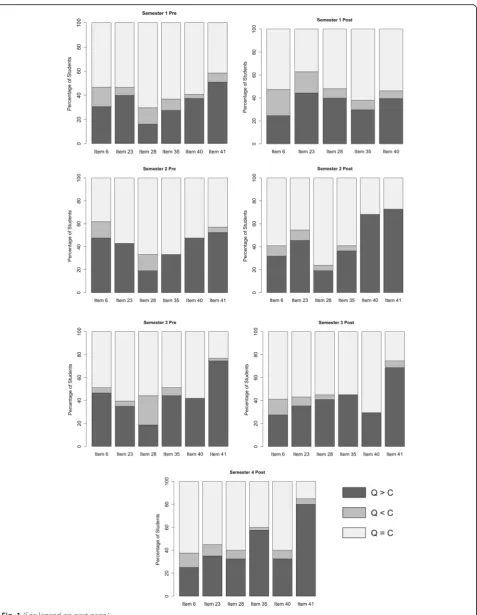
Table1summarizes the survey results: we found statisti-cally significant splits between the classical and quantum versions of most of the questions, in both pre and post administrations.
Note that Table1lists a few results as undefined or blank. For item 28, semester 2, pre, no students chose Disagree for classical and Neutral/Agree for quantum, and no students chose Disagree for quantum and Neutral/Agree for classical. For item 35, semester 3, post, every student responded Dis-agree for the classical version. In these instances, running the Bhapkar test would involve dividing by zero. We can understand this to mean that there was not a classical/ quantum split on this item. For item 41, the quantum ver-sion of the item did not appear in this form on the post sur-vey in semester 1.
More detailed results, with the percentage of students who “split” in each possible permutation, are given in the Additional file 1. A condensed version of this infor-mation is displayed graphically in Fig. 1. There are sep-arate graphs for each administration of the survey. Each bar graph shows “no split” (the percentage of students who gave the same responses for classical and quantum, on the 3-point Likert scale), “quantum < classical” (stu-dents who chose classical-Agree/quantum-Neutral, clas-sical-Agree/quantum-Disagree, and classical-Neutral/ quantum-Disagree), and “quantum > classical” (students who chose the other three permutations where the clas-sical and quantum responses differ). We discuss some of the specific results below in the“Discussion”section.
Spontaneous epistemological comparisons: research question 2
In brief, of the seven interviewed students, six expressed a spontaneous epistemological comparison, suggesting that the classical-quantum splits found in the survey re-sults potentially correspond to something psychologic-ally robust for students.
In the rest of this section, we present one spontaneous epistemological comparison from each of those six stu-dents. Student names below are all pseudonyms.
Wei
Wei initiated a segment of conversation by stating,“Physics 1 and 2 is just really straightforward and you…can do the exams and homeworks really easy. But for quantum, after you understand what’s going on and you see the questions, but you still really confused about it. So it’s really changed the way to think about physics.” The interviewer followed up by asking“So it’s like changing the way you think about physics but then that sometimes doesn’t match with doing the homeworks or exams, not like with your previous ex-perience, right?” Wei responded, “After you know the for-mulas about the physics like on physics 1 and 2…you just plug them into the questions. And then for quantum you must understand what he’s saying and what he’s asking and you can know the formulas but you sometimes cannot understand what he’s saying at you.” We see Wei’s first statement as spontaneously comparing classical physics courses (Physics 1 and 2) with the quantum course he’s cur-rently taking. When prompted for clarification, Wei implied that the distinction has an epistemological component: in Physics 1 and 2, Wei felt that knowing the formulas is suffi-cient for solving problems, whereas in quantum mechanics, Wei felt the need to also understand what is being said about the problem context.
Jacob
quantum mechanics and not just to middle- and upper-div-ision physics in general.
Tara
Responding to an open-ended prompt about her experi-ence in the Modern Physics course, Tara spontaneously compared approaches to learning QM vs. classical phys-ics:“Learning how to learn in quantum physics was kind of a challenge… With classical mechanics, you sort of have an intuition ... but with quantum mechanics noth-ing really makes sense. Like there’s situations in which the potential energy is greater than the total energy… Quantum physics doesn’t really follow the same trajec-tory as those courses do.”Tara here implies that the tra-jectory of her earlier, classical courses connected to intuition, whereas “with quantum mechanics nothing makes sense”—leading to a different course trajectory.
Fernando
When asked about how physics and mathematics relate in QM, Fernando replied,“When it all comes down to it, if I don’t understand what’s going on conceptually, that’s a little bit more difficult. Especially with this quantum stuff, I guess the conceptual work you need that mathematics behind it.” We interpret“especially with this quantum stuff”to indicate a comparison with non-quantum stuff. Fernando is asserting that, in QM, the “conceptual work”—the intellectual work needed to make sense of the concepts—relies more (“ espe-cially”) strongly on the underlying“mathematics behind it.” This sentiment coheres with thoughts he expressed else-where in the interview.
Eric
Asked about the role of conceptual vs. mathematical rea-soning in QM, Eric responds by drawing a distinction with classical physics courses: “I’d say the conceptual is less reliable now than it used to be, because in previous physics courses, the concepts were always intuitive…In quantum, it’s more complicated, and less intuitive, so I’m less likely to trust my instincts on the concepts and more likely to trust the math.”
Zach
This student’s one spontaneous epistemological com-parison comes very close to the border between “ com-parison” and“not a comparison.”The interviewer asked, “What did you think about the focus group, now that it’s kinda over. Um, yeah, what’s your experience?” Zach
responded, “I think it’s cool. Like I definitely think like quantum mechanics is weird. I definitely think there’s like merit in finding out how it’s thought about and learned, just because it’s so strange, like the ideas are so like really brand new. I have like, I had nothing in my head to attach it to before coming in. So, I mean, like yeah it’s definitely like weird to like get your head going and wrap around some of the ideas…” Zach here does not explicitly compare the quantum weirdness he re-peatedly mentions with any aspect of classical physics. We see evidence of an implicit comparison, though, when Zach calls QM “really brand new,” with “nothing in my head to attach it to” before the course begins. These phrases connote a discontinuity with his previous experiences, including possibly prior physics courses. If we make the inference that the“strange,” “weird”nature of quantum ideas constitutes part of the discontinuity, then Zach is saying that QM is new and weird compared to classical physics. We acknowledge, though, that this is a higher-level inference than we made in attributing a spontaneous epistemological comparison to the five pre-vious students in this section.
For readers who do not agree with this inference, we note that Zach, responding to an open-ended prompt, spontaneously starts talking about the weirdness of quantum ideas. So, even if it is too much of a stretch to infer that he views quantum ideas as weirder than clas-sical ideas, it is clear that quantum weirdness is salient to him.
In summary, of the seven interviewed students, five spontaneously expressed explicit epistemological com-parisons and one spontaneously expressed epistemo-logical views about QM that involved an implicit comparison with classical physics.
Discussion
Summary and basic interpretation of results
Before summarizing what this study shows, we re-iterate our disclaimers about what it does not show. We cannot make claims about patterns in the differ-ences between students’ epistemological views about classical and quantum physics, because validated
clusters of survey items would be needed to support
such claims. Nor can we draw generalizations about stu-dents’ reasoning in quantum mechanics or even students in the Modern Physics course from the interview analyses, because N is small and because the spontaneous epis-temological comparisons emerged in the context of an
(See figure on previous page.)
ongoing relationship between the research team and the interviewees.
By contrast, the “split” results indicate that most students do perceive epistemological differences to exist between classical and quantum physics, and the interview analyses suggest that at least some of these epistemological splits correspond to students’ held views. So, when we talk about students’ epistemolo-gies of physics, we need to be careful about treating “physics” as homogeneous; these results show that a significant number of individual students display dif-ferent approaches to knowledge in physics depending on the specific sub-discipline within physics. This ex-ploratory study does not invalidate the CLASS, nor does it create an alternative survey instrument. Ra-ther, it provides a proof of concept that students’ epistemological views may differ by sub-domain of physics, and we argue that we should be attending to this domain specificity.
As discussed above, previous work had documented context dependence in students’ epistemologies of physics. However, in that work, the contextual shifts associated with epistemological shifts corresponded to classroom vs. interview settings (Lising & Elby, 2005), conceptual vs. procedural knowledge (Muis & Gierus, 2014), the use of abstract (“philosophical”) vs. deeply contextualized survey questions (Leach et al., 2000), conceptual cues (Gupta & Elby, 2011), and instruc-tional interventions that produced shifts in students’ framing of their classroom activity (Rosenberg, Ham-mer, & Phelan, 2006). What is new in this study, for PER and for personal epistemology research more broadly, is context dependence in students’ epistem-ologies and expectations based on sub-discipline. The results of our exploratory study demonstrate the ex-istence of students’ epistemological splits between two sub-domains of physics—classical and quantum. We argue that, as a field, we should attend to this domain specificity of students’ epistemological views. Further, we consider the possibility that these splits can reflect epistemological sophistication.
What counts as epistemological sophistication?
These results highlight an important interpretational issue about how to interpret the“split”results. Usually, CLASS re-sponses and other epistemological survey rere-sponses are scored as favorable or unfavorable (or neutral). Applying this scoring procedure to the bifurcated survey results, one could conclude that students hold less favorable views about quantum physics than they do about classical physics. Spe-cifically, from the post-semester results in Table1and Fig. 1, one would conclude—to the extent that responses to indi-vidual survey items allow conclusions—that the students in our dataset who have completed a quantum physics class
hold less sophisticated views about the utility of sense-mak-ing in quantum physics than they hold about the utility of sense-making in classical physics (CLASS #23, #40). One would also conclude that the students hold less sophisticated views about how quantum physics relates to the real world than they hold about how classical physics relates to the real world (CLASS #35). In addition, one would conclude that they are more sophisticated about how quantum physics ne-cessitates a rethinking of how the world works than they are about how classical physics necessitates a rethinking of how the world works (CLASS #28).
We question this interpretation of our split results for both theoretical and empirical reasons.
Theoretical argument: epistemological sophistication centers around nuanced contextualized judgments
As discussed in previous literature on students’ epistem-ologies of science (Elby & Hammer,2001; Elby, Macran-der, & Hammer, 2016; Sandoval, 2005), the default scoring scheme for epistemological surveys, counting some responses as more favorable than others, is not merely a matter of convenience or habit (“that’s what everyone does!”). Such scoring schemes encode an as-sumption about the nature of epistemological expertise, that it involves holding certain favorable views at the ex-pense of other, less favorable views. So, for instance, the coding and scoring schemes used in interview- and sur-vey-based epistemology research encode the assumption that scientific knowledge should be viewed consistently: as tentative rather than certain, coherent rather than piecemeal, constructed by people rather than “read off” of nature or transmitted from authority, and so on (Elby & Hammer,2001).
An emerging consensus, however, holds that epis-temological sophistication consists not of adherence to “blanket generalizations”(Elby & Hammer,2001), but to the ability and propensity to make contextualized judg-ments about knowledge-generating processes, coupled to criteria for monitoring and evaluating those processes and their results (Chinn, Rinehart, & Buckland, 2014). For instance, it makes epistemological sense to treat“the Earth is round” as certain knowledge, and telephone numbers as transmitted from authority to recipients. It makes epistemological sense to treat the learning of complex concepts like Newton’s second law as more “constructivist” than learning the value of the universal gravitational constant.
less on intuitive reasoning when solving problems. Along the same lines, it is reasonable to view quantum me-chanics as requiring a deeper rethinking of how the world works than classical mechanics does; at least some physics experts would agree with these “split” views. Of course, epistemological expertise does notdemandthese splits; depending on one’s interpretation of quantum mechanics, experience with quantum concepts, and so on, an expert could decide that classical and quantum mechanics are more epistemologically similar than dif-ferent. So, we would expect some experts not to split. Our point is that there are likely sophisticated reasons for splitting and for not splitting, and hence the default interpretation of epistemological splits should not be that students possess greater epistemological sophistica-tion about one subfield of physics than another.
Empirical support for the epistemological reasonableness of classical-quantum splits
The theoretical argument of the previous subsection makes predictions about the views of epistemologically sophisticated physicists: different physicists will display different epistemologies of quantum physics, likely lead-ing to differences in their tendencies to express classical-quantum epistemological splits.
Accounts produced by historians and philosophers of quantum mechanics align with these predictions. Max Jammer (1989) and others have documented the lively debates among Bohr, Einstein, Heisenberg, and other early developers of QM about how to interpret quantum mechanics. The interpretational dilemmas and disagree-ments have not all been resolved (see, e.g., any issue of
Foundations of Physics).
Preliminary results from another thread of the larger study also align with those predictions (Hoehn & Finkel-stein, 2018a). In that study, the CU co-authors adminis-tered the bifurcated survey to two instructors—one from the CU modern physics course and the other from the CU upper division quantum 1 course. On the quantum versions of the items, the two instructors’responses dif-fered from one another on four of the six items. Further-more, instructor 1 expressed classical-quantum splits on three of six items (two of these being “weak” splits be-tween strongly disagree and disagree), and instructor 2 split on three of the items (one of these being a“weak” split). Obviously, we cannot generalize from these
small-N results, but they suggest the likely value of a larger, partly interview-based study of experts’ classical-quantum splits (and non-splits).
Initial implications for instruction
As we attend to how students think in domain-specific ways about the nature of learning and knowing, we ought to con-sider implications for not only how we measure impacts of
our classes but also how we teach. The consistency of our “split” findings across multiple instructional contexts, for most of the bifurcated survey items, leads us to offer one thought about implications of this work for instruction. Al-though experts may disagree about what constitutes the right degree of classical-quantum splitting with respect to the value of conceptual reasoning (versus the need to“shut up and calculate”), we worry that quantum physics students are in danger of sliding too far away from conceptual reasoning. Students may internalize messages (intended or not) that quantum mechanics is a place to rely solely on mathematical calculation (Johansson, Andersson, Salminen-Karlsson, & Elmgren, 2016; Marshman & Singh, 2015; Mermin, 1989) and that sense-making will not avail them here, which may impede the activation of the productive epistemological resources that they bring to classical physics. As instructors, we should not assume that students’ “plug and chug”tendencies are entirely a“natural”epistemological response to quantum weirdness; we need to monitor our-selves and our students to avoid amplifying that tendency.
Future directions
As we know that instructors’ epistemological views can be implicitly and explicitly reflected in their teaching (Linder,1992; Marshall & Linder,2005; Tolhurst,2007), and that faculty members’attitudes toward QM and thus their approaches to teaching QM vary (Dubson, Goldha-ber, Pollock, & Perkins, 2009; Siddiqui & Singh, 2010), we will continue to have instructors of the courses for which we have student responses take the survey them-selves. This will help us determine to what extent in-structors’epistemological beliefs about QM are reflected in the student responses. It would also be interesting to conduct the bifurcated survey with a larger sample of ex-pert physicists, to determine to what extent exex-perts re-port splits and if there is an expert consensus on any of the bifurcated items.
We plan to continue using the bifurcated CLASS instrument (the six items included here as well as additional epistemology questions that ask only about QM) to collect responses from more student popula-tions in different pedagogical contexts. This will allow us to investigate the prevalence of epistemological splits and potentially the extent to which the clas-sical/quantum splits are related to content differences versus pedagogical or other factors. In conducting studies of a broader scope, it may also be useful to conduct formal validation interviews with the bifur-cated CLASS items.
introductory vs. upper-level physics being a confounding factor (though our interview data show that this does not ac-count for the full story). However, there are multiple sub-domains of physics within the standard introductory physics curriculum, and our experience with teaching introductory physics suggests that students may take different epistemo-logical approaches in“first-semester”and“second-semester” introductory physics. Future studies can investigate this directly.
Finally, further analysis of the data set in this paper will look at pre-post shifts on the bifurcated survey items, specif-ically addressing the question: Are the pre/post shifts in stu-dents’ epistemological beliefs before and after a Modern Physics course different for quantum and classical physics?
Conclusions
This preliminary study demonstrates that a significant number of students taking modern physics and quantum mechanics (in a variety of settings) report different epis-temological beliefs about classical physics and quantum physics, both before and after instruction in quantum physics. Specifically, students reported different beliefs in regard to the connection between (classical/quantum) physics and the real world, and the connection between mathematical and conceptual reasoning. From the stu-dent interview data, we observe ways that stustu-dents make spontaneous epistemological comparisons between clas-sical and quantum physics, suggesting that the quantita-tive results from the bifurcated survey represent a real phenomenon and not merely an artifact of the way the questions were posed. The interpretation of these results may not merely be about greater or lesser sophistication in each sub-domain of physics, but about identifying real differences in approach between sub-domains of the dis-cipline (which may itself be an element of epistemo-logical sophistication).
While this study was conducted in a physics con-text, similar investigations could be extended to other STEM disciplines. Other research on interac-tions between disciplines has already documented that students can display different attitudes to (e.g.) physics and biology (Gouvea, Sawtelle, & Nair, 2019; Sawtelle & Turpen, 2016), but future studies could also look at sub-domain specificity within other dis-ciplines. The CLASS has been adapted for biology (Semsar, Knight, Birol, & Smith, 2011) and chemistry (Adams, Wieman, Perkins, & Barbera, 2008), and like the original physics version, the CLASS items that refer to “biology” and “chemistry” do not specify sub-domains of the disciplines. For example, our an-ecdotal experience with biology students, peer educa-tors, and faculty suggests that students apply (and instructors expect them to apply) different epistemo-logical resources in cell biology and in ecology. Our
results from physics suggest questions that can be asked in other disciplines.
Appendix Interview protocol
The questions below served as a guide for inter-viewers in the 30-minute semi-structured interviews with seven individual students from the CU Modern Physics course in Semester 1. Not all of the questions were asked in every interview. Question 3 asks stu-dents how the Modern Physics course changed the way they think about physics. If a student responded to this question by comparing epistemological aspects of classical and quantum physics, we did not code it as spontaneous due to the comparative nature of the question.
1. How did the semester go for you overall? (class and focus group)
2. What aspects of the course did you like or not like?
3. Has this course changed the way you think about physics? How?
4. How do you see the roles of calculation vs. conceptual reasoning in quantum mechanics? 5. What was your favorite thing (content area) you
learned from class?
6. What was the most challenging thing for you in this class? (content-wise)
7. In the following situations, which of the
interpretations do you feel like you are using? Why? a. Double slit experiment (with beam of light,
single photon, electrons) b. Photoelectric effect
c. Electron transition in an atom
d. Aspect experiments with one/two beam splitters e. Shining light on barrels to heat them
8. What did you think about the focus group? 9. What were the most/least productive aspects of the
focus group for you?
10. Did your participation in this group affect your thinking in the class?
Additional file
Additional file 1:Quantitative results (DOCX 54 kb)
Abbreviations
CLASS:Colorado Learning Attitudes about Science Survey; CU: University of Colorado; FCI: Force Concept Inventory; MPEX: Maryland Physics Expectations Survey; PER: Physics education research; QM: Quantum mechanics; UMD: University of Maryland
Acknowledgements
data; Michelle Porcelli for initial conversations that led to the development of the split survey; Suzanne Brahmia, Eric Kuo, and Bethany Wilcox for helpful suggestions about statistics; the CU PER group for helpful discussions and feedback on the paper; course instructors for facilitating access to students; and all the anonymous students and instructors who took the surveys and participated in interviews.
Authors’contributions
BWD was involved in the study design, collected data at UMD, did the initial analysis of the quantitative data, drafted the first version of the manuscript, and took part in subsequent revisions. JRH collected data at CU, conducted some of the analysis of the quantitative data, conducted some of the interviews with students, was involved in the coding analysis of student interviews, and contributed substantially to the revisions of the manuscript at several different stages. AE co-wrote the literature review on student epis-temologies and the qualitative methods and analysis. NDF contributed to study design, analysis, arguments, and contributed to the writing. AG con-tributed to the study design and the qualitative analysis methodology. All authors read and approved the final manuscript.
Funding
This work was supported by NSF-DUE grants 13-22734, 13-23129, and 16-25797, and an NSF Graduate Research Fellowship. Publication of this article was funded by the George Mason University Libraries Open Access Publish-ing Fund, the University of Colorado Boulder Libraries Open Access Fund, and the UMD Libraries' Open Access Publishing Fund.
Availability of data and materials
The datasets generated and analysed during the current study are not publicly available due to privacy concerns but are available from the authors (with student identifiers removed) on reasonable request.
Ethics approval and consent to participate
The study was approved by the Institutional Review Boards at both universities, and consent was obtained from all participants.
Competing interests
The authors declare that they have no competing interests.
Author details
1
Department of Physics and Astronomy/STEM Accelerator Program, George Mason University, Fairfax, VA 22030, USA.2Department of Physics, University of Colorado, Boulder, CO 80309, USA.3Department of Teaching and Learning, Policy and Leadership, University of Maryland, College Park, MD 20742, USA.4Department of Physics, University of Maryland, College Park, Maryland 20742, USA.
Received: 14 May 2019 Accepted: 27 August 2019
References
Adams, W. K., Perkins, K. K., Podolefsky, N. S., Dubson, M., Finkelstein, N. D., & Wieman, C. E. (2006). New instrument for measuring student beliefs about physics and learning physics: The Colorado Learning Attitudes about Science Survey.Physical Review Special Topics - Physics Education Research, 2(1), 010101https://doi.org/10.1103/PhysRevSTPER.2.010101.
Adams, W. K., Wieman, C. E., Perkins, K. K., & Barbera, J. (2008). Modifying and validating the Colorado Learning Attitudes about science survey for use in chemistry.Journal of Chemical Education, 85(10), 1435https://doi.org/10. 1021/ed085p1435.
Baily, C., & Finkelstein, N. D. (2009). Development of quantum perspectives in modern physics.Physical Review Special Topics - Physics Education Research, 5(1), 010106https://doi.org/10.1103/PhysRevSTPER.5.010106.
Baily, C., & Finkelstein, N. D. (2010). Teaching and understanding of quantum interpretations in modern physics courses.Physical Review Special Topics -Physics Education Research, 6(1), 010101https://doi.org/10.1103/ PhysRevSTPER.6.010101.
Bates, S. P., Galloway, R. K., Loptson, C., & Slaughter, K. A. (2011). How attitudes and beliefs about physics change from high school to faculty.Physical Review Special Topics - Physics Education Research, 7(2), 020114https://doi.org/10. 1103/PhysRevSTPER.7.020114.
Bhapkar, V. P. (1966). A Note on the equivalence of two test criteria for hypotheses in categorical data.Journal of the American Statistical Association, 61(313), 228https://doi.org/10.2307/2283057.
Brewe, E., Kramer, L., & O’Brien, G. (2009). Modeling instruction: Positive attitudinal shifts in introductory physics measured with CLASS.Physical Review Special Topics - Physics Education Research, 5, 013102https://doi.org/10.1103/physrevstper.5.013102. Chinn, C. A., Buckland, L. A., & Samarapungavan, A. (2011). Expanding the dimensions of
epistemic cognition: Arguments from philosophy and psychology.Educational Psychologist, 46(3), 141–167https://doi.org/10.1080/00461520.2011.587722. Chinn, C. A., Rinehart, R. W., & Buckland, L. A. (2014). Epistemic cognition and
evaluating information: Applying the AIR model of epistemic cognition. In Processing inaccurate information: Theoretical and applied perspectives from cognitive science and the educational sciences (pp. 425–453).
CU Boulder fall enrollment over time—By college—University of Colorado Boulder IR | Tableau Public. (n.d.). Retrieved August 14, 2019, fromhttps://public.tableau.com/ profile/university.of.colorado.boulder.ir#!/vizhome/allcolleges/CollegeSummary
CU Boulder fall enrollment over time—By major—University of Colorado Boulder IR | Tableau Public. (n.d.). Retrieved August 14, 2019, fromhttps://public.tableau.com/ profile/university.of.colorado.boulder.ir#!/vizhome/allmajors/MajorSummary
Ding, L., Chabay, R., & Sherwood, B. (2013). How do students in an innovative principle-based mechanics course understand energy concepts?: Assessing M&I students’energy conceptions.Journal of Research in Science Teaching, 50(6), 722–747https://doi.org/10.1002/tea.21097.
Docktor, J. L., & Mestre, J. P. (2014). Synthesis of discipline-based education research in physics.Physical Review Special Topics - Physics Education Research, 10(2), 020119https://doi.org/10.1103/PhysRevSTPER.10.020119.
Dreyfus, B. W., Elby, A., Gupta, A., & Sohr, E. R. (2017). Mathematical sense-making in quantum mechanics: An initial peek.Physical Review Physics Education Research, 13(2), 020141https://doi.org/10.1103/PhysRevPhysEducRes.13.020141. Dubson, M., Goldhaber, S., Pollock, S., & Perkins, K. (2009). Faculty disagreement
about the teaching of quantum mechanics.AIP Conference Proceedings, 1179(1), 137–140https://doi.org/10.1063/1.3266697.
EBAPS home. (n.d.). Retrieved April 25, 2018, fromhttp://www2.physics.umd. edu/~elby/EBAPS/home.htm
Edmondson, K. M., & Novak, J. D. (1993). The interplay of scientific epistemological views, learning strategies, and attitudes of college students.Journal of Research in Science Teaching, 30(6), 547–559https://doi.org/10.1002/tea.3660300604.
Elby, A. (2011). Getting started with research on epistemologies and expectations.
Reviews in PER, 2(1) Retrieved fromhttp://www.per-central.org/items/detail. cfm?ID=10578.
Elby, A., & Hammer, D. (2001). On the substance of a sophisticated epistemology.
Science Education, 85(5), 554–567https://doi.org/10.1002/sce.1023. Elby, A., Macrander, C., & Hammer, D. (2016). Epistemic cognition in science. In J.
A. Greene, W. A. Sandoval, & I. Bråten (Eds.),Handbook of epistemic cognition (pp. 113–127). Routledge.
Gire, E., Jones, B., & Price, E. (2009). Characterizing the epistemological development of physics majors.Physical Review Special Topics - Physics Education Research, 5(1), 010103https://doi.org/10.1103/PhysRevSTPER.5.010103.
Gouvea, J., Sawtelle, V., & Nair, A. (2019). Epistemological progress in physics and its impact on biology.Physical Review Physics Education Research, 15(1), 010107https://doi.org/10.1103/PhysRevPhysEducRes.15.010107. Gray, K. E., Adams, W. K., Wieman, C. E., & Perkins, K. K. (2008). Students know
what physicists believe, but they don’t agree: A study using the CLASS survey.Physical Review Special Topics - Physics Education Research, 4(2), 020106https://doi.org/10.1103/PhysRevSTPER.4.020106.
Greene, J. A., Sandoval, W. A., & Bråten, I. (2016).Handbook of Epistemic Cognition. Routledge.
Gupta, A., & Elby, A. (2011). Beyond epistemological deficits: Dynamic explanations of engineering students’difficulties with mathematical sense-making.International Journal of Science Education, 33(18), 2463–2488https:// doi.org/10.1080/09500693.2010.551551.
Hammer, D. (1994). Epistemological beliefs in introductory physics.Cognition and Instruction, 12(2), 151–183.
Hestenes, D., Wells, M., & Swackhamer, G. (1992). Force concept inventory.The Physics Teacher, 30(3), 141–158https://doi.org/10.1119/1.2343497. Hoehn, J. R., & Finkelstein, N. D. (2018a). Investigating and promoting
epistemological sophistication in quantum physics. PERC 2017 Proceedings, 7–10.https://doi.org/10.1119/perc.2017.juried.002