R E S E A R C H A R T I C L E
Open Access
Strength-balance supplemented with
computerized cognitive training to improve dual
task gait and divided attention in older adults: a
multicenter randomized-controlled trial
Eva van het Reve
1*†and Eling D de Bruin
1,2,3†Abstract
Background:Exercise interventions often do not combine physical and cognitive training. However, this combination is assumed to be more beneficial in improving walking and cognitive functioning compared to isolated cognitive or physical training.
Methods:A multicenter parallel randomized controlled trial was conducted to compare a motor to a cognitive-motor exercise program. A total of 182 eligible residents of homes-for-the-aged (n = 159) or elderly living in the vicinity of the homes (n = 23) were randomly assigned to either strength-balance (SB)or strength-balance-cognitive (SBC)training. Both groups conducted similar strength-balance training during 12 weeks.SBCadditionally absolved computerized cognitive training. Outcomes were dual task costs of walking, physical performance, simple reaction time, executive functions, divided attention, fear of falling and fall rate. Participants were analysed with an intention to treat approach. Results:The 182 participants (mean age ± SD: 81.5 ± 7.3 years) were allocated to eitherSB(n = 98) orSBC(n = 84). The attrition rate was 14.3%. Interaction effects were observed for dual task costs of step length (preferred walking speed: F(1,174) = 4.94,p= 0.028,η2 = 0.027, fast walking speed: F(1,166) = 6.14,p= 0.009,η2 = 0.040) and dual task costs of the standard deviation of step length (F(1,166) = 6.14,p= 0.014,η2 = 0.036), in favor ofSBC. Significant interactions in favor ofSBCrevealed for in gait initiation (F(1,166) = 9.16,p= 0.003,η2 = 0.052),‘reaction time’(F(1,180) = 5.243, p = 0.023, η2
= 0.028) &‘missed answers’(F(1,180) = 11.839,p= 0.001,η2= 0.062) as part of the test for divided attention. Within-group comparison
revealed significant improvements in dual task costs of walking (preferred speed; velocity (p= 0.002), step time (p= 0.018), step length (p= 0.028),fast speed; velocity (p< 0.001), step time (p= 0.035), step length (p= 0.001)), simple reaction time (p< 0.001), executive functioning (Trail making test B;p< 0.001), divided attention (p< 0.001), fear of falling (p< 0.001), and fall rate (p <0.001).
Conclusions:Combining strength-balance training with specific cognitive training has a positive additional effect on dual task costs of walking, gait initiation, and divided attention. The findings further confirm previous research showing that strength-balance training improves executive functions and reduces falls.
Trial registration:This trial has been registered under ISRCTN75134517
Keywords:Cognitive-motor training, Dual task costs, Divided attention, Cognitive functions, Executive functions, Exercise, Fall prevention
* Correspondence:[email protected]
†Equal contributors
1Department of Health Sciences and Technology, Institute of Human
Movement Sciences and Sport, ETH Zürich, Wolfgang-Pauli-Str. 27, 8093 Zürich, Switzerland
Full list of author information is available at the end of the article
Background
The progressive and dynamic aging process is character-ized by functional and cognitive changes that often lead to physical performance deficits and deteriorations in walking. These changes occur even in the absence of overt diseases. Potential consequences are increased risk for falls, loss of independence in activities of daily living, and poor quality of life [1-5]. Functional dependence in older adults is associated with increased health care costs and mortality [6-8]. Minimizing falls is a common concern of many interventions as a third of people aged 65 and older and half of those aged 85 and older sustain falls each year, from which 10% result in serious conse-quences [9,10]. One key factor in staying independent and maintaining mobility is, therefore, to enhance walk-ing ability in older adults.
The general health protecting influence of physical ac-tivity in relation to muscular, skeletal, metabolic and car-diovascular functions is well documented [11-17]. The effect of physical [18] and cognitive [19-22] activity on brain functioning has also been recognized. Physical ac-tivity, for example, has been suggested reducing the inci-dence of dementia or cognitive deterioration [23-25], and is related to enhancements in cognitive functioning and brain plasticity [26-30]. Cognitive interventions re-sulted in improved cognitive speed [31], attention [32], and concentration [31]. Thus, cognitive functions are amenable both through physical and cognitive exercise, even in old age [23,33-37].
Disparate lines of research converge on the notion that sensorimotor and cognitive aging are linked to each other in old age [38], and that daily tasks such as walk-ing are dependent on both sensorimotor processes and higher level cognitive functions [39]. In the past walking has primarily been seen as representing an automated and reflex-controlled process [40,41], which remains automatic when not deviating from learned programs [42]. However, older adults with cognitive impairments are exposed to falls, even when their motor functions are fairly intact [43,44]. Recent literature suggests that the impact of sensorimotor impairments on falls is in part moderated by executive functions (EF) [45]. A re-view on this topic summarizes the interplay between EF, attention and gait [46]. Among healthy older adults, victims of falls performed poorly on EF and attention-demanding tasks [40,47,48], and the ability to pay atten-tion seems to be an important requirement for walking that also influences the risk for falling [49]. Individuals with poor EF in turn have reduced gait speed [50], are more prone to falls [51] and have an increased risk of mortality [52]. EF has also been shown to associate with higher gait variability, which marks unsteadiness and in-consistency in walking, and likewise increases fall risk [53-56]. For minimized stride-to-stride fluctuation in
gait an intact neural control system appears to be re-quired [53]. A further walking aspect that is associated with higher level sensorimotor functions is gait initi-ation, and difficulties to initiate gait are related to disor-ders in the frontal lobe [1].
Divided attention, one component of executive func-tions, and some aspects of selective attention seem to be especially impaired in the aging process [57]. Dual-task related gait changes result from the competition interfer-ence between two attention-demanding tasks [58], and studies of cognitive changes during the aging process in-dicate that older adults’ability to divide attention is de-creased [59]. Compared to other specific components of executive functions, divided attention especially associ-ates with spatial and temporal dual task cost characteris-tics of gait [60].
Basic components of a motor intervention program aiming to improve gait function in older adults are strength and balance exercises [61-64]. Training atten-tion and executive funcatten-tion also improves gait [65,66]. However, two recent reviews that focused on the inter-play between physical functions and cognition concluded that it seems important to combine motor and cognitive therapy into clinical practice to enable older adults to move safer in their physical environment [46,67] and that computerized interventions seem promising for this purpose [67]. Such an approach was tested in a pilot study, where traditional strength-balance training got complemented with computerized cognitive training of attention [68]. Cognitive-motor training tended to im-prove gait and foot reaction time to a greater extent than motor training alone. Because of the small sample size the association remained undetermined. There is a need for more studies on this topic with larger sample sizes [36,46], and also for studies that address the effects of preventive interventions on cognitive performance [36] and, thereby, link the cognitive component to falls [46]. This study, therefore, aimed to further explore the add-itional effect of the supplemented cognitive training in a sufficiently powered trial. This randomized controlled trial was designed to examine the effects of exercise train-ing and combined exercise and cognitive traintrain-ing on the physical and cognitive functioning of older adults. We hy-pothesized that both training groups would show signifi-cant improvements on measures of physical and cognitive functioning and, that the combined training group (exer-cise and cognitive training) would show greater walking function and cognitive improvements than the exercise-only training group.
Methods
Trial design
The study was carried out from March 2011 to December 2013. Participants were recruited from 14 homes-for-the-aged in Switzerland (n = 13) and Germany (n = 1). Permission of the ethical committees of the Cantons Berne, Zurich, Lucerne, St Gall, Argovia in Switzerland and Rhineland-Palatinate in Germany was received prior to study commencement. All participants provided written in-formed consent prior to participating in the study. The CONSORT Statement is used for reporting [69].
Participants
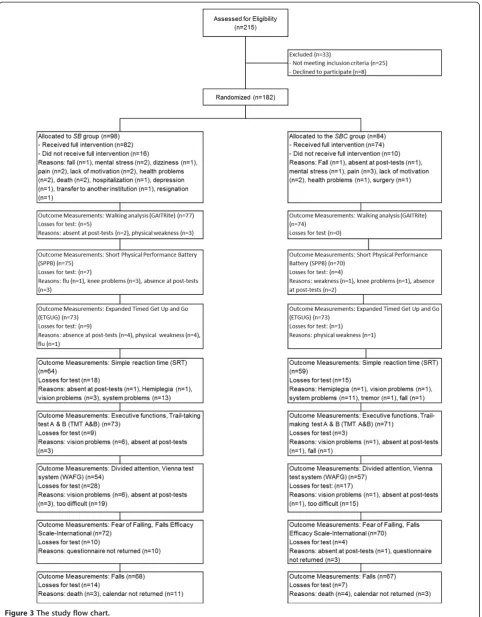
Eligible residents of the homes-for-the-aged and interested autonomous living adults living in the vicinity of the homes were invited to attend an information session where the content of the intervention program and study design were explained. Based on the pilot study [68], where a 46% re-cruitment rate was reported, we estimated 467 potential participants from the 14 homes-for-the-aged. A sample of 192 residents of the homes and 23 autonomous living adults living in the vicinity of the homes indicated interest to participate. Participants were included when older than 65 years, scoring a minimum of 22 points on the Mini-Mental State Examination (MMSE), able to walk 20 meters with or without aids, free of rapidly progressive illness, acute illness or unstable chronic illness. Thirty-three sub-jects had to be excluded (MMSE n = 9, health problems n = 16, motivation problems n = 8). Hence, 182 individuals fulfilled all criteria. They were randomly allocated to either the strength-balance SB group (n = 94) or the strength-balance-cognitive SBC group (n = 88) using simple (unre-stricted) randomisation [70] based on a random-number table. Four participants that were not able to conduct the cognitive training due to vision problems were manually allocated to theSBgroup after randomization. Thus, we reported 98 participants inSB and 84 partici-pants inSBCafter this adaptation. Individuals who met the initial eligibility criteria took part in a personal questionnaire based interview to screen for cognitive and health problems. Subjects who stopped doing their exercises any time during the 12 weeks of the program were defined as drop-outs.
Sample size calculation
The sample size calculation for the number of participants is based on the primary outcome measure in the pilot study for the DTC of step duration and DTC of step length [68]. In order to avoid a type I or II error an esti-mated sample size of 64 (DTC of step duration) respect-ively 45 (DTC of step length) participants per group for a two group pre test–post test design was required, result-ing in 80% power at anα-level of 0.05. To account for at-trition over time, the required sample size was increased by 15% to 74 respectively 52 participants per group.
Motor intervention program
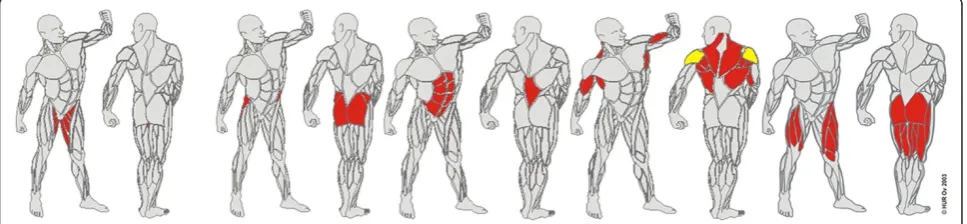
All participants performed an exercise program consisting of twice-weekly thirty minutes progressive resistance trai-ning on age-adapted machines and 10 minutes balance training during twelve weeks. Characteristics of age-adapted machines include a stepless increase or decrease of the resistance, restriction of range of motion through range limiters, ergonomic seats and, through this, a reduc-tion of stress on vulnerable joints. Almost all of the homes trained with our preferred equipment using air-pressure as resistance (Ab HUR Oy, 67100 Kokkola, Finland (http://www.hur.fi). The requirement of the machines of the few homes that used weight stack machines was that they allowed increase or decrease of resistance in small steps of around 2-5 kg, depending on muscle group trained. The intervention was provided face to face to 4 to 6 participants at a time. The mix of strength training and balance exercises focusing on lower extremity muscle function was chosen to optimize transfer to functional tasks of daily living [71,72]. Intensity, progression and dur-ation of the program were based on previously published recommendations [11,63,73,74]. Perceived exertion was obtained using the Borg’s scale of perceived exertion [75], and progression based on the participant’s statements. The muscle groups of the hip extensors, ab- and adduc-tors, knee flexors and extensors, ankle dorsi- and plantar-flexors, abdominal- and back muscles as well as rhomboid muscles were trained (Figure 1). Additionally, one legged stance training, tandem standing and walking, walking on heels, backward and sideward walking, turns, sit-to
transfers and knee squats were executed. The balance pro-gram was performed using air-filled balance cushions (diameter 34 cm) (Sissel Schweiz, 8904 Aesch, www.sissel. ch), and consisted of static and dynamic functional exer-cises (e.g. standing on one leg, walking over cushions) [76]. Flexibility exercises followed each training session to maintain or improve the range of motion that is necessary for activities of daily living.
Cognitive intervention program
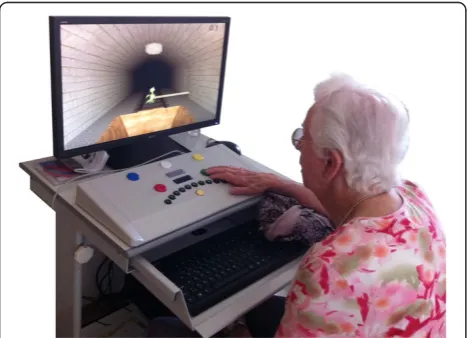
In addition to the physical training, one group received 12 weeks cognitive training, with the CogniPlus [77] training program (SCHUHFRIED GmbH, 2340 Mödl-ing, Austria, (http://www.schuhfried.at), 3 times a week for 10 minutes. The program was computer-based and supported the training of cognitive abilities (Figure 2). The control group did not have any alternative add-itional input.
The following tasks for attention training were used: the
Alert training program trains alertness – the ability to temporarily increase and sustain the intensity of attention; theSelecttraining program trains selective attention–the ability to respond quickly to relevant stimuli and to sup-press inappropriate responses; theDividtraining program trains divided attention –the ability to perform different tasks simultaneously.
The ability dimensions were trained using realistic sce-narios. In the Alert training program, a motorcycle is driven along a road, and the participant’s task was to react as quickly as possible when obstacles appear (e.g. an animal crossing the road), by pressing a reaction key. In the Select training program the participants drove through a tunnel in a mine rolley and had to react on relevant visual and/or acoustic stimuli (e.g. yellow birds making a noise pre-defined for that animal) and to sup-press reaction on irrelevant stimuli (e.g. a gray mouse
making a noise of a bird). During the Dividtraining pro-gram the participant’s task was to observe an airport as a se-curity official. The participants had to simultaneously observe different screens with several control monitors (e.g. ticket counter, luggage conveyor) and announcements over the loudspeaker, and to react appropriately on these stimuli. The training principle of progression was implemented in this part of the training. The intensity of the cognitive train-ing program was progressively increased or decreased, based on the abilities of the performer. When performers adapted to a certain training level, program variables (e.g. speed) were automatically modified. The program has pre-viously shown to be able to improve attention [78].
Primary outcome
Dual task costs of walking
Spatio-temporal walking parameters were measured with the 7.92 meters portable electronic GAITRite® walkway (CIR Systems, Havertown, USA), Platinum Version 4.0 software, a valid and reliable tool for gait analysis in older adults [79]. Subjects were instructed to walk under four different conditions: (1) walk at self-selected speed (preferred walking), (2) at fast speed (fast walking), (3) at self-selected speed while continuously subtracting sevens or threes from a random given number between 200-250 or while enumerating animals or flowers (DT preferred walking), (4) fast walking while continuously subtracting or enumerating (DT fast walking). Participants walked two or three trials for each condition. Derived walking parameters were: velocity (m*s-1), step time (s), step length (m) and variability, expressed as standard devi-ation (SD) of step length (m).
We calculated for each subject and task the relative dual task costs (DTC), as percentage of loss relative to the single-task walking (expressed in absolute values), according 100 * |(single task score – dual task score)/ single task score| [80].
Secondary outcomes
Physical performance measure
Physical performance was assessed with the short physical performance battery (SPPB) and the expanded timed and-go (ETGUG) test. The expanded timed get-up-and-go (ETGUG) test measures times to complete six component tasks identifiable in the TUG test; sit-to-stand, gait initiation, walk 1, turn around, walk 2, slow down, stop, turnaround, and sit down [81]. SPPB is valid and reli-able for lower extremity functions [82], and predictive for disability [83]. ETGUG serves as an objective and reliable assessment of functional ability in older adults [84].
Simple reaction time
Simple reaction time tasks were used to measure psycho-motor speed. Reaction time was assessed using a hand-held Figure 2Exercise example from the cognitive exercise
electronic timer and a light as the stimulus. Depression of a switch by the finger and the foot served as response [85].
Executive functions
The Trail Making Test A & B assesses executive functions, attention, and processing speed, and consists of two parts; TMT-A and TMT-B. TMT-A is a visual-scanning task, and cognitive flexibility is required to conduct TMT-B [86].
Divided attention
We assessed divided attention with the computerized Vienna Test System (SCHUHFRIED GmbH, 2340 Mödling, Austria, (http://www.schuhfried.at). The participant re-ceives stimuli on two visual channels. The upper stimulus (upper channel) presented a light grey circle, and the lower stimulus a light grey square (lower channel) on a white screen. The two stimuli appear and disappear continuously, and sometimes one or both of the stimuli change the colour to dark grey. The task was to observe if one of the stimuli has changed from light grey to dark grey two times in series and, in this case, to press the response key [87]. Analysed parameters were: reaction time upper channel (s), reaction time lower channel (s), number of missed answers upper and lower channel.
Fear of falling
The Falls Efficacy Scale International (FES-I) was used as a measure of ‘concern’about falling to determine the transfer effects of training. The FES-I has excellent in-ternal and test-retest reliability [88].
All measurements and the intervention program were conducted in suitable locations at the homes-for-the-aged. Outcome variables were taken at baseline and after 12 weeks of the intervention. Individuals meeting the eligibil-ity criteria took part in a personal questionnaire based interview screening for cognitive and health problems.
Falls
Falls, defined as‘unexpected events in which the partici-pant comes to rest on the ground, floor or lower level’ [89], were assessed from 6 months retrospectively to 12 months prospectively using a fall calendar. Fall rates (falls per month) were analyzed for three periods; 1) 6 months retrospectively to study commencement, 2) 3 months during the study, 3) 12 months following train-ing endtrain-ing. Retrospective falls were reported at study commencement and based on data information in the data systems of the homes, which was combined with in-terviews of the trainees. For the other two periods falls calendars were provided to the health care staff of the homes-for-the-aged, filled-in on a weekly basis and returned after a period ended.
Randomization
To ensure allocation concealment, participants in each home were enrolled by the health care staff, and random-ized by the person assessing the outcome measures using simple (unrestricted) randomisation [70] based on a table of random numbers. The assessor generated an unpredict-able allocation sequence, which was concealed until as-signment occurred. Each participant in every home received a two digit number (01, 02, 03,…) resulting in a rank order of the participants. With the help of the ran-dom numbers table the assessor decided a priori to pick a number from the table with a pencil and go through the table either from bottom-right to upper-left in a diagonal way, horizontally from left-to-right or right-to-left, etc. Even and uneven numbers decided group allocation. All individuals were allocated this way to one of the two groups where for each location a different number of the table of random numbers was taken. Because of the sam-ple size achieved we decided not to compare the totals for each group and choose the group that would give most balance overall for the last participants to be included. With this procedure we ended up with a slightly uneven distribution, however, without having to use blocking or stratification. The health care staff assigned participants to the training groups. The intervention was absolved in groups of 4 or 5 and supervised by instructed personnel of the homes-for-the-aged. Blinding of the investigator was not possible because the investigator conducted part of the assessments.
Statistical analysis
attendance rate of 75% and more was deemed acceptable and defined as adherence to the training plan [96].
Results
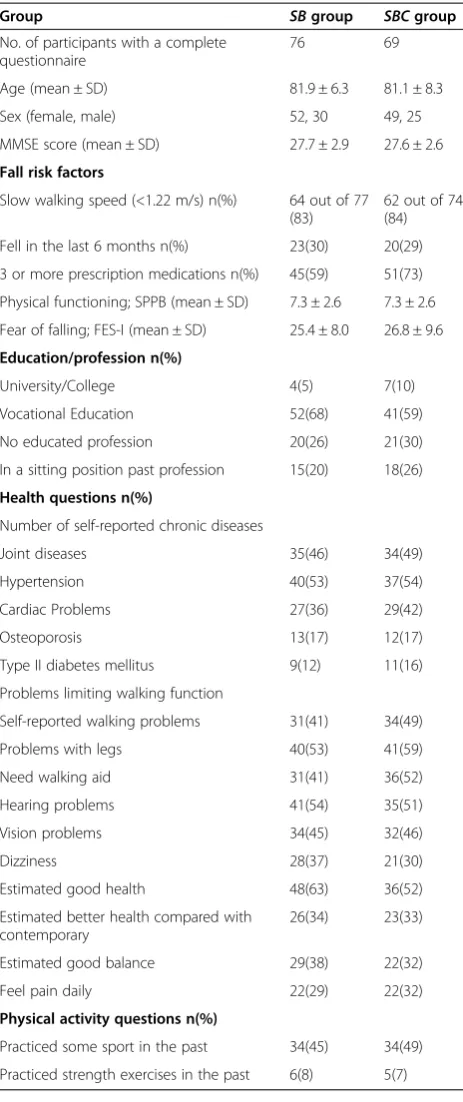
Variables describing the sample are summarised in Table 1. One hundred eighty two participants fulfilled the initial eligibility criteria and were randomly assigned to eitherSB(94) orSBC(88). With the reallocation of 4 participants from SBC to SB the intervention started with 98 Participants in theSB and 84 Participants in the
SBC group. A total of 156 participants completed the intervention (137 subjects living in the homes-for-the-aged and 19 subjects living in the vicinity) resulting in 14.3% attrition (Figure 3). Adherence to strength-balance training was 91.4% for SB (21.9 out of 24 sessions) and 89.5% for SBC (21.5 out of 24 sessions). Average adherence to the cognitive intervention was 85.4% (307.4 out of 360 scheduled minutes).
Primary outcome
Dual task costs of walking
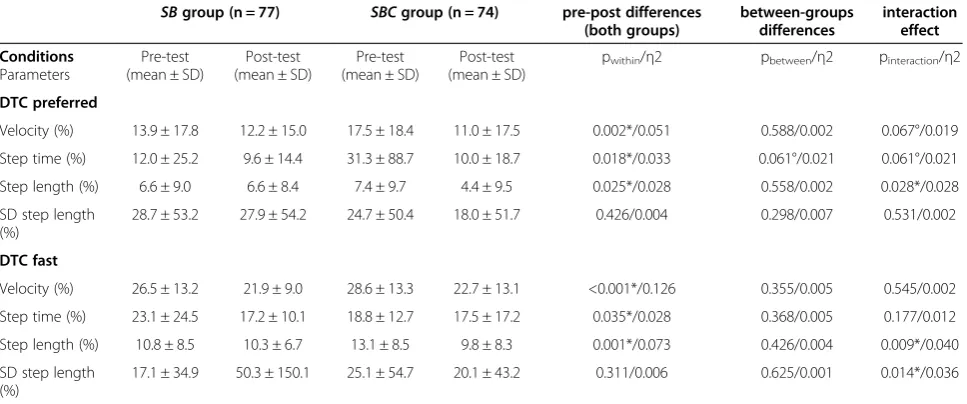
Table 2 demonstrates results of the dual task costs of walking, excluding outliers. The results of sensitivity analyses [93,97] in addition to the primary intention to treat analyses where outliers are included, and the par-ticipants are analysed in the group where they were ini-tially allocated, are reported in an additional file of this manuscript (see Additional file 1).
DTC preferred speed
Analyses of the DTC at preferred walking speed revealed a significant difference from pre- to post-test for vel-ocity, step time and step length (Table 2). There was a significant interaction for step length (F(1,174) = 4.94,
p= 0.028,η2 = 0.028), in favour ofSBC.
DTC fast speed
The DTC at fast walking speed showed significant differ-ences between pre- and post-test, again for velocity, step time and step length (Table 2). There were significant in-teractions in favour of SBC(step length: F(1,166) = 6.14,
p= 0.009, η2 = 0.040; SD of step length: F(1,166) = 6.14,
p= 0.014,η2 = 0.036).
Secondary outcomes
Physical performance measure
The SPPB resulted in a large significant difference over time between pre-test and post-test F(1,177) = 227.6,
p< 0.001, η2 = 0.563: Participants improved their balance, gait initiation, and chair rise performance from pre- (SB: 7.33 ± 2.59 points; SBC: 7.31 ± 2.61 points) to post-test (SB: 9.24 ± 2.30 points,SBC: 9.55 ± 1.90 points). There was no significant main effect of group (p= 0.661) and no significant interaction effect (p= 0.213), suggesting that
SPPB performance and the improvements were similar in both groups at all time-points.
The ETGUG total time showed a significant difference over time: pre- and post-test F(1,175) = 77.8, p< 0.001,
η2 = 0.308, a trend to both a significant effect of group
Table 1 Participants’demographic and baseline characteristics
Group SBgroup SBCgroup
No. of participants with a complete questionnaire
76 69
Age (mean ± SD) 81.9 ± 6.3 81.1 ± 8.3
Sex (female, male) 52, 30 49, 25
MMSE score (mean ± SD) 27.7 ± 2.9 27.6 ± 2.6
Fall risk factors
Slow walking speed (<1.22 m/s) n(%) 64 out of 77 (83)
62 out of 74 (84)
Fell in the last 6 months n(%) 23(30) 20(29)
3 or more prescription medications n(%) 45(59) 51(73)
Physical functioning; SPPB (mean ± SD) 7.3 ± 2.6 7.3 ± 2.6
Fear of falling; FES-I (mean ± SD) 25.4 ± 8.0 26.8 ± 9.6
Education/profession n(%)
University/College 4(5) 7(10)
Vocational Education 52(68) 41(59)
No educated profession 20(26) 21(30)
In a sitting position past profession 15(20) 18(26)
Health questions n(%)
Number of self-reported chronic diseases
Joint diseases 35(46) 34(49)
Hypertension 40(53) 37(54)
Cardiac Problems 27(36) 29(42)
Osteoporosis 13(17) 12(17)
Type II diabetes mellitus 9(12) 11(16)
Problems limiting walking function
Self-reported walking problems 31(41) 34(49)
Problems with legs 40(53) 41(59)
Need walking aid 31(41) 36(52)
Hearing problems 41(54) 35(51)
Vision problems 34(45) 32(46)
Dizziness 28(37) 21(30)
Estimated good health 48(63) 36(52)
Estimated better health compared with contemporary
26(34) 23(33)
Estimated good balance 29(38) 22(32)
Feel pain daily 22(29) 22(32)
Physical activity questions n(%)
Practiced some sport in the past 34(45) 34(49)
(p= 0.052) and an interaction effect (p= 0.054). Partici-pants improved their performance from pre-test (SB: 25.86 ± 17.11s; SBC: 30.53 ± 17.48s) to post-test (SB: 21.10 ± 12.09s; SBC: 24.63 ± 11.82). When analysing the component tasks of the test separately, a significant interaction effect F(1,166) = 9.16, p= 0.003, η2 = 0.052 emerged for ‘gait initiation’. WhileSBCsignificantly im-proved from pre- (2.61 ± 2.18s) to post-test (2.12 ± 1.54s), there was no change forSB(pre-test: 1.89 ± 1.23s; post-test: 2.11 ± 2.22s).
Simple reaction time
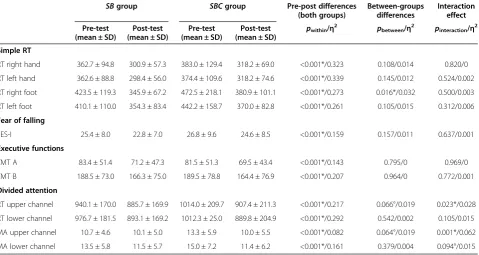
There was a significant effect of training on simple reac-tion times of both hands and feet (Table 3), with both groups showing decreased RT. Between-groups compari-son revealed a significant difference between the groups for the right foot (F(1, 180) = 5.863,p= 0.016,η2= 0.032) and no interaction.
Executive functions
Improvements over time of both parts of the trail mak-ing test (A and B) were significantly affected by trainmak-ing (Table 3). There was no difference between SBand SBC
and no interaction for this parameter.
Divided attention
The reaction times of the test program for divided atten-tion were separately reported for the upper and the lower stimuli channel. There was a significant training related improvement over time in reaction time of both the upper and the lower channel (Table 3), and a signifi-cant interaction for the upper channel (F(1,180) = 5.243,
p= 0.023, η2= 0.028), in favour of SBC. Analysis of the number of missed answers revealed significant improve-ments over time for the groups together and a signifi-cant interaction for the upper channel (F(1,180) = 11.839,p= 0.001,η2= 0.062), in favour ofSBC.
Fear of falling
There was a significant effect of training from pre- to post-test for FES-I (Table 3) for the whole group. No dif-ferences were observed between SB and SBC and there was no interaction.
Falls
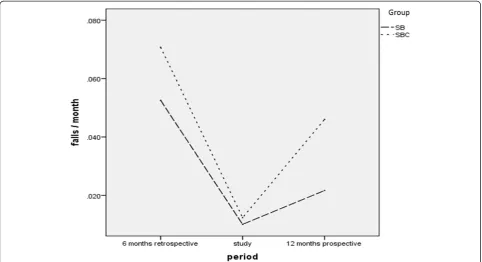
An average of 0.052 ± 0.08 falls per month for SB and 0.071 ± 0.1 falls per month for SBCwere retrospectively (6 months) observable. In the intervention period 0.01 ± 0.047 falls forSB and 0.012 ± 0.073 for SBCoccurred (3 months), and within 12 months following the interven-tion 0.022 ± 0.040 falls forSB and 0.046 ± 0.070 for SBC
occurred (Figure 4). Fall rate was reduced by 81% forSB
and 83% forSBCduring the intervention training period, and by 58% and 46% for SBand SBCrespectively at 12 months follow-up. Effect of time was highly significant from retrospective-to-training F(1,177) = 44.73, p< 0.001,
η2
= 0.202, from retrospectively-to-prospectively F(1,177) = 16.844,p< 0.001,η2= 0.087, and over the whole time frame retrospectively-training-prospectively F(1,177) = 28.733,
p< 0.001,η2= 0.140. There was no significant interaction between the groups for the falls parameter, however, there were significant between groups differences (retrospect-ively-to-prospectively: F(1,177) = 5.569,p= 0.019,η2= 0.031;
Table 2 Dual task costs of walking ofSBandSBCfrom pre- to post-test, between-groups differences and interaction effects
SBgroup (n = 77) SBCgroup (n = 74) pre-post differences
(both groups)
between-groups differences
interaction effect
Conditions
Parameters
Pre-test (mean ± SD)
Post-test (mean ± SD)
Pre-test (mean ± SD)
Post-test (mean ± SD)
pwithin/η2 pbetween/η2 pinteraction/η2
DTC preferred
Velocity (%) 13.9 ± 17.8 12.2 ± 15.0 17.5 ± 18.4 11.0 ± 17.5 0.002*/0.051 0.588/0.002 0.067°/0.019
Step time (%) 12.0 ± 25.2 9.6 ± 14.4 31.3 ± 88.7 10.0 ± 18.7 0.018*/0.033 0.061°/0.021 0.061°/0.021
Step length (%) 6.6 ± 9.0 6.6 ± 8.4 7.4 ± 9.7 4.4 ± 9.5 0.025*/0.028 0.558/0.002 0.028*/0.028
SD step length (%)
28.7 ± 53.2 27.9 ± 54.2 24.7 ± 50.4 18.0 ± 51.7 0.426/0.004 0.298/0.007 0.531/0.002
DTC fast
Velocity (%) 26.5 ± 13.2 21.9 ± 9.0 28.6 ± 13.3 22.7 ± 13.1 <0.001*/0.126 0.355/0.005 0.545/0.002
Step time (%) 23.1 ± 24.5 17.2 ± 10.1 18.8 ± 12.7 17.5 ± 17.2 0.035*/0.028 0.368/0.005 0.177/0.012
Step length (%) 10.8 ± 8.5 10.3 ± 6.7 13.1 ± 8.5 9.8 ± 8.3 0.001*/0.073 0.426/0.004 0.009*/0.040
SD step length (%)
17.1 ± 34.9 50.3 ± 150.1 25.1 ± 54.7 20.1 ± 43.2 0.311/0.006 0.625/0.001 0.014*/0.036
Notes: * = significant within-groups differences pre-post (pwithin≤0.05) & significant interactions of the groups (pinteraction≤0.05); ° = trends to significant
within-groups differences pre-post (0.05≥pwithin≤0.10), calculated with ANOVA.Abbreviations: DTCdual task costs,η2: effect sizeη2 = .01; small effect,η2 = .06;
retrospectively-training-prospectively: F(1,177) = 4.202,
p= 0.042,η2= 0.023).
Discussion
This randomized controlled trial examined whether a twelve-week strength-balance exercise regimen, supple-mented with computerised cognitive training, would lead to greater improvements in dual task costs of gait, in phys-ical and in cognitive performance compared to strength-balance exercise alone. The study also aimed at exploring the effect on fear of falling and fall rate. We expected im-provements in measures of dual task gait, executive func-tions, and in particular–divided attention, mainly in the strength-balance-cognitive group. In addition, we hypoth-esized observing different levels in falls behaviour between the groups. Although both groups attained improvements in physical and cognitive performance, the results suggest positive interaction effects for dual task costs of walking and divided attention, in favour ofSBC. The findings sup-port the notion that it is advantageous to combine physical and cognitive training into clinical practice. The combin-ation seems to have a positive influence on older adults walking abilities under dual task conditions compared to more traditional exercise [67].
Findings from a systematic review demonstrate that a strength and balance exercise regimen is able to preserve or enhance walking abilities [62]. The goal of this study, however, was to optimize walking under dual task
conditions as expressed through minimized DTC of walk-ing. Previous findings suggest that resistance training alone has the potential to improve cognitive functions, and particularly executive functions [30,98]. However, the results of studies with similar groups performing similar strength-balance training, revealed no changes in DTC of walking [99,100]. When training in combination with video games such improvements are believed achievable [101]. We demonstrated in this study an additional effect of our cognitive program in the sense that the DTC of walking were minimized especially in theSBCgroup. The significant interaction effects observed for step length and step length variability favouring SBC extends previous work providing evidence for an association between DTC of step length during fast walking and divided attention [60] into a causal relation. That the group training cogni-tive skills improved on this measure is reasonable since changes in brain structure associate with reduced gait speed that partly results from shorter steps [102]. Inter-ventions focussing on brain health seem, therefore, im-portant when the aim is to improve gait [102]. The assumption that older adults that fall show shorter step lengths and higher variability compared to non-fallers [103] strengthens the importance of the improvements in these walking parameters ofSBC. The results of our study are in line with reviews and intervention studies support-ing the combination of cognitive and motor programs to attain beneficial effects on DTC of walking compared to
Table 3 Pre- and post-test performance forSBandSBC, differences between groups and interaction effects
SBgroup SBCgroup Pre-post differences
(both groups)
Between-groups differences
Interaction effect
Pre-test (mean ± SD)
Post-test (mean ± SD)
Pre-test (mean ± SD)
Post-test (mean ± SD)
pwithin/η2 pbetween/η2 pinteraction/η2
Simple RT
RT right hand 362.7 ± 94.8 300.9 ± 57.3 383.0 ± 129.4 318.2 ± 69.0 <0.001*/0.323 0.108/0.014 0.820/0
RT left hand 362.6 ± 88.8 298.4 ± 56.0 374.4 ± 109.6 318.2 ± 74.6 <0.001*/0.339 0.145/0.012 0.524/0.002
RT right foot 423.5 ± 119.3 345.9 ± 67.2 472.5 ± 218.1 380.9 ± 101.1 <0.001*/0.273 0.016*/0.032 0.500/0.003
RT left foot 410.1 ± 110.0 354.3 ± 83.4 442.2 ± 158.7 370.0 ± 82.8 <0.001*/0.261 0.105/0.015 0.312/0.006
Fear of falling
FES-I 25.4 ± 8.0 22.8 ± 7.0 26.8 ± 9.6 24.6 ± 8.5 <0.001*/0.159 0.157/0.011 0.637/0.001
Executive functions
TMT A 83.4 ± 51.4 71.2 ± 47.3 81.5 ± 51.3 69.5 ± 43.4 <0.001*/0.143 0.795/0 0.969/0
TMT B 188.5 ± 73.0 166.3 ± 75.0 189.5 ± 78.8 164.4 ± 76.9 <0.001*/0.207 0.964/0 0.772/0.001
Divided attention
RT upper channel 940.1 ± 170.0 885.7 ± 169.9 1014.0 ± 209.7 907.4 ± 211.3 <0.001*/0.217 0.066°/0.019 0.023*/0.028
RT lower channel 976.7 ± 181.5 893.1 ± 169.2 1012.3 ± 25.0 889.8 ± 204.9 <0.001*/0.292 0.542/0.002 0.105/0.015
MA upper channel 10.7 ± 4.6 10.1 ± 5.0 13.3 ± 5.9 10.0 ± 5.5 <0.001*/0.082 0.064°/0.019 0.001*/0.062
MA lower channel 13.5 ± 5.8 11.5 ± 5.7 15.0 ± 7.2 11.4 ± 6.2 <0.001*/0.161 0.379/0.004 0.094°/0.015
Notes: *significant within-groups differences pre-post (pwithin≤0.05), significant between-groups differences (pbetween≤0.05) & significant interactions of the groups
(pinteraction≤0.05); °trends to significant within-groups differences pre-post (0.05≥pwithin≤0.10) & trends to significant interactions of the groups
more traditional interventions [46,67,101]. With a thrice-weekly ten-minute cognitive training focussing on alertness, selective and divided attention, combined with strength-balance exercises, DTC of walking can be minimized.
We found a significant improvement in SPPB scores within both groups reflecting enhanced lower extremity function and walking ability [104]. On average, a person that reaches less than 10 points on the SPPB is almost 3.5 times more susceptible to suffer from mobility disability than a person scoring the maximum of 12 points [104]. At the beginning of training both the SB and SBC groups reached a mean score of less than 7.5 points, however, they both increased towards 9.3 resp. 9.5 points. Improved gait initiation was only observed for SBC. The fact that this intervention impacted on gait initiation is important. Gait initiation is frequently repeated during daily activities, leading to accidental falls during the step initiation phase in people with deficits in balance control [105] and relates to the quality of fronto-striatal brain connections [106]. Stable and efficient mechanisms of the central nervous system (CNS) are required for the control of posture dur-ing gait initiation. These mechanisms are complex and re-quire efficient peripheral sensory detection and afferent nerve conduction, followed by central neural processing and efferent nerve conduction [107]. Within older adults, there seems to be a loss of efficiency in these mechanisms leading to falls during gait initiation [108]. It can be
hypothesized that by the use of the computerised cog-nitive training acquired skills led to transfer effects in gait initiation.
The link between cognitive functioning, gait, and the po-tential for falls was previously established [3]. Specifically, poor EF and attention control, one of the core EFs [109], seemed to be related to fall risk and mortality [51,52,110]. Although both our groups were able to improve cognitive functioning as expressed through improvements in reac-tion time as well as EF, only the group receiving the add-itional computerized cognitive intervention improved in divided attention skills. Thus, in line with other authors, we demonstrated that falls prevention programs have a positive impact on EF [111], however, the findings also support the assumption that specificity of training ap-plies to these specific EFs. EFs are trainable by repeated practice and with a progressive exercise intensity design at any age [109]. Where the physical training group im-proved more global measures of cognitive functioning, only the combined training group exhibited training specific improvements.
probable cognitive deteriorations [112]. Increased per-formance in selective attention and executive cognitive function for example–achieved through resistance train-ing - has been related to higher walktrain-ing velocity [98], which in turn relates to improved EFs [113]. Reductions in walking velocity, in general, correlate with declined cogni-tive factors (e.g. attention and psychomotor speed), falls, and mortality [114-117].
The clinical relevance of improved divided attention might be influencing falls rate in elderly because this function was previously shown to be related to gait and to falls [60]. Our findings, however, reveal no additional effect of training this specific cognitive aspect when it comes to falls. Both training groups improved on the falls parameter with similar magnitudes. Fall rate was re-duced in both groups by more than 80% during the intervention period, and by more than 40% during the following 12 months. These results are similar or super-ior to other interventions incorporating strength and balance exercises [118] and present a clinically relevant reduction in fall risk. Furthermore, our findings confirm the findings of a systematic review including 54 rando-mised controlled trials showing that exercise programs that combine strength and balance training of sufficient quality can reduce falls with 38% [119]. Our findings compare favourable to other studies that added training components in the sense that the addition of a cognitive component did not lead to a lower effect on falls rate [119]. Unsurprisingly, the lowest fall rate was observed during the study, when compliance was warranted, con-sidering the link between executive functions, gait and falls, and the assumption that poor treatment adherence is related to poor EFs [109]. The fall rate was higher after study termination, however, still significantly lower than prior to study commencement.
Although not more effective in terms of fall events ob-served, applying a combination of cognitive-motor train-ing might be advantageous to move safer in challengtrain-ing environments [46,120] and, therefore, reduces fall risk. We assume this given the additional positive effect of the cognitive intervention on divided attention. To react adequately under circumstances where attention is di-vided is an important requirement in most activities of daily life. Therefore, with the focus on physical and cog-nitive improvements in complex situations and the exe-cution of attention-demanding tasks, strength-balance training should be combined with cognitive training.
The results of the sensitivity analysis for DTC of pre-ferred walking were not robust to the exclusion of outliers and changed when they were excluded. The primary ana-lysis, shown in the Additional file 1, revealed a statistical interaction effect for DTC of velocity favouring SBC, which was not significant in the analysis where outliers were excluded. The non-significant interaction for SD of
step length in our analysis with the outliers included dem-onstrated a trend to statistical significance in the primary analysis. The differences in mean values and standard de-viations of the groups observable between the analyses im-plies that the results of the primary analysis were affected by the outliers [93]. Removing these participants from the analysis was legitimate to avoid bias and to minimize ran-dom error [94,121].
In this trial, the dual task costs of walking were assessed. Not, however, the cognitive dual task costs while walking. To assess the possible effects of our program on cognitive functions we resorted to specific cognitive tests. In our trial the main interest was the effect of an attention-demanding task on gait performance. Participants were instructed not to prioritize one task (walking) over the other (calculating) but to try and perform both as good as possible at the same time. The ability of counting backwards was not used as an outcome measure to determine the effect of training on cognitive performance, thus, causing the reliability of this instruction for reproduction purposes being of lesser importance for our study. The only reason for using the counting task was to disturb the gait pattern of our sub-jects and, by doing that, determine the dual task costs of walking. Allowing both gait and cognitive task perform-ance to vary has previously been shown to better represent the dynamics of daily living tasks of older adults [122,123] and is, furthermore, a reliable procedure to determine dual task costs of walking even in older adults with mild cogni-tive impairments [124].
exercise interventions reported cognitive benefits to be lar-ger with the combined cognitive and physical training par-adigms [128,129].
Limitations
This study has several limitations. As already discussed the small-to-moderate effect sizes should be considered when interpreting data. The small magnitudes of the interaction effects give rise to possible bias in our re-search design [130]. We treated the dropouts of this study as a part of the treatment group to which they were assigned even if they did not receive the full inter-vention. Intention to treat is a recommended approach to several types of non-adherence to the study protocol [131], able to reduce the potential drop out bias effect [132]. We replaced missing data with the mean values of the groups, thus allowing complete case analysis. A drawback of this approach is reduced variability and weakening of covariance and correlation estimates in the data. We excluded outliers with a trimming method, which is a method applied when good reasons to believe that the subject(s) with the extreme value(s) was/were not from the same population [94] exist. The intention to treat analysis was not robust for some values of gait analysis with the outliers included. In particular the re-sults for the SD for variability data (expressed as SD of step length) were different between the sensitivity ana-lyses. A potential reason for outliers in the datasets is that the participants differed in baseline characteristics. One of our inclusion criteria was“able to walk 20 meters with or without walking aid”, thus, all people able to walk were included, independent of their walking char-acteristics (e.g. walking velocity or instability).
To move 4 participants from SBCtoSB was based on a similar consideration in order to avoid a random error, and has, potentially, the same origin [121]: We only reg-istered “vision problems” in the baseline demographics of the participants. The ability to follow a game on a computer screen was not mentioned as inclusion cri-teria, which might be considered for future studies.
Furthermore, the study contained the training of three different dimensions of attention as cognitive training. It warrants further research to examine which program/s was/were the reason for the examined results. An obvi-ous limitation was that the test for divided attention was too difficult for several participants, leading to floor fects and multiple losses for the test. The interaction ef-fect for measures of divided attention should also be interpreted cautiously, since magnitude of treatment dif-ferences is small-to-moderate.
Conclusions
Both strength-balance and strength-balance-cognitive training enhanced physical performance, reaction time,
executive functions, and reduced fall rate and fear of falling substantially. Only strength-balance-cognitive train-ing reduced dual task costs of walktrain-ing and improved gait initiation, and divided attention was merely improved by the cognitive-motor group. The larger improvements in divided attention and dual task walking highlight that an exercise program aiming at improving tasks that require attentional control should include a cognitive challenging element. This study may constitute a reference for further studies in the topic of fall prevention in older adults with the aim to improve physical performance under dual task conditions, and to reduce falls. Future studies are advised to compare different types and modes of exercise where different specific perceptual and cognitive demands are to be considered in the research design; e.g. complementary motor and cognitive training paradigms against integrative motor-cognitive training approaches.
Additional file
Additional file 1:Sensitivity analysis for dual task costs of walking.
Dual task costs of walking ofSBandSBCfrom pre- to post-test, between-groups differences and interaction effects for the intention to treat analysis. All outliers are included. The participants that were reallocated from theSBCto theSBgroup (due to vision problems) are analysed as participants fromSBCgroup (as initially allocated).
Competing interests
The authors declare that they have no competing interests.
Authors’contributions
EVHR participated in the conception and the design, drafted the manuscript, participated in the critical revision of the manuscript for its content and approved the final version. EDDB participated in the conception and the design, drafted the manuscript, participated in the critical revision of the manuscript for its content and approved the final version. Both authors read and approved the final manuscript.
Acknowledgements
We gratefully acknowledge the support from the directors of the homes-for-the-aged who gave us the opportunity to perform the intervention in their facility. We acknowledge Rolf van de Langenberg, PhD, for statistical advice.
Author details
1Department of Health Sciences and Technology, Institute of Human
Movement Sciences and Sport, ETH Zürich, Wolfgang-Pauli-Str. 27, 8093 Zürich, Switzerland.2Department of Epidemiology, CAPHRI School for Public
Health and Primary Care, PO Box 616, 6200, MD Maastricht, Netherlands.
3Department of Epidemiology, Centre for Evidence Based Physiotherapy, PO
Box 616, 6200, MD Maastricht, Netherlands.
Received: 19 August 2014 Accepted: 9 December 2014 Published: 15 December 2014
References
1. Alexander NB, Goldberg A:Gait disorders: search for multiple causes.
Cleve Clin J Med2005,72(7):586. 589-590, 592-584 passim.
2. Judge JO, Schechtman K, Cress E:The relationship between physical performance measures and independence in instrumental activities of daily living.J Am Geriatr Soc1996,44(11):1332–1341.
3. Alexander NB, Hausdorff JM:Linking thinking, walking, and falling.
J Gerontol a-Biol2008,63(12):1325–1328.
5. Roubenoff R:Sarcopenia and its implications for the elderly.Eur J Clin Nutr2000,54(Suppl 3):S40–S47.
6. Fried LP, Kronmal RA, Newman AB, Bild DE, Mittelmark MB, Polak JF, Robbins JA, Gardin JM:Risk factors for 5-year mortality in older adults: the cardiovascular health study.JAMA1998,279(8):585–592.
7. Wilson RS, Schneider JA, Beckett LA, Evans DA, Bennett DA:Progression of gait disorder and rigidity and risk of death in older persons.Neurology
2002,58(12):1815–1819.
8. Fried LP, Guralnik JM:Disability in older adults: evidence regarding significance, etiology, and risk.J Am Geriatr Soc1997,45(1):92–100. 9. Campbell AJ, Borrie MJ, Spears GF, Jackson SL, Brown JS, Fitzgerald JL:
Circumstances and consequences of falls experienced by a community population 70 years and over during a prospective study.Age Ageing
1990,19(2):136–141.
10. Berg WP, Alessio HM, Mills EM, Tong C:Circumstances and consequences of falls in independent community-dwelling older adults.Age Ageing
1997,26(4):261–268.
11. American College of Sports M, Chodzko-Zajko WJ, Proctor DN, Fiatarone Singh MA, Minson CT, Nigg CR, Salem GJ, Skinner JS:American college of sports medicine position stand. Exercise and physical activity for older adults.Med Sci Sports Exerc2009,41(7):1510–1530.
12. Hurley BF, Roth SM:Strength training in the elderly: effects on risk factors for age-related diseases.Sports Med2000,30(4):249–268.
13. Haskell WL, Lee IM, Pate RR, Powell KE, Blair SN, Franklin BA, Macera CA, Heath GW, Thompson PD, Bauman A:Physical activity and public health: updated recommendation for adults from the American college of sports medicine and the American heart association.Med Sci Sports Exerc
2007,39(8):1423–1434.
14. Hunter GR, McCarthy JP, Bamman MM:Effects of resistance training on older adults.Sports Med2004,34(5):329–348.
15. Johnston AP, De Lisio M, Parise G:Resistance training, sarcopenia, and the mitochondrial theory of aging.Appl Physiol Nutr Metab2008,33(1):191–199. 16. Kraemer WJ, Ratamess NA, French DN:Resistance training for health and
performance.Curr Sports Med Rep2002,1(3):165–171.
17. van Het Reve E, Silveira P, Daniel F, Casati F, de Bruin ED:Tablet-based strength-balance training to motivate and improve adherence to exercise in independently living older people: part 2 of a phase II preclinical exploratory trial.J Med Internet Res2014,16(6):e159. 18. Weuve J, Kang JH, Manson JE, Breteler MMB, Ware JH, Grodstein F:Physical
activity, including walking, and cognitive function in older women.
Jama-J Am Med Assoc2004,292(12):1454–1461.
19. Ball K, Berch DB, Helmers KF, Jobe JB, Leveck MD, Marsiske M, Morris JN, Rebok GW, Smith DM, Tennstedt SL, Unverzagt FW, Willis SL, Advanced Cognitive Training for I, Vital Elderly Study G:Effects of cognitive training interventions with older adults: a randomized controlled trial.JAMA2002, 288(18):2271–2281.
20. Willis SL, Tennstedt SL, Marsiske M, Ball K, Elias J, Koepke KM, Morris JN, Rebok GW, Unverzagt FW, Stoddard AM, Wright E, Group AS:Long-term effects of cognitive training on everyday functional outcomes in older adults.JAMA2006,296(23):2805–2814.
21. Peretz C, Korczyn AD, Shatil E, Aharonson V, Birnboim S, Giladi N: Computer-based, personalized cognitive training versus classical computer games: a randomized double-blind prospective trial of cognitive stimulation.Neuroepidemiology2011,36(2):91–99.
22. Salthouse TA:Mental exercise and mental aging evaluating the validity of the "Use It or Lose It" hypothesis.Perspect Psychol Sci2006,1(1):68–87. 23. Colcombe S, Kramer AF:Fitness effects on the cognitive function of older
adults: a meta-analytic study.Psychol Sci2003,14(2):125–130. 24. Arcoverde C, Deslandes A, Rangel A, Rangel A, Pavao R, Nigri F, Engelhardt E,
Laks J:Role of physical activity on the maintenance of cognition and activities of daily living in elderly with Alzheimer's disease.Arq
Neuro-Psiquiat2008,66(2B):323–327.
25. Yaffe K, Barnes D, Nevitt M, Lui LY, Covinsky K:A prospective study of physical activity and cognitive decline in elderly women: women who walk.Arch Intern Med2001,161(14):1703–1708.
26. Colcombe SJ, Erickson KI, Scalf PE, Kim JS, Prakash R, McAuley E, Elavsky S, Marquez DX, Hu L, Kramer AF:Aerobic exercise training increases brain volume in aging humans.J Gerontol A: Biol Med Sci2006,
61(11):1166–1170.
27. Kramer AF, Erickson KI:Effects of physical activity on cognition, well-being, and brain: human interventions.Alzheimers Dement2007,3(2 Suppl):S45–S51.
28. Liu-Ambrose T, Donaldson MG:Exercise and cognition in older adults: is there a role for resistance training programmes?Br J Sports Med2009, 43(1):25–27.
29. Cotman CW, Berchtold NC:Exercise: a behavioral intervention to enhance brain health and plasticity.Trends Neurosci2002,25(6):295–301. 30. Liu-Ambrose T, Nagamatsu LS, Voss MW, Khan KM, Handy TC:Resistance
training and functional plasticity of the aging brain: a 12-month randomized controlled trial.Neurobiol Aging2012,33(8):1690–1698. 31. Linde K, Alfermann D:Single versus combined cognitive and physical activity effects on fluid cognitive abilities of healthy older adults: a 4-month randomized controlled trial with follow-Up.J Aging Phys Act2014, 22(3):302-313
32. Cheng Y, Wu W, Feng W, Wang J, Chen Y, Shen Y, Li Q, Zhang X, Li C:The effects of multi-domain versus single-domain cognitive training in non-demented older people: a randomized controlled trial.BMC Med
2012,10:30.
33. Bherer L, Kramer AF, Peterson MS:Transfer effects in task-set cost and dual-task cost after dual-task training in older and younger adults: further evidence for cognitive plasticity in attentional control in late adulthood.Exp Aging Res2008,34(3):188–219.
34. Marmeleira J:An examination of the mechanisms underlying the effects of physical activity on brain and cognition.Eur Rev Aging Phys A2013, 10(2):83–94.
35. Colcombe SJ, Kramer AF, Erickson KI, Scalf P, McAuley E, Cohen NJ, Webb A, Jerome GJ, Marquez DX, Elavsky S:Cardiovascular fitness, cortical plasticity, and aging.Proc Natl Acad Sci U S A2004,101(9):3316–3321. 36. Voss MW, Nagamatsu LS, Liu-Ambrose T, Kramer AF:Exercise, brain, and
cognition across the life span.J Appl Physiol2011,111(5):1505–1513. 37. Hall CD, Smith AL, Keele SW:The impact of aerobic activity on cognitive
function in older adults: a new synthesis based on the concept of executive control.Eur J Cogn Psychol2001,13(1–2):279–300.
38. Schaefer S, Huxhold O, Lindenberger U:Healthy mind in healthy body? A review of sensorimotor-cognitive interdependencies in old age.Eur Rev
Aging Phys Act2006,3:45–54.
39. Laessoe U, Hoeck HC, Simonsen O, Voigt M:Residual attentional capacity amongst young and elderly during dual and triple task walking.Hum
Mov Sci2008,27(3):496–512.
40. Giladi N, Yogev-Seligmann G, Hausdorff JM:The role of executive function and attention in gait.Movement Disord2008,23(3):329–342.
41. Hollman JH, Kovash FM, Kubik JJ, Linbo RA:Age-related differences in spatiotemporal markers of gait stability during dual task walking.
Gait Posture2007,26(1):113–119.
42. Sheridan PL, Hausdorff JM:The role of higher-level cognitive function in gait: executive dysfunction contributes to fall risk in Alzheimer's disease.
Dement Geriatr Cogn Disord2007,24(2):125–137.
43. Eriksson S, Gustafson Y, Lundin-Olsson L:Risk factors for falls in people with and without a diagnose of dementia living in residential care facilities: a prospective study.Arch Gerontol Geriat2008,46(3):293–306. 44. van Iersel MB, Verbeek ALM, Bloem BR, Munneke M, Esselink RAJ, Rikkert
MGMO:Frail elderly patients with dementia go too fast.J Neurol Neurosur Ps2006,77(7):874-876.
45. Rapport LJ, Hanks RA, Millis SR, Deshpande SA:Executive functioning and predictors of falls in the rehabilitation setting.Arch Phys Med Rehabil
1998,79(6):629–633.
46. Segev-Jacubovski O, Herman T, Yogev-Seligmann G, Mirelman A, Giladi N, Hausdorff JM:The interplay between gait, falls and cognition: can cognitive therapy reduce fall risk?Expert Rev Neurother2011, 11(7):1057–1075.
47. Buracchio TJ, Mattek NC, Dodge HH, Hayes TL, Pavel M, Howieson DB, Kaye JA:Executive function predicts risk of falls in older adults without balance impairment.BMC Geriatr2011,11:74.
48. Hausdorff JM, Doniger GM, Springer S, Yogev G, Giladi N, Simon ES:A common cognitive profile in elderly fallers and in patients with Parkinson's disease: the prominence of impaired executive function and attention.Exp Aging Res2006,32(4):411–429.
49. van Schoor NM, Smit JH, Pluijm SMF, Jonker C, Lips P:Different cognitive functions in relation to falls among older persons - immediate memory as an independent risk factor for falls.J Clin Epidemiol2002,55(9):855–862. 50. Atkinson HH, Rosano C, Simonsick EM, Williamson JD, Davis C, Ambrosius
comorbidities: the health, aging and body composition study.J Gerontol
a-Biol2007,62(8):844–850.
51. Herman T, Mirelman A, Giladi N, Schweiger A, Hausdorff JM:Executive control deficits as a prodrome to falls in healthy older adults: a prospective study linking thinking, walking, and falling.J Gerontol a-Biol
2010,65(10):1086–1092.
52. Johnson JK, Lui LY, Yaffe K:Executive function, more than global cognition, predicts functional decline and mortality in elderly women.
J Gerontol a-Biol2007,62(10):1134–1141.
53. Hausdorff JM:Gait variability: methods, modeling and meaning.
J Neuroeng Rehabil2005,2:19.
54. Rosso AL, Olson Hunt MJ, Yang M, Brach JS, Harris TB, Newman AB, Satterfield S, Studenski SA, Yaffe K, Aizenstein HJ, Rosano C, Health ABCs: Higher step length variability indicates lower gray matter integrity of selected regions in older adults.Gait Posture2014,40(1):225–230. 55. Maki BE:Gait changes in older adults: predictors of falls or indicators of
fear.J Am Geriatr Soc1997,45(3):313–320.
56. Hausdorff JM, Rios DA, Edelberg HK:Gait variability and fall risk in community-living older adults: a 1-year prospective study.Arch Phys Med
Rehabil2001,82(8):1050–1056.
57. Perry RJ, Hodges JR:Attention and executive deficits in Alzheimer's disease. A critical review.Brain1999,122(Pt 3):383–404.
58. Woollacott M, Shumway-Cook A:Attention and the control of posture and gait: a review of an emerging area of research.Gait Posture2002, 16(1):1–14.
59. Ponds RWHM, Brouwer WH, Vanwolffelaar PC:Age-differences in divided attention in a simulated driving task.J Gerontol1988,43(6):151–P156. 60. de Bruin ED, Schmidt A:Walking behaviour of healthy elderly: attention
should be paid.Behav Brain Funct2010,6:59.
61. Mian OS, Baltzopoulos V, Minetti AE, Narici MV:The impact of physical training on locomotor function in older people.Sports Med2007,37(8):683–701. 62. Sherrington C, Whitney JC, Lord SR, Herbert RD, Cumming RG, Close JCT:
Effective exercise for the prevention of falls: a systematic review and meta-analysis.J Am Geriatr Soc2008,56(12):2234–2243.
63. Paterson DH, Jones GR, Rice CL:Ageing and physical activity: evidence to develop exercise recommendations for older adults.Can J Public Health
2007,98(Suppl 2):S69–S108.
64. Skelton DA, Beyer N:Exercise and injury prevention in older people.
Scand J Med Sci Sports2003,13(1):77–85.
65. Verghese J, Mahoney J, Ambrose AF, Wang CL, Holtzer R:Effect of cognitive remediation on gait in sedentary seniors.J Gerontol a-Biol2010, 65(12):1338–1343.
66. Smith-Ray RL, Hughes SL, Prohaska TR, Little DM, Jurivich DA, Hedeker D: Impact of cognitive training on balance and gait in older adults.
J Gerontol Ser B Psychol Sci Soc Sci2013, doi:10.1093/geronb/gbt097.
67. Pichierri G, Wolf P, Murer K, de Bruin ED:Cognitive and cognitive-motor interventions affecting physical functioning: a systematic review.
BMC Geriatr2011, 11–29.
68. de Bruin ED, van Het Reve E, Murer K:A randomized controlled pilot study assessing the feasibility of combined motor-cognitive training and its effect on gait characteristics in the elderly.Clin Rehabil2013, 27(3):215-225
69. Schulz KF, Altman DG, Moher D, Group C:CONSORT 2010 Statement: updated guidelines for reporting parallel group randomised trials.
Trials2010,11:32.
70. Schulz KF, Grimes DA:Generation of allocation sequences in randomised trials: chance, not choice.Lancet2002,359(9305):515–519.
71. Shin S, Valentine RJ, Evans EM, Sosnoff JJ:Lower extremity muscle quality and gait variability in older adults.Age Ageing2012,41(5):595–599. 72. de Bruin ED, Murer K:Effect of additional functional exercises on balance
in elderly people.Clin Rehabil2007,21(2):112–121.
73. Kraemer WJ, Adams K, Cafarelli E, Dudley GA, Dooly C, Feigenbaum MS, Fleck SJ, Franklin B, Fry AC, Hoffman JR, Newton RU, Potteiger J, Stone MH, Ratamess NA, Triplett-McBride T, American College of Sports M:American college of sports medicine position stand. Progression models in resistance training for healthy adults.Med Sci Sports Exerc2002, 34(2):364–380.
74. Cress ME, Buchner DM, Prohaska T, Rimmer J, Brown M, Macera C, Dipietro L, Chodzko-Zajko W:Best practices for physical activity programs and behavior counseling in older adult populations.J Aging Phys Act2005, 13(1):61–74.
75. Borg G:Borg's perceived exertion and pain scales, champaign, IL.Human
Kinetics1998, ISBN-10: 0880116234 ISBN-13: 978-0880116237.
76. Madureira MM, Takayama L, Gallinaro AL, Caparbo VF, Costa RA, Pereira RM: Balance training program is highly effective in improving functional status and reducing the risk of falls in elderly women with osteoporosis: a randomized controlled trial.Osteoporosis international : a journal established as result of cooperation between the European Foundation for
Osteoporosis and the National Osteoporosis Foundation of the USA2007,
18(4):419–425.
77. Schuhfried:CogniPlus - Training cognitive functions.2014, Retreived from http://www.schuhfried.at/fileadmin/content/2_Kataloge_en/CogniPlus_en_ Katalog_SCHUHFRIED_3.2.pdf.
78. Thimm M, Fink GR, Kust J, Karbe H, Willmes K, Sturm W:Recovery from hemineglect: differential neurobiological effects of optokinetic stimulation and alertness training.Cortex2009,45(7):850–862. 79. McDonough AL, Batavia M, Chen FC, Kwon S, Ziai J:The validity and
reliability of the GAITRite system's measurements: a preliminary evaluation.Arch Phys Med Rehab2001,82(3):419–425.
80. Mcdowd JM:The effects of age and extended practice on divided attention performance.J Gerontol1986,41(6):764–769.
81. Podsiadlo D, Richardson S:The timed "Up & Go": a test of basic functional mobility for frail elderly persons.J Am Geriatr Soc1991,39(2):142–148. 82. Guralnik JM, Simonsick EM, Ferrucci L, Glynn RJ, Berkman LF, Blazer DG, Scherr PA, Wallace RB:A short physical performance battery assessing lower-extremity function - association with self-reported disability and prediction of mortality and nursing-home admission.J Gerontol1994, 49(2):M85–M94.
83. Guralnik JM, Ferrucci L, Simonsick EM, Salive ME, Wallace RB:Lower-extremity function in persons over the age of 70 years as a predictor of subsequent disability.New Engl J Med1995,332(9):556–561.
84. Wall JC, Bell C, Campbell S, Davis J:The timed get-up-and-go test revisited: measurement of the component tasks.J Rehabil Res Dev2000,37(1):109–113. 85. Lord SR, Menz HB, Tiedemann A:A physiological profile approach to falls
risk assessment and prevention.Phys Ther2003,83(3):237–252. 86. Strauss E, Sherman EMS, Spreen O:A Compendium of Neurological Tests.3rd
edition. ; 1993.
87. Schuhfried: Vienna Test System.2013, Retrieved from http://www. schuhfried.com/fileadmin/content/eKataloge_2013/SCHUHFRIED_WTS-Hauptkatalog_en_2013/index.html.
88. Yardley L, Beyer N, Hauer K, Kempen G, Piot-Ziegler C, Todd C:Development and initial validation of the falls efficacy scale-international (FES-I).Age
Ageing2005,34(6):614–619.
89. Lamb SE, Jorstad-Stein EC, Hauer K, Becker C, PFNE:Development of a common outcome data set for fall injury prevention trials: the prevention of falls network europe consensus.J Am Geriatr Soc2005,53(9):1618–1622. 90. Moher D, Hopewell S, Schulz KF, Montori V, Gotzsche PC, Devereaux PJ,
Elbourne D, Egger M, Altman DG, Consolidated Standards of Reporting Trials G:CONSORT 2010 explanation and elaboration: updated guidelines for reporting parallel group randomised trials.J Clin Epidemiol2010, 63(8):e1–e37.
91. Hollis S, Campbell F:What is meant by intention to treat analysis? Survey of published randomised controlled trials.BMJ1999,319(7211):670–674. 92. Cohen J:Statistical Power Analysis for the Behavioural Sciences. 2nd Edition.
Lawrence Erlbaum Associates. ISBN-13: 978-0805802832.1988.
93. Thabane L, Mbuagbaw L, Zhang S, Samaan Z, Marcucci M, Ye C, Thabane M, Giangregorio L, Dennis B, Kosa D, Borg Debono V, Dillenburg R, Fruci V, Bawor M, Lee J, Wells G, Goldsmith CH:A tutorial on sensitivity analyses in clinical trials: the what, why, when and how.BMC Med Res Methodol2013, 13:92.
94. Field AP, Miles JNV, Field ZC:Discovering Statistics Using R.London: SAGE Publications Ltd; 2012.
95. Field A:Discovering Statistics Using SPSS.Third ed 2009th edition. Los Angeles: Sage; 2009.
96. Nyman SR, Victor CR:Older people's participation in and engagement with falls prevention interventions in community settings: an augment to the Cochrane systematic review.Age Ageing2012,41(1):16–23. 97. Morris TP, Kahan BC, White IR:Choosing sensitivity analyses for
randomised trials: principles.BMC Med Res Methodol2014,14:11. 98. Liu-Ambrose T, Nagamatsu LS, Graf P, Beattie BL, Ashe MC, Handy TC:
99. Hartmann A, Murer K, de Bie RA, de Bruin ED:The effect of a training program combined with augmented afferent feedback from the feet using shoe insoles on gait performance and muscle power in older adults: a randomised controlled trial.Disabil Rehabil2010,32(9):755–764. 100. Hartmann A, Murer K, de Bie RA, de Bruin ED:The effect of a foot
gymnastic exercise programme on gait performance in older adults: a randomised controlled trial.Disabil Rehabil2009,31(25):2101–2110. 101. Pichierri G, Murer K, de Bruin ED:A cognitive-motor intervention using a
dance video game to enhance foot placement accuracy and gait under dual task conditions in older adults: a randomized controlled trial.
BMC Geriatr2012,12:74.
102. Callisaya ML, Beare R, Phan TG, Blizzard L, Thrift AG, Chen J, Srikanth VK: Brain structural change and gait decline: a longitudinal population-based study.J Am Geriatr Soc2013,61(7):1074–1079.
103. Mortaza N, Abu Osman NA, Mehdikhani M:Are the spatio-temporal parameters of gait capable of distinguishing a faller from a non-faller elderly?Eur J Phys Rehabil Med2014,50(6):677-691.
104. Vasunilashorn S, Coppin AK, Patel KV, Lauretani F, Ferrucci L, Bandinelli S, Guralnik JM:Use of the short physical performance battery score to predict loss of ability to walk 400 meters: analysis from the InCHIANTI study.J Gerontol a-Biol2009,64(2):223–229.
105. Uemura K, Yamada M, Nagai K, Tanaka B, Mori S, Ichihashi N:Fear of falling is associated with prolonged anticipatory postural adjustment during gait initiation under dual-task conditions in older adults.Gait Posture
2012,35(2):282–286.
106. Scherder E, Eggermont L, Visscher C, Scheltens P, Swaab D:Understanding higher level gait disturbances in mild dementia in order to improve rehabilitation: 'last in-first out'.Neurosci Biobehav Rev2011,35(3):699–714. 107. Goble DJ, Coxon JP, Van Impe A, Geurts M, Doumas M, Wenderoth N,
Swinnen SP:Brain activity during ankle proprioceptive stimulation predicts balance performance in young and older adults.J Neurosci2011, 31(45):16344–16352.
108. Polcyn AF, Lipsitz LA, Kerrigan DC, Collins JJ:Age-related changes in the initiation of gait: degradation of central mechanisms for momentum generation.Arch Phys Med Rehabil1998,79(12):1582–1589.
109. Diamond A:Executive functions.Annu Rev Psychol2013,64:135–168. 110. Mirelman A, Herman T, Brozgol M, Dorfman M, Sprecher E, Schweiger A,
Giladi N, Hausdorff JM:Executive function and falls in older adults: new findings from a five-year prospective study link fall risk to cognition.Plos One2012,7(6):e40297.
111. Liu-Ambrose T, Donaldson MG, Ahamed Y, Graf P, Cook WL, Close J, Lord SR, Khan KM:Otago home-based strength and balance retraining improves executive functioning in older fallers: a randomized controlled trial.J Am Geriatr Soc2008,56(10):1821–1830.
112. Nagamatsu LS, Handy TC, Hsu CL, Voss M, Liu-Ambrose T:Resistance training promotes cognitive and functional brain plasticity in seniors with probable mild cognitive impairment.Arch Intern Med2012, 172(8):666–668.
113. McGough EL, Kelly VE, Logsdon RG, McCurry SM, Cochrane BB, Engel JM, Teri L:Associations between physical performance and executive function in older adults with mild cognitive impairment: gait speed and the timed "up & go" test.Phys Ther2011,91(8):1198–1207.
114. Hardy SE, Perera S, Roumani YF, Chandler JM, Studenski SA:Improvement in usual gait speed predicts better survival in older adults.J Am Geriatr Soc2007,55(11):1727–1734.
115. Studenski S, Perera S, Patel K, Rosano C, Faulkner K, Inzitari M, Brach J, Chandler J, Cawthon P, Connor EB, Nevitt M, Visser M, Kritchevsky S, Badinelli S, Harris T, Newman AB, Cauley J, Ferrucci L, Guralnik J:Gait speed and survival in older adults.JAMA2011,305(1):50–58.
116. Soumare A, Tavernier B, Alperovitch A, Tzourio C, Elbaz A:A cross-sectional and longitudinal study of the relationship between walking speed and cognitive function in community-dwelling elderly people.J Gerontol A:
Biol Med Sci2009,64(10):1058–1065.
117. Taniguchi Y, Yoshida H, Fujiwara Y, Motohashi Y, Shinkai S:A prospective study of gait performance and subsequent cognitive decline in a general population of older Japanese.J Gerontol A: Biol Med Sci2012, 67(7):796–803.
118. Clemson L, Singh MAF, Bundy A, Cumming RG, Manollaras K, O'Loughlin P, Black D:Integration of balance and strength training into daily life activity to reduce rate of falls in older people (the LiFE study): randomised parallel trial.Brit Med J2012,345.
119. Sherrington C, Tiedemann A, Fairhall N, Close JC, Lord SR:Exercise to prevent falls in older adults: an updated meta-analysis and best practice recommendations.N S W Public Health Bull2011,22(3–4):78–83. 120. Pichierri G, Wolf P, Murer K, de Bruin ED:Cognitive and cognitive-motor
interventions affecting physical functioning: a systematic review.
BMC Geriatr2011,11:29.
121. Soares I, Carneiro AV:Intention-to-treat analysis in clinical trials: principles and practical importance.Rev Port Cardiol2002,21(10):1191–1198. 122. Verghese J, Kuslansky G, Holtzer R, Katz M, Xue X, Buschke H, Pahor M:
Walking while talking: effect of task prioritization in the elderly.Arch Phys
Med Rehabil2007,88(1):50–53.
123. Yogev-Seligmann G, Hausdorff JM, Giladi N:The role of executive function and attention in gait.Mov Disord2008,23(3):329–342. quiz 472. 124. Montero-Odasso M, Casas A, Hansen KT, Bilski P, Gutmanis I, Wells JL, Borrie
MJ:Quantitative gait analysis under dual-task in older people with mild cognitive impairment: a reliability study.J Neuroeng Rehabil2009,6:35. 125. Bhardwaj SS, Camacho F, Derrow A, Fleischer AB Jr, Feldman SR:Statistical
significance and clinical relevance: the importance of power in clinical trials in dermatology.Arch Dermatol2004,140(12):1520–1523. 126. de Bruin ED, Schoene D, Pichierri G, Smith ST:Use of virtual reality
technique for the training of motor control in the elderly Some theoretical considerations.Z Gerontol Geriatr2010,43(4):229–234. 127. Theill N, Schumacher V, Adelsberger R, Martin M, Jancke L:Effects of
simultaneously performed cognitive and physical training in older adults.BMC Neurosci2013,14(1):103.
128. Fabre C, Chamari K, Mucci P, Masse-Biron J, Prefaut C:Improvement of cognitive function by mental and/or individualized aerobic training in healthy elderly subjects.Int J Sports Med2002,23(6):415–421.
129. Oswald WD, Rupprecht R, Gunzelmann T, Tritt K:The SIMA-project: effects of 1 year cognitive and psychomotor training on cognitive abilities of the elderly.Behav Brain Res1996,78(1):67–72.
130. Higgins JPT, Altman DG, Gotzsche PC, Juni P, Moher D, Oxman AD, Savovic J, Schulz KF, Weeks L, Sterne JAC, Grp CBM, Grp CSM:The cochrane collaboration's tool for assessing risk of bias in randomised trials.Brit Med J
2011,343.
131. Petkova E, Teresi J:Some statistical issues in the analyses of data from longitudinal studies of elderly chronic care populations.Psychosom Med
2002,64(3):531–547.
132. Ferrucci L, Guralnik JM, Studenski S, Fried LP, Cutler GB, Walston JD, Grp IFW:Designing randomized, controlled trials aimed at preventing or delaying functional decline and disability in frail, older persons: a consensus report.J Am Geriatr Soc2004,52(4):625–634.
doi:10.1186/1471-2318-14-134
Cite this article as:van het Reve and de Bruin:Strength-balance supplemented with computerized cognitive training to improve dual task gait and divided attention in older adults: a multicenter randomized-controlled trial.BMC Geriatrics201414:134.
Submit your next manuscript to BioMed Central and take full advantage of:
• Convenient online submission
• Thorough peer review
• No space constraints or color figure charges
• Immediate publication on acceptance
• Inclusion in PubMed, CAS, Scopus and Google Scholar
• Research which is freely available for redistribution