Abstract
This study encompassed 77 randomly assigned partici-pants of both sexes and older than 65 of age. Every par-ticipant was questioned in his/her own house and com-pletely familiarized with the methodology and the aims of the questionnaire.
Out of 27 men, data on falls down were provided by 4 participants (14.81%): one of them lived alone while three of them lived in their families. Out of 50 women, data on falls down were provided by 17 (34%) partici-pants: 9 of them lived in their families and 8 lived alone. Out of all living alone women 44% fell down twice or more during this study in comparison to 20% of living alone men.
Regarding the values of the score of risk factors obtained throughout the questionnaire and the Berg balance scale, there are statistically significant differences between men and women (p < 0.005, i.e. p < 0.01), as well as partici-pants that have never fallen down (p < 0.001, i.e. p < 0.01), while regarding the life style (living alone or in the family) there are no statistically significant differences (P > 0.05). Nowadays, the Berg balance scale is the most frequently used questionnaire that is, in total, significant-ly superior to other ever utilized tests.
Average values of results obtained throughout the Berg balance scale in this study are statistically significantly higher in men and those participants who did not provide data on falls down, while regarding the life style there are no statistically significant differences.
Key words: risk factor of falling down, Berg balance scale, third age of life
Introduction
Rapid industrialization and urbanization, as well as rapid progress in technique put third aged people on the mar-gin of interest of health institutions. On the other hand, the progress of civilization (improvement of general, economic, social and health condition, as well as better working conditions, progress in technique) causes pro-longed average lifetime. It is assumed that an average lifetime of people in developed countries was approxi-mately 85 years of age (year 2000) (1). Body balance and moving require a very complex relation between percep-tive, neuromuscular and cardiovascular functions, as well as an ability of fast adaptation to the requirements of the environment. In biomechanical sense, human walk is
actually a loss and a regaining of the body balance in the manner that it is re-established before it would become disordered during the fall down. With age, body balance is weakening while staggering process advances. The result of this is vulnerability that makes elderly person inclined to fall down when facing additional burden to any of the formerly mentioned functions. Thus, a simple fall down may result in serious problems such as pneu-monia or myocardial attack. Hypothetically, age weaken-ing of the sensory systems induces a rise in order to strengthen the signals that come from these systems and everything in order to ensure necessary information for the control of the body posture (2).
Aim of the work
Aim of this work was to conduct a questionnaire about fall down risk factors and the Berg balance scale in order to find out the co-relation between results of falls down risk factors and the Berg balance scale.
Participants and the
methods of research
The study was clinical and consisted of manipulative, prospective and control exams. The research itself encompassed 77 randomly assigned participants of both sexes, all older than 65 years. Each participant was ques-tioned in his/her own house and absolutely familiarized with methodology and aims of the research. Six month later, a control review was done and all participants were divided into two groups: a group without falls down and a group with falls down. In this manner, the group with-out falls down presented a control group while the group with falls down presented a tested group. Research inclu-sion criteria were: age over 65 years and ability to move with or without a device (stick). Research exclusion cri-teria were: death of the participant during the study or appearance of an illness that might affect participant functional ability during the research period. All patients were examined by a physiatrist. There was a separate questionnaire for the each participant about risk factors (Annex 1). The questionnaire consisted of 22 questions, which were rated in dichotomised manner ("yes" or "no"). The summary of positive answers presents the rel-ative index of fall down risk. This evaluation is based on the observation of the researcher, patients' answers and data from available medical documentation. The Berg
Co-relation between risk factors of falls down and the
Berg balance scale in elderly people (third age)
Avdiæ Dijana1, Škrbo Armin2balance scale was conducted in each patient (3, 4, 5, 6) (Annex 2). Otherwise, the Berg balance scale consists of 14 tasks being scored based on the previously set criteria. Primarily, the performance of each task was demonstrat-ed to each patient. The necessary equipment includdemonstrat-ed a stopwatch, centimetre tape, chair and armchair, as well as a small chair which height co-related to the average height of foot-lift while walking. Maximum Berg balance scale score is 56 and indicates an excellent body balance. Results were statistically analysed according to SPSS program version 9.0, and presented in tables and graphs. Following parameters were determined for each clinical test: frequencies and measures of central tendency, speci-ficity, sensitivity, positive and negative predictive value, percentage of false positive and false negative results. T test values indicate that all examined variables statistical-ly significantstatistical-ly differ. In order to uncover the individual variables predictive for fall down, a logistic regressive analysis was performed while the depending variable was represented by datum on fall down 0 (0 - no fall, 1 - with a fall).
Results
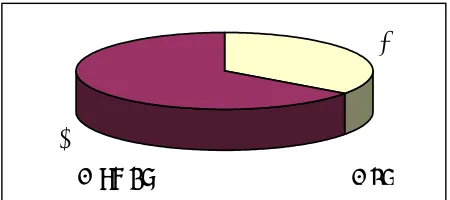
77 participants were included in the study: 27 men (35.06%) and 50 women (64.94%). Distribution of ques-tioned participants according to the sex is shown in Graph 1.
Graph 1 Distribution of questioned participants according to the sex
Average age was 71.23 ± 5.63 (ranging from 65 to 90 years): for women 71.22 ± 5.80 (ranging from 65 to 90 years), and for men 72.67 ± 5.26 years (ranging from 65 to 82 years). During the study period, 21 participants (27.27%) fell down twice or more times, while the same number of participants provided data on only one fall down. Out of 27 men, data on falls down were provided by 4 participants (14.81%) - one living alone and three living in their families. Out of 50 women, the data on falls down were provided by 17 participants (34%) - 9 of them living in their families and 8 living alone. Data on falls down, related to the sex and life style (living alone or within a family), are shown in Table 1.
Average value of the risk factor score gained throughout the questionnaire and the results of the Berg balance scale are shown in Tables 2-4.
50
27
Women Men
Table 1 Distribution of participants according to the data on falls down and related to the life style and sex
Fall (n) No fall (n) TOTAL (n)
PARAMETER
M F MF M F MF M F MF
Living alone 1 8 9 4 10 14 5 18 23
Living in a family 3 9 12 19 23 42 22 32 54
Total 4 17 21 23 33 56 27 50 77
Table 2 Average values of the risk factor score and the Berg balance scale according to the sex
PARAMETER Men Women Total
Risk factor score 2.59 ± 3.35 5.32 ± 3.71 4.36 ± 3.80
Berg balance scale 50.7 ± 13.8 42.5 ± 15.0 45.4 ± 15.0
Table 3 Average values of the risk factor score and the Berg balance scale according to the life style
PARAMETER Lives alone Lives in a family Total
Risk factor score 4.87 ± 3.75 4.15 ± 3.83 4.36 ± 3.80
Berg balance scale 44.6 ± 14.4 45.7 ± 15.4 45.4 ± 15.0
Table 4 Average values of the risk factor score and the Berg balance scale according to data on falls down
PARAMETER Fall No fall Total
Risk factor score 8.33 ± 3.07 2.88 ± 2.87 4.36 ± 3.80
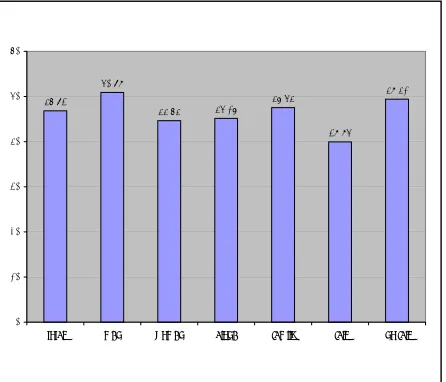
Graph 2 Average value of the Berg balance scale
Regarding risk factor score gained throughout the ques-tionnaire and the Berg balance scale there are statistical-ly significant differences between men and women, as well as between participants who fell down and those who did not, while there are no statistically significant differences regarding their life style (living alone or in a family) (Tables 5-7).
Discussion
The study encompassed 77 participants of both sexes with average life age of 71.73 ± 5.63 years (ranging from
65 to 90 years), who were randomly assigned. Every patient was questioned in his/her house and was familiar-ized with the methodology and aims of the study. The percentage of women was 64.94% (50 female partici-pants) while the percentage of men was 35.06% (27 male participants), which is in accordance with this population group demographic data in our conditions. 1 In other studies, sex structure differs, so Harada and colleagues (7) stated that women represented 87% of participants in their questioned group.
Average value of the risk factor score and the Berg bal-ance scale were statistically significantly different according to the sex and fall down data in contrast to the life style.
Clinical methods of evaluation that are in use nowadays are especially suitable for the screening process since they can uncover specific damages and they can be car-ried out by both medical and previously trained non-med-ical staff (8). After such screenings, further expert evalu-ation is to be performed. In the practice, most usually used are following tests: Berg balance scale4, B-POMA test (9) and "Get-up and Go" test (10, 11). There is excel-lent co-relation between these tests, but the Berg balance scale in overall superior in comparison to other two men-tioned tests (12).
Shumway-Cook and colleagues (13) constructed a very simple model for the prediction of fall down based on the Berg balance scale test results and data on body balance malfunction. Sensitivity of that model is 91%, character-istics are 82%, which means that 20 out of 22 persons from the fall down group will be correctly classified, that 46,83
50,89
44,64 45,17 47,54 39,95
49,41
0 10 20 30 40 50 60
total men women alone family fall no fall
Table 5 Testing of the significance of the each test differences between men and women
PARAMETER T-test value Freedom degrees Stat. significance
Risk factor score 3.183 75 p < 0.005
Berg balance scale 2.346 75 p < 0.01
Table 6 Testing of the significance of the each test differences between participants who lived alone and those who lived in the family
PARAMETER T-Test Value Freedom degrees Stat. significance
Risk factor score 0.761 75 N.S. p > 0.05
Berg balance scale 0.286 75 N.S. p > 0.05
Table 7 Testing of the significance of the each test differences between participants who fell down and those who did not fall down
PARAMETER T-test value Freedom degrees Stat. significance
Risk factor score 7.298 75 p < 0.001
is 18 out of 22 persons without data on falls down will be correctly classified.
The conclusion of authors
was that every third aged person with the Berg balance scale score below 40 needed an adequate physical treat-ment.
Average values of the results gained throughout the Berg balance scale in this study are statistically significantly higher in men and participants who provided no data about falls down, while statistically significant differ-ences regarding the life style were not observed. These results are co-relating to literature data (4, 8, 12, 13, 15). Many participants categorically stated that they could not perform some of the tasks (keeping body balance while turning for 360 degrees), and for their performance, apart from the proper explanation, a longer verbal support was needed. This result is in accordance with the result of Studenski and colleagues (16), who published that elder-ly people with recent fall down experience were more unstable than people from the similarly aged control group (performance of the postural test of one-leg stand-ing and turnstand-ing around).
The Berg balance scale did not reveal significant prob-lems in performing Romberg test, though the literature proves two opposite opinions. Briggs and colleagues (17), differently from Heitmann and colleagues (18), have found no difference between the leaning time of the third aged persons during the Romberg test performance and one-leg standing in comparison to the data on falls down.
Conclusions
1. Regarding the risk factor score gained throughout the questionnaire and the Berg balance scale results, there are statistically significant differences between men and women (p < 0.005, i.e. p < 0.01), as well as par-ticipants who did not fall down (p < 0.001, i.e. p < 0.01), while there are no statistically significant dif-ferences regarding the life style (alone or in family) (p > 0.05).
2. Clinical methods of evaluation that are in use nowa-days are especially suitable for the screening process since they can uncover specific damages and they can be carried out by both medical and previously trained non-medical staff.
3. After such screenings, further expert evaluation is to be performed.
4. The Berg balance scale is nowadays mostly used in the practice and in overall superior in comparison to the other tests that are being used.
References
1. Gavranovi} M. and ass. Clinical Geriatrics. International Peace Centre, Sarajevo, 1997; 13-5.
2. Stelmach GE, Zelaznik HN, Lower D. The influence of aging and attentive demands on recovery from postural instability. Aging 1900; 2(2): 155-61.
3. Berg K, Wood-Dauphinee S, Williams JI, et al. Measuring balance in the elderly: validation of an instru-ment. Can J Public Health 1992; 73: 1073-80.
4. Berg K, Wood-Dauphinee S, Williams JI, et al. Measuring balance in the elderly: preliminary development of an instrument. Physiotherapy Canada. 1989; 41: 304-11.
5. Berg K, Wood-Dauphinee S, Williams JI. The balance scale scale: assessment with elderly residents and patients with acute strike. Scand J Rehabil Med 1995; 27(1): 27-36.
6. Riddle DL, Stratford PW. Interpreting validity indexes for diagnostic tests: an illustration using the Berg Balance Test. Phys Ther. 1999; 79:939-948.
7. Horak FB, Nashner LM, Diener HC. Postural strategies associated with somatosensory and vestibular loss. Exp Brain Res. 1990; 82: 167-77.
8. Harada N, Chiu V, Damron-Rodriquez J, et al. Screening for balance and mobility impairment in elderly individuals living in residential care facilities. Phys Ther. 1995; 75(6): 462-9.
9. Tinetti ME. Performance-oriented assessment of mobility problems in elderly patients. J Am Geriatr Soc. 1986; 34(2): 119-26.
10. Mathias S, Nayak USL, Isaacs B. Balance in elderly patients: the "Get-up and Go" test. Arch Phys Med Rehabil. 1986; 67: 387-9.
11. Shumway-Cook A, Brauer S, Woollacott M. Predicting the probability for falls in community-dwelling older adults using the Timed Up & Go Test. Phys Ther. 2000;80:896-903.
12. Berg K, Maki B, Williams JI, et al. Clinical and laboratory measures of postural balance in an elderly pop-ulation. Arch Phys Med Rehabil. 1992; 73: 1073-80.
13. Shumway-Cook A, Baldwin M, Polissar LN, et al. Predicting the probability for falls in community-dwelling older adults. Phys Ther. 1997; 77(8): 812-9.
14. Berg K. Balance and its measure in the elderly: a review. Physiotherapy Canada. 1989; 41: 240-6. 15. Raîche M, Hébert R, Prince F, Corriveau H. Screening older adults at risk of falling with the Tinetti
bal-ance scale. Lbal-ancet. 2000; 356 (9234): 1001-2.
16. Studenski S, Duncan PW, Chandler J. Postural responses and effector factors in persons with unexplained falls: results and methodological issues. J Am Geriatr Soc. 1991; 39: 229-34.
17. Briggs RC, Gossman MR, Birch R, et al. Balance performance among non-institutionalized elderly women. Phys Ther. 1989; 69: 748-56.
Questionnaire
Name and Family Name:
Age: Sex:
Body Weight: Body Height: Blood Pressure:
Lives alone: Lives in a family: Leading diagnosis (group of illnesses): Remark:
RISK FACTORS
1. For conduct of two or more activities
(cooking, laundry wash, dressing, walking, …) help needed YES NO 2. For conduct of two or more manipulative activities
(shopping, use of telephone, handling money, Taking medications,) help needed YES NO 3. Had fracture or malfunction of hip, knee or foot YES NO 4. Has visible joint consequences of mentioned states YES NO 5. Uses a helping device for walking (stick, walker, …) YES NO 6. Physical activity limited to basic house works YES NO 7. Describes him/herself as a scared person YES NO
8. Complaining of dizziness YES NO
9. Complaining on troubles with balance YES NO 10. Having complaints connected to postural hypotension YES NO 11. Fell once or twice during this year YES NO 12. Fell more than twice during this year YES NO 13. Was any care needed after the fall? YES NO 14. Did the fall(s) result in fracture? YES NO 15. Is he/she generally afraid of falling? YES NO 16. Afraid of falling in the house (bathroom, kitchen…) YES NO 17. Afraid of falling outside (public transport, stairway, street…) YES NO 18. Does he/she avoid leaving house for the fear of falling? YES NO 19. Does he/she have 3 or more health malfunctions asking for regular health checks? YES NO 20. Do these malfunctions require house visits by medical staff? YES NO 21. Does he/she have some of the following illnesses that might result in a fall? YES NO
•Neurological (e.g. cancer, peripheral neuropathy, multiple sclerosis, lupus…)
•Cardiovascular (e.g. postural hypo tension)
•Muscle-skeleton (e.g. total joint prosthetics implant)
•Sensory (e.g. damages to sight)
•Other (amputation, Parkinson disease, Alzheimer disease)
22. Does he/she take medications potentially dangerous from aspects of falling? YES NO
•Antihypertensive agents
•Narcoleptics
•Hypnotics/anxiolytics
•Antiarrhythmic agents
•Antiparkinson agents
•Analgesics/anti-inflammatory/anti-rheumatics
•Vasoregulators
The Berg balance scale
The performance of each task is to be demonstrated to the patient. The necessary equipment included a stop-watch, centimetre tape, chair and armchair, as well as a small chair which height co-related to the average height of foot-lift while walking. Maximum Berg balance scale score is 56 and indicates an excellent body balance.
Instructions for certain tasks:
1. Please stand up. Try that without leaning on your arms. 2. Please stand for 2 minutes without holding onto anything. 3. Please sit down for 2 minutes with your arms crossed. 4. Please sit down.
5. Please move from the armchair to the chair and then vice versa. 6. Please close your eyes and stand still for 10 seconds.
7. Please put your feet together and stand without holding onto anything.
8. Please raise your hand (patient may choose which one) to 900. Stretch your fingers and touch forwards as much as you can. Measurer will measure the distance from the starting position.
9. Please from the standing position raise your slippers that are in front of you. 10. Please turn around and look over your left and then over your right shoulder. 11. Please turn for 3600. Make a short break and repeat it backwards.
12. Please rise on the small chair with your both feet (first one foot than another). Repeat four times with each foot.
13. Please put one foot exactly in front of the other (patient may choose) or the heel of your foot as much as it is possible in front of the other foot your toes as it does not affect your stability.
14. Please stand without holding onto anything one leg (patient may choose) as long as it is possible.
NAME AND FAMILY NAME: DATE:
EVALUATION: start
DESCRIPTION OF THE TASK SCORES (0-4)
1. Sitting to standing __
2. Standing without holding __
3. Sitting without holding __
4. From standing to sitting __
5. Transfers __
6. Standing with eyes closed __
7. Standing with feet together __
8. Catching forward with stretched arm __
9. Lifting items from the floor __
10. Turning for looking back __
11. Turning for 360 degrees __
12. Putting another foot on a small chair __ 13. Standing with one leg in front of another __
14. Standing on one foot __