Please cite this article as: Kazemi-Fard M, Soheil Y, Dirandeh E & Rezaei M. 2015. Effect of different levels of L-carnitine on the
productive performance, egg quality, blood parameters and egg yolk cholesterol in laying hens. Poult. Sci. J. 3 (2): 105-111.
ISSN: 2345-6604 (Print), 2345-6566 (Online) http://psj.gau.ac.ir
Effect of Different Levels of L-Carnitine on the Productive Performance, Egg
Quality, Blood Parameters and Egg Yolk Cholesterol in Laying Hens
Kazemi-Fard M, Yousefi S, Dirandeh E & Rezaei M
Department of Animal Science, Sari Agricultural Sciences and Natural Resources University, Sari, Iran
Poultry Science Journal 2015, 3 (2): 105-111
Introduction
L-Carnitine is a substance which is made of Lysine and Methionine that is essential for the transport of long-chain fatty acids through the mitochondrial membrane in order to increase fat metabolism (Borum, 1983; Buyse et al., 2001; Xu
et al., 2003). L-carnitine supplementation of diets helps the body turn fat into energy with augmenting β-oxidation (Kachura et al., 1995). Triacylglycerol production is reduced with supplemental L-carnitine diet, therefore, storage of long chain fatty acids decrease (Xu et al., 2003). Secondary functions of L-carnitine is
delimiter and scavenger of potentially toxic groups from cells, moderating ratio of free CoA and acetyl-CoA between the mitochondria and cytoplasm, especially in biological procedure including set out gluconeogenesis, encouraging fatty acid and the metabolism of ketones, branched-chain amino acids, triglycerides (TG) and cholesterol (Novotny, 1998).
The continuous addition of L-carnitine to experimental layers diets resulted in decrease of concentrations of total protein, cholesterol, calcium, and phosphorus (Thiemel and Jelinek,
Abstract
Keywords
L-carnitine Laying hen Egg production Egg yolk cholesterol
This experiment was conducted to investigate the effects of different levels of L-carnitine on productive performance, egg quality and blood parameters in laying hens. Forty-eight Hy-Line W-36 egg Layers were weighed at 90 weeks of age and randomly allocated into 16 cages (three hens per cage). Four dietary treatments were prepared by supplementing L-carnitine (0, 50, 100 and 150 mg/kg of diet) to corn-soybean meal diet and offered ad libitum to hens. After two weeks of acclimatization, the eggs were weighed daily and feed intake as well as egg quality traits were measured biweekly. At the end of the experiment, two hens from each cage were selected to determine blood parameters and two eggs from each replicate were collected for cholesterol analysis. Results showed that L-carnitine supplementation at 100 and 150 mg/kg significantly increased egg production and egg mass, but decreased yolk cholesterol content. Laying hens receiving diet containing 50 mg/kg L-carnitine had significantly higher Hough unit, but lower progesterone than the hens fed control diet (P < 0.05). The results of this study showed that supplementing hens' diet with L-carnitine had beneficial effects on productive performance and decreased yolk cholesterol concentration; so it can be used as an effective supplement in the diet of laying hens.
Corresponding author
Mohammad Kazemi-fard [email protected]
Article history
Poultry Science Journal 2015, 3 (2): 105-111
2004). Rabie et al. (1997) concluded that dietary L-carnitine has an advantageous effect on Haugh unit and could reclaim the ingredients of the dietary part of the egg during the late laying period. Some parameters such as body weight, feed intake, egg production and yolk cholesterol concentrations were not affected by dietary of L-carnitine and nicotinic acid in the early laying period. Hossininezhad et al. (2011) reported that feed conversion ratio (FCR) was significantly decreased by dietary L-carnitine supplementation. Parizadian et al. (2011) reported that supplementation of L-carnitine (125 and 250 mg/kg) significantly reduced egg yolk cholesterol and triglyceride in quails.
Animal organism is able to synthesis carnitine. Moreover, most portions of poultry diets are formed of vegetable sources and as regard to animal-based meals are the major exogenous source of carnitine, therefore, poultry has also contributed to carnitine deficiency. Since L-carnitine plays a pivotal role in transporting long-chain fatty acids across the inner mitochondria membrane to produce energy through β-oxidation (Durán et al., 2002), supplementation of L-carnitine may accelerate yolk lipid metabolism (Peebles et al., 2007) and thus expedite follicular development. It may also increase metabolic rate in the magnum and shell gland and therefore affects albumen deposition and shell calcification, leading to greater egg weight and shell thickness.
The objective of the present study was to investigate the effect of different levels of L-carnitine on the productive performances, egg quality, blood parameters and egg yolk cholesterol concentration of laying hens in late-phase production.
Materials and methods
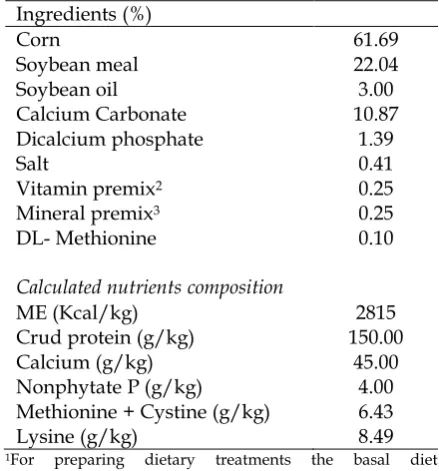
All experimental procedures used in this experiment were approved by the Animal Care Committee of the Sari Agriculture and Natural Resources University (SANRU) of Iran. A total of 48, Hy-Line W-36 layers were randomly assigned to four treatments with four replicates and three layers per each replicate. A control corn-soybean meal based diet formulated according to Hy-line W-36 Commercial Management Guide (Hy-Line International 2009-2011) and supplemented with 0, 50, 100 and 150 mg/kg L-carnitine (Lohman, Germany) for preparing dietary treatments (Table 1). All birds
were housed in caged layers and received feed and water ad libitum. House temperature was kept at 21ºC and the light program consisted of 16 hrs light daily throughout the experiment. At 90 weeks of age, hens were selected on the basis of their egg production and body weight (BW) and assigned to dietary treatments two weeks prior to the trial, to ensure that the egg production and body weight in each group were similar. The experiment started at 92 weeks of age and lasted for six weeks.
Table 1. Ingredients and chemical composition
of basal diet1 Ingredients (%)
Corn 61.69
Soybean meal 22.04
Soybean oil 3.00
Calcium Carbonate 10.87 Dicalcium phosphate 1.39
Salt 0.41
Vitamin premix2 0.25
Mineral premix3 0.25
DL- Methionine 0.10
Calculated nutrients composition
ME (Kcal/kg) 2815
Crud protein (g/kg) 150.00
Calcium (g/kg) 45.00
Nonphytate P (g/kg) 4.00 Methionine + Cystine (g/kg) 6.43
Lysine (g/kg) 8.49
1For preparing dietary treatments the basal diet
supplemented with 0, 50, 100 and 150 mg/kg L-carnitine.
2Vitamin premix provided per Kg of diet: vitamin A (retinyl
acetate), 8800 IU; vitmain D3 (cholecalciferol), 2200 IU;
vitamin E (DL-α-tocopheryl acetate), 11 IU; vitamin K (menadione sodium bisulfite), 2.2 mg; vitamin B2
(riboflavin), 4.4 mg; pantothenic acid (D-calcium pantothenate), 8.8 mg; nicotinic acid, 44 mg; vitamin B6
(pyridoxine hydrochloride), 2.2 mg; biotin, 0.11 mg; vitamin B1 (thiamine hydrochloride), 2.5 mg; ethoxyquin, 125 mg. 3Mineral premix provided per kg of diet: manganese
(MnSO4: H2O), 185 mg; zinc (ZnO), 62 mg; iron (FeSO4:
7H2O), 149 mg; cupper (CuSO4: 5H2O), 19.6 mg; iodine (KI),
1.4 mg; selenium (Na2SeO3), 0.22 mg.
Poultry Science Journal 2015, 3 (2): 105-111 to the Archimedes method (Hempe et al., 1988).
To measure egg quality, eggs were broken on a flat surface and yolks were separated from the albumen. The yolk rolled on a paper towel to remove adhering albumen and weighed. The shells were carefully washed with warm water and dried at 55ºC for 48 hrs in the oven and then weighed. The shell thickness was measured at three locations on the eggs (air cell, equator, and sharp end) using a micrometer caliper with an accuracy of ± 1 μm (series 500, Mitutoyo, Tokyo, Japan) and the average was calculated (Tahmasbi et al., 2012). The surface area (SA) of the egg was calculated as indicated by Ousterhout (1980). The shell weight per unit of surface area (SWUSA) was calculated by dividing the dried shell weight to the surface area of each egg. Yolk color measured using a yolk color chart and Haugh unit calculated based on albumen height and egg weight using the formula: HU = 100 log10 (H − 1.7 W0.37 + 7.56), (Carter, 1975). Where: HU= Haugh unit, H= height of the albumen (mm) and W= egg weight (g).
At the end of experiment (at 7:00 am), blood samples were taken from two layers of each cage to measure aspartate aminotransferase (AST), Alanine transaminase (ALT), glucose, triglyceride, high-density lipoprotein cholesterol (HDLC), very low density lipoprotein cholesterol (VLDLC), 17-Beta estradiol and progesterone concentrations. Blood was taken from the left brachial vein and collected in plastic tubes contained EDTA. Samples were maintained on ice until plasma was separated by centrifugation (1500 × g for 20 minutes) within 1 hr of collection. Plasma was harvested and stored at -20°C until further analysis. Plasma concentrations of progesterone and estradiol were determined using ELISA kit (Diaplus, North York, Ontario, Canada) and ELISA plate reader (Stat Fax 210). Plasma concentrations of glucose (kit no. 5412, Pars Azmoon Co, Tehran, Iran), and triglycerides (kit no. 6752, Pars Azmoon Co, Tehran, Iran) were determined using Autoanalyzer (BS120, Mindray, Shenzhen, China). HDLC measured with a spectrophotometer (Apel-PD-303S) according to Pars Azmoon kit procedure and VLDLC calculated by dividing triglyceride values to five (VLDLC = TG / 5).
Eight random samples of eggs from each treatment were obtained for egg yolk cholesterol
analysis at the end of the experiment. Hard boiled and separated egg yolks were used for the determination of cholesterol. After homogenization, 0.1 g of sample was extracted with isopropanol, followed by centrifugation at 1300 × g at 4°C for 10 min. Cholesterol content was determined by a UV spectrophotometer (Apel, PD-303S, Japan), and absorbance was read at 500 nm (Boehringer Mannheim, 1989).
Statistical analysis
Data were analyzed according to a completely randomized design using the GLM procedure of SAS (2003) software. Differences among treatment means were measured by Duncan’s multiple range test and considered significant at
P < 0.05.
Results and Discussion
The effects of L-carnitine supplementation on the productive performance of laying hens are shown in Table 2. Egg production was higher in hens fed L-carnitine supplemented diets compared to those hens fed control diet (from 62.23 to 66.99 vs. 56.25%). However, the egg production difference was only significant when hens received more than 50 mg/kg L-carnitine. Consistent with our results, Richter et al. (1998) reported a numerical increase in egg production by L-carnitine supplementation. Neuman et al. (2002) showed that L-carnitine supplementation increases β-oxidation of fatty acids to adenosine triphosphate, therefore, energy yielding increases. Thus, supplemental L-carnitine could enhance fatty acid and energy utilization (Mast
et al., 2000). In contrast, Corduk and Sarica (2008) reported that L-carnitine supplementation in diet did not affect egg production because L-carnitine has been supplemented to low energy diets.
Poultry Science Journal 2015, 3 (2): 105-111
FCR, whereas Daşkiran et al. (2009) reported that L-carnitine supplementation to the basal diet
had a significant effect on shape index.
Table 2. Effect of different levels of L-carnitine supplementation on productive performance of laying
hens
Parameters L-carnitine levels (mg/kg) P-value
0 (Control) 50 100 150
Hen-day egg production (%)1 56.25b 62.23ab 64.06a 66.99a 0.01
Egg weight (g) 62.70 62.38 62.00 61.18 0.92
Egg mass (g/hen/d)2 35.21b 38.11ab 39.66a 40.98a 0.04
Feed intake (g/day) 107.10 110.40 111.90 110.50 0.91
FCR (g feed intake/g egg mass) 3.04 2.84 2.83 2.69 0.27
Shape index3 73.30 73.14 74.38 74.16 0.73
0.05). P < common superscript differ significantly (
Means within a row without
b a,
1Hen-day egg production = (100 × number of eggs laid) / (number of hens × days).
100 / Egg mass = (egg production × egg weight)
2
3Shape index = [Egg width (mm) / Egg height (mm)] × 100
Although supplementation of L-carnitine had no significant effect on egg albumen, egg yolk, yolk color and yolk index, but Haugh unit was significantly higher in hens received diet contained 50 mg/kg L-carnitine compared to hens fed control diet (Table 3). Rabie et al. (1997) reported that albumen quality was improved with L-carnitine supplementation, probably due to the higher metabolic rate in magnum and/or increase in activity of the shell gland. It is obvious to improve Haugh unit when hen's diets supplemented with L-carnitine because albumen is made from ovomucin and especially β-ovomucin, secreted by the magnum. Gelatinous traits mainly depend on β-ovomucin that is responsible for the thick albumen gel and here upon secretion of β-ovomucin extremely
promoting with L-carnitine supplementation to diet that increase metabolizable energy generation in the magnum (USDA, 2000). It was reported that supplementation of L-carnitine at dose of 50 ppm to drinking water significantly increased albumen weight and height (Celik et al., 2004). Also, these researchers pointed that yolk index and yolk color score did not significantly affect with L-carnitine supplementation, whereas yolk weight was significantly decreased. L-Carnitine has presumably altered hepatic biosynthesis of yolk precursors with a shift of their transport from the liver to the ovary. Celik et al. (2004) showed a lower egg yolk percentage in hens fed diets containing L-carnitine.
Table 3. Effect of different levels of L-carnitine supplementations on internal egg quality traits in
laying hens
P-value
Parameters L-carnitine levels (mg/kg)
150 100
50 0 (Control)
0.36 63.45
61.84 62.95
65.98 Egg albumen (%)
0.43 28.22
29.27 28.82
26.03 Egg yolk (%)
0.31 5.72
7.66 6.22
5.91 Yolk color
0.72 0.38
0.39 0.39
0.41 Yolk index
0.04
b
86.97
ab
91.20
a
92.12
b
86.78 Haugh unit
a,bMeans within a row without a common superscript differ significantly (P < 0.05).
Dietary carnitine supplementation had no significant effect on egg shell quality parameters including shell weight, shell thickness, surface area, SWUSA and specific gravity (Table 4) which agrees with results of Rabie et al. (1997) and Celik et al. (2004). Shell breaking strength may be reduced with supplementation of
Poultry Science Journal 2015, 3 (2): 105-111
Table 4. Effect of different levels of L-carnitine supplementations on egg shell quality in laying hens
P-value
Parameters L-carnitine levels (mg/kg)
150 100 50 0 (Control) 0.58 8.31 8.40 8.22 7.97 Shell weight (%)
0.97 0.44
0.44 0.44
0.43 Egg shell thickness (mm)
0.92 73.79 74.55 75.19 75.04 ) 2
Surface area (cm
0.74 70.70 71.50 70.50 68.22 ) 2 (mg/cm 1 SWUSA 0.72 1.07 1.06 1.06 1.06 ) 3
Specific gravity (g/cm
Shell weight per unit of surface area.
1
No significant difference was observed between treatments in each parameter (P > 0.05).
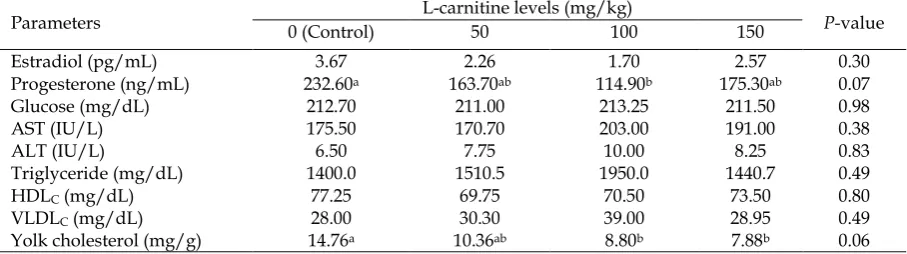
Table 5. Effect of different levels of L-carnitine supplementations on blood parameters in laying hens
P-value
Parameters 0 (Control) L-carnitine levels (mg/kg)50 100 150
0.30 2.57 1.70 2.26 3.67 Estradiol (pg/mL) 0.07 ab 175.30 b 114.90 ab 163.70 a 232.60 Progesterone (ng/mL) 0.98 211.50 213.25 211.00 212.70 Glucose (mg/dL) 0.38 191.00 203.00 170.70 175.50 AST (IU/L) 0.83 8.25 10.00 7.75 6.50 ALT (IU/L) 0.49 1440.7 1950.0 1510.5 1400.0 Triglyceride (mg/dL) 0.80 73.50 70.50 69.75 77.25 (mg/dL) C HDL 0.49 28.95 39.00 30.30 28.00 (mg/dL) C VLDL 0.06 b 7.88 b 8.80 ab 10.36 a 14.76 Yolk cholesterol (mg/g)
a,bMeans within a row without a common superscript differ significantly (P < 0.05).
Effect of L-carnitine on blood parameters and yolk cholesterol has been presented in Table 5. No significant difference was found between dietary treatments for plasma estradiol (E2) concentration. Progesterone concentration was lower in hens fed L-carnitine diets compared to the control diet, but it was significant only at the level of 100 mg/kg supplementation. Yolk cholesterol has tended to decrease by L-carnitine supplementation. Agarwal and Said (2004) reported that L-carnitine enhances the oxidation of fatty acids which stimulates estrogen and progesterone biosynthesis by increasing the regeneration of the reducing equivalents necessary for the cholesterol side-chain cleavage reaction. Walzem (1996) stated that yolk lipids are synthesized in the liver under the influence of estrogen. Since L-carnitine can reduce body fat, progesterone may be reduced by reducing fat. There was no significant difference between dietary treatments for plasma glucose, AST, ALT, TG, cholesterol, HDL, LDL and VLDL concentrations. Similar results have been reported by Arsalan et al. (2003) who reported that L-carnitine did not affect serum cholesterol, total lipid, triglyceride and glucose. Carnitine palmitoyl transferase is one of the main enzymes relevant to the fatty acid β-oxidation and augments of L-carnitine to the diet increases this enzyme activity in broiler chickens (Lien and Horng, 2001). However, these researchers did
Poultry Science Journal 2015, 3 (2): 105-111
species showed that L-carnitine administration reduced serum cholesterol, total lipid and triglyceride levels (Bell et al., 1987; Mondola et al., 1992). Lien and Horng (2001) noticed that the activity of carnitine palmitoyltransferase, which is the fatty acid β-oxidation enzyme, was significantly increased by supplementation L-carnitine in broilers diet.
Conclusion
Dietary L-carnitine supplementation did not have any effect on egg quality, most likely because of the egg quality mostly related to several factors such as calcium, phosphorus, vitamin D3, egg size, etc. Higher concentrations of L-carnitine at the level of 100 and 150 mg/kg diet resulted in an increase of egg production and egg mass. Administrations of L-carnitine to diet have tended to decrease egg yolk cholesterol, but Haugh unit increases at the level of 50 mg/kg diet.
References
Agarwal A & Said TM. 2004. Carnitines and male infertility. Reproductive BioMedicine Online, 8: 376-384. [Link]
Arslan C, Citil M & Saatci M. 2003. Effects of L-carnitine administration on growth performance, carcass traits, blood serum parameters and abdominal fatty acid composition on ducks. Archives of Animal Nutrition, 57: 381–388. [Link]
Bell FP, Raymond TL & Patnode CL. 1987. The influence of diet and carnitine supplementation on plasma carnitine, cholesterol and triglyceride in WHHL (Watanabe-heritable hyperlipidemic), Netherland dwarf and New Zealand rabbits (oryctolagus cuniculus). Comparative Biochemistry and Physiology, 87: 587–591. [Link]
Boehringer Mannheim GmbH. 1979. Methods of Biochemical Analysis and Food Analysis: Using Test Combination. Boehringer Mannheim Publisher. 142 Pages. [Link] Borum P. 1983. Carnitine. Annual Review of
Nutrition, 3: 233–259. [Link]
Buyse J, Janssens GPJ & Decuypere E. 2001. The effects of dietary L-carnitine supplementation on the performance, organ weights and circulating hormone and metabolite concentrations of broiler chickens reared under a normal or low temperature schedule. British Poultry Science, 42: 230-241. [Link]
Carter TC. 1975. The hen’s egg: Estimation of shell superficial area and egg volume, using measurements of fresh egg weight and shell length and breadth alone or in combination. British Poultry Science, 16: 541-543. [Link] Celik LB, Tekeli A & Öztürkcan O. 2004. Effects
of supplemental L-carnitine in drinking water on performance and egg quality of laying hens exposed to a high ambient temperature. Journal of Animal Physiology and Animal Nutrition, 88: 229-233. [Link] Corduk M, Ceylan N & Ildiz F. 2007. Effects of
dietary energy density and L-carnitine supplementation on growth performance, carcass traits and blood parameters of broiler chickens. South African Journal of Animal Science, 37: 65-73. [Link]
Corduk M & Sarica S. 2008. Effects of L-carnitine in layer diets containing different fat sources and energy levels on hen performance and egg quality. South African Journal of Animal Science, 38: 260-270. [Link]
Daşkiran M, Önol AG, Cengiz Ö, Tatlı O & Sarı M. 2009. Effects of dietary methionine levels and L-carnitine supplementation on performance and egg quality parameters of layers. Journal of Animal and Feed Sciences, 18: 650–661. [Link]
Durán JM, Peral MJ, Calonge ML & Ilundáin AA. 2002. Functional characterization of intestinal L-carnitine transport. Journal of Membrane Biology, 185: 65–74. [Link]
Hempe JM, Laukxen RC & Savage JE. 1988. Rapid determination of egg weight and specific gravity using a computerized data collection system. Poultry Science, 67: 902– 907. [Link]
Hossininezhad MM, Irani M & Seidavi A. 2011. Dietary effects of L-carnitine supplement on performance and blood parameters of broiler chickens. Journal of Food, Agriculture and Environment, 9: 475-481.
Kachura SA. 1995. Influence of carnitine and dietary energy level on the productivity of early weaned piglets. Byulleten’-Vsesoyuznogo-Nauchno-issledovatel’ skogo-Instituta-Viziologii,-Biokhimii-i-Pitaniya-Sel’ skokhozyaistvennykh- Zhivotnykh, 96: 39–43. Lien TF & Horng YM. 2001. The effect of
Poultry Science Journal 2015, 3 (2): 105-111 British Poultry Science, 42: 92–95. [Link]
Mast J, Buyse J & Goddeeris BM. 2000. Dietary L-carnitine supplementation increases antigen-specific immunoglobulin G production in broiler chickens. British Journal of Nutrition, 83: 161-166. [Link] Mondola P, Santillo M, De Mercato R &
Santangelo F. 1992. The effect of L-carnitine on cholesterol metabolism in rat (Rattus bubalus) hepatocyte cells. International Journal of Biochemistry, 24: 1047–1050. [Link] Nasiri Moghaddam H, Kazemi Fard M, Agah MJ, Husseini SJ & Mirakzehi MT. 2012. Effect of different levels of methionine, protein and tallow on the productive performance and egg quality of laying hens in the late-phase production. Brazilian Journal of Poultry Science, 14: 149-158. [Link]
Neuman SL, Lin TL & Hester PY. 2002. The effect of dietary carnitine on semen traits of White Leghorn roosters. Poultry Science, 81: 495–503. [Link]
Novotny BJ. 1998. L-carnitine. What difference does it make? Symposium Proceeding. 15th December, Leuven, Belgium.
Ousterhout LE. 1980. Effects of calcium and phosphorus levels on egg weight and egg shell quality in laying hens. Poultry Science, 59: 1480-1484. [Link]
Parizadian B, Ahangari YJ, Shams Shargh M & Sardarzadeh A. 2011. Effects of different levels of L-carnitine supplementation on egg quality and blood parameters of laying Japanese quail. International Journal of Poultry Science, 10: 621-625. [Link]
Peebles ED, Kidd MT, McDaniel CD, Tanksley JP, Parker HM, Corzo A & Woodworth JC. 2007. Effects of breeder hen age and dietary L-carnitine on progeny embryogenesis. British Poultry Science, 48: 299–307. [Link] Rabie MH, Szilágyi M & Gippert T. 1997. Effects
of dietary L-carnitine on the performance and egg quality of laying hens from 65-73 weeks of age. British Journal of Nutrition, 78: 615-623. [Link]
Richter VG, Schlumbohm C Baumgartner M & Ochrimenko WI. 1998. Studies of L-Carnitine effects in laying hens. Archiv fur Geflugelkunde, 62: 1-6. [Link]
Sarıözkan S, Güçlü BK, Kara K & Gürcan S. 2013. Comparison of different molting methods and evaluation of the effects of postmolt diets supplemented with humate and carnitine on performance, egg quality, and profitability of laying hens. The Journal of Applied Poultry Research, 22: 689–699. [Link]
SAS (Statistical Analysis System). 2003. SAS/STAT® 9.1. User’s Guide. SAS Institute
Inc. Cary, North Carolina. [Link]
Tahmasbi AM, Mirakzehi MT, Hosseini SJ, Agah MJ & Kazemi Fard M. 2012. The effects of phytase and root hydroalcoholic extract of Withania somnifera on productive performance and bone mineralisation of laying hens in the late phase of production. British Poultry Science, 53: 204-214. [Link] Thiemel J & Jelinek P. 2004. The effect of carnitine
on hatching rate and metabolic profile of blood in breeding layers. Czech Journal of Animal Science, 49: 517–523. [Link]
USDA (United States Department of Agriculture). 2000. Egg-Grading Manual. Agricultural Handbook. No: 75. Washnigton, DC. 50 Pages. [Link]
Walzem RL. 1996. Lipoproteins and the laying hen: form follows function. Poultry and Avian Biology Reviews, 7: 31-64. [Link] Xu ZR, Wang MQ, Mao HX, Zhan XA & Hu CH.
2003. Effects of L-carnitine on growth performance, carcass composition, and metabolism of lipids in male broilers. Poultry Science, 82: 408–413. [Link]