World Maritime University World Maritime University
The Maritime Commons: Digital Repository of the World Maritime
The Maritime Commons: Digital Repository of the World Maritime
University
University
World Maritime University Dissertations Dissertations
11-5-2017
A strategic development of alternative fuel initiation and its
A strategic development of alternative fuel initiation and its
adaptation in a developing country: a feasibility study on
adaptation in a developing country: a feasibility study on
methanol fuelled domestic passenger ships in Indonesia
methanol fuelled domestic passenger ships in Indonesia
Eko Maja Priyanto
Follow this and additional works at: https://commons.wmu.se/all_dissertations Part of the Energy Systems Commons, and the Transportation Commons
Recommended Citation Recommended Citation
Priyanto, Eko Maja, "A strategic development of alternative fuel initiation and its adaptation in a developing country: a feasibility study on methanol fuelled domestic passenger ships in Indonesia" (2017). World Maritime University Dissertations. 545.
https://commons.wmu.se/all_dissertations/545
WORLD MARITIME UNIVERSITY
Malmö, Sweden
A STRATEGIC DEVELOPMENT OF
ALTERNATIVE FUEL INITIATION AND ITS
ADAPTATION IN A DEVELOPING COUNTRY
A feasibility study of methanol fuelled
domestic passenger ships in Indonesia
By
Eko Maja Priyanto
Indonesia
A dissertation submitted to the World Maritime University in partial
fulfillment of the requirements for the award of the degree of
MASTER OF SCIENCE
In
MARITIME AFFAIRS
(MARITIME ENERGY MANAGEMENT)
2017
ii
Dissertation Declaration
I certify that all the material in this dissertation that is not my work has been
identified and that no material is included for which a degree has previously been
conferred on me.
The contents of this dissertation reflect my personal views and are not necessarily
endorsed by the University.
(Signature):
(Date) :
Supervised by: Professor Aykut Olcer and Dr. Josefin Madjidian
iii
Acknowledgements
On this occasion I would like to express my heartfelt gratitude to Dr. Yohei
Sasakawa, the Nippon Foundation, and management of Biro Klasifikasi Indonesia
for providing me an invaluable opportunity to pursue a higher degree of education in
WMU. Also, I have to deliver my sincere gratitude to my supervisor, Professor Aykut
Olcer and Dr. Josefin Madjidian, for their guidance, insight, comments, and
discussion during the dissertation progress.
I would like also to convey my appreciation to Dr. Fabio Ballini for assisting me in
the economic subject discussion, Mrs. Sara Hurst for helping me to get the
dissertation references, and Mrs. Inger Batista for reviewing my dissertation.
In addition, I would like to thank Mr. Tomi Santoso, monitoring and maintenance
evaluation manager of PELNI, for helping me to provide the important data and
information for this dissertation. Also thanks go to Mr. Tukka Laakso, senior design
manager of Wartsila Finland, for the discussion and information.
I should extend my deepest gratitude and affection to my parents, my wife
(Nurhayati), and my children (Asma and Hilmi), who always encouraged and
iv
Abstract
Title of Dissertation: A strategic development of alternative fuel initiation and its adaptation in a developing country: A feasibility study of methanol fuelled domestic passenegr ships in Indonesia
Degree: MSc
The study aims to provide insight and to explore the future potential of methanol as an alternative marine fuel for domestic passenger ships in Indonesia. An overview of methanol characteristics as fuel and the current status of global methanol-fuelled passenger ships, including the technology availability and regulation development, will be examined. For potential application in Indonesia, an analysis of resources availability, stakeholder readiness, and potential challenges are investigated.
The potential performance of methanol technology is discussed and divided into two perspectives: the shipowner perspective and the government perspective through case studies of two passenger ships owned by PELNI, MV. Labobar and MV. Gunung Dempo. As shipowners tend to look at the industrial-economic aspects, an economic feasibility is performed by developing a combinatorial scenario approach based on the combination of economic measures of merit (NPV and payback period) and technical scenario (main-pilot fuel set up). Some of the variables are included in the calculation, such as ship age, ship productivity, and macro-economy conditions. Regarding government perspectives, the environmental protection and policy compliance are evaluated by examining six emission types (NOx, SOx, CO2, CH4, N2O, and PM). Additionally, since there is a trade-off situation
in government subsidies between the government and shipowner interests, the optimization and sensitivity analysis is performed by utilizing a combinatorial scenario model to determine optimum methanol price and external variables influencing the decision to support methanol technology in the Indonesian market.
The study found that Indonesia has some advantage to introduce methanol as marine fuel. However, methanol competitiveness is mainly dependent on ship productivity and the price differences between methanol and MDO. Moreover, policy analysis through the optimization approach could be one of the government approaches to determine the optimum condition in establishing methanol as marine fuel. Additionally, the short, medium, and long term recommendation is given as consideration.
v
Table of contents
Dissertation Declaration ... ii
Acknowledgements ... iii
Abstract ... iv
Table of contents ... v
List of tables ... viii
List of figures ... ix
List of abbreviations ... x
1. Introduction ... 1
1.1 Background ... 1
1.2 Objectives ... 4
1.3 Scope of study and methodology ... 5
1.4 Structure and organization ... 6
2. Literature review ... 8
3. Overview of methanol as marine fuel in internal combustion engines ... 12
3.1 Methanol characteristics as fuel ... 12
3.2 Environmental aspect of methanol ... 14
3.3 Safety aspect of methanol ... 14
3.4 Current status of methanol-fuelled passenger ship projects ... 16
3.4.1 Pilot Methanol project ... 16
3.4.2 Methaship ... 17
3.5 Methanol system design and technology ... 17
3.5.1 Methanol fuel system ... 17
3.5.2 Methanol-fuelled marine engine technology ... 19
3.5.2.1 Conversion-based perspectives (Wartsila) ... 19
vi
3.6 The status of regulations of methanol as marine fuel ... 21
3.6.1 IMO ... 21
3.6.1.1 SOLAS ... 21
3.6.1.2 MARPOL ... 22
3.6.1.3 IGF Code ... 23
3.6.1.4 IBC Code ... 24
3.6.1.5 STCW ... 25
3.6.2 Classification societies ... 25
3.7 Discussion ... 26
4. Potential of methanol as passenger ship fuel in Indonesia ... 28
4.1 Overview of passenger ship operations in Indonesia ... 28
4.2 Potential sustainability of methanol as marine fuel in Indonesia ... 30
4.2.1 Fossil resources ... 30
4.2.1.1 Coal ... 30
4.2.1.2 Natural Gas ... 30
4.2.2 Renewable resources ... 31
4.2.2.1 Industrial Waste ... 31
4.2.2.2 Municipal waste ... 32
4.3 Potential challenges in implementation of methanol as marine fuel in Indonesia ... 32
4.3.1 National regulations related to methanol as marine fuel ... 32
4.3.2 Training and competency ... 33
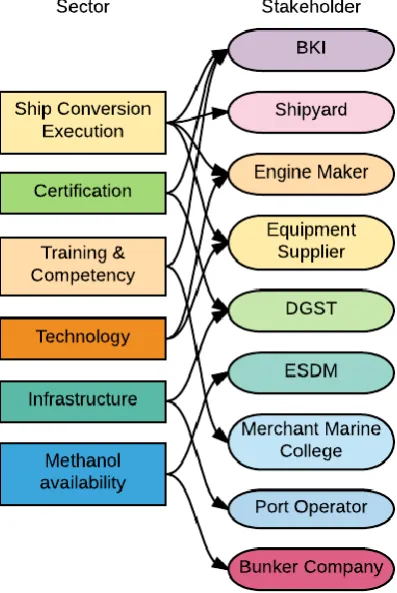
4.3.3 Coordination among stakeholders ... 33
4.3.4 Supply, demand, and logistics ... 35
4.3.5 Infrastructure ... 36
vii
5. Environtmental and techno-economic analysis ... 38
5.1 Shipowner perspective ... 38
5.1.1 Case study of PELNI passenger ship ... 39
5.1.2 Input data and variables ... 39
5.1.3 Scenario and assumption ... 41
5.1.1 Combinatorial scenario analysis of NPV calculation ... 44
5.1.2 Combinatorial scenario analysis of Payback Period calculation... 46
5.2 Government perspective ... 49
5.2.1 Environmental analysis and compliance ... 50
5.2.1.1 N2O, CH4, SOx and PM analysis ... 52
5.2.1.2 NOx analysis ... 55
5.2.1.3 CO2 analysis ... 56
5.2.2 Market-based intervention ... 57
5.2.2.1 Optimization model ... 58
5.2.2.2 Optimization and sensitivity analysis ... 59
5.2.2.3 Verification ... 61
5.3 Discussion ... 62
6. Conclusion ... 65
6.1 Further study ... 68
References ... 69
Appendix A. Synergy and coordination framework among stakeholder ... 75
Appendix B. Revenue and cost related data ... 76
Appendix C. Techno-economic calculation of MV. Labobar ... 77
Appendix D. Techno-economic calculation of MV. Gunung Dempo ... 80
Appendix E. Emission calculation MV. Labobar ... 84
viii
List of tables
Table 1. Methanol fuel properties ... 13
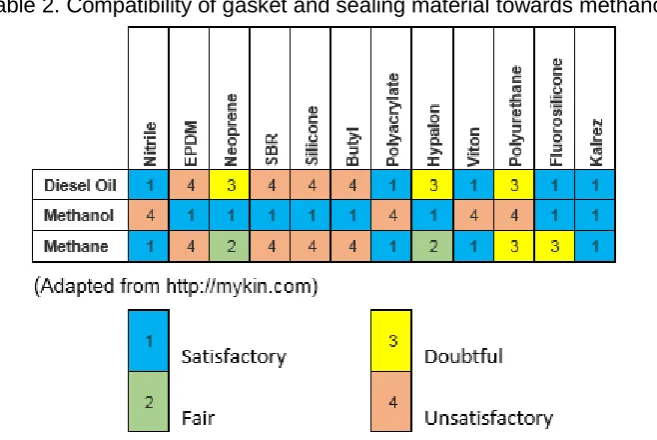
Table 2. Compatibility of gasket and sealing material towards methanol ... 15
Table 3. Technology System Maturity for Methanol as Marine Fuel ... 18
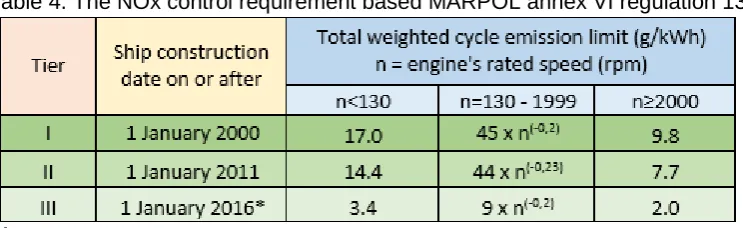
Table 4. The NOx control requirement based MARPOL annex VI regulation 13 ... 22
Table 5. The SOx - PM control requirement based MARPOL annex VI regulation 14 ... 22
Table 6. The value of Cf from various fuels ... 22
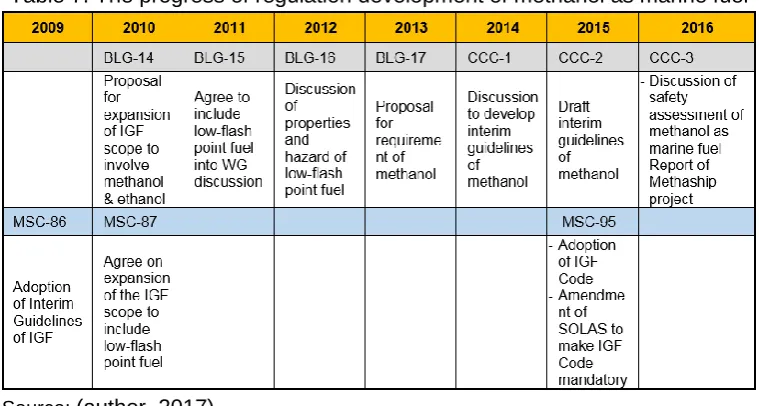
Table 7. The progress of regulation development of methanol as marine fuel ... 23
Table 8. Ship particular of MV. Labobar and MV. Gunung Dempo ... 39
Table 9. Input data for shipowner perspective analysis ... 40
Table 10. percentage of methanol-MDO price history from 2004-2016 ... 42
Table 11. Colour level of payback period of investment ... 47
Table 12. Combinatorial scenario analysis of payback period-percentage of methanol-percentage of methanol price on MV. Labobar case ... 48
Table 13. Combinatorial scenario analysis of payback period-percentage of methanol-percentage of methanol price on MV. Gunung Dempo case ... 49
Table 14. Input data for government perspective analysis ... 50
Table 15. The result of emission factor of MV. Labobar and MV. Gunung Dempo .. 52
Table 16. The percentage of total emission reduction of SOx-CH4-N2O-PM for MV. Labobar and MV. Gunung Dempo. ... 53
Table 17. The percentage of total NOx reduction for MV. Labobar and MV. Gunung Dempo ... 55
ix
List of figures
Figure 1. NOx emission and smoke trend ... 14
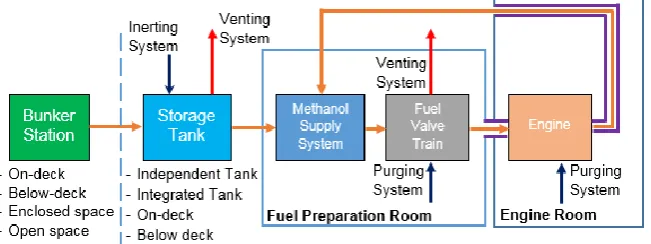
Figure 2. Methanol system arrangement ... 18
Figure 3. Methanol injection system ... 20
Figure 4. Gap analysis draft of the IGF Code and methanol ... 24
Figure 5. PELNI passenger ship routes 2016 ... 29
Figure 6. Methanol production process at KMI ... 31
Figure 7. Stakeholders in the conversion activity of methanol-fueled vessels ... 34
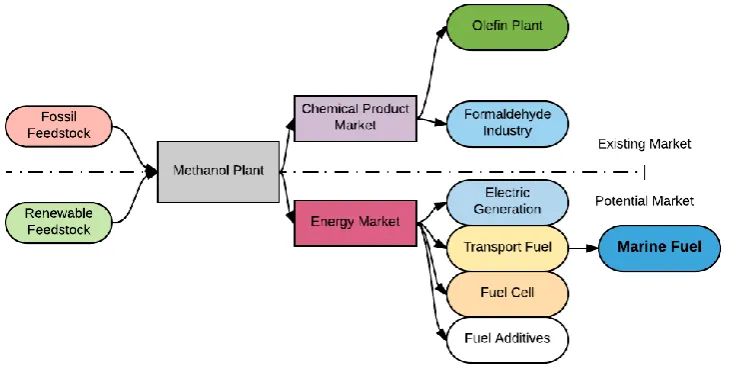
Figure 8. Existing and Potential Market of Methanol in Indonesia ... 35
Figure 9. Simple Supply-Chain of methanol as marine fuel ... 36
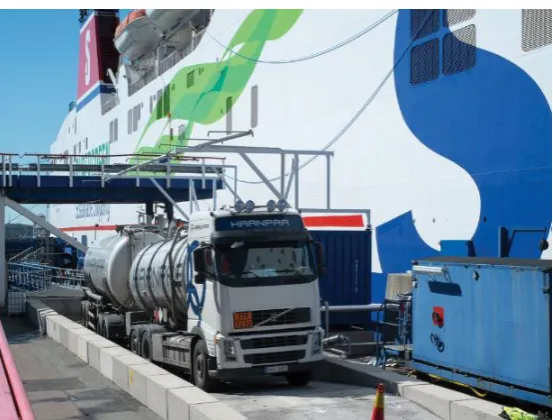
Figure 10. Methanol bunkering activity at Stena Germanica - Truck to Ship methods ... 37
Figure 11. MV. Labobar and MV. Gunung Dempo ... 39
Figure 12. Methanol-MDO price trend from 2004-2016 ... 43
Figure 13. Scenario analysis of NPV-percentage of methanol composition-percentage of methanol price on MV. Labobar case ... 45
Figure 14. Scenario analysis of NPV-percentage of methanol composition-percentage of methanol price on MV. Gunung Dempo case ... 46
Figure 15. Total emission value of SOx-CH4-N2O-PM for MV. Labobar and MV. G. Dempo ... 53
Figure 16. M/E SOx and PM value for MV. Labobar and MV. G. Dempo. ... 54
Figure 17. Emission value of NOx for MV. Labobar and MV. G.Dempo. ... 56
Figure 18. Total emission value of CO2 from MV. Labobar and MV. G. Dempo. Error! Bookmark not defined. Figure 19. OptQuest-Cristal Ball optimization result ... 60
Figure 20. Sensitivity analysis of external factor for payback year-8 ... 61
x
List of abbreviations
BFIV = Booster fuel injection valve
BGI = Geological agency of Indonesia
BKI = Biro klasifikasi Indonesia
BLG = IMO Sub-committee on bulk liquids and gases
BP = British Petroleum
CCC = Sub-committee on carriage of cargoes and containers
CCTV = Closed-circuit television
CH4 = Methane
ClassNK = Nippon kaiji kyokai
CO2 = Carbone dioxide
CPO = Crude palm oil
DGST = Directorate general of sea transportation
DIKH = Directorate of upstream chemical industry
DNV-GL = Det norske veritas - Germanischer lloyd
EBTD = Earning before taxation and depreciation
ECA = Emission control area
EEDI = Energy Efficiency Design Index
EEOI = the Energy efficiency operational indicator
EMSA = European maritime safety agency
ESDM = Ministry of energy and mineral resources
EU = European Union
GHG = Greenhouse gas
HFO = Heavy fuel oil
IBC Code = International code for the construction and equipment of ships
carrying dangerous chemicals in bulk
IFO = Intermediate fuel oil
IGF Code = International code of safety for ships using gases or other
low-flashpoint fuels
IMO = International maritime organization
xi
KMI = Kaltim methanol industry
LCC = Low cost carrier
LFL = Low flammable limit
LFO = Light fuel oil
LHV = Lower heating value
LNG = Liquefied natural gas
LPG = Liquefied petroleum gas
LR = Lloyd register
MARPOL = the International convention for the prevention of pollution from
ships
MDO = Marine diesel oil
MGO = Marine gas oil
MMBD = Million barrels per day
MoS = EU Motorways of the sea
MSC = the Maritime safety committee
Mtoe = Million tons oil equivalent
N2O = Nitrous oxide
NOx = Nitrogen oxides
NPV = Net present value
PELNI = Pelayaran nasional shipping company
PHE = Public health England
PM = Particulate matter
POME = Palm oil mill effluent
PPC = partially premixed combustion
PTO/PTI = Power take off/ power take in
RAN-GRK = National action plan for reducing greenhouse gas emissions
RISE = the Research institute of Sweden
RoPax = Roro passenger
SCR = Selective catalytic reduction
SEEMP = Ship energy efficiency management plan
SFOC = Specific fuel oil consumption
SKK Migas = Special Task Forces For Upstream Oil and Gas Business
xii
SOLAS = the International convention for the safety of life at sea
STCW = the International Convention on Standards of Training,
Certification and Watchkeeping for Seafarers
TDC = Top dead center
TSCF = Trillions of standard cubic feet
UNEP = the United Nations environment program
1
1. Introduction
1.1
Background
The availability of energy in the future has recently come to the world’s
attention. One of the reasons that the energy issue is becoming a hot topic in all the
nations of the world is that global energy demand tends to increase more rapidly
than the available resources. Also, increasing energy consumption, especially fossil
fuel consumption, leads to negative environmental impacts. Therefore, the United
Nations endeavours to facilitate sustainable and clean energy implementation by
addressing energy issues in the 7th1 Goal of its 17 Sustainable Development Goals,
with some specific targets2.
Global energy consumption rose significantly from 8,133.34 million tons oil
equivalent (Mtoe) in 1990 to 12,928.39 Mtoe in 2014, where developing countries
are to be the main contributors in driving the energy consumption (BP, 2016a).
Indonesia, as a developing country, also experienced an energy consumption
increase of 3.9% in 2015, or almost double compared to the last 15 years (BP,
2016b). In addition, non-renewable energy sources (oil, coal, and gas) still dominate
1 7th Goal of “17 Sustainable Development Goal: Ensure access to affordable, reliable, sustainable and
modern energy for all”
2 One of Sub Target of Goal 7th is “By 2030, enhance international cooperation to facilitate access to
clean energy research and technology, including renewable energy, energy efficiency and advanced
2
the energy supply in Indonesia, representing 75% of the energy consumption
(Hasan et al, 2012).
Currently, the Indonesian government is paying more attention to its high
dependency on fossil energy, particularly in fuel oil. According to the 2015 annual
report revealed by SKK MIGAS3, between 2003 and 2015, the reserve of oil and gas
in Indonesia declined by approximately 91 Mtoe per year (SKK, 2015). In contrast, Indonesia’s oil consumption for domestic purposes has increased from 1.2 million
barrels per day (MMBD) in 2003 to 1.6 MMBD in 2013. It is projected to continue
rise by 5-6% untill 2030. At that time, the domestic production will be unable to meet
the domestic demand and Indonesia will have to import up to 75% of its oil supply to
fulfill the domestic demand (Budiman, 2014). High dependency combined with
unstable oil prices might expose the country to greater energy security risks. Thus,
Indonesia may become more vulnerable to future supply or price shocks.
According to data in the Indonesian energy profile of 2015, prepared by the
Ministry of Energy and Mineral Resources (ESDM), the transportation sector
consumed almost 329.41 Mboe or 32% of total energy consumption (ESDM, 2016).
Since Indonesia is an archipelagic country, consisting of over 17,000 islands,
domestic marine transportation plays a key role in transporting goods and people
across the country. This requires goods and people to be transported approximately
2000 times, using domestic maritime transportation that consumes approximately
7000 barrels of bunker fuel per day (Budiman, 2014). Dependency on fossil fuel in
the unstable oil price conditions can lead to disruption in the maritime sector, where
the transportation of goods and people across the country will be affected, and
economic growth declined.
Interestingly, Singapore, as the closest country to Indonesia, has initiated the
implementation of a strategic step of environmental protection in the maritime sector
called "The Maritime Singapore Green Initiative Programme". This program could
pave the way to the first implementation of an Emission Control Area (ECA) in South
East Asia. When the ECA is imposed, it might influence the shipping industry in
3
South East Asia, particularly in Indonesia, where almost 97% of the energy used in
the transport sector is using fuel oil that much generate air pollution (ESDM, 2012).
Strategic initiatives and measures have also been taken by the Indonesian
government to overcome the problem related to sustainable energy and reduced
greenhouse gas (GHG) emissions by initiating the “National Action Plan for Reducing Greenhouse Gas Emissions (RAN-GRK)”. In order to follow up the
strategic plan, stakeholder focus group discussions and studies on the energy issue
in the maritime transportation sector have been undertaken. Almost all of the studies
have emphasized a shift to liquefied natural gas (LNG) as a ship fuel, but the use of
it has not taken up yet. Even though LNG is produced on some big islands in
Indonesia, it cannot currently supply the domestic demand. The main cause is the
lack of LNG fuelling facilities and infrastructure because establishing the facilities
and infrastructures requires a huge investment (Budiman, 2014).
Since the use of LNG in the Indonesian maritime sector is still under
discussion, other alternative fuels need to be introduced to reduce dependency on
fossil fuel while addressing environmental issues. Methanol is a promising
alternative and sustainable fuel for the future shipping industry since it can be
produced from various resources: natural gas, biomass, synthesis gas, and coal
(Zhen, 2015). If the resource is biomass, methanol is much more GHG friendly than LNG. Additionally, methanol has a similar positive reduction of air pollution (NOx,
SOx, and PM) to LNG and can comply with NOx Tier II requirements without any
major conversion (Stojcevski, 2014). Also, based on Stena Line experience, a methanol fuel system does not require any cryogenic processes or equipment.
Thus, dual fuel methanol conversion from existing ships is easier and cheaper than
conversion to LNG (Westling, 2013).
Different ship types might have different approaches to safety and
technology application (IMO, 2016e), so it is necessary to determine the ship type that will be this research object. According to the geographical characteristics of Indonesia, ease of observation, and also the economical point of view, one of the
best ship types that can be applied as a case study of methanol application is the
4
Indonesia, as one of the best means of transport to connect islands. In addition,
ships have liner routes and routine bunkering makes it easy to predict and to
monitor their activities. Moreover, an alternative fuel needs to be introduced
because passenger ships in Indonesia are heavily dependent on fossil fuel and very
sensitive to fluctuations in fuel oil prices. However, as with any new fuel, attention
has to be paid to certain potential risk characteristics, such as low-flashpoint and
toxicity because passenger ships have stringent requirements in safety regulations
related to passenger safety and risks associated with fuel application.
Projects considering methanol as ship fuel has been executed in some
European countries and IMO has published reports regarding methanol-fueled
ships. Still, the study of methanol as ship fuel is not as massive as LNG as fuel,
particularly when it comes to cost-benefit analysis of converting the propulsion
system and combined with the evaluation of energy efficiency of the converted
system. Moreover, there is no study of methanol application in ships in developing
countries, intending to develop strategic adaptation, planning, and implementation of
it for sea transportation. A thorough analysis, including economic, environmental,
and technological aspects of methanol-fuelled ships compared with resource
availability and stakeholder readiness in developing countries is highly needed.
1.2
Objectives
According to the aforementioned background, this study aims to provide overall
insight and to explore the future potential of methanol as an alternative marine fuel
for domestic passenger ships in Indonesia. Furthermore, the specific goals of the
study are to provide relevant information on the following topics:
To identify the current status of implementation of methanol as marine fuel
worldwide including supporting regulation.
To identify the existing and potential resources of methanol in Indonesia.
To assess the economic viability of the application of methanol fuel systems
onboard passenger ships in Indonesia.
To examine the challenge in implementation of methanol as fuel on passenger
ships regarding supply chain, safety issues based on methanol characteristics,
5
To propose recommendations and insight for the Indonesian government and
related stakeholders to consider methanol as a promising marine fuel in
domestic passenger ships.
1.3
Scope of study and methodology
This study will only focus on methanol as a substitution for fossil fuels
applied to maritime transportation, particularly focusing on passenger ships. The
study does not attempt to perform analyses on all methanol applications onboard,
for instance, fuel cell technology on board as fuel. The analysis focuses extensively
on the application of methanol in the direct internal combustion engine. The study is
concentrated on the Indonesian market, and it does not consider other markets.
In this study, the information regarding the current status of methanol-fuelled
passenger ships in the world and the potential of methanol resources in Indonesia
will be gathered through a secondary data collection and interviews with experts in
relevant fields. The resources include annual reports and statistical data from
relevant stakeholders, IMO Guidelines and reports, journals, government policy and
regulation document, previous project reports, and other approved literature from
experts in relevant fields.
In order to understand to what extent, in terms of economy and regulations,
the implementation of methanol as passenger ship fuel can be introduced and
supported in the Indonesian market, a case study will be conducted on two
passenger ships owned by Pelayaran Nasional (PELNI). Interviews and
communication will be conducted with PELNI in order to get the primary data. Also,
communication will be conducted to the industrial experts that are closely relevant to
the specific case study in order to gain relevant information, for instance: Wartsila.
Furthermore, necessary information and data gathered during the
comparative study and the interviews, producing the basis for measuring economic
and technical viability of a fuel shift and technology investment using
techno-economic calculation. The measures of merit will be based on Net Present Value
6
payback period of ship modification versus Price of Methanol versus The
percentage of dual fuel).
In addition, optimization analysis using OptQuest-Cristal Ball will be used in
order to identify the optimum support from the government to the market in order to
introduce methanol as a clean and more sustainable maritime fuel.
1.4
Structure and organization
In order to achieve and accomplish the objectives of this study, this
dissertation is organized and divided into the following sections:
Chapter 1 will introduce a background and objectives as to provide a better
understanding of the necessity of this study. The scope of the study and the
methodologies used are also explained briefly in this chapter.
Chapter 2 will provide a literature review regarding fundamental information
of methanol, general development of the methanol market, previous related projects,
research, or reports that have been performed, to be used as the basis of modeling
and optimizing the case study.
Chapter 3 will present the characteristics and concept of handling methanol
as fuel in an internal combustion engine. Moreover, this chapter will present the
current status of methanol as a marine fuel in passenger ships, including the
overview of technology readiness. The current status of international regulations
which support the implementation of methanol as a marine fuel will be reviewed.
Chapter 4 will discuss the potential implementation and challenges of
methanol fuelled passenger ships in Indonesia. Firstly, the market condition of
Indonesian domestic passenger ships will be explained. Secondly, the potential
resources of methanol production in Indonesia will be examined, both from
renewable and non-renewable resources. Finally, the potential challenge dealing
with the implementation of methanol as a marine fuel in Indonesia will be analyzed
in terms of administratives burden, supply chain, and regulation gap.
Chapter 5 will provide a techno-economic and a decision-making analysis
7
how and to what extent methanol can be introduced in the Indonesian market.
Furthermore, the discussion will be divided into two perspectives: the shipowner
perspective and the government perspective. The discussion will also address the
outcome of the decision-making analysis whether the technology solution is feasible
from an economic point of view and deserve to have support from the government.
Finally, Chapter 6 will present an overall conclusion and compile the
recommendations for short, medium, and long term for the Indonesian government
8
2. Literature review
Methanol is commonly referred to as wood alcohol or methyl alcohol with the
chemical formula CH3OH. In the market often abbreviated as MeOH (Olah, Goepert,
and Prakash, 2006). Methanol is a simple single-carbon alcohol, colorless, and
biodegradable. However, methanol is highly flammable with a flash point around
11°C, and also very toxic (Methanol Institute, 2017).
Methanol can be produced from fossil based resources (non-renewable) to
renewable and sustainable resources, for instance wood, biomass, sewage, and
also from CO2 (Bromberg & Cheng, 2010). There are three basic steps commonly
used by industry to produce methanol, namely synthetic gas (syngas) production,
syngas to methanol conversion, and distillation or purification of effluent. The
sources of synthetic gas can be natural gas, coal, biomass, crude oil, or other
carbon based sources. Despite this, the industry still prefers natural gas or methane
as the feedstock since the production cost, energy consumption, and impurities are
lower than the other feedstock (Bozzano & Manenti, 2016)
The evolution of the market and research for methanol as transportation fuel
was started during World War I when gasoline shortage happened in Europe (Reed
& Lerner, 1973). Afterwards, methanol became attractive during the first oil crisis in the 1970’s (Haraldson, 2015). In 1982, ten automotive producers in the United
States initiated to produce 16 different models of automobiles to investigate the
compatibility of methanol as fuel. The comparison with fully gasoline vehicles was
conducted, and the result was comparable since the performance and emission
reduction has increased by using methanol. Based on the results of the initial
9
Surprisingly, the methanol consumption for US transportation reached 12 million
gallons in 1993. Afterwards, in 2005 following 200 million miles of methanol based
vehicle operation and 25 years implementation, methanol as fuel was stopped by
the US government due to plummeting oil prices causing methanol no longer
attractive to the industry and no incentive from the government to continue the
methanol program in the transport sector (Bromberg & Cheng, 2010).
The use of methanol in large diesel engines, particularly in ship propulsion
engines is relatively novel but has been supported by laboratory research and real
operation testing. One of the successful pilot projects was Pilot Methanol. The
project was converting the main engine of the passenger ship “Stena Germanica”, owned by Stena Lines, which has a route Gothenburg Sweden – Kiel Germany (Ellis
& Tanneberger, 2015).
There are also some laboratory research for methanol study conducted by
academia. Svensson et al (2016) analyzed the indication of emission development
from methanol combustion in diesel engines operated on the concept of partially
premixed combustion (PPC) mode by simulation and modeling, then validated by
experiment. The results obtained with the concept of PPC mode, was that when the
machine ran with methanol, it would be less likely to form soot, which is the opposite
of diesel fuel. However, the value of CO and NOx is still similiar to diesel fuel.
Brynolf, Fridell, and Andersson (2014) have compared several marine fuels
in the North European market based on their life cycle performance to assess the
effect of the fuel selection on environmental performance. From the assessments
results obtained, show that methanol can be an effective transition fuel in reducing
air pollution equal to LNG. However, only biomass-based methanol has the potential
as a future alternative fuel in reducing global warming while reducing air pollution.
The authors have underlined the limitation of environmental performance data
related to methanol engine performance due to no validation, thus the emission
value was assumed.
Retrofitting ships using environmentally friendly technology is one of the
preferred solutions for a ship owner on the basis of economic performance, to
10
Vanelslander, 2014). Stevens et al (2015) developed a framework that linked policy
makers, who impose new environmental regulations with the implementation of sustainable technology in the market, and shipowners’ decision whether building
new ships or retrofitting the ships. In addition, simulation and modeling has been
done by Aronietis et al, (2014) to asses nine emission abatement technologies (LNG
main engine, wind propulsion, LNG cold ironing, PTO/PTI, speed reduction, voyage
optimization, SCR, scrubber) based on economics (cost, saving, market
penetration), emission performance (effectiveness of reducing emissions, reducing
externality cost), and energy performance (fuel saving, increasing of energy
efficiency). The paper concluded that shipowners should invest in the technology
that gives better economical and energy performance. Moreover, speed reduction
gets the highest score over all three criteria among other solutions. However, speed
reduction is rarely implemented on domestic passenger shipping since liner shipping
has certain destinations, tight schedule, and is operated in dense water traffic.
However, the paper does not include methanol as a solution in the modeling and
simulation.
Grahn et al (2013) investigated future marine fuels based on
cost-effectiveness analysis using a linear optimisation model for short sea vessel, ocean
vessel and container vessel. Natural gas based fuels, including methanol, can be
effective options for fuel oil substitution in the maritime sector. The
cost-effective analysis was conducted particularly for methanol and LNG as marine fuel
for dual fuel engines. However, the study did not evaluate the effect of pilot fuel
usage in the dual fuel engine and the different prices between main fuel and pilot
fuel.
Banawan, Gohary, and Sadek (2009) discussed the environmental and
economic benefits in retrofitting main engines suitable for alternative fuels in short
voyage passenger ships. The NOx and SOx reduction percentage was calculated by
varying the percentage of the dual fuel composition. However, the scenario of
percentage of dual fuel compositions in the economic calculation is not included in
11
Ellis and Tanneberger (2015) also conducted economic analysis by
comparing some compliance alternatives within the ECA scenario including
methanol. The summary stated the competitiveness of methanol depends on the
differentiation of methanol price with traditional fuel such as MDO and HFO.
IMO (2016) published a study on methanol as a marine fuel, including its
economic feasibility. The scenario that was built is based on the percentage of time
spent in ECA and methanol price. Moreover, a comparative analysis between
methanol and scrubbers using HFO was performed. However, only the payback
period was considered as the parameter of analysis without involving net present
value. The comparative analysis was furthermore only conducted from the shipowner’s perspective, while it is highly important to analyze how governments
12
3. Overview of methanol as marine fuel in internal
combustion engines
3.1
Methanol characteristics as fuel
Methanol as fuel has lower energy density than oil fuel, particularly
compared to diesel oil. Based on Table 1, the energy density of methanol is 20.1
MJ/kg while diesel oil has 42.8 MJ/kg. Therefore, in order to be equivalent in terms
of energy density with diesel oil, the volume and the storage space of methanol
needs to be almost double.
Methanol has a lower cetane number compared to diesel, 5 compared to
45-55. Low cetane number means that the fuel does not self-ignite easily and thus
needs ignition aid. However, its high octane number combined with its high flame
speed could be an indication of good burning rates. In addition, despite these
properties, methanol is categorized as lean combustion condition because its
stoichiometric of air-fuel ratio is lower than that of diesel oil. However, the similar
proportion of air-diesel fuel ratio still applied as the reference, since methanol also
has lower of the lower heating value (LHV) compared with diesel oil (Stojcevski, Jay,
and Vicenzi, 2016).
One of the challenges using methanol as fuel is the formaldehyde formation
during occasions of incomplete combustion. However, from a MAN experiment, it
was confirmed that there is no formaldehyde formation detected from combustion
because in the diesel cycle the methanol molecule is combusted in temperatures up
to 1300oC inside the combustion chamber, and there is no methane slip in
13
no sulfur, the engine power efficiency can be improved by increasing the use of
thermal energy from exhaust gas without generating sulphuric acid, which is highly
corrosive.
Table 1. Methanol fuel properties
Source: (Stojcevski et al, 2016; Olah et al, 2006)
The impact of zero sulfur content is not only in reducing sulphuric acid but
also the methanol does not produce SOx. The only source of SOx comes from small
amounts of pilot fuel, either from HFO or distillate fuel. Similiar patterns of emission
reduction of the other emitters (soot, NOx, PM, CH4, CO2) has been confirmed by
engine manufacturers during performance tests (Stojcevski et al, 2016; MAN, 2016).
Wartsila has measured the reduction of NOx and smoke formation during
initial tests of the Vasa 4L32LNGD and Sulzer 6LZA40S-MD. Without any major
conversion; the engine in methanol-mode could reach low tier II compared to LFO at
constant and variable speed (see Figure 1), while the smoke is reduced by 40%
14
generated only from the pilot fuel with no formic acid detected in exhaust gases
(Haraldson, 2013).
Figure 1. NOx emission and smoke trend (Stojcevski et al, 2016)
3.2
Environmental aspect of methanol
Methanol is a colorless organic liquid in normal atmospheric conditions (1
atm, 72oF), and could generate vapour if any ingress of high temperature imposed
to the storage tank. The vapour of methanol released from storage to the
atmosphere could react with NOx to produce methyl nitrate. However, the methanol
vapour or the compound can be decomposed by photolysis, and it is estimated that
around 75-82% will be degraded from the environment after five days. Furthermore,
it is also possible that methanol can leak or spill into the sea from a ship. When
methanol comes into contact with seawater, it will be completely miscible and
dissolve. It happens because methanol has a low coefficient of water-octanol
partition and the solution is very stable. In addition, methanol is harmless to most
aquatic organisms (Methanol Institute, 2017).
3.3
Safety aspect of methanol
There are three main safety concerns in carrying methanol as fuel onboard a
ship, namely flammability, corrosivity, and toxicity (Haraldson, 2015). First, flammability of methanol is closely related to the vapour generation incorporated
with the flammability limit. Methanol is a liquid fuel and could release more vapour
15
6-36 vol% (Methanol Institute, 2017).An explosion is possible if the concentration of
released vapour was in between the flamability range and a source of ignition was
introduced. Moreover, methanol has unique characteristics of its flame where the
flame colours are blue transparent and almost invisible, particularly in a bright room
or in daylight condition. The Research Institute of Sweden (RISE) has experimented
on methanol fire behaviour in the proFLASH project. According to their findings, the
visibility of flames becomes reduced by increasing water content. Hence,
alcoholproof-contained foam fire extinguisher is more effective and practicable than
a traditional extinguisher, since it can restrain vapour formation and dilute the
methanol (Evegren, 2017).
Second, methanol is more corrosive and aggressive to some materials
compared with diesel oil or natural gas, because methanol is categorized as a
solvent and also electrically conductive (Methanol Institute, 2017). Some metals, for
instance, aluminum alloy, nitrile, galvanized steel, and other metals which are
sensitive to methanol containing water, could not be used in the methanol system
(Methanol Institute, 2017). Some resins, fiberglass, and plastics compound are also
sensitive to methanol. Hence, selection of material compatibility with methanol
should be done carefully, since those materials are often used as gasket and
sealing in the engine and supporting system (see Table 2).
16
Subsequently, methanol is toxic by inhalation, ingestion, or skin exposure. If
methanol vapour is inhaled or exposed to it during a long-term period, it will cause
headaches and eye irritation. The minimum ingestion doses of methanol that can
cause severe damage, even death, is in the range 300-1000 mg/kg. However,
methanol is not considered as a carcinogen or reproductive toxicant to human
health (PHE, 2015).
The hazards of methanol to some extent can have serious risks to humans
and property. Hence, it is necessary to conduct safety design and assessment,
particularly for areas where the possibility of methanol leakage is high, where
humans can be exposed, and where there are sources of ignition. One of the safety
assessments that can be reference for methanol as marine fuel implementation was
performed by EMSA and LR in a study “Safety Assessment Methanol and Ethanol
Fuelled Ships” (IMO, 2016a; Ellis & Tanneberger, 2015).
3.4
Current status of methanol-fuelled passenger ship projects
3.4.1 Pilot Methanol project
This project was initiated by the European Union (EU) under EU Motorways
of the Sea (MoS) program (Jan 2013-Dec 2015). Sweden, Finland, and Germany
were involved in this cooperation project including their industrial stakeholders, for
instance Wartsila, Stena AB, and SSPA. The objective of the project was to
demonstrate and deploy research and real experiments on methanol as a clean,
sustainable, and safe fuel in the future shipping industry. In addition, the project is
also seeking an appropriate infrastructure to support safe fuel bunkering in ports
(EC, 2015).
In order to achieve the objective, three strategic steps were set. The first
step was to conduct research in the laboratory. This step was carried out in order to
find and verify the performance of methanol-fuelled marine diesel engines. The
second step was testing methanol as a marine fuel in real operation onboard a ship
by converting four main engines of Roro Passenger Stena Germanica to be dual
fuel (Methanol-MGO) engine. Moreover, this step also examined the development of
17
The last step will deploy the technology development to 24 other ships and other
countries in the North Sea and Baltic area (ZVT, 2015).
To support the first and second steps, the EU covered financial support by EUR€ 11,251,000 from the total project cost of around EUR€ 22,502,000. Following
the action plan, Sweden also initiated a submission to IMO regarding the
requirements of alternative fuels that have a low flashpoint as the basis of IGF Code
amendment. However, the third step is still waiting for the monitoring results of the
Stena Germanica operation (ZVT, 2015).
3.4.2 Methaship
Methaship is a national research project funded by the German government
with the duration from September 2014 to March 2018 (Sahnen, 2017). The project
aims to assess the feasibility of methanol as marine fuel in new passenger ships
(cruise ship and RoPax), including development of methanol-fuelled passenger ship
design and study of infrastructure readiness to support methanol implementation
(IMO, 2016b). This project consortium consists of 3 companies; Meyer Werft,
Flensburger Schiffbau Gesellschaft, and Lloyd Register. Further, they have support
from the industrial sector, such as engine manufacturers (MAN and Caterpillar) and
chemical company, Helm AG (LR, 2015). Eventhough the project is an ongoing
progress, Germany has submitted some documents to the IMO related to the
amendment of guidelines for low-flashpoint fuels based on the finding in the
Methaship study.
3.5
Methanol system design and technology
3.5.1 Methanol fuel system
A methanol fuel system consists of five main parts: bunkering, storage,
methanol supply, methanol-fuelled engine, and an inert gas system (see Figure 2).
Each part has some components that will bestable under all expected operating
conditions. Also a single failure on one of the fuel system will not lead to a high risk
to the ship and crew onboard the ship (LR, 2016).
In terms of technology maturity of individual components, almost all
18
diesel engine or consumer as shown in Table 3 (IMO, 2016e). The maritime industry
has a long experience with methanol as cargo, and the provisions have been
stipulated in the IBC Code. Therefore, the bunkering technology is already mature.
On the other hand, methanol application in a marine combustion engine is relatively
new. Hence, only few engine manufacturers have developed this technology, for
instance Wartsila and MAN B&W.
Figure 2. Methanol system arrangement (Adapted from MAN, 2014; Aabo, 2015)
Table 3. Technology System Maturity for Methanol as Marine Fuel
(Adapted from table 5-1 to 5-5, IMO, 2016e)
In particular, methanol has an advantage over LNG because it does not
19
be stored in an existing fuel tank or even in the ballast tank with some treatment,
such as tank coating with zinc silicate paint and storage purging. Storage purging
with nitrogen in the storage is needed to avoid the vapour being contaminated with
salty air, which can increase the conductivity and corrosivity. Moreover, nitrogen will
keep the vapour of methanol inside the tank below LFL to avoid explosion inside the
tank. Additionally, due to the low-flashpoint characteristic, some additional safety
equipment needs to be provided, if necessary such as infrared-CCTV (IMO, 2016e).
3.5.2 Methanol-fuelled marine engine technology
3.5.2.1 Conversion-based perspectives (Wartsila)
Wartsila has conducted initial testing for a methanol-diesel engine concept
using the engines Wartsila Vasa 4L32LNGD and Sulzer 6ZA40S-MD (Haraldson,
2015). The methanol concept applied to the initial testing is pilot fuel aided diesel
combustion. The fuel timing was adjusted so that methanol will be injected close to
TDC and ignited with a small portion of diesel as pilot fuel (Stojcevski, 2014). Both of
the engine tests showed the same trend of efficiency and performance with the
diesel engine when running in dual fuel mode with no reduction output or load
(Haraldson, 2013).
In addition, Sulzer 6ZA40S, as used in the initial testing, is the same engine
type installed in Stena Germanica, and it becomes the reference of the conversion
project. According to Laakso (2017), there should not be any other constraint for
retrofitting or converting except the cost, depending on the engines that should be
retrofitted. Meanwhile, Haraldson (2015) mentioned the scope of conversion
solutions as follows:
- Modify existing fuel pump by exchanging fuel plunger and adjusting fuel
timing
- Modify cylinder heads by making an inlet channel for methanol supply to the
injector. Also, as exhaust gases from methanol combustion contain less
lubricating particulates; hence, the exhaust valve needs to be modified to
reduce excessive wear
- Install methanol common rail systems, including a high-pressure methanol
20
- Exchange a fuel injector that is compatible with methanol-diesel fuel
application, including sealing and control oil system (see Figure 3)
- Upgrade the engine control system
- The double-walled concept including purging system should be designed to
reduce the potential risk of methanol leakage and contact with another part
of the fuel injector.
Figure 3. Methanol injection system (Adapted from Stojcevski et al, 2016)
Since methanol as marine fuel technology is relatively new, there are
possible future developments to improve its performance, such as variable injection
timing of dual fuel, independent pilot fuel injector apart from main fuel injector,
methanol-water blended fuel, and single methanol fuel (Stojcevski, 2016).
3.5.2.2 New engine-based perspectives (MAN B&W)
MAN B&W has developed the ME-LGI concept mainly for a two-stroke
engine as their portfolio business. The concept can be applied in new engines as
well as in retrofitted existing MAN engines (MAN, 2016). The safety concept and
operational principles applied in ME-LGI is analogous to the well-proven ME-GI (gas
injection-based engine) concept (MAN, 2014).
Based on the MAN ME-LGI concept (MAN, 2014), methanol is regulated
from the methanol supply system to the engine room through the fuel valve train
system which consists of a master fuel valve incorporated with double block bleed
valves and a nitrogen purging system. In addition to the double walled-ventilated
21
supporting the engine are of double-walled design and any leakage occurred will be
collected in a dedicated double barrier collector. From the leakage collector, liquid
methanol will be converted into vapour and continuously monitored by a specific
sensor. Whenever the vapour content is higher than specified limits, the engine will
switch-over into oil fuel. In addition, in order to inert and clean the engine piping and
equipment, a purge return system is installed. The inert gas from the purge return
system will push back the liquid methanol to the fuel service tank (see Figure 2).
The Booster Fuel Injection Valve (BFIV) is equipped to increase fuel injection
pressure in the combustion chamber. The essential systems in BFIV are integrated
cooling-lubricating systems. The system will control the temperature below 60oC and
at the same time lubricating the inner part of BFIV. Moreover, the oil sealing system
is developed to prevent methanol-hydraulic oil contamination. However, if the
systems recognized methanol contaminates oil system, then the engine will
change-over to the solely diesel engine.
3.6
The status of regulations of methanol as marine fuel
3.6.1 IMO
3.6.1.1 SOLAS
Methanol can be categorized as a low-flashpoint fuel under the definition
stipulated in SOLAS chapter II-1 Part A-2.30 :
“Low-flashpoint fuel means gaseous or liquid fuel having a flashpoint lower than otherwise permitted under regulation II-2/4.2.1.1”
Having been amended by Resolution MSC 392(95) (IMO, 2015a), SOLAS
Chapter II-1 Part G Reg. 56.1-3 and 57, provides the pathway to make the IGF
Code the technical regulation mandatory for new ships or existing ships intending to
convert to using low-flashpoint fuel after 1 January 2017. Moreover, the discussion
for establishing the new part in the IGF Code which contains the provisions of
low-flash point fuels other than methane-based fuel is an ongoing progress. Hence,
SOLAS Chapter II-1 Part F Reg. 55, pertaining to alternatives design and
arrangement, can be employed as the basis for analysis, evaluation, and approval of
22
3.6.1.2 MARPOL
MARPOL Annex VI, particularly chapters 3 and 4, has set specific targets for
recent and future air pollution compliance in the shipping industry as shown in
Tables 4 and 5. The stringent future emission thresholds will encourage the shipping
industry to use emission abatement technology, including methanol as clean and
sustainable marine fuel, to meet the required conditions (IMO, 2016e).
Table 4. The NOx control requirement based MARPOL annex VI regulation 13
Table 5. The SOx - PM control requirement based MARPOL annex VI regulation 14
Table 6. The value of Cf from various fuels
Source: (IMO, 2014)
MARPOL annex VI chapter IV also prescribed the EEDI requirement for
23
depends on the type, size, and the date built or converted (IMO, 2016e). In order to
calculate EEDI, one of the components involved is the CO2 emission factor of the
fuel. Based on Table 6, methanol has been recognized as a marine fuel, and the
carbon content is 50% lower than LNG, MDO, and even HFO. It means that using
methanol as marine fuel significantly will reduce CO2 emission.
3.6.1.3 IGF Code
The IGF Code is the regulation intended to provide safety and technical
provisions for ships using dedicated gases or other low-flash point fuels. The code
was adopted by Resolution MSC 391(95) and entered into force on 1 January 2017.
Regulations pertaining to other low-flashpoint fuels are ongoing developments at the
IMO. Hence, the compliance of using methanol as marine fuel will be verified based
on alternative design as long as it meets the goals and requirements stipulated in
the relevant chapter of the IGF Code (IMO, 2016d).
The progress of regulation development of methanol as marine fuel can be
seen in Table 7. In addition, IMO has set up the completion target for amendments
of the IGF Code and guidelines for low-flash point fuels in 2019, based on the output
for the 2018-2019 biennium document (IMO, 2017).
Table 7. The progress of regulation development of methanol as marine fuel
24
Parallel with the completion of the IGF Code, the draft of specific
requirements for methanol has been made mainly led by Sweden starting from BLG-14. In addition, commencing in BLG-17, a gap analysis of the IGF code – Methanol
characteristics comparing methanol characteristics was made in order to understand
to what extent the IGF Code can cover methanol as marine fuel (see Figure 4).
(adapted from Freudendahl, 2016; IMO, 2012a; and IMO, 2012b)
Figure 4. Gap analysis draft of the IGF Code and methanol
3.6.1.4 IBC Code
The IBC code is not closely related to the use of methanol as marine fuel
since it only regulates dangerous chemicals as cargo in bulk. However, the
25
safety measures related to methanol onboard a ship. According to the IBC Code
chapter 17 (IMO, 2016c), the category of pollution of methyl alcohol is considered as
Y, meaning that the noxious liquid substances are deemed to create a hazard either
to marine resources or human health. Hence there is a need to justify quality and
quantity limitation of the discharge outboard ships. Moreover, the methanol carrier is
considered as a type 3 ship, meaning that it is not necessary to have a double hull
to protect it from hull damage and cargo spill. Moreover, the IBC Code should only
considers the vapour of methanol as flammable, and the fire protection be
alcohol-resistant foam.
3.6.1.5 STCW
In order to ensure that the crew onboard has adequate knowledge,
qualification, and skills to handle ships using low-flash point fuels, the IGF Code,
Part D chapter 19.2, linked the code to the STCW Convention that has been
amended by Resolution MSC 396(95) (IMO, 2016d). MSC-95 has amended the
inclusion of the requirement of training and qualification of masters, officers, ratings,
and other personnel on ships according to the IGF Code STCW Convention Part
A-V/3. In addition, the specification of minimum standard of competence of basic and
advanced training has been set-up and the requirement has to be fulfilled by
seafarers prior to serving on board ships using low-flashpoint fuel (IMO, 2015b).
3.6.2 Classification societies
Recently two classification societies, LR and DNV-GL, have developed
regulations specific to the application of methanol as a marine fuel (Ellis &
Tanneberger, 2015). Other classification societies adopted and modified the pattern
of the IGF Code as the basis of rule development, for instance: ClassNK and BKI.
The provisional rules for the classification of methanol fuelled ships
developed by LR were updated in January 2016 (LR, 2016). The rules consider
risk-based studies on the specific equipment or system as part of the submission
requirement document. In addition, the specific material type and requirements for a
methanol system have been incorporated in order to accommodate the corrosion
26
The rules developed by DNV-GL for low-flashpoint fuels are incorporated in
Part 6: Additional class notations; Chapter 2 Propulsion, power generation, and
auxiliary systems; Section 6: Low flashpoint liquid fuelled engines-LFL Fuelled
(DNV-GL, 2017). The rules clearly specify the applicability for methanol and ethanol
as marine fuel. However, the section does not clearly specify the type and
requirements of materials. Also, the rules are not considering risk assessment of the
equipment and system as part of the class submission document. On the other
hand, the rules have been considering specific ship types in order to address the
risks involved when using methanol as marine fuel. The class notation for a ship that complies with the rules will be “LFL fuelled”.
ClassNK amended the rules and guidelines “Part GF Ships Using Low-Flashpoint Fuels” in December 2016 (ClassNK, 2016;BKI, 2015). BKI, as the
Indonesian classification society, amended the Guidelines for the use of gas as fuel
for ships in October 2015. Both of the regulations mainly regulate methane-based
(CNG and LNG) fuels based on the IGF Code. Hence, the compliance of using
low-flashpoint fuel, such as methanol, will be verified based on alternative designs as
stated in ClassNK rules chapter 1.1.1.3 and BKI guidelines section 2.3.2.
3.7
Discussion
Methanol has been known as an internal combustion engine fuel for many
years, particularly in the Otto cycle. The project of methanol applications in diesel
engines shows positive results in terms of emission reduction and risk handling
based on their characteristics. Currently, methanol is relatively new as marine fuel
which contains toxic and explosion hazards, but there is ample room for
improvement in its application onboard ships. Considering increased support
recently from maritime stakeholders (academia, engine manufacturers, shipyards) in
research and development of methanol technology and risk assessment, combined
with positive progress in the development of supporting regulation of low-flashpoint
fuel by IMO and classification societies, it may improve the clarity and maturity of
risk mitigation and safety control technology.
From the gap analysis of the provision in the IGF-methanol guidelines, the
27
extent even lower since methanol is not considered as cryogenic liquid. In-line with
the maturity of risk assessment and technology, it possible that the risk
management in the methanol fuel system in marine application will improve and
come even closer to common fuel such as MDO. Thus, it will stimulate the reduction
28
4. Potential of methanol as passenger ship fuel in
Indonesia
4.1
Overview of passenger ship operations in Indonesia
Considering Indonesia as an archipelagic country, it should have a strong
and well-managed sea transportation to connect and transport people, trade
commodities, or other cargo among islands or areas. The maritime sector should be
the driving force of the economic development, and reduce the social inequalities
among the islands or areas of Indonesia. However, currently, domestic marine
transportation is mainly serving the areas with high economic activity in the west of
Indonesia rather than in eastern Indonesia. The inequality of marine transportation
services create a disparity of logistic cost and price of goods (Bappenas, 2015;
Zaman et al, 2015). Also, according to the Global Competitiveness Report 2016-2017 released by World Economy Forum (Schwab, 2016), Indonesia’s connectivity
index rating in the marine sector is 75, which is lower compared to neighbour
countries, for instance, Malaysia (17), Thailand (65), and Singapore (2).
Therefore, the President of Indonesia initiated the concept of “Tol Laut”, or
sea highway, as part of a big vision in creating Indonesia as global maritime fulcrum.
The idea of the sea highway is to connect routine shipping lanes from eastern to
western Indonesia and to minimize logistics costs and to bridge the economic
development gap (Bappenas, 2015). One of the Government initiatives was
assigning PELNI, as a state-owned company, to provide pioneer shipping services
mainly in eastern Indonesia (see Figure 5), through Presidential Regulation No.2
29
According to the regulation of the Ministry of Transportation no 35 year 2017,
the definition of pioneer shipping transportation is a sea transportation service on
the routes established by the Government to serve areas or territories that have not
been or are not served by sea transportation before because it has not provided
commercial benefits. Hence, based on this policy the government also provides
operational subsidies to PELNI due to operating in uncompetitive commercial areas,
which is regulated by the Ministry of Transportation. On the other hand, although
PELNI receives subsidies, there is still competition with the air transportation,
particularly with low cost carriers (LCC) air services (PELNI, 2016). Since the
Government policy is developing connectivity in all sectors, air transportation, and its
infrastructure are also a part of the Governmental strategic development.
Figure 5. PELNI passenger ship routes 2016 (PELNI, 2016)
Despite the challenges above, there is room for improvement for the benefit
of the company welfare. Based on the PELNI annual report 2016, the fuel cost
component was the biggest single variable cost, about 54% of the total operational
cost of ships in this company. Therefore, improvements by using an alternative fuel
such as methanol, with a lower price, less emissions, and an affordable technology
investment, is one of the best options that can be considered by the government
and the management of the shipping company.
In addition, the application of “green technology”, such as methanol as
30
competing with other modes of transportation by elevating the “green” brand reputation and attract passengers to use “green transportation”. Further, it will
reduce the negative environmental impact without compromising the productivity of
the passenger ship operation.
4.2
Potential sustainability of methanol as marine fuel in Indonesia
From the supply chain and fuel production perspectives, sustainability of
feedstocks gives methanol an advantage among other alternative fuels to be a
transitional marine fuel as well as a future sustainable fuel. However, from the
literature and energy projections (Sugiyono et al,2016; Prasodjo et al,2016),
methanol has not been acknowledged as a promising alternative and future marine
fuel in Indonesia.
The ease of methanol production from various feedstocks makes it suitable
as a transition or future alternative fuel of marine fuels in Indonesia. Moreover,
Indonesia holds many potential feedstocks, both fossil and renewable resources for
methanol production.
4.2.1 Fossil resources
4.2.1.1 Coal
Coal can not only be used in steam power generation but also in a potential
methanol feedstock. Methanol can be produced from coal through gasification to
produce synthesis gas, followed by methanol synthesis and purification. Moreover,
the production will consume 1.42-1.59 ton of coal per ton of methanol (Zhen &
Wang, 2015). In addition, Indonesia has abundant coal resources and is one of the
major coal producers in the world (Hasan et al, 2012). In 2015, the total coal
resources in Indonesia were 126.61 billion tons and the total reserves around 32.26
billion tons (BGI, 2015). This abundant resource makes coal-based methanol
production a possibility in Indonesia.
4.2.1.2 Natural Gas
Methanol production using natural gas in Indonesia was commercially
commenced in 2000 by the Kaltim Methanol Industry (KMI) with a production
31
reformer and low-pressure synthesis methanol technology (see Figure 6).
Approximately 750-1300 m3 of natural gas is consumed to produce one ton of
methanol, depending on the technology applied (Shen et al, 2012). Furthermore, in
order to optimize production efficiency, the methane slip during steam reforming
processing is treated by using a partial oxidation method (KMI, 2015).
Figure 6. Methanol production process at KMI (KMI, 2015)
Indonesia's total natural gas reserves in 2013 amounted to 150.39 trillions of
standard cubic feet (TSCF). The largest reserves are in Natuna with reserves of
50.48 TSCF, followed by West Papua,