The University of San Francisco
USF Scholarship: a digital repository @ Gleeson Library |
Geschke Center
Doctoral Dissertations Theses, Dissertations, Capstones and Projects
2017
Factors and Characteristics of Alumni Role
Identity: Implications for Practice in Higher
Education Fundraising and Alumni Relations
Jay Le Roux Dillon
University of San Francisco, [email protected]
Follow this and additional works at:https://repository.usfca.edu/diss
Part of theEducational Administration and Supervision Commons, and theEducational Leadership Commons
This Dissertation is brought to you for free and open access by the Theses, Dissertations, Capstones and Projects at USF Scholarship: a digital repository @ Gleeson Library | Geschke Center. It has been accepted for inclusion in Doctoral Dissertations by an authorized administrator of USF Scholarship: a digital repository @ Gleeson Library | Geschke Center. For more information, please [email protected].
Recommended Citation
Dillon, Jay Le Roux, "Factors and Characteristics of Alumni Role Identity: Implications for Practice in Higher Education Fundraising and Alumni Relations" (2017).Doctoral Dissertations. 337.
The University of San Francisco
FACTORS AND CHARACTERISTICS OF ALUMNI ROLE IDENTITY: IMPLICATIONS FOR PRACTICE IN HIGHER EDUCATION FUNDRAISING
AND ALUMNI RELATIONS
A Dissertation Presented to
The Faculty of the School of Education Department of Leadership Studies Organization and Leadership Program
In Partial Fulfillment
of the Requirements for the Degree Doctor of Education
by
Jay Le Roux Dillon San Francisco
ii
ABSTRACT
Now more than ever, colleges and universities are relying on funds raised from
alumni to support their operations. At the same time, the percentage of alumni donors is
in decline and new research suggests that higher education fundraising strategies are
overly reliant on alumni behaviors and demographics as predictors of giving. A 2011
study by McDearmon addressed this issue by establishing a psychometric measure of a
graduate’s self-identification with his or her role as an alumnus/a, dubbed “alumni role
identity.” Based in role identity theory (Stryker 1968, 1980; Callero, 1985),
McDearmon’s research demonstrated that alumni role identity was associated positively
with alumni participation in giving. The purpose of this study was to determine the
factors and characteristics that influence alumni role identity, and thereby improve the
ability of colleges and universities to solicit alumni donations.
Four research questions were investigated by fielding an alumni role identity
questionnaire to graduates of a mid-size, Jesuit university on the West coast.
Institutionally-held data on communications, social media use, behavioral, demographic,
and giving attributes of the 4,094 respondents were appended to survey responses. Using
correlation, principal component analysis, independent samples t-tests, and multiple
regression techniques, 11 of the 18 attributes studied were found to be unique and
statistically significant predictors of alumni role identity. Most notably, participants who
had “liked” the university’s Facebook page or joined the university’s LinkedIn group
reported levels of alumni role identity comparable to those reported by participants who
iii
professionals could boost alumni giving by implementing social media strategies to
increase the alumni role identity of graduates.
Low effect-size results in the regression models of this study indicated that alumni
role identity, while influenced by behavioral and demographic factors and characteristics
to a degree, is not behavioral, nor demographic in nature. Additionally, a methodological
comparison with McDearmon’s 2011 study revealed that institutionally sourced data on
participant donation history is more exact than donor information collected from
participants via self-report. Further research into the antecedents of alumni role identity
iv
SIGNATURE PAGE
This dissertation, written under the direction of the candidate’s dissertation committee
and approved by the members of the committee, has been presented to and accepted by
the Faculty of the School of Education in partial fulfillment of the requirements for the
degree of Doctor of Education. The content and research methodologies presented in this
work represent the work of the candidate alone.
Jay Le Roux Dillon April 25, 2017
Candidate
Dissertation Committee
Patricia A. Mitchell, Ph.D. April 25, 2017 Chairperson
Walter H. Gmelch, Ph.D. April 25, 2017
v
DEDICATION
This dissertation is dedicated to Rossitza, whose support for my doctoral work far
exceeded anything I could’ve asked of her as my girlfriend, fiancée, and wife. Rossitza is
vi
ACKNOWLEDGEMENTS
I was welcomed into this journey of academic inquiry by my advisor and
dissertation committee chairperson Dr. Patricia Mitchell, who delivered on her promise to
“get me through it.” Dr. Mitchell was kind to me with her time and support, and also
provided great hugs.
I took my first course in the doctoral program with Dr. Robert Burns, a survey of
research methods that served me well throughout my studies. As a member of my
committee, Dr. Burns was instrumental in helping me navigate the statistical methods of
my study, all while providing good conversation about the world’s greatest hobby.
I can trace the idea for my dissertation topic to discussion over coffee with Dr.
Walt Gmelch, Dean Emeritus of the School of Education. Dr. Gmelch assisted me in
narrowing the focus of my research in order to broaden its appeal, and I appreciated his
insight and interest as a member of my committee.
I could not have pursued doctoral study without the support and encouragement of
my first supervisor at the University of San Francisco, Jessica Jordan. Over my four years
on staff and three as a student, Jessica has become a most trusted friend and confidant,
and I thank her for that. I relied on my colleague Aimee Holland, Associate Director of
Development Services, to provide the data necessary to conduct this study, which she
assembled in virtuosic fashion. Aimee was always willing to assist me in this personal
effort, even in the midst of professional obligations. Finally, I am indebted to my staff
and friends in the Department of Alumni Engagement, who provided me with daily
encouragement and tolerated my absence from the office on “school days.” I will never
vii
Table of Contents
ABSTRACT ... ii
SIGNATURE PAGE ... iv
DEDICATION ...v
ACKNOWLEDGEMENTS ... vi
LIST OF TABLES ...x
LIST OF FIGURES ... xii
CHAPTER I: THE RESEARCH PROBLEM ...1
Statement of the Problem ...1
Background and Need ...3
Theoretical Rationale ...5
Purpose of the Study ...6
Research Questions ...6
Limitations of the Study...7
Significance of the Study ...8
Definition of Terms ...9
Summary ... 11
CHAPTER II: REVIEW OF THE LITERATURE ...13
Restatement of the Problem ...13
Overview ...13
Historical Background ...14
Predictors of Alumni Participation in Giving ...15
Alumni communications and social media use ...15
Alumni behaviors and demographics...18
Theoretical Framework ...21
Role identity theory...21
Roles and expectations ...22
Measuring role identity ...24
Alumni role identity ...25
viii
CHAPTER III: METHODOLOGY ...28
Restatement of the Purpose ...28
Research Design...28
Research Setting...29
Population and Sample ...30
Instrumentation ...32
Pilot Study ...36
Validity ...37
Reliability ...38
Scoring ...38
Content Validity Study ...40
Procedure ...41
Analysis...43
Results ...44
Recommendations ...45
Summary of the Pilot Studies ...47
Data Collection Procedures ...48
University alumni database ...48
Revised alumni role identity questionnaire...48
Data Analysis Procedures ...50
Alumni role identity scores ...51
Description of the variables ...54
Protection of Human Subjects ...59
Background of the Researcher ...59
CHAPTER IV: RESULTS ...61
Research Questions ...61
Principal Component Analysis ...71
Procedure ...71
Results ...74
Additional Results ...75
Self-report v. institutional data ...76
Post-survey behaviors of study participants ...80
ix
CHAPTER V: SUMMARY, KEY FINDINGS AND IMPLICATIONS,
CONCLUSIONS, DISCUSSION, AND RECOMMENDATIONS ...82
Summary of the Study ...82
Key Findings and Implications ...83
Conclusions ...88
Discussion ...89
Contributions to role identity theory ...89
Effectiveness of institutional data in fundraising research ...90
Generalizability of findings ...91
Recommendations for Future Research ...93
Recommendations to the Fundraising Profession ...94
Closing Thoughts ...96
REFERENCES ...98
APPENDIX A: Permission from Dr. McDearmon to use his Alumni Role Identity Questionnaire ...103
APPENDIX B:Content Validity Survey ...104
APPENDIX C: Revised Alumni Role Identity Questionnaire ... 110
APPENDIX D: Request for and Permission to Access and Use University Alumni Information ... 112
APPENDIX E: Text of Survey Invitations and Reminders ... 114
x
LIST OF TABLES
Table 1: Independent Samples t-test Results by Donor and Non-Donor Respondents for the Three Scales of McDearmon’s 2011
Alumni Role Identity Questionnaire ... 26 Table 2: Location, Sex, Age, and Race of the Study Population (n=61,324)
and Sampling Frame (n=38,905) ... 31 Table 3: Means, Standard Deviations (SD), Intercorrelations, and Reliabilities
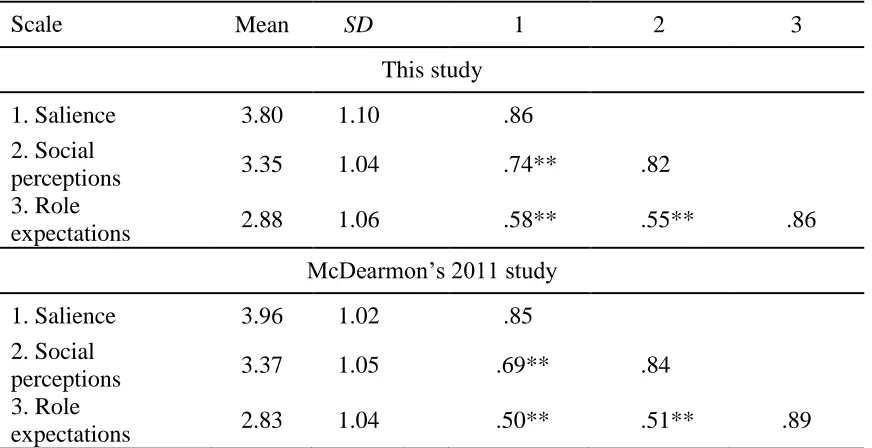
for the Three Scales in the Pilot Study and the McDearmon
(2011) Study ... 37 Table 4: Mean, Standard Deviation (SD), Skewness (Skew), Minimum (Min)
and Maximum (Max) Values for Alumni Role Identity Scores
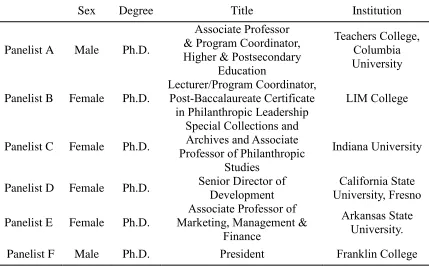
Collected in the Pilot Study ... 39 Table 5: Sex, Highest Degree Earned (Degree), Title, and Institution
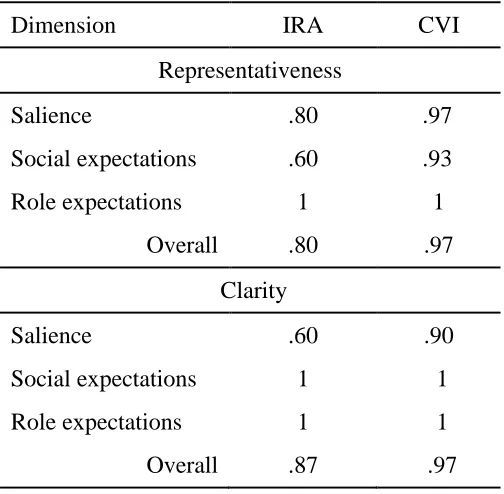
of Content Validity Panelists ... 41 Table 6: Interrater Agreement (IRA) and Content Validity Index (CVI) for
the Representativeness and Clarity of the Three Dimensions of the Alumni Role Identity Questionnaire (McDearmon, 2011) ... 44 Table 7: Means, Standard Deviations (SD), Intercorrelations, and Reliabilities
for the Three Scales of the Alumni Role Identity Questionnaire in This Study and the McDearmon (2011) Study ... 52 Table 8: Mean, Standard Deviation (SD), Skewness (Skew), Minimum (Min)
and Maximum (Max) Values for Alumni Role Identity Scores
Collected in the Study ... 53 Table 9: Means, Standard Deviations (SD), Minimum (Min) and Maximum
(Max) Values, and Correlation Coefficients for all Variables
in the Study, n=4,094 ... 58 Table 10: Predictors of Alumni Role Identity: Regression Results of Alumni
Role Identity Score on Alumni Communications
and Social Media Use Attributes... 63 Table 11: Independent Samples t-test Results of Alumni Role Identity Score
and Alumni Communications and Social Media Use Attributes ... 64 Table 12: Predictors of Alumni Role Identity: Regression Results of Alumni
Role Identity Score on Alumni Behavioral Attributes ... 65 Table 13: Independent Samples t-test Results of Alumni Role Identity Score
and Alumni Behavioral Attributes ... 66 Table 14: Predictors of Alumni Role Identity: Regression Results of Alumni
Role Identity Score on Alumni Demographic Attributes ... 68 Table 15: Independent Samples t-test Results of Alumni Role Identity Score
xi
Table 16: Predictors of Alumni Role Identity: Stepwise Regression Results of Alumni Role Identity Score on Alumni Giving Attributes ... 70 Table 17: Independent Samples t-test Results of Alumni Role Identity Score
by Donors and Non-Donors ... 70 Table 18: Rotated Factor Loadings of the 18 Predictor Variables ... 72 Table 19: Correlation Matrix of Factor Scores Generated for Principal
Components ... 73 Table 20: Regression Results of Alumni Role Identity Score on Uncorrelated
Factors Scores ... 74 Table 21: Independent Samples t-test Results by Donor and Non-Donor
Respondents for the Three Scales of the Alumni Role Identity
Questionnaire in This Study and the McDearmon (2011) Study ... 77 Table 22: Comparison of Stepwise Logistic Regression Odds-Ratios (OR)
of Donor on Select Alumni Role Identity Questionnaire Items ... 79 Table 23: Location, Sex, Age, and Race of the Study Population (n=61,324)
xii
LIST OF FIGURES
Figure 1: Research Design... 29 Figure 2: Frequency and Distribution of Alumni Role Identity Scores
of Pilot Study Participants, n=100 ... 40 Figure 3: Relationships Analyzed and Statistical Methods Employed
to Address the Research Questions (RQ) ... 51 Figure 4: Frequency and Distribution of Alumni Role Identity Scores
of Study Participants, n=4,094 ... 53 Figure 5: Variable Loadings, Effect-size Results (adjusted R2) and Beta Values
1
CHAPTER I
THE RESEARCH PROBLEM
Philanthropy in American higher education is “central to the mere existence and
daily function of academe" (Drezner, 2010, p. 194). Contributions from alumni support
the basic operational expenses of colleges and universities, not just institutes, student
scholarships, and faculty chairs. Alumni donations directly funded 6.5% of college and
university expenditures in 2011 (Council for Aid to Education, 2012). Three years later,
that figure was as high as 12% for some institutions (Brown, Dimmock, Jun-Koo Kang,
& Weisbenner, 2014). Fundraising from alumni is now a fundamental part of the higher
education industry and a significant factor in the success of colleges and universities.
With that in mind, the systematic decline of alumni participation in giving across the
United States is cause for concern. According to the Council for Advancement and
Support of Education (2014), the percentage of alumni who made a donation to their
alma mater dropped by half from 18% in 1990 to less than 9% in 2013. The dramatic
downshift of alumni participation in giving has colleges and universities across the nation
scrambling to find ways to support their operations by increasing revenue received
through fundraising.
Statement of the Problem
Higher education fundraising efforts rely primarily on the use of observable
alumni behaviors and demographics to predict alumni participation in giving. The success
of these efforts depend on the ongoing ability of a college or university to “find variables
that are observable to the development offices on campus [that] can be effectively used to
2
demographic criteria to solicit alumni is commonplace in higher education fundraising,
new research suggests that the effectiveness of such strategies is falling short.
In their study of graduates of a large West coast university, Netzer, Lattin, and
Srinivasan (2008) found that observable alumni characteristics such as event attendance
and volunteering were too personal in nature to be “treated as decision variables” in
predicting alumni participation in giving (p. 96). Netzer et al. determined that the
motivation behind a graduate’s resolve to volunteer for or attend an event at the
university could not be quantified in and of itself, and therefore the ensuing alumni
behaviors (i.e. volunteerism or attendance) could not be operationalized as a predictor of
alumni participation in giving.
In a separate study on alumni giving at a major Midwestern university,
researchers Durango-Cohen, Torres, and Durango-Cohen (2013) demonstrated that
fundraising efforts at the school relied too heavily on observed alumni behaviors and
demographics to segment solicitations, resulting in missed opportunities for the
university to garner donations from graduates that fell outside the selected criteria.
Durango-Cohen et al. concluded that fundraising efforts at the university they studied
were constrained by an over dependence on observable alumni demographics and
behaviors (including alumni age, proximity to campus, event attendance, and
volunteering).
The work of Stephenson and Bell (2014) found that biographic and demographic
indicators were immaterial in predicting alumni participation in giving. In a study of
alumni of a mid-sized, public university on the East coast, the researchers reported that
3
simply because they were an alumna/us” (p. 181). Stephenson and Bell found that alumni
behavioral and demographic predictors seemed to have no bearing on a graduate’s
decision to make a donation.
The work of Netzer et al. (2008), Durango-Cohen et al. (2013), and Stephenson
and Bell (2014) demonstrated that alumni behavioral and demographic attributes may not
be as effective at predicting alumni participation in giving as previously thought. One
possible explanation for the decline in effectiveness of these predictors is the nature of
the attributes themselves. By using observable alumni characteristics as predictors of
alumni giving, colleges and universities only scratch the surface “into the deep, internal
processes that are used by alumni when making the decision to give" (McDearmon, 2013,
p. 285). The problem in current higher education fundraising practice is that colleges and
universities are losing the ability to reliably predict alumni participation in giving.
Background and Need
Alumni participation in giving is an economic transaction in which a former
student makes a financial contribution to his or her alma mater. It is a transaction that
research has shown can be predicted through the observation of alumni attributes (Weerts
& Ronca, 2009). Alumni behaviors, such as volunteering or attending a university event,
are associated positively with alumni giving (Sun, Hoffman, & Grady, 2007; Weerts &
Ronca, 2007), as are demographic factors such as age and income level (Bruggink &
Siddiqui, 1995; Clotfelter, 2003). Taken together, alumni behavioral and demographic
indicators are the de facto criteria used by colleges and universities to target specific
4
For example, when faced with limited resources, a college or university
fundraising office might choose to mail a philanthropic solicitation only to those
graduates who are older, have a steady income, and who have volunteered for or attended
a university event. Based upon the research (Bruggink & Siddiqui, 1995; Clotfelter, 2003;
Sun et al., 2007; Weerts & Ronca, 2007), a segmentation strategy of this nature should
yield a greater number of alumni donors relative to the number solicited versus a broader
and more expensive strategy of mailing the same solicitation to all alumni. The success of
such a strategy, however, is limited by the very alumni characteristics on which it relies.
An institution’s fundraising office can no more change a graduate’s age from young to
old or income from low to high than it can alter a graduate’s decision whether or not
attend an event in order to increase that graduate’s likelihood to donate. The usefulness of
alumni demographic and behavioral attributes to predict patterns of alumni giving is
finite because the attributes themselves are immutable, leaving little to no room for
expanding philanthropic efforts.
The rising proportion of college and university operating budgets funded directly
by alumni donations (Brown et. al, 2014; Council for Aid to Education, 2012), the decline
of alumni participation in giving (Council for the Advancement and Support of
Education, 2014), and new research in the literature (Durango-Cohen et al., 2013; Netzer
et al., 2008; Stephenson & Bell, 2014) point to a need within the academic community to
examine the antecedents of alumni participation in giving for predictors that are not
behavioral or demographic in nature. In order to increase alumni donations, new
non-behavioral, non-demographic predictors of alumni giving are needed – predictors that can
5
Theoretical Rationale
The theoretical rationale for this study is role identity theory (Stryker 1968, 1980).
Role identity theory was first applied in the field of higher education fundraising by J.
Travis McDearmon (2011) in his study of alumni giving at a large, public research
university in the Midwest. McDearmon operationalized a new, behavioral,
non-demographic predictor of alumni participation in giving that he called “alumni role
identity.” Based in Stryker’s (1968, 1980) role identity theory and Callero’s (1985)
seminal study of role identity salience, alumni role identity is a psychometric measure of
the degree to which a college or university graduate self-identifies and is identified by
others as an alumnus of a particular institution, and the inclination of that graduate to
exhibit the socially expected behaviors of alumni, such donating to their alma mater
(McDearmon, 2011).
McDearmon defined alumni role identity as an alumni attribute with dimensions
of “salience, social and institutional expectations, and alumni involvement behaviors”
(2013, p. 285). Using a self-report role identity survey instrument adapted from Callero
(1985), McDearmon collected data on 688 alumni from a sample of 8,987 undergraduate
degree holders from a large, public research university in the Midwest. The instrument
assessed respondent levels of alumni role identity through a 15-item questionnaire
designed to measure self-definition with the role of alumnus, social perceptions of being
an alumnus, and self-expectations of behavior as an alumnus. McDearmon found that
alumni who reported higher levels of alumni role identity participated more frequently in
6
McDearmon’s (2011, 2013) findings suggested that higher education fundraising
professionals could use alumni role identity as a criteria to more effectively solicit
donations from alumni. Whereas McDearmon expanded the literature by operationalizing
a new non-demographic, non-behavioral predictor of alumni participation in giving, there
has been no research into what factors and characteristics lead to increased alumni role
identity. As McDearmon himself pointed out, further research was needed to understand
the “factors and characteristics...that lead to increased alumni role identity” (2013, p.
300). Therein lies the purpose of this study.
Purpose of the Study
The purpose of this study was to determine the factors and characteristics that
influence alumni role identity. Based upon the research of Durango-Cohen et al. (2013),
Netzer et al. (2008), and Weerts and Ronca (2007, 2009), a graduate's alumni role identity
might be influenced by any number of alumni attributes that are known to by associated
positively with alumni participation in giving, including alumni communications, social
media use, behaviors, demographics, and giving history. This study examined the factors
and characteristics that influenced alumni role identity among the graduates a mid-size,
Jesuit university on the West coast.
Research Questions
This study investigated the factors and characteristics that influence alumni role
identity. The following research questions guided this research:
1. What is the relationship of alumni role identity to alumni communications and
social media attributes, including e-newsletter opens, Facebook activity, and
7
2. What is the relationship of alumni role identity to alumni behavioral attributes,
including event attendance and volunteering?
3. What is the relationship of alumni role identity to alumni demographic
attributes, including age, years from degree, distance from campus, and status
as a traditional or non-traditional undergraduate alumnus(a)?
4. What is the relationship of alumni role identity to alumni giving attributes,
including donating, number of gifts, total lifetime giving, largest gift, and total
years of giving?
Limitations of the Study
This study was conducted using a sample from a mid-size, Jesuit university on the
West coast. The rationale for this decision was that institutionally-held data on the sample
population was readily available to the researcher. This study collected data from a
self-report survey instrument and compiled it with information on participants that was stored
in the university’s alumni database. Access to the level of confidential information
needed to conduct this research would have been difficult to attain from multiple
institutions. The researcher therefore determined that it was most feasible to conduct this
study using a study population from a single university.
The primary limitation of this research is that the findings cannot be generalized
beyond the alumni population of the university from which the study sample was drawn.
The implications of the study, however, are important for any 4-year institution of higher
education in the United States. By describing the factors and characteristics that influence
alumni role identity, this study provides higher education fundraising practitioners with
8
A secondary limitation of this study is the use of email to recruit study
participants. This limitation was moderated by two factors: (1) the number of alumni for
whom the university had an email address on file, and (2) the accuracy of the email
address itself. The sample population for this study included only those graduates to
whom the university was able to send email. As a result, the generalizability of the study
findings to alumni who do not have an email address on file with the university must be
considered.
The researcher acknowledges the potential for bias in conducting this study. Since
2013, the researcher has served as the Director of Alumni Engagement for the university
that was the research setting. Intimate knowledge of the university’s fundraising activities
and alumni population might have introduced a predisposition on the part of the
researcher regarding the potential for positive outcomes in the findings of this study.
Significance of the Study
The implications of this study are directed specifically at the higher education
fundraising industry. This research helps address the nation-wide decline of alumni
participation in giving by describing the factors and characteristics that influence alumni
role identity. First proposed by McDearmon (2011), alumni role identity is a
non-behavioral, non-demographic predictor of alumni participation in giving. It is a
psychometric measure of a graduate’s level of connection to his or her alma mater and an
indicator of their inclination to donate to the same.
Research has shown that fundraising in higher education is becoming overly
reliant on alumni demographics and behaviors – over which colleges and universities
9
Durango-Cohen et al., 2013; Stephenson & Bell, 2014). The factors and characteristics
identified in this study can be used by higher education fundraising professionals to
implement engagement strategies focused on increasing alumni role identity at the level
of individual alumni. A fundraising strategy of this nature broadens the scope of college
and university fundraising efforts by providing fundraising offices with the ability to
predict a graduate’s inclination to donate more effectively.
Definition of Terms
The following terms have been operationalized for this study.
Alumni—A group of graduates of a college or university.
Alumnus(a)—A graduate of a college or university.
Alumni Attribute—Any quantifiable piece of information about a college or university
graduate, especially in relation to their alma mater (such as age, class year,
number of university events attended, amount of donations made, etc.).
Alumni E-newsletter—A monthly email communication from a college or university to its
graduates that contains campus news and information about alumni activities.
Alumni Engagement—The function of higher education fundraising that seeks to
reconnect graduates with their alma mater through communications, events,
programs, and services in order to increase a graduate’s inclination to donate to
the institution.
Alumni Role Identity—An alumni attribute defined according to dimensions of “salience,
social and institutional expectations, and alumni involvement behaviors”
10
operationalized as measure of a graduate’s level of connection to the university
and an indicator of their inclination to donate to the same.
Alumni Role Identity Score—The sum of the three scales of the alumni role identity
questionnaire (McDearmon, 2011). A participant’s score is an indicator of his or
her level of identity salience with the alumni role. In this study, alumni role
identity score was the criterion, or dependent variable, in the research questions.
Donor—A person who had made a gift of cash or cash-equivalents to a college or
university.
Fundraising—The art and science of seeking of financial support for an organization, in
the case of this study, for a college or university.
Higher Education—An industry comprised of colleges and universities that grant
undergraduate and graduate degrees.
Identity Salience—The readiness of an individual to act out a particular role (Stryker,
1980). In this study, alumni role identity salience is represented by alumni role
identity score. Study participants with higher alumni role identity scores are
presumed to have a more salient alumni role identity.
Role Identity—The character and the role that an individual devises for himself or herself
as an occupant of a particular social position (McCall & Simmons, 1966, p. 68).
In this research, the social position being studied is ‘alumnus(s)’ and the
subsequent role identity being examined is the character that an individual
formulates for himself or herself as a college or university graduate.
San Francisco Bay Area—A geographic region in northern California that is comprised
11
Francisco, San Mateo, Santa Clara, Alameda, Contra Costa, Solano, Napa,
Sonoma, and Marin counties.
Segmentation—The strategy and process of separating alumni into groups for solicitation
according to attributes that are thought to increase participation in giving;
specifically for the purpose of prioritizing resources towards soliciting donations
from alumni that exhibit the greatest propensity to donate.
Social Media Use—In the context of this study, social media use was the act of an
alumnus or alumna “liking” the university’s official Facebook page, adding their
university degree to their public profile on LinkedIn, or joining the university’s
official alumni networking group on LinkedIn.
Solicitation—The process and act of asking alumni in person, by phone, or through mail
or email for a donation to a college or university.
Traditional Undergraduate—An individual who received their degree from the
university’s full-time undergraduate program, as compared to a part-time
undergraduate degree completion program.
Summary
Chapter I of this paper presented the research problem. Now more than ever,
colleges and universities are relying on funds raised from alumni to support their
operations. At the same time, alumni participation in giving is in decline and new
research in the area of higher education suggests that college and university fundraising
strategies are overly reliant on alumni behaviors and demographics as predictors of
alumni giving. A 2011 study by McDearmon identified a behavioral,
12
which he called “alumni role identity.” Based in role identity theory (Stryker 1968, 1980;
Callero, 1985), McDearmon’s research demonstrated that alumni role identity was
associated positively with alumni participation in giving. However, his investigation fell
short of identifying the factors and characteristics that influence alumni role identity
itself. The purpose of this study was to determine the factors and characteristics that
influence alumni role identity. The implication of this study was to improve the ability of
colleges and universities to predict alumni donations by increasing the alumni role
identity of graduates.
Chapter II provides a review of the literature on the antecedents of alumni
participation in giving and an in-depth examination of role identity theory and the alumni
role identity construct. Chapter III outlines the methodology of this study and the results
of a pilot study and content validity study conducted using McDearmon’s (2011) alumni
role identity questionnaire. Chapter IV describes the results of this study. Chapter V
presents a discussion of the findings, along with implications for practice and
13
CHAPTER II
REVIEW OF THE LITERATURE
Restatement of the Problem
Success in higher education fundraising is highly dependent on the ability of
colleges and universities to exploit alumni attributes that have been shown to lead to
increased donations (Monks, 2003). New research has revealed that certain of these
attributes, namely alumni behavioral and demographic attributed, have lost some of their
effectiveness in predicting alumni participation in giving (Durango-Cohen et al., 2013;
McDearmon, 2013; Netzer et al., 2008, Stephenson & Bell, 2014). A non-demographic,
non-behavioral indicator of a graduate’s inclination to donate to his or her alma mater is
needed in order to give institutions new leverage in attracting donations from alumni.
One such indicator, and the one examined in this study, is alumni role identity – a
psychometric alumni attribute that has been shown to be positively associated with
alumni participation in giving (McDearmon, 2011, 2013). The purpose of this study was
to determine the factors and characteristics that influence alumni role identity.
Overview
The purpose of this literature review is to provide historical background on higher
education fundraising in the United States and to review the current literature on
predictors of alumni participation in giving. This chapter also includes an in-depth review
of role identity theory, including roles and expectations and measuring role identity, and
14
Historical Background
Standard practice in higher education alumni fundraising relies heavily on the use
of observable alumni demographics and behaviors to predict a graduate’s propensity
donate (Monks, 2003). Alumni that demonstrate behaviors and demographics that are
positively associated with giving are targeted for philanthropic solicitation. Alumni that
do not exhibit such attributes are left out of solicitation efforts. This practice is based
upon decades of research on the alumni to alma mater relationship, which has shown that
alumni behaviors, such as volunteering or attending a university event, are associated
positively with alumni giving (Sun et al., 2007; Weerts & Ronca, 2007), as are
demographic factors such as age, income level, and proximity to campus (Bruggink &
Siddiqui, 1995; Clotfelter, 2003).
Higher education fundraising professionals use alumni demographic and
behavioral criteria to inform their work on a daily basis (Monks, 2003). The
effectiveness, however, of alumni demographic and behavioral attributes in predicting
alumni giving has been called into question by some researchers (Durango-Cohen et al.,
2013; McDearmon, 2013; Netzer et al., 2008, Stephenson & Bell, 2014). As the reliance
of institutions of higher education on fundraising continues to increase (Brown et. al,
2014; Council for Aid to Education, 2012), college and university fundraising
professionals are looking for new ways to identify alumni who are likely to become
15
Predictors of Alumni Participation in Giving
Outside of McDearmon’s (2011, 2013) research, no literature exists on the
predictors of alumni role identity. Since alumni role identity is known to be associated
positively with alumni participation in giving (McDearmon, 2011), this literature review
explored the antecedents of alumni participation in giving in search of possible predictors
of alumni role identity. This section is organized according to groupings of attributes that
emerged from the literature: (1) alumni communications and social media use, and (2)
alumni behaviors and demographics.
Alumni communications and social media use
A review of the literature in higher education fundraising reveals a lack of serious
inquiry into the impact of email communication and email readership on alumni
donations. Some evidence exists that university-produced communications, such as
alumni magazines, can influence philanthropy. In her study of predictors of alumni
philanthropy at a public college in New England, Shadoian (1989) found that alumni
readership of university publications was the most useful factor at differentiating between
alumni donors and alumni non-donors, more accurate even than behavioral and
demographic attributes. Further research into the use of electronic communications by the
nonprofit sector has shown that an increase in email readership by non-profit
constituents, such as members of non-profit organizations, was correlated with increased
donations and volunteer participation (Burt & Taylor, 2000; Olsen, Keevers, Paul, &
Covington, 2001). Taken together, these findings suggest that alumni readership of
university-authored electronic publications might also be associated positively with
16
The research of Shadoian (1989), Burt and Taylor (2000), Olsen et al. (2000), and
Covington (2011) suggest that alumni readership of electronic communications sent by
their alma mater are associated positively with alumni participation in giving, and might
therefore also be predictors of alumni role identity. In this research, readership of the
university’s alumni e-newsletter by study participants was one of the many factors
examined for its relationship to alumni role identity.
In addition to alumni communications, another relatively unexplored area in the
literature of higher education fundraising concerns the relationship of social media use to
alumni participation in giving. A 2013 study from the University of Massachusetts
Dartmouth revealed that nearly 100% of U.S. colleges and universities surveyed were
using at least one social media platform to promote their institution (Barnes & Jacobsen,
2013). While the use of social media by colleges and universities may be ubiquitous, little
is known about how a graduate’s interaction with their alma mater via social media might
influence his or her participation in giving. Nor is the influence of social media marketing
on online giving behavior in the nonprofit sector well understood (Ingenhoff & Koelling,
2009).
In the private sector, efforts by organizations to cultivate trust with customers via
social media have been shown to increase customer loyalty (Porter & Donthu, 2008). A
2011 study of the attitudes of consumers in Turkey towards social media marketing by
corporations demonstrated a positive relationship between the two (Akar & Topcu, 2011).
The findings of Porter and Donthu (2008) and Akar and Topcu (2011) suggest that
institutions of higher education might also increase loyalty and attitudes of support
17
In a cross-sectional study of American internet users, researchers Reddick and
Ponomariov (2013) examined the relationship between nonprofit organization
participation, social media use, and online giving. They found that while off-line
participation in a nonprofit organization was associated positively with making an online
gift to the same organization, usage of social media “does not appear to influence
the likelihood of donating online, nor is there an interaction between associational
participation and usage of social media” (2013, p. 1211). Although social media
marketing conducted by nonprofit organizations may not have much influence on the
giving behavior of prospective donors and constituents, Reddick and Ponomariov’s
results demonstrated that social media marketing strategies focused on deepening
relationships with existing constituents could positively influence online giving behavior.
In the context of higher education fundraising, Reddick and Ponomariov’s
research suggests that a preexisting relationship, such as that between a graduate and his
or her alma mater, might contribute to a graduate’s inclination to make an online
donation. Just over 21% of survey respondents in Reddick and Ponomariov’s (2013)
study indicated they were currently active in a college or university alumni association.
Factor analysis of active group participation and donations via the internet revealed that
the most influential factor in predicting online giving behavior among all respondents
was off-line affiliation with an alumni association.
The work of Reddick and Ponomariov (2013) showed that social media marketing
did influence online giving behavior among survey respondents that reported active,
18
interact with their alma mater via social media platforms may have a higher propensity to
donate than alumni who do not participate in such interact actions.
The research of Porter and Donthu (2008), Akar and Topcu (2011), and Reddick
and Ponomariov (2013) suggest that alumni interactions with their alma mater via social
media use are associated positively with alumni participation in giving, and therefore
might also be predictors of alumni role identity. In this research, the social media use of
study participants was one the many factors examined for its relationship to alumni role
identity.
Alumni behaviors and demographics
In their case study of alumni giving at an independent liberal arts college in the
late 1980’s, Bruggink and Siddiqui (1995) demonstrated the value of an alumni
behavioral and demographic attributes in predicting in alumni donations. The researchers
used an econometric model of giving to test the impact and relative influence of a variety
of demographic and behavioral factors on alumni participation in giving. Findings
revealed that alumni income, volunteering, and age were, in that order, the three factors
most highly correlated with alumni donations.
In addition to alumni volunteering, income, and age, alumni attendance at
on-campus events has also been shown to be a predictor of alumni participation in giving. A
2008 study of 15 years of data on alumni giving at Middlebury College, a small, elite
liberal arts school in Vermont, found that reunion attendance was a “good indicator of
attachment to the college” (Holmes, 2009, p. 24). Middlebury College alumni that had
attended an on-campus event were 17% more likely to make a contribution to their alma
19
campus was a moderating factor in predicting participation in giving. Graduates who
lived within 250 miles of the Middlebury College campus were more likely to donate to
than alumni who lived further away from their alma mater.
Using alumni data collected by the College and Beyond survey from 14 private
colleges and universities, Clotfelter (2003) showed that the amount of a graduate's
donation to their alma mater was most highly correlated with age and income. Unlike
other econometric studies of alumni giving, Clotfelter’s study took into account the
“personal experiences that often link donors to the organizations to which they donate”
by including several measures of alumni satisfaction as independent control variables
(2003, p. 119). This study demonstrated that “donations that alumni made to their alma
maters were highly correlated to their expressed satisfaction with their own college
experiences and other measures of satisfaction with the institution” (Clotfelter, 2003, p.
119).
In 2008, researchers Netzer, Lattin, and Srinivasan investigated the alumni to
alma mater relationship at a large West coast university. Borrowing from the literature on
customer relationship management, the researchers used a Hidden Markovian Model
(HMM) to analyze the giving patterns of 1,256 randomly selected graduates. Inputs for
the model included demographic, behavioral, and attitudinal data on the sample
population sourced from the institution’s alumni and donor database. The attitudinal
measures were taken from an alumni engagement survey deployed by the university’s
alumni association.
The HMM analysis placed study participants into one of three states of alumni
20
were far more likely than their peers to report a strong emotional connection to the
university and a strong sense of responsibility to help the university (Netzer et al., 2008).
In an unexpected finding, the HMM revealed that alumni behaviors such as reunion
attendance and volunteering did not differ significantly among alumni in each of the three
states of giving. This study showed that an alumni who demonstrated high feelings of
connection to their alma mater were more likely to also be donors. Additionally, the
findings indicated that alumni behavioral factors were not necessarily uniform in
predicting alumni giving.
In their study of alumni of the University of Wisconsin, Madison (UW Madison),
Weerts and Ronca demonstrated that “alumni beliefs about institutional needs” were
associated positively with alumni participation in giving (2009, p. 95) . The authors
gathered demographic, behavioral, and attitudinal information from a randomly selected
group of undergraduate alumni via a self-report survey questionnaire. Using a statistical
model based on Breiman, Friendman, Olshen, and Stone’s (1984) Classification and
Regression Trees, the researchers compared survey responses with observed instances of
respondent giving, as recorded in the institution’s alumni and donor database.
The first node in the classification tree and, therefore, the most important factor in
a graduate’s decision to give to UW Madison, was his or her own perception of the
degree to which the university needed their financial support. Although demographic
factors did reveal themselves as decision nodes further down the classification tree, the
primary finding of this study is that a non- demographic, non-behavioral variable – in this
case alumni perceptions of UW Madison – was the primary predictor of whether or not a
21
The research of Bruggnik and Siddiqui (1995), Clotfelter (2003), Holmes (2009),
Netzer et al. (2008), and Weerts and Ronca (2009) revealed that alumni behaviors and
demographics such as event attendance, volunteering, age, and proximity to campus are
associated positively with alumni participation in giving, and might therefore also be
predictors of alumni role identity. In this research, the behaviors and demographics of
study participants were some the many factors examined for their relationship to alumni
role identity.
Theoretical Framework
This subsection presents the theoretical and empirical foundation of alumni role
identity, an alumni attribute developed by McDearmon (2011) that served as the criterion,
or dependent variable, in this study. Rooted in Stryker’s (1968, 1980) role identity theory,
alumni role identity is a quantifiable, non-behavioral, non-demographic alumni attribute
that is a known predictor of alumni participation in giving (McDearmon, 2011).
Role identity theory
Role identity theory (Stryker, 1968, 1980) defines the social nature of self as
constituted by society and provides a framework for understanding self-concept and
normative behavior (Hogg, Terry, & White, 1995). It describes the self “as differentiated
into multiple identities that reside in circumscribed practices (e.g., norms, roles)” (p.
255). Role identity theory posits that individuals placed into socially recognizable
positions will likely fulfill the social expectations of those positions (Stryker, 1968,
1980). For example, a person appointed as the leader of a group will likely exhibit
leadership behavior toward that group. Stryker theorized that socially recognizable
22
those that occupy them (1980, p. 57). In the context of this study, the position was
‘alumnus(a)’ and the behavior to be predicted was the social expectation that alumni give
back to their alma mater through donations.
Role identity theory frames a socially recognized position, like alumnus(a), as a
status that comes with a set of social expectations. In the United States, college and
university graduates are given the socially recognized status of alumni. Inherent with this
status are the mores of the community of all college graduates. In his seminal work on the
topic, Sheldon Stryker wrote, “role theory uses "status" for parts of organized groups and
"role" for basically fixed behaviors expected of persons occupying a status” (2001, p. 17).
Identity theorist Ralph Turner expanded Stryker’s definition, stating that a role is, at its
essence, “a cluster of behaviors and attitudes that are thought to belong together” (Turner,
2001, p. 233). According to these criteria, the position and status of ‘alumnus(a)’ is a part
of a college graduate’s identity by virtue of the fact that it differentiates them from the
behaviors and attitudes of others, namely as those that did not attend college. The
position and status of ‘alumni(a)’ is a role unto itself.
Roles and expectations
Role identity theory holds that individuals can inhabit many different roles at the
same time (Stryker, 1968). Roles are not mutually exclusive. A person can occupy several
roles at once, such as a family role (father or mother), a role at work (boss or
subordinate), and a role at play (friend or teammate). The expectations of each role,
however, can be quite different. Role expectations are acquired by the role player through
symbolic interactions learned in social situations (Stryker, 1980). Social expectations are
23
through roles (Turner, 2001, p. 233). For example, a college graduate accrues, from
interacting with other alumni, a set of expectations about how they are to interact with
their alma mater.
When an individual becomes a role player, like that of an alumnus or alumna, role
identity theory suggests that the individual will, both in terms of behavior and attitude,
start to become guided by the expectations of that role (Turner, 2001). The role
expectations of those occupying the role of alumnus(a) are acquired and defined when
interacting with groups of other alumni. According to Turner, “casual patterns of behavior
materialize spontaneously as individuals acquire situational identities during sustained
interaction in a group setting” (2001, p. 234). For a college graduate, interacting with
other alumni creates social mores that influence choice, and when the patterns and
behaviors expected of alumni are not met or exceeded, others within and outside of the
community of alumni take notice.
Research into the alumni role has found that donating to one’s alma mater is the
most prevalent social and communal expectation among college graduates. In their study
of a mid-sized public university on the East coast, Stephenson and Bell (2014) found that
the majority of alumni that donated to the institution did so primarily because of their
status as an alumnus or alumna. Using a self-report survey instrument, the researchers
gathered data from 2,763 alumni respondents, 1,617 of whom were donors to the
university. Of those that were donors, 68% “claimed that they donated money to the
institution simply because they were an alumna/us” (p. 181). Over two-thirds of alumni
participants in Stephenson and Bell’s study indicated that they donated to their alma
24
population studied, there existed a strong belief that alumni were expected to contribute
financially to the university for no reason other than their role as a graduate.
Measuring role identity
The most widely accepted method in the literature for measuring role identity is
the role identity questionnaire developed by Peter Callero in 1985 (McDearmon, 2011,
2013). Using blood donors as a case study, Callero (1985) conducted an empirical
investigation of role identity by comparing reported levels of role salience, social
perceptions, and role expectations among voluntary blood donors with documented
instances of blood donation. Callero (1985) found that study participants who
demonstrated greater salience toward their identity as blood donors were likely to give
blood more often than blood donors who demonstrated a lower salience with the blood
donor identity. Participants with high and low salience for their role identity both gave
blood, but those with higher degrees of salience towards their identity as blood donors
were shown to donate blood more often. Callero’s research demonstrated that “when a
role identity is salient it is more representative of the self” it has “implications for social
relationships in that they announce to others who we are” (1985, p. 205). Callero’s
findings supported Stryker’s (1968, 1980) theoretical position that privately and publicly
expressed alignment with a role identity results in increased likelihood for an individual
25
Alumni role identity
McDearmon (2011) extended the concept of role identity into the area of higher
education fundraising by adapting Callero’s (1985) methodology. To arrive at a measure
of alumni role identity, McDearmon (2011) modified Callero’s (1985) role identity
questionnaire by substituting the role ‘alumnus(a)’ for ‘blood donor.’ Both studies used
Stryker’s (1968, 1980) role identity theory as a framework to test their respective
hypotheses. Callero’s (1985) research sought to determine the degree to which one’s
identity as a blood donor was related to frequency of blood donation. McDearmon’s
(2011) research examined the relationship between one’s identity as a college graduate
and one’s support behaviors towards one’s alma mater, namely donations.
McDearmon (2011) theorized that college and university graduates with a high
degree of alumni role identity would be more active participants in alumni giving and
other support behaviors. To test this hypothesis, McDearmon administered an alumni role
identity questionnaire to a random sample of alumni of a large, public research university
in the Midwest. Using independent samples t-tests, McDearmon compared respondents’
questionnaire scores with respondents’ self-reported donation history and found that
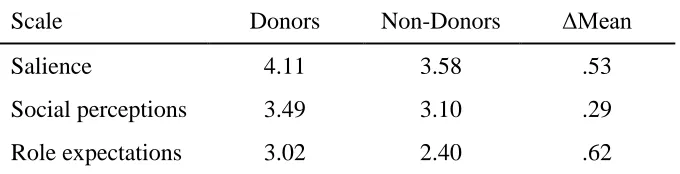
study participants who were also donors responded more favorably across all three scales
of the alumni role identity questionnaire as compared to their non-donor peers
( McDearmon, 2013, p. 294) (see Table 1). These findings indicated that graduates with
high alumni role identity were more likely to be donors to their alma mater than
26
Table 1
Independent Samples t-test Results by Donor and Non-Donor Respondents for the Three Scales of McDearmon’s 2011 Alumni Role Identity Questionnaire
Scale Donors Non-Donors ΔMean
Salience 4.11 3.58 .53 Social perceptions 3.49 3.10 .29 Role expectations 3.02 2.40 .62
Note: Means and difference between means of the two groups (ΔMean). n= 657. All means were significant at the p<.05 level.
McDearmon’s research demonstrated that alumni role identity is associated
positively with alumni giving. Specifically, participants who reported high levels of
salience towards their role identity as an alumnus(a) were more likely to be donors to
their alma mater. These results corroborated Callero’s (1985) findings that increased role
identity salience was a predictor of fulfilling role expected behavior.
McDearmon’s (2011) work suggested that higher education fundraising
professionals could use alumni role identity as criteria to more effectively solicit
donations from alumni. In order to do this, however, McDearmon noted that further
research was needed to understand the “factors and characteristics...that lead to increased
alumni role identity” (2013, p. 300). This study continued the research where
McDearmon left off by investigating the factors and characteristics that influence alumni
27
Summary
In the mid-2000s, research in higher education fundraising began to explore
antecedents of alumni giving that operate independent of, or in addition to, the
demographic and behavioral characteristics of graduates. This was in response to findings
in the literature that indicated a decline in the effectiveness of alumni demographic and
behavioral attributes in predicting alumni donations. Evidence suggests that alumni role
identity, a non-behavioral and non-demographic alumni attribute, is a useful predictor of
alumni participation in giving (McDearmon, 2011). However, further research is needed
to determine how higher education fundraising professionals might influence alumni role
identity and thereby increase giving. A review of the literature suggests that alumni role
identity will be associated positively with alumni attributes such as communications,
social media use, behaviors, demographics, and giving. This study contributes to the
28
CHAPTER III
METHODOLOGY
Restatement of the Purpose
The purpose of this study was to determine the factors and characteristics that
influence alumni role identity. Alumni role identity is a measure of a graduate’s level of
connection to his or her alma mater and an indicator of their inclination to donate to the
same (McDearmon, 2013). Alumni role identity has been shown to be associated
positively with alumni donations (McDearmon, 2011). This study investigated the factors
and characteristics that influence alumni role identity among the graduates of a mid-size,
Jesuit university on the West coast.
Research Design
This research was a quantitative study that used correlational, t-test and regression
techniques to analyze data collected from a self-report survey and the university’s alumni
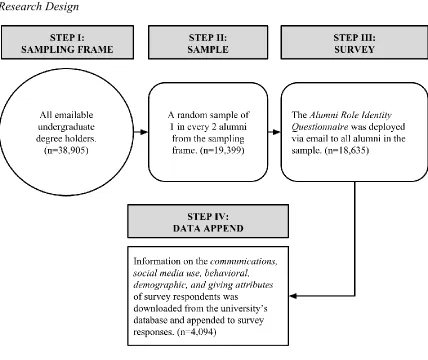
database. The method took place in four steps (see Figure 1). The first step was to gather
the email contact information for all alumni within the sampling frame, which included
all undergraduate degree holders with an email on file in the university’s alumni database.
Second, a sample was created by selecting 1 in 2 alumni from the sampling frame using a
random sampling generator. Third, the alumni role identity questionnaire (McDearmon,
2011) was sent to all alumni in the sample using the online survey software Qualtrics.
Fourth, information on the communications, social media use, behaviors, demographics,
and giving history of survey respondents was appended to survey responses using data on
29
identity questionnaire responses along with alumni attributes and giving history for all
study participants.
Figure 1
Research Design
Research Setting
This study examined the graduates of a mid-size, Jesuit university on the West
coast. Founded by the Society of Jesus in 1855, the university enrolled all male students
until 1965, when women were first admitted as students. The institution was comprised
of two professional schools that grant graduate degrees only, the School of Law and the
School of Education, two professional schools that award both undergraduate and
30
Professions, and the College of Arts and Sciences, which grants both undergraduate and
graduate degrees. Additionally, the institution had a robust non-traditional undergraduate
degree granting program, which enrolled adults as part-time students. In the fall of 2015,
the university enrolled 6,782 undergraduate students and 4,046 graduate students in over
100 degree programs. The school had 15 NCAA Division I sports teams and held 8
national sports championships (Ziajka, 2016). The main campus of the university was
located in the San Francisco Bay Area.
Population and Sample
The population studied was all living alumni that held an undergraduate degree
from the university. As of May 31, 2016, the university had 61,324 living undergraduate
alumni. The population was narrowed to a sampling frame that included only those
graduates to whom the university was able to send email. At the time this study was
conducted, the university had on file a valid email address for 60% of the living
undergraduate alumni population (Holland, 2016). An alumnus(a) was considered
emailable if the university had a valid email address on file for them in the institution’s
alumni database and the alumnus(a) had not opted out of email communications from the
university. In this study, an email address was deemed to be valid if the most recent email
communication sent to that address by the university did not fail, bounce, or return
rejected.
The study sample was limited to emailable undergraduate alumni in order to
ensure that all possible study participants would have had equal chance to read electronic
communications from the university. This criteria was critical to the research question
31
role identity. The sampling frame included 38,905 emailable undergraduate degree
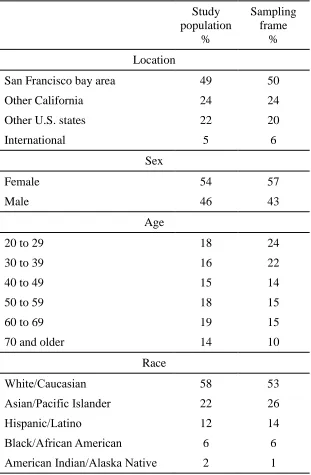
holders. Demographic statistics were generated for both the study population and
sampling frame (see Table 2).
Table 2
Location, Sex, Age, and Race of the Study Population (n=61,324) and Sampling Frame (n=38,905)
Study population
%
Sampling frame
% Location
San Francisco bay area 49 50 Other California 24 24 Other U.S. states 22 20
International 5 6
Sex
Female 54 57
Male 46 43
Age
20 to 29 18 24
30 to 39 16 22
40 to 49 15 14
50 to 59 18 15
60 to 69 19 15
70 and older 14 10
Race
White/Caucasian 58 53
Asian/Pacific Islander 22 26
Hispanic/Latino 12 14
32
A random sample generator was used to select 1 in 2 alumni from the sampling
frame to create the study sample. Only half of the sampling frame was selected for the
study sample in order to preserve the remaining members of the sampling frame for
possible further research related to the findings of this study. All alumni within the
sampling frame had an equal chance of being selected for the study sample. Prior to the
random sampling procedure, 105 alumni were removed because they had responded to
the pilot study, which reduced the total members of the sampling frame to 38,800. The
random sampling generator produced a list of 19,400 alumni to invite to participate in the
study. This list contained the first name, last name, email address, and a unique numeric
identifier for each invitee.
Instrumentation
This study used data collected via a self-report survey instrument titled the
Alumni Role Identity Questionnaire (McDearmon, 2011), used by permission of the
author (see APPENDIX A). McDearmon adapted this instrument from a questionnaire
developed by Peter Callero (1985) for a study of role identity salience. Both instruments
were based in Stryker’s (1968, 1980) role identity theory. The alumni role identity
questionnaire was designed to measure the strength of a graduate’s identification with his
or her role as an alumnus(a) from a particular college or university. In his research,
McDearmon (2011) theorized that graduates with high alumni role identity would be
more likely to participate in the support behaviors towards their alma mater, such as
making a donation. McDearmon created the alumni role identity questionnaire in order to
33
Like Callero’s (1985) protocol for gauging role identity salience, McDearmon’s
(2011) alumni role identity questionnaire quantified role identity according to three
dimensions: (1) identity salience, (2) social perceptions, and (3) role expectations. The
dimensions are separated into three sections in the questionnaire. Each section includes
five statements. The statements address aspects of a respondent’s self-definition with the
role of alumnus (identity salience), his or her social perceptions of being an alumnus
(social perceptions), and his or her self-expectations of how alumni should behave toward
their alma mater (role expectations).
When completing the questionnaire, respondents were asked to indicate their level
of agreement with each statement along a 6 point Likert scale, listed below with coded
response values in parentheses.
Strongly Disagree (1)
Disagree (2)
Slightly Disagree (3)
Slightly Agree (4)
Agree (5)
Strongly Agree (6)
The first section, which measured the identity salience of the respondent,
contained five statements, each presented below with item labels in brackets.
Respondents were asked to rate their agreement with each statement according to the
34
1. Being a <universityname> alumnus(a) is something I often think about.
[salience1]
2. I really don't have any clear feelings about being a <universityname>
alumnus(a). [salience2]
3. For me, being a <universityname> alumnus(a) means more than just
contributing money or time. [salience3]
4. Being a <universityname> alumnus(a) is an important part of who I am.
[salience4]
5. I would feel lost if I were not a <universityname> alumnus(a). [salience5]
The second section, which measured the social perceptions of the respondent,
contained five statements, each presented below with item labels in brackets.
Respondents were asked to rate their agreement with each statement according to the
scale provided.
6. Many people think of me as being a <universityname> alumnus(a). [social 1]
7. Other people think that being a <universityname> alumnus(a) is important to
me. [social2]
8. It is important to my friends and family that I am a <universityname>
alumnus(a). [social3]
9. It does not matter to most people that I am a <universityname> alumnus(a).
[social4]
10.Many people I know are not aware that I am a <universityname> alumnus(a).