Center
Center
Doctoral Dissertations Theses, Dissertations, Capstones and Projects
12-2019
Perceptions of Physics Teachers in Singapore About Curriculum
Perceptions of Physics Teachers in Singapore About Curriculum
Sequencing
Sequencing
Lay Lean Fong
Follow this and additional works at: https://repository.usfca.edu/diss
The University of San Francisco
PERCEPTIONS OF PHYSICS TEACHERS IN SINGAPORE ABOUT CURRICULUM SEQUENCING
A Dissertation Presented to
The Faculty of the School of Education Learning and Instruction Department
In Partial Fulfillment
of the Requirements for the Degree Doctor of Education
by Lay Lean Fong
ii ABSTRACT
Perceptions of Physics Teachers in Singapore about Curriculum Sequencing
Curricular sequencing is central to instruction design and enactment. If carefully
planned for, the order of topics to be taught would determine how the fundamentals of the
discipline can be presented and introduced to learners, in a sequence that eases them into
more complex ways of reasoning and thinking about the domain. These sequences or
learning progressions often reflect the experts’ conceptual schemas of the discipline and are
conceived as strategic models for instruction (Duschl et al., 2011).
The varied findings from current research on learning progressions underscore the
complexity of teaching and learning, and imply that even ‘well-crafted’, standards-based,
and authorized learning progressions need to be understood, decoded and customized by
educators in the field. Teachers need to interpret and enact these standards-endorsed
learning progressions in ways that are appropriate for their own students.
This qualitative study sought to understand and document what physics teachers in
Singapore believe are conceptual themes that connect the concepts in Kinematics and
Dynamics, the logic that underpins the transitions between topics, and the considerations as
well as general strategies that teachers employ when planning a learning progression. The
sample was purposive and comprised 22 teachers who taught physics at grades seven to
twelve in Singapore schools. Data were obtained through in-depth, task-based interviews
with the physics teachers.
The study found that the teachers’ arrangement of the learning objectives were
iii
total of ten pedagogical strategies and considerations (six that were concept-themed and
four that were generic) that teachers may reflect on when planning a learning progression.
These ten pedagogical practices offer teachers various permutations for curricular
sequencing.
The findings of the study suggest that teachers recognize the significance and
consequence of learning progressions and conscientiously plan their presentations of the
teaching unit. In the teachers’ daily teaching practice, the order of topics taught depends on
contextual factors and their professional beliefs, and would thus depart from a standard
iv
This dissertation, written under the direction of the candidate’s dissertation committee and approved by the members of the committee, has been presented to and accepted by the Faculty of the School of Education in partial fulfillment of the requirements for the degree of Doctor of Education. The content and research methodologies presented in this work represent the work of the candidate alone.
Lay Lean Fong 6 November 2019
Candidate Date
Dissertation Committee:
Dr. Robert Burns 6 November 2019
Chairperson
Dr. Mathew Mitchell 6 November 2019
v
Certainly this was a journey I would not have envisioned, let alone complete,
without the support and care of my advisors, colleagues, classmates, friends and family. To
each and every one of you in USF and at home, thank you.
I will forever be grateful to Dr. Robert Burns, my dissertation chair who is an
incredible mentor. I have learned much from his deep insights and his passion for this
‘disciplined inquiry’. I am grateful for the succinct questions that he poses when I am well
satisfied and complacent; questions that would once again open another thought, other
possibilities. Much more than that, I appreciate his kindness and support.
I would like to express my gratitude to Dr. Mathew Mitchell who is always there
with a kind word. I have enjoyed all of his lessons that always seemed to pass so quickly,
leaving me deep in thought and totally engaged.
I am grateful to Dr. Helen Maniates for sharing her expertise in teacher education,
listening to my fledging ideas and allaying my doubts. I have benefited from her inputs and
guidance.
To the wonderful teachers who responded to my invitations and who gave so
generously of their time and ideas, there would be no research without you. Thank you for
your dedication to your students and to our combined future.
To my best friend who started me on this journey, thank you for believing in me.
vi
Page
ABSTRACT ... ii
SIGNATURE PAGE ... iv
ACKNOWLEDGEMENTS ... v
TABLE OF CONTENTS ... vi
LIST OF TABLES ... viii
LIST OF FIGURES ... ix
CHAPTER I STATEMENT OF THE PROBLEM ... 1
Purpose of the Study ... 9
Significance of the Study ... 11
Theoretical Rationale ... 12
Teachers as curriculum gatekeepers ... 14
Learning progressions ... 17
Background and Need for the Study ... 19
Research Questions ... 27
A Look at Singapore Educational Reform ... 28
Definition of Terms ... 29
II REVIEW OF THE LITERATURE ... 32
Curricular Coherence ... 32
Learning Progressions ... 40
Preconceptions and Misconceptions in Science ... 52
Teacher Planning ... 55
Summary ... 59
III METHODOLOGY ... 60
Research Design ... 60
Population and Sample ... 62
Protection of Human Subjects ... 64
Instrumentation ... 64
Task One ... 64
Task Two ... 65
Task Three ... 66
Curricular sequencing ... 67
Granularity ... 69
Descriptors of topic and sub-topics ... 69
Duration of unit / curriculum pacing ... 71
Validity and reliability ... 71
Procedures / Data Collection ... 73
Data Analysis ... 75
Coding the interviews ... 78
vii
Teachers’ arrangements of specific instructional objectives ... 83
Analysis of the interview with a focus on Research Question 1 ... 92
Code @1: Beliefs and definitions ... 93
Code @2: Transition between Kinematics and Dynamics ... 95
Code @3: Conceptual themes that link Kinematics and Dynamics SIOs ... 95
Key nodes ... 96
Dependency ... 98
Real-world context ... 101
Scientific notation and representations ... 102
Scalars and vectors ... 103
Reductionist approach ... 104
Code @4: Prior knowledge, subsequent concept ... 106
Code @5: Language of curriculum descriptors ... 107
Research Question 2 ... 114
Analysis of the interview with a focus on Research Question 2 ... 114
Code @6: General sequencing considerations and strategies ... 115
Student readiness ... 115
Assessment ... 117
Spiral curriculum ... 118
Thinking routines ... 119
Code @7: The duration of the Kinematics and Dynamics unit ... 119
Code @8: Bottlenecks, misconceptions and interventions ... 120
Code @9: Value of interview tasks ... 127
Teacher Dimension for Learning Progression ... 128
Summary ... 129
V SUMMARY, LIMITATIONS, DISCUSSION, AND RECOMMENDATIONS ... 135
Summary of Study ... 135
Summary of Findings ... 139
Limitations ... 140
Discussion of Findings ... 142
Conclusion ... 150
Recommendations for Educational Practice ... 153
Recommendations for Future Research ... 154
REFERENCES ... 156
APPENDIX A: Review of Qualitative Research ... 166
APPENDIX B: Two Types of Topic Descriptors ... 171
APPENDIX C: Interview Questions ... 173
APPENDIX D: Participant’s Consent to Interview ... 174
viii
Table Page
1. Learning Progression as Cognitive Model and as Educational Practice ... 18
2. Sample Learning Outcomes for Physics Program at Grades 10 and 12 ... 39
3. Tasks Implemented in the Semi-Structured Interviews ... 62
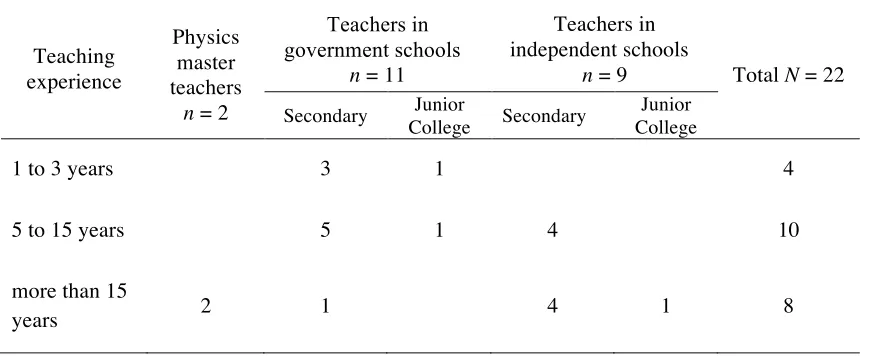
4. Description of Sample ... 63
5. Definitions of Topic Descriptors Used in Tasks ... 70
6. Study Timeline ... 75
7. Code List for Research Question 1 ... 80
8. Code List for Research Question 2 ... 80
9. Aggregate Sequence of SIOs Based on its Average Position across Interviews ... 90
10.Specific Instructional Objectives Most Matched with Disciplinary Core Ideas ... 109
11.Aggregate Sequence of DCIs Based on the Average Position ... 111
ix
Figure Page
1. Curricular sequence as mitigated by teacher knowledge and domain standards .. 13
2. Model of the iterative nature of teacher deliberations during instruction ... 16
3. Numeracy scale description and achievement distributions for the first three years of school (Meiers et al., 2006) ... 45
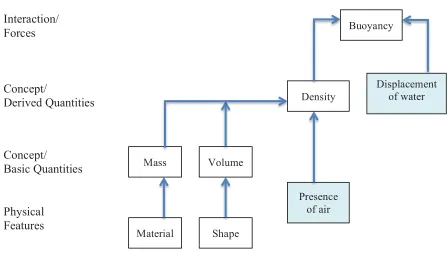
4. An example of learning progression for teaching floating and sinking ... 68
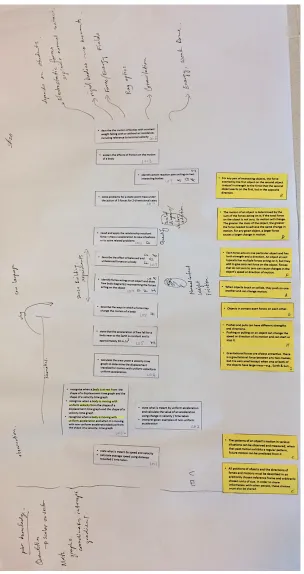
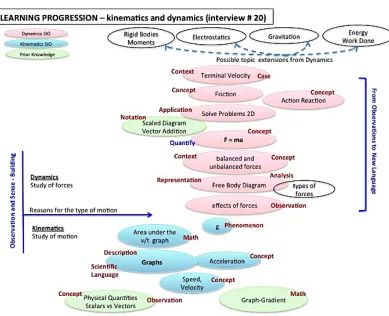
5. Image of the topic sequence as arranged by teacher #20. ... 77
6. Schematic of the SIO-based learning progression as arranged by teacher #20 ... 78
7. Arrangement of specific instructional objectives by teacher #20. ... 84
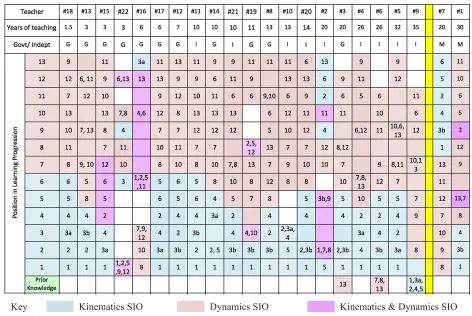
8. Learning progressions – SIO sequence sorted by years of teaching experience ... 86
9. Variation in the positions of SIO1 across the teachers for interview Task 1 ... 88
10. Variation in the positions of SIO13 across the teachers for interview Task 1 ... 88
11.Composite of SIO connection lines sorted by years of teaching experience ... 91
12.Composite of SIO connection lines grouped by school type (government, independent, junior college) ... 92
13.Themes and Codes for Research Question 1 ... 93
14.Transition from Kinematics to Dynamics, learning progression #6 ... 98
15.Kinematics and Dynamics learning progression #6 ... 99
16.Kinematics and Dynamics learning progression #7 ... 100
17.Teacher matching of disciplinary core ideas with specific instructional objectives ... 108
18.Disciplinary core ideas learning progression sorted by years of teaching experience ... 112
x
20.Duration for teaching Kinematics and Dynamics sorted by type of school
(government or independent) ... 120
21.Kinematics and Dynamics learning progression #18 ... 123
22.Positions of challenging SIOs in learning progressions (highlighted red) ... 126
23.Actual and rendered diagram of learning progression for interview #11 ... 142
24.Theoretical rationale incorporating study findings on principles and strategies that guide curriculum sequencing for Kinematics and Dynamics ... 146
CHAPTER I
STATEMENT OF THE PROBLEM
Curricular sequencing is central to instruction design and enactment. If carefully
planned for, the order of topics to be taught would determine how the fundamentals of the
discipline can be presented and introduced to learners, in a sequence that eases them into
more complex ways of reasoning and thinking about the domain. Posner and Strike
(1976) contended that there are guiding principles on how content could be sequenced.
Three of these principles advocate that the order of the content elements be made
consistent with (a) how students learn; (b) the epistemological nature of the propositions
and concepts; and/or (c) real world needs and expectations of how students use this
knowledge. An ideal curricular sequence meets the developmental needs of the student
and is coherent, in that it is consistent with the structure of the underlying discipline
(Shepard, Daro, & Stancavage, 2013).
Beyond a broad consensus amongst educators that a well-planned and executed
curricular sequence would benefit and improve student learning, there are several
considerations that frame how such a sequence could be developed and how a sequence is
to be assessed and validated. First, there are theories on how learners build and refine
their understanding of the discipline. These theories include schema theory (Bartlett,
1954) and models for conceptual change (Kuhn, 1996; Chi, 2005; Smith, 2007). Second,
there is difficulty in obtaining a consensus for what constitutes conceptual coherence or a
continuity of conceptual themes across the topics to be taught (Duschl, Maeng, & Sezen,
2011). Third, would be determining the outcomes and end-goal objectives of the
their associated assessment methods and calibration instruments. There is a wide range of
terminology and approaches for planning, ordering and monitoring learning. Thus,
curriculum sequencing is a complex process and a fundamental problem in education.
In science education, the general topic of this dissertation, the current concepts in
curricular sequencing are curriculum coherence and learning progressions. Curricular
coherence is defined as the alignment of the topic concepts within a subject discipline,
with considerations for the depth at which a topic is to be studied, and the sequencing of
said concepts within and across grades (Schmidt, Wang, & McKnight, 2005). The Atlas
of Science Literacy (American Association for the Advancement of Science [AAAS],
2001a) visualized coherence as organized and sequenced maps that guide instruction in
building a deep and interconnected understanding of concepts.
According to the National Research Council (NRC, 2007), a coherent science
curriculum should connect concepts over time by building ideas between relevant topics
and by aligning instruction and assessment. Shwartz, Weizman, Fortus, Krajcik, and
Reiser (2008) contended that coherent themes in instructional activities and materials
would provide students with learning opportunities that enable them to use and link
concepts, and thus, be able to understand a broader context, solve problems and predict
phenomena. The authors argued that coherence in the science curriculum is necessary to
achieve true scientific literacy in students, and must be explicitly planned. The current
science education reform (Next Generation Science Standards [NGSS], 2013a) is built
around this coherence, relevance, depth, and connectivity of domain concepts in science
However, these broad objectives and high-level goals together with teacher guides
coupled with common curriculum activities tend to be ineffective, because they presume
that the materials meet the needs of all students (Windschitl & Calabrese-Barton, 2016).
Teachers play critical roles in ensuring the suitability of the instruction with the learning
needs of their students, and for their particular school context. This ‘suitability’ is another
aspect of coherence; that the instruction is coherent with the student’s level of
understanding (Kuhn, 1996; Chi, 2005; Smith, 2007). Student conceptual development is
a critical consideration in the sequencing, planning and design of the science curriculum.
Hence, the endorsement and development of learning progressions in the current science
education reform. It is an endeavor to integrate student-curriculum interactions with
disciplinary rigor in science instruction (NRC, 2007).
Learning progressions are research-based descriptions of how students typically
develop knowledge about a subject. They depict the stages of attainment and describe the
performances and student work that were observed at each stage (Shin, Stevens, &
Krajcik, 2009). Learning progressions also reflect the experts’ conceptual schemas of the
discipline and are conceived as strategic sequences of instruction that guide learners in
successively more complex ways of thinking (Duschl et al., 2011). Learning progressions
use core themes to organize content elements and are presented as coherent learning
sequences.
Generally, learning progressions describe longer sequences of instruction that will
map core ideas and performance expectations for a unit of study or for the entire
instructional program (Duncan & Hmelo-Silver, 2009). The longer timeframe when
more cohesive picture of the disciplinary knowledge and practice to be taught (Duschl et
al., 2011). For this dissertation, the sequencing of teaching objectives in a physics unit on
Kinematics and Dynamics will be explored.
As a forerunner to learning progressions, the term learning hierarchies was used
by Gagné (1968) to refer to “a set of specified intellectual capabilities having, according
to theoretical considerations, an ordered relationship to each other” (p. 1). Gagné argued
that the objectives of instruction could be analyzed and condensed to its set of
subordinate skills. These skills form a hierarchy, which he considered to approximate a
plan for effective instruction. It is notable that Gagné referred to learning hierarchy as a
set of ordered intellectual skills, and that lower skills generate ‘positive transfer’ to
higher-order ones. The hierarchy can be represented by drawing ‘lines of transfer’
between skills. This perception of learning hierarchy is similar to the definition of
learning progressions as pathways of increasingly more sophisticated ways of thinking.
However, Gagné (1968) contended that each skill that is learned “may generalize to many
other situations and domains which cannot possibly be represented on a single chart”
(p. 4). Learning hierarchy, thus, only represents the most probable expectation of positive
transfer for learners.
In a 1973 review of the research on learning hierarchies, White (1973) found
results that were inconsistent with the theory. Students were observed to behave in ways
which did not fit proposed hierarchies. White postulated that the inconsistent results were
due to the complexity of the skills tested, i.e. performing diverse classes of problems.
White and Gagné (1974) proposed that a hierarchical relationship would be better
In the context of teaching, learning progressions are cognitive models that
represent how students think within a domain and how they move towards an expert
understanding (Corcoran, Mosher, & Rogat, 2009). Learning progressions indicate the
pathway, sometimes multiple pathways, that students navigate when learning. Conversely,
knowing where the student is on the learning progression can provide useful feedback to
teachers on classroom instruction and for interventions purposes (Furtak, 2009).
It is important to remember that learning progressions tend to be hypothetical
models, although these models may be informed by experts in the discipline. Learning
progressions need to be validated by research. Currently, many studies are focused on the
development and empirical validation of learning progressions in specific topics.
Researchers have tested learning progressions for science topics such as energy (e.g.,
Herrmann-Abell & DeBoer, 2018), force and motion (e.g., Alonzo & Steedle, 2009),
climate change (e.g., Breslyn, McGinnis, McDonald, & Hestness, 2016), genetics (e.g.,
Todd, Romine, & Cookwhitt, 2017), and disciplinary practice, such as scientific
modeling (e.g. Forbes, Zangori, & Schwarz, 2015).
Researchers and educators use various approaches in these validation studies,
differing not only in the topics researched, but in the methods, instruments and analysis.
For example, in investigating students’ understanding of force and motion, Alonzo and
Steedle (2009) used a learning progression as a framework for crafting assessment items.
They interviewed the students to obtain their rationale for their answers to the assessment
items. The interview data gave insights to the students’ thinking and attainment level, and
is a test of the validity of the assessment items in placing the level of the students’
density. Using clinical interviews, he tested instructional tasks meant as interventions for
the students’ preconceptions.
Generally, the approaches and study designs of learning progression research
were combinations of two intents:
1. testing a hypothetical learning progression created by experts
• quantifying levels of student responses to formulate a scale
• developing and evaluating assessment items against the levels of a learning progression
• analyzing cross-sectional studies that show what students know at the different levels
2. using student responses to develop or modify a learning progression
• collating qualitative descriptions of student performance at each level
• determining level-appropriate instructions to match the expectations of specified learning progressions
The varied findings that come from the research on learning progressions
underscore the complexity of teaching and learning, and imply that even ‘well-crafted’,
standards-based, and authorized learning progressions need to be interpreted and
customized by educators in the field.
Many researchers have reported difficulty in translating levels of complexity as
demarcated in learning progression into assessment items. Todd et al. (2017) shared that
students demonstrated different levels of understanding, but that the lower level
understanding would not necessarily be incorrect, just less sophisticated. Hence, it was
level-coded distractors. The subsequent analysis of student responses would also need to
consider the occurrence of guessing in multiple-choice items. Alonzo and Steedle (2009)
found it difficult to locate the students in predetermined levels as the students’
understanding of a word or concept would be changing and the students used the concept
inconsistently. Todd et al. (2017) noted an “interesting phenomenon in progression
research which is the concept of the ‘messy middle’ where students may move forward or
backward through the progression as their knowledge increases or decreases over time”
(p. 34). While this highlights the difficulties in crafting instruments for progression
studies, the research also implies that a learning progression is not a single linear pathway
(Corcoran et al., 2009).
What the current studies on learning progression have indicated is that
formulating one is a very complex process. Learning does not follow a linear trajectory,
and is predicted by many factors, both cognitive and affective. Teachers still need to
interpret and enact standards, and be guided by standards-endorsed learning progressions
in ways that are appropriate for their own students.
Not all researchers subscribe to the idea of learning progressions. Shavelson and
Kurpius (2012) advised that “there is likely no single linear path within and across
students’ knowledge structures that has the potential to provide a tidy learning
progression and prescriptions for teaching” (p. 19). In a critique of the prominence given
to learning progression research, Sikorski and Hammer (2017) cautioned that learning
progressions would not reflect the complexity and modality of learners’ knowledge,
reasoning, learning, and motivations.
representations of domain schema and reinforce the core ideas and relationships that need
to be taught (NRC, 2007). They offer coherence between topics and give a disciplinary
perspective of concept development (Corcoran et al., 2009). They also map performance
expectations and benchmarks for the subject (AAAS, 2001a). Learning progressions are
ways in which researchers and educators can present, discuss and research the merits of a
specific order of topics. In tandem with the development of the Next Generation Science
Standards (NGSS, 2013b), several policy reports from the National Research Council
(NRC, 2006, 2007) have advocated for the use of learning progressions as a means of
aligning standards and ensuring coherence in curriculum and assessment.
While most would agree that learning progressions represent a reasoned and
reasonable approach to teaching and organizing instruction in the long term, it is a new
paradigm for some teachers attempting to implement learning progressions and may be in
conflict with their current approach and practices. More research needs to be done to
include teachers’ perspectives of learning progressions and of their implementation
decisions.
Teachers play a central role in curriculum planning and instruction enactment. They
are the implementers of the larger educational vision and objectives, and as curriculum
planners and makers, teachers’ knowledge and beliefs about their own teaching practice
determine the experience and learning that students take away from the lesson (Van
Driel, Beijaard, & Verloop, 2001). It is important to incorporate teachers’ thinking and
beliefs about curriculum coherence when considering the effectiveness of a proposed
curricular sequence or ‘storyline’.
on how teachers can implement learning progressions effectively. What is less
understood is how teachers consider and interpret these learning maps. In a review of
core practices for science education, Windschitl and Calabrese-Barton (2016) noted that:
Although some high-quality curriculum exists, it appears to be crucial that teachers also develop the capacity to adapt these materials to the needs of their students and to the affordances of their local contexts. We know little of how teachers engage in these complex practices. We do know that teachers should design for a series of connected ideas and experiences around a set of fundamentally important science concepts, but how teachers reason with and about subject matter knowledge is poorly understood (p. 1124).
Ultimately, teachers are the ones to effect the curriculum changes. However,
there has been little research on teachers’ thinking about curriculum in general and on
their thinking about curricular coherence and sequencing which is the specific area of
focus for this dissertation.
Purpose of the Study
Consequently, this study examines teachers’ thinking about coherence and
curricular sequencing by focusing on physics teachers’ perception and use of learning
progression in Singapore. The teacher’s role in instruction is especially important given
the recent education reforms in the United States and in Singapore that is moving
subject-matter content and objectives away from declarative knowledge to focus on deep
structures that emphasize conceptual continuity and reasoning. The reform shifts
education from a rote instruction of discrete topics to activity structures and science
discourse. Teachers need to plan for coherence or a domain ‘storyline’ that they can
experience and it is this teachers’ perspective that this dissertation will explore.
Beginning and experienced teachers will be asked to share how they might
sequence lesson objectives for the unit on Kinematics and Dynamics and give their
rationale for that sequence. Kinematics and Dynamics are usually taught over seven to
twelve weeks or in 20 to 35 hours of curriculum time. To move away from the idea that
the sequence is merely a listing of topics, the term learning progression will be used to
infer that the sequence (single or multiple pathways) is pedagogically sound and
conceptually coherent. The study hopes to find if there are similarities between the
learning progressions set up by beginning teachers and those by experienced teachers.
The rationale given by the teachers for their arrangement of topics will indicate the
organizing concepts and conceptual themes that guide their teaching. A second variation
will be between teachers in government schools and those in independent schools. The
independent schools in Singapore are given more flexibility in determining the subject
curricula, and thus, teachers in independent schools will be expected to have more varied
opinions about curricular sequencing.
The exploratory nature of the study and the stated context (perceptions and
viewpoints of individuals) require a qualitative approach (Merriam & Tisdell, 2016). An
interview research design will be adopted (Goldin, 2000). Data will be obtained through
in-depth, task-based interviews with physics teachers. The purposive sample will be
teachers who teach physics at grades seven to twelve, in Singapore schools. The 20
participants will include experienced teachers who have taught for at least ten years and
beginning teachers with less than three years of service. As a reference, a pilot set of
teachers would also advise on the interview protocol and on the analysis of the interview.
The interview will be task-based, where teachers are asked to:
1. sort and sequence topics for the unit and explain relationships between topics,
2. match learning objectives with disciplinary core ideas, and
3. position common misconceptions where they are likely to occur in the teacher’s
own learning progression.
Artifacts such as the teacher’s arrangement of the lesson objectives will be
collected and analyzed together with the interviews. These interviews and artifacts will
present data on teachers’ thinking about coherence, organizing themes, effective
sequences and pre-emptive interventions for misconceptions.
Significance of the Study
This study is important for three reasons. First, it examines teachers’
understanding of concept development from the aspect of learning progressions: carefully
sequenced, pedagogically sound and conceptually coherent instruction. Researchers have
found that teachers’ understanding of subject matter is a prerequisite for the development
of pedagogical content knowledge (Van Driel et al., 2001). Pedagogical content
knowledge is of significance because it represents the blending of content and pedagogy
into an understanding of how content elements can be organized, represented, and
adapted for diverse learner profiles and needs (Shulman, 1986, 1987; Gess-Newsome et
al., 2017). This study examines teachers’ perceptions and thinking about what makes an
effective curricular sequence. A coherent sequence is core to presenting domain schema
and necessary for effective curriculum enactment.
between beginning and experienced teachers with respect to learning progressions. Van
Driel et al. (2001) had noted that beginning teachers usually have little pedagogical
content knowledge at their disposal as this professional knowledge is developed through
an integrative and cognitve process rooted in classroom practice. The study will also
examine how school context (government or independent schools) might affect the
teachers’ perspectives on what makes an effective learning progression.
Third, the study is important because it will map the knowledge and ideas of the
participants of the study and explore the feasibility of a composite learning progression
for Kinematics and Dynamics at the middle to high school level in Singapore. This
proposed composite map if viable could serve as a baseline for further developments in
curricular sequencing or be used in professional discourse.
Theoretical Rationale
The study looks at curricular sequencing from the point of application, at
instruction enactment. To get to the point of application, there is a need to first review the
acknowledged qualities and features of curricular sequencing, and then layer the practical
implications of educational reform directives and the evolving context.
The theoretical rationale for this study is built around two main principles guiding
curricular sequencing: (a) the sequence meets the developmental needs of the student,
and (b) the sequence is coherent, in that it is consistent with the structure of the
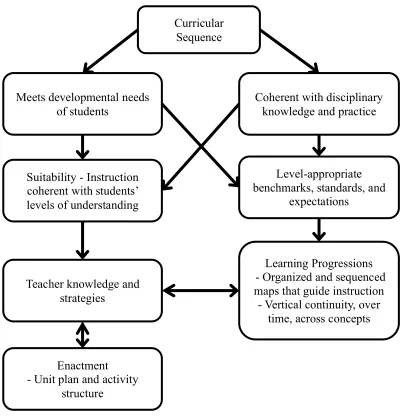
underlying discipline (Shepard et al., 2013). Figure 1 outlines the broad organizing
Figure 1. Curricular sequence as mitigated by teacher knowledge and domain standards.
There are two threads in the theoretical rationale. The first thread, represented to
the left in Figure 1, is that a curricular sequence caters to the developmental needs of
students. The instruction given to students builds upon and is coherent with students’
levels of understanding. This customization of instruction is the purview of teachers and
is influenced by teacher knowledge and beliefs. The second thread for curricular
sequencing, to the right in Figure 1, is the presentation of disciplinary core ideas and
Curricular Sequence
Meets developmental needs of students
Coherent with disciplinary knowledge and practice
Suitability - Instruction coherent with students’
levels of understanding
Level-appropriate benchmarks, standards, and
expectations
Learning Progressions
- Organized and sequenced maps that guide instruction
- Vertical continuity, over time, across concepts Teacher knowledge and
strategies
Enactment
practices in meaningful and applicable ways. The rigor and scope of the subject are
expressed in terms of standards and objectives. Learning progressions convey the
important themes and the organizing structures of the discipline.
There are crossovers in the two strands. Teacher planning of instruction is also
guided by standards and performance expectations, and where available, by learning
progressions ‘endorsed’ by policy institutions (AAAS, 2001b). The teacher’s
instructional plan is itself a form of learning progression. As learning progressions reflect
the continuity in learning, what the students learn in each lesson affects the next phase of
instruction. This forms a feedback loop. The planned learning progression would evolve
with use, with inputs from teachers, and with research on student interactions with each
sequence of instruction. Thus, following the interaction of the two threads in Figure 1, the
two main positions that frame this dissertation are: (a) teachers are curriculum
gatekeepers, and (b) learning progressions are coherent sequences that cater to student
learning. The intersection of these two is the subject matter of this dissertation.
Teachers as curriculum gatekeepers
This study adopts the theoretical perspective that teachers and the institutional
curriculum work together in collaborative association (Remillard, 2005). Clark and
Peterson (1986) indicated that teachers’ knowledge and strategies influence instruction.
Teacher inputs are needed to properly incorporate the new standards into instruction, and
in designing the intended learning experiences for their students. Thus, to have a deeper
understanding of the education reform implementation process, it is important for
education reformers to consider teachers’ thinking and their perceptions about standards,
Early literature on teacher planning found that teachers were inclined to refer to
textbooks when deciding on content they need to teach (Clark & Yinger, 1979). The
textbook as the main source of content is well established. For example, reforms in
mathematics education rely heavily on revised textbooks or curriculum materials to
initiate change in mathematics teaching (Ball & Cohen, 1996). However, studies have
found that teachers’ use of textbooks is highly subjective and teachers make tacit
decisions about what to read, and have varying interpretations of what the curriculum
material entails (Remillard, 2005).
Additionally, Beyer and Davis (2012) contend that “teachers’ interactions with
curriculum materials are mediated by their knowledge and beliefs about the subject
matter, teaching, and learning” (p. 131). Clearly, teachers’ perspectives as they interact
with curricular resources are essential to understanding curricular enactment and
particularly important in education reform. The enacted curriculum could be very
different from the intended curriculum.
Teachers’ work in classrooms is also an important consideration for this
dissertation. While teaching is an interactive activity that cannot be fully scripted, the
deliberations and instructional decisions that a teacher makes can be categorized.
Figure 2 shows a model of the teaching processes and teacher deliberations that happen in
classrooms. In this model, instruction starts with the students’ prior knowledge and
misconceptions (Kuhn, 1996; Chi, 2005; Smith, 2007). The teacher then decides on the
conceptual building blocks and the sequence of activities that is appropriate for the
students. The task or activity that the class engages in would ideally build on the students’
the next stage of instructions. The students’ learning is monitored with appropriate
interventions and feedback until the learning goal is achieved. The process is repeated as
the student learns and moves on to more involved concepts. This model of teacher
deliberation and instruction implementation gives an indication of the planning that
teachers need to do and serves as a guide for the interview protocol.
Learning progressions
Duncan and Rivet (2013) defined science learning progressions as
“research-based cognitive models of how learning of scientific concepts and practices unfolds over
time” (p. 396). Learning progressions were proposed by several committees of the
National Research Council (NRC, 2006, 2007) as reform to shift traditional science
education from a curriculum of wide-ranging topics to a few core ideas that would offer
students depth in thinking and analysis (Corcoran et al., 2009).
Learning progressions are models of learning over time, mapping core ideas of a
discipline for an instruction module or for the entire course. They are bound by a defined
curriculum with specified standards and objectives. The levels in the learning
progressions could be regarded as stages or scaffolds for instruction. Learning
progressions need not be linear but may have multiple viable paths for student
development and learning.
Learning progressions are developed and validated through an iterative process.
Even between experts in a discipline, there are differing perspectives about organizing
themes, levels of progress, instruments/assessment items, and grain size of learning
progressions. The validation studies are varied in their approaches in determining the
relationship between a theoretical learning progression with what is enacted and
experienced in classrooms. Learning progressions are still very much a work in progress.
Learning progressions can be considered as a cognitive model as well as a map for
educational practice. Corcoran et al. (2009), Popham (2007a), and Heritage (2008)
suggested guidelines for how learning progressions could be constructed. Table 1 lists
Table 1
Learning Progression as Cognitive Model and as Educational Practice
Role Functions of learning progressions
(Corcoran et al., 2009; Popham, 2007a; Heritage, 2008).
Cognitive model
• Identify ‘must-learn’ building blocks – pivotal stops
• List the progress variables that identify the critical dimensions of understanding and skill that are being developed over time
• Focus on relationships between concepts – iteration of process – continuity leading up to big ideas
• Identify the learning targets defined by societal aspirations, and central concepts and themes in a discipline (Corcoran et al., 2009)
Educational
practice • Draw up levels of achievement or stages of progress that define significant intermediate steps in conceptual/skill development that most students might be expected to pass through on the path to attaining the desired proficiency
• Be flexible – no single, universally-accepted learning progression – allow for student differences
• Include assessments that measure students’ understanding of the key concepts or practices and track their developmental progress over time (Corcoran et al., 2009)
• Construct learning progressions on the basis of some sort of backward analysis (Popham, 2007a)
• Have appropriate grain size for the progression’s building blocks – age/level appropriate (Popham, 2007a)
• Conduct analysis to form the framework for an optimally effective formative assessment process (Popham, 2007a)
• Use formative assessment – collect evidence of students’ progress along a planned progression rather than disjointed assessments (Heritage, 2008)
Learning progressions have been found to be invaluable in the development of
assessment systems and for tracking student progress (Heritage, 2008; NRC, 2006, 2007).
Ultimately, learning is a progression. Rather than having learning objectives as discrete
and distinct standards, expectations and benchmarks would be clearer if presented in the
form of learning progressions with core ideas, connection between ideas and the
organizing themes clearly depicted.
In order for teachers to assist students in their learning, teachers need to
understand the next level of achievement that needs to be attained. Explicit learning
progressions can provide the clarity that teachers need while ensuring continuity and
coherence in the instruction (Heritage, 2008). By itself, a learning progression is a
suggested learning road-map, which teachers still need to customize for their students and
for their specific context.
Background and Need for the Study
Schmidt et al. (2005) found that curriculum coherence is a predictive factor of
student learning as measured by the Trends in International Mathematics and Science
Study (TIMSS). The authors compared US science and math standards against the
standards of high-performing countries in TIMSS. They compiled ‘topic trace maps’ and
noted the commonalities in the standards for mathematics and science across the six
top-achieving TIMSS countries. The authors found that in more than 40 countries, the subject
standards shifted from elementary content topics to the more formal aspects of these
disciplines. This shift is implemented around the middle grades where the inherent
that the US national and state standards for mathematics and science tend to be wide and
‘diffused’.
A 2002 examination of the US science standards revealed that there were too
many learning objectives, many of which lacked vertical coherence (Schmidt, Houang, &
Cogan, 2002). Corcoran et al. (2009) described the science curricula as ‘thin’, and that
they “attempt to cover too much in each grade, and this in turn has encouraged instruction
that focuses on coverage of topics rather than providing the careful scaffolding required
for students to develop integrated and sophisticated understanding of science content” (p.
12). This wide coverage of topics without careful vertical conceptual planning, meant that
students were not spending enough time linking ideas, gaining a better understanding of
concepts or engaging in complex cognitive tasks (NRC, 2007). Science curricular reform
in many countries focus on implementing learning experiences that would lead to
proficiency and career options in STEM. It is not the coverage of the domain that is
important but rather how the instructional design builds connections, reasoning and
application of the concepts in the domain. Research on effective science education starts
with mapping what students are capable of achieving at the different levels of the
instructional program (NRC, 2012).
The Next Generation Science Standards (NGSS) were developed based on
recommendations from an NRC report, A Framework for K-12 Science Education (NRC,
2012), which wassubmitted by a committee of practicing scientists, cognitive scientists,
science education researchers, and science education standards and policy experts. The
report proposed that there be an evidence-based foundation for science standards. The
knowledge and connections between topics would foster a deeper understanding of
science and promote a higher order of thinking (Shepard et al., 2013). The sequence in
which these content elements are taught becomes pivotal in how the domain schema, and
thus, conceptual coherence is presented to the students. NGSS are at times described as
considered sequences of content elements or learning progressions.
In Singapore, there was a comparable policy initiative, ‘Teach Less, Learn More’
(TLLM), that was launched in 2005. Similar to the Next Generation Science Standards
(NGSS, 2013b) in the US, the policy in Singapore reduced content and focused on ‘deep
learning’ and on developing disciplinary practices. The argument supporting this policy
was that while Singapore had achieved a measure of success in educational benchmarks,
students may not be adequately engaged in the learning process. Without this engagement
and deep processing of concepts, students become passive learners, driven externally to
perform but are not necessarily inspired (Tharman, 2005). Part of the structural changes
that ensued was a ‘judicious’ 10–20% content reduction across subjects (MOE, 2005).
The ‘space’ afforded by this reduction, it was argued, would allow teachers to plan and
design lessons meant for stronger student participation with deeper and more connected
curricular structures (Ng, 2008).
NGSS and TLLM are recent education reforms. To achieve a more effective
implementation of reforms, policy makers and educational researchers have placed
increasing attention on the role of teachers. The early studies have found that reformers
focused on changing curricular materials and failed to anticipate that teachers might
misinterpret, ‘subvert’, and even ignore the unfamiliar curricula (Duffee & Aikenhead,
straightforward processes, but are intertwined with other teaching practices and are
context bound. Teachers adapt the curriculum according to their own context and
knowledge. Policy makers and reformers, it was found, needed to appreciate the central
role of the teacher in classroom instruction, and analyze how teachers’ beliefs and views
or their experiences and knowledge affect the fidelity of reform implementation (Duffee
& Aikenhead, 1992).
In fact, Ball and Cohen (1999) considered the reform implementation process as
mostly a matter of teacher learning. In a review of teachers’ thought processes, Clark and
Peterson (1986) noted that the focus in research has shifted from teacher characteristics
and teacher action to the thoughts and reasoning behind teacher action. The current
science educational reform is to promote scientific literacy. The new curriculum
emphasizes conceptual coherence and a depth of thinking that a coherent curriculum
affords. This requires the teacher to play a more involved role in connecting core ideas
and encouraging scientific discourse. All the more, it becomes important to understand
teachers’ thinking.
Research has found that teachers’ thinking about content, teaching, and learning
does not change easily (Thompson & Zeuli, 1999). Teachers’ knowledge is built from
experience and gleaned from what had worked in their classrooms. Van Driel et al.
(2001) submitted that teachers’ conceptions change slowly by “picking up new materials
and techniques here and there, and incorporating these in their existing practice” (p. 141).
The authors suggested that education reformers engage teachers in conversations, not
only in examining high-level objectives and the vision of the education reform but also in
endorsed by the research councils (NRC, 2006, 2007), teachers need to be involved in the
ideas and exercise of coherent sequencing as well.
The construct of learning progression is not new. Educational researchers have
been recording the development of children’s thinking over time as part of studies on
cognition. In proposing a theory of instruction, Bruner (1966) placed sequence and pace
of instruction as important curricular decisions. Bruner explained that,
… instruction consists of leading the learner through a sequence of statements and restatements of a problem or body of knowledge that increase the learner’s ability to grasp, transform and transfer what he is learning. In short, the sequence in which a learner encounters materials within a domain of knowledge affects the difficulty he will have in achieving mastery (p. 49).
Learning progressions as part of the current education reform is seen as an
important design idea for instruction and assessment (Shepard et al., 2013). Learning
progressions are increasingly used as models for conceptual development, assessment,
psychometric scales, curricular sequencing, science standards and instruction. “Learning
progressions hold the promise of transforming science education by providing better
alignment between curriculum, instruction, and assessment” (Duncan & Hmelo-Silver,
2009, p. 606).
The Herrmann-Abell and DeBoer (2018) study on students’ conception of energy
analyzed results from over 300 multiple-choice test items administered to more than
20,000 students from grades 4 through 12. The study used Rasch models to provide linear
measures of student performance that place item difficulty on the same scale. Thus, the
understanding of energy over nine grades. They found that students’ progressions were
not along a sequence of discrete steps (from forms of energy to transfer of energy to
dissipation of energy and then to conservation of energy). Students found certain forms of
energy and transfer mechanisms more difficult to understand than others. The study
found that the elementary school students achieved a grade-appropriate level of
understanding, while the middle and high school students lagged behind their expected
levels of performance.
The research on learning progression is helpful to educators as it collates
empirical data on student responses and thinking. From their study, Herrmann-Abell and
DeBoer (2018) surfaced topic areas that students have difficulty learning. In another
study on learning progressions, Smith (2007) was able to document the shift in students’
conception about weight from the concrete to the abstract.
As a reference map for conceptual development, learning progressions can inform
on formative assessment and serve as a guide for formulating rubrics. The teacher can
monitor and assess students’ levels of understanding within the science unit, align that to
the pathways on the given learning progression and more accurately plan an intervention
(Corcoran et al., 2009; Duncan & Hmelo-Silver, 2009). Learning progressions can be a
useful pedagogical tool for teachers.
Most learning progressions still have to be empirically validated, a process that is
iterative, alternating between development and validation. However, progress levels
within each subject are hard to define and thus, harder to measure. Nevertheless, each
study adds better descriptions and insights into how students respond to instruction and
be an accurate cognitive model of learning over time, as it would be unable to account for
the diversity of students and circumstances (Shavelson & Kurpius, 2012; Sikorski &
Hammer, 2017). Bearing that in mind, teachers remain the best mediators between the
generic curriculum documents and the students that they teach. Teachers’ pedagogical
knowledge play a significant role in teachers’ adaptations of curriculum. Teachers’
beliefs and experience guide their curricular planning and decisions (Remillard, 2005). It
is important that teachers develop the capacity to customize these new curricular
materials to the needs of their students (Windschitl & Calabrese-Barton, 2016). Yet, little
is known about teachers’ perspectives of the new requirements and of learning
progressions.
Physics as knowledge, as a field of study and as philosophy, is highly structured
and often abstract. The organization of physics concepts and thinking has been the focus
of several studies. It is found that experts think and solve problems very differently from
novices (Bransford, Brown, Cocking, & NRC, 1999; Chi, Feltovich, & Glaser, 1981).
Experts have organized their knowledge in ways that reflect a deep understanding of their
discipline. They are able to discern features and meaningful patterns in the information
that are not obvious to novices. There is a structure and a hierarchy in the physics domain
schema. More importantly, this knowledge is categorized and ‘conditioned’ for context
and applicability (Bransford et al. 1999). To a certain extent, learning progressions cater
to this requirement for deep connected learning by emphasizing coherence over time.
In their study on the use of schema theory for the design of instructional
materials, Hewson and Posner (1984) found that an “absence of a conceptual framework
shortly after their taking a test” (p. 119). In order to help students retain their knowledge
longer and in a more connected way, the authors suggested that students think of physics
as a study of change. The theme of change creates a ‘generative’ schema that will
organize old and new information. Themes, relationships and ‘storylines’ are important in
combining discrete ideas into more comprehensive and workable schemas. This
coherence is in part the rationale behind NGSS and TLLM educational reforms.
In a year-long study using video analyses of classroom teaching, Roth et al.
(2011) worked with 48 teachers to examine the effects of developing and using ‘science
content storylines’ on students’ science achievement. A science content storyline refers to
how topic concepts and activities in a science lesson or unit are sequenced and linked to
help students make sense of the topic elements and are thus able to ‘construct a story’ out
of them. This study follows an earlier one, Roth et al. (2006), that analyzed the TIMSS
1999 video study. The authors had found that in higher-achieving countries, teachers
“organized lessons in a way that resembled a storyline—with clear and explicit
connections made between the opening focus question, the science ideas, the activities,
the follow-up discussions of activities, and the lesson ending” (p. 120). Roth et al. (2011)
found that students in the treatment classes outperformed their peers, making more than
twice the gains in science knowledge. The authors believed that ‘storylines’ challenge
teachers to become more analytical about the science content and their teaching practice.
The ‘storylines’ underpin curricular coherence and remind teachers that disciplinary
schema is fundamental and intertwined with pedagogy.
Consequently, planning for and enacting coherent instruction is influenced by
(c) validity of guiding documents such as learning progressions (NRC, 2007),
(d) knowledge of students’ readiness and preconceptions (Kuhn, 1996; Chi, 2005; Smith,
2007), (e) knowledge of teaching strategies and interventions (Shulman, 1986;
Windschitl & Calabrese-Barton, 2016), and most importantly, (f) at the point of
implementation, what teachers know and perceive of the first five factors.
Research Questions
The questions posed for this study on the perceptions of physics teachers in Singapore about curriculum sequencing are:
Research Question 1. How do teachers perceive and interpret learning progressions? 1. How do teachers rationalize the curricular sequence of Kinematics and
Dynamics?
2. What relationships between topics determine this sequence? 3. Which sub-topic is particularly difficult for students?
4. Would the language of the standards affect the sequence? (descriptions of core ideas or descriptions of performance expectations)
Research Question 2. How do teachers utilize learning progressions in their professional decisions?
1. How do teachers incorporate learning progressions in their instruction? 2. What determines the duration of a curricular sequence?
3. How do teachers anticipate and intervene for misconceptions in the light of learning progressions?
The goal of this research is to better understand how teachers as curriculum gatekeepers,
think about curricular coherence, and the principles that guide teachers in sequencing
A Look at Singapore Educational Reform
This study was completed in Singapore, which is a small city-state of 5.6 million
people. The education system was based on the British GCE O’ and A’ examinations and
standards. The system has since evolved to facilitate local innovations in the programs
that the schools offer. The 359 schools in Singapore are under the purview of the
Ministry of Education (MOE) and most teachers obtain their teaching qualifications from
the National Institute of Education, Singapore.
In a review of Singapore’s educational structure and policies, Hargreaves, Shirley,
and Ng (2012) described five paradoxes that underpin the system. Two of these are the
paradox of control and the paradox of pedagogy. In the paradox of control, the
educational system is considered highly structured and closely tracked by the Ministry of
Education, while allowing for a level of autonomy and flexibility for schools to decide on
niches they wish to occupy and the programs that best fit their students. Major curricular
decisions such as subject offerings, schedules, assessments, and extra-curricular activities
are decentralized to schools and teachers. Only the main examinations at grades 6, 10,
and 12 are standardized. The Ministry is seen as maintaining overall control while
“encouraging flexibility and innovation” (p. 81).
To allow for this innovation, content areas were trimmed and ‘white space’ was
introduced into the curriculum. Up to 20% of school time was allocated for
teacher-designed curriculum. This paradox of pedagogy or ‘teach less, learn more’ (TLLM) as
the policy became known by, was implemented by the Ministry in 2005. Hargreaves et al.
(2012) suggested that teaching ‘less’ is actually more difficult, requiring skills and
more activity and discourse. Lim-Ratnam, Atencio, and Lee (2016) noted that under new
curricular agendas, the ‘control’ and management of the curriculum had potentially
shifted from ministerial oversight to schools.
TLLM requires teachers to review existing conventions and “to grapple with the
art itself, rather than to implement a policy in a compliant manner” (Ng, 2008, p. 12).
However, as Ng (2008) surmised, “teachers’ understanding and ownership of TLLM is
insufficient” (p. 12). Ng explained that there are weak incentives for teachers to change
their practices in their daily work routines. Hargreaves and Shirley (2011) found that
teachers respond more positively to curricular innovation when the change comes about
internally rather than being externally imposed. Lim-Ratnam et al. (2016) observed that
elementary teachers involved in their study had ownership over the new instruction
strategies. The authors found that “teachers come to negotiate change via their own
unique practices and perspectives” (p. 244).
This dissertation examined teacher knowledge as well as their thinking about
curricular sequencing. Under TLLM, teachers were given more curriculum space to
reflect on and customize the way they teach. This study informed on the variances in
teacher practice, given the greater autonomy in decision making with regards to the
curriculum.
Definition of Terms
The following terms and definitions are applied in this study.
Coherence: Coherence is the organization of contents according to the sequence
and continuity of learning, of a domain, over time (UNESCO International Bureau of
skills over the course of lessons, units, or years of instruction (NGSS Glossary,
https://www.nextgenscience.org/glossary).
Curriculum: Complete programs that comprehensively support the content goals
of a science class over large pieces of instructional time (e.g., semesters, years).
Curriculum includes all necessary components for instruction, such as lessons,
assessment opportunities, and teacher guides (NGSS Glossary,
https://www.nextgenscience.org/glossary). A school subject or course of study in which
the content is selected, organized, and transformed for social, cultural, educational,
curricular, and pedagogical purposes (Deng, 2011).
Disciplinary core idea: The fundamental ideas that are necessary for
understanding a given science discipline. The core ideas all have broad importance within
or across science or engineering disciplines, provide a key tool for understanding or
investigating complex ideas and solving problems, relate to societal or personal concerns,
and can be taught over multiple grade levels at progressive levels of depth and
complexity (NGSS Glossary, https://www.nextgenscience.org/glossary).
Independent schools: Independent schools in Singapore are granted autonomy in
their school curriculum, programmes, administration, staff recruitment, and salaries. They
are non-profit institutions that are heavily funded by the Ministry of Education. Student
enrollment in these schools is highly competitive and merit-based. The independent
schools charge a separate scale of fees from government schools, but most students in
independent schools receive government bursaries to offset costs. The schools are seen as
centers for innovation in the system. Some schools are specialized in particular subjects
Master teacher: In Singapore, a master teacher is a formal appointment,
equivalent to a vice-principal. The appointment is in recognition of their track records of
pedagogical innovations and continued contributions to the teaching community. Master
teachers are not attached to schools but work at the cluster and national level to provide
pedagogical mentoring and leadership.
Pacing: Pacing in curriculum schedules, is the ‘speed’ at which a teacher presents
the concepts in a unit of study over time, or the timing and duration of activities within a
lesson. The end-goal of pacing is an effective use of class time while ensuring that
students learn. Pacing is primarily a method of organizing lessons in a way that maintains
student attention. Considerations for pacing include support for students’ learning needs,
selection of tasks and activities, transitions between these activities, and allocation of
time for assessments and review.
Performance expectation: The NGSS is not a set of daily standards, but a set of
expectations for what students should be able to do by the end of instruction (years or
grade-bands). So, the performance expectations set the learning goals for students, but do
not describe how students get there (NGSS Glossary,
CHAPTER II
REVIEW OF THE LITERATURE
The purpose of this study is to explore teachers’ underlying assumptions and
thinking about what makes good curricular planning. The main principles guiding a
curricular sequence are that the order of topics, activities and instructional materials:
(a) meets the developmental needs of students, allowing students to build on their own
prior knowledge and preconceptions, and (b) are faithful to the nature of the discipline,
ensuring coherence between core ideas and providing the necessary rigor for real-world
application of skills. Teachers’ perspectives of curricular objectives and sequences are
important, as it is these perspectives that would be enacted in the classrooms.
The literature that informs this investigation into teachers’ professional
knowledge and thinking about curricular sequencing is focused on four main areas:
(a) the concept of curricular coherence; how it is conceived and how it is presented in
curricular sequences, (b) theories, empirical studies on and the rationale behind learning
progressions, (c) theories and empirical studies on the placement of student
misconceptions within a unit of study, and (d) theories and empirical studies on teacher
planning.
Curricular Coherence
Curricular coherence is an integral attribute of any well-organized and effectual
academic program (Schmidt et al., 2005; Shwartz et al., 2008; Sikorski & Hammer,
2017). There are two forms of curricular coherence. Vertical coherence is the
organization of contents according to the sequence and continuity of learning of a domain
between different subjects within a particular grade or level (UNESCO-IBE, 2013). This
study explores the thinking of physics teachers in sequencing a physics unit of study, and
thus, curricular coherence in this paper refers to vertical coherence.
In an examination of US mathematics and science curriculum, Schmidt et al.
(2005), defined coherence as subject standards that are “articulated over time as a
sequence of topics and performances that are logical and reflect, where appropriate, the
sequential and hierarchical nature of the disciplinary content from which the subject
matter derives” (p. 528). From the perspective of science education, coherence is seen as
logical sequencing of concepts in a program of study with considerations for
age-appropriate complexity and depth in which those ideas are examined and taught (AAAS,
2001a; Shwartz et al., 2008).
The sequencing of the subject topics is supposed to “follow a logical order based
on conceptual dependency inherent in academic disciplines” (Deng, 2015, p. 80). For
example, to understand speed, one has to have basic notions of distance and time. Only
then will the language of speed (e.g. kilometers an hour) have meaning. Subsequently,
from an internalized understanding of speed, the ideas of velocity and vectors come into
play when we consider speed in a fixed direction. The organizing theme running through
this example on velocity is the change of position of the object over time. Concepts
within a domain usually build on each other. Coherence between topics is made explicit
by relationships, important disciplinary themes, that run in and between concepts in the
topics. The topics are organized according to these disciplinary themes and there is a
hierarchy to this organisation (Shwartz et al., 2008). A basic proposition connects with
as facts and other concepts are integrated. That understanding morphs into a network of
related knowledge (Anderson, 1984).
In a 1997 study, Newmann, Smith, Allensworth, and Bryk (2001) investigated the
effects of instructional program coherence on student achievement in 222 elementary
schools. The authors had defined instructional program coherence as the schools having
met three conditions (p. 299):
• A common instructional framework that guides curriculum, teaching, assessment, and a learning climate. Curriculum and assessments of students
proceed logically from one grade level to the next and offer a progression of
increasingly complex subject matter rather than repeating rudimentary
material previously taught.
• Staff working conditions support implementation of the framework.
• The school allocates resources such as funding, materials, time, and staff assignments to advance the school’s common instructional framework and to
avoid diffuse, scattered improvement efforts.
The first condition deals with curricular coherence and the remaining two
conditions address the structures needed to support teachers in this endeavor. Newmann
et al. (2001) recognized the critical role of teachers in implementing a coherent
instructional program. Teacher knowledge and teacher planning will be discussed in a
later section of this literature review.
Newmann et al. (2001) made use of student achievement data from the Iowa
Tests of Basic Skills (ITBS) in reading and mathematics, school documents, a teacher