Doctoral Dissertations Theses, Dissertations, Capstones and Projects
5-2018
Improving Medication Calculation Competence in
Nursing Students through Schema-Based
Dimensional Analysis Instruction
Laureen Turner
University of San Francisco, [email protected]
Follow this and additional works at:https://repository.usfca.edu/diss Part of theEducation Commons
This Dissertation is brought to you for free and open access by the Theses, Dissertations, Capstones and Projects at USF Scholarship: a digital repository @ Gleeson Library | Geschke Center. It has been accepted for inclusion in Doctoral Dissertations by an authorized administrator of USF Scholarship: a digital repository @ Gleeson Library | Geschke Center. For more information, please [email protected].
Recommended Citation
Turner, Laureen, "Improving Medication Calculation Competence in Nursing Students through Schema-Based Dimensional Analysis Instruction" (2018).Doctoral Dissertations. 433.
The University of San Francisco
IMPROVING MEDICATION CALCULATION COMPETENCE IN NURSING STUDENTS THROUGH SCHEMA-BASED
DIMENSIONAL ANALYSIS INSTRUCTION
A Dissertation Presented to
The Faculty of the School of Education Learning and Instruction Department
In Partial Fulfillment of the Requirements for the Degree
Doctor of Education
By Laureen Turner
Improving Medication Calculation Competence in Nursing Students Through Schema-Based Dimensional Analysis Instruction
This study was aimed at improving the medication calculation competence of
nursing students through a schema-based workshop in which dimensional analysis was
used as the calculation method. The overreaching goal of this work was to improve the
teaching of medication calculation in nursing education and prevent future medication
errors.
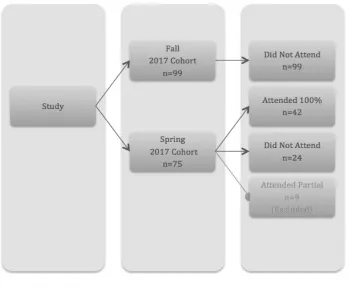
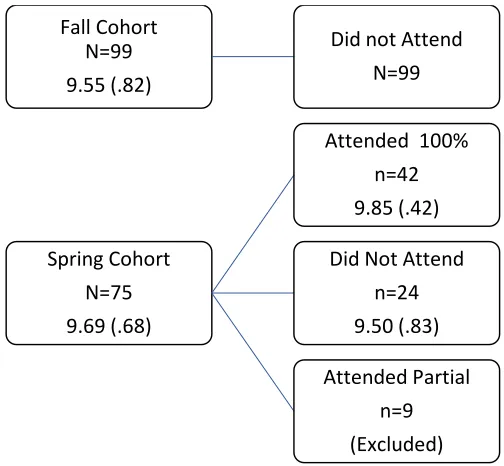
This two-group descriptive posttest study included a historical comparison
between fall 2016 and spring 2017 students. Spring students had the option to attend a
newly designed workshop while fall students did not. Primary comparisons were of (a)
percentage of students achieving 100% on the first attempt, (b) number of errors, and (c)
type of errors on the Medication Calculation exam. The second independent variable was
the use of dimensional analysis with the dependent variable being student accuracy on
each item. The sample was drawn from prelicensure nursing students enrolled in the fifth
of six semesters of nursing instruction in a bachelor of science nursing program in
Northern California.
The research questions explored the effect of a schema-based dimensional
analysis medication calculation workshop on the first-time pass rate, the type and number
of errors, and student performance on the on the Medication Calculation exam. A final
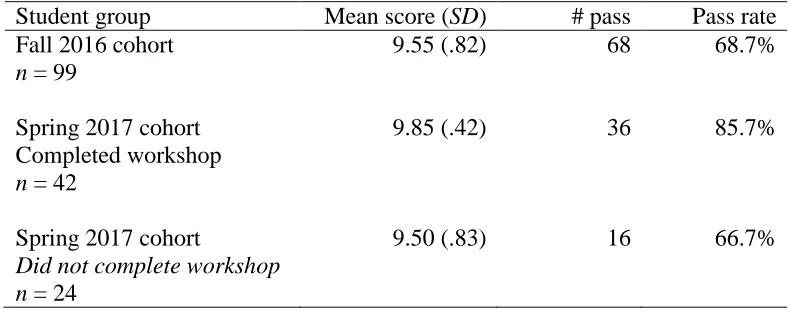
completed the workshop was the highest (9.85, SD = .42) when compared with the fall
cohort (9.55, SD = .82) and with the spring students who did not attend the workshop
(9.5, SD = .83). Additionally, only one (2%) spring student who completed the workshop
missed more than one item on the exam compared with three (12%) spring students who
work represent the work of the candidate alone.
Laureen Turner May 17, 2018
Candidate
Dissertation Committee
Dr. Susan Prion May 17, 2018
Chairperson
Dr Robert Burns May 17, 2018
Dr. Mathew Mitchell May 17, 2018
patience and support during this period of my life. Thank you for being there for me
when I was stressed and lost faith in my abilities. Thank you for understanding on the
100th time I told you “no, I can’t.” Thank you again for the time and patience as I took
months to recover and regroup from a tumultuous spring. You have been my partner,
sounding board, research assistant, proofreader, coder, and most importantly, my rock.
First and foremost, I thank my supporter, confidant, proofreader, research
assistant, and best friend. Christian, thank you so very much for your support over these
past five years. I would not be where I am today without you. Thank you so very much
for letting me follow my dreams no matter how crazy they are. Thank you for your
proofreading services and for making sure I did not starve in the final weeks of writing
this little essay.
Mom, you are always my champion and my support. You taught me to be a hard
worker and to not give up. You taught me to be strong and overcome. Well, Mommie—I
have, I am, and I did. Thank you.
Sherry, you are and always have been my hero. You are the one person I have
always been able to call on in a time of need and know you are there. Thank you for
never giving up on me, kicking me when I need it, laughing as necessary, and crying
when needed. Thank you.
Naomi and Michele, the two of you have helped me more over these past few
years than you will ever know. You both keep me grounded in what is actually important.
Naomi, you remind me to smile and see life for what it is. We have seen, we have
overcome, and we have so much more to do. Michele, you remind me of the importance
of long-term friendship. Thank you for keeping me sane. To the two of you, I hope that
now that this chapter of my life is closing that we will have much more time for
adventures.
thank. You have also turned me into a researcher. For that, I will be forever thankful.
Dr. Busk, from the first day we met and I wanted to transfer from another
program, you have been a supporter and sounding board. You taught me more than I
never knew there was about APA and statistics. I asked of you to ensure that in the end, I
could understand the math behind the research and you delivered. Also, in your essentials
course, you provided me with much needed tools to flip my class. Thank you. I have used
much of what you have taught me to improve the education of nurses in our program and
hope that, in the end, our contributions help grow good nurses.
Dr. Burns, here is something that you may not hear every day; I actually enjoyed
research methods. You taught me a ton, and I am forever appreciative. Also, thank you
for serving on my committee. Your comments and direction have been very useful. The
largest thank you, however, goes for authoring your two essential guides. A thousand
thanks as they provided the tools and structure I needed to get this little essay into a
somewhat reasonable form.
Dr. Mitchell, you have taught me to be a better consumer of research through your
think-alouds. Additionally, the tools I learned in your multimedia course have influenced
my course design and have improved my teaching. I greatly appreciate the substantial
time, effort, and energy you put into teaching and try to model that in my own teaching.
Dr. Rowden Quince, I am fortunate to have taken two courses from you. You
have the unique ability to make a class interactive, engaging, and fun in a way that helps
a time when I needed it the most. You Rockadoodle ! I am forever grateful to you.
Dr. Susan Prion, I do not think either of us knew what we were getting into when
we decided to try this out. It is never a cakewalk to turn a peer relationship into a
teacher/student role. You handled it with grace and compassion. This semester, as you
know, was very difficult for reasons far outside of this process. Your consideration and
THE UNIVESITY OF SAN FRANCISCO ... ii
Dissertation Abstract ... ii
DEDICATION ... v
ACKNOWLEDGMENTS ... vi
TABLE OF CONTENTS ... ix
LIST OF TABLES ... xii
LIST OF FIGURES ... xiii
CHAPTER I: STATEMENT OF THE PROBLEM ... 1
Medication Calculation Research ... 2
Teaching Strategies Aimed at Improving Medication Calculation Performance ... 3
Promising Research on Dimensional Analysis in Nursing Education ... 3
Purpose of the Study ... 5
Significance of the Study ... 5
Theoretical Framework ... 6
Schema theory ... 7
Background and Need ... 8
Calculation error incidence ... 9
Key factors relating to medication calculation errors ... 10
Teaching strategies to improving medication calculation performance ... 10
Research on dimensional analysis in nursing education ... 14
Research Questions... 20
Definition of Terms ... 21
CHAPTER II: REVIEW OF THE LITERATURE ... 25
Medication Calculation Challenges of Nursing Students ... 25
Summary ... 37
Teaching Strategies to Improve Medication Calculation ... 38
Summary ... 46
E-learning ... 47
Dimensional Analysis ... 52
Schema Theory ... 61
Schema-based instruction ... 62
Schema-enhancing research ... 75
Summary on schema research ... 85
Protection of Human Subjects ... 90
Instrumentation ... 94
Maternal Child Medication Calculation (Med Calc) Exam ... 94
Workshop Satisfaction Survey ... 95
Treatment Description ... 95
Procedures ... 97
Data Analysis ... 98
Research question one ... 99
Research question two ... 100
Research question three ... 101
Research question four ... 101
Summary of study methodology ... 102
CHAPTER IV: RESULTS ... 103
Research Question One ... 103
Research Question Two ... 105
Item one ... 112
Item two... 112
Item three... 112
Item four ... 113
Item five ... 113
Item six ... 115
Item seven ... 115
Item eight... 115
Item nine ... 115
Item ten ... 116
Research Question Three ... 116
Item three... 120
Item ten ... 120
Research Question Four... 122
CHAPTER V ... 123
SUMMARY, LIMITATIONS, DISCUSSIONS, AND IMPLICATIONS ... 123
Research questions ... 128
Summary of Findings ... 129
Research question one ... 129
Research question two ... 130
Research question three ... 133
Research question four ... 134
Limitations ... 134
Discussion of Findings ... 136
Implications for Research ... 138
Implications for Practice ... 140
Final Summary ... 141
REFERENCES ... 142
APPENDICES ... 147
Appendix A ... 148
Maternal Child Medication Calculation Exam... 148
Appendix B ... 152
Workshop Satisfaction Survey ... 152
Appendix C ... 154
Study Announcement Letter ... 154
Appendix D ... 156
Consent for Study Participation ... 156
Appendix E ... 158
Practice Exam ... 158
Appendix F ... 162
PowerPoints and Detailed Lesson Plan From the Workshop... 162
Appendix G ... 193
1. Demographics: Mean and Standard Deviations for GPA and Age, Percentages of
Race and Gender Between Intact Spring and Fall Cohorts ... 93
2. Means, Standard Deviations, and First-Time Pass Rates on the Med Calc Between the Fall and Spring Cohorts ... 104
3. Spring 2017 Results by Gender ... 105
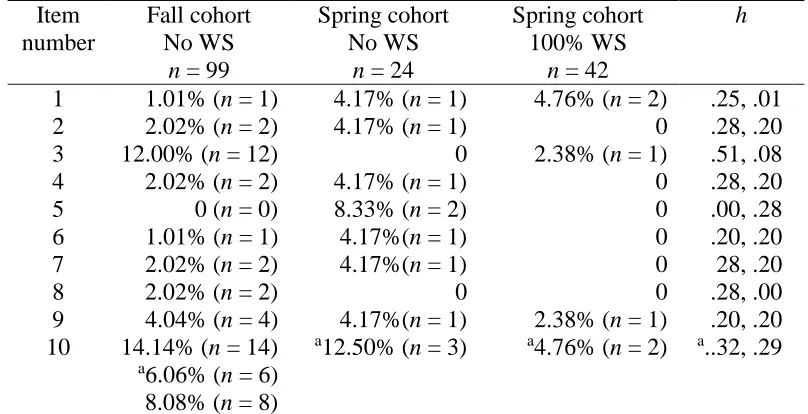
4. Number of Students Missing Items on the Med Calc ... 107
5. Percentage of Students Missing Items on the Med Calc ... 108
6. Types of Errors on the Medication Calculation Exam ... 110
7. Student Solving Methods Comparing Students Who Passed the Exam With Those Who Did Not ... 118
8. Percentages of Students Who Answered Correctly on Each Item, Sorted by Calculation Method ... 119
1. Dimensional analysis sample ………34
2. Research design ... 89
3. Research questions, variables, and data display ... 92
4. Med Calc item summary. ... 95
5. Workshop agenda ... 97
6. Initial means and standard deviations………98
7. Med Calc exam items 1–5 ... 111
CHAPTER I
STATEMENT OF THE PROBLEM
The prevalence and incidence of medication errors is astounding. Medication
errors are not only the most common, but they are also the riskiest, nursing error allowing
for untoward patient outcomes (Cookson, 2013). The National Coordinating Council for
Medication Error Reporting and Prevention (2017, p. 1) recently defined a medication
error as “any preventable event that may cause or lead to inappropriate medication use or
patient harm while the medication is in the control of the healthcare professional, patient,
or consumer.” In the United States alone, at least 1.5 million people are injured by
medication errors each year (Weeks, Clochesy, Hutton, & Moseley, 2013). The Institute
for Medication Safety Practice (2015) estimated that medication error leads to one to two
million hospitalizations and to 100,000 to 200,000 deaths in the United States annually.
Multiple factors, from system-wide processes to the nurse’s ability to calculate
accurately, influence the incidence of medication error. Given an environment of
health-care reform, it is prudent for educators to identify methods for improving the incidence of
medication error. The aim of this research, therefore, was to improve the medication
calculation abilities of nursing students.
This study was also focused on medication calculations commonly found in the
maternal–child health-care specialty where nurses care for women before, during, and
after delivering their babies as well as for children from birth to the age of 18. In this
specialty area, the margin for error is small, the stakes are high, the arithmetic is
complex, and medication errors are common (Keers, Williams, Cooke, & Ashcroft,
weight-based dosing. This approach requires calculation of the medication dosage in
milligrams per kilogram of patient weight and then the precise amount of medication in
milliliters to administer. This complicated multistep ratio/proportion problem-solving has
been demonstrated to be the most difficult and error-prone medication calculation type
(Bagnasco et al., 2016; Stolic, 2014).
Medication Calculation Research
The documented research on medication calculation in nursing education has been
descriptive in nature, and its outcomes have highlighted both its importance as well as
several concerns. First, in much of the literature, the inability of students to reach
medication calculation mastery at 100% has been demonstrated (Bagnasco et al., 2016).
Given the significance of calculation error, these findings are worrisome as inaccurate
calculations may result in patient harm.
Next, researchers in several studies explored the types of questions that students
found most challenging and discovered that the most difficult question type was
ratio/proportion (Coyne, Needham, & Rands, 2013; Stolic, 2014). Ratio/proportion
questions are common in nursing and often result in inaccurate calculations as a result of
improper use of the formula or miscalculation. Furthermore, because of weight-based
dosing, medication calculations in pediatrics involve ratio/proportion problem-solving
most of the time.
Gender has also played a significant role in many studies with male students
outperforming female students. These gender-based differences in mathematics lead to
concern in a female-dominated profession (Bagnasco et al., 2016; Grandell-Niemi, Hupli,
Teaching Strategies Aimed at Improving Medication Calculation Performance
In many of the studies conducted on medication calculation performance in
nursing education, multiple interventions were used, a control group was lacking, or both
(Coyne et al., 2013; Ramjan et al., 2014; Stolic, 2014). Although many findings
demonstrated improvement in student medication calculation, absent a control group and
with multiple interventions involved, it is impossible to ascertain whether improvements
were a result of the interventions, outside instruction, student practice with medication
administration in the clinical setting, or some other extraneous factor (Coyne et al., 2013;
Ramjan et al., 2014; Stolic, 2014).
Grugnetti, Bagnasco, Rosa, and Sasso (2014) reported on a promising study in
which a single intervention was used, a medication calculation workshop. The
researchers highlighted the use of a 30-hour workshop over the period of 2 weeks to
improve medication calculation skills in nursing students. In this work, students
demonstrated improvement in their ability to calculate accurately, which presumes that
the workshop was helpful. Several different factors, however, could have accounted for
this change, and without a comparison group, it is difficult to determine whether these
gains were from the workshop or from an additional factor.
Promising Research on Dimensional Analysis in Nursing Education
Dimensional analysis (DA) is a systematic problem-solving method that has been
used in the sciences to solve complicated, multistep calculation problems. The research
findings in nursing education show promise for using DA as an effective approach for
complicated medication calculation problems (Stolic, 2014). As a result of difficulties in
current research, however, ongoing research is warranted. For example, in early work by
Craig and Sellers (1995), the authors cited the efficacy of dimensional analysis
instruction; nevertheless, the study groups were recruited from two different schools with
different curricula and program types. Therefore, it is difficult to determine whether these
groups were equivalent. Koohestani and Baghcheghi (2010) explored the use of DA and
demonstrated improvement among the intervention group, yet they also reported that
85% of participants in the intervention group were unable to score 100%. This finding is
alarming as every medication calculation error has the potential to become a medication
administration error that can lead to patient harm. In more recent work, Cookson (2013)
asserted that dimensional analysis is a simple method for calculation that may lead to a
reduction in medication calculation errors and may improve patient safety.
In much of the literature on medication calculation in nursing education, scholars
have reported the use of multiple step interventions (Coyne et al., 2013; Ramjan et al.,
2014). These interventions included numeracy remediation, quizzes, case studies, and
contextualized instruction. Additionally, the researchers in these studies did not report
teaching on specific problem-solving methods such as dimensional analysis. Although
the results of these studies demonstrated some improvement in students’ scores, students
remained unable to master the exams at the 100% mark. As multiple interventions were
included in each study over the course of a semester, it was unclear as to which
interventions were most effective. Therefore, dimensional analysis was the solving
method taught in the workshop highlighted in this study. A cohort of spring 2017 nursing
students who completed the workshop was compared with their peers from the same
with the prior semester cohort (fall 2016) as these students did not have access to this
workshop.
Purpose of the Study
The purpose of this study was to extend prior research on medication calculation
in nursing education and fill in previously mentioned gaps in the literature with a focus
on improving nursing students’ medication calculation accuracy.
To accomplish the stated purpose, a single intervention was used, a dimensional
analysis workshop. In this study, treatment involved a three-hour-long workshop in the
spring of 2017 that used dimensional analysis as the problem-solving process within the
context of maternal–child nursing. Student performance on the Maternal Child
Medication Calculation (Med Calc) exam was compared with the former (fall 2016) and
the current (spring 2017) Senior One cohort of nursing students. This workshop was
newly created, and thus, the fall 2016 students did not have access to this content. The
areas of comparison were the first-time pass rate, the mean score on the exam, and a
detailed analysis of student solving methods on individual items.
Significance of the Study
This study is important for several reasons. First, in looking at the overall
significance of medication errors, these mistakes are both deadly and costly for patients
and the health-care system. Although it is difficult to ascertain the full scope and cost of
medication error, the Agency for Healthcare Research and Quality Patient Safety
Network (2015) asserted that, on average, 5% of hospitalized patients have experienced
of these adverse events were preventable. Medication errors can also cause undue stress
on the nurse and reduce his or her confidence (Stolic, 2014) and sense of self-worth
(Koharchick & Flavin, 2017). If nursing students are taught sound medication calculation
practices in school, then there is a potential to avoid future errors as well as to improve
the self-confidence of these students.
This work was aimed at connecting dimensional analysis and patient context in a
workshop designed to develop the student’s medication calculation schema further.
Although each of these components has been studied individually, combining them is
unique and demonstrates promise in the development of a schema for nursing students
that will provide them with long-term medication calculation abilities that are
transferable to various types of medication calculation. If this combination proves
beneficial, it will identify a strategy for further improvement of teaching medication
calculation in nursing education. Ongoing research into the calculation skills of nurses is
necessary as it is presumed that medication errors will continue to be commonplace
without a change in educational practices.
Theoretical Framework
One model that may be useful in understanding how to teach medication
calculation most effectively to nursing students lies in schema theory. A schema provides
the framework, outline, or plan for solving problems (Powell, 2011). As stated, this
research is aimed at developing a medication calculation schema in nursing students that
will improve accuracy. Therefore, by developing a medication calculation schema, it is
possible to provide students with the needed structure to solve math problems accurately.
analysis, and the conceptualization of the answer within the context of maternal–child
nursing.
Schema theory
As noted, schema theory provides a promising conceptual framework for
understanding instructional practices that may improve medication calculation in nursing
students. A schema is a knowledge structure that provides an organizational system for
the storage of information (Driscoll, 2005). These storage containers, when used
correctly, aid in retention of information and improve recall and accuracy.
For example, consider a typical garage filled with various household items such
as sporting equipment, lawn tools, and holiday decorations. If the items are scattered
throughout the garage, they are difficult to find and use. If the items are organized and
connected with like items, however, they become easier to find and use, and accuracy
increases. Additionally, when items are stored incorrectly, such as garden tools with
sporting tools, the chance of using a tool incorrectly or selecting the wrong tool increases.
The same is true with medication calculation as many students do not have their
knowledgebase “stored” correctly and therefore struggle with what to do with the
numbers, identifying the pertinent pieces of information in the question, inverting
numbers in the equations, multiplying when they should divide, and having difficulty
with the use of formulas (Hunter-Revell & McCurry, 2013). In schema theory, through
the development of schema, information is processed faster and more accurately
(Driscoll, 2005). Therefore, development of a medication calculation schema that
structures these tasks, aids students in selecting the correct “tools,” and accurately uses
Schema-based instruction (SBI) comprises instructional techniques designed to
invoke prior schema and then add to these schemata to develop more complex schema, as
well as to develop new schema. In nursing education, the use of SBI may aid in
developing a medication calculation schema for students that is more accurate. This
schema involves identifying necessary information, using dimensional analysis, and
determining the fit of the answer in the context of the patient situation. These steps
should promote the development of an accurate and effective method for medication
calculation for the nursing student.
Background and Need
It is well known and readily documented that medication errors have serious
consequences for patients. Adverse reactions, lengthened hospital stays, and death from
medication errors account for 10% to 20% of errors among hospitalized patients
(Sherriff, Burston, & Wallis, 2012). Although it is difficult to quantify the incidence of
error in full, Fleming, Brady, and Malone (2014) have asserted that medication errors
happen in approximately 20% of every medication administration.
In a systematic review of the prevalence and nature of medication administration
errors, this problem was explored by researchers in a multinational study in which it was
found that 25.6% of every potential opportunity for medication error results in error
(Keers et al., 2013). Additionally, the rates for intravenous medication errors were
significantly higher at 53.3%. Moreover, the reported error rate of medication
administration in the pediatric setting was 34.8%, and the authors also claimed a 73.0%
overall probability of making at least one error in the administration of intravenous (IV)
Furthermore, medication errors have a devastating impact on the nurse
committing the mistake (Keers et al., 2013). Nurses committing medication errors often
lack self-esteem, feel guilty, and are ashamed, which can undercut the nurse’s clinical
skills and professional judgment. Nevertheless, although nurses worry about their
patients, they are also concerned with loss of respect from colleagues, poor performance
evaluations, threats to licensure, and professional retribution, such as a lawsuit,
imprisonment, and loss of a job, that coincide with serious medication administration
errors. These factors can lead to significant incidences of posttraumatic stress syndrome
(PTSD) and depression in the nurse (Keers et al., 2013). As a result, it is essential to find
mechanisms to reduce medication error.
Calculation error incidence
Although the frequency of medication administration errors is high,
administration of medications is multifactorial and includes several different processes
and personnel. The nurse is the last link in the chain as he or she places the medication in
the patient’s hand. Estimates indicate that 11% to 14% of all medication errors are related
to incorrect calculation (Fleming et al., 2014). Even though the amount of published
research on nursing student medication error is limited, in an older study, the researchers
suggested that medication error was the most frequently occurring error (56%) with the
wrong dose as the most often recorded type of error in nursing students (Gregory, Guse,
Davidson, Davis, & Russell, 2009). Consequently, the findings reported in the literature
support assertions that calculation errors translate to the bedside and nurses need to
improve their medication calculation skills to safeguard against medication error
Key factors relating to medication calculation errors
Bagnasco et al. (2016) explored factors that related to medication error in nursing
students and found that the average student scores across the curriculum were 69%, 66%,
and 62% for the first-, second-, and third-year students, respectively, demonstrating the
need to reinforce mathematics instruction and assessment throughout the curriculum.
Their primary findings indicated that students did not know how to multiply fractions or
use decimals and often inverted the nominator and denominator when using formulas.
Additionally, many students could not multiply and divide decimal numbers. The
researchers found that 22% of students self-reported poor math skills.
Furthermore, gender played a significant role with the male students (n = 187)
outperforming the female students (n = 539) on all six areas of the exam (p < .05). The
differences between genders in mathematics lend to concern in this female-dominated
profession. Lastly, the investigators asked students to report whether they had difficulties
with the exam. Interestingly, 30% (214) of the students reported no difficulties with the
exam, yet only 3% (n = 6) earned 100%, indicating either a lack of self-awareness of
mathematic ability or a lack of understanding on the importance of 100% mastery in
medication calculations (Bagnasco et al., 2016).
In total, these findings identified the primary areas of concern relating to
medication calculation in nursing education. The following section highlights strategies
to improve the medication calculation performance in nursing students.
Teaching strategies to improving medication calculation performance
Stolic (2014), in a literature review, identified key strategies previously reported
include the concern that in many of the included studies a single group and multiple
interventions were used. Additionally, a single posttest was included. Stolic asserted that
without a baseline, or an equivalent control group, it is difficult to ascertain whether
instructional interventions had any effect.
A primary concern for researchers in this area has been that many schools set the
student passing rate below 100%. Even with lower pass rates, however, passing rates
were abysmal at 36%. Although in many studies, researchers reported gains in student
performance, Stolic (2014) expressed concern about student inability to achieve the 100%
mark on the medication calculation exam. No errors for drug calculation should be
acceptable. Additionally, Stolic stated concern over teaching of formulas as formulas
have not been demonstrated to be helpful and students struggle with their use. Therefore,
Stolic suggested abandoning this method of calculation in the clinical setting.
Stolic (2014) also addressed the use of technology for teaching medication
calculation with mixed results. The results of some studies demonstrated positive gains,
whereas other did not. A key factor, however, was that students who were actively
involved in their learning had greater retention and improved medication calculation
scores. Stolic concluded that there is insufficient evidence in medication calculation and
therefore encouraged further research with improved methodologies that include
comparison groups.
Ramjan et al. (2014) reported on educational strategies designed to improve
numeracy skills in nursing students by using a mixed-methods design. They employed a
multiple step intervention consisting of online practice quizzes, simulated medication
retesting of the students who were unsuccessful on the first taking of the exam, a
hands-on remediatihands-on workshop, and the final medicatihands-on calculatihands-on examinatihands-on.
Ramjan et al. (2014) did not report how many other interventions were completed
by those who passed on the third attempt; nevertheless, they did report that the online
quizzes were successful as a first-pass support strategy but not effective for the less
independent students who needed face-to-face support. The researchers also indicated
that 100% of students who attended the final hands-on workshop passed the exam.
Nevertheless, these students had been exposed to several different strategies, so it is
difficult to determine which strategies were successful.
Ramjan et al. (2014) also demonstrated the effectiveness of a multiple step
program in improving nursing students’ medication calculation scores. Through
remediation, as well as through case-based scenarios and hands-on work, the researchers
highlighted student success. As these interventions occurred in steps over the duration of
a semester, however, it was difficult to determine which steps were most effective.
Next, Grugnetti et al. (2014) reported on the use of a dedicated medication
calculation workshop among nursing students in a pretest–posttest study in which the use
of a 30-hour workshop over the period of 2 weeks to improve medication calculation
skills in nursing students was highlighted. For this investigation, researchers designed a
realistic clinical setting with patient scenarios and built the medication calculations into
the scenarios.
Data collection was completed by Grugnetti et al. (2014) through use of two tools:
one for demographic information and the second as a math skills test. The math skills test
the exam before and after attending the workshop, were allowed 90 minutes for
completion, and were not allowed to use calculators.
The initial results reported by Grugnetti et al. (2014) indicated no significant
difference for age or nationality. The researchers reported the pretest results on the
30-item exam (mean [M] = 15.96, standard deviation [SD] = 4.84) compared with the
posttest results (M = 25.20, SD = 3.63). Clearly, the students made significant gains in
their ability to calculate accurately, which presumes that the workshop was helpful.
Nevertheless, several different factors accounted for this change. Without a comparison
group, it is difficult to determine whether these gains were from the workshop or from an
additional factor. Future research into use of workshops should include a comparison
group.
In most of these studies, scholars implemented multiple step interventions to
improve student performance on medication calculation exams (Coyne et al., 2013;
Ramjan et al., 2014). These interventions included numeracy remediation, quizzes, case
studies, and contextualized instruction. Yet, teachings on specific problem-solving
methods, such as dimensional analysis, were not stated. Although the findings from these
studies demonstrated some improvement in students’ scores, the students still did not
achieve mastery at 100%. Additionally, as each of these studies included multiple
interventions over the course of a semester, it was unclear as to which interventions were
most effective. Therefore, in this study, performance was compared between student
groups who completed a single intervention, a medication calculation workshop, with
Research on dimensional analysis in nursing education
One promising strategy for medication calculation is dimensional analysis (DA).
DA is a systematic problem-solving method typically used in science classes designed to
solve complicated mathematics problems. The results of prior research in nursing
education show promise for DA as a solution strategy for medication calculation
problems; nevertheless, much of the research on DA in nursing education is not current
and lacks in rigor.
In an early quasi-experimental study, Craig and Sellers (1995) explored the
effects of dimensional analysis on the medication calculation abilities of nursing students.
The two-hour educational intervention first explained the process of DA and then
demonstrated its use starting with simple problems and working into problems of
increased complexity. They introduced the concepts behind each problem type and
ensured students had ample time to practice prior to moving on to more complicated
problem types. Additionally, the researchers provided students with a workbook
containing practice problems to reinforce content throughout the duration of the semester.
The control group received traditional instruction (ratio/proportion instruction solutions
and dose/dose on hand methods) and received the researcher-developed workbook to
ensure results were not biased toward the extra practice items provided in the workbook.
Craig and Sellers (1995) also administered the pretest to both groups at the
beginning of the semester before of any of the students had the opportunity to provide
medications in the clinical setting. The posttest was administered in the last month of the
semester after students had experienced medication administration in the clinical setting.
work. Additionally, the researchers provided both groups with a conversion table and a
list of common abbreviations for use during the exam.
The experimental group means on the 20-point exam (M = 5.167, SD = 4.504) for
pretest and (M = 14.3, SD 4.721) for posttest reported by Craig and Sellers (1995)
demonstrate lower mean scores when compared with the control (M = 11.138, SD =
3.861) on the pretest and (M = 15.069, SD = 2.777) on the posttest. As a result of the
differences in pretest scores, however, the researchers found the gains from pretest to
posttest to be improved in the experimental group (p = .00001).
Craig and Sellers (1995) also demonstrated that DA is helpful in teaching students
how to solve medication calculation problems and can make up the differences between
groups of varying abilities. A primary limitation with this study was that the control
group and the experimental group were very different. The intervention group students
attended a diploma nursing program, and the control students were enrolled in an
associate degree program. These different program types have different prerequisite entry
requirements as well as a different curriculum. Additionally, the two programs required a
different level of mathematics preparation prior to program entry. Therefore, although the
experimental group improved significantly more than the control group, it was not clear
whether this is from the intervention, the type of nursing program the students attended,
or simply from nursing education as a whole as the students had an entire semester of
nursing education between pretest and posttest.
Rice and Bell (2005) further developed the research on DA in nursing school in a
pilot study by exploring both number of errors and levels of student confidence in
107). At the beginning of the semester, students completed the normal course preclinical
drug dose calculation quiz and a questionnaire asking whether they had used DA, their
confidence in solving calculation problems, and demographic information. Students were
then invited to participate in a DA workshop. After the course, the researchers provided
students with a 20-item practice test with an answer key for additional practice. One
week later, the students took a 15-item posttest without the aid of calculators.
In addition, Rice and Bell (2005) administered an end-of-the-semester survey to
determine what effect using DA had on student confidence and ability to solve
medication calculation problems. Dosage calculation questions from the preclinical quiz,
instructional session posttest, and the three usual course examinations were compared for
accuracy and type of calculation error (conceptual, computation, and conversion). These
exams all included questions on oral, intramuscular, and intravenous medication
calculation.
Rice and Bell (2005) reported from the beginning of the semester survey that 25%
(27) of the students reported that medication calculation was confusing and stated an
inability to memorize formulas as a key factor. The most common reason students gave
for being unable to calculate correctly was an inability to set up the problem and a
difficulty remembering the formula.
Interestingly, the intervention group (n = 30) scored less on the preclinical quiz
(79%) when compared with the 77 students who chose not to attend the DA workshop
(93%), yet they outperformed these students on post instruction exams (92% compared
with 90%, respectively). Although the difference in scores between these groups was
were not significantly different. This finding indicates stronger gains in the intervention
group.
Lastly, there were differences between error types with the intervention group
making more calculation errors (75%) than the control group (42%) but less conceptual
errors (20%) as compared with the control group (56%). This led Rice and Bell (2005) to
conclude that DA may help students close the gap on conceptual understanding with the
computational error gap potentially narrowed through calculator use. Though this study
was limited to a convenience sample in a single university, useful information for
development of medication calculation programs is provided that could be used at similar
universities. Replicating this work and adding the use of calculators may improve
medication calculation among nursing students.
Greenfield, Whelan, and Cohn (2006) added to the work on DA in a study
designed to reduce medication errors in a quasi-experimental pilot study of nursing
students. The researchers expected to find that students in the DA group (n = 39) would
solve medication calculation problems with greater accuracy than those in the control
group ( = 26) taught the formula method. The convenience sample included group
assignment based on student cohort with the two groups attending the program one year
apart. Both groups had the same teacher, and the first four weeks of instruction were the
same with the exception of the problem-solving method. The instructor administered the
medication calculation exam in the fifth week of the semester. The instrument was a
25-item exam traditionally used in this course. Calculators were permitted, and students had
50 minutes to complete the exam.
biophysical science grades to determine group equivalency and found no statistically
significant differences. The posttest scores favored the experimental group (M = 92.20%,
SD = 6.2%) when compared with the control group (M = 86.92%, SD = 14.5%). A t test
revealed these scores were statistically significant (p = .05). Interestingly, the control
group’s GPA was higher than that of the experimental group, which indicates that the
experimental group gains may have been larger than indicated as they may have been
starting from a lower ability level.
Koohestani and Baghcheghi (2010) explored the use of DA in their
quasi-experimental study aimed at comparing the effects of DA and formula on rapid and
sustained learning of nursing students. This study involved sampling nursing students in
their third semester and randomly assigning them to two groups (n = 42). For this study,
both groups had the same instructor, took the same medication calculation exam, and
were not allowed to use calculators. The exam was created by the researchers in
conjunction with seven other academics and reference materials found in the literature.
Students took the same exam before the intervention, immediately after, and three months
later.
Koohestani and Baghcheghi (2010) reported that the sample was 71.4% female
and that they were divided evenly between the groups. The researchers presented data
that showed improvement for both groups compared with the pretest as the groups
demonstrated no difference on pretest (t = .066, p > .05) or posttest one (t = –.630, p >
.05) but a statistically significant difference on posttest two (t = –4.460, p < .05).
Additionally, with a goal of 100% mastery, only 3 (15%) students in the intervention
led the researchers to claim that the rate of decline in scores for the control group
exceeded that of the experimental group. Thus, the learning for the experimental group
was more stable when compared with that for the control group. Based on these findings,
the researchers suggested that students be taught DA. They expressed concerns over the
overall lack of mastery at the 100% mark and suggested ongoing education, assessment,
and reinforcement of information relating to medication calculation.
In a specific attempt to explore further the efficacy of DA for medication
calculation, Kohtz and Gowda (2010) evaluated DA versus conventional methods such as
use of formulas to prevent drug calculation errors among undergraduate nursing students.
Students participated in the study for the single semester in which they received
medication calculation instruction. The control group was taught conventional methods
such as use of formula and ratio/proportion, whereas the intervention group was taught
DA.
The instrument used by Kohtz and Gowda (2010) was a 24-item tool with a 90%
passing mark. An analysis of variance (ANOVA) demonstrated no significant difference
for age. Nevertheless, a significant finding for GPA indicated that the GPA for the
control group was significantly higher than the GPA for the experimental group. The
mean scores for the two groups demonstrated no significant difference between the DA
group (M = 20.92, SD = 4.252) and the control (M = 20.42, SD = 4.414). Although this
study was not designed to favor DA over the traditional instruction, its findings
demonstrated that it was at least as good as the conventional instruction.
The results of the work on use of dimensional analysis to solve medication
improvement in medication calculation scores could be obtained through a two-hour DA
teaching intervention. Rice and Bell (2005) further determined that a single workshop
teaching DA increased student scores, especially for students who were struggling at the
beginning of the semester with the DA group making more calculation errors and less
conceptual errors. Moreover, the findings by Koohestani and Baghcheghi (2010) and by
Kohtz and Gowda (2010) showed that DA was as effective a problem-solving method as
alternative teaching strategies, yet Koohestani and Baghcheghi (2010) demonstrated the
power of DA on maintenance as students in their study had a smaller decline in scores on
the second posttest when compared with those in the control group. For these reasons,
this study aimed at developing the nursing student’s medication calculation schema
through the use of DA as the problem-solving method.
Research Questions
This research study was designed to explore the impact of a schema-based
dimensional analysis medication calculation workshop on student test scores. The
research questions were created to build on prior research in this area and to fill in gaps in
the literature. Four key questions were proposed:
1. What is the effect of a schema-based dimensional analysis medication
calculation workshop on the first-time pass rate on the Maternal Child
Medication Calculation (Med Calc) exam for senior prelicensure nursing
students?
2. To what extent does participation in a schema-based dimensional analysis
medication calculation workshop influence the type and number of errors on
3. To what extent does use of dimensional analysis on the Med Calc influence
student performance on the Med Calc?
4. What are student perceptions of the schema-based dimensional analysis
medication calculation workshop?
Definition of Terms
Dimensional Analysis: Dimensional analysis is a method for solving arithmetic problems
that require conversions. This method can be used whenever two quantities are directly
proportional to one another and one must be converted into the other using a conversion
factor (Craig & Sellers, 1995). Figure one depicts a simple example of the use of
dimensional analysis where the given is a 250 mg tablet of medication and the order is
500mg of medication.
500mg 1 Tablet = 2 Tablets 1 250 mg
Figure 1. Dimensional analysis sample.
Medication Calculation Policy: The policy for the medication calculation exam aims to
ensure that students have the ability to calculate medications with 100% accuracy. Thus,
there is no tolerance for errors. At the beginning of every clinical semester, each nursing
student must take a medication calculation exam prior to administering medications in the
clinical setting. Each exam is conceptual in nature and includes the type of calculations
relevant to the student’s clinical level. Students are allowed three attempts at the exam.
Students who do not achieve a 100% on one of the exams are failed from the course and
face potential dismissal from the nursing program and the university.
exam used for the Senior One cohort of nursing students. This exam was initially
developed by two faculty experts teaching both maternity and pediatric content. The
exam was then reviewed by all clinical faculty teaching in either pediatrics or maternity
who concluded that the exam is representative of the mathematics required in their
individual clinical settings. Each exam is conceptual in nature with patient and or
problem types appropriate for the intended instruction level. For the Med Calc, the
students are seniors and working in both pediatrics and maternity. As a result, the
questions are complicated and include weight-based dosing.
Medication Error: A medication error refers to any event that occurs during any stage of
the medication administration process. The National Coordinating Council for
Medication Error and Prevention (2017) has approved the following as its working
definition of medication error:
[A]ny preventable event that may cause or lead to inappropriate medication use or
patient harm, while the medication is in the control of the health care professional,
patient, or consumer. Such events may be related to professional practice, health
care products, procedures, and systems including: prescribing; order
communication; product labeling, packaging and nomenclature; compounding;
dispensing; distribution; administration; education; monitoring; and use. (para. 1)
Number of Errors on the Med Calc: The number of errors was measured by counting
each inaccurate item on the Med Calc exam.
Pass Rate: The pass rates for this study were calculated by dividing the number of
students who achieved 100% accuracy on the exam by the total number of students
Schema: A schema is a structure, framework, or blueprint for solving a problem (Powell,
2011). This study was aimed at developing the student’s medication calculation schema
through identification of important information, use of dimensional analysis, and
identification of appropriateness for the given patient situation.
Student Perceptions of the Workshop: Student perceptions of the workshop were
measured via a survey. First, student perceptions about the workshop content were
measured through self-report using a Likert-style scale on eight separate items. Next,
student perceptions about the length and level of the workshop were measured to assess
whether students thought the workshop was too short, the right length, or too long.
Lastly, students were asked to rate the visuals, acoustics, meeting space, and overall
program as excellent, very good, good, fair, or poor.
Student Performance on the Med Calc: Student performance was measured by mean
scores, number of items missed, and an individual assessment of items to include a
problem-solving method.
Type of Errors on the Med Calc: Each exam with student error was reviewed, and the
error was categorized as calculation, conceptual, setup or decimal rounding, Errors were
coded as calculation when it appeared as though the error occurred in the calculator but
the setup on the paper was correct. Items coded as conceptual involved the students
inability to select the correct numbers to place into the equation. Wrong setup errors
were those where the correct numbers were chosen but they were not set up into the
formula correctly. These errors typically involved inversion of the numerator and the
denominator. Rounding errors included items where students were asked to round to one
Schema-based Dimensional Analysis Workshop—“The Workshop”: The workshop was
designed to develop the student’s medication calculation schema through identification of
appropriate information, use of dimensional analysis, and determination of
appropriateness within the context of maternal–child nursing.
Workshop Attendance: Attendance at this workshop was measured by student self-report
of workshop attendance on a workshop attendance sheet that was distributed during a
CHAPTER II
REVIEW OF THE LITERATURE
This literature review is divided into three primary sections. The first section is an
exploration of medication calculation challenges in nursing education followed by a
discussion on previously attempted educational interventions aimed at improving nursing
student medication calculation performance. Lastly is a discussion of schema theory and
how the development of medication calculation schema may improve the medication
calculation abilities in nursing students. The research into medication calculation in
nursing education is limited and therefore, many of these studies are outdated.
Medication Calculation Challenges of Nursing Students
In several studies (Bagnasco et al., 2016; Grandell-Niemi, Hupli, Puukka, &
Leino-Kilpi, 2005; Harvey et al., 2010; Jukes & Glichrist, 2005; McMullan, Jones, &
Lea, 2010; Pierce, Steinle, Stacey, & Widjaja, 2008), scholars have explored the
medication calculation skills in nursing education and have highlighted key issues
including global concerns that may influence the incidence of medication administration
error. Key questions that have been investigated are as follows: (a) What is the level of
medication calculation competence in nursing students? (b) What is incidence of
medication calculation error in nursing students? (c) What types of medication
calculations are more difficult for nursing students? This section will further explore
these questions.
Jukes and Gilchrist (2006) explored the numeracy skills of nursing students by
nursing students at a single university in England. This descriptive study included a
convenience sample of 45 nursing students. Of those, 37 consented to participate for an
82% participation rate. Students were given a 10-item calculation exam that was created
in conjunction with the literature and reviewed for validity by expert staff at the
university. Additionally, a pilot test was completed and the instrument was altered based
on the results. The researchers reported the content of the exam to include questions
relating to injections, tablets and mixtures, dilutions and strengths, and intravenous
infusions. Furthermore, the questions were sorted by calculation type including division,
multiplication, percentages, ratio/proportion, conversions, and multistep procedures.
Also, for this study, the use of calculators was allowed.
Key findings reported by Jukes and Gilchrist (2006) included the inability of the
students to score 100% on the exam. Given the context of medication administration and
the significance of error, this was highly alarming. Jukes and Gilchrist reported a median
score of 6/10 and a mean of 5.5 (SD = 2.3). The percentage of students that scored
accurately on each question type was as follows: division and multiplication questions
74%, percentages 81%, multistep 54%, and ratio/proportion 7%. The inability of the
students to calculate ratio/proportion questions was concerning as that calculation type is
common in medication administration.
Jukes and Gilchrist (2006) found that nursing students struggle with math. Only
7% of students could accurately calculate the ratio/proportion problems commonly found
in nursing. Their findings were consistent with those reported in the literature on nursing
students’ difficulty obtaining calculation competency (Bagnasco et al., 2016;
Pierce et al., 2008). Additionally, Jukes and Gilchrist found that many students failed to
use formulas for solving the problems. The students cited that they had difficulty
knowing what to do with the numbers that led the investigators to infer that the
underlying problem with medication calculation was conceptual in nature. Additionally,
students either failed to use formulas altogether or they used them incorrectly. Another
finding was that students lack a conceptual understanding behind the meaning of the
numbers that may then have led to their inability to conceptualize the meaning behind the
math.
This research by Jukes and Gilchrist (2006) was a simple descriptive study in
which they worked toward further defining the difficulty students have with calculation.
The results further developed the understanding of this problem, yet they do not offer
solutions. Future research, as highlighted by Jukes and Gilchrist, should be aimed at
exploring the magnitude of the problem, an assessment by nurses identifying the specific
numeracy needs in their clinical practice, improvement of calculation strategies,
development of a framework to facilitate and assess numeracy ability in nursing students,
and further improvement of educational strategies to close the theory–practice divide.
Bagnasco et al. (2016) studied undergraduate nursing students at a single
university in Turin, Italy, in a descriptive study involving inviting all students (N = 726)
registered in years 1, 2, and 3. They used both the assessment tool and the
self-assessment questionnaire developed by Wright (2005). The self-assessment tool was designed
to include two sections. Section 1 included key mathematical areas, such as (a)
percentages, (b) multiplying fractions, (c) calculations with fractions, and (d) division and
included practice-based problems comprising medications from the clinical setting.
The second instrument used by Bagnasco et al. (2016) was aimed at gauging the
student’s self-assessment of mathematic ability. The tool asked students to rate their
mathematical strength as poor, sufficient, or good in each of the aforementioned six areas.
Additionally, to explore the student voice further, the researchers asked students to
provide a written account of problematic items on the exam.
The average student scores reported by Bagnasco et al. (2016) across the
curriculum were 69% (M = 22.12, SD = 5.86) for first-year students, 66% (M = 21.13, SD
= 6.58) for second-year students, and 62% (M = 19.78, SD = 5.88) for third-year students.
These scores were alarming, as each calculation error may indeed have resulted in a
medication administration error. Additionally, the decline in the third-year scores was
disquieting as these more advanced students should have had higher scores, further
demonstrating the need to reinforce mathematics instruction and assessment throughout
the curriculum.
An additional key finding in Bagnasco et al. (2016) was that only 3% of the
students achieved mastery on the clinical performance questions that highlighted the need
to teach mathematics in the context of clinical situations. Additionally, gender played a
significant role with the male students (n = 187) outperforming the female students (n =
539) on all six areas of the exam (p < .05). The differences between gender in
mathematics are documented in the literature and lend to concern in this
female-dominated profession (Bagnasco et al., 2016; Grandell-Niemi et al., 2005; Jukes &
Gilchrist, 2006; McMullan et al., 2010).
difficulties with the exam. Interestingly, 30% (214) of the students reported no
difficulties with the exam, yet only 3% (n = 6) earned 100%. This indicated either a lack
of self-awareness of mathematic ability or a lack of understanding on the importance of
100% mastery in medication calculations. Twenty-two percent (n = 155) of the students
reported difficulties on the exam citing the desire to have a calculator. Of those citing
difficulties with the exam, 3% (n = 5) scored 100%. Predictably, when we compare mean
scores between those who report difficulty with the exam and those who do not, students
who do not report difficulty outperform those who do in each of the key mathematical
areas.
Bagnasco et al. (2016) confirmed the findings reported by Grandell-Niemi et al.
(2005), Harvey et al. (2010), Jukes and Glichrist (2005), McMullan et al. (2010), and
Pierce et al. (2008) that nursing students struggle with medication calculation. The
researchers felt that several factors influence the mathematic ability of students, including
(a) use of calculators, (b) interpretation of information, (c) conversion of measures, and
(d) conceptualization of calculations. They affirmed that undergraduate nursing students
had difficulty calculating medication dosages as a result of lack of knowledge of basic
math principles.
McMullan et al. (2010) further explored the numerical skills and medication
calculation abilities of both nursing students and registered nurses (RNs) in a
correlational study designed to investigate and correlate the relationship of age, status,
experience, and medication calculation ability to numerical ability between nursing
students and RNs. Through the use of a correlational approach, they employed a
attending the second year in a diploma nursing course as well as a convenience sample of
44 RNs. The nursing students were tested halfway through their second year, and the RNs
were assessed two months into a medication prescribing training program. The one-hour
test consisted of 35 questions without the aid of a calculator.
The test was divided into two key sections: numeric and medication calculation.
The numerical ability section was based on the validated Australian literacy and
numeracy test for certificate IV in nursing. The medication calculation test included 20
items covering the main types of calculations. McMullan et al. (2010) created this exam
in conjunction with the literature on medication calculations. The instrument was then
evaluated by nursing academics within the university to test for face validity. The
university research ethics committee approved this study.
McMullan et al. (2010) used an independent-samples t test to explore
between-group differences and found no statistically significant differences between the two
nursing student cohorts (t = –9.44, df = 227, p = .66). Student cohort scores were then
combined and reported as numerical ability (M = 54.8%, SD = 24.7) and total medication
calculation ability (M = 36.2%, SD = 15.1). The researchers further divided the
medication calculation ability into two scales: (a) solids, oral liquids, and injections and
(b) medication percentages and infusion rates. The findings on these scales indicated that
nursing students struggle more with percentages and infusion rates (M = 11.5%, SD
17.23) as compared with solids, oral liquids, and injections (M = 73.5%, SD = 20.70).
These findings were statistically significant (t = 42.35, df = 228, p < .001).
These nursing student findings by McMullan et al. (2010) were compared to the
63.1%, SD = 24.6). Additionally, RNs scored lower on calculation ability than they did
on numerical ability (M = 40.8%, SD = 14.6) with similar findings to the students on the
two scales of (a) solids, oral liquids, and injections (M = 82.7%, SD = 14.2) and (b)
percentages and infusion rates (M = 12.5%, SD = 18.9). These findings were statistically
significant for the RNs. In addition, the RNs performed significantly better on questions
involving solids, oral liquids, and injections as opposed to on questions involving
percentages and infusion rates (t = 25.34, df = 43, p < .001). McMullan et al. reported a
statistically significant difference between RNs and students for the solids, oral liquids,
and injections (t = –2.99, df = 271, p = .003), yet no statistically significant difference
between students and RNs on the more difficult calculations of percentages and infusion
rate calculations (t = 25.34, df = 43, p < .062).
In looking at the overall tolerance for error, these results by McMullan et al.
(2010) are of concern. With an 80% passing mark, 55% of students and 45% of RNs
failed the numerical ability test and 92% of students and 89% of nurses failed the
medication calculation test. These findings indicated that nurses struggle with numeracy
and complex calculations. Interestingly, there was a strong correlation between numerical
and medication calculation abilities (r = .6, n = 273, p < .001). These findings also lead to
the understanding that nurses need to focus first on basic numeracy competence and then
need to develop a schema for solving math problems. This should start with simple math
and then be advanced over time such that students establish a solid framework for
approaching difficult medication calculations. Next, in consideration of the math
involving percentages and infusion rates, the researchers suggested that these types of
these types of problems should be grounded in the conceptual patient care situation.
Nevertheless, as McMullan et al. (2010) conducted this study at a single
university in England, the results might not be generalizable. Additionally, the RN
sampling was self-selection and most RNs participating in the study worked in primary
care and were enrolled in a prescribing program. Therefore, these nurses were not
representative of the typical practicing RN and the results of their scores need to be
considered in that context.
Grandell-Niemi et al. (2005) further explored the differences between RNs and
nursing students in their work designed to investigate self-rated and actual mathematical
skills of RNs and graduating nurses in Finland. The primary research questions were (a)
what are nurses and nursing students’ self-rated and actual mathematical skills, (b) are
there differences between the two groups, and (c) how are the skills associated with
background?
For this study by Grandell-Niemi et al. (2005), the sample was obtained from 5
hospitals and from 25 polytechnic schools providing prelicensure nursing education in
Finland. The samples consisted of 364 nurses and 282 students from seven hospitals and
five polytechnics in southern and northern Finland with response rates of 68% for nurses
and 70% for students. The researchers developed the MCS test through a review of the
literature. This instrument was divided into three sections: (a) demographics; (b)
self-assessment of mathematic skill, pharmacologic skill, and interest; and (c) a computational
and pharmacologic skills test. The computational section of this exam was further divided
into basic math (BL) and high-level conversion (HLC). The exam had a total score of 29.