The role of language in the experience and perception
of emotion: a neuroimaging meta-analysis
Jeffrey A. Brooks,
1,*
Holly Shablack,
2,*
Maria Gendron,
3Ajay B. Satpute,
4Michael H. Parrish,
5and
Kristen A. Lindquist
2,61
Department of Psychology, New York University,
2Department of Psychology and Neuroscience, The
University of North Carolina at Chapel Hill,
3Department of Psychology, Northeastern University,
4Department of Psychology, Pomona College,
5Department of Psychology, University of California, Los
Angeles and
6Biomedical Research Imaging Center, University of North Carolina at Chapel Hill
*These authors equally contributed to this study.
Correspondence should be addressed to Kristen A. Lindquist, 321 Davie Hall, Psychology and Neuroscience Department, UNC-CH, Chapel Hill, NC 27599-3270, USA. E-mail: [email protected].
Abstract
Recent behavioral and neuroimaging studies demonstrate that labeling one’s emotional experiences and perceptions alters those states. Here, we used a comprehensive meta-analysis of the neuroimaging literature to systematically explore whether the presence of emotion words in experimental tasks has an impact on the neural representation of emotional experiences and perceptions across studies. Using a database of 386 studies, we assessed brain activity when emotion words (e.g. ‘anger’, ‘disgust’) and more general affect words (e.g. ‘pleasant’, ‘unpleasant’) were present in experimental tasksvsnot present. As predicted, when emotion words were pre-sent, we observed more frequent activations in regions related to semantic processing. When emotion words were not prepre-sent, we observed more frequent activations in the amygdala and parahippocampal gyrus, bilaterally. The presence of affect words did not have the same effect on the neural representation of emotional experiences and perceptions, suggesting that our observed effects are specific to emotion words. These findings are consistent with the psychological constructionist prediction that in the absence of ac-cessible emotion concepts, the meaning of affective experiences and perceptions are ambiguous. Findings are also consistent with the regulatory role of ‘affect labeling’. Implications of the role of language in emotion construction and regulation are discussed.
Key words:emotion; language; concepts; meta-analysis
Introduction
It is often assumed that language merely labels or communicates emotional states that have already been generated (Ekman and Cordaro, 2011; Wood and Niedenthal, 2015). However, psycho-logical constructionist models of emotion suggest that words that name emotion concepts (‘fear’, ‘disgust’, ‘anger’) are in fact con-stitutive of emotions. In these models, emotion words support the conceptual knowledge that helps the brain make meaning of
affective sensations in a given context. In doing so, conceptual knowledge helps ‘construct’ emotions because it transforms am-biguous affective sensations into experiences and perceptions of certain discrete emotions (Barrett et al., 2007; Lindquist and
Gendron, 2013; Lindquistet al., 2015a,b).
Consistent with the psychological constructionist view, a growing body of research demonstrates the behavioral and cog-nitive impact of emotion concept words on emotional
Received:10 February 2016;Revised:18 July 2016;Accepted:12 August 2016
VCThe Author (2016). Published by Oxford University Press.
This is an Open Access article distributed under the terms of the Creative Commons Attribution Non-Commercial License (http://creativecommons.org/ licenses/by-nc/4.0/), which permits non-commercial re-use, distribution, and reproduction in any medium, provided the original work is properly cited. For commercial re-use, please contact [email protected]
169
doi: 10.1093/scan/nsw121
experiences and perceptions (Pennebaker & Beall, 1986;Fugate et al., 2010; Widen and Russell, 2010; Lieberman, 2011; Liebermanet al., 2011; Kircanskiet al., 2012;Kassam & Mendes, 2013;Lindquist and Gendron, 2013; Lindquistet al., 2015a, b; Nileset al., 2015for reviews). Yet only a handful of neuroimaging experiments have explicitly assessed how emotion concept words impact the neural representation of emotional
experi-ences and perceptions (Bankset al., 2007; Liebermanet al., 2007;
Satputeet al.in press). We thus performed a comprehensive
meta-analysis of the neuroimaging literature on emotion to examine whether the presence or absence of emotion concept words in experimental paradigms alters brain activity during experiences and perceptions of emotion. This meta-analysis allowed us to examine whether emotion concept words consist-ently influence the neural representation of emotions, demon-strating that emotion concept words have more than a trivial impact on how the brain processes affective stimuli.
Language and the psychological construction of emotion
Psychological constructionist models uniquely predict a consti-tutive role of language in emotion. In particular, the psycho-logical constructionist approach predicts that emotions are the product of more basic affective and conceptual processes (Lindquist and Barrett, 2008). Consistent with recent predictive
coding approaches to perception (Panichelloet al., 2012), the
psy-chological constructionist view hypothesizes that the brain is continuously making affective predictions about how stimuli in the world will impact the organism, and then refining those af-fective predictions into more specific emotional experiences and perceptions using conceptual knowledge about emotion (e.g.
anger, disgust, fear, etc.) (Cunningham et al., 2013; Lindquist,
2013;Barrett and Simmons, 2015). The brain’s initial affective
predictions help to determine how stimuli will impact the body—determining whether something is good, bad, arousing or calming—and prepares the organism for action. These predic-tions are referred to as ‘core affect’ (Russell and Barrett, 1999; Russell, 2003) and are supported by limbic and paralimbic corti-ces (Barrett and Bliss-Moreau, 2009; Barrett and Simmons, 2015). In particular, a distributed network consisting of the dorsal and ventral anterior insula, dorsal and ventral anterior cingulate cor-tex, basal ganglia, and amygdala (i.e. a ‘salience’ or ‘ventral at-tention’ network; Seeleyet al., 2007;Lindquistet al., 2012;Barrett and Simmons, 2015; Lindquistet al., 2016b) is hypothesized to compute these early affective predictions. The amygdala is thought to play a key role in this core affective network by mar-shaling autonomic changes in the body and increasing sensory processing to particularly uncertain and motivationally relevant stimuli (for discussions, see Cunningham and Brosch, 2012;
Lindquistet al., 2012). Uncertainty about the meaning of a
stimu-lus suggests that the brain needs to make further predictions to ascertain that stimulus’ impact for the organism.
The psychological constructionist account predicts that initial affective predictions are subsequently refined into experiences and perceptions of discrete emotions when the brain draws on se-mantic knowledge to improve predictions about the more specific meaning of core affective sensations in that context (e.g. that feel-ings of unpleasantness and arousal are an indication that a stimu-lus is disgustingvsfearful) (Cunninghamet al., 2013; Lindquist,
2013;Barrett, 2014). This type of prediction is referred to as
‘con-ceptualization’ and is supported by regions that are thought to represent prior experiences and semantic knowledge such as the dorsal and ventral medial prefrontal cortex, posterior cingulate cortex, hippocampus, lateral temporal cortex, anterior temporal
lobe and the ventrolateral prefrontal cortex (i.e. the ‘default net-work’; Raichleet al., 2001; ‘association network’; Schacteret al., 2007; ‘context network’; Bar, 2009; or ‘conceptual hub network’; Binder, 2016) (Lindquist and Barrett, 2012; Barrett and Satpute, 2013). It is known that conceptualization helps make predictions about the meaning of visual sensations by spontaneously retriev-ing semantic knowledge that exerts a top-down predictive influ-ence on ongoing perceptions (e.g. to determine if an object is a gunvshairdryer) (Bar, 2007; Chaumon,et al., 2014). A psychological constructionist view predicts that one’s own internal core
affect-ive sensations (Russell, 2003;Barrett, 2006; Lindquist, 2013) or
vis-ual sensations of another person’s core affective facial muscle
movements (Barrettet al., 2007; Lindquist and Gendron, 2013) are
similarly made meaningful as instances of anger, disgust, fear, etc. by drawing on emotion concept knowledge acquired over prior experiences and organized by linguistic category labels such as ‘anger’, ‘disgust’, etc. Ventral aspects of the lateral prefrontal cortex (vlPFC), in particular, play a key role in this network by retrieving these semantic representations (Thompson-Schillet al., 2007) and autobiographical representations (Simons and Spiers,
2003; St. Jacqueset al., 2012) of prior experiences for use in the
mo-ment. Activity within vlPFC is thus often considered evidence that the brain is accessing the rich cache of situation-specific know-ledge about a concept for online use.
Important to the present paper, there is much evidence that in humans, conceptualization works in tandem with language. Research demonstrates that language not only helps individuals acquire new concepts (Xu, 2002;Lupyanet al., 2007) but that ac-cess to linguistic concepts also shapes online proac-cessing of visual sensations (Lupyan, 2012). For instance, activating linguistic con-cepts warps memories of perceptual objects towards more cat-egorical representations (Hemmer and Persaud, 2014), and even shapes online visual perception (Lupyan and Spivey, 2010). The relationship between conceptual knowledge and language is es-pecially critical for abstract concepts such as emotion categories, which are comprised of embodied representations of prior experi-ences combined with culturally acquired knowledge about the situations, bodily feelings and facial expressions associated with
a particular emotion category (Vigliocco et al., 2009; Lindquist
et al., 2015b). The psychological constructionist approach thus hy-pothesizes that emotion words play a role in constituting emo-tional experiences and perceptions because they help people store and then access the conceptual knowledge about emotions used to make predictions about the meaning of external (e.g. vis-ual) and internal (i.e. interoceptive) sensations in the moment.
Of course, not every emotional experience or perception occurs in the explicit presence of emotion words, or is explicitly categorized with language. However, the psychological con-structionist approach predicts that conceptualization occurs implicitly when semantic knowledge about emotion categories is used to make meaning of ambiguous affective predictions in a given context (Lindquist and Barrett, 2008;
Wilson-Mendenhallet al., 2011). In a particular instance, an individual’s
conceptual knowledge is rapidly and implicitly integrated to make meaning of ongoing sensory experiences, which allows ambiguous affective sensations from the body and environment to be made meaningful as instances of a specific emotion. For
instance, access to the linguistic concept of ‘fear’ (vs‘anger’ or
Importantly, according to our psychological constructionist approach, not all words are created equally when it comes to constructing emotional experiences and perceptions. We hy-pothesize that words that name emotion concepts (e.g. ‘anger’, ‘disgust’, ‘fear’, ‘sadness’, ‘joy’, ‘amusement’, etc.) possess greater predictive power than words that name affective states (e.g. ‘pleasant’, ‘unpleasant’, ‘positive’, ‘negative’, ‘good’, ‘bad’) insofar as emotion concept words help refine the meaning of otherwise ambiguous core affective predictions by transforming them into experiences and perceptions of specific emotion cate-gories (e.g. transforming a feeling of unpleasant, high arousal into the experience of fear vs anger; Lindquist and Barrett, 2008). We thus hypothesized that words that name emotion concepts will be more likely than words that name affective concepts to prompt semantic retrieval of specific instances of
prior discrete emotional experiences and perceptions.
Specifically, we predict that discrete emotion words, but not af-fect words will help the brain make meaning of ambiguous core affective predictions, refining those core affective representa-tions into experiences and perceprepresenta-tions of anger, fear, sadness, joy, amusement and so on.
Neuroimaging evidence for the role of language in emotion
Most research thus far has focused on the role of language in emotion using behavioral experiments (Lindquist and Gendron, 2013;Lindquistet al., 2015a, b, 2016a,for reviews), but growing evidence from neuroimaging is also consistent with the idea that emotion concepts supported by language help constitute emotions. A meta-analysis of neuroimaging studies on emotion (Lindquistet al., 2012) found that brain regions consistently acti-vated across studies of semantic processing such as the dorso-medial prefrontal cortex, ventrolateral prefrontal cortex, lateral
temporal cortex and anterior temporal lobe (Binderet al., 2009)
also showed consistent increases in activation across studies of
emotion (see Lindquistet al., 2015b for areas of consistent
over-lap during emotions and semantics). A neuroimaging study observed that thinking about emotions, experiencing an emo-tion, and attending to body feelings share overlapping activity within the ‘default network’ hypothesized to support semantic retrieval and use (Oosterwijket al., 2012). In particular, the an-terior temporal lobe, a brain region involved in representing
se-mantic knowledge (Pattersonet al., 2007) had greater activity
during emotions as compared to general positive and negative
body feelings (Oosterwijket al., 2012). These findings suggest
that emotional experiences and perceptions may draw on con-ceptual knowledge of emotion during the construction of emo-tional states.
A separate, yet compatible, line of research has specifically investigated how the neural representation of emotion changes when participants are asked to explicitly label their affective states. This research finds that explicit, forced-choice labeling of negative facial expressions during an emotion perception task increases activity in the ventrolateral prefrontal cortex and decreases amygdala activity (Haririet al., 2000; Liebermanet al., 2007). The strength of connectivity between vlPFC and amyg-dala is also increased by the presence of emotion concept words, which results in decreased amygdala activity (Torrisi et al., 2013). Additionally, labeling negative emotional experi-ences and pairing aversive stimuli with emotion category labels reduces autonomic reactivity to threatening images (Tabibnia et al., 2008), and increases the efficacy of exposure interventions in clinical populations such as sufferers of public speaking
anxiety (Nileset al., 2015) and arachnophobia (Kircanskiet al.,
2012). Due to the overlap of regions involved in “affect labeling”
and emotion regulation (Payer et al., 2012; but see Burklund
et al., 2014 for some subtle distinctions), it is argued that affect labeling serves as a form of implicit emotion regulation (Lieberman, 2011).
A neuroimaging meta-analysis of the role of language in emotion
Although individual studies suggest that language may play a constitutive role in emotion by transforming initial affective predictions into experiences and perceptions of discrete emo-tions, no study has systematically addressed this hypothesis on a large scale. In the present report, we use a comprehensive coordinate-based meta-analysis of the neuroimaging literature on emotion to build upon the predictions of the psychological constructionist approach and previous empirical findings. In particular, we use meta-analysis to systematically investigate how emotion concept words alter brain activity in emotion. If emotion words had no impact on how the brain represented emotion, then this would suggest that language is indeed epi-phenomenal to emotion (Ekman and Cordaro, 2011). Incontrast, if the neural basis of emotions is fundamentally different when emotion concept words are presentvsabsent in tasks, then this would suggest that emotion words are impacting emotional ex-periences and perceptions in more than trivial ways.
Meta-analysis is particularly advantageous for addressing questions about the role of language in emotion because meta-analysis reveals brain regions that are consistently activated during certain conditions, even when individual studies were not specifically designed to address the hypothesis at hand. In the present meta-analysis, we coded individual contrasts from 386 studies containing 7333 participants reporting peak coordin-ates from 876 contrasts (see Supplementary Table S1 in Supplementary Material). Studies were published between 1993 and the end of 2014. Studies were coded to indicate whether those contrasts included experimental tasks with emotion words or affect words present. We hypothesized that the pres-ence of emotion words anywhere throughout a task would im-plicitly prime emotion concepts, causing participants to draw on conceptual knowledge of certain discrete emotion categories when making meaning of initial affective predictions about stimuli. This would in turn, reduce the ambiguity of those initial affective predictions by refining them as being about an in-stance of anger, fear, etc. We thus predicted that experimental contrasts in which emotion concept words were present would be associated with consistent activations in brain regions involved in the retrieval and representation of semantic know-ledge, such as ventrolateral prefrontal cortex and aspects of the lateral temporal lobe (including superior temporal gyrus and
anterior temporal lobe) (Visseret al., 2010). Incontrast, in
emotional experiences and perceptions because they would not provide the same amount of refinement about the meaning of initial affective predictions.
Methods
Database
The database of studies used in this meta-analysis included fMRI and PET studies that employed tasks related to emotional (e.g. anger, fear, disgust, happy, sad, etc.) and affective (e.g. positive and negative) experiences and perceptions published between January 1993 and December 2014. See Supplementary Materials for specific details about the database and a list of studies included. We began by coding contrasts from individual studies to indicate whether the experimental tasks included emotion concept words or not, and the frequency with which emotion words were present in that task. For example, contrasts were considered to have emotion words present if they contained words that were present in verbal or visual instructions at points throughout the task (e.g. an instructions screen at the beginning of each experimental block told participants they would see ‘angry’ faces on the next block of trials) or if words were present on the screen in every trial (e.g. asking for ratings of discrete emo-tions with response opemo-tions like ‘anger’, ‘disgust’, etc. after the neural response to the stimulus was modeled on every trial). To be able to titrate the effect of the presence of emotion concept words, we separated contrasts that had a lot of word priming (e.g. on every trial throughout the contrast; Level 2; 33 studies) and those that had relatively less (e.g. at the beginning of end of blocks; Level 1; 67 studies). Studies were considered to not have emotion words present (Level 0; 264 studies) if the methods
section explicitly reported that no emotion words were used or if the methods did not mention the use of emotion words during instructions, as response options, or as stimuli. To be conserva-tive, studies were not included if they included the very minimal use of emotion words prior to scanning (e.g. emotion words were present in a behavioral task performed prior to scanning, or included in a verbal instruction phase conducted outside of the scanner). Of note, half the studies including emotion words mod-eled the neural response to an emotionally evocative stimulus (e. g. an image, autobiographical memory, scenario, sound, facial ex-pression, etc.) separately from portions of the task in which any words were on screen. Thus, in many studies, the only difference between Levels 0, 1 and 2 contrasts were that emotion words had not been primed(Level 0) orhad been primed(Levels 1 and 2) at some point preceding emotional experiences and perceptions.
To address the role of emotion concept wordsvsmore gen-eral affect words, contrasts were additionally coded for the presence of affect-related words in tasks. Coding followed that for emotion words, but specifically applied to affect-general words such as ‘positive’, ‘negative’, ‘pleasant’ and ‘unpleasant’ (Level 2; 13 studies; Level 1; 49 studies; Level 0; 319 studies. We focused specifically on words describing valence since this described the majority of affect-related words in tasks (i.e. arousal words were less frequent).
Multilevel kernel density analysis
The present meta-analysis used a Multi-level Kernel Density Analysis (MKDA) (Wageret al., 2007) implemented in NeuroElf (http://neuroelf.net). This technique summarizes the overlap in peak activations from individual study contrasts in order to re-port voxels that show consistent increases in activation for a
Fig. 1.Regions with greater activity for the (A)emotion categorization>gender categorizationcontrast include clusters in left inferior frontal gyrus (IFG), and left dorsal
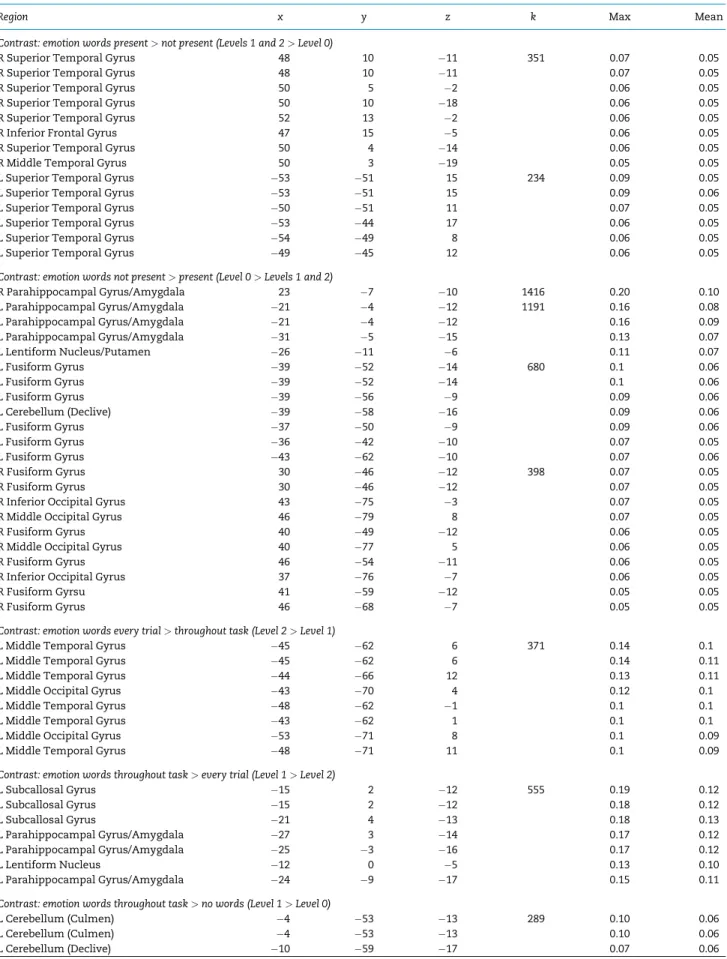
Table 1.Effect of emotion words on emotion experience and perception
Region x y z k Max Mean
Contrast: emotion words present>not present (Levels 1 and 2>Level 0)
R Superior Temporal Gyrus 48 10 11 351 0.07 0.05
R Superior Temporal Gyrus 48 10 11 0.07 0.05
R Superior Temporal Gyrus 50 5 2 0.06 0.05
R Superior Temporal Gyrus 50 10 18 0.06 0.05
R Superior Temporal Gyrus 52 13 2 0.06 0.05
R Inferior Frontal Gyrus 47 15 5 0.06 0.05
R Superior Temporal Gyrus 50 4 14 0.06 0.05
R Middle Temporal Gyrus 50 3 19 0.05 0.05
L Superior Temporal Gyrus 53 51 15 234 0.09 0.05
L Superior Temporal Gyrus 53 51 15 0.09 0.06
L Superior Temporal Gyrus 50 51 11 0.07 0.05
L Superior Temporal Gyrus 53 44 17 0.06 0.05
L Superior Temporal Gyrus 54 49 8 0.06 0.05
L Superior Temporal Gyrus 49 45 12 0.06 0.05
Contrast: emotion words not present>present (Level 0>Levels 1 and 2)
R Parahippocampal Gyrus/Amygdala 23 7 10 1416 0.20 0.10
L Parahippocampal Gyrus/Amygdala 21 4 12 1191 0.16 0.08
L Parahippocampal Gyrus/Amygdala 21 4 12 0.16 0.09
L Parahippocampal Gyrus/Amygdala 31 5 15 0.13 0.07
L Lentiform Nucleus/Putamen 26 11 6 0.11 0.07
L Fusiform Gyrus 39 52 14 680 0.1 0.06
L Fusiform Gyrus 39 52 14 0.1 0.06
L Fusiform Gyrus 39 56 9 0.09 0.06
L Cerebellum (Declive) 39 58 16 0.09 0.06
L Fusiform Gyrus 37 50 9 0.09 0.06
L Fusiform Gyrus 36 42 10 0.07 0.05
L Fusiform Gyrus 43 62 10 0.07 0.06
R Fusiform Gyrus 30 46 12 398 0.07 0.05
R Fusiform Gyrus 30 46 12 0.07 0.05
R Inferior Occipital Gyrus 43 75 3 0.07 0.05
R Middle Occipital Gyrus 46 79 8 0.07 0.05
R Fusiform Gyrus 40 49 12 0.06 0.05
R Middle Occipital Gyrus 40 77 5 0.06 0.05
R Fusiform Gyrus 46 54 11 0.06 0.05
R Inferior Occipital Gyrus 37 76 7 0.06 0.05
R Fusiform Gyrsu 41 59 12 0.05 0.05
R Fusiform Gyrus 46 68 7 0.05 0.05
Contrast: emotion words every trial>throughout task (Level 2>Level 1)
L Middle Temporal Gyrus 45 62 6 371 0.14 0.1
L Middle Temporal Gyrus 45 62 6 0.14 0.11
L Middle Temporal Gyrus 44 66 12 0.13 0.11
L Middle Occipital Gyrus 43 70 4 0.12 0.1
L Middle Temporal Gyrus 48 62 1 0.1 0.1
L Middle Temporal Gyrus 43 62 1 0.1 0.1
L Middle Occipital Gyrus 53 71 8 0.1 0.09
L Middle Temporal Gyrus 48 71 11 0.1 0.09
Contrast: emotion words throughout task>every trial (Level 1>Level 2)
L Subcallosal Gyrus 15 2 12 555 0.19 0.12
L Subcallosal Gyrus 15 2 12 0.18 0.12
L Subcallosal Gyrus 21 4 13 0.18 0.13
L Parahippocampal Gyrus/Amygdala 27 3 14 0.17 0.12
L Parahippocampal Gyrus/Amygdala 25 3 16 0.17 0.12
L Lentiform Nucleus 12 0 5 0.13 0.10
L Parahippocampal Gyrus/Amygdala 24 9 17 0.15 0.11
Contrast: emotion words throughout task>no words (Level 1>Level 0)
L Cerebellum (Culmen) 4 53 13 289 0.10 0.06
L Cerebellum (Culmen) 4 53 13 0.10 0.06
L Cerebellum (Declive) 10 59 17 0.07 0.06
given meta-analytic contrast (e.g. emotion words presentvsnot present). The MKDA treats each individual contrast as the unit of analysis, rather than each individual study, which keeps single studies that report several highly related contrasts from unduly influencing the meta-analytic results. Contrasts from all studies assessing emotional experiences and perceptions were included in the present meta-analysis, including contrasts assessing a dif-ference in neural activity between emotion categories (e.g. anger vsdisgust) and those assessing neural activity associated with a specific emotion category (e.g. angervsneutral).
Following the standard MKDA procedure (Wageret al., 2007; Koberet al., 2008; Lindquistet al., 2016b), coordinates from each
study contrast were first convolved with 12mm spheres to
pro-duce binary indicator maps. The resulting maps for each con-trast were then weighted to control for differences in sample size and rigor of statistical analysis: each individual contrast map was weighted by the square root of the sample size used so that studies with higher sample sizes would have greater influ-ence on the results, and studies which used fixed-effects ana-lyses were down-weighted by 0.75 to reduce their contribution to the analytic results. Finally, we computed
meta-analytic contrasts to assess the role of emotion and affect words in shaping neural activity associated with emotion (described in more detail below). For each meta-analytic contrast, inferences were made by comparing the proportion of study contrasts that report activation in a given voxel to an empirically derived null distribution created using Monte Carlo simulations. On each simulation, an MKDA map was calculated based on the probabil-ity of a particular proportion of studies reporting activation near a given voxel, and was compared to a null distribution calculated through random sampling of scrambled peak activations across the whole brain, excluding ventricles and white matter. Five thousand simulations were performed for each voxel-level ana-lysis and voxels surpassing the primary threshold ofP<0.001 were retained. The resulting maps were cluster-level thresh-olded using a family wise error rate ofP<0.05.
Isolating the effect of emotion words
In our first analysis, we wanted to implement the most conser-vative test of the hypothesis that emotion concept words im-pact the neural representation of emotions. To do this, we Table 1.(continued)
Region x y z k Max Mean
R Cerebellum (Culmen) 10 51 14 0.07 0.05
R Superior Frontal Gyrus 8 50 30 267 0.07 0.06
R Superior Frontal Gyrus 8 50 30 0.07 0.06
L Medial Frontal Gyrus 0 50 28 0.07 0.06
L Superior Frontal Gyrus 11 48 29 0.07 0.06
Contrast: no emotion words>emotion words throughout task (Level 0>Level 1)
R Parahippocampal Gyrus/Amygdala 27 5 12 1052 0.18 0.09
R Parahippocampal Gyrus/Amygdala 27 5 12 0.18 0.09
R Amygdala 23 7 7 0.17 0.12
R Lentiform Nucleus 17 7 4 0.14 0.09
R Lentiform Nucleus 25 9 2 0.14 0.08
L Parahippocampal Gyrus/Amygdala 31 7 10 746 0.12 0.07
L Parahippocampal Gyrus/Amygdala 31 7 10 0.12 0.08
L Parahippocampal Gyrus/Amygdala 31 5 15 0.11 0.07
L Parahippocampal Gyrus/Amygdala 22 9 12 0.11 0.07
L Parahippocampal Gyrus/Amygdala 21 4 12 0.11 0.07
L parahippocampal Gyrus/Hippocampus 24 14 11 0.10 0.07
L Lentiform Nucleus/Putamen 25 9 1 0.09 0.06
L Lentiform Nucleus 18 13 4 0.09 0.07
L Claustrum 31 2 3 0.08 0.06
L Superior Temporal Gyrus 35 3 12 0.08 0.06
L Parahippocampal Gyrus 22 14 15 0.07 0.06
L Fusiform Gyrus 39 52 12 818 0.12 0.08
L Fusiform Gyrus 39 52 12 0.12 0.08
L Cerebellum (Declive) 39 58 16 0.1 0.07
L Fusiform Gyrus 43 62 6 0.09 0.07
R Fusiform Gyrus 44 56 12 828 0.1 0.06
R Fusiform Gyrus 44 56 12 0.1 0.07
R Fusiform Gyrus 36 49 8 0.1 0.07
R Middle Occipital Gyrus 50 68 5 0.08 0.06
R Middle Occipital Gyrus 44 77 7 0.07 0.06
R Inferior Occipital Gyrus 43 71 2 0.07 0.06
R Inferior Occipital Gyrus 46 77 2 0.07 0.06
R Inferior Occipital Gyrus 45 77 3 0.06 0.06
L Middle Occipital Gyrus 53 69 9 329 0.09 0.06
L Middle Occipital Gyrus 53 69 9 0.09 0.06
L Middle Occipital Gyrus 48 69 4 0.08 0.06
L Inferior Temporal Gyrus 47 73 1 0.06 0.06
sought a meta-analytic contrast that would isolate the pres-encevsabsence of emotion concept words while keeping con-stant as many other task features as possible. We thus targeted consistent neural activity that was associated with labeling faces with emotion words vs. labeling faces with gen-der words, and vice-versa. There were 23 studies including 66 contrasts in our database that asked participants to categorize emotional stimuli (in particular, faces and voices) with emo-tion labels and 34 studies including 86 contrasts in our data-base that asked participants to categorize similar stimuli by gender (Supplementary Table S1in Supplementary Material). Importantly, both types of studies used emotional facial or vocal expressions as their target stimuli and required partici-pants to use a category label to make a response on every trial, meaning that the only difference between the conditions was the presence of emotion or gender words. Making this com-parison also reduced the likelihood that there were differences between the conditions related to degrees of attention or cog-nitive control enlisted by the tasks. To assess the difference be-tween emotion and gender categorizations, we computed two
meta-analytic contrasts: (1) ‘emotion words present’vs‘gender
words present’, and (2) ‘gender words present’vs ‘emotion words present’.
Demonstrating the broader effect of emotion words on the neural representation of emotions.After completing the first, narrower, test of our hypothesis, we extended our analysis to our entire database of studies to assess whether our results would gener-alize across a wide variety of experimental tasks (see Supplementary Materialsfor details on the tasks and stimuli used by the studies). This analysis was less controlled than the first set of analyses we ran since studies varied in the tasks they employed. However, this analysis was more powerful, insofar as it examines whether the impact of emotion concept words on the neural basis of emotion generalizes across a variety of experimental contexts. To first assess the role of emotion words in shaping neural activity related to a variety of emotional ex-periences and perceptions, we computed two meta-analytic
contrasts: (1) ‘emotion words present’vs‘emotion words not
present’, and (2) ‘emotion words not present’vs‘emotion words present’. Here, we examined the effect of any emotion words present (Levels 1 and 2)vsno words present (Level 0) and vice versa. We also ran four additional contrasts to assess incremen-tal effects caused by varying degrees of emotion concept know-ledge present in experimental tasks: (1) ‘emotion words present in every trial’vs‘emotion words present throughout the task’ (Level 2>Level 1), (2) ‘emotion words present throughout the task’vs‘emotion words present in every trial’ (Level 1>Level 2), (3) ‘emotion words present throughout the task’vs ‘emotion words not present’ (Level 1>Level 0) and (4) ‘emotion words not present’vs‘emotion words present throughout the task’ (Level 0>Level 1).
Testing the effect of emotion words on the neural representation of experiences and perceptions of emotion and positive and negative emotions
To examine whether language played a comparable role across all types of emotional states (experiences or perceptions and positive or negative emotions), we next computed the main contrasts ‘emotion words present’vs‘emotion words not pre-sent’ (Levels 1 and 2>Level 0), and ‘emotion words not present’ vs ‘emotion words present’ (Level 0>Levels 1 and 2) on four
subsets of the database: (1) studies of emotion experience including positive and negative emotions, (2) studies of emotion perception including positive and negative emotions, (3) studies of emotion experience and perception which focused on nega-tive emotions and (4) studies of emotion experience and percep-tion which focused on positive emopercep-tions.
Testing the effect of affect-related words
Finally, to examine whether emotion concept words had a dif-ferential impact on the neural basis of emotions than affect words, we performed two analyses. First, we computed a meta-analytic contrast comparing the presence of emotion concept words (Levels 1 and 2) with the presence of affect words (Levels 1 and 2). Second, we replicated the main emotion word analyses with affect words [any affect word present (Levels 1 and 2)>no affect word present (Level 0)].
Results
Isolating the effect of emotion words
The first meta-analytic contrast focused on studies of emotional face and voice perception where categorization of either emo-tion or gender was required on every trial. Within this subset of the database, we computed two meta-analytic contrasts: emo-tion words present>gender words present and gender words pre-sent>emotion words present(Figure 1A and B). We observed a single cluster in the left inferior frontal gyrus (IFG; centered on
47, 15, 4;k¼998) for theemotion words present>gender words presentcontrast. The left IFG is implicated in semantic retrieval and use (Thompson-Schill et al., 1997; Grindrod et al., 2008;
Huanget al., 2012), consistent with our constructionist
hypoth-esis that emotion words prompt retrieval of emotion concepts. Also consistent with predictions, we observed clusters in the right amygdala and left PHG (centered on 24,10,22;k¼761 and24,14,24;k¼385) for thegender words present>emotion words presentcontrast. That the amygdala had more frequent activation to facial and vocal expressions in the presence of gender words suggest that in the absence of emotion words, the affective meaning of faces may be relatively more ambiguous and prompt further processing in the brain. Finally, we observed consistent activity in the cerebellum (right declive centered on 325016;k¼502) for this contrast.
Demonstrating the broader effect of emotion words on the neural representation of emotions
After running theemotion words present>gender words present analysis on a subset of the database, we sought to observe whether the impact of emotion words generalized to the rest of the database, including both studies of emotion experience and perception and a much larger variety of experimental tasks. For the mainemotion words present>emotion words not present(Levels 1 and 2>Level 0) contrast (Table 1), we observed consistent acti-vations in large clusters of voxels in the right and left superior temporal gyrus (STG) and right medial temporal gyrus and in-ferior frontal gyrus (Figure 2A), all regions that are consistently
implicated in semantic retrieval and use (Visser et al., 2010;
Binderet al., 2009).
present>emotion words presentcontrast (Level 0>Levels 1 and 2) (Table 1), we observed a set of findings similar to those observed when gender words, but not emotion words were present. Specifically, we observed consistent activation in clusters in bi-lateral amygdala/parahippocampal gyrus (PHG) and bibi-lateral fu-siform gyrus (Figure 2B).
To assess whether any incremental effects could be observed between tasks with varying frequencies of emotion words present (i.e. emotion words present on the screen in every trialvs included in instruction screens at the beginning of each block), we computed four additional contrasts across the whole database (Table 1). For theemotion words present in every trial>emotion words present throughout the task(Level 2>Level 1) contrast, we observed consistent activations in left middle
tem-poral gyrus extending to middle occipital gyrus. For theemotion
words present throughout the task>emotion words present in every trial(Level 1>Level 2) contrast, we observed consistent activa-tions in a large cluster anchored in the left subcallosal gyrus, including left amygdala and PHG.
For theemotion words present throughout the task>no emotion words present(Level 1vsLevel 0) contrast, we observed a pattern similar to theemotion words present>emotion words not present (Levels 1 and 2>Level 0) contrast. In particular, we again found consistent activations in right STG. We also found consistent activations in the left medial frontal gyrus, right superior frontal gyrus, and aspects of the cerebellum. For theemotion words not present>emotion words present throughout the task(Level 0>Level 1) contrast, we again observed consistent activations in bilateral amygdala/PHG, fusiform gyrus and middle occipital gyrus.
Testing the effect of emotion words on the neural representation of emotion experiences or perceptions
The results for studies that focused on emotion experience were generally consistent with those observed for our targeted facial expressions contrast as well as our contrasts on the broader database of experience and perception studies (Table 2). For studies of emotion experience whenemotion words were
Fig. 2.Regions with greater activity for the (A)emotion words present>emotion words not presentcontrast include clusters in left and right superior temporal gyrus (STG)
present>no emotion words present(Levels 1 and 2>Level 0), we observed consistent activations in a cluster located in the
cerebellum. In contrast, when no emotion words were
pre-sent>emotion words present (Level 0>Levels 1 and 2) we observed clusters in bilateral amygdala/PHG and left fusiform gyrus.
The results for studies that focused on emotion perception also revealed a similar pattern of activations to the results from our previous analyses. For studies of emotion perception when
emotion words were present>no emotion words present(Levels 1 and 2>Level 0), there were no consistent activations at our pri-mary threshold, but we observed consistent activations in a sin-gle cluster located in the right STG atP<0.005. For studies of emotion perception whenno emotion words were present>emotion words present(Level 0>Levels 1 and 2), we observed consistent activations in clusters in bilateral amygdala/PHG. Taken to-gether, the consistency of the findings when assessed separ-ately for studies of emotion experience and perception suggests Table 2Effect of emotion words on emotion experience or perception
Region x y z k max mean
Contrast: emotion experience, emotion words present>not present (Levels 1 and 2>Level 0)
R Cerebellum (Fastigium) 6 58 22 302 0.09 0.06
R Cerebellum (Fastigium) 6 53 19 0.09 0.07
R Cerebellum (Culmen) 4 50 18 0.08 0.06
R Nodule 0 56 24 0.07 0.06
R Cerebellum (Declive) 8 63 18 0.07 0.06
R Cerebellum (Declive) 4 59 16 0.06 0.05
R Nodule 1 52 28 0.06 0.05
Contrast: emotion experience, emotion words not present>present (Level 0>Levels 1 and 2)
R Parahippocampal Gyrus/Amygdala 23 3 13 1087 0.19 0.10
R Lentiform Nucleus/Putamen 31 9 6 0.10 0.07
L Parahippocampal Gyrus/Amygdala 27 3 15 1031 0.16 0.08
L Parahippocampal Gyrus/Amygdala 22 9 12 0.15 0.09
L Parahippocampal Gyrus/Amygdala 30 9 11 0.14 0.09
L Lentiform Nucleus/Medial Globus Pallidus 16 11 6 0.10 0.07
L Parahippocampal Gyrus/Hippocampus 24 14 11 0.10 0.07
L Lentiform Nucleus/Putamen 25 9 1 0.07 0.06
L Superior Temporal Gyrus 35 3 12 0.07 0.06
L Fusiform Gyrus 41 56 10 682 0.11 0.07
L Fusiform Gyrus 46 54 11 0.11 0.08
L Fusiform Gyrus 41 54 15 0.11 0.08
L Parahippocampal Gyrus 38 44 8 0.09 0.07
Contrast: emotion perception, emotion words present>not present (Levels 1 and 2>Level 0)*
R Superior Temporal Gyrus 48 18 1 609 0.11 0.07
R Superior Temporal Gyrus 55 19 1 0.10 0.07
R Superior Temporal Gyrus 55 16 4 0.10 0.07
R Superior Temporal Gyrus 54 9 0 0.10 0.07
R Superior Temporal Gyrus 62 5 2 0.09 0.07
R Superior Temporal Gyrus 53 3 2 0.08 0.06
R Superior Temporal Gyrus 47 5 1 0.08 0.07
R Precentral Gyrus 51 2 8 0.07 0.06
R Precentral Gyrus 47 9 8 0.07 0.06
R Superior Temporal Gyrus 47 8 4 0.07 0.06
R Insula 40 23 5 0.07 0.06
R Middle Temporal Gyrus 57 22 9 0.07 0.06
R Superior Temporal Gyrus 64 8 6 0.06 0.06
Contrast: emotion perception, emotion words not present>present (Level 0>Levels 1 and 2)
R Sub-lobar Amygdala 25 9 10 1252 0.25 0.14
L Parahippocampal Gyrus/Amygdala 25 1 16 839 0.19 0.11
L Parahippocampal Gyrus/Amygdala 28 7 16 0.19 0.11
L Parahippocampal Gyrus/Amygdala 22 7 11 0.16 0.11
L Inferioir Frontal Gyrus 32 6 9 0.13 0.09
L Lentiform Nucleus/Putamen 29 0 5 0.11 0.08
L Parahippocampal Gyrus 14 13 13 0.09 0.08
that the results from the whole database were not solely driven by studies on emotion experience or emotion perception. Consistent with psychological constructionist hypotheses (Lindquistet al., 2015a), language may play a similar role in emo-tion whether involved in making meaning of sensaemo-tions in-ternal to one’s body (as in emotion experiences) or sensations external to one’s body (as in perceptions of someone else’s fa-cial, bodily or vocal expressions).
Testing the effect of emotion words on the neural representation of positive or negative emotions
For studies of negative emotion experiences and perceptions when emotion words were present>no emotion words present (Levels 1 and 2>Level 0), we observed no consistent activa-tions atP<0.001. However, we observed consistent activations in one cluster in the left claustrum, extending to STG and dor-sal anterior insula atP<0.005. Like the STG, the claustrum and dorsal anterior insula have been implicated in semantic re-trieval during priming (Rossellet al., 2001;Rissmanet al., 2003). For studies of negative emotion experiences and perceptions when no emotion words were present>emotion words present
(Level 0>Levels 1 and 2) we again observed consistent activity
within bilateral amygdala/PHG and the left fusiform gyrus atP
<0.001 (Table 3). For studies that focused on positive emotion experiences and perceptions, we found no consistent
activa-tions at any threshold when emotion words were present>no
emotion words present(Levels 1 and 2>Level 0) contrast. This finding may be related to the fact that studies often only in-clude a single positive emotion category (happiness), which limits the brain’s need to retrieve and differentiate between same-valence concepts when making meaning of positive
af-fective predictions. However, for the no emotion words
pre-sent>emotion words present (Level 0>Levels 1 and 2) contrast we once again observed clusters in bilateral amygdala/PHG (Table 3).
Testing the effect of affect-related words
Finally, to specifically address our predictions that emotion words would be more effective at reducing amygdala activity than affect words, we ran a meta-analytic contrast comparing frequent brain activations in studies that used emotion words vsaffect words. In theemotion words present>affect words present Table 3.Effect of emotion words on negative or positive emotions
Region x y z k max mean
Contrast: negative emotions, emotion words present>not present (Levels 1 and 2>Level 0)*
R Claustrum 30 8 2 559 0.10 0.06
R Lentiform Nucleus/Putamen 17 5 2 0.08 0.06
L Lentiform Nucleus/Putamen 24 11 3 0.08 0.06
R Claustrum 36 2 4 0.08 0.06
R Superior Temporal Gyrus 50 5 2 0.07 0.06
R Middle Temporal Gyrus 48 4 15 0.07 0.05
R Superior Temporal Gyrus 48 12 12 0.06 0.05
R Insula 44 11 1 0.06 0.05
R Insula 42 1 6 0.06 0.05
R Insula 41 14 6 0.06 0.05
R Middle Temporal Gyrus 47 1 18 0.06 0.05
Contrast: negative emotions, emotion words not present>present (Level 0>Levels 1 and 2)
R Parahippocampal Gyrus/Amygdala 23 7 10 1226 0.25 0.12
L Sub-lobar Amygdala 22 7 9 1084 0.19 0.10
L Parahippocampal Gyrus/Amygdala 27 1 15 0.19 0.10
L Parahippocampal Gyrus/Hippocampus 30 9 16 0.17 0.11
L Parahippocampal Gyrus/Hippocampus 26 14 11 0.14 0.10
L Lentiform Nucleus/Medial Globus Pallidus 16 11 6 0.13 0.08
L Fusiform Gyrus 41 56 12 517 0.11 0.08
L Fusiform Gyrus 47 58 11 0.10 0.08
L Fusiform Gyrus 43 58 17 0.10 0.07
L Fusiform Gyrus 44 48 13 0.09 0.07
L Inferior Occipital Gyrus 43 68 5 0.07 0.06
Contrast: positive emotions, emotion words not present>present (Level 0>Levels 1 and 2)
R Parahippocampal Gyrus/Amygdala 25 3 14 665 0.21 0.13
R Lentiform Nucleus/Lateral Globus Pallidus 19 3 8 0.19 0.13
R Sub-lobar Amygdala 25 11 7 0.18 0.12
L Parahippocampal Gyrus/Amygdala 25 1 16 457 0.18 0.11
L Parahippocampal Gyrus/Amygdala 28 9 13 0.15 0.11
L Subcallosal Gyrus 27 4 14 0.13 0.10
L Claustrum 32 8 6 0.13 0.10
L Insula 39 17 1 0.12 0.10
L Insula 28 16 3 0.12 0.10
L Inferior Frontal Gyrus 41 19 4 0.11 0.10
contrast, we observed a cluster in STG (Figure 3A), replicating previous findings that emotion concept words prompt semantic
processing. In contrast, in theaffect words present>emotion words
present contrast, we observed consistent amygdala activity (Figure 3B), replicating our previous analyses and underscoring the fact that affective predictions remain ambiguous in the presence of affect, but not emotion words.
To examine more closely how affect words impacted on the neural basis of emotion, we next focused specifically on experi-mental contrasts that contained only affect words. In theaffect words present>no affect words present, we did not find any clusters that survived theP<0.001 threshold. However, at the very lenient
threshold ofP<0.05, we observed a large cluster in the parahipp-campal gyrus/amygdala. There were no significant activations for no affect words present>affect words present. Together, these findings suggest that as predicted, the presence of affect words in studies did not serve the same function as emotion words.
Discussion
In the present meta-analysis, we found that emotion words im-pact the neural representation of emotion, as reflected by more frequent activations in the IFG, STG and MTG when emotion words are present across emotional experiences and
Fig. 3.Regions with greater activity for the (A)emotion words present>affect words presentcontrast include clusters in left middle temporal gyrus, and right STG and (B)
perceptions. The IFG is routinely implicated in semantic re-trieval (Thompson-Schillet al., 1997;Grindrodet al., 2008; Huang et al., 2012) and the STG and middle temporal gyrus also have an
undisputed role in language (Friedericiet al., 2003;Bigleret al.,
2007). More anterior portions of STG, such as what we observed in our meta-analysis, are involved in the representation of se-mantic knowledge and are thought to be a hub in a distributed semantic network containing the IFG, lateral temporal cortices, medial temporal lobe and midline cortical areas such as the medial prefrontal cortex and posterior cingulate cortex (see
Visseret al., 2010 for a meta-analysis). Together, these findings
suggest that tasks involving emotion words prompted semantic retrieval and use of relevant emotion concept knowledge during the experience and perception of emotions. This is notable given that in many experiments in our database, the neural re-sponse to an emotional stimulus was modeled separately from the neural response to emotion words involved in instructions or trial-by-trial labeling—thus our findings do not merely reflect processing words per se but accessing conceptual knowledge during emotional experiences and perceptions.
In contrast, when emotion studies across the literature did not involve emotion words, we consistently observed frequent amygdala activity. In fact, we observed frequent amygdala ac-tivity any time emotion concept words were not present in a task. Our findings are consistent with a role for the amygdala in signaling uncertainty about the meaning of affective sensations when emotion concept knowledge is not readily accessible (as predicted by a psychological constructionist approach; see Lindquistet al., 2015a). This hypothesized role of the amygdala is also consistent with recent accounts suggesting that the amygdala more generally responds to uncertainty, arousal and the ‘motivational salience’ of visual stimuli in particular (Cunningham and Brosch, 2012; Touroutoglou et al., 2014). According to the psychological constructionist view, the uncer-tainty of the meaning of affective stimuli is resolved when con-ceptual knowledge about emotion is made more readily accessible and used to categorize the meaning of affective sensations.
Frequent amygdala activity even occurred in the more con-servative case of gender vs emotion categorizations of emo-tional facial expressions and when affect words were present, suggesting that not just any type of words decrease the fre-quency of amygdala activity—the effect appeared to be specific to the presence of emotion concept words across studies. This is likely because emotion concept words name discrete emotion concepts that help refine the meaning of otherwise ambiguous affective states. Once a person categorizes unpleasant affect as, e.g. fear, he knows what his affective state means, what to do about it, and even how to regulate it. This process would in turn decrease the arousing nature of those stimuli, performing an implicit emotion regulation function (Lieberman, 2011). Consistent with this interpretation, when emotion words were absent from paradigms, we also observed more frequent activa-tions in the parahippocampal gyrus and aspects of ventral tem-poral cortex (e.g. fusiform), suggesting that participants may have been engaging in increased episodic memory retrieval and sensory processing to make meaning of the affective stimuli they were experiencing and perceiving in the absence of readily available emotion concept knowledge. The parahippocampal gyrus is also implicated in the processing of visual context
(Aminoffet al., 2013), potentially suggesting a greater reliance
on contextual cues to resolve uncertain affective experiences in the absence of specific conceptual knowledge. Given the role of the fusiform in downstream visual processing important for
successful object and face recognition (Haxbyet al., 2001),
fre-quent activations in this region when words are not present could reflect more elaborate visual processing of emotional stimuli when conceptual knowledge is not readily available to make meaning of visual input.
Implications
Taken together, our findings are consistent with the psycho-logical constructionist hypothesis that language helps consti-tute emotion by representing conceptual knowledge that is necessary to make meaning of otherwise ambiguous affective states. These findings are important in that they begin to shine light on the dynamics of neural systems that help construct emotions. It is common to observe increased activity within brain regions associated with semantics during emotions (Kober et al., 2008; Vytal and Hamann, 2010; Lindquist et al.,
2012; see Lindquistet al., 2015a). However, it is unclear from
these findings whether language is merely an epiphenomenon to emotion, only labeling emotions after the fact, or whether these regions are performing another function entirely. In con-trast, our meta-analytic neuroimaging findings suggest that the mere presencevsabsence of emotion words in a task change emotional brain activity in a consistent manner.
The idea that affective feelings are ambiguous in the ab-sence of conceptual knowledge about emotion is consistent with findings suggesting that ‘affect labeling’ helps a person regulate their feelings (Pennebaker and Beall, 1986;Lieberman, 2011). Understanding more specifically what you are feeling helps you know what caused the feeling and what to do about it. It is thus no surprise that learning to label feelings is at the core of many types of psychotherapy. Similarly, re-conceptualizing the meaning of a feeling with a different lin-guistic category (as in the cognitive reappraisal tasks used in standard emotion regulation paradigms) would also help regu-late emotions by helping transform one type of experience (e.g. fear) into another (e.g. anger). Not surprisingly, reappraisal, al-though it does not explicitly involve affect labeling, involves many of the same brain regions involved in semantics such as the ventrolateral prefrontal cortex, medial prefrontal cortex, anterior temporal lobe and posterior cingulate cortex (Buhle et al., 2014; Burklundet al., 2014). There is debate about whether the processes involved in emotion regulation are the same or different than those involved in emotion generation (Gross and Barrett, 2011), but evidence suggests that the neural
mech-anisms involved in both are similar (Ochsner et al., 2012).
These findings underscore the psychological constructionist point that conceptualization is a fundamental ‘ingredient’ in emotions (Wilson-Mendenhall et al., 2011; Lindquist, 2013; Barrett, 2014).
how subtle task characteristics such as the inclusion of emotion words can actually have a large influence over the affective processes under investigation (Kassam and Mendes, 2013).
Limitations
Despite its promises, this work is limited by existing neuroimag-ing meta-analysis techniques, which rely on studies with sub-traction analyses to isolate regions more frequently activated for one task conditionvsanother. Additionally, a general issue with neuroimaging meta-analysis is that one can never truly know the details and idiosyncrasies of every individual task that com-prises the meta-analytic database in use, and further, whether there are qualitative differences between the tasks in each meta-analytic conditions used (e.g. ‘words present’vs‘words not pre-sent’) that could bias the results. For instance, it is possible that meta-analytic conditions differed in the amount of arousal con-tent shown, cognitive load or in other task demand characteris-tics. Our examination of the database did not reveal systematic differences in the arousal content (furthermore, most neuroi-maging studies tend to use highly arousing stimuli; see Lindquist et al., 2016b). However, it remains a possibility that there are un-known qualitative differences that impacted our findings. Nonetheless, we are reassured by the fact that our findings repli-cate the findings of single ‘affect labeling’ neuroimaging studies (Haririet al., 2000; Liebermanet al., 2007) that tightly control for these confounds, suggesting that these additional confounds do not likely account for our findings. Furthermore, the stability of our findings across our different analyses reduces this concern; we demonstrate the same effects when we restricted our ana-lyses to a tightly controlled subset of the database (in which both emotion and gender labeling conditions were nearly identical in terms of task constraints) as well as when examining a more het-erogeneous set of contrasts using different methods of inducing emotional experience and perceptions.
Our meta-analysis is also limited more specifically by which hypotheses can be tested at the meta-analytic level. Future re-search should advance our meta-analytic results using individ-ual neuroimaging studies to address more fine-grained questions about the parametric role of labeling on brain activity and how language impacts activity within and between broad-scale neural networks supporting core affect and conceptualiza-tion. Another possibility for future neuroimaging studies would be to use multivariate techniques to assess whether patterns of neural activity elicited by emotional stimuli can be classified by the degree of conceptual knowledge present in the task. We look forward to future research that will continue to explore the important, yet often overlooked, role of language as it shapes our experiences, perceptions and regulation of emotions.
Supplementary data
Supplementary dataare available atSCANonline.
Conflict of interest. None declared.
Funding
Construction of the meta-analytic database was supported by the Army Research Institute (W5J9CQ-11-C-0046).
References
Aminoff, E.M., Kveraga, K., Bar, M. (2013). The role of the parahip-pocampal cortex in cognition.Trends in Cognitive Sciences,17(8), 379–90.
Banks, S.J., Eddy, K.T., Angstadt, M., Nathan, P.J., Phan, K.L. (2007). Amygdala-frontal connectivity during emotion regulation. Social Cognitive and Affective Neuroscience,2(4), 303–12.
Bar, M. (2007). The proactive brain: using analogies and associ-ations to generate predictions.Trends in Cognitive Sciences,11, 280–9.
Bar, M. (2009). The proactive brain: memory for predictions. Philosophical Transactions of the Royal Society B: Biological Sciences, 364(1521), 1235–43.
Barrett, L.F. (2006). Solving the emotion paradox: categorization and the experience of emotion.Personality and Social Psychology Review,10, 20–46.
Barrett, L.F. (2014). The conceptual act theory: a pre´cis.Emotion Review,6, 292–7.
Barrett, L.F., Bliss-Moreau, E. (2009). Affect as a psychological primitive. Advances in Experimental Social Psychology, 41, 167–218.
Barrett, L.F., Lindquist, K.A., Gendron, M. (2007). Language as context for the perception of emotion. Trends in Cognitive Sciences,11, 327–32.
Barrett, L.F., Satpute, A. (2013). Large-scale brain networks in af-fective and social neuroscience: towards an integrative archi-tecture of the human brain.Current Opinion in Neurobiology,23, 361–72.
Barrett, L.F., Simmons, W.K. (2015). Interoceptive predictions in the brain.Nature Reviews Neuroscience,16, 419–29.
Bigler, E.D., Mortensen, S., Neeley, E.S.,et al. (2007). Superior tem-poral gyrus,language function, and autism. Developmental Neuropsychology,31(2), 217–38.
Binder, J.R. (2016). In defense of abstract conceptual representa-tions.Psychonomic Bulletin & Review, 1, 13.
Binder, J.R., Desai, R.H., Graves, W.W., Conant, L.L. (2009). Where is the semantic system? A critical review and meta-analysis of 120 functional neuroimaging studies.Cerebral Cortex,19(12), 2767–96. Buhle, J.T., Silvers, J.A., Wager, T.D.,et al. (2014). Cognitive
re-appraisal of emotion: a meta-analysis of human neuroimaging studies.Cerebral Cortex,24, 2981–90.
Burklund, L.J., Creswell, J.D., Irwin, M., Lieberman, M.D. (2014). The common and distinct neural bases of affect labeling and re-appraisal in healthy adults.Frontiers in Psychology,5(221), 1–10. Chaumon, M., Kveraga, K., Barrett, L.F., Bar, M. (2014). Visual
pre-dictions in the orbitofrontal cortex rely on associations. Cerebral Cortex,24, 2899–907.
Cunningham, W.A., Brosch, T. (2012). Motivational salience: amygdala tuning from traits, needs, values, and goals.Current Directions in Psychological Science,21, 54–9.
Cunningham, W.A., Dunfield, K., Stillman, P. (2013). Emotional states from affective dynamics.Emotion Review,5, 344–55. Ekman, P., Cordaro, D. (2011). What is meant by calling emotions
basic.Emotion Review,3, 364–70.
Friederici, A.D., Ru¨schemeyer, S., Hahne, A., Fiebach, C.J. (2003). The role of left inferior frontal and superior temporal cortex in sentence comprehension: localizing syntactic and semantic processes.Cerebral Cortex,13(2), 170–7.
Grindrod, C.M., Bilenko, N.Y., Myers, E.B., Blumstein, S.E. (2008). The role of the left inferior frontal gyrus in implicit semantic competition and selection: an event-related fMRI study.Brain Research,1229, 167–78.
Gross, J.J., Barrett, L.F. (2011). Emotion generation and emotion regulation: one or two depends on your point of view.Emotion Review,3, 8–16.
Hariri, A.R., Bookheimer, S.Y., Mazziotta, J.C. (2000). Modulating emotional responses: effects of a neocortical network on the limbic system.NeuroReport,11(1), 43–8.
Haxby, J.V., Gobbini, M.I., Furey, M.L., Ishai, A., Schouten, J.L., Pietrini, P. (2001). Distributed and overlapping representations of faces and objects in ventral temporal cortex. Science, 293(5539), 2425–30.
Hemmer, P., Persaud, K. (2014). Interaction between categorical knowledge and episodic memory across domains.Frontiers in Psychology,5, 584.
Huang, J., Zhu, Z., Zhang, J.X., Wu, M., Chen, H.C., Wang, S. (2012). The role of left inferior frontal gyrus in explicit and im-plicit semantic processing.Brain Research,1440, 56–64. Kassam, K.S., Mendes, W.B. (2013). The effects of measuring
emotion: physiological reactions to emotional situations de-pend on whether someone is asking.PLoS One,8(6), e64959. Kircanski, K., Lieberman, M.D., Craske, M.G. (2012). Feelings into
words: contributions of language to exposure therapy. Psychological Science,23, 1086–91.
Kober, H., Barrett, L.F., Joseph, J., Bliss-Moreau, E., Lindquist, K.A., Wager, T.D. (2008). Functional grouping and cortical-subcortical interactions in emotion: a meta-analysis of neuroi-maging studies.NeuroImage,42, 998–1031.
Lieberman, M.D. (2011). Why symbolic processing of affect can disrupt negative affect: social cognitive and affective neuro-science investigations. In: Todorov, A., Fiske, S.T., Prentice, D., editors. Social Neuroscience: Toward Understanding the Underpinnings of the Social Mind. Oxford: Oxford University Press.
Lieberman, M.D., Eisenberger, N.I., Crockett, M.J., Tom, S.M., Pfeifer, J.H., Way, B.M. (2007). Putting feelings into words. Psychological Science,18, 421–8.
Lieberman, M.D., Inagaki, T.K., Tabibnia, G., Crockett, M.J. (2011). Subjective responses to emotional stimuli during labeling, re-appraisal, and distraction.Emotion,11, 468–80.
Lindquist, K.A. (2013). Emotions emerge from more basic psy-chological ingredients: a modern psypsy-chological construction-ist model.Emotion Review,5, 356–68.
Lindquist, K.A., Barrett, L.F. (2008). Constructing emotion: the ex-perience of fear as a conceptual act.Psychological Science,19, 898–903.
Lindquist, K A., Barrett, L.F., (2012). A functional architecture of the human brain: insights from emotion.Trends in Cognitive Sciences,16, 533–40.
Lindquist, K.A., Gendron, M. (2013). What’s in a word? Language constructs emotion perception.Emotion Review,5, 66–71. Lindquist, K.A., Gendron, M., Satpute, A.B. (2016a). Language and
emotion: putting words into feelings and feelings into words. In: Barrett, L.F., Lewis, M., Haviland-Jones, J.M., editors. Handbook of Emotions, 4th edn, New York: Guilford.
Lindquist, K.A., MacCormack, J.K., Shablack, H. (2015a). The role of language in emotion: predictions from psychological con-structionism.Frontiers in Psychology,6, 444.
Lindquist, K.A., Satpute, A.B., Gendron, M. (2015b). Does lan-guage do more than communicate emotion?Current Directions in Psychological Science,24, 99–108.
Lindquist, K.A., Satpute, A.B., Wager, T.D., Weber, J., Barrett, L.F. (2016b). The brain basis of positive and negative affect: evi-dence from a meta-analysis of the human neuroimaging lit-erature.Cerebral Cortex,5, 1910–22.
Lindquist, K.A., Wager, T.D., Kober, H., Bliss-Moreau, E., Barrett, L.F. (2012). The brain basis of emotion: a meta-analytic review. Behavioral and Brain Sciences,35, 121–43.
Lupyan, G. (2012). Linguistically modulated perception and cogni-tion: the label-feedback hypothesis.Frontiers in Psychology,3, 54. Lupyan, G., Rakison, D.H., McClelland, J.L. (2007). Language is not just for talking: labels facilitate learning of novel categories. Psychological Science,18(12), 1077–83.
Lupyan, G., Spivey, M.J. (2010). Making the invisible visible: ver-bal but not visual cues enhance visual detection.PLoS One,5, e11452.
Niles, A.N., Craske, M.G., Lieberman, M.D., Hur, C. (2015). Affect labeling enhances exposure effectiveness for public speaking anxiety.Behavior Research and Therapy,68, 27–35.
Ochsner, K.N., Silvers, J.A., Buhle, J.T. (2012). Functional imaging studies of emotion regulation: a synthetic review and evolving model of the cognitive control of emotion.Annals of the New York Academy of Sciences,1251, E1–E24.
Oosterwijk, S., Lindquist, K.A., Anderson, E., Dautoff, R., Moriguchi, Y., Barrett, L.F. (2012). States of mind: emotions, body feelings, and thoughts share distributed neural net-works.NeuroImage,62, 2110–28.
Panichello, M.F., Cheung, O.S., Bar, M. (2012). Predictive feedback and conscious visual experience.Frontiers in Psychology,3, 620. Patterson, K., Nestor, P.J., Rogers, T.T. (2007). Where do you know
what you know? The representation of semantic knowledge in the human brain.Nature Reviews Neuroscience,8, 976–87. Payer, D.E., Baicy, K., Lieberman, M.D., London, E.D. (2012).
Overlapping neural substrates between intentional and inci-dental down-regulation of negative emotions. Emotion, 2, 229–35.
Pennebaker, J.W., Beall, S.K. (1986). Confronting a traumatic event: toward an understanding of inhibition and disease. Journal of Abnormal Psychology,95(3), 274–81.
Raichle, M.E., MacLeod, A.M., Snyder, A.Z., Powers, W.J., Gusnard, D.A., Shulman, G.L. (2001). A default mode of brain function.Proceedings of the National Academy of Sciences United States of America,98(2), 676–82.
Rissman, J., Eliassen, J.C., Blumstein, S.E. (2003). An event-related fMRI investigation of implicit semantic priming.Journal of Cognitive Neuroscience,15(8), 1160–75.
Rossell, S.L., Bullmore, E.T., Williams, S.C.R., David, A.S. (2001). Brain activation during automatic and controlled processing of semantic relations: a priming experiment using lexical-deci-sion.Neuropsychologia,39, 1167–76.
Russell, J.A. (2003). Core affect and the psychological construc-tion of emoconstruc-tion.Psychological Review,110, 145–72.
Russell, J.A., Barrett, L.F. (1999). Core affect, prototypical emo-tion episodes, and other things called emoemo-tion: dissecting the elephant. Journal of Personality and Social Psychology, 76(5), 805–19.
Satpute, A.B., Nook, E.C., Narayanan, S., Weber, J., Shu, J., Ochsner, K.N. (in press). Emotions in “black or white” or shades of gray? How we think about emotion shapes our per-ception and neural representation of emotion. Psychological Science. in press.
Seeley, W.W., Menon, V., Schatzberg, A.F., et al. (2007). Dissociable intrinsic connectivity networks for salience pro-cessing and executive control.The Journal of Neuroscience,27(9), 2349–56.
Simons, J.S., Spiers, H.J. (2003). Prefrontal and medial temporal lobe interactions in long-term memory. Nature Reviews Neuroscience,4(8), 637–48.
St. Jacques, P.L., Rubin, D.C., Cabeza, R. (2012). Age-related effects on the neural correlates of autobiographical memory retrieval. Neurobiology of Aging,33(7), 1298–310.
Tabibnia, G.T., Lieberman, M.D., Craske, M.G. (2008). The lasting effect of words on feelings: words may facilitate exposure ef-fects to threatening images.Emotion,8, 307–17.
Thompson-Schill, S.L., D’Esposito, M., Aguirre, G.K., Farah, M.J. (1997). Role of left inferior prefrontal cortex in retrieval of se-mantic knowledge: a reevaluation.Proceedings of the National Academy of Sciences United States of America,94, 14792–7. Thompson-Schill, S.L., Schnur, T.T., Hirshorn, E., Schwartz, M.F.,
Kimberg, D. (2007). Regulatory functions of prefrontal cortex during single word production. Brain and Language, 103(1), 171–2.
Torrisi, S.J., Lieberman, M.D., Bookheimer, S.Y., Altshler, L.L. (2013). Advancing understanding of affect labeling with dy-namic causal modeling.NeuroImage,82, 481–8.
Touroutoglou, A., Bickart, K.C., Barrett, L.F., Dickerson, B.C. (2014). Amygdala task-evoked activity and task-free connectiv-ity independently contribute to feelings of arousal. Human Brain Mapping,10, 5316–27.
Vigliocco, G., Meteyard, L., Andrews, M., Kousta, S.T. (2009). Toward a theory of semantic representation. Language and Cognition,1, 219–47.
Visser, M., Jefferies, E., Lambon Ralph, M.A. (2010). Semantic pro-cessing in the anterior temporal lobes: a meta-analysis of the functional neuroimaging literature. Journal of Cognitive Neuroscience,22(6), 1083–94.
Vytal, K., Hamann, S. (2010). Neuroimaging support for discrete neural correlates of basic emotions: a voxel-based meta-ana-lysis.Journal of Cognitive Neuroscience,22(12), 2864–85.
Wager, T.D., Lindquist, M., Kaplan, L. (2007). Meta-analysis of functional neuroimaging data: current and future directions. Social Cognitive and Affective Neuroscience,2, 150–8.
Whalen, P.J. (2007). The uncertainty of it all.Trends in Cognitive Sciences,11, 499–500.
Widen, S.C., Russell, J.A. (2010). Children’s scripts for social emo-tions: causes and consequences are more central than are fa-cial expressions.British Journal of Developmental Psychology,28, 565–81.
Wilson-Mendenhall, C.D., Barrett, L.F., Simmons, W.K., Barsalou, L.W. (2011). Grounding emotion in situated conceptualization. Neuropsychologia,49, 1105–27.
Wood, A., Niedenthal, P. (2015). Language limits the experience of emotions: comment on “The quartet theory of human emo-tions: an integrative and neurofunctional model” by Koelsch S. et al.Physics of Life Reviews,13, 95–98.