2009. 60 pages. Advisor: Diane Kelly.
While the role of laboratory notebooks and other scientific information management tools have been studied in the context of corporate research and development, little work has been done to describe similar practices in the academic domain. This study aims to determine how scientific researchers in academia use their laboratory notebooks and other information management tools to aid in their day-to-day research work and if these tools effectively support their collaborative research efforts. An online survey of
academic research chemists from four universities in central North Carolina was conducted. Subjects were asked a series of questions to gauge their use of laboratory notebooks, electronic information management tools, and collaboration practices. The response data indicates an evolving trend toward electronic laboratory data and notes; however, the paper-based laboratory notebook remains the primary means of recording experimental data and tracking progress.
Headings:
Science and Technology/Information Management Chemistry/Laboratory Notebooks
by
Kyle A. Richardson
A Master’s paper submitted to the faculty of the School of Information and Library Science of the University of North Carolina at Chapel Hill
in partial fulfillment of the requirements for the degree of Master of Science in
Information Science.
Chapel Hill, North Carolina June 2009
Approved by
Table of Contents
Introduction ... 2
Literature Review... 6
Meeting Information Needs Electronically ... 6
Importance of the Laboratory Notebook ... 7
Information Management Practices ... 8
Electronic Laboratory Notebooks ... 11
Summary ... 13
Methods... 15
Subjects ... 15
The Survey Instrument ... 17
Procedures ... 18
Advantages and Disadvantages ... 19
Results ... 21
Demographics ... 21
The Lab Notebook ... 23
Electronic Information ... 28
Collaboration... 32
Analysis... 36
Discussion ... 39
Role of the Laboratory Notebook ... 39
Current Information Management Tools ... 41
Effectiveness of Current Practices ... 42
Implications... 43
Future Work ... 44
Conclusion ... 46
References ... 48
Appendix A: Survey Invitation ... 50
Appendix B: Online Consent Form ... 51
Introduction
Scientists rely heavily on their laboratory notebooks as the definitive record of their research work. Scientific research is built upon the principle that all results can be replicated given an appropriate description of the experiment, and the laboratory
notebook is a vital piece of that documentation. Traditionally, laboratory notebooks have been bound, paper-based artifacts that not only serve as the record of a researcher’s work but also as his/her personal research journal (schraefel et al., 2004). In addition to the basic experimental description and results, researchers record insight into their thoughts, ideas, and experiences. These can be extremely important to the overall research process but may or may not have any bearing on the reproducibility of a specific experiment.
Scientists now have many disconnected forms and locations where their data, observations, thoughts, and finalized work are maintained and stored. Many have text and document files on their personal computer, raw and analyzed data sets on laboratory computer systems, and a handwritten record that binds it all together in the form of a paper-based laboratory notebook. In recent years, private sector research and
development (R&D) has begun to realize the vast amount of knowledge stored in laboratory notebooks that is lost or overlooked due to the inability to effectively search those records (Taylor, 2006). Corporate R&D environments have thus been searching for an electronic laboratory notebook (ELN) solution that would allow their researchers to combine all aspects of their work into a single system that could then be searched by other researchers within the company. They believe this will cut down on redundancy and provide a more accessible record of the company’s overall R&D performance. In addition, an ELN system would be designed to integrate into a company’s existing R&D workflow, which is nearly entirely computer-based already (Taylor, 2006).
system. University culture is based on freedom and openness, and this model simply does not support those ideals. Because of the very open nature of the academic
environment, there are a number of possibilities for how each laboratory and potentially each researcher have chosen to manage and store all of their information.
Collaborative research is growing in importance in both the academic and private-sector arenas as the demand for scientific advancements and breakthroughs skyrockets. With the advancements in data collection and overall explosion of scientific data, researchers are beginning to develop closer ties with one another. Once scattered and concerned only with their current work, researchers are now actively seeking out colleagues with similar interests to tackle problems too large for a single researcher or laboratory. Collaborative research is becoming more and more commonplace with the advances in communication technologies and the ability to readily access and share data sets over the Internet. Researchers are still concerned with maintaining control over their work but are realizing the importance of multiple thoughts and opinions to continually develop innovative ideas and solutions to today’s problems.
The purpose of this study is to determine the various forms the scientific laboratory notebook takes in an academic research environment and whether, in its current form, it is meeting the information management needs of research scientists. This study will also determine if current information management practices are effective in providing support for collaborative research. The specific research questions this study will address are:
2. What electronic information management tools, other than the laboratory
notebook, are currently being used to support research and collaboration efforts? 3. How effective are researchers' current information management practices and how
Literature Review
In order to develop an understanding of the information management needs of
academic researchers in the natural sciences, it is first necessary to gain some insight into the types of research information they currently manage and how they meet their
particular information needs. Additionally, since current information management practices revolve around the laboratory notebook, it is important to develop a working knowledge of the various affordances it provides as well as the functions it supports in research work. Beyond the laboratory notebook, scientists use a variety of other, supplemental, information management tools to organize and access their research materials. An overview of the various tools being used will also be presented. Finally, the current state of ELN systems along with the features they provide and needs they meet will be discussed. The importance and challenges of effectively supporting research collaboration will be stressed.
Meeting Information Needs Electronically
primary means of gathering research information (Hemminger, Lu, Vaughan, & Adams, 2007). Additionally, researchers in the natural sciences, chemists in particular, tend to rely almost solely on peer-reviewed journal articles to support their research and often are interested only in recently published material, generally within the last 5 years (Brown, Blake, Brown, & Tenopir, 2006). Because of this, scientists are able to retrieve nearly all of the research articles of interest to them electronically from either the publisher’s website or a digital library and store them electronically on their personal computers. Interestingly enough, although researchers prefer to gather their information
electronically, the majority of them still prefer to read materials in printed form (Hemminger et al., 2007). While this behavior is undoubtedly common, it may shed some additional light on the resistance to move to an entirely digital information management system.
Importance of the Laboratory Notebook
As far back as the mid-1990s, private-sector scientists were beginning to understand the need to access and share the information contained in laboratory notebooks.
Laboratory notebooks contain a log of all experiments performed by a particular researcher as well as an initial interpretation of their findings (Dessy, 1995). Published journal articles and reports that derive from those findings never include all of the
locations are often not included causing potential retrieval problems when the data is needed for additional analysis or review (Butler, 2005).
Companies and organizations in the private sector have realized that a great deal of the valuable information in laboratory notebooks is being lost (Taylor, 2006). Paper-based notebooks cannot be easily searched and are often difficult to interpret and understand by anyone besides the original author. Additionally, scientists are often performing several experiments in parallel making the chronological progression of the laboratory notebook less useful since a single experiment may skip from page to page as the researcher works on other projects (Dessy, 1995). Laboratory notebooks are also the legal records required as evidence for patent and intellectual property disputes and can cause the organization embarrassment if the writing is eligible or pages are lost or destroyed over the years (Kihlen, 2005). Although these issues may be more
commonplace in private sector industry, academic research laboratories and institutes suffer from the same general problems only on a slightly smaller scale.
Information Management Practices
Understanding how researchers currently utilize the laboratory notebook and other supplemental information management tools is extremely important if new tools and solutions are to be developed to support their efforts.
Researchers within a discipline or even a particular lab tend to rely on a common
knowledge of certain procedures and terms. This results in documentation that is difficult to understand without the community specific knowledge (schraefel et al., 2004). What a researcher records in the laboratory notebook also depends on the researcher’s own style. For example, one researcher might record the batch number of a substance used while another may not find that information important (schraefel et al., 2004). Additionally, these notebooks are subjected to highly volatile conditions throughout the course of a normal day as researchers place them wherever they can find room around their workbench and instruments. The potential for damage and destruction of notebook is quite high in this environment, which can cause entire pages of a laboratory notebook or even entire experiments to be lost.
In addition to the laboratory notebook most researchers have at least one, and usually several, other notebooks in which they track different kinds of research related
information (Reimer & Douglas, 2004). These can include publication notebooks, group meeting notebooks, travel notebooks, and many others. Additionally, these are generally found in a variety of media formats. For example, a publication notebook could be a Word document that includes notes and an outline for an upcoming publication, while a travel or group meeting notebook could be a simple spiral notebook or notepad that is easily taken to meetings and conferences and contains notes on others work and ideas for future research.
experiment. Researchers will generally collect as much data as possible even if they know they will not be analyzing all of it (Birnholtz & Bietz, 2003). The thought is that they can share these raw data sets with other researchers who may be interested in analyzing some portion of it.
The actual organization of a scientist’s information is often scattered. They are using so many different tools that portions of their research information could be stored in Word documents, e-mail messages, paper-based laboratory notebooks, meeting notebooks, and at times even blogs, wikis, or web pages (Tabard et al., 2008). All of these different sources cannot be easily organized into a single structure and thus retrieval of information is extremely difficult and becomes worse the further back the information was recorded. Often researchers can easily remember what they have been working on over the past week or even month, but beyond that a person’s memory is not a
dependable retrieval mechanism (Tabard et al., 2008).
While computer use is pervasive in nearly all aspects of scientific research work, nearly 75% of the industry biologists interviewed in a French study continue to use paper-based laboratory notebooks (Tabard et al., 2008). This is due in part to the rigorous scientific training they have undergone. Scientific researchers are taught early on to write clearly and concisely the important aspects of the experiment they are
Electronic Laboratory Notebooks
Due to the high demand for an integrated digital solution in private sector industry, there has been quite a bit of work done to understand the needs of scientific researchers and to develop novel and even some commercial ELN systems to support those needs. It is important to note that the vast majority of this work concentrates on the corporate environment and provides little insight into the needs specific to academic researchers.
The fundamental role that any successful ELN system should fulfill for private-sector R&D is the ability to maintain accurate, legal records of research in accordance with US patent laws (Myers, 2003). There are a number of challenges that must be addressed here in order to map the paper-based laboratory notebook requirements to an electronic
equivalent. Signed notebook pages are necessary to comply with these laws and must be addressed. One solution is to maintain all records on a central server where the data is saved once entered and is unchangeable (schraefel et al., 2004). Another is to implement a public key digital signature, which can only be applied by the author (Myers, 2003). Additionally, the ability to print out physical copies of these documents in the form of standardized reports, which include all the necessary information and look professional is essential (Kihlen, 2005). These documents can then be sent to government agencies if needed as well as be stored on-site as a physical backup of the research work being performed.
(Kihlen, 2005). They find it beneficial to be able to see what others are working on and how it relates to their own current projects.
A variety of systems, both fully digital as well as digital-paper hybrids, have been developed over the last several years and have identified some of the main features needed by the scientific community. The ability of the system to integrate personal productivity features such as access to e-mail, calendaring, file system documents, and web browser is essential (Myers, 2003; Tabard et al., 2008). Most researchers depend on e-mail as a vital source of scholarly communications from colleagues and collaborators, and the ability to tag messages for a particular project or experiment would avoid the need to re-write information and reduce the transposition errors that might occur. The ability to support advanced search and retrieval of information is also critical. One of the main downsides of the paper-based laboratory notebook is the inability to effectively search those records. Researchers would save time and frustration by being able to search their laboratory notebooks for a specific experiment or concept. Additionally, the ability to provide long-term preservation and archival of research information would be an important feature of any ELN system (Myers, 2003). Researchers need an organized way to provide for long-term storage. Currently this consists mostly of boxes filled with publications, laboratory notebooks, and DVDs of archived raw data files that are not easily retrieved. While these features are all important in order to provide for the scientists needs in an information management system, the most pressing need and sought after feature is the ability to collaborate and share research information.
would beat them to a discovery. Today, scientists are generating so much data that they need the help of collaborators to analyze and understand it all. Not only do researchers need an electronic information management system, they need a way to share some or all of the information in that system with others (Birnholtz & Bietz, 2003). They may need to share it with others members of their laboratory or organization or they may want to share it with external collaborators that span across industry and academia as well as around the globe.
Summary
Scientific researchers, specifically those in the natural sciences such as chemistry and biology, rely on their laboratory notebooks to provide the glue that holds all of their research data and materials together. As the Internet and personal computers have become commonplace in society, they have also become a mainstay in research laboratories and an essential part of the research workflow. Scientists are now able to search and retrieve research materials using databases and search engines from the comfort of their offices and laboratories. They are also able to utilize complex instruments and computational algorithms to gather huge amounts of raw data. Once scientists have gathered all of this information, they need to be able to organize it for easier use. This is where many researchers struggle. Their laboratory notes are not adequate to describe all of the different sources of research information they are utilizing. Additionally, multiple experiments and lines of research running in parallel make it more difficult to manage the information using a traditional laboratory notebook.
Methods
Academic research chemists’ current use of laboratory notebooks and other scientific information management tools were investigated using a survey method. Specifically, an online questionnaire was used to provide an easy interface for subjects to respond without requiring a large time commitment. Surveys are an excellent way to describe the
behavior of a large population without direct observation (Babbie, 2007). This allows the investigation of a broad range of subjects from a population that has not been previously described in the literature.
Subjects
While this research could be broadly applied to academic research scientists, this study focuses on researchers in the field of chemistry. Specifically, the target subject population included researchers in the Departments of Chemistry from four major
Sampling was done by convenience (those who chose to complete the online survey). Subjects were recruited through an e-mail invitation sent to various electronic mailing lists of the departments being studied (Appendix A). The business manager of each department was contacted and asked to forward the survey invitation to all graduate students, postdoctoral researchers, staff scientists, and professors in their department. The e-mail text contained a brief description of the study and an invitation to participate in the study. Halfway through the study, a second reminder e-mail was sent to the department business mangers to be forwarded on to the same mailing lists as the original invitation. Because of the use of various departmental mailing lists, there was no way to determine the exact size of the population and thus it was impossible to accurately compute a response rate.
there is no risk of subjects ever being identified from it and it is highly unlikely that subjects’ identities can be deduced from their survey responses.
Subjects will not directly benefit from this study in any way; however, this study does hope to benefit the overall scientific community by providing a descriptive analysis of the current usage of laboratory notebooks and other tools to manage scientific information in an academic environment. This information could then potentially be used to suggest additional tools and strategies to scientific researchers as well as to develop new and innovative electronic solutions to scientific information management.
The Survey Instrument
The questionnaire itself is divided into four sections, one to collect demographic information about subjects and three others that each focus on one of the research questions presented above. The first section contains basic demographic questions so that responses can later be correlated and interesting trends discovered. Questions identify the job position of the subject, how long they have been a full-time researcher, and to which traditional division of chemistry their work relates. The second section focuses on subjects’ current use of their laboratory notebooks. Questions were developed to gauge how effective a subject’s laboratory notebook currently is and what format(s) it takes. These include how often they record experiments, how often they look back at their notes, and how confident they are that their notes are sufficiently detailed. The third section focuses on the electronic information used by subjects in their research.
currently being used to support this. Questions include how frequently data and
information sharing among collaborators occurs and how the information is exchanged. A set of 5-point Likert-type items was developed to evaluate effectiveness, confidence, and other similar constructs. The full survey questionnaire can be found in Appendix C.
Procedures
Once IRB approval was secured, the online survey was “launched” via the Qualtrics system on April 22, 2009. The survey remained open approximately two and a half weeks and was officially closed on May 11, 2009. The business manager for each of the departments listed above was contacted and asked to distribute the initial survey
invitation to all members of their department meeting the criteria outlined above. They were also asked to send a reminder message to these same individuals approximately one week later. There was no guarantee that the business managers forwarded the e-mail invitation and reminder on to their departments; however, responses were received shortly after the messages were sent. One of the business managers requested more information regarding the study, which was provided, but ultimately elected not to have their department participate.
Subjects were free to complete the survey in any location they felt comfortable, but were reminded to select a location that provided them with an appropriate level of privacy. Each subject’s participation in the study began when they clicked on the link to the online survey in either the initial invitation or reminder message. They were then directed to the Qualtrics online system where they were presented with a short
description of the study and the online consent form (Appendix B). Subjects then
actual questionnaire. Each subject took varying amounts of time to fully complete the questionnaire, but it took an average of between 5 and 10 minutes for subjects to complete. Subjects were free to skip any question they did not feel comfortable answering and were able to leave the survey at any time. Once subjects completed the survey they were thanked for their time and participation and were not contacted further.
Once the survey period ended, the survey was “closed” via the Qualtrics system to prevent further responses. The response data was then exported and analyzed with Microsoft Excel and SPSS. All IP addresses, collected by the Qualtrics system, were deleted immediately upon export to ensure all data was completely anonymous. All questions are multiple-choice and represent either nominal or ordinal data. Each question was coded and basic descriptive statistics such as the range of data, the mean, and the mode are reported below.
Advantages and Disadvantages
Because this study uses a survey method with a static questionnaire consisting of only multiple-choice questions, it should generally be reliable and reproducible. This may be slightly skewed depending on the sample being studied, but, as long as the same
instrument is used, another researcher should obtain similar results and be able to come fairly close to reproducing this work. This, of course, is never a certainty because studying human subjects brings additionally complexity as their unique past experiences and moods during the actual study will affect the results.
The validity of the survey instrument has not been established and is based solely on the researcher’s knowledge gained from the literature and personal experience as a research chemist and information professional. While it is possible that in the future this instrument, or some variant of it, will undergo and pass validity testing, this process is not part of the work described here. Care was taken when developing the survey
Results
A total of 57 responses to the online survey were received over the two and a half week period it was available. The survey results are presented below based on the four sections of the survey instrument, which also correspond to the research questions motivating this study. Additional analysis of the survey data is also provided.
Demographics
All survey respondents had attained a Bachelor’s Degree (60.0%), a Master’s Degree (20.0%), or a Doctoral Degree (20.0%). Recruitment was conducted to ensure that a minimum of a bachelor’s degree had been attained for participation in the study in order to ensure at least some laboratory research experience.
From the four universities contacted for participation, responses were only received from two, North Carolina State University and the University of North Carolina at Chapel Hill. Researchers affiliated with the University of North Carolina at Chapel Hill provided the majority of the responses (74.5%).
The vast majority of responses came from graduate students (87.3%) with only a few responses from post doctoral researchers, staff scientists, and professors/principal
All of the traditional divisions of chemistry were represented in the response set; however, more respondents indicated Analytical (34.5%) and Inorganic (27.3%) than any other division. Additionally, a number of respondents indicated Other (21.7%), which generally corresponded to Polymer and Materials Chemistry or a combination of Biological Chemistry with other areas such and Organic or Inorganic Chemistry.
A detailed breakdown of the survey’s demographic questions and responses can be found in Table 1.
Question/Response Frequency Percent
What is the highest degree you have obtained to date?
Bachelor’s Degree 33 60.0%
Master’s Degree 11 20.0%
Doctoral Degree 11 20.0%
With what institution are you affiliated?
North Carolina State University 14 25.5%
The University of North Carolina at Chapel Hill 41 74.5%
What is your current position?
Graduate Student 48 87.3%
Postdoctoral Researcher 3 5.5%
Professor/Principle Investigator 3 5.5%
Staff Scientist 1 1.8%
How long have you been a full-time researcher?
Less than a year 5 9.1%
1 to 5 years 40 72.7%
5 to 10 years 9 16.4%
More than 10 years 1 1.8%
What traditional chemistry division most closely relates to your research work?
Analytical 19 34.5%
Biological 5 9.1%
Inorganic 15 27.3%
Organic 5 9.1%
Physical 4 7.3%
Other 7 12.7%
The Lab Notebook
Overwhelmingly, respondents indicated that their primary laboratory notebook was hand-written (90.7%). Additionally, 66.7% of respondents indicated they were either satisfied or very satisfied with their current lab notebook. The mean response was 3.69±0.64 corresponding to between neutral and satisfied. A detailed summary of these responses can be found in Table 2.
Question/Response Frequency Percent
In what format is your primary lab notebook?
Electronic 4 7.4%
Hand-written 49 90.7%
Other 1 1.9%
How satisfied are you with your current lab notebook?
Very Dissatisfied (1) 0 0.0%
Dissatisfied (2) 2 3.7%
Neutral (3) 16 29.6%
Satisfied (4) 33 61.1%
Very Satisfied (5) 3 5.6%
Table 2: Summary of Lab Notebook Format and Satisfaction
51
25
0 0 2
6 0 10 20 30 40 50 60 Paper laboratory notebooks Word documents
Blog entries Wiki pages Commercial electronic notebook system Other F re q ue nc y
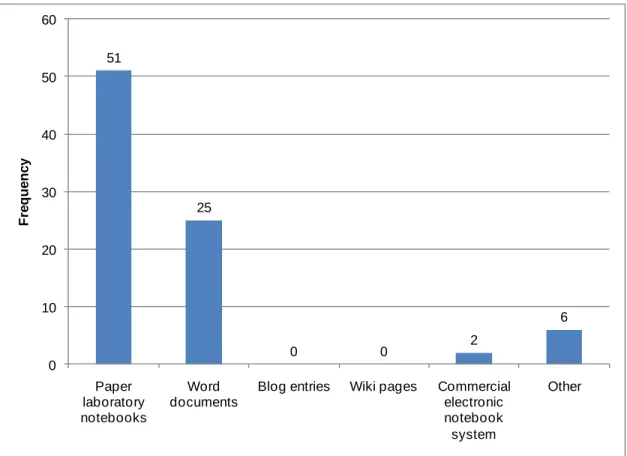
Figure 1: Methods of Recording Laboratory Notes
The majority of respondents (75.9%) indicated that they recorded experiments in their lab notebooks either the same day or within two days of performing an experiment. Only 13.0% indicated that experiments were recorded either within two weeks or over two weeks.
Over half of the respondents (53.7%) indicated that they used a level of detail that was either detailed or very detailed when recording experiments in their lab notebooks. However, the mean response was 3.46±0.88 corresponding to only slightly more detailed than average. Additionally, 70.4% of respondents indicated that they were either
A detailed summary of the survey’s laboratory notebook behavior questions can be found in Table 3.
Question/Response Frequency Percent
On average, how promptly do you record experiments in your lab notebook?
Same day 29 53.7%
Within two days 12 22.2%
Within a week 6 11.1%
Within two weeks 4 7.4%
Over two weeks 3 5.6%
In general, what level of detail would you say you use in recording experiments in your lab notebook?
Very Brief (1) 0 0.0%
Brief (2) 9 16.7%
Average (3) 16 29.6%
Detailed (4) 24 44.4%
Very Detailed (5) 5 9.3%
How confident are you that someone else could use your notes to reproduce an experiment?
Not Confident (1) 2 3.7%
Somewhat Confident (2) 14 25.9%
Confident (3) 28 51.9%
Very Confident (4) 10 18.5%
Table 3: Summary of Laboratory Notebook Behaviors
2
6
7
22
13
4
0 5 10 15 20 25
Daily 2-3 times a
week
Once a week 2-3 times a month
Once a month Less than once a month
Fr
e
qu
e
nc
y
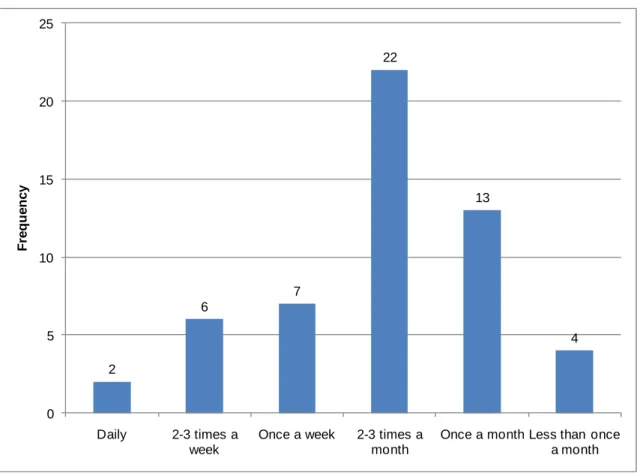
Figure 2: Frequency Respondents Look at Lab Notes More than 2 Months Old A majority (70.4%) of respondents indicated it was either easy or very easy to find the information they are looking for when they look back at these notes. Another 25.9% indicated they were neutral and only 3.7% indicated that this process was difficult for them. The mean response to this item was 2.19±0.73 corresponding to slightly more neutral than easy.
2
1
9 9
25
8
0 5 10 15 20 25 30
2-3 times a week
Once a week 2-3 times a month
Once a month
Less than once a month
Never
Fr
e
que
nc
y
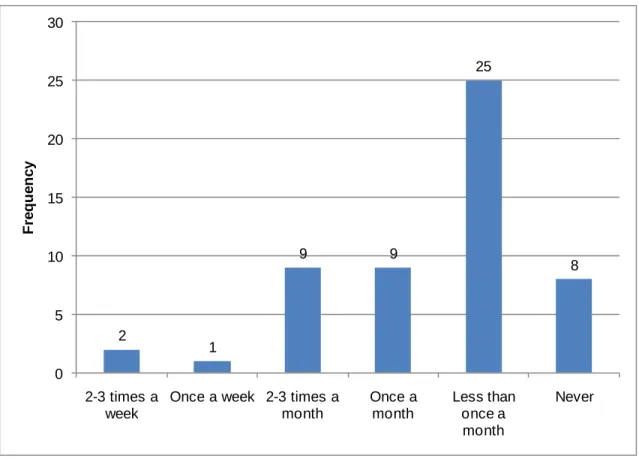
Figure 3: Frequency Respondents Look at another Researcher’s Lab Notes or Data Of those who indicated that they utilize another researcher’s notes or data, more than half (57.7%) indicated they were neutral on the difficulty of finding the information they needed in those notes. Another 30.8% responded that it was either difficult or very difficult to retrieve this information, and only 11.5% or 6 respondents indicated this was either an easy or very easy task. The mean response in this case was 2.77±0.78
corresponding to slightly more difficult than neutral.
Question/Response Frequency Percent
How often do you look back at your own lab notes that are more than 2 months old?
Daily 2 3.7%
2-3 times a week 6 11.1%
Once a week 7 13.0%
2-3 times a month 22 40.7%
Once a month 13 24.1%
Less than once a month 4 7.4%
When you do, how difficult is it to find the information you are looking for?
Very Easy (1) 8 14.8%
Easy (2) 30 55.6%
Neutral (3) 14 25.9%
Difficult (4) 2 3.7%
Very Difficult (5) 0 0.0%
How often do you need to look at another researcher’s laboratory notes or data?
2-3 times a week 2 3.7%
Once a week 1 1.9%
2-3 times a month 9 16.7%
Once a month 9 16.7%
Less than once a month 25 46.3%
Never 8 14.8%
When you do, how easy is it to find the information you are looking for?
Very Difficult (1) 3 5.8%
Difficult (2) 13 25.0%
Neutral (3) 30 57.7%
Easy (4) 5 9.6%
Very Easy (5) 1 1.9%
Table 4: Summary of Laboratory Notebook Effectiveness
Electronic Information
Generally, respondents indicated that their research information takes on many different forms, both printed and electronic. The most frequent responses were
survey respondents. The exception was a response of other, indicated by only 2
respondents, who also indicated using verbal communication and theses and dissertations as valuable sources of research information. Table 5 shows a complete listing of
responses and their corresponding frequencies.
Response Frequency
E-mail messages 34
Spreadsheets 46
Word documents 38
Printed photos or images 31
Digital or scanned images 34
Printed journal articles, manuscripts, etc. 44
Electronic copies of journal articles, manuscripts, etc. 46
Laboratory experiment results (electronic) 42
Other 2
Table 5: Forms of Research Information
5 0 6 8 33 6 3 5 7 31 0 5 10 15 20 25 30 35
Less than 20% 20% to 40% 41% to 60% 61% to 80% More than 80%
Fr
e
que
nc
y
Raw Data Analyzed Data
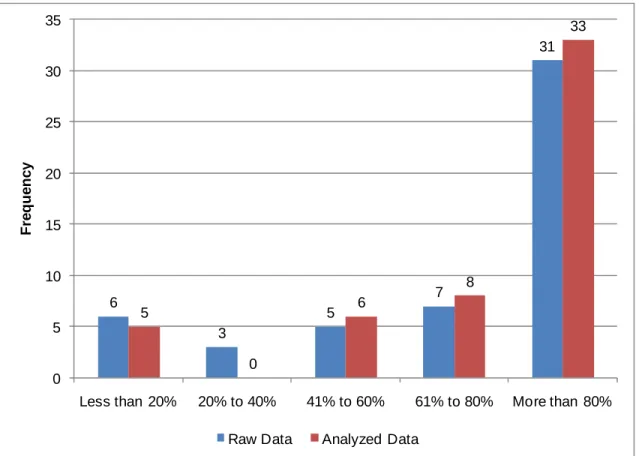
Figure 4: Percent of Data Collected in Electronic Formats
Respondents were asked to indicate all of the locations where they store electronic research data. Table 6 shows that primarily respondents store their data on their own personal computers or locally on lab owned machines. Other locations indicated by respondents included USB flash drives, external hard drives, and other portable storage devices.
Response Frequency
Personal computer 41
Lab owned computer 35
Lab owned file server 18
University provided file storage 20
Other 9
Table 6: Electronic Data Storage Locations
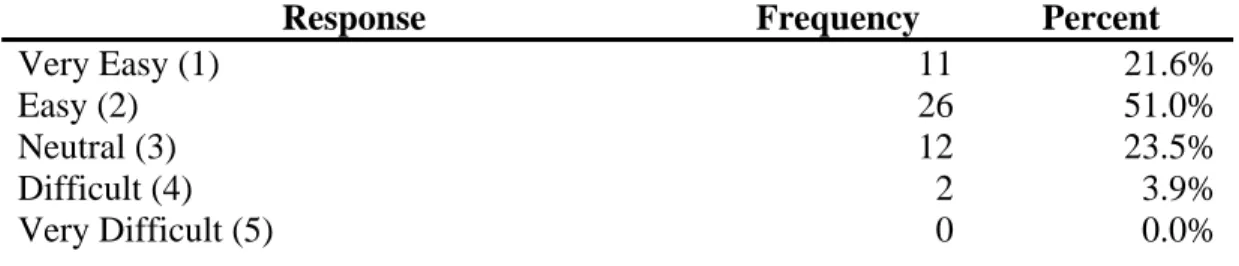
corresponding to a response of easy. The majority (72.6%) indicated that it was either easy or very easy to retrieve this information while only 3.9% indicated it was difficult.
Response Frequency Percent
Very Easy (1) 11 21.6%
Easy (2) 26 51.0%
Neutral (3) 12 23.5%
Difficult (4) 2 3.9%
Very Difficult (5) 0 0.0%
Table 7: Ease of Retrieving Electronic Research Data from Past Experiments
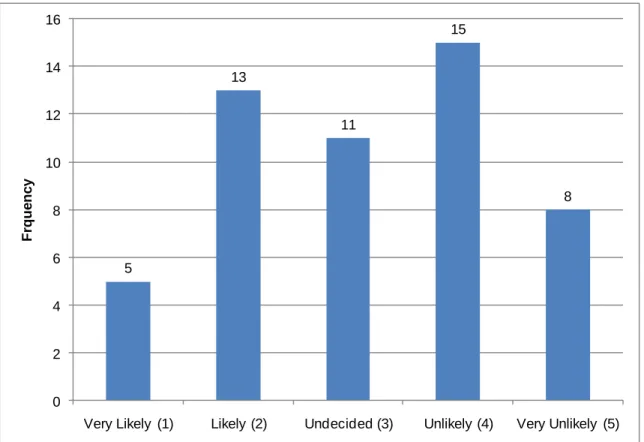
Figure 5 illustrates the likelihood respondents would be willing to move to an entirely electronic lab notebook system given the appropriate tools and training. The mean response was 3.15±1.24, which generally corresponds to an undecided response;
5
13
11
15
8
0 2 4 6 8 10 12 14 16
Very Likely (1) Likely (2) Undecided (3) Unlikely (4) Very Unlikely (5)
F
rque
nc
y
Figure 5: Likelihood of Moving to an Entirely Electronic Lab Notebook System
Collaboration
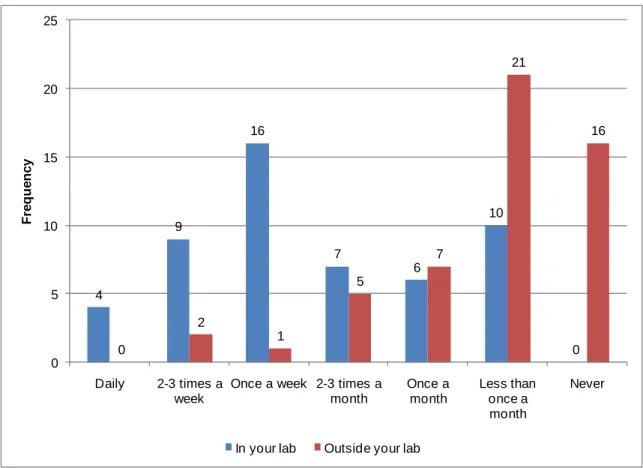
Respondents were asked to indicate the frequency with which they collaborate and/or share data with other researchers in their own lab as well as with researchers outside of their lab. Figure 6 illustrates their responses and shows that, in general, more
4 9 16 7 6 10 0 0 2 1 5 7 21 16 0 5 10 15 20 25
Daily 2-3 times a week
Once a week 2-3 times a month Once a month Less than once a month Never F re que nc y
In your lab Outside your lab
Figure 6: Frequency of Collaboration with Other Researchers
25 36 1 36 13 2 2 29 0 15 6 17 0 5 10 15 20 25 30 35 40
Shared f ile storage E-mail Online document management system Portable storage device Other None Fr e que nc y
In your lab Outside your lab
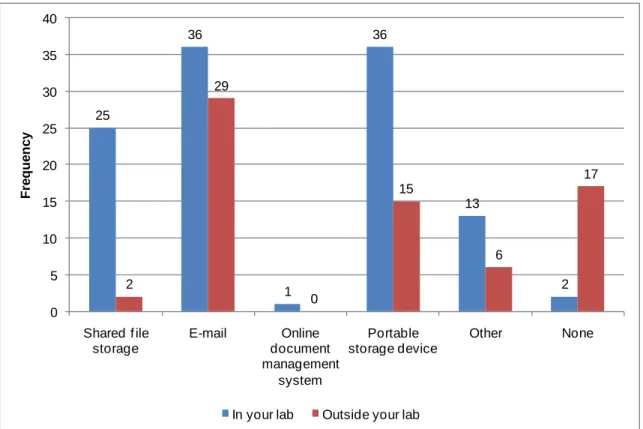
Figure 7: Tools Used to Share Research Information with Collaborators
Table 8 summarizes how effective respondents feel their current collaboration and data sharing tools are in supporting their needs. The mean response was 1.96±0.77 generally corresponding to a response of somewhat effective. Over three-quarters (80.7%) of respondents indicated they feel their current tools are either somewhat
effective or very effective. Only 3.8% indicated a response of somewhat ineffective, and no one indicated a response of very ineffective.
Response Frequency Percent
Very Effective (1) 14 26.9%
Somewhat Effective (2) 28 53.8%
Neutral (3) 8 15.4%
Somewhat Ineffective (4) 2 3.8%
Very Ineffective (5) 0 0.0%
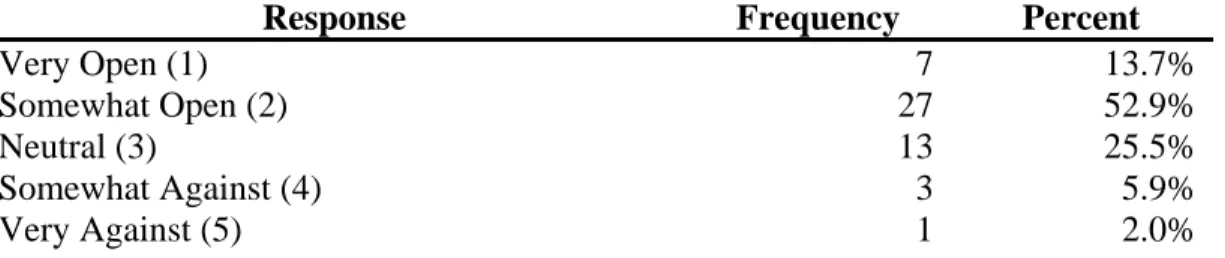
Table 9 summarizes how open respondents are to exploring new electronic
collaboration tools. The mean response was 2.29±0.86 corresponding to a response of slightly more neutral than somewhat open. Most (66.6%) respondents indicated they were either somewhat open or very open to exploring new technologies, but 7.9% indicated they were either somewhat against or very against exploring new tools. It is also important to note that approximately one-quarter (25.5%) of respondents were on the fence regarding this issue providing a response of neutral.
Response Frequency Percent
Very Open (1) 7 13.7%
Somewhat Open (2) 27 52.9%
Neutral (3) 13 25.5%
Somewhat Against (4) 3 5.9%
Very Against (5) 1 2.0%
Table 9: Openness to Exploring New Electronic Collaboration Tools
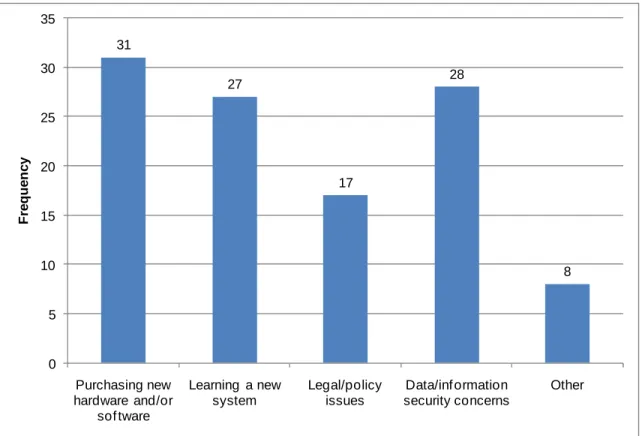
31 27 17 28 8 0 5 10 15 20 25 30 35 Purchasing new hardware and/or sof tware
Learning a new system Legal/policy issues Data/inf ormation security concerns Other Fr e qu e nc y
Figure 8: Concerns Preventing Consideration of Alternative Collaboration Solutions Generally, a wide variety of concerns were expressed, but none of them stood out as overwhelming the others. Additional concerns respondents had were the ease of use of alternative tools, the longevity and reliability of the software and systems, and the time and effort required to transition from their current tools into a new system.
Analysis
effectiveness of currently used collaboration tools, and openness to exploring new electronic collaboration tools.
Table 10 summarizes the results of the Chi-Square analyses performed on the survey data.
Variable Pearson
Chi-Square
Degrees of
Freedom p-value
Traditional Chemistry Division
Satisfaction with Current Lab Notebook 16.413 15 0.355
Willingness to Move to an Entirely Electronic
Lab Notebook 27.208 20 0.130
Effectiveness of Current Collaboration Tools 13.81 15 0.540 Openness to Explore New Electronic
Collaboration Tools 17.231 20 0.638
Length of Time as Researcher
Satisfaction with Current Lab Notebook 6.402 9 0.699
Willingness to Move to an Entirely Electronic
Lab Notebook 19.854 8 0.011
Effectiveness of Current Collaboration Tools 5.497 6 0.482 Openness to Explore New Electronic
Collaboration Tools 19.031 8 0.015
Affiliated Institution
Satisfaction with Current Lab Notebook 2.915 3 0.405
Willingness to Move to an Entirely Electronic
Lab Notebook 11.952 4 0.018
Effectiveness of Current Collaboration Tools 1.264 3 0.738 Openness to Explore New Electronic
Collaboration Tools 5.467 4 0.243
Current Position
Satisfaction with Current Lab Notebook 12.084 9 0.209
Willingness to Move to an Entirely Electronic
Lab Notebook 17.288 12 0.139
Effectiveness of Current Collaboration Tools 2.543 9 0.980 Openness to Explore New Electronic
Collaboration Tools 34.485 12 0.001
The results show significant differences at the 0.05 level for four of the analyses performed. This indicates differences in the distribution of responses based on
Discussion
The results of this study will be examined and discussed in detail to provide insight into the original research questions posed as well as to highlight potential implications of this work and suggestions for further research.
Role of the Laboratory Notebook
Paper-based laboratory notebooks remain a researcher’s primary means for recording their data and observations. Over 90% of respondents indicated they used a paper
laboratory notebook when recording experimental notes. While the paper-based lab notebook is not dying off, additional electronic means of recording information are beginning to take hold. For example, 46% of respondents indicated they use Word documents to record laboratory notes. This is especially significant given the amount of data being collected in an electronic format. Over 60% of respondents indicated that more than 80% of their raw and analyzed data are collected in an electronic format. The ability to integrate this data with their laboratory notes for a given experiment would provide a significant improvement in the organization of their research materials.
researcher recording them. Perhaps the expansion of collaborative research work would build additional confidence in researchers’ abilities to understand the notes of others.
Similarly, respondents indicated it was generally easy for them to go back and
retrieve laboratory notes they had previously taken but that it was far more difficult to do the same with another researcher’s notes. Again, the ability to share information among researchers, both past and present, is extremely important to research productivity. An electronic laboratory notebook may be easier to search but will not improve its overall content. If retrieval is the underlying problem, an online system would be able to effectively index all researchers’ laboratory notes with hopes of preventing overlapping work; however, if the underlying problem is the actual detail of the notes, researcher’s will have to make a concerted effort to improve what they record. It is also important to mention that the organization of the laboratory notes may prove to be an obstacle in effective retrieval. This seems especially likely in this case given researchers seem to easily find what they need in their own organizational system but have difficultly when trying to search through another researcher’s system. An electronic system could provide additional organizational structure which could alleviate this issue; however, any
standardized organizational system among researchers would be able to accomplish the same goal.
electronic laboratory. The corporate R&D community is certainly ahead of the game in this respect, but academia will catch up as they begin to see the need for increased organization of their data and notes to provide more effective resources for future researchers.
Current Information Management Tools
Besides the traditional laboratory notebook, respondents indicated the use of a wide variety of other resources to support their work. Journal articles, in both printed and electronic form, topped the list followed by spreadsheets and e-mail. Over 30% of respondents also indicated the use of both printed and digital images. With so many varying forms of information, it seems that it would be difficult for researchers to compile a high-level view of their data without considerable effort. Interestingly,
respondents generally indicated that it was easy for them to search for and find electronic data files and information from previous experiments. Perhaps this implies an underlying organization of the information by each researcher. If this is the case, the problem
remains that these organizational structures are not consistent making it fairly difficult for outsiders to find the information they need.
research that a record of the data collected in a laboratory remains with that laboratory. Over 60% of respondents did indicate the use of laboratory owned machines to store their data, which is certainly a step in the right direction. Less the 40% indicated they used laboratory or university provided file servers for storage. This would be the safest and most reliable mechanism for the storage and archival of scientific data and should be encouraged as researchers explore new information management practices. Interestingly, nearly 20% of respondents also indicated the use of portable storage devices. Hopefully these are used as a secondary backup only, but either way these devices should be discouraged in the future as they could potentially violate the privacy and security of the data if they are ever lost or stolen.
Generally speaking, although the use of electronic data is prevalent throughout the scientific research community, researchers are skeptical of moving to an entirely electronic organizational system. The results show that more than half of respondents were either undecided or unlikely to move to such a system given the appropriate tools. Scientists still do not trust the longevity and reliability of electronic storage and will need to be introduced to its advantages over time. No system is perfect and hard drives will crash from time to time, but the use of redundant file servers as opposed to single personal or laboratory machines will reduce if not eliminate the risk of data loss.
Effectiveness of Current Practices
sharing data with collaborators are effective. It seems that researchers are generally happy with their current toolkit and are unlikely to make any major changes to their current practices until they feel otherwise. Many did express openness to exploring new electronic tools to support their work; however, they have many concerns about moving away from their current tools. Their concerns generally stem from monetary issues such as needing to purchase new hardware and software or additional equipment and training as well as from data security concerns such as privacy and longevity. It is interesting that scientists, individuals always on the front lines of discovery and innovation, are so
hesitant to adopt new technologies for the organization and storage of their information.
Implications
The results of this research have the potential to influence the future development of ELN systems for universities and to drive scientists toward a more organized digital environment for storing and archiving their results. Archivists, university administrators, ELN software developers, and especially the scientists themselves will be interested in the results of this work. By understanding what academic scientists find useful, the university community can learn from each other how best to manage the massive amounts of data being generated by the scientific community in the modern age.
Additionally, this research has implications across several academic disciplines including information science, computer science, and the natural sciences. It will contribute to understanding the information organization and management needs of academic scientists. It will provide a profile of the current state of technologies being used to support scientific research and collaborative efforts in academia, and it will establish a desire among scientists to find and implement technologies which will better support their data management needs.
Future Work
Analysis of the survey results shows that the majority of respondents were graduate students, with 1-5 years of full-time research experience, working at the University of North Carolina at Chapel Hill. These results provide an interesting look at this
feasible given the time and resources to complete the work. Additionally, the survey instrument should be revised to incorporate trends found in this study. For example, no one indicated the use of Web 2.0 collaboration technologies such as wikis or blogs. These items should thus be deleted and new ones added to incorporate more technologies specifically geared toward researchers. Finally, future work should concentrate on generalizing this work in hopes of someday applying it to all academic science
disciplines. As the lines of disciplines continue to blur it will become increasingly more important that scientists from all fields be able to effectively communicate and share their resources with one another.
Conclusion
This study provides a description of the laboratory notebook’s role in the scientific information management practices of academic research chemists. It also provides insight into the effectiveness of these practices as well as how current information management tools are being leveraged to support their day-to-day work.
A survey method was used to gather data via an online questionnaire, which consisted of 28 closed questions. Questions were developed to gauge how researchers utilize their laboratory notebooks, what additional tools they use for information management, and whether these tools effectively support research and collaboration.
The results indicate that the vast majority of research chemists still utilize paper-based laboratory notebooks as their primary means of record keeping and information management. Although respondents primarily use a paper-based laboratory notebook, many indicated that they also use additional, electronic tools to support their work. The use of Word documents and Excel spreadsheets were most common; however, a couple of individuals also indicated using a commercial ELN system. Surprisingly,
This work serves as a beginning point for developing a picture of scientific
References
Babbie, E. (2007). The practice of social research (11th ed.) Thomson Wadsworth. Birnholtz, J. P., & Bietz, M. J. (2003). Data at work: Supporting sharing in science and
engineering. GROUP '03: Proceedings of the 2003 International ACM SIGGROUP Conference on Supporting Group Work, Sanibel Island, Florida, USA. 339-348. Brown, C., Blake, C., Brown, E. A. R., & Tenopir, C. (2006). How chemists are really
finding and using information in our digital environment. Proceedings of the American Society for Information Science and Technology, 43(1), 38. Butler, D. (2005). Electronic notebooks: A new leaf. Nature, 436(7047), 20-21. Dessy, R. E. (1995). Electronic lab notebooks: A shareable resource. Analytical
Chemistry, 67(13), 428A.
Hemminger, B. M., Lu, D., Vaughan, K. T. L., & Adams, S. J. (2007). Information seeking behavior of academic scientists. Journal of the American Society for Information Science and Technology, 58(14), 2205-2225.
Kihlen, M. (2005). Electronic lab notebooks - do they work in reality? Drug Discovery Today, 10(18), 1205.
Myers, J. D. (2003). Collaborative electronic notebooks as electronic records: Design issues for the secure electronic laboratory notebook (ELN). Paper presented at the
Reimer, Y. J., & Douglas, S. A. (2004). Ethnography, scenario-based observational usability study and other reviews inform the design of a web-based E-notebook.
International Journal of Human-Computer Interaction, 17(3), 403-426.
schraefel, m. c., Hughes, G. V., Mills, H. R., Smith, G., Payne, T. R., & Frey, J. (2004). Breaking the book: Translating the chemistry lab book into a pervasive computing lab environment. CHI '04: Proceedings of the SIGCHI Conference on Human Factors in Computing Systems, Vienna, Austria. 25-32.
Tabard, A., Mackay, W. E., & Eastmond, E. (2008). From individual to collaborative: The evolution of prism, a hybrid laboratory notebook. CSCW '08: Proceedings of the ACM 2008 Conference on Computer Supported Cooperative Work, San Diego, CA, USA. 569-578.
Appendix A: Survey Invitation
To: [Electronic Mailing Lists]
Subject: Invitation to participate in a study of chemists’ use of laboratory notebooks Study Title: Academic Chemists’ Use of Laboratory Notebooks and Other Information Management Tools
Principal Investigator: Kyle Richardson ([email protected], (919) 259-1034) Faculty Advisor: Dr. Diane Kelly ([email protected], (919) 962-8065)
School of Information & Library Science, The University of North Carolina at Chapel Hill
Please consider participating in this study of how chemists in academia use laboratory notebooks and other information management tools. As a graduate student and a former research chemist, I understand your time is valuable and would be grateful for your assistance.
Below is a link to an online survey with 28 multiple-choice questions that should take between 10 and 15 minutes to complete. The survey will be available until May 11, 2009. Your responses will contribute to research work that will be published as a Master’s Paper at The University of North Carolina at Chapel Hill.
I hope that you will consider helping me complete my graduate work by participating in this study. Please feel free to contact my faculty advisor or me with any questions you might have. Our contact information can be found at the top of this message.
Appendix B: Online Consent Form
Academic Chemists’ Use of Laboratory Notebooks and Other Information Management Tools
IRB Study # 09-0721
Principal Investigator: Kyle Richardson ([email protected], (919) 259-1034) Faculty Advisor: Dr. Diane Kelly ([email protected], (919) 962-8065)
School of Information & Library Science, The University of North Carolina at Chapel Hill
Thank you for your interest in this study of the use of laboratory notebooks and other scientific information management tools by research chemists in academia. You have been selected for this study because you are a chemical researcher currently working in academia. Please do not complete this study if you are not an academic research chemist who has completed at least a bachelor's degree.
About this study:
• What’s involved: The survey consists of 28 multiple-choice questions. It should take approximately 10 to 15 minutes to complete.
• Risks: This survey poses no more risk than you experience in normal daily living. • Benefits: You may experience the satisfaction that comes with research and
discovery, but you will not benefit otherwise from this study.
• Your privacy: By clicking to enter the survey, you are giving permission to use your data in this study. The results of this study will be published in a master’s paper, but the paper will not contain information that will identify you. Your data will be anonymous. All the information you provide will be used responsibly and will be protected against release to unauthorized persons.
Please be sure that you take steps to safeguard your privacy as well. Choose a place that allows you enough privacy to comfortably complete the survey. • Protection of survey data: The Qualtrics system maintains data behind a
cannot be accessed by anyone other than the owner or, by the owner's request, technical assistance staff. Technical assistance staff includes server
administrators at Qualtrics who will respond to hardware or software failures, or Teresa Edwards, the UNC administrator for the Qualtrics Software Agreement. Ms. Edwards has completed Human Subjects Research certification at UNC-CH, and will only access survey data at the account owner's request.
• Payment: You will receive no payment or compensation for participating in this study.
• Your rights: You have the right to ask, and have answered, any questions you may have about this research. If you have questions, or concerns, you should contact the researchers listed at the top of this form. All research on human volunteers is reviewed by a committee that works to protect your rights and welfare. If you have questions or concerns about your rights as a research subject you may contact, anonymously if you wish, the Institutional Review Board at (919) 966-3113 or via e-mail at [email protected].
• Voluntary participation: Your decision whether or not to participate in this study is voluntary and will not affect your standing at UNC-CH or any other institution. You may choose not to be in the study or to stop being in the study before it is over at any time. You will not be offered or receive any special consideration if you take part in this research.
If you click on the button below and submit a completed survey, you are indicating your agreement to participate based on reading and understanding this form. If you have any questions, please contact an investigator identified at the top of this form prior to completing the survey.
If you do not wish to participate in this study, please navigate away from this web page. Based on the information above, I agree to participate in this study by clicking the
Appendix C: Survey Instrument
Section 1: Demographics
1. What is the highest degree you have obtained to date?
o High School Diploma
o Bachelor's Degree
o Master's Degree
o Doctoral Degree
o Other Professional Degree
2. With what institution are you affiliated?
o Duke University
o North Carolina State University
o The University of North Carolina at Chapel Hill
o Wake Forest University
o Other
3. What is your current position?
o Graduate Student
o Postdoctoral Researcher
o Professor/Principle Investigator
o Staff Scientist
o Other (please specify)
4. How long have you been a full-time researcher?
o Less than a year
o 1 to 5 years
o 5 to 10 years
o More than 10 years
5. What traditional chemistry division most closely relates to your research work?
o Analytical
o Biological
o Inorganic
o Organic
o Physical
Section 2: The Lab Notebook
6. In what format is your primary lab notebook?
o Electronic
o Hand-written
o Other (please specify)
7. How satisfied are you with your current lab notebook?
o Very Dissatisfied
o Dissatisfied
o Neutral
o Satisfied
o Very Satisfied
8. In which of the following ways do you record laboratory notes? (Please check all that apply)
o Paper laboratory notebooks
o Word documents
o Blog entries
o Wiki pages
o Commercial electronic notebook system
o Other (please specify)
9. On average, how promptly do you record experiments in your lab notebook?
o Same day
o Within two days
o Within a week
o Within two weeks
o Over two weeks
10.In general, what level of detail would you say you use in recording experiments in your lab notebook?
o Very Brief
o Brief
o Average
o Detailed
o Very Detailed
11.How confident are you that someone else could use your notes to reproduce an experiment?
o Not Confident
o Somewhat Confident
o Confident
12.How often do you look back at your own lab notes that are more than 2 months old?
o Daily
o 2-3 Times a Week
o Once a Week
o 2-3 Times a Month
o Once a Month
o Less than Once a Month
o Never
13.When you do, how difficult is it to find the information you are looking for?
o Very Easy
o Easy
o Neutral
o Difficult
o Very Difficult
14.How often do you need to look at another researcher's laboratory notes or data?
o Daily
o 2-3 Times a Week
o Once a Week
o 2-3 Times a Month
o Once a Month
o Less than Once a Month
o Never
15.When you do, how easy is it to find the information you're looking for?
o Very Difficult
o Difficult
o Neutral
o Easy
o Very Easy
Section 3: Electronic Information
16.What forms of information, other than your lab notebook, contribute to your research? (Please check all that apply)
o E-mail messages
o Spreadsheets
o Word documents
o Printed photos or images
o Digital or scanned images
o Printed journal articles, manuscripts, etc.
o Electronic copies of journal articles, manuscripts, etc.
o Laboratory experiment results (electronic)
17.What percentage of the raw data you collect are in an electronic format?
o Less than 20%
o 20% to 40%
o 41% to 60%
o 61% to 80%
o More than 80%
18.What percentage of your analyzed data are in an electronic format?
o Less than 20%
o 20% to 40%
o 41% to 60%
o 61% to 80%
o More than 80%
19.Where do you store your electronic data? (Please check all that apply)
o Personal computer
o Lab owned computer
o Lab owned file server
o University provided file storage
o Other (please specify)
20.How easy is it to search for and find electronic research data from your past experiments?
o Very Easy
o Easy
o Neutral
o Difficult
o Very Difficult
21.How likely are you, given the appropriate tools, to move to an entirely electronic lab notebook system?
o Very Likely
o Likely
o Undecided
o Unlikely
o Very Unlikely
Section 4: Collaboration
22.How often do you collaborate or share data with other researchers in your lab?
o Daily
o 2-3 Times a Week
o Once a Week
o 2-3 Times a Month
o Less than Once a Month
o Never
23.What, if any, tools do you use to share research information with other researchers in your lab? (Please check all that apply)
o Shared file storage
o E-mail
o Online document management system
o Wiki
o Blog
o Portable storage device (USB drive, External hard drive, etc.)
o Other (please specify)
o None
24.How often do you collaborate or share data with other researchers outside of your lab?
o Daily
o 2-3 Times a Week
o Once a Week
o 2-3 Times a Month
o Once a Month
o Less than Once a Month
o Never
25.What, if any, tools do you use to share research information with other researchers outside of your lab? (Please check all that apply)
o Shared file storage
o E-mail
o Online document management system
o Wiki
o Blog
o Portable storage device (USB drive, External hard drive, etc.)
o Other (please specify)
o None
26.How effective do you feel your current tools are in supporting the sharing of data and information?
o Very Effective
o Somewhat Effective
o Neutral
o Somewhat Ineffective
o Very Ineffective
27.How open would you be to exploring new electronic tools for the sharing of research information amongst collaborators?
o Somewhat open
o Neutral
o Somewhat against
o Very against
28.What would prevent you from considering alternative solutions to research information sharing? (Please check all that apply)
o Purchasing new hardware and/or software
o Learning a new system
o Data/information security concerns