1.
What are GMOs?: A Brief Introduction
Research shows that consumer familiarity with GMOs is high, but that consumer’s scientific
understanding of GMOs is low1. Information on the internet and provided by other media sources tends to be divided into pro- or anti-biotech reports with little scientific support. This paper seeks to clarify common misunderstandings about GMOs through science-based information, and to give consumers a basic guide for making rational food choices.
A genetically modified organism (GMO) is the common term for a living thing with genetic material (DNA) taken from another unrelated organism and inserted into its own genome (full complement of DNA) in a laboratory. We will use the term genetic engineering (GE) in place of GMO in this paper so that we can be more specific when we discuss either the genetic changes to the crops, the living crops themselves, or the foods made from GE crops. Genetic engineering (GE) is the most recent major development in crop science. Genes that give an organism a certain feature or features can be taken from one species and inserted into another. The methods to do this have only been around for about 20 years, but the general practice of recombining DNA is nothing new. Since the beginning of agriculture, humans have selected and replanted seeds from the most desirable plants. This has fundamentally changed the plants we eat- making ears of corn bigger, apples sweeter, and lettuce softer, just to name a few traits that have changed. Selection takes advantage of the genetic mutations that naturally produce differences over time. The genetic material in our crops has therefore changed over time, just by choosing to grow certain plants and not others. This method of selective breeding takes hundreds of years to produce big changes in the crop though. Farmers and scientists have wanted to speed up this process for some time, making it easier to give foods the characteristics that we want and reduce or eliminate the things we do not want. For several decades now, scientists have generated new variants of plants by blasting them with certain types of radiation, such as x-rays or gamma rays2. Hybridization and cloning techniques have also commonly been used. In recent years, the technology used to modify crops and other organisms has become more powerful with the development of GE.
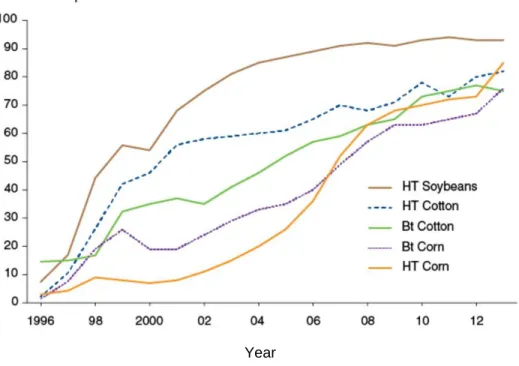
Figure 1. Adoption of GE crops in the U.S. 6
Year
Potential health risks from GE foods and environmental problems from growing GE crops depend on how they are different from traditional, non-GE crops or foods. So, how have GE crops been changed from the original crops, and why have scientists done it? Up to this point, most commercialized GE crops in the U.S. have been changed by the insertion of gene(s) for pest resistance. There is also potential to make crops with higher nutritional content or with special properties like drought resistance7. These are commonly referred to as “second generation” GE crops, but most of them are under development or have not yet been widely commercialized9. The most common GE crops that are currently grown in the U.S. have had gene(s) inserted to make them resistant to the herbicide glyphosate (i.e., Roundup) or glufosinate2. This has allowed farmers to use these herbicides earlier in the growing season and more often without damaging their crops. In 2013, GE-herbicide tolerant (Ht) soybeans covered 93 percent of all soybean acreage in the U.S., Ht cotton covered 85 percent of all cotton acreage, and Ht corn covered 85 percent of all corn acreage5. Clearly, these types of GE crops have become mainstream, as figure 1 illustrates.
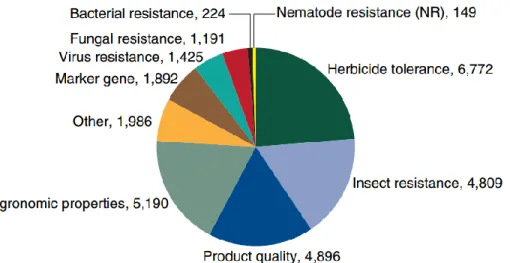
Figure 2. Number of permits for release, by GE crop trait (2013)10
GE has spread rapidly in the U.S. since its commercial introduction in 1996. More than 90 percent of U.S. corn,cotton, soy, and sugar beets are now GE2, 3. Foods made from GE crops are now found in virtually all supermarkets and shops in the U.S., even though they come from only a few types of GE crops. The widespread sale of GE foods, plus current laws allowing GE foods to go unlabeled have raised concern among some consumers. The food system in the U.S. is complex, particularly for processed foods. Ingredients for each type of food may come from many different places, and may be processed alongside other types of foods. Since processed foods contain so many ingredients and GE labeling is voluntary in the U.S., it is almost impossible to know for certain whether a food is free of GE ingredients. This has prompted attempts to pass mandatory labeling laws in several states in the past 5 years8. However, only Vermont currently has a mandatory labeling law in effect. Food manufacturers and GE seed companies have fought this legislation, likely because prices for GE food are estimated to go down if they were labeled9. The value of GE foods would be expected to decrease primarily because of reduced consumer demand, since some believe that GE foods are of inferior quality or are more dangerous than non-GE foods9. Food manufacturers and GE seed companies believe this is unfair12, since the USDA, the National Academy of Sciences, and other groups have approved GE foods and have not found evidence that they are harmful13, 2.
2.
Health Effects of GMOs: A review of the scientific literature
Establishing the safety of a new food or anything else is complex. Science is famously better at disproving things than it is at proving them to be true. If there is no evidence that GE foods are dangerous, does it mean that they are definitely safe? This largely philosophical question is relevant here because there have not been any large, well-controlled studies on the effects of GE foods on human health. What data we have comes from small animal studies and toxicology data from GE crop manufacturers11, 14. The Food and Drug Administration (FDA) uses data from the manufacturer (that is, GE seed developers), to determine whether a new crop is safe15, 2. The public does not have access to this data. The FDA is required to assess the safety of new food products brought to market, but the limited amount of evidence they review to approve new foods leaves some consumers worried. In 1992, the FDA established that GE crops and foods would be regulated the same way as conventional crops. GE manufacturers only need to show that their products do not produce anything that isn’t already present in the food chain, do not introduce any new allergens, and do not have lower nutritional content16. The FDA considers GE crops to be safe4, 15. Otherwise, Americans would not be able to purchase them in stores. There are good reasons to believe that GE foods are safe, and there are also reasons for potential concern. GE foods are unlikely to cause direct harm to humans. The direct effects on human health are discussed in this section, while potential damage to the environment from GE crops is the topic of the third section.
GE Foods and Health
Very few studies have documented significant harm to animals fed GE foods11. There do not appear to be any studies showing direct harm from GE genes or proteins on humans. The most frequently-cited study showing harm in laboratory animals found metabolic and physiological abnormalities in the livers and kidneys of lab rats fed GE foods17, 14. This research was widely criticized over its small sample size and other methodological limitations18. Others have pointed out that much of the criticism of this study arose from experts with ties to the GE industry19, raising doubts over the motives of these critical scientists. However, most evidence shows no significant effects in lab animals 20, 21, or in humans18, and the results from the Seralini have not been repeated. The presence of foreign (GE, transgene-derived) proteins in certain GE foods has alerted some to the potential dangers of allergic reactions, but no allergies from GE have been documented.
Part of the difficulty in studying the role of GE foods on health is that GE foods are not currently labelled or reliably tracked, yet they are everywhere. This makes it very challenging, even for researchers, to assess GE exposure in human populations. Most Americans currently eat GE foods, but it is unclear who eats the most, and by how much. This gap in knowledge both allows skeptics of GE to claim that they are unsafe, while at the same time permitting GE advocates to say that they are safe. More testing and publicly-available information about GE foods would be helpful to definitively establish their safety for human consumption. This would not necessitate food labeling, so long as a better tracking system existed for the distribution and use of GE products.
Despite the dearth of information, there are strong biological reasons why eating GE foods should be perfectly safe. One is that DNA from other species are naturally present in our food, even in
naturally changes the genetic material in the crops over time, and thereby changes the proteins that make up the plants. Scientists have also been using radiation to mutate seeds for many decades, deliberately making plants with changes in their genetic code2. Further, we may eat genes from other species because some bacteria and fungi grow on plants, just as bacteria grow on healthy human skin. Consumers do not need to be afraid of eating small amounts of DNA, mainly because it is everywhere as part of nature.
Another reason to be less concerned about the effects of consuming GE foods is that little if any of the GE genes from GE crops get into most of the food Americans consume. The more processed a food is, the less DNA it will typically contain. The main products of GE used for human consumption are high fructose corn syrup, corn oil, soybean oil, and soy lecithin2. All of these are highly processed products that do not contain much DNA from the GE transgenes. These products also contain effectively zero protein, meaning that even the products of the GE genes are not present in the food. In this way, most GE food products are chemically and nutritionally identical to conventional, non-GE foods.
Most large agencies have reviewed the available data on GE and GE foods and have determined that they are safe. The United States Department of Agriculture (USDA), the National Academy of Sciences, and the European Food Safety Agency have concluded that GMOs are safe to consume20, 13, 2. These organizations have based their conclusions on studies that have looked at feeding GE products in large quantities over short periods to animals, as well as investigations of the general nutrition of GMOs, and measurements of how much GE transgenes are broken down in the stomach. The National Academy of Sciences (NAS) has commissioned a new report investigating the health effects, environmental safety, and economic and social impacts of GE crops, but it is not due until at least 201611. Two previous reviews by the NAS have concluded that GE crops “pose no unique threat to human health”13.
GE Safety Testing
We have now discussed several lines of evidence for why GE foods should be completely safe to eat. That said, there certainly are ways in which the testing of GE crops and foods could be improved to better demonstrate that they are safe. For example, some experts have raised concerns over the limited amount of testing and oversight that new GE crops undergo. The FDA does not have a mandatory approval process for GE foods before commercialization15, 2. There is only a voluntary report on any novel risk from the GE crop producer to the FDA, and biosafety data from these reports lack any public peer review 22. In other words, most product and biosafety data are submitted by the manufacturer to the regulatory agency (i.e. the FDA in the U.S.), and are never published. There is clearly a conflict of interest in these reports, since any data indicating harm caused by the product may hurt the
manufacturer’s profits. The Center for Science in the Public Interest (CSPI), an independent research group, believes this process is inadequate. CSPI states that: “Congress needs to amend the Federal Food, Drug, and Cosmetic Act to require a mandatory pre-market approval process that is open to public participation and review.” 2. Legislation mandating this change was already proposed by Senator Richard Durbin in 2004, but was not approved by congress. Citizens can write their congressional
representatives to let them know that they support a review of this legislation.
information and losing their competitive edge after new product development. However, some believe that CBI is too often used to block the release of safety-related information, in part because of the lack of a clear definition of CBI 22. Narrowing the definition of CBI for GE crops may also help ensure their safety, since patents already protect private property without providing confidentiality.
GE, Pesticides and Human Health
As discussed earlier, most GE crops in the U.S. are “first generation” organisms that were designed for pesticide resistance. They typically carry a gene or genes to resist herbicides like glyphosate, or have a gene or genes to kill insects. This means that GE crops and foods are directly associated with certain pesticides. Glyphosate is a highly successful and widely used herbicide that was first produced by the Monsanto corporation2. Several of the largest crops in the U.S. today, such as soy, corn, and cotton, have a different form of an enzyme that makes them resistant to this herbicide, allowing farmers to use glyphosate early and late in the growing cycle without damaging their crops. Importantly, the
International Agency for Research on Cancer (IARC) has concluded that glyphosate is a “probable human carcinogen”, and that another herbicide (2,4-D), used specifically on some GE crops, is a “possible human carcinogen”11. This is based on toxicological and epidemiological research linking these herbicides in a dose-dependent manner to malignant tumors in animals, and glyphosate with non-Hodgkin’s lymphoma in humans23. The use of glyphosate has increased drastically in the past two decades with the introduction of glyphosate resistant, (Roundup Ready) GE crops5, 24 (figure 3). This suggests that GE may be increasing the overall use of potentially harmful pesticides, instead of reducing them. It is important to note that not all GE crops have caused an increase in pesticide use, however. The amount of pesticide used depends on the type of crop, year, and region where the crop is grown5, not just whether the crop is GE or non-GE. The amount of remaining glyphosate or other pesticide in actual food may be too low to cause harm, but there is much greater risk to farmers and farm laborers, who handle the crops and pesticides frequently.
Figure 3. Adoption of Herbicide Tolerant (Ht) Corn and Soybean with Pounds of Active Ingredient (a.i.) of Glyphosate and Other Herbicides24
Even if farmers decrease glyphosate use substantially due to increasing pest resistance, replacement with other pesticides may not be safe. One major new alternative is Enlist Duo, which is a formulation of the herbicide 2,4-D with glyphosate which was approved by EPA in 201411. The only science on the safety of 2,4-D is from toxicology studies commissioned by the manufacturer, and were never published. These are now 20 years old, and were done before there was a detailed knowledge of low-dose
endocrine disruption and epigenetic effects. Further, the toxicology studies on glyphosate used pure glyphosate; yet it is possible that formulated glyphosate, including adjuvants and surfactants, is more toxic than pure glyphosate11. Like the CSPI recommendation, these authors11 recommend more independently-funded scientific research that is published in peer-reviewed scientific journals on the safety of GE crops and pesticides. They also recommend that the National Toxicology Program test glyphosate formulations (including Enlist Duo) before they are released. The authors additionally support post-marketing surveillance of GE products, which currently is not required. This information would help fill a large gap in current knowledge, and could establish definitively whether GE crops, foods, and their associated pesticides are safe.
3.
Economic and Environmental Impacts of GE
Economic effects
In America, almost 180 million acres of GE corn, soybeans, cotton, canola, sugarbeet, alfalfa, papaya, and squash were grown in 2014, according to the Food and Drug Administration4, 5. The quick adoption of GE crops shows that U.S. farmers believe that these crops are more cost-effective than traditional crops. To some extent this is true. Certain types of GE crops have increased productivity, though the picture is far from consistent. In 2005, Bt corn yields were 17 bushels per acre higher than non-GE corn yields, and in 2010 they were roughly 26 bushels higher than for non-GE corn, according to data from USDA’s Agricultural Resource Management Survey (ARMS)5. Models from USDA’s Economic Research Service (ERS) suggest that in 2005, each 10% increase in adoption of GE (Bt) corn increased corn yields by 1.7%, and by 2.3% in 2010. Most other Bt crops also show increased yields, but the data is much more mixed for herbicide tolerant (Ht) GE crops. Some Ht crops show the same or decreased
productivity as conventional (non-GE) crops, while others show some increase5, 7. For example, there is no evidence that Ht soybeans produce greater net returns for farmers, and the evidence for other herbicide-tolerant crops is weak. Increased yields is by far the most common reason reported by farmers for why they choose GE seeds7, despite the data showing that yields are only consistently higher when pests are prevalent. This indicates that farmers are not well informed about the true benefits of GE crops, and that they might not be making the best decisions regarding GE use. GE crops can provide some economic benefits for farmers and society, but claims of universal economic benefits for all GE crops are misleading, given that most GE crops planted in the U.S. are actually Ht varieties.
The evidence from different studies is very mixed regarding the net returns for farmers, which depends on the type of crop, the GE genes present, and the specific study. Thus, it is not always clear whether farmers are better off with or without GE crops.
Figure 4. Prices for GE Seeds Are Higher than for Non-GE Seeds7
Year
So, why have so many farmers invested in GE crops? It is possible that marketing campaigns from large seed companies have swayed farmers. Yet, there may be real advantages even for Ht crops. Evidence exists that pesticide use is simpler for Ht crops, freeing up more time for farmers. Off-farm income is significantly higher for farmers planting GE-crops than non-GE ones, suggesting that this technology affords them the time to engage in other activities and earn income by other means5. This may account for why adoption of GE crops has continued to increase well after their initial introduction. On the other hand, it is possible that lawsuits from large seed manufacturers have pushed farmers to adopt more GE crops. Lawsuits have been filed over the inadvertent contamination of conventional crops with privately-produced GE varieties. Monsanto alone has filed over 140 lawsuits against farmers for planting the company’s genetically-engineered seeds without permission, while settling around 700 other cases without suing25. So far, both Canadian and U.S. courts have upheld bans on GE seed-saving through contracts. Thus, farmers are not allowed to keep and plant seeds from the GE crops they grow. There is an ongoing debate about whether gene spread infringes on the rights of organic farmers who do not use GE crops26. It is unfortunate when farmers feel they don’t have a choice in what they grow because the market is so saturated with one product. The overall economic effect of GE is difficult to capture, but it is clear that the benefits depend on several inconsistent environmental factors.
Environmental Impacts
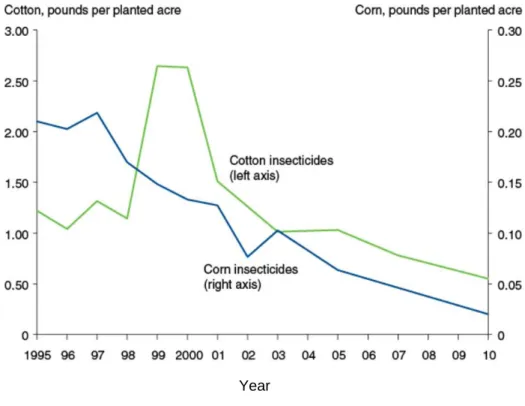
significantly (figure 5)7, with benefits for both adopters and non-adopters of GE seeds. In this way, GE farmers are actually helping non-GE farmers indirectly. This is possible because the large amount of Bt use has reduced the overall burden of insect pests that prey on crops. There are also environmental benefits from GE due to a reduced burden of weeds5.Further, some GE crops can help the soil. The use of Ht soybeans has dramatically increased conservation tillage, which keeps more left-over plant matter on fields. In 2006, approximately 90% of GE soybean crops had no-till or conservation till measures, while only 35% of non-GE soybeans did5. The ability to keep old plant matter in and on the soil greatly reduces the amount of pesticide runoff into rivers and streams, reduces soil erosion, and thus lessens the environmental damage from agriculture.
Figure 5. Insecticide Use for Selected GE crops7
Year
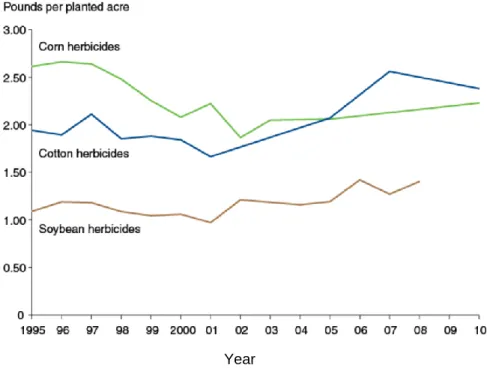
Unfortunately, there are also environmental problems created by the widespread use of GE crops. Total herbicide use (in contrast to insecticide use) has actually increased from GE crop adoption. Herbicide use per acre was about the same for some GE crops, and was higher for others in 2010 than in 1995, which is just before GE crops were introduced5 (figure 6)27. This marginal increase in herbicide use is amplified by the fact that most GE crops planted in the U.S. are herbicide-tolerant varieties, such as glyphosate-resistant crops. The broad use of glyphosate with glyphosate-glyphosate-resistant GE crops has also caused problems from increased weed resistance to glyphosate. The use of glyphosate has increased 250-fold between 1974 to 201411, which has contributed greatly to this problem. This tremendous increase in the reliance on one herbicide is what allows the few naturally glyphosate-tolerant types of weeds to
amount of resistant pests. Overall, most evidence indicates a moderate decrease in overall pesticide use as a result of GE, at least up until around 2012. The main concern now is that pesticide use is predicted to increase substantially in the coming years, due to increased resistance of pests. One study estimates more than a two-fold growth in herbicide use in the U.S. by the year 2025, directly related to GE28.
Figure 6. Herbicide Use for Selected GE Crops27
Year
When GE crops were introduced, entomologists and conservationists argued that farmers should be required to plant refuge areas of non-GE crops near GE areas. This allows some non-resistant pests to survive and decreases the rate at which pest populations adapt to pesticides like glyphosate. This recommendation was included in regulations, and there is a refuge requirement for these crops5. However, at least 20 percent of farmers in some areas do not heed the refuge recommendation2, since they can temporarily get higher yields if they plant only GE crops. The environment would benefit from closer inspection and greater penalties for not complying with current refuge requirements.
Potential Loss of Diversity
There is also potential environmental damage from GE crops through the loss of biodiversity. Many crops have wild, weedy varieties that are not cultivated, but play a role in ecosystems. DNA transfer can occur between GE crops and other plants, just as it can for related non-GE plants. If engineered genes get out into wild populations, it will be almost impossible to control their spread. One problem with this is that DNA exchange between GE crops and other plants may increase the rate of pesticide resistance. For example, if the gene for glyphosate resistance gets into weed populations, glyphosate will cease to be effective as an herbicide against those weeds. Whether and how much genes actually spread from GE crops to non-GE plants is complicated, making it hard to assess the true risk. Gene transfer is known to depend on the type of plant and the form of pollination, and it is low for some crops like soybeans but high for others, like corn26. In general, there is not yet enough evidence on the potential economic and environmental effects of genetic contamination to draw any firm conclusions. The loss of natural biodiversity is a potential risk of GE, but so far no losses of diversity have been shown.
GE Animals
Lastly, we should consider the environmental impact of GE animals. This area is rapidly progressing, with the first GE animal, AquAdvantage salmon, just approved by the FDA in late 2015. This GE salmon was engineered to grow faster (at about twice the rate) of regular salmon, which might allow it to take food or resources away from wild salmon and deplete natural fish populations. Just like GE crops, there are laws governing the safety of GE animals, but they may be insufficient. The FDA requires a “reasonable certainty of no harm” for any new animal that is introduced, but the FDA considers GE an animal drug, and regulates it the same way2. The National Environmental Policy Act (NEPA) requires investigation of the environmental risks of animal drugs or modifications. This is a start, but it is not an open,
transparent process. Like the current approval process for GE crops, Congress would need to make changes by giving the FDA the authority to determine the safety of GE animals in an open review before release. As discussed previously, confidential business information currently protects safety data submitted by manufacturers to regulatory agencies. Congress could change this law, as well as allowing post-marketing safety reviews of any GE product with health or environmental concerns.
4.
GMO Labeling: Costs, Benefits, and Controversy
in the U.S. though, because food manufacturers are wary of including this information. This is both because of the direct costs of labeling, and because of the likely drop in consumer demand and associated profits from labeling, given the negative perception of GE by the public9.
Companies that develop and sell GE seeds have much the same viewpoint as food manufacturers, given their incentive to sell more product. Governmental agencies have a duty to protect consumers and the environment, but also have interests in safeguarding the viability of farmers, GE companies, and food manufacturers. These conflicting interests create a complex and contentious political environment surrounding the labeling of GE foods.
Consumer Perspectives
The current need to know perspective towards labeling in the U.S. has prompted consumers and advocacy groups to propose several ballot initiatives in recent years. The public has voted on initiatives mandating GMO labeling in California in 2012, Washington in 2013, Oregon in 2002, 2012 and 2014, Colorado and Vermont in 2014, as well as earlier ones in Connecticut and Maine9. Most of these
initiatives have failed. In Maine and Connecticut, mandatory labeling laws have been passed, but will not go into effect until specific conditions are met35. Manufacturer’s intolerance of state-specific labeling may mean that GE labeling could be nation-wide if enough states pass mandatory labeling laws. But why have these measures failed?
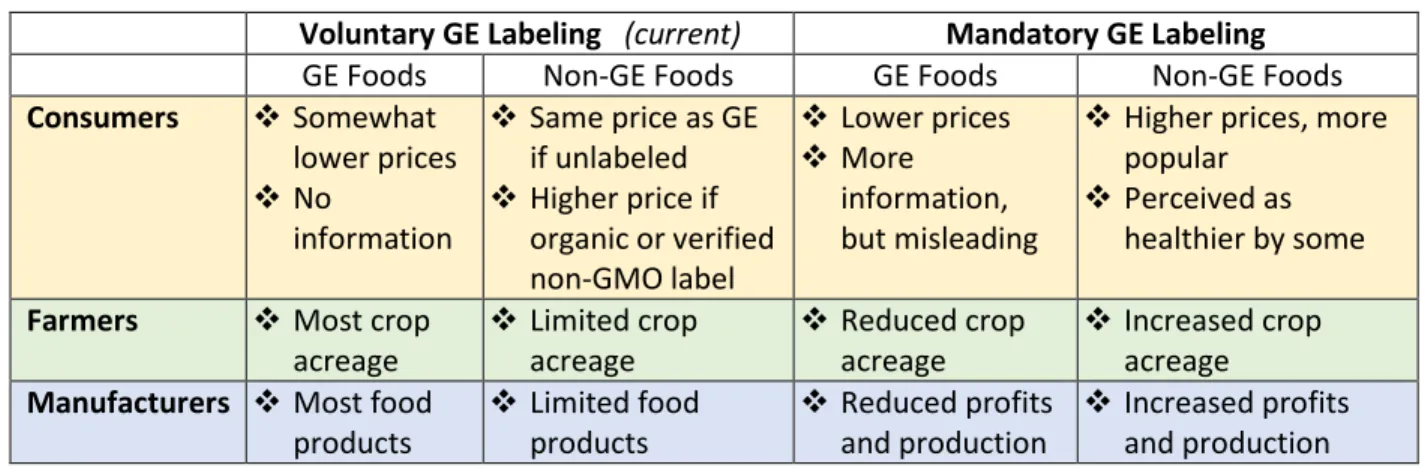
Early polling in California showed a large majority of “yes” voters29. The 2002 ballot in Oregon similarly showed strong public support initially, with well over 50% in favor, yet only 30% of Oregonians ended up voting in support of the measure8. Opponents publicized many potential drawbacks or a lack of need for labeling, including the safety of GE foods, the impracticality of labeling, and improved crop yields from GE crops. Opponents claimed that labeling and distribution costs would be prohibitively high, given the need to segregate GE and non-GE food products sold just in the relatively small state of Oregon. There were fears that these costs would be passed on to consumers, and that food prices would increase substantially8. In Connecticut, reports indicate that mandatory labeling has not been initiated because members of state legislature feared lawsuits from GE food manufacturers about their constitutional right to sell approved products in the state35. However, the argument credited as most effective in defeating at least some of these measures in different states was one declaring how much food prices would rise for consumers if the measure passed. In California, it was reported that food prices for the average Californian household would increase by $400 per year if GE labeling was mandated9. This estimate may have inflated the potential cost to consumers, but this evidence does suggest that most consumers are unwilling to pay extra for the right to know if their food is GE. See table 1 for a
comparison of the potential effects to consumers based on labeling requirements.
no verification system or specific standards for levels of GE residuals in organic foods8. That said, the level of GE products in organic foods is likely to be quite low, and almost no food product will be 100% free of GE products, given the complexity of the food production system.
Industry Perspectives
In contrast to many consumer’s views, evidence suggests that food manufacturers are universally opposed to mandatory GE labeling. GE seed companies and some food manufacturers have fought mandatory labeling laws9. Monsanto, the company with rights to the most prevalent GE varieties, has openly come out against the labeling of GE foods12. The company’s main arguments are that GE foods are safe and that the U.S. government has supported voluntary labeling. This is absolutely true, since the National Academy of Sciences, the FDA, and other organizations have declared GE foods to be totally safe. The American Medical Association even came out against California’s Proposition 37 in 201230. The arguments that food prices would increase with GE labeling also have some legitimacy, since some consumers would shift away from GE products to more expensive, organic foods. Many GE crops produced today have also been shown to increase yields, thus lowering prices for consumers. Some manufacturers have stressed the added costs of mandatory labeling of GE foods8. However, the added costs from labeling products are probably inconsequential, at least for large manufacturers. After all, food companies voluntarily update their packaging under new marketing strategies on a regular basis. The FDA even drafted a report suggesting that GMO labeling requirements would mostly be a onetime cost that would not cause significant burden relative to the size of most manufacturers31.
There are other reasons why food manufacturers may be unfairly inconvenienced by mandatory labeling laws. Current methods of processing, handling, and storing food are complex enough that it is almost impossible to guarantee that foods contain absolutely zero GE product. Other countries that do mandate GE food labeling strike a balance. In the European Union, any food that is made from more than 0.9% GE crops must be labeled9. This is the same level that the Verified non-GMO program uses9. In Australia and New Zealand, the threshold is 1 percent for a product to be labeled as GE. This allows food manufacturers a little needed leeway. Proposition 37 in California was probably too strict in this sense. That mandatory labeling proposal required a 0 percent threshold for GE contamination8. This may have been a key component of its downfall, since it would have been impossible to comply with, even if consumers had been willing to pay more to shift to buying non-GE foods. The CSPI also states that it does not make much sense to label processed products like soda as GE, since corn syrups and oils do not contain genetic material or the products of GE2. Labeling many processed foods as GMO would actually be misleading, because it would give consumers the impression that they are different from their non-GE counterparts when they are not. This issue illustrates how consumers can misunderstand food labels, and calls into question what information is actually gained from having a GMO label.
Consumer Choice
The primary reason why food manufacturers and seed companies like Monsanto are so against
mandatory labeling of GE foods is likely customer preference. Estimates of side-by-side products suggest 7-14% lower pricing for labeled GE foods than for comparable non-GE foods, based on stigma
give consumers the impression that they are inferior to conventional foods12. Interestingly, one study showed that consumers’ bids on GE foods did not decrease substantially after they were provided with pertinent scientific information, but did decline when they were provided with both pro- and anti-GE statements33. Both consumers and industry may therefore benefit from more science-based information about GE products provided to the public.
Table 1. Expected relative differences for mandatory versus voluntary labeling of GE foods.
Voluntary GE Labeling (current) Mandatory GE Labeling
GE Foods Non-GE Foods GE Foods Non-GE Foods
Consumers Somewhat
lower prices No
information
Same price as GE if unlabeled Higher price if
organic or verified non-GMO label
Lower prices More
information, but misleading
Higher prices, more popular
Perceived as healthier by some
Farmers Most crop
acreage
Limited crop acreage
Reduced crop acreage
Increased crop acreage Manufacturers Most food
products
Limited food products
Reduced profits and production
Increased profits and production
The CSPI does not support mandatory labeling, primarily because of consumer misconceptions about GE foods2. They suggest that if GE is unsafe, the FDA should entirely prohibit their sale. Since evidence suggests that GE foods are safe but some consumers believe they are not, mandatory labeling would cause misperceptions and undue rejection of certain foods. Scientific understanding of GE on the part of consumers is low1 and most consumers do not even understand that natural, conventionally-grown foods contain DNA2. The CSPI believes that food labeling should pertain to safety and nutritional information, which in their view, GE does not affect2. Given that regulatory agencies have agreed that GE foods are safe, yet prices would be expected to decline given consumer stigma, it is no surprise that manufacturers oppose mandatory labeling. There are other alternatives that would give consumers access to more information without mandating labeling though. Smart phone applications, websites, bar codes, or other means could allow consumers who are interested to look up whether foods are GE. Since not all consumers are concerned about GE foods, it would give Americans the right to know without burdening manufacturers or other consumers with the added costs of labeling.
We may be entering a new stage of GE crop development. This paper has primarily been concerned with “first generation” GE crops, which have been developed to reduce costs and increase production
with beta carotene9. When products with nutritional advantages come on the market, manufacturers may rush to add labels, to distinguish their products from inferior conventional foods.
5.
Conclusions and Recommendations
Consumers should be aware that GE crops and foods are constantly changing; what is true today may not be true next year. In recent years, overall pesticide use was reduced somewhat by GE, and pest resistance to herbicides like glyphosate (Roundup) were not an issue. Currently, overall pesticide
application is higher from GE use, while weed- and insect-resistance has become a major problem. Most GE crops today only have one or a few transgenes (foreign DNA), though future GE crops may contain many more. Thus far, most GE crops have been created for pest resistance, but new GE crops may improve the nutritional properties of food, and should be more attractive to consumers. GE animals are also on the verge of becoming a big business. The number of GE crops on the market is still small, though GE seed companies like Monsanto and Pioneer/DuPont are constantly developing new varieties. Keeping up with both pest resistance and consumer demands will place more pressure on seed
companies to innovate.
Conclusions
The processing that many foods undergo removes all of the genetic material (DNA), so many processed GE foods are identical to non-GE foods.
There is no evidence that consuming GE foods (GMOs) is harmful to human health.
There is no evidence that GE foods are nutritionally or otherwise inferior to non-GE (conventional) foods.
The FDA is responsible for ensuring the safety of new food products. Safety data from the food manufacturers is typically not published, and is not available to the public.
The FDA’s data for food safety comes from a voluntary release of information from the food manufacturer, which only needs to report any suspected new risks from their product.
The use of some types of GE crops have increased crop yields and reduced consumer prices, while others have not had this impact.
Overall, GE crops have increased the use of some pesticides, like glyphosate, and decreased the use of other pesticides.
Pesticide additives and new pesticide formulations are not required to be retested before use. There is strong evidence that using more glyphosate with glyphosate-resistant GE crops has
increased pest resistance to this herbicide.
The environment would benefit from closer inspection and greater penalties for not complying with current refuge requirements of non-GE crops in order to slow pesticide resistance.
Any environmental damage from the contamination of wild plants with GE genes has not yet been well established.
Recommendations for Consumers
Consumers who would like to avoid GE foods (GMOs) may purchase foods with an “organic” label or a “verified non-GMO” label.
If consumers are concerned about the health or environmental impact of the foods they eat, they may use applications (apps) like the Environmental Working Group’s (EWG) “Food Scores”.
Consumers who would like to see mandatory labeling of GE foods should support consumer groups that advocate for this issue, and write to representatives in their state legislature to support labeling initiatives.
Consumers should be aware that requiring GE foods to be labeled would not be free. Prices for non-GE foods could rise, and non-GE labeling could be misleading to consumers, since some non-GE foods are identical to non-GE foods.
Consumers who want more information about the safety of GE crops should urge their congressional representatives to support narrowing the definition of confidential business information (CBI) for GE in order to prevent manufacturers from keeping GE safety data private. If consumers are concerned about pesticides in their food, they may use applications like EWG’s “Dirty Dozen”, which provides more information than the EPA about pesticide content, or look up information on the USDA’s Pesticide Data Program34.
References
1. Wunderlich S and Gatto KA. Consumer Perception of Genetically Modified Organisms and Sources of Information. Adv Nutr. 2015. vol. 6: 842-851. doi: 10.3945/an.115.008870
2. Jaffe G. Straight Talk on Genetically Engineered Foods. Center for Science in the Public Interest. 2015.
3. International Service for the Acquisition of Agri-Biotech Applications (ISAAA). Beyond Promises: Top 10 Facts about Biotech/GM Crops in 2014. 2014. www.isaaa.org
4. U.S. Food and Drug Administration, (FDA). Consumer Info about Food from Genetically
Engineered Plants. http://www.fda.gov/Food/FoodScienceResearch/GEPlants/ucm461805.htm.
Page Last Updated: 10/19/2015.
5. Fernandez-Cornejo J, Wechsler S, and Livingston M. Adoption of Genetically Engineered Crops by U.S. Farmers Has Increased Steadily for Over 15 Years. March 4, 2014.
http://www.ers.usda.gov/amber-waves/2014-march/adoption-of-genetically-engineered-crops-by-us-farmers-has-increased-steadily-for-over-15-years.aspx#.VgwH8ctViko
6. USDA, Economic Research Service using data from USDA, National Agricultural Statistics Service, June Agricultural Survey, 2013.
7. Fernandez-Cornejo J., Wechsler S., Livingston M., and Mitchell L. Genetically Engineered Crops in the United States. ERS Report 162, USDA. February, 2014.
8. Carter CA, Guillaume PG, McLauglin P, MacLachlan M. California’s Proposition 37: Effects of Mandatory Labeling of GM Food. Giannini Foundation of Agricultural Economics, University of California. 2013. http://www.researchgate.net/publication/266160322
9. Huffman WE and McCluskey JJ. The Economics of Labeling GM Foods. AgBioForum. 2014. 17(2): 156-160.
10. USDA. Economic Research Service using data from Information Systems for Biotechnology (ISB, 2013).
11. Landrigan PJ and Benbrook C. GMOs, Herbicides, and Public Health. N Engl J Med. 2015. 373;8: 693-5.
12. Monsanto. What’s the Problem with Labeling Genetically-Modified (GM/GMO) Foods?
http://www.monsanto.com/newsviews/pages/food-labeling.aspx (last updated June 21, 2012). 13. National Research Council (NRC), Committee on Identifying and Assessing Unintended Effects of
Genetically Engineered Foods on Human Health. Safety of genetically engineered foods:
approaches to assessing unintended health effects. Washington, DC: National Academies Press, 2004.
14. Seralini GE, Mesnage R, Clair E, Gress S, et al. Genetically modified crops safety assessments: present limits and possible improvements. Envir Sci Europe. 2011. 23:10.
http://www.enveurope.com/content/23/1/10
15. U.S. Food and Drug Administration, (FDA). How FDA Regulates Food from Genetically
Engineered Plants.http://www.fda.gov/Food/FoodScienceResearch/GEPlants/ucm461831.htm.
Page Last Updated: 10/13/2015.
16. Belson NA. US regulation of agricultural biotechnology: An overview. AgBioForum, 2000. 3(4), 268-280. http://www.agbioforum.org.
17. Seralini GE, Clair E, Mesnage R, Gress S, Defarge N, Malatesta M, et al. Long term toxicity of a Roundup herbicide and a Roundup tolerant genetically modified maize. Food Chem Toxicol. 2012; 50:4221-31. Medline:22999595 doi:10.1016/j.fct.2012.08.005
19. ENSSER Statement on Séralini et al. publication and reactions evoked. 2012. Available from: http://www.ensser.org/fileadmin/files/ENSSER-Comments-Seralini-etal2012-en.pdf.
20. European Food Safety Authority. Safety and nutritional assessment of GM plants and derived food and feed: the role of animal feeding trials. Food Chem Toxicol. 2008; 46:S2-70.
Medline:18328408 doi:10.1016/j.fct.2008.02.008
21. Zhu Y, Li D, Wang F, Yin J, Jin H. Nutritional assessment and fate of DNA of soybean meal from roundup ready or conventional soybeans using rats. Arch Anim Nutr. 2004. Aug; 58(4):295-310. 22. Nielsen, KM. Biosafety Data as Confidential Business Information. PLOS Biology. 2013. 11(3):
e1001499. doi:10.1371/journal.pbio.1001499
23. Guyton KZ, Loomis D, Grosse Y, et al. Carcinogenicity of tetrachlorvinphos, parathion, malathion, diazinon, and glyphosate. Lancet Oncol 2015; 16:490-1.
24. Agricultural Resource Management Survey (ARMS) Phase II and from USDA 2014.
25. Hauk D. Reuters. Supreme Court hands Monsanto victory over farmers on GMO seed patents, ability to sue. 2014. https://www.rt.com/usa/monsanto-patents-sue-farmers-547/
26. National Research Council. The Impact of Genetically Engineered Crops on Farm Sustainability in the United States. 2010. http://www.nap.edu/read/12804/chapter/1#xiii
27. USDA, Economic Research Service using data from USDA, National Agricultural Statistics Service, Agricultural Chemical Usage Reports, 2013.
28. Mortensen D, Egan JF, Maxwell BD, Ryan MR, & Smith, RG. Navigating a critical juncture for sustainable weed management. BioScience. 2012. 62, 75–84.
29. Zilberman D, Kaplan S, Kim E, & Waterfield G. Lessons from the California GM labeling
proposition on the state of crop biotechnology (Working Paper 2013). Berkeley, CA: University of California, Berkeley.
30. AMA. Reference Committee E Report. In: Business of the American Medical Association House of Delegates Annual Meeting, 16–20 Jun 2012. Chicago, IL: American Medical Association.
http://www.ama-assn.org/assets/meeting/2012a/a12-reference-committee-reports.pdf#page=126
31. Draft Guidance for Industry: Voluntary Labeling Indicating Whether Foods Have or Have Not Been Developed Using Bioengineering, 66 Fed. Reg. (FDA) 4839-01. Jan. 18, 2001.
http://www.fda.gov/Food/GuidanceRegulation/GuidanceDocumentsRegulatoryInformation/Lab elingNutrition/ucm059098.htm
32. Gabriel A. and Menrad K. Cost of Coexistence of GM and Non-GM Products in the Food Supply Chains of Rapeseed Oil and Maize Starch in Germany. Agribusiness. 2015.
doi: 10.1002/agr.21415
33. Tegene A, Huffman WE, Rousu M, and Shogren JF. The Effects of Information on Consumer
Demand for Biotech Foods: Evidence from Experimental Auctions. ERS Research Briefs. #1903. March, 2003.
34. United States Department of Agriculture. Pesticide Data Program. 2013. http://www.ams.usda.gov/datasets/pdp
35. Genetically Modified Food Labels Legislation Fails in Connecticut, HUFFINGTON POST. May 10, 2012.