Table of Contents:
Systematic Review
Manuscript………2
Synthesis Table (Table 3)………..16
Evidence Table (Table 5)………..19
Research Portion Manuscript……….37
Characteristics of Children (Table 1)………57
Major Themes (Figure 1)………...58
Game Design Topics (Figure 2)………..59
Abstract:
Background: Although there has been some research looking into the use of games for the
education of pediatric patients, the literature has been scarce regarding the adaptation of games
for parental education.
Objectives: The main objective of this systematic literature review is to examine the
publications concerning the use of games or interactive media in the education of parents of
children with chronic conditions.
Data Sources: Two investigators conducted a systematic review of the literature according to the
Preferred Reporting Items for Systematic Review and Meta-Analyses (PRISMA). We focused
on the use of interactive media and video games to educate parents of children with chronic
conditions.
Study Eligibility: We included cohort studies, randomized control trials, and observational
studies in the search of the literature.
Study Appraisal and Synthesis Methods: Overall trend in the results and the degree of certainty
in the results were considered when assessing the body of literature pertaining to our focused
questions.
Results: Our initial search identified 4352 papers, but only five fulfilled the criterion established
for final analysis.
Conclusion: We found limited evidence of the effectiveness of using serious games and or
interactive media to educate parents of children with chronic conditions. Consistency of positive
results supports the idea that parent education is possible through interactive media or games.
effects that were shown on knowledge add to the causal linkage since parent knowledge has been
associated with health outcomes in pediatric patients with chronic conditions.
Introduction:
The estimated prevalence of chronic health conditions in children is 15 to 18 million in
the United States. 1 These children depend on parents/caregivers for the majority of their care and health management, until they have developed the skills to self-manage their condition(s).
The parent/caregiver role may include administering medications, ensuring that the child
performs procedures and providing transportation to appointments with health providers.
The number of adults who have grown up with technology, in particular interactive media
such as computer-delivered education and video games, has been rising with each successive
generation. Although the use of computer-based technology and video games has been described
as a means to teach children to self-manage conditions such as cancer, asthma, and diabetes, the
use of interactive technology and/or video games to teach parents about their children’s
conditions has not been well characterized. 2-5 The goal of this systematic review of the literature was to identify interactive media approaches used to educate parents of pediatric patients with
chronic conditions and their relative effectiveness.
Methods:
Based on the Preferred Reporting Items for Systematic Review and Meta-Analyses
(PRISMA) criteria, two co-authors conducted a review of publications using the following
children with chronic conditions (e.g. asthma, diabetes, chronic kidney disease, cystic fibrosis, and cardiac abnormalities)?
The criterion emphasized any observation, educational intervention or randomized
control trial using either interactive media or interactive games for parents of children. The titles
of the articles were scanned to identify pertinent studies and interventions. We determined the
studies’ population, intervention, comparator, outcome, time allowed for outcomes, time of
search of the literature, and study designs allowed (PICOTTS criteria- Table 2). Two authors
examined abstracts from the most relevant articles. They also drew additional papers from a hand
search of references.
When available, we determined internal validity, potential for biases, accuracy and
appropriateness of the analysis and applicability used in each study. We also determined the
literacy level of the tools used in these the studies using the Flesh-Kincaid scale.
Inclusion/Exclusion Criteria:
Only observation and randomized control trials were included in the final literature
review. We decided on this type of manuscript because of an absence of a large number of
randomized trials in the literature that pertained to the topic. We divided the studies into “good,
fair and poor quality” criteria. A “good study” had a large enough effect or was highly certain. A
“fair study” either had fair certainty and or had a fair effect size. A “poor study” had poor
certainty of effect and or no effect. We included studies that went as far as 1986, the year this
topic was introduced in the literature. 7 For cohort and randomized trials, we did not differentiate studies on the basis of time between intervention and post-testing, when applicable. The
participants for the studies needed to include parents in the exposure group.
The studies were examined and basic information was extracted from each study. For
quantitative studies data was collected on: (1) sample size; (2) composition of the study
population; (3) measurement tool(s); and (4) outcomes.
Critical Appraisal:
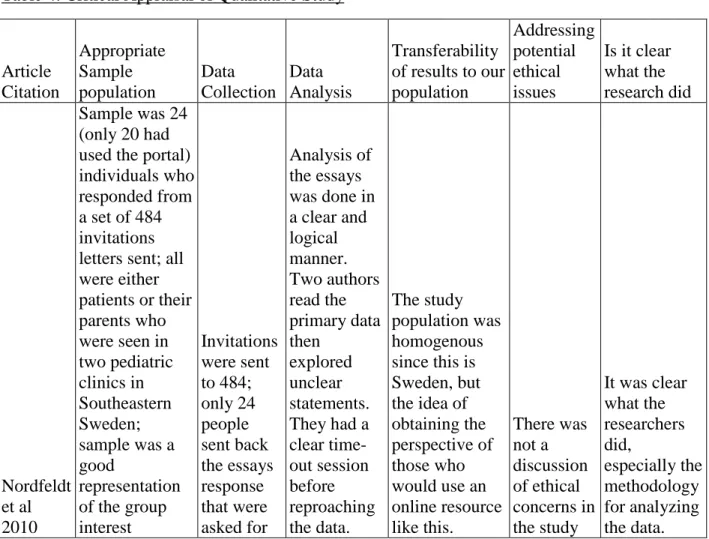
Two co-authors critically appraised each manuscript based on previously established
criteria (9) to assess the size of each study as well as potential biases, confounders, measurement
precision, generalizability, and the meaning of the study findings. Studies that included
qualitative data were appraised using key questions (Appendix 1).
Data Synthesis:
The variation in the study designs did not lend the data for meta-analysis. Qualitative
assessment of the studies was performed based on the criteria established by PRISMA. 6 The overall trend in the results and the degree of certainty in the results were considered when
assessing the body of literature pertaining to our focused questions.
Results:
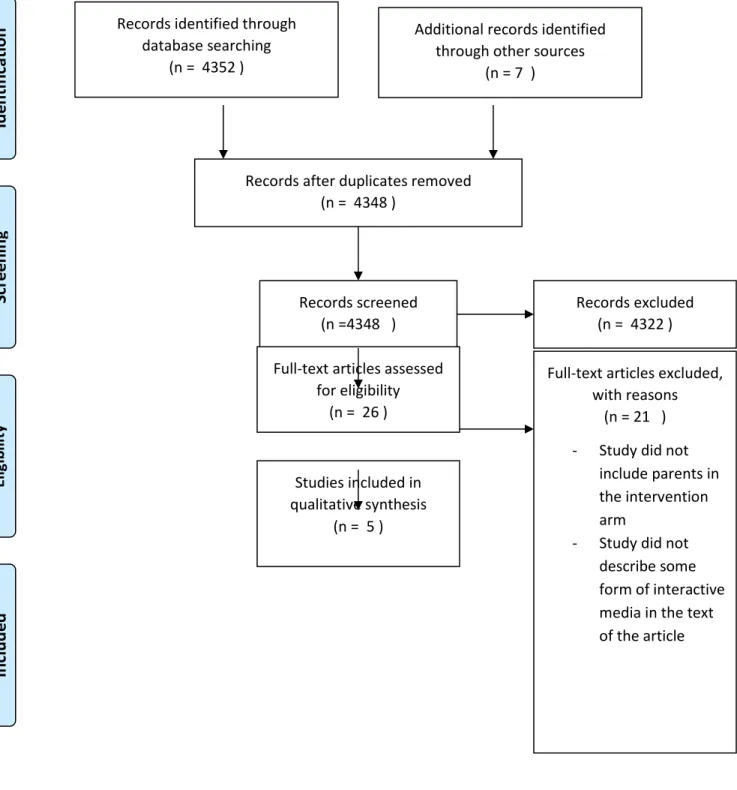
Our initial search identified 4352 papers, but only five fulfilled the criterion established
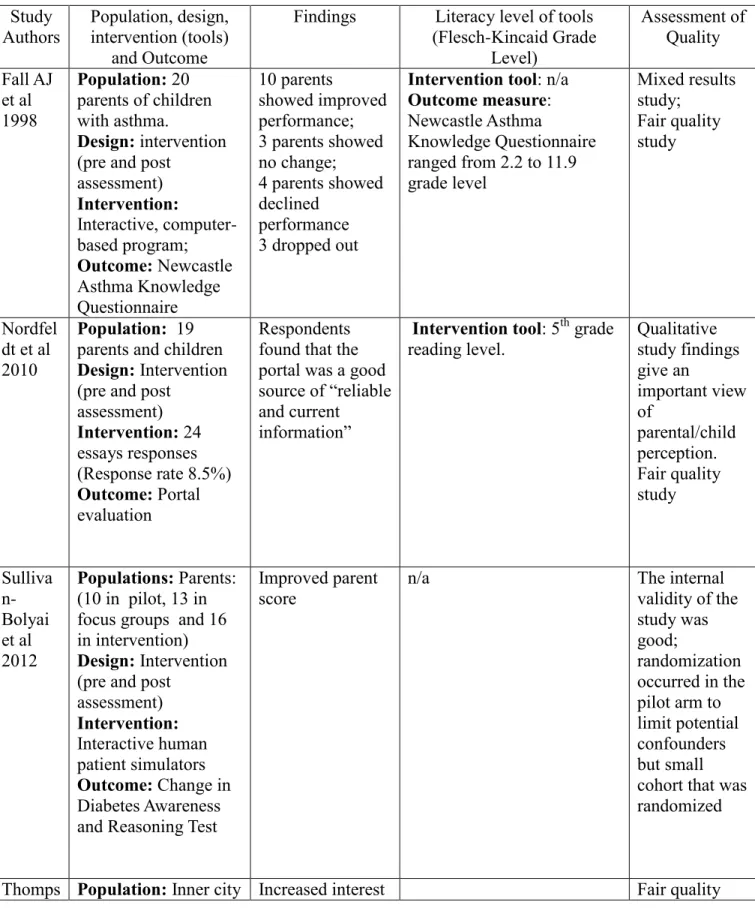
for final analysis (Figure 1). 8-12 Most of the studies that explored knowledge and/or skill showed an improvement in these outcomes after implementation of their particular intervention (Table 3).
One study examined the level of knowledge that parents had regarding asthma and found
an improvement in scores using the tools presented in the study. 9 This study did not control for child’s percentage of life with the condition, so parents experience with the disease or knowledge
base overtime was not evaluated. The questions used to assess participant knowledge pre- and
post- intervention appeared to have a literacy grade level that varied greatly. This variation in
Another study used qualitative methods in the form of essay responses to gauge the
perception of parents and patients about a diabetes education portal. 8 The study provided a clear explanation of their methodology for data analysis. The investigators reported that the web portal
allowed participants to locate answers to questions that were of interest to them. Some of the
responses noted low interaction by providers on the web portal.
One randomized study used human simulators for improving the knowledge and
management of diabetes by parents. 10 Although this was a small cohort study, improvement in self-efficacy and knowledge were promising, but not statistically significant. This study did not
include information on the child’s disease duration.
The largest study we found was an observational study that looked at the use of
educational kiosks at various public locations, including the frequency of use and topics
examined by users. 11 This study described that participants found this form of interactive media to be educational. In the study, 49% of the first time users who completed the exit survey
planned to discuss the topics presented through the kiosks with health providers. Although the
study does not present the questions used within the kiosk, there was no association between the
ease of kiosk use and not having high-school education. Almost half of the kiosk events (47%)
retrieved during the study came from one location, which could have acted as a source of
selection bias since participants in that location (a fast food restaurant) could have different
exposure level than those recruited in a library.
The next randomized study assessed the effect of intense therapy with dieticians,
psychologists and providers on the self-management skills of parents whose children were
significant) in disease severity among the intervention participants. Based on the SCORAD (a
survey for scoring atopic dermatitis) the intervention arm had a decrease of 20.5 points versus
16.2 points in the control arm (p =0.21). The clinical significance focused on the reduction in
rumination from the caregivers following the intervention. This reduction in rumination would
allow parents to focus on the more pertinent aspects of their child’s chronic condition. To
measure rumination the authors relied on the Trier scale for measuring coping with disease, but
there are not actual values provided for the intervention and control arms of the study.
Additionally the reduction in rumination allowed for the discussion of issues that arise without
the distraction of previously addressed topics.
Discussion:
We found limited evidence on the effectiveness of using serious games and or interactive
media to educate parents of children with chronic conditions. However, a consistency of positive
results supports the idea that parent education is possible through interactive media or games.
The magnitude of this effect cannot be accurately determined from the studies reviewed above.
The effects that were shown on knowledge add to the causal linkage since parent knowledge has
been associated with health outcomes in pediatric patients with chronic conditions. 13 It is important to understand the ability of parents to receive and process health
information for the management of their child’s chronic condition. To optimize this capacity,
parental education should be tailored to their needs, culture and literacy level. It has been shown
that parents go through a sense of disorientation when their child is diagnosed with a chronic
condition. 14 Afterwards it may be expected that parents or caregivers will be responsible for the management of their child’s chronic condition until the patient is ready to self-manage their
Interactive and game platforms for parent education may be appealing because they can
draw on skills that parents developed in their youth. These parent education media could also
help account for low parental health literacy as the information could be presented with visual
and auditory signals, promoting disease knowledge and management and impacting patient
health outcomes
Looking through the lens of social learning theory there are three goals that must be
obtained so that self-management can be successful. Firstly, cognitive and behavioral coping
skills that must be mastered in order to meet the challenging demands that arise during the course
of the disease. Secondly, there needs to be an emphasis on personal efficacy and the
enhancement of expectations of success. Finally the patient, as well as their caregivers, should be
able to manage stimulus conditions in social and physical environments to aid symptom
management as much as possible. 15
The positive and/or informative findings in the studies analyzed may be a reflection of
publication bias in that only positive findings appear to be reported. Although this is a legitimate
concern, the scarcity of studies noted shows a gap in the literature regarding the use of
interactive media for parents as learners of their child’s chronic condition. This gap represents an
opportunity for improving the knowledge base of the primary care giver of children with chronic
health and mental conditions. Serious games are one tool that would allow parents, as well as
children, to develop their self-efficacy skills.
From our systematic search of the literature, the studies were underpowered for the most
part. This lack of large cohorts is another area that can be improved upon in order to strengthen
the body of evidence. It may be argued that the lack of large cohorts makes the findings in the
studies show some trends that may become more evident with larger studies. Additionally, the
clinical significance of findings in each of the studies, were taken into consideration. The
increased knowledge that caregivers can gain from the use of interactive media and or games has
been shown to translate into decreased use of health care. 16
The improved self-efficacy of the caregiver may transfer to the child. One plausible
sequence of events is that the child sees their caregiver gaining a handle on the information
relating to their chronic illness. From there the child is inspired to learn about their illness so that
they may emulate their caregiver.
The literature has few studies that show improvement in intermediate measures of disease
management for parents of children with chronic conditions. The lack of measures of health
outcomes, such as morbidity from disease and or health care utilization serve as potential
avenues for future research. Few large interventional studies also points to a gap in the current
literature. While there does not appear to be a large amount of existing data, the evidence that is
present has encouraging results.
References:
1. Compas BE, Jaser SS, Dunn MJ, Rodriguez EM. Coping with chronic illness in
2. Kato PM, Cole SW, Bradlyn AS, Pollock BH. A video game improves behavioral
outcomes in adolescents and young adults with cancer: a randomized trial. Pediatrics.
Aug 2008;122(2):e305-317.
3. Kumar VS, Wentzell KJ, Mikkelsen T, Pentland A, Laffel LM. The DAILY (Daily
Automated Intensive Log for Youth) trial: a wireless, portable system to improve
adherence and glycemic control in youth with diabetes. Diabetes technology & therapeutics. Aug 2004;6(4):445-453.
4. Shames RS, Sharek P, Mayer M, et al. Effectiveness of a multicomponent
self-management program in at-risk, school-aged children with asthma. Annals of allergy, asthma & immunology : official publication of the American College of Allergy, Asthma, & Immunology. Jun 2004;92(6):611-618.
5. Bartholomew LK, Gold RS, Parcel GS, et al. Watch, Discover, Think, and Act:
evaluation of computer-assisted instruction to improve asthma self-management in
inner-city children. Patient Educ Couns. Feb 2000;39(2-3):269-280.
6. Liberati A, Altman DG, Tetzlaff J, et al. The PRISMA statement for reporting systematic
reviews and meta-analyses of studies that evaluate health care interventions: explanation
and elaboration. Annals of internal medicine. 2009;151(4):W65-94.
7. Primack Ba, Carroll MV, McNamara M, et al. Role of video games in improving
health-related outcomes: a systematic review. American journal of preventive medicine.
2012;42(6):630-638.
8. Nordfeldt S, Hanberger L, Bertero C. Patient and parent views on a Web 2.0 Diabetes
9. Fall AJ, Henry RL, Hazell T. The use of an interactive computer program for the
education of parents of asthmatic children. Journal of paediatrics and child health. Apr 1998;34(2):127-130.
10. Sullivan-Bolyai S, Bova C, Lee M, Johnson K. Development and pilot testing of a parent
education intervention for type 1 diabetes: parent education through simulation-diabetes.
The Diabetes educator. 2012;38(1):50-57.
11. Thompson Da, Lozano P, Christakis Da. Parent use of touchscreen computer kiosks for
child health promotion in community settings. Pediatrics. 2007;119(3):427-434. 12. Wenninger K, Kehrt R, von Rüden U, et al. Structured parent education in the
management of childhood atopic dermatitis: the Berlin model. Patient education and counseling. 2000;40(3):253-261.
13. Janisse HC, Naar-king PHDS, Hd P, Ellis D. Brief Report : Parent ’ s Health Literacy
among High-Risk Adolescents with Insulin Dependent Diabetes. 2010;35(4):436-440.
14. Jonsson L, Hallstrom I, Lundqvist A. "The logic of care" - parents' perceptions of the
educational process when a child is newly diagnosed with type 1 diabetes. BMC pediatrics. 2012;12:165.
15. Major DA. Utilizing role theory to help employed parents cope with children's chronic
illness. Health education research. Feb 2003;18(1):45-57.
16. Liu C, Med B, Ph D, Feekery C. Can Asthma Education Improve Clinical Outcomes ?
Appendix 1: Key Questions for Qualitative Studies
Was the sample used in the study appropriate to its research question? Were the data collected appropriately?
Were the data analyzed appropriately?
Can I transfer the results of this study to my own setting?
Figure 1: PRISMA Flow Diagram
Records identified through database searching
(n = 4352 )
Scr
e
e
n
in
g
In
cl
u
d
e
d
El
ig
ib
ili
ty
Id
e
n
tifi
cat
ion Additional records identified through other sources
(n = 7 )
Records after duplicates removed (n = 4348 )
Records screened (n =4348 )
Records excluded (n = 4322 ) Full-text articles assessed
for eligibility (n = 26 )
Full-text articles excluded, with reasons
(n = 21 ) - Study did not
include parents in the intervention arm
- Study did not describe some form of interactive media in the text of the article Studies included in
Table 1. Search Terms: Search Strategies and Key Words
Database Search Strategies and Key Words
Pubmed “(parent education) AND (chronic condition OR diabetes OR asthma OR Chronic kidney
disease OR Cystic fibrosis OR Congenital heart disease OR CANCER) AND (interactive media OR game OR interactive tool)”
parent education AND (chronic condition OR diabetes OR asthma OR Chronic kidney disease OR Cystic fibrosis OR Congenital heart disease OR CANCER) AND (computer OR software)”
“(parent* education OR parent learning) AND (chronic condition OR cancer OR diabetes OR CF OR congenital heart disease OR chronic kidney disease OR asthma OR chronic illness) AND (interactive media OR game* OR video games OR serious games)”
parent education AND (chronic condition)
(parent education) AND (chronic condition OR diabetes OR asthma OR Chronic kidney disease OR Cystic fibrosis)
(serious games OR game* OR interactive media) AND (chronic illness OR diabetes OR chronic kidney disease OR cystic fibrosis OR cardi*) AND (parent*)
EMBASE 'video game' OR 'video games'/exp OR 'video games' OR 'video gamer' OR 'video gamers'
OR 'video gaming' OR videogame OR videogames OR videogamer OR videogamers OR videogaming OR'computer game' OR 'computer games' OR 'computer gamer' OR 'computer gamers' OR 'computer gaming' OR 'online game' OR 'online games' OR 'online gamer' OR 'online gamers' OR 'online gaming' OR 'game system' OR 'games system' OR 'gamer system' OR 'gamers system' OR 'gaming system' OR 'game systems' OR 'games systems' OR 'gamer systems' OR 'gamers systems'OR 'gaming systems' OR 'arcade game' OR 'arcade games' OR 'arcade gamer' OR 'arcade gamers' OR 'arcade gaming' OR playstation OR playstations OR 'interactive game' OR 'interactive games'OR 'interactive gamer' OR 'interactive gamers' OR 'interactive gaming' OR gamer OR gamers OR 'game console' OR 'game consoles' OR 'gaming console' OR 'gaming consoles' OR 'digital game'OR 'digital games' OR 'digital gamer' OR 'digital gamers' OR 'digital gaming' OR 'handheld game' OR 'handheld games' OR 'handheld gamer' OR 'handheld gamers' OR 'handheld gaming'
OR'console game' OR 'console games' OR 'console gamer' OR 'console gamers' OR 'console gaming' OR multiplayer OR multiplayers OR gameplay OR gameplayer OR gameplayers OR gameplayingOR 'game boy' OR 'game boys' OR 'game cube' OR 'game cubes' OR nintendo OR xbox OR mmorpg OR atari OR 'space invader' OR 'space invaders' OR 'death race' OR 'pac man' OR battlezone ORastrocade OR 'donkey kong' OR coleco OR tetris OR 'super mario' OR 'sonic the hedgehog' OR 'street fighter' OR 'mortal kombat' OR pokemon OR frogger OR dreamcast OR 'grand theft auto' ORsega:ab,ti OR pong:ab,ti AND
('parents'/exp OR parents OR 'parent'/exp OR parent) AND ('education'/exp OR education OR 'learning'/exp OR learning)
OR diabetes OR asthma/exp OR asthma OR cancer/exp OR cancer OR congenital) AND (heart/exp OR heart) AND (disease/exp OR disease)) OR cf OR chronic) AND (kidney/exp OR kidney) AND (disease/exp OR disease)”
EBSCO “parent* education AND ( chronic conditions OR cancer OR congenital heart disease OR
diabetes OR asthma )”
CINAHL “(parent education OR parent learning) AND (games Or interactive media )” parent* AND
(chronic illness OR diabetes OR ckd OR chronic kidney disease OR cardiac OR cystic fibrosis) AND (interactive media OR game* OR serious games)
Web of Knowledge
Topic=(parent* education) AND Topic=((chronic condition OR diabetes OR asthma OR CKD OR CF)) AND Topic=(interactive or simulation) (parent* education) AND
Topic=(user-computer interface)
Topic = (parent education OR parent*) AND Topic=(educate OR educating) AND
Topic=(parenting OR disciplining) AND Topic=(chronic condition OR diabetes OR CKD OR chronic kidney disease OR asthma)
Table 2. Population, intervention, comparator, outcome, time allowed for outcomes, time of search of the literature, study designs allowed (PICOTTS)
Population Parents of children with chronic illnesses
(includes asthma, diabetes, chronic kidney disease, cardiac abnormalities, and or cystic fibrosis)
Intervention Serious/educational game; interactive media
Comparator Parent’s knowledge about their child’s
condition at baseline or in control group
Outcomes Markers of improved management of the
child’s disease; parental knowledge; disease severity; health outcomes
Time allowed for interventions effect Up to 1 year of time allowed between
intervention and post-test if applicable
Time into the past for the search 1986 was the furthest back in the literature for
the search
Table 3: Synthesis Table Study Authors Population, design, intervention (tools) and Outcome
Findings Literacy level of tools
(Flesch-Kincaid Grade Level) Assessment of Quality Fall AJ et al 1998 Population: 20 parents of children with asthma.
Design: intervention (pre and post
assessment) Intervention: Interactive, computer-based program; Outcome: Newcastle Asthma Knowledge Questionnaire 10 parents showed improved performance; 3 parents showed no change; 4 parents showed declined
performance 3 dropped out
Intervention tool: n/a Outcome measure: Newcastle Asthma
Knowledge Questionnaire ranged from 2.2 to 11.9 grade level Mixed results study; Fair quality study Nordfel dt et al 2010
Population: 19 parents and children Design: Intervention (pre and post
assessment) Intervention: 24 essays responses (Response rate 8.5%) Outcome: Portal evaluation
Respondents found that the portal was a good source of “reliable and current
information”
Intervention tool: 5th grade reading level. Qualitative study findings give an important view of parental/child perception. Fair quality study Sulliva n-Bolyai et al 2012 Populations: Parents: (10 in pilot, 13 in focus groups and 16 in intervention) Design: Intervention (pre and post
assessment) Intervention: Interactive human patient simulators Outcome: Change in Diabetes Awareness and Reasoning Test
Improved parent score
n/a The internal
validity of the study was good;
randomization occurred in the pilot arm to limit potential confounders but small cohort that was randomized
on et al population at a library, a Department of Motor Vehicles office, and a fast food chain location
Intervention: Use of an information kiosk Outcome: Interest in using the information provided from the sessions 1846 sessions of informational kiosk use
of using of information provided and desire to discuss topics with health care providers
observational study; Skew of results from one site but large sample population
Wennin ger et al 2000
Population: 129 families of children with Atopic Dermatitis Intervention:
Combination of psychological
counseling in addition to clinic visits
Outcome: Disease severity, Quality of Life of the parents, and coping skills of parents and patients
Increased confidence and decrease in rumination through intensive behavior therapy intervention
Good internal validity of the study, but concerned about the lack of tables comparing the baseline characteristics of the
Table 4: Critical Appraisal of Qualitative Study Article Citation Appropriate Sample population Data Collection Data Analysis Transferability of results to our population
Addressing potential ethical issues
Is it clear what the research did
Nordfeldt et al 2010
Sample was 24 (only 20 had used the portal) individuals who responded from a set of 484 invitations letters sent; all were either patients or their parents who were seen in two pediatric clinics in Southeastern Sweden; sample was a good
representation of the group interest Invitations were sent to 484; only 24 people sent back the essays response that were asked for Analysis of the essays was done in a clear and logical manner. Two authors read the primary data then explored unclear statements. They had a clear time-out session before reproaching the data. The study population was homogenous since this is Sweden, but the idea of obtaining the perspective of those who would use an online resource like this. There was not a discussion of ethical concerns in the study
It was clear what the researchers did, especially the methodology for analyzing the data.
Citatio n Study Questi on and Resea rch Desig n Study Popul ation (descr iptive: demo graphi cs, eligibi lity criteri a) and how chose n (volun teers, recruit ment, tertiar y care clinics , popul ation-based , etc) Initial Comp arabili ty of group s (ie, rando mizati on or group comp ositio n; conce almen t of alloca tion) Drop outs (no endpo int data), adher ence, cross overs (attriti on, loss to follow up) Potential for selectio n bias (+ to +++) and explain Measur ement of exposu re, interve ntion, potenti al confou nders, and outcom es; reliabili ty and validity of measur ement; how perfor med, blindin g Potential for measure ment bias (+ to +++) Potenti al confou nders (name and describ e how each was controll ed for) Potential for confoundi ng (+ to +++) Analysis (intentio n to treat or other adjustm ent) Result s: magni tude and directi on (point estim ate; rando m error or precis ion (confi dence interv al); statist ical signifi cance Clinical and Public Health importance for the source population ; for a wider population Overall judgment of internal validity (good, fair, poor) External validity: applicability to other populations Fall et al1998 Does the use of an interac tive compu ter progra m improv e the asthm a knowle dge of parent s of asthm atic childre n? Cohort Parent s had to have had childre n that were seen in the clinic or wards at least once before, child had to have a definit e diagno 20 parent s agreed to be in the study 3 parent s did not compl ete the "post" questi onnair e rating is ++; no informati on given on where the hospital used for the study was located may have been a private hospital or public one The questio nnaire used has been validate d in previou s studies; no blinding needed since this was a cohort study looking for an improve ment in score Rating +; same question naire used before and after the interventi on potentia l confoun der is the fact that parents had seen the questio ns before the interven tion, and they may have looked up the Rating is ++, did not show an attempt to control for confoundi ng Looked at change in overall score for those who returned the post-interventi on question naire; also looked at changes in response to individual question s Mean pre-test score was 21.8, post-test score mean was 23.5 (SD of 3.9, P = 0.06); 10 of the 17 improv ed their knowle dge The change in test scores was rather small at 1.6, and such a change may not correlate to better care given by parents on a daily basis and during exacerbatio ns internal validity = fair, there was a change in test scores, this change was not statistically significant nor was it likely clinically significant
study of parent s in the outpati ent clinics of a childre n's hospit al; parent s given baseli ne questi onnair e (Newc astle Asthm a Knowl edge Questi onnair e) then given time to go throug h the interac tive progra m (Breat he-Smart tm). 1 month later the parent s were sent the sis of asthm a; Englis h as first langua ge used by parent s ; parent s were chose n among those who came to the outpati ent clinics (which reflects knowled ge base); informat ion later on, which may have artificiall y inflated the results; parents were also in the clinic after their child had had an acute asthma exacerb ation that may have required a hospitali zation, so they could have had previou s educati on while in the hospital after using the compu ter progra m, 3 had no chang e in knowle dge scores , and 4 showe d a decrea se in their scores
same questi onnair e and asked to mail it back with their respon ses; using previo us study a high-knowle dge group would have a score of 25.3/3 1, a sampl e size of 20 would have more than 90% power in detecti ng a score improv ement of 15% Sulliva n-Bolyai , et al 2012 explor e conce pt of teachi ng parent s with human Parent s of childre n with type I DM were includ ed in In pilot group 2 there was rando mizati on done to the No dropou ts or loss to follow-up were mentio ned Selection bias = ++; small number of participa nts drawn from a Used the Diabete s Awaren ess and Reasoni ng Test-Parents Measure ment bias potential = +; scales used are in the literature, Educati on level of parents may influenc e how well they Confoundi ng bias = +; randomiza tion would have reduced possible confounde Note-based techniqu es were used for the focus groups; clarified with For the Diabet es aware ness and reason ing the the changes in scores was in the predicted direction; shows that interactive modalities Internal validity was good; randomization of the pilot arms helped to hopefully distribute the sample
patient simula tor (HPS) and teach parent s manag ement educat ion for newly diagno sed TI DM with HPS the focus groups ; parent s of childre n who had been diagno sed in the past year were used for the pilot groups control (8 in the control and experi mental arms each); in pilot group 1 they recruit ed Englis h speaki ng parent s of childre n with DM for at least 1 yr (got 10 parent s in a 1mo recruiti ng period) ; majorit y of partici pants were from univer sity based Pediat ric Diabeti c Clinic in Worce similar environm ent in the university based clinic; no demogra phic data given to explore this further; also enrolled people on a rolling basis to measur e parent knowled ge (elimina ted insulin-specific questio ns so it went from a 47-item multiple choice questio nnaire to a 38 questio n tool); asked for Wysock i's modifie d problem -solving measur e that they then adapted to measur e parental problem -solving abilities and knowled ge synthesi s; used the Self-efficacy for have been proven in other studies interact with the simulati on practice s; socioec onomic status of parents may also act as confoun ding; randomi zation in the 2nd pilot group would have controll ed for this
rs in the 2nd pilot group participa nts and recording tapes; for the focus groups looked for consens us in topics througho ut the 2 groups to frame pilot studies; for the pilot studies collected quantitati ve data that was double-entered, got means and standard deviation s for continuo us variables ; differenc es between groups were compare d using repeated measure s for continuo us variables experi mental arm had a 16 point increa se in their scores from baseli ne, control group had a 16 point group in their scores from baseli ne (p=0.9 4, F of 3.15); for proble m-solving measu re the experi mental group had a 8 point increa se in their scores , control group had a 7 point increa se in their of learning can be of use when teaching parents complex skills for the manageme nt of a chronic condition in their child
stable tendenc ies (general feelings ) toward anxiety
glucos e with monito r; learnin g proces s should have 2 phase (1st dealin g with mecha nical and surviv al skills, 2nd startin g to think more compl ex and abstra ctly for parent s); good reliabili ty demon strated with the instru ments used for the study Thom pson et al 2007 exami ne the use of touch screen health kiosks Urban setting in Seattle , Washi ngton. refer to previo us square , cut and there were no dropou ts given the Rating for selection bias is at least++, the people kiosk event = person logging onto the kiosk and id Rating for measure ment bias is +; gathering frequenc Confou nding could result from socioec onomic Rating for confoundi ng is +++ because there is the possibility analysis involved obtaining frequenc y distributi ons and 1846 sessio ns, only 1447 used for Very high potential for public health use; provides a way to present Internal validity was barely fair; lots of possibility for confounding, but this was
in low-incom e urban setting ; kiosks contai ned health inform ation on promot ing child-health descri ptive study of the use of health kiosks 3 kiosk set up at a comm unity setting s; a McDo nald’s, a public library, and a Depart ment of Motor Vehicl es (DMV) office. The popula tion around this area was 20-25% under the age of 14; 49-65% had a high school educat ion or less for adults; 26-32% parent s are single paste the inform ation into this block study design , more of an observ ational study who would visit a McDonal ds would provide more data points given that more people would be there than at the DMV or the library self as new or previou s user; user would id self as adult or not, only self-identifie d adults would be have their data used in the study; users would identify a month and year of birth for the index child, then they would get module s that were appropri ate for that age group for 9 of the 14 module s there was a set of questio ns that risk y data that should be reliably obtained, some concern if kiosk fails; no other problems seem apparent status playing a role in the data obtaine d from McDon alds since people who would be eating there would not necess arily have a lot of options in general. This relates to the populati on that would be commo nly found in the library, and thus use the library based kiosks. The differen ces in populati ons may skew the to difference between the population s that would provide data from the various locations; study did not mention attempts to control for this in the analysis chi squares to determin e statistical significan ce; focused on first time users for most calculatio ns as a way to reduce double-counting in analysis ; Poisson regressio ns were used to evaluate for relations hip between character istics and kiosk choices, also used from relative risk analysi s; 399 were previo us users (22%), 1/2 of all kiosk sessio ns came from McDo nalds (873, 47%), 642 were at the public library (35%), and 331 at the DMV (18%); 48% (117) of first time users who did the exit survey said they had high school educat ion or less; 26% (67 people ) of health information that can be tailored to an individual’s needs in the community setting; nearly 1/2 of first-time users said that they would use the information they learned to discuss a topic with their physician; an observational study; concern for confounders, one location provided 47% of all sessions
child's provider , whether or not they would try some of the things brought up in the module s, child's health on a Likter scale, and highest level of educati on of the user, and frequen cy of internet use
13%, p<0.00 1); first time users at DMV were more likely to explor e >= 2 modul es (p=0.0 02) ; use at the 3 locatio ns did not vary accord ing to grade level or interne t use; numbe r of at-risk childre n for first time users or selecti on of modul es did not vary by locatio n of kiosk
nger et al 2000 ured educat ion progra m for parent groups that aims at increa sing parent s' self-manag ement skills in manag ing atopic dermat itis (AD); cohort study with a control group with rando mizati on into interve ntion arm or 1 year waiting control group; interve ntion was very intensi ve with psych ologist , pediatr compl eted cases (63 familie s in the interve ntion arm and 66 control familie s); recruit ed 204 familie s from Berlin area; mean age of childre n was 3.1 yrs (SD = 2.2), mother s ages ranged from 25-44 (mean =32.7, SD =3.9); mother s had a mean 11.4 years of school educat ion (SD = 1.6 yrs), 40% mizati on was done, accord ing to them there was not any signific ant differe nces betwe en the two groups , but no table provid ed to truly assess this. mentio n of drop outs are mentio ned, have only compl eted 129 cases out of 204 familie s recruit ed bias potential = +; parents for both the control and interventi on groups were drawn from the same sample populatio n; the people who were recruited may have been bias in which families were approach ed; no informati on on allocation conceal ment D-score is a means of measuri ng AD disease severity that has been used in literatur e before; used a Quality of life in parents of children with AD (diseas e specific questio nnaire that has been shown to work in the literatur e) to assess health related quality of life ; also used Trier scales for measuri ng coping with disease to assess ment bias potential = +; the scales used for assessin g disease severity, quality of life, and coping styles have been used in the literature before since diagnos is may have an effect on how well the parents may be able to cope with stressor s in their child's life and how it relates to their AD; socioec onomic status may affect the degree of stress that the families may feel and they cope with these stressor s; The hope is that randomi zation would account for these possible confoun for confoundi ng = +; randomiza tion would reduce the possibility of confoundi ng if it is done appropriat ely an multivari ate group comparis on (MANOV A) for the quality of life measure; did not mention other analyses but provided t-scores and F values in addition to p-values; they stated that the rest of the analysis will be publishe d when the analysis is complete d for all data AD-scores decrea sed in control group by 16.2 poi t and 20.5 points in interve ntion group (t=1.27 , p = 0.21); quality of life results differe d from baseli ne (F = 2.2, p=0.05 7), marke d increa se in confid ence in medic al treatm ent in the treatm ent group found to the main reason for this chang preliminary data shows that intense group intervention s may improve disease manageme nt by increasing parent's confidence in medical treatment while also addressing the ability of parents to cope with stressors that may relate to their child's illness
validity of the study is good for the information that is provided. Would like to see a table comparing the control and intervention groups. Validity: may be applicable here in the U.S. if there are English counterparts to the scales and
ician, and dieticia n used over 6 sessio ns that covere d many topics (stress manag ement, daily skin care, genera l nutritio n, food allergi es, issues of coping with diseas e) had a colleg e or univer sity degree ; 15% were single parent s; control and interve ntion did not differ signific antly on demog raphic data (no data or table provid ed) inclusi on criteria was a SCOR AD-Score of 20 (used to confir m diagno sis of Atopic dermat itis) with duratio n of eczem a of at
different coping styles)
ders e
Abstract
Chronic Kidney Disease (CKD) places a significant burden on the pediatric population.
Children with this condition require several medications in addition to the possibility of home
dialysis and or transplantation. Often their parents are responsible for their care once they are
diagnosed, and ideally, the parents will help to transition the youth to adult health services. The
degree of knowledge that the parents have regarding CKD can affect the health status of their
children, as has been seen in other conditions. This two-prong research includes a systematic
review of the literature on the use of interactive media to educate parents about their child’s
chronic health condition and a qualitative study of parents-youth dyads in the Pediatric
Nephrology Clinic at UNC- Chapel Hill. Parents and youth were asked to remember their initial
response at the time of kidney disease diagnosis. Additionally we determined which topics
parents and youth would want included in a CKD educational game. Parents wanted the game to
cover the etiologies of CKD, management, treatment options, nutrition, and laboratory values
related to CKD. The children with CKD wanted the game to discuss etiology and symptoms of
CKD, and how dialysis treatment feels from the perspective of youth. The parent-youth dyads
also provided insight into how a serious game for CKD could be designed, to educate them on
this condition and potentially affect health outcomes.
Introduction:
Estimates of children living with chronic kidney disease (CKD) vary from 15-74.7 cases
awaiting transplantation, has mandatory coverage under Medicare and acts as a source of
financial burden for the government.
Besides being a source of great financial cost for the US health care system, CKD is also
a difficult condition to manage since the therapies used to replace kidney function rely heavily
on dialysis centers. In the case of peritoneal dialysis, patients and their families have to learn to
manage the dialysis treatments at home.
Some of the comorbidities of CKD require patients or their caregivers to perform
procedures, such as catheterization or tube feedings. Compounding the issue of procedures and
treatment modalities that take hours to complete, patients with CKD have to contend with a
multitude of medications, which have side-effects that can complicate their treatment course.
Many chronic conditions in the pediatric population require a child to depend on their
parents/caregivers for the majority of their care until the child has developed the skills to
independently manage their condition. The important tasks that parents must do for children with
CKD include: giving medications at the appropriate times; ensuring that the child attends
appointments with providers; and guaranteeing that the child undergoes the appropriate timing
for renal replacement therapies. Parents must therefore become knowledgeable about CKD
because their skills can drastically affect patient outcomes. The importance of parent health
literacy as it relates to health outcomes has been examined, with evidence that low parent literacy
is associated with poor health outcomes for the child.20
Currently, a web-based educational resource exists for parents of children with CKD.21 Although this resource exists, it requires a consistent internet connection for parents which they
kidney disease, and is maintained by a reputable source. Although this resource exists, it should
not be the sole option for educating parents, and other resources can be developed in the name of
educating parents and or caregivers of children with CKD.
Our recent systematic review of the literature showed limited evidence of the use of
interactive media in general to educate parents on their child’s chronic condition. Another option
for educating parents and children is the use “serious games” focused on health. These serious
games would focus on providing education regarding a particular health condition. We are aware
of no prior studies that address the use of serious games to educate children with CKD and their
parents.
We sought to address this gap in the literature through the development of a serious game
to educate children and their caregivers on the topic of CKD and its management. The
methodology for the development of serious games for the pediatric patient population has been
explored before.22 This particular study aimed to collect the baseline information to gauge interest in a serious game for CKD on the part of parents/children, and to develop potential
topics for such a game that parents and patients with CKD deemed to be important for them.
Methods:
Study Design/ Participants: The study used qualitative data collection through focused interviews of children with CKD and one of their parents or caregivers. The study sought to
recruit 100 parent-child dyads in order to achieve saturation for the qualitative data that was
Study Location: We conducted the focused interviews in the Pediatric Nephrology Clinic at UNC- Chapel Hill. This clinic serves as the referral center for the state of North Carolina, and it
has a diverse patient population from the central and eastern portion of the state. The Institutional
Review Board at UNC- Chapel Hill approved the study protocol.
Inclusion/Exclusion: We recruited parents and children with at least CKD Stage II (GFR 60-89 mL/min/1.73m2 or less who were between the ages of 8 and 21 years and spoke English fluently. The age of 8 years was chosen as the lowest accepted age so that adequate responses could be
obtained from the children without concerns of cognitive ability. Patients with cognitive
impairment based on provider opinion or chart review were excluded.
Recruitment: We obtained a list of potential participants from the electronic medical records (EMR) who fit the eligibility criteria. These potential participants, and their parents, were
recruited in the Pediatric Nephrology clinic.
Interviewing: A standardized template was adapted from Sullivan-Bolyai.23 The questions were shifted to address the issue of knowledge of CKD (Appendix 1). The interviews were conducted
in the clinic by either the primary author (AA) or a research assistant. These focused interviews
were audio recorded and subsequently transcribed into text documents for thematic analysis. In
cases where parents did not consent to audio recording of the responses, notes were taken, and
the transcription of these non-recorded interviews was done as soon as possible.
Quality Assurance: The transcripts were reviewed twice and compared with the audio recording to ensure their fidelity. This step also allowed any audible emotional responses to be included
into the transcripts so that the maximum breadth of the experience communicated could be
Analysis: We performed thematic analysis on the transcribed interviews using Atlas T.i. software. Recurring themes were coded and incorporated into super-themes. The coding was
performed by AA, with notes made throughout the process of developing the codes themselves.
These notes acted as a source for reflexivity, or recognition of the influence that the research
brings to the research process. 24
The coding process was discussed among the investigative team so that consensus was
reached on the codes and the themes that were developed. This information was analyzed for
overlap between the various codes and super-codes. These super-codes were identified as
important areas of focus for parents and are thus relevant to the development of a serious game
education about CKD.
Results:
We enrolled 22 parent child dyads, including 9 fathers and 13 mothers (Table 1). The
stage of CKD for the patients included Stage 2 (23%); Stage 3 (55%); Stage 4 (4%); and Stage 5
(18%). The associated diagnoses included lupus nephritis, renal agenesis, focal segmental
glomerulosclerosis, and sarcoidosis.
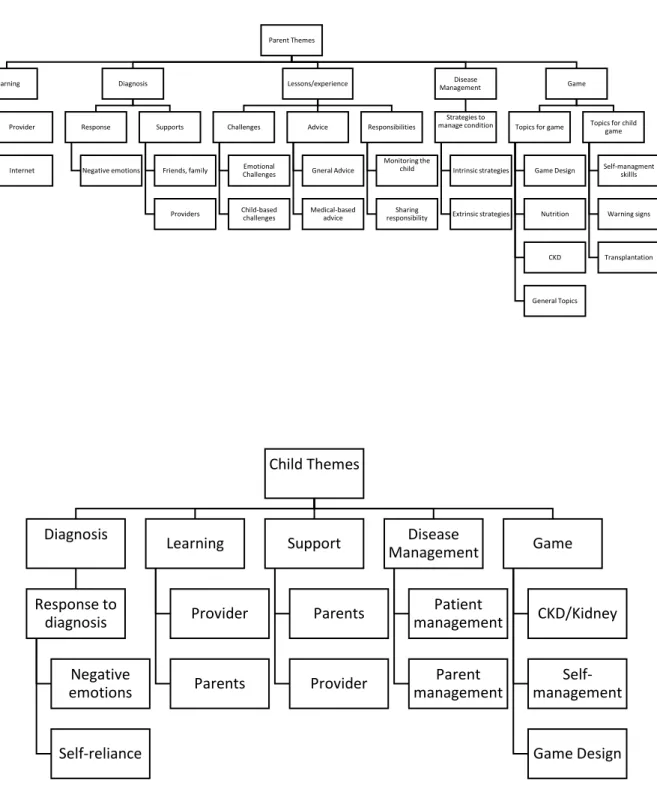
Many of the reported themes between the parent and child cohorts overlapped or were
similar (Figure 1). Reported themes for the parents included: reaction to diagnosis; learning
preferences and sources of information; lessons/experiences; disease management of their child’s
health; and game, which dealt with the ideas of game use and the ideal game for educating the
parents about CKD. Themes for the children included: diagnosis; learning; support; disease
management; and the preferred serious game to learn about their diagnosis.
Diagnosis:
The diagnosis theme included the emotional response of parents to their child’s
diagnosis, and the supports they had in place after the diagnosis. Parents mentioned family,
friends, spouses, church, and providers as their most common support systems. Included in this
notion is the idea that providers and hospital staff helped parents better stabilize their emotions.
Parents’ emotional responses were primarily focused around the sense of shock upon
receiving their child’s diagnosis. Their experiences were traumatic, heartbreaking, and
overwhelming. The negative experiences include not understanding the diagnosis, fueled by
emotions such as confusion. The parents also expressed concerns about their child being
different from other children, including their siblings.
However, parental emotional responses were not entirely negative. Some parents
commented that it was a relief to have a distinct label for what their child was going through.
Additionally, one parent commented on the idea of having to deal with their child’s situation in a
mature, realistic manner. This parent said,
“It was shocking; I think I blocked it out more than anything thinking it wasn’t real. But at the time I realized that it was something that we had to deal with … (PK22).”
Learning:
The sub-theme of learning dealt with how parents learned about their child’s condition, in
particular the sources of information that were used. In regards to how parents learned about
their child’s diagnosis, the provider was the main source of information. Parents mentioned that
“You know I think the primary source of information is definitely physicians, nurses, you know when she was in the acute stage. The
secondary source of information would have been internet and specifically patient advocacy websites. There’s an HUS1
support group online that we’ve gotten a lot of information about kidney related issues long term, initially. And then over time the primary
source has been our quarterly visits PK 3).”
This quote also highlights the importance of the next preferred source of information, the
internet. Websites that parents visited provided information about long-term care for the child’s
particular condition. Parents felt that the sites visited were reputable. Another aspect regarding
use of online resources was that parents did not simply research their child’s disease one time.
Attempting to understand the child’s condition was an iterative process for the parents. But the
information that parents found on sites was not always encouraging for them:
“I Googled it on the internet to see what it was for myself and it was kinda saying that uh a lot of kids get it around his age and it was saying how it comes about when they’re maturing from being
a little child to a teenager so and I really didn’t like a lot of the negative remarks that they had to say (PK21).”
Lessons/Experiences:
1
The larger theme of lessons/experiences included: the advice parents had for other
parents of children with CKD as well as challenges and responsibilities in caring for CKD. The
challenges that parents encountered were centered on the child’s condition or emotional
challenges for the parents. The responsibilities that the parents perceived included monitoring the
child; acting as a support system for the child; sharing responsibilities; and managing CKD.
The parent-to-parent advice sub-theme included the medical aspects of CKD and
approaching CKD as an experience in general. The general advice included words of
encouragement for the parents to “try to do your best and work on it (PK17).” One particular parent provided a comprehensive statement that encompassed the ideas presented by other
parents:
“To always stay opened minded. Don’t think the worse. That was one of the things I did. I always had painted my mom’s image of what I had experienced. When we went in and realized what K14 was going to go through, I was like “oh my gosh, no.” I closed the
doors, I closed myself off, I didn’t want to hear any reasons. My husband was like, “hey look, everything is going to be ok.” You just got be opened minded. You’re going to have to realize that you
dumbest thing, and they had just repeated it three times, if you don’t understand it you need to ask. Make them break it down for
you…. (PK14).”
The medical-based advice emphasized the need to understand CKD by asking providers
for information. The medical and general advice overlapped when parents advised their potential
peers to be watchful of their children for changes that may indicate more serious issues, such as
symptoms of elevated blood pressure.
Parents reported that keeping a close eye on what their child ate outside of the home was
particularly challenging. Parents also mentioned having to monitor their child to make sure they
maintained adequate fluid intake and adherence to medications. Transition of responsibility was
mentioned by a few parents as they discussed how they were expecting more accountability on
part of the child as they got older in managing their condition and its associated obstacles during
transition.
Parents’ experiences extended beyond simple medication adherence, and they
commented on issues such as nutrition and prevention of infections during dialysis treatments.
One parent remarked that their role was not singular: “I pretty much do whatever I can, whatever
she needs done (PK19).”
Disease Management:
The disease management sub-theme included strategies used to manage the child’s
condition and fell into intrinsic and extrinsic strategies. The intrinsic strategies showed the
“I don’t remember having any strategies; I just remember taking care of him. I don’t remember coming up with any, I guess it was more motherly instinct, I don’t know. I didn’t write anything on a calendar or anything. I did do that for his appointments, I did do that. But everything has been like clockwork. I don’t know how
to explain that (PK9).”
This response did not encompass the entirety of the approaches used by parents. A few parents
had extrinsic strategies such as calendars, pillboxes, and utilized their spouse as an additional
assistance.
Game:
Videogame use was prevalent among the parents, including simple games on the phone.
Parents reported disparate opinions when asked if they would be interested in a game to learn
about CKD. There was a mixed response; a few parents stated a videogame would be useful,
while other parents indicated they would not be interested in such a game. The parents who had
no interest in using a videogame were asked what it would take to get them interested in this type
of serious game. Their response included that having a question-answer component or a
highly-interactive game would be more appealing.
Parents mentioned that the design for a potential serious game included topics of
nutrition, CKD, and other general issues like the importance of keeping doctors’ appointments
explanation of important food choices, including a list of foods that parents could prepare, and
foods that a child should avoid.
Parents mentioned that CKD as an entire topic within the serious game and that it should
include: etiology, treatment options, location of information resources, consequences of not
following a treatment regimen, understanding lab values, covering specific disease, and issues
that need to be addressed for follow-up care. Parents expressed a desire to obtain skills to
manage their child’s particular disease through the game.
The general topics that were preferred in the serious game extended beyond
disease-based information. Parents wanted general health topics, such as staying healthy and monitoring
weight, along with the limitations that may be placed on the child because of their diagnosis.
While monitoring the disease, parents wanted to learn about warnings signs [symptoms of
elevated blood pressure and dehydration] through the game.
Medications were also an important issue for the parents. They perceived that the ideal
serious game would include a section outlining the purpose of the different medications.
Additionally parents wanted an explanation of how dosing worked with the various medications.
Parents discussed topics of a serious game that they thought were important for their
children to learn. Parents wanted their children to understand the anatomical location of the
kidney, kidney physiology, and a general overview of what is involved in a kidney transplant. In
terms of self-efficacy the parents wanted their child to be aware of side-effects while on
medications.
The children and adolescents with CKD brought up concepts that fell into five larger
themes including diagnosis, learning, support, disease management, and the game. Such themes
were similar to those found in the parents (Figure 1).
Diagnosis:
The theme of diagnosis dealt with the response to a diagnosis of CKD from the child’s
perspective. Youth remembered negative emotions, including a sense of shock, fear,
nervousness, and feeling that it would be difficult to have a normal life; however, such negative
emotions did not dominate the conversation from the children. Self-reliance as a skill was
presented through a mature statement by one patient.
“More in shocked in the beginning, but can’t do anything about it now so I just kinda make the best of it (K6).”
Learning:
Youth preferred providers as an informational resource, followed by their parents, the
internet, books, and pamphlets. The experiences that one patient had with a family member with
kidney disease helped.
“Well like I know that it was just like bad cuz my grandma had it so I knew about it but my mom knew more about it cuz she was the one taking care of her so like she already knew how to take care of me (K14).”
Supports System:
The support system in place for youth composed the sub-theme of supports. Youth
support. Specifically, the parents helped youth by providing emotional support and making sure
the child was calm, “My mom was with me the whole time. She was saying everything is going to be ok (K7).” These supports helped the children cope with their diagnosis.
Disease Management:
When discussing the management of their condition, the youth described skills that were
applied by either the children or their parents. The strategies that the children employed to
manage their condition included the physical strategies, such as alarms, pillboxes, medication
lists, and schedules for their treatment regimens. Youth remarked that their self-care became
routine for them, and they found themselves becoming self-reliant over time.
Youth mentioned responsibilities that their parents managing included ensuring that the
child was taking their medications. However, the role of the parents, as perceived by youth,
extended beyond simply ensuring medication adherences. They also performed many logistical
tasks for the children, such as helping the child obtain their medications, transporting the child to
appointments, and preparing meals.
Game:
A final theme the children discussed was what they would like included in a serious game
for CKD. Comments were made on topics such as general game design, CKD/Kidney- related
information, and self-management. The concepts that youth mentioned as important for them in
a serious game are in Figure 2. Generally speaking youth were interested in using a serious game
Regarding the topic of kidney knowledge, youth wanted the game to cover etiology,
stages, and symptoms of CKD. They also desired additional information such as the purpose of
kidney transplant and dialysis treatments, how dialysis treatments feel from the perspective of
youth, and the consequences of having CKD, including sacrifices that may have to be made as a
result of having the condition.
Youth also sought to understand their medications, particularly their purpose and side
effects. They brought up the topic of adapting their lifestyle after being diagnosed with CKD,
for example, “something about like how like it’s not really hard if you like commit yourself cuz it
would be like your lifestyle (K14).”
Additionally the children wanted the inclusion of self-management skills in the game.
The self-management skills would include things that a patient should and should not do because
of CKD. Also, children wanted to discuss CKD- related health risks. Children frequently
mentioned nutrition and hydration as important topics.
Discussion:
Our study describes novel information offered by parent-youth dyads regarding their
learning preferences and desired information for a serious game to learn about CKD. Our
focused interviews found a variety of topics that both parents and children found important for
wanted a serious game to include general information about CKD, such as etiology, stages, and
treatment modalities. Children showed particular interest in the experience of dialysis, which
speaks to the importance of preparation to receive this treatment. Alternatively, parents seemed
to be more interested in the day-to-day aspects of caring for someone with CKD, including
following up on instructions from providers.
A serious game intended for educating parents and children requires several
characteristics. A particularly important one was entertainment value. Several parents and
children stated that they would be willing to use such a serious game if it were entertaining.
Entertainment value is important because it may result in greater retention of information. 25
The use of serious games has been effective in improving outcomes among patients
within asthma (knowledge and self-management), diabetes (blood glucose monitoring, glycemic
control, and improved disease knowledge), and cancer (medication adherence). 2-5 These improvements are encouraging for the development of a CKD serious game.
The vast quantity of CKD information that the parents and youth wanted included in the
game was surprising. Although this information could be provided in clinical visits, it is not
always the ideal environment in which to educate the youth and their families due to general
time-constraints as well as various medical and social issues that may arise over the course of an
appointment. By giving an understanding of the various topics that the child-parent dyads found
important, a serious game can function as an educational tool to bridge knowledge gaps.
substantiated. Advocacy websites are a source of information for parents, but at the same time
may provide information that is upsetting to them. As seen in one parent’s response, the
information that they found on the internet caused emotional distress. The presentation of high
quality, timely information through an entertaining game may support parents and children as
they cope with the diagnosis of CKD.
The roles that parents perceive for themselves in the management of their child’s CKD
have been described before. 26 Parents view themselves as “students” who learn from providers. This dynamic appeared in our focused interviews as most parents identified their providers as a
primary source of information. While youth report their providers as the main source of health
information, they also mentioned their parents as their second trusted source for knowledge
about their condition and its management. This novel finding stresses the fact that parents need
to become prepared to teach and “train the trainer” curriculums need to be developed. 27
This study was limited by the age of the children who were recruited as well as the
sample size. Youth have their own learning capacities that develop in conjunction with their
minds and bodies, so the data collected here represents their own experiences. Since we did not
include younger children, we missed out on a unique level of care that may be involved in CKD
management, including the requirements for feeding tubes, managing unique formulas, and
special fluid needs. These aspects of caring for a very young child with kidney disease would
present unique challenges for the parents; and such tasks were not discussed by this cohort.