Core Commitments
for Children in
© UNICEF/NYHQ2006-2237/Pirozzi
Back cover photos:
© UNICEF/NYHQ2008-0724/Volpe © UNICEF/NYHQ2009-0565/Ramoneda
For more information, please contact: Humanitarian Policy Section
Office of Emergency Programmes, UNICEF
Published by UNICEF Division of Communication 3 United Nations Plaza New York, NY 10017, USA
Email: [email protected] Website: www.unicef.org
ISBN: 978-92-806-4512-5
© United Nations Children’s Fund (UNICEF) May 2010
Core Commitments
for Children in
Acronyms
ART antiretroviral
treatment
ARV antiretroviral
CAP
Consolidated Appeals Process
CCCs
Core Commitments for Children
CERF
Central Emergency Response Fund
CO Country
Office
EPI
Expanded Programme on Immunization
EW/EA
early warning/early action
GBV gender-based
violence
HAR
Humanitarian Action Report
HCT
Humanitarian Country Team
HIV and AIDS human immunodeficiency virus/acquired immune
deficiency syndrome
HRBAP
human rights-based approach to programming
IASC
Inter-Agency Standing Committee
ICT
information and communication technology
INEE
Inter-Agency Network for Education in Emergencies
IYCF
infant and young child feeding
MHPSS
mental health and psychosocial support
MOSS
Minimum Operational Security Standards
NGO non-governmental
organization
PARMO
Public Sector Alliances and Resource Mobilization
Office
PMTCT
prevention of mother-to-child transmission
RO Regional
Office
SAM
severe acute malnutrition
VISION
Virtual Integrated System of Information
iii
Contents
Acronyms . . . .ii
I:
Framework, principles and accountability . . . .2
1.1 Goal . . . .2
1.2 Partnerships
. . . .3
1.3 Scope. . . .3
1.4
Strengthening UNICEF’s programming framework . . . .5
1.5 Contextual
analysis
. . . .5
1.6 Humanitarian
principles
. . . .6
1.7
Human rights-based approach to programming. . . .6
1.8
Gender equality in humanitarian action. . . .7
1.9
’Do No Harm‘ principle . . . .8
1.10 Global norms and standards. . . .9
1.11 Monitoring, analysis and assessment . . . .9
1.12 Inter-agency humanitarian reform . . . .10
1.13 Integrated programme approach . . . 11
1.14 Advocacy. . . 11
1.15 Communication for development. . . .12
1.16 Risk management and assessment . . . .13
II: Programme
commitments . . . .14
2.1 Performance
monitoring . . . .15
2.2
Rapid assessment, monitoring and evaluation . . . .18
2.3 Nutrition
. . . .20
2.4 Health
. . . .24
2.5
Water, sanitation and hygiene. . . .28
2.6 Child
protection
. . . .32
2.7 Education
. . . .36
2.8 HIV
and
AIDS
. . . .40
2.9
Supply and Logistics . . . .42
III: Operational
commitments . . . .44
3.1
Media and communications . . . .44
3.2 Security . . . .45
3.3 Human
resources . . . .46
3.4 Resource
mobilization . . . .48
3.5
Finance and administration. . . .50
1.1 Goal
The Core Commitments for Children (CCCs) in Humanitarian
Action are a global framework for humanitarian action for
children undertaken by UNICEF and its partners.
This framework is guided by international human rights law,
in particular the Convention on the Rights of the Child
1and,
in the case of complex emergencies, also by international
humanitarian law. On an operational level, the CCCs are based
on global standards and norms for humanitarian action (see
Section 1.1
).
The CCCs promote predictable, effective and timely collective
humanitarian action. They are realised through a partnership
between governments, humanitarian organizations
(including UNICEF) and others, mobilizing both domestic and
international resources.
The CCCs are driven by the need to fulfill the rights of children
affected by humanitarian crisis, and they are therefore relevant
in all countries. The CCCs are also applicable to both acute
sudden-onset and protracted humanitarian situations.
UNICEF works with partners in pursuing a principled approach
and seeks to build an alliance with partners around the CCCs.
The organization contributes to the achievement of the CCCs
through resource mobilization, direct support to partners and
advocacy. The fulfilment of the CCCs, however, depends on
many factors, including the contributions of other partners and
the availability of resources.
The CCC sector-specific programme commitments form part
of a collective programmatic response for children affected by
humanitarian crisis and are designed to support wider
inter-agency cluster coordination.
I:
Framework, principles and accountability
1 Convention on the Rights of the Child, article 45: “In order to foster the effective implementation
of the Convention and to encourage international cooperation in the field covered by the Convention: (a) The specialized agencies, the United Nations Children’s Fund, and other United Nations organs shall be entitled to be represented at the consideration of the implementation of such provisions of the present Convention as fall within the scope of their mandate.”
3
Framework, principles and accountability
1.2 Partnerships
The CCCs are realized through close collaboration among
partners, host governments, civil society organizations,
non-governmental organizations (NGOs) – both national and
international – UN agencies and donors. This is consistent
with UNICEF commitments under inter-agency humanitarian
reform, including the Principles of Partnership.
1.3 Scope
A
humanitarian situation
is defined as any circumstance
where humanitarian needs are sufficiently large and complex
to require significant external assistance and resources,
and where a multi-sectoral response is needed, with the
engagement of a wide range of international humanitarian
actors.
2This may include smaller-scale emergencies; in
countries with limited capacities, the threshold will be lower
than in countries with strong capacities.
2 Inter-Agency Standing Committee, ‘Guidance Note on Using the Cluster Approach to Strengthen
Humanitarian Response’, IASC, Geneva, 24 November 2006.
Recovery and regular programming
Preparedness
Early recovery
Response
First 8 weeks Beyond 8 weeks
Deterioration in the situation of children
Before trigger
Continued response and early recovery Threshold
Time
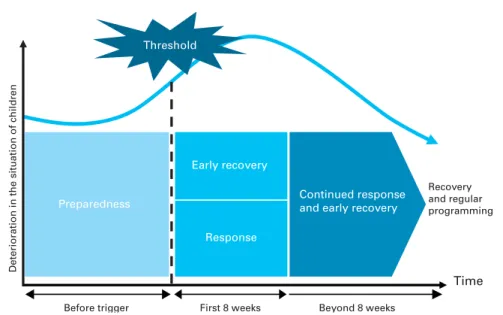
Figure 1: Conceptual framework for effective CCC response
An
emergency
is a situation that threatens the lives and
well-being of large numbers of a population and requires
extraordinary action to ensure their survival, care and
protection.
3The CCCs:
•
Constitute a global framework
, developed by UNICEF in
collaboration with its partners, for protecting the rights of
children affected by humanitarian crisis.
•
Apply to all children affected by humanitarian crisis
,
regardless of the state of economic and social
development in which they find themselves or the
availability of UNICEF resources.
•
Cover programme and operational commitments
and
include interventions for nutrition, health, water and
sanitation, HIV and AIDS, education and child protection.
•
Reflect actions taken throughout the preparedness and
response phases
, including actions for early recovery, with
emphasis on results and benchmarks (see
Figure 1
). The
CCCs include the inter-agency responsibilities of UNICEF
and its humanitarian partners as well as coordination with
authorities, and they express an explicit commitment to
capacity development in humanitarian action.
•
Are grounded in human rights and humanitarian
principles
, and they are a cornerstone of UNICEF’s
humanitarian action.
•
Are activated by a rapid decline in the relative situation
and well-being of large numbers of children and women
,
which calls for extraordinary action.
•
Include explicit strategies to reduce disaster risk and
develop local capacity at all stages of humanitarian action,
including preparedness.
Timeliness and effectiveness are
priorities in responding to meet the commitments outlined
in the CCCs.
•
Focus on action in the first eight critical weeks of
humanitarian response and provide guidance for action
beyond that
, moving towards defined benchmarks.
•
Include both programme and operational commitments
,
corresponding to results-based sectoral programmes and
3 United Nations Children's Fund, ’Programme Policy and Procedure Manual: Programme5
Framework, principles and accountability
operational areas considered necessary for an effective
response.
•
Provide internal policy guidance for UNICEF
, with
a recognition that strengthening partnership and
collaboration is key to the success of its humanitarian
action.
Within the context of partnership and depending on access,
security and availability of funding, UNICEF, with its partners,
commits to ensuring the provision of services. UNICEF’s role
and that of its partners will vary according to local conditions
and respective capabilities.
Figure 2: Time frame for sudden emergencies
A time frame for response establishes timelines for sudden-onset emergencies:
• The first 72 hours involve actions required for management and operational processes.
• The first 8 weeks involve actions relevant to critical response and early recovery.
• Early recovery actions in the CCCs are actions and approaches that should be applied immediately and in parallel with immediate response.
1.4
Strengthening UNICEF’s programming framework
The CCCs are an integral component of UNICEF’s country
programmes because they:
• Recognize the link between humanitarian action and
development, and provide an explicit focus on disaster risk
reduction.
• Underscore the critical role of preparedness for rapid
response.
• Provide a platform for early recovery.
• Establish a framework for evaluation and learning.
1.5 Contextual
analysis
The application of the CCCs is informed by a contextual
analysis that includes:
on girls, boys, women and men, and their implications for
the operations and response of UNICEF and its partners,
including humanitarian access and advocacy.
• Review of ongoing work by humanitarian agencies and
other stakeholders as well as the strategy and operations
of UN missions, where deployed.
• Sex- and age-disaggregated data analysis of all grave
violations against children – including those outlined in
Security Council resolutions on child recruitment, attacks
on schools or hospitals, and sexual violence against
children and women (
see
SCR 1882, 1820, and 1888,
respectively) – and their implications for UNICEF reporting
and response.
• Assessing the impact of humanitarian crisis on specific
programme sectors to prioritize and coordinate response.
• Identifying opportunities to support recovery for girls,
boys, women and men within programme sectors.
1.6 Humanitarian
principles
UNICEF is committed to applying humanitarian principles in
its humanitarian action. Such principles include:
• Humanity:
upholding the principle that all girls, boys,
women and men of every age shall be treated humanely in
all circumstances by saving lives and alleviating suffering,
while ensuring respect for the individual.
• Impartiality:
ensuring that assistance is delivered to all
those who are suffering, based only on their needs and
rights, equally and without any form of discrimination.
• Neutrality:
a commitment not to take sides in hostilities
and to refrain from engaging in controversies of a political,
racial, religious or ideological nature.
Humanitarian principles are reinforced by raising awareness,
building trust and advocating for children’s rights in
humanitarian situations, together with state authorities,
non-state entities and communities.
1.7
Human rights-based approach to programming
UNICEF is committed in all humanitarian action to further
the realization of human rights through the framework of
the human rights-based approach to programming. This
approach identifies rights holders and their entitlements, as
7
Framework, principles and accountability
well as corresponding duty bearers and their obligations.
The approach aims to strengthen the capacities of rights
holders to make their claims and of duty bearers to meet
their obligations. It focuses on the realization of the rights of
excluded and marginalized populations, and those whose
rights are at risk of being violated. The CCCs put children
and women at the centre of humanitarian action, as active
participants rather than recipients of assistance.
The application of a human rights-based approach to
programming must be contextualized for humanitarian
situations and recognize, in particular, the additional
challenges arising in complex humanitarian situations. It
must also take into account the role of humanitarian agencies
as duty bearers in complex emergencies, as prescribed by
international humanitarian law.
UNICEF, with the support of its partners, is committed to
reinforcing a human rights-based approach to programming in
humanitarian actions by:
• Addressing inequalities and disparities in analysis,
programme design, implementation and monitoring,
recognizing that inequalities may cause or exacerbate
vulnerabilities in humanitarian crises.
• Promoting the participation of children, adolescents,
women and affected populations, including in the analysis,
design and monitoring of humanitarian programmes.
• Strengthening the capacities of state authorities and
non-governmental and community organizations as an
essential strategy for joint and effective humanitarian
action.
• Advocating for the rights and voices of children and
women as an integral component of humanitarian action.
1.8
Gender equality in humanitarian action
A human rights-based approach to programming and gender
equality programming are complementary and mutually
reinforcing approaches. The term ‘gender
4equality’ refers to
the equal enjoyment by girls, boys, women and men of rights,
4 The term ‘gender’ refers to the social attributes and opportunities associated with beingmale or female and to the relationships among girls, boys, women and men. These attributes are context- and time-specific and changeable. In most societies, there are differences and inequalities between women and men in responsibilities assigned, activities undertaken, access
socially valued goods, opportunities, resources and rewards.
Equality does not mean that girls, boys, women and men are
the same, but that their enjoyment of rights, opportunities and
life chances is not governed or limited by whether they were
born female or male.
Humanitarian crises can exacerbate pre-existing gender
inequalities and may lead to increased risks, exclusion and
discrimination. They can, however, also provide opportunities
for positive change, allowing for a shift in traditional roles,
attitudes, beliefs and exclusion practices.
UNICEF is committed to ensuring that gender equality is
integrated consistently in its disaster prevention, humanitarian
response and recovery programmes. Promoting gender
equality in humanitarian action is most effectively achieved
by ensuring that the assistance and protection provided are
planned and implemented to benefit girls, boys, women
and men, in line with an analysis of their rights, needs and
capacities. This fosters a more accurate understanding of the
situation, facilitates the design of more appropriate responses,
highlights opportunities and resources within the affected
community, and provides a link between humanitarian
assistance and long-term development.
1.9
‘Do No Harm’ principle
UNICEF is committed to do the ’Do No Harm‘ principle. This
implies that humanitarian action must:
• Avoid exacerbating disparities and should avoid
discrimination between affected populations on the basis
of the causes of crisis.
• Eschew creating or exacerbating environmental
degradation.
• Avoid creating or exacerbating conflict and insecurity for
affected populations.
• Take into account the special needs of the most vulnerable
groups of children and women – including internally
displaced persons, unaccompanied minors and the
disabled – and develop relevant, targeted programme
interventions.
to and control over resources, as well as decision-making opportunities (Office of the Special Adviser on Gender Issues and Advancement of Women, ’Important Concepts Underlying Gender Mainstreaming‘, Factsheet 2, OSAGI, New York, August 2001).
9
Framework, principles and accountability
1.10 Global norms and standards
In its humanitarian efforts, UNICEF is accountable to a body
of global norms and standards, both from intergovernmental
forums and humanitarian partnerships. These norms and
standards include:
•
International human rights law and human rights
principles, including the Convention on the Rights of the
Child and the Convention on the Elimination of All Forms
of Discrimination against Women.
•
International humanitarian law
, including the Geneva
Conventions, which contributes to defining roles and
responsibilities of humanitarian agencies in armed conflict.
•
Humanitarian principles
, derived from international
humanitarian law and described in General Assembly
resolutions, and which are meant to be applied in all
humanitarian action.
•
General Assembly resolutions
, in particular Resolution
46/182, which creates the Inter-Agency Standing
Committee (IASC) and tasks the United Nations, inter
alia, with supporting and strengthening state capacity for
emergency response in order to care for the victims of
natural disasters and other emergencies.
•
Relevant Security Council resolutions
, including those
pertaining to the protection of children affected by armed
conflict.
•
Existing and emerging global humanitarian standards
,
including the Humanitarian Charter and Minimum
Standards in Disaster Response (Sphere Standards) and
the Inter-Agency Network for Education in Emergencies
(INEE) Minimum Standards, which set minimum standards
in core areas of humanitarian assistance in order to
improve the quality of assistance provided to people
affected by disasters and to enhance the accountability of
the humanitarian system in disaster response.
1.11 Monitoring, analysis and assessment
UNICEF is committed to supporting humanitarian action
through systematic monitoring, analysis and assessment of
performance against benchmarks in concert with its partners.
This entails:
adolescents and women on an ongoing basis, directly and
with partners, to ensure joint rapid assessments and timely
humanitarian response.
• Supporting humanitarian action based on rapid
assessments conducted with partners and affected
populations, including children, adolescents and women.
These assessments, conducted through joint inter-agency
mechanisms or independently, are the first critical step in
defining humanitarian response.
• Measuring progress to identify and address results for
children and women against benchmarks gaps and better
manage and the resulting humanitarian response. The
benchmarks adopted in the CCCs represent globally
accepted performance levels for humanitarian response,
drawn from inter-agency standards, including the Sphere
Standards and INEE Minimum Standards. UNICEF and its
partners will define the respective contributions towards
reaching benchmarks as appropriate to each country
context and within the contexts of the humanitarian
country team (HCT) and cluster coordination efforts.
• Evaluation to provide deeper analysis and
contextualization of performance, taking into account
issues of access, security and availability of funding.
• Guiding its performance in relation to the CCCs by wider
organizational management accountability and oversight
functions, in accordance with UNICEF’s accountability
framework. This entails commitment to both preparedness
and response.
Mindful of different approaches by partners, UNICEF’s
regular audit principles and practices will be fully applied in
humanitarian action supported by the organization. UNICEF
will, wherever possible, carry out audits in the early stages
of humanitarian operations so that ongoing programme
adjustments can be made.
1.12 Inter-agency humanitarian reform
Coordination and collaboration are critical to successful
humanitarian action. UNICEF is fully committed to
inter-agency humanitarian reform and supports this through:
• Provision of leadership and participation in assigned
11
Framework, principles and accountability
• Partnerships that commit UNICEF to collaborative and
principled work in a manner that is consistent with
internationally accepted norms and that reinforces the
practical application of the Principles of Partnership.
• Funding to partners that is timely and flexible.
• Participation in and contribution to effective strategic
humanitarian leadership.
1.13 Integrated programme approach
An integrated programme approach is used to ensure a close
linkage between the different sectoral commitments as well
as to strengthen the interconnections between the different
phases of humanitarian action. Integration is achieved by:
• Using disaster risk reduction to minimize vulnerabilities
and reduce disaster risks for children and women in
all programming. This is achieved by investing in early
warning and emergency preparedness and strengthening
resilience to disasters.
• Ensuring a critical role for preparedness that will lead to a
rapid, effective and timely humanitarian response.
• Managing results and standards to ensure that the sum
of all interventions is sufficient to achieve the expected
results. This is driven by strategic management decisions
based on and informed by up-to-date data, assessments,
benchmarks, targets and performance monitoring.
• Commencing early recovery in parallel with humanitarian
response, in order to sustain the results of life-saving
interventions, support self-initiated recovery actions by
affected populations, take advantage of early entry points
for recovery, and reduce vulnerability to future crisis
risk. UNICEF will actively engage in early recovery and
post-crisis inter-agency mechanisms, including needs
assessments, recovery strategies, resource mobilization,
programme delivery and integrated mission-planning
processes at all levels, when deployed.
1.14 Advocacy
Advocacy is understood to constitute deliberate efforts, based
on demonstrated evidence, aimed at persuading decision
makers to adopt policies and take actions to promote and
protect the rights of children and women in humanitarian
situations. It aims to communicate the legitimacy and
primacy of their perspectives and helps to address critical
humanitarian programming or policy gaps. Advocacy for
children and women:
• Constitutes an integral part of humanitarian action.
• Should be context-specific and, when possible,
evidence-based, and should target the full range of stakeholders,
including governments, policymakers, international
organizations and non-governmental entities.
• Should be based on the Convention on the Rights of
the Child, the Convention on the Elimination of All
Forms of Discrimination Against Women and other
international legal instruments, peace agreements, and
other commitments made by governments and
non-governmental entities.
• Yields the best results when undertaken on a collective
basis and in partnership with others.
• Leads to specific actions targeted to attract greater
political, human and financial support; facilitates better
humanitarian access; promotes adherence to international
laws and standards; and leads to accountability for
perpetrators of child rights violations. In a humanitarian
situation, the absence of advocacy may have a direct
impact on the ability of UNICEF and its partners to deliver
services.
UNICEF, in collaboration with its partners, will take due
account of the possible adverse effects of engaging in
advocacy strategies on staff security, country programmes and
vulnerable populations.
1.15 Communication for development
Communication for development in emergencies seeks to
share relevant, action-oriented information so that when
disaster strikes, people in affected communities know what
actions to take to maintain and protect the health and
well-being of all their members, including those with disabilities,
the elderly and other especially vulnerable groups. It is a
consultative process among programme and communication
specialists, local authorities, change agents and communities.
It is misguided to presume that communities affected by
humanitarian situations are too shocked and helpless to take
on responsibilities. In fact, many people, including children,
13
Framework, principles and accountability
are able to return to normalcy more quickly when they
participate in helping others and themselves during and after
an emergency. Communication for development can help to:
• Support programme sectors in consulting adults, children
and young people in affected groups from the onset of a
crisis. This has been shown to be a key factor in reducing
deaths and promoting psychological healing, cohesion and
social mobilization.
• Forge alliances and bring stakeholders together.
• Establish a central health education and communication
coordination centre.
• Focus on establishing or re-establishing positive individual
and social practices.
• Conduct a rapid assessment of communication channels
and resources.
• Participate in sectoral assessments that help to identify
high-risk practices that have implications for behaviour
change communication, as well as opportunities for
developing community-based response mechanisms.
1.16 Risk management and assessment
A consistent approach to identifying, assessing and managing
risk is required in all UNICEF partnerships and programming.
Strengthening risk management is particularly important
in humanitarian action due to increased security risks
and disaster risks as well as a more complex operating
environment. UNICEF’s risk management principles
5include:
• Accepting risk when benefits outweigh costs, and
anticipating and managing risk by contingency planning
and mitigation of identified risks.
• Making decisions promptly, recognizing that affirmative
management of risks is critical to success. The best
strategy may involve a combination of different responses
to risks.
• Taking calculated risks and pursuing innovations that
are not contradicted by control measures or compliance
requirements, and encouraging innovative actions while
employing sound management practices.
II: Programme
commitments
Programme commitments of the CCCs in humanitarian action
are premised on corresponding benchmarks derived from
global standards in the respective programme areas. They
are designed to allow UNICEF and its partners to flexibly
contribute to reaching the benchmarks collectively, depending
on their capacities.
The benchmarks in the CCCs are the globally accepted
performance levels for humanitarian response, drawn from
inter-agency standards, including INEE Minimum Standards
and the Sphere Standards, and the outcomes of discussions
in inter-agency and cluster forums (particularly in the case of
the child protection benchmarks). The use of globally accepted
benchmarks aligns the CCCs with humanitarian reform.
UNICEF contributes to the programme commitments
through the programme actions. UNICEF has identified
key preparedness, response and early recovery actions to
contribute to each sectoral commitment, based on available
evidence and best practices, recognizing that partners will
employ diverse strategies to work towards global benchmarks
for children in humanitarian action.
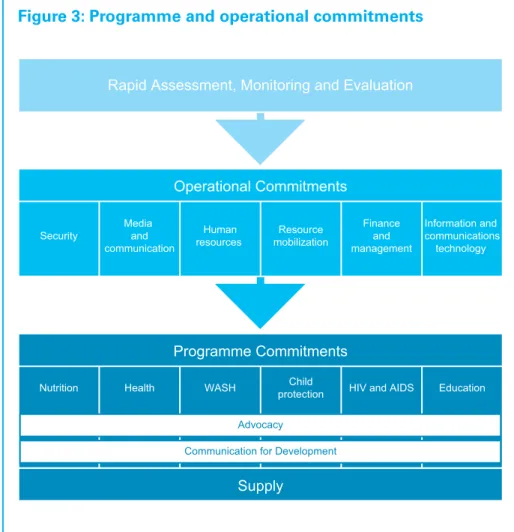
The sector-specific programme commitments cover nutrition;
health; water, sanitation and hygiene (WASH); HIV and AIDS;
education and child protection. These actions are supported
by rapid assessment, monitoring and evaluation; operational
commitments; supply; communications for development; and
security (see
Figure 3
).
15
Programme commitments
Figure 3: Programme and operational commitments
2.1 Performance
monitoring
UNICEF utilizes its own performance monitoring system for
measuring progress against CCCs benchmarks. Partners may
employ different tools for their own performance monitoring.
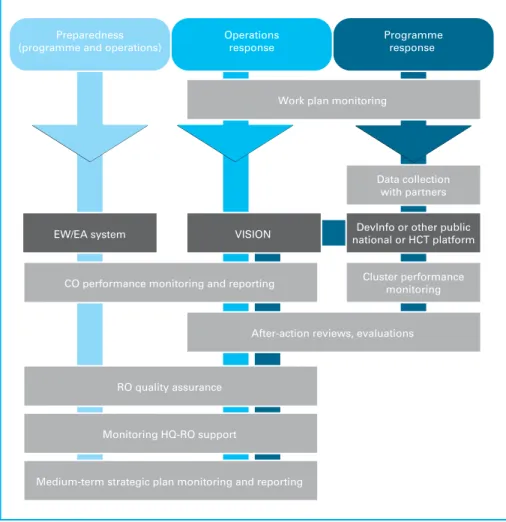
Monitoring progress is an element of the broader UNICEF
performance management system (see
Figure 4
). The activity
provides information on progress towards achievement of the
CCC benchmarks, highlighting gaps that need to be covered.
Performance monitoring is critical in identifying where the
CCCs are not being met and in mobilizing resources to address
these gaps.
Operational Commitments Security
Media and communication
Human resources
Resource mobilization
Finance and management
Information and communications technology
Programme Commitments
Supply Nutrition Health WASH Child
protection HIV and AIDS Education Rapid Assessment, Monitoring and Evaluation
Advocacy
Monitoring provides management with information on the
quality, quantity and timeliness of progress towards the
achievement of results for children and women under the
CCCs. CCC performance monitoring has corresponding
indicators for each benchmark. Where monitoring of standard
indicators is not feasible, proxy indicators may be used.
Figure 4: CCC performance monitoring
Programme response Operations
response Preparedness
(programme and operations)
EW/EA system VISION national or HCT platformDevInfo or other public Data collection
with partners
Cluster performance monitoring Work plan monitoring
After-action reviews, evaluations CO performance monitoring and reporting
RO quality assurance
Monitoring HQ-RO support
Medium-term strategic plan monitoring and reporting
Collecting data requires collaboration with partners. Data are
be reported through three systems:
• Country Office (CO) Annual Reports, DevInfo or other
national or HCT-supported platforms for reporting on
programme achievements.
17
Programme commitments
• UNICEF’s resource planning and performance
management system, the Virtual Intergrated System of
Information (VISION).
• UNICEF’s early warning/early action (EW/EA) system for
reporting on the status of preparedness.
Country representatives are responsible for collecting,
analysing, monitoring and reporting on progress against
agreed-upon CCC benchmarks. Where necessary, they
must also develop country-specific proxy indicators. CCC
performance monitoring must inform decision-making in
rapidly changing situations. Monitoring and reporting against
CCC benchmarks must be sufficiently frequent, should be
determined on a case-by-case basis by the CO and Regional
Office (RO), and should include gender-sensitive data
collection.
Rapid assessment, monitoring and evaluation strategic result
Humanitarian action for girls, boys and womenis timely, effective and efficient.
Commitments Benchmarks
Commitment 1: The situation of children and women is monitored and sufficiently analysed, and rapid assessments are carried out whenever necessary. Commitment 2: Systems for performance benchmarking regularly monitor UNICEF’s humanitarian action, enabling CCC implementation to be measured.
Commitment 3: Humanitarian action is regularly assessed against CCCs, policies, guidelines, UNICEF quality and accountability standards, and stated objectives of humanitarian action through evaluative exercises, with partners whenever possible.
Benchmark 1: Rapid assessments are conducted in a timely manner for all humanitarian situations.
Benchmark 2: CCCs and related policies, guidelines and UNICEF quality and accountability standards are used in designing and implementing performance benchmarking.
Benchmark 3: An evaluative exercise – evaluation or a lighter form of review, depending on resources and context – is undertaken within 3–4 months of a major sudden-onset emergency, or incorporated into regular strategic planning exercises in chronic emergencies.
Programme actions
Preparedness
• Track and analyse all potential and existing humanitarian situations, including areas not covered by country programmes, with sufficient rigour to trigger rapid assessments when necessary.
• Monitor office preparedness, including the completion of emergency preparedness and response planning and implementation of
programme preparedness activities, using the early warning/early action system.
• Identify existing hazard, vulnerability and capacity data to inform baselines, response and recovery.
• Collaborate with other agencies to develop the methodology, tools and information-management systems needed, and identify the trained capacity required to conduct timely inter-agency rapid assessments. • Identify qualified staff to ensure that performance monitoring can be
undertaken in each sector.
• Ensure that benchmarks for performance monitoring are in place at the country level, including through clusters.
19
Programme commitments
Response
• Ensure that a rapid assessment is made regarding affected populations, including children, adolescents and women, as a joint inter-agency mechanism or independently if necessary, in order to determine initial humanitarian response.
• Ensure that a gender analysis is reflected in assessments.
• Ensure that the flash appeal and response are based on standardized monitoring and assessement of relief transitions (SMART) objectives and available baseline information, and that they are designed to facilitate monitoring.
• Identify the objectives and scope of the evaluation based on the scale and severity of the humanitarian crisis.
• Systematically collect all documentation relevant to the response for monitoring and evaluation purposes.
• Ensure that key performance information for all sectors is
systematically collected, easily accessible and used in review processes to improve performance, and that it serves as a basis for future
evaluative work.
• Ensure that evaluations of humanitarian response produce organizational ’lessons learned’.
Early recovery
• Ensure that rapid assessments include assessment of early recovery needs and capacities. Whenever possible and appropriate, such assessments should involve national and/or local authorities as well as affected populations. Link rapid assessments with the early recovery cluster/network if this exists.
• Support efforts to sustain monitoring mechanisms, including the promotion of their integration into national, local and community systems.
• Ensure that early recovery programmes are designed with the involvement of affected populations and national and/or local authorities, as appropriate, according to results-based frameworks. • Ensure, wherever possible and appropriate, the involvement of national
and/or local authorities in the evaluation of early recovery projects. Summaries of evaluations should be prepared, translated and made available to partners.
2.3 Nutrition
Nutrition strategic result
The nutritional status of girls, boys and women is protected from the effects of humanitarian crisis.
Commitments Benchmarks
Commitment 1: Effective leadership is established for nutrition cluster inter-agency coordination, with links to other cluster/sector coordination mechanisms on critical inter-sectoral issues.
Commitment 4: Children and women with acute malnutrition access appropriate management services.
Commitment 2: Timely nutritional assessment and surveillance systems are established and/or reinforced.
Commitment 5: Children and women access micronutrients from fortified foods, supplements or multiple-micronutrient preparations.
Commitment 3: Support for appropriate infant and young child feeding (IYCF) is accessed by affected women and children.
Commitment 6: Children and women access relevant information about nutrition programme activities.
Benchmark 1: Coordination mechanism provides guidance to all partners regarding common standards, strategies and approaches, ensuring that all critical nutrition gaps and vulnerabilities are identified; also provides information on roles, responsibilities and accountability to ensure that all gaps are addressed without duplication.
Benchmark 4: Effective management of acute malnutrition (recovery rate is >75%, and mortality rates are <10% in therapeutic care and <3% in supplementary care) reaches the majority of the target population (coverage is >50% in rural areas, >70% in urban areas, >90% in camps).
Benchmark 2: Quality assessments are reported on in a timely fashion and provide sufficient information for decision-making, including the scope and severity of the nutritional situation, the underlying causes of malnutrition and contextual factors.
Benchmark 5: Micronutrient needs of affected populations are met: >90% coverage of supplementation activities, or >90% have access to additional sources of micronutrients for women and children. Benchmark 3: All emergency-affected areas have an adequate number of skilled IYCF counsellors and/or functioning support groups.
Benchmark 6: Communication activities providing information on nutrition services (including how and where to access them) and entitlements are conducted in all emergency-affected areas.
21
Programme commitments
Technical justification/evidence: The CCCs for nutrition aim to address major causes of nutritional deterioration and death by protecting the nutritional status of children and women, including their micronutrient status, and by identifying and treating those already suffering from undernutrition using evidence-based interventions and according to inter-agency agreements and existing inter-agency standards (e.g., Sphere Standards).
Globally, more than one-third of all under-five deaths are attributable to undernutrition, either as a direct cause of death or through the weakening of the body's resistance to illness. The risk of mortality from acute malnutrition is directly related to the severity of malnutrition. A child with severe acute malnutrition is nine times more likely to die than a well-nourished child. The harmful consequences of micronutrient deficiencies for women and infants include greater risk of maternal death during childbirth, giving birth to an underweight or mentally-impaired baby and poor health and development of breastfed infants. For young children, micronutrient deficiency increases the risk of death due to infectious disease and impaired physical and mental development.
Provision of fortified foods and micronutrient supplements is an integral component of the response. In addition, because breastfed children are at least six times more likely to survive in the early months, the support, promotion and protection of breastfeeding is fundamental to preventing undernutrition and mortality among infants in emergencies.
Programme actions
Preparedness
• Clarify the responsibilities of UNICEF and its partners regarding nutrition in humanitarian situations; strengthen existing coordination mechanisms or, if unavailable, create them in collaboration with national authorities to ensure that the humanitarian response is timely and coordinated, and that it conforms to humanitarian principles and agreed-upon standards and benchmarks.
• Support a multi-sectoral rapid assessment mechanism and format that includes priority nutrition information.
• Ensure the availability of guidelines and capacity for conducting and reporting on rapid nutrition surveys and assessments; advocate for the inclusion of nutritional assessment and programme monitoring data in national early warning systems; and ensure availability of key nutrition baseline data (including data on pre-existing malnutrition and disease prevalence and feeding practices) to inform response.
• Establish integrated guidelines for management of acute malnutrition; assess coverage of existing services for management of severe acute malnutrition (SAM) and establish a contingency supply and distribution plan.
• Establish guidance on micronutrient supplementation and set up partnerships to implement emergency micronutrient activities. Form a contingency plan and mechanism for procurement and distribution of all necessary supplies for emergency micronutrient interventions (vitamin A, iodized salt, multiple micronutrient supplements), including stockpiles or standby arrangements with providers of micronutrient supplements.
• Advocate for and provide guidance on appropriate quantities of quality complementary foods to add to the food basket; define essential infant and young child feeding (IYCF) interventions in emergency scenarios; develop, translate and pre-position appropriate materials for IYCF; and include emergency IYCF in ongoing training of health workers and lay counsellors.
• Map community capacities and existing communication channels to identify the most effective ones for nutrition information, and draft appropriate nutrition messages to be incorporated into multi-sectoral communication initiatives.
• With Supply and Logistics, prepare supply plans, distribution strategies and long-term agreements where this is possible locally.
Response
• Strengthen and/or establish a nutrition cluster/inter-agency coordination mechanism to ensure rapid assessment of the nutrition sector; prepare a nutrition cluster/inter-agency plan of action and coordinate the implementation of a harmonized and appropriate response to address all critical nutrition gaps and vulnerabilities identified in the rapid assessment, including for children and women.
• Undertake a multi-sectoral rapid assessment, including key priority information for nutrition, within the first week of an emergency, and a rapid household-level nutrition assessment within six weeks.
• Monitor unsolicited donations, distribution and use of breast milk substitutes or milk powder, and take corrective action.
• In collaboration with the World Food Programme, ensure appropriate management of moderate acute malnutrition for children and
supplementary feeding for vulnerable groups, including pregnant and lactating women, according to identified needs.
• Support existing capacity for management of SAM for children at the community and facility levels, and initiate and support additional therapeutic feeding as required to reach the estimated population in need.
• Support and establish systems for community mobilization as well as for the identification and referral of acute malnutrition.
• According to the context, ensure provision of high-dose vitamin A supplementation with vaccination for all children 6–59 months old, and deworm all children (12–59 months old) in collaboration with health sector workers.
• Ensure that iodized salt is included in the emergency food basket. If this is not possible, and household consumption is less than 20 per cent, consider iodized oil supplement distribution for children 6–24 months old and women of childbearing age.
23
Programme commitments
months old6 – unless fortified complementary foods are provided – and multiple micronutrient supplements for pregnant or lactating women. • Protect, support and promote early initiation and exclusive breastfeeding
of infants, including establishment of ‘safe spaces’ with counselling for pregnant and lactating women; support safe and adequate feeding for non-breastfed infants less than 6 months old,7 while minimizing the risks of artificial feeding; ensure appropriate counselling regarding infant feeding options and follow-up and support for HIV-positive mothers; and, with the World Food Programme and partners, ensure availability of safe, adequate and acceptable complementary foods for children.
• Consult with the community for development and implementation of programme communication, and include relevant and evidence-based nutrition messages in all programme communication activities. • Identify and transmit supply inputs to Supply and Logistics. Early recovery
• Ensure that nutrition coordination and action links to recovery and long-term development by applying sustainable technologies, strategies and approaches to strengthen the national nutrition sector capacity; link to existing national strategies and the early recovery cluster/network; and establish a reporting mechanism to inform decision-making.
• Introduce, reinforce and/or adapt the nutrition information system (including routine monitoring of data from malnutrition management programmes, results of nutrition surveys and surveillance data) to facilitate national or regional situation analysis and decision-making for enhanced disaster risk reduction and prevention.
• Initiate discussion on national policy, strategy and guidelines for sustainable management of SAM, if not already in place.
• Ensure that micronutrient activities build on and support existing national capacities, and initiate discussion of long-term strategies to provide micronutrients and potentially incorporate new approaches introduced during the emergency.
• Ensure that IYCF activities build on and support existing national networks for infant feeding counselling and support.
• Adapt the communications strategy for nutrition activities for routine use in health facilities and outreach services, and consolidate such activities to increase coverage and respond to changing situations.
• Initiate a gap analysis of local and national capacities and ensure integration of capacity strengthening in early recovery and transition plans, with a focus on risk reduction.
6 Current formulations of multiple micronutrient powders should not be provided to children
in malaria-endemic areas due to their iron content. Policies are under development for these contexts.
7 IFE Core Group, Infant and Young Child Feeding in Emergencies: Operational Guidance for Emergency Relief Staff and Programme Managers, Oxford, IFE Core Group, Oxford, February 2007, version 2.1.
2.4 Health
Health strategic result
Excess mortality among girls, boys and women in humanitarian crisis is prevented.
Commitments
Commitment 1: Inter-agency coordination mechanisms in the health sector (e.g., cluster coordination) are supported and enhanced with links to other cluster/sector coordination mechanisms on critical inter-sectoral issues.
Commitment 4: Women and children access behaviour-change communication interventions to improve health-care and feeding practices.
Commitment 2: Children and women access life-saving interventions through population- and community-based activities (e.g., campaigns and child health days).
Commitment 5: Women and children have access to essential household items. Commitment 3: Children, adolescents and women equitably access essential health services with sustained coverage of high-impact preventive and curative interventions.
Benchmarks
Benchmark 1: Health programme initiated by UNICEF and its partners contributes to the development of inter-agency strategy and implementation plans and ensures that activities are in line with it.
Benchmark 4: All affected populations are exposed to key health education/promotion messages through multiple channels. Benchmark 2: 95% coverage with measles vaccine, vitamin A and deworming medication in the relevant age group of the affected population. All families in the affected area receive two insecticide-treated bed nets in malaria-endemic areas.
Benchmark 5: 90% of affected population has access to essential household items. Benchmark 3: 90% of children aged 12–23 months fully covered with routine EPI vaccine doses; no stock-outs of antibiotics (tracer for health), oxytocin (tracer for basic emergency obstetric and newborn care services), iron/folic acid (tracer for antenatal care) and antiretrovirals (tracer for prevention of mother-to-child transmission) in health centres in affected areas; at least one basic emergency obstetric care facility per 100,000 people.
25
Programme commitments
Technical justification/evidence: The CCCs for health are based on addressing the major causes of maternal, neonatal and child mortality through evidenced-based interventions, inter-agency agreements and existing inter-agency standards (e.g., Sphere Standards). In the immediate post-emergency phase, direct causes, such as injuries or violence, may account for a substantial number of deaths. In protracted humanitarian situations, most deaths are attributable to common health conditions prevalent in the community, such as malnutrition, pneumonia, diarrhoea, measles, malaria (in malaria-endemic areas) and neonatal causes. The actual package of interventions will therefore vary depending on the context.
UNICEF is committed to supporting the continuum of care across the maternal, newborn and early childhood period, acknowledging that maternal health is critical in ensuring healthy babies and children. UNICEF also supports the continuum of care from the household, community and health facility, with an increasing emphasis on community health approaches.
Programme actions
Preparedness
• Clarify the responsibilities of UNICEF and its partners regarding health in humanitarian situations.
• Strengthen existing coordination mechanisms or, if unavailable, create mechanisms in collaboration with national authorities and the World Health Organization, to ensure that the humanitarian response is timely and coordinated and conforms to humanitarian principles and agreed-upon standards and benchmarks.
• Support a multi-sectoral rapid assessment mechanism and format (including priority health information).
• Ensure that emergency prepardness and response planning includes delivery strategies, resource requirements, plans for supply and re-supply, and a clear delineation of roles and responsibilities of key partners.
• Develop and maintain an inventory of essential health supplies, including vaccines, cold chain and essential drugs.
• Identify senior technical staff with health policy experience in emergency and early recovery to strengthen surge capacity. • Ensure periodic training of health workers, including community
agents, in emergency preparedness and response.
• Ensure that data on pre-emergency coverage of critical maternal, neonatal and child health interventions is up to date and, if necessary, strengthen and/or establish monitoring, evaluation and tracking systems.
• Develop appropriate health education and promotion messages at the regional level through community involvement, and ensure availability of, and agreement on, suitable partners for implementing behaviour-change communication activities at the country level.
distribution strategies based on local capacity to ensure appropriate supplies deliveries. Develop long-term agreements for procurement of essential supplies where these are locally available.
• Develop the capacity of national stakeholders, at all levels, to respond to emergencies.
Response
• Support a strong health cluster/inter-agency coordination mechanism (as a cluster partner or lead, as appropriate) to ensure rapid
assessments of the health sector and the implementation of an appropriate response to maternal, neonatal and child survival needs. • Ensure the rapid provision of a context-appropriate package of services.
Typically this includes measles vaccination and distribution of vitamin A, long-lasting insecticide-treated nets and deworming medication, but the actual package and delivery mechanism will depend on the context. • Ensure the re-establishment of disrupted essential care services
for women and children, including the provision of essential drugs, diagnostics and supplies. Priority essential health services will include:
Treatment of conditions with a high impact on maternal, neonatal and child survival, such as pneumonia, diarrhoea and malaria (where appropriate).
Critical services such as maternal health services, the Expanded Programme on Immunization (EPI) and HIV prevention and treatment services.
Clinical and psychosocial services for victims of sexual violence and/or child abuse.
• Ensure dissemination of key health education and promotional messages and behaviour-change communication to affected populations, with a focus on available health services, home management, danger signs for common life-threatening conditions (depending on context) and universal health promotion and precautions (e.g., breastfeeding, health-seeking behaviour, safe motherhood, hand washing, hygiene and sanitation).
• Ensure the supply and distribution of culturally and socio-economically appropriate essential household items to affected populations.
• Identify and transmit supply inputs to Supply and Logistics. Early Recovery
• Ensure that health coordination and action links to recovery and long-term development by supporting national stakeholders and the Early Recovery Cluster/Network in elaborating transition strategies and plans that strengthen local and national ownership, and develop the capacity of both government and civil society, addressing risk reduction.
• Ensure that early recovery and transition plans incorporate key maternal, neonatal and child survival needs. It is important that these
27
Programme commitments
plans link to existing national health strategies (e.g., health systems strengthening plans and health sector reform plans).
• Provide critical inputs towards re-establishment of routine services, e.g., cold chain for resumption of EPI services.
• Initiate discussions on the use of the emergency response as a platform for sustainable scale-up of critical maternal, newborn and child health interventions, and utilize opportunities provided by the emergency to review existing strategies and protocols with a view to ’building back better‘.
• Initiate a gap analysis of local and national capacities in health, and ensure integration of capacity strengthening in early recovery and transition plans, with a focus on risk reduction.
WASH strategies result
Girls, boys and women have protected and reliable access to sufficient, safe water and sanitation and hygiene facilities.
2.5 Water, sanitation and hygiene
Commitments Benchmarks
Commitment 1: Effective leadership is established for WASH cluster/inter-agency coordination, with links to other cluster/ sector coordination mechanisms on critical inter-sectoral issues.
Commitment 4: Children and women receive critical WASH-related information to prevent child illness, especially diarrhoea.
Commitment 2: Children and women access sufficient water of appropriate quality and quantity for drinking, cooking and maintaining personal hygiene.
Commitment 5: Children access safe water, sanitation and hygiene facilities in their learning environment and in child-friendly spaces.
Commitment 3: Children and women access toilets and washing facilities that are culturally appropriate, secure, sanitary, user-friendly and gender-appropriate.
Benchmark 1: Coordination mechanism provides guidance to all partners on common approaches and standards; ensures that all critical WASH gaps and vulnerabilities are identified; and provides information on who is doing what, where, when and how, to ensure that all gaps are addressed without duplication.
Benchmark 4: Hygiene education and information pertaining to safe and hygienic child-care and feeding practices are provided to 70% of women and child caregivers.
Benchmark 2: Children and women have access to at least 7.5–15 litres each of clean water per day.
Benchmark 5: In learning facilities and child-friendly spaces, 1–2 litres of drinking water per child per day (depending on climate and individual physiology); 50 children per hygienic toilet or latrine squat hole at school; users have a means to wash their hands after defecation with soap or an alternative; appropriate hygiene education and information are provided to children, guardians and teachers.
Benchmark 3: A maximum ratio of 20 people per hygienic toilet or latrine squat hole; users should have a means to wash their hands after defecation with soap or an alternative (such as ash).
29
Programme commitments
Programme actions
Preparedness
• Clarify the responsibilities of UNICEF and its partners regarding WASH in humanitarian situations.
• Strengthen existing coordination mechanisms or, if not available, create mechanisms in collaboration with national authorities to ensure that the humanitarian response is timely and coordinated and conforms to humanitarian principles and agreed-upon standards and benchmarks. • Establish a multi-sectoral rapid assessment mechanism and format,
including priority WASH information.
• Develop a contingency plan with budget and supply needs and, where possible, pre-position essential gender-sensitive sanitation and hygiene supplies, water supplies, purification technologies and chemicals, and tools.
• Establish long-term agreements for procurement of specified WASH supplies, assess local market for potential water-trucking capacity, and ensure the availability of water delivery partners and agreement on methods and standards.
• Identify key resource people and/or institutions with specific knowledge and skills in sanitation and hygiene education and behaviour change for deployment in emergency planning and response; and collect pertinent information on sanitation and hygiene education.
• Ensure that contingency planning is undertaken for children in their learning environments (e.g., schools); pre-position essential WASH supplies and tools for enhancing children’s learning environments; and raise awareness of the WASH CCCs in humanitarian action among local and national government officials, civil society, traditional and religious leaders, etc.
Response
• Strengthen and/or establish WASH cluster/inter-agency coordination mechanisms; prepare a WASH cluster/inter-agency WASH plan of action and coordinate its implementation.
Technical justification/evidence: A balanced and integrated WASH approach is essential to preventing and reducing mortality, especially among children in humanitarian crises. Recent empirical evidence shows that diarrhoea is one of the leading causes of death and illness for children in humanitarian crises. Every episode sets back growth and development. Almost 90 per cent of diarrhoeal cases are preventable through safe drinking water, basic sanitation and appropriate hygiene behaviour. Diarrhoeal episodes are reduced by 25 per cent by improving the water supply, 32 per cent by improving sanitation, 44 per cent by hand washing with soap, and 39 per cent by household water treatment. Water quality interventions could play a role in reducing diarrhoeal episodes by roughly half to 70 per cent or more.
• Ensure that the rights and needs of children and women to a safe water supply, sanitation and hygiene are included in the WASH response plan, budget and appeal documents, and ensure that children and women are provided priority access to safe water of appropriate quality and quantity.
• Ensure that children’s WASH needs in their learning environments and child-friendly spaces are included in the WASH sector response plan. • Ensure that the WASH humanitarian response contributes to the rights
and needs of children and that water, toilets, washing facilities and soap are available at all times to children and women.
• Ensure that the WASH humanitarian response fulfils the rights and needs of children as related to toilets in their learning environments, that soap is available at all times for hand washing, and that such facilities are child- and disabled-friendly, private, secure, culturally appropriate and appropriately segregated by gender.
• Ensure that children, women and caregivers receive essential and culturally appropriate information on hygiene education and key hygiene practices, and that an appropriate number of hygiene education promoters are in place, trained and equipped with hygiene education materials.
Early recovery
• Ensure that WASH coordination and action are linked to recovery and long-term development phases and the early recovery cluster/network, and that they address risk reduction.
• Ensure that water technologies and approaches are compatible with national standards and longer-term sustainable development – thus addressing risk reduction – and that a capacity development plan is put in place for local-level operation and maintenance of water services. • Ensure that sanitation and hygiene approaches and technologies are
appropriate, conform to national standards and are coordinated with longer-term sustainable development, addressing risk reduction. • Ensure that a periodic surveillance mechanism is put in place to keep
track of trends regarding access to and use and maintenance of hygiene facilities as well as related disease trends.
• Ensure that hygiene promotion strategies are compatible with national approaches and longer-term sustainable development, addressing risk reduction; that a capacity development plan is put in place to sustain hygiene promotion efforts; and that a surveillance mechanism is established.
• Ensure that WASH strategies and technologies for children’s learning environments are compatible with national strategies and long-term development, addressing risk reduction, and that a capacity development plan is put in place for local-level operation and maintenance of children's WASH facilities in learning environments.
31
Programme commitments
• Ensure that WASH interventions are based on a robust assessment and analysis of disaster risk.
• Initiate a gap analysis of local and national capacities in water and sanitation, and ensure integration of capacity strengthening in early recovery and transition plans, with a focus on risk reduction.