FINAL REPORT FOR
Evaluating Employer-Provided Financial Education Programs for Pre-Retirees Funded by FINRA Investor Education Foundation
Principal Investigators Robert L. Clark
Professor
Department of Economics
Department of Management, Innovation, and Entrepreneurship North Carolina State University
Melinda Sandler Morrill Assistant Professor Department of Economics North Carolina State University
Steven G. Allen
Associate Dean of Graduate Programs and Research Poole College of Management
North Carolina State University Submitted June 2011
i
EXECUTIVE SUMMARY
For the past three years, the principal investigators have worked with nine large national
employers to examine the financial education and retirement planning programs they provide for
their employees nearing retirement. This final report presents the findings of this study which is
based on information included in three separate data files. The first data file is based on
information obtained from 1,182 individuals who completed surveys before and after
participation in seminars provided by five of the employers. Using these data, we develop the
Participants Attending Retirement Seminars (PARS) data file. The second data file is based on a
follow-up survey of the PARS respondents which was sent to these individuals approximately
one year after their participation in the seminar, named the PARS3. The third data file is
constructed from a survey sent to all retirement eligible participants in three companies that did
not offer retirement planning programs at the time of the survey. This data file is the Retirement
Expectation Survey (or the REXS) data file.
The research from this project has produced a series of important findings that have
received considerable national and international attention. The research methodology and the
data are described in detail in the various chapters of the final report. As the project ends, we
have already published several papers (see last section of this report) and made a series of
national and international presentations based on this research. Our research is unique in its
focus and our findings have received considerable attention. We have observed interesting
behavioral patterns and have shown that financial education and retirement planning can increase
knowledge and on the basis of newly acquired information, many workers modify their
retirement behavior. However, we have only begun to examine the information contained in the
provide an opportunity for us to continue our research on workplace financial education and
retirement planning programs. The unique data files provide the potential for a series of papers
and future presentation in the years to come that will help define the role of financial education
in the workplace.
In this Executive Summary, we highlight the most important findings from our research.
The information from the PARS shows that workers who participate in the retirement planning
seminars significantly increase their level of financial literacy and their knowledge of retirement
programs including employer-provided pensions and health plans, Social Security, and
Medicare. On the basis of this new knowledge, many workers alter their retirement plans
including their expected age of retirement from their career employer, their plans to work after
retirement, their age of claiming Social Security benefits, and the method of accessing pension
accounts. We show that learning occurs for all groups; however, greater gains are achieved by
those with relatively low pre-seminar levels of financial literacy and for groups that tend to be
more at risk such as those with less education, lower earnings, and women.
An important consideration for employers is the finding that participants in these
programs rated the seminars very highly and indicated that they provided substantial and
important information that workers need to develop their retirement plans. The seminars
increased employee understanding of retirement benefits and the employees indicated that they
valued these programs. Survey responses showed that participants appreciated the programs
provided by their employers. The findings can be used to support the business case for
employers offering their older employees financial education and retirement planning.
The PARS3 survey showed that workers retained much of the increase in financial
iii
programs and they believed that due to the retirement planning program they will be better able
to make retirement decisions. On the basis of this research, there is evidence that retirement
planning seminars have long term effects in enhancing financial literacy.
The REXS survey enabled employers without retirement planning programs to get a
direct measure of worker preferences and attitudes about the need for such events. Responses to
REXS clearly indicate that older workers have a strong desire for their employers to offer a
retirement planning program and that they would attend programs if offered. This survey also
revealed a rather low level of financial literacy among the employees and the need for financial
literacy programs. A unique finding in the analysis of the REXS was that informational errors
have asymmetric effects. Workers who believe Social Security and pension plans have higher
retirement ages that they actually do plan on retiring later; whereas workers who believe the
retirement ages are lower than they actually are sometimes plan to retire earlier. Thus, learning
and enhanced knowledge will affect workers differently depending on their prior beliefs.
While the researchers have already written a series of papers using the data they have
collected, further research using these data is warranted. The PARS and PARS3 contain a
wealth of data that should be used for additional research. The seminars occurred over an 18
month period from June 2008 to December 2009. Thus, the survey period spans the economic
downturn and the subsequent recovery. Analysis should allow researchers to examine the impact
of the recession on retirement plans. Unexplored topics include the effect of health and life
expectations on retirement plans such as the choice of lump sum distributions and annuities, the
impact of spousal health and work status, a more detailed assessment of how changes in
knowledge affect retirement plans, and whether the length of the seminar affects the extent of
The final report also includes a template that employers that currently do not have a
retirement planning program can use to assess their workers desire for such programs. This
document includes the survey used to construct the REXS data file. Employers can modify this
survey instrument to suit their own needs by focusing on specific characteristics of workers,
tailoring the questions concerning benefits to fit their own situation, and to identify the
preferences of their own workers. We also have developed a template that will enable employers
with retirement planning programs to evaluate and improve their seminars. This document
includes the surveys used to construct the PARS and PARS3 data files. Employers who are
spending the resources to offer retirement planning and financial literacy programs should be
interested in evaluating these programs for their effectiveness in increasing financial knowledge
and assisting workers to make better retirement decisions. The templates provided in this report
provide useful evaluation tools that can be adopted by employers to assess the knowledge gains
of their employees and to observe how the increased economic knowledge alters retirement
v
TABLE OF CONTENTS
EXECUTIVE SUMMARY
iACKNOWLEDGEMENTS
viTABLES AND FIGURES
viiCHAPTER ONE
1Employer-Provided Retirement Planning Programs: Overview of Research
CHAPTER TWO
23Can Employer Provided Pre-Retirement Planning Seminars Increase Financial Literacy and Retirement Preparedness?
CHAPTER THREE
52Pensions Plan Distributions: The Importance of Financial Literacy
CHAPTER FOUR
93Knowledge Retention From Retirement Seminars: One Year Follow-Up Survey
CHAPTER FIVE
111The Role of Financial Literacy in Determining Retirement Plans
CHAPTER SIX
149Employer Templates for Evaluating Financial Education and Pre-Retirement Planning Programs
REFERENCES
153PUBLISHED PAPERS BASED ON FINRA GRANT
159PRESENTATIONS AND EVENTS
160ACKNOWLEDGEMENTS
This project began in March 2008 when the FINRA Investor Education Foundation awarded a
three year grant to North Carolina State University to examine the effectiveness of retirement
planning programs offered by employers to their retirement eligible workers. The research team
of Robert Clark, Steven Allen, and Melinda Morrill sought employer partners who were willing
to allow the investigators to monitor and evaluate their retirement planning programs. We
appreciate and acknowledge the cooperation of employer partners without whom this research
could not have been conducted. Our employer partners in this research were BD, BB&T, North
Carolina State University, State Farm, Progress Energy, the University of Washington,
WakeMed, Weyerhaeuser, and The Williams Companies. Throughout the project, Jen Maki,
Stephanie Riche, and Evan Rogers have provided important assistance with data development,
vii
TABLES AND FIGURES
Table 1.1. Company-Specific Knowledge Questions Table 1.2. Response Rate and Sample Creation REXS Table 1.3. Construction PARS DatasetTable 1.4. Employer Means
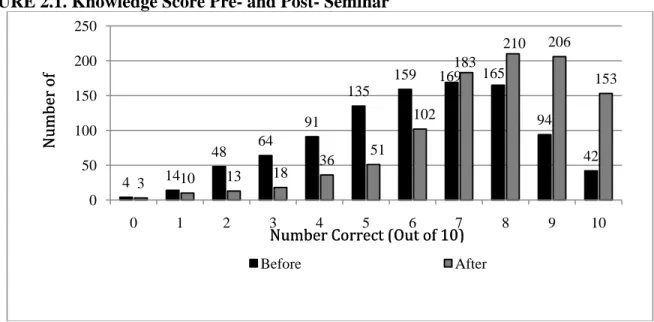
Figure 2.1. Knowledge Score Pre- and Post-Seminar
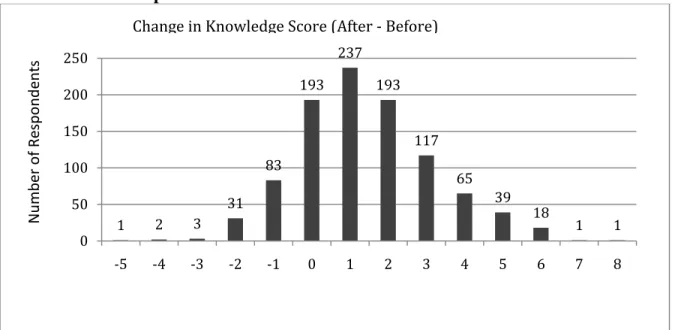
Figure 2.2. Changes in Knowledge Scores Pre- and Post- Seminar Table 2.1. Construction of PARS Dataset
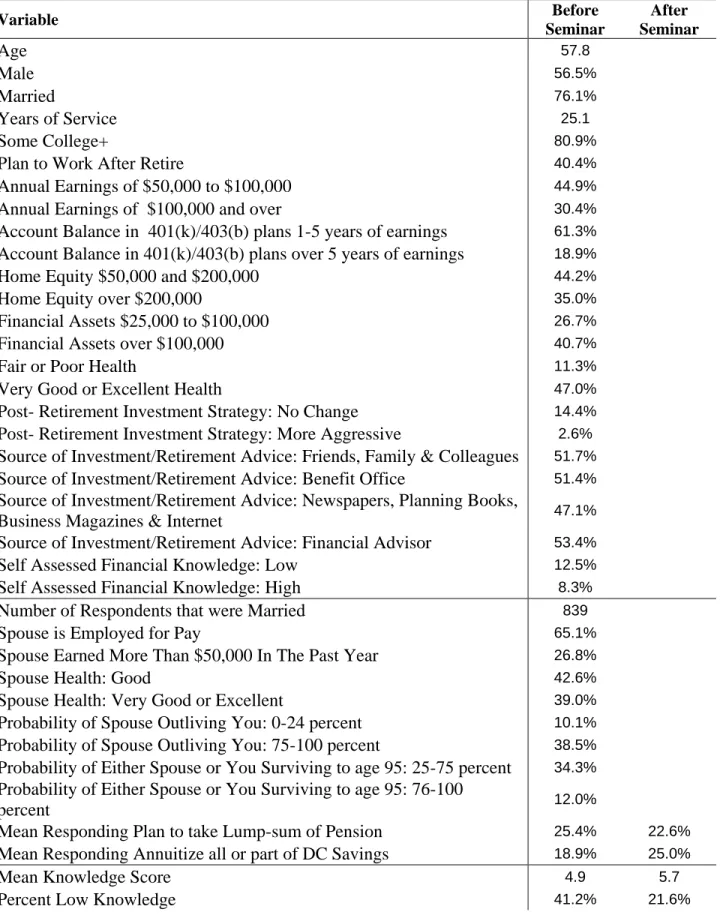
Table 2.2. PARS Data Descriptive Statistics
Table 2.3. Participant Knowledge Before and After the Seminar Table 2.4. Participant Index of Knowledge Pre- and Post-Seminar
Table 2.5. Estimated Coefficients from Knowledge Equation Before and After the Seminar
Table 2.6. Respondents‟ Retirement Plans Pre- and Post-Seminar
Table 2.7. Estimated Coefficients from Planned Age of Retirement Equation Pre- and Post-Seminar
Table 2.8. Estimated Coefficients from Change Planned Age of Retirement Equation Pre- and Post-Seminar
Table 2.9. Demand for Program and Evaluation
Table3.1. Mean Values of Respondent Characteristics
Table 3.2. Disposition Choices by Respondent Characteristics
Table 3.3. Disposition Choices by Spouse Employment Status and Investment Information Source
Table 3.4. Disposition Choices by Health and Subjective Survival Probabilities Table 3.5. Disposition Choices by Wealth, Savings, and Earnings
Table 3.6. Disposition Choices by Investment Strategies and Financial Knowledge Levels Table 3.7. Disposition Choices by Spousal Characteristics
Table 3.8. Disposition Choices for Defined Benefit and Defined Contribution Plans Table 3.8(a). Disposition Choices for Defined Benefit and Defined Contribution Plans by
Knowledge
Table 3.8(b). Disposition Choices for Defined Benefit and Defined Contribution Plans by Information
Table 3.8(c). Disposition Choices for Defined Benefit and Defined Contribution Plans by Economic Indicator Variables
Table 3.8(d). Disposition Choices for Defined Benefit and Defined Contribution Plans by Health Indicator Variables
Table 3.8(e). Disposition Choices for Defined Benefit and Defined Contribution Plan by Spousal Variables
Table 3.9. Changes in Disposition Choices after Attending the Seminar
Figure 3.1. How Learning Affects Plans for Disposition of Employer-Provided Pensions Figure 3.2. How Learning Affects Plans for 401(k) Disposition Choice
Table 4.1. Construction of the PARS3 Dataset For Regressions Table 4.2. Comparison of PARS and PARS3 Samples
Table 4.3. PARS3 Summary Statistics
Table 4.4. Survey Three Knowledge Score Comparison
Table 4.5. Program Evaluation and Selected Retirement Planning Questions From Survey Three
Table 4.6. Comparison of Retirement Plans Reported in Surveys One, Two, and Three
Table 5.1. Mean Values of Respondent Characteristics
Table 5.2. Retirement Expectations and Plans of Respondents Table 5.3. Mean Responses Knowledge Questions
Table 5.4. Average Knowledge Scores by Categories Table 5.5. Knowledge Score Regression
Table 5.6. Mean Planned Age of Retirement by Knowledge of Ages of Eligibility Table 5.7. Planned Retirement Age Regression
Table 5.A1. Response Rate and Sample Creation
Table 5.A2. Percentage Answering Correctly for 14 Knowledge Questions Table 5.A3. Comparison to Nationally Representative Data
1
CHAPTER ONE
Employer-Provided Retirement Planning Programs: Overview of Research
Millions of baby boomers will make the transition from full time work into completeretirement over the next decade. As retirement approaches, these older workers must make a
series of important decisions, some of which will be irreversible. These choices will determine,
in part, their income levels in retirement, the sensitivity of their income to economic fluctuations,
and their ability to maintain consumption through retirement. To make the transition into
retirement successfully, people will need to rely on their financial literacy and knowledge about
retirement programs offered by employers and the government. Without accurate information
and sufficient financial literacy, many may make inappropriate employment and investment
choices that could have significant consequences in their retirement years. Recent work in
economics, finance, and other social science disciplines examines the level of financial literacy
and its role in economic decision-making to determine whether and how individuals can improve
their knowledge base.
This Final Report presents evidence from a unique, three year research project funded by
the FINRA Investor Education Foundation to examine the retirement planning and financial
literacy programs offered by employers to their older employees. The findings from this project
indicate that participants in pre-retirement planning programs can enhance their financial literacy
and increase their knowledge of retirement benefits. The findings also indicate that on the basis
of this new information, many seminar attendees alter their retirement plans. Consequently,
increase their understanding of key retirement concepts, enabling their employees to achieve a
more desirable retirement.
1.1. Retirement Decisions and Knowledge Requirements
When individuals enter the labor force, they must immediately begin making important
choices about their lifetime consumption and saving profiles. Lifecycle theory suggests that
individuals set retirement goals and targets early in their careers. In order to achieve these
retirement goals, workers exhibit saving and investment behavior consistent with their goals. As
new information becomes available, people will re-optimize their consumption and saving
patterns, and they may alter their retirement expectations using this new financial knowledge.
The primary retirement goals that workers must set include their age of retirement and their
savings level, including retirement income. A fundamental principle in retirement planning is
that younger retirement ages and higher retirement incomes require more saving and less
consumption throughout the working life.
While considerable attention has been paid to the undersaving of American workers,
much less attention has been focused on how older workers make decisions concerning the
allocation of their resources as they enter into retirement. Workers must decide when and how to
enter into retirement, and how to best use the resources available to them. Limited available
evidence suggests that older workers do not have sufficient knowledge or the financial literacy
needed to make the many choices that must be made as they transition from work to retirement
(Bernheim 1995, 1998; Hilgert and Hogarth 2002; Lusardi and Mitchell 2006, 2007). Incorrect
or insufficient knowledge can lead to suboptimal choices. For this reason, programs that increase
financial literacy and retirement benefit knowledge can improve retirement decisions and produce better retirement outcomes (Clark and d‟Ambrosio 2003; Clark et al. 2006; Lusardi
3
2008). Pre-retirement planning seminars can efficiently address the numerous questions and
concerns which individuals approaching retirement share, thereby reducing human resources
(HR) costs.
Some of the most important decisions older workers must make are:
When to retire from their career jobs
Whether to take a lump sum distribution from a defined benefit pension plan or to
accept the annuity option
When to claim Social Security benefits
Whether to annuitize all or part of 401(k) and/or 403(b) account balances
How to manage investments in retirement
For workers to make these important choices, they must have an appropriate level of financial literacy, understand financial mathematics, and have accurate knowledge about their employers‟
and national retirement programs. Workers can acquire the needed knowledge to make these key
decisions in various ways, and one resource often available is employer-sponsored pre-retirement
planning programs.
Many large employers offer some type of planning seminar for retirement-eligible
employees. Sabelhaus, Brogdan, and Holden (2008) report that 46 percent of pension
participants covered by defined contribution plans work for companies that provide resources to
assist participants in retirement choices. Thirty percent of participants have the opportunity to
attend employer seminars and workshops, and almost 85 percent of these rely on this information to „some‟ or a „great‟ extent in making their retirement decisions. In a plan sponsor survey, Wray
income planning. While not universal, employer-provided retirement planning programs are
common, accessible to perhaps one-third of the labor force.
Although many believe this type of program is beneficial to employees, relatively little is
known about the effectiveness of these programs in enhancing the knowledge of, and altering the
retirement decisions of, employees. In this research project, the pre-retirement programs of
several large national employers were examined. The principal objective of the research was to assess whether these programs are successful in improving workers‟ knowledge base as they
near retirement. Also studied was whether employees alter their retirement plans on the basis of
this learning. Finally employee views of these programs are explored, including whether they
thought the programs were worthwhile and whether the seminars are seen as a valuable
employee benefit.
The key findings are that participants increase their financial knowledge and in response
to enhanced financial literacy, many alter retirement behavior. Workers appreciate these
programs offered by their employers. Knowledge gained varies with age, sex, income level,
education, tenure, and wealth. Participants also report that they changed retirement plans,
including altering their expected retirement ages, plans to take lump-sum pension payouts, and
when they anticipated claiming Social Security benefits. Employees value these programs and
report that the programs enhance their opinion of their employers.
1.2. Employer Partners
To evaluate employer-provided pre-retirement planning programs, we assembled a team
of nine large employers ranging in size from 8,000 to 40,000 employees. Our employer partners
are Becton, Dickinson, and Company (BD), Branch, Banking, and Trust (BB&T), North
5
Weyerhaeuser, and the Williams Companies. The employee populations of these companies
vary by gender, education, earnings, and geographic location. This section briefly describes each
of the employers, their retirement benefits, and their pre-retirement planning programs for
retirement eligible employees. Table 1.1 summarizes some key information about the retirement
benefits offered by these nine employers.
[Table 1.1]
Becton, Dickinson, and Company (BD). BD is a global medical technology company. According to their website, their focus is on “improving drug delivery, enhancing the diagnosis of infectious diseases and cancers, and advancing drug discovery.”BD develops, manufactures and sells medical supplies, devices, laboratory instruments, antibodies, reagents and diagnostic products through its three segments: BD Medical, BD Diagnostics, and BD Biosciences. It serves healthcare institutions, life science researchers, clinical laboratories, the pharmaceutical industry, and the general public. BD was founded in 1897 and is headquartered in Franklin Lakes, New Jersey. BD employs approximately 28,000 people in approximately 50 countries throughout the
world.
BD converted its traditional defined benefit plan to a cash balance plan in April 2007.
The traditional plan was integrated with Social Security and had a formula of 1 percent per year
of service for earnings up to the average final covered compensation plus 1.5 percent times years
of service times any average excess earnings over the Social Security earnings limit. All
employees hired prior to the conversion date were given a choice to remain in the old plan or
shift to the new plan. This recent pension choice may have stimulated employees to learn more
about their retirement benefits and enhanced financial literacy among BD employees. BD also
offers a Saving Income Plan with a company match that was increased from $0.50 per each
dollar of employee contributions up to 6 percent of salary. Retirees are eligible to participate in
the company health plan provided they are age 55 with 10 years of service or age 65 with 5 years
of service. BD offers a pre-retirement planning program that is presented by the Ayco Company. The typical program is 4 hours long and has on average 20 employees attending per session.
Branch Banking and Trust (BB&T). BB&T is a publically traded company and is the 10th largest financial service corporation in the United States. BB&T is a full service financial
institution with business segments including banking, insurance and investments. The company
was founded in 1872 and is headquartered in Winston-Salem, North Carolina. They have over
30,000 employees and operations in 13 states and Washington D.C.
BB&T offers employees who have completed one year of service (12 consecutive months
in which the employee has completed at least 1,000 hours of service) and have reached age 21
the opportunity to participate in the BB&T Corporation Pension Plan. In addition to the pension
plan, BB&T offers a supplemental savings plan, the BB&T Corporation 401(k) Savings Plan.
BB&T provides a 100% match on the first 6% of compensation contributed to the plan.
Employees are eligible to participate in the plan on the first day of employment but do not
qualify for the match until they complete one year of service and reach age 21.
Currently BB&T requires that managers discuss retirement planning with employees at
annual reviews. They do not have a formal pre-retirement planning seminar, but conducted a
survey of employees in 2008 to gauge interest in such a program. The survey results showed a
strong preference for employer-provided financial education programs and according to Steve
Reeder, Benefits Manager, BB&T will develop and begin offering such a program in the coming
7
North Carolina State University. North Carolina State University (NC State) is a public land grant university with more than 31,000 students and nearly 8,000 faculty and staff. NC State is
located in Raleigh, NC. Faculty and staff of NC State are employees of the state of North Carolina and are eligible to participate in Teachers‟ and State Employees‟ Retirement plan
(TSERS). The benefit formula is 1.82 percent of average salary during the employee‟s four
consecutive highest-paid years of employment times years of service. Faculty members also have
the option of enrolling in an Optional Retirement Plan (a defined contribution plan) instead of
the state plan; however, the seminar was restricted to employees enrolled in TSERS. The
University offers employees several supplemental retirement plans (401(k), 457, and 403(b)
plans) but does not provide any employer match. Retirees are eligible to remain in the state
health plan after retirement without any retiree premium as long as they are receiving a monthly
pension benefit.
Prior to the start of this project, the HR division of NC State offered several short
retirement planning programs; however, an all day program was developed in 2008 for
employees enrolled in the state retirement plan.
Progress Energy. Progress Energy is a Fortune 250 energy company with more than 21,000 megawatts of generation capacity and $9 billion in annual revenues and has over 10,000
employees. The company has a cash balance pension plan that was established in 1998 for all
new employees. Employees hired before the conversion were previously in a traditional defined
plan. The company also offers active employees a 401(k) plan with an employer match, health
insurance, and they allow retirees to remain in the company health plan.
For some years, this employer has provided day-long seminars to its retirement eligible
employees. Company personnel conduct the programs; however, several outside experts and
representatives are used to augment the program. Retirement eligible employees are invited to
attend the program; however, employees can attend a pre-retirement planning program only once
every five years. Each year, the company offers a series of programs at various sites between
July and September. In the summer of 2009, Progress Energy transitioned to providing half-day
seminars, a cost savings measure. The program content was shortened by eliminating outside
presenters, including Fidelity (the 401k provider) and the Social Security representative.
State Farm. State Farm is a large insurance company which insures more cars than any other insurer in North America and insures more homes than any other insurer in the United States.
State Farm also provides a wide array of financial products and services. State Farm employs
more than 17,000 agents and 68,000 employees in the United States and Canada.
State Farm provides regular pre-retirement planning programs to retirement eligible
employees across the country, with each region being organized at a local level. The programs
are conducted by Ernst and Young. Beginning in March 2009, State Farm used the survey
evaluation method in a sample of their programs in two geographical regions. However,
participation was low with only 88 surveys completed. Although we were not able to obtain a
count of the total number of seminar attendees receiving invitations to the survey, we
approximate the response rate was below 1% and therefore do not include these data in our
9
University of Washington. Founded in 1861, the University of Washington is one of the oldest state-supported institutions of higher education on the West Coast. The University has campuses
at Bothell, Tacoma, and Seattle and has over 30,000 employees.
The retirement plan the individual is enrolled in depends upon his job classification.
Contract classified and classified non-union employees participate in the Public Employees
Retirement System (PERS) Plan. Faculty and professional staff participate in the University of
Washington Retirement Plan (UWRP). The PERS plan has been amended over time and
currently includes three different plans, two of which continue to be open for enrollment. PERS
1 and PERS 2 require employee contributions of 6% and 3.9% of gross pay respectively and the
employee receives a pension payment which is based on years of service and final average
compensation. PERS 3 is a hybrid which combines a defined benefit account with an investment
savings account.
The UWRP plan requires employees under age 35 to contribute 5% of income while
employees over 35 are required to contribute 7.5 percent of income (employees 50 and older
have the option of increasing their contribution amount to a total of 10% of income). The
University matches 100 percent of contributions made in this plan. Enrollment is mandatory
after two years of employment. The University also has a defined benefit aspect of its savings
plan, which acts as a safety net and only pays out if the employee‟s primary savings plan, the
UWRP, fails to a reach a minimum balance. The required minimum and benefit amount due to
the employee if the minimum is not reached is determined by a complex calculation performed at the time of the employee‟s departure. Plan documents state that approximately 5% of employees
employees the option of participating in a supplemental savings plan, for which there is no
employer match. Retirees are eligible for employer sponsored health insurance.
The University of Washington does offer a limited number of seminars, but during the
time frame studied we were only able to collect a total of 22 surveys from participants. Due to
the low participation, we have chosen not to incorporate this data into our final analysis.
WakeMed. WakeMed is an 804-bed private, not-for-profit health care system based in Raleigh, NC. WakeMed employs over 7,000 workers including medical professionals, registered nurses,
medical staff, and support staff. WakeMed provides a pension to all workers age 55 and older
with at least three years of service, as long as the worker has worked the equivalent of full-time
during those three years. The pension plan allows for either a full lump sum or an annuity, with
no partial lump sum option. Retiree medical insurance is only available through COBRA for 18
months following retirement. WakeMed does allow employees to work after retirement, but
only with a break in service.
Currently, WakeMed has contracted with AIG to provide seminars lasting 75 minutes for
their employees nearing retirement. These programs focus primarily on the pension and 403 (b)
plans offered by WakeMed. Although we did distribute surveys at these short seminars,
participants were asked to mail them back and less than 10 in total we received. We did not
incorporate these data into our analysis. Because of the limited nature of these programs,
WakeMed was interested in learning more about the preferences of their employees for more
extensive programs. We sent a survey to approximately 7,700 workers, of which 2,088 were
born between 1943 and 1959 (ages 49-65), which became part of the REXS data described
11
Weyerhaeuser. Weyerhaeuser is one of the world's largest forest products companies. They have offices or operations in 13 countries and have customers worldwide. As of December 31,
2007, Weyerhaeuser had 37,900 employees, primarily in the United States and Canada. They
employ a variety of workers, from scientists, engineers, architects and financial specialists to
forestry, trade and craft workers. Weyerhaeuser offers a defined benefit pension plan that is
integrated with Social Security. The benefit formula is 1.1 percent times final average salary time
years of service plus 0.45 percent times excess earnings over the Social Security integration level
times years of service. Weyerhaeuser also offers retirees the opportunity to remain in the
company medical plan. The company offers a 401(k) plan with a $0.70 company match for each
dollar of employee contributions up to 7 percent of salary. Weyerhaeuser has offered a
pre-retirement planning program for a number of years. The company offers two and a half day
programs that are conducted by Weyerhaeuser personnel with outside experts used to
complement the program. Programs were offered approximately monthly.
Towards the end of 2009, Weyerhaeuser experienced significant lay-offs and cut-backs,
including eliminating the position of the person who ran these seminars. Although one year
follow-ups to the seminar were still conducted, we worked closely with a remaining staff
member to make sure surveys were not sent to individuals that had been laid off or fired since
attending the seminar.
The Williams Companies Inc. Williams is an integrated natural gas company that produces, gathers, processes and transports natural gas to heat homes and power electric generation across
the country. The company operates approximately 14,600 miles of interstate natural gas pipeline
30 million homes on a winter day and delivers approximately 12 percent of the natural gas
consumed in United States.
Williams offers a cash balance pension plan to its employees with company credits as a
percentage of compensation rising with age. Company contributions are greater on pay
exceeding the Social Security taxable wage base. As such, the account balances are reported in a
lump sum and not as a monthly benefit. Employees are eligible to participate in the Williams
Investment Plus Plan, a 401(k) plan, and Williams matches employee contributions dollar for
dollar up to six percent of salary. Retirees are eligible to remain in the company health plan.
Prior to the start of this project, Williams did not offer a formal pre-retirement planning
program. To assess the desire of their employees for such a program, Williams allowed us to
survey all of their retirement eligible population. There was overwhelming support from their
employees for a more comprehensive program. As a result, the HR staff developed a day-long
program and their first seminars were offered in November and December 2008. These
programs were advertised to all workers age 50 and older, to encourage large attendance.
1.3. REXS Data
The Retirement Expectations Survey (REXS) was constructed from survey responses of
employees at three of our employer-partners, BB&T, WakeMed, and Williams. Each of these
employers did not currently have a formal pre-retirement program at the time of the survey,
although WakeMed did have hour-long lunch seminars offered to all employees. All three
employers were interested in assessing the desire of workers for a more formal program.
The surveys were conducted during 2008 and 2009 via an online survey tool. Each
13
slightly between the three employers. The survey was divided into five parts: demographic and
economic characteristics of the employee, demographic and economic characteristics of the employee‟s spouse or partner, retirement plans of the worker and his/her spouse or partner,
knowledge questions, and the desire for financial education programs. The income and wealth
questions allowed the respondent to select dollar ranges rather than force them to give a specific
dollar amount. The survey contained a series of questions that tested the knowledge of the
respondent concerning the characteristics and generosity of their employer retirement programs,
Social Security, Medicare, and financial markets. The surveys were sent to all retirement
eligible employees via e-mail and they responded using an electronic survey. The responses
were completely confidential with neither the company nor the researchers able to identify the
respondents. Chapter 5 provides a detailed discussion of the REXS data and discusses findings
that highlight the importance of financial knowledge and literacy in the formulation of retirement
plans.
[Table 1.2]
1.4. PARS Data
The Participants Attending Retirement Seminars (PARS) data were constructed from
survey responses of individuals that attended a pre-retirement planning seminar offered at five of
our employer-partners. We examined the impact of pre-retirement planning programs offered by
these employers to their older employees between June 2008 and December 2009.
Typically, employers follow the same process to invite retirement-eligible employees to
participate in the programs. First, invitations are issued, then attendance is tracked and usually,
attendance rates are quite high. These programs are ongoing and the employers expect that over a
participants in the programs we observe should roughly reflect the population of older workers at
these employers on average. The financial education literature has focused in-depth on possible
selection issues associated with participation in various types of educational events. Attendance
in these programs is limited to workers with certain characteristics suggesting that one might
overstate the impact of financial education seminars if one only focuses on those who voluntarily
attend. This is exacerbated by the fact that few, if any, records of attendance are kept. By
contrast, the programs we examine are more structured; while attendance is voluntary,
employees receive specific invitations from their employers and attendance is recorded. Given
that most eligible employees attend one of these company-provided programs once they become
retirement-eligible, the selection bias should be considerably less in our study.1 Nevertheless, we only observe seminars offered between June 2008 and December 2009, thus, we do not monitor
these programs over an extended period. For this reason, it is possible that these programs may
have attracted a non-representative sample of the workforce during the 18 months of our project.
The leaders of the various employer-provided programs did not report any obvious selection bias
among the participants during the study period. Instead, they believe that most workers invited
to participate actually attend the programs and over time, all retirement eligible workers are
invited to attend one of these programs.
We worked with employers in the spring of 2008 to develop an evaluation process for
their pre-retirement planning programs. Our methodology included the development of two
surveys. Templates of these surveys are included in Chapter 6 of this report. The first survey
was to be completed by each participant prior to the start of the program. The objective was to
1
The programs offered by Weyerhaeuser, Progress Energy, and BD have been presented over a number of years. In contrast, the programs by North Carolina State and Williams are relatively new and thus a full
15
obtain baseline socioeconomic data about the individual and his/her household, as well as
information concerning retirement plans and investment strategies. Employees also completed
questions about their financial literacy and their knowledge of employer and national retirement
programs. Two financial literacy questions similar to those developed by Lusardi and Mitchell
(2006) for the Health and Retirement Study were included along with a series of knowledge
questions about Social Security, Medicare, and the characteristics of company retirement plans.
At the conclusion of the seminar, participants were asked to complete a second survey.
This time, participants answered questions concerning the program, the employee‟s assessment
of the seminar, and its value. The knowledge and literacy questions were repeated, to see if the participants‟ overall knowledge of retirement programs and financial markets had improved.
Seminar participants were also asked if they had changed any of their important retirement
related decisions. Approximately one year later, we sent a third survey to each of the
participants. The objective of this final survey was to determine the level of knowledge
retention, how retirement plans have changed, and how participants rated the programs in
retrospect. Chapter 4 discusses the findings from Survey 3.
Some of the employers used hard-copy surveys (BD, Progress Energy, and
Weyerhaeuser). The program leaders at each of these companies extended the length of their
programs to allow participants 15 to 20 minutes prior to the start of the seminar to complete
Survey One and similar time at the end of the program to complete Survey Two. Other
employers (North Carolina State University and Williams) used electronic surveys; in this case, a
link to the electronic Survey One was sent via email to participants about a week prior to the
seminar and a link to Survey Two was e-mailed to the participants immediately following the
described in this final report is based on surveys from 85 seminars that incorporated our surveys
into their programs between June 2008 and December 2009.
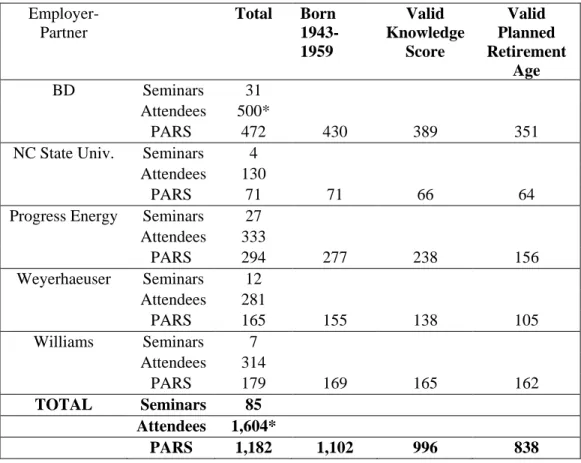
Table 1.3 shows the development of PARS by each employer. Seminars varied in size
and duration across the employers. During the research period, BD held 31 seminars with
approximately 500 attendees. The BD seminars were 4 hours long. Weyerhaeuser had 12
seminars that were two and half days in duration and covered 281 employees. Williams and NC
State University both had all day seminars. In 2008, the Progress Energy seminars were one day
but in 2009 the seminars had been reduced to a half-day. Thus, we were able to develop a
unique data set that included seminars ranging in length from one half day to two and half days,
seminars that took place before and during a significant economic decline and some in the early
stages of the economic recovery.
[Table 1.3]
Over the 18 months, over 1,500 individuals attended the seminars of these five
employers. We received completed responses from 1,181 for a high total response rate of 75
percent. In most of the analysis, we restrict the sample to participants born between 1943 and
1959, thus participants were approximately age 50 to 65 at the time of the seminars.2
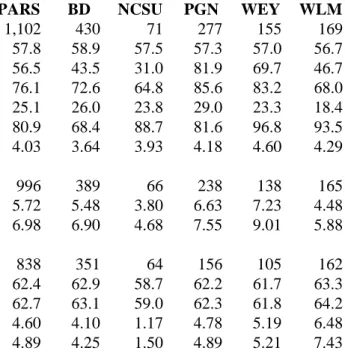
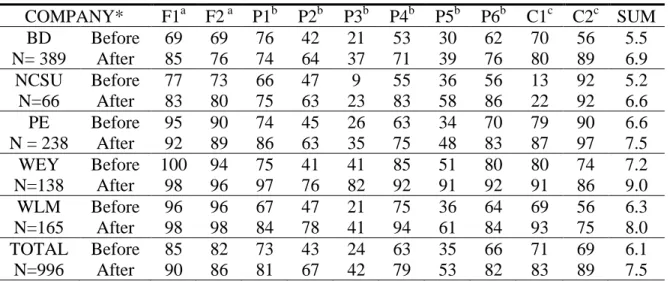
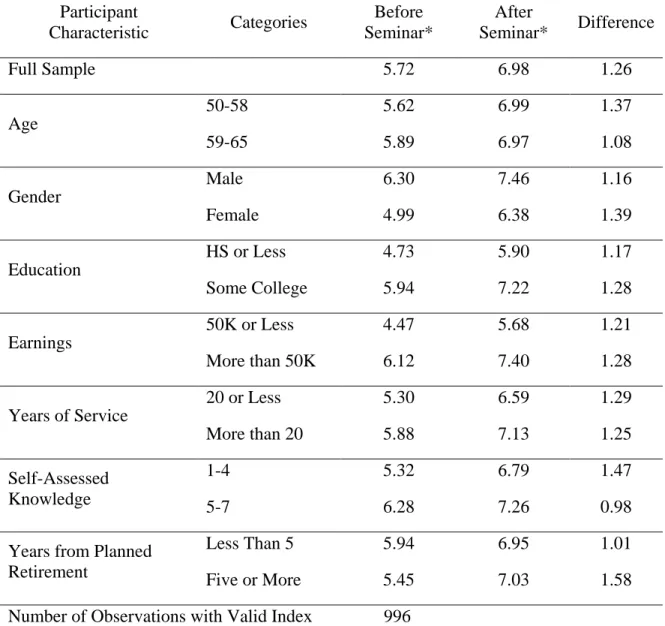
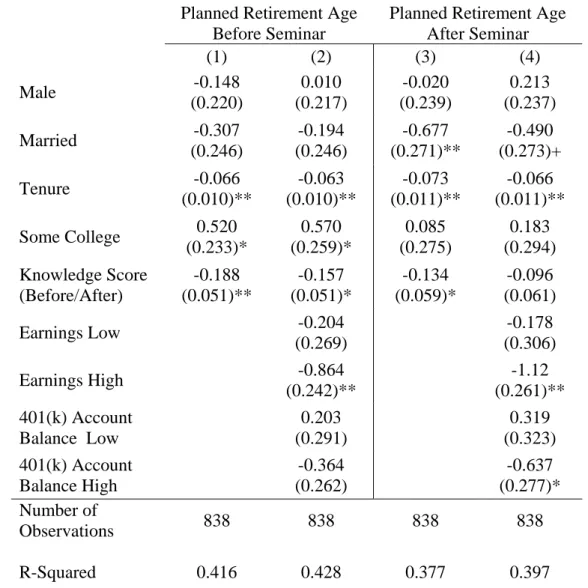
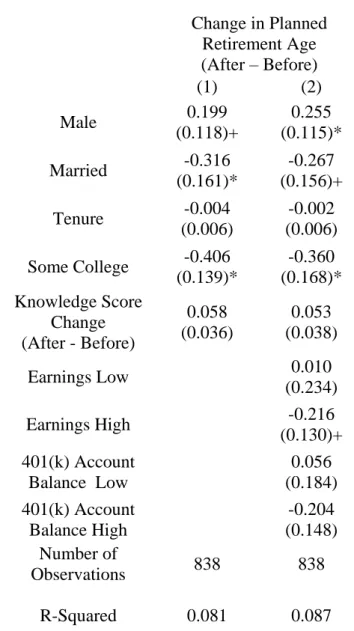
Table 1.4 displays a summary of the PARS data. The main results show an increase in
the average knowledge score and an increase in the average expected retirement age upon
2
The age-50 restriction was applied to limit the sample to individuals approaching retirement decisions. Most of the employers only invite retirement eligible employees to these programs so, in fact, this results in only a few seminar participants being deleted from the sample. The upper age limit was applied to limit the sample to those who had not yet attained the normal retirement age for Social Security. In addition, we felt that workers over age 65 had already made the decision to delay retirement and that they would most likely have very different responses to these programs than workers age 50 to 65.
17
completing the program. The decrease in observations for knowledge score and retirement age
are due to incomplete surveys and invalid responses, as detailed in the table.
[Table 1.4]
The other chapters, particularly chapter 2, will examine the PARS data in much more
detail. Our analysis highlights four important issues concerning the effectiveness of these
programs. First, we determine whether these employees improved their basic understanding of
employer retirement programs, Social Security, and Medicare. Second, we determine whether
individuals altered their retirement plans, on the basis of the program. Third, we examine how
the participants evaluated the program. Fourth, we examine certain specific responses of
individuals concerning the use of their retirement wealth.
1.5 Outline of Final Report
The following chapters present the results of the research from this project. The three
data sets are described in more detail and the results of a series of empirical analyses are
presented. The chapters have been written so they can be read individually as stand-alone
papers, thus each chapter describes the data used in the analysis and summaries the key findings.
Chapter 2 examines the change in financial knowledge immediately before and after attendance
in a retirement planning seminar. Using data from PARS, the investigators find substantial
increases in worker knowledge and that on the basis of the enhanced financial literacy, workers
modified their retirement plans. This chapters show that workplace financial education can be
effective in increasing knowledge and that workers considered such programs a valuable
employee benefit.
Chapter 3 employees the PARS data to examine distributions from defined benefit
are asked whether they plan to accept an annuity or take a lump sum distribution from their
employer retirement plans. Once again, the evidence indicates that new knowledge leads to a
revision of retirement plans. Chapter 4 utilizes PARS3 to examine worker plans and attitudes
one year after the retirement seminar. Employees show that they have retained much of the
knowledge they learned in the retirement planning program indicating a long term benefit from
these educational events.
In Chapter 5, the REXS data are used to show the desire of older employees for employer
planning programs. Based on the strong revealed preference for such a program, one of these
employers immediately moved ahead and developed such a program and another is now in the
process of establishing a retirement planning programs for older workers. Analysis of the REXS
data revealed an interesting link between types of knowledge errors and retirement plans.
Finally, Chapter 6 contains an employer template that can be used to determine the desire of
employees for retirement planning programs when none exist and a separate template that will
aide employers who have already established programs to more effectively evaluate their
19 TABLE 1.1. Company-Specific Knowledge Questions
Employer-Partner
Lump-Sum of
Pension Health Plan
Phased
Retirement Pension Adjustments
BD Yes Yes No A. Stay the same
BB&T Yes Yes No A. Stay the same
NCSU Yes Yes No B. Increase by Inflation
Progress Energy Yes Yes N/A N/A
State Farm No Yes Yes A. Stay the same
Univ. Washington Yes Yes Yes A. Stay the same
WakeMed Yes No Yes A. Stay the same
Williams Yes Yes Yes A. Stay the same
Weyerhaeuser Yes Yes No A. Stay the same
Lump-Sum of Pension Can you take a lump sum distribution of some or all of your pension plan (do not include income for your 401(k) account)?
Health Plan Does your company offer you the opportunity to stay in the company health plan after you retire?
Phased Retirement Does your company offer any type of phased retirement, flexible work options, or the opportunity to work part-time after you retire?
Pension Adjustments The monthly pension benefit that you will receive from your current employer will:
stay the same for the rest of your life
be increased annually by the rate of inflation
be increased annually by the same rate as wages for active workers don‟t know
TABLE 1.2. Response Rate and Sample Creation REXS
BB&T WakeMed Williams
Criteria for Receiving Survey
All employees about age 55 with at least
10 years of service (the criteria for
retirement). Anyone without email access was
excluded.
All employees were sent the survey. We restricted the sample to individuals born
1943-1959.
Active employees age 50 or older.
Employees Sent Survey 2,475 approximately 7700,
2088 age 49-65 1,592 Completed a Portion of Survey 605 (Response Rate: 24%) 487 Total (6%) 237 Age 49-65 (11%) 952 (Response Rate: 60%) Born 1943-1959 572 237 915 Full Demographic Information 564 233 904 Valid Expected Retirement Age 499 187 486
21 TABLE 1.3. Construction of PARS Dataset
Employer-Partner Project Total Selected Sample Knowledge Score Retirement Age BD Seminars 31 Attendees 525 PARS 472 430 389 351
NC State Univ. Seminars 4 Attendees 151
PARS 71 71 66 64
Progress Energy Seminars 27 Attendees 333 PARS 295 277 238 156 Weyerhaeuser Seminars 12 Attendees 281 PARS 165 155 138 105 Williams Seminars 7 Attendees 314 PARS 179 169 165 162 TOTAL Seminars 85 Attendees 1,604 PARS 1,182 1,102 996 838 *Selected Sample
-Number of observations after dropping for valid age range, tenure and college responses. -2 observations lost because of invalid or missing gender responses
*Knowledge Score
-106 observations dropped because of 5 or more unanswered knowledge score questions on either the first or the last survey.
*Retirement Age
-Not all respondents gave answers for their planned retirement ages before and/or after the seminar. Also, some gave responses that were less than their current age. Respondents without a valid knowledge score were dropped. Combined, 264 observations were dropped for the expected retirement age regressions.
TABLE 1.4. Employer Means in PARS
PARS BD NCSU PGN WEY WLM
Number of Observations 1,102 430 71 277 155 169
Age 57.8 58.9 57.5 57.3 57.0 56.7
Percentage Male 56.5 43.5 31.0 81.9 69.7 46.7
Percentage Married 76.1 72.6 64.8 85.6 83.2 68.0
Years of Service 25.1 26.0 23.8 29.0 23.3 18.4
Percentage attending College 80.9 68.4 88.7 81.6 96.8 93.5 Self-Assessed Knowledge Score (1-7) 4.03 3.64 3.93 4.18 4.60 4.29
Number with Valid Knowledge Score 996 389 66 238 138 165 Knowledge Score Before (Survey 1) 5.72 5.48 3.80 6.63 7.23 4.48 Knowledge Score After (Survey 2) 6.98 6.90 4.68 7.55 9.01 5.88
Number with a Valid Planned Retirement Age 838 351 64 156 105 162 Planned Retirement Age Before (Survey 1) 62.4 62.9 58.7 62.2 61.7 63.3 Planned Retirement Age After (Survey 2) 62.7 63.1 59.0 62.3 61.8 64.2 Years from Retirement Before (Survey 1) 4.60 4.10 1.17 4.78 5.19 6.48 Years from Retirement After (Survey 2) 4.89 4.25 1.50 4.89 5.21 7.43
Notes:
-Valid knowledge score composed of participants that left no more than 5 questions blank.
-Valid planned retirement age accounts for people who filled in a planned retirement age in both Survey 1 and 2, the age was at least as much as their current age, and they had a valid knowledge score.
23
CHAPTER TWO
Can Employer-Provided Pre-Retirement Planning Seminars Increase
Financial Literacy and Retirement Preparedness?
As retirement approaches, older workers face a series of important decisions, some of
which will be irreversible. These choices will determine, in part, their income levels in
retirement, the sensitivity of their income to economic fluctuations, and their ability to maintain
consumption through retirement. To make the transition into retirement successfully, workers
must utilize their financial literacy and knowledge about retirement programs offered by
employers and the government. Without accurate information and sufficient financial literacy,
many older workers may make suboptimal employment and investment choices that will have
adverse consequences that reduce their lifetime utility. Most lifecycle models of economic
behavior assume that individuals have basic financial literacy and make resource allocation
decisions to develop saving/consumption plans along with work/retirement choices to maximize
lifetime utility.
Economists and other social science researchers have recently examined the level of
financial literacy and its role in economic decision-making. The general conclusion of this
research is that individuals have rather low levels of financial literacy and as such are likely to
make sub-optimal resource allocation decisions. A few studies have also attempted to determine
whether and how individuals can improve their knowledge base and thus increase the likelihood
that they will maximize lifetime utility. In this Chapter, we examine the retirement planning
programs offered by employers to their older employees and assess their impact on financial
increase their financial literacy and on the basis of this new information, many alter their
retirement plans. Consequently, employers can facilitate the transition into retirement by
providing the means for workers to increase their understanding of key retirement concepts,
enabling their employees to achieve a more desirable retirement. Employers have a stake in
achieving an orderly retirement process for their workers and having employees understand the
value of benefits that are part of their compensation package.
Financial literacy programs can take many forms and can occur in many different
settings. This study focuses on financial education and retirement planning programs in the
workplace. Since individuals spend substantial time at work and since much of what they need
to know to develop retirement plans is related to employer-provided benefits, the workplace
seems like an ideal setting for financial education programs. The programs that we have studied
are provided by the employer at no cost to the employee and are conducted during the workday
on company time. Among the programs we have examined, employees appreciate these
programs, are enthusiastic about attending, increase their financial literacy, and on the basis of
new knowledge many alter their retirement plans as predicted by economic theory.
2.1. Financial Literacy and Retirement Decisions
When individuals enter the labor force, they must immediately begin making important
choices about their lifetime consumption and saving profiles. Lifecycle theory suggests that
individuals set retirement goals and targets early in their careers. In order to achieve these
retirement goals, workers select saving and investment behavior consistent with their goals. As
new information becomes available, people will re-optimize their consumption and saving
patterns, and they may alter their retirement expectations using this new knowledge. The primary
25
income. A fundamental principle in retirement planning is that younger retirement ages and higher retirement incomes require more saving and less consumption throughout one‟s working
life. Younger retirement ages may require more risk-taking as well.
While considerable attention has been paid to the undersaving of American workers,
much less attention has been focused on how older workers make decisions concerning the
allocation of their resources as they enter into retirement. Workers must decide when and how to
enter into retirement, and how to best use the resources available to them. Limited available
evidence suggests that older workers do not have sufficient financial literacy needed to make the
many choices that must be made as they transition from work to retirement (Bernheim 1995,
1998; Hilgert and Hogarth 2002; Lusardi and Mitchell 2006, 2007). Incorrect or insufficient
knowledge can lead to suboptimal choices. For this reason, programs that increase financial
literacy and retirement program knowledge can improve retirement decisions and produce better retirement outcomes (Clark and d‟Ambrosio 2003; Clark et al. 2006; Lusardi 2008).
Pre-retirement planning seminars held in the workplace can efficiently address the numerous
questions that individuals approaching retirement share, thereby reducing human resources costs.
Some of the most important decisions older workers must make are:
1. What age should they retire from their career jobs?
2. When retiring from a career job, should they request a lump sum distribution from their
defined benefit plan or accept a life annuity from the plan?
3. What is the best age for the individual to start receiving Social Security benefits?
4. Should the account balances in 401(k) plans be annuitized or managed by individuals in
In making these important decisions, individuals must rely on their own financial literacy and understanding of financial mathematics, and have accurate knowledge about their employers‟
and national retirement programs. Workers can acquire the needed knowledge to make these key
decisions in various ways and one resource often available is employer-sponsored pre-retirement
planning programs.
Many large employers offer some type of planning seminar for retirement eligible
employees. Although many business leaders and analysts believe these programs are beneficial
to employees and increase their financial knowledge, relatively little formal analysis of employer
programs has been conducted. Thus, not much is known about the effectiveness of workplace
education and its ability to alter the retirement decisions of employees. To address these
important issues, we examined the pre-retirement programs of five large national employers.
The principle objective of the research is to assess whether these programs are successful in improving workers‟ knowledge as they approach retirement. We also examine whether, on the
basis of participating in a workplace educational event, employees alter their retirement plans.
Finally, we explore employee views of these programs, including whether they thought the
programs are worthwhile and whether the seminars are seen as a valuable employee benefit.
Our analysis confirms that participants believe that these programs increased their
financial knowledge and in response to enhanced financial literacy, many alter their retirement
plans. We also find that workers appreciate these programs offered by their employers.
Knowledge gained varies with age, sex, income level, education, tenure, and wealth. Participants
also reported changing retirement plans, including altering their expected retirement ages, plans
27
Employees value these programs and report that the programs enhance their opinion of their
employers.
2.2. Research Methodology
To evaluate employer-provided pre-retirement planning programs, we assembled a team
of five large employers ranging in size from 8,000 to 40,000 employees. Our employer partners
are Becton, Dickinson, and Company (BD), North Carolina State University (NCSU), Progress
Energy, Weyerhaeuser, and the Williams Companies. Four of the firms have sites throughout the
United States; their home offices are in New Jersey, North Carolina, Oklahoma, and
Washington. Each of the employers offers defined benefit plans (three employers have cash
balance plans), each offers health insurance to active and retired workers, and each offers
supplemental defined contribution plans (all but NCSU have an employer match). The employee
populations of these companies vary by gender, education, earnings, and geographic location.
We examine the impact of pre-retirement planning programs offered by these employers
to their older employees between June 2008 and December 2009. The usual process followed by
the employers is that retirement-eligible employees are invited individually to participate in these
programs by their employer: invitations are issued, attendance is tracked, and there are high
participation rates. The firms track attendance and because of the high demand by employees to
participate in the programs, several employers limit participation to once every five years or so.
These programs are on-going and the employers expect that over a number of years, most
eligible employees will attend one of these programs. Thus, the participants in the programs we
observe should roughly reflect the population of older workers at these employers on average.
The financial education literature has focused on possible selection issues associated with
characteristics might attend these programs. Thus, attendance only by persons who desired to
participate could suggest that statistical analysis might overstate the impact of financial
education seminars. Therefore, analysis of programs where attendance is voluntary and only a
small portion of the population participates could yield biased results. In contrast to past studies
of voluntary seminars or benefit fairs, the programs we examine are more structured. While
attendance is voluntary, employees receive specific invitations from their employers and
attendance is recorded. Most employees attend one of these company provided programs once
they become retirement-eligible. As a result, the selection bias should be considerably less in
our study.3 Nevertheless, we only observed seminars offered between June 2008 and December 2009, thus, we do not monitor these programs over an extended period. For this reason, it is
possible that these programs may have attracted a non-representative sample of the workforce
during the 18 months of our project. The leaders of the various employer-provided programs did
not report any obvious selection bias among the participants during the study period. Instead,
they believed that most workers invited to participate actually attended the programs and over
time all retirement eligible workers were invited to attend one of these programs.
We worked with each employer in the spring of 2008 to develop an evaluation process
for their pre-retirement planning programs. Our methodology included the development of two
surveys. The first survey was to be completed by each participant prior to the start of the
program. The objective was to obtain baseline socioeconomic data about the individual and
his/her household, as well as information concerning retirement plans and investment strategies.
Employees also answered questions about their financial literacy and their knowledge of
employer and national retirement programs. Two financial literacy questions similar to those
3
29
developed by Lusardi and Mitchell (2006) for the Health and Retirement Study were included
along with a series of knowledge questions about Social Security, Medicare, and the
characteristics of company retirement plans.
At the conclusion of the seminar, participants were asked to complete a second survey. This time, participants answered additional questions concerning the program, the employee‟s
assessment of the seminar, and its value. The knowledge and literacy questions were repeated, to see if the participants‟ overall knowledge of retirement programs and financial markets had
improved. Seminar participants were also again asked about their retirement plans, so we can
observe any changes in plans that individuals made due to the seminar. Approximately one year
later, we sent a third survey to each of the participants. The objective of this final survey was to
determine the level of knowledge retention, how retirement plans have changed, the impact of
changing economic events, and how participants rated the programs in retrospect.
Three of the employers used hard-copy surveys (BD, Progress Energy, and
Weyerhaeuser). The program leaders at each of these companies extended the length of their
programs to allow participants 15 to 20 minutes prior to the start of the seminar to complete
Survey One and similar time at the end of the program to complete Survey Two. The other two
employers (North Carolina State University and Williams) used electronic surveys; in this case, a
link to the electronic Survey One was sent via email to participants about a week prior to the
seminar and a link to Survey Two was e-mailed to the participants immediately following the
seminar. Attendees were given approximately two weeks to complete Survey Two. This
research is based on participant surveys from 85 seminars that incorporated our surveys into their
one year after their seminars, thus the surveys were sent between June 2009 and December 2010.
Survey Three was entirely electronic.
We merged the responses from the five employers into a single data set which we call
Participants Attending Retirement Seminars or PARS. Table 2.1 shows the development of
PARS by each employer. Seminars varied in size and duration across the employers. During the
research period, BD held 31 seminars with approximately 500 attendees. The BD seminars were
4 hours long. Weyerhaeuser had 12 seminars that were two and half days in duration and
covered 281 employees. Williams and NC State University both had all day seminars. In 2008,
the Progress Energy seminars were one day but in 2009 the seminars were reduced to a half day.
Thus, we were able to develop a unique data set that included seminars ranging in length from
one half day to two and half days, seminars that took place during a significant economic decline
and some in the early stages of the economic recovery. During the 18 month data collection
period, over 1,500 individuals attended the seminars of these five employers. We received
completed responses from 1,182 for a response rate of 74 percent. In most of the analysis, we
restrict the sample to participants born between 1943 and 1959, thus participants were
approximately age 50 to 65 at the time of the seminars.4 [Table 2.1]
Our analysis highlights four important issues concerning the effectiveness of these
programs. First, we determine whether these employees improved their financial literacy and
their basic understanding of employer retirement programs, Social Security, and Medicare.
4
The age-50 restriction was applied to limit the sample to individuals approaching retirement decisions. Most of the employers only invite retirement eligible employees to these programs so, in fact, this results in only a few seminar participants being deleted from the sample. The upper age limit was applied to limit the sample to those who had not yet attained the normal retirement age for Social Security. In addition,
31
Second, we determine whether individuals altered their retirement plans after participating in the
seminars. Third, we examine how the participants evaluated the program. Fourth, we examine
certain specific responses of individuals concerning the use of their retirement wealth.
2.3. Survey Design
The basic framework of each of the surveys was similar across the firms; however, some
components of the surveys were customized for each employer. The surveys mentioned the
specific employer by name, where appropriate, and people were asked about their own
employer-specific retirement benefits by name. Questions concerning retirement saving accounts
differed somewhat between private-sector versus public/ nonprofit employers (i.e., questions
concerned 401(k) plans in the private sector and 403(b) and 457 plans in the public sector). In
addition, several employers requested that specific questions be added to the survey to help them
better understand how their employees were using the human resource programs and accessing
the help lines offered by their 401(k) and 403(b) providers.
The objectives of Survey One were to determine employee understanding levels regarding their employer‟s pension and health benefits, their knowledge of national retirement
plans such as Social Security and Medicare, their financial literacy, and their current retirement
plans. To assess the current level of knowledge regarding national retirement plans, the survey
asked about Social Security early and normal retirement ages as well as early retirement
penalties, cost of living increases, and the age of eligibility for Medicare. In addition, participants
were asked benefit and eligibility questions concerning their employer defined benefit plans and
their own 401(k) or 403(b) accounts.
This survey also included several questions related to basic financial literacy. Survey One