Volume I, Issue II, June - 2014
Soft Clay Stabilization Using Electro Kinetic Process
A.ARUTSELVAM, Ph.D. Scholar, Techno Global University,
Mail ID: [email protected]
Abstract— The application of chemical ground improvement using the electro kinetic stabilization (EKS) method
has the potential to overcome problems soft highly compressibility soil. This technique has the potential to enhance
the strength and reduce compressibility of a wide range of soils. The aim of this study was to evaluate the use of EKS
as an effective method to strengthen soft clay soils. A detailed laboratory programme of work was conducted using
the initial base model developed by Liaki (2006). This study was conducted in two stages using laboratory scale
models, using inactive kaolinite clay. The test model using reusable Electro kinetic Geosythentics (EKG) developed
at the Newcastle University to apply a constant voltage gradient of 50 V/m across a soil sample approximately 400 mm.
The first stage involved testing of a ‘pure’ system with distilled water as the main pore electrolyte fluid supplied under
zero hydraulic gradient conditions for periods of 3, 7 and 14 days. The second stage repeated test using calcium chloride
and distilled water (CaCl-DW), DW and sodium silicate (DW-NaSiO) and CaCl-NaSiO, at the anode and cathode,
respectively. Throughout both physical and chemical characteristics were measured. This enabled assessment of the
design and configuration that could be used in the field together with a number of key limitations..
Index Terms— distilled water, kaolinite clay, compressibility soil, Electro kinetic Geosythentics, compressibility.
I. INTRODUCTION
An increasing proportion of building development takes place in areas of poor ground and this poses challenges for the geotechnical engineers to provide satisfactory foundation performance at low cost. Construction, buildings and infrastructure founded on soft clays are often affected by stability and settlement problems. A proportion of the final settlement can be achieved prior to construction by preloading the soil but this often takes 6 - 9months or more to achieve (Charles & Watts, 2002). The larger the preload, the less time it will take to achieve the final settlement, however great care is needed not to cause premature failure of the ground. Pre consolidation may be a cost-effective way of reducing the settlement due to lightly distributed loads from roads or residential buildings provided that material for providing load is readily available and accessible for treatment. Where neither material nor time are available, there are many other methods of ground improvement that have been implemented in the field including preloading with installation of vertical drains, and chemical stabilization as surface and deep soil treatment techniques.
Chemical stabilization of clay soils using calcium-based stabilizers, such as lime and cement has been practiced routinely over the many decades. Its overall benefits include an increase in soil strength, stiffness and durability, and a reduction in soil Plasticity and swelling or shrinkage potential. However,
frequently these methods are not suitable to stabilize a soil under an existing structure which may be settling. There are a few options for stabilization of fine grained soils under these circumstances such as soil freezing, hydro fracture grouting and electro osmotic consolidation (Alshawabkeh &Sheahan, 2003). All these methods have been shown to result in measurable ground movements that are potentially damaging to adjacent and overlying structures. Previous studies (Rogers et al., 2003.
The mechanism of water movement by electro osmosis was studied as early as 1809 by Reuss and 1879 by Helmholtz (Mitchell & Soga, 2005). The first analyses and application of electro osmosis dewatering technique of clay soils in geotechnical engineering were attributed to Casagrande in 1939 (Mohamedelhassan & Shang 2001, 1997; Micic et al., 2003). Since then the technique has been used to improve strength and settlement properties of certain types of soft clay and is widely known as electro osmosis consolidation. In addition, ion migration, electrolysis and chemical reactions occur leading to the formation of new irreversible compounds. Electro osmosis dewatering and electro osmosis consolidation techniques have been used across a range of laboratories and sites scale with varying success (Alshawabkeh & Sheahan, 2003).
II. LITERATURE SURVEY
volume stability of the soil around and beneath foundations. In addition, EKS is the technique of applying an electrical current through a soil mass to promote the migration of chemicals from injection points, which are usually the electrode themselves (Barker et al., 2004). This technique aims to improve the physical characteristic by altering the chemical composition of the treated soil. Liaki (2006) reported the properties of most interest herein are those related to volume stability, and hence the sensitivity of the clay to water content changes. EKS technique is particularly well suited to clayey soil (low permeability soil) for which the injection of destabilizing agents by hydraulic means is impracticable. Therefore, the technique does not require significant excavation or soil disturbance, an advantage over traditional mix-in-place chemical stabilization. Alshawabkeh & Sheahan (2003) reported that laboratory experiments showed that shear strength increases significantly across the soil sample. They also concluded that the method has the potential to be implemented in the field, and produce improved geotechnical properties with minimal volume change.
Clay Mineralogy
Mineralogy is the primary factor controlling the size, shape and properties of soil particles. The mineralogy structure of clays is of great interest. This is because the clay fraction can significantly influence the overall behaviour of (composite) material. The distinct behaviour of clay particles with respect to other constituent is strictly dependent on the different ratio existing between the solid surface and their mass which is defined as specific surface (Musso, 2000). Mechanically, specific surface leads to a strong influence of the electrical forces and of the liquid solid interface phenomena. That result in the bonding (cohesive) properties of clays and, in association with a particular chemical structure, in their swelling characteristics. Hydraulically, the smaller size of the particles determines a smaller dimension of the pores. The averaged velocity of fluid flow through as oil depends on the capillary size and the permeability of the soil, which decreases quickly with smaller grain size under natural water content conditions (Musso, 2000). In the silicon-oxygen sheets, the silicon atoms are coordinated with four oxygen atoms. The oxygen atoms are located on the four corners of a regular tetrahedron with silicon atom in the centre. In the sheet, three of the four oxygen atoms of each tetrahedron are shared by three neighboring tetrahedral. The silicon-oxygen sheet is called the tetrahedral sheet or the silica sheet (Mitchell & Soga, 2005). Octahedral sheet is composed of magnesium or aluminium in octahedral coordination with oxygen or hydroxyls. The aluminium or magnesium atoms are coordinated with six oxygen atoms or OH groups. The oxygen atoms are located on the six corners of a regular octahedron with aluminium or magnesium atom in the centre The analogous symmetry and the almost identical dimensions in the tetrahedral and the octahedral sheets allow the sharing of oxygen atoms between these sheets. The fourth oxygen atom
protruding from the tetrahedral sheet is shared by the octahedral sheet. In the 1:1 layer minerals, this sharing of atoms may occur between one silica and one alumina sheet. In the 2:1 layer minerals, one alumina or magnesium sheet shares oxygen atoms with two silica sheets, one on each side. The combination of an octahedral sheet and one or two tetrahedral sheet is called a layer. Most clay minerals consist of such layers, which are stacked parallel to each other (van Olphen, 1977).
Physical
Chemistry of Clays
Clays have unusual physicochemical properties chiefly because of the combined influenced of two factors. These are the high surface area and the electrical charge in the silicate structure of the clay mineral. The high surface area results from the small particle size and platy or elongate morphology of the minerals and the negative charge from ionic substitutions in the crystal structure. The charge is now thought to occur as discrete charge rather than as a uniform distribution over the surface (Gillot, 1987).
Particles exhibit properties characteristic of the colloidal state when they have sizes within range of about 50 to 2000 Å (Gillot, 1987). The surfaces of materials have distinctive physico-chemical properties. In the interior of a solid, liquid or gas there is no imbalance in the forces acting on the atoms which are surrounded on all sides by a similar configuration of other atoms. The surface atoms of a solid or liquid however are pulled by attractive forces most strongly on the side facing inward (Gillot, 1987). Water usually defines as a liquid composed of water molecules, H2O.
However, some of the molecules disassociate themselves from the compound into hydrogen ions (H+) and hydroxyl ions (OH-). Water and soil particles interact with each other because, under ordinary circumstances, water molecules are strongly attracted to and absorbed on the soil particles surface. The negative electrical charge of the mineral attracts the cations,
Including the hydrogen ions disassociated from the water, to the surface of the mineral. The absorbed water molecules are more intense near the clay particles; with the intensity decreasing with an increase in distance from the clay particles.
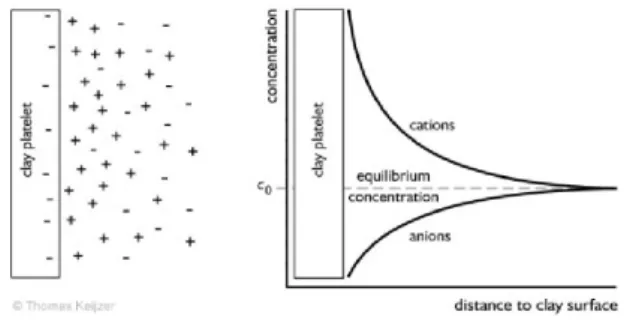
Figure 2: Distribution of cations and anions adjacent to a clay platelet according to the diffuse double layer
Volume I, Issue II, June - 2014
Cation Exchange
Clay absorbs cations of specific types and amounts under various environmental conditions such as temperature, pressure, and pH, chemical and biological composition of the water. The total amount adsorbed balances the charge deficiency of the solid particles. Exchange reactions involved replacement of a part or all of the adsorbed ions of one type by ions of another type. The types of adsorbed cations depend on the depositional environment. For example, sodium and magnesium are dominant cations in marine clays since they are common in sea water. These exchange reactions may change the physical and physicochemical properties of the soil (Mitchell & Soga, 2005). Different samples of the same clay mineral give different values for cation exchange capacity so a range of values exists for the same mineral due to the differences in structure and composition between Samples. In addition, particle size also has an important effect (Gillot, 1987).There are three sources of clay exchange capacity. Isomorphism substitution is the major source of clay exchange capacity, except for kaolin mineral. In clay minerals, however, some of the tetrahedral and octahedral spaces are occupied by cations other than those in the ideal structure. Common examples are aluminium in place of silicon, magnesium instead of aluminium, ferrous ion (Fe2+) for magnesium. This presence in an octahedral or Tetrahedral position of a cation rather than that normally found, without change in crystal
structure, is isomorphous substitution. In clay minerals, isomorphism substitution causes the clay minerals to obtain a net negative charge. Cations are attracted and held between the layers and on the surfaces and edges of the particles to preserve electrical neutrality.
Many of these cations are exchangeable cations because they may be replacing by cations another type. The quantity of exchangeable cations is called the cation exchange capacity (CEC) and is usually expressed as mile equivalents (meq)3 per 100 g of dry clay (Mitchell & Soga, 2005).The second major source of clay exchangeable capacity is broken bond due to unsatisfied valences at edges and corners to which exchange ions become attached. The number of exchange sites increases as particle size decreases and fine fractions of many minerals show an increase in exchange capacity. This effect is shown by kaolinite and contributes up to 20 percent of the total in smectite (Mitchell & Soga, 2005). Another source is replacement of the hydrogen of an exposed hydroxyl by another type of cation. Under certain conditions actions from within the structure may become exchangeable. For example, in an acid environment the aluminium ions move from within the silicate Structure of clay minerals into exchange positions (Gillot, 1987). Therefore, the contributions of each of these sources depends on various environmental and compositional factors, so a given clay minerals does not have a fixed, single value of exchange capacity. The
capacity is directly related to the specific surface and surface charge density.
Electro kinetic Phenomena in Soils
Electro kinetics is defined as the physicochemical transport of charge, action of charged particles and effects of applied electric potentials on formation and fluid transport in porous media. Coupling between electrical and hydraulic flows can be responsible for different types of electro kinetic phenomena in soil. The electro kinetic phenomena include electro osmosis, streaming potential, electrophoresis and sedimentation potential (Mitchell& Soga, 2005). Further major phenomena reported by Acar & Alshawabkeh (1993) and Yeung (2006) that occur when an electric field is applied to any soil sample were electro migration.
Figure 3: Idealised representation of water around clay particles
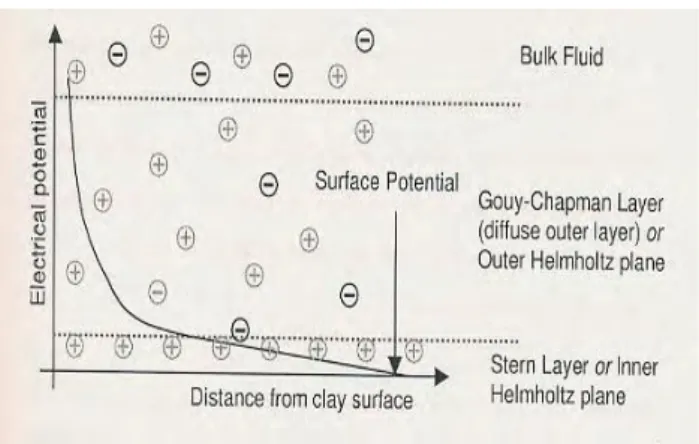
Figure 4: Typical variation of electrical potential with distance from clay surface
Electrochemical Effects
Along with the main effects of electro kinetic technique, there are other mechanisms affecting the electro kinetic process. These include the electrolysis of pore water molecules and the reaction of electrode to the application of electric current.
Preliminary testing was divided into two Categories. First category is a basic geotechnical testing programme to determine the Engineering properties of clay soil including index soil properties testing. All of the physical and chemical properties of clay soil were investigated according to appropriate British Standards. Second category is batch testing which was performed to assess the effects of chemical stabilizers used in this study before applying electric current. These results will be used to compare with the results of treated soils from the main EKS testing to know the effect of applying current and chemical stabilizers into the EKS system.
The most significant knowledge gap identified relates to the limited knowledge of physicochemical processes and electrochemical effects that contribute the increase of shear strength after EK treatment. There has been much discussion in geotechnical literature on the variation of pH, water content and electrical conductivity on the physical properties of soft clays (i.e. shear strength, Atterberg limits and compressibility indices) but very little work to relate these factors to the physicochemical processes (i.e. cation exchange, precipitation, cementation and soil hardening) and electrochemical effects (i.e. electrolysis, electro osmosis and electro migration) within the soil matrix during and after treatment. Most of the researchers in geotechnical aspect have mentioned the possibility of these processes (ion exchange, precipitation and cementation) occurred during and after the electro kinetic treatment but very little explanation of the process occurring within the soil matrix under an influence of electric field due to the limitation knowledge related to electro kinetic phenomena and the scope of their studies which only concerning about the changes of physical properties
However, in geo environmental aspect, the fundamental of electro kinetic process in the soil matrix is significant to them study to ensure the effectiveness of the system to remove the organic or inorganic contaminants in the soils. Drawn from the aspect of both studies, this research study has provided a useful knowledge of the main mechanisms and factors that contributing to the soil improvement. These main mechanisms and factors of EK processes can be evaluated and assessed to determine the performance
and effectiveness of the system to improve soil properties for ground improvement. Therefore, the physical and chemical laboratory testing was chosen based on the ability of these tests to relate to such phenomena. For example, the Atterberg limit test was conducted to relate the changes in mineralogy after electro kinetic treatment and validated with other chemical test such as pH, electrical conductivity and chemical concentration of certain ions.
Chemical Stabilizers
There are several criteria for the selection of chemical stabilizers used in this study:
(a)Significant improvements of the properties of soils after treatment are expected to be seen.
(b)Stabilizers are soluble in water so can be transported by electric current.
(c)They are inexpensive.
(d)They are environmentally safe.
CaCl2 is a common salt with properties that make it
particularly suitable for certain geotechnical application (Jensen, 2003). CaCl2 can attract and absorb moisture
from the atmosphere, otherwise means as hygroscopic, it is highly soluble and can replace the Na+ions within the diffuse double layers of clay particles with Ca2+ ions, thus this will reduce the thickness of double layer and thereby decrease the plasticity and increase the strength of the soil. Na2SiO3 solutions are generally considered
to be non-toxic and noncorrosive.
They are considered to be free of health hazards and environmental effects. However, sodium salts can leach from gelled silicate and raise the pH of the surrounding environment (Reuben, 1990).
Electrode
In order to eliminate the complexity within the test system, it is essential to use an inert electrode to prevent the dissolution of electrode and resulting variability. Previous studies have shown that metal electrodes used in conventional electro kinetic treatment such as steel, aluminium and copper corroded rapidly over short period of time during treatment. Corrosion of the electrodes reduces the electrical contact with the soil thus reduces the electrical efficiency of the system. Therefore, these corroded electrodes need to be replaced prior to use to avoid inefficiency of the treatment. Other problems created bimetal electrodes include significant voltage losses at the electrodes hence loss of energy efficiency as reported by Lefebvre & Burnotte (2002)
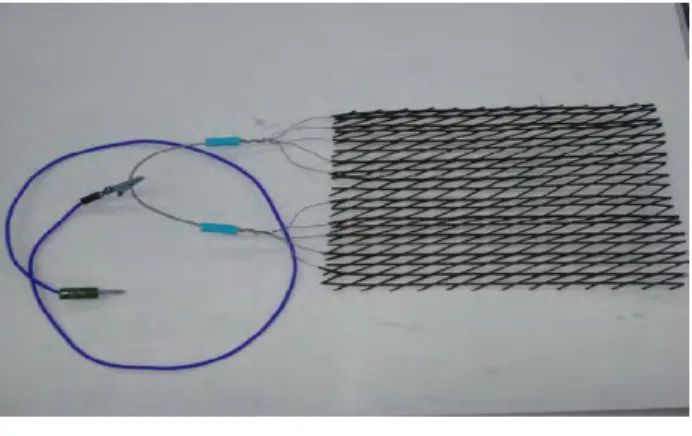
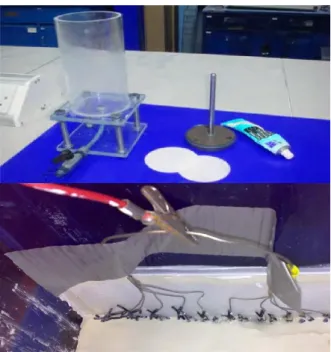
Figure 4: Electro kinetic geosynthetic (EKG) electrode
Basic Geotechnical Testing
Volume I, Issue II, June - 2014
Odometer Consolidation Test
Oedometer consolidation tests were conducted in accordance to BS 1377: Part 5: 1990. This test was used in soil laboratory testing to determine the consolidation characteristics of soils of low permeability. In addition, most of the previous study used this test to determine hydraulic conductivity of fine soil. The oedometer test result conducted on the English China Clay From the void ratio-log pressure graph, the Compression index of English China Clay was 0.365. This value was considered as a high compressibility according to Reeves, et al. (2006) and falls within the establish range from other researchers especially for kaolin clay.
Figure 6: Batch testing apparatus
III. EXPERIMENTALPROGRAMEANDRESULTS
During the main experimental programme, the electric current and the voltage were monitored continuously until the end of each test. A voltage of 18.25 V was maintained throughout the test, equating to a voltage gradient of 50 V/m. The pH and the electrical conductivity of the electrolytes were also monitored during the electro kinetic. Thetrolyte solutions were extracted from both electrolyte compartments for pH and electrical conductivity over the respected time intervals.
The electric current variations with treatment time for the same type of electrode are comparable with Liaki (2006) who reported that the electric current initially increase at about 14 mA, while it then drops within the first 100 hours overtreatment, as resistance of the materials increases and the voltage was set at the
constant level. It has observed in Figure 6.2 that a large variation of electric current distribution is reported especially at the beginning of the test with different treatment time (varied from14 to 22 mA) compared to the current research (varied from 9 to 14 mA). This was due to the soil electrode contact which varied and not consistent upon insertion of electrode during sample preparation prior to EKS test as observed by the author in Liaki (2006) study. Therefore, the improvement of the procedures and design configuration made for the current research has overcome the problem related to the soil-electrode interfaces during soil preparation.
It should be note that after consolidation thin solid plastic walls were removed at both end of soil compartment and the gaps left were then inserted by the EKG electrodes. In order to make sure a good contact between soils and electrodes during sample preparation, the soil samples were subjected to load under the same loading of the last consolidation for about 24 hours before electric current were turned on. Test for 7 days shows that the data points close to the anode are lie slightly below the control line whilst the rest of the values toward the cathode are slightly shifted away, above the control line. This shows that the values increasing towards the cathode due to the electrochemical processes that change the soil properties after certain time which in this case was over 7 days treatment period. At the anode, even though the data point was slightly away from the control line, there was sign of improvement when compared with the data points of the 3 days test near the anode; these had shifted further away from the control line. At the
cathode, the data point of 7 days test (340 mm from the anode) shows the greatest improvement. This can be explained by electro migration process cause the positive ions (from the soil itself) migrating towards the cathode and then precipitated when the alkaline environment starts to develop at the cathodes.
Conclusion
Figure 9: Picture of soil electrode Interface at the
cathode after 3 days during EKS testing
result of weaknesses of the ground, which cause adverse settlements or even failure. A number of approaches can be used but EKS offers the key advantage of effecting a treatment under a building whilst not exacerbating these problems further. A number of previous studies have demonstrated the potential for this technique. However, there still remains uncertainty with a lack of understanding of the electrochemical effects and physiochemical changes that take place during the treatment process. In particular there is still uncertainty about the combination of stabilization and the configuration that should be used. This has led to reluctance in the adoption of the EKS approach for field Applications.It is essential that a full breath of physicochemical understanding of clay soils is achieved including clay mineralogy, clay-water-electrolyte system, flow theories and electro kinetic phenomena. This enables a better understanding of physical and chemical processes that Occur during the application of electro kinetics. This is important as a number of different sometimes counteracting processes are taking place including electro osmosis dewatering, electro osmotic consolidation, exchange reaction and stabilization. Therefore, a number of mechanisms and processes involved in electro kinetic stabilization to strengthen soft clay soils take place over differing periods of time. Thus changes that occur are environmentally, spatially and temporally driven. In turn physical and chemical properties of treated soil need to be assessed with respect time and distribution and this thesis presents results to both demonstrate how this can be done and discusses approaches best suited to undertake this. This includes relatively inexpensive and repeatable methods drawn from well establishes approaches, such a pH monitoring and Atterberg limit testing. two main stages of testing namely stage 1 results from the ‘pure’ system and stage 2 results from the stabilized system. The conclusions from these two stages are presented together to Demonstrate key findings. This then allows implication for field developed to be considered and these are outlinedIV. FUTURE WORK
Effect of coupled flow due to the electrical and hydraulic gradient to assess the migration of ions in the EKS method to simulate real field conditions. This technique needs further studies to gain better understanding of the effect of numerous physicochemical processes involved, to allow the development of a proven field-based electro kinetic stabilization method.
References
[1]
[1] Acar, Y.B. & Alshawabkeh, A.N. (1996) “Electrokinetic remediation. I: Pilot-scale tests
[2]
with lead-spiked kaolinite.” J. Geotech. Eng. 122, 173–185. [2] Casagrande, L. (1952) “Electro-osmotic stabilization of soils.” Journal
of Boston Society [3]
of Civil Engineers, Vol. 39, 51–83.
[3] Chappell, B.A. & Burton, P.L. (1975) “Electro osmosis applied to unstable embankment.”
[4]
J. Geotech.Eng. Div., ASCE 101(8), 733–740.
[4] Esrig, M.I. (1968) “Pore pressure, consolidation and electro kinetics.” Journal of Soil
[5]
Mechanics and Foundation Division, ASCE 94 (SM4), 899-922. [5] Fourie, A.B., Johns, D.G. & Jones, C.J.F.P. (2007). “Dewatering of
mine tailings using [6]
electrokinetic geosynthetics.” Canadian Geotechnical Journal, 44, 160-172.
[6] Glendinning, S., Lamont-Black, J., Jones C.J.F.P. (2007) “Treatment of sewage sludge
[7]
using electro kinetic geosynthetics.” J Hazard Mater 139:491–499 [7] Jayasekera, S. & Hall, S. (2006) “Modification of the properties of
salts affected soils [8]
using electrochemical treatments.” Journal of Geotechnical and Geology Eng.
[8] Lamont-Black, J. (2001) “E. K. G.: The next generation of geosynthetics.” Ground
[9]
Engineering, 34, 22-3.
[9] Morris, D.V., Hills, S.F. & Caldwell, J.A. (1985) “Improvement of Sensitive Silty Clay by
[10]
Electro osmosis,” Canadian Geotechnical Journal, Vol 22, 17-24. [10] Cort, T.; Bielefeldt, A. (2000). “Effects of Surfactants and Temperature
on PCP Biodegradation.” ASCE Journal of Environmental Engineering 126(7): 635-643.
[11] Gray, D.H.; Mitchell, J.K. (1967). “Fundamental Aspects of Electro-osmosis in Soils.”Journal of the Soil Mechanics and Foundations Division, Proceedings of the American Society of Civil Engineers 93(SM6): 209-236.
[12] Lageman, R.; Pool, W.; Seffinga, G. (1989). Electro reclamation - Theory and Practice. Chemistry and Industry 18th September 1989, pp.585-590.
[13] Lee, H-H.; Yang, J-W. (2000). “A new method to control electrolytes pH by circulation system in electro kinetic soil remediation.” Journal of Hazardous Materials B77: 227-240.
[14] Lo, K.Y.; Ho, K.S.; Inculet, I.I. (1991b). “Field Test of Electro osmotic Strengthening of Soft Sensitive Clay.” Canadian Geotechnical Journal 28: 74-83.
[15] Mayes, B.A.; Brown, G.L.; Montello, F.J.; Holtzclaw, K.W.; Hamilton, S.B.; Ramsey,A.A. (2002). “Dermal Absorption in Rhesus Monkeys of Polychlorinated Biphenyls from Soil Contaminated with Aroclor 1260.” Regulatory Toxicology and Pharmacology 35:289-295. [16] Miles, A.A.; Misra, S.S.K.; Irwin, J.O. (1938). “The estimation of the
bactericidal power of the blood.” Journal of Hygiene 38: 732-749. [17] Schinner, F.; Öhlinger, R.; Kandeler, E.; Margesin, R. (1993).
"BodenbiologischeArbeitsMethoden." Springer, Berlin, Germany (ISBN 3540562060).
[18] Sinclair, D.C.R.; Smith, G.M.; Bruce, A.; Staines, H.J. (1997). “Soil dehydrogenates activity adjacent to remedially treated timber, weathered in a physical field model.”International Bio deterioration and Biodegradation 39(2-3): 207-216.