`
THE IMPACT OF LOOPING IN AN ELEMENTARY SCHOOL SETTING
Maureen J. Findley
A dissertation submitted to the faculty at the University of North Carolina at Chapel Hill in partial fulfillment of the requirements for the degree of Doctorate of Education in the
Educational Leadership Program in the School of Education
Chapel Hill 2018
Approved by: Brian C. Gibbs
Fenwick English Christopher Scott Kristin Papoi
Denise Morton
ABSTRACT
Maureen J. Findley: The Impact of Looping in an Elementary School Setting (Under the direction of Dr. Brian Gibbs)
The mandates of federal and state education policies require educational leaders at all levels to select and implement research-based strategies to increase student achievement levels for all students. “Looping, a term coined by Jim Grant, author of the ‘Looping Handbook’ refers to the not-so-new but increasingly common practice of keeping groups students together for two or more years with the same teacher” (Northeast and Islands Regional Educational Lab. at Brown Univ., 1997, p.3). The purpose of this mixed methods study was to investigate the relationship between student assignments to a classroom practicing looping and student achievement on the state’s End-of-Grade (EOG) exam in an elementary school setting. The students’ achievement levels on the third and fourth grade EOG exams were used to determine if the assignment to a looping classroom had a statistically significant impact on student
achievement. The comparison focused on disaggregated student subgroups to examine the relationship between the assignment to a looped classroom and the narrowing of the persistent achievement gap between minority students and their Caucasian counterparts. In addition, this study investigated how teachers and administrators practicing looping perceive the impact of looping on student achievement.
assignment to a looping classroom positively impacted mathematical achievement levels for students in the African American subgroup but did not have a statistically significant impact for any other student subgroup. The qualitative portion of this study consisted of semi-structured interviews with the teachers and administrator engaged in looping to provide context and
descriptive data. The findings indicated that the teachers and administrators feel that looping is a positive experience for some students and had the potential to positively impact student
ACKNOWLEDGEMENTS
I would like to thank a few groups of people who played instrumental roles during my work toward achieving my Doctorate of Education. First, I want to thank my family for your unwavering support and encouragement of my goals and dreams. Second, thank you to my friends who continually provided praise and encouragement to keep pushing forward despite any obstacles. The belief my family and friends have in my abilities and dreams to create educational opportunities for all continues to inspire me to work hard and make a difference.
TABLE OF CONTENTS
LIST OF TABLES ………..………..…xii
LIST OF FIGURES………..xiii
LIST OF ABBREVIATIONS………...xiv
CHAPTER ONE: STUDY OVERVIEW ………...………1
Introduction ………...………..1
Problem Statement ………..5
Purpose of the Study ………...6
Research Hypothesis ……….…..7
Major Research Questions ………..…7
Minor Research Questions ………..…7
Theoretical Framework ………...8
Maslow’s Hierarchy of Needs Theory ………..……..8
Study Methods ………...11
Assumptions and Limitations ………...12
Definition of Terms ………..……….13
Chapter Summary ……….14
CHAPTER TWO: LITERATURE REVIEW ………...…16
Introduction and Approach ………...16
Problem ……….………16
Maslow’s Hierarchy of Needs ………..17
History of Looping ………22
Benefits and Controversies Related to Looping ………..…….…27
Student Achievement-Based Accountability Movement ………..…35
The Achievement Gap ………..41
Research Related to Looping and Student Achievement ………..…47
Gaps in Literature ………..……..….57
Chapter Summary ………..…...……59
CHAPTER THREE: METHODOLOGY ……….………61
Introduction ………...…61
Theoretical Framework ………...……..…61
Maslow’s Hierarchy of Needs Theory ………..…61
Purpose, Hypothesis, and Research Questions ……….…………64
Research Hypothesis ……….………64
Major Research Questions ………64
Minor Research Questions ………65
Rationale for Mixed Methods Study ……….………..…..…65
Site Selection and Participants ………..…66
Site Selection and Access ……….66
Data Collection ……….69
Population and Sample Size ………..70
Research Design ………....71
Variables of Interest ………..73
Procedures ………..………...74
Existing Data Set ………...75
Analysis and Statistical Procedures ………..…75
Interview Protocols ………...76
Limitations and Significance ………..…..…77
Limitations ………77
Significance ………...78
Ethics and Possible Threats to Validity ………....78
Ethics ……….78
Possible Threats to Validity ………..79
Chapter Summary.……….………...….81
CHAPTER FOUR: RESULTS ……….83
Introduction ………...83
Hypothesis and Research Questions ……….…83
Research Hypothesis ……….………83
Major Research Questions ………83
Minor Research Questions ………84
Descriptive Statistics ……….84
Performance Metrics ……….87
Results of Quantitative Data Analysis ………..91
Major Research Questions 1 ……….91
Minor Research Question 1 ………..93
Minor Research Question 2 ………..94
Minor Research Question 3 ………..95
Minor Research Question 4 ………..…96
Minor Research Question 5 ………..…97
Qualitative Data Analysis ……….98
Major Research Question 3………....98
Looping Teachers Interview ……….98
Administration Interview ………104
Chapter Summary ………...110
CHAPTER 5: DISCUSSION, CONCLUSIONS, AND RECCOMENDATIONS …………....112
Introduction ……….…112
Purpose, Hypothesis, and Research Questions ………...…112
Research Hypothesis ………...…112
Major Research Questions ………..113
Minor Research Questions ………..…113
Implication of Results ……….114
School Districts ………...…114
Policy Considerations ……….116
Practice ………120
University Research ………....122
Educational Leadership Preparation ………...123
Limitations ………..125
Recommendations for Future Research ………..126
Conclusion ………..………128
APPENDIX A: Administrator Interview Protocol ……….131
APPENDIX B: Teacher Interview Protocol ……….…………..133
LIST OF TABLES Table
1. Maslow’s Hierarchy of Needs.……….…..……….……...….21
2. History of Looping ………...………...………...25
3. Benefits and Controversies Related to Looping ……….…31
4. Student Achievement-Based Accountability Movement ……..………..39
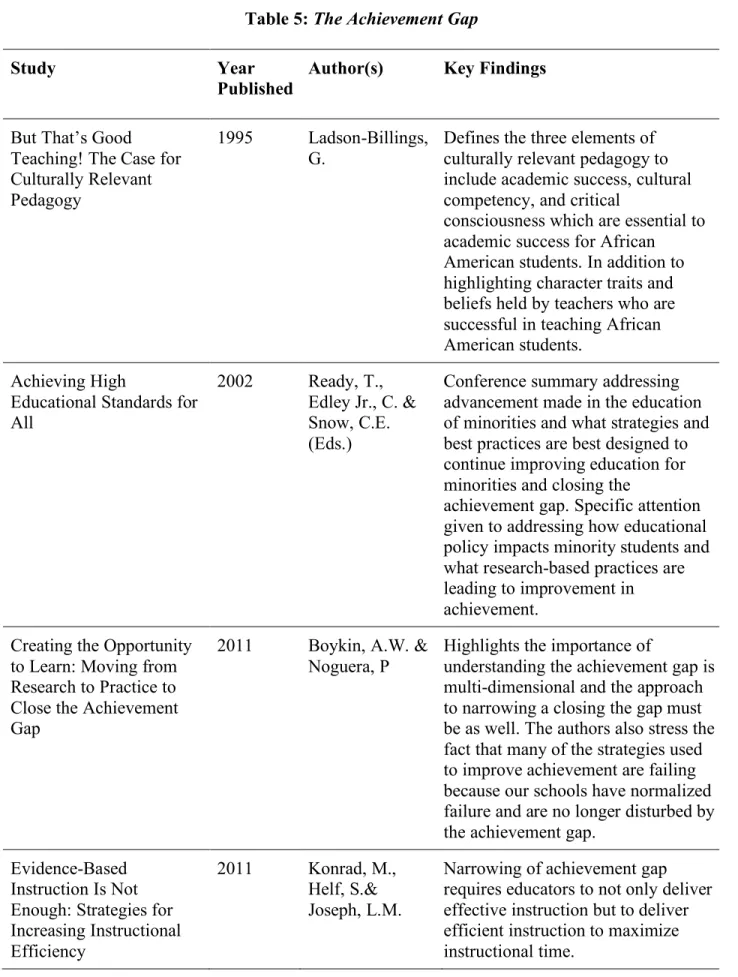
5. The Achievement Gap …………...……….…46
6. Research Related to Looping and Student Achievement ………...….…53
7. Recent Qualitative Research on Looping in Elementary School Settings …………..56
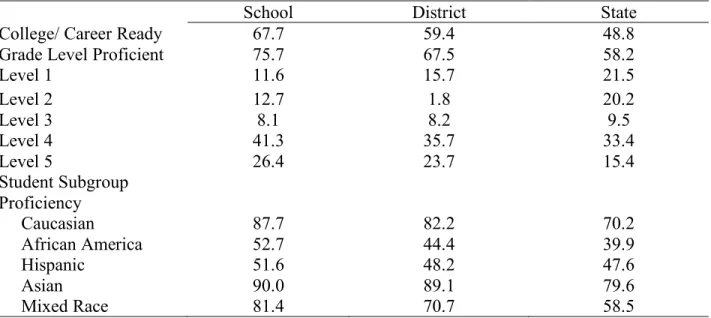
8. 2016 School, District, and State Performance Data ……….……...69
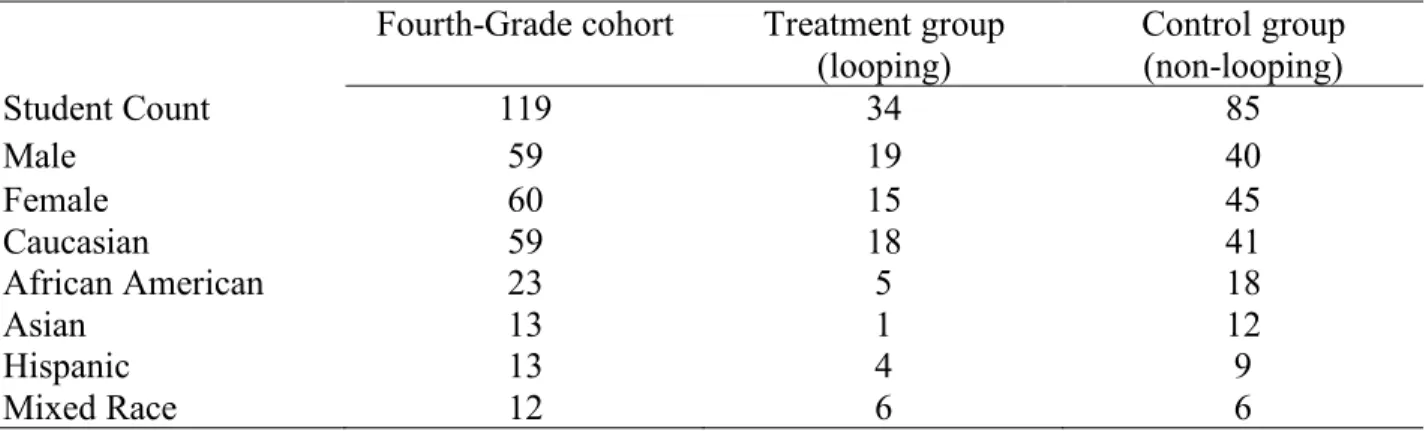
9. Study Population Demographics ………..……...71
10. Overall Cohort Descriptive Statistics ………..………....87
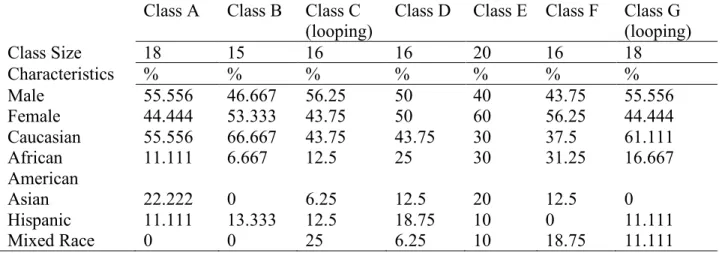
11. Individual Class Descriptive Statistics ………....87
12. Reading Achievement Performance Metrics ………...…...…....88
13. Math Achievement Performance Metrics ……….……..…89
14. Analysis of Change in NC EOG 3rd-4th grade ………...90
15. T-test for Overall Change in NC EOG 3rd-4th grade ………...….……...92
16. T-Test for Non-Caucasian Subgroup Change in NC EOG 3rd-4th grade ….….…..…93
17. T-Test for African American Subgroup Change in NC EOG 3rd-4th grade …………94
18. T-Test for Hispanic/Latino Subgroup Change in NC EOG 3rd-4th grade ……….…..95
19. T-Test for Caucasian Subgroup Change in NC EOG 3rd-4th grade ……….…96
LIST OF FIGURES
LIST OF ABBREVIATIONS AYP Annual yearly progress
ESEA Elementary and Secondary Education Act ESSA Every Student Succeeds Act
IRB Institutional Review Board MAP Measures of academic progress MHN Maslow’s Hierarchy of Needs
NAEP National Assessment of Educational Progress NCDPI North Carolina Department of Public Instruction NC EOG North Carolina End of Grade
CHAPTER ONE: STUDY OVERVIEW Introduction
Policy is made at the state and federal levels of our government, but its results live in our schools. Educational leaders in schools face the decision to select and implement organizational structures and strategies to address the demands of current educational policy. Looping, as a school organizational and pedagogical strategy, is an attempt to increase student achievement,
narrow the achievement gap (Bogart, 2002, p.47) and is a school-based response to a long line of
educational policy focused on accountability for individual student achievement. The necessity
to review and measure the effectiveness of school-based responses such as looping is prevalent
to address the policy requirements to increase school accountability and improve student
outcomes for all students.
Looping refers to the practice of groups students with the same students and teacher or group of teachers for two or more years. The decision by school leaders to utilize the
addressing lower level need is necessary to allow a student to experience satisfaction of higher level needs.
The desire and urgency to improve individual student achievement in public schools nationwide has exponentially increased since the 1983 release of a report titled A Nation at Risk. The report “opened with the claim that the educational foundations of our society are presently being eroded by a rising tide of mediocrity that threatens our very future as a Nation and a people” (Ravitch, 2010, p. 27). With growing concerns about the quality of education offered in public schools, the federal government along with a multitude of private businesses and
organizations spearheaded a reform movement to developed and promoted instructional programs and materials designed to improve student achievement.
As educational organizations focused on strategies to improve student achievement, the federal government’s involvement in public education “shifted during the Reagan and G.H.W. Bush presidencies from delivery of services to achieve educational opportunity and equity to standards and outcomes with the goals of educational excellence and greater student
One requirement established by NCLB required districts to report annual progress for specific subgroups within the student population and places emphasis on increasing equity and achievement for all students. A second requirement set forth by NCLB were annual measurable objectives (AMOs), which measure district and school progress in reaching 100% proficiency for all students. AMOs are determined by a state’s internal plan to meet the nation’s deadline of 100% of students being proficient in reading, language arts, and math by the end of the 2013-2014 school year (Mills, 2008, p. 14).
In addition to the setting of requirements for measuring and reporting student
achievement levels, NCLB implemented strict sanctions for states, districts and schools who consistently failed to meet established goals. Depending on a school’s progress toward meeting AMOs and Adequate Yearly Progress (AYP), specific sets of corrective actions could be sanctioned by the state to assist progress toward increasing achievement. “Sanctions threatened or imposed by the system include permitting student transfers to other public schools, offering supplemental education services (tutoring) to disadvantaged students, ‘corrective action,’ and the formulation or implementation of a restructuring plan” (Ahn & Vigdor, 2014, p. 6). Ravitch (2010) asserts,
The problem was the misuse of testing for high-stake purposes, the belief that a test could identify with certainty which students should be held back, which teachers and principals should be fired or rewarded, and which schools should be closed. The idea that these changes would inevitably produce better education was deeply flawed. (p. 158)
The achievement of minority students represents a long-standing issue in the field of education. Across the U.S., Caucasian students and students from wealthy, well-educated families have consistently outperformed students from most other ethnic backgrounds and students from impoverished families on virtually every indicator of academic achievement in the host of studies that have addressed this issue. The term ‘achievement gap’ is often used to refer to this phenomenon. (North Carolina Department of Public Instruction, 2000, p. 4)
This heightened awareness to address and narrow the achievement gap led many districts and school leaders to select and implement research-based changes in organizational structures and/or instructional practices based on the perceived ability to address and narrow the achievement gap.
A multitude of research-based strategies exist which are aimed at addressing the issue of eliminating the achievement gap and increasing individual student achievement for all students, specifically minority student subgroups (Marzano, 2009, p.30). One such reform that requires further research is the use of looping in elementary education settings to improve student achievement. Looping is defined as teachers and students moving together from one grade level to the next as a group (Nevin, Cramer, Voigt, & Salazar 2008, p. 283).
p. 169). Bracey’s (1999) emphasis on the teacher having an extended amount of time to learn students and form lasting relationships is mirrored in A Standing Ovation for Looping by Chirichello and Chirichello (2001). In addition to increased teacher knowledge and understanding of individual students’ needs, looping for at least two years establishes an environment in which students have a greater sense of belonging and creating enduring bonds between teachers and students (Westerfield, 2009, p. 123).
This study investigates the impact of looping on individual student achievement and narrowing the achievement gap in an elementary school setting. Nevin et al. (2008) found that looping in elementary school settings has shown “that students themselves reported social, academic, and emotional gains” (p. 284). Conducting research to provide statistically sound evidence supporting looping as a means to improve student achievement and narrow the
achievement gap extends the existing findings on the potential benefits of looping. Identifying a research-based instructional strategy, which increases individual student achievement and narrows the achievement gap, provides options for educational leaders facing the pressures of federal and state government legislation to improve student achievement.
Problem Statement
educational leaders at all levels of schooling seek research-based instructional strategies and classroom organizational structures that have the potential to improve student achievement and help in closing the achievement gap among diverse student populations in today’s public school classrooms.
This study was conducted for two reasons: first in response to the gap in looping research related to the impact on specific student subgroups, and second the need for instructional
strategies and classroom organizational structures to address the state and federal mandates to improve student achievement for all students. The ability to respond to the gap in current looping research is possible because of the aggregated student achievement data collected by schools in response to NCLB and Every Student Succeeds Act (ESSA) mandates. The federal legislation addressing student achievement requires states to assess and analyze achievement data specific to student racial, ethnic, and socioeconomic status groups. The availability of detailed student achievement data makes the investigation of the impact of looping on specific student subgroups possible. This study has the opportunity to potentially add to the research that identifies looping as a classroom organization structure, which can improve student achievement, or could further the research support that the structure of the classroom impact student achievement or the achievement gap. Next, I will review the purpose and hypotheses guiding this research study.
Purpose of the Study
Research Hypothesis
The assignment of students to a classroom practicing looping will positively impact EOG standardized test achievement levels for student subgroups in a statistically significant manner. Major Research Questions
1. Does the assignment of students to a classroom practicing looping impact EOG student achievement at statistically significant levels for student subgroups?
2. Does the assignment of students to a classroom practicing looping narrow the achievement gap in a statistically significant manner?
3. How do teachers and administrators engaged in looping perceive its impact on student achievement?
Minor Research Questions
1. Does the assignment of students to a classroom practicing looping impact EOG student achievement at statistically significant levels for the African American student subgroup?
2. Does the assignment of students to a classroom practicing looping impact EOG student achievement at statistically significant levels for the Hispanic/Latino student subgroup?
3. Does the assignment of students to a classroom practicing looping impact EOG student achievement at statistically significant levels for the Caucasian student subgroup?
4. Does the assignment of students to a classroom practicing looping impact EOG student achievement at statistically significant levels for the Asian student subgroup?
Theoretical Framework Maslow’s Hierarchy of Needs Theory
Maslow’s (1943) Hierarchy of Needs (MHN) theory asserts that people have a core set of needs which have an effect on the individual’s motivation and behaviors. Maslow presented “five motivational needs: (1) physiological, (2) safety, (3) belonging and love, (4) esteem, and (5) self-actualization” (Dahl, 2015, p. 630). Each level addresses different needs which must be individually satisfied for each person. MHN (1943) theory mandates the lower level needs of an individual must be met before the higher-level needs begin to influence the individual’s
motivation and desires.
Assessing each level of need in MHN (1943) requires an understanding of the major tenets of each level and how each level is contextualized in an educational setting. The lowest level, physiological needs, encompasses basic survival needs such as food, shelter, and
healthcare. Within an educational setting, the basic survival needs include books, school
supplies, meals before and during the school day, as well as access to health care providers such as a nurse when required. The second level, safety, related to the environment within an
individuals’ home and community as well as a person’s comfort level. Safety within an
extracurricular activities, as well as positive and lasting relationships with peers and teachers inside and outside of the classroom. The fourth level in MHN is self-esteem. Self-esteem includes internal and external components. The internal components are related to drive, self-worth, self-image, and personal beliefs of competency. External components of self-esteem refer to the status which is inferred on individuals by others. In an educational setting, self-esteem is fostered through the creation of an inclusive classroom climate, responsive feedback,
assessments, and opportunities to demonstrate understanding and competency. A focus on mutual respect among peers and teachers, as well as attention to character and self-confidence development for all students impacts self-esteem within an educational environment as well. Self-actualization, the final level in MHN (1943), identifies a state at which individual desires to be their best and achieve at the highest levels while contributing to the world around them. The fifth level of needs in an educational environment is the stage in which a learner desires to improve personal academic outcomes, actively engages in learned guided instruction, and seeks to have an impact on the larger educational community.
The needs specific to an educational setting outlined above at levels one through four must be met for each individual student prior to that student having internal motivation and desire for the highest level of need of self-actualization. Self-actualization refers to the stage “in which the individual can make full use of his or her talent and ability” (Dahl, 2015, p.630). Once a student has all subordinate levels of needs met and is in the stage of self-actualization within an educational environment, the opportunities for student achievement levels to be impacted
increases as the student is fully utilizing individual knowledge and skills.
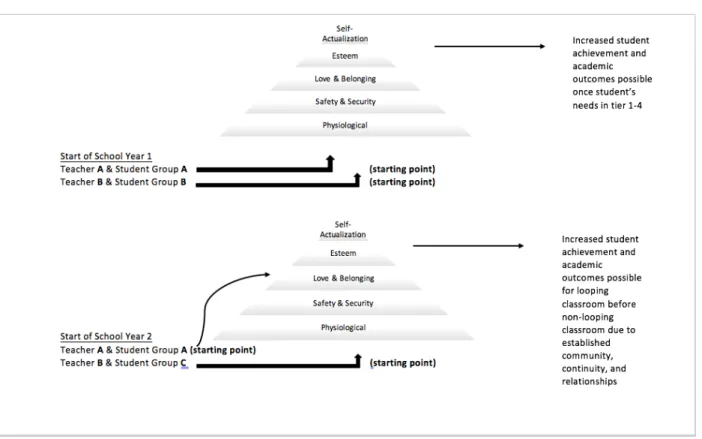
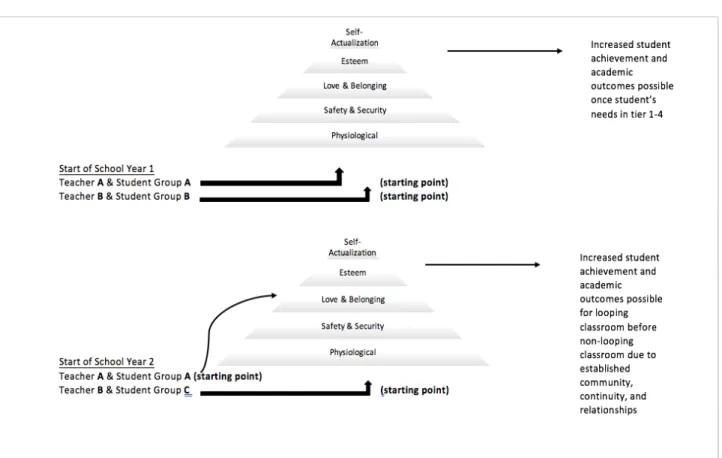
environment in which the teacher and student are promoted together for at least two consecutive years. Looping provides the opportunity for the needs of individual students to be identified and addressed due to the extended time spent together over multiple school years with the same teacher. Looping creates an extended student teacher relationship as well as fostering the building of community within a classroom, creating the opportunity for the students and the teacher to understand specific needs at each level and deficiencies which need to be addressed. As outlined in MHN theory, a student is unable to possess and act upon the motivations and desires required in the self-actualization stage until the needs in the initial four stages are met. The potential power of the instructional strategy of looping is explained by MHN theory and illustrated in Figure 1.
Study Methods
Since the data sets collected include both numerical student achievement data and interviews with teachers and administrators a mixed methods study design was selected. The quantitative portion of the study included the numerical student achievement results from the annual administration of the EOG. The qualitative portion of the study involved interviews with teachers assigned to looping classrooms and with the school administration providing context to the quantitative analysis. The primary focus of this study was the impact of student assignment to a looping classroom on student achievement including the disaggregation of data for specific student subgroups at a high performing magnet school in a suburban setting.
The qualitative portion of this study was descriptive in design. As a qualitative measure, an interview protocol for teachers participating in looping and the school administrators was employed. Lopez-Fernandez and Molina-Azorin (2011) cite the importance of utilizing
qualitative methods in addition to quantitative analysis as the mixed methods approach illustrates how the qualitative research complements the quantitative research by providing clarification and more robust illustration of the results of a quantitative analysis (p. 1461).
The design for the quantitative portion of this study was an ex-post facto mixed correlation design model. The study did not involve the manipulation of a treatment; the data collected were utilized for the sole purpose of determining if and to what degree a relationship exists between the assignment of students to looping classrooms and student subgroup
achievement levels on a state mandated test. The study was a mixed correlation design since the purpose of the study was “to determine how the outcomes for individuals who receive a
consisted of two specific types of classroom assignments, looping and non-looping classrooms. Further explanation of study methods and research design are provided in chapter three. Taking into account the problem under investigation, the research questions, theoretical framework and research methods, the assumptions and limitations outlined in the next section are now identified.
Assumptions and Limitations
Prior to conducting a research study, assumptions and limitations must be addressed. The first of four assumptions in this study is the educational practice of assigning students to a looping classroom has an impact on student achievement. The practice of assigning students could have a positive or negative impact on student achievement, but the presence of an impact is assumed. The second assumption relates to the theoretical framework for this study, assuming that because of looping students are at a higher level on Maslow’s (1943) Hierarchy of Needs and therefore more likely to experience higher levels of achievement. Since the practice of looping encourages a whole child approach to education through fostering long-term
quality and maturation of students can be controlled for using longitudinal data, student achievement data, and teacher quality assessments.
In addition to the four assumptions addressed above, limitations of the study require acknowledgement as well. The study focused on a single elementary school site and a specific cohort of students who have experienced looping for a single year, the applicability and relevance is limited to context, which would be similar in nature. Generalizability is therefore limited. In addition, the elementary school site chosen for the study was already identified as high performing and is a magnet school in which the students apply to attend. This is unlike a traditional school in which students are assigned based on districting. The fact parents
intentionally apply and enroll students at the study site introduces a possible selection bias. The focus on the single quantitative variable of EOG scores further limits the findings of the study, as the specific assessment is not utilized in all states or all elementary schools. In addition, the teacher effects are nested within the treatments effect since there is a single treatment of the assignment to a looping or non-looping classroom, and the teachers were only selected because the school site began the implementation with the current fourth grade cohort during their third-grade year. Since the research model utilized in this study does not address teacher quality, the teacher effects on student outcomes is a limitation of the study. Lastly, the study focuses solely on the investigation of the relationship between assigning students to looping classrooms and increased student achievement on the EOG standardized test.
Definition of Terms
Achievement Gap: The achievement gap is the disparity between the achievement on standardized test, which exist between minority students and their Caucasian
counterparts. Achievement gaps exist between student populations within individual schools and across districts, states, and the nation. Within this study the achievement gap refers to the achievement discrepancies between student subgroups on the EOG
standardized test.
End of Grade Assessment (EOG): A state mandated standardized test in North Carolina designed to measure student achievement levels and progress toward mastery of objectives and grade specific competencies outlined in the standard course of study.
Looping: Looping is a process by which whole classrooms of the same teacher and students are promoted from one grade to the next intact.
Non-Caucasian Students: Student who identifies as a member of an ethnic subgroup other than Caucasian or Asian. For the purposes of this study Non-Caucasian is a student subgroup consisting of all students identifying as African American, Hispanic/Latino, and Mixed Race.
Student Subgroups: Groups of students who share characteristics such as gender, race, ethnicity, socioeconomic status, language and disabilities. For the purpose of this study, student subgroups are utilized to categorize students and student achievement scores for analysis of achievement gaps.
Chapter Summary
classroom and the benefits of looping for students in an elementary school setting. The background of looping practices sets the stage for further analysis of the potential impact of looping on student achievement outcomes. This chapter states the purpose of the study to examine the relationship between the practice of looping and student achievement on the NC EOG standardized test based on the assertion that student in a looping classroom are at a higher level of Maslow’s (1943) Hierarchy of Needs theory. The details of analysis of the major and minor research questions proposed in this chapter through mixed methods including interview protocols and an ex-post facto correlational design will be further discussed in the following chapters.
CHAPTER TWO: LITERATURE REVIEW Introduction and Approach
In this chapter, the review of literature will present six themes related to the instructional strategy of looping and achievement-based accountability. The six themes include research related to Maslow’s Hierarchy of Needs (MHN), the history of looping, benefits, and controversies related to looping, the student achievement-based accountability movement, student achievement and the achievement gap, and research related to looping and student achievement. The final sections of this chapter will describe the gaps in the literature and overall themes and critiques of the literature.
Problem
The relationship between student achievement and student assignment to a looping classroom was investigated in this study. Upon review of the current research related to the impact of looping on student achievement (see for example; Bracey 1999; Nevin et al., 2008; and Westerfield 2009), a gap exists in the analysis of the impact of looping on narrowing the
This study was conducted for two reasons: first in response to the gap in looping research related to the impact on specific student subgroups, and second the need for instructional
strategies and classroom organizational structures to address the state and federal mandates to improve student achievement for all students. The ability to respond to the gap in current looping research is possible due to the aggregated student achievement data collected by schools in response to NCLB and Every Student Succeeds Act (ESSA) mandates. The federal legislation addressing student achievement led to achievement data specific to student racial, ethnic, and socioeconomic status groups. The availability of the detailed student achievement data makes the investigation of the impact of looping on specific student subgroups possible. Educational
leaders are continually seeking research-based strategies to meet the needs of all students. The investigation in this study has the opportunity to potentially add to the research that identifies looping as a classroom organization structure, which can improve student achievement, or could further the research support that the structure of the classroom impacts student achievement or the achievement gap. Next, I will present the literature related to this study thematically.
Themes in Literature Maslow’s Hierarchy of Needs
Maslow’s (1943) Hierarchy of Needs (MHN) theory asserts that people have a core set of needs that have an effect on the individual’s motivation and behaviors. Maslow presented “five motivational needs, (1) physiological, (2) safety, (3) belonging and love, (4) esteem, and (5) self-actualization” (Dahl, 2015, p. 630). Each level addresses different needs which must be
need levels present in Maslow’s Hierarchy as a means to measure if a person’s needs at a
particular level are being met (p. 155). The operational definitions were developed “(1) to assess the satisfaction of each need, (2) to assess their expected correlations (a) with each of the other needs and (b) with four social and personality measures (i.e., family support, traditional values, anxiety/worry, and life satisfaction), and (3) to test the ability of the satisfaction level of each need to statistically predict the satisfaction level of the net higher-level need” (p.155). The operational definitions were utilized in a study which gathered survey responses from over 300 adult participants related to the satisfaction of the five needs. Taormina and Gao (2013) found that “the satisfaction of any given need was positively and significantly correlated with the need immediately below it and in the hierarchy, thus, supporting Maslow’s theorized hierarchy of needs” (p. 168). The study also indicated that,
satisfaction of the physiological needs was a significant predictor of the satisfaction of every one of the four higher-level needs, suggesting that the physiological needs are profound and, as Maslow (1943) argued, that they could very well preempt one’s ability to satisfy any of the higher-level needs if they are not satisfied. (p. 169)
The results found by Taormina and Gao (2013) support the necessity to assess the satisfaction of lower level needs before assessing higher level needs.
In addition to an understanding of how the needs in the hierarchy relate to one another, an understanding of the tenets of each need and how each level is contextualized in an educational setting is imperative prior to assessing satisfaction levels. The lowest level, physiological needs, encompasses basic survival needs such as food, shelter, and healthcare. Milheim (2012) presents a model of Maslow’s five needs levels specific to the educational environment, though the study focuses on needs within an online school environment with major tenets of each level in
meals before and during the school day, as well as access to health care providers such as a nurse when required (Milheim, 2012, p.161). The second level, safety, related to the environment within an individuals’ home and community as well as a person’s comfort level. Safety within an educational environment can refer to discipline policies and practices, physical campus security, issues related to bullying, racism, sexism, stereotypes, and the upkeep of the facilities and classrooms (Milheim, 2012, p. 162). The third level, belonging and love, is a person’s desire to be valued by others, to be a part of a group, to make connections and sustain relationships with other people. In the educational environment, the third level of needs encompasses collaboration among peers and teachers, the presence of the teacher within the class, a sense of community with a class and schools, personalized feedback on achievement and progress, involvement in extracurricular activities, as well as positive and lasting relationships with peers and teachers inside and outside of the classroom (Milheim, 2012, p.163). The fourth level in MHN is self-esteem. Self-esteem includes internal and external components. The internal components are related to drive, self-worth, self-image, and personal beliefs of competency. External
improve personal academic outcomes, actively engages in learned guided instruction, and seeks to have an impact on the larger educational community (Milheim, 2012, p. 164).
With a clear understanding of the hierarchy of needs for individuals within an educational environment, it is imperative the school faculty and staff are vigilant in assessing the satisfaction of each need level for individual students. School leaders should also provide resources to meet the lower level needs which in turn will allow for performance and satisfaction of the higher-level needs such as esteem and self-actualization which are necessary for academic success. Assessing the satisfaction of the hierarchy of needs of individual students can be accomplished by utilizing tested measures such as the two scales developed by Lester (2013). Lester (2013) presents Lester’s scale which “assess the extent to which the five needs are satisfied in the respondents” (p.16). Once student’s needs are assessed, educators can begin developing strategies and identifying resources to meet those needs.
Studies related to student performance and Maslow’s Hierarchy of Needs (1943) have shown needs of students must be identified and met to increase student retention and for students to experience academic progress and success (Freitas & Leonard, 2011, p. 12). Freitas and Leonard (2011) emphasize “a way to help students met these needs is by generating and
publicizing resources for student learning, as well as creating policies and learning experiences that assist students to meet their needs” (p. 12).
they grow into the kind of adults we would like to have as our doctors, teachers, and neighbors someday” (Deering, McAleese, Hannah, & McLean, 2013, p.4).
Further exploration of each level of Maslow’s (1943) Hierarchy of Needs theory and how those needs can be assessed and addressed within an educational environment support the use of the theory as the theoretical framework for this study. In addition, the emphasis placed on identifying and meeting the lower level needs of students prior to students being able to achieve at high level needs to include esteem and self-actualization reinforce MHN (1943) ability to explain the potential power of the instructional strategy of looping. Table 1 reviews the studies and key findings presented in Maslow’s Hierarchy of Needs. The next section reviews the literature related to the history of looping.
Table 1: Maslow’s Hierarchy of Needs
Study Year
Published
Author(s) Key Findings
Maslow’s Hierarchy of Needs and Student Academic Success
2011 Freitas, F.A. & Leonard, L.J.
For students to succeed their needs on the hierarchy must be met. It is imperative that faculty and staff identify student’s needs and connect them with resources to meet their needs so those needs don’t impede academic progress.
Toward a Better
Experience: Examining Student Needs in the Online Classroom through Maslow’s Hierarchy of Needs Model
2012 Milheim, K.L. Presents a model to explain the five levels of needs specific to school environments to include school supplies, clear directions, collaboration, feedback, and assessment.
Teaching the Whole Student: Maslow Means
2013 Deering, P.D., McAleese, J.,
Middle School Hannah, J.R. &
McLean, D. their radar once met. Many schools overemphasize achievement which is part of the esteem level of the
hierarchy and lose sight of basic needs at the base of the hierarchy. Measuring Maslow’s
Hierarchy of Needs
2013 Lester, D. Conducted a survey among students to rate the importance of their needs. Results mirrored the hierarchy of needs created by Maslow. Maslow and the
Motivation Hierarchy: Measuring Satisfaction of the Needs
2013 Taormina, R. J.
& Gao, J. H. Found positive correlation among satisfaction of needs at each level on Maslow’s hierarchy. The more satisfied the lower levels needs of an individual the greater satisfaction of the need at the next higher level. Also, satisfaction level with family life, support, and values has a positive correlation with satisfaction of all five levels of needs.
The SAGE Encyclopedia of Theory in Counseling and Psychotherapy
2015 Dahl, H. Abraham Maslow’s Hierarchy of Needs consists of five levels. Each subordinate level must be meet prior to addressing the next level. Meeting the lower level needs of students is required before the level of self-actualization can take place. Academic Expectations
and Sense of Belonging Among Hispanic High School Students
2016 Nunez, I. Study found students who do not feel that they belong in an educational environment tend to withdraw thus adding to the validity of the
achievement gap. A focus on the sense of belonging and student engagement leads to increased success in school. A sense of belong is critical for emotional well-being and academic achievement.
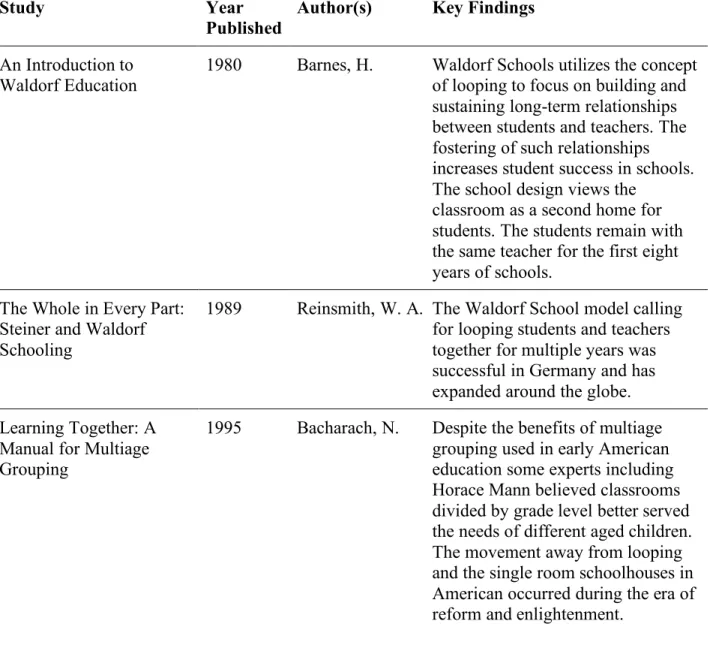
History of Looping
concept of looping in education is not a new concept. The origins of looping programs date back to the German Waldorf Schools founded by Austrian educator Rudolf Steiner in the 1900s (Danley, 2012, p.10). The Waldorf Schools were founded for the purpose of educating the children of workers at the Waldorf-Astoria cigarette factories.
Rudolf Steiner designed the Waldorf Schools in a manner that required students to remain with the same teacher for multiple years (Danley, 2012, p10). Steiner believed that students remaining with the same teacher for more than one year and having the opportunity to develop long term relationships with the teacher benefited students by providing a focus on the whole child (Danley, 2012, p. 10). Barnes (1980) argues that Steiner believed that children in their first years of formal schools learned best through acceptance and emulation of authority (p. 324). Since students in elementary school settings are away from their families for the first time, the classroom becomes a second family environment for the students and the teacher takes on the role of the authority figure. In Waldorf schools, students are promoted with the same teacher for first through eighth grade. The looping of teachers and students in the Waldorf schools created an effective model which led to opening of over 350 Waldorf schools in over 20 countries (Reinsmith, 1989, p.83).
A particular Waldorf school in Germany has become well known for increasing academic achievement through the educational strategy of looping. The Koln-Holweide School called the practice of looping as “team-small-group-plan” (Little & Little, 2001, p.8). The model promoted teachers along with the students in small groups within classes of approximately 30 students throughout multiple years in school. The looping model used at Koln-Holweide promoted
In the United States, the implementation of looping dates back to the single room schoolhouse (Barger, 2013, p. 2). The single room schoolhouse was a looping classroom. From the early 1600s through the mid 1800s, most Americans who attended a formal school in the United States received their education in the single room schoolhouse environment. The looping based educational practice of the single room schoolhouse persisted in the United States until the age of reform and enlightenment in the mid 1800s. The movement away from the single room, looped format of schooling in the United States followed the recommendations by Horace Mann to organize school into graded classrooms. Horace Mann believed the separation of schools into graded classrooms as the “proper classification of scholars” and many American parents agreed (Bachrach, 1995, p.19).
The historical roots of looping provide a starting point for the use of the instructional strategy in education. In addition to understanding where looping originated, a clear
understanding of the benefits and controversies related to the instructional strategy provide a framework for the decision to implement the looping within a specific setting. Table 2 reviews the studies and key findings presented in the history of looping. The next section reviews the literature related to the benefits and controversies related to looping.
Table 2: History of Looping
Study Year
Published Author(s) Key Findings An Introduction to
Waldorf Education 1980 Barnes, H. Waldorf Schools utilizes the concept of looping to focus on building and sustaining long-term relationships between students and teachers. The fostering of such relationships increases student success in schools. The school design views the
classroom as a second home for students. The students remain with the same teacher for the first eight years of schools.
The Whole in Every Part: Steiner and Waldorf Schooling
1989 Reinsmith, W. A. The Waldorf School model calling for looping students and teachers together for multiple years was successful in Germany and has expanded around the globe. Learning Together: A
Manual for Multiage Grouping
Integrating Pastoral and Academic Work in Comprehensive Schools: A German Model
2000 Husbands, C., &
Lang, P. The team/small group model positively impacted schools, classes, and individual students’ learning outcomes. The model offers a
consistent and well-managed learning environment.
Looping: Creating Elementary School Communities
2001 Little, T., &
Little, L. Looping is a classroom design aimed to meet students’ needs and foster student-teacher relationships.
Looping started in the one-room schoolhouses in the United States and is the basis for the Waldorf Schools and the work of Rudolf Steiner. The Looping Classroom:
Benefits for Children, Families, and Teachers
2007 Hitz, M., Somers, M., & Jenlink, C.
Utilizes the Waldorf Schools, and Central Park East Elementary School as models for the benefits
experienced by the class, individual students, and families.
The Impact of Looping on Academic and Social Experiences of Middle School Students
2009 Gregory, B. The reemergence of the use of looping in American public schools occurred in the late 1980s and early 1990s around the same time the concerns with accountability and student achievement-based accountability were on the rise. A Reflective Exploration
of a Multiyear Elementary School Learning
Experience
The Effects of a Looping Classroom Among Third Grade Students in an Urban District
2012 Danley, A. The earliest development and implementation of the strategy of looping is linked to Rudolf Steiner and the Waldorf Schools in Germany. Steiner supported a multiyear
classroom in which teachers and students were able to foster and maintain positive and productive relationships. The emphasis on long-term relationships would in turn lead to increased academic success for students.
Impact of Looping on Middle School Science Standardized
Achievement Tests
2013 Barger, T. The history of looping in the United States dates back to the single room schoolhouses of the 1800s in which students and teachers remained in the same classes throughout the students’ education. This format dominated American schools until the education reforms led by Horace Mann.
Benefits and Controversies Related to Looping
As the previous section highlighted, the strategy of looping is not a new concept and has international roots as well as in the early American single room schoolhouse. The practice of looping teachers and students together for multiple years is praised and critiqued alike by scholars as with all instructional strategies there are benefits and controversies. This section of the literature review provides the benefits and controversies related to the practice of looping. In addition to the benefits and controversies, this section will provide evidence for the support of looping through Maslow’s Hierarchy of Needs Theory.
Kelly, Brown, Gittens, Taylor, and Zeller (1998) explain that looping is “a definite asset for addressing student behavior and social development” (p. 62). The practice of looping
1998, p. 62). The strategy of looping creates a focus in the educational environment on
developing the whole child. The relationships established through looping create an opportunity for the teacher to teach the whole student which leads to increased achievement (Nichols & Nichols, 2002, p. 19). Kohn (2010) describes the teaching of the whole child as a way to address emotional, social, and academic needs creating not only a good learner but also productive citizen (p. 2). Beaty-O’Farrell, Green, and Hanna (2010) affirm that education focused on the whole child fosters the development of citizenship skills with a respectful bond between the teacher and student, which decreases behavior incidents and increases academic achievement over time (p. 10).
increased achievement. A study conducted by Booth (2011) found that students revealed their primary concerns as the following: physical development and growth, safety, academic, and esteem (p. 22). The concerns expressed by the students in Booth (2011) included the biological and physiological needs; safety needs, and esteem needs levels of Maslow’s Hierarchy of Needs (p. 22). This study provided credibility to the use of Maslow’s Hierarchy of Needs to support the power of looping as a means to meet the needs of students and improve overall academic
achievement levels.
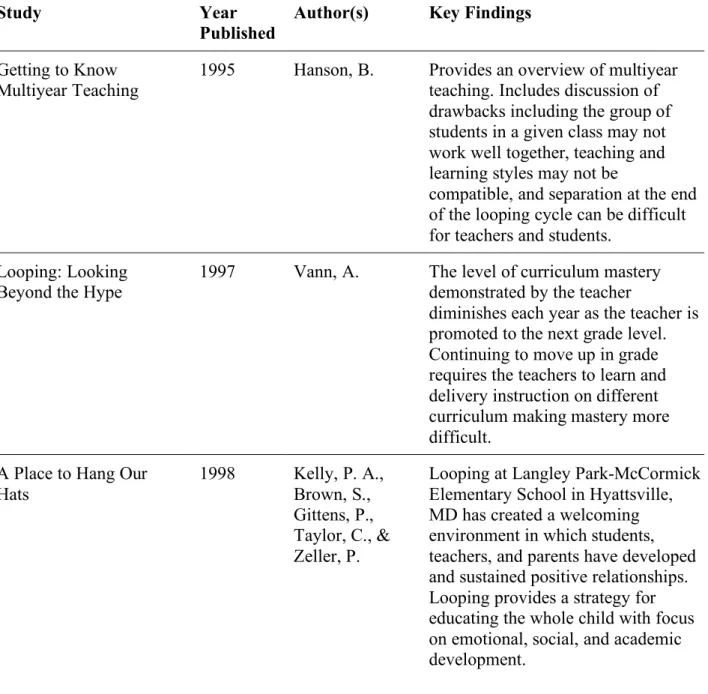
Despite the support for the strategy of looping and the benefits of utilizing an
instructional model centered on whole child education, there are specific disadvantages related to looping. Simel (1998) conducted a study at the Fort Wayne Indiana Community School in 1997, and found that the teacher stated, “looping was demanding” (p. 334). Simel (1998) reported teachers found it challenging to develop new ways to motivate and encourage students while maintaining the positive community environment of the looping classroom (p. 334). Due to the nature of looping, students and teachers are together for multiple years, which made it difficult for teachers to use similar instructional strategies and materials as the students had already experienced those instructional experiences. Hanson (1995) also found the teachers “warned that the particular makeup of the class might adversely affect the group’s potential to learn” (p.43). If the teacher and students within the looping classroom fail to develop a positive relationship and mutually respecting community environment, the additional years spent together could
negatively affect students emotionally, socially, and academically.
teacher and students who displayed personality conflicts, attachment made it difficult for teachers and students to transition at the end of the looping cycle, and students became overly familiar with the teachers and began to perceive them as friends (p. 9).
Along with the controversies related to instructional experiences and relationships between teachers and students, Vann (1997) explains that when teachers advance to a new grade level each year, teachers may experience difficulty mastering the curriculum of the new grade level (p. 41). The continued promotion of the teacher each year of a looping cycle decreases teachers’ level of curriculum expertise which can negatively impact the mastery of the
curriculum by students in the subsequent grades as well. Krogmann and Vant Sant (2000) found evidence that teachers demonstrate strengths and weakness in different areas of teaching and the curriculum and the strategy may prevent some students from being exposed to areas which their assigned teacher has weaknesses (p. 17). Hitz et al. (2005) highlighted the danger of a student’s being placed with an ineffective teacher for two or more years having an extended negative impact on academic achievement (p. 84). In addition to the danger of a student being placed with an ineffective teacher for an extended period of time, Vann (1997) and Lincoln (1998) expressed concern for the possibility of a student’s learning style being incompatible with the teaching style of the looping teacher. The incompatibility of teaching and learning styles over multiple years would impede the teacher’s ability to deliver quality instruction for those students (Lincoln, 1998, p. 50).
As with any selected instructional strategy, there are benefits and disadvantages and looping is no different. Despite the disadvantages noted in the research regarding various
accountability mandates (p. 700). Looping is one of the instructional strategies schools are utilizing to improve student achievement. Table 3 provides an outline of the research presented in this section on the benefits and controversies related to looping. The next section will present literature on the student achievement-based accountability movement in education leading school to seek strategies to improve student achievement levels.
Table 3: Benefits and Controversies Related to Looping
Study Year
Published
Author(s) Key Findings
Getting to Know Multiyear Teaching
1995 Hanson, B. Provides an overview of multiyear teaching. Includes discussion of drawbacks including the group of students in a given class may not work well together, teaching and learning styles may not be
compatible, and separation at the end of the looping cycle can be difficult for teachers and students.
Looping: Looking Beyond the Hype
1997 Vann, A. The level of curriculum mastery demonstrated by the teacher
diminishes each year as the teacher is promoted to the next grade level. Continuing to move up in grade requires the teachers to learn and delivery instruction on different curriculum making mastery more difficult.
A Place to Hang Our Hats
1998 Kelly, P. A., Brown, S., Gittens, P., Taylor, C., & Zeller, P.
Multi-Year Instruction: Establishing Student-Teacher Relationships
1998 Lincoln, R. D. Though multi-year instruction has benefits the disadvantages include the possibility of teaching and learning styles of the teacher and students being incompatible. The
incompatibility of learning styles over multiple years can lead to negative effects on student
achievement and the teacher’s ability to provide quality instruction to all students.
Education for Building: Teaching Attitudes Toward Looping
1998 Simel, D. Teacher interviewed by Simel described looping as demanding and the need to continually develop new instructional strategies for the students’ year after year is difficult for teachers. Teachers reported the implementation of looping as a strategy that requires increased time and planning demands of teachers. Enhancing Relationships
and Improving Academics in the Elementary School Setting by Implementing Looping
2000 Krogmann, J., & Van Sant, R.
In educational settings teachers demonstrate strengths and
weaknesses in relation to different aspects of the curriculum. One disadvantage to multiyear teaching is student remain with one teacher and may receive lower quality instruction in the areas the teacher has
weaknesses unlike a student who receives instruction from multiple teachers who may compensate for the weaknesses of others.
The Impact of Looping Classroom Environments on Parental Attitudes
2002 Nichols, J. D. & Nichols, G. W.
The study reviewed the effects of looping on parent perceptions of the educational environment. The study found parents had positive
The Experience and Effects of Looping in the Elementary Classroom
2003 Pecanic, M. The study examined the experiences and effects of looping on teachers, parents, and students in an
elementary school setting. The study reported disadvantages of looping to include personality conflicts between students and teachers escalating over the time the classes are looped and students view of teachers changing from professional to friendly due to extended period of time spent together.
Teaching Educators How to Use Student
Assessment Data to Improve Instruction
2005 Boudett, K, Murnane, R., City, E., & Moody, L.
In response to the state and federal mandates to increase student achievement levels on standardized test, schools are in need of strategies to improve outcomes. The research focuses on a workshop model to teach leadership and teachers how to use data to improve instruction. The Looping Classroom:
Benefits for Children, Families, and Teachers
2007 Hitz, M., Somers, M., & Jenlink, C.
Concerns related to looping include a child being placed with an ineffective teacher for two or more years. In addition, the potential for personality conflicts between the teacher and students concerned parents whose students were placed in looping classrooms. Lastly parents expressed concerns about their student being in a program with a teacher whom has different educational philosophies and beliefs than the parents for multiple years.
Classroom Management Strategies for Difficult Students: Promoting Change Through Relationships
2010 Beaty-O’Farrell, M.,
Green, A., & Hanna, F.
Progressive Education: Why It’s Hard to Beat, But Also Hard to Find
2010 Kohn, A. Defines progressive education as the use of traditional and thoughtful practices that teach the whole child and create a community within the schools. The practices involved in progressive education include multiyear teaching, hands-on learning, and mentoring of students. Addressing social, emotional, and academic needs of students leads to increase achievement.
Maslow’s Hierarchy of Needs at
LearningTheories.com
2010 Learning Theories
Knowledgebase
Maslow’s Hierarchy of Needs
consists of five levels. The five levels of needs include physiological, safety, belongings, esteem, and self-actualization. All lower level needs must be meet before the higher needs including self-actualization can impact actions and behavior. This They Believe:
Young Adolescents Reveal Their Needs in School
2011 Booth, M. The study interviewed middle school student regarding their perceived needs. Each of the needs identified by the students aligned with the levels of needs outlined by Maslow’s
Hierarchy of Needs. As the students progressed through middle school their understanding of their needs became more sophisticated. Impact of Looping on
Middle School Science Standardized
Achievement Tests
Abraham Maslow: The SAGE Encyclopedia of Theory in
Counseling and Psychotherapy
2015 Dahl, H. Abraham Maslow’s Hierarchy of Needs consists of five levels. Each subordinate level must be meet prior to addressing the next level. Meeting the lower level needs of students is required before the level of self-actualization can take place.
Student Achievement-Based Accountability Movement
The literature presented in the sections above focused on the history, benefits, and
controversies related to the specific strategy of looping. To frame the current state of educational reforms which has led to schools returning to strategies such as looping to improve student achievement, a historical background is necessary. The literature presented in this section will trace the historical roots of student achievement-based accountability in the United States as well as the measures utilized in North Carolina to report student achievement and predict future achievement levels.
Clause (U.S. Const, art. I, § 8). The funding provided by ESEA set a precedent for future federal legislation related to funding and involvement in education.
Though ESEA continued to provide general education funding in America, the national focus on education faded to the background following the signing of the bill and the end of the Johnson Administration. Until the release of the publication A Nation at Risk (National
Commission on Excellence in Education [NCEE], 1983) America failed to take notice and express nationwide concern for the state of America’s public education system. A Nation at Risk painted a devastating depiction of education in America. The report described America’s
education system as “a rising tide of mediocrity that threatens our very future” (NCEE, 1983). The report stressed the importance of improving the nation’s education system and the fate of those who are not provided with essential knowledge. The report asserts,
The people of the United States need to know that individuals in our society who do not possess the levels of skill, literacy, and training essential to this new era will be
effectively disenfranchised, not simply from the material rewards that accompany competent performance, but also from the chance to participate fully in our national life. A high level of shared education is essential to a free, democratic society and to the fostering of a common culture, especially in a country that prides itself on pluralism and individual freedom. (NCEE, 1983)
In 1984 following the release of the report, President Reagan was the first president to announce national education goals. In alignment with the President’s education goals, the National
Following the precedent set by Secretary of Education Terrel Bell under the Reagan Administration, every administration since has introduced and maintained national education goals. As a result of the Charlottesville Education Summit, President Bush established six national education goals including decreasing dropout rates, adding science to the elementary school curriculum, increasing opportunities for students to take foreign languages, and increasing national scores on the National Assessment of Educational Progress (NAEP) (Vinovskis, 1999, p. 25). Later in the 1990s, ESEA would be re-authorized during the Clinton Administration as the Improving America’s School Act of 1994. The reauthorization of ESEA placed increased emphasis on individual student performance and held schools accountable for achievement results of all students with a focus on students from lower income families.
As states across the nation took action, North Carolina also developed plans to meet the new federal accountability and student assessment mandates put in place by NCLB. In response to the requirement to assess student achievement levels annually, North Carolina developed the NC EOG for students in grades three through eight. The NC EOG assess students in the areas of English Language Arts, Reading, Mathematics, and Science. The NC EOGs are “specifically aligned to the North Carolina Standard Course of Study and include a variety of strategies to measure the achievement of North Carolina students” (NCDPI, 2014, p. 3). NCDPI (2014) indicates that the results of the NC EOG are utilized to compute “school and teacher growth as well as performance composites” (p. 3) in addition to being “used in determining Annual Measureable Objectives” (p. 3) as required by NCLB.
Along with measuring proficiency levels of students by utilizing NC EOG achievement data, North Carolina utilizes a Valued-Added Model (VAM) to measure the growth rate of students, or the rate at which students acquire a year’s worth of knowledge. VAMs are utilized in North Carolina to both measure student growth and predict future performance levels. Sloane, Oloff-Lewis, and Kim (2013) explain, “static average student performance measures are poor indicators of school performance and tend to reflect input characteristics…” (p.39). VAMs use a combination of historical student performance data on state assessment to predict future
55-56). The individual student achievement and growth rates measured utilizing VAM are
incorporated into North Carolina’s formula to develop growth targets as required by NCLB. The North Carolina accountability and growth formula targets were developed through the ABC’s of Public Education implemented in North Carolina during the 1997-98 school year (NCDPI, 1999).
As North Carolina and states across the nation adopted plans and programs for measuring student achievement levels and progress toward annual goals, school districts and schools were tasked with selecting and implementing strategies to improve achievement levels and meet state set goals. Table 4 reviews the literature related to student achievement-based accountability movement that led states and schools to taking action to improve student achievement levels. The next section will provide a review of the literature related to how the specific strategy of looping relates to student achievement.
Table 4: Student Achievement-Based Accountability Movement
Study Year
Published
Author(s) Key Findings
United States Constitution, 10th Amendment
N/A United States The powers not delegated to the United States by the Constitution, nor prohibited by it to the States, are reserved to the States respectively, or to the people.
United States
Constitution, Article I Section 8
Elementary and
Secondary Act of 1965 1965 Elementary and Secondary Act of 1965
First federal legislation providing general funding for primary and secondary schools in the United States.
A Nation at Risk: The Imperative for Education Reform
1983 National Commission of Excellence in Education
A report on the state of education in the United States and the need for reforms. The report presented American schools in a state of crisis and in need of reform.
North Carolina’s ABC’s
of Public Education 1999 North Carolina Department of Public
Instruction
Annual testing program and
accountability efforts implemented during the 1997-98 school year in North Carolina. The program considers individual student
achievement levels and value-added measures.
Mind in Society: The Road to Charlottesville: The 1989 Education Summit
1999 Vinovskis, M. A. Essay regarding the state of education in America in the 1970s and 1980s along with decisions from the
meeting between President Bush and the Nation’s Governors at
Charlottesville Education Summer in September 1989. The meeting and past movement to increase federal involvement in education led to national education goals and increased accountability for educational outcomes. No Child Left Behind Act
of 2001
2001 No Child Left Behind
Reauthorization of ESEA calling for increased accountability of individual student achievement and adequate yearly progress. Introduced sanctions for schools failing to meet required progress toward proficiency goals. A Legislative Overview
of No Child Left Behind
2008 Mills Provides a detailed overview of each section of NCLB legislation.
Value-Added Models of Teacher and School Effectiveness in Ireland: Wise or Otherwise?
2013 Sloane, F. C., Oloff-Lewis, J., &
Kim, S. H.
Examines the value-added model utilized in the United States and provides a critique of how the model
Does How Students are Assigned to Classrooms Matter? An Examination of Relative Achievement in Tracked and Untracked Middle Grades Language Arts Classrooms
2014 Fierro, C. Explains how VAM can be deceiving when determining student growth. VAM can show perceived growth as long as students can maintain their achievement level relative to other students and continue to progress at a consistent level.
Interpretive Guide to the WinScan Score Reports for the North Carolina End-of-Grade
Assessment: 2014-15
2014 North Carolina Department of Public
Instruction
Provides an overview of the purpose of the NC EOG test and confirms the alignment of the test to North
Carolina Standard Course of Study. Provides details for the interpreting of student scores and reports provided on student achievement levels to school leaders.
The Achievement Gap
In nearly half-century since Brown v. Board of Education, minorities have made substantial progress both in terms of degree attainment and academic achievement, as measured in the National Assessment of Education Progress. The data also make it clear, however, that substantial challenges remain before the ideal of achieving high
educational standards for all is a reality. (Ready, Edley, and Snow (Eds.), 2002, p. 24) Though achievement results indicate that students from various backgrounds are achieving at higher levels there is still a discrepancy between the achievement levels of minority students and their Caucasian counterparts. Minority students are more likely to score below proficiency levels on achievement assessments in reading, math, and other subjects. The disparity which exists between the achievement levels of minority students and Caucasian students on standardized achievement assessments is referred to as the achievement gap. Ready, Edley, and Snow Eds. (2002) explain the achievement gap is being magnified by rapidly increasing minority