• No results found

Ambulance Services, England

N/A
N/A
Protected

Academic year: 2021

Share "Ambulance Services, England"

Copied!
75
0
0

Loading.... (view fulltext now)

Full text

(1)

Ambulance Services,

England 2013-14

(2)

We are the trusted

national provider of

high-quality information,

data and IT systems for

health and social care.

Author:

Workforce and Facilities Team,

Health and Social Care Information Centre

Responsible statistician:

Kate Bedford, Programme Manager

Version:

V1.0

Date of publication:

31 July 2014

www.hscic.gov.uk

[email protected]

@hscic

(3)

Contents

Summary

4

Revisions and Issues

6

Introduction

7

Data Quality

8

Analysis and Commentary

11

Other UK home countries

23

Aid to interpretation

24

Users and uses

27

Definitions

29

Further information

30

Index to tables

31

Reference tables

32

Annex 1 : Ambulance trust coverage map

46

(4)

Summary

Ambulance Quality Indicators

In 2013-14

The number of emergency 999 calls1 presented to Ambulance switchboards in 2013-14 was 8.47 million, a decrease of 70,999 (0.8%) over last year (8.54 million calls). This is an average of 23,216 calls per day (16.1 calls per minute).

In total for 999 and 111 calls 6.33 million received a face to face response from the ambulance service, with 6.02 million (95.1%) originating via 999 calls and 309,262 (4.9%) from the 111 route.

2.87 million or 45.4% of all calls (999+111) classified as category A23 (most urgent) resulted in a response from an emergency vehicle. Of these 4.7% (135,240) were classed as Red 1 (most serious) and 95.3% (2.74 million) were classed as Red 2 (serious but less urgent). The

response rates within 8 minutes are as follows:

Red 1 – 75.6% nationally with 8 of the 11 ambulance trusts achieving 75% or more Red 2 – 74.8% nationally with 7 of the 11 ambulance trusts achieving 75% or more

The Isle of Wight Ambulance Service responded to the largest proportion of Category A Red 1 calls within eight minutes at 80.2% with the East Midlands Ambulance Service responding to the smallest proportion at 71.3%.

The percentage of category A incidents that resulted in an ambulance vehicle capable of

transporting the patient arriving at the scene within 19 minutes was 96.1%. Last year (2012-13) this was 96.0%.

Re-contact rate – telephone

The proportion of patients who re-contacted following discharge of care via the telephone has fallen from 13.0% last year (2012-13) to 9.6% this year (and 13.2% two years (2011-12) ago). Treated at scene

The proportion of incidents managed without need for transport to A&E has grown from 35.1% last year to 36.0% this year (two years ago this was 33.9%).

1

Calls made to NHS 111 can also be classed as emergency calls, these calls are excluded from the 8.47 million.

2 The national standard for category A calls is for an emergency response to arrive at the scene within 8 minutes in 75% of cases or within 19

minutes in 95.0% of cases.

3

From June 2012 category A 8 minute was split into Red 1 (most urgent) and Red 2 (serious but less time critical). Due to differing clock start times it is not possible to split previous years into these new categories therefore no direct comparisons can be made with previous years.

(5)

Notes:

i. NHS England publishes monthly versions of the ambulance quality indicators available at:

www.england.nhs.uk/statistics/ambulance-quality-indicators/

ii. Ambulance quality indicators guidance is available in Annex 1 at the end of this document and is also published on the NHS England website at:

(6)

Revisions and Issues

Up until last year (2012-13) the Health and Social Care Information Centre (HSCIC) collected data on Ambulance services via the KA344 form. As NHS England began collecting and publishing the

majority of this data on a monthly basis via their Unify2 system and following consultation on changing the source data, it was decided to cease the HSCIC data collection and use the monthly NHS England data. This publication uses the Unify2 data which has already been published by NHS England in May 2014.

The Unify2 data has only been collected since 2011-12, we are therefore only able to provide three years’ worth of data for the majority of this publication.

For the major areas of interest (Category A 8 and 19 minute responses) we have provided an eight year time series. While some of this is not comparable due to changes to definitions over the years (which have been highlighted in the relevant sections within this bulletin) it was felt since these areas raise particular interest it was worth providing this extra set of time series tables.

Great Western Ambulance Service Trust: As from 1st February 2013 Great Western Ambulance trust dissolved (its services were taken on by South Western Ambulance Service Foundation Trust). For comparability purposes we have merged Great Western and South Western for earlier years into a single South Western Ambulance trust. Data for this trust prior to February 2013 should be treated as an estimate.

The HSCIC revisions policy is available on the HSCIC website at:

http://www.hscic.gov.uk/media/1351/Publications-Calendar-Revisions-Procedure/pdf/Revisions-Procedure.pdf

(7)

Introduction

Ambulance service data is now collected and published on a monthly basis by NHS England via their Unify2 system. This data is available from April 2011 onwards; this publication concentrates on the Unify2 data with the majority of information presented back to 2011-12 only.

The traditional KA34 annual collection of NHS ambulance service data in England has ceased. Historic data can be found at:

http://www.hscic.gov.uk/article/2021/Website-Search?q=ambulance&topics=13359&sort=Relevance&size=10&page=1&area=both#top

For the main points of interest (Category A 8 and 19 minute response times) tables are included showing NHS England data alongside historic KA34 data to provide an eight year timeseries.

NHS England collects two sets of data:

i) System indicators (AmbSYS) - number of calls, response times, patient journeys etc.

ii) Clinical outcome indicators (AmbCO) - outcomes of cardiac arrest, stroke, survival rates etc. These are available here

www.england.nhs.uk/statistics/statistical-work-areas/ambulance-quality-indicators/

The Health and Social Care Information Centre is using the systems indicators data (i) to produce this annual report of NHS ambulance services. This replaces the previous KA34 based report and covers many of the KA34 service areas with the addition of a few extra items.

The information is collected from individual ambulance organisations and shows volume of activity, and performance levels against required standards (e.g. responses within 8 or 19 minutes). This includes information on emergency calls, response times and patient destinations. This information is shown nationally and by each ambulance trust.

The HSCIC welcomes feedback on the methodology and tables within this publication. Please contact us with your comments and suggestions, clearly stating ‘Ambulance Services, England’ as the subject heading, via:

Email: [email protected]

Telephone: 0845 300 6016

(8)

Data Quality

Accuracy:

Ambulance services use two approved call prioritisation systems (the Medical Priority Dispatch System and NHS Pathways) to map codes that comprise of categories A (immediately life

threatening and other less serious incidents). The two ambulance trust systems are used to extract the information to complete NHS England’s Unify2 AmbSYS data submission.

The Unify2 AmbSYS data collection is based on 100% data i.e. not a sample and as such no estimation of the figures is needed and hence there is no sampling error.

The two ambulance trust systems are also used to extract the Unify2 AmbCO information to complete the monthly Unify2 AmbCO return to NHS England.

Relevance:

The statistics address user demand for numbers of calls, response times and patient journeys by Ambulance trust within England. The tables published in the release aim to answer the common questions previously raised. Users of the statistics are encouraged to contact us to let us know how they use the data. All correspondence received is included at the publication design and development meeting where it will be decided if the requests can be accommodated in the next publication.

We consult with key users prior to making changes, and where possible publicise changes on the internet. We also consult with relevant committees, other networks and with users more widely. We aim to respond quickly to policy changes to ensure our statistics remain relevant.

The statistics also meet NHS operating framework performance requirements. These are used by the Department of Health, NHS England, the Care Quality Commission (for performance

indicators), to answer Parliamentary Questions, press queries and are available for use by any NHS organisation or the general public.

We actively review all our outputs and welcome feedback; if you would like to make any comments, please e-mail [email protected]

Comparability and Coherence:

Due to changes in methodology from time to time there are occasional breaks in time series. Where there are changes to the data provided, this is shown clearly in the outputs (with relevant notes). Where advance warning is known of future changes these will be pre-announced in accordance with HSCIC policy.

Agreed standards and definitions within England provide assurance that the data is consistent across ambulance trusts.

From 1st June 2012, the category A8 (immediately live threatening) measure was split into two parts, Red 1 and Red 2. This split reflects the way that ambulance trusts already sub-divide their Category A calls for operational purposes. Red 1 calls are the most time critical and cover cardiac arrest patients who are not breathing and do not have a pulse, and other severe conditions such as airway obstruction. Red 2 calls are serious but less immediately time critical and cover conditions such as stroke and fits.

 Red 1 calls are the most time critical and cover cardiac arrest patients who are not breathing and do not have a pulse, and other severe conditions. For Red 1 calls, the existing call

(9)

connect clock start will remain, ensuring that patients who require immediate emergency ambulance care will continue to receive the most rapid response.

 For Red 2 calls, which are serious but less immediately time critical and cover conditions such as stroke and fits, a new clock start will allow call handlers to get more information about patients so that they receive the most appropriate ambulance resource based on their specific clinical needs.

Due to differing clock start times it is not possible to split previous years into these new categories therefore no direct comparisons can be made with previous years. The differences in clock start times also affects category A 19 minute response times which are no longer directly comparable with earlier years.

Further details on these changes are available at: www.gov.uk/government/news/changes-to-ambulance-response-time-categories

Historically, until 2012-13 the Health and Social Care Information Centre (HSCIC) collected data on Ambulance services (via the KA34 form). From April 2011 NHS England began collecting and publishing on a monthly basis via the Unify2 system the AQI indictors which contains the majority of the KA34 data. The data for both the KA34 and Unify2 are extracted directly from the ambulance trust systems against the relevant information standards, i.e. for the same standards are directly comparable. However in some instances the KA34 and the CGIs are not fully comparable. Both did collect the main category A standard as defined in the NHS operating framework until June 2012 when Red 1 and Red 2 were introduced. The KA34 did not meet all the requirements of the operating framework for the clinical quality standards, so there are also a number of differences between the collections including:

• Frequency – KA34 is annual whereas AQI is monthly

• Data items - KA34 collects several data items split by category of call (category A and C), whereas the AQI does not.

This report highlights as required where the data collected via the KA34 and Unify2 are and are not comparable.

Since August 2011 calls to the NHS 111 service have been able to request an emergency vehicle to respond to a Category A incident. These calls are not captured as part of the emergency 999 call information and do not form part of this year’s (or previous years’) 8.47 million emergency calls. This report highlights as required where NHS 111 calls are included, some instances are:

 Category A response times includes both 999 and 111 calls

 All emergency calls that receive a telephone or face-to-face response does not include 111

 All emergency (999+111) calls that receive a face-to-face response from the ambulance service includes both 999 and 111 calls

Note: NHS 111 was initially piloted in 4 areas within England and was fully rolled out to the whole of England by June 2014.

There is similar information available from other parts of the UK but the data is not exactly comparable due to local definitions and standards in each area –see UK Home countries section on page 23 for further details.

(10)

Timeliness and punctuality:

All outputs adhere to the Code of Practice for Statistics by pre-announcing the date of publication through the Publications-Calendar web page on the HSCIC website.

The ambulance services data is made available as soon as possible after it has been validated and compiled (Note: NHS England publish AmbSYS information monthly and also produced an annual summary of AmbSYS information published in May 2014 available on their website at:

www.england.nhs.uk/statistics/statistical-work-areas/ambulance-quality-indicators/ ).

Accessibility:

All data areas are published, however further detailed analyses may be available on request, subject to resource limits and compliance with disclosure control requirements. Data is also available on the website in a csv format to enable users to download the data in a suitable format for their purposes.

The statistics are published in an accessible, orderly, pre-announced manner on the HSCIC website at 9:30am on the day of publication. Simultaneously this release is also published on the National Statistics Publication Hub.

This publication is accompanied by a press notice distributed by the press team to national and local press officers.

Performance cost and respondent burden

Unify2 is a simple data collection and asks trusts to provide data that they already collect and is produced from existing administrative systems with a minimal burden.

Confidentiality, Transparency and Security:

The standard HSCIC data security and confidentiality policies have been applied in the production of these statistics.

(11)

Analysis and Commentary

Response times (Tables 1a, 2, 3, 4, 5, & 6)

Category A: 8 minute response

From 1st June 2012, the A8 measure was split into two parts, Red 1 and Red 2. This split reflects the

way that ambulance trusts already sub-divide their Category A calls for operational purposes. Red 1 calls are the most time critical and cover cardiac arrest patients who are not breathing and do not have a pulse, and other severe conditions such as airway obstruction. Red 2 calls are serious but less

immediately time critical and cover conditions such as stroke and fits. Red 1 patients should account for less than 5% of all ambulance calls.

For Category A Red 1 calls, the clock starts on Call Connection. This will ensure that patients who genuinely require emergency ambulance care will continue to receive the most rapid response.

For Category A Red 2 calls, a new clock start will be used. This will allow more appropriate ambulance resources to be provided to patients based on their specific clinical needs. The new clock start will be

the earliest of

I. The point at which the chief complaint of the call has been identified II. A vehicle has been assigned to the call

III. A 60 second cap from the Call Connect time

Due to these changes to the way category A8 minute responses are recorded (from June 2012 onwards) it is not possible to make comparisons with previous years.

For 2013-14

Red 1 - nationally the percentage of Category A red 1 incidents that received a response within 8 minutes was 75.6%, equating to 0.10 million incidents. Of the 11 ambulance services 8 met or exceeded the 75% standard for this section.

By ambulance trust Isle of Wight had the highest percentage response rate for Red 1 calls in 2013-14 at 80.2% of all emergency incidents attended by an emergency response vehicle by the 8 minute target time.

(12)

Red 2 - nationally the percentage of Category A Red 2 incidents that received a response within 8 minutes was 74.8% This equates to 2.05 million incidents. Of the 11 ambulance services 7 met or exceeded the 75% standard for this section.

By trust, North East had the highest percentage response rate for Red 2 calls in 2013-14 at 78.4% of all emergency incidents attended by an emergency response vehicle by the 8 minute target time.

(13)

It was envisaged that Red 1 patients would account for less than 5.0% of all Category A ambulance calls. For England the percentage of Red 1 calls resulting in an emergency response as a total of all category A (Red1 + Red 2) calls resulting in an emergency response is 4.7%. However at a trust level East Midlands had the highest percentage at 7.9% and the lowest being the West Midlands with 2.1%, as shown in the attached table and chart.

(14)

Table 3a: Number and Percentage Red 1 calls of the total Red 1 and Red 2 calls resulting in an emergency response, 2013-14 Number of Red 1 calls resulting in an emergency response Number of Red 2 calls resulting in an emergency response Total Number of Red 1 and Red 2 calls resulting in an

emergency response

% Red 1 calls of the total Red 1 and Red 2 calls resulting in an emergency response

Ambulance service (thousands) (thousands) (thousands) (percent)

England 135.2 2736.9 2872.1 4.7% North East 3.7 165.3 168.9 2.2% North West 29.3 359.1 388.3 7.5% Yorkshire 19.7 248.0 267.7 7.4% East Midlands 19.4 226.1 245.6 7.9% West Midlands 7.7 357.4 365.1 2.1% East of England 13.1 250.6 263.7 5.0% London 14.3 446.3 460.6 3.1%

South East Coast 5.9 256.4 262.3 2.2%

South Central 8.2 125.4 133.5 6.1%

South Western 13.8 295.5 309.3 4.5%

Isle of Wight 0.3 6.8 7.1 4.2%

Factors that may influence response times

There are a number of factors which may impact on ambulance response times which include:

 Demand – the demand for ambulance services is generally increasing with a national 3.9% increase in emergency calls in the last two years. Although by trust this does vary, almost half of the trusts show some decreases, the largest of which is Yorkshire with a fall of 5.7%. The remaining six trusts show increases, the largest of which is South Central at 34.2%. Historical KA34 data, which has a longer time series, shows that all trusts have had increases over a longer time period. Any increase in the number of emergency calls places considerable pressure on resources. Although Red 1 Category A calls have a greater priority than Red 2 Category A calls both are serious, requiring immediate attention, however not every call requesting an emergency vehicle is a genuine category A incident. Demand for ambulances can also be increased in the event of an emergency situation such as dealing with a major road traffic accident.

 Location of incident – England has diverse geographical makeups which are classified between urban and rural with population not uniformly distributed. This gives rise to various issues on number and type of vehicles required to respond. For example the factors affecting achieving the standard in a densely populated heavily congested city (eg London) are different to low population, very rural countryside (eg North Yorkshire Moors), however both are

measured against the same standards.

 Handover and turnaround time – The timely handover of patient care between the ambulance service and the hospital can help reduce delays and improve service offered to patients. Patient handover is where the professional responsibility and accountability for the care of the patient is transferred from the ambulance crew to the medical staff at the hospital. The

(15)

turnaround time is the overall time taken for the ambulance crew to handover the patient, clean, restock and make the vehicle available to respond to another call. This is important as it increases the number of patients that they can respond to in a timely manner.

 Staffing – Having enough trained professionals available to cover rotas and service patients in a timely fashion

 Other dependencies such as;

o Parking / Access – inability to gain access to streets or park close to incidents

o Adverse weather

o Major incidents

o Major sporting / public events

All, some or none of the above factors will affect ambulance trust response times and overall ability to meet required national standards with these factors probably affecting trusts differently

throughout the year. Trusts awareness of these influences facilitates effective planning to maximise the opportunity to achieve the national standards.

(16)

Category A: 19 minute response

Nationally in 2013-14 the percentage of Category A incidents that received a response within 19 minutes was 96.1%, this equates to 2.75 million incidents. Last year (2012-13) this was 96.0% and 2.60 million respectively.

At a trust level, 9 out of the 11 services exceeded the 95.0% standard, the remaining services were 93.8% (East Midlands) and 92.9% (East of England).

(17)

Call Abandonment (Tables 1b & 7)

Ambulance calls presented to switchboard and abandoned before being answered

In 2013-14 there were almost 8.5 million emergency 999 calls recorded. Of these calls, 97.7

thousand (1.2%) were abandoned before they were answered. This compares with 123.5 thousand (1.4%) last year.

By trust, the proportion of calls abandoned before they were answered varies between 0.0% in London and 3.6% in South East Coast. The highest and lowest proportions last year were 0.1% in London and 3.3% in South East Coast.

A high call abandoned rate is not safe and may reflect a high level of clinical risk for patients as patients who hang up before being assessed by a clinical decision maker may have health conditions that will exacerbate without treatment.

(18)

Re-contact rate – Telephone advice (Tables 1b & 8)

Emergency calls closed with telephone advice, where re-contact occurs via 999 within 24 hours

In 2013-14 there were 379.6 thousand emergency 999 calls closed with telephone advice, of these re-contact occurred within 24 hours by telephone in 36.6 thousand cases (9.6%).

This compares with the previous year’s (2012-13) figures of 398.9 thousand calls resolved and of these re-contact occurred within 24 hours by telephone in 52.0 thousand cases (13.0%).

By trust, the proportion of calls closed by telephone advice which subsequently re-contacted by telephone within 24 hours varies between 2.4% in London and 19.2% in South Central. This compares with last year’s (2012-13) figures of 2.6% in Isle of Wight and 31.2% in North West.

(19)

Re-contact rate - Treated at scene (Tables 1b & 9)

Patients treated and discharged on scene, proportion where re-contact via 999 occurs within 24 hours In 2013-14 there were 1.91 million patients treated and discharged at the scene of an incident. Re-contact occurred within 24 hours for 106.8 thousand (5.6%) of these patients.

This compares with the previous year’s (2012-13) figures of 1.92 million treated and discharged at scene, where re-contact occurred within 24 hours for 118.9 thousand ( 6.2%) of these patients.

By trust, the proportion of patients who re-contacted following treatment at scene, within 24 hours varies between 2.2% in Isle of Wight and 6.8% in London. This compares with last year’s (2012-13) figures of 2.4% for Isle of Wight and 8.5% in Yorkshire.

Frequent caller (Table 1b & 10)

Ambulance calls presented to switchboard and frequent caller procedure

In 2013-14 there were almost 8.5 million emergency 999 calls recorded. Of these calls, 67.6 thousand (0.8%) were calls for whom a locally agreed frequent caller procedure is in place. This compares with 8.5 million calls last year (2012-13), of which 92.1 thousand (1.1%) were from patients for whom a locally agreed frequent caller procedure was in place.

(20)

Some trusts did not operate the frequent caller procedure in 2013-14; these were North East, North West, West Midlands and South East Coast. Of the trusts that do operate the frequent caller

procedure South Central had the largest percentage at 4.2%.

Given that only 7 of the 11 ambulance trusts operated a locally agreed frequent caller procedure during 2013-14 and that each of the 7 trusts has its own local locally agreed definitions and policies for frequent callers, i.e. no consistency across the 7, the information must be treated with caution and direct comparisons between trusts is not advisable.

Telephone advice (Table 1b & 11)

All emergency calls that receive a telephone or face-to-face response and those that are resolved by telephone advice.

In 2013-14 there were 6.4 million calls (999+111) that received a telephone or face to face response from the ambulance service, of these 379.6 thousand (5.9%) were resolved by telephone advice. This compares with last year’s (2012-13) 6.6 million calls of which 398.9 thousand (6.0%) were resolved through telephone advice.

By trust, the proportion of calls resolved through telephone advice varied from 2.3% in North West to 11.8% in South East Coast.

(21)

Treated at scene (Tables 1b, 11 & 12)

All emergency calls that receive a face-to-face response from the ambulance service And

Patients discharged after treatment at the scene or onward referral to an alternative care pathway and those with a patient journey to a destination other than Type 1 or 2 A&E

In 2013-14 there were 6.33 million calls (999+111) that received a face to face response from the ambulance service. Of these the number of patients discharged after treatment at scene or onward referral to an alternative care pathway or a patient journey to a destination other than a type 1 or 2 A&E was 2.28 million (36.0%). This compares to last year’s 6.33 million calls of which 2.22 million or 35.1% were treated at scene or treated in formats other than a type 1 & 2 A&E

By trust, the proportion of calls treated at scene or treated in formats other than a type 1 & 2 A&E varied from 25.2% in North West, to 51.6% in South Western.

(22)

Emergency Journeys (Tables 1b & 13)

In 2013-14 there were 4.75 million emergency patient journeys. This is a slight reduction of 153.3 thousand (3.1%) since last year. Five trusts saw a reduction in patient journeys, the largest reduction was in the North West 61.5 thousand (a reduction of 7.8%), the rest saw increases, the largest of which was South Central at 18.8 thousand (an increase of 8.0%).

(23)

Other UK home countries

Other UK countries also measure ambulance response times. However the outputs differ in different countries because they are designed to help monitor policies that have been developed separately by each government. Further investigation would be needed to establish whether the definitional differences have a significant impact on the comparability of the data.

For example, in England the clock starts for category A red 1 when the call is answered, whereas in Wales the clock starts when the location of the incident is established. In Northern Ireland the clock starts when the following details of a call have been ascertained: caller’s telephone number, exact location of incident, and the nature of the chief complaint.

Wales

In Wales, statistics on ambulance services are issued on a monthly basis by the Knowledge & Analytical services, Welsh Government – www.wales.gov.uk/statistics-and-research/ambulance-services/?lang=en

The monthly release contains information on the emergency ambulance service in Wales:

emergency responses to Category A (immediately life-threatening) calls by Unitary Authority, Local Health Board and ambulance region, and numbers of emergency calls.

Scotland

Data for Scotland are published directly by the Scottish Ambulance Service. They include monthly Systems Indicators for areas of Scotland, and also Clinical Outcomes including strokes and Return of Spontaneous Circulation. They are available in extensive Quality Improvement Indicators (QII) documents - www.scottishambulance.com/TheService/BoardPapers.aspx

Northern Ireland

In Northern Ireland, statistics on ambulance services are published annually by the Department of Health, Social Services and Public Safety in their ‘Hospital Statistics: Emergency Care’ bulletin -

www.dhsspsni.gov.uk/index/stats_research/hospital-stats/emergency_care-3/emergency-care-stats.htm

Information is published on emergency and urgent calls, response times and patient journeys.

England monthly:

Ambulance Quality Indicators – update for England Monthly Information is published by the NHS England at www.england.nhs.uk/statistics/statistical-work-areas/ambulance-quality-indicators/

The monthly release contains information on –

 Ambulance System Indicators; Category A 8 minute response time, category A 19 minute response time, call abandonment rate, re-contact rate following discharge of care, time to answer call, time to treatment, ambulance calls closed with telephone advice or managed without

(24)

 Ambulance Clinical Outcomes; Outcome from cardiac arrest – return of spontaneous

circulation, outcome from acute ST-elevation myocardial infarction (STEMI), outcome from stroke for ambulance patients, outcome from cardiac arrest – survival to discharge.

Aid to Interpretation

i) Methods used to compile the statistics

Background

National response times standards for emergency and urgent ambulance services have been set since 1974. The NHS Executive Review of Ambulance Performance Standards introduced revised standards following publication in July 1996. The following revised targets were issued to

ambulance services in Executive Letter EL(96)87, as amended by the Department of Health’s letters to all Chief Executives dated 10 September 2004, 28 September 2004 and 2 March 2006, via the NHS Operating Framework 2011-12 and most recently by the Department of Health’s letter to all Chief Executives dated 16 May 2012

NHS England requires summary details from NHS Health Care Providers on ambulance activity. The UNIFY2 AMBSYS provide performance management measures of response times; these are also required by NHS Trusts for Ambulance Service internal monitoring and for defining service agreements.

The information originally monitored 'Your guide to the NHS' targets and the standards introduced following a review of ambulance performance standards in 1996-97. The standards required that all Ambulance Services would be expected to reach 75% of immediately life-threatening calls within 8 minutes irrespective of location and that all incidents that require a fully equipped ambulance vehicle, able to transport the patient in a clinically safe manner (emergency ambulance), arrive within 19 minutes of the transport request being made in 95% of cases.

Ambulance services use two approved call prioritisation systems (the Medical Priority Dispatch System and NHS Pathways) to map codes that comprise of categories A (immediately life threatening) and C (emergency calls which are not immediately life threatening).

The call categorisation codes that comprise Categories A and C are reviewed annually by the Emergency Call Prioritisation Advisory Group (ECPAG) and, if appropriate, revised lists will be issued.

NHS ambulance trusts use different types of technical solutions to quickly identify the location of a caller, to dispatch an emergency response and to record electronically the various stages of the call management cycle, including starting and stopping of the clock.

It is expected that ambulance services will have robust governance arrangements, including data management protocols, in place to assure their Board and independent auditors that all

performance data submitted as part of this return is measured and recorded in accordance with this guidance.

(25)

The ambulance information collected by the Health and Social Care Information Centre (HSCIC) via the KA34 was provided by individual ambulance service providers to show volume of service against required standards. The information obtained from Unify2 AmbSYS is analysed by the HSCIC, DH and NHS England at England and individual ambulance service providers to show volume of service and performance against required standards; including clinical quality indicators, and time series analysis.

Publication cycle

All HSCIC publications including this one should follows this Publications Process. The boxes outline each stage of the process from project initiation, preparation, analysis,

publication and review and have accompanying guidance to help production teams to comply with the requirements of the UK Statistics Authority.

All production teams use the cycle to have a clear understanding of what is expected for a publication, the processes and content, and how to learn from each cycle to incorporate improvements and user feedback into future publications.

Collection

Ambulance trusts are required to collect, monitor and make available details of performance against target. Ambulance services use two approved call prioritisation systems (the Medical Priority Dispatch System and NHS Pathways) to map codes that comprise of categories A, and C. The system holds information on all emergency calls received with details of response times and

Completed Publication

Overview

Process Initiation Planning Production Output Documents, Approvals & Records Input Guidance and Templates Publication Review

(26)

patient destinations. These categorisation codes are reviewed annually and, if appropriate, revised lists will be issued each year in advance of 1st April.

The data within the publication (unless otherwise indicated) has been collected using the AQl Unify2 collection tool and collected by NHS England on a monthly basis.

NHS England have validated and previously published this information. The HSCIC has used the annual version of the monthly reports to produce this publication.

Aggregation

The information sourced by NHS England is returned at an aggregated level. Each organisation provides totals by each category requested. From this, overall totals, percentages and rates for England and ambulance trusts are calculated by NHS England (and by the HSCIC where there are separate analysis performed on the data). These are generated for most of the items collected to show proportions for each of the areas.

Example of calculations performed:

Red 1 - Response within 8 minutes (percentage of total incidents with response)

This information enables comparison between ambulance trusts and overall England figures. It is calculated as follows:

Numerator:

Number of Red 1 calls responded to within 8 minutes

Denominator:

Number of Red 1 calls resulting in an emergency response

Multiply the result by 100 will give the proportion of Red 1 calls responded to within 8 minutes

Sources of Error

NHS England collects from all ambulance trusts the total number of emergency calls received and the number patient journeys undertaken during the reported year. This gives 100% coverage of all ambulance information for England. As this collection is not a sample no estimation of the figures is needed and hence there is no sampling error.

However it should be noted:

 The telephone operators who answer the calls ask a series of questions to ascertain the nature of the emergency and follow a prescriptive path (the computer system selects the path depending on input) which classifies the category of the emergency. Processing (non-sampling) errors could occur where operators in the ambulance control centres incorrectly input data into their administrative system or measurement errors could occur from

operators who mis-interpret a response to a question or have different interpretations to the same question, thus leading to a mis-categorisation. To ensure this is reduced to a

minimum the ambulance trusts have their own internal training and monitoring of actual calls and act upon any mis-classification.

(27)

 If the system coding classification is set up incorrectly then calls will be miscategorised. This occurred immediately prior to publication of the historic KA34 data in 2010-11 when the HSCIC was alerted to an issue with the data from the Pathways system that North East Ambulance Service (NEAS) use. This issue was raised after two other trusts started using this system. Communication between the trusts highlighted that category A calls had been incorrectly coded as category C. NEAS data was subsequently resubmitted and data was revised.

Users and Uses

How are the statistics used?

Users and uses of the Report

i) Known Users of the Statistics

This section contains comments based on responses from the users listed. All these users have found the information in the report useful for the purposes set out.

Department of Health

“Information from the Ambulance Quality Indicators (AQI) collection is used by the Department of Health to brief Ministers, answer Parliamentary Questions and provide responses to

correspondence on the Category A response times, the number of emergency calls, the number of emergency responses and the number of emergency patient journeys, and how these have

changed since the last year. ”

North West Ambulance Service NHS Trust

“The Ambulance Quality Indicators (AQI) provide a regulatory check as the central mandated return for ambulance services. The information provides a high level benchmark of ambulance services for comparison. The development of the measures and supporting guidance have enabled Trusts to provide a patient centred holistic view of ambulance service provision.”

Press & Journal Articles

Press – the data have been used to underpin articles in newspapers, journals, etc on matters of public interest. While the national press occasionally take an interest in the ambulance statistics it is usually the local press that picks up on the regional variations. Some examples are below;

20th June 2013 – Telegraph and Argus, Bradford 20th June 2013 – Liverpool Echo

20th June 2013 – Yorkshire Evening Post 20th June 2013 – Pendal Today

(28)

Further details available on request. Reports:

National Audit Office: report by the controller and auditor general – Transforming NHS ambulance services June 2011 available at:

www.connectingforhealth.nhs.uk/systemsandservices/pathways/news/fullreport.pdf

Web hits 2013-14:

Page views: 3,039

Unique page views: 2,487 Direct entrances: 2,028

Downloads (number of files): 2,933 Direct entrances to files: 45

ii) Unknown Users of the Statistics

We believe other key users of the statistics are:

 Ministers and their advisors

 Ambulance trusts

 Various government departments

 Students, academics and universities

 Individual citizens

The survey report is free to access via the HSCIC and HM Government (data.gov.uk) websites and therefore the majority of users will access the report without being known to the HSCIC.

It is therefore important to have in place mechanisms to understand how these additional users are using the statistics and to gain valuable feedback on how the HSCIC can make the data more useful to them. On the webpage where the report is surfaced there is a link to a feedback web form which the HSCIC uses for all its reports. The specific questions asked on the form are:

 How useful did you find the content in this publication?

 How did you find out about this publication?

 What type of organisation do you work for?

 What did you use the report for? What information was the most useful? Were you happy with the

data quality?

 To help us improve our publications, what changes would you like to see (for instance content or

timing)?

 Would you like to take part in future consultations on our publications?

Any responses via this web form are passed to the team responsible for the report to consider. The HSCIC has not received any feedback on the last three publications, 2012-13, 2011-12 and the 2010-11 report. The webpage where the ambulance publication information is situated generate page views with the report and tables being downloaded by users. It is difficult to gather information about the use that is being made of the report/tables published on the HSCIC website once downloaded.

(29)

Uses of these statistics

The statistics are used in a variety of ways. Some examples of these include:

 Advice to Ministers

 To assess National and ambulance trust performance against targets and standards

 For benchmarking trusts against other ambulance trusts

 For national and local press articles

Future Engagement

Further uses of the data in the report will be added to this document as we become aware of them.

DEFINITIONS

The majority of definitions are available in the guidance in Annex 1 however there are some below that are not covered by the guidance and may prove useful:

Category A: (Applies to data prior to June 2012) presenting conditions, which may be immediately life threatening and should receive an emergency response within 8 minutes irrespective of location in 75% of cases. Presenting conditions, which require a fully equipped ambulance vehicle to attend the incident, must have an ambulance vehicle arrive within 19 minutes of the request for transport being made in 95% of cases, unless the control room decides that an ambulance is not required. Category A Red 1: Red 1 calls are the most time critical and cover cardiac arrest patients who are not breathing and do not have a pulse, and other severe conditions. For Red 1 calls, the start time is when the call connects, ensuring that patients who require immediate emergency ambulance care will continue to receive the most rapid response.

Category A Red 2: Red 2 calls, which are serious but less immediately time critical and cover conditions such as stroke and fits, a new clock start will allow call handlers to get more information about patients so that they receive the most appropriate ambulance resource based on their specific clinical needs.

Type 1 and 2 A&E: A type 1 A&E department is generally a consultant led 24 hour service with full resuscitation facilities, whereas a type 2 A&E department is generally a consultant led department offering a single specialty e.g. dentistry

Aborted calls: performance figures are calculated on the number of emergency calls resulting in an emergency response arriving at the scene of the incident. This excludes calls aborted for any reason e.g. hoax calls and also duplicate calls relating to the same incident.

(30)

Geographical coverage: the performance figures shown in this Bulletin relate to all calls to which each ambulance service responds; in some areas this may include calls from outside a service's usual geographical area of coverage.

FURTHER INFORMATION

Any enquiries about the data contained in this Bulletin or requests for further information should be addressed to:

Health and Social Care Information Centre 1 Trevelyan Square Boar Lane Leeds LS1 6AE Tel: 0845 300 6016 Email: [email protected]

This bulletin and previous editions of the publication can be found on the Health and Social Care Information Centre website patient experience section at:

www.hscic.gov.uk/article/2021/Website-Search?q=ambulance&topics=13359&sort=Relevance&size=10&page=1&area=both#top

(31)

Table Description

Table 1a Ambulance Service, England - Category A Summary statistics, 2011-12 to 2013-14

Table 1b Ambulance Service, England - Emergency Calls and Emergency Journeys Summary statistics, 2011-12 to 2013-14

Table 2 Ambulance Service, England - average rates of calls, 2013-14

Table 3 Category A emergency incidents: responses within 8 minutes, by ambulance trust, 2005-06 to 2013-14

Table 4 Category A emergency incidents: responses within 8 minutes by ambulance trust, 2011-12 to 2013-14

Table 5 Emergency incidents: responses within 19 minutes, by ambulance trust, 2005-06 to 2013-14

Table 6 Category A emergency incidents: responses within 19 minutes by ambulance service, 2011-12 to 2013-14

Table 7 Call abandonment, 2011-12 to 2013-14

Table 8 Re-Contact Rate Following Discharge of Care : Emergency calls resolved through telephone advice only, 2011-12 to 2013-14

Table 9 Re-Contact Rate Following Discharge of Care : Patients treated at the scene, 2011-12 to 2013-14

Table 10 Re-Contact Rate Following Discharge of Care : Frequent caller procedure, 2011-12 to 2013-14

Table 11 Emergency calls resolved through telephone advice only, by ambulance trust, 2011-12 to 2013-14

Table 12 Number of patients treated at the scene only by ambulance trust, 2011-12 to 2013-14

(32)

2011-12 2012-13 2013-14 differences 2012-13 to 2013-14 % differences 2012-13 to 2013-14 All Emergency Calls (1) that received a face to face emergency response 6,059.7 6,333.1 6,327.5 -5.6 -0.1% Of which

Category A(2)(3)

calls resulting in an emergency response 2,528.9 (4)

2,721.1 (4)

2,872.1 (4)

.. ..

Proportion of calls classified as Category A 41.7% 43.0% 45.4%

Category A 8 minute responses(2)

Category A Red 1 and Red 2 calls resulting in an emergency response .. 2,279.5 (5)

2,872.1

(4) .. ..

Category A Red 1 and Red 2 calls resulting in an emergency response within 8 minutes .. 1,721.5 (5) 2,148.3 (4) .. .. of which:

Category A Red 1 calls resulting in an emergency response .. 114.4(5) 135.2(4) .. .. Category A Red 1 calls resulting in an emergency response within 8 minutes .. 84.6(5) 102.2(4) .. ..

Proportion of calls responded to within 8 minutes .. 74.0% 75.6% .. ..

Category A Red 2 calls resulting in an emergency response .. 2,165.1 (5)

2,736.9 (4)

.. .. Category A Red2 calls resulting in an emergency response within 8 minutes .. 1,636.9 (5)

2,046.1 (4)

.. ..

Proportion of calls responded to within 8 minutes .. 75.6% 74.8% .. ..

Category A calls resulting in an emergency response (1)

2,528.9

441.6(6)

.. .. .. Category A calls resulting in an emergency response within 8 minutes 1,924.8 333.3(6)

.. .. ..

Proportion of calls responded to within 8 minutes 76.1% 75.5% .. .. ..

Category A 19 minute responses(2)

Category A calls resulting in an ambulance arriving at the scene 2,509.3 2,712.4 2,864.2 151.7 5.6% Category A calls resulting in an ambulance arriving at the scene within 19 minutes 2,428.1 2,604.0 2,753.8 149.8 5.8%

Proportion of calls responded to within 19 minutes 96.8% 96.0% 96.1% .. ..

Source: NHS England Unify2 data collection - AmbSYS

'..' denotes not applicable

Copyright © 2014, Health and Social Care Information Centre (HSCIC). All rights reserved.

(6)

Figures are part year only, April and May.

(1)

All Emergency Calls include traditional emergency 999 calls and 111 calls (introduced August 2010 and fully implemented in June 2014) classified as emergency calls

(2)

From June 2012 Category A calls were split into Red 1 (most serious/time critical) and Red 2 (serious but less time critical). It is not possible to compare A8 and A 19 data from June 2012 onwards with earlier years due to different clock start times

(3)

All Category A responses include those responses instigated by either a 999 call or a 111 call

(4)

2011 - 12 figures contain figures based on the single Category A defintition for the whole year

2012 - 13 figures contain figures based on the single Category A definition for April and May, then the split Category A Red 1 and Category A Red 2 for the months of June through to March

2013 - 14 figures are figures based on the new Category A definitions for Red 1 and Red 2 for the whole year

(5)

(33)

2011-12 2012-13 2013-14 differences 2012-13 to 2013-14 % differences 2012-13 to 2013-14 Emergency 999 Calls

Emergency 999 calls only presented to switchboard 8,157.6 8,544.9 8,473.9 -71.0 -0.8%

Of which

Calls abandoned before being answered 95.54 123.5 97.7 -25.8 -20.9%

Proportion of calls abandoned before being answered 1.2% 1.4% 1.2% .. .. All emergency calls that receive a telephone or face-to-face response 6,389.2 6,630.9 6,397.8 -233.1 -3.5%

Proportion emergency calls that receive a telephone or face-to-face response 78.3% 77.6% 75.5% .. ..

Call from patients for whom a locally agreed frequent caller procedure is in place 70.1 92.1 67.6 -24.4 -26.5%

Proportion of calls from patients for whom a locally agreed frequent caller procedure is in place 0.9% 1.1% 0.8% .. ..

All emergency calls that receive a telephone or face-to-face response 6,389.2 6,630.9 6,397.8 -233.1 -3.5%

Of which

Calls resolved by telephone advice 334.0 398.9 379.6 -19.3 -4.8%

Proportion of calls closed by telephone advice 5.2% 6.0% 5.9% .. ..

Of which

Calls closed with telephone advice where re-contact occurs within 24 hours 44.2 52.0 36.6 -15.4 -29.6%

Proportion of patients who re-contacted following dischange of care, by telephone within 24 hours 13.2% 13.0% 9.6% .. ..

Patients treated and discharged on scene 1,769.9 1,922.7 1,914.0 -8.7 -0.5%

Of which

Patients treated and discharged on scene where re-contact occurs within 24 hours 95.4 118.9 106.8 -12.1 -10.2%

Proportion of patients who re-contacted following treatment and discharge at the scene, within 24 hours 5.4% 6.2% 5.6% .. ..

Emergency 999 and 111 calls

All emergency (999+111) calls(1) that receive a face-to-face response from the ambulance service

6,059.7

6,333.1 6,327.5 -5.6 -0.1%

Of which

Patients discharged after treatment at the scene or onward referral to an alternative care pathway and

those with a patient journey to a destination other than Type 1 or 2 A&E 2,054.4 2,220.2 2,279.8 59.6 2.7%

Proportion of incidents managed without need for transport to Accident and Emergency department 33.9% 35.1% 36.0% .. ..

Emergency Journeys

Emergency Journeys 4,008.6 4,898.3 4,745.1 (2) -153.3 -3.1%

Source: NHS England Unify2 data collection - AmbSYS

(2) From April 2013, only Emergency Journeys to Type 1 or Type 2 A&E are counted

'..' denotes not applicable

(34)

2013-14 Per month Per week Per day Per hour Per minute Ambulance calls presented to switchboard 8,473.9 706,158 162,960 23,216 967 16.1

Category A calls

Total Category A calls resulting in an emergency response 2,872.1 239,344 55,233 7,869 328 5.5

Red 1 responses

Red 1 calls resulting in an emergency response 135.2 11,270 2,601 371 15 0.3 Red 1 calls resulting in an emergency response within 8 minutes 102.2 8,520 1,966 280 12 0.2

Red 2 responses

Red 2 calls resulting in an emergency response 2,736.9 228,074 52,632 7,498 312 5.2 Red 2 calls resulting in an emergency response within 8 minutes 2,046.1 170,508 39,348 5,606 234 3.9

Category A 19 minute responses

Category A calls resulting in an ambulance arriving at the scene 2,864.2 238,680 55,080 7,847 327 5.4 Category A calls resulting in an ambulance arriving at the scene within

19 minutes 2,753.8 229,486 52,958 7,545 314 5.2

Source: NHS England Unify2 data collection - AmbSYS It is not possible to compare between the different categories due to different definitions, clock starts etc

Averages are based on 365 days in a year.

(35)

Category A Calls Ambulance service 2005-06(4) 2006-07 2007-08 2008-09(3) 2009-10 2010-11 2011-12

(April - May)

Red 1 Red 2 Red 1 Red 2

England 75.3(4) 74.6 77.1 74.3 74.3 74.9(8) 76.1 75.5 74.0 75.6 75.6 74.8 North East 75.2 76.3 78.5 75.7 75.4 75.8(8) 77.9 75.9 76.6 76.5 76.9 78.4 North West 74.3 72.7 75.6 74.3 73.0 73.6 76.7 76.8 73.5 76.6 75.9 77.4 Yorkshire 72.7 72.4 73.5 69.4 70.8 73.7 75.7 77.3 71.7 75.2 77.4 75.1 East Midlands 75.1 75.9 79.5 76.0 73.7 72.4 75.2 76.4 70.0 75.5 71.3 71.4 West Midlands (6) 77.9 77.2 80.9 75.4 72.5 76.8 76.3 75.9 78.9 75.5 80.0 73.6 East of England 76.6 75.2 75.0 74.6 75.7 74.6 75.4 75.0 74.2 72.8 73.6 69.4 London 75.1 75.2 78.9 75.5 75.5 75.1 75.7 70.6 77.7 76.3 77.4 75.3

South East Coast 76.0 75.1 77.2 75.2 76.3 76.0 76.8 77.9 75.1 75.1 76.8 73.9

South Central 76.0 73.8 75.1 72.6 74.8 77.5 76.0 74.7 78.2 75.2 79.2 75.7 South Western(7) .. .. .. 74.0 76.8 75.7 75.9 76.2 74.3 76.2 73.1 77.2 Isle of Wight 75.7 78.0 81.7 77.0 77.2 77.3 76.2 77.3 78.7 76.6 80.2 76.1 Great Western(7) 74.0 72.8 72.2 68.4 75.0 74.3 75.6 76.8 75.3 76.9 .. .. .. .. South Western(7) 75.9 74.1 78.9 78.0 78.3 76.9 76.1 75.8 73.0 75.9 .. ..

Source: KA34 Source: NHS England Unify2 data collection - AmbSYS

(2)

From 2007-08 urgent calls are included (previous years relate to emergency calls only).

(3) From 2008-9 the starting point for response time measurement was changed, data relating to 8 and 19 minute responses from 2008-09 are not comparable with previous years. (4)

Unadjusted figure, in 2005-06 several trusts misreported data, the adjusted estimate of the percentage for England is around 74% for more information see the 2005-06 publication.

'..' denotes not applicable

Copyright © 2014, Health and Social Care Information Centre (HSCIC). All rights reserved. Category A Calls

2012-13 (June - March)

Category A Calls Category A Calls

(1) From June 2012 Category A calls were split into Red 1 (most serious/time critical) and Red 2 (serious but less time critical). It is not possible to compare A8 and A 19 data from June 2012 onwards with earlier years due to

different clock start times

(6) On the 1st October 2007 Staffordshire Ambulance Service NHS Trust merged with West Midlands Ambulance Service NHS Trust. For comparability, data for these two trusts have been merged for all previous years. (5)

During 2010 -11 submission it was found that a trust had miscoded category A calls as category C. The 2010-11 data was resubmitted and is correct as published, the impact at national level in 2010-11 was 0.1%. This issue may have affected previous years submissions however the impact cannot be confirmed (a revised dataset for previous years is not readily available).

(7) On the 1st February 2013 Great Western Ambulance Service NHS Trust dissolved, from that point its services were delivered by the South Western Ambulance Service NHS Foundation Trust. Data for these two trusts

have been merged as a separate line within the table for comparison purposes.

(36)

Number of Category A calls resulting in an emergency response Number of Category A calls resulting in an emergency response within 8 minutes Proportion of calls responded to within 8 minutes Number of Category A calls resulting in an emergency response Number of Category A calls resulting in an emergency response within 8 minutes Proportion of calls responded to within 8 minutes Number of Red 1 calls resulting in an emergency response Red 1 - Response within 8 minutes Red 1 - Response within 8 minutes (percentage of total incidents with response) Number of Red 2 calls resulting in an emergency response Red 2 - Response within 8 minutes Red 2 - Response within 8 minutes (percentage of total incidents with response) Number of Red 1 calls resulting in an emergency response Red 1 - Response within 8 minutes Red 1 - Response within 8 minutes (percentage of total incidents with response) Number of Red 2 calls resulting in an emergency response Red 2 - Response within 8 minutes Red 2 - Response within 8 minutes (percentage of total incidents with response) April & May

only April & May only April & May

only

June to March only

June to March

only June to March only

June to March only June to March only June to March only

Ambulance service (thousands) (thousands) (%) (thousands) (thousands) (%) (thousands) (thousands) (%) (thousands) (thousands) (%) (thousands) (thousands) (%) (thousands) (thousands) (%) England 2,528.90 1,924.78 76.1 441.6 333.3 75.5 114.4 84.6 74.0 2,165.1 1,636.9 75.6 135.2 102.2 75.6 2,736.9 2,046.1 74.8 North East 148.2 115.4 77.9 25.4 19.3 75.9 2.7 2.1 76.6 130.9 100.2 76.5 3.7 2.8 76.9 165.3 129.6 78.4 North West 355.8 272.9 76.7 63.4 48.7 76.8 27.8 20.4 73.5 295.7 226.6 76.6 29.3 22.2 75.9 359.1 278.0 77.4 Yorkshire 252.5 191.2 75.7 43.8 33.9 77.3 15.5 11.1 71.7 206.5 155.4 75.2 19.7 15.3 77.4 248.0 186.2 75.1 East Midlands 222.4 167.1 75.2 37.0 28.3 76.4 19.1 13.4 70.0 178.4 134.7 75.5 19.4 13.8 71.3 226.1 161.5 71.4 West Midlands 323.3 246.6 76.3 55.5 42.1 75.9 6.6 5.2 78.9 281.2 212.4 75.5 7.7 6.1 80.0 357.4 263.0 73.6 East of England 228.6 172.4 75.4 38.1 28.6 75.0 9.9 7.3 74.2 193.9 141.2 72.8 13.1 9.6 73.6 250.6 174.0 69.4 London 390.3 295.6 75.7 71.3 50.3 70.6 12.1 9.4 77.7 354.6 270.6 76.3 14.3 11.1 77.4 446.3 336.1 75.3

South East Coast 238.8 183.5 76.8 45.9 35.8 77.9 4.9 3.7 75.1 215.1 161.5 75.1 5.9 4.5 76.8 256.4 189.5 73.9

South Central 107.8 81.9 76.0 17.2 12.8 74.7 6.4 5.0 78.2 89.7 67.5 75.2 8.2 6.5 79.2 125.4 94.9 75.7 South Western(1) 254.2 192.9 75.9 42.7 32.5 76.2 9.3 6.9 74.3 213.0 162.4 76.2 13.8 10.1 73.1 295.5 228.2 77.2 Isle of Wight 7.0 5.4 76.2 1.2 1.0 77.3 0.2 0.1 78.7 6.0 4.6 76.6 0.3 0.2 80.2 6.8 5.2 76.1 Great Western 104.9 79.3 75.6 18.1 13.9 76.8 5.0 3.8 75.3 69.7 53.6 76.9 .. .. .. .. .. .. South Western 149.3 113.6 76.1 24.6 18.6 75.8 4.3 3.1 73.0 143.3 108.8 75.9 .. .. .. .. .. ..

Source: NHS England Unify2 data collection - AmbSYS

'..' denotes not applicable

Copyright © 2014, Health and Social Care Information Centre (HSCIC). All rights reserved.

(1)

On the 1st February 2013 Great Western Ambulance Service NHS Trust dissolved, from that point its services were delivered by the South Western Ambulance Service NHS Foundation Trust. Data for these two trusts have been merged as a separate line within the table for comparison purposes. From June 2012 Category A calls were split into Red 1 (most serious/time critical) and Red 2 (serious but less time critical). It is not possible to compare A8 and A 19 data from June 2012 onwards with earlier years due to different clock start times

(37)

2005-06 2006-07 2007-08 2008-09 (2) 2009-10 2010-11 (4) 2011-12 2012-13 2013-14 Ambulance service England 95.9 97.0 97.1 96.9 96.8 96.7 96.8 96.0 96.1 North East 98.5 98.6 99.1 99.0 98.8 98.5 98.5 97.0 96.9 North West 95.7 97.5 97.6 96.5 95.4 95.6 95.5 95.1 95.8 Yorkshire 94.7 96.8 96.1 96.1 96.7 97.4 97.9 97.0 97.3 East Midlands 95.9 96.9 97.6 97.3 96.5 93.5 92.3 91.9 93.8 West Midlands (5) 97.5 98.2 98.6 98.0 97.5 98.0 98.0 97.3 97.0 East of England 97.5 96.2 95.7 95.8 96.0 95.6 94.9 93.5 92.9 London 95.2 98.0 98.1 98.6 98.7 99.0 99.1 98.2 97.9

South East Coast 97.6 97.6 97.6 96.9 98.2 97.7 98.0 97.3 97.0

South Central 94.9 94.7 94.8 94.5 92.7 95.3 95.4 95.0 95.4

South Western(6)

.. .. .. 95.1 95.9 95.6 96.2 95.5 95.8

Isle of Wight 98.4 98.5 99.1 96.4 97.1 98.2 97.9 97.4 96.6

Great Western 91.7 92.6 93.1 94.0 95.3 95.1 96.8 95.7 n/a South Western 94.4 94.0 95.5 95.8 96.5 96.1 95.8 95.4 n/a Source: KA34 Source: NHS England Unify2 data collection - AmbSYS

(1)

From 2007-08 urgent calls are included (previous years relate to emergency calls only).

'..' denotes not applicable

Copyright © 2014, Health and Social Care Information Centre (HSCIC). All rights reserved.

(6)

On the 1st February 2013 Great Western Ambulance Service NHS Trust dissolved, from that point its services were delivered by the South Western Ambulance Service NHS Foundation Trust. Data for these two trusts have been merged as a separate line within the table for comparison purposes.

AQI monthly

(5)

On the 1st October 2007 Staffordshire Ambulance Service NHS Trust merged with West Midlands Ambulance Service NHS Trust. For comparability, data for these two trusts have been merged for all previous years.

(4)

During 2010 -11 submission it was found that a trust had miscoded category A calls as category C. The 2010-11 data was resubmitted and is correct as published, the impact at national level in 2010-11 was 0.1%. This issue may have affected previous years submissions however the impact cannot be confirmed (a revised dataset for previous years is not readily available).

(3)

From June 2012 Category A calls were split into Red 1 (most serious/time critical) and Red 2 (serious but less time critical). It is not possible to compare A8 and A19 data from June 2012 onwards with earlier years due to different clock start times

(2)

(38)

thousands and percentages Total number of incidents with ambulance vehicle arriving Response within 19 minutes (percentage of total incidents with response) Response within 19 minutes Total number of incidents with ambulance vehicle arriving Response within 19 minutes (percentage of total incidents with response) Response within 19 minutes Total number of incidents with ambulance vehicle arriving Response within 19 minutes (percentage of total incidents with response) Response within 19 minutes Ambulance service (thousands) (thousands) (%) (thousands) (thousands) (%) (thousands) (thousands) (%)

England 2,509.3 2,428.1 96.8 2,712.4 2,604.0 96.0 2,864.2 2,753.8 96.1 North East 148.0 145.8 98.5 158.7 154.0 97.0 168.0 162.9 96.9 North West 352.5 336.8 95.5 385.6 366.8 95.1 387.5 371.2 95.8 Yorkshire 252.1 246.9 97.9 265.1 257.1 97.0 267.0 259.7 97.3 East Midlands 222.0 204.9 92.3 234.1 215.0 91.9 245.2 230.0 93.8 West Midlands 323.3 316.7 98.0 343.3 334.0 97.3 365.1 354.3 97.0 East of England 226.9 215.4 94.9 240.6 225.0 93.5 262.2 243.6 92.9 London 378.3 375.1 99.1 434.8 426.9 98.2 458.1 448.3 97.9

South East Coast 238.8 234.1 98.0 265.7 258.6 97.3 262.3 254.4 97.0

South Central 107.6 102.6 95.4 113.2 107.6 95.0 133.4 127.3 95.4

South Western(1) 253.0 243.4 96.2 263.901 251.97 95.5 308.3 295.2 95.8

Isle of Wight 6.7 6.5 97.9 7.4 7.2 97.4 7.1 6.9 96.6

Great Western 103.9 100.6 96.8 92.4 88.5 95.7 .. .. ..

South Western 149.0 142.7 95.8 171.5 163.5 95.4 .. .. ..

Source: NHS England Unify2 data collection - AmbSYS

'..' denotes not applicable

Copyright © 2014, Health and Social Care Information Centre (HSCIC). All rights reserved.

2011-12 2012-13

(1)

On the 1st February 2013 Great Western Ambulance Service NHS Trust dissolved, from that point its services were delivered by the South Western Ambulance Service NHS Foundation Trust. Data for these two trusts have been merged as a separate line within the table for comparison purposes.

Figure

Table 3a: Number and Percentage Red 1 calls of the total Red 1 and Red 2 calls resulting in an  emergency response, 2013-14     Number of Red 1  calls resulting in an emergency response  Number of Red 2  calls resulting in an emergency response  Total Numb
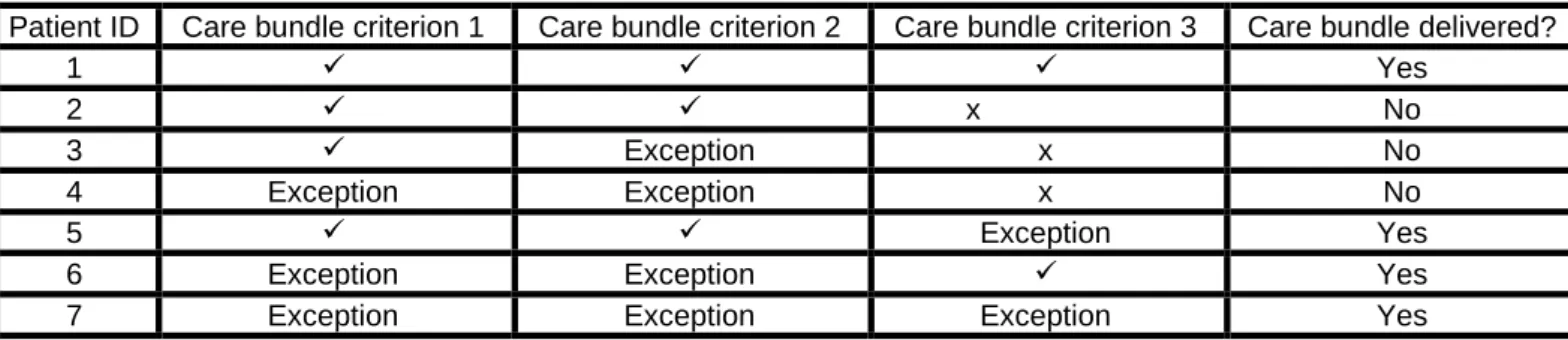
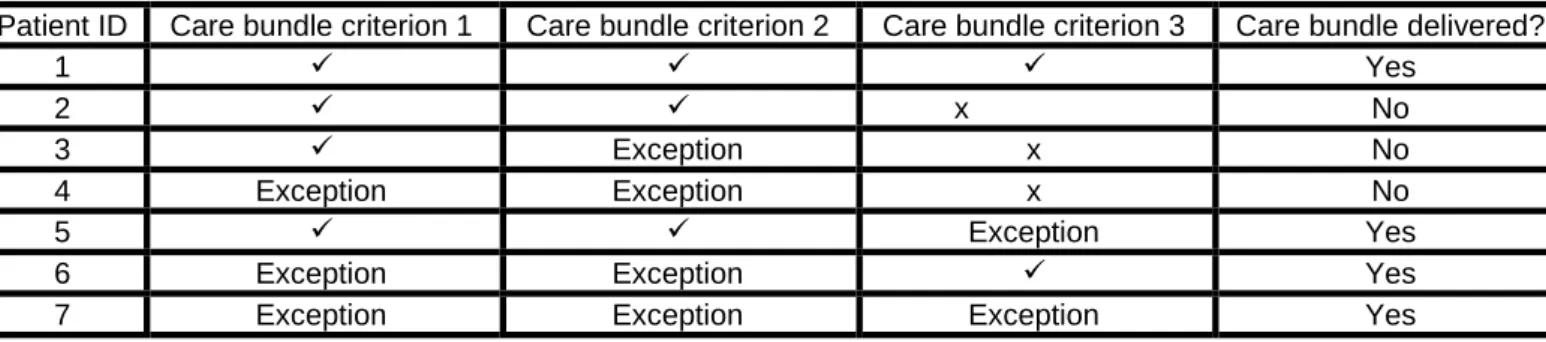
Table 1 - calculation of care bundle delivery and valid exceptions

References

Related documents

The purpose of the study was to elicit perspectives from educational leaders at the school and the system levels of the provincial k-12 system, with a view to examining the

Colors in daylight appear differ- ent from the way they appear when illuminated with either of these lamps (Figure 28.5). The perceived color of an object is subjective and depends

There are institutions such as heritage centers, exploratory and some cultural institutes which are considered to be types of museums.. To show works of arts and objects of cultural

People must compete for jobs (i.e., access to means of production), and, once hired, do what they are told. • Private allocation of investment funds, via private financial

Flanders is considered as world leading in the exploitation of the urban mine, recognized position as the European hot spot in (innovations in) recycling, making the difference

Introduction to Investing 476 The Investment Planning Process 476 Establishing Financial Goals 477. Investment Policy Statement 477 Typical Financial Planning Goals 478

The existence of various organs in the human body and their ability to synchronise with one another in order to perform diverse functions is essential for the proper

If any settings are removed from CONFIGURATION  VPN  IPSEC  IKE  RESPONDER then the initiator will need to use the right IKE encryption & authentication algorithm and