Experimental
Ph
ysiolog
y
Hot Topic Review
Hot Topic
Review
Rapid elimination of CO through the lungs: coming full
circle 100 years on
Joseph A. Fisher
1, Steve Iscoe
2, Ludwik Fedorko
1,3and James Duffin
1 1Department of Anesthesiology, University Health Network, University of Toronto, Toronto, Canada 2Department of Biomedical and Molecular Sciences, Queen’s University, Kingston, Canada 3Hyperbaric Medicine Unit, University Health Network, Toronto, CanadaAt the start of the 20th century, CO poisoning was treated by administering a combination of CO2 and O2(carbogen) to stimulate ventilation. This treatment was reported to be highly
effective, even reversing the deep coma of severe CO poisoning before patients arrived at the hospital. The efficacy of carbogen in treating CO poisoning was initially attributed to the absorption of CO2; however, it was eventually realized that the increase in pulmonary ventilation
was the predominant factor accelerating clearance of CO from the blood. The inhaled CO2in
the carbogen stimulated ventilation but prevented hypocapnia and the resulting reductions in cerebral blood flow. By then, however, carbogen treatment for CO poisoning had been abandoned in favour of hyperbaric O2. Now, a half-century later, there is accumulating evidence
that hyperbaric O2is not efficacious, most probably because of delays in initiating treatment. We
now also know that increases in pulmonary ventilation with O2-enriched gas can clear CO from
the blood as fast, or very nearly as fast, as hyperbaric O2. Compared with hyperbaric O2, the
technology for accelerating pulmonary clearance of CO with hyperoxic gas is not only portable and inexpensive, but also may be far more effective because treatment can be initiated sooner. In addition, the technology can be distributed more widely, especially in developing countries where the prevalence of CO poisoning is highest. Finally, early pulmonary CO clearance does not delay or preclude any other treatment, including subsequent treatment with hyperbaric O2.
(Received 12 May 2011; accepted after revision 30 September 2011; first published online 3 October 2011)
Corresponding authorJ. A. Fisher: University of Toronto, Department of Anesthesia and Pain Management, Toronto General Hospital, 3 Eaton North, 200 Elizabeth Street, Toronto, Ontario, Canada M5G 2C4.
Email: [email protected]
Background
At the turn of the 20th century, CO poisoning was treated by administering high concentrations of O2to increase the
O2carried in the blood and, if necessary, ventilation was
stimulated by adding CO2. It was initially and mistakenly
thought that patients asphyxiated to unconsciousness
by CO had a total body deficit of CO2 that was
replenished by the inhaled CO2(Hendersonet al.1921).
Furthermore, animal tests had shown that the addition of CO2 to O2 markedly increased the dissociation of
carboxyhaemoglobin (COHb) and accelerated clearance of CO compared with using O2 alone (Henderson &
Haggard, 1920). Carbon dioxide was administered in concentrations of 5–10% in O2, known as ‘carbogen’.
From the very beginning, treatment of CO-poisoned patients with carbogen at the site of rescue led to reports of dramatic reversals of coma and other neurological symptoms (Henderson & Haggard, 1922). In short order, the administration of carbogen became the standard of care for CO poisoning, and remained so for almost a half-century. Indeed, carbogen remains a stock item in many hospitals to this day.
Hyperbaric oxygen
By the 1960s, the rationale for using carbogen for CO poisoning was increasingly questioned (Donald & Paton, 1955). The notion that CO poisoning was accompanied
by a deficit of CO2 was rejected (Donald & Paton,
1955). Ventilatory stimulation by CO2 was no longer
required, because hypoventilation accompanying coma could be managed by endotracheal intubation and mechanical ventilation. It became feasible to increase CO dissociation from haemoglobin (Hb) by exploiting the mass action effect of O2 on the equilibrium (Haldane,
1895) COHb+O2→← O2Hb+CO by administering the
O2at hyperbaric pressures (Paceet al.1950). Hyperbaric
O2replaced carbogen as the preferred treatment (Smith,
1962) because it was thought (mistakenly, as subsequently demonstrated; Fisher et al. 1999) to result in faster CO elimination (Norman & Ledingham, 1967) and, on theoretical grounds, to be effective at reversing the assumed toxic effects of CO in such extravascular tissues as the brain (Brown & Piantadosi, 1990; Stoller, 2007).
Time to treatment over type of treatment
The point cannot be too strongly emphasized that for treatment to be effective it must be applied at the earliest possible moment after the victim is discovered, and must remove the carbon monoxide from his blood as soon as possible.(Henderson & Haggard, 1922)
Although the physics and chemistry underpinning the effectiveness of hyperbaric O2 in clearing CO from the
blood are unassailable, and some beneficial effects can be demonstrated in animals (Brown & Piantadosi, 1990, 1992; Piantadosi et al. 1997), in practice it has been difficult to demonstrate its clinical efficacy. The poor response of most victims of CO poisoning to hyperbaric O2 has been confirmed repeatedly by expert panels in
Australia, Canada and the USA (Buckley et al. 2005; Juurlink et al. 2005; McMaster University Division of Emergency Medicine, 2006; Wolf et al. 2008), as well as large controlled trials in Australia (Scheinkestelet al.1999) and France (Annane et al.2010). The primary lesson to be learned from the discrepancies between animal and clinical studies is that for patients poisoned by CO, the time to treatment, rather than the method of treatment, is of major importance (Gormanet al.1992; Scheinkestel et al.1999). Even from the very beginning of hyperbaric O2 treatment of CO poisoning in Glasgow, it was clear
that delays between poisoning and treatment markedly reduced its effectiveness (Smith, 1962). Times to treatment as short as 3–6 h, which are all that can be expected for hyperbaric O2given the logistics of patient transport
and chamber preparation, continue to show no benefit compared with normobaric O2 (Scheinkestelet al.1999;
Annaneet al.2010).
Effect of time to treatment on pathology of CO poisoning
It has been long understood that ‘asphyxia is not immediately terminated when the victim is removed from the gassing chamber. . .although his body may be surrounded and his lungs filled with fresh air, his brain continues to be asphyxiated’ (Henderson & Haggard, 1922). Eventually, there is a redistribution of CO from blood to extravascular tissues (Coburn, 1970), drawn there by the high affinity of some cellular molecules for CO [e.g. myoglobin in heart muscle (Coburn, 1970; Dolan, 1985) and cytochromes in the brain (Cronjeet al.2004)], even at low [COHb], and particularly with hypoxaemia (Dolan, 1985).
One instructive model of CO distribution kinetics to an extravascular compartment is CO in the fetus, as studied by Longo and colleagues (Hillet al.1977; Longo & Hill, 1977) in pregnant sheep. Fetal Hb has a higher affinity for both O2 and CO than maternal Hb. After an initial
maternal exposure to CO, there is a delay in the transfer of CO to the fetus of about 1 h (Longo & Hill, 1977), which is characteristic of many tissues (Cronjeet al.2004). This delay is due to the low partial pressure of CO (PCO) in
the plasma, because it is tightly bound to Hb (Bruceet al. 2008). Eventually, at higher [COHb],PCO rises and CO
begins to diffuse into the tissues. At equilibrium, fetal [COHb] will exceed maternal [COHb] (dotted lines in Fig. 1). If rescue occurs prior to equilibration of CO, maternal [COHb] will follow the time course illustrated in Fig. 1. If normobaric O2is administered, the maternal
half-time of CO elimination will be∼80 min (Dolan, 1985). However, because of the greater affinity of fetal Hb for CO, fetal [COHb] will continue to rise and so exceed
Figure 1. Schematic diagram illustrating the kinetics of [COHb] in mother (red) and fetus (teal) after 3 h exposure to CO and then rescue
Black dotted lines represent [COHb] at equilibrium; coloured dashed lines represent [COHb] with normobaric O2treatment; coloured
dotted lines represent [COHb] with accelerated CO clearance. (Figure from Rucker & Fisher, 2006, with permission. Labels added to original figure by the authors.)
that of the mother, even as her [COHb] is falling. If CO clearance from the mother is accelerated, thePCOgradient
between the fetus and mother increases (Longo & Hill, 1977), thereby also increasing the rate of elimination from the fetus. A computer simulation of CO kinetics between mother and fetus using the model proposed by Hill & Longo (1977) is available as a supplemental file entitled CO Model.zip.
These principles of CO kinetics have long been acknowledged (Henderson & Haggard, 1922; Smith, 1962; Scheinkestel et al. 1999); yet somehow, by consensus, a treatment that was highly effective because it could be administered with the least delay (carbogen) was abandoned for another (hyperbaric O2) despite its
associated delay in treatment. The (presumed) greater rate
Figure 2. Effect of poikilocapnic and isocapnic normobaric O2 treatment on cerebral O2delivery (DO2) in CO-exposed human subjects
Fourteen human subjects were exposed on two separate occasions to CO until their [COHb] reached 10–12%. They were administered 100% O2with, and without, maintaining isocapnia. Blood O2delivery
was calculated from arterial PO2, arterialPCO2, haemoglobin saturation (11–[COHb]), plasma O2content, and changes in middle
cerebral artery flow velocity (MCAV) as measured by transcranial Doppler (as a surrogate of change in cerebral blood flow). Poikilocapnic hyperoxia resulted in a significantly lower DO2. (From
Ruckeret al.2002, with permission from the publisher.)
of CO elimination and the potential of reversing CO-related pathology (Sharpet al.1962) with hyperbaric O2
was considered an acceptable trade-off for the difficult logistics, increased expense and added delay in treatment. Despite little evidence of its value, hyperbaric O2 has
remained the mainstay of treatment for the last half a century.
Is normobaric oxygen a standard of care?
Even normobaric O2 treatment of CO poisoning is
problematic. The effect of PO2 on the half-time of
[COHb] reduction in patients treated in hospital (as opposed to laboratory volunteers) is highly unreliable (r2=0.19), ranging from 26 to 148 min (Weaver et al.
2000). Furthermore, normobaric O2treatment may even
contribute to the morbidity of CO poisoning. Apart from the potential for free radical generation by hyperoxia (Thom, 1990), there is also the underappreciated effect of hyperoxia as a ventilatory stimulant. Hyperoxia-induced hyperventilation results in some degree of hypocapnia (Beckeret al.1996), which is associated with a reduction of blood flow in such CO2-responsive vascular beds as
the coronary (Caseet al.1975) and cerebral circulations. The reduction in cerebral (Kety & Schmidt, 1948) blood flow with hypocapnia occurs even in the presence of increased levels of CO in the blood (Ruckeret al.2002). In normoxic individuals, as well as those with high [COHb] (Henderson & Haggard, 1922), normobaric O2produces
only a very small increase in blood O2 content that is
carried in the plasma, where it is poorly soluble. If this small increase in blood O2content is accompanied by even
a small reduction in tissue blood flow, the result can be a net reduction in organ O2delivery (Caseet al.1975; Rucker
et al. 2002). Figure 2 illustrates that the administration of normobaric O2, an undisputed treatment for CO
poisoning since the time of Haldane (Haldane, 1895), may even exacerbate the brain ischaemia resulting from CO poisoning.
Back to the future
If there are problems with carbogen, hyperbaric and normobaric O2, where do we go from here?
Increased alveolar ventilation can be as effective as
hyperbaric O2
About a decade ago, the trade-offs between rate of CO elimination and time to treatment were re-examined. The initial studies compared the half-times of reduction of [COHb] induced by increases in alveolar ventilation with those resulting from hyperbaric O2. Previous studies
relative efficacies of various mixtures of CO2 in O2 for
reducing [COHb] in spontaneously breathing animals (Waltonet al.1925) and humans (Henderson & Haggard, 1922). In the early 1960s, it became apparent that the elimination of rebreathing during assisted ventilation (Douglaset al. 1961) and the magnitude of the minute ventilation (Killick & Marchant, 1959), i.e. the net alveolar ventilation, rather than the concentration of CO2 in the
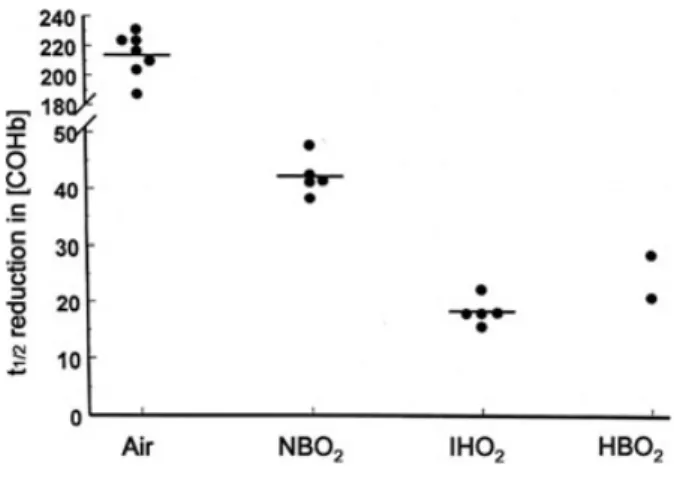
carbogen, was the main factor determining the half-time of elimination. Indeed, with controlled ventilation Fisheret al.(1999) demonstrated, in dogs, that isocapnic increases in alveolar ventilation result in the same half-times of CO elimination as those for hyperbaric O2
(Fig. 3).
Favourable CO kinetics with increased alveolar ventilation
Takeuchiet al. (2000) then investigated CO elimination half-times in spontaneously breathing human volunteers exposed to CO. Subjects breathed O2 using a circuit
that maintained normocapnia. Several findings from this study are of interest. First, the ventilatory response to normobaric O2 (open symbols in Fig. 4) varied between
subjects. Second, the relationship between elimination half-times and minute ventilation is a rectangular hyperbola. This shape means that initial graded increases in minute ventilation above resting values result in the
Figure 3. Elimination half-times for [COHb]
Five anaesthetized, intubated, spontaneously breathing dogs were exposed to CO until [COHb] reached∼70%. They were then administered, sequentially, room air (Air), normobaric O2(NBO2) and
then vigorously mechanically ventilated with O2while maintaining normocapnia (IHO2). Blood was drawn every 5 min and analysed for
[COHb]. Plots of log [COHb]versustime were used to calculate the half-times of reduction in [COHb]. Values are compared with dogs prepared in a similar manner and treated with normocapnic ventilation with O2at 3 atm (304 kPa). Isocapnic hyperpnoea resulted in a similar
rate of [COHb] reduction to hyperbaric O2(HBO2). Reprinted with
permission of the American Thoracic Society. CopyrightC American
Thoracic Society. Hyperbaric data from the original study reported in the text was added to the figure by the authors.
greatest reductions in half-times. For example, a 70 kg patient ventilating at about 15–20 l min-1 (levels easily
tolerated by patients without severe lung disease) can reduce the half-time to a value similar to that reported for hyperbaric O2 (Takeuchi et al. 2000). Finally, the
relationship between minute ventilation and elimination half-time is scalable to body size and sex (Tesler, 2000).
Back to carbogen?
Is it therefore appropriate to resurrect carbogen as a readily deployable means to increase alveolar ventilation without reducing arterialPCO2? Unfortunately, it is not. As early as
1955, an official report to the Medical Research Council (UK) (Donald & Paton, 1955) warned about the risk of exacerbating acidosis by administering carbogen to patients who are already retaining CO2due to ventilatory
depression from severe CO poisoning or previously ingested drugs. As for those patients with an intact ventilatory response to CO2, administration of CO2 up
to a concentration of 4% increases the minute ventilation only by a factor of two (Soleyet al.1941), thereby limiting its effectiveness in CO elimination. Moreover, large individual variations in ventilatory responses to inhaled CO2 (Solely et al. 1941; Prisman et al. 2007) mean that
Figure 4. Half-time of COHb reductionversusminute ventilation in humans
Seven men were exposed to CO until [COHb] reached 10–12% on two separate occasions. On one occasion, subjects breathed 100% O2
(‘resting ventilation’). On the other occasion, subjects were
administered 100% O2and asked to increase their minute ventilation; on that occasion, isocapnia was maintained. Venous blood was drawn every 5 min and analysed for [COHb]. Open symbols represent values during resting ventilation (normobaric O2); filled symbols during
normocapnic hyperpnoea. Half-times of elimination were calculated from plots of log [COHb]versustime. Most of the increase in [COHb] reduction was reached at a relatively modest 200 ml min-1kg-1, or
14 1 min-1for a 70 kg person. (From Takeuchiet al.2000; reprinted
with permission of the American Thoracic Society. CopyrightC
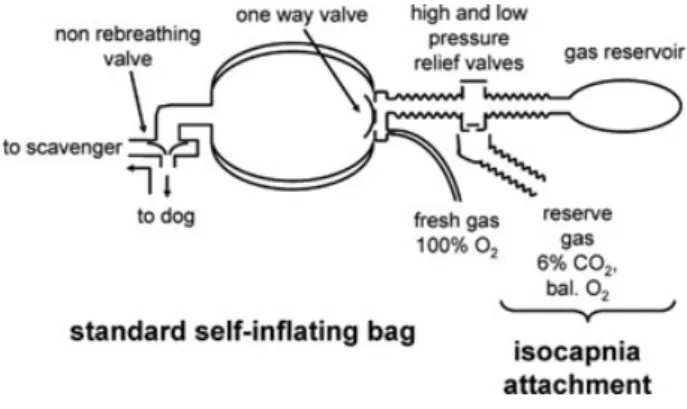
Figure 5. A self-inflating bag circuit suitable for spontaneous and controlled ventilation
Reserve gas enters circuit through the inspiratory relief valve of the self inflating bag (modified from Fig. 1 of Sasanoet al.2001; figure reproduced with permission of the publisher.)
one cannot guarantee an increased rate of CO elimination, or even that hypocapnia will be prevented (Baddeley et al. 2000; Prisman et al. 2007). Above an inspired CO2 concentration of 4%, minute ventilation markedly
increases, but so does respiratory distress (Baddeleyet al. 2000); these investigators found that 30% of patients and healthy subjects were unable to tolerate 5% CO2. It is
therefore unlikely that a single premixed carbogen dose will fit all.
Hyperpnoea without carbogen
It follows from the preceding discussion that exploiting an increase in alveolar ventilation to clear the blood of
CO will require a different approach. The method used must maintain normocapnia in order to allow patients to sustain increased ventilation comfortably for two to three half-times of CO elimination, thereby achieving more complete elimination of CO. Rather than administering a fixed concentration of CO2 in an attempt to maintain
normocapnia with hyperpnoea, one can administer CO2
in direct proportion to increases in minute ventilation above basal levels (Sommer et al. 1998). Ideally, the apparatus that would be used to maintain normocapnia would be safe, easy to use, portable and, if at all possible, inexpensive.
Increasing alveolar ventilation while maintaining normocapnia
Historically, the advances in treatment of CO poisoning were also linked to the fabrication of devices required to implement them. Henderson and Haggard in New York devised their H-H Infusor to administer carbogen (Henderson & Haggard, 1922). Smith and Sharp (1960) built the first fixed and then portable hyperbaric chambers (Normanet al.1970) in the Aberdeen Royal Infirmary, in Scotland. Recently, researchers in our laboratory (Sommer et al.1998) described a method that passively maintains normocapnia regardless of minute ventilation and pattern of breathing. In that circuit, a constant O2flow is provided
to a standard self-inflating bag, and the inspiratory relief valve of the self-inflating bag is attached to a demand regulator supplying 6% CO2in O2(Fig. 5). Any increase in
minute ventilation above the O2flow is therefore supplied
by the demand regulator (6% CO2in O2). The O2flow is
Figure 6. Data from a human subject to illustrate the effect of voluntary hyperventilation, without (A) and with maintenance of normocapnia (B) with the breathing circuit depicted in Fig. 6, on end-tidalPCO2
Lower panels show minute ventilation ( ˙VE) and upper panels show continuous capnograph traces. Peaks are
end-tidalPCO2and troughs represent inspiredPCO2. Note proportional increases in inspiredPCO2as ˙VEincreases; end-tidalPCO2remains unchanged, regardless of ˙VE.
adjusted to match the patient’s metabolic CO2production
and controls the alveolar ventilation for CO2. Arterial
PCO2is therefore unchanged by any increase in ventilation,
because any ventilation exceeding the O2flow is composed
of 6% CO2in O2, a mixture that does not contribute to
a CO2diffusion gradient between capillary blood and the
alveoli (Sommeret al.1998; Somogyiet al.2005; Fig. 6). However, it is the combined flow of O2 and 6% CO2in
O2 that serves to wash out CO from the lungs, thereby
clearing it from the blood.
The system is designed to be used in the field, but it cannot be readily improvised and requires deliberate preparation. It requires a customized breathing circuit or modification of available self-inflating bags, compressed CO2-containing gas with specific pressure regulator and
flow controller. Such tanks require care in storage or use in extreme cold because CO2 liquefies readily when
cold. Use of the system requires some clinical expertise or monitoring of end-tidal gas in order to set the fresh gas flow (O2or air) appropriately to attain an appropriate
end-tidalPCO2. However, due to the benign nature of acute
hypercapnia in adults (Potkin & Swenson, 1992; Ayaset al. 1998), as well as in children (Goldsteinet al.1990), when oxygenation is maintained, the fresh gas flow need not be exact and can be safely titrated to comfort or ventilatory response, or can be set according to guidelines based on approximate body weight.
Isocapnic hyperpnoea in practice
We suggest that the availability of a portable device to increase CO clearance would be a useful adjunct to current treatment of CO poisoning. It can be brought to the field to begin treatment immediately at the time of rescue and continue treatment during transportation to hospital. The same device can be applied to patients breathing spontaneously, as well as those requiring ventilatory assistance. Prior CO clearance at the site of rescue would make emergency air transport safer, should it be required. As normocapnia is maintained and there are no foreseeable risks, this treatment can be administered on the suspicion of CO poisoning. It would therefore provide the earliest possible treatment if CO poisoning is later confirmed, and nothing is lost if it is not. Carbon monoxide poisoning often occurs in clusters, and this treatment approach can be inexpensively and safely applied to all victims. Finally, early pulmonary CO clearance does not delay or preclude any other treatment, including subsequent treatment with hyperbaric O2, if deemed necessary (Piantadosi, 2002;
Weaveret al.2002).
It is also noteworthy that isocapnic increases in alveolar ventilation with 21% O2 would be as effective
in eliminating CO as normobaric hyperoxia (Henderson & Haggard, 1920), yet avoid risk of the additional oxidative
stress from hyperoxia. Furthermore, both hyperoxic and normoxic isocapnic hyperpnoea would also accelerate the clearance of any volatile hydrocarbons, including ethanol (Henderson, 1924; Hunter & Mudd, 1924), methanol, ingested poisons (Lemburg et al. 1979) and anaesthetic agents (Sasanoet al.2001; Veselyet al.2003; Katznelson et al.2008, 2010).
Summary
We believe we have now come full circle in the treatment of CO poisoning. At the beginning of the 20th century, carbogen proved to be an effective means of treating CO poisoning. Only relatively recently was it realized that it was not the CO2 in carbogen but the increase in
alveolar ventilation induced by the CO2 that accelerated
the clearance of CO. By then, however, rapid advances in the technology of positive-pressure ventilation and hyperbaric chambers overshadowed the old-fashioned approach using carbogen. Despite the initial enthusiasm for hyperbaric O2as the treatment for CO poisoning, the
fact remains that hyperbaric O2 facilities are expensive
and their distribution around the world is poorly matched to the incidence and prevalence of CO poisoning. Even in wealthier urban areas, the inherent delays to initiate treatment make them clinically ineffective. The technical barriers to safely enable lung clearance of CO are low, making it feasible to provide for widespread availability of the means for early and rapid CO elimination. In any case, early pulmonary CO clearance does not delay or preclude any other treatment, including subsequent treatment with hyperbaric O2.
References
Annane D, Chadda K, Gajdos P, Jars-Guincestre MC, Chevret S & Raphael JC (2010). Hyperbaric oxygen therapy for acute domestic carbon monoxide poisoning: two randomized controlled trials.Intensive Care Med37, 486–492. Ayas N, Bergstrom LR, Schwab TR & Narr BJ (1998).
Unrecognized severe postoperative hypercapnia: a case of apneic oxygenation.Mayo Clin Proc73, 51–54.
Baddeley H, Brodrick PM, Taylor NJ, Abdelatti MO, Jordan LC, Vasudevan AS, Phillips H, Saunders MI & Hoskin PJ (2000). Gas exchange parameters in radiotherapy patients during breathing of 2%, 3.5% and 5% carbogen gas mixtures.
Br J Radiol73, 1100–1104.
Becker HF, Polo O, McNamara SG, Berthon-Jones M & Sullivan CE (1996). Effect of different levels of hyperoxia on breathing in healthy subjects.J Appl Physiol81, 1683–1690. Brown SD & Piantadosi CA (1990). In vivo binding of carbon
monoxide to cytochrome c oxidase in rat brain.J Appl Physiol68, 604–610.
Brown SD & Piantadosi CA (1992). Recovery of energy metabolism in rat brain after carbon monoxide hypoxia.
J Clin Invest89, 666–672.
Bruce EN, Bruce MC & Erupaka K (2008). Prediction of the rate of uptake of carbon monoxide from blood by extravascular tissues.Respir Physiol Neurobiol161, 142–159.
Buckley NA, Isbister GK, Stokes B & Juurlink DN (2005). Hyperbaric oxygen for carbon monoxide poisoning: a systematic review and critical analysis of the evidence.
Toxicol Rev24, 75–92.
Case RB, Greenberg H & Moskowitz R (1975). Alterations in coronary sinus pO2and O2saturation resulting from pCO2
changes.Cardiovasc Res9, 167–177.
Coburn RF (1970). The carbon monoxide body stores.Ann NY Acad Sci174, 11–22.
Cronje FJ, Carraway MS, Freiberger JJ, Suliman HB & Piantadosi CA (2004). Carbon monoxide actuates
O2-limited heme degradation in the rat brain.Free Radic Biol
Med37, 1802–1812.
Dolan MC (1985). Carbon monoxide poisoning.CMAJ133, 392–399.
Donald KW & Paton WDM (1955). Gases administered in artificial respiration; with particular reference to the use of carbon dioxide.Brit Med J1(4909), 313–318.
Douglas TA, Lawson DD, Ledingham IM, Norman JN, Sharp GR & Smith G (1961). Carbogen in experimental
carbonmonoxide poisoning.Br Med J2(5268), 1673–1675.
Fisher JA, Sommer LZ, Rucker J, Vesely A, Lavine A, Greenwald Y, Volgyesi G, Fedorko L & Iscoe S (1999). Isocapnic Hyperpnea accelerates carbon monoxide elimination.Am J Respir Crit Care Med159, 1289–1292.
Goldstein B, Shannon DC & Todres ID (1990). Supercarbia in children: clinical course and outcome.Crit Care Med18, 166–168.
Gorman DF, Clayton D, Gilligan JE & Webb RK (1992). A longitudinal study of 100 consecutive admissions for carbon monoxide poisoning to the Royal Adelaide Hospital.Anaesth Intensive Care20, 311–316.
Haldane JS (1895). The action of carbonic oxide on man.
J Physiol18, 430–462.
Henderson Y (1924). Resuscitation: from carbon monoxid asphyxia, from ether or alcohol intoxication, and from respiratory failure due to other causes; with some remarks also on the use of oxygen in pneumonia, and inhalational therapy in general.JAMA83, 758–764.
Henderson Y & Haggard HW (1920). The elimination of carbon monoxid from the blood after a dangerous degree of asphyxiation, and a therapy for accelerating the elimination.
J Pharmacol Exper Ther16, 11–20.
Henderson Y & Haggard HW (1922). The treatment of carbon monoxide asphyxia by means of oxygen and CO2inhalation.
JAMA79, 1137–1145.
Henderson Y, Haggard HW & Coburn RF (1921). The acapnia theory, now.JAMA77, 424–427.
Hill EP, Hill JR, Power GG & Longo LD (1977). Carbon monoxide exchanges between the human fetus and mother: a mathematical model.Am J Physiol Heart Circ Physiol232, H311–H323.
Hunter FT & Mudd SG (1924). Carbon dioxide treatment in acute alcoholic intoxication.Boston Medical & Surgical Journal100, 971–974.
Juurlink DN, Buckley NA, Stanbrook MB, Isbister GK, Bennett M & McGuigan MA (2005). Hyperbaric oxygen for carbon monoxide poisoning.Cochrane Database Syst Rev(1), CD002041.
Katznelson R, Minkovich L, Friedman Z, Fedorko L, Beattie WS & Fisher JA (2008). Accelerated recovery from sevoflurane anesthesia with isocapnic hyperpnoea.Anesth Analg106, 486–91.
Katznelson R, Van Rensburg A, Friedman Z, Wasowicz M, Djaiani GN, Fedorko L, Minkovich L & Fisher JA (2010). Isocapnic hyperpnoea shortens postanesthetic care unit stay after isoflurane anesthesia.Anesth Analg111, 403–408.
Kety SS & Schmidt CF (1948). The effects of altered arterial tensions of carbon dioxide and oxygen on cerebral blood flow and cerebral oxygen consumption of normal young men.J Clin Invest27, 484–492.
Killick EM & Marchant JV (1959). Resuscitation of dogs from severe acute carbon monoxide poisoning.J Physiol147, 274–298.
Lemburg P, Sprock I, Bretschneider A, Storm W & Gobel U (1979). A new concept of therapy in accidental intoxications with halogenated hydrocarbons.Vet Hum Toxicol21(Suppl), 37–40.
Longo LD & Hill EP (1977). Carbon monoxide uptake and elimination in fetal and maternal sheep.Am J Physiol Heart Circ Physiol232, H324–H330.
McMaster University Division of Emergency Medicine (2006). Should hyperbaric oxygen be used for CO poisoning?Can J Emerg Med8, 43–46.
Norman JN & Ledingham IM (1967). Carbon monoxide poisoning: investigations and treatment.Prog Brain Res24. 101–122.
Norman JN, MacIntyre J, Shearer JR & Smith G (1970). Use of a one-man, mobile pressure chamber in the treatment of carbon monoxide poisoning.Br Med J2(5705), 333–334. Pace N, Strajman E & Walker EL (1950). Acceleration of carbon
monoxide elimination in man by high pressure oxygen.
Science111, 652–654.
Piantadosi CA (2002). Carbon monoxide poisoning.N Engl J Med347, 1054–1055.
Piantadosi CA, Zhang J, Levin ED, Folz RJ & Schmechel DE (1997). Apoptosis and delayed neuronal damage after carbon monoxide poisoning in the rat.Exp Neurol147, 103–114.
Potkin RT & Swenson ER (1992). Resuscitation from severe acute hypercapnia. Determinants of tolerance and survival.
Chest102, 1742–1745.
Prisman E, Slessarev M, Azami T, Nayot D, Milosevic M & Fisher J (2007). Modified oxygen mask to induce target levels of hyperoxia and hypercarbia during radiotherapy: a more effective alternative to carbogen.Int J Radiat Biol83, 457–462.
Rucker J & Fisher JA (2006). Carbon monoxide poisoning. In
Clinical Critical Care Medicine, ed. Albert RK, Slutsky AS, Ranieri M, Takala J & Torres A, pp. 679–683. Mosby, Philadelphia, PA, USA.
Rucker J, Tesler J, Fedorko L, Takeuchi A, Mascia L, Vesely A, Kobrossi S, Slutsky AS, Volgyesi G, Iscoe S & Fisher JA (2002). Normocapnia improves cerebral oxygen delivery during conventional oxygen therapy in carbon
monoxide-exposed research subjects.Ann Emerg Med40, 611–618.
Sasano H, Vesely AE, Iscoe S, Tesler JC & Fisher JA (2001). A simple apparatus for accelerating recovery from inhaled volatile anesthetics.Anesth Analg93, 1188–1191. Scheinkestel CD, Bailey M, Myles PS, Jones K, Cooper DJ,
Millar IL & Tuxen DV (1999). Hyperbaric or normobaric oxygen for acute carbon monoxide poisoning: a randomised controlled clinical trial.Med J Aust170, 203–210.
Sharp GR, Ledingham IM & Norman JN (1962). The application of oxygen at 2 atmospheres pressure in the treatment of acute anoxia.Anaesthesia17, 136–144. Smith G (1962). The treatment of carbon monoxide poisoning
with oxygen at two atmospheres absolute.Ann Occup Hyg5, 259–263.
Smith G & Sharp GR (1960). Treatment of carbon monoxide poisoning with oxygen under pressure.Lancet2, 905–906. Soley MH, Jump KB & Shock NW (1941). Carbon dioxid
therapy.Cal West Med54, 73–76.
Sommer LZ, Iscoe S, Robicsek A, Kruger J, Silverman J, Rucker J, Dickstein J, Volgyesi GA & Fisher JA (1998). A simple breathing circuit minimizing changes in alveolar ventilation during hyperpnoea.Eur Respir J12, 698–701.
Somogyi RB, Vesely AE, Preiss D, Prisman E, Volgyesi G, Azami T, Iscoe S, Fisher JA & Sasano H (2005). Precise control of end-tidal carbon dioxide levels using sequential rebreathing circuits.Anaesth Intensive Care33, 726–732.
Stoller KP (2007). Hyperbaric oxygen and carbon monoxide poisoning: a critical review.Neurol Res29, 146–155. Takeuchi A, Vesely A, Rucker J, Sommer LZ, Tesler J, Lavine E,
Slutsky AS, Maleck WH, Volgyesi G, Fedorko L, Iscoe S & Fisher JA (2000). A simple “new” method to accelerate clearance of carbon monoxide.Am J Respir Crit Care Med
161, 1816–1819.
Tesler J (2000). Rates of elimination of carbon monoxide in males and females. MSc Thesis, Institute of Medical Sciences, University of Toronto. http://www.collectionscanada.gc.ca/ obj/s4/f2/dsk1/tape2/PQDD 0019/MQ54148.pdf
Thom SR (1990). Carbon monoxide-mediated brain lipid peroxidation in the rat.J Appl Physiol68, 997–1003. Vesely A, Fisher JA, Sasano N, Preiss D, Somogyi R, El Beheiry
H, Prabhu A & Sasano H (2003). Isocapnic hyperpnoea accelerates recovery from isoflurane anaesthesia.Br J Anaesth
91, 787–792.
Walton DC, Eldridge WA, Allen MS & Witherspoon MG (1925). Carbon monoxid poisoning: a comparison of the present methods of treatment.Arch Intern Med37, 398–407.
Weaver LK, Hopkins RO, Chan KJ, Churchill S, Elliott CG, Clemmer TP, Orme JF Jr, Thomas FO & Morris AH (2002). Hyperbaric oxygen for acute carbon monoxide poisoning.N Engl J Med347, 1057–1067.
Weaver LK, Howe S, Hopkins R & Chan KJ (2000).
Carboxyhemoglobin half-life in carbon monoxide-poisoned patients treated with 100% oxygen at atmospheric pressure.
Chest117, 801–808.
Wolf SJ, Lavonas EJ, Sloan EP & Jagoda AS (2008). Clinical policy: critical issues in the management of adult patients presenting to the emergency department with acute carbon monoxide poisoning.Ann Emerg Med51, 138–152.
Potential conflict of interest
All of the authors have contributed to the development of the technology to increase the efficacy of pulmonary
clearance of volatile hydrocarbons. Some related
intellectual property (IP; US Patent No. 6,354,292) has been protected according to the guidelines of the Technology Development and Commercialization Office of the University Health Network (UHN). The UHN has licensed the IP to Thornhill Research Inc. (TRI), a UHN spin-off company. All of the authors own shares in TRI. J.F., L.F. and J.D. are also paid consultants to TRI.
Supporting Information
Additional Supporting Information may be found in the online version of this article:
CO Model.zip.
Please note: Wiley-Blackwell are not responsible for the content or functionality of any supporting materials supplied by the authors. Any queries (other than missing material) should be directed to the corresponding author for the article.
![Figure 1. Schematic diagram illustrating the kinetics of [COHb]](https://thumb-us.123doks.com/thumbv2/123dok_us/8545534.2304184/2.892.468.828.746.942/figure-schematic-diagram-illustrating-kinetics-cohb.webp)