SPEED OF CEO DISMISSAL:
AN ATTRIBUTION-BASED MODEL OF WHEN BOARDS OF DIRECTORS FIRE CEOS IN RESPONSE TO PERFORMANCE DOWNTURN
Young Un Kim
A dissertation submitted to the faculty of the University of the North Carolina at Chapel Hill in partial fulfillment of the requirements for the degree of Doctor of Philosophy in the Kenan-Flagler School of Business (Strategy and Entrepreneurship).
Chapel Hill 2011
iii
ABSTRACT
YOUNG UN KIM: Speed of CEO Dismissal: An Attribution-Based Model of When Boards of Directors Fire CEOs in Response to Performance Downturn
(Under the direction of Dr. Hugh M. O’Neill)
This research examines the dynamics of the CEO retention and dismissal decision making process adopting an attribution theory perspective. Replacement of management is generally known as an essential element for firms experiencing performance downturn and in need of organizational turnaround. However, firms vary in their speed of CEO replacement as a response to performance downturn, and the relationship of speed to the efficacy of response has not been examined. This dissertation investigates three broad research questions. First, how does causal reasoning based on performance feedback explain the variance in CEO dismissal timing? Second, do boards misattribute the cause of performance downturn inappropriately to the CEO? If so, what are the post-succession performance consequences? Last, are firms dismissed faster due to increased level of legal scrutiny in the post Sarbanes-Oxley era?
While current debates about CEO dismissal have generally been dominated by economic and political perspectives on CEO/board relations, I argue in this paper that CEO dismissal may be driven by cognitive, behavioral, and symbolic reasons as well.I
specifically examine how attributions of causality of different types of performance downturn affect the corporate boards’ interpretations of CEO skill and their speed of
iv
externally caused and temporary, then the boards will be less likely to dismiss the CEO or be late in their dismissal actions.
Based on a sample of 376 CEO dismissal observations in 348 public US companies during the period 1992-2009, I find that firms with a moderate speed in CEO dismissal outperform those that have faster or slower speeds of dismissal, showing that the response time after a downgrade can be an important variable affecting firm performance. The analyses also provided clear support for the relationship between different types of
performance downturn and speed of CEO dismissal. Last, results also show that the time it takes to fire a CEO has increased over time (slower CEO dismissals), especially after the Sarbanes-Oxley legislation.
v
ACKNOWLEDGEMENTS
I extend my gratitude and acknowledgement to all my dissertation committee members. Every member of the committee provided the guidance, professional advice, and moral support in order to get my dissertation complete. Hugh O’Neill, my dissertation advisor, played a critical role in framing my research questions and was ever so patient with me. Rich Bettis is an incredible role model and he continuously challenged my knowledge and professionalism. Atul Nerkar constantly encouraged me to stay positive and focused while providing me with useful information. Howard Aldrich was more than willing to lend his valuable time and was very helpful in feedback and suggestions. Rich Burton was always there when I needed support and guidance in every aspect.
vi
TABLE OF CONTENTS
LIST OF TABLES……….ix
LIST OF FIGURES……….…..ix
CHAPTER ONE: INTRODUCTION………1
1.1 Background………..1
1.2 Motivation for the Study………..2
1.3 Research Questions Overview……….3
1.4 Overview of the Dissertation………...5
CHAPTER TWO: LITERATURE REVIEW………..6
2.1 CEO Influence on Firm Performance………..6
2.2 The CEO Dismissal Process………7
2.3 Speed of CEO Dismissal ………...14
2.4 Cognitive Perspectives in CEO Dismissal ………17
CHAPTER THREE: MODEL AND HYPOTHESES ………...23
3.1 Effects of Different Types of Performance Feedback on Speed of CEO Dismissal ……….23
vii 3.3 Trend and Sarbanes-Oxley Effects
on Speed of CEO Dismissal………...35
CHAPTER FOUR: DATA AND METHOD………...37
4.1 Data Sources and Sample Design………..37
4.2 Key Variables and Measures ………40
4.3 Methodology………..46
CHAPTER FIVE: INTERVIEWS AND QUALITATIVE DATA ………...51
5.1 Interview Members………52
5.2. Interview Results and Findings……….52
5.3 Evidence to Support Hypotheses and Assumptions………...57
CHAPTER SIX: ANALYSIS AND RESULTS………...58
6.1 Data Overview and Descriptive Statistics………..58
6.2 Results of Antecedents of Speed of CEO Dismissal ………62
6.3 Results of Consequences of Speed of CEO Dismissal ……….66
6.4 Results of Trend and Sarbanes-Oxley Effects ………..71
6.5 Summary of Results ………..73
CHAPTER SEVEN: DISCUSSION AND IMPLICATIONS ………...75
7.1 Discussion of Research Findings ………..75
7.2 Implications for Theory and Practice ………81
viii
APPENDICES ………...86
ix
LIST OF TABLES
Table 2.1 Categories of CEO Dismissal ……….11
Table 4.1 Dependent Variables Definition and Measures ………..42
Table 4.2 Independent Variables Definition and Measures ………44
Table 4.3 Control Variables Definition and Measures ………...46
Table 5.1 Evidence for Hypotheses……….57
Table 6.1 Descriptive Statistics………60
Table 6.2 Correlation Tables………61
Table 6.3 Statistics for Distribution Choice……….63
Table 6.4 Hazard Models for Log-Normal Distributions………66
Table 6.5 Determinants of Speed of CEO Dismissals……….68
Table 6.6 Post-Succession Firm Performance by Speed of CEO Dismissals………..70
Table 6.7 Trend in Speed of CEO Dismissal and SOX Effects……….………..72
Table 6.8 Post-Succession Firm Performance Before and After SOX Enactment………...73
Table 6.9 Summary of Results……….………74
LIST OF FIGURES Figure 1.1 The General Model………...4
Figure 3.1 The Attributional Model of Board Response to Performance Downturn……….……...27
Figure 3.2 Dimensions of Causal Attributions………31
Figure 4.1 Measurement of Speed of CEO Dismissal in Response to Analyst Downgrade………40
x
CHAPTER ONE: INTRODUCTION
1.1 Background
The decision to dismiss a CEO and select a successor is a rare, difficult, and important decision made by corporate boards of directors. The corporate governance scandals and Sarbanes-Oxley legislation has increased the vigilance of boards. As a consequence, CEOs of U.S. firms are being dismissed more frequently than ever before (Kaplan & Minton, 2006). Boards are likely to take action against any further damage, especially in underperforming firms (Boeker, 1992; Zhang, 2008). As such, CEO dismissal is seen as a typical response strategy for underperforming firms trying to initiate a turnaround (Castrogiovanni, Baliga, & Jr., 1992; Denis & Denis, 1995; Kesner, 1994; O'Neill, 1986a, 1986b). Yet, this action may not be the correct response to the problem.
2
In light of such research gaps and lack of consistent and robust findings, I set forth a
proposition that we must look at the dynamics of the CEO dismissal process (i.e. speed of CEO dismissal) and approach the process from perspectives other than the ones popularly used in prior research (i.e. attribution theory). This is in line with the call of CEO turnover related papers that are approached from a longitudinal and psychometric standpoint (Pitcher et al., 2000). Thus, this dissertation examines how causal reasoning of performance feedback affects the speed of CEO dismissal and ultimately post-succession performance.
1.2 Motivation for the Study
This dissertation is motivated by lack of consistent results in explaining firm performance after a CEO is replaced (Finkelstein et al 2008). Because most prior research has focused on the static choice of the retention/dismissal decision, I posit that an important variable has been missed, which is the speed of CEO dismissal in response to performance downturn. The time it takes to respond to declining performance can be a significant variable in explaining
post-succession performance. Dismissals which are too early or too late may have long-term negative consequences (Ertugrul & Krishnan, 2008).
3
that responses will be driven by power struggles and network structures (Cannella et al., 1993; Ocasio, 1999).
As board of directors are individuals with cognitive limitations and driven by incentives to meet shareholder needs, their decisions can be limited and short sighted (Fredrickson & Hambrick 1988; Westphal &Fredrickson 2001). Most of the theories used in examining CEO dismissals were based on economic and socio-political views, I approach it from a third perspective – attribution theory (Kelley, 1967; Weiner, 1974). Specifically, I examine how different types of performance feedback following performance downturn (measured as first analyst downgrade during a CEO’s tenure) affects response speed by corporate boards. How a CEO responds to a downturn would be a significant signal in the CEOs managerial skills and the performance following the initial downturn would be a measure that corporate boards use to assess the CEO.
1.3 Research Questions Overview
The research issue investigated in this study is how does performance feedback from firms incurring a downturn affect perceptions of the CEO skills and influence the ongoing choice of whether to fire or not. Three specific research questions are addressed to facilitate the
investigation into this research issue. The three research questions are:
1. How does causal reasoning based on performance feedback explain the variance in the speed of CEO dismissal in response to performance downturn?
2. How does speed of CEO Dismissals in response to performance downturn affect post-succession firm performance?
4
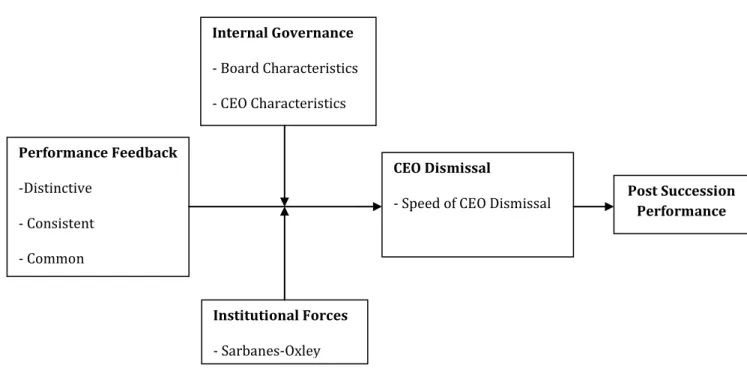
The theoretical framework employed in this research is based on the integration of causal reasoning based on performance feedback and agency theory. Figure 1 offers an overview of the general research model employed to explore these research questions. Although economic and socio-political aspects highly affect the CEO dismissal process (Finkelstein et al 2008), this research tries to contribute to the literature by thoroughly examining the cognitive aspects of corporate boards of directors.
Figure 1.1 The General Model
In order to address the above research questions, the study uses a research design employing both qualitative and quantitative data sources. To first analyze the antecedents of speed of CEO dismissal, I incorporate a hazard model analysis. Because my focus is on different responses in dismissal timing following a performance downturn, identifying the point of
downturn is important. I use analyst forecast downgrade as the inception point of performance downturn. I measure the first dependent variable, speed of CEO dismissal, in terms of number of
Performance Feedback
-Distinctive
- Consistent
- Common
Internal Governance
- Board Characteristics
- CEO Characteristics
Institutional Forces
- Sarbanes-Oxley
CEO Dismissal
5
months since first analyst downgrade of the CEO’s tenure. For the latent variable ‘post-succession performance’ I examine accounting and stock based performance three years after CEO replacement. The analysis was conducted on a public sample of all firms over the years 1996-2009. The sample was narrowed down to include firms which have analysts following them and in which there was an analyst downgrade.
1.4 Overview of the Dissertation
CHAPTER TWO: THEORIES AND HYPOTHESES
This dissertation examines the time it takes to respond to performance downturn by replacing the current CEO. First, an overview of the theoretical and empirical literature
examining CEO dismissal is provided. I first give a general review of the CEO and why the CEO is important to the firm. Second, I review the corporate boards’ role in monitoring the CEO. Specific attention is given to firms that are under performance distress. Next, a more fragmented literature examining behavioral and cognitive aspects is reviewed. This literature provides evidence that firms may vary in their speed of response to performance downturn. Finally, a framework on attribution theory is reviewed. This perspective provides a basis to understand the relationship between how corporate boards’ causal reasoning of performance feedback affects the speed and timeliness in CEO replacement and ultimately future firm performance.
2.1 CEO Influence on Firm Performance
A considerable body of research has examined the CEO. The effect of the CEO, CEO compensation, CEO entrenchment, effective CEO characteristics and CEO turnover are all popular topics that have been scrutinized (Bertrand & Schoar, 2003; Datta & Rajagopalan, 1998; Kesner, 1994; Murphy, 1999).
7
little matter on performance to CEOs being a key determinant constituting more than half of the variance explained of firm performance. Lieberson & O’Conner (1972) found that CEOs matter far less to corporate performance than which company s/he runs or which industry s/he is in. Weiner (1981) and Wasserman (2001) also find the effect of the CEO to be small. However, these early studies were found to be statistically limited and were critiqued. Bertrand & Schoar (2003) captures the sole CEO effect apart from the firm effect by examining CEOs moving from one firm to another. They find that CEOs differ in management styles and thus approaches to company growth and financial aggressiveness differ. These findings support the upper echelon theory that managers with different background, experience and tenure incur different strategic initiatives (Hambrick & Mason 1984; Hambrick et al 1996). Subsequently, to resolve the mixed results, moderating effects at the CEO level, firm level and industry/macro level have been identified(Datta et al., 1998; Finkelstein & Boyd, 1998). As much of research supports the theory that CEOs can strategically change the firms discourse by reallocating strategic resources,
acquiring or divesting business units, and infusing an organization with values and creating a culture which affects employee morale (Barnard, 1938; Schein, 1992; Selznick, 1957; Smith, Carson, & Alexander, 1984) it can be presumed that CEOs directly or indirectly affect
performance. As such, the process of CEO dismissal and succession is likely to be as important as who the new CEO is. Also, as external parties view succession as a signal about the firm’s future (Beatty & Zajac, 1987), the CEO succession is a defining event for every organization (Carey & Ogden, 2000).
2.2 The CEO Dismissal Process
8
turnover has been widely conducted for decades in various fields of business such as finance, accounting, human resource management, organizational behavior, and strategic management. This dissertation focuses on CEO dismissal, a specific type of CEO turnover.
2.2.1 Type of CEO Dismissal
Dismissals are different from most CEO successions in which an incumbent steps down at an agreed-upon time, usually at the retirement age (Cannella et al., 2001; Friedman et al., 1989). Dismissals can be defined as involuntary turnover in which boards of directors are forced to oust the CEO, usually because of poor performance. Resignation, even though announced as voluntary, if due to board influence is usually classified as CEO dismissal (Finkelstein et al 2008).
CEO succession can also be classified as insider succession or outsider
9
To summarize, CEO turnover can be classified as voluntary/involuntary with
inside/outside succession. This dissertation will focus on involuntary turnover, in other words CEO dismissal.
2.2.2 Role of the Board of Directors in CEO Dismissal
Even though the CEO is so crucial to the organization, the CEO is an agent in which the firm has hired. Subsequently, the representatives of the shareholders, whom are boards of directors, can remove the CEO for many reasons. They can be displeased with firm performance and hold the CEO accountable for those results. Or, they may simply disagree with the direction the CEO is pursuing. Or, they may simply want to send a signal to investors that they are
initiating a change (Carey et al., 2000). Whichever reason, the ability to dismiss a CEO is a strong governance mechanism which leads the CEO to act in the interest of shareholders (Eisenhardt, 1989; Fama & Jensen, 1983; Jensen & Meckling, 1976). There exists auditing committees which examines the performance of the CEO and sets appropriate compensations. In board meetings, boards have a chance to evaluate how the CEO is doing and decide whether to keep the current CEO and how much to compensate him/her with. Thus, the dismissal/retainment decision is an ongoing process with formal and informal evaluation methods.
10
It is the most comprehensive federal securities legislation since the Securities and Exchange Commission (SEC) was created in the 1930s (Brown 2006). The law intended to impact the function of the board by mandating it be more independent and more accountable by providing more information to the public investors and also abiding by certain processes. As such, it is suspected that boards of directors become ever so more critical in corporate monitoring and their evaluation of CEOs.
2.2.3 Antecedents and Consequences of CEO Dismissal
Of the many antecedents examined by scholars, prior firm performance and strong internal governance are two constructs that have been robust in explaining CEO dismissal. Weak firm performance is seen to increase CEO dismissal (Denis et al., 1995; Fredrickson, Hambrick, & Baumrin, 1988; Pitcher et al., 2000; Wiersema, 2002; Brookman & Thistle 2009). However reliance on different measures of prior performance lead to inconsistent findings and difference in percentage of variance explained. Also, presence of other factors tend to decouple or
moderate prior performance on succession (Cannella et al., 1993; Finkelstein et al., 1998; Zajac et al., 1996). For example, Fredrickson (Fredrickson et al., 1988) conclude that board’s
11
affect turnover (Jarrel 1980). Analyst recommendations and media coverage is also seen to increase CEO dismissal (Wiersema & Zhang, 2008). All of these causes are not mutually exclusive and these can act as moderating variables as well. Table 2.1 summarizes the causes of CEO dismissal. Many of these variables would also explain the speed in response time of CEO dismissals as well.
Table 2.1 Antecedents of CEO dismissal
Internal Variables External Variables
• Poor firm performance (Bankruptcy) • Internal governance (board of director
size and characteristics)
• CEO power (ownership, tenure & experience)
• Succession planning & contestation
• Investing environment • Market for corporate control • Proxy fights
• Managerial labor markets
• Analyst coverage and recommendation • Media coverage
12
Hambrick (1996) claim that conditions surrounding the succession, the choice of the successor and characteristics of incumbent and successor and measurement of performance should be better acknowledged. Stock market responses to CEO dismissal have also indicated positive effects and negative effects. Beatty & Zajac (1987) find a negative response for change in CEO announcement. Others find that the market reacts heterogeneously by prior firm performance, CEO tenure, successor choice(Beatty et al., 1987; Friedman et al., 1989; Shen & Jr., 2003). Post-succession strategic and structural change has received less attention. CEO change is frequently associated with high levels of strategic change (Carroll, 1984; Greiner & Bhambri, 1989). Virany, Tushman, & Romanelli (1992) find that the positive impact of succession is positively moderated by level of strategic reorientation and staff changes. Even with growing literature on the consequences of CEO change, post succession consequences are still underdeveloped and empirical results are inconsistent (Kesner, 1994; Pitcher 2000). Also, there should be more work acknowledging that CEO change may have disruptive effects on organizations (Beatty et al., 1987; Carroll, 1984)
2.2.4 Disruptive Effects of CEO dismissal
Many argue that the surest route to business improvement involves CEO replacement, yet little guidance is available in deciding when CEOs should be replaced and who should succeed them (Castrogiovanni et al., 1992). The costs associated with a CEO replacement are quite high and should be considered when boards make the decision to fire.
13
adaptive view would predict that most CEO successions would result in positive post-succession performance as the firm changes in a response to make a better fit. This view assumes that the dismissal process is rational and that the successor is appropriate for the role.
However, boards are bounded in their cognitive capabilities and biases may lead to misattributions. They are also motivated by obligation to shareholder interests, personal
incentives and network ties. Such forces may lead to inappropriately dismissing the CEO. When corporate performance falters, boards frequently misdiagnose the problems, fire incumbents, and search for charismatic successors—often with disappointing results (Khurana, 2002). There are also strong forces leading to wrong selection of the successor. Internal pressures toward
homogenization may result in considering only a subset of alternatives. Dalton & Kesner (1992) note that the likelihood of outside succession is low because powerful internal constituencies may resist change. Frequently succession is seen as admitting failure (Dyl, 1985), and outsiders may also be reluctant to take a job in which firm performance is in downturn (D'Aveni, 1989). For example, when Kodak faltered in the early 1990s, its directors fired CEO Kay Whitmore and, amid great fanfare, appointed then-Motorola president George Fisher. But Kodak’s problems stemmed from difficulties adapting to new technology—not ineffective leadership. Kurana 2002 says that the diagnosis of the performance downturn was wrong and the “savior” proved impotent, and Kodak remains a “horse-and-buggy” operation in a digital-photography world. Boards incur the same traps in diagnosing organizational failure as managers do.
14
There exist financial costs of changing including severance pay to the former CEO and costs of finding a replacement. These costs may range up to several million dollars. Also, CEO change is highly disruptive(Virany et al., 1992) as the new CEO needs to adjust to his or her role and especially when employees resist change. In some cases because there is so much resistance, strategic reorientation with no CEO change resulted in better increased performance (Virany et al., 1992). Because boards do not participate in everyday activities, they are prone to
misdiagnosing the source of downturn. Boards rely on filtered data and salient information and are prone to selective perception (Barker, 2005). Boards may also tend to develop self-serving causal interpretations and misattributions related to distinctiveness, consistency and commonality of the performance downturn. Such misdiagnoses will affect who to replace as the successor and also the timeliness in response to downturn. Many boards fire the CEO under poor firm
performance. However, Khurana (2002) proposes that crises are often the worst times to seek saviors. Carroll (1984) finds that rates of organizational death increase following succession. Grusky (1963) further suggest that low organizational effectiveness leads to succession that disrupts an organization and further reduces it effectiveness leading to a vicious downward circle. Also because leader intentions and organizational outcomes are generally loose,
15
costs and benefits is crucial to making an optimal decision in whether to dismiss, when to dismiss, and who to select as the replacement.
2.3 Speed of CEO Dismissal
Even though speed of response to performance downturn can be an important variable in explaining post-succession performance, little research has been conducted on the timing of the decision to dismiss a CEO. Timing is an important variable in strategy research. Studies of organizational change suggest that adjustments to fit the environment need to be made in a timely manner but because of various cognitive, economic and socio-political constraints it is difficult to do so (Barr & Huff 1997; Nadkarni & Barr 2008). Barr & Huff (1997) point out different beliefs about cause and effect is a plausible explanation for differential timing of responses to environmental change. Dranikoff, Koller & Schneider (2002)studying divestitures also find that firms are late in their response due to inability to detect and also failure to admit their faults in strategic planning.
16
fired very early, even without significant performance downturn. Douglas Ivester stepped down as CEO of Coca-Cola after serving only two years. Wall Street Journal posed the question “So fast?” (McKay & Deogun, 1999). Another example is Joe Briner, CEO of Alpha Bank & Trust. He had reported large increases and growth during his two years of tenure but was fired soon after the first quarter of loss reported.1 Inter-Lakes Health CEO Roger Masse was dismissed only after five months on the job.
The examples show there is wide variance in speed of CEO dismissals. Especially, how responsive they are to performance downturn and the actions taken are sure to affect a firms’ performance. However, few scholars have acknowledged the importance in such timeliness and responsiveness to downturn in CEO dismissal. Thus, examining antecedents and consequences of early or late dismissal is novel and important. Early dismissals can protect the firm from further damage by an incompetent CEO and signal that the firm is pursuing a change. Allowing low quality CEOs to stay in position may not leave enough room for action to revitalize a firm as downturn triggers a downward spiral with internal and external constituents withdrawing support from the firm (Cameron, Whetten, & Kim, 1987; D'Aveni, 1989; Hambrick & D'Aveni, 1988, 1992). However, too early a dismissal may cause unnecessary disruption and incur real costs when not needed. Also, it takes time for a CEO to develop competence and corporate boards should give sufficient time in order to accurately assess CEO skills. Sometimes change occurs without due regard with the need for change. Lucius Cary (1641)2 noted that “When it is not necessary to change, it is necessary not to change”. This passage emphasizes that there are costs associated with change and thus fixing a non-existing problem will be expensive. Examples of
1 Examples of Late Dismissals came from Ertugrul, M. & Krishnan, K. 2008. Can CEO Dismissals Be Proactive? SSRN
eLibrary.
2
17
such real costs are compensating a CEO for early retirement and disruptions in culture and motivation of the company. Boards may be too hastened and may not utilize a decision-making criterion with full information. However, prior literature has mainly focused on CEO
entrenchment and inert boards viewing most CEO dismissals as being too late. Scholars examining firms’ competitive action and response tendencies find that quick responders gain market share over the expense of slow responders (Chen et al., 1992). However, especially with boards being held more and more liable for organization failures, CEOs may be dismissed too early. Or they may be blamed unjustly for poor performance. As Useem ( 2003) points out “Good decisions premised on strategic thinking and followed by timely execution will give the board what it needs to give the investors what they deserve”. Subsequently, the speed of CEO dismissal decisions is an important construct to be fully examined.
2.4 Cognitive Perspectives in CEO Dismissal
Recently, we have seen the exercise of board power increase (Economist, 2004). Boards are exercising their latent power to make or approve critical decisions and to be more active in their governance of the corporation (Chaterjee et al 2003). However, boards still appear to vary in their effectiveness in assessing performance problems and making appropriate managerial changes (Useem, 2003; Westphal & Fredrickson, 2001). The majority of the literature portrays the boards of directors as rational, and CEO entrenchment has been the focal explanation of not dismissing the CEO in a timely manner (Boeker, 1992; Boeker & Goodstein, 1993; Cannella et al., 1993; Cannella & Shen, 2001; Zajac & Westphal, 1996).
18
do necessary homework for understanding company problems (Lorsch 1986: 107). Individual level and group level cognition affect decision making. Cognitive conflicts can arise in groups that face interdependent and complex decision-making tasks (Forbes & Milliken, 1999). In such cases boards are liable to characterize issues differently and hold different opinions about what the appropriate responses to issues are (Dutton & Jackson, 1987). An opposite dysfunctional group decision making process is one of group think (Mullen & Anthony, 1994). It occurs when boards reach consensus without critically testing and analyzing full information, especially ones that contradict the majority opinion.
Board composition and demography have been used to predict the behavioral motives behind CEO dismissal. Outsider-dominated boards are more likely than inside-dominated boards to dismiss a CEO (Boeker, 1992; Cannella et al., 1993; Weisbach, 1988). However, board composition does not directly reflect the actual behavior of boards and we should look more at the processes and mechanisms which link board decisions with performance (Pettigrew, 1992). Board composition has been used mainly from a socio-political approach. Thus, an assessment of the boards’ ‘sense-making’ of performance and then its ‘interpretation’ of performance is needed (Ford, 1985; Ford & Baucus, 1987; Haleblian & Rajagopalan, 2006). Haleblian & Rajagopalan (2006) posit that board sense- making and interpretation have only rarely been explored, and the full range of the cognitions that likely impact dismissal decisions have not been elaborated. Fredrickson (1988) and Ford (1986) also posit that variance in CEO dismissal
decisions can be explained by examining the role of various board cognitions.
19
efficacy and if performance is weak boards make interpretations about the problem and
attributions to the cause of the problem. There is much empirical support in that CEOs are fired when an organization performs poorly (Furtado et al., 1990; Kesner, 1994; Salancik & Pfeffer, 1980). However, prior firm performance explained a very low percentage of the variance (Fredrickson & Hambrick 1988, Finkelstien & Hambrick 1996) and different measures of prior low firm performance has lead to conflicting results (Pitcher et al., 2000).
In this study, I focus on performance feedback as a mechanism which triggers corporate boards to find a solution. Performance feedback is a major indicator of how the CEO is doing. Puffer & Weintrop (1991) posit that inconsistent findings in how firm performance related to CEO turnover is due to insufficient attention of the type of performance indicator used by boards making the CEO turnover decision. Stock price performance, accounting ratios and financial analyst earnings targets were tested to see how board’s decision to dismiss a CEO varies. On a similar vein, the level of attention may vary based on the informational characteristics of performance of being distinctive, consistent and common. My dissertation looks not only at differences in stock or accounting based performance measures but of qualitative differences in information the performance indicator provides. Information following a downturn will be very informative of the CEO skills. Such performance indicators will give different feedback
20
decisions). Different types of performance information give different informational cues. The distinctiveness, consistency, commonality of prior firm performance give different informational cues and different perceptions of the information give different interpretations (Kelley 1967, 1972, 1973, Weiner 1974). However, it is not yet known if consistent underperformance is the reason or if sudden downturn triggers CEO dismissal. Is it low performance relative to
competitors or is it absolute low performance regardless of industry performance? Depending on the salience, frequency, and commonality of the information noticing, interpreting and
responding to such information will differ. Thus, in some cases boards are prone to
misattribution. It is because salient, frequent and uncommon performance feedback will lead to bias for internal causes. If so, boards of directors may be prone to an attribution error in which CEO dismissal actions may not necessarily be the correct action.
In addition, while there has been considerable progress in trying to incorporate cognitive perspectives into the CEO dismissal research, most of the research has been conceptual. Sebora & Kesner (1996) posit that boards of directors are bounded rationally and the CEO dismissal and successor selection processes are characterized by three components: aspiration, judgment and justification. Haleblian & Rajagopalan (2006) develop a three stage CEO dismissal framework. They look at how aspirations and board composition lead to different perceptions and
21
institutional forces is not examined. Third, the dependent variable examined is different from this study. They do not examine how performance information characteristics will affect timing of dismissal and successor choice but focus on the static decision. Last, they do not theorize on how cognitive dimensions will affect post-succession performance.
2.3.1 Attribution Theory
Attribution theory has a long history in social psychology and has started to be more frequently used in the business domain to explain organizational behavior. Attribution theorists are concerned with the perceived causes of events and the consequences of the particular types of perceptions involved. The theory explains the process through which individuals assign causes for particular behavior or outcomes (Jaspars, Fincham, & Hewstone, 1983; Kelley, 1967; Kelley, 1972; Kelley, 1973; Weiner, 1974). Most outcomes are some type of performance feedback and depending on such feedback, individuals will reason the causation of such performance and respond with an action.
More work has been done in the micro organizational behavior (OB) and human resource (HR) area which use attribution theory. Barry Staw (1983) introduced that organizational
participants use performance as a cue by which they attribute characteristics to themselves, their work groups and organizations. Most OB and HR scholars have looked at how managers
perceive and explain the poor performance of subordinates (Mitchell, Green, & Wood, 1981)and how such attributions affect their behavior.
22
Meindl (1984) find that managers strategically manipulate causal attributions to manage
impressions of their control. Most have looked at the relationship between these attributions and future company performance. Ford (1985) proposed a model in which performance downturn characteristics, decision makers characteristics and organizational characteristics affect
dimensions of attribution which lead to different response strategies. In this dissertation, I apply that model to the CEO dismissal phenomena and empirically test it.
Thus, in this dissertation I focus on the different characteristics of performance to see if CEO dismissal decisions and successor choice decisions are affected by such criteria. My work draws heavily from Ford’s (which borrows from Kelley’s attribution model) attribution model but extends the model to the domain of CEO dismissal. I question whether boards are prone to systematic bias in the information they are evaluating. The central thesis of the current study is that depending on the informational characteristics of the outcome, which equal performance, this will affect the board’s perception and motivation to fire a CEO. If boards are prone to systematic bias based on informational performance characteristics they use as a metric for CEO evaluation which affects post-succession performance, there could be several normative
CHAPTER THREE: THEORY DEVELOPMENT AND HYPOTHESES
Chapter one provided an overview of the research issue and the general model, and offered three specific research questions.
1. How does causal reasoning based on performance feedback explain the variance in the speed of CEO dismissal in response to performance downturn?
2. How does speed of CEO Dismissals in response to performance downturn affect post-succession firm performance?
3. Is the Sarbanes-Oxley act of 2002 affecting speed of CEO dismissals (i.e. faster)? Chapter two reviewed literature examining the CEO dismissal process. This literature helps establish the domain of interest (i.e. speed of CEO dismissal) of this dissertation. Chapter two also reviewed the disruptive effects of CEO dismissal and how board cognition may affect sub-optimal response time to performance downturn.
In this chapter I relate attribution theory to the speed of CEO dismissal and develop hypotheses on how different types of performance feedback following performance downturn affects speed of dismissal and also examine post-succession performance implications.
Furthermore, I hypothesize on how the Sarbanes Oxley also affects the speed of dismissal and firm performance.
3.1 Effects of Different Types of Performance Feedback on Speed of CEO Dismissal
24
2005; Puffer & Weintrop, 1991). Subsequently, attributions of cause of performance downturn are also biased due to cognitive limitations and incentive based motivations (Shen and Cannella 2002). As such, attribution processes can be linked to schema-driven processes and motivational and incentive based processes (Miner, 2005). The first type of attribution process arises because boards have limitations in processing information (i.e. performance feedback). They will be selective in attending to information and will reduce the complexity of information to find a satisficing solution (Cyert, 1963). Thus, they will most likely be biased to attend to more salient and consistent feedback information. They will also be comfortable with information relevant to their existing mental schema (Prahalad & Bettis 1986; Gary & Wood 2011). The second type of attribution process can be seen as being motivated to justify performance downturn based on personal benefits (Boeker, 1992; Staw et al., 1983). If there are pressures for a need to blame the cause of downturn or signal that action is being taken to resolve the issue, this type of attribution process will arise. For example, boards will be prone to take action, such as scapegoating the CEO, if performance downturn is distinctive leading to dissatisfied shareholders. As such, justification is not only an internal process in which outcomes are rationalized to oneself but is a process that is externally directed (Staw, 1980) as described in the impression –management literature (see Schlenker 1980) for a review. Thus, the two attributional processes can be viewed as complementary and similar antecedents explain these processes. Understanding how this motivational perceptual process operates is the domain of attribution theory. And, I use this attribution theory to explain the speed of CEO dismissal and post-succession consequences.
25
(observers) and not responsible. The fundamental attribution bias is the tendency to overestimate dispositional explanations while underestimating situational causes for others behavior (Ross, Amabile, & Steinmetz, 1977). Managers’ tendency to attribute performance shortfalls to
problems with the workforce rather than external conditions such as the production system is an example of fundamental attribution biases.
Such misattributions arising from cognitive limitations or from incentive based
impression management can both arise at the board level when deciding to retain or dismiss the CEO. Both types of attribution processes can lower the efficacy of CEO dismissal, as the dismissal may not be the appropriate response based on the cause of the downturn, but was driven out of ignorance or self-interest. Causal attributions are influenced by the information to which decision makers attend (Ford, 1985)and perceptions in downturn in performance may vary based on the informational characteristics of the performance. There are many types of
26
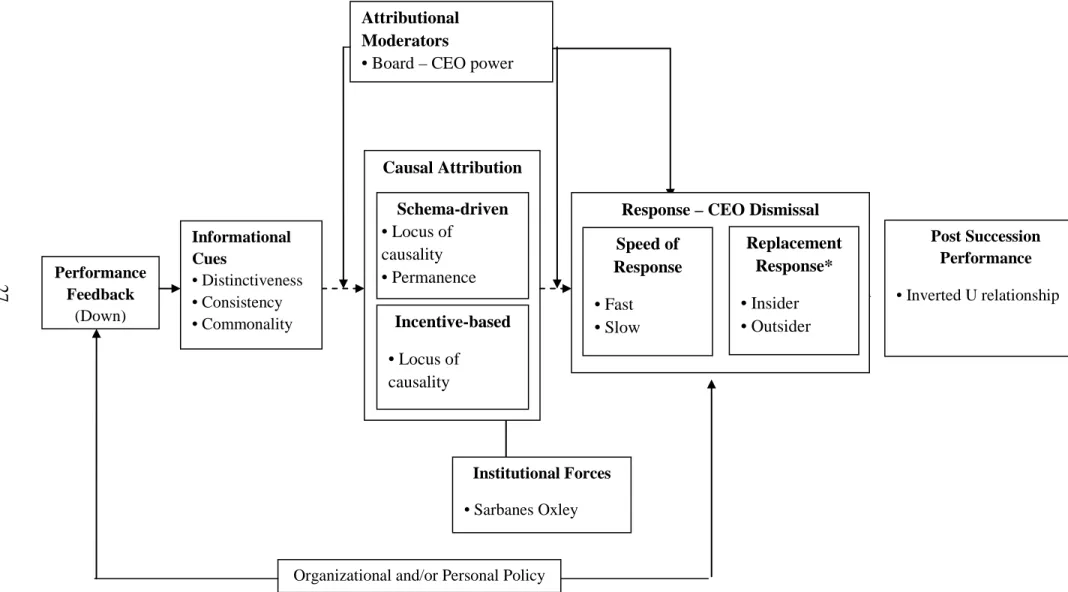
Figure 3.1 The Attributional Model of Board Response to Performance Downturn
* Not examined in current study Post Succession
Performance • Inverted U relationship
Organizational and/or Personal Policy
Institutional Forces • Sarbanes Oxley
Attributional Moderators
• Board – CEO power
Response – CEO Dismissal Causal Attribution Performance Feedback (Down) Informational Cues • Distinctiveness • Consistency • Commonality Schema-driven
• Locus of causality • Permanence
Incentive-based
28
3.1.1 Attributional Information Characteristics as Determinants of Causal Attributions
Causal attributions are influenced by the information to which decision makers attend (Ford, 1985). Decision makers gather and analyze information which they process to evaluate the cause and action of that outcome. This information processing is not unbiased and
characteristics of the outcome, the organization, and individual decision makers affect the process (Ford, 1985). My main focus is on the characteristic of the outcome which is
performance downturn. Whether decision makers attribute a performance downturn as temporary or permanent, internally caused downturn or externally caused downturn depends in part on the distinctiveness, consistency, and commonality of the downturn (Bettman et al., 1983; Ford, 1985; Kelley, 1967).
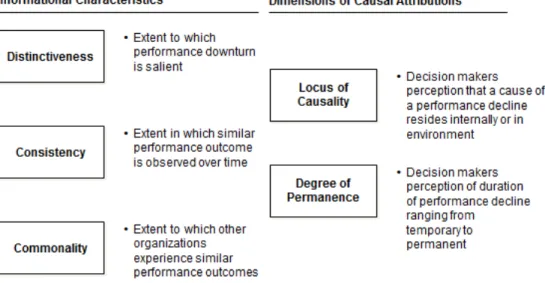
Distinctiveness is the extent in which the information of performance downturn is more salient. Keisler & Sproul (Kiesler et al., 1982b) state that people attend to and encode salient material – events that are unpleasant, deviant, extreme, intense, unusual, and sudden as having greater weight in the determinacy of what is remembered and how well it is organized
29
tends to produce attributions to internal causes in individuals and also influences assessment of stability as permanent (McArthur, 1972). Also, the more salient the information usage, this affects the interpretation of strategic issues as a gain and deems it more controllable (Thomas, Clark & Goia 1993), thus more likely to act on the issue.
Consistency is the extent in which the same performance outcome(s) are observed under similar situations over time. Distinctiveness looks at the magnitude in gap from prior years whereas consistency looks at performance volatility across the years. Consistency measures variance in performance across a longer period of time than distinctiveness. Several similar terms such as turbulence (Cameron et al 1987), dynamism (Dess & Beard 1984), instability (Cameron & Whetten 1983) have been used at the environment and firm level to explain fluctuation across time. Miles et al (1974) distinguish between the rate of change and the unpredictability of change positing that turbulence usually creates uncertainty. Researches on the impact of
turbulence/inconsistency are rigidity of response, secrecy, and scapegoating of leaders (Withey 1962:118; Staw et al 1981; Pfeffer and Leblebici 1973). Dess & Beard(1984) measured
environmental dynamism by the dispersion about the regression line (standard error of the regression slope ) obtained when each dependent variable(i.e. industry sales, employment) was regressed on time over a certain period. – This is considered unsystematic and unpredictable change. I use this same measure at the firm level as explain further in Chapter Four.
30
and take credit for good jobs and blame environment for bad. Also, low consistency leads to more uncertainty and decision makers when liable for their actions try to act and handle uncertainty (Miles et al 1974).
Commonality is the extent to which other organizations experience similar performance outcomes. As idiosyncratic firm performance increases commonality decreases. Comparing industry median return and market industry return with firm market return. Holmstrom (1982) and Gibbons & Murphy (1990) derive idiosyncratic firm performance apart from common industry performance to test how that idiosyncratic firm performance affects decisions of strategic change. The industry often serves as a benchmark for evaluation of corporate performance (Lambert and Larcker 1985, Foster 1986:225). Controlling for industry performance gives the true CEO skills which impact on corporate performance. The use of benchmarks or references in taking action is supported by research in decision making (Cyert & March 1963; Bamberger & Fiegenbaum1996). In decision-making theory, individuals may not have the ability to detect or assess opportunities, and thus they rely on only a few cues from available information when making decisions (Hitt and Tyler, 1991; Camerer, 1981).
3.1.2 Dimensions of Causal Attributions
As decision makers structure their environments through interpretation and sense making they retrospectively link events to possible causes (Weick, 1995). Weiner (1979) proposed that each cause can be categorized along three dimensions: 1) locus of causality 2) Degree of permanence and 3) Controllability.
31
an internal attribution. The significance of locus of causality is that it “tells” decision makers the source of a cause and where to apply corrective action (Ford, 1985).
Degree of Permanence is a continuum ranging from temporary to permanent that indicates the relative duration that decision makers attach to a cause. Assessments of
permanence, therefore, influence decision makers’ motivations to change. If the downturn in performance is seen as a temporary problem of oversupply than decision makers will not feel motivated to change.
Figure 3.1 gives a summary of the three informational characteristics that affect decision maker’s perception through the dimension of causal attributions.
Figure 3.2 Dimensions of Causal Attributions
3.1.3 Responses to Causal Attributions
Strategic responses to performance downturn can be fast/proactive or slow/reactive. The response outcome can be a change to an outside CEO successor or inside CEO successor.
32
locus of causality is viewed as internal and degree of permanence as permanent, boards will more likely to act faster in CEO dismissal and hire an outside CEO. If boards view the
performance downturn as external and temporary, boards will not be likely to dismiss the CEO or be late in their actions and may select an inside CEO.
High distinctiveness tends to produce attributions to internal causes in individuals and also influences assessment of permanence as permanent (McArthur, 1972). Also, shareholders will be dissatisfied more with steep performance downturn. Subsequently, boards from an impression management standpoint will likely respond more to steeper performance downturn than gradual. Thus, high distinctiveness is expected to produce external locus of causality leading to early response time.
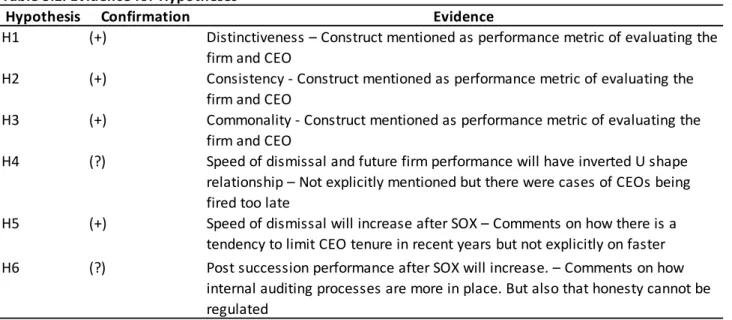
Hypothesis 1: High distinctiveness in downturn information following an analyst downgrade will
increase the speed of CEO Dismissal (i.e. faster).
Low consistency tends to produce attributions to external causes. Also, if performance is historically volatile, because decision makers have difficulty assessing if result is temporary or permanent they will likely follow historical precedent and attribute downturns to temporary causes (Porter, 1985). Also from an impression management standpoint, someone needs to take the blame for consistent underperformance. Thus, high consistency is expected to lead to slower response time.
Hypothesis 2: High consistency in downturn information following an analyst downgrade will
33
High commonality supports attributions to external causes (Weiner 1974). There is little theory on how it will affect the permanence measure in psychology literature. However, if the downturn is common amongst all firms it is likely that firms will perceive the cause as being external. And if all the firms in an industry are doing poorly there is less reason to blame someone for it. Many previous CEO turnover studies (Weisbach 1988, Parrino 1997, DeFond and Park 1999) find evidence suggesting that board members filter out industry effects in
performance measures. Others suggest that boards have difficulty in doing such and take industry downturn as a way to fire CEOs – even though it may not be their fault (Bushman 2010).
Overall, high commonality is likely to be assessed as the cause being external, therefore giving the CEO some more time.
Hypothesis 3: High commonality in downturn information following an analyst downgrade will
decrease the speed of CEO Dismissal (i.e. slower).
3.2 Consequences of Speed of CEO Dismissal on Post-Succession Firm Performance
34
However, shareholders and other stakeholders should realize the costs to CEO change. Costs of changing include severance pay to the former CEO and disruptions incurred as a new CEO adjusts to his/her role accompanied by employee resistance to change. Productivity may downturn as employees adjust to changes prescribed by the new CEO. Uncertainties about the new CEO and future of the firm may increase stress and decrease employee morale. For these reasons, firms should not be too quick to replace their current CEOs. Miller and Friesen (1980) show that firms tolerating short-term performance downturn and making dramatic strategy changes only after long-term downturn tendencies became apparent outperform firms making frequent and incremental strategy changes. Similarly, replacing CEOs in response to short-term performance problems may in fact inadvertently penalize the firm. Khurana (2002) posit that crises are often the worst times to seek charismatic saviors. He posits that when corporate performance falters, boards frequently misdiagnose problems, fire incumbents and search for charismatic successors often leading to disappointing results.
Benefits of CEO dismissals are that the new CEO will have a fresh perspective of the business problem and infuse appropriate change. Second, it will act as a positive signal to
35
progresses the need for change will intensify and credibility of the CEO will decrease. Boards will have the need to act and blame someone.
Most scholars view dismissal as being too late because of CEO entrenchment (Finkelstein et al 2008). It is likely that powerful CEOs may act opportunistically leading to
underperformance. In such cases, even though the CEO is the cause of downturn, it would be difficult to fire the CEO. Even if entrenchment is not the case, keeping an unqualified CEO over long durations of underperformance may cause unrecoverable damage. Daveni (1988) posit that firms losing the time to turnaround in early stages may incur a downward spiral. In a downward spiral, external constituents pull out support from the firm leading to irrevocable downturn.
Thus, balancing the costs and benefits of CEO change, there should be an optimal time in which CEO dismissal should occur after start of downturn. Too early dismissals from short term responses without considering costs of change will lead to lower post-succession performance. Especially if early dismissals arise from misattributions and scapegoating as mentioned earlier post-succession performance will be even worse. Too late dismissals will occur mostly from CEO entrenchment. In such cases a downward spiral might have begun and changing the CEO might be too late. As such, the following hypothesis is derived:
H4: Speed of CEO dismissal will have an inverted-U relationship with post-succession
performance.
3.3 Trend and Sarbanes-Oxley Effects on Speed of CEO Dismissal
36
boards. Prior research shows that shifts in regulatory (Smith & Grimm 1987; Cho & Shen 2011) or technological environments (Tushman & Anderson 1986) motivate important strategic changes in organizations.
While the CEO once dominated the boards, increasingly it is now boards that monitor closely CEOs performance and also engage in strategic direction making. Judge & Zeithmal (1992) posit board of directors’ involvement in strategic decision making has increased as an institutional response. As corporate boards are legal entities governed by state law, increased litigation has been directed at boards (Kesner & Johnson 1990). As such, boards are pressured to act when firms are underperforming. Growing levels of shareholder activitism leads to greater and faster likelihood of executives being dismissed for poor performance. Boards in general will attribute poor performance to internal rather than external causes, especially when they are liable for it (Miner 2005). The situation then begs the question of are boards just doing something or are they doing the right thing when dismissing CEOs? If boards are indeed getting rid of unskilled and entrenched CEOs post-succession performance for firms which have dismissed CEOs in the post Sarbanes-Oxley era will be higher. However, if the boards’ response was due to impatience and short-terminsm post-succession performance will be lower. The effects of the Sarbanes-Oxley legislation provide contrasting predictions:
H5: Speed of CEO dismissal in declining firms has increased (i.e. faster) post Sarbanes-Oxley legislation
H6a: Post-succession performance will be lower for dismissal post Sarbanes-Oxley legislation
CHAPTER FOUR: RESEARCH METHODOLOGY
This chapter provides a description of the methodology used to test the hypotheses developed in Chapter three. Accordingly, the following is organized into three sections: (1) sample selection process and data sources; (2) measurement of primary variables; and (3) overview of the statistical methods used for testing the hypotheses.
4.1 Data Sources and Sample Design
I use both qualitative and quantitative data for this study. Interviews were conducted with three board members serving on various corporate boards in North Carolina. The interviews serve the purpose of understanding the context of CEO dismissal and validate the major
assumptions and propositions. Guided by a case-study protocol, open-ended questions were used in the interview. A copy of the protocol and research questions is provided in Appendix 1. Each interview lasts about one hour. All interviews were attended by two researchers. Notes were taken during the interview by both researchers and compared after interview to make sure the understanding and interpretation of the qualitative data is uniform. Results from the qualitative analysis are presented in Chapter Five.
38
1. The firm is included in the Execucomp database during the 1996-2009 period. 3 2. The firm is included in the Institutional Brokers Estimate System (I/B/E/S) and has
experienced a downgrade in analyst ratings. 4
3. Financial statement data are available on the Compustat database and return data are available on the CRSP database.
4. Boards of Directors data are available on the IRRC directors (Risk Metrics) database.
The choice of sample was dictated by the need to identify firms that are monitored by the investment community. Thus, the sample consists of large, publicly traded firms in the United States. Financial and public utility firms (SIC codes 4800-4999, 6000-6999) were excluded because government regulations potentially affect large shareholder ownership and influence corporate governance. Boards of directors’ information are typically readily available for public firms as provided in the Securities and Exchange Commission (SEC) reporting requirement.
I tracked data for each sample CEO observation from the start of CEO tenure until the end of 2009 or until the date the CEO was dismissed. I took note of whether the CEO was dismissed due to bankruptcy, de-listings, buy-outs, or acquisitions. In order to assess post-succession performance, I also collect future ROA and abnormal stock return data two and three years following CEO dismissal. All observations with no CEO dismissal are excluded for this part of the analysis.
In order to measure time to CEO dismissal of declining firms, the start of downturn should be a standard measure for each firm. Because how long a duration of prior year
3
Execucomp is a subset of the compustat database offered by Wharton Research Data Services (WRDS). This database lists annual CEO information, including CEO turnover data during the 1992-2009 period. Because IRRC data was only available for the 1996-2005 period my sample is limited to that time period.
4
39
performance information boards of directors use to evaluate their CEOs is not known, I propose using an external measure of downturn which is investment analyst evaluations.
Analyst ratings of the stock of the firm (Strong Buy, Buy, Hold, Underperform and Sell) are issued monthly. 5 Change in ratings is not frequent, especially for downgrades (Womack, 1996), and thus can be seen as a valid inception point and measure of downturn. This assumption was partially validated by interviews with board members. A downgrade in rating signals that the investors view the firm as problematic and in need of change. As many investment analysts may cover a firm, I use the negative change in consensus rating as a sign of potential problems.
Because a change in analyst ratings has significant impact on stock price and investor demand on the firm’s stock (Chung & Jo, 1996; Irvine, 2003; Stickel, 1992; Womack, 1996), it is likely that boards will use analyst forecasts as a proxy for information (Puffer et al., 1991). Although an uncertain signal, an analyst downgrade will bring to the attention of boards that a problem may exist. After such incident, boards will try to figure out the causality of the problem6. Thus, how the CEO reacts and resolves the issue after such downgrades is critical information to the board of directors and financial firm performance will be the core metric for evaluation. As such, I control for firm performance following the downgrade. Though not
frequent, because there can be more than one rating downturn throughout the CEO’s tenure, I use the first downturn in rating since the start of the incumbent CEO tenure because it shows the first sign of trouble. A graphical picture is given in Figure 4.1 for clearer understanding.
5 Security analysts’ ratings can be obtained from reports issued by individual analysts or by reports of services that
collect and distribute earnings ratings made by analysts. The IBES surveys individual financial analysts from the research departments of leading Wall Street and regional brokerage firms. IBES collects not only security analyst ratings but earnings per share forecasts.
6 Interviews with three directors serving on over fifteen corporate boards show that board members view analyst
40
Figure 4.1 Measurement of Speed of CEO Dismissal in Response to Analyst Downgrade
4.2 Key Variables and Measures
4.2.1 Dependent Variables
The dependent variable for Hypotheses 1-3 and 5 is the speed of dismissal. Speed of dismissal was measured as the time it takes to fire a CEO after the first analyst downgrade during one’s tenure. First, I need to identify and classify whether CEO turnover is truly a forced
dismissal. This is a major challenge in succession research because firms seldom fully disclose the true reasons behind CEO resignations (Denis et al., 1995; Fredrickson et al., 1988). Recent work has thus used several approaches to better identify CEO dismissals and distinguish them from voluntary turnovers or retirement (Parrino, 1997; Shen & Cannella, 2002a; Wiersema et al., 2008). Based on such recent approaches I classify forced dismissals as all CEO changes other than those arising from retirement, death, illness, or those involving the CEO’s departure for a prestigious position elsewhere. In assessing the nature of the CEO succession, I follow prior studies using age at departure. I identify from the Execucomp database whether CEOs have reached the retirement age of 64 years old. I assume a voluntary retirement for any departing
Right Censored Data Transition Month (CEO 1) Analyst Rating Downgrade Transition Month (CEO 2)
Time to CEO Dismissal
Analyst Rating Downgrade
Transition Month (CEO 3)
CEO-dismissal observation CEO-dismissal observation
CEO-No/dismiss observation Time to CEO Dismissal
Analyst Rating Downgrade
41
CEO at least 64 years old unless I later uncover information suggesting otherwise. Next, if the CEO keeps directorship or the title of chairman after retirement I do not treat the observation as a dismissal (Shen & Cannella 2002). Third, for the observation coded as “retired” or “unknown” on the Execucomp database I go through news articles from Factiva and Google search to uncover information behind the departure. I consult the full article pertaining to the
announcement of CEO departure. Also, I search articles up to two years prior to and one year post the CEO departure to look for words such as “poor management”, “performance problems”, and “board conflicts”. Last, if the CEO departs due to bankruptcy, delistings, or acquisitions I do not classify the CEO as being dismissed and is not included in my sample. After assessing the nature of the CEO succession, the speed of CEO dismissal is measured counting the time it takes to fire a CEO. Thus, the speed of dismissal is defined as the number of days between the last consensus stock recommendations having a downgrade until the CEO leaves the office.
I model dismissal as a time-dependent binary event. The dependent variable is the log of time-to-dismissal. Facing two issues with the data, one, that there are a number of censored observations and two, the probability of dismissal may increase with the length of time the CEO has not be fired I use a hazard function to model speed of CEO dismissal . I use a parametric method to model the effects of independent variables on time-to-event, i.e. speed of dismissal (see chapter 5).
three-42
year interval was employed to provide a time period long enough to permit changes to take place, but short enough not to be confounded by other factors. I also explore two-year ROA and stock return differences as a robustness test and find little difference. When examining post-succession firm performance, the speed of CEO dismissal is used as the main explanatory variable.
4.2.2 Independent Variables
For hypothesis 1-3the core independent variables are different types of performance feedback following an analyst downgrade. I develop three measures of performance types. The extent of distinctiveness was measured by calculating average change in abnormal stock return over the period of downturn (first analyst downgrade) to CEO dismissal or until the end of my study (year 2009). Monthly return data is collected for all firms during that period. Average change in abnormal stock return is used to capture the magnitude of performance change across that time7. Instead of using the slope of downturn using two time points
7
Because the number of months from analyst downgrade to CEO change will vary for firms, this may be confounding. Because early dismissal may not leave sufficient degrees of freedom the distinctiveness, consistency, and commonality estimates may not be robust.
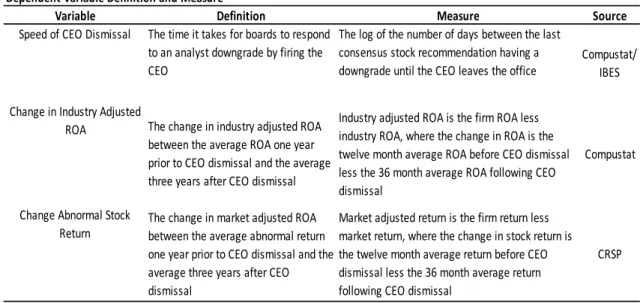
Table 4.1 Dependent Variable Definition and Measure
Variable Definition Measure Source
Speed of CEO Dismissal The time it takes for boards to respond to an analyst downgrade by firing the CEO
The log of the number of days between the last consensus stock recommendation having a
downgrade until the CEO leaves the office Compustat/IBES
Change in Industry Adjusted
ROA The change in industry adjusted ROA between the average ROA one year prior to CEO dismissal and the average three years after CEO dismissal
Industry adjusted ROA is the firm ROA less industry ROA, where the change in ROA is the twelve month average ROA before CEO dismissal less the 36 month average ROA following CEO dismissal
Compustat
Change Abnormal Stock
Return The change in market adjusted ROA between the average abnormal return one year prior to CEO dismissal and the average three years after CEO dismissal
Market adjusted return is the firm return less market return, where the change in stock return is the twelve month average return before CEO dismissal less the 36 month average return following CEO dismissal
43
(𝑅𝑒𝑡𝑢𝑟𝑛𝑑𝑖𝑠𝑚𝑖𝑠𝑠−𝑅𝑒𝑡𝑢𝑟𝑛𝑑𝑜𝑤𝑛𝑔𝑟𝑎𝑑𝑒
Time ), I utilize my monthly data to obtain average change in abnormal stock return over the period of interest. This is equivalent to the regression slope coefficient (β) obtained when abnormal return is regression on time (month) over the period of downgrade to CEO dismissal (or end of study).
The extent of consistency is measured by using Dess & Beard’s (Dess & Beard, 1984) measure of environmental dynamism at the firm level. It is measured by the dispersion about the regression line. This is calculated as the standard error of the regression slope coefficient
obtained when abnormal stock return is regressed on time over the duration of first downgrade rating and CEO dismissal (or end of study) divided by mean value of abnormal stock return during the duration (𝑌�).
The extent of commonality can be measured by regressing change in firm abnormal stock return on change in industry abnormal stock return over the duration first downgrade rating to CEO dismissal (or end of study). The beta coefficient of change in industry performance will give a continuous measure of the degree of commonality. If the beta coefficient is higher, the commonality is higher.
44
Corporate governance variables were included as control variables when examining the antecedents of speed of dismissal. These variables were also included to run regressions for generating the excess time variables needed for examining performance consequences of speed of dismissal (see 4.3.2 section). These variables are gathered from the RiskMetrics database (IRRC directors). Fraction of independent (outside) board members (Weisbach 1998) is measured as the ratio of independent directors to board size calculated at the end of the fiscal year prior to analyst downgrade.Prior researchers (Cannella et al., 2001; Zajac et al., 1996) find that stronger boards with more independent directors increase the probability of CEO turnover.
Board size is the number of directors on the board which was calculated at the end of the fiscal year prior to analyst downgrade. Prior research (Zajac et al., 1996) find that larger boards affect CEO turnover decisions. CEO duality is whether the CEO is also the chairperson of the board. A dummy variable of 1 is given if the two positions are separated and 0 otherwise. Prior
literature suggests that separating CEO and board chair positions give more power to the board of directors over the CEO (Finkelstein & D’Aveni 1994). Thus, less entrenchment will increase the likelihood of CEO dismissal(Huson, Parrino, & Starks, 2001). Gompers index is a measure
Table 4.2 Independent Variable Definition and Measure
Variable Definition Measure Source
Distinctiveness Magnitude of firm performance change during the period of analyst downgrade to CEO dismissal
Beta coefficient from the regression of monthly stock return on time
CRSP/IBES
Consistency Volatility of firm performance during the period of analyst downgrade to CEO dismissal
Standard error of the the beta coefficient from the regression of monthly stock return on time. The larger the standard error the less consistent the movement of stock return with respect to time. Thus, the measure itself is more a measure of inconsistency
CRSP/IBES
Commonality The extent of commonness of firm
performance and industry perfomrance Alpha coefficient from the regression of monthly individual stock return on monthly industry stock return. This measure is the portion of firm's stock return that is unrelated to the industry stock return. Thus, the measure is more a measure of uncommonality