RELIGIOUS ROOTS AND CONSEQUENCES OF WOMEN’S WORK-FAMILY CONFIGURATIONS IN ADULTHOOD
Claire Chipman
A dissertation submitted to the faculty at the University of North Carolina at Chapel Hill in partial fulfillment of the requirements for the degree of Master of Arts in the Department of
Sociology.
Chapel Hill 2017
ABSTRACT
Claire Chipman: Religious Roots and Consequences of Women’s Work-Family Configurations in Adulthood
(Under the direction of Lisa Pearce)
This project contributes a more comprehensive understanding of the reciprocal relationships between religion, work, and family. Using NLSY79 data, I uncover six work-family configurations for American women using LCA; timing of work-family experiences and education are key in differentiating these configurations. I integrate these configurations into a model of religious involvement, using adolescent religiosity to predict work-family
configurations and then predicting service attendance in adulthood with the configurations. I find strong evidence for the link between religious involvement and childbearing: religious
TABLE OF CONTENTS
LIST OF TABLES ... vi
LIST OF FIGURES ... viii
LIST OF ABBREVIATIONS ... ix
INTRODUCTION ... 1
THEORETICAL FRAMEWORK ... 4
LITERATURE REVIEW ... 6
Work and Family Configurations ... 6
The Role of Religion ... 8
Religion, Work, and Education ... 8
Religion and Family ... 11
Integrating Studies of Religion and Work-Family Configurations ... 13
Research Questions ... 16
DATA ... 17
National Longitudinal Study of Youth 1979 ... 17
Variables ... 19
METHODS ... 23
First Phase: Latent Class Analysis ... 23
Second Phase: Regression Models ... 25
Descriptive Results ... 26
Latent Classes ... 27
Logistic Regression Part 1: The Influence of Religious Participation on Work-Family Configurations... 30
Logistic Regression Part 2: The Influence of Work-Family Configurations on Religious Participation... 32
DISCUSSION ... 34
CONCLUSION ... 39
FIGURES AND TABLES ... 41
APPENDICES ... 48
Appendix 1: Additional Information on Testing the Local Independence Assumption ... 48
Appendix 2: Additional Information on Latent Class Classify-Analyze Procedures ... 50
Appendix 3: Bar Graphs ... 52
Appendix 4: Supplemental Analyses by Race ... 56
Appendix 5: Logistic Regression Results with Rotating Reference Groups ... 57
LIST OF TABLES
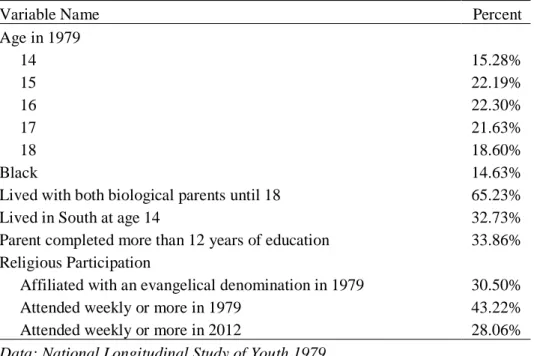
Table 1: Descriptive Statistics: Demographics and Religious Participation ... 42
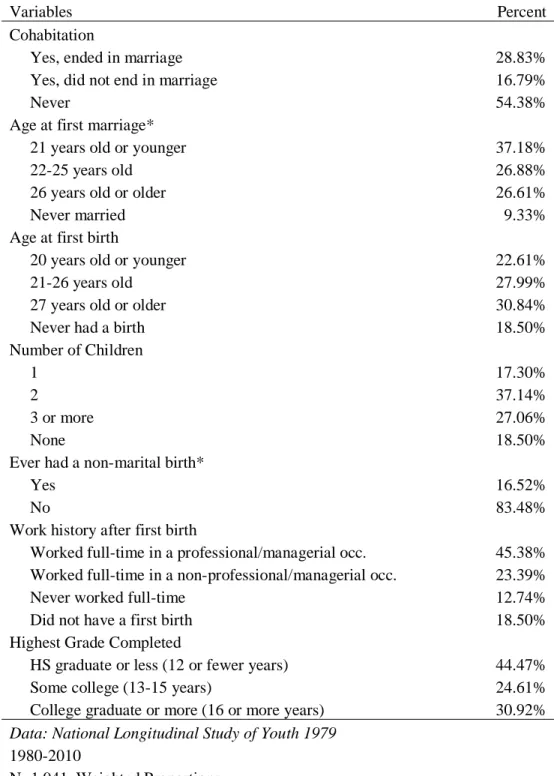
Table 2: Descriptive Statistics: Latent Class Analysis Indicators ... 43
Table 3: Model Fit Statistics for Latent Class Models ... 44
Table 4: Conditional Probabilities by Latent Class ... 45
Table 5: Multinomial Logistic Regression Predicting Latent Class, Coefficients and Odds Ratios ... 46
Table 6: Logistic Regression Predicting Weekly Religious Service Attendance in 2012, Coefficients and Odds Ratios ... 47
Table A2: Comparing Maximum-Probability Assignment and Pseudo-Class Draw Coefficients ... 51
Table A4.1: Racial Composition of Non-Married Mothers ... 56
Table A4.2: Distribution of Class Membership by Race/Ethnicity ... 56
Table A5.1: Multinomial Logistic Regression Predicting Latent Class, Coefficients and Odds Ratios; Reference Category: Non-Married Mothers ... 57
Table A5.2: Logistic Regression Predicting Weekly Service Attendance in 2012, Coefficients and Odds Ratios; Reference Category: Non-Married Mothers ... 58
Table A5.3: Multinomial Logistic Regression Predicting Latent Class, Coefficients and Odds Ratios; Reference Category: Early Family Formers ... 59
Table A5.4: Logistic Regression Predicting Weekly Service Attendance in 2012, Coefficients and Odds Ratios; Reference Category: Early Family Formers ... 60
Table A5.5: Multinomial Logistic Regression Predicting Latent Class, Coefficients and Odds Ratios; Reference Category: College-Educated Balancers ... 61
Table A5.6: Logistic Regression Predicting Weekly Service Attendance in 2012, Coefficients and Odds Ratios; Reference Category: College-Educated Balancers ... 62
Table A5.8: Logistic Regression Predicting Weekly Service Attendance in 2012,
Coefficients and Odds Ratios; Reference Category: Script Followers ... 64 Table A5.9: Multinomial Logistic Regression Predicting Latent Class,
Coefficients and Odds Ratios; Reference Category: Cohabitors First ... 65 Table A5.10: Logistic Regression Predicting Weekly Service Attendance in 2012,
LIST OF FIGURES
Figure 1: Conceptual Diagram ... 41
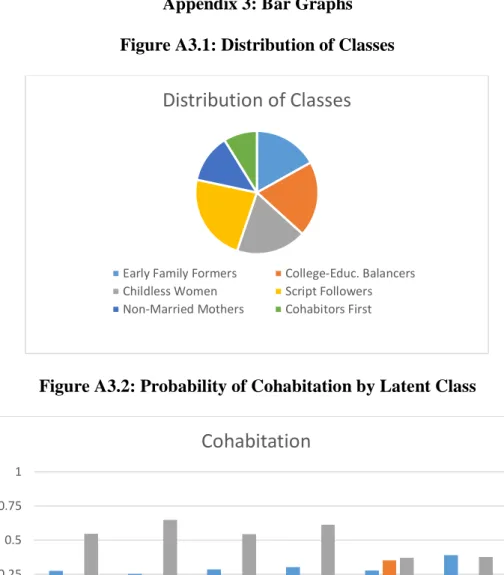
Figure A3.1: Distribution of Classes ... 52
Figure A3.2: Probability of Cohabitation by Latent Class ... 52
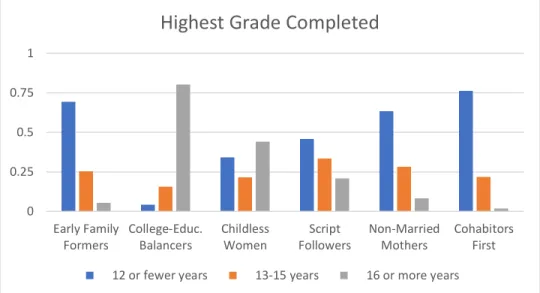
Figure A3.3: Probability of Highest Grade Completed by Latent Class ... 53
Figure A3.4: Probability of Non-Marital Birth by Latent Class ... 53
Figure A3.5: Probability of Number of Children by Latent Class ... 54
Figure A3.6: Probability of Work History after First Birth by Latent Class ... 54
Figure A3.7: Probability of Age at First Birth by Latent Class ... 55
LIST OF ABBREVIATIONS
INTRODUCTION
The fields of work, family, and religion intersect in distinct ways in early and middle adulthood as women’s work and family pathways unfold. These pathways are shaped by structural factors such as childhood SES, but they are also influenced by the cultural and religious schemas women hold regarding proper roles for women (Edgell 2005). Religious socialization offers a set of expectations for women, particularly regarding their family lives, and those beliefs and norms can shape women’s experiences of family and work throughout
adulthood. Additionally, because the ways in which women’s work and family lives are
combined come with different sets of pressures and needs, different work-family configurations will encourage women to seek varying types of social support, with one potential source of support coming from religious organizations.
Religion scholars have devoted a considerable amount of attention to understanding how religious involvement in childhood and adolescence shapes individual family and work
understanding configurations of work and family roles as a package, noting that work and family are rarely independent of each other. These scholars, though, neglect religion, both in the ways it may predispose particular configurations over others as well as how those configurations can encourage varying levels of religious participation in later adulthood.1 Would a woman’s desires to fulfill the expectations of wife and mother she learned in church prevent her from working full-time or seeking a professional career in order to prioritize those roles? Additionally, should we expect the relationship between having children and participating in religious organizations to be the same for women with professional careers as it is for women who work part-time or stay home with children? To more fully grasp how religion, work, and family intersect in the lives of women, a focus on the relationships between work-family configurations and religion in youth and adulthood is key.
The reciprocal influences between work-family configurations and religious involvement across the life course are the focus of this project. The central research questions for this project are: How are women’s work and family configurations shaped by early religious involvement,
and how do they shape later religious participation? For this project, I analyze data from the
National Longitudinal Study of Youth 1979 (NLSY79) using Latent Class Analysis (LCA) to construct person-centered configurations of women’s work and family experiences. Then, I incorporate these work-family configurations into a model of religious involvement throughout the life course: first, I use religion measures from adolescence to predict work-family
configurations; second, I predict adult religious involvement using these configurations. By integrating religion, work, and family into one conversation, this project contributes
THEORETICAL FRAMEWORK
The theoretical framework for this project integrates theories regarding how educational, work, and family experiences are intertwined for women in the transition to adulthood and beyond, how religious involvement early in the life course is likely to shape women’s work and family experiences into and across adulthood, and how these work and family roles have
implications for subsequent religious involvement. To help frame my literature review, I present a concept map (Figure 1) to illustrate the processes I investigate.
Early religious involvement is highly correlated with later religious involvement, though religious involvement can follow a variety of trajectories from childhood through older
adulthood (Ingersoll-Dayton, Krause, and Morgan 2002; Petts 2009). Early in the life course, religious socialization sets in motion preferences and dispositions that remain pervasive over time (Geertz 1973; Pearce 2002; Pearce and Davis 2016; Sherkat 2003). Religious involvement in adolescence creates a “moral order” (Smith 2003:19), meaning adolescents learn moral instructions from religious organizations, have spiritual experiences that encourage them to internalize these commitments, and see role models also acting according to these standards (Eggebeen and Dew 2009). These norms can continue to persist beyond adolescence and exert an influence on family formation, education, and work later in life.
education, work, and family decisions have reciprocal effects on each other (Macmillan and Copher 2005).
These configurations of education, work, and family experiences and their timing can influence later religious involvement. There are a variety of reasons to expect family formation to encourage a return to religious involvement including religious, social, practical and cultural reasons (Uecker, Mayrl, and Stroope 2016). While some individuals are motivated to return in order to provide their children with a religious education, others are following cultural scripts that consider religious involvement to be part of proper family life in the United States (Edgell 2005). Work can have varying effects on later religious involvement, as some scholars suggest that working full-time reduces the time individuals have to spend on religious activities (de Vaus 1984; de Vaus and McAllister 1987). However, other scholars note that religious participation may accompany full-time work, particularly for men, as it signals middle class status alongside marriage and children (Becker and Hofmeister 2001; Edgell 2005; Wilcox 2005).
These reciprocal influences between work-family configurations and religious
involvement across the life course are the focus of my theoretical framework. I begin with an overview of why configurations of work and family roles matter beyond their individual
components, and then I move into the ways previous research has found religion to be related to these components. While no previous studies of which I am aware have considered the
relationship between religion and these configurations across the full span of adulthood,
LITERATURE REVIEW
Work and Family Configurations
Many studies have examined the components of work-family configurations individually, including educational attainment, likelihood and timing of marriage, and full-time work. Within life course studies, attention to the transition to adulthood has sparked a strong interest in investigating the timing and combinations of these roles (Carroll et al. 2007, 2009; Furstenberg 2010). These studies stress the interconnected nature of experiences in young adulthood, such as how seeking additional years of education delays family formation.
Though studies of work and family configurations use varying measures, data sets, and age ranges, clear similarities emerge in their classes. Work, education, and relationship status are key in many projects, with scholars identifying groups such as “parents without careers” and “educated singles” (Osgood et al. 2005) or highlighting educational attainment with classes like “BA degree and no family” and “limited post-secondary education and family” (Sandefur, Eggerling-Boeck, and Park 2005). One of the more recent examples specifically examined work pathways in adulthood, but found family characteristics to be significant predictors of these work pathways, with a first birth associated with a higher likelihood of following “stay-at-home” and “re-entry” work pathways than “steady, full-time work” (Damaske and Frech 2016).
family,” Black women could be split between only two classes, “traditional student” and “early parent” (Macmillan and Copher 2005). In another project, men and women had similar classes of married men/women and post-secondary educated men/women without children, but the third category differed: the remaining women were unmarried early mothers, while men were
unmarried with limited post-secondary education (Oesterle et al. 2010). Amato et al. (2008) used a sample of only women and found motherhood to be a key factor; their classes included “high school – no family formation,” “cohabiting without children,” and “married mothers.” Despite the fact that there are innumerable combinations of these variables, clear similarities between the classes in different projects are evident.
Only one of these projects used religious involvement in adolescence as a predictor of these configurations (Amato et al. 2008). In this project, adolescent religiosity, parental
religiosity, and sexual behavior were condensed using factor analysis into a measure they labeled “conservative values and behavior.” These values and behaviors were highest among their classes of women who delayed family formation until after high school and college, and lowest among the cohabiting mothers and single mothers. However, since this scale was collapsed, we are unable to see the particular contributions of the religion variables, and their classes only capture work-family configurations between ages 23 and 25.
These projects demonstrate the presence of patterned and recognizable configurations of roles in young adulthood, but none include measures beyond age 35.2 Additionally, given that previous work has shown religious involvement is intertwined with many of the components of these configurations, the literature has yet to consider how various profiles of women’s
2 Damaske and Frech (2016) are one exception, but their pathways exclusively capture labor force involvement.
experiences are more or less likely to stem from a religious past and/or to encourage a religious future. The use of religion as a predictor by Amato et al. (2008) provides some hints as to where we might expect religion to intersect with these work and family configurations. Before outlining those expectations, I first present a review of the literature regarding the link between religion and the components of work and family configurations.
The Role of Religion
Religion, Work, and Education
There are a variety of mechanisms at work in understanding how religion shapes
educational attainment, including the specific theology of a religious denomination, the cultural worldview it promotes, and the social networks religious institutions provide. In these cases, scholars typically examine the link between more conservative religious organizations and less educational attainment among members as a result of these members’ distrust of secular institutions and lower levels of social capital that might encourage and make possible higher education (Beyerlein 2004; Darnell and Sherkat 1997; Pyle and Davidson 2014).
However, recent studies suggest that the reciprocal relationship between religious involvement and lower levels of education is less clear. While higher educational institutions have typically been seen as secularizing institutions, this influence may be changing. In one analysis, individuals who did not attend college were most likely to decline in religious
commitment and prestige (de Vaus 1984), it remains an important element in our understanding of work-family configurations as they relate to religious involvement.
Regarding work, many studies of the relationship between religion and work force involvement emphasize the messages women receive about working full-time or staying home with young children through evangelical books, sermons, and texts (Bartkowski 2001; Gallagher 2003). However, studies of evangelical rhetoric are more conclusive regarding the themes of these messages than empirical studies as to how evangelical women in practice decide whether or not to work (Denton 2004). Many evangelical texts regarding work, family, and gender stress a woman’s responsibility to her home and family, which persists even if she needs to balance that role with a job (Bartkowski 2001; Gallagher and Smith 1999). While women have ideals surrounding family life that stem in part from religious ideology and messages, in reality, their lives are constrained by material circumstances that may require them to work (Manning 1999). A path analysis by Hall (1995) using a sample of women who subscribe to Christianity Today
found that the strongest predictor of women’s labor force involvement was their own ideals about family life, which would likely be shaped by these messages, with their husbands’ income and the presence of preschool children also significant factors.
1987).
Empirical tests of the labor force hypothesis have had mixed results. In his initial test, de Vaus (1984) used General Social Survey (GSS) data from 1972-1980 and found that there was not a linear relationship between working and religious service attendance for women; however, a project using a different dataset at a single time point found a significant difference between mean attendance levels for working and nonworking women (Ulbrich and Wallace 1984). More recent projects provide some support for the labor force hypothesis, particularly that full-time employment did have a negative effect on religious service attendance for married women, as well as their spouses (Hertel 1995).
More specific tests of the labor force hypothesis among women in elite professions provide stronger evidence for its predictions. Elite women may intentionally work to separate their professional and private lives to affirm their work identity, seeing work and religion at odds with each other (Hastings and Lindsay 2013). Additionally, while working men receive
validation in religious communities for their status as breadwinner, working women do not, which may decrease their religious involvement (Schnabel 2016). Previous research suggests that while there is some evidence for a conflicting relationship between religion, particularly service attendance, and employment, the effects are not consistent across all groups.
Conservative Protestants may make more sacrifices regarding employment than
non-conservative individuals because of their strong family orientations (Ammons and Edgell 2007), but this pattern may not necessarily apply to religious individuals without families. To best understand the relationship between religion and work, then, we must also account for the link between religion and family, as well as how work and family experiences intersect.
Religion and Family
Many studies have also tested the relationship between religion and various family attitudes, with the link between religious beliefs and family expectations typically being clearer than the link between religion and actual behaviors (Christiano 2000). Individuals who identify with and participate in conservative religious groups, such as evangelicals and Latter-Day Saints, tend to be more likely than their peers to oppose premarital sex and to prefer a
breadwinner/homemaker division of labor, as mentioned above (Carroll et al. 2000; Pearce and Thornton 2007). Additionally, those affiliated with conservative religious traditions are more likely to desire larger families (Carroll et al. 2000), while religious service attendance and salience have also been connected to family size preference and higher opposition to voluntary childlessness (Pearce 2002).
Catholic, Jewish, and nonreligious white women (Mosher, Williams, and Johnson 1992). Religious teachings against premarital and extramarital sex may also influence
adolescents’ decisions regarding when to begin sexual activity and whether to use contraception, which can influence their likelihood of having non-marital births or cohabiting. Given that religious adolescents are more likely to delay first sexual experiences (Hardy and Raffaelli 2003; Regnerus 2007; Rostosky et al. 2004), they may also be less likely to have a non-marital birth. While Pearce and Davis (2016) did not find a significant effect of religious affiliation, they did find that more frequent religious service attendance and higher reports of the importance of religion increased the likelihood of the first birth occurring within marriage. However, individuals who are part of communities that disapprove of premarital sex, particularly
evangelical Protestants, may be more likely to engage in sexual activity without contraceptives, which could also increase their likelihood of a non-marital birth (Regnerus 2007; Rostosky et al. 2004). Additionally, women affiliated with conservative Protestant denominations may also be less likely to have an abortion when a non-marital pregnancy occurs (Adamczyk 2008, 2009).
Waite 1995; Thornton et al. 1992; Uecker et al. 2007).
As Thornton et al. (1992) suggest in their reciprocal analysis of the relationship between cohabitation and religion, these family experiences should be modeled recursively given the ways family roles shape later religious participation as well. Many scholars predict a changing level of religiosity over the life course in which individuals are less religious in young adulthood but return to religious organizations when they are married and have children, called the Family Life Cycle hypothesis (Argue, Johnson, and White 1999; Stolzenberg et al. 1995). While
empirical tests of this theory have had mixed results, its influence remains strong in shaping how we expect family formation to influence religious involvement throughout the life course (Argue et al. 1999; Stolzenberg et al. 1995). The strongest evidence for the Family Life Cycle hypothesis is the positive effect of school-age children on religious participation (Becker and Hofmeister 2001; Stolzenberg et al. 1995).
Integrating Studies of Religion and Work-Family Configurations
The mixed evidence in both the relationship between religion and work and the
relationship between religion and family suggests that more nuanced analyses are necessary to better understand the relationships between all three. For example, some scholars have suggested that there may not be a perfect linear relationship between work status and religious involvement for both men and women, but likely applies in varying degrees to different subsets of the
may not (Roof and Gesch 1995). We need to pay closer attention to how women create and maintain particular configurations of work and family roles to better understand how these individual work and family experiences may be the result or cause of religiosity depending on the other components.
Combining previous work-family studies with the religion literature suggests some predictions regarding how the two would intersect. For example, Amato et al. (2008) found that higher religious participation and lower sexual activity were linked to women delaying family formation and having children within marriages, while adolescent religious values and behaviors were lower among cohabiting mothers and single mothers. Though religious involvement is tightly linked to marriage and children, we may expect religious involvement in adolescence to predict specifically normative family behaviors, marriage and then children. However, since the presence of school-aged children is a strong predictor of later religious participation, all women with children, regardless of their marital status, may take advantage of the resources religious organizations can provide for families. Adding another layer of complexity, it is important to consider employment as well. While women who were raised in a religious household may intend to provide their children with a religious education once they have families of their own, a full-time career may limit the time they are able to commit to religion. Or, if women do not have children, they may drop their religious participation entirely, seeing it as an institution that validates mothers more than career women. For single mothers, the time constraints of work may be greater, but they may also be more in need of the social support religious organizations can provide.
less work involvement once children are present; this would reflect the strong link between religion and family and women’s prioritization of the roles of wife and mother. In considering how work-family configurations will shape later religious participation, I predict that all women with children, regardless of their marital status, will be more likely to participate in religious organizations in later adulthood than women who do not have children.
Additionally, while analyzing this relationship separately by race/ethnicity or social class is outside of the scope of this project, we would expect that both work-family configurations and how they intersect with religion would vary for different subgroups of women. Given the
historical importance of the Black Church and its close connection to Black communities, religion may be more important in the lives of African American women, but their structural constraints such as disadvantaged marriage markets and high rates of non-marital births may limit their options in terms of work and family (Barber, Yarger, and Gatny 2015; Kuo and Raley 2016; Steensland et al. 2000). Also, marrying before children and completing higher education require and reflect personal, familial, and structural advantages and resources that women raised in low SES households would not have (Amato et al. 2008). For these women, who likely lack access to contraceptives and have little hope of social or economic mobility, a birth outside of marriage may offer meaning and promise to their lives that are otherwise bleak (Edin and Kefalas 2005). In the same way, religion may provide support for these women as they manage the demands of single motherhood (Sullivan 2011).
types of work and family configurations, as well as their predictors and consequences, enables us to better capture the inequalities that both cause and result from particular work-family
pathways. These remaining questions are the motivation for the research questions I propose below.
Research Questions
The central research questions for this project are: How are women’s work and family
configurations shaped by early religious involvement, and how do they shape later religious
participation? This project consists of two phases. The first phase identifies work-family
DATA
National Longitudinal Survey of Youth 1979
Longitudinal data from the NLSY79 are particularly well-suited to investigating these questions. The National Longitudinal Survey of Youth 1979 began with surveys of 12,686 individuals between the ages of 14-22. In the first wave, the sample included a cross-sectional sample of noninstitutionalized civilians, a targeted sample of Latino, Black, and low-SES individuals, and an additional sample of U.S. military members. This dataset includes a broad range of questions including labor market experiences, family background, and current
relationship histories. The initial sample was created from a random sample of a list of housing units that were visited in person to collect data on the entire household. For most of the first decade, the data were primarily collected through in-person interviews, but the use of phone interviews has increased gradually over time. In all waves since 2002 (with the addition of 1987), the majority of interviews have been over the phone. The data were collected annually through 1994 and then every other year since then. The retention rate from one wave to the next ranges between 73.3% to 96.3%. The most recent wave available is 2014, but I use the data from 2012; it is the most recent wave in which they asked about religion.
significantly different configurations of work and family decisions (Mouw 2005; Oesterle et al. 2010; Sandefur et al. 2005). Focusing on work-family configurations and their reciprocal relationships with religion is particularly compelling among women because of recent trends in religion, family and work. Though women historically have been and remain more religious than men (Schnabel 2015), their labor force participation has increased dramatically over the last half century (Toossi 2002) while still remaining primarily responsible for childrearing (Bianchi and Milkie 2010). Thus, understanding how women specifically manage religious involvement while also combining work and family roles is an important topic of interest.
For the purpose of this project, the NLSY79 is an effective dataset given its extensive set of questions and long-term longitudinal design. Respondents were asked about their religious attendance and affiliation in multiple waves, and including 1979 and 2012. Similarly, there are multiple measures of educational attainment, workforce status, and family events, enabling me to capture a full set of women’s experiences over a 30-year span.
weights that cover the years used in my analyses.
Variables
To measure religious involvement, I use two variables measured regularly in the NLSY79: religious affiliation and religious service attendance. To capture religious service attendance, respondents were asked, “In the past year, about how often have you attended
religious services?” The six response options are “more than once a week,” “about once a week,” “two or three times a month,” “about once a month,” “several times or less during the year,” or “not at all.” I collapsed this variable into a dichotomous measure of whether respondents reported attending weekly or more, which includes the two highest categories, about once per week or more than once per week. Religious affiliation is measured with the question: “What is your present religion, if any?” If respondents reported “Protestant” or “Christian,” they were asked the probe: “What denomination is that, if any?” Using the detailed denomination
information collected in 1979, I adapted the coding scheme described in Steensland et al. (2000) and refined in Woodberry et al. (2012) to capture more precise distinctions between Protestant groups. Given the emphasis in the literature on studying conservative and evangelical religious groups, I construct a dichotomous variable of whether respondents reported affiliation with an evangelical Protestant religious tradition. I measure adult religious involvement in 2012 using only religious service attendance in adulthood; the measure of religious affiliation in 2012 does not have the same precision as the 1979 measure, so it cannot be collapsed in a comparable way.
category of never married. I construct a similar variable for timing of first birth: early birth (20 years old or younger), average (21-26 years old), and late birth (27 years old or older), with a fourth category of those who never report a birth. I also include a measure of whether the first birth occurred outside of marriage, a constructed variable in the NLSY79 to capture whether the respondent had a birth either before the first marriage or without ever marrying. I construct a three-category variable to measure cohabitation using data from whether respondents ever reported a relationship as a “partner” rather than a spouse. The three categories are never cohabited, respondents who report a cohabitation in one survey year and a marriage in the next, and those who report a cohabitation in at least one survey year but do not report a marriage in the following survey year. This variable helps to account for both women who cohabitate and
women whose cohabitation ends in marriage, two components connected to religious involvement in the literature (Eggebeen and Dew 2009). Lastly, I include a measure of the number of children the respondent reports throughout all years of data collection: one child, two children, three or more children, or none.
I focus on work involvement following a first birth. Most religious texts analyzed in previous projects are more concerned with women specifically staying home with children rather than avoiding full-time work generally, so I limit my measure of work to only the years of data following the first birth. I distinguish between full-time work and non-full-time work in my variable, since women may opt to work part-time as a way to balance work and family roles. Additionally, since professional women were also associated with lower religious involvement (Hastings and Lindsay 2013; Schnabel 2015), I also incorporate the occupation code. Thus, the work variable includes four categories: women who worked full-time in a
worked full-time in an occupation that is not considered professional or managerial for at least one year after their first birth, women who never worked full-time after their first birth, and women who did not have a first birth. While this variable does not allow us to identify the work histories of women without children, it highlights the most relevant groups in considering how we would expect religious participation to intersect with work. I define full-time work as working 1,750 hours or more using the constructed measure in the NLSY79 of the number of hours worked in the most recent calendar year (U.S. Bureau of Labor Statistics 2014).3 I use the occupational measure of whether the occupation listed between 1970 and 2000 falls into the constructed category of “professional, technical and kindred workers” according to the 1970 census codes (Attachment 3: U.S. Bureau of Labor Statistics). For occupations listed between 2002 and 2010, the NLSY79 switched to the 2000 census codes, and the category is labeled “management, professional, and related occupations” (U.S. Bureau of Labor Statistics 2010).
As a final indicator, I include a collapsed variable for number of years of education completed, which has been revised in the dataset to align with traditional benchmarks of high school and college completion (see NLSY79 Appendix 8: U.S. Bureau of Labor Statistics): completed high school or less (12 years of education), completed some college (13-15 years), and college or more (16 or more years). Though there is less clear evidence regarding the relationship between educational attainment and religion, previous studies of work and family have shown education to be an important element in understanding work-family configurations.
My control variables include race, highest grade completed of either parent, living in the south at age 14, and living in a two-parent household until age 18. These variables account for
3 1,750 hours comes from full-time work being defined as 35-40 hours per week and year-round work being
structural factors that also shape and constrain women’s work and family configurations, as well as factors that are typically correlated with religious involvement as well (Zhai et al. 2007). While the literature on both work-family configurations and religion suggests that the
relationship between work-family configurations and religious involvement may vary for Black women, the limitations of my data prevent me from running separate analyses; I use race as a control variable to acknowledge the differential effects. Race/ethnicity is captured in a dichotomous variable to highlight whether respondents are Black; white respondents and the small proportion of Hispanic respondents (6%) are collapsed into the alternate category. The measure of parental highest grade completed takes the highest grade either parent completed, which is collapsed into a dichotomous variable measuring whether at least one parent completed more than 12 years of education. Residence in the South is also a dichotomous variable
METHODS
As described earlier, my analysis will proceed in two phases: first, I conduct Latent Class Analysis to identify common patterns in how education, work, and family experiences are
combined over time; then, I use these classes in logistic regression models to understand how they relate to religious involvement across the life course.
First Phase: Latent Class Analysis
Latent Class Analysis (LCA) is a latent variable method that assumes that all observed variables are caused by a latent variable and error (Collins and Lanza 2010). According to LCA, latent variables are categorical and made up of a set of latent classes, which are measured by observed variables or indicators; these latent variables have a multinomial distribution. LCA is often referred to as a person-centered approach, as it focuses on studying individuals and their particular characteristics and patterns rather than identifying relationships between variables (Bergman and Magnusson 1997; Collins and Lanza 2010; Pearce, Foster, and Hardie 2013). The key advantage to using LCA is its ability to condense a large number of variables and responses into parsimonious and recognizable patterns. For this project, LCA is an effective tool in parsing down the innumerable combinations of work and family roles into a reasonable number of groups to enable us to test how those groups relate to religious participation.
“the probability of a particular response to a particular task, or item, conditional on membership in a particular latent class” (Collins and Lanza 2010:29). The rho values for each response category of a variable also sum to 1. To conduct LCA, I use the PROC LCA command designed for SAS by The Methodology Center at Penn State (PROC LCA & PROC LTA Version 1.3.2, The Methodology Center, Penn State).
In order to decide the correct number of classes and how to evaluate the results, the key concepts are homogeneity, which in this case means the degree to which members of a particular latent class have the same response patterns, and separation, how well a specific response pattern applies to only one class. These components are especially important when classifying
respondents into latent classes, as higher homogeneity and separation enable us to be more certain that we are assigning respondents correctly. The primary criteria for model selection and assessing relative model fit include G-squared, likelihood-ratio difference tests, and AIC and BIC statistics. However, it is also important to evaluate the relative model fit, which should also take into account the value of parsimonious models and theoretical motivations (Collins and Lanza 2010). The key assumption of LCA is that the observed variables are independent, conditional upon the latent variable, called the local independence assumption. This requires observed variables to be independent within each latent class, such that variables are only related to each other through the latent variable (Collins and Lanza 2010). One correction for
conditional independence can be to adjust variables and increase the number of classes
(Uebersax 2009). More information about the test for local independence and the results for my analysis can be found in Appendix 1.
membership into a particular class as well as how membership in one latent class shapes later life outcomes. To assign individuals to a latent class, I follow the model of Bray, Lanza, and Tan (2015) and use an inclusive model with twenty pseudo-random class draws. More information about this decision can be found in Appendix 2, including a comparison of models using maximum probability assignment and multiple pseudo-class draws (Table A2).
Second Phase: Regression Models
RESULTS
Descriptive Results
Descriptive statistics are presented in two tables: first, the demographics of the sample and religious participation in both 1979 and 2012, and second, the descriptive results for the variables used in LCA. All descriptive statistics are weighted using the NLSY79 sample weights.
The sample is evenly split between each age group, though 14 year olds in 1979 make up the smallest proportion. Just under 15% of the women in the sample are Black, and
approximately two thirds of the sample lived with both biological parents until their 18th
birthday. Approximately one third of the women in the sample lived in the South at age 14, and a third of the women had at least one parent who completed more than 12 years of education.
The measures of religious involvement include affiliation with an evangelical denomination and frequency of religious service attendance. Slightly less than one third of respondents were affiliated with an evangelical denomination in 1979. While just under half of the sample attended weekly or more in 1979, approximately 28% of women attended as regularly in 2012.
of the sample was never married, and 18.5% never had a child. Just under one-fifth of the births occurred outside of marriage. In terms of fertility, 17% of the women in this sample had one child, 37% had two children, and 27% had three or more children. The modal category for highest grade completed is a high school degree or less, but 31% of women completed a college degree. In terms of work history for the women who had a first birth, 45% of women worked full-time in a professional/managerial occupation for at least a year after the first birth, and 23% worked full-time in a different type of occupation. The remaining 13% of women who had a first birth never worked full-time after their first birth.
It is important to keep in mind that these women were born between 1961 and 1965, so they were adolescents and young adults in the 1970s and 1980s; these sample statistics are comparable to census data for this cohort of women. The median age of marriage between 1979 and 1990 was between 22.1 and 23.9 years old (U.S. Census Bureau 2003). Never married women made up between 11.6% and 14.2% of women between the ages of 45 and 54 years old in 2010, approximately the same ages as my sample, and the rate of childlessness for women in this cohort hovered around 18% by the time they were between 40 and 44 years old (U.S. Census Bureau 2010, 2017). Lastly, approximately 25% of women in this cohort had completed a
college degree by 1990 (Bauman 2016); while this is a smaller proportion than the women in my sample with a college degree, my time period extends longer and may capture additional
individuals who return to college later in life.
Latent Classes
statistic to reach a minimum point, and that minimum value is for the five- and six-class models. I selected the six-class model after analyzing the parameter estimates as well as testing for conditional independence (see Appendix 1 for more details). The six-class model adds an additional class in which cohabitation is distinctive; while this class is slightly smaller than the others, it provides an interesting addition when considering religious involvement. The latent class parameter estimates for the six-class model are included in Table 4. Bar graphs providing a more visual representation of the item-response probabilities for each class on each variable are in Appendix 3. I have labeled the six classes “Early Family Formers,” “Script Followers,” “Childless Women,” “Non-Married Mothers,” “College-Educated Balancers,” and “Cohabitors First.”
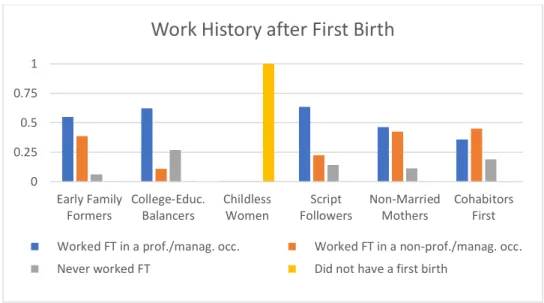
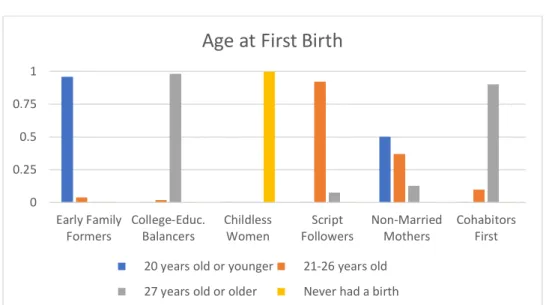
Early Family Formers are those who are predominantly distinctive according to their early age at first marriage and first birth. They are most likely to marry and give birth in the first age tercile, before age 21 and 20, respectively, and the vast majority finished their education after completing high school. Their births typically occur within marriage, though they have the second highest likelihood of a non-marital birth, and they are most likely to have 3 or more children. These women are likely to have worked in a full-time professional/managerial job after childbirth, though we cannot see from these analyses when in adulthood they return to work. Since they are the earliest to form families, they would also be the first to have children leave the house. Given their early family formation and larger family size, these women appear eager to begin forming their families. This class makes up 17% of the sample.
are likely to marry late or not marry at all. They are likely to have worked full-time after their first birth, but the chances are almost equal in regards to whether or not their job was a
professional/managerial occupation. Of the six groups, Non-Married Mothers have the lowest likelihood of never cohabiting (tied with Cohabitors First) and the highest probability of a cohabitation that does not end in marriage. As their label suggests, these women are most distinctive in the fact that their births occur outside of marriage, with Early Family Formers as the only other group with any likelihood of non-marital births.
The main distinguishing features between College-Educated Balancers and Script Followers is their educational attainment and family timing. College-Educated Balancers are very likely to have a college degree or more; Script Followers have mixed education levels, with a high school degree or less as the modal category. Script Followers are more likely to marry at an early or average age and have their first birth at an average age, while College-Educated Balancers start families later; this may be a result of their additional education. College-Educated Balancers and Script Followers have similar likelihoods of having two children, but Script
Followers have a higher likelihood of having 3 or more children. These two groups have similar probabilities of working full-time in a professional/managerial occupation after their first births. Interestingly, despite their educational attainment, College-Educated Balancers have the highest likelihood of the six groups to not work full-time after having their first birth. College-Educated Balancers make up 20% of the sample, while Script Followers make up 23%.
are the most likely to only have one child. Their likelihood of having a full-time professional or managerial occupation after their first birth is the lowest of the five groups of women with children.
Lastly, Childless Women, who make up 18% of the sample, are the only class without children. They have the second highest likelihood of a college degree, but they have mixed levels of education overall. They are most likely to marry late or not at all, with some change of
marrying earlier.
These classes suggest that in this analysis, timing of family formation and education appear to be the most distinguishing features, similar to the previous studies of work-family configurations described above. Specifically, timing of first birth and marriage, as well as whether birth and marriage occur together, are important in categorizing women’s work-family configurations in adulthood. As the next step, I incorporate these configurations into two models of religious involvement.
Logistic Regression Part 1: The Influence of Religious Participation on Work-Family Configurations
As the first part of my second set of analyses, I ran multinomial logistic regression models using affiliation with an evangelical denomination and weekly religious service
attendance, both measured in 1979, as predictors of latent class membership. The results for the baseline model and the model with controls are presented in Table 5. The reference category for the dependent variable is Childless Women (see Appendix 5 for the results with alternate
reference categories). Given the strong connection between religion and family life described above, this group seemed most distinctive from the other groups given their lack of family formation.
making individuals more likely to be Early Family Formers, Script Followers, and Non-Married Mothers than Childless Women as compared to non-evangelical women. In the model with covariates, evangelical women are more than twice as likely to be Early Family Formers and 50% more likely to be Non-Married Mothers or Script Followers than Childless Women as compared to non-evangelicals. In contrast, those who reported an evangelical affiliation in adolescence are about half as likely to Cohabit First and two-thirds as likely to be College-Educated Balancers as they are to be Childless Women, as compared to their non-evangelical peers.
Weekly religious service attendance in adolescence has a different effect in predicting work-family configurations and is less pronounced for most classes. Women who attend weekly in 1979 are twice as likely to be College-Educated Balancers and slightly more likely to be Cohabitors First or Script Followers rather than Childless Women as compared to women who did not attend as frequently when controlling for race, region, parental education, and living with both biological parents. They are slightly less likely to be Non-Married Mothers, but have almost equal odds of being Early Family Formers and Childless Women.
biological parents until age 18, representing a family resource, is connected to 60% higher odds of being a College-Educated Balancer but lower likelihoods of being in any other class over Childless Women; the lower likelihood is especially evident for Early Family Formers and Non-Married Mothers. Women who lived in the South at age 14 have a lower likelihood of being Non-Married Mothers and Cohabitors First, and higher parental education is tied to lower likelihoods of being in all classes except for College-Educated Balancers. In this case, a parent completing more than 12 years of education predicts that women are 2.5 times more likely to be College-Educated Balancers than Childless Women.
Logistic Regression Part 2: The Influence of Work-Family Configurations on Religious Participation
As the second part of my analysis, I ran logistic regression models using class
membership to predict later religious participation in adulthood. The reference group remains the same, Childless Women, and the outcome variable in this model is weekly religious service attendance in 2012, when the respondents were between the ages of 47-51 years old. The control variables are the same as in the first part of the logistic regression analysis, with affiliation with an evangelical tradition and weekly service attendance from 1979 also included as control
DISCUSSION
The latent classes in this analysis resemble many of the classes from prior studies of work-family configurations described above. MacMillan and Copher (2005) identified a group characterized by early family formation, as well as a set of women distinctive in their delay of work in order to pursue education. In their analyses of women at ages 26 and 28, Osgood et al. (2005) identified one set of women they labeled “limited post-secondary education and family,” which would mirror my classes of Non-Married Mothers and Early Family Formers. Using the more recent Add Health sample, Amato et al. (2008) had classes distinctive in their cohabitation, and I had a small class of women with cohabitation histories. Cohabitation was a less common and less distinguishing factor in my analysis, likely because the NLSY79 women are older than the Add Health women and grew up before cohabitation had become more common in recent decades (Axinn and Barber 1997; Manning, Brown, and Payne 2014; Manning and Smock 2005; Smock 2000). The most privileged class in the Amato et al. (2008) model, college-no family formation, also resembles my class labeled College-Educated Balancers; since my sample extends further, these women have had time to finish their education and then form families.
As the logistic regression results show, there are mixed effects of religious affiliation in adolescence and religious service attendance for some of the classes. Affiliation with an
associated with a higher likelihood of being a Non-Married Mother than a Childless Woman, while weekly service attendance is tied to slightly lower odds. These mixed effects of the influence of affiliation and attendance are not uncommon in empirical tests of religious
involvement on various outcomes, and they reflect the complexity of religiosity. Each religion variable measures particular aspects of religiosity and has its own influence on individuals (Pearce and Thornton 2007). Since religion is a multidimensional concept and individuals construct their religiosity in their own ways (Pearce and Axinn 1998; Pearce and Denton 2011), we would expect religious service attendance and affiliation with particular traditions to have different effects for different women.
Additionally, having reviewed the results from other reference groups (see Appendix 5), the relationship between religious involvement and work-family configurations is more evident. When examining the influence of affiliation with an evangelical religious tradition on class membership, evangelical women are more likely to be Early Family Formers than all other classes, with Script Followers and Non-Married Mothers as the next most likely configurations. The role of evangelical messages in shaping the cultural schemas women have regarding work and family (Edgell 2005) appears to be significant for some women in motivating them to form their families early and in the normative pathway of marriage and childbearing. In the same way, women affiliated with evangelical religious traditions in adolescence have the lowest likelihood of being Cohabitors First, demonstrating the effect of conservative religious organizations in discouraging cohabitation (Eggebeen and Dew 2009; Thornton et al. 1992).
opposition to premarital sex in these organizations. However, this opposition may result in more frequent non-marital births because of low contraceptive use and less access to resources that could prevent non-marital births, reflected in the higher likelihood of women raised in
evangelical traditions being Non-Married Mothers (Regnerus 2007).
Religious service attendance in adolescence, in contrast, predicts a higher likelihood of being in all classes other than Non-Married Mothers. The effect of attendance suggests the positive influence religious organizations can have in providing adolescents with religious relationships, moral orders, and closed social networks that can discourage deviant activities; these mechanisms may be stronger than the religious rhetoric against premarital sex found in conservative religious traditions (Regnerus 2007; Rostosky et al. 2004; Smith 2003). Though it is important to keep in mind the racial make-up of Non-Married Mothers and the structural barriers influencing the high rates of non-marital births among Black women (Barber et al. 2015; Kuo and Raley 2016), the effect of religious participation remains significant even after controlling for race. Despite the importance of religious involvement among many African Americans, the religious service attendance of Black youth does not have the same protective effects against non-marital births as it does for other adolescents. The way religion may have a different relationship with work-family configurations for Black women is an important question for future research.
Weekly service attendance in adolescence is a strong predictor of being
the six classes as well. The link between religion and this class of highly-educated women suggests the influence religion can have in providing social and cultural capital for adolescents involved in religious organizations (Smith 2003). Since religious organizations have historically been and remain homogeneous and stratified according to SES (Pyle and Davidson 2014; Smith and Faris 2005), these women are likely participating in congregations with other educated and privileged people. The advantages they received from their religious congregations growing up may be one of the motivators of their religious participation in adulthood, as they continue their participation in religious organizations to provide those same benefits to their own children. This relationship also affirms that higher education may not be the secularizing institution it was once considered to be (Uecker et al. 2007), and that it remains a component of middle-class
respectability (Becker and Hofmeister 2001; Edgell 2005; Wilcox 2005). Additionally, these women are the most likely to not work full-time after their first birth, which could be both another result of their privilege and a driver of the strong effect of membership in this class on later religious participation.
cohabitation experiences (Stolzenberg et al. 1995; Thornton et al. 1992; Uecker et al. 2007). Additionally, Cohabitors First are the most likely group to only have one child, so their lower religiosity could also result from their smaller families.
More specifically, Non-Married Mothers are more likely to attend regularly in adulthood than Childless Women and Cohabitors First, but they are less likely to attend than the other classes. Their lower likelihood of attending regularly in adulthood than the more normative categories that are defined by marriage first and then childbearing suggests some hesitance to participate for these women. However, it also shows that despite having non-marital births, they still attend religious services and do not necessarily feel unwelcome in those environments. Since the women in this sample are between 47 and 51 years old in 2012, this could reflect
participation in religious organizations after children are grown and their non-marital birth is less evident; or, their lower likelihoods of participation than the other classes could reflect their structural disadvantages and the challenges of managing single-parent households on maintaining high levels of religious involvement (Sullivan 2011).
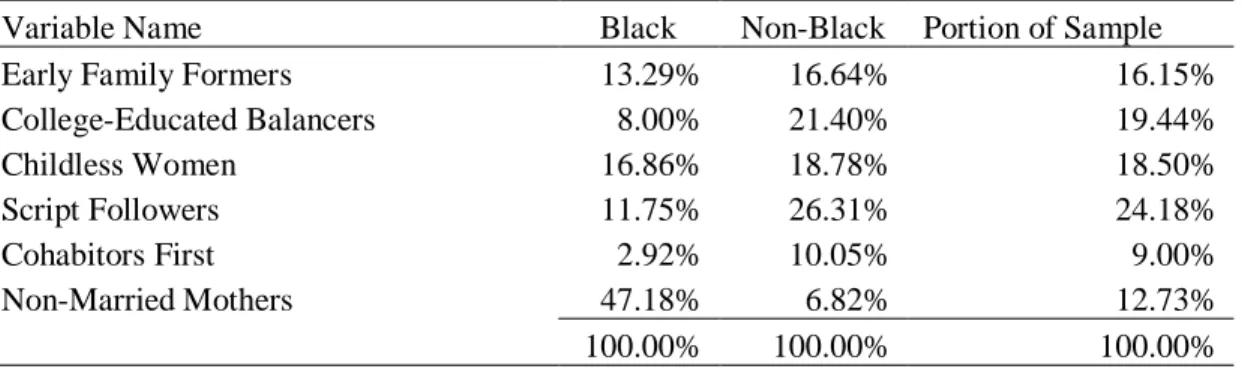
However, I would argue that the significant effect of religion coupled with the majority of Non-Married Mothers being Black women reflects both the importance and the distinctiveness of the Black Church as a resource for African Americans (Steensland et al. 2000). In these
CONCLUSION
These analyses demonstrate the importance of accounting for work-family configurations in understanding women’s religious involvement over the life course. While previous research has noted the link between individual components of these work-family configurations and religion, the ways women balance and maintain multiple roles is a more useful measure of their adult lives. Religion and family are closely intertwined as American institutions, and this project affirms their continued persistence today, particularly as partners in childrearing. While previous studies have shown the link between religious involvement and childrearing, this project
provides additional evidence that this relationship persists regardless of their work, education, and marital experiences.
take on different roles in order to understand their variety (Mouw 2005). Additionally, as inequality between racial/ethnic and socioeconomic subgroups continues to widen and affect family formation (Kuo and Raley 2016), it is important for scholars to continue to investigate how these configurations vary for different sets of women.
FIGURES AND TABLES
Figure 1: Conceptual Diagram
Adolescent Religious
Involvement Adult Religious involvement
Work and Family Configurations
Childhood Adolescence Early Adulthood Middle Adulthood
-Marriage -Children -Cohabitation
Table 1: Descriptive Statistics: Demographics and Religious Participation
Variable Name Percent
Age in 1979
14 15.28%
15 22.19%
16 22.30%
17 21.63%
18 18.60%
Black 14.63%
Lived with both biological parents until 18 65.23%
Lived in South at age 14 32.73%
Parent completed more than 12 years of education 33.86%
Religious Participation
Affiliated with an evangelical denomination in 1979 30.50%
Attended weekly or more in 1979 43.22%
Attended weekly or more in 2012 28.06%
Data: National Longitudinal Study of Youth 1979
1979-2012
Table 2: Descriptive Statistic: Latent Class Analysis Indicators
Variables Percent
Cohabitation
Yes, ended in marriage 28.83%
Yes, did not end in marriage 16.79%
Never 54.38%
Age at first marriage*
21 years old or younger 37.18%
22-25 years old 26.88%
26 years old or older 26.61%
Never married 9.33%
Age at first birth
20 years old or younger 22.61%
21-26 years old 27.99%
27 years old or older 30.84%
Never had a birth 18.50%
Number of Children
1 17.30%
2 37.14%
3 or more 27.06%
None 18.50%
Ever had a non-marital birth*
Yes 16.52%
No 83.48%
Work history after first birth
Worked full-time in a professional/managerial occ. 45.38% Worked full-time in a non-professional/managerial occ. 23.39%
Never worked full-time 12.74%
Did not have a first birth 18.50%
Highest Grade Completed
HS graduate or less (12 or fewer years) 44.47%
Some college (13-15 years) 24.61%
College graduate or more (16 or more years) 30.92%
Data: National Longitudinal Study of Youth 1979
1980-2010
N=1,941, Weighted Proportions
APPENDICES
Appendix 1: Additional Information on Testing the Local Independence Assumption
As mentioned above, the main assumption in LCA is the test of local independence, which means that the association between any of the variables in our Latent Class Model (LCM) should be captured by the latent variable we are measuring. As a result, the variables are
independent of each other within each latent class. To test for this, one method is to test the association between each response category in each variable to see whether conditional
independence is upheld in a LCM with a specified number of classes. This method compares the observed values with the model-predicted values for each response category in a series of
bivariate tests (Thompson 2007; Uebersax 2009). The standardized residuals from these tests can then be examined according to typical measures of significance, such as whether the bivariate residuals are larger than 1.96. A software program in order to perform this analysis is available in Mplus (Muthén and Muthén 2009).
The results of the initial test of the five-class model I used in my MA proposal showed significant conditional dependence, particularly among the work and education variables. Of the 271 pairs, 37 had z-scores larger than 1.96, or 13.7%. As a result, I tried a variety of methods to condense my work variables, which is one factor in collapsing the two variables I had used separately (professional/managerial occupation and proportion of years working full-time) into one variable. When I used the combined work measure that tracked work involvement after first birth, the results improved significantly (10.6% of pairs were significant in the five-class model). However, this test also revealed that a six-class model improved the results for the test of
z-scores are significant. While this is higher than the 5% standard we would use with this z-score, I retained this model.
Removing highest grade completed from my six-class model would lower the percentage to below the threshold (3.29% of pairs are significant), but I decided that highest grade
Appendix 2: Additional Information on Latent Class Classify-Analyze Procedures
Appendix 3: Bar Graphs
Figure A3.1: Distribution of Classes
Figure A3.2: Probability of Cohabitation by Latent Class
Distribution of Classes
Early Family Formers College-Educ. Balancers
Childless Women Script Followers
Non-Married Mothers Cohabitors First
0 0.25 0.5 0.75 1
Early Family
Formers College-Educ.Balancers ChildlessWomen FollowersScript Non-MarriedMothers CohabitorsFirst
Cohabitation
Figure A3.3: Probability of Highest Grade Completed by Latent Class
Figure A3.4: Probability of Non-Marital Birth by Latent Class 0
0.25 0.5 0.75 1
Early Family Formers
College-Educ. Balancers
Childless Women
Script Followers
Non-Married Mothers
Cohabitors First
Highest Grade Completed
12 or fewer years 13-15 years 16 or more years
0 0.2 0.4 0.6 0.8 1 1.2
Early Family Formers
College-Educ. Balancers
Childless Women
Script Followers
Non-Married Mothers
Cohabitors First
Non-Marital Birth
Figure A3.5: Probability of Number of Children by Latent Class
Figure A3.6: Probability of Work History after First Birth by Latent Class 0
0.25 0.5 0.75 1
Early Family
Formers College-Educ.Balancers ChildlessWomen FollowersScript Non-MarriedMothers CohabitorsFirst
Number of Children
1 2 3 or more None
0 0.25 0.5 0.75 1
Early Family Formers
College-Educ. Balancers
Childless Women
Script Followers
Non-Married Mothers
Cohabitors First
Work History after First Birth
Worked FT in a prof./manag. occ. Worked FT in a non-prof./manag. occ.
Figure A3.7: Probability of Age at First Birth by Latent Class
Figure A3.8: Probability of Age at First Marriage by Latent Class 0
0.25 0.5 0.75 1
Early Family
Formers College-Educ.Balancers ChildlessWomen FollowersScript Non-MarriedMothers CohabitorsFirst
Age at First Birth
20 years old or younger 21-26 years old
27 years old or older Never had a birth
0 0.25 0.5 0.75 1
Early Family
Formers College-Educ.Balancers ChildlessWomen FollowersScript Non-MarriedMothers CohabitorsFirst
Age at First Marriage
21 years old or younger 22-25 years old
Appendix 4: Supplemental Analyses by Race
Table A4.1: Racial Composition of Non-Married Mothers
Variable Name Non-Married Mothers Full Sample
Black 54.24% 14.63%
Non-Black 45.76% 85.37%
Data: National Longitudinal Study of Youth 1979 1979-2012
N=1,941, Weighted Proportions
Table A4.2: Distribution of Class Membership by Race/Ethnicity
Variable Name Black Non-Black Portion of Sample
Early Family Formers 13.29% 16.64% 16.15%
College-Educated Balancers 8.00% 21.40% 19.44%
Childless Women 16.86% 18.78% 18.50%
Script Followers 11.75% 26.31% 24.18%
Cohabitors First 2.92% 10.05% 9.00%
Non-Married Mothers 47.18% 6.82% 12.73%
100.00% 100.00% 100.00%
Data: National Longitudinal Study of Youth 1979 1979-2012
Appendix 5: Logistic Regression Results with Rotating Reference Groups
Reference Category: Non-Married Mothers