GOVERNANCE MECHANISMS AND SHAREHOLDER VALUE
: EVIDENCE FROM THE MERGER WAVE IN THE LATE 1990S
CHANGHYUN KIM
A dissertation submitted to the faculty at the University of North Carolina at Chapel Hill in partial fulfillment of the requirements for the degree of Doctor of Philosophy in the
Strategy and Entrepreneurship in the Kenan-Flagler Business School.
Chapel Hill 2014
Approved by:
Richard A. Bettis
Howard E. Aldrich
Hugh O‘Neill
Atul Nerkar
ii
©2014
iii
ABSTRACT
CHANGHYUN KIM: GOVERNANCE MECHANISMS AND SHAREHOLDER VALUE (Under the direction of RICHARD A. BETTIS)
Corporate governance scholars have emphasized monitoring by institutional investors as
a primary mechanism for resolving agency problems. However, the shareholders of acquiring
firms experienced substantial wealth destruction during the M&A wave in the late 1990s in spite
of increasing institutional ownership. I hypothesize that this paradox is due to behavioral
difference in two categories of institutional investors (transient vs. dedicated). Empirically, I find
that transient institutional investors encouraged M&A activities even during the unproductive,
value-destroying M&A wave in the late 1990s. Furthermore, the level of transient institutional
investors‘ ownership was negatively related to M&A performance measured by cumulative
abnormal returns. By contrast, dedicated institutional investors did not significantly impact
M&A performance. Overall, results suggest that during merger waves the monitoring by
transient institutional investors fails to prevent shareholder value destruction and may actually
iv
ACKNOWLEDGEMENTS
First and foremost, I would like to thank God. I could never have done this without the
faith I have in you, the Almighty.
I offer my profound gratitude to my advisor, Prof. Richard A. Bettis. I am extremely
indebted to him for his caring, sincere encouragement and providing me with an excellent
atmosphere doing research, not to mention his academic guidance and superb knowledge of
Strategy. I would also like to thank Prof. Hugh O‘Neill, Prof. Atul Nerkar, Prof. Howard Aldrich,
and Prof. Paige Parker Ouimet for guiding my research for the past several years and helping me
to finalize this thesis.
I would like to thank all the Korean Ph.D students at Kenan-Flagler Business School,
who as good friends have been always willing to help and give their best friendship. It would
have been a lonely place without them. I also take this opportunity to record my sincere thanks to
all the Ph.D students in the Department of Strategy & Entrepreneurship at Kenan-Flagler
Business School for their intellectual stimulus and kind considerations.
Finally, I can‘t imagine my Ph.D degree without the love and support from my family. I
thank my wife, Jeonga Kim, for doing her best to take care of me and two kids, Minkee and
Minseo. I always fall short of words and felt impossible to describe her supports in words. I do
appreciate for her encouragement regarding all of my pursuits and her inspiring me to follow my
dreams. Give many thanks to my two kids, Minkee and Minseo. I would simply say, ―Minkee
v
TABLE OF CONTENTS
LIST OF TABLES ... vii
LIST OF FIGURES ... viii
Chapter 1 INTRODUCTION ... 1
Chapter 2 RESEARCH CONTEXT: MERGER WAVES ... 6
2.1 Prior Merger Waves: the Merger Wave in the 1960s... 6
2.2 Prior Merger Waves: the Merger Wave in the 1980s... 7
2.3 Changes in Corporate Governance ... 11
2.4 The Merger Wave in the Late 1990s ... 13
2.5 Explanations on the Merger Wave in the Late 1990s ... 14
Chapter 3: THEORY AND HYPOTHESES DEVELOPMENT ... 18
3.1 Separation of Ownership and Control ... 18
3.2 Governance by Capital Structure ... 20
3.2.1 Agency Perspective ... 20
3.2.2 Behavioral Perspective ... 22
3.3 Governance by Contracts ... 25
3.3.1 Agency Perspective ... 26
vi
3.4 Governance by Monitoring ... 33
3.4.1 Agency Perspective ... 36
3.4.2 Behavioral Perspective ... 37
3.4.3 Heterogeneity among Institutional Investors ... 40
3.4.4 Hypothesis Development ... 42
Chapter 4 DATA AND METHEDOLOGY ... 48
4.1 Sample and Data... 48
4.2 Variables... 49
4.2.1 Dependent Variables ... 49
4.2.2 Explanatory Variables ... 50
4.2.3 Control Variables ... 52
4.3 Analytic Models ... 56
Chapter 5 RESULTS... 58
5.1 Cash Holdings ... 58
5.2 Institutional Ownership ... 59
5.3 Managerial Ownership ... 63
Chapter 6 IMPLICATIONS AND LIMITATIONS ... 65
6.1 Implications ... 65
6.2 Limitations ... 68
vii
LIST OF TABLES
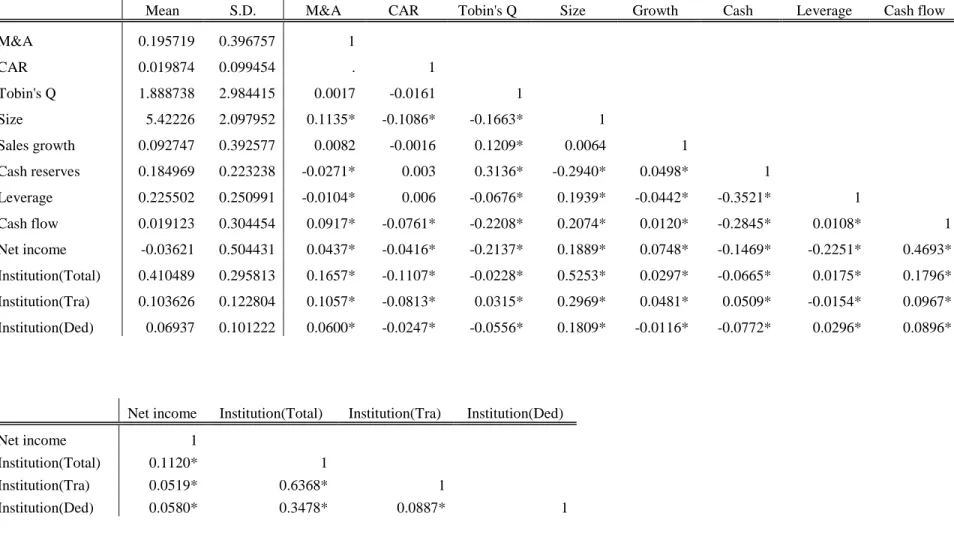
TABLE 1: Descriptive Statics……….………..………72
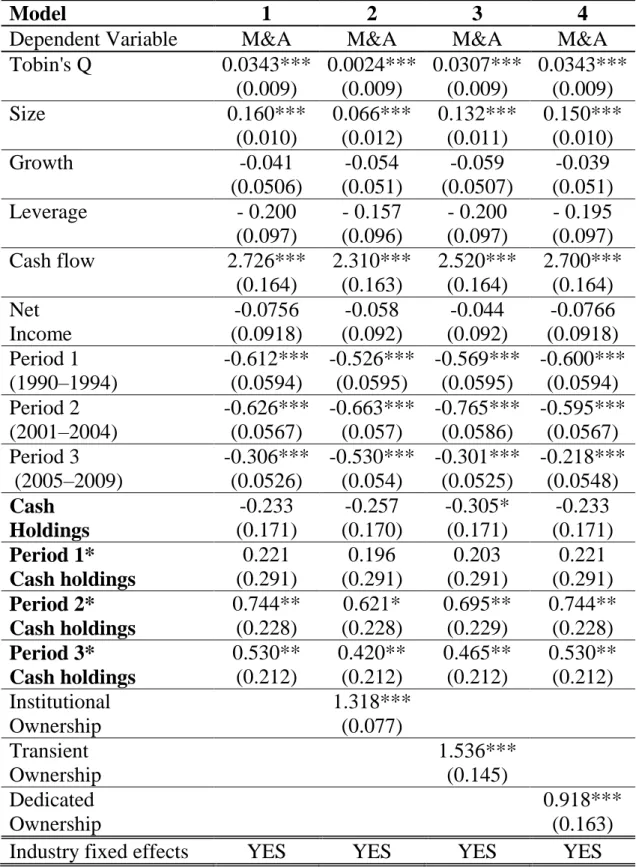
TABLE 2: Cash Holdings – Propensity to Engage in M&As.………...……...………..73
TABLE 3: Cash Holdings —Impact on M&A Performance………...………..74
TABLE 4: Institutional Ownership— Propensity to Engage in M&As………...…….75
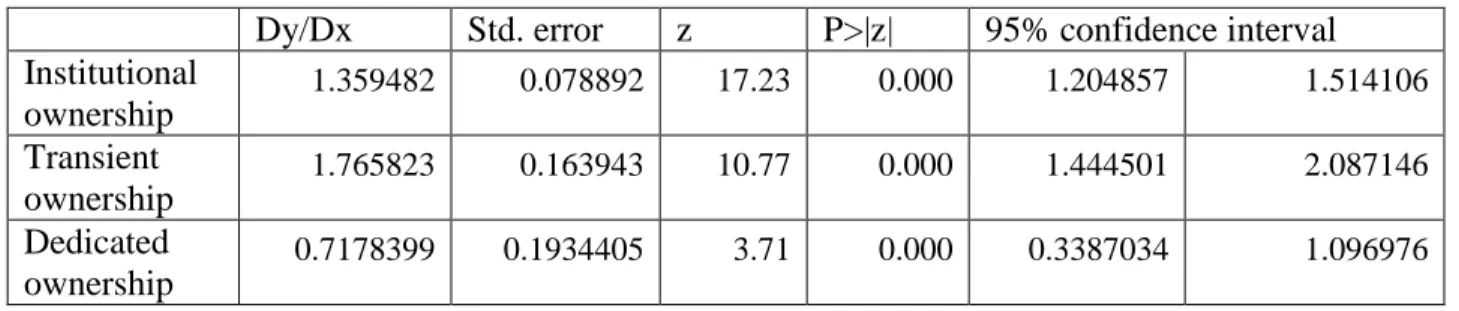
TABLE 4-1: Marginal Effects of Institutional Ownership in Logit Regression………76
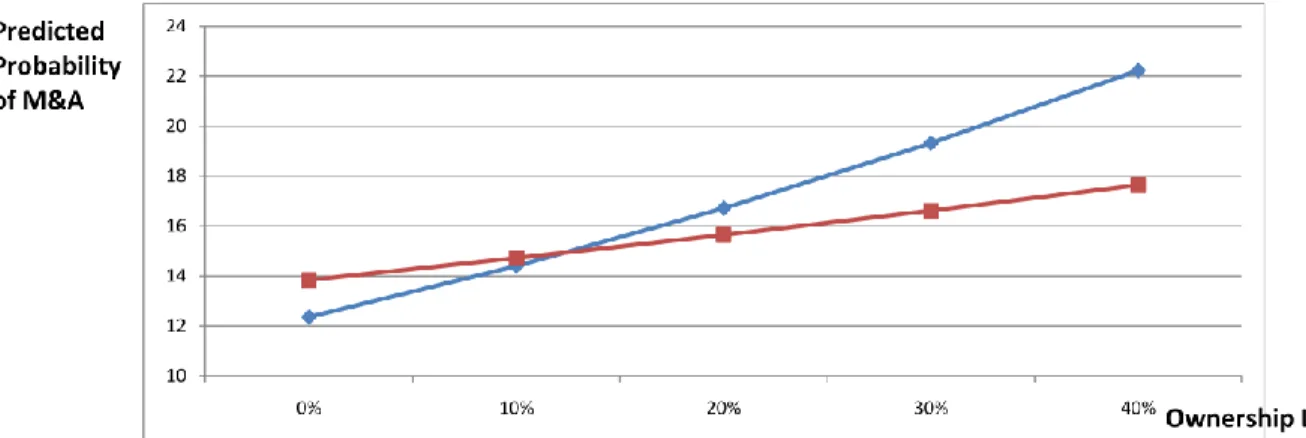
TABLE 4-2: Predicted Probability of Being a Bidder (1995~2000) ……….…76
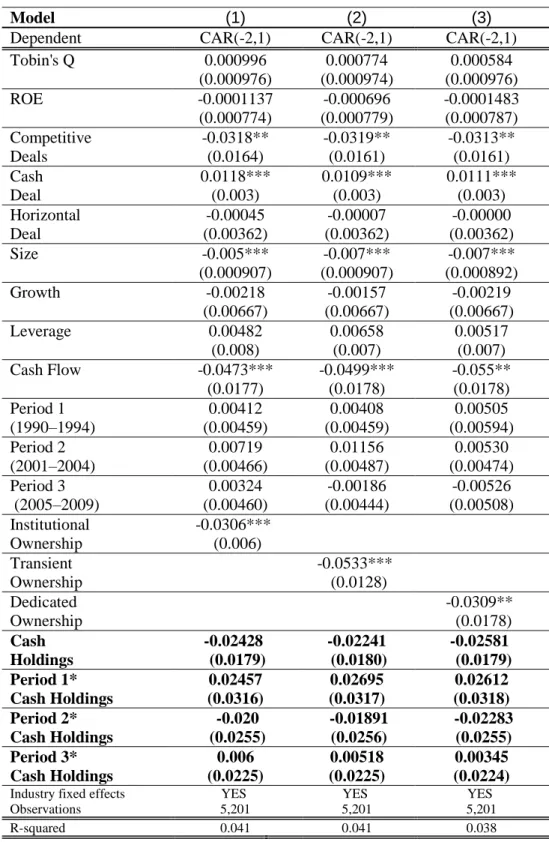
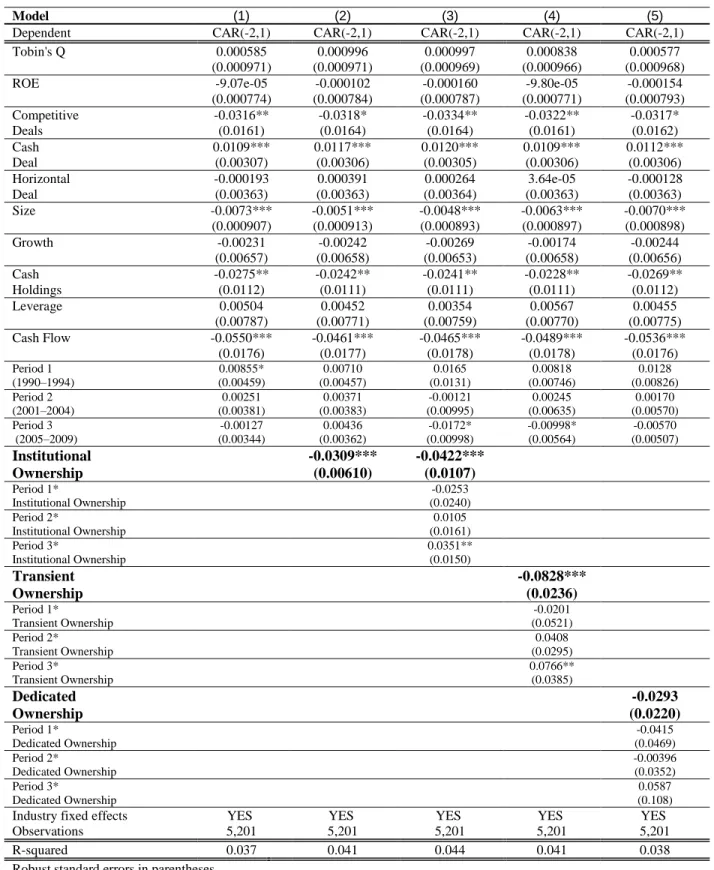
TABLE 5: OLS on M&A Performance (CAR) with Firm-Clustered Standard Error…………...78
TABLE 6: Heckman‘s Correction on M&A Performance………79
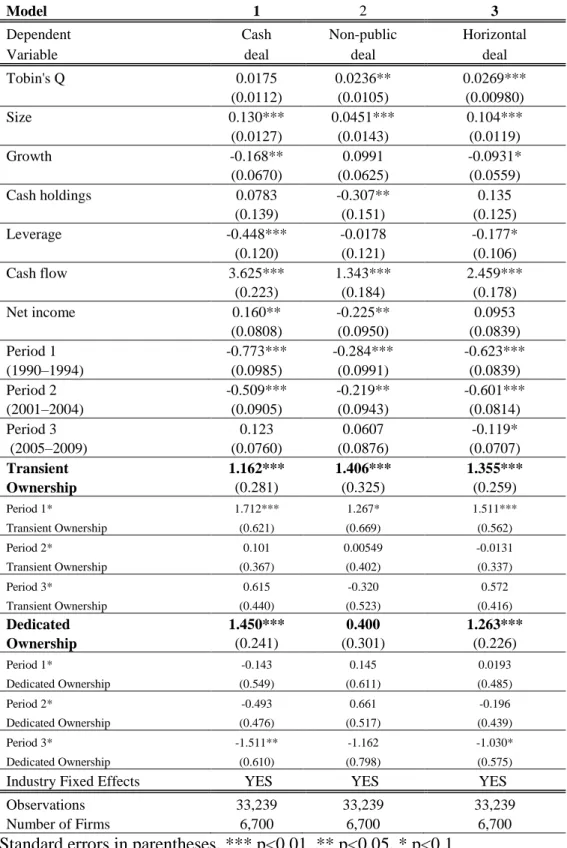
TABLE 7: Propensity to Engage in Cash/Non-Public Target/Horizontal Deal ………...80
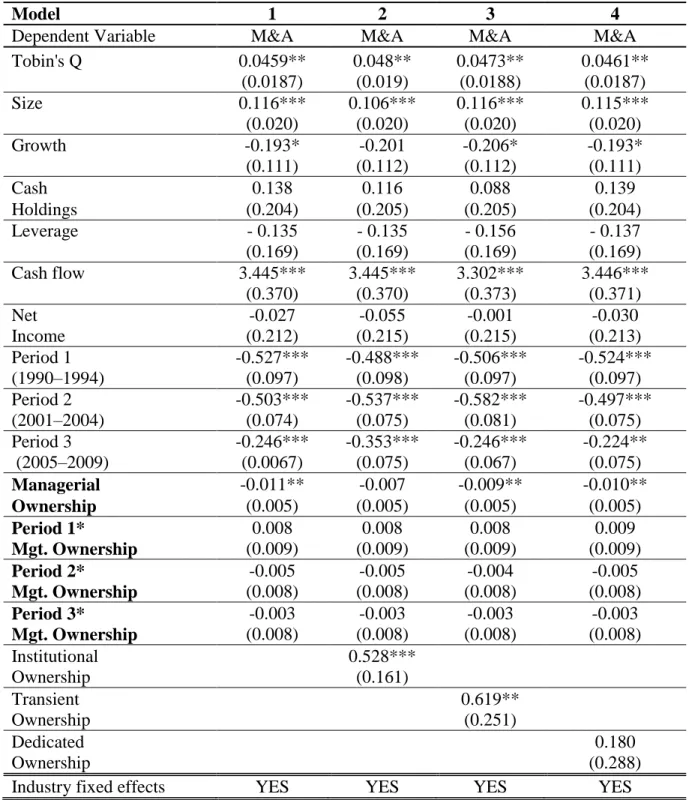
TABLE 8: Managerial Ownership—Propensity to Engage in M&As………..81
TABLE 9: Managerial Ownership—Impact on M&A performance……….82
TABLE 10: Summary - Hypothesis and Results………...83
viii
LIST OF FIGURES
Figure 1: Graphic Presentation of Predicted Probability………...77
1
Chapter 1 INTRODUCTION
Academics, public policy makers, and the media agree that the monitoring by
institutional investors is an important governance solution to agency problems (Daily, Dalton, &
Rajagopalan, 2003; Dalton, Hitt, Certo, & Dalton, 2007; Kang & Sorensen, 1999a). Some
characteristics which differentiate institutional investors from other types of investors have been
suggested as the grounds for this positive impact on governance. First, the ownership stake held
by institutional investors is usually large enough to accommodate monitoring costs that affect a
manager‘s choice of strategy (Connelly, Tihanyi, Certo, & Hitt, 2010; Hoskisson, Hitt, Johnson,
& Grossman, 2002). However, the stake may be too small, compared to major owners, to
privatize control rights (Villalonga & Amit, 2006). Perhaps most importantly, active trading by
institutional investors is believed to incorporate more private information into the stock price. As
a result, the stock price more fully reflects fundamental value due to trading by institutional
investors (Edmans & Manso, 2011; Maug, 1998).
Collinear with the recognition of the important role played by institutional investors,
shareholdings by institutional investors have increased, and the ownership of the U.S.
corporations has become substantially more concentrated in the hands of institutional investors
(Gillan & Starks, 2007a; Holderness, 2009). Indeed, institutional investors account for more than
75 percent of the trading in equities listed on the New York Stock Exchange (Karmel, 2004). In
2
the Great Depression that prohibited certain levels of ownership among institutional investors
(Roe, 1991) have been weakened or eliminated to facilitate monitoring by institutional investors
(Kaplan, 1997b).
Given adequate concentrated ownership in the hands of institutional investors, one would
expect shareholders‘ wealth to be well protected by the crucial roles played by institutional
investors (Dalton et al., 2007; Kang & Sorensen, 1999a). However, the shareholders of acquiring
firms in the U.S. experienced a huge amount of wealth destruction during the M&A wave in the
late 1990s (Bouwman, Fuller, & Nain, 2009; Jensen, 2005). Unlike the merger wave in the 1980s,
the average losses of acquiring shareholders cannot be explained by a wealth transfer to
acquired-firm shareholders because the combined value of acquiring and acquired firms fell in
the later stages of the merger wave (Moeller, Schlingemann, & Stulz, 2005). It is also disturbing
that even for mergers that resulted in negative acquirer returns, more than 95 percent of mutual
funds voted for the mergers (Matvos & Ostrovsky, 2008). This presents a conundrum whereby
monitoring by institutional investors, which according to agency theory should improve
management focus on equity returns, instead has had an insignificant or the opposite effect
during this time period. Hence, an important question is what role, if any, did institutional
investors play in this value-destroying wave? Did they facilitate this unprecedented wealth
destruction or were they merely passive bystanders?
Research into this issue contributes to the literatures of corporate governance. Prior
literatures on corporate governance have highlighted the encouragement of M&A activities by
risk-neutral institutional investors (Gomez-Mejia, Larraza-Kintana, & Makri, 2003; Hoskisson et
al., 2002) and have tested the general impact of institutional investors on M&A performance
3
Furthermore, it is rare to examine the specific behaviors or psychological processes by which
institutional investors affect the decision making of corporate managers (Westphal & Zajac,
2013). The behavioral approach developed in this research explains a cognitive mechanism by which institutional investors put pressure on firm managers. Frequent (or active) trading by
transient institutional investors who are very sensitive to quarterly earnings release (Bushee,
2004a; 1998) lets aspirational reference points1 adjust quarterly, not yearly. In the late 1990s,
when the stock market was performing well, the reference point of firm managers for stock price
kept adjusting in an upward direction for many consecutive quarters.As a consequence, high
stock performance in the late 1990s may have imposed a market reference point that could not be
justified by current operating performance and could not be sustained by internal growth in the
short term (Mishina, Dykes, Block, & Pollock, 2010). In response to this pressure, managers
started searching for acquisitions that could signal continuing growth.
This paper also contributes to explaining the phenomenon of M&A waves. Literatures on
M&A waves have investigated the implication of the early or late position within M&A waves
on acquisition performance (Carow, Heron, & Saxton, 2004; Mcnamara, Haleblian, & Dykes,
2008) and the firm-level determinants of M&A timing within the wave (Haleblian, McNamara,
Kolev, & Dykes, 2012). However, the role of institutional investors on M&A timing and
performance has not been investigated, even though Stearns and Allan (1996) argued that the
growth and the enlarged power of financial institutions actually facilitated M&A waves.
1 Research in behavioral tradition assumes that decision makers don‘t maximize profits and that decision makers
choose the first alternative they expect to be satisfactory. It is the deviation from cognitive reference points which decides what is deemed satisfactory. Aspiration levels shaped by social and historical comparisons set up these
4
In testing this relationship, I do not assume that all institutional investors are the same.
Each type of institutional investors is governed by different fiduciary responsibility laws and in
turn bring different managerial and firm behaviors (Bushee, 2004a). Therefore, to treat all
institutional investors the same makes limits our understanding of the impact of institutional
investors (Connelly et al., 2010; Cornett, Marcus, Saunders, & Tehranian, 2007). Modifying the
Bushee‘s (2001a; 1998) classification on institutional ownership, I categorized institutional
investors into dedicated and transient institutional investors. Dedicated institutional investors are investors who have concentrated portfolios over time with intense monitoring while transient institutional investors are investors who have broad portfolios and make frequent trades.
Empirically, I find that with the strong ownership of transient institutional investors who
are very sensitive to quarterly earnings releases and active in trading, managers pursued merger
activities at the cost of shareholder‘s wealth apparently to avoid being caught in an earnings
shortfall situation in the subsequent quarter. As a result, the level of transient ownership is
positively related to M&A propensity and negatively related to M&A performance, an
unfortunate combination. Dedicated institutional investors, by contrast, did not exert a detectable
impact on the M&A performance during this period.
The remainder of this paper is organized as follows. First I start with a brief historical
review of the research context, M&A waves and corporate governance. Next, I set up two sets of
competing hypotheses based on agency theory and behavioral theory respectively. In setting up
competing hypotheses, I begin with developing hypotheses on the efficacy of the capital
structure characterized by lower cash holdings and of higher managerial ownership favored by
institutional investors during the merger wave. Probably based on the theoretical appeal of and
5
managerial ownership. After examining the efficacy of capital structure and managerial contracts
during the wave, I investigate the monitoring role played by institutional investors. Even though
the capital structure or higher managerial ownership aligning managerial interests to
shareholder‘s wealth may not work as they are designed, the monitoring of institutional investors
by allegedly smart trading activities could make differences. First, I offer a more direct test of the
relationship between the existence of institutional investors and firm‘s decision making on M&A.
Then I include a methods section that includes a description of my sample, the statistical
technique employed, variables and measures. Finally, I provided the results and implications and
6
Chapter 2RESEARCH CONTEXT: MERGER WAVES
In U.S. merger activities, the number of M&As increases rapidly and then decreases
rapidly(Andrade, Mitchell, & Stafford, 2001). The widely accepted view is that there have been
two major merger waves since 1960 before the merger wave in the late 1990s. To understand
how the recent merger wave may be differentiated from other prior merger waves, I briefly
review the prior merger waves.
2.1 Prior Merger Waves: the Merger Wave in the 1960s
The merger wave in the late 1960s to early 1970s was characterized by conglomerate
diversification. According to Ravenscraft and Scherer (1987), 36 percent of all the acquisitions
during 1964~1972 were of a conglomerate nature. There are two major interpretations of this
diversification movement.
One view is that diversification by conglomerate was executed at the cost of
shareholder‘s wealth. The existence of diversification discount, undervaluation of diversified
firms relative to their single-segment peers, has been suggested as compelling evidence wealth
destruction. This value-destroying diversification strategy was understood as the outgrowth of
managers‘ desire as agents of shareholders to lower their exposure to firm-specific risk (Amihud
& Lev, 1981). This explanation is consistent with empirical observations on the diversification
discount in the 1980s (Berger & Ofek, 1995; Lang & Stulz, 1994). Using operating performance
data, Porter (1987) also found that half of the acquisitions by major U.S. companies generated
7
diversification first occurred the diversification discount existed. However, he found that insider
ownership was an effective deterrent to diversification movement in 1960s when doing so was
costly to shareholder‘s wealth. However, insider ownership facilitated diversification in 1970s
when the diversification discount was not significant. This suggests that risk hedging for insiders,
an agency problem, is likely not the cause of diversification discount as agency theorists
predicted (Servaes, 1996).
The other view on diversification argues that diversification discount is a data artifact and
the result of sample-selection. For example, Villalonga (2004) find that diversification discount
disappears or turns into a premium after correcting selection bias. In addition to the statistically
vulnerable foundation of the diversification discount, the higher GDP and productivity growth
observed in the 1960s also casts suspicion on the view that diversification was value-destroying
(Holmstrom & Kaplan, 2001).
The significance and existence of the diversification discount is still under debate
although most scholars accept the existence of this discount1. Accordingly, main focus of the
debate is evolving toward under what circumstances and what degree of diversification is value
created or destroyed. The view on diversification is expanding to take into account diverse
contingencies that firms are facing rather than focus only on contingencies stemming from the
principal agent relationship (Christensen & Montgomery, 1981; Lane, Cannella, & Lubatkin,
1998; Rumelt, 1974; Varadarajan & Ramanujam, 1987).
2.2 Prior Merger Waves: the Merger Wave in the 1980s
The value of takeovers increased abruptly in the late 1980s with the increase of number
of announced mergers. The amount of merger activity was historically high and represented
8
roughly 5~6% of GDP. Before 1980s, merger activity over 2~3% of GDP was unusual. Jensen
interpreted the merger wave as the process of eliminating the excess capacity that the U.S.
corporations had in the 1980s. From the perspective of Jensen‘s free cash flow hypothesis
(Jensen, 1986, 1989), given the relaxed anti-trust regulations and increased foreign competition
since the 1970, U.S. corporations should have distributed all their free cash flow to the
shareholders in the late 1970s and the early 1980s. Instead, he asserted that they had invested
substantial amount of the free cash flow in negative NPV projects, such as capacity expansion
for corporate growth. Hence, many corporations had excess capacity which incurred substantial
opportunity costs due to the underutilized resources. This inefficient use of assets resulted in an
increase in the market for corporate control whereby inefficient managers were replaced through
takeovers.
Another group of scholars viewed the merger wave largely as a process of unbundling
conglomerates (Davis, Diekmann, & Tinsley, 1994; Shleifer & Vishny, 1990). They argued that
the trigger was largely the disappointment with the diversification strategy undertaken by
conglomerates since 1960s. Furthermore, the increased availability of mutual funds made it
easier for individual shareholders to diversify their own portfolios directly. From the perspective
of shareholder value creation, corporation could return to a less diversified posture, since
shareholders could now easily diversify their own portfolio more effectively to reflect their risk
preferences without being subject to a conglomerate diversification discount. Hence the agents of
diversification should be the shareholders, not the corporation itself (Stearns & Allan, 1996).
However, the empirical evidence for these two explanations implies that excess capacity
and de-conglomeration arguments only partially explain the 1980s (Kaplan, 1997a). First, if
over-9
capacity before the takeovers, and these companies should cut their investments after the
takeovers. Indeed, Kaplan (1989a) and Kaplan and Stein (1993) find supporting evidence that the
firms purchased by management buyout firms reduced capital expenditures. Agrawal and Jaffe
(2003), however, failed to find that targets perform poorly before acquisitions in terms of
operating performance and stock return. Furthermore, Servaes (1994) finds no evidence that
targets of hostile takeovers and of going private transactions overinvest in capital expenditures
before the takeover.
For the deinstitutionalization of conglomerate, again evidence is mixed. Davis and Greve
(1994) finds that 52 percent of larger firms operated in three or more 2-digit industries in 1980
while only 30 percent did so in 1990. Montgomery (1994) finds, however, that the typical S&P
500 firm in 1991 had the same number of industry segments as the typical S&P 500 firm in 1981.
Similarly, Comment and Jarrell (1995) find only modest declines in diversification over the
1980s.
Mixed evidences on the causes of the merger wave should call for a more comprehensive
approach to this phenomenon. Donaldson (1994) suggests that the merger wave was a response
to the market-wide undervaluation of the firms mainly driven by excess capacity, managerial
diversification, and outdated governance structure for dealing with the discontented investors.
According to Donaldson, the average market to book ratio of S&P 500 was less than 1.2 in 1982
while it had been more than 1.6 in the early 1970s. However, legal constraints introduced after
the Great Depression, such as the Glass-Steagall Banking Act of 1933, and the Securities Act of
1933, raised the cost of active involvement of investors. Those regulations imposed restrictions
on the communications among institutional investors and between investors and managers and
10
purchase entire companies by taking higher debt (Jensen, 1989). Raiders who sensed the
discontent of shareholder around financial returns, could secure financing (usually junk bonds)
by using the assets of the target firm. This made it possible for corporate raiders to buy large
firms with very little cash. As a consequence, LBOs (Leveraged Buyouts) became central to the
merger wave in the late 1980s. A buyout is a transaction where shareholders of a listed firm are
bought out by a new group of investors – usually including incumbent management, a
specialized buyout firm, commercial banks and public debt holders. LBOs are usually
differentiated from other type of buyouts by the use of high leverage (Chaddad, 2009). Typical
debt-to-capital ratios of LBOs were 85% in the 1980s (Kaplan, 1991). Actually, between 1981
and 1989, more than 2400 listed corporations underwent an LBO and in 1988 (Wiersema &
Liebeskind, 1995) the total value of the buyouts exceeded $77 billion, nearly one-third of the
value of all M&As. Subsequently, the combined borrowings of all nonfinancial corporations in
the United States were around $2 trillion in 1988, up from $835 billion in 1979 (Jensen, 1989).
In response to the rebirth of active investors in the form of takeover financing, managers
tried to introduce anti-takeover devices, such as the poison pill and golden parachute defenses
(Davis & Greve, 1997). Many states passed business combination (BC) laws imposing
restrictions to hinder corporate raiders from gaining access to the target firm‘s assets for the
purpose of paying down acquisition debt (Giroud & Mueller, 2010). Hence, we observe
historically high levels of tender offers (the indicator of hostile takeovers), more than 20 percent
of total takeovers in this period. Indeed, about half of all major U.S. corporations received hostile
takeover bids in the 1980s (Mitchell & Mulherin, 1996). In a nutshell, Donaldson (1994) calls
the 1980s the decade of confrontation between the capital markets and corporate managers. To
11
conglomerates were among the factors driving market-wide undervaluation. Kaplan (1997a)
argues that the undervaluation argument articulated by Donaldson (1994) is the most convincing
explanation of the merger wave in the 1980s.
In conclusion, the merger wave in the late 1980s is distinguished by market-wide
undervaluation, frequent usage of high leverage and hostile takeovers due to the confrontation
between the institutional investors and corporate managers (Donaldson, 1994; Holmstrom &
Kaplan, 2001; Jensen, 1989).
2.3 Changes in Corporate Governance
Execution of hostile takeovers is usually the last resort in resolving the confrontation
between the discontented institutional investors and corporate managers. Instead, diverse ways of
exerting shareholder pressure are employed to mitigate the tensions. Typically institutional
investors submit proposals to improve governance structures for shareholder wealth creation
with the implicit or explicit threat of selling a large block of shares or a hostile takeover.
Indeed, the locus of shareholder activism shifted from individuals to institutions in this
period. Until the mid-1980s, the major proponents of shareholder proposals were individuals.
Since the formation of The Council of Institutional Investors in 1985, institutional investors have
become the main focus of shareholder activism. According to the record on shareholder
proposals submitted from 1987 to 1994, the main issues of interests were repeal of classified
board members (15%), elimination of poison pills (12%), board independence (13.7%), and
executive pay (11.4%). The distribution of shareholder proposals submitted imply that the board
of directors became more independent from managers as the board of directors got more outside
12
In addition to eliminating restrictions on shareholder‘s involvement, institutional
investors also backed the introduction of stock-based incentives, thereby helping align the
interest of managers to those of shareholders. For example, from 1980 and 1994, the mean value
of stock option grants to CEOs of publically traded firms increased by 683 percent from
$155,000 to $1.2 million. The median value of stock option grants rose from $0 to $325,000. As
a consequence, the sensitivity of CEO compensation to firm performances rose substantially
since 1980 (Hall & Liebman, 1998).
Furthermore, institutional owners became the major investor group for, more than 50%,
the U.S. public firms as household stock ownership intermediated by institutions had increased
continuously. Indeed, the level of household participation in the stock market primarily through
institutions, such as the purchase of shares in mutual funds, increased from roughly 20 % in
around 1980 to over 50 % in 2001 (Davis, 2008). Accordingly, from 1980 to 1996 the ownership
stake held by institutional investors on the U.S. public firms nearly doubled from under 30
percent to over 50 percent (Gompers & Metrick, 2001). Furthermore, institutional investors
account for more than 75percent of the trading in equities listed on the NYSE (Karmel, 2004).
Given the conception of firms as the vehicles for shareholder value maximization and several
coordinating mechanism (e.g., Institutional Shareholder Services, Investor Responsibility Research Center), it is reasonable to argue that institutional investors substantially increased the emphasis of increasing shareholder wealth on senior level managers.
The merger wave in the 1980s characterized by hostile takeovers and the epochal
transition in corporate governance systems accompanied by the continuous expansion of
institutional ownership caused institutional investors to exercise more power over corporate
13
2.4 The Merger Wave in the Late 1990s
The fear of hostile takeover in the 1980s and the spread of incentive-based compensation
including stock options and grant plans for managers (Kaplan, 1989b) in association with the
enhanced governance structure motivated U.S. corporations to more fully pursue shareholder
value maximization as the ultimate goal of corporations (Davis, 2009). Therefore, hostile
takeovers and higher leverage were no longer essential to fix managerial misbehaviors in the
1990s like in the 1980s. Indeed, while the portion of hostile takeovers out of total takeovers in
the 1980s ranges from 11percent to 18percent, the portion in the late 1990s (1996~2000) ranges
from 2.3 percent to 7.2 percent (Dong, Hirshleifer, Richardson, & Teoh, 2006). The issuance of
junk bonds, the main financial mechanism of hostile takeovers in the 1980s, also declined in the
1990s. Specifically, while more than 50% of junk bond issued were related with takeovers in the
1980s, the fraction used for takeovers decreased to 30% in the 1990s (Holmstrom & Kaplan,
2001).
Despite the reduced tension between institutional investors and corporate managers,
however, the merger wave in the late 1990s was huge compared to all other merger waves. M&A
activity as the percent of GDP during the merger wave in the late 1980s, historically high at that
time, was around 5%. Surprisingly, the activity in the late 1990s was more than 15% of GDP
(Holmstrom & Kaplan, 2001). According to Dong et. al(2006), the total value of transactions
(2001 dollars) from 1993 to 2000 was $4.35 trillion. This is much greater than the total value of
transactions in the preceding 15 years of their dataset.
More importantly, acquiring-firm shareholders lost 12 cents at acquisition announcement
14
al., 2005)2. Moreover, Bouwman, Fuller, and Nain (2009) find that on average, the long-run
performance of acquisitions undertaken in this period is significantly negative. They also report
that even cash mergers undertaken during the period produced negative long-run return. This is a
very surprising finding because usually cash mergers are believed to deliver positive short and
long-term return to the shareholders of acquiring firms (Chang, 1998; Fuller, Netter, &
Stegemoller, 2002). Indeed, in their study, the cash mergers undertaken in the merger wave in
the 1980s generated positive long-term return to the acquiring shareholders.
2.5 Explanations on the Merger Wave in the Late 1990s
As noted earlier, it has been widely accepted that the discontent of institutional investors
and the contests between institutional investors and managers led to a massive merger wave in
the 1980s. This raises how to explain the even larger merger wave in the late 1990s when there
were higher firm valuations and more aligned interests between institutional investors and
managers? Especially the extraordinary higher value, volume, and disappointing returns to
acquiring firm shareholders during the merger wave in the late 1990s present a conundrum.
Three primary explanations are possible.
First, market-timing approaches to merger waves suggest that the cause of the merger
wave in the late 1990s was in the overvaluation of stock markets during the period. The
migration of U.S. household investments from bank savings to stock market since the early
2
15
1980s provided raw material for the stock markets boom in the 1990s. And overvalued bidders
leveraged their over-estimated market value by purchasing undervalued real assets through stock
swap mergers. That‘s why we observed a huge clustering of merger activities in the late 1990s. A
missing link in this approach to the merger wave, based on behavioral finance, is how the
managers or shareholders of target firms came to accept the overvalued bidder firm‘s stock as the
appropriate currency of the mergers. Rhodes-Kropf et.al (Rhodes-Kropf & Viswanathan, 2004;
Rhodes–Kropf, Robinson, & Viswanathan, 2005) theorize and show that when there is market
and firm specific overvaluations in the market, targets tend to underestimate the overvaluation of
bidders due to information asymmetry between bidders and targets. However, targets often
overestimate synergies due to market-wide optimism. Furthermore, target managers with short
time horizons have an incentive to accept the bidder‘s temporarily overvalued equity, because
they can liquidate the overvalued bidder stock by selling the equity to the bull market before the
busts. Therefore, targets are more prone to accept bad-quality mergers during the bull market.
Hence, the market timing approach suggests that the performance of mergers undertaken during
the bull market would be poorer than the performance of mergers undertaken during the bear
market.
A second set of explanations argues that market wide overvaluation of stock alone can‘t
be a necessary and sufficient condition for the merger wave. Harford (2005) showed that the
number of cash based takeovers which do not involve any overvalued bidder‘s stock for the
transactions also increased substantially during the period. There was no significant temporal
differences between cash based mergers and stock swap mergers in terms of clustering during the
merger waves. Based on those findings, he suggests that the economic motivation to reallocate
16
addressed to get more comprehensive explanatory power regarding merger waves. In this
approach, market-wide overvaluation is only a necessary condition under which the merger
activities are easily executed by relaxed financial constraints. By combining economically
rational motives with market timing motives, this approach to the merger wave implies positive
performance of takeovers undertaken in the bull market.
However, the high incidence of cash based mergers at the same time when stock swap
mergers were clustered does not necessarily supports the existence of economically rational
motives for merger waves (Lieberman & Asaba, 2006). From the perspective of vicarious
organizational learning (Baum, Li, & Usher, 2000; Levinthal & March, 1993) or institutional
theory (DiMaggio & Powell, 1983), firms can mimic other firm‘s behavior even though their
economic conditions differ from the firms that they imitate. From the perspective of this stream
of research, the choice on the medium of exchange, cash or stock swap, is not the primary
concern. In the middle of a merger wave, firms copy takeover practices of others in an effort to
acquire legitimacy. Indeed, Haunschild (1993) finds that director-ties are a linking mechanism
for inter-organizational imitation. Since directors have many things in common and trust each
other, they provide a ready path for imitation. Thus, she found that firms are more likely to
participate in acquisitions if one of their top managers sat on the board of another firm that had
engaged in an acquisition during the prior three years. At their recent study on merger waves,
Goel and Thakor (2010) also identify CEO‘s compensation envy as the driver of the merger
wave and find empirical support for their predictions. According to them, CEOs envy other
CEOs who get paid more due to enlarged size by takeovers. However, organic growth through
internal capital expenditures rarely provides a window for compensation change naturally while
17
conduct value-destroying but size-enhancing acquisitions. Goel and Thakor (2010) argue that the
merger waves driven by CEO‘s envy are different from other merger waves driven by economic
shock (Harford, 2005) or market timing (Rhodes-Kropf & Viswanathan, 2004) in terms of the
distribution of target size and bidder returns. With CEOs envy, the earlier targets are smaller than
the later targets and bidder returns are lower for later bidders than for earlier bidders, while target
size and bidder returns are randomly distributed in the merger waves driven only by shocks or
only by overvaluation. Given the fact that a small number of mega-mergers undertaken between
1998 and 2001 mainly account for the biggest losses of the merger wave (Moeller et al., 2005),
the explanation based on CEOs envy seems to be quite plausible in explaining the merger wave
in the late 1990s.
Hence, a legitimate question is why the enhancement of governance mechanisms in the
1980s and the early 1990s did not work as expected? Furthermore, what role did institutional
investors play in this value-destroying wave? As a major investor group, did they play any role
as a protector of shareholder‘s wealth? Or did they facilitate this unprecedented wealth
18
Chapter 3: THEORY AND HYPOTHESES DEVELOPMENT
In this section, I review various theories and studies on corporate governance and develop
two sets of competing hypotheses based on agency theory and behavioral theory respectively.
First, I develop theory and hypotheses on the role played by the governance mechanisms for
shareholder wealth from the perspective of agency theory. Then I develop contrasting hypotheses
based on the behavioral theory of the firm. However, I first review the separation of ownership
and control as the contextual setting for diverse governance mechanisms.
3.1 Separation of Ownership and Control
The separation of ownership and control makes it easier to raise capital while control is
legally delegated to professional management. Especially in the industries with capital intensity
and economies of scale and network, the idea of the separation of ownership and control has
large advantages (Chandler, 1977). Founders and their family members who found that they did
not have enough wealth to finance large-scale industrial operations accepted this form of
organization for growth and geographical expansion. Subsequently, this form of organization
became the major forms of the modern public corporations in the United States.
Berle and Means (1932) were the first to elaborate the problems with separation of
ownership and control. They argued that separation of ownership and control provided a
platform for managers to pursue their own interests instead of maximizing returns to the
19
offset all the expected merits of the separation of ownership and control, separation of
ownership and control failed. Jensen argued that these return reducing costs result directly or
indirectly from the conflict of interests between shareholders (Principals) and managers (Agents).
Furthermore, these agency costs are as real as other production costs (Jensen & Meckling, 1976).
Shirking (Jensen & Meckling, 1976) which is empire building at the cost of shareholders‘ profit
(Amihud & Lev, 1981), exploiting managerial perks such as the selection of luxurious modes of
transportation for managers (Rajan & Wulf, 2006) and pursuing the quiet life without improving
productivity (Bertrand & Mullainathan, 2003) are examples of shareholder value-destroying
actions.
Therefore, given the presence of agency problems resulting from opportunistic behaviors
by managers (agents), investors (principals) need governance mechanisms1 to safeguard the
capital invested in the firms. With the presence of strong shareholder governance, the possibility
of managerial opportunism is curbed while shareholder value is maximized. In the absence of
strong governance mechanisms, the separation of ownership and control may create agency costs,
which can overwhelm the capital raising benefits of the separation of ownership and control.
According to Jensen and Meckling (1976), a strong governance system should meet two
conditions. First, it should minimize managerial discretion to pursue strategies and practices that
benefit managers at the cost of shareholders. Second, it should align the incentives of managers
to the incentives of shareholders.
1Williamson (2005) defines governance as the means by which to infuse order, thereby to mitigate conflict and
20
3.2 Governance by Capital Structure
3.2.1 Agency Perspective
From Jensen‘s perspective, increasing debt substantially is one of the most effective ways
for minimizing managerial discretion to pursue actions inconsistent with creation of shareholder
value. Hence, this debt acts as an effective governance mechanism. The underlying logic is that
without the discretionary cash flow, even a self-interested manager can‘t pursue his own interest
at the cost of shareholders‘ wealth. The obligation to make fixed interest payments in the
presence of minimal financial slack will prevent managers from investing in managerial projects
inconsistent with the shareholder‘s interest. In addition to preventing managers from squandering
discretionary resources, higher leverage makes firms rely on external financing whenever
managers try to expand current running businesses or launch a new business. The external
financing processes let independent market participants, such as analysts and bankers, screen
whether or not each new project is beneficial to shareholders. Furthermore, the information
released during the screening processes makes the firm more transparent to outside shareholders.
Notice also the fact that interest payments are tax deductible. This is a public policy incentive to
use higher leverage. Considering the discipline effects with tax benefits, debt restructuring can
be seen as a powerful change agent for aligning ownership and managerial interests in
concordance with value enhancement. Based on these insights on debt, Jensen went so far at one
point as to suggest that leveraged buyouts (LBOs) maximizing disciplining and tax effects of
debt would replace the modern public corporation (Jensen, 1989).
This prescription becomes more powerful if one assumes efficient capital markets.
Capital market efficiency makes investment decisions independent of internal versus external
21
that financing can be obtained externally. Pressure resulting from obligations to pay interest
negatively impact only negative NPV projects usually associated with managerial ego. Hence,
firms don‘t need to reserve cash inside firms for value-enhancing projects. Any cash beyond the
transaction needs should be distributed to shareholders in the form of dividends or share
repurchase. The formalization of this is called the Free Cash Flow (FCF) hypothesis (Jensen,
1986). According to FCF hypothesis, firms with FCF tend to invest in low-return or even
negative-return projects. Additions to cash reserves also occur when managers accumulate free
cash flow rather than spending it or returning it to shareholders immediately. Therefore, excess
cash holdings mean more than a proxy for performance. Excess cash reserves are stockpiled free
cash flow. Concordantly, the predicted relationship between cash holdings and takeover
decisions based on the FCF hypothesis is positive (Harford, 1999). Indeed, Jensen (1986, 1989)
focused on the cumulative cash balance rather than the yearly cash flow when he criticized the
managerial misbehavior. Jensen (1986) also asserted that mergers and acquisitions were a
primary method by which managers spent accumulated free cash flow instead of paying it out to
shareholders. By doing so, managers are able to reduce their personal undiversified risk or
expand their authority even though the takeovers were not value increasing for shareholders.
Opler et.al (1999) and Harford (1999) find that the likelihood of being a bidder is positively
correlated with cash holdings.
H1a. The higher the levels of cash holdings in a particular firm, the higher the
likelihood of the firm being an acquisition bidder in the merger wave in the late 1990s .
The investigation only on the relationship between the likelihood of being a bidder and
22
or decreasing. For this purpose, we should measure the valuation consequence of the bidding
decisions.
H2a. The higher the levels of cash holdings in a particular firm, the lower the M&A performance in the merger wave in the late 1990s.
3.2.2 Behavioral Perspective
In the late 1990s when the stock market was over-performing(Shleifer & Vishny, 2003),
however, cash holdings came to have a different meaning to managers. As the stock market
quickly incorporated a current positive trend in a linear way into the price of the stock, the
aspiration level imposed to the firm by external investors was also adjusted quickly in upward
direction in a recursive fashion (Mishina et al., 2010). Managers needed to justify this upward
adjustment of aspirations by delivering sound growth signs at their every quarterly earnings
releases (Bushee, 2004). If the firms succeeded in showing sound performance above the
adjusted aspirations, then the aspirations readjusted again in an upward direction after the
earnings releases (Lant, 1992). The quarterly consecutive interactions between the shift in
aspiration level and positive performance feedback let the firms face a situation where the firms
find it difficult or impossible meet the revised demands of external investors with an organic
growth strategy. Given the mean-reverting property of firm performance (Brooks & Buckmaster,
1976), the managers of firms with high stock performance in the late 1990s would increasingly
be less likely to meet the expectation as aspirations continued to escalate. As a result, the
managers would frame the situation as a choice between an almost certain loss due to high
probability of an earnings shortfall or a possibility to escape the loss if they engage in taking
23
2010). In other words, the almost certain negative gap between recursively adjusted aspirations
and expected performance made managers engage in problematic search beyond organic profit
increasing options within the local search boundary (internal to firm) to avoid a declining profit
situation (Cyert & March, 1963; Kahneman & Tversky, 1979). M&A caught the attention of
managers as a visible and plausible option to address to the unrealistic growth expectation of
external investors. That‘s why we observe an unprecedented size merger wave in the late 1990s
even though it ended with a value destruction of acquiring shareholders.
In this stressful situation, cash holdings as slack contribute to the organizational
stabilization in two ways. First, sufficient cash holdings made it possible for managers to
consider the option of share repurchases to mollify the revised aspiration of external investors.
As an alternative to pursuing stock-for-stock type M&As to meet the heightened market
expectations, stock repurchase announcements are a proven means to improve or keep the stock
price despite of earnings shortfall (Benner & Ranganathan, 2012; Sanders & Carpenter, 2003). A
dominant reason for the positive response of market to share repurchase is that returning cash to
shareholders is interpreted as a strong sign of commitment to shareholders (Brav, Graham,
Harvey, & Michaely, 2005; D'Mello & Shroff, 2000). Stock repurchase often leads to positive
stock performance even without following actions of buying shares (Zajac & Westphal, 1994).
Actually, Benner and Ranganathan (2012) found that firms undertaking strategic actions causing
analysts‘ negative recommendations are more likely to announce a higher value of share
repurchase, offsetting the growing illegitimacy. By leveraging sufficient cash holdings as an
indicator of share repurchase, managers were able to sugarcoat and retard upward adjustment of
24
without sufficient cash holdings don‘t have such buffers which can absorb external pressure and
protect the organizational core. Cyert and March (1963) argue that
―When the environment outruns aspiration-level adjustment… others (slacks) are used to meet the revised demands of those members of the coalition whose demands adjust most rapidly-usually those most deeply involved in the organization.‖
Second, cash partially isolates managers from the potentially severe consequences of the
winner‘s curse in corporate takeover battles (Kagel & Levin, 1986) . The market for corporate
control is similar to auctions in many aspects. Winners are determined by the system of bidding.
And the high bidder (acquiring firm) earned profits only when the value of the item (target firm
in the corporate takeovers) is higher than the amount bid; others bidders earned zero profits (or
negative profits due to search costs) for that auction period. The high bidder then tends to be the
one with the most optimistic estimate of the item‘s value. This adverse-selection problem often
results in winning bids that produce below normal or even negative profits. The systematic
failure to take into account adverse selection problem is referred to as the ―winner‘s curse‖ (Roll,
1986; Wilson, 1977). The presence of adverse-selection problem is often attributed to the
negative (non-significant) profits of acquirers in the market for corporate control. For the firm
with insufficient cash holdings, the window for stock-for-stock M&As in the late 1990s was an
opportunity to join auctions with bounded intelligence on the terms and conditions of the auction,
such as the number of auction periods and the biased information on the value of the target.
When the bubble collapsed, the stock of acquirers lost much of its value and the shareholder of
target firm would not accept the stock of acquiring firm as an appropriate medium of exchange.
Therefore, no additional auction period is given to the firms which should rely only on equity for
25
made the managers watch that their equity value is overvalued and disregard the rest such as the
equity value of target firm was also overvalued in the late 1990s. The combination of uncertainty
inherent to auction periods and less through investigation on the value of target firms produces
aggressive bidding that often results in negative profits- the ―winner‘s curse.‖
While overvalued stock is a resource tied to a specific time range, cash holdings is not
tied to a specific use or time range. Firms with sufficient cash holdings have more auction
periods even when the equity market collapses because they have cash as the alternative to
overvalued stock for M&As. Another advantage is that when the equity market collapsed, the
firm with cash could buy the same target at a discounted price with their cash. Hence, the
managers of the firms with sufficient cash are motivated to wait and see during the period. The
fungibility and reversibility of cash permits managers to wait until the price of targets back to
normal range (Kim & Bettis, 2013). Therefore,
H1b. The higher the levels of cash holdings in a particular firm, the lower the
likelihood of the firm being an acquisition bidder in the merger wave in the late 1990s .
H2b. The higher the levels of cash holdings in a particular firm, the higher the M&A performance in the merger wave in the late 1990s .
3.3 Governance by Contracts
The second component of strong governance is to align the incentives of managers with
the incentives of shareholders. Managerial contracting is a primary mechanism to obtain this
component of strong governance. While governance by capital structure focuses on minimizing
agency costs by eliminating resource under the discretion of managers, governance by contracts
26
aligned with increasing shareholders‘ wealth. As such, the primary focus of managerial
contracting is on ex ante incentive alignment (Eisenhardt, 1989).
In designing ex-ante contracts, a key issue is how to cover effectively future
contingencies critical to shareholder‘s wealth. It is a practical impossibility to address all the
potential contingencies explicitly in the ex-ante contracts. The most fundamental solution is to make managers buy 100% ownership of the firm, thereby extinguishing the separation of
ownership and control (Jensen & Meckling, 1976). Since such fundamental reorganization of
ownership is usually not feasible, giving some portion of ownership to managers is believed to
bring similar effects into the relationship between shareholders and managers. Indeed, among the
100 largest U.S. companies, 52% of the firms require executives to own shares and another 15%
encourage such ownership, a major governance form in managerial contracting (Sundaramurthy,
Rhoades, & Rechner, 2005). In this paper, I checked the efficacy of equity based incentive
system as a major governance form aligning managers‘ incentive in the context of merger and
acquisition wave in the late 1990s.
3.3.1 Agency Perspective
In examining how managerial ownership affects the proclivity of firms to engage in
takeovers and the resultant deal performance, agency scholars have highlighted the difference in
risk profiles between managers and shareholders (Amihud & Lev, 1981; Beatty & Zajac, 1994;
Lambert, Larcker, & Verrecchia, 1991; Wright, Ferris, Sarin, & Awasthi, 1996). From the
perspective of agency theory, managers have an undiversified portfolio including their human
capital and expected future (non)-pecuniary benefits stemming from their invested human capital.
Such managers would be less likely to engage in risky projects than risk-neutral shareholders
27
future earnings and subsequently under invest if there is no further contractual arrangement
narrowing the discrepancy between shareholders and managers in risk preference function. The
formalization of this argument is the risk aversion theory (Donaldson, 1994; Jensen & Meckling,
1976; Wiseman & Gomez-Mejia, 1998).
Agency theory suggests granting equity ownership and stock options as a prescription for
the manager‘s risk aversion problem. Based on the expectation that risk taking positively affects
the value of firm equity reflecting more fundamental value of the firm than short-term
accounting metrics, stock-based incentive system are supposed to induce managers to take more
risk than other performance based pay systems using only an accounting performance measure
(Hoskisson, Hitt, & Hill, 1993; Jensen & Murphy, 1990; Souder & Bromiley, 2012).
Both the risk-averse tendency of managers and the incentive alignment effects of stock
ownership relate higher managerial ownership to higher probability of being a bidder in M&A
settings. Higher managerial ownership makes manager‘s portfolio even more concentrated
around the focal firm. Hence, risk-averse managers (agents) would have a stronger incentive to
diversify their portfolio concentrated around the focal firm than before. Usually the observed risk
of conglomerates is lower than that of firm with single business or more-focused business
structure. Concordantly, there is an incentive for risk-averse managers to pursue diversifying
acquisitions to reduce the risk of their portfolio invested in their focal firms even though it does
not contribute to the risk reduction for external shareholders. By combining the risk-reduction
property of diversifying acquisitions with the risk spread incentive of managers, agency theorists
have positively related higher managerial ownership with the probability of engaging in
diversifying acquisitions (Amihud, Dodd, & Weinstein, 1986a; Amihud & Lev, 1981). However,
28
are not consistent (Bodolica & Spraggon, 2009). While some found a positive relationship
between managerial ownership and diversifying mergers (Amihud & Lev, 1981; May, 1995),
others postulate that ownership structure and the proclivity of diversifying mergers are not
related (Lane et al., 1998; Lewellen, Loderer, & Ahron, 1989) or negatively related (Denis,
Denis, & Sarin, 1997). One of the fundamental reasons of diverging results is the subjectivity of
the definition of diversifying mergers. Actually, while a variety of measures has been used to
measure the extent of relatedness in an acquisition, results are very sensitive to the selection of
measures (Denis, Denis, & Sarin, 1999). It seems to be practically impossible to discern
diversifying mergers from non-diversifying mergers even in an ex-post manner.
Notice the fact that incentive alignment effects expected by providing stock ownership predict a positive relationship between higher managerial ownership and non-diversifying
mergers. Increased managerial ownership will align the interests of managers with those of
shareholders more than before and the more closely tied alignment creates a stronger incentive
for managers to look after variance-increasing investments such as non-diversifying mergers.
Unless managers perfectly discern non-diversifying mergers from diversifying mergers in an ex-ante manner or vice-versa, the pursuit of mergers is seemingly an ideal option to meet both the preference of risk neutral shareholders and the risk diversification needs of risk-averse managers
at the same time. Moreover, one of key characteristics which distinguish the merger wave in the
1990s from the merger wave in the 1980s is an ever-increasing percentage of mergers in which
target and acquirer are in the same industry, more related and non-diversifying (Andrade et al.,
2001). Given the distinction of the merger wave in the late 1990s, agency perspective predicts
29
H3a. The higher the ownership levels of managerial ownership in a particular firm, the higher the likelihood of the firm being an acquisition bidder in the merger wave in the
late 1990s.
It is interesting that following a merger, top managers of acquiring firms, on average,
experienced significant increases in compensation even though the acquired firm performed
poorly (Schmidt & Fowler, 1990). Moreover, for positive stock performance of acquired firms,
the manager‘s compensation improves substantially. For large capital expenditures,
compensation changes are much smaller and more sensitive to the performance than for
takeovers (Harford & Li, 2007). Bliss and Rosen (2001) also found that CEO compensation and
wealth typically increase after takeovers in bank sector even if the bidder‘s stock price declines.
Favorable treatment of takeovers compared to capital expenditure in terms of compensation
provides downside protection for managers. In the presence of downside protection managers
pay less attention to downside risk and more to upside potential (Sanders & Hambrick, 2007).
Furthermore, some degree of wealth loss due to a takeover is acceptable to managers because the
compensation renegotiation processes following the merger would compensate for the negative
wealth effects due to the stock value loss (Harford & Li, 2007).
Therefore,
30
3.3.2 Behavioral Perspective
While agency theory focuses on the risk avoiding tendency of agents and incentive
alignment effects driven by stock ownership based on the expectation of positive gains through
risk taking consistent with shareholder value, behavioral theorists have put emphasis on
unintended risk-bearing consequences of managerial stock ownership which leads to
loss-avoiding behaviors of managers (Martin, Mejia, & Wiseman, 2013; Wiseman &
Gomez-Mejia, 1998). Behavioral scholars argue that for a better understanding of the governance effects
driven by managerial ownership, one should take into account that managers also consider the
downside risk to their wealth by pursuing high-variance strategy for the purpose of increasing
prospective wealth. This managerial downside risk bearing includes vulnerable managerial
income, heightened employment risk, reputational damage in labor market as well as negative
wealth effects on managerial stock ownership previously awarded to executives when things go
wrong (Alessandri & Seth, 2014). Due to this risk-bearing property of stock-ownership,
managers tend to pursue lower risk strategy for the protection of their undiversified wealth
including their human capital even when they are forced to bear additional risk through
additional stock ownership (Sanders, 2001b; Westphal & Zajac, 1994; Wright, Kroll, Krug, &
Pettus, 2007).
In addition to risk bearing consequence of stock ownership, behavioral theorists
highlighted that, it is managerial assessment of risk in an ex ante fashion which affects managerial decision making, not ex post risk reduction that is assumed to be caused by the mergers (Bettis & Hall, 1982). In particular, the high uncertainty associated with acquisition
outcomes (Jensen & Ruback, 1983; Ravenscraft & Scherer, 1987), non-routineness, restricted
31
inter-organizational level (Jemison, Pablo, & Sitkin, 1996) make it more difficult for managers to
be confident of that a particular acquisition would contribute to lowering their personal risk in an
ex-ante manner. For behavioral theorists, agency theorists underestimate the downside risk involved to takeover decision making, while they overestimate the intellectual capability of
managers in predicting the expected outcome of a particular M&A. Given the risky nature of
acquisitions (Jemison et al., 1996; Jensen & Ruback, 1983), managers perceive takeovers as
risky projects compared to internal capital expenditure when they compare the two. Hence, in
general, managers with higher stock ownership would be more conservative in pursuing
expansionary growth opportunities through acquiring other firms than shareholders. Therefore, I
hypothesize that higher managerial ownership lead to more cautious behavior of managers in the
takeover decision-making processes (Lambert et al., 1991; Lambert, Larcker, & Weigelt, 1993;
Sanders, 2001a).
H3b. The higher the ownership levels of managerial ownership in a particular firm, the lower the likelihood of the firm being an acquisition bidder in the merger wave in the late
1990s.
While agency scholars build their theory based on risk-averse property of managers,
behavioral theorists build on loss-avoidance property of managers. The term of loss aversion
traces back to Kahneman and Tversky‘s (1979) prospect theory. As an alternative to expected
utility theory in traditional economics, they proposed prospect theory. A key idea of prospect
theory is that when individuals (including managers) face a situation where they should select an
32
or losses in comparison to a single reference point rather than a continuous indifference curve
based on the trade-off relationship between risk and return calculated by perfect rationality
(Shimizu, 2007). This idea of a single reference point is central to modern theories of individual
and organizational choice (Cyert & March, 1963; Kahneman & Tversky, 1979). And the discrete
function follows a concave curve for gains and a convex curve for losses, meaning losses loom
larger than corresponding gains. In other words, managers would pay asymmetric attention to the
downside outcomes associated with the option compared to the corresponding upside potentials
as risk expected from the option (Denis et al., 1997, 1999).
The loss aversion tendency of manager combined with the careful approach to
acquisitions due to the risk bearing property of managerial ownership should positively
contribute to the performance of takeovers. Moreover, managers tend to perceive the sizes of
potential losses as more important than their probability (March & Shapira, 1987; Shimizu,
2007). For managers with higher managerial ownership, the impact size of loss caused by M&A
would be larger than otherwise. Hence, managers with higher stock ownership would select
targets more carefully and be more stringent in giving premiums for the targets (Datta,
Iskandar-Datta, & Raman, 2001; Lewellen, Loderer, & Rosenfeld, 1985). Therefore,
H4b. The higher the ownership levels of managerial ownership in a particular firm, the higher the M&A performance in the merger wave in the late 1990s.
Some scholars focus on the convexity of a stock option‘s payoff and suggest stock
options as a remedy for the managerial loss aversion problem (Sanders, 2001a; Sanders &
33
options should be separated from the total impact of managerial ownership when one tests the
impact of stock ownership on risk taking in acquisition. The underlying logic is that an option‘s
payoff structure rewards upside gains without any penalty on downside losses and thus provides
downside protection for managers. Due to this property, stock options should reduce the gap in
terms of risk profile and potentially motivate managers to take more risk. For a sounder
grounding in the relationship between option plans and risk profile of managers, however, we
should take into account the structure of a manager‘s total wealth portfolio. Even though
increasing variance of stock returns increases the option value, the increased variance would
bring a negative effect into manager‘s remaining capital invested around the focal firm‘s asset.
Hence, the net effect driven by the option plan may be negligible (Lambert et al., 1991; Lambert
et al., 1993). Furthermore, the endogenous relationship between the total equity stakes held by
managers and stock options in their compensation contracts makes it difficult to tease out the
impact of stock option from the total impact of managerial ownership. Hence, this paper also
considers the relationship between total managerial ownership and acquisition risk.
3.4 Governance by Monitoring
Both capital structure and managerial ownership are static forms of corporate governance
mechanisms. While they are very effective in setting up boundary conditions of managerial
behavior in an ex-ante manner, they lack adaptability to changing situations. Given complex and confounding nature of firm performance, managers can display opportunistic behaviors such as
manipulating structural factors and incentive system by exerting their positional power over
when and what information to release, at least in the short term. That is why a strong governance
34
between managerial behaviors and firm performance and evaluate outcome attributable to
managers (Blettner, Chaddad, & Bettis, 2012).
However, a theoretical limitation inherent monitoring is ―who monitors the monitor‖
(Alchian & Demsetz, 1972). For example, in a legal sense, it is the board of directors who are
supposed to monitor top level managers and to ratify important decisions. Then the issue
becomes that who monitors the board of directors. Large owners seem to be in a better position
to monitor managers and board of directors (Shleifer & Vishny, 1997), but the large owners may
use their majority position in the firm to extract private benefits at the cost of small owners
(Villalonga & Amit, 2006). Again the issue of who monitors the monitor arises. Indeed, the
chain problem in monitoring – who monitors the monitor- is one of fundamental issue in
corporate governance and in some sense constitutes an infinite regress. That‘s why corporate
governance scholars have suggested the monitoring by institutional investors as one of the
essential components of good governance guidelines (Geletkanycz & Boyd, 2011). Several
characteristics which distinguish institutional investors from other types of investors are
provided for the sound grounds of this positive expectation on institutional investors in corporate
governance.
A typical stock ownership position held by institutional investors is perceived as large
enough for the monitoring benefits to outweigh the monitoring costs and to exert power to affect
the choice of strategy (Connelly et al., 2010; Hoskisson et al., 2002), but not so liquid as to allow
easy divestment without incurring block discounts (Pound, 1988; Shleifer & Vishny, 1986). Firm
managers whose compensation is tied to stock price are also concerned by the stock price
consequences of institutional investors‘ dumping of their stock. Consequently, managers are