SOCIAL-COMMUNICATION AND SELF-REGULATION DEVELOPMENT IN CHILDREN WITH AUTISM SPECTRUM DISORDER
Sallie Wallace Nowell
A dissertation submitted to the faculty at the University of North Carolina at Chapel Hill in partial fulfillment of the requirements for the degree of Doctor of Philosophy in the Department of Allied Health Sciences (Division of Speech and Hearing Sciences) in the School of Medicine.
Chapel Hill 2018
© 2018
ABSTRACT
Sallie Wallace Nowell: Social-Communication and Self-Regulation Development in Children with Autism Spectrum Disorder
(Under the direction of Linda R. Watson)
This dissertation is comprised of two manuscripts presenting original research focused on elucidating the relationship between social-communication and self-regulation in the
development of young children diagnosed with Autism Spectrum Disorder (ASD). The first manuscript explores the association between early social-communication (i.e., joint attention) and sensory regulatory components of self-regulation (i.e., hyporesponsiveness and sensory seeking behaviors) at 13 and 22 months and examines these early behavioral constructs as predictors of communication competence in preschool using a community sample of children at-risk for ASD. Results indicated that social-communication and self-regulation are related constructs in early childhood. Joint attention at 13 months was a key predictor of both joint attention and sensory regulatory features at 22 months. Sensory regulatory features at 22 months predicted receptive language, expressive language, and social-communication symptom severity in preschool. The second study examines the efficacy of an existing parent-assisted group
intervention for 1st and 2nd graders with ASD targeting social-communication and self-regulation. Preliminary evidence supports the efficacy of this intervention for teaching
ACKNOWLEDGEMENTS
I offer my sincerest thanks to my advisor, Dr. Linda Watson, for her mentorship over the past four years. Her countless hours of advising, editing, and teaching laid the groundwork for this dissertation and shaped me into the researcher that I am today. Thank you for pushing me to my full potential as a student scientist and for modeling the persistence and rigor necessary to succeed in academia. I also thank Dr. Betsy Crais for involving me in her community engaged research activities that exposed me to a broader definition of scholarship and brought great joy and meaning to my doctoral experience. Furthermore, I would like to thank Dr. Grace Baranek for advising me in the area of sensory regulation and for inspiring me to expand my research interests beyond communication. I sincerely appreciate the time and contributions of my other committee members: Dr. Brian Boyd, Dr. Cara McComish, and Dr. Laura Klinger. This
TABLE OF CONTENTS
LIST OF TABLES ... ix
LIST OF FIGURES ... x
CHAPTER 1: INTRODUCTION TO SELF-REGULATION AND SOCIAL-COMMUNICATION IN CHILDREN WITH AUTISM SPECTRUM DISORDER ... 1
CHAPTER 2: JOINT ATTENTION AND SENSORY REGULATORY FEATURES AT 13 AND 22 MONTHS AS PREDICTORS OF LANGUAGE AND PRAGMATIC OUTCOMES IN PRESCHOOL ... 6
Overview ... 6
Introduction ... 7
Method ... 11
Participants ... 12
Instrumentation ... 15
Observational Measure of Joint Attention ... 15
Observational Measure of Sensory Regulatory Features ... 16
Observational Preschool Language and Social-Communication Outcome Measures ... 17
Procedures ... 19
Results ... 24
Distal Language Outcomes ... 26
Receptive Language ... 26
Distal Social-Communication Outcomes ... 33
Social-Communication Symptom Severity ... 33
Narrative Retell ... 34
Discussion ... 36
CHAPTER 3: EFFICACY STUDY OF THE GROWING LIVING AND LEARNING WITH AUTISM (GoriLLA) GROUP ... 43
Overview ... 43
Introduction ... 44
Community Based Research Methods ... 45
The TEACCH GoriLLA Group ... 46
Method ... 49
Participants ... 49
Procedures ... 53
Instrumentation ... 57
Research Question 1a Outcome Measures ... 57
Research Question 1b Outcome Measure ... 60
Research Question 2 Outcome Measure ... 60
Research Question 3 Outcome Measures ... 61
ASD Symptom Measure ... 62
Fidelity Measure ... 62
Results ... 63
Research Question 1a ... 63
Research Question 1b ... 65
Research Question 3 ... 69
Treatment Fidelity ... 74
Attendance ... 74
Adherence ... 75
Clinician Quality ... 75
Clinician Behavior Management ... 76
Discussion ... 77
CHAPTER 4: CONCLUDING DISCUSSION OF SELF-REGULATION AND SOCIAL-COMMUNICATION IN CHILDREN WITH AUTISM SPECTRUM DISORDER ... 83
LIST OF TABLES
Table 2.1. Sample Demographic Information ... 15
Table 2.2. CSBS and SPA Individual and Composite Variable Distributions ... 20
Table 2.3. Correlation Matrix ... 21
Table 2.4. Pearson Correlations between Composite Variables at Each Time Point ... 22
Table 3.1. Demographic Characteristics of Participants Enrolled in Intervention vs. Waitlist Control Group ... 51
Table 3.2. GoriLLA Group Session Sequence ... 55
Table 3.3. Sample GoriLLA Group Treatment Session #3 “The Group Plan, Part 1” ... 56
Table 3.4. GoriLLA Group Core Strategies and Concepts ... 57
Table 3.5. Results of 3 Box Task ... 66
Table 3.6. Auditory Press Results ... 68
Table 3.7. Strategy and Concept Use Log Results ... 71
LIST OF FIGURES
Figure 2.1. Optimal Engagement Band Model for Sensory Processing
In Young Children with Autism ... 9
Figure 2.2 Conceptual Model ... 12
Figure 2.3. Flow Chart of EDP-2 Sample Recruitment and Retention ... 13
Figure 2.4. Cross Lagged Panel Correlation Model ... 23
Figure 2.5a. Question 1: Initial Cross Lagged Model ... 25
Figure 2.5b: Question 1: Final Cross Lagged Model ... 26
Figure 2.6a. Initial Model with Auditory Comprehension as a Distal Outcome of the Cross Lagged Panel Analysis ... 27
Figure 2.6b. Final Model with Auditory Comprehension as a Distal Outcome of the Cross Lagged Panel Analysis ... 28
Figure 2.7a. Initial Model with Expressive Communication as a Distal Outcome of the Cross Lagged Panel Analysis ... 29
Figure 2.7b. Reduced Model 1 with Expressive Communication as a Distal Outcome of the Cross Lagged Panel Analysis ... 30
Figure 2.7c. Reduced Model 2 with Expressive Communication as a Distal Outcome of the Cross Lagged Panel Analysis ... 30
Figure 2.8. Indirect Effect of Joint Attention at Time 1 on Auditory Comprehension at Time 3 Mediated by Sensory Regulatory Features At Time 2 ... 31
Figure 2.9a. Indirect Effect of Joint Attention at Time 1 on Expressive Communication at Time 3 Mediated by Sensory Regulatory Features At Time 2 ... 32
Figure 2.9b. Indirect Effect of Joint Attention at Time 1 on Expressive Communication at Time 3 Mediated by Joint Attention at Time 2 ... 32
Severity Score as a Distal Outcome of the Cross Lagged Panel
Analysis ... 33 Figure 2.11a. Initial Model with NSS Total Score as a Distal Outcome
Of the Cross Lagged Panel Correlation Analysis ... 34 Figure 2.11b. Final Model with NSS Total Score as a Distal Outcome
Of the Cross Lagged Panel Correlation Analysis ... 35 Figure 2.12. Indirect Effect of Joint Attention at Time 1 on Social
Affect Calibrated Severity Score at Time 3 Mediated by Sensory
Regulatory Features at Time 2 ... 36 Figure 3.1. Participant Recruitment and Retention in the GoriLLA
CHAPTER 1: INTRODUCTION TO SELF-REGULATION AND SOCIAL-COMMUNICATION IN CHILDREN WITH AUTISM SPECTRUM DISORDER
This dissertation is comprised of two empirical research studies aimed at addressing a critical problem: Nearly half (44%) of children with autism spectrum disorder (ASD) have average to above average cognitive ability (Christensen, 2016), often referred to as “high functioning,” yet their adult outcomes are poor compared to typically developing peers
impact on preschool language and social-communication skills. The second study examines the efficacy of an existing community-based, parent-assisted, intervention for children with high functioning autism that targets both social-communication and self-regulation skills.
Social-communication is a core symptom domain in ASD (American Psychiatric Association, 2013). This large developmental construct encompasses the, often subtle, knowledge, skills, and behaviors necessary to fulfill the needs of one’s social interactions
(ASHA, 2017a; Hwa-Froelich, 2015). It involves understanding and use of verbal and non-verbal communication skills as well as flexible implementation of these skills during dynamic
reciprocal interactions with others (Goldstein and Morgan, 2002; Muller, 2000; Muma, 1991; Gallagher, 1991; Ninio & Snow, 1996). Early social-communication challenges in ASD have cascading effects on social outcomes. For instance, early joint attention deficits are correlated with reduced duration, frequency and quality of parent-child interactions (Laurent & Gorman, 2017; Morales et al., 2005; Siller et al., 2013). As children get older, social-communication deficits have been shown to negatively impact academic performance (Welsh, Parke, Widaman, & O’Neil, 2001), be correlated with anxiety and depression (Barnhill, 2001), and affect social inclusion outcomes in adulthood including friendships and employment (Howlin et al., 2013). Moreover, recent studies have shown that high functioning young adults with ASD are more
likely to self-medicate with alcohol or drugs to cope with their social-communication deficits,
putting them at greater risk of substance use disorders than peers without a diagnosis of ASD
(Butwicka et al., 2017; Lalanne et al., 2015).
attention. Skills on the self-regulation continuum mature over the course of development.
Arousal and state organization are typically established in the first 3 months of life while impulse control does not begin to develop until a child’s second year of life (Bronson, 2000). Though self-regulation deficits are not a core diagnostic symptom domain of ASD (APA, 2013), these
skills are known to have a delayed developmental trajectory for individuals with ASD and
difficulties with maladaptive emotional responses such as self-injury, aggression, irritability, and
temper tantrums have long been reported as characteristic of the disorder (Lecavalier, 2006;
Quek et al., 2012). Recently, Samson and colleagues (2014) found that ASD symptom severity
was strongly correlated with emotional regulation deficits in children and adolescents with ASD
and that individuals with ASD had greater emotional regulation deficits than a non-ASD control
group. Furthermore, research has demonstrated that children and adolescents with ASD use less
adaptive self-regulatory coping strategies (e.g., crying, avoiding) when exposed to mildly
frustrating situations compared to controls without ASD (Jahromi et al., 2012; Konstantarias &
Stewart, 2006). When compared to a typically developing age-matched control group, Zantinge
and colleagues (2017) found that children with ASD demonstrated similar physiological
responses to frustrating stimuli; however, their behavioral coping strategies were less
constructive than those used by typically developing peers. Furthermore, language ability in the
children with ASD was associated with their employment of more constructive vs. less
constructive coping strategies in response to frustrating stimuli, but executive functioning was
not, indicating that language deficits in ASD may play a greater role in self-regulation skill
development than executive functioning deficits (Zantinge et al., 2017).
interaction (e.g., regulating attention to a caregiver, regulating emotional state to keep the interaction going rather than fussing) and sensory-motor skills (e.g., regulating body impulses in to order to reach for a toy only when it is their turn). By school age, these early self-regulation skills are refined such that children consciously use them to follow classroom expectations (e.g., paying attention while the teacher is talking, staying quiet in the hallway) and independently engage in social interactions with peers (e.g., regulating eye contact and turn taking, following the rules of a game, attending to non-verbal messages, avoiding emotional outbursts in front of friends), and even reflect on the behavior of others by noticing if other children do not use socially expected behaviors (Bronson, 2000). If social-communication and self-regulation skills are closely linked and critical to success in academic and interpersonal contexts, it is no surprise that children with ASD, for whom social-communication and self-regulation are deficit areas, struggle with these skills and that early deficits in these developmental areas contribute to poorer adult outcomes.
Sensory regulatory features may be conceptualized as components of early self-regulation behaviors including orienting attention to sensory stimuli and engaging in or repeating
comforting sensations during times of dysregulation. Unusual sensory interests and responses to sensory stimuli are associated with emotion regulation difficulties in individuals with ASD (Samson et al., 2014). Moreover, the DSM-5 recognizes unusual sensory regulatory features as part of an ASD diagnostic profile (APA, 2013). Hyporesponsiveness is the absence of or delayed orienting to social and nonsocial stimuli in a child’s environment, while sensory seeking
themselves by seeking other sensations (e.g., mouthing objects, hand flapping) while tuning out salient stimuli (e.g., hearing their name called, attending to a book during story time). Both hyporesponsiveness and sensory seeking are negatively associated with language and social-communication skills in children with ASD (Watson et al., 2011), and are therefore of particular relevance to the development of social-communication and self-regulation skills which are the focus of this dissertation.
This dissertation is comprised of two empirical studies designed to further elucidate the role of social-communication and self-regulation skills in the development of young children with ASD. The first study explores the relationship between an early social-communication skill (i.e., joint attention) and sensory regulatory components of self-regulation (i.e.,
CHAPTER 2: JOINT ATTENTION AND SENSORY REGULATORY FEATURES AT 13 AND 22 MONTHS AS PREDICTORS OF LANGUAGE AND PRAGMATIC OUTCOMES
IN PRESCHOOL
Overview
This study used cross-lagged panel analysis models to examine the relationship between joint attention and sensory regulatory features (i.e., hyporesponsiveness and sensory seeking behaviors) at 13 and 22 months of age in a sample of children who were identified via community screening as at-risk for Autism Spectrum Disorder (ASD) at 12 months. The final cross-lagged panel model indicated that there were significant concurrent relationships between these constructs at 13 and 22 months and predictive relationships between each construct from 13 to 22 months, but joint attention at 13 months was the only variable needed in the model to predict both joint
Introduction
Joint attention is a term used to describe a set of behaviors such as eye gaze, pointing, and showing, which are implemented to include outside objects during a communicative exchange (Carpenter, Nagel, & Tomasello, 1998; Charman, 2003). According to the Parallel and Distributed Processing (PDP) Model, joint attention involves parallel processing of self-referenced information and processing of another person’s attention and behavior, as well as integration of the information about self and others with information about a mutually referenced object or event (Mundy & Jarrold, 2011). In the development of children with Autism Spectrum Disorder (ASD), joint attention skills are considered “pivotal” because they are known to be critical precursors of later social and language skills (Charman, 2003; Poon, Watson, Baranek, & Poe, 2012). Based on a meta-analysis of nearly 4,000 children, half with ASD and half with typical development, Bottema-Beutel (2016) concluded that joint attention was more closely related to language
during mildly frustrating situations (i.e., being asked to share a toy with which they are engaged), such as complying or verbally protesting rather than crying or physically aggressing (Gulsrud et al., 2010; Raver, 1996; Samson et al., 2014). A potential implication of the PDP Model is that the relationship between joint attention and sensory regulatory features in early childhood is essential in the development of language and social-communication competence in children with ASD. This study aims to explore that relationship and its influence on communication competence in a sample of children at-risk for ASD.
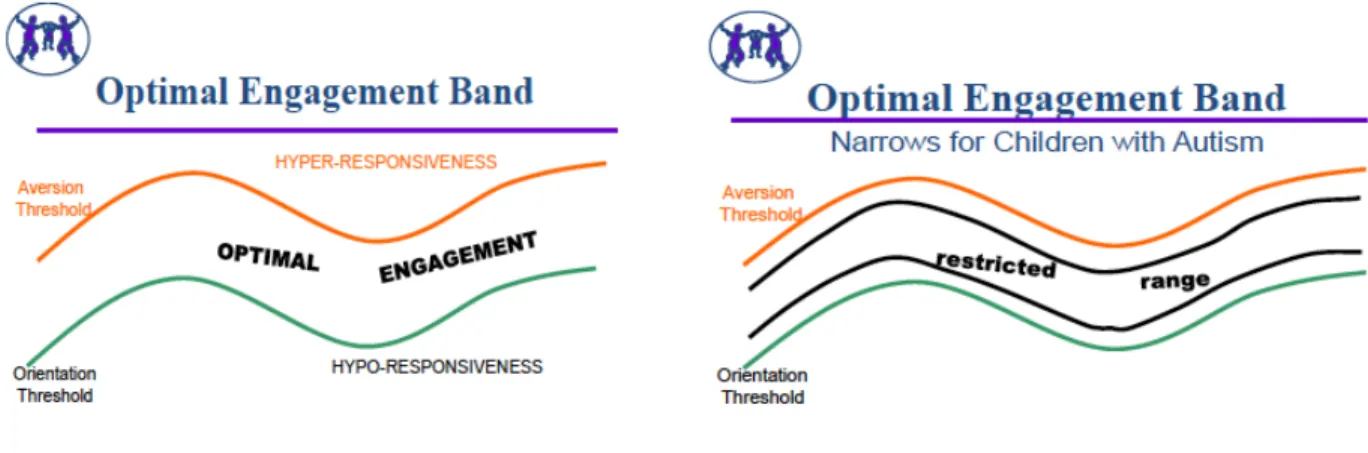
Sensory-regulation is theorized to be a component of self-regulation, because more difficulties with adaptive sensory responses and unusual sensory interests are associated with greater emotional self-regulation challenges in children with ASD (Samson, 2014). Maladaptive sensory responses influence social-communication because social interactions require integration of multiple sources of sensory input (Dionne-Dostie et al., 2015). Baranek (2001) proposed the Optimal Engagement Band Model for Sensory Processing in Young Children with Autism (Figure
2.1), which demonstrates how maladaptive sensory responses to environmental stimuli in ASD restrict the band of optimal engagement for these children and therefore reduce the frequency and variety of social experiences in which they can engage. For instance, if a child seeks to look at the glare on the surface of the swimming pool and, while doing this, does not respond at all to other children, toys, or caregivers, he will have a restricted experience of the swimming pool
Figure 2.1. Optimal engagement band model for sensory processing in young children with autism
This study focuses on sensory regulatory features (i.e., hyporesponsiveness and sensory seeking behaviors) as components of early self-regulation. These features are of particular interest because they may contribute to better understanding the relationship between early self-regulation and joint attention skills. Both hyporesponsiveness and sensory seeking behaviors are known from previous research to be associated with language and social-communication skills in children with ASD (Baranek et al., 2013; Morales, Mundy, Crowson, Neal, & Delgado, 2005; Watson et al., 2011). Furthermore, orienting to social stimuli (i.e., response to name) has been named a critical precursor to joint attention because joint attention mediates the relationship between social orienting and language in preschoolers with ASD (Dawson, 2004).
The relationship between joint attention and sensory regulatory features has been
previously explored by Baranek and colleagues (2013), who found that hyporesponsiveness was significantly negatively correlated with joint attention in a sample of children with ASD and developmental delay (DD), and that this correlation was stronger in younger children. Moreover, they found that in children with ASD, hyporesponsive behavior was negatively related to
months of age has been found to mediate the association between sensory seeking behaviors at 22 months and social-communication symptom severity at 3-5 years old, while attention
disengagement at 13 months of age predicted social orienting at 22 months, mediated by sensory seeking behaviors at 22 months (Baranek et al., 2017).
This study aims to expand upon the existing literature on the relationship between joint attention and early sensory regulatory features in children with ASD and examine how these pivotal skills affect later language and social-communication skills via analyses using extant data from a community sample of children who were identified as at-risk for ASD at 12 months of age via screening. Specifically, in line with the PDP Model (Mundy & Jarrold, 2011), the aims are to (1) examine the development of joint attention and sensory regulatory features using concurrent correlations and predictive regression models and to (2) determine the extent to which sensory regulatory features at 22 months mediate the relationship between joint attention at 13 months and general language outcomes versus social-communication outcomes at preschool age.
Though social and communication symptoms seem to aggregate into a single factor in children with ASD (Gotham, Pickles, & Lord, 2007), language skills are a related but independent construct. In fact, neurocognitive research suggests that communication and language processes are two different, yet interacting, systems (Willems et al., 2009) Language is the understanding and use of structural aspects of communication, including: what words mean (semantics),
formulating words (morphology), putting words together into sentences (syntax), and assembling sounds in words for speaking, spelling and reading (phonology; ASHA 2017b).
social interaction (ASHA, 2017a, 2017c). For this reason, determining how early joint attention and sensory regulatory features predict one another as well as later social-communication versus language outcomes may have implications for the timing of intervention strategies and the developmental construct in which change could be expected following those intervention strategies.
Method
This study aimed to examine the following research questions:
1. What are the concurrent and predictive correlations between joint attention and sensory
regulatory features at 13 and 22 months of age in a community sample of children identified as at-risk for ASD at 12 months?
2. To what extent do joint attention and sensory regulatory features at 13 and 22 months predict general language outcomes in preschool in a community sample of children identified as at-risk for ASD at 12 months?
3. To what extent do joint attention and sensory regulatory features in children at risk for ASD at 13 and 22 months predict aspects of social-communication competence, including narrative retell ability in preschool, in a community sample of children identified as at-risk for ASD at 12 months?
Based on previous literature and the PDP Model, it was hypothesized that there would be significant concurrent and predictive correlations between early joint attention and sensory
regulatory feature variables at 13 and at 22 months in cross lagged panel models. Moreover, it was anticipated that joint attention and sensory regulatory features at 22 months would predict
attention vs. sensory regulatory features) at 22 months may be more associated with different preschool outcomes. Specifically, previous literature (i.e., Baranek et al., 2013; Watson et al., 2011), supported a hypothesis that both joint attention and sensory regulatory skills at 22 months would be significant predictors of receptive and expressive language outcomes in preschool, but that sensory regulatory features at 22 months would account for more variance in
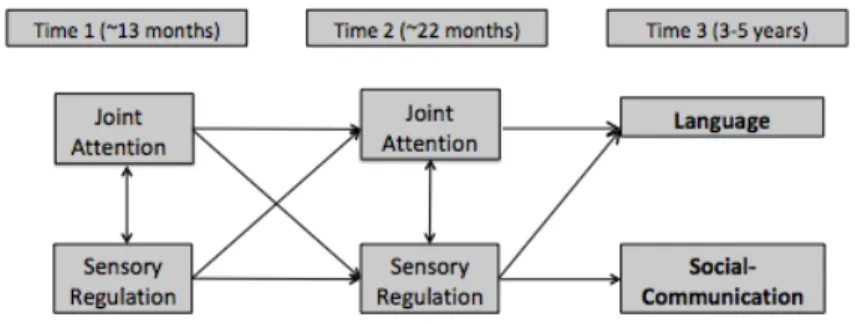
social-communication outcomes in preschool than joint attention at 22 months. Finally, based on the findings of Baranek and colleagues’ (2017) mediation models with the same at-risk sample used for this study, it was hypothesized that sensory regulatory features at 22 months mediate the predictive relationship between joint attention at 13 months and distal social-communication outcomes (i.e., narrative retell ability and social-communication symptom severity) in preschool. See figure 2.2 for conceptual model of these hypotheses.
Figure 2.2. Conceptual model
Participants
Participants were drawn from the larger Early Development Project-2 (EDP-2), a randomized controlled trial (RCT) of a parent-mediated intervention (Watson et al., 2017).
North Carolina based on birth records. Children met risk criteria for a future diagnosis of ASD based on cut-off scores in both sensory-regulatory and social-communication domains of the FYI. Ninety-seven eligible children, and a primary caregiver of each, participated in the first assessment (at ~13 months of age) and 87 of those families consented to randomization. Among randomized families, 84 completed post intervention assessments for EDP-2 (~22 months of age) and 48 of those participants returned for in-person behavioral assessments at a follow-up when the children were between 3 and 5 years old (see Figure 2.3).
Figure 2.3. Flow chart of EDP-2 sample recruitment and retention; REIM = Referral to Early
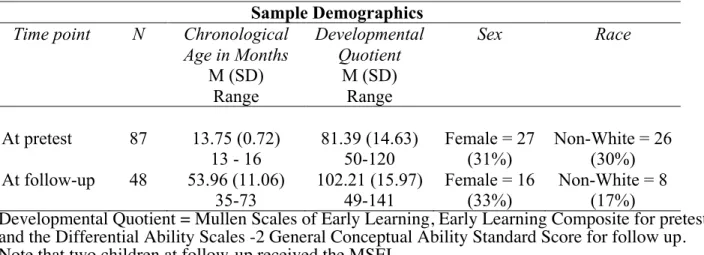
Table 2.1 Sample Demographic Information
Developmental Quotient = Mullen Scales of Early Learning, Early Learning Composite for pretest and the Differential Ability Scales -2 General Conceptual Ability Standard Score for follow up. Note that two children at follow-up received the MSEL.
Instrumentation
Observational measure of joint attention. The Communication and Symbolic Behavior Scales-Developmental Profile (CSBS-DP; Wetherby & Prizant, 2002) is a standardized behavioral
measure of early communication ability for children who are developmentally between 6 and 24 months old. It was administered to the EDP-2 sample at pre- and post-test assessments. The CSBS Behavior Sample includes three types of coded joint attention behaviors: (1) Gaze Shifts: coded as presence or absence of initiating joint attention during each of 6 presses, score range = 0-6; (2) Gaze/Point Follow: coded as the presence or absence of child attention shifts when the clinician uses eye gaze paired with pointing to share an object or event during 2 presses, actual score range = 0-2, but this scale is multiplied by 3 to be equally weighted with other scales on the CSBS, for a score range of 0-6; (3) Joint Attention: using verbal or nonverbal communication for the purpose of directing someone’s attention to an object or event during each of 6 presses, score range = 0-6. For all of these variables, higher scores signify better, or more developmentally advanced, joint attention skills.
Note that since there are two initiation of joint attention items and only one response to
Sample Demographics
Time point N Chronological Age in Months
M (SD) Range
Developmental Quotient
M (SD) Range
Sex Race
At pretest 87 13.75 (0.72)
13 - 16 81.39 (14.63) 50-120 Female = 27 (31%) Non-White = 26 (30%) At follow-up 48 53.96 (11.06)
35-73
102.21 (15.97) 49-141
Female = 16 (33%)
joint attention item, the composite Joint Attention variable used in the models for this study is more heavily weighted toward initiation of joint attention than response to joint attention. This is important to consider since response to joint attention behaviors in the PDP Model are
conceptualized as rapid attention orienting to objects or events and less volitional than initiating joint attention behaviors, which are self-initiated and goal-directed uses of attention (Mundy & Jarrold, 2011). If the Joint Attention composite variable were weighted more toward response to joint attention items, a stronger correlation with the Sensory Regulation composite would be anticipated since delayed attention orienting is affected by both hyporesponsiveness and sensory seeking; however, due to the weight toward initiation of joint attention in this composite variable, only a moderate correlation between these variables is hypothesized.
Observational measure of sensory regulatory features. The Sensory Processing
Assessment (SPA; Baranek, 1999a) is a play-based observational assessment designed to measure
responses to sensory stimuli across three modalities (i.e., auditory, visual, tactile) in young children. Scores on the SPA are obtained for Hyperresponsiveness, Hyporesponsiveness, and Seeking behaviors. During the SPA administration, children are exposed to a variety of novel toys with sensory components (e.g., a toy blow fish with rubber spikes or a switch-activated fan shaped like an animal). While the child is engaged with a novel toy, the examiner introduces another sensory stimulus that is either non-social (e.g., a noise maker or a flashing light) or social (e.g., name call, shoulder tap). The child has three trials, or opportunities, to shift their attention away from the toy with which they are engaged and orient to the new sensory stimulus. Orienting is scored on a 1-4 scale with “1” indicating that the child oriented on the first trial, “2” oriented on the second trial, “3” oriented on the third trial, and “4” not orienting on any trial. The
sensory stimuli. Higher scores indicate greater difficulty with orienting to sensory stimuli. Throughout the 20-30 minute SPA administration, the examiner notes all stereotyped behaviors demonstrated by the child (e.g., arm or hand flapping, mouthing non-food objects). There are eight total stereotypies scored on the SPA as present (”Yes”) or absent (”No”). “Yes” is scored as a “1” and the sum of the stereotypies creates the Seeking score, where higher scores indicate more sensory seeking behaviors observed during the SPA.
SPA Hyporesponsiveness has been associated with social-communication symptom severity (Watson et al., 2011) and poorer joint attention abilities (Baranek et al., 2013). SPA Sensory Seeking behaviors also have been found to be significantly correlated with social communicative symptom severity for children with ASD, but not for children with other
developmental disabilities (Watson et al., 2011). Moreover, in the EDP-2 sample, SPA Sensory Seeking behaviors at 20-24 months were found to significantly predict social-communication symptom severity on the ADOS-2 in the preschool years and this relationship was mediated by social orienting at 20-24 months (Baranek, et al., 2017). SPA Hyperresponsiveness has been less sensitive to differences between ASD and other disability groups (Brock, Freuler, Baranek, Watson, Poe, & Sabatino, 2012), and has not been systematically related to social-communication features of ASD (Watson et al., 2011). Thus, hyporesponsiveness and sensory seeking were of greater interest for these analyses than hyperresponsiveness.
Observational preschool language and social-communication outcome measures.
s.d.= 17.01) and Expressive Communication (sample M = 102.23, s.d. = 17.81), were used to address research question 2.
A narrative retell task from the PLS-5 was administered to all children in the study at follow up (n = 48) and was used as a distal social-communication outcome in the analyses for this study. Narrative retell skills are considered to reflect social-communication more than language because recounting events is an important aspect of conversation that requires skills beyond the scope of structural language such as topic maintenance, event sequencing, coherence, and presupposition (ASHA, 2017c). Stories were audio recorded and transcribed by a trained
undergraduate research assistant for analyses. Story retell tasks are considered useful measures of language competence (Ketelaars, Jansonius, Cuperus, and Verhoeven, 2009) that are easier to score reliably than story generation tasks (Merritt & Liles, 1989). Heilmann, Miller, & Nockerts (2010) compared four story retell analysis measures and concluded that the Narrative Scoring Scheme (NSS) was most sensitive for children ages 5-7 years. The NSS, as detailed in Heilmann et al. (2010), was the narrative retell analysis coding system used in the current study. Using training materials available on the SALT website (Miller, Andriacchi, & Nockerts, 2018), a research assistant and the study PI established reliability using the seven NSS items (Introduction,
The Autism Diagnostic Observation Scale- Second Edition (ADOS-2; Lord et al., 2012) is a
semi-structured standardized behavioral measure of ASD symptoms. It was administered to all EDP children at follow-up (n = 45) using the module that aligned with their language level. The ADOS was administered by either a research reliable speech-language pathologist or a psychology graduate student who was supervised by a research reliable licensed psychologist. The Social Affect Calibrated Severity Score (Hus, Gotham, & Lord, 2012) is a standardized domain score that is calculated from the ADOS Social Affect raw score from each respective ADOS module, and allows social-communication symptom severity comparison across ADOS modules (i.e., controlling for developmental level). Since children in the EDP2 sample received different modules of the ADOS, the Social Affect Calibrated Severity Score was used as a measure of social-communication symptom severity to answer question 3. Scores ranged from 1-10 with higher scores indicating greater social-communication symptom severity (sample Mean = 3.78, s.d. = 2.57).
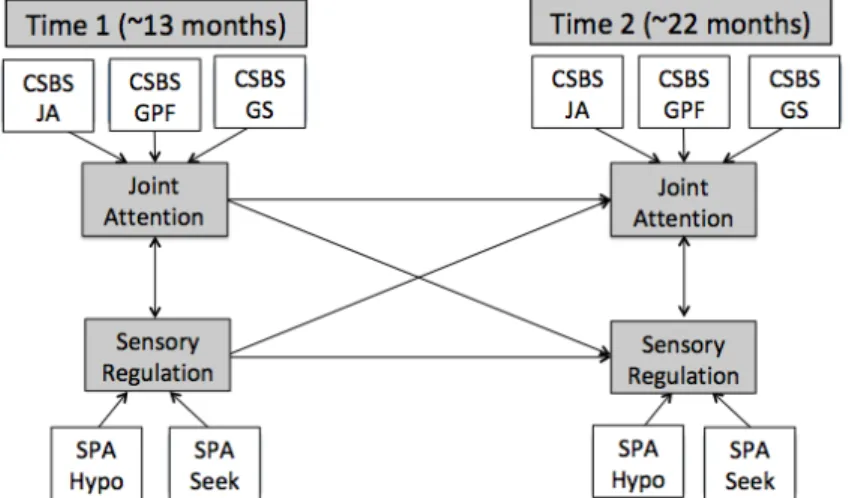
See Figure 2.4 for variables targeting each construct of interest by time point in cross-lagged model.
Procedures
All assessments for the EDP-2 study were administered either in a university clinic setting or at another outpatient pediatric clinic (e.g., Children’s Developmental Services Agency).
First, composite variables were established for the two constructs of interest: Joint Attention and Sensory-regulation. Composite variables were empirically tested through
examination of variable distributions, correlations, principal components analyses, and exploratory factor analyses. Variable distributions were examined for skewness, kurtosis, and
hetereoscedasticity (Table 2.2). For the CSBS, distributional irregularities were observed and one variable (joint attention) had more restricted variability compared to the other two. To control for this finding, the CSBS variables were run as ordinal variables for the exploratory factor analyses. Correlations between the individual variables (Table 2.3) were also examined.
Table 2.2
CSBS and SPA Individual and Composite Variable Distributions
Construct Time 1 (n=87) Time 2 (n=82)
Mean (SD) Range
Mean (SD) Range Communication and Symbolic Behavior Scales (CSBS)
Gaze Shift 5.57 (.88)
2-6 5.42 (1.06) 1-6 Gaze-Point-Follow 4 (1.98)
0-6
5.38 (1.47) 0-6 Joint Attention 1.87 (1.87)
0-6 3.34 (1.85) 0-6 Composite Joint Attention 3.82 (1.20) .67-6 4.71 (1.17) .33-6 Sensory Processing Assessment (SPA) Sensory Seeking 2.63 (.84)
1-4.43 2.59 (.89) 1-4.43 Hyporesponsiveness 2.31 (.85)
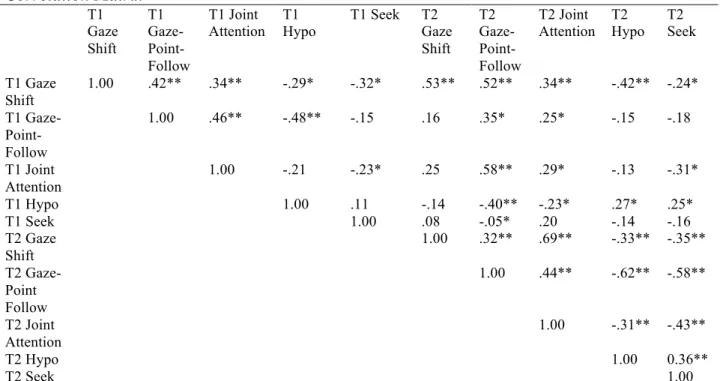
Table 2.3 Correlation Matrix T1 Gaze Shift T1 Gaze- Point-Follow T1 Joint Attention T1 Hypo
T1 Seek T2 Gaze Shift T2 Gaze- Point-Follow T2 Joint Attention T2 Hypo T2 Seek T1 Gaze Shift
1.00 .42** .34** -.29* -.32* .53** .52** .34** -.42** -.24*
T1 Gaze- Point-Follow
1.00 .46** -.48** -.15 .16 .35* .25* -.15 -.18
T1 Joint Attention
1.00 -.21 -.23* .25 .58** .29* -.13 -.31*
T1 Hypo 1.00 .11 -.14 -.40** -.23* .27* .25*
T1 Seek 1.00 .08 -.05* .20 -.14 -.16
T2 Gaze Shift
1.00 .32** .69** -.33** -.35**
T2 Gaze-Point Follow
1.00 .44** -.62** -.58**
T2 Joint Attention
1.00 -.31** -.43**
T2 Hypo 1.00 0.36**
T2 Seek 1.00
** Significant at .01 alpha level; * Significant at .05 alpha level; T1= time 1/Pretest, T2= time 2/Posttest. Note that since the CSBS variables (Gaze Shift, Gaze-Point-Follow, and Joint
Attention) were ordinal variables, intercorrelations with these variables are polychoric correlations. Polyserial correlations are reported between SPA (Hypo and Seek) and CSBS variables. Pearson correlations are reported for intercorrelations on the SPA since these variables were continuous.
Exploratory factor analyses were used to (1) empirically test the constructs, (2) see whether it was worthwhile to use factor analytic scores rather than variable composite scores in the models, and (3) to determine if the factor structure was consistent across measurement time points for Joint Attention and Sensory-regulation (i.e., if measurement invariance holds). Results of the
exploratory factor analyses combined with the results of the principal components analyses
constrained factor analytic model, coupled the lack of full measurement invariance for the Joint Attention construct, it was not obvious what the optimal linear construct would be for use of factor analytic scores in the models; therefore, the composite variables, constructed as means of their constituent variables, were used in the cross-lagged models. The Sensory-Regulation (SR)
composite is a mean of the SPA Hyporesponsiveness and SPA Seeking variable scores. The Joint Attention (JA) composite is a mean of the three CSBS joint attention item scores. Composite variables at each time point were approximately normally distributed (see distributions in Table 2.2). As expected, correlations between composite variables at each time point were statistically significant (Table 2.4).
Table 2.4
Pearson Correlations between Composite Variables at Each Time Point
T1 JA T1 SR T2 JA T2 SR
T1 JA 1.00 -.44** -.41** -.31**
T1 SR 1.00 -.24* .32**
T2 JA 1.00 -.58**
T2 SR 1.00
** Significant at .01 alpha level; * Significant at .05 alpha level; T1 = pre-test, T2 = post-test, JA = Joint Attention, SR = Sensory-regulation
strategy using a series of model comparisons to determine the most parsimonious set of predictors for the data (Applebaum & Cramer, 1974; Cramer & Applebaum, 1980).
Figure 2.4. Cross lagged panel model
Note: CSBS = Communication and Symbolic Behavior Scales; JA = Joint Attention; GPF = Gaze Point Follow; GS = Gaze Shift; Hypo = Hyporesponsiveness; Seek = Sensory Seeking
The distal language and social-communication outcomes from the third (preschool) EDP-2 study time point were added to the final cross-lagged panel correlation analysis model from
question 1. First, models were run to address research question 2, by adding the PLS Receptive and Expressive Language scores from time 3 as distal outcomes. Next, models were run to address research question 3, by adding the ADOS Social Affect Calibrated Severity Scores and NSS Total Scores from time 3 as distal outcomes. These models allowed examination of the extent to which the direct effects of joint attention and sensory-regulation variables at 22 months as well as the indirect effects of those variables at 13 months predict various aspects of communication
Despite the lack of main effects of the intervention in the EDP-2 study (Watson et al., 2017), a categorical intervention group variable was included in the initial models to account for the potential influence of intervention on outcomes. Furthermore, there was a broader time gap between post-test and follow up assessments (Mean gap = 31.53 months, s.d. = 11.34) than pre and post-tests assessments (Mean gap = 8.79 months, s.d. = .97), and there was much greater age variability at follow-up (i.e., children’s ages spanned a year range at follow up as compared to 3-5 month ranges at pre- and post-test assessments, respectively). Chronological age at follow up was included in the models addressing distal outcomes as a covariate to control for this variability in age.
Results
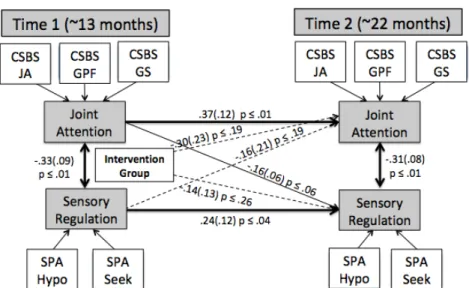
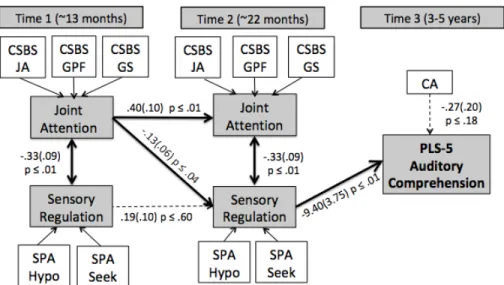
To determine the concurrent and predictive relationship between joint attention and sensory-regulation at 13 and 22 months in this sample of children at-risk for ASD, a cross-lagged panel model was run. The initial model (Figure 2.5a) supported the hypothesis that joint attention and sensory-regulation were related in early childhood. All concurrent correlations between joint attention and sensory regulatory features were significant in this model, as were predictive
between joint attention and sensory regulatory features at 22 months and distal language and social-communication outcomes at preschool follow up.
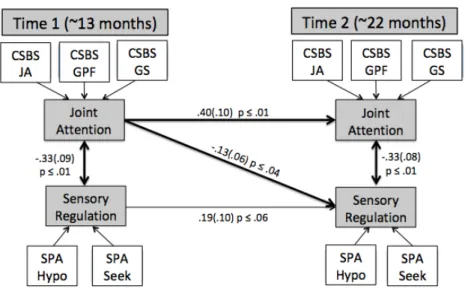
The final model indicates that joint attention skills at 13 months of age in this sample of children identified as at-risk for ASD were associated with both joint attention and sensory regulatory features at 22 months of age. In partial contrast, sensory regulatory features at 13 months are predictive of later sensory regulatory features, but not joint attention skills, at 22 months.
Figure 2.5a. Question 1: Initial cross lagged model
Figure 2.5b. Question 1: Final cross lagged model
Distal Language Outcomes
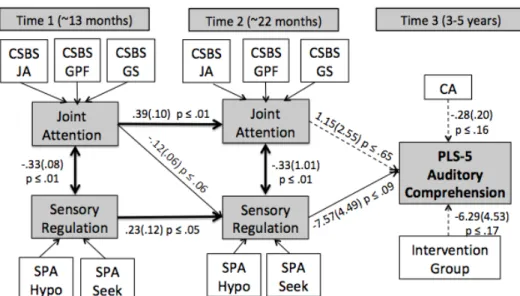
*Solid Bold Lines indicate statistical significance at a .05 alpha level; Solid Thin Lines indicate statistical significance at a .10 alpha level; Dashed Thin Lines indicate p value ≥ .10.
Figure 2.6a. Initial model with auditory comprehension as a distal outcome of the cross lagged
panel analysis
Figure 2.6b. Final model with auditory comprehension as a distal outcome of the cross lagged
panel analysis
Expressive Language. The Expressive Communication standard score from the PLS-5 was used as a distal outcome measure of expressive language in the model. The full model with
covariates (Figure 2.7a) demonstrated similar results to the Auditory Comprehension model. Neither joint attention nor sensory regulatory features significantly predicted expressive communication on the PLS-5 when controlling for intervention group and chronological age. Sensory-regulation at 22 months accounted for more of the variance in preschool Expressive Communication than did joint attention. Intervention group was dropped from the final model since it was not a significant predictor.
Communication. Neither variable at 22 months was significant in the presence of the other, indicating that the significant correlation between these variables at 22 months caused each one to suppress the effects of the other.
*Solid Bold Lines indicate statistical significance at a .05 alpha level; Solid Thin Lines indicate statistical significance at a .10 alpha level; Dashed Thin Lines indicate p value ≥ .10.
Figure 2.7a. Initial model with expressive communication as a distal outcome of the cross lagged
Figure 2.7b. Reduced model 1 with expressive communication as a distal outcome of the cross
lagged panel analysis
Figure 2.7c. Reduced model 2 with expressive communication as a distal outcome of the cross
lagged panel analysis
Comprehension outcome variable, a model was run to explore if sensory-regulation mediated the relationship between joint attention at time 1 and auditory comprehension at time 3 (see Figure 2.8). Despite joint attention at time 1 being a significant predictor of sensory-regulation at time 2, and sensory-regulation at time 2 being a significant predictor of auditory comprehension at time 3, the mediation model was not statistically significant. This result indicates that joint attention at time 1 is not critical to the distal outcome of receptive language in preschool.
Figure 2.8. Indirect effect of joint attention at time 1 on auditory comprehension at time 3
mediated by sensory regulatory features at time 2
For Expressive Communication, a mediation model was run to determine if the relationship between joint attention at time 1 and Expressive Communication at time 3 was mediated by
sensory-regulation are important skills at 22 months in the path of development between joint attention at 13 months and Expressive Communication in preschool.
Figure 2.9a. Indirect effect of joint attention at time 1 on expressive communication at time 3
mediated by sensory regulatory features at time 2
Figure 2.9b. Indirect effect of joint attention at time 1 on expressive communication at time 3
Distal Social-Communication Outcomes
Social-communication symptom severity. The ADOS-2 Social Affect Calibrated Severity Score was used in the model as a distal outcome measure of social-communication symptom severity. In the full initial model (Figure 2.10a), sensory-regulation at 22 months is a significant predictor of the social-communication symptom severity in preschool, but joint attention at 22 months is not. This result held throughout the model reduction process and the final model can be seen in Figure 2.10b.
*Solid Bold Lines indicate statistical significance at a .05 alpha level; Solid Thin Lines indicate statistical significance at a .10 alpha level; Dashed Thin Lines indicate p value ≥ .10.
Figure 2.10a. Initial model with ADOS-2 social affect calibrated severity score as a distal outcome
Figure 2.10b. Final model with ADOS-2 social affect calibrated severity score as a distal outcome
of the cross lagged panel analysis
Narrative Retell. The Narrative Scoring Scheme (NSS) total score was used as a distal outcome measure of pragmatic language ability in the model. This outcome variable differed from the others in that it was not standardized. Since the sample was chronologically and
developmentally at the lowest end of being able to complete a narrative retell task, scores were positively skewed. To account for the non-normal distribution, the NSS was run as negative binomial count variable in the model. The full model is displayed in Figure 2.11a where chronological age is the only significant predictor of NSS. This relationship remained the only significant predictor of narrative retell ability throughout model reduction procedures and the final model reflects this finding (Figure 2.11b) that neither joint attention nor sensory regulatory
*Solid Bold Lines indicate statistical significance at a .05 alpha level; Solid Thin Lines indicate statistical significance at a .10 alpha level; Dashed Thin Lines indicate p value ≥ .10.
Figure 2.11a. Initial model with NSS total score as a distal outcome of the cross lagged panel
analysis
Figure 2.11b. Final model with NSS total score as a distal outcome of the cross lagged panel
A mediation model was run to determine if sensory-regulation at 22 months mediated the relationship between joint attention at 13 months and social-communication symptom severity in preschool. This model approached statistical significance (p ≤ .06; see Figure 2.12).
Figure 2.12. Indirect effect of joint attention at time 1 on social affect calibrated severity score at
time 3 mediated by sensory regulatory features at time 2
Overall, results of the models run to determine the extent to which joint attention and sensory regulatory features predict social-communication outcomes in preschool indicate that sensory-regulation at 22 months is a significant predictor of social-communication symptom severity in preschool.
Discussion
at 13 and 22 months predict distal language and social-communication outcomes at 3-5 years. The final model for the first study aim confirmed the initial hypothesis and findings from Baranek and colleagues (2013) that there were significant concurrent relationships between the joint attention and sensory regulatory constructs at 13 and 22 months and predictive relationships between each construct from 13 to 22 months. Interestingly, joint attention at 13 months was the only variable needed in the model to predict both joint attention and sensory regulatory features at 22 months and the sensory regulatory construct at 13 months was dropped from the final model. Results indicate developing joint attention skills at 13 months may benefit the domains of both joint attention and sensory-regulation at 22 months, whereas sensory regulation at 13 months may have a less significant impact on outcomes in these constructs at 22 months.
To address the second and third aims of this study, the cross-lagged panel correlation model was extended to predict individual distal language and social-communication outcomes in the sample at preschool age. Receptive language skills in preschool were best predicted by a cross-lagged panel model with sensory regulatory features at 22 months as the only predictor. This models suggests that, for children similar to this sample, sensory-regulation may be a critical developmental domain to address at 22 months in order to impact receptive language outcomes between 3 and 5 years of age.
expressive language were the primary intervention goal at 22 months (e.g., in the instance where other skills were developing typically at 22 months), promoting joint attention may be more effective than promoting sensory-regulation at 22 months.
Taken together, the distal language outcome models examined for question 2 suggest that that sensory regulatory features at 22 months are critical for predicting later receptive language outcomes in preschool. For expressive language outcomes, results are less clear. It seems that either development of sensory-regulation or joint attention at 22 months has benefits for later expressive communication. Based on models of indirect effects, joint attention at 13 months is critical to the development of later expressive language (mediated by sensory-regulation at 22 months), but joint attention at 13 months is not critical for receptive language development in preschool. In light of these results, improved sensory-regulation at 22 months , specifically reducing hyporesponsiveness and sensory seeking, may be most advantageous for impacting both receptive and expressive language outcomes at preschool age. In young children at-risk for ASD, such as those in this study, it is possible that targeting sensory-regulation in early intervention, specifically hyporesponsiveness and seeking behaviors, at 22 months will have a greater impact on both receptive and expressive language outcomes than targeting joint attention skills. Thus,
sensory regulation may play an especially important role for improving language outcomes for children who are showing early delays in both the receptive and expressive language modalities. This theory requires testing in the context of a future early intervention study since results from this study only establish a developmental sequence of skills for this sample.
association between joint attention at 13 months and social-communication symptom severity in preschool, demonstrating a clear path of developmental timing for toddlers at-risk for ASD to have an impact of social-communication symptom severity in preschool, suggesting that supporting the development of joint attention at 13 months and sensory-regulation at 22 months may be the most beneficial sequence for optimizing social-communication outcomes in preschool.
Narrative retell skills in preschool did not demonstrate any association with joint attention or sensory regulatory features at 22 months and were only predicted by chronological age. This lack of association may be because this measure is not standardized, and because preschool-aged children were scoring at the lowest end of the measure, which limited score variability (sample mean = 5.27, NSS total score range = 0-35). Unfortunately, it is difficult to draw conclusions about these narrative scores in preschool-aged children at-risk for ASD, because most studies of
narrative ability in children with ASD have consisted of samples aged 6.5 years or older (Biaxauli, Colomer, Rosello, & Miranda, 2016). In a review of 24 studies with older children diagnosed with ASD compared to typically developing children, Biaxauli and colleagues (2016) found that
children with ASD struggled with narrative cohesion, referencing, use of emotional state words, and general difficulty “seeing the big picture” relative to age-matched typically developing peers. Moreover, a recent study of preschool narrative ability in verbal children with ASD (Westerveld & Roberts, 2017) extended the findings of studies with older children in that the preschoolers with ASD told less coherent narratives with fewer events, but had generally good sentence structure relative to typically developing preschoolers. Unfortunately, only 19 of the 29 children (66%) in the Westveld and Roberts study produced codeable narratives, while the other children refused the task, told a different story, or attempted to retell the story but didn’t produce meaningful
cognitive level (Westerveld & Roberts, 2017). This finding is similar to the present study where only 28 of the 49 (57%) of the children (including some children who were less verbal than in the Westerfeld & Roberts study) produced codeable narratives. Considering previous literature and the current results, it is possible that narrative retell skills in preschool, as measured by currently available assessment instruments and protocols, is not a stable or valid construct. Future research should explore modified assessment protocols to elicit narratives from preschool children with or at-risk for ASD (Westerveld & Roberts, 2017) since narrative retell skills have been shown to predict later language and literacy outcomes (Bishop & Edmundson, 1987; Bishop & Adams, 1990).
The results from the distal preschool language and social-communication outcome models suggest that joint attention and sensory regulatory features are significantly related constructs in early childhood development that have cascading effects on some important aspects language and communication in preschool (i.e., receptive language, expressive language, and social-communication symptom severity). These results support and expand upon previous literature. Baranek (2013) found that hyporesponsiveness to both social and non-social stimuli was related to deficits joint attention skills in children with autism, developmental delay, and typical
development. The current study replicated that finding over two time periods of early childhood for toddlers at-risk for ASD using a composite self-regulation variable that included
study showed a negative correlation between hyporesponsiveness and language. This relationship was replicated in the present study and lower levels of hyporesponsiveness (i.e., better orienting responses) at 22 months were shown to predict greater receptive and expressive language skills in preschool.
Taken together, results of this study suggest that, for optimal outcomes in both language and social-communication at preschool age, joint attention may be the best skill to target at 13 months, while sensory regulation may be the preferred intervention target at 22 months. These finding may have implications for future early childhood intervention research for children at-risk for ASD. If the advantages of this sequence and timing of intervention targets compared to
alternatives are empirically verified, such findings would help clinical teams and families determine where to focus their time and energy to achieve the best language and social-communication outcomes. For instance, rather than receiving treatment in both of these
developmental domains simultaneously, families could focus on targeting joint attention skills for the first year and then switch to targeting sensory-regulation by age two, or when the child has mastered their joint attention goals. It is possible that knowing where to focus their time and intervention efforts may alleviate some of the stress associated with early identification of ASD symptoms for parents by giving them a prescribed plan of treatment.
features, this study only examined hyporesponsiveness and sensory seeking features. With a larger sample it may be interesting to explore these models with hyperresponsivity to ensure that the hyperresponsive aspect of sensory-regulation is not contributing to language and
social-communication outcomes, as suggested by previous literature, and to look at differences between hyper- and hyporesponsivity models.
There was no comparison group of children who were not identified as at-risk for ASD in this study. Having a control group would allow comparison of these models to children who were not at-risk and provide insight into whether the results hold for the general population of toddlers or are unique to this at-risk population. It would also beneficial to look at toddlers (1) who were identified as at-risk for ASD on different screening tools (e.g., Modified Checklist for Autism in Toddlers; Robbins, Fein, & Barton, 2009) and (2) who were identified based on familial/genetic risk to see if the results are replicable. Moreover, these models of social-communication and sensory regulatory features have yet to be explored in typically developing toddlers and those with other developmental disabilities and may be another important future research direction to
CHAPTER 3: EFFICACY STUDY OF THE GROWING LIVING AND LEARNING WITH AUTISM (GoriLLA) GROUP
Overview
This study examines the efficacy of an intervention targeting social-communication and self-regulation in 1st and 2nd graders (n = 17) diagnosed with Autism Spectrum Disorder (ASD) who are included in mainstream school settings and their parents. A randomized waitlist control group design with pre- and post- intervention assessments of both parents and children was
implemented within a community practice setting to address the study aims. Overall, the results of this study indicate that the intervention is efficacious in teaching social-communication and self-regulation knowledge and skills to children with ASD and their parents. Both parents and children demonstrated an increase in social-communication and self-regulation knowledge and skills after participating in the Growing Living and Learning with Autism (GoriLLA) Group as compared to a waitlist control group. Furthermore, in applied written scenario responses, parents’ use of
Introduction
In the United States, 1 in 68 children is affected by ASD (Christensen, 2016). Nearly half
of children with ASD have average to above average cognitive ability (Christensen, 2016), yet
their adult outcomes are poor compared to typically developing peers (Dijkhuis, Ziermans, Van
Rijn, Staal, & Swaab, 2016; Howlin, Moss, Savage, & Rutter, 2013) and peers with ASD who
have below average cognitive ability (Mordre et al., 2012). Autism symptom severity, adaptive
functioning, and exposure to early intervention are all more predictive of positive adult outcomes
in ASD than cognitive ability alone (Anderson, Liang, & Lord, 2013; Gray et al., 2014). Though
average to above average cognition increases the chances that an individual with ASD will be
employed, these individuals are less likely to be involved in activities outside of their homes than
their peers with lower cognitive skills (Taylor & Seltzer, 2011). Social-communication and
self-regulation are skill areas in which individuals with ASD struggle. Social-communication deficits
have been shown to negatively impact academic performance (Welsh, Parke, Widaman, & O’Neil,
2001), be correlated with anxiety and depression (Barnhill, 2001), and affect social inclusion
outcomes in adulthood including friendships and employment (Howlin et al., 2013).
Self-regulation deficits, specifically emotion Self-regulation and executive functioning difficulties, have
been shown to negatively impact engagement in academic and social settings in children (Jahromi,
Bryce, & Swanson, 2013) and are correlated with self-reports of lower quality of life compared to
non-ASD peers in young adulthood (Dijkhuis et al., 2016).
Group interventions are common practice for treating social-communication skills in
children with “high functioning” ASD, but evidence for the efficacy of these groups has been
mixed (Rao, Beidel, & Murray, 2008). In 2010, Reichow and Volkmar completed a review of
social skills groups met criteria (based on Reichow et al., 2008) to be an evidence-based practice
for ASD. Interventions targeting self-regulation have been found to be efficacious for children
with attention deficit hyperactivity disorder (ADHD; Reid, Trout, & Schartz, 2005) and learning
disabilities (Reid, 1996) and have recently shown emerging evidence for groups of children with
ASD (e.g., Stoesz, Montgomery, & MacKenzie, 2013). Though both social-communication and
self-regulation are skill areas that predict outcomes for children with high functioning ASD and
interventions targeting these skills have a promising evidence-base, no known intervention exists
that addresses both of these skill areas. The purpose of this study is to examine the efficacy of an
existing parent-assisted community intervention for children with ASD that targets both
self-regulation and social-communication skills.
Community Based Research Methods
Though many researchers in the field of ASD share a common goal to develop interventions that can be effectively implemented in community practice settings, a lengthy evidence-to-practice gap persists. Controversy has arisen within the ASD research community regarding the best course by which to establish an evidence-base for an intervention and disseminate those practices to the community. A National Institute of Mental Health (NIMH) working group proposed a stepwise model for developing evidence-based psychosocial
interventions for ASD (Smith et al., 2007). Though certainly this model serves as an important roadmap for the field, it has been argued that models like this one are too idealistic and that studying interventions within the community setting in which they will be delivered should start earlier in the research process in order to ameliorate the evidence-to-practice gap (Dingfelder & Mandell, 2011; Kasari & Smith, 2013; Van de Ven & Johnson, 2006; Weisz et al., 2012).
likely to be sustained after the research is completed (Baker-Ericzen, Stahmer, & Burns, 2007;
Kasari & Smith, 2013; Mandell et al., 2013). Though the literature suggests that in the absence of
clear treatment evidence for children on their caseload, a clinician’s instinct to mix treatment
approaches to meet the needs of patients may not be detrimental (Kasari & Smith, 2013; Odom,
Hume, Boyd, & Stabel, 2012; Weisz et al, 2012), few studies have evaluated these eclectic
community intervention approaches. The Interagency Autism Coordinating Committee (IACC)
listed the scaling up and implementation of evidence-based interventions in community settings to improve the quality of life for people with ASD as part of their 2016-2017 strategic plan. By using community-based research methods to examine the efficacy a group treatment program for
children with ASD in North Carolina, this study aligns with that IACC goal.
The TEACCH GoriLLA Group
demand for the program is high. However, the efficacy of this intervention has yet to be studied in a controlled way. Furthermore, both Social Thinking and the Zones of Regulation are popular and widely used curricula for children with ASD, but neither has an established evidence-base.
The TEACCH Model encourages parents as teachers with the goal of generalizing skills to
daily routines across natural environments (Van Bourgondien & Coonrad, 2013); therefore, parents
are active participants in the GoriLLA Group intervention. Though early behavioral interventions
for children with ASD often employ parent coaching or parent-mediated approaches (see Nevill,
Lecavalier, & Stratis, 2016, for meta-analysis), the literature on parent involvement in
interventions for older children with ASD is sparse. Frankel and colleagues (2010) tested the
Parent-Assisted Children’s Friendship Training (CFT) program with children with high
functioning ASD using a randomized waitlist control group design. They found significant time by
group effects on parent measures of social skills and play date behavior as well as child measures
of popularity and loneliness after the 12-week intervention. The same research group (Laugeson,
Frankel, Mogil, & Dillon, 2009; Laugeson et al., 2012) used a parent-assisted model called PEERS
to teach social skills to adolescents with high functioning ASD, and found improvements on parent
report measures. The parent-assisted nature of their PEERS treatment was hypothesized to
contribute to the maintenance of treatment gains seen on social measures 1-5 years after the
intervention (Mandelberg et al., 2014). In a study of emotion self-regulation in 30-48 month old
children with ASD, Laurent and Gorman (2017) found that parents matched their behavior to their
child’s developmental level and used more behaviors consistent with parents of typically
developing two-year-olds; greater use of these parent behaviors (i.e., physical engagement,
helping, redirection, and physical comfort) was associated with better child social-communication
positive treatment effects on emotional co-regulation outcomes found in interventions for young
children with ASD (Gulsrud, Jahromi, & Kasari, 2010), it is probable that implementing a
parent-assisted intervention model for elementary school-aged children with ASD will improve
social-communication and self-regulation treatment outcomes for children and concept knowledge related
to these areas for parents.
This community-based research efficacy study aimed to answer the following research questions:
1. Is the TEACCH GoriLLA Group intervention efficacious in teaching self-regulation and social-communication skills to 1st and 2nd graders with ASD and their parents?
a. Do 1st and 2nd graders with ASD who participate in the TEACCH GoriLLA Group intervention gain more self-regulation and social-communication concept knowledge during the 12-week intervention period compared to a waitlist control group?
b. Do parents of 1st and 2nd graders with ASD who participate in the TEACCH GoriLLA Group intervention gain more self-regulation and social-communication concept knowledge during the 12-week intervention period compared to a waitlist control group?
2. Do gains in concept knowledge by parents or children associated with the TEACCH GoriLLA
Group generalize to parent-child interactions after completing the group?
3. Is the GoriLLA Group a socially valid intervention for teaching self-regulation and
social-communication strategies to 1st and 2nd graders with ASD and their parents?
The a priori hypotheses for this study were as follows:
(2) Self-regulation knowledge would be more likely to increase than social-communication knowledge for this group for two reasons: (a) the group routine and emphasis is more heavily weighted toward these concepts, and (b) social-communication is a core deficit for children with ASD and thus, less likely to change significantly in 12 weeks.
(3) Improved social-communication and self-regulation knowledge would generalize to parent-child interactions for the parents, but not necessarily the children.
(4) Because it was clinically designed to meet the needs of families who use TEACCH services, the GoriLLA Group intervention would receive high social validity ratings from parents.
Method
Participants
Participants in this study were 17 children diagnosed with ASD and their parents. To be included, the children had to have a diagnosis of ASD documented at TEACCH or another clinic, be 80-100% included in a 1st or 2nd grade regular education classroom, reading on grade level, and able to tolerate separation from their parent for up to 30 minutes. In addition, parents and children had to be fluent English speakers. Reading on grade level was a necessary inclusion criterion because concepts and vocabulary were presented at a 1st grade level and worksheets and visuals for the group required 1st grade literacy skills. One child was not 80-100% included at school at the time of study enrollment, but had an Individualized Education Plan (IEP) meeting scheduled to address inclusion at school, which was accepted as filling that study inclusion criterion. In addition, one child had completed an earlier version of the GoriLLA Group
child could still benefit from the group and the family met all inclusion criteria, so a decision was made to enroll the family in the study.
Children were 6-8 years old at study enrollment (M=6.82 years, s.d.= .81) and most of them (n=14, 82%) were in the first grade. Four of the children were female (24%), which is
consistent with estimates of sex ratios in the larger ASD population (Christensen et al., 2016). The majority of children were White (76%) and non-Hispanic/Latino (88%). Parent education levels were high, with only two parents having completed less than a 4-year college degree and about half of parents holding graduate degrees. This education level is consistent with the population of the Research Triangle region of North Carolina, but much higher than the state as a whole where 28% of the population holds a bachelor’s degree (U.S. Census, 2016). All but one child lived in a two-parent household and all but one child was first born. Four families were bilingual, but all parents reported that English was their child’s strongest language.
Parents reported that their children were diagnosed with ASD between 18 months and 7 years of age (M= 3.94 years, s.d. = 1.44). Some of the children were diagnosed with one or more other conditions: Anxiety Disorder (n = 1), Attention Deficit Hyperactivity Disorder (n = 6), Speech Fluency Disorder (n = 3), Fragile X Syndrome (n = 1), and Hypothyroidism (n = 1). Nine (53%) of the children did not have any reported co-morbid diagnoses. Some parents reported that their children had been treated for diagnoses of Speech Delay (n = 2) and Sensory Processing Disorder (n = 2) before being diagnosed with ASD. Though all children had a documented diagnosis of ASD, only 5 children in this sample met the ASD cut-off score of >15 on the Social-Communication Questionnaire (SCQ; Rutter et al, 2003) at the pre-intervention assessment.