EARLY CHILD CARE AND WEIGHT OUTCOMES AMONG
LOW-INCOME AFRICAN-AMERICANS IN NORTH CAROLINA
Sherika Nichole Hill
A dissertation submitted to the faculty of the University of North Carolina at Chapel Hill in partial fulfillment of the requirements for the degree of Doctor of
Philosophy in the Department of Maternal and Child Health (Public Policy) of Gillings School of Global Public Health.
Chapel Hill 2013
Approved by:
Jonathan Kotch, MD MPH Gary Henry, MA PhD
ii ABSTRACT
SHERIKA HILL: Early Child Care And Weight Outcomes Among Low-Income African-Americans in North Carolina
(Under the direction of Jonathan Kotch)
Secondary-data analyses examined 214 low-income, African-American, first-time mother-infant pairs from the Infant Care, Feeding and Risk of Obesity Cohort Study to determine family level predictors of child care participation at birth. The estimates
informed the creation of propensity score weights based on a family’s likelihood to select out-of-home child care. Cross-sectional analyses at three months of age and multilevel longitudinal analyses from six to 18 months revealed that weekly hours of child care provided outside of the child’s home, especially if in licensed family child care homes,
iii
ACKNOWLEDGEMENTS
To Ben, Avery, and Amelia. When I started, I believed that I was doing this for you. I now know that all along you were doing this for me. Thank you for this wonderful gift.
iv
TABLE OF CONTENTS
LIST OF TABLES……….vi
LIST OF FIGURES………...………vii
CHAPTER I. INTRODUCTION……….…...………...1
Specific Aims ………..…..1
Significance………...2
Innovation………..7
Protection of Human Subjects………...……....7
II. EARLY CHILD CARE AND INFANT OBESITY AT THREE MONTHS OLD AMONG LOW-INCOME AFRICAN-AMERICANS IN NORTH CAROLINA…………...8
Introduction…..………...…….8
Sample and Methods……...…………...10
Results………...14
Discussion………...20
v
III. EARLY CHILD CARE AND INFANT OBESITY FROM SIX TO 18 MONTHS OLD AMONG LOW-INCOME
AFRICAN-AMERICANS IN NORTH CAROLINA ………...24
Introduction………..…...……….……….…...24
Sample……….….………...25
Measures……….…..…………..….27
Methods……….…….…………...29
Results………...30
Discussion………...35
Conclusion………..……….39
IV. CONCLUSION……….…..…………...40
vi
LIST OF TABLES
Table 1. Child care, maternal, and infant characteristics of out-of-home
care (OHC) and non-OHC participants……….………15 Table 2. Probability of OHC participation……….…….17 Table 3. Risks of infant obesity given weekly hours of out-of-home
care (OHC) and subtypes using a propensity weighted samples………19
Table 4. Child care, infant, and maternal characteristics at six months………….….30 Table 5. Unadjusted logistic regression of obesity from
6-18 months with propensity weights..………..………..…..33 Table 6. Generalized multilevel logistic models of obesity
risks and OHC child care subtypes across 6-18 months
vii
LIST OF FIGURES
Figure 1. Child care and early education research connections
literature review results..……….…..……….6
Figure 2. Boxplots of propensity score estimates………....18
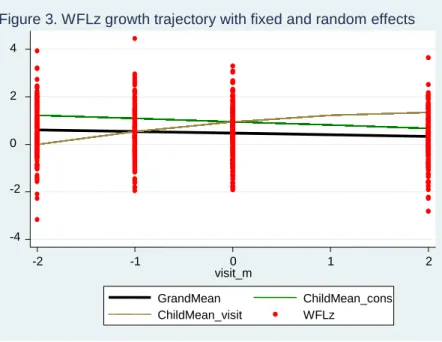
Figure 3. WFLz growth trajectory with fixed and random effects………..33
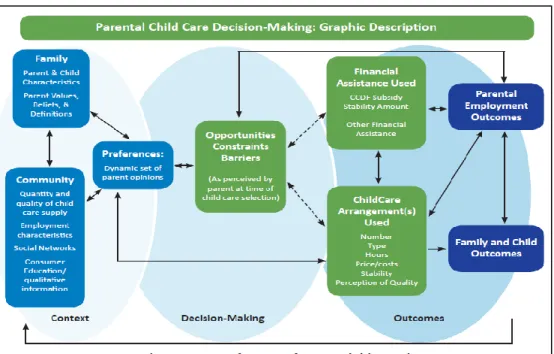
Figure 4. Weber conceptual model of child care……….41
I. INTRODUCTION
SPECIFIC AIMS
Currently a gap exists in the literature on infant obesity risks associated with early child care that starts at birth among low-income African-Americans, a population that has disproportionately high child care utilization1 and childhood obesity prevalence rates.2, 3 Using secondary-data obtained from a North Carolina cohort study of 217 low-income, African-American, first-time mothers and their infants, cross-sectional and longitudinal analyses analyzed measures on child care participation and weight outcomes obtained when infants were three, six, nine, 12, and 18 months old.
There were three specific aims: 1) characterize early child care patterns from birth to three months of age and birth to six months by describing structural factors such as the primary setting (child’s home or out-of-home), child care arrangement (maternal care, licensed center care, licensed family child care home, unlicensed care in caregiver’s home, child’s home), intensity of usage, and number of concurrent arrangements; 2)
determine influence of maternal and child care characteristics at birth that were predictive of non-random selection of out-of-home care (OHC) in licensed centers, licensed family child care homes, or unlicensed care in a caregiver’s home; and 3) examine whether OHC
2
The study offers empirical evidence to guide future infant obesity prevention efforts by providing detailed insight into low-income, African-American early child care patterns and family-level predictors of participation. Also, the research identifies harmful structural factors of child care that adversely affect infant weight outcomes.
SIGNIFICANCE
National Obesity Statistics
The US prevalence of early childhood obesity (ECO) for children five and under weighing > 95th percentile on Centers of Disease Control age- and sex-specific growth charts4 was 12.1% for children two to five years old and 9.7% for children under two years in 2010.3 From 1999 to 2010, the adjusted odds of being obese among children were highest for non-Hispanic African-American females compared to Whites, (OR, 1.99; 95% CI, 1.69-2.35).3 Similarly, low-income children were disproportionately affected with higher prevalence rates of 14%, nearly two percentage points higher than the national average for preschoolers.5
3
Presumably ECO is less complicated to prevent than other life stages of obesity because lifestyle preferences and behaviors related to diet and physical activity are still forming. Accordingly, pundits propose that the introduction of proper nutrition and physical activity can effectively balance energy intake and expenditure in young children, preventing the accumulation of excessive body fat.9
North Carolina Low-income African-American Infants, a high-priority population
Low-income African-American (AA) infants and toddlers in North Carolina are a high-risk, high-priority population. This demographic has higher prevalence rates of overweight and obesity compared to the national average (13.3% vs. 9.7%)5 and more intense exposure to child care than other race/ethnicities, starting full-time center care at younger ages.1 The 2005 national report on Infant and Toddler Child Care Arrangements conducted by the Center for Children in Poverty1 stated:
“[AA] children born in 2001 were more likely to be in a non-parental child care arrangement at 9 months (63%) than White (49%), Hispanic (46%), or Asian (47%) children.
[AA] children were more likely to be in center based care at 9 months (14%) than White (9%), Hispanic (5%), or Asian (4%) children.
Children in center care were more likely to be in care 31 to 40 hours more a week than children in non-relative or relative care (who averaged 10 or fewer hours a week).”
Child Care and Obesity Risks
4
factors (e.g., breastfeeding duration, and feeding style),10-12 household food resources (e.g., food security),13-17 and neighborhood safety and walkability.18
In recent years, however, early childhood obesity research has shifted attention to structural factors associated with out-of-home care (OHC) driven by the fact that the majority of children in the US under five years of age (59%)are cared for by
non-maternal caregivers in a given week outside of the home.19 Accordingly, there has been a proliferation of obesity studies on regulated child care, detailing the quality of nutrition or physical activity policies, practices, and built environment.20-28
Broader themes related to child care structural factors such as primary child care type and hours of participation have also been explored in relation to child weight outcomes. 29-38
Given the nascent state of this field of research, a consensus has yet to be reached on which types of child care pose higher risks for obesity. Six of ten studies on this topic, two longitudinal29, 30 and four cross-sectional,32, 33, 35, 38 are US studies that report inconsistent findings.
For the longitudinal studies, Benjamin et al29 found OCH settings to be a risk factor for weight gain at one and three years of age after a six month exposure of child care at birth. However, Lumeng et al30 found OHC from two to five years of age to be a protective factor against obesity or overweight at 6 to 12 years. The seemingly contradictory results can be explained by the timing of child exposure and weight assessments. The child care exposure periods do not overlap, the duration of child care exposure differ by nearly six times (i.e., six months versus three years), and the lag period between exposure and weight assessments span months in Benjamin’s study29 and years in Lumeng’s.30
5
Conclusions drawn from cross-sectional studies also provide mixed findings.
McGrady et al,33Kim and Peterson,31 and Maher et al32 support Benjamin’s conclusion29 that OHC is a risk factor, but Maher also found that OCH care was a protective factor for low-income Latinos. The incongruence in results between Kim and Maher, both of which used nationally representative samples, is partially due to age differences of their study samples.31, 32 The average nine-month old infant in Kim’s study had very different age-appropriate dietary needs (e.g., breastmilk or formula) and physical abilities (e.g., non-walking) compared to the average four-year old preschooler in Maher’s study. 31, 32
Another explanation for the conflicting findings is that child care structural factors such as hours per week in care and number of concurrent arrangements also differ by age according to national reports.19
Although, McGrady and Maher both examined the preschool years for exposure and weight outcomes at the entry of kindergarten, they reached different conclusions.32, 33 Both samples had similar measures of low-income status, defined as <185% poverty level, and similar obesity prevalence rates for African-Americans (McGrady 17%, Maher 15%) and Latinos (26%, 26%) but not Whites (McGrady 16%, Maher 5%).32,
33
Differences in statistical analytic techniques most likely explain the different
6 Child Care Policy Research & Obesity
North Carolina policy-makers lack empirical data on how child care decision factors and utilization patterns affect weight outcomes among low-income African-American infants. An extensive review of child care policy research was conducted using the Child Care and Early Education Research Connections online collection.39 An exhaustive list of 697 publications was generated using search terms for child care patterns, child weight outcomes, child care utilization, or child care population statistics for low-income, AA, toddlers/infants, or North Carolinians. The chart below shows the distribution of the 56 relevant articles that examined at least one child care structural factor and one population characteristic. Only twoof the studies, had empirical weight outcome data;Benjamin et al29 which was discussed earlier, and Pearce et al, a UK cohort study that found OCH care to be a risk factor for overweight.36 Overall, there were zero studies that addressed child care decision factors, child care patterns, and child care weight outcomes. Accordingly, the relationship of these factors in a sample of low-income AA infants is warranted to address existing gaps in both empirical research and child care policy studies.
Figure 1. Child care and early education research connections literature review results
Infants/ Toddlers
Low-income
African-Americans
TOTAL
Child Care Patterns 5 6 14 25
Child Care Weight Factors (Weight Outcomes)
25 (2)
1 3 31
7 INNOVATION
This study is unique because it will be the first publication to examine the effects of child care on infant obesity in a low-income African-American population, thereby extending the literature. To address limitations in statistical methods of previous longitudinal child care weight outcome studies, multilevel longitudinal analysis of repeated measures will be employed to account for serial autocorrelation between the multiple weight outcomes taken over a short period of time. In addition, the sample will be weighted with propensity scores40 to account for non-random selection of families into OCH settings. The technique will reduce bias in weight outcome estimates that would normally occur due to the study’s observational design.40
PROTECTION OF HUMAN SUBJECTS
This human-subject research falls under Exemption 4 according to the Code of Federal Regulations, Title 45, Part 46, Protection of Human Subjects. The study includes women and children, but used de-identified secondary data for analysis. A data-use agreement form was signed by the Principle Investigator, restricting security access to any files that might link data with participants. UNC Human Research Ethics training through the CITI Online Course was completed in January of 2010 prior to viewing any data. The UNC Office of Human Research Ethics Institutional Review Board confirmed that an IRB application for “Determination of Whether Research or Similar Activity
II. EARLY CHILD CARE AND INFANT OBESITY AT THREE MONTHS AMONG LOW-INCOME AFRICAN-AMERICANS IN NORTH CAROLINA
INTRODUCTION
In 2009 the prevalence of early childhood obesity (>95th percentile of 2000 CDC sex and age adjusted growth charts)4 was 12.1% for two to five year olds and 9.7% among children under two years.3 In response, researchers and policy-makers targeted licensed child care centers as “opportunistic” intervention sites 26, 41-43 given that the 63% of children under five are cared in non-maternal child care arrangement.19 The emphasis was on improving nutrition and physical activity standards,44 facilities,21 and providers’ behaviors.27, 45, 46 Some of the efforts resulted in statistically significant improvements in children’s nutrition,26
physical activity,26, 47 and weight outcomes.48, 49 Yet, empirical research is lagging behind in confirming the association between child care settings and obesity.
Although the results are mixed, most of the existing evidence concludes that child care is a risk factor for unfavorable weight outcomes.29, 31-33 In a longitudinal study, Benjamin and colleagues29 observed that the total hours of child care attendance between birth and six months of age in licensed family homes or caregiver’s homes, as a
cross-9
sectional studies provide additional supporting evidence. McGrady et al33 found that preschool attendance at four years increased the odds of being overweight or obese at
kindergarten while Kim and Peterson31 reported an increased weight gain at nine months for children in part-time child care compared to those in exclusive parental care.
Maher’s research team,32
however, showed that preschool child care had
differential effects for kindergarteners depending on their race/ethnicity. Head Start and care provided in the homes of unlicensed caregivers increased risks of obesity for non-Hispanic Whites and non-non-Hispanic African-Americans but decreased the odds for Latinos in comparison to children in parental care of the same race/ethnicity.32 This finding highlights the importance of examining variation in child care obesity risks within racial/ethnic subgroups and by socioeconomic status given that Head Start typically serves low-income children.
10
disparity reaches a statistically significant difference of 14.7%, affecting 28.6% of non-Hispanic African-Americans and 13.9% of non-non-Hispanic whites.3
Ideally, child care obesity risks should be examined from birth. Understanding the determinants of early weight gain in the first months of life is important because rapid infant growth during this period has been associated with obesity in the preschool years.53-55
To address these concerns, we examined obesity risks associated with child care participation from birth to three months of age among low-income African-Americans infants. We hypothesized that infants in out-of home child care (OHC) would have a higher prevalence of obesity, controlling for covariates and potential confounders. As a secondary objective, we evaluated family-level predictors of child care participation to account for systematic differences between OHC participants and non-OHC participants that could bias weight outcomes, a data limitation of the aforementioned child care weight outcome studies.29-33
SAMPLE AND METHODS
Sample
We conducted cross-sectional analysis of baseline data from the Infant Care, Feeding and Risk of Obesity Study, a prospective observational cohort study designed to examine household factors that influence infant feeding, diet, and weight outcomes.6, 17, 56-59
11
Raleigh, Durham, and Chapel Hill from 2003-2007 which required household incomes of less than 185% of U.S. Poverty Income Guidelines60. Infants with any condition that might affect appetite, feeding or growth were excluded from the study. Further details on recruitment and data collection have been published elsewhere.61 Trained staff
administered the surveys and performed anthropometric measurements for both mother and child. Study protocols were approved by the Institutional Review Board for the Protection of Human Research Subjects at the University of North Carolina at Chapel Hill. The final analysis sample included 213 cases, 97% of the original sample. Four cases were dropped due to missing data on child care participation.
Key Variables
Main Outcome: Obesity
We designated infants as obese if their weight-for-length (WFL) was greater than or equal to the 95th percentile of the 2000 Centers for Disease Control and Prevention age and sex adjusted growth charts.62 Trained research assistants obtained triplicated measurements of weight and length for infants using the Tanita BD-585 Digital Baby Scale and a portable, rigid O’Leary Length Board, respectively.
Main Predictor: Out-of-home care (OHC)
12
influence weight outcomes according to other studies.29, 32, 36 Children who participated in OHC for less than 10 hours per week (non-OHC) served as the referent group along with infants primarily cared for at home by either their mother exclusively or by a caregiver.
Mothers were asked to recall from birth to the date of the 3-month interview all child care arrangements, the start and end dates, number of days per week of attendance, and the start and end time of the service. Mothers could identify up to five caregivers for each child care arrangement listed. For 43 mothers reporting a “flexible” start and end
time of child care, we entered the median daily hours of the sample for that specific type of care. We also used median values to substitute missing data for infants cared for in licensed care (n=1) and at home by a non-maternal caregiver (n=4). Zeroes were assigned to represent exclusive maternal care.
Confounders and covariates
13
Potential mediators
We assessed the following infant feeding practices and physical activity proxies that have been identified as risk factors for infant overweight or obesity: in the literature and previously in this sample. These included bottlefeeding duration,68-70 early
complementary feeding,31, 58, 59 infant fussy temperament56, 71( based on the Rothbart Infant Behavior Questionnaire scores for distress to limitations),72 night sleep duration,29 and average weekly TV exposure.29, 57 Early complementary feeding was defined as age-inappropriate exposure to food and beverages at three months of age as determined by the 2008 American Academy of Pediatrics optimal feeding guidelines.73 We also assessed breastfeeding duration as a protective factor for infant overweight and obesity.29
Predictors of OHC participation, propensity score weights
14
greater need for OHC; and household size, based on reports that mothers are less likely to choose OHC if they have a larger family.75 We used access to a car as a measure of convenience given that child care, employment, and transportation decisions tend to occur simultaneously.74
Methods
We used Fisher Exact and T-tests for bivariate analyses of binomial and continuous variables. For multivariate analyses, generalized boosted regression 40 estimated predicted probabilities of OHC participation. We used the inverse of these estimates to generate propensity score weights for the sample in order to remove selection bias,40 non-random variation between OHC and non-OHC participants that influence their voluntary selection into OHC. Next, we conducted multivariate logistic regression with the weighted sample to calculate odds ratios and the average treatment effect for OHC participation and non-OHC participation. Post-estimation, we performed independent Baron and Kenny mediation test 76 for each of the potential mediators to determine if the effect size or significance was attenuated. All analyses were conducted using Stata 11.77
RESULTS
Sample Characteristics
28% of the infants were cared for by their mother while 72% were cared for in child care arrangements in the infant’s home by a caregiver (51.2%), caregiver’s home
(14%), licensed centers (9.4%), or licensed family homes (5.2%). Many infants
15
two to four caregivers. Specifically, 69% of infants cared for at home by non-household members had up to four caregivers, 29% of infants cared for at home by household members had up to three caregivers, and 10% of infants cared for in a caregiver’s home
had up to two caregivers.
Table 1 describes child care, maternal, and infant characteristics. On average, mothers were young (23 years old), overweight or obese (BMI >23 and> 30,
respectively), and worked in a low-skilled jobs in food service, administrative support, or retail sales earning on average less than $12.00/hour. If child care costs were not fully subsidized or provided gratis, the hourly costs were eight cents for every dollar of her hourly wage. On average, mothers failed to meet current recommendations by the American Academy of Pediatrics for exclusive breastfeeding,78 age-appropriate complementary feeding,73 nighttime sleep duration,79 and TV viewing.80
Table 1. Child care, maternal, and infant characteristics of out-of-home (OHC) and non-OHC participants Sample (n=213) OHC (n=74) Non-OHC (n=139) Mean (SD)/ Percent (n) Mean (SD)/ Percent (n) Mean (SD)/ Percent (n) Child Care Characteristics
Child Care Participation 34.74%
(74)
65.26% (139) Number of caregivers,
non-maternal, n=154 1.31 (0.60) 1.51*** (0.73) 1.12*** (0.37)
Weekly hours 27.42
(24.14)
41.98*** (19.94)
19.67*** (22.61) Total non-maternal hours < 3
months 157.23 (204.61) 192.56 (183.49) 138.42 (213.25) Child care costs, weekly 11.31
(24.70)
25.88*** (33.54)
3.57*** (12.95)
Subsidized child care costs
16 Hourly cost:wage ratio
(paying families, n=55)
0.08 (0.06) 0.08 (0.05) 0.08 (0.07) Maternal Characteristics
Age 22.69
(3.81)
23.42* (3.97)
22.30* (3.68)
BMI, kg/m2 30.02
(7.63)
29.94 (7.58)
30.06 (7.68) Obese (BMI>30) 44.13%
(94)
41.89% (31)
45.32% (63)
Smokes 24.88%
(53)
22.97% (17)
25.90% (36)
Education level 13.66
(2.47)
14.19* (2.46)
13.37* (2.44)
Student prior to birth
26.76% (57) 35.14% (26) 22.30% (31) Enrolled at 3 months
38.97% (83) 45.95% (34) 35.25% (49) Hourly wage 12.90 (7.54) 14.14 (6.44) 12.24 (8.02) Employed prior to birth
86.38% (184) 91.89% (68) 83.45% (116) Employed at 3 months
53.99% (115) 72.97%*** (54) 43.88*** (61) Household Size 3.84 (1.66) 3.24*** (1.38) 4.16*** (1.71) Father/stepfather cohabits 32.86% (70) 21.62%* (16) 38.85%* (54)
Car available for transportation
71.36% (152) 82.43%* (61) 65.47%* (91) Infant Characteristics Male 46.01% (98) 43.24% (32) 47.48% (66)
Age at 3 month visit
3.25 (0.31) 3.31 (0.30) 3.21 (0.31) Birth weight (kg)
3.23 (0.48) 3.25 (0.46) 3.22 (0.49) WFL z-score (CDC)
0.57 (0.99) 0.71 (0.99) 0.49 (0.99) Obesity >95th
6.57% (14) 12.16%* (9) 3.60%* (5) Breastfed duration 1.82 (1.34) 1.85 (1.33) 1.81 (1.34) Bottle-fed duration 2.71 (1.09) 2.84 (1.00) 2.64 (1.13)
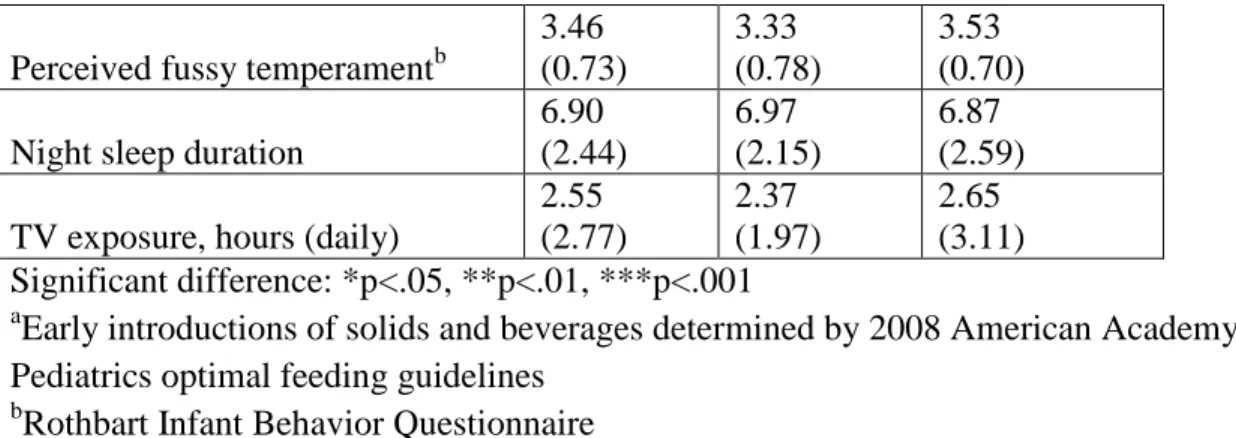
Early complementary feedinga
17 Perceived fussy temperamentb
3.46 (0.73) 3.33 (0.78) 3.53 (0.70) Night sleep duration
6.90 (2.44) 6.97 (2.15) 6.87 (2.59)
TV exposure, hours (daily)
2.55 (2.77) 2.37 (1.97) 2.65 (3.11) Significant difference: *p<.05, **p<.01, ***p<.001
a
Early introductions of solids and beverages determined by 2008 American Academy of Pediatrics optimal feeding guidelines
b
Rothbart Infant Behavior Questionnaire
OHC Participation Model
As shown in Table 2, the likelihood of participating in OHC increased by 5% for every additional dollar associated with weekly child care costs (p<.001) and decreased by 30% as household size increased by one additional member (p<.01).
Table 2. Probability of OHC participation OHC Participation Odds Ratio
[ 95% CI] Weekly child care costs 1.05***
[1.03-1.08]
Maternal age 1.03
[0.93-1.14] Maternal education
level
1.02 [0.88-1.19]
Cohabits 0.50
[0.23-1.08]
Household Size 0.70**
[0.55-0.90]
Car Access 2.05
[0.91-4.61]
Observations 213
LR chi2 (6) 65.07
Prob>Chi2 0.0000
Pseudo R2 0.2365 Log pseudo likelihood -105.0284
18
Boxplots in Figure 2 illustrate that there was very little overlap in estimates for the likelihood of OHC participation between OHC participants and non-participants, indicating systematic differences between groups on weekly child care costs, household size, car access, maternal age, maternal education, and cohabitation. Accordingly, propensity score weighting was justified as a means to improve balance on these variables between OHC and non-OHC groups.
Weight Outcome Models
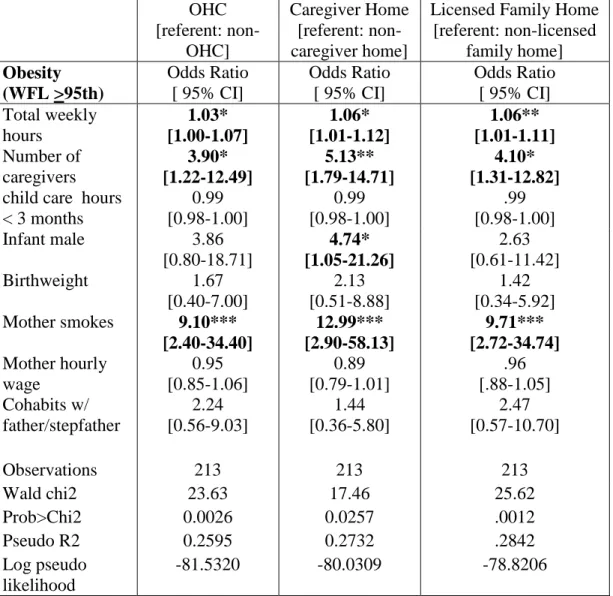
Using a propensity weighted sample, unadjusted logistic regression of obesity on OHC was significant at p< 0.01 for a one-tailed test probability (OR 4.50, 95% CI: 1.42-14.21), supporting our hypothesis that OHC is a risk factor for obesity. Table 3 shows the results of adjusted logistic regression models, also using a propensity weighted sample, for weekly hours spent in OHC, caregivers’ homes, and licensed family homes.
Licensed centers could not be examined by regression because there were no cases of .
2 . 3 . 4 . 5 . 6
non-OHC
OH C
19
obesity in this setting. The three models showed higher odds of obesity ranging from 3%-6% for each additional hour spent in care per week at three months of age, holding constant the number of caregivers, total hours of non-maternal care prior to three months, male sex, birth weight, mother’s smoking, mother’s wage, and cohabitation in a weighted
sample. All other factors remaining fixed, the risk of obesity also significantly increased, p<.05, across the three models for each additional caregiver and if the mother smoked. Infant feeding practices and physical activity proxies were not significant mediators.
Table 3. Risks of infant obesity given weekly hours of out-of-home care (OHC) and subtypes using a propensity weighted sample
OHC [referent: non-OHC] Caregiver Home [referent: non-caregiver home]
Licensed Family Home [referent: non-licensed
family home] Obesity
(WFL >95th)
Odds Ratio [ 95% CI]
Odds Ratio [ 95% CI]
Odds Ratio [ 95% CI] Total weekly hours 1.03* [1.00-1.07] 1.06* [1.01-1.12] 1.06** [1.01-1.11] Number of caregivers 3.90* [1.22-12.49] 5.13** [1.79-14.71] 4.10* [1.31-12.82] child care hours
< 3 months
0.99 [0.98-1.00] 0.99 [0.98-1.00] .99 [0.98-1.00]
Infant male 3.86
[0.80-18.71] 4.74* [1.05-21.26] 2.63 [0.61-11.42] Birthweight 1.67 [0.40-7.00] 2.13 [0.51-8.88] 1.42 [0.34-5.92] Mother smokes 9.10***
[2.40-34.40] 12.99*** [2.90-58.13] 9.71*** [2.72-34.74] Mother hourly wage 0.95 [0.85-1.06] 0.89 [0.79-1.01] .96 [.88-1.05] Cohabits w/ father/stepfather 2.24 [0.56-9.03] 1.44 [0.36-5.80] 2.47 [0.57-10.70]
Observations 213 213 213
Wald chi2 23.63 17.46 25.62
Prob>Chi2 0.0026 0.0257 .0012
Pseudo R2 0.2595 0.2732 .2842
Log pseudo likelihood
-81.5320 -80.0309 -78.8206
20
When propensity score weights were removed from the model, we observed that the main predictor estimates were slightly attenuated. When the propensity scores were added directly into the models, the main predictor estimates were noticeably increased and the propensity score was statistically significant at p<.05. These fluctuations indicate that OHC participation could bias child weight outcomes if not they are not taken into account.
DISCUSSION
This study identified a significant association between out-of-home care (OHC) and obesity among low-income African American infants in North Carolina. For every additional hour per week in OHC, the odds of being obese were 3% higher than non-OHC infants, even after controlling for important confounding factors. Care provided in the homes of caregivers and licensed family child care homes posed slightly higher risks, 6% each, for OHC infants versus non-OHC. There were no incidences of obesity in licensed centers.
These findings are consistent with results from a longitudinal study conducted by Benjamin29 who examined child care usage between birth to six months of age. They found a significant relationship between increased WFL/BMIz-scores and care provided in licensed and unlicensed caregivers’ homes, but not in licensed centers.29
The observed average treatment effect in our study for licensed caregiver homes (0.06) and unlicensed caregiver homes (0.06) falls within Benjamin’s29
21
Observational studies have noted the suboptimal environments for age-appropriate feeding and safe, unrestricted movement in licensed family homes.25, 26
Because caregivers typically provide care for children of different ages, the food and built environment may cater to older age groups instead of the specific needs of infants.29 Specific to obesity-prevention, the homes of non-licensed caregivers, especially those of grandparents, may also be less than ideal,29 potentially offering lower levels of physically activity,32 higher television exposure,32 and early complementary feeding.31
This study extends the work of previous researchers by identifying the number of part-time caregivers as a significant predictor of early childhood obesity. The adjusted odds of being obese increased four to five times for every additional caregiver at three months of age for infants in OHC, licensed family homes, or non-licensed caregiver’s homes. Multiple part-time caregivers were common in our study among infants in informal, unlicensed child care arrangements. Kim and Peterson31 found part-time child care to be a risk factor for increased weight gain at nine months of age in a nationally representative sample. Similarly, studies conducted by Lin et al34 among a Chinese cohort and Pearce et al36among a UK cohort found informal, unlicensed care arrangements to be significantly associated with overweight. Future research should further investigate the relationship of part-time caregivers as a risk factor for obesity.
22
possibly disruption, in their feeding and sleep schedules day-to-day compared to infants cared for at home. The inconsistency could adversely impact their metabolic
programming during the sensitive postnatal period 81, 82 and thereby result in obesity. Secondly, inconsistent child care practices within the same day caused by lack of communication and coordination among caregivers and mothers could result in unintentional overfeeding. Caregivers and mothers may be feeding the infant without knowing the timing of the last feeding or the amount consumed with the previous caretaker. Due to data limitations we were not able to test ‘inconsistency’ as a mediator.
Thus, more research is needed to understand the relationship between weight outcomes and inconsistency of feeding practices day-to-day and within a day across caregivers.
An analytical strength of this study is that key predictors of OHC participation were taken into account to remove selection bias. The sample was weighted by
propensity scores to address systematic differences between OHC and non-OHC groups that could have distally affected child weight outcomes. A post-balance check on variables included in the OHC participation model showed that the propensity scores improved balance across the sample on weekly child care costs, maternal age, education, cohabitation, household size, and car access. Accordingly, future studies on child care and weight outcomes should account for selection bias.
family-23
level predictors although community characteristics such as child care availability and quality are important predictors as well.74 Thirdly, the three month exposure period may have been too short of a time frame to directly affect observed weight outcomes. Other child care weight outcome studies on infants use a minimum of four months.29, 31, 36
This study provides a unique contribution to the literature. To our knowledge, there is no literature on the risks of child care participation and weight outcomes for low-income African American infants. This is a vulnerable subpopulation with
disproportionately high rates of child care participation1, 50 and obesity.3, 5, 51, 52.
CONCLUSION
Child care provided in licensed family child care homes and unlicensed homes of caregivers is associated with increased risks for early childhood obesity among low-income African-American infants in North Carolina as young as three months of age. Multiple caregivers were a significant predictor in the relationship that requires further investigation. In our study, there were no incidences of obesity in licensed child care centers and infants in this setting did have additional part-time child care arrangements. Given study design limitations, however, more empirical research is needed to confirm risks associated with different types of child care and to identify underlying mechanisms. Findings on maternal weight status and child rearing practices warrant obesity
III. EARLY CHILD CARE & INFANT OBESITY FROM SIX TO 18 MONTHS AMONG LOW-INCOME AFRICAN-AMERICANS IN NORTH CAROLINA
INTRODUCTION
In a previous study using the same dataset,83 the authors were able to detect obesity as young as three-months of age in a population of low-income African-American infants from North Carolina. We observed that infants who participated in child care outside of the home for 10 hours or more per week were more likely to be obese (>95th percentile for 2000 CDC growth charts) compared to infants who were cared for primarily at home. The number of caregivers was also a significant predictor in the relationship for the likelihood of obesity in care provided outside of the home. This study sought to better understand the risks associated with early child care exposure and weight outcomes over time in the same population.
25
observed in young obese children. Accordingly, prevention should begin as early as possible.
Although genetics,100, 101 epi-genetics,102103, 104and gestational age at birth105, 106 are believed to be important drivers of infant obesity, early child care factors such as type of care, intensity of attendance, and initiation age also play a role in infant obesity. Kim and Peterson31 showed that these structural characteristics of child care directly influence weight gain. Likewise, physical activity levels and sleep practices, which are associated with infant obesity,107, 108 vary by child care type.Licensed center care has been
associated with lower levels of intense physical activity20, 109 while non-maternal care has been correlated with shorter night time sleep duration.110
The purpose of this paper was to expand on findings from our previous study.83 We examined two questions. First, do weekly hours of child care provided outside of the infant’s home from birth to six months of age predict obesity from six to 18 months of
age. Based on findings at three months of age83 and extant literature,29, 31, 32, 34 we hypothesized that there would be increased odds for obesity throughout infancy for outside-home care (OHC). Second, is the number of caregivers a significant predictor of infant obesity in OHC as the child ages? We expected the number of caregivers to be positively associated with the likelihood of obesity over time.
SAMPLE
26
factors that influence infant feeding, diet, and weight outcomes. The sample consisted of 217 first-time African-American mothers aged 18-35 years and their three-month old infants. Participants with household incomes of less than 250% of the Department of Health and Human Services poverty guidelines60 were recruited through North Carolina Supplemental Nutrition Programs for Women, Infants, and Children (WIC) programs from 2003-2007 in Durham, Orange, and Wake counties. Infants with any condition that might affect appetite, feeding or growth were excluded from the study. Further details on recruitment and data collection have been published elsewhere.61 Trained staff
administered the surveys and performed anthropometric measurements for both mother and child. Study protocols were approved by the Institutional Review Board at the University of North Carolina at Chapel Hill.
27 MEASURES
Early Childhood Obesity
Early childhood obesity was defined as Weight-For-Length (WFL) z-scores greater than or equal to the 95th percentile based on the 2000 Centers for Disease Control and Prevention age and sex adjusted growth charts.62 Trained research assistants
obtained and averaged triplicated measurements. Tanita BD-585 Digital Baby Scale was used to weigh infants to the nearest 10g. Recumbent length was measured to the nearest 0.1cm by a two-person team using a portable, rigid O’Leary Length Board. Research assistants also obtained and averaged triplicated measures for maternal weight (kg) and height (m) to calculate Body Mass Index (BMI), kg/m2.
Outside-Home Care (OHC)
OHC was defined as child care participation for ten hours or more per week in licensed centers, licensed family-homes, or homes of caregivers. The three subtypes were combined based on significant associations with unfavorable weight outcomes identified in previous studies.29-33 The use of a 10 hour cut-point to signify a clinically relevant amount of exposure was consistent with other child care weight outcome studies.29, 32, 36 OHC was examined both as a dichotomous and a continuous variable, based on the total hours per week of care outside the home. Children who participated in OHC for less than ten hours per week (non-OHC) served as the referent group and included infants
28
Mothers were asked to recall from birth to the date of the interview all child care arrangements, the start and end dates, number of days per week of attendance, and the start and end time of the service. Mothers could identify up to five caregivers for each child care arrangement listed. All factors were assigned zero to represent exclusive
maternal care. To generate total weekly hours for all non-maternal care, we multiplied the daily hours by the reported number of days per week. When there were multiple
caregivers, we added the total weekly hours for each caregiver together. When mothers reported the start and end time of child care as “flexible,” we entered the median daily
hours for that specific type of care or three hours if the infant participated in multiple child care arrangements based on participation trends observed at three months of age.83
Potential Confounders
We explored number of caregivers, total non-maternal child care hours prior to three months, infant birthweight, and maternal smoking status as potential confounders in the relationship between infant weight outcomes and child care participation.
29
Propensity Score weights
Each dyad was weighted by the propensity to participate in OHC based on family-level characteristics at birth to account for selection bias introduced by the observational study design. The composite scores are a uni-dimensional value of weekly child care costs as a measure of affordability, household size, maternal education level, maternal age, cohabitation, and car transportation as a measure of convenience. Details of how the propensity score was estimated have been published elsewhere.83
METHODS
We conducted univariate and bivariate analyses of the means and frequencies of repeated observations on child care, infant, and maternal characteristics collected on four occasions. We conducted outlier analyses including influence and leverage tests followed by unadjusted and adjusted logistic regression with propensity score weights. To
determine the best multivariate logistic regression model, we checked post-estimation variance inflation factors for multicollinearity issues and performed a link function test to identify misspecification errors. The final models included obesity as the main outcome, weekly hours of child care stratified by type predictors, and confounders: number of caregivers, total non-maternal child care hours prior to three months, birthweight, and maternal smoking status.
one-30
tailed test probabilities which require dividing reported regression p-values by two to test hypotheses that the means would be higher. Accordingly, a reported p-value <.10
signifies a significant association of p<.05. All analyses were conducted using STATA 11.77
RESULTS
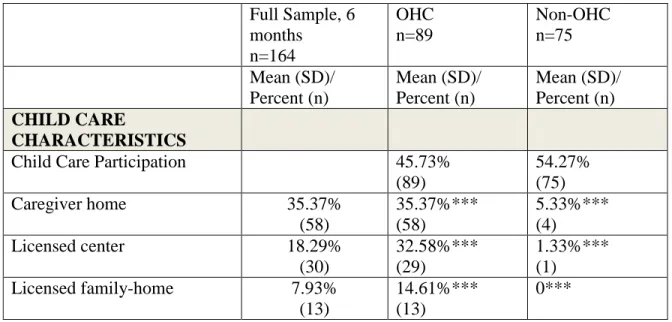
Table 4 lists child care, infant, and maternal characteristics of the full sample and by OHC groups at months of age. From birth to six months old, 46% of sample
participated in OHC for 10 hours or more per week. More than a third of the sample participated in care provided in an unlicensed caregiver’s home, the most popular type of OHC. Sixteen percent of non-OHC participants were cared for exclusively by their
mothers. OHC participants had significantly more caregivers and nearly twice the number of weekly child care hours, 45.69 hours/week, compared to non-OHC participants.
Infants in OHC had a trend of higher WFL z-scores with a statistically higher prevalence of obesity at nine months of age.
Table 4. Child care, infant, and maternal Characteristics at six months
Full Sample, 6 months n=164 OHC n=89 Non-OHC n=75 Mean (SD)/ Percent (n) Mean (SD)/ Percent (n) Mean (SD)/ Percent (n) CHILD CARE CHARACTERISTICS
Child Care Participation 45.73%
(89)
54.27% (75)
Caregiver home 35.37%
(58)
35.37%*** (58)
5.33%*** (4)
Licensed center 18.29%
(30)
32.58%*** (29)
1.33%*** (1)
Licensed family-home 7.93%
(13)
14.61%*** (13)
31 Home, household member 37.20%
(61)
23.60%*** (21)
53.33%*** (40)
Home, babysitter 5.49%
(9)
4.49% (4)
6.67% (5) Home, maternal exclusive 16.46%
(27)
0*** 36.00%***
(27) Multiple care arrangements 21.95%
(36) 35.96%*** (32) 5.33%*** (4) Total subtypes, (non-maternal,n=137) 1.25 (0.45) 1.36*** (0.51) 1.04*** (0.20) Caregivers (non-maternal,n=137) 1.31 (0.56) 1.43*** (0.68) 1.08*** (0.28) Age of initiation, months
(non-maternal,n=137) 2.62 (1.68) 2.67 (1.67) 2.52 (1.71)
Weekly hours 34.69
(24.65)
45.69*** (22.04)
21.64*** (21.03) Total hours <3 months 157.45
(213.82)
170.33 (232.78)
142.18 (189.29)
Lifetime hours 538.52
(490.08) 674.82*** (508.70) 376.78*** (508.69) INFANT CHARACTERISTICS
Male 48.78%
(80)
47.19% (42)
50.57% (38)
Birthweight, kg 3.23
(0.48)
3.25 (0.45)
3.23 (0.51) Age at visit
32 percentile) 6 months n=162 11.73% (19) 15.91% (14) 6.76% (5) 9 months N=154 11.04% (17) 16.05%* (13) 5.48%* (4) 12 months N=141 8.51% (12) 11.84% (9) 4.62% (3) 18 months N=128 4.69% (6) 5.56% (4) 3.57% (2) MATERNAL CHARACTERISTICS
Age 22.59
(3.83)
22.75 (4.03)
22.41 (3.60)
Smokes 21.95%
(36)
22.47% (20)
21.33% (16)
BMI 30.20
(7.70)
30.42 (7.39)
29.94 (8.09)
Obese (BMI>30) 43.90%
(72)
42.70% (38)
45.33% (34)
Education Level 13.73
(2.53)
13.87 (2.66)
13.56 (2.39)
Current Student 39.63%
(65)
43.82% (39)
34.67% (26)
Hourly Wage 12.80
(7.21)
12.33 (5.80)
13.36 (8.60)
Currently Employed 51.22%
(84)
55.06% (49)
46.67% (35)
Cohabits 32.93%
(54)
21.35%*** (19)
46.67%*** (35)
Household Size 3.76
(1.44)
3.52* (1.36)
4.04* (1.50)
33
Table 5. Unadjusted logistic regression of obesity from 6-18 months with propensity weights
Infant Obesity (> 95th WFL z-score)
Odds Ratio 95% CI
OHC Subtypes:
Licensed Center 1.80* [0.94-3.45]
Licensed Home 2.54** [1.22-5.30]
Caregiver’s Home 2.10** [1.19-3.71]
Non-OHC subtypes:
Household Member 0.77 [0.42-1.42]
Babysitter (0 cases) --- ---
Maternal Care 0.52 [0.21-1.27]
*p<.05, **p<.01, ***p<.001
34
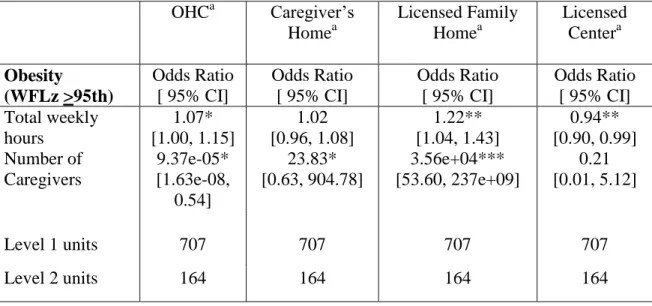
In generalized multilevel logistic regression models using propensity weights, shown in Table 6, the odds of infant obesity statistically increased from six to 18 months for every additional weekly hour of OHC compared to non-OHC (OR 1.07, 95%
Confidence Interval (CI): 1.00-1.16, p<.05), holding other factors fixed. The likelihood of infant obesity was significantly higher for licensed family home care compared to all other child care types (OR 1.22, 95% CI:1.04-1.43, p<.01) and significantly lower for licensed center care compared to all other child types (OR 0.94, 95% CI: 0.90-0.99, p<.01) all else remaining the same. Caregiver’s home did not have a statistically significant relationship with obesity over time. The number of caregivers was a statistically significant predictor of infant obesity across all models except licensed centers.
-4 -2 0 2 4
-2 -1 0 1 2
visit_m
GrandMean ChildMean_cons
ChildMean_visit WFLz
35
Table 6. Generalized multilevel logistic models of obesity risks and OHC child care subtypes across 6-18 Months of age using propensity weights
OHCa Caregiver’s Homea Licensed Family Homea Licensed Centera Obesity (WFLz >95th) Odds Ratio [ 95% CI]
Odds Ratio [ 95% CI]
Odds Ratio [ 95% CI]
Odds Ratio [ 95% CI] Total weekly hours 1.07* [1.00, 1.15] 1.02 [0.96, 1.08] 1.22** [1.04, 1.43] 0.94** [0.90, 0.99] Number of Caregivers 9.37e-05* [1.63e-08, 0.54] 23.83* [0.63, 904.78] 3.56e+04*** [53.60, 237e+09] 0.21 [0.01, 5.12]
Level 1 units 707 707 707 707
Level 2 units 164 164 164 164
*p<.05, **p<.01, ***p<.001 a
Model controlled for visit, total non-maternal care hours < 3months, birthweight, and mother smokes.
DISCUSSION
OHC from birth to six months is a risk factor for early childhood obesity throughout infancy for low-income African-American infants in North Carolina. From six to 18 months of age, the likelihood of obesity was higher for infants who participated in care provided outside of their homes for more than 10 hours per week, holding
constant number of caregivers, child care prior to three months, birthweight, mother smokes, and time. Risks increased by 22% for each additional weekly hour of OHC provided in licensed family homes over the twelve month period.
36
had very low p-values (caregivers p<.01, child care prior to three months p<.001, birthweight p<.001, mother smokes p<.001, time p<.05). Accordingly, we believe the unadjusted association was spurious and the result of omitted variable bias.
The number of caregivers was a significant predictor of infant obesity over time for families participating in licensed family home care and unlicensed caregivers’ homes, both of which are more accommodating for families with part-time child care needs as opposed to licensed centers which typically offer full-time care.75, 111 Although previous child care weight outcome studies29-34, 36 noted the presence of ‘multiple caregivers’, this study and our previous research83 are the first publications to explicitly model it as a predictor of infant obesity. A higher number of caregivers is expected among
low-income, working mothers since multiple part-time child care arrangements are a common phenomena for families that work non-standard hours (e.g., evening shifts) or irregular schedules. 63, 7564Data from the United Department of Labor show that these
characteristics are highly correlated with low-wage, part-time jobs.112
Literature Review
37
The results provide supporting evidence for Benjamin’s longitudinal study29 that found a positive association between any child care exposure from birth to six months and WFL z-scores and BMI z-scores at one and three years of age. Similar to our observations, Benjamin found a significant association between weight outcomes and licensed family home care, a component of child care provided in the caregiver’s home29
. There is also consistency across our study, Benjamin,29 and Pearce36 in that licensed center care is not associated with unfavorable weight outcomes in infants. In fact, center-based care was associated with significantly lower risks. This protective effect is likely due to there being one full-time provide to meet routine child care needs. Whereas mothers who use child care sporadically rely on a patchwork of part-time caregivers.
In the other OHC subtypes, we found that the risks of infant obesity increased for each additional weekly hour of licensed family child care and care provided in a
caregiver’s home. Kim and Peterson,31
on the other hand, reported an inverse relationship between risks and intensity for infants. In their study, only part-time, non-parental care (< 35 hrs/wk) increased the likelihood of infant obesity.31 The discrepancy in findings is explained by differences in child care definitions. Kim and Peterson31 combined all types of non-maternal child care arrangements into one construct, while this study examined them separately.
Policy Implications
38
Studies show that many of these structural characteristics are associated with increased weight outcomes among infants.29, 31, 34, 36, 83
To safeguard this vulnerable population from risks of obesity early in life, policy and research are needed to improve early child care starting at birth. Although there has been a surge of initiatives to address early childhood obesity in licensed center care in recent years, 26, 41-43 these efforts have primarily targeted preschoolers aged two and older. Yet, by this age one in seven low-income children are already obese.5
Given the myriad array of child care options for infants, policies and research interventions should strategically target structural factors that pose the greatest threat. Our study found that weekly hours of licensed family home care from birth to six months had higher risks for obesity throughout infancy while licensed center had lower risks in comparison to other child care types, controlling for other factors. In fact, licensed center may be the ideal OHC option because participating families are less likely to have
additional part-time caregivers, an even stronger predictor of infant obesity. Accordingly, future child care policy and research should seek to improve infant child care practices in licensed family child care homes and increase flexibility of licensed center care to
accommodate low-income families who need part-time, non-standard, or irregular child care for infants.
Another solution is to promote child care inside of the infants’ home for the first
39
leave should extend time frames of job protection and income security up to six months post partum for all working parents.
Contributions
A key strength of this study is the longitudinal study design with multiple
observations (six, nine, 12, and 18 months) that increases the validity of causality claims. The results, however, should not be generalized beyond low-income African-American infants in North Carolina. Secondly, non-random selection of OHC child care
participation was taken into account by weighting the sample with propensity scores to reduce bias in the weight outcomes. Lastly, estimate bias was further eliminated by conducting generalized multilevel logistic regression to the serial auto-correlation between the multiple weight observations collected over a short period of time. This technique also permitted examination of both fixed and random effects so that variation within and between infants could be separated. Finally, the multilevel analysis approach did not drop cases from analyses because of missing data.
Due to substantial study attrition from the first six month visit (n=162) to the last at 18 months of age (n=128), the findings should be received cautiously. Study
participants who remained could be systematically different on unobserved
40 CONCLUSION
Child care participation outside of the child’s home for more than 10 hours per week was a risk factor for infant obesity from six to 18 months of age among low-income African-American infants. Licensed family child care homes posed the greatest risks throughout infancy while licensed center care was protective. The number of caregivers was also a significant predictor of infant obesity in OHC, especially in care provided in caregiver’s homes and licensed family child care homes. Further research is warranted to
IV. CONCLUSION
Historically, child care policies have focused on two primary goals: 1) meeting families’ needs for parental employment, and 2) ensuring age-appropriate development of
cognitive and social skills for kindergarten preparedness in a safe, sanitary
environment.114 In light of public health concerns regarding childhood obesity, however, there has been an acknowledgement that child care policies should also seek to promote healthy age-appropriate growth as a third aim. To this end, “opportunistic” improvements in nutrition and physical activity standards44 and environments of regulated (i.e. licensed) child care centers21, 27, 45, 46 and family child care homes25, 115 are being made.
This research sought to inform these initiatives by empirically testing the association between child care and child weight outcomes among low-income African-Americans, a subpopulation that has disproportionately high rates of child care
participation1, 50 and obesity.3, 5, 51, 52 We found that child care provided outside of the child’s home (OHC) for more than 10 hours per week significantly increased odds of
42
child care and workplace policies can be used to promote obesity prevention among infants.
Before discussing specific policy recommendations, an overview of the
conceptual model of child care policy and child outcomes is provided followed by a brief description of North Carolina community characteristics and trends in child care
participation. To end, policy implications are highlighted.
Conceptual Model of Policy & Child Health Outcomes
The conceptual model presented by Weber74 in Figure 1 below illustrates the complex paradigm by which child care and employment impact child-level outcomes such as infant obesity. Child care preferences have a direct, reciprocal relationship with child care participation. In turn, child care structural factors directly impact child-level outcomes.
Figure 4. Weber conceptual model of child care
43
Child care preference, as a main predictor of child care participation, is shaped by proximal family and community level characteristics that determine the context within which child care options exist. Preferences are also indirectly influenced by a decision-making process that considers current employment outcomes (e.g. part-time work, non-standard working hours, or irregular work weeks) and financial outcomes which create perceived opportunities, barriers, or constraints.
Both of these pathways are impacted by child care policies and work place policies. Child care policies ensure a robust child care market in the community context and decrease barriers to care by increasing variety and affordability. Work place policies, on the other hand, play a role in employment outcomes through wages, eligibility for maternity/paternity leave job protection and income security, and provision of on-site child care. Through these linkages, child care policies and work place policies have an indirect impact on child-level outcomes such as infant obesity.
North Carolina Child Care Context
The majority of first-time mothers in our study lived in North Carolina for their entire lives (62%) while 8% had been in the state for five years or less. They resided in either Wake County- highlighted by the blue outline in the state map in Figure 5116, 56%, or Durham County, 43%, where up to a third of the adults were obese. Table 7 below provides
additional demographic characteristics of the communities. 117
44
Table 7. 2012 Wake and Durham County demographics
County Population
Under 5yrs
Below Federal Poverty Level
African-Americans
Obese Adults
Wake 952,151 7.1% 10.1% 21.3% 25.7%
Durham 279,641 7.5% 17.1% 38.5% 30.1%
On the state level, 13.7% of the infants up to the age of two were obese in 2009.118 In response, North Carolina child care policy makers made considerable improvements in standards for regulated child care settings such as licensed centers and licensed family child care homes. By 2011, the state ranked 8th in the nation for obesity prevention child care rules related to infant feeding, general nutrition and physical activity.119 These standards include, but are not limited to, ensuring children have access to drinking water throughout the day, limiting sugary drinks to special occasions,
requiring a minimum of one hour daily of outdoor time as well as daily gross motor activities, limiting TV and other screen time to 2 ½ hours per week for children over two years (TV is not recommended for younger children), and providing accommodating spaces for breastfeeding mothers to nurse or pump milk.119 This was a major policy accomplishment considering that three years prior in 2008, the state’s policies received a
poor grade of C for falling in the middle and bottom third of states in the country that had inadequate obesity prevention standards in licensed centers and family child care
homes.120
Yet, additional policy intervention and research is warranted beyond regulated care settings. Our results show that care in unlicensed caregiver’s homes at three months
45
risk factors for infant obesity among low-income African-American infants in North Carolina.
Child Care Participation Trends
As the infants in our sample aged from three to six months, participation in exclusive maternal care declined while participation in all OHC subtypes increased. OHC in a caregiver’s home remained the most popular choice with more than two times
the participants at each age. Although weekly hours of non-maternal care increased in conjunction with the number of mothers who had non-standard or irregular work
schedules, the number of multiple caregivers declined over time. The participation trends of infants in our study at six months of age were similar to national averages for low-income infants aged nine months to three years.75, 111 This implies that final child care arrangements are established in infancy closer to six months than three months of age.
Table 8. Child care participation trends
IFC Study Infants at 3 months
IFC Study Infants at 6 months
National Trends for Low-income communities75, 111 CHILD CARE TYPE
Maternal care, exclusive 28% 16% 18%
Licensed care 9% 18% 16%
Licensed family child care homes
5% 8% 11%
Caregiver’s home, unlicensed 23% 38% 33%
CHILD CARE HOURS
46 care (OHC hrs), median
Nonstandard hours or irregular schedules
22% 32% 27%
MULTILIPICITY
Multiple child care arrangements
36% 22% 12%
Simultaneous caregivers 1.13 1.31 2
Child Care Policy Implications
OHC child care is a risk factor for infant obesity among low-income African-American infants in North Carolina, especially when care is provided in the homes of unlicensed caregivers at three months of age. Throughout infancy caregivers’ homes are the preferred child care arrangement75, 111, 121 because of the part-time flexibility64 that it offers low-income mothers.122 The low-wage, entry-level positions of the mothers in our study are typically associated with part-time schedules, non-standard hours, and irregular work weeks according to the US Department of Labor.112 Based on our study
observations, non-standard or irregular schedules increased over the course of infancy as mothers returned or entered the workforce, thereby increasing the participation in
caregiver’s homes.64
As an infant obesity prevention strategy, policy makers could reduce participation in caregiver’s homes, as well as licensed family child care homes which have increased
47
hours were substantially less likely to choose center care than those working regular
hours (24% versus 38%).” To incentivize greater variety in the child care marketplace,
Schumacher et al123 advocate for states to contract directly with providers to address persistent gaps in center-based child care supply. The proposal is fiscally attractive given anticipated declines in federal and state spending in coming years which could adversely impact future funding for child care subsidies. In 2012, North Carolina spent over $409 million dollars114 assisting low-income families meet their child care needs in the 7,841 regulated centers and family child care homes in the state which serves nearly a quarter of a million children.124 The money came from five billion dollars of federal funding from the Child Care and Development Fund (CCDF) allocated to states and territories for early child care initiatives coupled with funds from Temporary Assistance for Needy Families (TANF) and over $66 million dollars of NC state contributions.114
Another strategy to prevent infant obesity associated with child care could address the need for multiple, concurrent child care arrangements in the first months of life. Our findings and reports of national trends75, 111 indicate that the number of
48
experimentation process requires at least six months for parents for find suitable care121, 125
given the depressed supply of high quality child care options in low communities.63 If the latter is found to be true, there would be policy implications for the timing of
workforce re-entry after birth for maternity and paternity leave. Specifically, eligibility requirements, job protection rights, and income security would need to be reconsidered for Federal Family Medical Leave Act67, welfare-to-work programs,126 and workplace policies.
Summary
To summarize, the study’s findings supported the hypothesis that out-of-home
49
REFERENCES
1. Kreader J FD, Lawrence S. National Center for Children in Poverty. Infant and Toddler Child Care Arrangements, National Center for Children in Poverty. 2005
http://www.researchconnections.org/childcare/resources/6871/pdf.
2. Ogden C, Carroll, M. Prevalence of Obesity Among Children and Adolescents: United States, Trends 1963-965 Through 2007-2008. In: Surveys DoHaNE, ed. Hyattsville, MD: National Center for Health Statistics; 2010.
3. Ogden CL, Carroll MD, Kit BK, Flegal KM. Prevalence of obesity and trends in body mass index among US children and adolescents, 1999-2010. JAMA : the journal of the American Medical Association. Feb 1 2012;307(5):483-490. 4. Centers for Disease Control and Prevention (CDC) NCfCDPaHP, Division of
Nutrition, Physical Activity, and Obesity. WHO Growth Standards Are
Recommended for Use in the U.S. for Infants and Children 0 to 2 Years of Age. 2010; September 2010:http://www.cdc.gov/growthcharts/who_charts.htm. 5. Centers for Disease Control and Prevention (CDC) NCfCDPaHP, Division of
Nutrition, Physical Activity, and Obesity. Obesity Among Low-income Preschool Children, PedNESS 2009 Fact Sheet.
http://www.cdc.gov/obesity/downloads/PedNSSFactSheet.pdf.
6. Slining M, Adair LS, Goldman BD, Borja JB, Bentley M. Infant overweight is associated with delayed motor development. The Journal of pediatrics. Jul 2010;157(1):20-25 e21.
7. Williams J, Wake M, Hesketh K, Maher E, Waters E. Health-related quality of life of overweight and obese children. JAMA : the journal of the American Medical Association. Jan 5 2005;293(1):70-76.
8. Reilly JJ, Armstrong J, Dorosty AR, et al. Early life risk factors for obesity in childhood: cohort study. BMJ. Jun 11 2005;330(7504):1357.
9. Taylor BJ, Heath AL, Galland BC, et al. Prevention of Overweight in Infancy (POI.nz) study: a randomised controlled trial of sleep, food and activity interventions for preventing overweight from birth. BMC Public Health.
2011;11:942.
10. Farrow CV, Blissett JM. Is maternal psychopathology related to obesigenic feeding practices at 1 year? Obes Res. Nov 2005;13(11):1999-2005.



![Table 5. Unadjusted logistic regression of obesity from 6-18 months with propensity weights Infant Obesity (> 95 th WFL z-score) Odds Ratio 95% CI OHC Subtypes: Licensed Center 1.80* [0.94-3.45] Licensed Home 2.54** [1.22-5.30] Caregiver](https://thumb-us.123doks.com/thumbv2/123dok_us/8298565.2197744/40.918.100.795.173.450/unadjusted-logistic-regression-propensity-subtypes-licensed-licensed-caregiver.webp)